Proceedings of the 2019 Conference on Empirical Methods in Natural Language Processing and the 9th International Joint Conference on Natural Language Processing, pages 5883–5889,
5883
A Span-Extraction Dataset for Chinese Machine Reading Comprehension
Yiming Cui†‡, Ting Liu†, Wanxiang Che†,
Li Xiao‡, Zhipeng Chen‡, Wentao Ma‡§, Shijin Wang‡§, Guoping Hu‡ †Research Center for Social Computing and Information Retrieval (SCIR),
Harbin Institute of Technology, Harbin, China
‡State Key Laboratory of Cognitive Intelligence, iFLYTEK Research, China §iFLYTEK AI Research (Hebei), Langfang, China
†{ymcui,tliu,car}@ir.hit.edu.cn
‡§{ymcui,lixiao3,zpchen,wtma,sjwang3,gphu}@iflytek.com
Abstract
Machine Reading Comprehension (MRC) has become enormously popular recently and has attracted a lot of attention. However, the exist-ing readexist-ing comprehension datasets are mostly in English. In this paper, we introduce a Span-Extraction dataset for Chinese machine read-ing comprehension to add language diversities in this area. The dataset is composed by near 20,000 real questions annotated on Wikipedia paragraphs by human experts. We also anno-tated a challenge set which contains the ques-tions that need comprehensive understanding and multi-sentence inference throughout the context. We present several baseline systems as well as anonymous submissions for demon-strating the difficulties in this dataset. With the release of the dataset, we hosted the Sec-ond Evaluation Workshop on Chinese Ma-chine Reading Comprehension (CMRC 2018). We hope the release of the dataset could fur-ther accelerate the Chinese machine reading comprehension research.1
1 Introduction
To read and comprehend natural languages is the key to achieve advanced artificial intelligence. Machine Reading Comprehension (MRC) aims to comprehend the context of given articles and answer the questions based on them. Various types of machine reading comprehension datasets have been proposed, such as cloze-style reading comprehension (Hermann et al.,2015;Hill et al., 2015; Cui et al., 2016), span-extraction reading comprehension (Rajpurkar et al., 2016;Trischler et al.,2016), open-domain reading comprehension (Nguyen et al., 2016; He et al., 2017), reading comprehension with multiple-choice (Richardson et al., 2013; Lai et al., 2017), etc. Along with
1Resources are available: https://github.com/
ymcui/cmrc2018.
the development of the reading comprehension dataset, various neural network approaches have been proposed and made a big advancement in this area (Kadlec et al.,2016;Cui et al.,2017;Dhingra et al.,2017;Wang and Jiang,2016;Xiong et al., 2016;Liu et al.,2017;Wang et al.,2017;Hu et al., 2018;Wang et al.,2018;Yu et al.,2018).
We also have seen various efforts on the con-struction of Chinese machine reading hension datasets. In cloze-style reading compre-hension, Cui et al. (2016) proposed a Chinese cloze-style reading comprehension dataset: Peo-ple’s Daily & Children’s Fairy Tale. To add dif-ficulties to the dataset, along with the automati-cally generated evaluation sets (development and test), they also release a human-annotated evalua-tion set. Later,Cui et al.(2018) propose another dataset, which is gathered from children’s reading material. To add more diversity and for further in-vestigation on transfer learning, they also provide another evaluation dataset, which is also annotated by human experts, but the query is more natu-ral than the cloze type. The dataset was used in the first evaluation workshop on Chinese machine reading comprehension (CMRC 2017). In open-domain reading comprehension, He et al. (2017) propose a large-scale open-domain Chinese ma-chine reading comprehension dataset (DuReader), which contains 200k queries annotated from the user query logs on the search engine. Shao et al. (2018) proposed a reading comprehension dataset in Traditional Chinese.
span-[Passage] [Passage]
《黄色脸孔》是柯南·道尔所著的福尔摩斯探案的56个短篇故事之 一,收录于《福尔摩斯回忆录》。孟罗先生素来与妻子恩爱,但 自从最近邻居新入伙后,孟罗太太则变得很奇怪,曾经凌晨时份 外出,又藉丈夫不在家时偷偷走到邻居家中。于是孟罗先生向福
尔摩斯求助,福尔摩斯听毕孟罗先生的故事后,认为孟罗太太被来 自美国的前夫勒索,所以不敢向孟罗先生说出真相,所以吩咐孟罗 先生,如果太太再次走到邻居家时,即时联络他,他会第一时间赶 到。孟罗太太又走到邻居家,福尔摩斯陪同孟罗先生冲入,却发现 邻
邻
邻居居居家家家中中中的的的人人人是是是孟孟孟罗罗罗太太太太太太与与与前前前夫夫夫生生生的的的女女女儿儿儿,,,因因因为为为孟孟孟罗罗罗太太太太太太的的的前前前夫夫夫 是
是
是黑黑人黑人人,,,她她她怕怕怕孟孟孟罗先罗罗先先生生生嫌嫌嫌弃弃弃混混混血血血儿儿儿,,,所所所以以以不不不敢敢敢说说说出出出真真真相相相。。。
”The Adventure of the Yellow Face”, one of the 56 short Sherlock Holmes stories written by Sir Arthur Conan Doyle, is the third tale from The Mem-oirs of Sherlock Holmes. Mr. Munro has always been loved by his wife, but since the new neighbors recently joined, Mrs. Munro has become very strange. She used to go out in the early hours of the morning and se-cretly went to her neighbors when her husband was not at home. ... Mrs. Munro went to the neighbor’s house again, and Holmes accompanied Mr. Munro to rush in, only to find that the neighbor’s family was the daughter of Mrs. Munro and her ex-husband,because Mrs. Munro’s ex-husband was black, and she was afraid of Mr. Munro hate the mixed-race, so she did not dare to tell the truth.
[Question] [Question]
孟罗太太为什么在邻居新入伙后变得很奇怪? Why Mrs. Munro became strange after the new neighbors moved in?
[Answer 1] [Answer 1]
邻居家中的人是孟罗太太与前夫生的女儿,因为孟罗太太的前夫是 黑人,她怕孟罗先生嫌弃混血儿
because Mrs. Munro’s ex-husband was black, and she was afraid of Mr. Munro hate the mixed-race
[Answer 2] [Answer 2]
邻居家中的人是孟罗太太与前夫生的女儿,因为孟罗太太的前夫是 黑人,她怕孟罗先生嫌弃混血儿,所以不敢说出真相。
because Mrs. Munro’s ex-husband was black, and she was afraid of Mr. Munro hate the mixed-race
[Answer 3] [Answer 3]
邻居家中的人是孟罗太太与前夫生的女儿,因为孟罗太太的前夫是 黑人,她怕孟罗先生嫌弃混血儿,所以不敢说出真相。
because Mrs. Munro’s ex-husband was black, and she was afraid of Mr. Munro hate the mixed-race, so she did not dare to tell the truth.
Figure 1: An example of the proposed CMRC 2018 dataset (challenge set). English translation is also given for comparison.
extraction dataset for Chinese machine reading comprehension. Figure1shows an example of the proposed dataset. The main contributions of our work can be concluded as follows.
• We propose a Chinese span-extraction read-ing comprehension dataset which contains near 20,000 human-annotated questions, to add lin-guistic diversity in reading comprehension field.
• To thoroughly test the ability of the MRC sys-tems, besides the development and test set, we also make a challenge set which contains care-fully annotated questions that require various clues in the passage. The BERT-based ap-proaches could only give under 50% F1-score on this set, indicating its difficulty.
• The proposed Chinese RC data could also be a resource for cross-lingual research purpose when studied along with SQuAD and other sim-ilar datasets.
2 The Proposed Dataset
2.1 Task Definition
Generally, the reading comprehension task can be described as a triplehP,Q,Ai, where P rep-resents Passage, Q represents Question and the
A represents Answer. Specifically, for span-extraction reading comprehension task, the ques-tion is annotated by the human, which is much more natural than the cloze-style MRC datasets (Hill et al.,2015;Cui et al.,2016). The answerA
should be a span which is directly extracted from
the passageP. According to most of the works on SQuAD, the task can be simplified by predicting the start and end pointer in the passage (Wang and Jiang,2016).
2.2 Data Pre-Processing
We downloaded Chinese portion of Wikipedia webpage dump2 on Jan 22, 2018 and used open-source toolkitWikipedia Extractor3 for pre-processing the raw files into plain text. We also convert the Traditional Chinese characters into Simplified Chinese for normalization purpose us-ingopencc4toolkit.
2.3 Human Annotation
The questions in the proposed dataset are com-pletely annotated by human experts, which is dif-ferent from previous works that rely on the auto-matic data generation (Hermann et al.,2015;Hill et al.,2015;Cui et al., 2016). Before annotating, the document is divided into several passages, and each passage is limited to have no more than 500 Chinese words, where the word is counted by us-ing LTP (Che et al., 2010). Then, the annotator was instructed to first evaluate the appropriateness of the passages, because some of the passages are extremely difficult for the public to understand. Following rules are applied when discarding the passages.
2
https://dumps.wikimedia.org/zhwiki/ latest/
3
http://medialab.di.unipi.it/wiki/ Wikipedia_Extractor
• Contain over 30% non-Chinese characters.
• Contain many professional words that hard to understand.
• Contains many special characters and symbols.
• The paragraph is written in classical Chinese, which is substantially different from the Chi-nese language nowadays.
After identifying the passage is appropriate for annotation, the annotator will read the passage and ask the questions based on it and annotated a pri-mary answer. During the question annotation, the following rules are applied.
• No more than five questions for each passage.
• The answer MUST be a span in the passage to meet the task definition.
• Encourage the question diversity, such as who/when/where/why/how, etc.
• Avoid directly using the description in the pas-sage. Use paraphrase or syntax transformation to add difficulties for answering.
• Long answers (say over 30 characters) will be discarded.
For the evaluation sets, i.e., development, test, challenge, there are three answers available for better evaluation. Besides the primary answer that was annotated by the question proposer, we also invite two additional annotators to write the sec-ond and third answers for the question. During this phase, the annotators could not see the pri-mary answer to ensure the answer was not copied from others and encourage the diversities in the answer.
2.4 Challenge Set
In order to examine how well can reading compre-hension models deal with the questions that need comprehensive reasoning over various clues in the context, we additionally annotated a small chal-lenge set for this purpose while keeping the span-extraction style. The annotation was also done by three annotators in a similar way that for develop-ment and test set. Figure1 shows an example in the challenge set. The question should meet the following standards to be qualified into this set.
12.30%
8.60% 1.20%
7.80%
12.80%
5.70% 51.40%
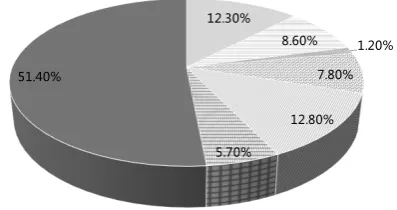
[image:3.595.323.522.77.182.2]where who how what when why other
Figure 2: Question types of the development set.
• The answer cannot be only inferred by a single sentence in the passage if the answer is a single word or short phrase. We encourage the annota-tor to ask the questions that need comprehensive reasoning in the passage to increase the difficul-ties.
• If the answer belongs to a type of named entity, or specific genre (such as date, color, etc.), it can not be the only one in the context, or the machine could easily pick it out according to its type. For example, if there is only one person name appears in the context, then it cannot be used for annotating questions. There should be at least two person names that could mislead the machine for answering.
2.5 Statistics
The general statistics of the pre-processed data are given in Table1. The question type distribution of the development set is given in Figure2.
Train Dev Test Challenge
Question # 10,321 3,351 4,895 504 Answer per Q 1 3 3 3
Max P tokens 962 961 980 916 Max Q tokens 89 56 50 47 Max A tokens 100 85 92 77 Avg P tokens 452 469 472 464 Avg Q tokens 15 15 15 18 Avg A tokens 17 9 9 19
Table 1: Statistics of the CMRC 2018 dataset. (P: Pas-sage, Q: Question, A: Answer)
3 Evaluation Metrics
[image:3.595.311.524.549.651.2]Development Test Challenge
EM F1 EM F1 EM F1
Estimated Human Performance 91.083 97.348 92.400 97.914 90.382 95.248
Z-Reader (single model) 79.776 92.696 74.178 88.145 13.889 37.422
MCA-Reader (ensemble) 66.698 85.538 71.175 88.090 15.476 37.104 RCEN (ensemble) 76.328 91.370 68.662 85.753 15.278 34.479 MCA-Reader (single model) 63.902 82.618 68.335 85.707 13.690 33.964 OmegaOne (ensemble) 66.977 84.955 66.272 82.788 12.103 30.859 RCEN (single model) 73.253 89.750 64.576 83.136 10.516 30.994 GM-Reader (ensemble) 58.931 80.069 64.045 83.046 15.675 37.315 OmegaOne (single model) 64.430 82.699 64.188 81.539 10.119 29.716 GM-Reader (single model) 56.322 77.412 60.470 80.035 13.690 33.990 R-NET (single model) 45.418 69.825 50.112 73.353 9.921 29.324 SXU-Reader (ensemble) 40.292 66.451 46.210 70.482 N/A N/A SXU-Reader (single model) 37.310 66.121 44.270 70.673 6.548 28.116 T-Reader (single model) 39.422 62.414 44.883 66.859 7.341 22.317
BERT-base (Chinese) 63.6 83.9 67.8 86.0 18.4 42.1
BERT-base (Multi-lingual) 64.1 84.4 68.6 86.8 18.6 43.8
Table 2: Baseline results and CMRC 2018 participants’ results. Note that, some of the submissions are using development set for training as well.
the Chinese language is quite different from En-glish, we adapt the original metrics in the follow-ing ways. Note that, the common punctuations, white spaces are ignored for normalization.
3.1 Exact Match
Measure the exact match between the prediction and ground truths that is 1 for the exact match. Otherwise, the score is 0. This is the same as the one proposed byRajpurkar et al.(2016).
3.2 F1-Score
Measure the character-level fuzzy match between the prediction and ground truths. Instead of treat-ing the predictions and ground truths as bag-of-words, we calculate the length of the longest com-mon sequence (LCS) between them and compute the F1-score accordingly. We take the maximum F1 over all of the ground truth answers for a given question. Note that, non-Chinese words will not be segmented into characters.
3.3 Estimated Human Performance
We also report the estimated human performance in order to measure the difficulty of the proposed dataset. As we have illustrated in the previous sec-tion, there are three answers for each question in development, test, and challenge set. Unlike Ra-jpurkar et al. (2016), we use a cross-validation method to calculate the performance. We regard the first answer as human prediction and treat the rest of the answers as ground truths. In this way,
we can get three human prediction performance by iteratively regarding the first, second, and third an-swer as the human prediction. Finally, we calcu-late the average of three results as the final esti-mated human performance on this dataset.
4 Experimental Results
4.1 Baseline System
Following Devlin et al. (2019), we adopt BERT for our baseline system. Specifically, we slightly modify therun squad.pyscript5for adjusting our dataset, while keeping the most of the original implementation. For the baseline system, we used an initial learning rate of 3e-5 with a batch size of 32 and trained for two epochs. The maximum lengths of document and query are set to 512 and 64.
4.2 Results
The results are shown in Table2. Besides the base-line systems, we also include the participants’ re-sults of CMRC 2018 evaluation. We release the training and development set to the public and accepted submissions from participants to evalu-ate their models on the hidden test and challenge set to preserve the integrity of the evaluation pro-cess followingRajpurkar et al.(2016). As we can see that most of the participants could obtain over 80 in the test F1. While compared to F1 met-ric, the EM metric is substantially lower compared
5https://github.com/google-research/
[image:4.595.122.475.63.264.2]to the SQuAD dataset (usually within 10 points). This suggests that how to determine the exact span boundary in Chinese machine reading comprehen-sion plays a key role to improve the system perfor-mance.
Not surprisingly, as shown in the last column of Table2, though the top-ranked systems obtain de-cent scores on the development and test set, they are failed to give satisfactory results on the chal-lenge set. However, as we can see that the es-timated human performance on the development, test, and challenge set are relatively similar, where the challenge set gives slightly lower scores. We also observed that though Z-Reader obtains best scores on the test set, it failed to give consistent performances on the EM metric of the challenge set. This suggests that the current reading compre-hension models are relatively not capable of han-dling difficult questions that need comprehensive reasoning among several clues in the passage.
BERT-based approaches show competitive performance against participants submissions.6 Though traditional models have higher scores in the test set, when it comes to the challenge set, BERT-based baselines are consistently higher, demonstrating that rich representation provided by BERT is beneficial for solving harder questions and generalize well among both easy and hard questions.
5 Conclusion
In this work, we propose a span-extraction dataset for Chinese machine reading comprehension. The dataset is annotated by human experts with near 20,000 questions as well as a challenging set which is composed of the questions that need rea-soning over multiple clues. The evaluation re-sults show that the machine could give excellent scores on the development and test set with only near 10 points below the estimated human perfor-mance in F1-score. However, when it comes to the challenge set, the scores are declining dras-tically while the human performance remains al-most the same with the non-challenge set, indicat-ing that there are still potential challenges in de-signing more sophisticated models to improve the performance. We hope the release of this dataset could bring language diversity in machine reading
6As CMRC 2018 workshop was held before the
publica-tion of BERT, systems of the participants are not based on BERT.
comprehension task, and accelerate further inves-tigation on solving the questions that need com-prehensive reasoning over multiple clues.
Open Challenge
We would like to invite more researchers doing ex-periments on our CMRC 2018 dataset and evalu-ate on the hidden test and challenge set to further test the generalization of the models. You can fol-low the instructions on our CodaLab Worksheet to submit your model via https://bit.ly/ 2ZdS8Ct
Acknowledgments
We would like to thank the anonymous review-ers for their thorough reviewing and providing thoughtful comments to improve our paper. We would like to thank our resource team for anno-tating and verifying evaluation data. Also, we thank the Seventeenth China National Confer-ence on Computational Linguistics (CCL 2018)7 and Changsha University of Science and Technol-ogy for providing venue for evaluation workshop. This work was supported by the National Natu-ral Science Foundation of China (NSFC) via grant 61976072, 61632011 and 61772153.
References
Wanxiang Che, Zhenghua Li, and Ting Liu. 2010. Ltp: A chinese language technology platform. In Pro-ceedings of the 23rd International Conference on Computational Linguistics: Demonstrations, pages 13–16. Association for Computational Linguistics.
Yiming Cui, Zhipeng Chen, Si Wei, Shijin Wang, Ting Liu, and Guoping Hu. 2017. Attention-over-attention neural networks for reading comprehen-sion. InProceedings of the 55th Annual Meeting of the Association for Computational Linguistics (Vol-ume 1: Long Papers), pages 593–602. Association for Computational Linguistics.
Yiming Cui, Ting Liu, Zhipeng Chen, Wentao Ma, Shi-jin Wang, and Guoping Hu. 2018. Dataset for the first evaluation on chinese machine reading compre-hension. In Proceedings of the Eleventh Interna-tional Conference on Language Resources and Eval-uation (LREC 2018). European Language Resources Association (ELRA).
Yiming Cui, Ting Liu, Zhipeng Chen, Shijin Wang, and Guoping Hu. 2016. Consensus attention-based neural networks for chinese reading comprehension.
7http://www.cips-cl.org/static/
In Proceedings of COLING 2016, the 26th Inter-national Conference on Computational Linguistics: Technical Papers, pages 1777–1786. The COLING 2016 Organizing Committee.
Jacob Devlin, Ming-Wei Chang, Kenton Lee, and Kristina Toutanova. 2019. BERT: Pre-training of deep bidirectional transformers for language under-standing. In Proceedings of the 2019 Conference of the North American Chapter of the Association for Computational Linguistics: Human Language Technologies, Volume 1 (Long and Short Papers), pages 4171–4186, Minneapolis, Minnesota. Associ-ation for ComputAssoci-ational Linguistics.
Bhuwan Dhingra, Hanxiao Liu, Zhilin Yang, William Cohen, and Ruslan Salakhutdinov. 2017. Gated-attention readers for text comprehension. In Pro-ceedings of the 55th Annual Meeting of the Associa-tion for ComputaAssocia-tional Linguistics (Volume 1: Long Papers), pages 1832–1846. Association for Compu-tational Linguistics.
Wei He, Kai Liu, Yajuan Lyu, Shiqi Zhao, Xinyan Xiao, Yuan Liu, Yizhong Wang, Hua Wu, Qiao-qiao She, Xuan Liu, et al. 2017. Dureader: a chinese machine reading comprehension dataset from real-world applications. arXiv preprint arXiv:1711.05073.
Karl Moritz Hermann, Tomas Kocisky, Edward Grefenstette, Lasse Espeholt, Will Kay, Mustafa Su-leyman, and Phil Blunsom. 2015. Teaching ma-chines to read and comprehend. InAdvances in Neu-ral Information Processing Systems, pages 1684– 1692.
Felix Hill, Antoine Bordes, Sumit Chopra, and Jason Weston. 2015. The goldilocks principle: Reading children’s books with explicit memory representa-tions. arXiv preprint arXiv:1511.02301.
Minghao Hu, Yuxing Peng, Zhen Huang, Xipeng Qiu, Furu Wei, and Ming Zhou. 2018. Reinforced mnemonic reader for machine reading comprehen-sion. In Proceedings of the Twenty-Seventh In-ternational Joint Conference on Artificial Intelli-gence, IJCAI-18, pages 4099–4106. International Joint Conferences on Artificial Intelligence Organi-zation.
Rudolf Kadlec, Martin Schmid, Ondˇrej Bajgar, and Jan Kleindienst. 2016. Text understanding with the at-tention sum reader network. InProceedings of the 54th Annual Meeting of the Association for Compu-tational Linguistics (Volume 1: Long Papers), pages 908–918. Association for Computational Linguis-tics.
Guokun Lai, Qizhe Xie, Hanxiao Liu, Yiming Yang, and Eduard Hovy. 2017. Race: Large-scale reading comprehension dataset from examinations. In Pro-ceedings of the 2017 Conference on Empirical Meth-ods in Natural Language Processing, pages 785– 794. Association for Computational Linguistics.
Ting Liu, Yiming Cui, Qingyu Yin, Wei-Nan Zhang, Shijin Wang, and Guoping Hu. 2017. Generating and exploiting large-scale pseudo training data for zero pronoun resolution. InProceedings of the 55th Annual Meeting of the Association for Computa-tional Linguistics (Volume 1: Long Papers), pages 102–111. Association for Computational Linguis-tics.
Tri Nguyen, Mir Rosenberg, Xia Song, Jianfeng Gao, Saurabh Tiwary, Rangan Majumder, and Li Deng. 2016. Ms marco: A human generated machine reading comprehension dataset. arXiv preprint arXiv:1611.09268.
Pranav Rajpurkar, Jian Zhang, Konstantin Lopyrev, and Percy Liang. 2016. Squad: 100,000+ questions for machine comprehension of text. InProceedings of the 2016 Conference on Empirical Methods in Nat-ural Language Processing, pages 2383–2392. Asso-ciation for Computational Linguistics.
Matthew Richardson, Christopher JC Burges, and Erin Renshaw. 2013. Mctest: A challenge dataset for the open-domain machine comprehension of text. In Proceedings of the 2013 Conference on Empiri-cal Methods in Natural Language Processing, pages 193–203.
Chih Chieh Shao, Trois Liu, Yuting Lai, Yiying Tseng, and Sam Tsai. 2018. Drcd: a chinese machine reading comprehension dataset. arXiv preprint arXiv:1806.00920.
Adam Trischler, Tong Wang, Xingdi Yuan, Justin Har-ris, Alessandro Sordoni, Philip Bachman, and Ka-heer Suleman. 2016. Newsqa: A machine compre-hension dataset. arXiv preprint arXiv:1611.09830.
Shuohang Wang and Jing Jiang. 2016. Machine com-prehension using match-lstm and answer pointer.
arXiv preprint arXiv:1608.07905.
Wei Wang, Ming Yan, and Chen Wu. 2018. Multi-granularity hierarchical attention fusion networks for reading comprehension and question answering. In Proceedings of the 56th Annual Meeting of the Association for Computational Linguistics (Volume 1: Long Papers), pages 1705–1714. Association for Computational Linguistics.
Wenhui Wang, Nan Yang, Furu Wei, Baobao Chang, and Ming Zhou. 2017. Gated self-matching net-works for reading comprehension and question an-swering. InProceedings of the 55th Annual Meet-ing of the Association for Computational LMeet-inguistics (Volume 1: Long Papers), pages 189–198. Associa-tion for ComputaAssocia-tional Linguistics.
Caiming Xiong, Victor Zhong, and Richard Socher. 2016. Dynamic coattention networks for question answering. arXiv preprint arXiv:1611.01604.