SIMT: A holistic framework for embedding simulation into
the health care systems.
HUGHES, Ruby Wai Chung.
Available from Sheffield Hallam University Research Archive (SHURA) at:
http://shura.shu.ac.uk/19844/
This document is the author deposited version. You are advised to consult the publisher's version if you wish to cite from it.
Published version
HUGHES, Ruby Wai Chung. (2010). SIMT: A holistic framework for embedding
simulation into the health care systems. Doctoral, Sheffield Hallam University (United Kingdom)..
Copyright and re-use policy
See http://shura.shu.ac.uk/information.html
I /“vusetus oeiure, Ufiy uampus
Sheffield S1 1WD
«»^-rra^-^^jmaS“3fMii6raKa<5CTjw»gKaE«<ganrmegj og:o»»irgij-ii.i^ ji w
1 0 1 9 7 7 9 9 5 0
Sheffield Hallam University Learning and Information Services
ProQuest N um ber: 10697150
All rights reserved INFORMATION TO ALL USERS
The quality of this reproduction is dependent upon the quality of the copy submitted. In the unlikely event that the author did not send a complete manuscript and there are missing pages, these will be noted. Also, if material had to be removed,
a note will indicate the deletion.
uest
ProQuest 10697150
Published by ProQuest LLC(2017). Copyright of the Dissertation is held by the Author.
All rights reserved.
This work is protected against unauthorized copying under Title 17, United States Code Microform Edition © ProQuest LLC.
ProQuest LLC.
789 East Eisenhower Parkway P.O. Box 1346
SIMT: A Holistic Framework for Embedding Simulation into the
Health Care Systems
Ruby Wai Chung Hughes
A thesis submitted in partial fulfilment of the requirements of Sheffield Hallam University
for the degree of Doctor of Philosophy
Abstract
Simulation and Modelling (S&M) have been proven as very valuable tools in the health care sector. In recent years, the sector has experienced a rapid increase in applications. However, it appears that health care organisations have failed to sustain the use of these powerful techniques.
In this research, an extensive literature review is carried out to identify the main challenges of the use of health care simulation and the underlying barriers of implementing S&M in the sector. In order to address these issues, it identifies the need to fully embed S&M into the sector through a systematic approach. However, the literature in this subject area has not provided such a holistic approach to the use of simulation.
With the view to embed these techniques in health care decision making processes, this research develops a new framework, known as SIMulation Thinking (SIMT), to overcome the identified challenges and barriers. SIMT includes five key components: infrastructure, management, culture change, methodology and modelling.
Whilst the SIMT framework presents the important elements that need to be considered to make S&M mainstream tools, this research also presents an implementation framework which transforms SIMT into a practical and applicable approach to embed S&M in health care organisations. The
implementation framework includes two main stages: planning stage and action stage.
Questionnaire and case study approach are conducted to validate the usefulness and importance of the SIMT components and the proposed implementation framework. The questionnaire is used to understand how the selected group of experts consider the SIMT components and the planning stage of the implementation framework as a valuable guideline.
Acknowledgements
I would like to thank all of those people who have helped me during my student life at Sheffield Hallam University.
First, I would like to express my most sincere thanks to my supervisor Professor Terrence Perera, for the trust he displayed in my abilities, for his guidelines, and his constant support throughout my work in this thesis.
I would like to thank the staff from the faculty of Arts, Computing, Engineering and Sciences (ACES) and Materials and Engineering Research Institute (MERI) for providing the facilities and academic support I required.
My sincere thank to Mr Derek Burke for his advice and valuable information for my research.
I would like to give my special thanks to my husband Ben for his love,
encouragement, patience and support; for giving me a comfortable life without worry, without you this work could not be completed.
Table of Contents
Abstract... II Acknowledgements...IV Table of Contents...V List of Figures... VII List of Tables... IX
1 CHAPTER ONE: INTRODUCTION... 10
1.1 Introduction to health care system...10
1.2 Simulation and modelling in health sector... 11
1.3 Challenges for health care simulation...14
1.4 Research objectives... 15
1.5 Thesis structure...16
1.6 Summary... 18
2 CHAPTER TWO: LITERATURE REVIEW...19
2.1 Introduction...19
2.2 The overview of health care simulation development... 19
2.3 Current status of health care simulation...23
2.4 Barriers of Embedding Simulation into a Health Care System... 25
2.4.1 Health Care Complexity... 25
2.4.2 Multiple Stakeholders...26
2.4.3 Cultural resistance...27
2.4.4 Lack of simulation knowledge...27
2.4.5 Time and Cost... 28
2.4.6 Modelling accuracy...29
2.5 World-class quality and process improvement approaches embedded in health care...30
2.5.1 Total Quality Management...30
2.5.2 Lean management... 32
2.5.3 Six-sigma Quality...34
2.6 Research Gap...36
2.7 Summary... 37
3 CHAPTER THREE: DISCRETE EVENT SIMULATION AND SYSTEM DYNAMICS APPROACHES... 39
3.1 Introduction...39
3.2 Discrete event simulation in health care... 40
3.2.1 Theory and methods...40
3.2.2 Objects in a DES model... 41
3.2.3 Logics in a DES model...42
3.2.4 Operations in a DES model...43
3.2.5 Use of discrete event simulation for decision making... 45
3.2.6 Limitations... 48
3.2.7 Discrete event simulation software package: ARENA... 49
3.3 System Dynamics in health care...51
3.3.1 Theory and methods... 52
3.3.2 System structure in system dynamics...52
3.3.3 Type of diagrams in system dynamics...54
3.3.4 Use of system dynamics for decision making...57
3.3.5 Limitations... 60
3.3.6 System dynamics software package: Stella/iThink...61
4 CHAPTER FOUR: FRAMEWORK METHODOLOGY AND CRITICAL
COMPONENTS...65
4.1 Introduction... 65
4.2 Framework development... 66
4.3 Framework validation methodology... 68
4.3.1 Part one validation... 68
4.3.2 Part two validation... 70
4.4 Research approach summary...71
4.5 Initial framework components...72
4.5.1 SIMT Components... 74
4.6 Critical success factors... 76
4.6.1 Success factors for embedding world-class quality and process improvement approaches in the health sector... 77
4.6.2 Best practices for embedding S&M in manufacturing sector... 77
4.6.3 Critical issues for embedding new systems in the NHS...79
4.7 Framework components to success factors mapping...81
4.8 Summary... 82
5 CHAPTER FIVE: SIMT IMPLEMENTATION FRAMEWORK... 83
5.1 Introduction... 83
5.2 SIMT Implementation framework overview...84
5.3 SIMT Implementation framework description... 85
5.3.1 Planning stage for local management level and national management level ... 86
5.3.2 Action stage for modelling health care system at operational level.... 104
5.3.3 Action stage for modelling health care system at strategic level 118 5.4 Summary... 135
6 CHAPTER SIX: SIMT IMPLEMENTATION FRAMEWORK VALIDATION .... 136
6.1 Introduction...136
6.2 Validation of the framework components and the planning stage... 137
6.2.1 SPSS Output... 138
6.2.2 Output analysis...139
6.3 Framework validation through application of case study...142
6.3.1 Case study for validating the modelling approach at operational level 143 6.3.2 Case study for validating the modelling approach at strategic level... 150
6.4 Summary... 159
7 CHAPTER SEVEN: CONCLUSIONS AND RECOMMENDATIONS...160
7.1 Conclusions...160
7.2 Contributions to knowledge... 162
7.3 Recommendations for further work...163
7.3.1 Continuous improvement in a real-world organisation...163
7.3.2 Additional case studies at national level...164
References... 165
Appendix A Questionnaire for evaluating SIMT implementation framework Appendix B Evaluation form for SIMT implementation framework (Action
Stage)
Appendix C Interview questions and analysis
Appendix D Example of building simulation model with Healthcare OR Template
Appendix E Example of embedding Excel spreadsheet to a SD model in Stella®
Appendix F SPSS results
List of Figures
Figure 1-1 Number of papers in health care simulation (adapted from Gunal and
Pidd, 2010)... 13
Figure 1-2 Number of papers in the area of system dynamics and health (adapted from Brailsford, 2008)...13
Figure 2-1 Steps in simulation study (Law, 2007)... 21
Figure 3-1 Basic function of a discrete event simulation model (adapted from Pidd, 2003)...41
Figure 3-2 Relationship between states, events, activities and processes (Pidd, 2003)... 43
Figure 3-3 Operation flow in discrete event simulation model (Law, 2007)...44
Figure 3-4 Arena model for a GP clinic system... 50
Figure 3-5 Arena animation for the GP clinic system example... 51
Figure 3-6 Relationships between levels and rates (adapted from Pidd, 2003) 53 Figure 3-7 Patient recovery status over certain times...53
Figure 3-8 an example of a causal loop diagram... 54
Figure 3-9 Example of a stock and flow diagram... 56
Figure 3-10 Main feedback loops of the community care model (adapted from Wolstenholme, 1993)... 58
Figure 3-11 Causal loop diagram and stock and flow model from the A&E study (adapted from Lane et a/., 2000)...59
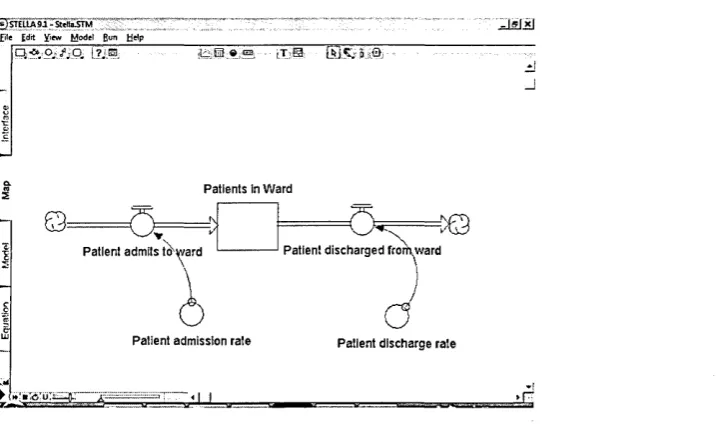
Figure 3-12 Snapshot of Stella interface...61
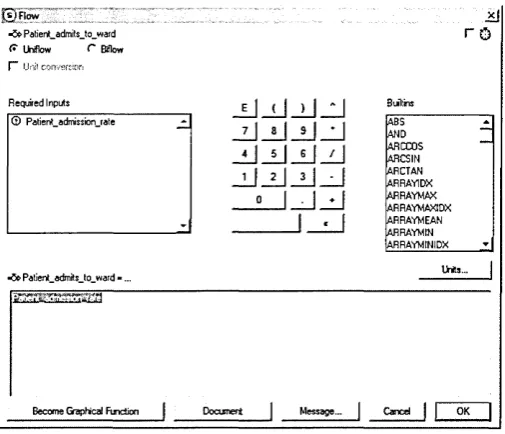
Figure 3-13 STELLA data input interface (integer/equation format)... 62
Figure 3-14 STELLA data input interface (graphical function format)... 62
Figure 3-15 STELLA equation interface...63
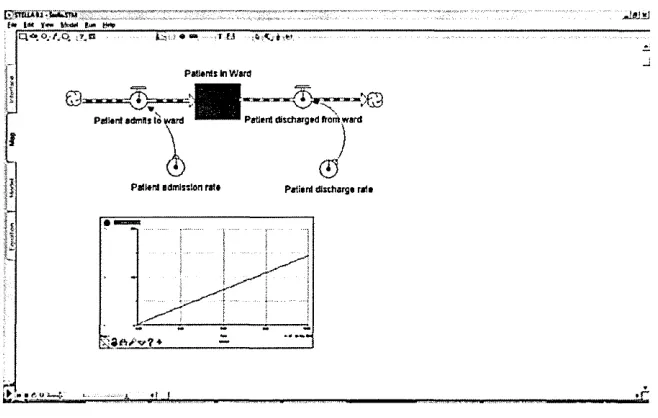
Figure 3-16 STELLA interface - after simulation run... 63
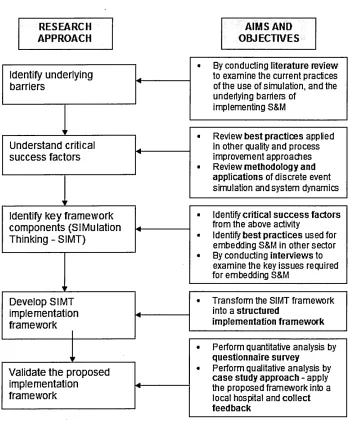
Figure 4-1 Framework development and validation methodology diagram 67 Figure 4-2 Research methodology... 71
Figure 4-3 SIMT (SIMulation Thinking) framework components... 72
Figure 4-4 Framework for embedding simulation in manufacturing (Hughes and Perera, 2009)...78
Figure 5-1 Basic structure of the SIMT Implementation framework... 85
Figure 5-2 Detailed SIMT Implementation framework...86
Figure 5-3 Problem solving approach (adapted from Evans and Lindsay, 2005) ...91
Figure 5-4 Cause and effect diagram - with effect... 107
Figure 5-5 Cause and effect diagram - with main categories of causes... 107
Figure 5-6 Cause and effect diagram - with all the possible underlying causes 108 Figure 5-7 Proposed discrete event simulation modelling cycle...109
Figure 5-8 Example of patient pathway in A&E department...114
Figure 5-9 Example of patient pathway in Outpatient department... 114
Figure 5-10 Example of patient pathway in Inpatient department...114
Figure 5-11 Proposed customised template for developing operational health care models... 117
Figure 5-12 Cause and effect diagram - with main target (Effect)...121
Figure 5-15 Causal loop diagram to demonstrate demand and capacity
feedback relationship within a health care system...127
Figure 5-16 Example of a stock and flow diagram using STELLA® software .128 Figure 5-17 Process flow mapping of an A&E system...131
Figure 5-18 Process flow diagram with the key patient statuses in an A&E system... 132
Figure 5-19 System rates that can cause changes within an A&E system...133
Figure 5-20 An example of stock and flow model built in Stella® software...134
Figure 6-1 Respondents with simulation experience... 138
Figure 6-2 Process flow diagram of the A&E department...144
Figure 6-3 Snapshot of the DES model logic... 145
Figure 6-4 Model data within excel spreadsheet (Patient arrival pattern)...146
Figure 6-5 Model data within Excel spreadsheet (staff capacity)...146
Figure 6-6 2D animation of the A&E simulation model... 147
Figure 6-7 Simulation results with waiting time... 148
Figure 6-8 18-week pathway diagram...151
Figure 6-9 Cause and effect diagram - proposed strategies for meeting the 18-week target... 152
Figure 6-10 SD model - capacity planning module... 153
Figure 6-11 SD model - 1st outpatient journey module... 154
Figure 6-12 SD model - follow up outpatient journey module...155
Figure 6-13 SD simulation results of the total discharge figures...156
List of Tables
Table 2-1 Organisational framework for the development of TQM environment (Isouard, 1999)...31 Table 2-2 Five-step process for guiding the implementation of lean in health
care (Westwood and Silvester, 2006)...33 Table 2-3 DMAIC methodology for applying a six-sigma project (Westwood and
Silvester, 2006)...35 Table 4-1 Framework components and success factors mapping table 81 Table 5-1 Leadership characteristics (Peck, 2006)... 88 Table 5-2 Key skills for a simulation leader...89 Table 5-3 Key characteristics of the proposed teams... 92 Table 5-4 Key simulation skills for supporting simulation development 94 Table 5-5 Key differences between traditional culture and SIMT culture in health care management...103 Table 5-6 Key management objectives for an operational health care system
106 Table 5-7 Simulation project objectives for health care operational system.... 110 Table 5-8 Example of model entities and resources in health care models ....115 Table 5-9 Example of model data for health care models...116 Table 5-10 Strategic targets for the UK health care system (DoH, 2008)... 120 Table 5-11 Mapping of key strategies and relevant system elements/variables
122
Chapter 1 Introduction
1 CHAPTER ONE: INTRODUCTION
1.1 Introduction to health care system
Providing high quality and efficient health care services is always the first priority for today’s health care organisations. In the United Kingdom (UK), increasing government funding has been allocated to public health care services (the National Health Service (NHS) spent over £80 billion in 2009 to 2010 (DoH, 2009)). The NHS has been providing health care services to millions of potential patients for over 50 years. The aim has never changed - provide excellent and efficient health services under a safe environment. However, today’s changing demographics and increasing people expectations are putting much pressure on the NHS along with other such organisations around the world.
Chapter 1 Introduction Health care organisations are currently meeting all these national targets by frequently reviewing the patient pathways and redesigning the care delivery. In the operational areas, the main responsibilities for them include continuously review and improve the performance of the patient throughput, waiting times and length of stay. These improvements are necessary to achieve improved performance of the patient flow, the effectiveness of the resource allocation and the efficiency of the patient scheduling and admissions.
Health care strategic decision-makers on the other hand need to consider vague, complex and non-routine decisions, such as where to invest capital, where to expand service lines, or whether to start a new surgery centre
(Parayitam and Phelps, 2007). The challenges for these health care managers are not only considering the financial viability, quality of care and safety of patient, they have to consider many uncertainty factors such as human behaviour, social factors and political issues during the decision processes.
1.2 Simulation and modelling in health sector
Chapter 1 Introduction Simulation models can be classified into three main dimensions:
• Static vs. Dynamic simulation models
• Deterministic vs. Stochastic simulation models • Continuous vs. Discrete simulation models
The full description of their characteristics can be found in Law (2007). In this research, we mainly focus on two types of simulation models: discrete event
simulation (DES) models and system dynamics (SD) models.
Although there are many differences between these two simulation models (Morecroft and Robinson 2005), one of the common characteristics of these two simulation models is their abilities to model uncertainty and complexity of a system. As well as providing a risk-free environment in which to investigate how alternative policies or changes could improve the performance of a system.
Chapter 1 Introduction
600
b Patient HHealthcare ■ Hospital 500 ■
400
-3 200 ■
1Q0
2000 2001 2002 2003 2004 2005 200G 2007 2008 Years
Figure 1-1 Number of papers in health care simulation (adapted from Gunal and Pidd, 2010)
Despite the fact that SD approach is comparatively new to the sector, literature review shows the use of SD is also expanding rapidly within the last few years (Brailsford, 2008). Figure 1.2 shows the number of publications in relation to system dynamics and health care from year 1980 to 2007.
20D
153
1D3
53
0
1933 1985 1930 1995 20*30 2D05
Figure 1-2 Number of papers in the area of system dynamics and health (adapted from Brailsford, 2008)
Chapter 1 Introduction have already been used for studying vary decisions in medical, administrative or operational areas.
A similar review has been conducted by Brailsford (2007) which provides
excellent case studies which proved S&M has a great potential to address many complicated health care issues. Brailsford classifies them into three main types of models - human models, operational models and strategic models.
1.3 Challenges for health care simulation
Despite the proliferation of publications and studies of health care simulation, it appears that health care industries have failed to sustain the use of these powerful techniques. Many researchers have argued the current approach of using simulation in the sector is not practical.
Pidd (2008) comments that the majority of the simulation based solutions have been produced by academics and/or consultants with a relatively low
engagement of clinicians and/or operational managers. This leads to the
situation in which the “given” solutions failed to solve the real problems (kulijis et al, 2007).
Chapter 1 Introduction The problem of getting health care models implemented seems to be becoming a focus for many researchers (Lowery, 1994; Eldabi eta i, 2007; Brailsford, 2007). Many authors comment it is difficult to identify the actual value of modelling in health sector because the evidence of implementation was so limited (Fone et a/., 2003; Sobolev et al, 2009).
Therefore, to facilitate more effective and efficient use of S&M in the sector, many of these authors argue that there is a need for a more holistic approach to the use of simulation (Gaba, 2004; Eldabi et al., 2007). On the other hand, some others argue that there is a need to develop “generic” health care models (Gunal and Pidd, 2007; Augusto et al., 2007). However, none of these can be achieved unless underlying barriers are identified and addressed.
1.4 Research objectives
A review of relevant literature did not reveal any published work contributed a holistic approach for guiding the implementation of S&M in the sector.
The main aim of this research is to develop a holistic implementation framework for embedding simulation into the health care systems.
The main objectives of this research are:
- examine the current practices of health care simulation
- identify underlying barriers that impede the use of S&M within the sector - examine the key issues of applying discrete-event simulation and system
dynamics approaches within health care environment
Chapter 1 Introduction - investigate the best practices from the other quality and process
improvement approaches which has already been embedded within the sector
- validate the proposed framework by questionnaire and case studies
1.5 Thesis structure
A summary of each chapter is listed below:
1. Introduction; introduces the characteristics of today’s health care system, and the requirement of today’s health care management. Introduces the use of health care simulation and identifies its main challenges. Identifies the key objectives of this research.
2. Literature review; reviews and summarises the current practices and challenges of health care simulation development. Reviews and discusses the main barriers of embedding S&M into the health care systems, and the best practices that have been applied for
implementing other world-class management approaches in the health care. Finally, identifies the research gap to be filled.
3. Discrete event simulation and System dynamics approaches; introduces the methodology and discusses the modelling
Chapter 1 Introduction 4. Framework methodology and critical components; presents the
development approach and describes the methodology used for validating the proposed framework. Provides an overview of the research approach and the key objectives of each research activity. Presents the initial framework which includes the critical components that are then used as a basis for developing the implementation framework. Finally, maps the proposed critical components with the identified success factors to ensure the initial framework are
sustained by sound theory.
5. SIMT framework; introduces the principle and basic structure of the proposed implementation framework. Presents and discusses the proposed approaches for guiding health care practitioners to implement the critical components in order to successfully embed S&M for supporting varies decision making in local or national management level.
Chapter 1 Introduction
7. Conclusions and recommendations; summarises the objectives
met from this research. Identifies the author’s major contributions to the knowledge of health care simulation and modelling. Finally,
identifies and presents future recommendations for this research area.
1.6 Summary
Chapter 2 Literature Review
2 CHAPTER TWO: L
ITERATURE REVIEW
2.1 Introduction
This chapter reviews the previous research and literature relevant to the current practices and examines the existing problems of using S&M within the health care sector. The chapter goes into detail about the existing barriers of
embedding simulation into the health care sector, with regard to the research objective of the thesis (mentioned in Chapter one), which highlights the critical issues needed to be overcome by a systematic framework. In addition, a review of three world-class quality and process improvement approaches that have been successfully embedded within most of the health organisations has been conducted. Finally, it examines and discusses the main success factors which have been applied in overcoming the barriers of embedding new management approaches within health care organisations.
2.2 The overview of health care simulation development
Simulation and modelling is one of the most widely used operations research tools which have been used to evaluate, improve, and optimise many types of processes. In general, simulation models have been developed mainly for understanding the behaviour of a system and to practice its control, estimating some variables of interest from the behaviour of the simulation, and in
Chapter 2 Literature Review
The review of literature shows that the development of health care simulation applications has been dominated by research organisations and external consultancies (Pidd, 2008). One of the main reasons is this group of researchers are enthusiastic to promulgate simulation in this area. Their applications are commonly used to target problems of a more generic aspect. Therefore, the development time and cost involved in this type of application is usually long and expensive. Managers from the health care organisations on the other hand are typically willing to have simulation models which can
effectively support the improvement of care and patient safety, improvement of efficiency, reduction of cost and errors and competition with other organisations (Gaba, 2004). Therefore, these simulation models developed in-house by health care organisations are usually targeted at a more specific area of concern. Additionally, the time scale of the development process is often shorter and is more cost effective.
As computing technology is becoming more advanced and user-friendly, there are many simulation software packages which are available for the non
programmer. This benefits for example health care managers who typically cannot spend too much time on operating complex programming tools.
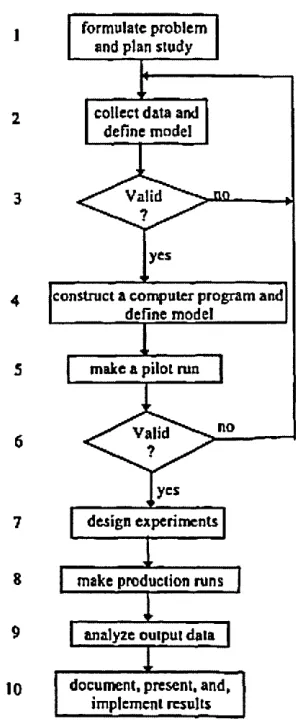
However, it is important to understand that model programming is just part of the overall effort to analyse a complex system by simulation (Law, 2007). In fact, there are other critical processes which are always involved in most of the
Chapter 2 Literature Review
8
9
10
Valid m .
yes
no Valid
yes
make production runs
analyze ouipm data make a pilot run
design experiments collect data and
define model formulate problem
and plan study
document, present, and, implement results
[image:24.612.229.377.25.388.2]construct a computer program and define model________
Figure 2-1 Steps in simulation study (Law, 2007)
Although the simulation process shown in Figure 2-1 can be applied to most of the simulation studies, there are particular concerns when applying to health care modelling. The environment within a health sector is very different from most of the other industries, there are many uncertainties, complex scenarios and human issues which are difficult to adjudge before a simulation study. One of the main challenges within the development of health care simulation models is the data collection process (Lowery, 1998). For example there can be
Chapter 2 Literature Review
enough for a health care model (Baldwin et al., 2004). The main reasons are the changes that may occur in medical technology, policies, and socio economic values can cause the collected data to become invalid. Secondly, health care professionals may sometimes provide less than accurate data for varying reasons (Eldabi, 2002).
Health care modellers often ignore the importance of the validation process; this issue has been reported in the literature as a major problem (Lowery, 1998). Within Law’s simulation process model (Figure 2-1), validation process (i.e. step 6 in Law’s model) is a major process which can affect the success of the whole development. For example, if the developing model is found to have failed to represent the real system or situation, it is necessary to return back to the early steps, find out either there is the problem of the collected data or the model structure etc. Without this process, the final model can become useless for problem owners. However, health care modellers often pay less attention to this step, perhaps this is because the uncertainty and different human issues which causes these modellers to be unable to spend too much time and effort on this process.
Similar issues have also been raised within a review of the use and value of simulation in health care (Fone et al., 2003). These authors comment there is lack of evidence of implementation found within the reviewed papers. Without the outcomes of model implementation, this is difficult to judge the actual value of a model. According to a recent review of the health care publications
Chapter 2___________________________________________Literature Review simulation models that are implemented to address the needs of the health care managers or the problem owners.
2.3 Current status of health care simulation
Over the last two decades, the research and development of health care simulation has in fact become a popular topic within health care literature. A majority of these interests has focused on how simulation modelling can be used for addressing the complex health care issues. Health care simulation models have been employed extensively for assisting a wide range of clinical decision making, such as capacity planning, resource allocation and
organisation redesign.
As the development of health care models has grown substantially over recent years, there is increasing concern about the ‘true’ value of these health care models for the health care communities and managers. Pidd (2008) comments that the health care community and managers are still not ready to operate a simulation software tool. The great majority of these health care models are still developed by commercial consultants and/or research organisations. In fact, reviews of the literature show that the involvement of health care managers and policy makers in these simulation studies are very limited (Sobolev et al., 2009). The current practices of using simulation in the health sector is tool-driven, health care managers are only applying a ‘ready-made’ solution (Kulijis et al.,
Chapter 2 Literature Review
Increasingly, studies in literature are addressing the future of health care modelling. Most of this concern focuses on the need to implement S&M within health care systems, so that it can be used on a regular basis by health care managers or policy-makers (Kuljis etal., 2007; Eldabi etal., 2007; Pidd, 2008). Back in the 1990s, Lowery (1994) has already discussed some barriers of implementing simulation in health care. His studies show that in order to reap the full benefit of simulation, implementing this technique within health care system is a necessity. There is still no evidence to show that simulation has been successfully implemented within the health care system.
There is no doubt that implementing simulation techniques into an organisation system is always a big challenge. It is necessary to have some guidelines or toolkits which can provide best practices or procedures for guiding these professionals. For instance, Hughes and Perera (2009) develop a five stage framework which provides manufacturing professionals a systematic guideline to embed simulation into business processes from foundation, introduction, infrastructure, deployment to embedding. However, health care sector has its unique characteristics and different human issues. Therefore, the guidelines which can provide health care professionals to embed simulation into their systems have to be considered all the unique issues and to be able to apply hierarchically.
Chapter 2 Literature Review
2.4 Barriers of Embedding Simulation into a Health Care
System
As stated in the previous section, there is still no evidence to show that S&M has been embedded into health care systems as a routine tool. In fact,
embedding simulation techniques into a health care system is not an easy task. Compared to other business sectors, health care systems are characterised by different human issues and unique characteristics. Some of these issues in fact bring a number of problems to modellers when employing simulation to the health care systems. The following sub-sections discuss these barriers in detail.
2.4.1 Health Care Complexity
One of the main barriers for employing simulation extensively within health care systems is their complex nature. In most cases, health care processes involve patients, healthcare professionals and health resources, in which their
interactions are too complex to be understood analytically. One of the critical processes within a simulation study is to formulate problem during the
beginning stage (Law and Kelton, 1991). Pidd (1998) suggests that this stage is the attempt to take an overlook to the system and to extract from it some
agreement about the particular problems which might be amenable to analysts. However, unlike most of the routine manufacturing processes, health care systems involve random events, multiple characteristics of patients and
Chapter 2 Literature Review
Many of the simulation studies reported failed because modellers attempt to examine everything at once (Lowery, 1994). In most cases, these studies either failed to focus on the defined problem or were terminated as a result of
spending too much effort and time on details. However, these practices in health care modelling are sometimes unavoidable because of its complex nature. For example each patient can go through various patient pathways through the process of care. There is much uncertainty and variability involved such as patient demand, length of stay, treatment times, delays or resources availability. These processes are simply too complicated to be reduced, health care modellers have no choice but to include all these details in a model.
2.4.2 Multiple Stakeholders
Health care systems are mainly composed of patients and health care
Chapter 2 Literature Review
2.4.3 Cultural resistance
One of the other barriers for the slow acceptance of the use of simulation in the health care sector is cultural resistance. Traditionally, health care managers relied primarily on simpler, deterministic decision making (Lowery, 1994). Simulation might be seen as a complicated tool which requires high level technical skills and complicated procedures. Pidd (2008) comments that health care managers nowadays are just not feeling as ready to operate simulation software tool as they are in currently opening a spreadsheet.
In fact, health care managers always view simulation-based solutions as “black- box” answers to complex problems (Lowery, 1994). They often feel
uncomfortable to the validity of the distributions employed in the analyses or the unpredictability of the outcomes. In general, health care clinicians and care providers are the main resources within a health system. They simply do not like being analysed, viewed or treated in the same way as machines within a simulation model. In addition, this group of staff often has less chance to get involved in the model building until a problem is identified. Therefore, simulation might be seen as a management tool which is not welcome by clinicians and other care providers (Eldabi et ai, 2007)
2.4.4 Lack of simulation knowledge
Chapter 2 Literature Review
system. However, this kind of simulation training is apparently absent within the health care culture. There are two reasons. First, there is lack of incentives for health care managers and decision makers to employ simulation within their routine decision making. As today’s health care environment is in a state of such rapid change, these decision makers cannot afford to spend too much time developing models of systems which may become outdated as soon as they are completed. Additionally, the actual value of simulation for the health care managers is still not yet been clearly proven. (Sobolev et ai, 2009).
Secondly, the health care sector is traditionally responsive and sensitive to political influence and control (Kuljis et a/., 2007). However, organisations do not warrant an investment in simulation software and the associated training, instead the allocated funds are usually spent on patient accounting and medical information systems.
2.4.5 Time and Cost
Literature shows that the development of health care simulation is still
dominated by external consultancies and/or research organisations (Pidd, 2008). As discussed previously, one of the main reasons for this current practice is due to the lack of simulation knowledge among health care managers and decision makers. However, in most cases, these external modellers simply spend too much time and effort in search of a level of complexity that was totally
Chapter 2 Literature Review
Because of these reasons, these models were often terminated due to the costing issue, or the finished models were invalid due to the changes in the current situation. This current practice of developing health care models is basically too time-consuming and not cost-effective enough for the health care sector.
2.4.6 Modelling accuracy
The problem of accuracy in health care simulation models is mainly the consequence of most of the issues that have been discussed above. These issues include the complexity and variable nature of health care processes, different views from multiple-stakeholders, no involvement of managers or clinical staff during model building processes, and the domination of external consultancies in simulation development.
Problems of the accuracy in health care modelling mainly focus on model accuracy and data accuracy. Eldabi et al. (2002) reports model accuracy highly depends on defining a right ‘problem’ at the initial stage of the development. However within health care systems, problems are often not well defined. Additionally, it is unlikely that external modellers can really understand health care ‘from the inside’ because of the lack of communication between
Chapter 2 Literature Review
measure and predict for example patient arrive times, patient waiting times or treatment times accurately.
All of these barriers prevent simulation from being used as widely as possible in the health care sector. Some of these barriers can be addressed with changes to simulation products and its delivery to this important sector. Other barriers must be dealt with through changes within the health care organisations.
2.5 World-class quality and process improvement approaches
embedded in health care
In order to fully understand the unique characteristics of the health care sector, it is important to investigate how other quality and process improvement
approaches were embedded in health care systems and their best practices. The following sub-sections examine and discuss three world-class quality and process improvement approaches which have been extensively studied and applied in the health care sector.
2.5.1 Total Quality Management
Chapter 2 Literature Review
should not be managed piecemeal, but in concert (Kimberly and Minvielle, 2000). Isouard (1999) suggests a strategy which guides the development of the TQM environment within hospitals. The key elements include a change in the management culture, teamwork development, customer focus and continuous feedback to staff (Table 2-1).
Table 2-1 Organisational framework for the development of TQM environment (Isouard, 1999)
Stage 1: Management cultural change
Commitment towards TQM from senior management Quality management plan introduced
Quality issues on management agendas Quality adviser appointed
TQM training provided for staff Stage 2: Teamwork developed
TQM team project introduced
Quality adviser focused on team building Responsibilities identified problems Staff empowered to identify problems Staff involved in process change Trust among team members developed Reinforce successes
Stage 3: Focus on customers
Promoting an attitude that customers come first Customers identified and represented on TQM team Determine specific customer requirements
Process improvement strategies developed to meet customer needs System to evaluate how customer needs are being met
Organization responds quickly to changing customer needs Stage 4: Continuous feedback to staff
Emphasis placed on continually keeping staff informed of the improvement process
Feedback in form of progress reports and minutes from TQM meetings
Recognizing staff value Communication successes
Isouard’s strategy focuses the importance of ongoing organisational
improvement, not a one-time event. Quality has to be integrated into day-to-day management, and it is essential to involve all staff to contribute to the
Chapter 2 Literature Review
below through leadership, support and action (Joss, 1994). This action can include adequate employee education and training for quality improvements.
In addition, good communication is also vital to the development of a TQM environment. Isouard (1999) emphases continuous feedback to staff about the changing processes can ensure continued cooperation and minimise resistance to the proposed changes. On the other hand, closer communication between customers (patients) and providers (hospitals) is another success factor to the development of a TQM environment. This is important to determine clear customer needs and requirements, and continuously evaluate how these customer needs were being met through meetings or surveys.
2.5.2 Lean management
Chapter 2 Literature Review
Table 2-2 Five-step process for guiding the implementation of lean in health care (Westwood and Silvester, 2006)
Theory; Improve flow and eliminate waste Lean principle:
1. Specify value - What is important in the eyes of the patients and staff? 2. Understand demand - What is the type and frequency of the demand? 3. Flow - How will the patient and information flow through the patient journey?
4. Pull - How can we create pull in the patient journey rather than pushing patients and information round the system?
5. Perfection - How can we optimise the patient journey?
The Lean principle basically includes five main stages - specify value,
understand demand, create flow, establish pull and seek perfection. This is not the main purpose of the study to investigate the details of Lean principle. However, it is important that senior leaders fully understand this basic Lean principle and to build the Lean thinking into their management strategies. Similar to the TQM approach, successfully implementing Lean thinking into a health care organisation requires the development of a continuous improvement culture (Atkinson, 2004). This long-term improvement culture should focus on improving flow and eliminates waste from the whole system rather than a short term reactive culture (Westwood and Silvester, 2006).
Chapter 2 Literature Review
One of the United States (US) medical centres has been using Lean
management since 2002. One of their major precepts is to introduce a “No- Layoff Policy” (Miller, 2005). Therefore, people can fully commit and engage in improvement work without worrying themselves out of a job. Neil Westwood, associate in service transformation at the NHS Institute for innovation and improvement, states “Lean is a long-term strategy which requires expertise to get it started...Lean is not about sacking people...a true Lean organisation would redeploy these staff elsewhere in the organisation to improve that area” (Ward, 2006). Senior leaders are required to be educated initially and then as a leader to guide people to experience the process of improvements. When this process is repeated, a new culture will evolve.
2.5.3 Six-sigma Quality
Six-sigma has been used since the 1980s and was originally developed by Motorola and championed by multinational company General Electric (Chassin, 1998). When implemented in health care, six-sigma uses a powerful project management framework and statistical tools to uncover root causes of a problem. The main principle of six-sigma is about doing things right at the first time, defect-free.
Chapter 2 Literature Review Table 2-3 DMAIC methodology for applying a six-sigma project (Westwood and Silvester, 2006)
Theory; Eliminate defects and reduce variation Six-sigma DMAIC methodology:
1. Define - What is important? 2. Measure - How are we doing? 3. Analyse - What is wrong?
4. Improve - What needs to be done?
5. Control - How do we sustain the improvements?
In which, there are many different analytical tools and techniques that can be used during each DMAIC stages. For example process mapping, brainstorming, root cause analysis, run charts and Pareto analysis (Antony et a!., 2007b). Literature shows that six-sigma quality has already been widely accepted and implemented in many health care organisations (Natarajan, 2006; Antony et al., 2007b; Hilton etal., 2008).
Similar to TQM and Lean management approaches, the key success factors for implementing Six-sigma quality within health care organisations is to create the continuous improvement culture. Chassin (1998) explains that priority is to educate public and leading representative organisations about the importance of health care quality improvement. Without customers demanding better performance from their health care systems, health care organisations will not have the motivation to make the kind of investment needed to improve or create new systems of care.
Chapter 2 Literature Review
organisation. Appropriate training about the six-sigma methodology should be provided to all staff, this can make sure everyone in the organisation has the same standard on errors and quality (Antony and Banuelas, 2002).
Finally, competition between health care organisations can become an important motivation in applying quality improvement (Chassin, 1998). For instance, the Baldrige award (Bodinson, 2005) catches the attention of 33 health care organisations on systems thinking, benchmarking, and comparative results. There are many other quality award programs which successfully motivate health providers and managers to implement quality improvement
within their organisations (Natarajan, 2006).
2.6 Research Gap
The review of the existing literature and research shows that there are many known challenges and problems when applying simulation modelling within the health care sector. Recent literature focuses mainly on the need to fully embed simulation within the health care sector (Kuljis et ai, 2007; Eldabi et a/., 2007; Pidd, 2008). However, embedding simulation into this complex environment is always a challenge.
The following issues are absent in relation to the research area:
Chapter 2 Literature Review
- There is no implementation framework available to guide how health care managers or/and practitioners can embed S&M in the sector for
supporting decision making
- There is no specific toolkit to show health care managers or/and practitioners the appropriate skills and techniques for developing in- house simulation models for routine use.
This work will develop a practical and systematic implementation framework, to fill the research gap, which can guide health care managers and practitioners to effectively address the underlying barriers and to successfully embed S&M in the sector.
2.7 Summary
This chapter starts by examining the overall development practices of health care simulation modelling in Section 2.2. A general simulation development process, based on the literature, was presented. Discussion goes on to the common challenges of applying this process flow into health care environment. For example, the difficulties of collecting data and lack of attention to the model validation processes.
Chapter 2 Literature Review
modelling should be fully embedded within health care organisations, so that simulation can be effectively used on a regular basis.
Section 2.4 reviewed and discussed the main barriers of embedding simulation technology within health care systems. These include: health care complexity,
multiple stakeholders, cultural resistance, lack of simulation knowledge, time
and cost, and modelling accuracy. Section 2.5 presented the three well-known
quality and process improvement approaches within the health care sector. Those are: total quality management, lean management, and six-sigma quality.
Chapter 3 Discrete event simulation and system dynamics approaches
3 CHAPTER THREE: D
ISCRETE EVENT SIMULATION
AND SYSTEM DYNAMICS APPROACHES
3.1 Introduction
Among a variety of computer simulation modelling approaches, discrete event simulation (DES) and system dynamics (SD) are the two most widely used simulation approaches for modelling health care systems. The main reasons being that these two approaches have the abilities to model health care
systems, with regard to its uncertainty, variability and complexity. In which, DES modelling is known for simulating processes which involve random events and stochastic data or elements. Conversely, SD modelling is known for studying complex systems which include multiple stages and feedback relationships.
Chapter 3 Discrete event simulation and system dynamics approaches
3.2 Discrete event simulation in health care
Discrete event simulation is an analytical simulation tool which can be used to model systems that involve a network of queues and activities. Systems to be simulated in DES models are considered to consist of discrete entities, in which the state variables change instantaneously in discrete time. Since DES has the ability to model uncertainty and variability, increasing interest and studies are using DES to model health care systems in many application areas (Brailsford and Hilton, 2000).
3.2.1 Theory and methods
Discrete event simulation models have traditionally been applied to address decision making at a tactical and operational level since the early 1950’s. Since then, DES approach has been widely used in manufacturing, health care and public service sectors (Pidd, 2003). Systems operated in these industries are usually stochastic in nature, which require a modelling approach capable of dealing with distinct entities, scheduled activities, queues and decision rules (Brailsford and Hilton, 2000). In comparison to other computing simulation tools, DES is generally the most suitable tool when the system details need to be modelled and individual items need to be tracked (Morecroft and Robinson, 2005).
Chapter 3 Discrete event simulation and system dynamics approaches
Inputs (Scenarios/
Policies! DESSimulation
Model (s)
Outputs (Responses)
Interaction and experimentation
Figure 3-1 Basic function of a discrete event simulation model (adapted from Pidd, 2003)
3.2.2 Objects in a DES model
Within a DES model, there are several system components which need to be identified and defined in the first place. First of all, objects of the system. In a DES model, these objects are usually known as entities. An entity can be a dynamic object that moves around, changes status, interacts with other entities and affects the output performance measures (Kelton et ai., 2010). In a hospital, this type of entity could be patients. One of the characteristics of a DES model is each entity can have its individual characteristic. For instance, each patient can be modelled with different individual characteristics (for example age, gender, diagnosis, disease status and blood group etc.) which may be used for deciding their pathways throughout a diagnostic process. These individual characteristics are usually called attributes.
Chapter 3 Discrete event simulation and system dynamics approaches
becomes available. In DES, this type of queue may be served in a FIFO (first-in, first-out) manner, LIFO (last-in, first-out) manner, or ranked on some attribute in increasing or decreasing order (Law, 2007).
3.2.3 Logics in a DES model
In definition, one of the important mechanisms of a DES model is it consists of discrete entities, in which the state variables change instantaneously in discrete time. Thus, within a DES model each entity can have different states in different time. For instance, a patient may include states like “waiting in triage”, “being examined” or “waiting for doctor”. Similarly, a nurse may include states like “examining a patient”, “operating a treatment” or “documenting a case”.
Basically, each entity must be in one state or another at any point throughout their time in a simulation. The current state of an entity will only change when
an event occurs that is associated with it. In DES, an event is something that
happens at an instant of time that might cause states to change. An activity
Chapter 3 Discrete event simulation and system dynamics approaches
Process 2
HI---
---State 4 State 5 State 6
Entity 2
j [
Activity-Process 1
State 1
---r
State 2 | State 3Entity 1
>► TIME
Figure 3-2 Relationship between states, events, activities and processes (Pidd, 2003)
3.2.4 Operations in a DES model
Another key part of a DES system is the time-advance mechanism. In DES,
simulation clock is a variable that represents the current value of simulated time
in a simulation. Time-advance is a mechanism that advances the simulated time from current value to another. There are two basic approaches for
controlling the time advance, one is next-event time advance and another one is
fixed-increment time advance (Law, 2007).
With next-event approach, simulation clock is advanced from the time of one event to the time of the most imminent event. The time between these events is ignored. On the other hand, fixed-increment approach advances the simulated time at fixed intervals (e.g. every 5 seconds) even if there is nothing going to happen at that time. As mentioned previously, state changes will only occur at events. Therefore, next-event approach is comparatively more efficient and allows models to be executed more quickly when compared to fixed-increment approach. In fact, next-event time advance is the most commonly used
Chapter 3 Discrete event simulation and system dynamics approaches
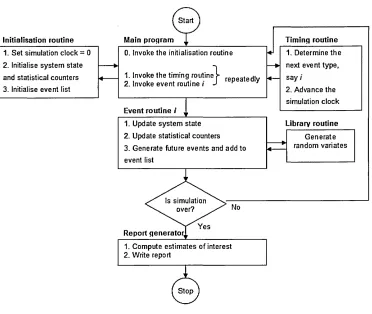
Figure 3-3 illustrates the operation flow in a DES model (Law, 2007). In which, next-event time advance approach is used. Technically, simulation begins at time 0 when the main program invokes the initialisation routine to reset simulation clock, system state, event list and statistical counters to their initial status. Event list is one of the main components in DES, which holds a record of information for the most imminent event. Once simulation finishes the
initialisation routine, main program invokes the timing routine which checks with the event list to determine the next event type. At the same time, simulation clock is advanced to the time of the next event. Main program then invokes the event routine, in which system state, statistical counters and event list will be updated. These two routines will keep repeating until the stopping condition of the simulation is satisfied. Finally, main program invokes the report generator to produce a simulation report.
Initialisation routine Main program Timing routine
1. Set simulation clock = 0 2. Initialise system state
0. Invoke the initialisation routine 1. Determine the ♦ next event type. and statistical counters *
3. Initialise event list
1. Invoke the timing routi
2. Invoke event routine /timing routine repeatedly * — saY '
2. Advance the simulation clock
Event routine / v
1. Update system state 2. Update statistical counters
Library routine
Generate 3. Generate future events and add to
«-event list
* random variates
Is simulation over?
Report generator]
[image:47.614.104.476.368.682.2]1. Compute estimates of interest 2. Write report
Chapter 3 Discrete event simulation and system dynamics approaches
One of the main advantages of DES is that it can model random events. This is achieved by a method of generating or obtaining numbers that are random. Law (2007) describes this as a process of “generating random variates", which to generate random observations from probability distributions. Pidd (2003), Law (2007) and Kelton etal. (2010) provide detailed explanation regarding the mechanism of random number and probability distributions that are used in DES.
3.2.5 Use of discrete event simulation for decision making
Literature reports a wide range of areas where DES has been successfully used in the health care sector (Fone et al., 2003; Brailsford, 2007; Gunal and Pidd, 2010). These applications can be classified into two main areas: medical and operational areas.
For instance, to support analysis in medical issues, DES has been used to model human health behaviours (Brailsford, 2007) and the spread of infection and communicable disease such as Chlamydia or HIV/AIDS (Fone etal., 2003). These models improve the understanding of the complex issues and help to test different policies in medical practice. The key benefits of these applications are that experiments can be performed without putting patients in inconvenient situations or placing them at risk.
Chapter 3 Discrete event simulation and system dynamics approaches
flow and resource allocation within Accident and Emergency (A&E) department, outpatient clinics or/and inpatient areas.
In 2008 the NHS institute launched Scenario generator (NHS, 2008) - a generic simulation tool that allows health care clinicians or/and operational managers to develop scenarios to examine the impact of changes on patient flow, capacity, end-to-end transaction times (including delays and waits) and operating cost across the whole system. Similarly, Gunal and Pidd (2008) develops DGHPSim that allows hospitals to utilise their existing local data or national data set in the DES models. The aim of DGHPSim is to allow operational managers to
examine the changes of the whole hospital performance under different circumstances. However, literature shows this type of generic DES models is still not commonly used in the sector (Gunal and Pidd, 2010). One possible reason is the difficulty to represent the complexity of a whole hospital’s activities within a simulation model.
Therefore, the majority of simulation models are commonly used to model only a specific aspect, such as A&E department, inpatient areas, outpatient clinics, operating theatres or intensive cares units (Gunal and Pidd, 2010). In which, A&E department is one of the most popular units for health care simulation. The main reason is this unit is relatively self-contained and patient pathways are usually more well-defined.
Kolb et al (2008) report a case study to use DES models to examine the potential benefits to an A&E unit if a new proposed buffer concept is
Chapter 3 Discrete event simulation and system dynamics approaches
the Emergency Room (ER) by introducing five buffer areas. The simulation results show that the new buffer concept can successfully reduce the
overcrowding pressure in the ER room, also all buffers are managed to run with less resources then in the ER room. Other examples include Ruohonen and Teittinen (2006) and Meng and Spedding (2008) which both present detailed case studies of building A&E simulation models for specific hospitals.
Apart from A&E units, a large number of DES models have been used to model outpatient units. Literature shows these models commonly used on two main areas: scheduling and capacity planning (Guo et al., 2004; Giachetti et al, 2005; Takakuwa and Wijewickrama, 2008).
Guo et al., (2004) and Giachetti et al., (2005) both use DES models to address
problems in patient appointment scheduling. Guo et al., (2004) presents a detailed simulation model (“Patient Scheduling Simulation Model -PSSM”) for examining the relationship between the current triage rules and resource utilization rates. The study showed that PSSM can provide a good
understanding of the current situation and can be used to examine different scheduling strategies. Giachetti et al. (2005) presents a new patient
Chapter 3 Discrete event simulation and system dynamics approaches
integrating with the optimization technique, the study showed the best scheduling options for reducing the long waiting time and increasing the utilization rates of the current staff.
The literature has many other examples of DES models for addressing various operational issues in other hospital units. For example operating rooms, critical- care units, screening units, surgical units, pharmacies and laboratories. Gunal and Pidd (2010) report a detailed review of these applications.
3.2.6 Limitations
Although discrete event simulation has great potential to support better decision making and planning in the health care sector, some authors have identified several limitations regarding the use of DES in the sector.
First of all, the majority of DES models require large amounts of quantitative, numerical data input to the simulation. Health care modellers often invest a great deal of effort to collect and analyse historical data that may or may not be available within the system (Brailsford and Hilton, 2000). However, without this accurate data, simulation models can only produce “garbage”.
Chapter 3 Discrete event simulation and system dynamics approaches
As discussed earlier, in most cases, the development of health care DES models are limited to model specific units, and to address specific problems (Gunal and Pidd, 2010). One possible reason for this limitation is the complexity of modelling a whole hospital in one single DES model. However, this type of unit-specific model usually cannot see a holistic view of the whole system and ignores the importance of what is happening over the other side of the system. In addition, given the specific nature of this type of model, reuse of the model is often restricted.
3.2.7 Discrete event simulation software package: ARENA
Arena is a general-purpose simulation package that supports discrete event simulation model development. Arena has been widely used for modelling manufacturing processes, supply chain systems, health care systems and call centers. Since Arena runs on a Windows Platform, it inherits the advantages of embedding other Windows-based applications [such as Crystal Reports,
Microsoft Visual Basic for Applications (VBA) and Microsoft Excel] within a model.
Arena provides users with a number of “templates” for constructing a model. Each template contains different modules (a module contains logic, user
Chapter 3 Discrete event simulation and system dynamics approaches
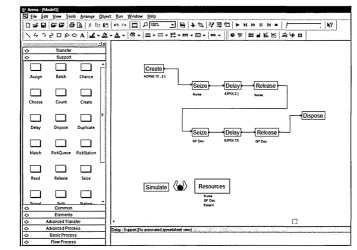
An example of General Practitioner (GP) clinic system
A very simple DES model of a general practitioner clinic system is modelled in Figure 3.4, which consists of a registered nurse and a doctor. Figure 3.4 shows the five required SIMAN blocks and the necessary connections to define the entity flow. The “Create” block is used to generate arrivals of patients. The Create block is connected to the “Seize”, “Delay” then “Release” blocks, which are the required blocks to represent the processing of a patient with a registered nurse. Once again, this set of blocks is connected to another set of processing blocks to represent the processing of a patient with a doctor. Once a doctor has finished seeing a patient, this patient will exit the model which is represented by the “Dispose” block.
i m i i
(§3 Eik Edit View lo o k Arrange fibject Run ^ftndow Help
!!□ B ! < £ £ ? I A Q L ■ I 1 m o j f g 1 pfiooT" d j s | * % i ^ j ► m ►► M m > 11---- 1 V ? 1
j| \ ^ o ^ o a A ~! w | “
‘ ... ...
o Transfer
o Support
□ □ □
-Assign Batch Chance□ □ □
Choose Count Create
□ □ □
= Delay Dispose Duplicate□ □ □
Match PickQueue PickStation
□ □ □
Read Release Seize□ □ □
Snlit_______ SlatLAA-anced Transfer Advanced Process
Create
1 Delay ^ Release}— Seize
I Dispose
Seize [Delay I Release
Resources
[image:53.613.73.431.335.585.2]Deidp-S^ybrt {No view)
Figure 3-4 Arena model for a GP clinic system
Chapter 3 Discrete event simulation and system dynamics approaches
Example of a GP clinic system
Reception Area
Examination Room
£
Number of patient waiting for doctor
Figure 3-5 Arena animation for the GP clinic system example
3.3 System Dynamics in health care
Chapter 3 Discrete event simulation and system dynamics approaches
3.3.1 Theory and methods
System dynamics was first called “Industrial Dynamics” (Forrester, 1961). The underlying concept of the approach is to combine the power of the human mind with the strengths of today’s computing technology (Keough and Doman, 1992). SD combines two distinct approaches: qualitative and quantitative. Qualitative approach concerns with defining problems, identifying the factors bearing on the problem, and recognising the feedback loops with relate materials, information and decisions. Quantitative approach involves building simulation models which can be used to understand the actual system performance, and to experiment the consequences of different courses of action on system behaviour.
3.3.2 System structure in system dynamics
In order to understand the dynamic behaviours in system dynamics, there are three major system components that need to be identified i.e. levels, rates and delays (Pidd, 2003).
Levels and Rates
Levels (or stocks), are the accumulations of resources within a system. In SD, it is used to represent the current value of a variable, for example the number of patients waiting in triage area or the number of doctors on duty. On the other hand, rates (or flows), are the control variables which determines the levels. It includes inflow rate and outflow rate. In an example of a clinic system, inflow rate may be the patient arrival rate and outflow rate can be the doctor seeing patient rate. Figure 3.6 is an example of a tank which shows the basic
Chapter 3 Discrete event simulation and system dynamics approaches
Inflow'
Level
Outflow
Figure 3-6 Relationships between levels and rates (adapted from Pidd, 2003)
Delays
In system dynamics, there is another important system feature which is necessary to identify - Delays. In most of the human systems, delays occur because of different reasons. Resources and information within a system are rarely transferred instantaneously. For example, after a patient takes medicines, it usually takes a few hours or days before the patient can totally recover. Figure 3.7 shows the patient recovery status over time. Since these delays can directly affect the overall system’s behaviour, it becomes one of the key parts when analysing a feedback system.
Sickness
Totally o * " recovered
Time
Chapter 3 Discrete event simulation and system dynamics approaches
3.3.3 Type of diagrams in system dynamics
SD approach provides two main types of diagrams for supporting the qualitative and quantitative analysis of the feedback systems. They are causal loop
diagrams and stock and flow diagrams.
Causal loop diagrams
Causal loop diagrams or as they are sometimes referred to, influence diagrams (Coyle, 1977) or cause and effect diagrams (Wolstenholme, 1990) are
concerned with analysing the qualitative aspect of feedback systems. Pidd (1998) defines this as an important process to define the “structure” of how each element interact within a system.
To construct a causal loop diagram, the initial step is to identify any system elements which cause effects to the system. Then, the identified system elements are connected by arrows that indicate causality. In addition, the “+” and signs are used to indicate the effect of the causality. Figure 3.8 shows a simple example of a causal loop diagram. That is, as patient admission rate
increases the number of patients in ward increase, therefore a “+” sign is used. Similarly, as patient discharge rate increases the number of patients in ward
decrease, therefore a sign is used.
+
Admission rate ---► Patients in Ward <— Discharge rate
Chapter 3 Discrete event simulation and system dynamics approaches
Obviously, a real-world system contains more system ele