© 2019, IRJET | Impact Factor value: 7.211 | ISO 9001:2008 Certified Journal | Page 565
Comparative analysis of Parameters Using Mobile sink with Cluster
Head in Wireless Sensor Network
Deepa Singh
1, Vandana Vikas Thakare
21,2
Department of Electronics, Madhav Institute of Technology and Science, Gwalior (M.P), India
---***---Abstract:- In wireless sensor networks, the sensor nodes
have limited energy so, it is important to develop energy efficient routing techniques for prolong network life. In the proposed work, LEACH protocol with mobile sink and random deployment of the nodes has been presented to improve the network efficiency. In terms of network lifetime, reduced end to end latency, effective energy
consumption and flooding of data. In this paper,
clustering-based hierarchical routing protocol with rendezvous clustering-based routing protocol is applied; which creates the region by dividing it vertically and horizontally is known as cross area or communicating region and construct clusters within that region. By this, now randomly any node can send data to the sink by making the sink location known to the region which reduces the consumption of nodes energy. Numbers of WSN protocols are there, but the importance is given to hierarchal routing protocols which are based on clustering because of the better scalability. Keywords:- Mobile sink, mobility management, Cluster, Cluster Head, Routing, Energy Efficient, LEACH, MSDGP,EEMSRA
1.INTRODUCTION
A Wireless Sensor Network is a network with small embedded devices having sensing capability called sensor nodes, which are in huge numbers used to observe the conditions such as temperature, pressure, heat, humidity etc. from the environment [1]. Introducing mobility to some or all nodes in a WSN, improves the network lifetime. When it comes to energy consumption, the infrastructure can be achieved by reducing no of hops for communication in network. Researchers highly focused on developing a robust energy efficient navigation system for the sinks in WSNs. Now-a-days, for cluster and sink mobility multiple approaches are added, which are proactive and reactive approach, The sensed data is stored on specified central nodes storage, which is later collected by sink is called proactive approach and when the sensed data is collected directly from the sensing nodes by the mobile sink is called reactive approach [1].
LEACH is a classical and most popular cluster-based routing algorithm LEACH (Low-energy adaptive clustering hierarchy) one of the most admired hierarchical routing algorithm for WSN. Leach is a clustering-based hierarchical routing protocol .In leach there is a random selection of sensor nodes as CH and uses them efficiently to send the
data to the sink. The main purpose of this routing is to efficiently sustain the energy consumption of sensor nodes by making them in multi-hop communication in specific clusters. WSN uses an advanced multi hop wireless mesh topology network with a star topology. It uses a randomization approach to distribute the energy load uniformly among the intermediate sensor nodes using clustering [2].
MSDGP (Mobile sink based data gathering protocol) It is fixed mobility based approach. In this protocol, the selection of cluster head is done from the sensor nodes by the highest having residual energy and highest volume of data, which collects the data from other nodes within the cluster. Then the mobile sink comes near the range of transmission, and request to collect the data from the cluster head [3].
The rest of the paper is ordered as follows: Performance matrices defined in Section 2. Routing protocols WSNs and Applications is defined in Section 3. The description of the previous literature reveals and the comparative result analysis and finally in each paper with different
techniques, the proposed protocol is précised in Section 4
2.PERFORMANCE METRICS [4]
Control packet overhead In control packet overhead the
control packets are not data packets. These control packets are used in neighbor discovery, route construction, cluster formation, maintenance process, and so on. This metric is called an overhead because the packet transmission and reception, other than data, is a load to the network and
also it is the energy consumption at each node dueto the
transmission and reception of control packets.
Energy consumption: Energy consumption is the total
energy consumed by each sensor node due to process of transmission, receiving, listening, and sleeping.
End-to-End Latency: Delay in time taken from source to
sink to transmit the data packet over a network. It considers all types of delay such as queuing, route discovery and processing delay and so on
Network lifetime: The lifetime of the network can be a
© 2019, IRJET | Impact Factor value: 7.211 | ISO 9001:2008 Certified Journal | Page 566
3.ROUTING PROTOCOL IN WSN [6]
Routing technique plays a important role in WSN. Hierarchical Protocols
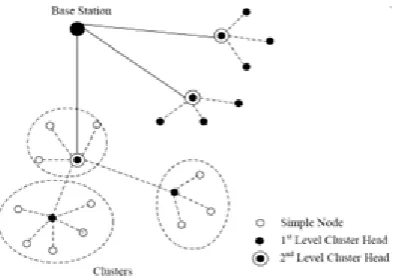
[image:2.595.75.274.232.372.2]In Hierarchical routing protocol, WSN will be more energy efficient, if clusters are created and exceptional tasks are consigned to them. Hierarchical routing efforts in two levels, To choose cluster heads which is first level task , and other level task is of routing. It enhancement in energy efficiency, scalability and lifetime for the overall system.
Fig. 1: Hierarchical sculpt Cluster-based Low-energy adaptive clustering hierarchy (LEACH)
In LEACH protocol, the circulation task of clustering is done between intermediate sensor nodes with assigned duration LEACH is bottomed on technique of aggregation, that it aggregates the given data into smaller size of data and carried by the individual sensor nodes. LEACH is completely strewn and requires no worldwide knowledge of network LEACH uses single hop move by any random nodes to transmit the data directly to the cluster–head and sink. In the setup phase each node creates the random number between 0 and 1 as shown in above fig.1 and evaluate this random value with the threshold value if the random number is lesser than the threshold value than for the current round node becomes a cluster head (CH) [2, 22]. There is an equation for calculated the threshold value are as follows:
(1)
Where,
P = percentage of CH
r = counting of present round
G = sensor nodes that are not CHs in the previous 1/p round stated in group.
The cluster head node televises the message of it suitable cluster head to the whole network, every node decides to fasten together which cluster based on the power of information received, and respond to the equivalent cluster head. Then in the subsequently phase, every node uses the technique TDMA to transmit data to the cluster head node, the cluster head sent the fusion data to the sink node. Between the clusters, every cluster completes communication channel through CDMA protocol. After a phase of steady phase, the network enters the subsequently round of the cycle again, nonstop cycle. By making the cluster head technique, it has been seen that there is avoidance in consumption of energy which also shows better lifetime approach, and also reduces traffic in network by data fusion, but the protocol silently work on the hop communication, although the transmission of data interruption is small, sensor nodes requires a high power communications. Frequent selection of cluster head will guide to the traffic costing of energy.
Fig. 2: Structure of LEACH routing protocol
Power-Efficient Gathering in Sensor Information Systems (PEGASIS)
PEGASIS is an extension of the LEACH, which forms chains from sensor nodes so that each node transmits and receives from a neighbor and only one node is selected from that chain to transmit to the sink. In PEGASIS routing protocol, the creation phase assumes that all the sensors have global knowledge about the network, mainly, the positions of the sensors, and use a greedy approach. Dynamic topology adjustment is still needed in PEGASIS, sensor node needs to have information regarding about the energy status of nearest node and the path to route data.
Hybrid, Energy Efficient Distributed Clustering (HEED)
[image:2.595.324.540.321.462.2]© 2019, IRJET | Impact Factor value: 7.211 | ISO 9001:2008 Certified Journal | Page 567
(iii) limiting control overhead, and (iv) producing verymuch dispersed CHs and compact clusters.
Threshold Sensitive Energy Efficient Sensor Network Protocol (TEEN)
TEEN is a hierarchical clustering protocol, which groups sensors into clusters with each driven by a CH. The sensor network architecture in TEEN is based on a hierarchical grouping where closer nodes form clusters and process goes on the second dimension until the BS (sink) is come to. TEEN uses a data-centric method with hierarchical approach. The important feature is time critical sensing applications of TEEN which is suitable and not suitable for the sensing applications. TEEN is not suitable where periodic reports are needed in sensing applications. Adaptive Periodic Threshold Sensitive Energy Efficient Sensor Network Protocol (APTEEN)
APTEEN is a hybrid clustering-based routing protocol that allows the sensor to send their sensed data regularly and respond to any sudden change and answering to their CHs. APTEEN underpins three diverse inquiry types namely (i) historical query, to dissect past data information values, (ii) one time query, to take a preview perspective of the system; and (iii) persevering query, to monitor an chance for a time of period. APTEEN ensures lower energy dissipation and a larger number of sensors alive.
APPLICATIONS [7]
Environmental applications:
WSN is becoming an essential part for monitoring, such as Natural disaster deterrence, pollution present in air, quality of water monitoring and detections too are forest fire detection, landslide detection. These engage in sensing temperature, light, humidity and quality of air.
Health care applications:
These applications are described in two means: One is wearable which is on the body and the other is implantable devices which are inside the human body. The Sensors can be used in hospitals to monitor the Location of the patient, position of body and measurement of ill patients.
Agricultural applications:
It monitors to check environmental conditions effecting crops by tracking birds, insects and other animals. In order to control irrigation the wireless sensor network helps in detection of air humidity and soil moisture. Low power consumption, less cost, self-organizing property which includes rapid deployment of network are some advantages of wireless sensor network in agriculture. Benefits of having WSN is no bothering of maintenance of wiring in different environmental conditions and to
monitor water tank levels, pressure transmitters can be used in order to monitor gravity feed water.
Structural monitoring
With the use of WSN, to monitor conditions the status statistics are needed for the movement inside building, bridges & flyovers, and so that the management can repair buildings according to their priority. Therefore these structures are branded as intelligent buildings.
Vehicle detection
Tracking and detection of vehicle has become an important application in the field of WSN. Advanced Vehicle Location system is made up of two GPS systems, one is built-in GPS satellite receiver that is basically used to compute accurately the position of vehicle and other one is the reliable GSM network to transmit the position coordinates to a control center. The system with features like two way voice communication and SMS capability, paves way for an efficient management and emergency handling framework.
Congestion control
Congestion control plays a major challenge which is based on sensor network, when it comes to the city authority It reduces the road traffic congestion by detecting the congestion and informing the congestion report to the drivers.
RFID indoor tracking system
WSN besides with RFID (Radio frequency identification technology) label is organized to provide location-based service and with the more precise results than others. Using RFID with low cost and human beings are monitored and tracks their position in some degree of indoor areas. RFID systems are used to improve and upgrade the position information coupled with collected data. RFID is more useful with the method of Tag Indoor Localization by Fingerprinting methods is a capable research in the field of WSN.
4. DESCRIPTION OF PREVIOUS PAPERS AND COMPARITIVE ANALYSIS
In this section, the work of previous literature reveals by using different technique is compared to the conventional as well as with the recent proposed work.
4.1 Previous work using MSGDP protocol [3] Description:
© 2019, IRJET | Impact Factor value: 7.211 | ISO 9001:2008 Certified Journal | Page 568
static hubs and versatile hubs with static sink/portablesink and experiment with hybrid approaches too.
As of late, In remote innovation with the progression, portable sink or sink portability is a searing subject and significantly more work is being done in this field vast or sight and sound sort data, challenging directing systems and point of accomplishing productive execution both regarding steering and better system lifetime which is vitality proficient cross breed approaches also.
Data transfer schemes with multiple specialized relay based using pre-define path for sink mobility, CHs closest to mobile sink on this basis the relay get selected .The restriction fixed trail of MS highlight the back and forth messaging avoids the consumption of energy and rises the data loss and collision due to multihop data transfer. Slow speed of MS increases delay in data delivery by limiting scenarios, such as by fixing sink speed and limit the overall network lifetime.
When sensor connectivity is utilized then flooding occurs in the network, because of finding the best trail towards BS. This leads to imbalance energy and excessive inter-node communication usage due to direct communication with nodes.
MS based routing protocol (MSRP) can resolved the Energy hole problem to the increase network lifetime. Cluster head is needed, gathering of data from other nodes and deliver to the sink, as sink arrives, sink stores energy information of CHs. so it balances the energy consumption and hence enhance network lifetime.
Hierarchical cluster-based structural design with large number of nodes, their CHs and one mobile sink is proposed it is focused for minimizing the communication through efficient route planning with an ultimate aim of energy efficient. But acknowledge is needed for successive delivery of each data packet. The drawback has limitation in terms of fixed line path of mobile sink and avoiding delay.
Clustering-based protocols, have CHs selection and by utilizing cluster overlapping nodes the static sink ,inter-cluster communication and excessive intra and inter communication is done to collect the data.
The DEMC (Distributed energy multi-hop clustering) protocol The MSDGP performance is tested by this protocol, and on the basis of highest data and highest residual energy of nodes and the centric position of that normal node is needed for the selection of CH.
Comparison of results:
Network model of previous author, are listed: 1 Random deployement of Sensor nodes in network
2 Stationary sensor nodes
3 Fixed transmission powers for all nodes 4 Mobility sink
5 Location’s information not known to nodes MSDGP uses 3 kinds of node:
1 Normal nodes-sense the information
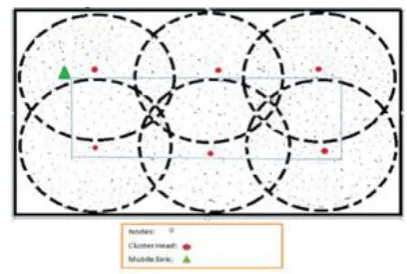
[image:4.595.329.533.260.397.2]2 Cluster nodes-collects the data from other nodes 3 Sink nodes-At last collects the data from cluster head.
Fig. 3: General structure of proposed
Operation and cluster selection of (MSDGP)
All sensor nodes are deployed in network, clustering is done when CHs are selected on the basis of highest residual energy and highest volume of data within the sensor nodes.
The previous work shows by using MSDGP for achieving network lifetime, the fixed mobility based reactive WSNs is used with the purpose behind selection of cluster heads on basis of energy and data to minimize the overall intra cluster.
Intra –cluster communication of (MSDGP)
Once, the cluster heads are selected then the normal nodes start informing their data to the particular CHs based on saved CHs identification.
Data collection by Mobile sinks
© 2019, IRJET | Impact Factor value: 7.211 | ISO 9001:2008 Certified Journal | Page 569
Parameters:Residual energy of all nodes
The MSDGP is basically designed for static network with sink in mobility; overall consumption of energy is low as compared to DEMC and other conventional. DEMC is designed for static sink.
[image:5.595.37.293.259.408.2]In terms of saving energy, during clustering phase MSDGP uses clustering approach with single message which plays an significant role, But when compared to DEMC, during clustering it not only uses messaging and multi-hoping for delivery of data, but MSDGP avoid this.
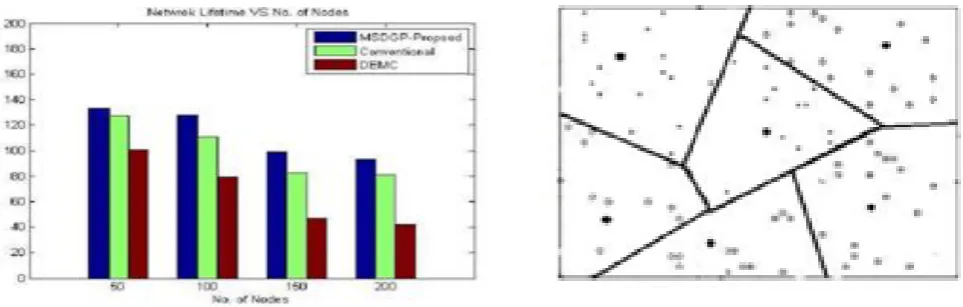
Fig. 4: Sum of residual energy of all nodes Network lifetime
Transmission power is same for all three approaches as per simulation setup. The overall life of network fluctuates, when nodes in network get increases, all three approaches select CHs by different approaches and it makes difference in result. It is because of less intra –clustering communication gives fewer nodes in communicating field. MSDGP gives better energy efficient which extends the network lifetime, than others having imbalance energy consumption.
Fig. 5: Average network lifetime
Conclusion:
This paper using MSDGP technique which uses clustering based with fixed mobility reactive protocol is based on residual energy and data. The purpose behind the formation of cluster was to make better life of network by reducing intra and eliminating inter clustering and by implementing the single massage CH selection process and also instead of static sink introducing mobile sink. MSDGP achieve less energy consumption [3]. When it is compared to the recent proposed work using LEACH protocol with sink in mobility and nodes are randomly deployed in the network. The middle region is divided vertically and horizontally, called cross area or communicating region. The clusters are made in this region and CHs are selected too. Then sink search the nearest node for the gateway, and in network it passes the sink location by the help intermediate nodes to the nearest cluster in cross area and the CH of that cluster propagate the sink location to the cross area, Now randomly any node can send data to the sink because of mobile sink. Node sends the data through this region and the cluster heads passes the data to the sink [5]
The network is static, network lifetime and energy efficient is done by iteration.
4.2 Previous work using EEMSRA protocol [2] Description:
Some of the algorithm using sink mobility is not energy efficient and energy balanced. Therefore, energy efficient mobile sink routing algorithm (EEMSRA) which provides a better performance for energy consumption. The existing cluster based routing protocol such as LEACH and random moving scheme where a mobile sink moves randomly in network region.
LEACH is a classical and most popular cluster-based routing algorithm. LEACH (Low-energy adaptive clustering hierarchy)
Fig. 6: Cluster formation in LEACH
[image:5.595.52.534.579.732.2]© 2019, IRJET | Impact Factor value: 7.211 | ISO 9001:2008 Certified Journal | Page 570
Random Waypoint Mobility Model (RM)It is broadly used mobility form model. A mobile sink staying initially in one location for a certain period of time and during this period the sink gathers the information from the other nodes. Once the time expires:
Mobile sink chooses the target destination at different speeds and after that mobile sink pauses for a time period and collects information from sensor nodes and the process is repeated. The iteration in such a way is continued.
EEMSRA (Energy efficient mobile sink routing algorithm)
Network design Assumptions
In this paper, all sensor nodes are randomly deployed in the network with one mobile sink. Sensor nodes cannot move after being deployed because of having limited energy but sink has no limit regarding energy and having sink mobility, initial location of sink cannot be considered. Assumed that every node well-known to its own location. Comparison of results:
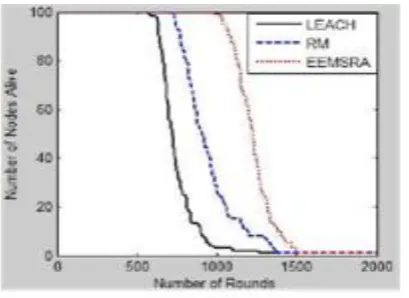
[image:6.595.62.267.449.598.2]The performance is compared between EEMSRA, LEACH and RM. In RM the sink with mobility moves randomly in network field and flooded data gets transmitted. Parameter for better life of network is termed as the time when first sensor node dies.
Fig. 7: Average number of nodes alive
The Average number of nodes is alive more in EEMSRA than RM and LEACH.
Conclusion:
In this paper, the EEMSRA (Energy efficient mobile sink routing algorithm) protocol is used and results compared with the other two protocols are LEACH and RM. The key work of this paper was to achieve energy efficient and energy balance [2].
In recent proposed work, LEACH protocol with sink in mobility and nodes are randomly deployed in the network. The middle region is divided vertically and horizontally, called cross area or communicating region. The clusters are made in this region and CHs are selected too. Then sink search the nearest node for the gateway and in network it passes the sink location by the help intermediate nodes to the nearest cluster in cross area and the CH of that cluster propagate the sink location to the cross area, Now randomly any node can send data to the sink because of mobile sink. Node sends the data through this region and the cluster heads passes the data to the sink [5].
As it is shown that previous work using EEMSRA has better energy efficient than LEACH protocol because it initially, uses cluster based model by the help of LEACH for the cluster formation and to find the cluster location information and also to implement mobile sink. It also uses iteration of the process in terms of no of rounds. But in recent proposed work already LEACH protocol is taken and it shows better results for number of alive nodes, less energy consumption and average control packet overhead and no need of iteration, and uses Distance vector table for mobile routing protocol and three data packets for the transmission of data in three stages. But for the overall comparison result proposed work is better
4.3 Previous work using LEACH protocol (Base paper) [4] Earlier, for sending data to sink multiple sources are needed. The nearer sensor nodes to the sink drain more energy and hence eventually die, due to this the life of the network gets reduce known as Hotspot. To overcome this problem, Mobile sink is used in the network region. Sink in mobility somehow reduces the chance or problem of hotspot, by balancing the load among the sensor nodes. And helps to attain the uniform consumption of energy and extend the life of network. After making mobility in sink some problems are associated is often required to send the sink current location information in the network. This procedure causes energy consumption overhead. Data gets delayed due to high end to end latency and of no use. So, event-based application is used to reduce the delay. Work of previous authors
Mobile sink, consumption of energy and its impact in network lifetime, associate security issues, low down cost, quick response, and scalability and flexibility, supporting reliable data transmission, handling huge data of heterogeneous sources and types, and minimizing consumption of energy, for reducing secret key length, security solutions to deal with big data stream.
© 2019, IRJET | Impact Factor value: 7.211 | ISO 9001:2008 Certified Journal | Page 571
In the first method, the source node transmits the data to the sink through the rendezvous region.
In the second method, source node retrieves the position of the sink and transmits the data to the sink using geographical based approach.
Comparison of results:
In this paper, the comparison is done between LBDD, Railroad, and Ring routing proposed method 1and 2 for the following parameters:
Parameters:
Average control packet overhead
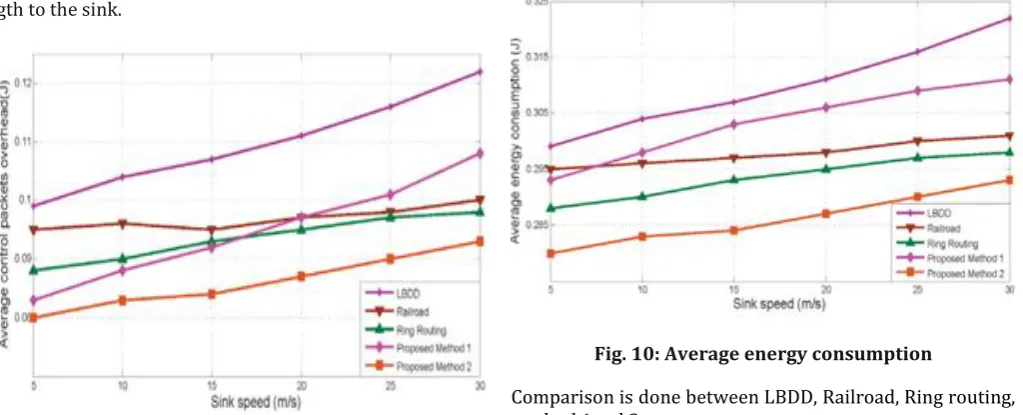
The average energy consumed by control packet with changeable sink speed for diverse protocols is shown in Fig. In the proposed method 2, the parameter control packet overhead is very less as compared to the other protocols, due to the less average distance between region and source or the sink.
In LBDD, when in rendezvous region the sink’s query is flooded, there is an increase of control packet overhead. In the railroad protocol, the construction of rail and formation of station which requires control packet exchange is the one-time process. In ring routing, all nodes store the sink location, the distance length is more. The proposed method 1, to transmit the data only needed to maintain the tree within the rendezvous region. According to the sink position the control packet are set. When it is taken with recent proposed approach then it shows better results with less control packets overhead than the previous existing protocols, because of cluster head the data will not be flooded and surely it takes less distance length to the sink.
[image:7.595.309.567.83.254.2]Fig. 8: Control packet overhead
Fig. 9: Control packet overhead for various sink speed
Comparison is done between the above methods (Base paper) and new proposed work.
Average energy consumption
[image:7.595.51.563.513.720.2]It has been seen that the higher energy consumption is observed with the greater control packet overhead. LBDD has higher because sink’s query gets flooded in the rendezvous region. As there is an increase in sink speed, the energy consumption of LBDD raises monotonically. The overall energy consumption gets affected and increased with the increase in sink speed because of Average path length is higher in method 1 than railroad, ring routing and method 2. The average distance is same between source and the sink as the ring and railroad routing. However, the method 2 outperforms the existing protocols, due to the less control packet overhead
Fig. 10: Average energy consumption
© 2019, IRJET | Impact Factor value: 7.211 | ISO 9001:2008 Certified Journal | Page 572
Fig. 11: Energy consumption for various sink speedComparison is done between the above methods (Base paper) and new proposed work.
Average end-to-end latency
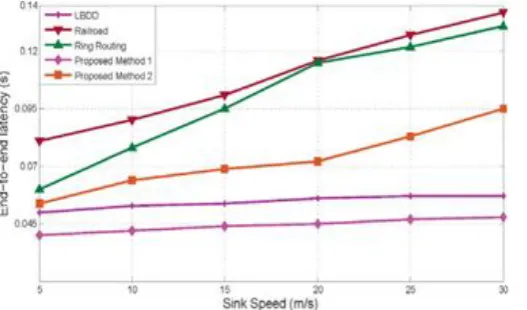
[image:8.595.38.289.61.253.2]It depends on how much time is taken to find the location of the sink’s and propagate the data to the sink. The less time is taken to deliver the data by the method 2 as compared to railroad and ring routing. It is due to the shorter distance between the source node and rendezvous region. The better results of proposed works in the comparison with other protocols in terms of energy consumption.
Fig. 12: Average end-to-end latency
Network lifetime
Mainly 2 things have an effect on the network lifetime, imbalance load between the sensor nodes and another is energy consumption at each sensor nodes. Proposed method 2 shows better results in terms of network lifetime than other protocols. Because it just overcomes from the above affected things for network lifetime by consumption of fewer control packets, and also balances the load among the sensor nodes and chases an optimal route for transmission of data and greater the network lifetime. And when it is compared with the recent proposed work it is
detailed with the cluster head which is must for load balance which increases the better network lifetime than the previous existing pattern of graph.
Fig. 13: Average network lifetime
Dead nodes
[image:8.595.308.576.126.279.2]Network lifetime has an effect on the dead nodes parameter, in terms of imbalance load between the sensor nodes and energy consumption at each sensor nodes. It leads to the nodes dead and decrease the lifetime of network.
Fig. 14: Number of Dead Nodes for various sink speed
[image:8.595.42.306.443.598.2]© 2019, IRJET | Impact Factor value: 7.211 | ISO 9001:2008 Certified Journal | Page 573
The parameters of previous work and proposed work are [image:9.595.43.282.123.358.2]compared.
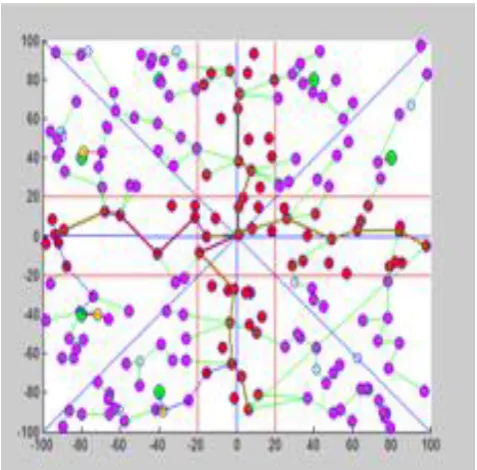
Fig. 16: Network Architecture for sink speed 10m/s
Tab.1:Parameters and their values for sink speed 10m/s
Conclusions:
Previously it is rendezvous-based routing protocols. It creates a rendezvous region in the middle of the network and constructs a tree within that region. And two different methods are used for data transmission and compared with the existing protocols such as LBDD, railroad and ring routing. From the simulation results, it has been observed that the method 1 is better in term of end-to-end latency and method 2 is better in term of energy consumption than other protocols [4]
In recent proposed work, LEACH protocol with sink in mobility and nodes are randomly deployed in the network. The middle region is divided vertically and horizontally, called cross area or communicating region. The clusters are made in this region and CHs are selected too. Then sink search the nearest node for the gateway and in network it passes the sink location by the help intermediate nodes to the nearest cluster in cross area and the CH of that cluster propagate the sink location to the cross area, Now randomly any node can send data to the sink because of mobile sink node sends the data through this region and the cluster heads passes the data to the sink [5].
References
[1] Suraj Sharma, Deepak Puthal, Sabah Tazeen, Mukesh Prasad and Albert Y. Zomaya,” MSGR: A Mode-Switched Grid-based Sustainable Routing Protocol for Wireless Sensor Networks,” IEEE ACCESS, VOL. XX, NO. XX, MONTH 2017
[2] X.-X. Yuan and R.-H. Zhang, “An Energy-Efficient Mobile Sink Routing Algorithm for Wireless Sensor Networks,” 2011 7th International Conference on Wireless Communications, Networking and Mobile Computing, 2011.
[3] M. Ali, A. Iqbal, B. Nazir, N. Ul, S. Mehmood, and K. Habib, “Energy Efficient Clustering Using Fixed Sink Mobility for Wireless Sensor Networks,” International Journal of Advanced Computer Science and Applications, vol. 7, no. 2, 2016.
[4] S. Sharma, D. Puthal, S. K. Jena, A. Y. Zomaya, and R. Ranjan, “Erratum to: Rendezvous based routing protocol for wireless sensor networks with mobile sink,” The Journal of Supercomputing, vol. 73, no. 3, pp. 1189–1191, 2016.
[5] Deepa Singh, Vandana Vikas Thakare, “Energy Efficient Mobility Sink Network through Clustering for Transmission of Data in WSN,” International Journal of wireless Network Security, vol.4 issue 2, 2018.
© 2019, IRJET | Impact Factor value: 7.211 | ISO 9001:2008 Certified Journal | Page 574
[7] Navreetinder Kaur et al, “A Review of Wireless SensorNetwork with Its Applications”, (IJCSIT) International Journal of Computer Science and Information Technologies, Vol. 7 (1) , 2016, 211-214.