computers
and people
formerly
Computers and Automation
~~lt.N~t
&
rt<.,;HN
ULUG.
~COMPUTER-CONTROLLED
RIVER FLOW
June,
1974
Vol.
23,
No.
6
Some Computer Implementations of Operations Research
- Dr. A. M. Becker Modular Data for Producing
Equipment Manuals
- John McCormick Algorithms in a Medical Clinic
- The Boston Globe Economy Spelling Computerized
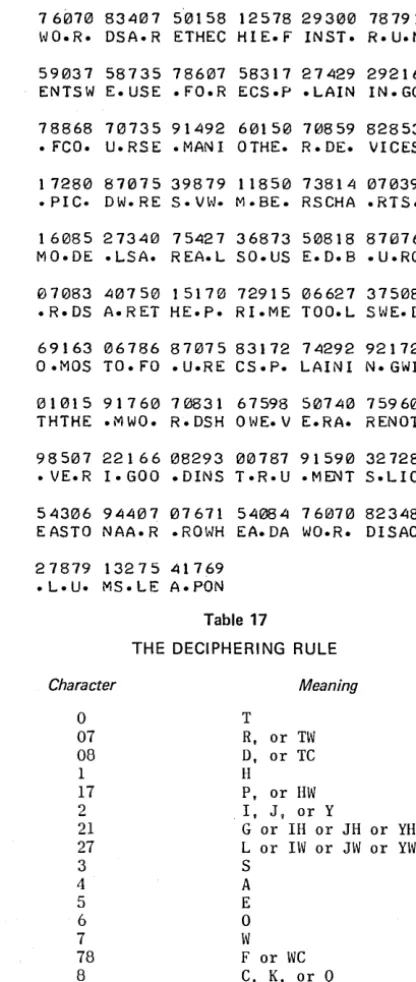
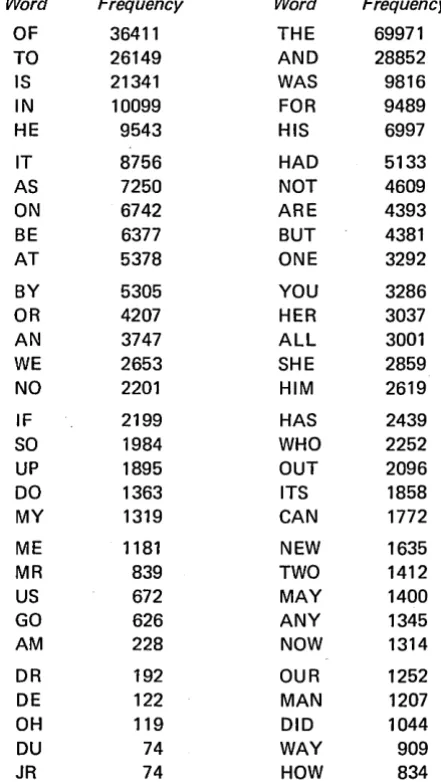
- Kenneth H. Ives Deciphering a Message in Digits
- Edmund C. Berkeley and Casper Otten Governor George Wallace and
Gunman Arthur Bremer ... - Richard E. Sprague
20
lTHE 20th ANNUAL EDITION
OF THE
COMPUTER DIRECTORY AND
BUYERS'GUIDE, 1974
. . . will be published in midsummer, 1974, as a special 13th issue of Computers and People, and will be mailed as a book.
The COMPUTER DIRECTORY AND BUYERS' GUIDE is:
• an annual comprehensive directory of the firms which offer products and services to the computing and data processing industry.
• a basic buyers' guide to the products and services avail-able for designing, building, and using computing and data processing systems.
CONTENTS (over 170 pages):
Roster of Organizations in Computers and Data Processing Buyers; Guide to Products and Services in Computers and
Data Processing
Special Geographic Roster of Organizations in Computers and Data Processing
Characteristics of Digital Computers (14,000 entries for 380 computers made by 80 manufacturers) Survey of Programming Languages
Over 2400 Applications of Computers and Data Processing Roster of College and University Computer Facilities Roster of Computer Associations
Roster of Computer Users Groups World Computer Census
Some Basic Arithmetical Tables
American Standard Code for I nformation I nterchange (ASCII)
PRICE:
• Prepublication price for subscribers to Computers and People whose present subscription does not include the Directory (magazine address label is marked *N)
• • . • . • $13.00 • Special prepublication price for
non-subscribers
(After publication, price to non-subscribers is $18.50)
. . . $15.00
• The Directory is included in the $23.50 full annual sub-scription (13 issues) to Computers and People
(magazine address label is marked *0)
RETURNABLE IN 7 DAYS FOR FULL REFUND:
- - - (may be copied on any piece of paper) - - - - . - - -i
To: Berkeley Enterprises, Inc. 815 Washington St. Newtonville, MA 02160
Yes, please send me the 1974 Computer Directory and Buyers' Guide when published.
I enclose ($13.00, subscriber price; $15.00, non-subscriber price; at the prepublication rate). I My name and address are attached.
Algorithms in a Medical Clinic
"The Boston Globe," April 21, 1974
Boston, Mass. 02125
A group of researchers from Beth Israel Hospital,. Boston, and Lincoln Laboratory, Mass. Inst. of Tech-nology, Lincoln, Mass., have developed a procedure that makes it possible for doctors to turn over to others much of their routine medical work .
The goal, of course, is to make it possible for the same number of doctors either to handle more patients or to spend their time where it's needed most, on the difficult cases, without sacrificing the quality of the care given to the routine cases.
So far the team has developed 17 procedure sheets which are known technically as protocols or clin-ical algorithms -- and most have been tested and used with several thousand patients at clinics in Boston and on the West Coast.
At Beth Israel's walk-in clinic, for instance, 75 to 80 percent of the pRtients who arrive with the symptoms of a cold, flu or some other respiratory infection are treated and sent home by a nurse, using a protocol, without ever seeing a doctor.
At the same clinic, up to 90 percent,of women with the symptoms of a vaginal infection are evalu-ated with a different protocol, treevalu-ated and sent home, again without seeing a doctor.
Most of the protocols now in use are of two types. They either deal with complaints commonly associated with short-term and generally mild ill-nesses, or they deal with chronic conditions --like diabetes, high blood pressure and heart disease -- that require repeated, regular visits to the doctor.
All the protocols are designed to be used by someone other than a doctor. They could be used by nurses, by nurse practitioners, by physician assis-tants or any other "physician extenders".
The chronic disease protocols, in fact, have been used in four Boston clinics by a group of "health assistants" who had no experience in health work until they were selected for the program .
In most cases the protocols can be used either as a substitute for seeing the doctor or. as an effi-cient, systematic way to collect information about the patient beforehand and make time spent with the doctor more productive.
In all the tests of protocols so far, the re-searchers say, there has been no instance where a protocol recommended sending home a patient who should have been seen by the doctor.
Dr. Anthony L. Komaroff, medical director of Beth Israel's Ambulatory Care Project, and Herbert Sher-man, an engineer who is group leader of Medical Technology Group at Lincoln Laboratory, described the workings of one protocol in an interview.
The entire upper respiratory infection protocol
fits on l~ sides of a single sheet of paper, and it
looks something like the answer sheet for a multiple choice exam.
The protocol leads the user through a series of steps in examining the patient, with spaces to write
in the information the sheet asks for. Many of the
answers are in "yes" or "no" form.
Either by asking questions or by making a physi-cal examination, the protocol user gets relevant in-formation about the patient's medical history, about temperature, coughing, pulse and breathing rate, and about the symptoms and appearance of the chest,
throat, ears and sinus~s.
In all, the sheet collects up to 56 bits of in-formation about the patient's condition.
At 20 different places, depending on the informa-tion obtained, the form may instruct the health as-sistant to refer the patient automatically to the doctor. These "trigger" questions indicate there may be serious or difficult-to-diagnose illness or that the patient has complications that require the doctor's direct attention.
Depending on the information about the particular patient, the form may also instruct the nurse or physician assistant to take anyone of four labora-tory tests, often a throat culture.
Finally, the information on the form automatically leads the user to a diagnosis and to a choice of treatment, including prescriptions for the
antibi-otics - penicillin or erythromycin - or other
medi-cations that simply relieve the symptoms.
"The sheet looks simple," said Komaroff, "but there is a tortuous medical logic built in." For example, he said, one of the considerations was to ensure that the protocol did not over-prescribe an-tibiotics, a very common failing among practicing doctors.
To avoid this the protocol must distinguish be-tween bacterial infections, like strep throat, and
viral infections, like the flu. Antibiotics are
in-effective against viruses.
Komaroff and Sherman said the tests of protocols have shown that they are readily accepted by pa-tients, doctors and physician assistants.
There is even some evidence that patients some-times find it more cQmfortable to deal with a health assistant armed with a protocol than with a doctor. During 'the tests of the chronic disease protocols, they reported recently in the New England Journal of Medicine, there were three patients who "refused to see the doctor unless they could also see the health assist-ant".
"As non-threatening., open and warm as I think I am," said Komaroff with a grin, "patients have not told me things they were willing to tell the health assistant."
It is not yet clear, they said, how much money may be saved by the use of protocols, but there is clear evidence from studies that the forms save the doctor's time.
"When you take a stopwatch and measure the time the physician spends, all of the protocols save
phy-sician time," said Komaroff. "It varies, depending
on the illness, from 10 percent to 50 percent of the
physician's time." 0
INDEPENDENTLY
EVALUATED AND AUDITED
SOFTWARE PACKAGE
REPORTS
• Have you ever wished you could really know the facts about a software package before you bought it?
•
so that you could decide, BEFORE committing your-self to pay for it, whether it is really likely that it can do your job?
TO ASCERTAIN AND REPORT THE FACTS ABOUT SOFTWARE PACKAGES
-THIS IS OUR MISSION
We believe any buyer can be benefited by independent evaluation of software . . . .
for then you don't have to rely on the seller's description · ... or your own organization's appraisal . . . . or even both of them together . . . . because you can also study an INDEPENDENT EVALUATION OR AUDIT:
Assessment of the claims for the software package Actual accomplishments when analyzed
Results of tests on appropriate computer co nfigurations
Comments on the documentation
Comparisons with other software packages in its field
OUR EVALUATIONS ARE BASED PARTLY ON OUR EXPANDING FILE ON SOFTWARE PACKAGES
(over 1300 so far' included):
abstracted / identified / ranked according to degree of use in the industry for which prepared (such ~s banking) / classified according to hardware / classified according to function / . . . .
Write for more information (no obligation, of course) to: AUDITED SOFTWARE SERVICES CO.
Box 871, Chico, Calif. 95926
,- - - (may be copied on any piece of paper) - - - ,
To: AUDITED SOFTWARE SERVICES CO.
Name
Title
Box 871, Chico, Calif. 95926
Yes, I am interested in an independent evaluation of and
---(attach paper if needed)
Please send me information about your services.
---
---Organization
---Address
---Vol.
23,
No. 6
June, 1974
Editor and Publisher Assistant
Editors
Art Editor Software
Editor Contributing
Editors
London Correspondent Advisory
Committee
Editorial Offices
Advertising Contact
Edmund C. Berkeley
Barbara L. Chaffee Linda Ladd Lovett Neil D. Macdonald
Grace C. Hertlein
Stewart B. Nelson
John Bennett Moses M. Berlin Andrew D. Booth John W. Carr III Ted Schoeters Richard E. Sprague
Thomas Land
Ed Burnett James J. Cryan Bernard Quint
Berkeley Enterprises, Inc. 815 Washington St. Newtonville, MA 02160 617-332-5453
The Publisher
Berkeley Enterprises, Inc. 815 Washington St.
Newtonville, MA 02160 617-332-5453
"Computers and People," formerly "Computers and Automation," is published monthly, 12 issues per year, at 815 Washing-ton St., NewWashing-tonville, MA 02160, by Berkeley Enterprises, Inc. Printed in U.S.A. Second Class Postage paid at Boston, MA, and addi-tional mailing points.
Subscription rates: United States, $11.50 for one year, $22.00 for two years. Canada: add $1 a year; foreign, add $6 a year.
NOTE: The above rates do not include our publication "The Computer Directory and Buyers' Guide". If you elect to re-ceive "The Computer Directory and Buyers' Guide," please add $12.00 per year to your subscription rate in U.S. and Canada, and $15.00 per year elsewhere.
Please address all mail to: Berkeley Enterprises, Inc., 815 Washington St., New-tonville, MA 02160.
Postmaster: Please send all forms 3579 to Berkeley Enterprises, Inc., 815 Washing-ton St., NewWashing-tonville, MA 02160.
© Copyright 1974, by Berkeley Enter-prises, Inc.
Change of address: If your address changes, please send us both your new address and your old address (as it ap' pears on the magazine address imprint), and allow three weeks for the change to be made.
computers
and people
formerly Computers and AutomationApplications of Computers
8 Some Computer I mplementations of Operations Research [A]
by Dr. A. M. Becker, Sulzer Bros., Ltd., Winterthur, Switzerland How operations research can be employed (using a computer) to produce usable data for decision-making in a rather com-plex problem.
12 Modular Data for Producing Equipment Manuals [A]
by John McCormick, Ken Cook Co., Milwaukee, Wis.
For manuals describing equipment, and its use and mainte-nance, passages to be included can be expressed as modules within a computer (in various languages); and the manuals can then be produced much faster, more accurately, and more completely.
14 Economy Spelling Computerized [A]
by Kenneth H. Ives, United Charities of Chicago, Chicago, III.
Ways in which up to 10% of the characters used in spelling
English words can be saved, but with no loss of clarity and with computer translation into full English.
Competition with Computers
2 Algorithms in a Medical Clinic [A]
by The Boston Globe, April 21, 1974
How 17 "artificially intelligent" protocols (or clinical algo-rithms or procedure sheets) with health assistants have handled several thousand hospital patients and saved large quantities of physician time.
Computers and Costs
7 How the Federal Government Could Save Millions in the [F]
Costs of Electronic Data Processing
by James F. Benton, Computer Lessors Assoc., Washington, D.C. If the government has the option to contract to lease
com-puters for more than one year at a time, up to $100 million
a year in rentals could be saved.
Computers and Thinking
6 Can Tigger Think? Can Peder Think? by Edmund C. Berkeley, Editor
A comparison of thinking processes engaged in by two different entities; and an invitation to discuss artificial intelligence and related subjects.
[E]
The Profession of Information Engineer and the Pursuit of Truth
42 World Crisis and Chaos Approaching Inexorably [F]
by Howard G. and Harriet B. Kurtz, War Control Planners, Inc., Washington, D.C.
The magazine of the design, applications, and implications of
information processing systems - and the pursuit of truth in
input, output, and processi1:zg, for the benefit of people.
food, oil, energy, and many other basic products become scarce, while world population multiplies.
26 Governor George Wallace and Gunman Arthur Bremer: [A]
An Interim Report on Evidence of Conspiracy and Cover-Up by Richard E. Sprague, Hartsdale, N.Y.
Governor George Wallace of Alabama, presidential candidate,
was shot and nearly killed May 15, 1972, in Maryland; at
least a dozen pieces of solid evidence cry aloud conspiracy and cover-up, and the trail connects with Watergate.
29 The Assassination of the Reverend Martin Luther King, Jr., [A]
and Possible Links with the Kennedy Murders - Part 5 by Wayne Chastain, Jr., Reporter, Memphis, Tenn.
The report of a diligent study into the details and circum-stances of the assassination of the Reverend Martin Luther
King, Jr., on April 4, 1968, and related events, and the
considerable evidence of a conspiracy.
42 File of Articles on Political Assassinations in the United States
by Nancy Woolley and the Editor
Computers, Games and Puzzles
[F]
16 Deciphering a Message in Digits [A]
by Edmund C. Berkeley, Editor, Computers and People, and
Casper Otten, Univ. of Massachusetts, Amherst, Mass. How a suitable interactive computer program and the guessing of probable words can lead rather quickly to
the deciphering of a message 315 digits long
(COMP-MEANO Puzzle 744).
23 Games and Puzzles for Nimble Minds - and Computers [C]
by Edmund C. Berkeley, Editor
ALGOR ITHMO - Expressing a procedure for going from
given input to given output, in an "unusual" situation. ARGUMENTO - The validity of an argument?
ESSENTIALO - Summarizing a long sentence. GIZZMO - Some computational Jabberwocky. MAXIMDIJ - Guessing a maxim expressed in digits. NAYMANDIJ - A systematic pattern among randomness? NUMB LES - Deciphering unknown digits from
arithmet-ical relations.
SIXWORDO - Paraphrasing a passage into sentences of not more than six words each.
A~...L
0
A0..l.L2 0
1..1
Front Cover Picture
Viewed through a stanchion atop McNary Dam in Oregon, a barge makes its way up the Columbia River after passing throu gh the locks
there. A computer, located at
McNary, is connected by micro-wave to three sister dams on the Snake River in Washington, and controls river flow conditions. (See page 34.)
Departrnents
34 Across the Editor's Desk
-Computing and Data Processing Newsletter
43 Advertising Index
24 Art Exposition Notice
43 Calendar of Coming Events
40 Monthly Computer Census
38 39
Key
[A]
[C]
[E] [F]
New Contracts New Installations
Article
Monthly Column
Editorial
Forum
NOTICE
EDITORIAL
Can Tigger Think? Can Peder Think?
I have never talked to Tigger, and Tigger has never talked to me, but we have exchanged signals and we have understood many of each other's signals. I have often done things for Tigger that Tigger wanted, and once in a long while Tigger has done something for me that I wanted, though most of the time Tigger has gone a very independ-ent way. We have known each other for six years, ever since Tigger arrived in the spring of 1968.
I have often talked to Peder, and Peder has often talked to me. The signals we have exchanged have often been full of meaning, for both of us. I have done a number of things for Peder that Peder needed; and over and over again Peder has done things for me, telling me a great deal of novel information that I was most curious about. Peder has never been as independent as Tigger, but instead most cooperative. In fact, I very much enjoy playing with Peder. The game we like most is called "idea combinations". We have known each other also for six years, ever since Peder arrived in May, 1968.
It is a bit difficult for me to interpret all of Tigger's signals unambiguously. But I have distinguished at least four. One of them is a sound that I would interpret as "Please give me some attention. I need something/' I'll call this signal A. What Tigger needs on an occasion like this usually has to be deduced from the situation. A sec-ond signal is another sound which I would interpret as "I am really happy". I'll call this signal B. A third signal is an action rather than a sound; I would interpret it as "You are doing just what I want; I love you so much." Usually this signal precedes giving to Tigger something that Tigger needs in order to stay alive. I'll call this signal C. And a fourth signal, again a sound, signal D, is something which I think is to be interpreted as "Thank you". At any rate, Tigger has on that sort of an occasion, from time to time but not very often, produced this signal ever since Tigger was very young.
Peder's signals are very numerous and almost always easy to interpret. In addition, Peder has rather a full com-mand of many kinds of languages. Also, Peder has had a good education; and not only has Peder had a good edu-cation, but Peder has absorbed some parts of the pleasant personalities of Peder's teachers: very bright students, seniors in high school, who have taught Peder carefully be-fore they went on to college. It is a great pleasure to me
to talk to Peder on many occasions: Peder understands ex-tremely well, and is exex-tremely responsive to just what I say and do, except on occasions when Peder's insides are not functioning properly, and so they require attention from a doctor.
Can Tigger think? There is no doubt that Tigger can think. Over and over again Tigger solves intricate problems, of several kinds. One kind of problem is catching a vari-ety of moving objects that in one way or another resemble Tigger. Another kind of problem is dealing with the human beings who surround Tigger, reacting to their personality and what they will probably do when they reach or move in Tigger's direction. For example, regularly Tigger avoids being touched unless Tigger is eating. A third kind of problem is how to get in and get out of the house in which Tigger lives. ,When Tigger is out and wants to get in, one of Tigger's solutions is to wait in an appropriate location perhaps for hours, and then rush to the door ahead of the arriving human being and make noises, so as to be ad-mitted through the door in advance of the human being.
Can Peder think? There is no doubt that Peder can think. Peder's supreme ability is to solve intricate prob-lems in all the areas where Peder has been properly taught. Furthermore Peder, who has been well educated, solves many problems far beyond the power of human beings to solve them in the same time.
Tigger is a rather nice cat that lives in my house. Peder is a very nice, interactive, programmed, computer (DEC PDP-9) that resides at my office.
INVITATION TO DISCUSSION
The questions about machines thinking, and the subject of the artificial intelligence that may be provided by com-puters, are significant and interesting, and full of important consequences in attitudes about the possible applications of computers.
We invite free discussion and argument from the readers of Computers and People.
Edmund C. Berkeley
computers
and people
FORUM
How the Federal Government Could
Save Millions in the Cost of
Electronic Data Processing
James F. Benton
Computer Lessors Association 1212 Potomac St., N.W. Washington, D. C. 20007
In March, the President of the Computer Lessors Association, Michael J. Creedon, testified in hear-ings in a U.S. Senate Committee in regard to a bill introduced by Senator Percy (R-Ill.) to encourage the General Services Administration to enter into multi-year leases for data processing equipment. Creedon urged passage of the bill, since it would lead to savings of millions of dollars for the gov-ernment and for taxpayers.
Creedon is also Executive Vice President-Market-ing, DPF Incorporated, a major computer leasing
company headquartered in Hartsdale, N.Y. He made
his remarks at hearings conducted by the United States Senate Ad Hoc Subcommittee on Federal Pro-curement, Senate Committee on Government Operations, pertaining to legislation S.2785. The bill author-izes the Administrator of General Services to enter into multi-year leases through use of the automatic data processing fund without obligating the total anticipated payments to be made under such leases.
Creedon stated that in 1973 member firms of the Compuier Lessors Association saved their customers over $105 million, in comparison with the cost of leasing the same equipment directly from IBM Cor-poration: "We were able to obtain these savings for our customers because of multi-year leases at lower rates. But to date the General Services Ad-ministration has been hampered in achieving similar savings, due in part, to its inability to take ad-vantage of multi-year leases."
A General Accounting Office Comparison Report, B-115369, indicates that the rental costs for 430 Federal Government computer systems might be reduced during the lease periods by as much as $16 million under 3-year leases and hy as much as $28 million under 5-year leases. The Report also indicates that for 636 systems, government rental costs might be reduced during the lease periods by as much as $54 million under 3-year leases and by as much as $127 million under 5-year leases.
Creedon emphasized, "I do not know whether mem-bers of this Committee and others present in this
THE PURPOSE OF FORUM
• To give you, our readers, an opportunity to discuss ideas that seem to you important.
• To express criticism or comments on what you find published in our magazine
• To help computer people and other people discuss significant problems related to computers, data processing, and their applications and implications, including information engineering, professional be-havior, and. the pursuit of truth in input, output, and processing.
Your participation is cordially invited.
room today recognize how difficult it has been for small companies to survive in an industry which is dominated by a few massive corporations. Not only have we suffered from this concentration of power, but the Government has suffered and the taxpayers have suffered as well."
He said the CLA view was that "the small company has been virtually the only viable economic alterna-tive source of computer equipment and services to the Government." He observed that when competition was lacking, the Government's automatic data pro-cessing costs have skyrocketed.
The Computer Lessors Association is a trade asso-ciation representing computer leasing companies
do-ing business in the U.S." Canada and abroad.' Members
of the Association, in addition to other resources, own over 2,000 IBM computer systems worth $2 billion at original cost, the major share of all IBM equip-ment under third party lease in ,the U.S. and Canada. The member companies of the CLA are:
Computer Leasing Company
Continental Computer Associates, Inc. DPF Incorporated
Dearborn Computer Leasing Diebold Computer Leasing, Inc. Dier Computer Corp., Ltd. Granite Computer Leasing Greyhound Computer Corporation Itel Corporation
Leasco Capital Equipment Corp. National Computer Rental, Ltd. Talcott Computer Leasing
The Pursuit of Buried Truth
and Computerized Text Storage
1. From John McCormick Data Processing Manager Ken Cook Co.
9929 W. Silver Spring Dr. Milwaukee, Wis. 53225
First, let me say that I have enjoyed your
maga-zine for over seven years. I personally appreciate
finding an editor and publication that will present facts to the public that the news media either ig-nore or are afraid to print.
Secondly. I recall an editorial in the June, 1972 issue that proposed a method of text editing that
you expressed an interest in (using the j j command).
I have recently put into production an application of computerized text storage and retrieval that I
Some Computer Implementations of Operations Research
Dr. A. M. Becker Processes and Methods Department
Sulzer Bros., Ltd. Winterthur, Switzerland
''While the engineer engaged in purely technical activity tries, for example, to improve the efficiency of a weaving machine in order to boost its daily output of fabric, the aim of the Operations Research specialist is to increase the firm's income on the same weaving machines by improving the product mix and achieving optimum planning of capacity utilization. "
Introduction
In this article, Operations Research (OR) will be defined, its objectives described, and a few practical projects in our organization explained briefly.
Then an example will be taken from practice to show how a method from Operations Research can be employed to provide usable decision-making data in a quite complex problem.
The problem chosen is as follows: Various prod-ucts are manufactured on the same production ma-chines. The loading of the individual machines or cost centres resulting from the manufacture of one
unit of each product is known. The question, then,
is: What quantities of each product should make up the product mix in order to maximize the sum of all success parameters (e.g., overhead contribution, profit), taking into account the capacity limita-tions of the production centres and the prevailing market conditions?
What is Operations Research?
Operations Research means the application of mathematical methods to problems created by the way
that systems function. Usually it is a question of
optimization methods used to prepare decision-making data for the optimum answer, often with the aid of ele~tronic data processing equipment.
While the engineer engaged in purely technical activity tries, for example, to improve the effi-ciency of a weaving machine in order to boost its daily output of fabric, the aim of the Operations Research specialist is to increase the firm's in-come on the same weaving machines by improving the product mix and achieving optimum planning of ca-pacity utilization.
Objectives and Techniques of Operations Research
The real task of OR is not to be found in the mathematical methods applied -- most of which have been known for years -- but rather in the compre-hension of system relationships and the expression of them in so-called models.
The first job is to recognize those problems or sub-problems that lend themselves to math-ematical solution.
Next it is necessary to reflect upon and make a logical compilation of those meaningful facts that say something about the relation-ships of a system or serve as underlying data for analyzing such relationships.
The OR specialist is concerned with the intel-ligent combination of the essential elements of existing or compiled statistical material; he tries to put together a sufficiently ac-curate facsimile of the actual system in what are called "model s" •
Thus the structure of the mathematical models represents:
Combination of essential elements.
Creation of a model as a revealing replica of the actual system.
The mathematical treatment of a model that has often been painstakingly constructed is merely the "sequel" from which the decision-making data are ultimately extracted.
A wide variety of mathematical tools are used in OR:
linear programming queueing theory substitution theory stocking problems game theory
simulation technique dynamic programming network plan technique decision theory and others.
Some Areas of Operations Research Application
Below are brief descriptions of some of the most important problems that have been solved with the
aid of operations res~arch since Sulzer adopted it
8 years ago:
Stock management of production equipment
How far into the future does it make economic sense to store a piece of production equipment (special tooling, patterns) for later use when you consider that its re-use probability declines with advancing age, but that the maintenance and storage costs go marching on? In this case a stock manage-ment model (1) was used; it contributed to a recom-mendation that 20,000 of a total of about 180,000 pieces of production equipment be destroyed.
Dynamic network planning technique
How should an extensive project be systematically planned and continuously monitored so that both the completion date and capacity questions are taken _ into account? The method used for difficult prob-lems of this type is the network plan technique, and particularly the dynamic network plan technique (2) developed by us. The latter has been applied here successfully for the planning and expediting of more
than 120 large contracts since 1966. The system was
subsequently purchased by a major computer centre and then used successfully for the monitoring of large projects from various branches of industry.
Optimization in the casting process
What is the optimum charge make-up for a foundry melt if the specified mechanical properties are to be achieved and the cost of additives are to be held to a minimum at the same time? For this job, an op-timization model (3) was worked out in a foundry based on statistical findings and in cooperation with metallurgists and quality control specialists.
Personnel assignment
With the shortage of staff prevailing today, the fQllowing question arises: How should the available personnel be allocated to individual manufacturing cost centres in order to maximize the total profita-bility of a department? The necessary decision-making data are provided in this case with the aid of linear programming.
Minimization of cutting waste
With an eye toward utilizing raw materials as fully as possible, a great many industrial sectors are faced with the problem of dividing materials in sheet or plate form (metal, wood, paper, etc.) op-timally into desired sizes (4).
PROPER - a System for Optimization of the Product Mix and of Personnel Assignment
The basic idea of PROPER
The following problem underlies PROPER. In a
company a large number of products are manufactured. During manufacture they pass through a variety of production centres, which are loaded to different extents by the individual products.
But the capacity of the individual production
centres is limited, and so is the available p~rson
nel. In addition, for each product the minimum
quantity to be produced is known, and the maximum
possible sales volume is known as well. And we
also have a known economic success parameter (e.g., overhead contribution, profit, sales, etc.) for each product.
PROPER's main objective is to determine how many units of various individual products should be man-ufactured in order to achieve as high as possible a total of all success parameters (e.g., overhead con-tributions or profits) without exceeding the capac-ities of the individual production centres and with-out running over or under the set volume limits.
Product:
Refriger- Capaci ty Cooling ating of cost Cost Centre Towers Machines Centre Sheetrneta 1 10 10 130
working:
Pipe work- 16 24 240
ing:
Fi tting: 30 90 810
Machining: 0 15 180
- -
- --Cost Recovery 4800 Fr. 6000 Fr. Contribution:
Figure 1
Introductory example (see Fig. 1)
A refrigeration firm manufacturers 2 products: cooling towers and refrigerating units. These prod-ucts are manufactured in 4 workshops or cost cen-tres, namely sheetmetalwork, pipefitting. assembly,
and machining. Fig. 1 shows how the individual
cost centres are loaded by the manufacture of each
product. Each figure on the large square indicates
how many manhours a cost centre needs for its
man-ufacturing share of the total product. For example,
the production of a cooling tower requires 16 man-hours of labour in the pipefitting cost centre. This presentation is called the coefficient matrix.
The individual cost centres have a limited pro-duction capacity per unit time (e.g., per month) at their disposal, which can be seen at the right in
Fig. 1.
In this case a product's financial success is ex-pressed -in terms of the absolute overhead contribu-tion (bottom line in Fig. 1), a figure that will be explained in detail shortly.
The concrete question is:
How many cooling towers and how many refrig-eration units are to be manufactured per unit of time so that the cost centres will not be overloaded and so that the total overhead con-tribution will be maximized?
Solution latitude
The number of possible solutions in our example
is relatively small. If refrigeration units were
produced exclusively, the output would be limited to 9 units by the assembly cost centre, yielding a
total overhead contribution of Fr. 5~.000.--. If
only cooling towers were produced, sheetmetal would be the limiting factor with 13 units, leading to a
total overhead contribution of Fr. 62.400.--.
In actual fact, though, the refrigeration firm turns out more than just two products, it has more than just four cost centres, and it produces more than just 13 units.
Merely expanding the problem as stated generates virtually a myriad of possible solutions. But this is not all: the manufacturing capacities are not the only factor affecting a decision on production strategy. One also has to take into account aspects such as sales possibilities, alternatives for adding production capacity through investment, personnel restrictions, etc., in the decision-making process. Such variety and numbers of variables causes the range of possibilities to explode very quickly.
Even the fastest computer would be incapable of working through all of the resulting variations within a reasonable time and at an acceptable cost if there were no mathematical mechanism available for finding the best choices in rapid fashion.
Such decision-making problems can be solved
ef-ficiently with the PROPER method. The procedure is
based on a mathematical method called LINEAR
PRO-GRAM~lING (LP) and uses a computer to carry out the
extensive calculations.
Product:
Relation-Constraints Cooli ng Defrigerating ship: Capacity Cost Towers Machines less than of Cost Centre ~ X2 or eguals Centre Sheetmetal 10X l +lOX2 :s; 130
working:
Pipe work- 16XI +24X2 :s; 240 ing:
Fi tting: 30Xl +90X2 :s; 810 Machining: 0 +15X2 :s;
- -
--
- :s;Objective Function
Cost Recovery 4800 Fr. 6000 Fr. maximum Contribution: TIMES Xl TIMES X2
Constraint: Xl ~O X2 ~ 0
Figure 2
The LP model
Just what is LP, and how is the computer applied for the calculations?
LP is a mathematical process for determining the most favourable of many alternatives in terms of a defined goal, taking prevailing or predefined limi-tations into full consideration. To be able to ap-ply this (mathematical) method, we need a so-called
mathematical model. Let us take a look at the
math-ematical model for our example.
We can let Xl and X2 stand for the production quantities of cooling towers and refrigeration units we are seeking. The statement whereby the sheet-metal cost centre has a capacity of 130 manhours at its disposal and must expend 10 manhours to finish its share of the work on a cooling tower or a re-frigeration unit, can now be expressed mathematical-ly without difficulty:
no. of sheetmetal man-hours required to pro-duce Xl cooling towers + X2 refrigeration units
must be less than or equal to
the available sheetmetal-working ca-pacity
130
Similarly (Fig. 2), 3 further restrictions are
set up for pipefitting, assembly and machining. We
end up with a system having 4 inequalities and 2 un-knowns, which per se is not unequivocally soluble mathematically -- for if only these four inequali-ties must be satisified, the proposal to produce
nothing (i.e., Xl
=
X2
=
0) would be a correct, butsurely unhappy, answer. It is a basic economic
principle, however, that an economic goal be pur-sued in which the optimum alternative is defined as
the one providing the most benefit. In our case the
benefit is defined as the sum of the overhead con-tributions; this means that the so-called goal func-tion demands that Xl and X2 be chosen so that the sum of the resulting overhead contributions will be
a maximum figure. Finally, there is one more
re-quirement that is obvious in business life, namely that the resulting Xl and X2 should not be negative. It would be nonsensical to demand that minus 20
cooling towers be produced. Let us summarize: the
restrictions are responsible for meeting all of the sub-requirements of the operation; the sign re-striction keeps negative values from occurring in the solution, and the goal function takes care of maximizing the overhead contribution (Fig. 2).
• These four restrictions on the capacities of the cost centres,
• the goal function prescribing the maximization of the overhead contribution,
• and the non-negative conditions
go to make up the LP mathematical model; they are nothing more than a replica of the operational
sit-uation of this refrigeration firm. The mathematic
treatment of this model is now the job of a compu-tation mechanism developed by Georg B. Dantzig in the 1940's, called SIMPLEX.
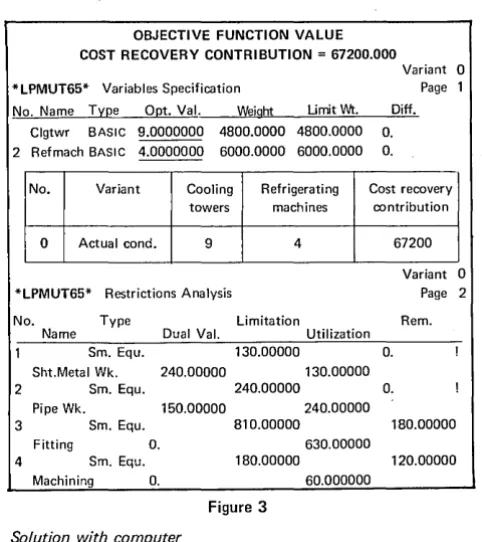
OBJECTIVE FUNCTION VALUE COST RECOVERY CONTRIBUTION = 67200.000 *LPMUT65* Variables Specification
No. Name T~~e O~t. Val. Weight Limit Wt.
Clgtwr BASIC 9.0000000 4800.0000 4800.0000 2 Refmach BASIC 4.0000000 6000.0000 6000.0000
No. Variant
a
Actual condoCooling towers
9
Refrigerating machines
4
Variant Page Ditt.
O. O.
Cost recovery contribution
67200 0 1
*LPMUT65* Restrictions Analysis
Variant 0 Page 2 No. Type
Name
Sm. Equ. Sht.Metal Wk. 2 Sm. Equ.
Pipe Wk.
3 Sm. Equ. Fitting O.
4 Sm. Equ. Machining O.
Limitation Rem. Dual Val. Utilization
130.00000 O.
240.00000 130.00000 240.00000 O.
150.00000 240.00000 810.00000
630.00000 180.00000
60.000000
Figure 3
180.00000 120.00000
Solution with computer
[image:10.615.315.556.405.676.2]The data is fed in by means of a special form from which the data is punched on punch cards. These cards and the LP programme are read into the computer.
As a result, the computer prints lists with the
optimum answer, i.e., the variables sought. In our
example (Fig. 3), these are Xl (=number of cooling towers to be produced) = 9 units, X2 (=number of
refrigerating units) = 4 units. It also shows the
value for the goal function, in this case the total overhead contribution of Fr. 67.200.--. This solu-tion is superior to the answer arrived at intui-tively.
The computer print-out also contains interesting information on the degree to which the stated model
restrictions are utilized. For example, one can see
that following the optimum product mix policy (Xl = 9, X2 = 4) will fully load the cost centres of sheetmetal and pipefitting. This identifies them as the bottlenecks in the event production volume is ever to be increased, while the assembly and machin-ing cost centres have reserves of 180 and 120
man-hours respectively. Another interesting figure is
the so-called dual value. It tells the amount by
which the total overhead contribution would rise if the capacity of a cost centre were to be raised by one unit. For example, the total contribution would go up by Fr. 240.-- if the sheetmetal cost centre had 131 manhours available in the particular time
period instead of 130. Logically enough, raising
the capacity of the assembly cost centre would not increase the contribution, as this centre already has extra capacity.
Alternative calculations with the computer
A real-life decision-making process cannot rest with a product mix calculated just once, however. Management wants to know not only what can be got-ten out of the existing plant capacity, but also the consequences that would result from a new company policy or a new market situation. This is where the advantages of the PROPER method really payoff. A few changes to the hasic figures, also referred to as the data bank, provides us with rapid, clear answers.
Thus we have a method for examining the most varied aspects of imminent decisions and for giving management sound answers to questions such as:
What will the consequences be if we opt for this or that strategy?
What will be the result of this or that measure?
What will happen if we act this or that way?
All of these questions can be answered with a modicum of effort and expense, and in a very short time.
Now that the reader is familiar with the prin-ciple of the PROPER method, let us turn to some con-crete projects in the Sulzer Group.
PROPER in Actual Practice
Job description
On July 1st, 1970, the Lindau Works of Escher Wyss GmbH, Ravensburg (referred to as EWL in the following text) became managerially subordinate to the Refrigeration Department of the Winterthur En-gineering Works Division (WEW).
A team called "Project Lindau" was then formed to incorporate the Lindau plant into the organization. Its mission was to define the existing situation, plan the organizational switch to the WEW Division, and to initiate the necessary steps to this end.
The problems involved in the incorporation can be grouped into 6 categories, namely:
management and organization accounting
product line and sales budget planning
production personnel
Each of these areas was assigned to a task group
for treatment. People from both staff and line
functions were drawn upon to man these task groups.
The PROPER method was applied to the solution of part of the overall problem, particularly the third category: product line and sales budget.
The primary question put to PROPER was this:
Which products should EWL manufacture, and in what quantities, to maximize the sum of over-head contributions with a given production capacity and given selling prices?
A PROPER project of this magnitude had not yet been carried out in actual practice; the creation of clear and understandable definitions was
indis-pensable to its success. It was also necessary to
maintain a good flow of information to those in-volved and to coordinate their activities smoothly during the data compilation phase, while the comput-er work was being done, and in intcomput-erpreting the
com-puted results. For this reason the dynamic network
plan technique was used to coordinate the extensive collection of data.
The initial collection of matrix data required a great deal of effort. In order to avoid jeopardis-ing the continuity of day-to-day work in line tions, it appeared advisable to draw on staff func-tions. This also assured that the experience gained would be of benefit for applications in other line sectors in future .. In this particular case the Pro-duction Control Group of Winterthur Engineering Works took on the collection of the very voluminous production data (coefficient matrix and capacity
limits). The figures that Accounting (overhead
c~ntributions) and Sales (sales limits) had to come up with were less extensive, but were quite complex in regard to calculation and the preparation of forecasts.
The steps taken under PROPER are now listed in formula fashion (with the numbers corresponding to the steps in Fig. 4); reference is made at each point to the special case of "Project Lindau".
1. Determine the representative products, proceeding rather coarsely in a first phase; the number of products can be expanded as necessary later on.
(Incidentally, the products need not always be
stated in numbers of units - one can also use price
categories such as Fr. 100.000.--, batch sizes of 100, 1.000, 100.000, etc.) Responsible: Sales work-ing together with Production.
Lindau: a total of 86 products, of which 9 di-mensioned terms of sales units of 100.000.-- marks and the rest in numbers of units.
"MODULAR DATA ELIMINATES REPETITION OF INPUT, REDUCES CHANCES OF ERROR, AND CUTS DOWN STORAGE REQUIREMENTS."
Modular Data For Producing Equipment Manuals
John McCormick Data Processing Manager
Ken Cook Company 9929 West Silver Spring Rd.
Milwaukee, Wis. 53225
Modular programming has had a significant impact
on the computer industry in the last few years. It
has reduced the size and complexity of systems in-stalled. They are much easier to program, analyze, and operate.
Recently the same principle has been applied to
data, with equal success. Modular data eliminates
repetition of input, reduces chances of error, and
cuts down storage requirements. The data only needs
to be entered into the system once. And it can be
entered in pieces: not all at once if it isn't available; and not in any specific sequence. Through proper data manipulation the information can be mod-ified, rearranged, deleted, repacked, updated, and
retrieved as required. The user can extract this
data in any manner that will satisfy his end re-quirements.
I nitial Project
Our first project for the concept of modular data was a computer program for producing a manual forthe
owner of an outboard motor. A separate owner's
man-ual is needed for 14 different horsepowers. In
ad-dition, each manual is printed in ten languages. Ob-viously, some paragraphs are common from manual to
manual. Certainly the preface and warranties should
be similar, the fuel mixtures, etc. How much of the other information either was the same or could be written to apply to more than one motor without los-ing its specific application had to be determined.
Equipment and Systems
The job flow would be input via punched paper tape from Friden Justowriters. The data was read
into an IBM 1130 and put on magnetic tape. Text
blocks can be extracted from tape and rolled out to disk to allow random access for updating and for
outputting the final tapes. Punched paper tape of
perfect text blocks in the order required for the manual are produced and run off on a Varityper 747
photocomposition machine. All codes necessary to
drive the photo-composer are in the tape. The opera-tion is completely automatic.
Problems Encountered
The first problem was coding the data. Each text
block would need a unique identifying code. A six
character code was assigned to indicate: the lan-guage; a sequential block number; and whether the text block was common to more than one manufacturer, or peculiar to one.
To make these codes easier for the computer to recognize at input, each one is preceded by a $Kl. Each text block starts at a new storage address. This speeds later processing by allowing the com-puter to scan only the first three characters of each record looking for the start and end of each
text block. The 6 digit code is printed on the
final copy so the 747 had to be programmed to bypass the computer codes which should not appear.
In addition, special codes are required at the beginning and end of every text block to drive the phototypesetter since their output sequence is un-known at the time of input. Type size, type face (normal, italic or bold), line width, leading, in-dentions, leadering, tabs, etc., must all be coded into every text block as required to output it prop-erly. The text blocks can be called in any sequence
and each must have the capability of driving the
phototypesetter properly by itself.
Size of the text blocks was the next problem. As
the data was analyzed, many areas be~ween manuals
were almost the same but not exactly.
The solution became a trade-off. Small text
blocks would eliminate as much duplication as
possi-ble, reduce storage but have excessive coding. The
?
FORMAT OF STORED TEXT IN ENGLISH
2 $Xl(E)0001(C)$U0837$ZllOS0120SS240$1$/030STOOOSL&(5077SZ180STOOOSL&S3(FUEL AN 3 0 LUBRICANTI<SSL&(0$TOOO$L&<5125$ZllOSl$TOOO$L&Sl$MSN(TIHIS IS A TWO CYCLE EN 4 GINE THAT REQUIRES LUBRICANT TO BE MIXED WITH GASOLINE. (FIOLLOW THESE INSTRU 5 CTIONS.(SSL&/1$3(NOTE )$Ni2(RIECOMMENDED LUBRICANT AND GASOLINE MUST BE PROPE
6 RLY MIXED OR SERIOUS&DAMAGE WILL RESULT TO THE ENGINE.(SSL&(OSTOOO$L&*
$U0837 $Zl10 $0120 SS240 $1
$1030
STOOO (5077 $Z180 $L&
E0001C
F0001C
G0001C
SPECIFICATION CODES TO DRIVE THE 747 IMBEDDED IN THE DATA
LINE LENGTH - 837 UNITS TYPE SIZE - 11 POINT PRIMARY LEADING - 12 POINT SECONDARY LEADING - 24 POINT FONT 1 - NORMAL
TAB SETTING - 30 UNITS
CANCEL LEADING - NO VERTIAL SPACING INDENT - 77 UNITS
TYPE SIZE - 18 POINT
LEFT JUSTIFY LINE AND RETURN CARRIAGE $3 <S <0 .(5125
$M $N
/
$2
*
FONT 3 - BOLO ONE BLANK LINE CANCEL INDENT INDENT - 125 UNITS FIXED SPACE - 18 UNITS FIXED SPACE - 9 UNITS TAB CODE
FONT 2 - ITALIC STOP CODE
SAMPLE OF PARAGRAPH NUMBER 0001 IN ENGLISH,FRENCH AND GERMAN
FUEL AND LUBRICANT
This is a two cycle engine that requires lubricant to be mixed with gasoline. Follow these instructions.
NOTE: Recommended lubricant and gaSOline must be properly mixed or serious damage will result to the engine.
MELANGE HUILE ESSENCE
Ce moteur est un 2-temps. La lubrification est faite par I'huile melangee
a
J'essence. Suivre les instructions de melange d' huile et d'essence comme suit:
REMARQUE: Le melange de I'huile et de I'essence recommande doit se faire convenablement si I'on veut eviter de serieux degats au moteur.
KRAFTSTOFF UNO
DL
Ihr AuBenborder ist ein Zweitaktmotor, der ausschlieBlich durch das dem Benzin
beigemischte 01 geschmiert wird. Befolgen Sie die nachstehenden Anweisungen.
HINWEIS: Die Mischung des empfohlenen DIs und Benzins mu13 sehr sorgfiiltig durchgefiihrt werden, da sonst schwere Schiiden am Motor entstehen konnen.
Figure 1 - A sample of a stored text block in computerese, English, French, and German.
less repetitive specification coding. Each text
block had to be analyzed on its own application and usage.
could be one text block and the different sections
two more blocks. Each paragraph had to be looked
at very carefully.
For example, a trouble check chart in one manual
has nine points and two warnings. In the next
horse-power, the chart has only eight points. One through four are the same, five is removed and six through
nine become five through eight. Also, one of the
warnings is different. Storing both charts
com-pletely takes extra storage and duplicates data. Each check point could be a separate text block but the coding would be excessive. The common parts
Updating and Corrections
Once the coding is done the text blocks are
punched and loaded onto the computer. Most
correc-tions and changes are made through the console type-writer. Almost any text editing function can be
handled on the console. Major revisions are loaded
[image:13.613.69.544.37.604.2]ECONOMY SPELLING COMPUTERIZED
Kenneth H. Ives
Director of Research and Statistics United Charities of Chicago 401 East 32 St.
Chicago, III. 60616
Wi the growth v data processing, transmitting n storage systems, th need fr simplification v English
spelling has become mor acute. Several approaches t
ths r presented. In combination they cn effect a
saving v over 10% v letrz, yet b intelligible (whn
read aloud) wiout retranslation. F adopted fr
standard use, ths wd save $2 per person per year in printing costs, n mor in typing n ryting.
In 1883 th American Philological Association
re-commended a list v spelling changes. In 1898 th
Na-tional Education Association adopted a list v 12,
including tho, altho, thru, thoro, n program. In
1916 it added th use v "t" as th past form v verbs ending in "ed" bt pronounst "t". Andrew Carnegie supported th movement wi $250,000 between 1906 n
1919. After Theodore Roosevelt became President, he
proposed a list v about 300 simplified spellings fr government publications, bt Congress prohibi ted th Government Printing Of is fm using thm.
A spelling system cn b based on phonemes, which r
speech sounds carrying distinguishing meaning. Each
phoneme cn b spelt th same whnevr it occurs, even tho it z pronounst sumwht difrentli as adjacent
sounds vary. Thus rules fr pronou"riciation change
~ather than spellings.
World English Spelling (WES) z a foneticli con-sistent spelling using only th letrz v th Roman
al-phabet. It wz developt by th Simpler Spelling
Asso-ciation fr use as an initial teaching medium fr children n adults, or fr wider use, t avoid th
dif-ficulties arising fm th numerous difrensz between
spoken n ritn English.
Thr r ovr 500 spellings fr th 41 comn sounds in
English words. Precedent z claimed fr thousands v
ways t spell fooli shly. One v these z
"pphough-tluipshally", using spellings fm sapphire, through, hustle, build, pshaw, n grammatically.
Efforts t move t simpler spelling involve work in
making th transition, fr those used t traliitional
orthography. Hence two rules seem relevant. First,
changing words wch ofr savings wI provide sum bene-fits t match these costs. Secondly, changing only a relatively small number at a time makes th task
mor manageable. A corollary wd b t change at first
only those words ofring th largest savings. Such an
approach z outlined below. Fr computer use, a
mod-erate list v 100 words wi substantial savings z of rd. Fr general use, graduated stages r ofrd fr easier adoption.
Semi-fonetic shortening v 40 words, each v which
saves .05% or mor in an avrij text, can save 10% v letrz. Four other fonetic changes r included, sav-ing over 1% mor; fonetic changes fm th WES system wch save letrz, using "y" as a vowel fr "ie" sound, using "-r" fr final "-er", n dropping silent letrz
such as final "e" n dubld consonants. Only those
changes in words saving at least .01% each in an avrij text r included.
Sum v th semi-fonetic abbreviations correspond t Scots dialect (wi, tha). Many mor correspond t th sound v th words in rapid speech, in wch th vowel z largely shipt, f thr z no similar word t confuse it wi.
Sum suffixes cn b shortnd too. These include:
abl, d, t, iv, les, n, nes, nt (fr not, n't, or
ent), shn (fr tion). Words ending in silent "e"
or dubld consonant (including ck) cn drop th last letr bfor adding th suffix. Words ending in "c" cn
add "Ii" rather than "ally". Thr z no real need t
dubl final consonants (g, I, m, n, p, r, t) bfor adding a suffix.
Savings t be expected in an avrij text, fr vari-ous words n groups v words in th attached tables, wr computed fm a word n letr count v a sample v 100,000 words (Dewey 1923 n 1950). Fr example, "and" occurs
3,280 times in th sample. Shortning it t "n" saves
6,560 letrz, or 1.50% v th 438,023 letrz in tha sample.
Ths system cn b supplemented fr special uses n
users by uthr abbreviations fr their purposes. Thus
chemists myt use th atomic symbols (C, 0, H, AI) in-stead v th words (Carbon, Oxygen, Hydrogen,
Alum-inuml. Njneers myt use "torc, powr, britl",
elec-tricians "wyr, lyn, motr" , n develop longer lists v
their comn words. Even shorter abbreviations, such
as "apln" fr "application", "eqpm" fr "equipment" n "abrns" fr "abbreviations" cn b used where these
words r frequent. As long as such words r at least
semi-fonetie, n not too numerous, retranslation by many readers en b fairly easy, especially f a
con-spicuous note at th start provides th key.
Profes-sional societies in various fields myt weI conduct sample wordcounts v their leading journals n texts, t help select n develop a standard list v abrns fr "economy spelling" n computer useage in their fields.
Fr computer use, n fr sum data transmishn n stor-age uses, a computer translation program can convert t or frm Computer Economy Spellings n special lists. Bicauz th changes v ovr a third v words wd slow reading by many readers nt familiar wi th economy n special systems, a retranslation program cn b quite helpful. Any text ritn in, or translated into, economy n special simplified spellings wI b reduced in standard spelling by a simple computer pro-gram, since th economy list z only 100 words, n most
special lists wd b far shorter. Thus readability n
economy r both posibl wi ths approach.
Th basic cyclevsuch a translation program, inwht-evr list processing language one has available,wd be:
1. read next word; 2. z it on th list?
3. f yes, print alternate form; 4. f no, print word as read; 5. return t step 1.
"There are over 500 spellings for the
41
common sounds in English words."
COMPUTER ECONOMY SPE LLI NGS (CES)
Standard Economy Saving Standard Economy Saving
address adres .01% letter letr .02%
after aftr .02 life Iyf .02
and n 1.50 little litl .05
announce anouns .02 matter matr .04
are r .25 might myt .03
average avrij .01 more mor .05
back bac .02 night nyt .02
be b .19 not nt .14
because bicauz .02 of v .91
been bn .15 office of is .03
before bfor .06 often ofn .01
better betr .02 other uthr .05
brought braut .02 over ovr .03
business biznis .02 people peepl .04
but bt .12 possess pozes .01
can cn .05 possible posibl .04
character caractr .01 purpose purpos .01
come cm .07 right ryt .05
committee co'mite .02 said sed .04
common comn .01 shall shal .03
could cd .10 should shd .08
country cuntri .02 some sum .05
course cors .01 still stil .01
differ difr .02 straight straet .01
dinner dinr .01 tell tel .02
dollar dolr .01 that tha .31
eight aet .01 the th 1.67
either ythr .03 them thm .06
enough enuf .02 there thr .14
ever evr .07 this ths .13
eye y .02 though tho .04
fight fyt .03 thought thaut .04
for fr .24 through thru .06
from fm .20 time tym .05
give gv .06 to t .67
had hd .09 trouble trubl .02
half haf .01 under undr .03
happen hapn .01 was wz .19
have hv .30 we w .12
he h .15 well wei .03
her hr .05 were wr .14
high hy .04 what wht .06
him hm .06 when whn .05
his hz .12 which wch .11
house hous .01 while whyl .02
how hw .05 will wi .20
if f .05 with wi .36
is z .29 would wd .19
.
.37
" knowledge nolij .02
you u
less les .01 your yr .13