Page 1 of 125
Acronym: ProACT
Title: Integrated Technology Ecosystems for
ProACTive Patient Centred Care
Call: PHC25-2015: Advancing ICT Systems and
Services for Integrated Care
Duration: 42 Months
Website: www.proact2020.eu
Grant Agreement No.: 689996
Document Identification
DeliverableID
D1.1
Deliverable
Title
Care Models / Pathways
Release Version 1.0 Date 01/05/16
Key Information
Deliverable description Report identifying the key stakeholders to engage with during the requirements gathering phase, care pathways of the patient
and challenges in supporting patients
Deliverable type Report
Original due date
(month number/date) M4
Real due date (month
number/date) M4
Principal Author
(name/entity) Julie Doyle, DkIT
Partners Contributing (name/entity)
Evert-Jan Hoogerwerf, AIAS; Thomas Van der Auwermeulen, iMinds; Emma Murphy, TCD; John Dinsmore, TCD; Lorenza
Maluccelli, ASP; Janneke Kuiper, iMinds; Valentina Fiordelmondo, AIAS; An Jacobs, iMinds; Lorenzo Desideri,
AIAS; Internal Reviewer
(name/entity)
Anne-Marie Brady, TCD; Nuwani Edirisinghe, Philips; Alessandra Pascale, IBM
Dissemination Level
RestrictedPage 2 of 125
Release History
Version
Date
Status*
Revision Comments
Author
V1.0 30/04/16 C
This deliverable will be reviewed at the end of the requirements gathering phase, and will be amended as necessary based on
feedback from this phase
Julie Doyle, DkIT
*Status of deliverables is indicated by abbreviations/terms as follows:
Complete (C): The final deliverable document is 100% completed, reviewed and authorised for release by the partner responsible for the deliverable or the WP leader.
Page 3 of 125
Table of Contents
Release History ... 2
!
List of Abbreviations ... 6
!
Executive Summary ... 8
!
1
!
Background - Integrated Care Systems for Multimorbidity ... 10!
1.1! Integrated Care ... 11!
1.2! ProACT Approach ... 13!
2
!
Methodology Overview ... 14!
3
!
Healthcare Context – Ireland ... 15!
3.1! Health Status Overview ... 15!
3.2! The Irish Health Care System ... 21!
3.3
!
Relevant National Policies and Research ... 24!
3.3.1! The National Clinical Programme for Older People ... 25!
3.3.2! Future Health ... 26!
3.3.3
!
Integrated Care ... 27!
3.3.4
!
E-Health ... 29!
3.4! Summary and Challenges ... 30!
4
!
Healthcare Context – Belgium ... 31!
4.1
!
Health Status Overview ... 31!
4.2
!
The Belgian Health Care System ... 33!
4.3
!
Relevant National Policies and Research ... 35!
5
!
Health and Social Care Context – Emilia-Romagna, Italy ... 38!
5.1
!
Health Status Overview ... 38!
5.1.1
!
Emilia-Romagna ... 40!
5.2
!
Health and Social Care: Legislation and Organisation ... 41!
5.3
!
Health and Social Care in Emilia-Romagna: Organisation and Data ... 45!
5.3.1
!
Regional Health Service ... 45!
5.3.2
!
Regional Social System and Long Term Care ... 47!
5.3.3
!
In-Home Care System ... 48!
5.3.4
!
Semi-residential and residential service ... 51!
6
!
Stakeholder Mapping ... 52!
6.1
!
Summary of Primary Stakeholders ... 53!
6.1.1
!
Older People with Multimorbidities ... 57!
Page 4 of 125
6.1.3! Formal Carers ... 57!
6.1.4
!
Community Care ... 58!
6.1.5! Hospital clinicians ... 59!
6.1.6! Pharmacists ... 59!
6.2
!
Summary of Secondary Stakeholders ... 60!
6.3
!
Stakeholders in the Irish Context ... 66!
6.3.1
!
Care of the Older Person Assessment Unit ... 66!
6.3.2! Home Instead Senior Carers ... 67!
6.3.3
!
Other Key Support Stakeholders ... 68!
6.3.4
!
Discussion ... 69!
6.4
!
Stakeholders in the Belgian Context ... 69!
6.4.1
!
Home Care ... 70!
6.4.2
!
Residential Care ... 71!
6.4.3
!
Hospital Care ... 72!
6.5
!
Stakeholders in the Italian Context ... 72!
6.5.1
!
ASP City of Bologna ... 72!
6.5.2
!
AUSL di Bologna: The Public Local Health Trust of Bologna ... 74!
6.5.3
!
CUP 2000 S.p.A ... 76!
6.5.4
!
The Regional Healthcare and Social Agency ... 77!
6.5.5
!
Discussion ... 78!
7
!
Mapping Care Pathways ... 81!
7.1
!
Care Pathways in Ireland ... 81!
7.1.1
!
Specialist Geriatric Services Pathway ... 81!
7.1.2
!
National Clinical Programmes for Chronic Disease ... 83!
7.1.3
!
Care Pathways for People with Dementia ... 84!
7.1.4! Input from Healthcare Professionals – Pathways, Care Plans, Integration and Communication ... 85
!
7.1.5
!
Summary and Key Challenges ... 87!
7.2! Care Pathways in Belgium ... 89!
7.2.1
!
Overview of Care Pathways, Trajectories and Programmes in Belgium ... 90!
7.2.2
!
Summary and Key Challenges ... 91!
7.3
!
Care Pathways in Bologna ... 93!
7.3.1
!
Disease specific care pathways ... 93!
7.3.2
!
Integrated Health and Social Care Pathways ... 94!
Page 5 of 125
7.3.4! Summary and Key Challenges ... 98!
7.4
!
Summary ... 98!
8
!
Challenges for ProACT ... 100!
8.1! Addressing Challenges around Care Pathways for ProACT ... 101!
9
!
Final Summary – Key Factors to Integrating Care in ProACT ... 104!
9.1
!
Key Factors ... 110!
10
!
References ... 111!
11. Appendix A – Care Pathways for Single Disease Management ... 118
!
Page 6 of 125 ADI Assistenza Domiciliare Integrata
ADL Activities of Daily Living
ASP Azienda Pubblica Servizi all Persona – Public Company for Services to the Person
AUSL Azienda Unità Sanitaria Locale
BOTs Brussels Thuis Overleg (Belgium)
CGA Comprehensive Geriatric Assessment
CHD Chronic Heart Disease
CHF Congestive Heart Failure
CNS Clinical Nurse Specialist
COPD Chronic Obstructive Pulmonary Disease
CreG Chronic Related Group project
CSO Central Statistics Office
CSSDs Centres de Coordination de Soins et de Services à Domicile (Belgium)
ED Emergency Department
EIP-AHA European Innovation Partnership on Active and Healthy Ageing
ESD Whole System Demonstrator
ESF Electronic Health Record (Italy)
EU European Union
FSE “Fascicolo Sanitario Elettronico” (Electronic Personal Health Record)
GC Guided Care
GP General Practitioner
HISC Home Instead Senior Care
HSE Health Service Executive (Ireland)
ICPs Integrated Care Programmes
ICT-AT Information Communication Technology – Assistive Technology
IHCA Integrated Home Care Assistance project (Italy)
INPS National Institute of Social Security (Italy)
ISHC Integrated Services for Home Care (Belgium)
Page 7 of 125 LHTs Local Health Trusts (Italy)
MAB Maximum billing system
MDT Multidisciplinary team
NHP National Health Plan (Italy)
NHS NICE National Health Service National Institute for Clinical Excellence
NHS National Health Service (Italy)
NKP Vlaams-Nederlands Netwerk Klinische Paden
OT Occupational Therapist
PAI Personalised Care Programme (Italy)
PCAP Community based Sanitary Primary Care Team (Italy)
PCCC Primary, Community and Continuing Care (services)
PCT Primary Care Team
PDTA Percorsi Diagnostici Terapeutici Assistenziali (Diagnostic Therapeutic Assistive Pathways)
PwD Persons with dementia
QA Quality Assistant (Home Instead Senior Care staff, Ireland)
QoL Quality of life
RCT Randomised controlled trial
SAD Servizio di Assistenz Domiciliare
SELs Cooperation Initiatives in front-line health care (Belgium)
SGS Specialist Geriatric Services
SOLE “Sanità On LinE” (“Health Care On Line”)
TILDA The Irish Longitudinal Study on Ageing
UASS Social-Sanitary Units at District level (Italy)
US United States
USSI Integrated Social-Sanitary Units (Italy)
UVM Multidimensional Assessment Unit (Italy)
WHO World Health Organisation
Page 8 of 125
Executive Summary
The overall aim of ProACT is to develop an open web application programming interface (API) ecosystem to integrate a wide variety of new and existing technologies to pull, aggregate and analyse data for the purposes of higher order inference, to improve and advance integrated care for multimorbidity (including associated comorbidities). The ecosystem will connect four key care and support models central to understanding and implementing effective, continued and coordinated patient centric care (including self-management). These models are: 1) homecare (including informal care) 2) hospital care 3) community and social care and 4) social support networks. The objectives of this deliverable are to:
• Identify the key stakeholders to engage with during the requirements gathering
phase;
• Identify and understand care pathways of the patient with multimorbidity; and
• Understand the challenges in supporting patients with multimorbidity along these
pathways
This deliverable describes the process undertaken to meet these objectives across 2 EU countries in which ProACT pilots will take place – Ireland and Belgium, as well as in the Emilia-Romagna Region of Italy, where at a later stage a small pilot will occur in the framework of a transferability study. The methodology included desk-based research as well as interviews and focus groups with some of the identified key stakeholders.
Key Findings
1. Current level of integration of healthcare services (both horizontal and vertical) and of healthcare and social care is limited, though it is a priority for health care systems and governments across all 3 countries.
2. The GP is apparently the most obvious and accessible primary source of care coordination for people with multimorbidity living in the community. However, short consultation times, the complexity of multimorbidity management and limited guidelines on treating people with multimorbidity can prevent effective case management and a thorough review of treatment plans, medications etc.
3. Geriatricians and/or multidisciplinary specialist teams, where they exist, are thus a key referral for those older adults with complex needs (including multimorbidity) across all 3 countries.
Page 9 of 125
5. The development of a digital platform for integrated care has the potential not only to support existing practice, but also to improve the management of a complex and integrated care plan, introducing new ways of collaboration between key actors.
Page 10 of 125
1 Background - Integrated Care Systems for
Multimorbidity
The European Union (EU) faces strong concerns over the sustainability of health services due to the increase in healthcare expenditure, as well as disparities in the number of practising health professionals. 70-80% of healthcare costs are spent on chronic diseases, which corresponds to €700 billion in the EU, while an estimated 50 million people in the EU live with multiple chronic diseases, which deeply impact quality of life (Rijken et al., 2013).
Presently health systems across the EU focus on supporting a single disease framework of care; the primary challenge is to create a patient centric integrated care ecosystem to understand and manage multimorbidity (defined as the presence of two or more disorders and associated comorbidities) (Rijken et al., 2013). For patients with multimorbidity services are often repetitive (multiple appointments), inconvenient, inefficient (patients may see different clinicians who give conflicting advice), burdensome and potentially unsafe due to poorly integrated and coordinated care (Starsfield et al, 2005). This significantly impacts on reducing patient quality of life (QoL). In addition these patients may take a large number of medications, which can be difficult to remember with some combinations potentially dangerous. There is a need to improve best practice around the provision of continued, well-coordinated, person-centred care for individuals with multimorbidity. Another key challenge in achieving this is to empower the home dyad of the individual with multimorbidity and their primary informal carers to play an active role in self-management and care practices to improve quality of life for both.
Frailty is an issue that is central to ageing, transcending specific diseases and compromising quality of life (Rockwood & Mitnitski, 2007). By the age of 80, approximately 40% of older adults have some degree of functional decline, and 6% to 11% of older people are considered frail (Bandeen-Roche et al., 2006). The prevalence of frailty in community-dwelling older Europeans (aged >65) varies between 5.8% and 27.3%, and is about 22% in community-dwelling older Americans (aged >60); in addition, between 34.6% and 50.9% are classified as ‘pre-frail’ in Europe (Santos-Eggiman et al., 2009), and 28% in the US (Smit et al., 2013). In 2012, the European Innovation Partnership on Active and Healthy Aging (EIP AHA) launched its action plan ‘Prevention and diagnosis of frailty and functional decline, both physical and cognitive, in older people’1. This action plan highlights frailty and the ensuing vulnerability of frail older adults as a growing multidimensional health and social care challenge across the EU, associated with increasing health care costs, and increased risk of physical, cognitive, and functional decline and adverse health outcomes. It discusses how frail older adults are at high risk of increased use of community resources, hospital, and long-term care institutions, and that attention should be paid to “prevention, screening and early diagnosis”. A systematic review by Ryan et al (2015) examined 37 studies on multimorbidity and found evidence that indicates multimorbidity predicts frailty and functional decline. Patients with higher numbers of diseases and greater severity experience greater decline. Thus it is important to target function, and not only disease, in older adults with multimorbidity.
Page 11 of 125
1.1 Integrated Care
The World Health Organization (WHO, 2011), describes integrated healthcare systems as designed to manage and deliver health services so that ‘clients’ receive and perceive a continuum of health promotion, protection and disease prevention services, as well as diagnosis, treatment of long-term care, rehabilitation and palliative care services, through different levels and sites of care within the health system according to their needs. Traditionally, integrated care has been fragmented. An analysis by Frost & Sullivan (2014) identified the key elements of traditional healthcare systems, indicating how these need to evolve to become integrated. This includes moving from: a provider-centred to patient-centred model of healthcare; individual expertise to collaborative or multidisciplinary approaches; one-size fits all care to personalised care; hospital-based to community-based care; disease treatment to prevention and; healthcare professional expertise to data-analytics driven care.
[image:11.595.133.460.328.583.2]There are limited studies on effective models to manage and support integrated multi/comorbid disease care. Those available focus on self-report by older people or hospital populations and indicate that multimorbidity is correlated with increased age (Salisbury, 2011), reduced function (Kadam, 2007), increased inpatient admissions (Salisbury, 2011) and reduced socio-economic status (Marmot 2005; Walker 2007; Salisbury, 2011). Figure 1.1 shows key outcomes from a recent multimorbdity study (Barnet et al, 2012) with data collected from 1,751,841 people in 314 medical practices in Scotland, complimenting WHO (2011) findings to show Chronic Heart Failure (CHF), Chronic Obstructive Pulmonary Disease (COPD) and Diabetes as significantly linked disease conditions with related comorbidities (e.g. hypertension). The 2013-2016 ICARE4EU project
Page 12 of 125
(http://www.icare4eu.org) seeks to address understanding of EU research being conducted into integrated multimorbidity care and has analysed innovative approaches in 30 multidisciplinary test projects. The programme supports the EIP AHA programme and was co-funded by the Health Programme of the EU 2008-20132.
ICARE4EU states the following two urgent EU key challenges, which need to be addressed: (i) Most current care delivery models are disease-specific and not adapted to the needs of the growing number of people with multimorbidity and (ii) Chronic illness care places a high burden on financial and human resources. The programme recommends that to tackle these challenges innovation is needed to provide “good quality care with limited resources”. Care should be patient centric, integrate health and social care, use new technologies, support self-management, improve collaboration with family carers, meet the complex needs of multimorbidity, and prioritise and integrate treatment across a range of care and services.
Most progressive integrated care approaches have been developed in the United States (US) to incorporate new models of healthcare with management responsibilities divided between administrators, third party providers and health professionals. The EU however is seeing change, with greater emerging public-private sector collaborations on integrated care being developed. Recent EU integrated care programmes include;
‘Polypathology (Spain)’ (Rijken et al, 2013): Highlighted that care for multimorbidity is difficult to plan and coordinate as a result of exacerbations and additional comorbidities. The programme led to organizational re-design in which patients manage their care in collaboration with internal medicine specialists, family physicians and nurses to improve continuity of care, workflows and best clinical practice supported by an Information-Communication Technology – Assistive Technology (ICT-AT) system.
‘CasCo (Netherlands)’ (Versnel et al, 2011): Developed for patients with comorbidities linked to Type 2 diabetes, adopting the Guided Care (GC) model to design a case management care programme for primary care settings with practice nurses acting as case managers, who aim to coordinate all care for patients enrolled in different single-disease management programmes, drawing on evidence based optimal care to systematically manage all of the patient’s conditions, tailored to the patient’s preferences. Unfortunately results are yet to conclude effectiveness.
‘Whole System Demonstrator’ (WSD) trial (UK) (UK Department of Health, 2011): The world’s largest randomized controlled trial (RCT) of telehealth and telecare, involving 6,000 patients and 238 General Practitioner (GP) practices and patients with CHF, diabetes and COPD. Findings indicated a 45% reduction in mortality and 20% reduction in emergency admissions, with a 15% reduction in accident and emergency visits, elective admissions and bed days. Their model involved a hospital In-Reach team consisting of nurses who plan the return home for patients and identify the support they may need, who can be discharged early and supported at home using telehealth. The two main levels of support are (1) those with complex needs have a set top box to send readings, complete questionnaires and watch videos; (2) those with simpler needs use “Flo Simple Telehealth’3 whereby mobile phones are used to text message and collect patient observational data with advice and guidance. The aim was to find a cheap, simple, easy to learn solution to help engage,
Page 13 of 125
educate and empower patients to manage their own care. However the WSD was limited by the closed nature of the system, which was not flexible to business transformations in the health service.
1.2 ProACT Approach
Barriers to integration are not only clinical and technical, but include cultural and organisational resistance to change. Therefore research on new models of care should include understanding of organisations that respond to the complexities of multimorbidity care (within cultural contexts) effectively and efficiently.
To this end, one of the primary objectives of ProACT is to identify the network of, and determine the connections, collaborations and alignment between stakeholders (individuals and organisations) within an integrated care ecosystem to support individuals living with multimorbidities. An understanding of these issues within the ProACT trial sites is essential, as is an understanding of how they relate to the wider EU context. The authors of this report undertook desk-based research to investigate individual country contexts, and held meetings, interviews and/or focus groups with key stakeholders where a more thorough insight was required. The focus was to:
1. Identify the key stakeholders of ProACT in order to engage with them as part of the requirements gathering process, and gain an initial understanding of their role in the care ecosystem, their values and how they may benefit from ProACT.
2. Understand the care pathways of patients with multimorbidity and associated complex health needs between home, primary care and hospital/specialist care; communication amongst relevant stakeholders along these pathways; barriers to access of care; inefficiencies within the system; critical information and decision points.
3. Understand the key challenges faced by stakeholders along these pathways.
Page 14 of 125
2 Methodology Overview
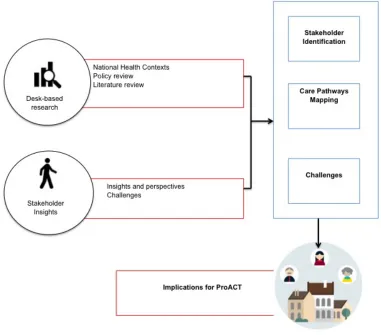
[image:14.595.91.472.321.656.2]The methodology used in producing this deliverable is outlined in Figure 2.1 We began with desk-based research to review the literature on multimorbidity (including co-morbidities e.g. indicators around frailty) and integrated care for older adults. An analysis of healthcare policy in each pilot country relevant to these issues was performed, as well as a review of national documents describing general care pathways for older adults as well as pathways for the chronic diseases of relevance to ProACT. These steps helped to identify the primary stakeholders of ProACT and their role along the patient’s care pathway. Given the limited focus of national policy across all three countries on integrated care pathways for multimorbidity, interviews with relevant stakeholders were held to gain further insight into challenges experienced along the existing pathways, in terms of caring for those with multimorbidity and complex needs. These will be augmented as part of ProACT’s specific requirements gathering task (T1.2 Months 1-9).
Figure 2.1: Overview of methodology across pilot partners
Page 15 of 125
3 Healthcare Context – Ireland
3.1 Health Status Overview
[image:15.595.109.464.394.645.2]In Ireland, the number of people aged 65 and over grows by 20,000 each year. Ireland’s ageing population growth is much higher than the EU average (Figure 3.1). Between 2011 and 2025, the over-65 population will increase by approximately 54%, while the number of over-85s will double. A 2013 Census report by the Central Statistics Office (CSO) projects that the number of people aged 65 and over in Ireland will increase from 532,000 in 2011 to between 850,000 and 860,700 by 2026 and will be close to 1.4 million by 2046 (CSO Ireland, 2013). A more dramatic increase is expected in the number of people aged 80 and over, increasing from 128,000 in 2011 to between 484,000 and 470,000 in 2046. This will result in a significant change in the structure of the Irish population (Figure 3.2). From 2006 to 2026, within the 65 and over age group, the dependency ratio is expected to increase from 16.4% to 25.1% for Ireland (CSO Report, 2007). The health statistics released by the Irish Department of Health indicate that average life expectancy of the Irish population has grown by 10 years over the past 50 years (Dept. Health, 2005) and is now above the EU average. Life expectancy for men is 83 years, while it is 85 years for women (Dept. of Health 2013). Healthy life years at age 65 is 11 for men and 12 for women (Figure 3.3).
Page 16 of 125
Figure 3.2: Ireland actual population 2011 and project population 2040 by gender and age group
Figure 3.3: Life expectancy and healthy life years at age 65, male and female, Ireland and EU, 2011 (Source: Eurostat)
Page 17 of 125
Irish population report having a chronic disease and half of all people over 50 have at least one chronic disease. This rises to 62% for those over 65. Chronic diseases are responsible for about 76% of deaths in Ireland. In 2011, 2 out of 5 hospitalisations were due to the four main chronic diseases – cancer, cardiovascular disease, respiratory disease and diabetes. Chronic disease accounts for approximately 80% of GP consultations. It is estimated that 40% of the adult population in Ireland will have one or more chronic conditions by 2020. Chronic diseases are associated with 86% of mortality and 77% of overall disease burden, with patients utilizing around 70% of healthcare resources.
[image:17.595.75.525.377.608.2]Balanda et al. (2011) examined prevalence rates of four chronic conditions (hyptertension, angina, stroke and diabetes type 1 and 2 combined) in the Republic of Ireland and Northern Ireland. Their data indicates that there will be a dramatic increase in prevalence rates by 2020 (Table 3.1). For example, in relation to chronic heart disease (CHD), there will be an additional 65,000 adults (a 50% increase) with the disease, in the space of 15 years. The study by Balanda et al. also found that a person is more likely to be living with chronic disease if they live in a deprived area and prevalence of chronic disease is generally higher in males.
Table 3.1: Number of cases and prevalence rates in 2007, 2015 and 2020 in the Republic of Ireland and Northern Ireland (Source: Balanda et al., 2011)
Prevalence of multimorbidity in Ireland is less well studied. Glynn et al. (2011) studied a sample of 3309 community-dwelling patients in the West of Ireland and found that prevalence in those over 50 years of age was 66.2%. Healthcare cost and utilisation was also significantly increased for this population. The study found that the addition of each chronic condition led to an increase in primary care consultations, hospital outpatient visits, hospital admissions and total healthcare costs over the previous 12 month period. Glynn et al. state that this is the first study on multimorbidity prevalence and burden to be conducted in Ireland.
Page 18 of 125
Another study by Savva et al. (2011) found that multimorbidity is around twice as common in the over-75s as those aged 50-64. Data was taken from the Survey of Lifestyle, Attitudes and Nutrition carried out by the Department of Health and Children in 2008 and sampled 4,255 people over the age of 50. The study examined prevalence of 8 chronic diseases (heart attack, angina, stroke, diabetes, asthma, COPD, musculoskeletal pain, cancer). In Ireland, 11% of those over 50 suffered from two or more of these conditions. Musculo-skeletal pain was the most widely reported condition with a prevalence of 40%, followed by diabetes (7%) and angina (6%). The study also revealed that those in higher socio-economic groups were more protected from the effects of chronic disease than those in lower socio-economic groups and that those with 2 or more chronic conditions are almost 20 times more likely to report having a disability than those with no chronic conditions.
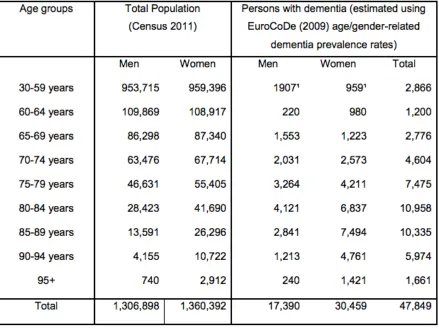
A report by Pierce, Cahill and O’Shea (2014) provides detailed estimates, based on census data and EuroCoDe dementia prevalence rates, of the projected growth of dementia in Ireland in between 2011 and 2046. Table 3.2 outlines the estimated prevalence of dementia in Ireland in 2011, indicating that 47,849 people suffered with dementia, of which approximately two-thirds were women. The largest prevalence of dementia was seen in the 80-84 age group. A total of 63% of those with dementia were estimated to be living in the community, 60% of which were over 65, and 3% under 65.
Page 19 of 125
Page 20 of 125
Figure 3.4: Actual and projected population of older people by age group in Ireland (in thousands), 2011-2046 (Source: Pierce et al., 2014)
Page 21 of 125
With the projected increases both in the ageing population and the incidence of chronic diseases in Ireland comes increased costs for both the health service and patients. The total cost of hospitalisations related to COPD is estimated at €70,813,0404 5. The total cost of diabetes in Ireland is estimated at €731,580,993, with a cost per patient of €3,9826. While little data exists on the cost of multimorbidity in Ireland, the study by Glynn et al. (2011) outlined above found that within their sample of people aged over 50, of which 66.2% were found to have multimorbidity, over the previous 12 months the addition of each chronic condition led to an increase in:
• Primary care visits (11.9 versus 3.7 for 4 or more conditions versus 0 conditions) • Hospital out-patient visits (3.6 versus 0.6)
• Hospital admissions (adjusted odds ratio of 4.51)
• Total healthcare costs (€4096.86 versus €760.20 for 4 or more conditions versus 0 conditions)
Darker, Whiston & O’Shea (2015) found that private patients with chronic diseases delay facing primary care services due to cost, while both public and private patients found paying for medications and other related expenses to be difficult.
3.2 The Irish Health Care System
In Ireland, the Government, Minister for Health and Department of Health are responsible for the development of health policy. The Health Service Executive (HSE) is the national body responsible for strategic planning, implementation and management of health and social services. Policy and guidelines are developed for national use to ensure quality in service, however the implementation of these at local level is open to interpretation and is very much dependent on local area budgets. The structure of the HSE can be seen in Figure 3.6. According to the HSE:
• Acute Hospitals work closely with the hospitals division in Figure 3.6 to deliver hospital services throughout Ireland, including inpatient care, emergency care, maternity, diagnostic and outpatient services.
• Primary Care is all of the health or social care services that can be found in the community outside of the hospital/acute setting. A Primary Care Team (PCT) is a team of healthcare professionals who work together to meet the needs of people living in the community, providing a single point of contact to the health service. This includes GPs and GP nurses, Public Health Nurses (PHNs), Occupational Therapists, Physiotherapists and home help / support staff. The PCT also links with speech and language therapy, dieticians, mental health services, social workers, psychologists, podiatrists, dental and ophthalmic services. GP out of hours services are also part of primary care.
• Social Care supports the needs of older people, as well as people with disabilities, with the aim of supporting people to live at home, independently within their community. Some of the services for older people include home care packages7,
4 http://www.chronic-disease.ie/#/copd/all-ireland
5 http://www.hse.ie/eng/services/list/1/schemes/cbd/Ready%20Reckoner.pdf 6 http://www.idf.org/sites/default/files/EN_6E_Atlas_Full_0.pdf
Page 22 of 125
older person primary care and community services8, benefits and financial entitlements9, nursing home support scheme10 and residential care11.
Social and Continuing Care in Ireland is provided to meet physical and or mental health needs arising from disability, frailty, accident or illness, and can be provided over an extended period of time in a multitude of settings, including a person’s home, day hospitals, health centres as well as nursing homes and hospices. Social and Continuing Care in Ireland is currently fragmented, differs across regions and is lacking integration with other healthcare services. A number of new Integrated Care Programmes (see below) are currently under development and are designed to more closely integrate health and social care delivery. However, this development is still at a very early stage.
Figure 3.6: HSE organisational structure (source: HSE)
In Ireland, free primary care and medications are available at the point of care for those deemed eligible based on their socio-economic status. These individuals are registered to a single GP. Those who are responsible for paying for their own healthcare largely tend to be registered to a single GP, but this may not necessarily be the case. However, as of 2015, all those over 70 are entitled to free GP care and can apply for a GP Visit Card.
Data from the Irish longitudinal study ageing (TILDA) highlights that people with multimorbidity utilise all of the different health services (GPs, emergency department, outpatient departments and hospital stays) significantly more often than those without
8 http://www.hse.ie/eng/services/list/4/olderpeople/mao_older.html 9 http://www.hse.ie/eng/services/list/1/schemes/
10 http://www.hse.ie/eng/services/list/4/olderpeople/nhss/
Page 23 of 125
chronic illnesses (McNamara, 2013). For example, those with three or more chronic conditions report visiting their GP six times annually, in comparison to two visits for those without chronic conditions (McNamara, 2013).
According to OECD figures the total health spending in Ireland accounted for 8.9% of GDP in 2012, which is slightly more than the EU average of 8.7% (OECD, 2014). Recent figures from the HSE financial statements show the total HSE expenditure in 2014 was €13.33 billion. Total expenditure on acute services was €5.3 billion (39.52%), on primary care €3.4bn (25.85%), social care €2.6bn (19.92%) and mental health €716m (5.42%).
Even though research highlights that the preference of the majority of Irish people is to remain living independently in their own home for as long as possible, a larger proportion of money spent on care for older people goes to residential care rather than community supports (CARDI, 2011). In 2009 the Irish government established the Nursing Homes Support Scheme (also referred to as the Fair Deal Scheme) giving financial assistance to older people entering into residential care. In 2014 22,360 people were supported under the Nursing Homes Support Scheme for long-term residential care (HSE, 2012). As this scheme does not fund home care or home help, it has been criticised for creating a situation where remaining living independently in the home could prove more expensive than entering a nursing home (CARDI, 2011).
Figure 3.7: Number of People in Ireland in receipt of a home care package from 2010 to 2014 (source: HSE, 2012)
Page 24 of 125
Table 3.3: Projected home help hours and home care packages 2016 to 2021 (source: HSE, 2012)
From the HSE service plan in 2015 there was a provision of €25m for an initiative to address patients whose discharge from acute hospitals is delayed due a lack of capacity (HSE, 2015). The breakdown of the funds is presented in Table 3.4 which highlights that the proportion of spending on acute long and short stay care is much higher than that of home care packages and supports.
Table 3.4: Proportion of funds spent on residential care, short stay, home care and community intervention teams (Source: HSE, 2015)
3.3 Relevant National Policies and Research
Recent years have seen a number of developments within the Irish healthcare context, with the overall aim of improving the Irish health system and patient care. A number of programmes / policy documents have been developed which are of relevance to ProACT. These include:
• The National Clinical Programme for Older People12. This programme is to support older people to live in the community, independently and with dignity.
• The policy document ‘Healthy Ireland – A Framework for Improved Health and Wellbeing 2013-2025’13. Currently the overarching policy on health promotion and prevention in Ireland, with an aim to ensure cooperation and collaboration across the government, the health service and all of society.
Page 25 of 125
• The policy document, ‘Future Health – A Strategic Framework for Reform of the Health Service (2012-2015)’14 Has the goal of implementing ‘large-scale change that delivers fundamental reform’.
• Ireland’s e-Health Strategy15. Established in 2013, this strategy outlines a set of objectives to be achieved in implementing e-health in Ireland, and provides a roadmap to achieve these.
• Integrated Care Programmes16, launched in 2014, aim to join up health and social care, focussing on programmes for chronic disease management, older persons, patient flow, maternity and children.
• A number of policies on chronic disease management. However these focus on single disease treatment, for example, the Policy Framework for the Management of Chronic Diseases in the Republic of Ireland (ROI)17.
Those programmes and policies most relevant to ProACT are discussed in more detail below.
3.3.1 The National Clinical Programme for Older People
The main goal of this programme is to support older people to live in the community, independently and with dignity. It is recognised that while many older people live healthy, independent lives, an increasing number suffer from frailty, multimorbidity and polypharmacy. The specific aims are outlined in Table 3.5. One of the main policy documents emerging from this programme, published by the HSE and the Royal College of Physicians in Ireland, is the Specialist Geriatric Services Model of Care Part 1: Acute Service Provision (2012). This document states that the core responsibility of care for community-dwelling frail older people is with the GP and primary care team. It outlines the care pathways of older people through the healthcare system as well as the key stakeholders involved in their care. This is discussed further in sections 6 and 7. While the document primarily deals with older adult care in acute services, it states that Part 2 will address community care. However, as of yet, Part 2 has not been published.
14 http://health.gov.ie/blog/publications/future-health-a-strategic-framework-for-reform-of-the-health-service-2012-2015/
15 http://health.gov.ie/blog/publications/ehealth-strategy-for-ireland/ 16 http://www.hse.ie/eng/about/Who/clinical/integratedcare/programmes/
Page 26 of 125
Table 3.5: Aims of the National Clinical Programme for Older People
3.3.2 Future Health
Future Health (2012) is a Department of Health policy document outlining a strategic reform of the Irish healthcare system. It recognises that the current system is “unfair to patients; often fails to meet their needs fast enough; and does not deliver value for money”. At its core is the development of a single-tier health service that will be supported by the implementation of Universal Health Insurance.
Future Health has four pillars of reform, two of which are of particular relevance to ProACT: 1. Health and Wellbeing – focusing on a move away from treatment of ill people to
keeping people healthy. This principle underlies many of the reforms outlined in Future Health.
Page 27 of 125
strategy recognizes the importance of such service reform in dealing with the growing number of people managing chronic illness as well as those with two or more disorders. It views primary care as critical and essential in developing a new model of integrated care.
Future Health’s vision of reform includes integrated primary and acute care systems. Plans for reform in primary care includes GP-lead teams of primary care professionals, working from dedicated primary healthcare facilities, providing care for health and social needs. Primary care should meet 90%-95% of people’s healthcare needs. Only those patients with highly complex needs will be referred from primary care. In terms of reform of Social and Continuing Care, this includes a reform of the Fair Deal scheme (discussed in Section 3.2)18, to support more people in living at home.
A new model of care for chronic disease management is also proposed in Future Health, shifting care from hospital to the community. In addition to community-based prevention and early diagnosis, a large part of the model will involve patient empowerment, managing conditions and preventing exacerbations. The models of chronic disease management will outline the key stakeholders and their roles and responsibilites in shared care. This will include clinical protocols and guidelines, as well as specific programmes of self-management. Such reforms are expected to result in benefits to the population, including:
• Helping people to manage their health, improve their health and get diagnosed earlier.
• Access to chronic disease management programmes.
• Supporting people to be cared for in their own homes, through improvements in social care.
The following section discusses specific programmes of integrated care.
3.3.3 Integrated Care
More recently, in 2015, the HSE launched 5 integrated care programmes (ICPs) with the overall objective of “integrating health and social care services as part of a long-term programme to improve and streamline care for Irish citizens” (HSE, 2015). The ICPs aim to “join up health and social care, and put good patient and service user outcomes at the centre”. The 5 ICPs, to be introduced over a 2 to 5 year period, are listed in Table 3.6
."
"
"
"
"
"
"
18
Page 28 of 125
"
Table 3.6: Overview of Integrated Care Programmes, Principles and Aims (Source HSE)
New Integrated Care
Programmes •
Prevention and management of chronic disease • Older Persons
• Patient Flow • Children • Maternity
Key Principles of Programmes
• Patient perspective • Illness prevention • Patient empowerment
• Multidisciplinary, cross-service planning and delivery (across health and social care); responsive to
changing needs of patients and their families
Aims of the
Programmes •
Empower those with chronic disease, including older people, to manage their needs with support, and to live independently for longer in their own homes.
• Empower and enable clinicians to deliver the right care at the right time, in a joined up manner, to improve the patient’s experience of health and social care.
• Design and develop integrated and sustainable health and social care services.
The ICPs of relevance to ProACT are described in more detail below.
3.3.3.1 Integrated Care Programme on Chronic Disease Prevention and
Management
The primary objective of this programme is to provide access to integrated care and support for people with chronic disease, that is planned around their needs and preferences, and that will improve quality of life and independence. The programme aims to provide individuals with chronic disease with:
• Access to support and management programmes for primary and secondary prevention.
• Care and support as close to home as is required.
• Access to condition specific specialist advice and support. • A seamless transition between primary and community settings.
There are 5 key deliverables associated with the plan of integrating care for those managing chronic diseases. These include:
• Develop an integrated model of care • Develop integrated care patient pathways
Page 29 of 125
• Improve patient engagement within the model of care and pathways
3.3.3.2 Integrated Care Programme for Older Persons
The objective of this programme is to provide older people with a continuum of services, including home care, day care and residential care, to avoid unnecessary acute hospitalisations and where possible, have treatment delivered within the community and primary care. The following have been identified as enablers to providing integrated care for older persons:
• Development of an integrated model of care
• Proactive approaches to the needs of the older person • Develop clinical care programmes where gaps exist • Technology and ICT for self-management and support
• Inter-sectoral collaboration (between primary, secondary and tertiary care)
3.3.3.3 Integrated Care Programme for Patient Flow
Effective patient flow within a health system is critical to ensure safety. Lack of integration across services, including hospital, primary and social care, as well as between hospital departments, can have a negative impact on, and often prevent, patient flow. The key enablers to improving patient flow have been identified as:
• Clinical leadership, governance and standards. This requires service reconfiguration to build enhanced and scalable models of care.
• Patient flow planning and pathway management, requiring integrated clinical networks.
• Patient information, comprising a whole systems approach across performance and reporting.
• Improved resource allocation. • Information and ICT
"
Together, the Integrated Care Programmes aim to improve patient care and to facilitate access to care that appears seamlessly integrated to the patient. It is anticipated that these models will also contribute to increased efficiency within the health service. However, they are at a very early stage of development, there is little information on how the above points will be achieved, and they have yet to be implemented.
3.3.4 E-Health
Page 30 of 125
access to records provided to those with a “legitimate relationship” to the patient, including the patient themselves19.
The e-health strategy notes that a number of legacy healthcare ICT systems exist throughout Ireland, some of which offer ‘pockets’ of integration, and that this will make national integration a challenge. The document outlines 5 levers of change necessary to drive momentum for change in healthcare systems, as well as the potential level of impact on different stakeholders, including patients (Table 3.7).
Table 3.7: Levers of change (Source: E-Health Strategy Ireland)
Stakeholder
Group My data, my decisions Liberate data this Revolutionise health Connect everything up Include everyone Patients and
institutions share their data, flexible consent mechanisms
Health
outcomes and performance data freely published with full transparency
Technology and information management drives the pace of change
Link lifestyle data with health data, lots of new apps and tools from
entrepreneurs
Contribution to and benefit from eHealth for all
Citizens and
patients High High High High High
Regulators and
policy makers Medium High Medium Medium Medium
Clinicians and care
professionals
Medium High High High High
Payers and insurers
Medium High High Medium Low
Service
providers and managers
Low High High High High
Researchers High High Medium High High
High –If the preconditions were met and this lever utilised, there would be a high-level impact on the stakeholder group;
Medium – If the preconditions were met and this lever utilised, there would be a medium-level impact on the stakeholder group;
Low – If the preconditions were met and this lever utilised, there would be a low-level impact on the stakeholder group
3.4 Summary and Challenges
There is a mandate to reform the Irish health system, and to improve integrated care within the Irish healthcare context. However, the level of implementation of policies is fragmented and varies within regions. Timelines for change have not always been met. There are still serious challenges including reduced budgets, long waiting lists, large numbers of people on hospital trolleys and capacity deficits. While there are specific programmes that address chronic disease management and older persons, there isn’t a focus on multimorbidity. However, Primary, Community and Continuing Care (PCCC) services have been identified as the path to optimal care and cost-effectiveness, and this may be important in caring for those with multimorbidity. In parallel, Ireland’s e-health strategy will be key in delivering ICT infrastructures to support such reforms, including integrating care across various stakeholders, ultimately resulting in enhanced patient-centred care.
Page 31 of 125
4 Healthcare Context – Belgium
This section gives an overview of the Belgian health status related to ProACT, the Belgian healthcare context, its main organizational structure and impact on the ProACT solution and the relevant policy framework for ProACT. This section is based on desk research and interviews with key stakeholders in Health and Social Care in Belgium.
4.1 Health Status Overview
In 2013 there were 1,783,308 people over 65 years old in Belgium20. The amount of people aged over 65 is expected to increase by 60% between 2014 and 2060: the dependency ratio is estimated to increase by 51% (which reflects the ratio between people over 65 years old and people aged 15 to 64) (Federaal Planbureau, 2015). In 2012 Belgium spent €40.9 billion on healthcare, which is 10.9% of the gross domestic product. 75.2% of these costs are financed by the Belgian government, while the remaining cost is accounted for by the private sector (Assurinfo, 2015). Generally, about 70% to 80% of healthcare costs are spent on chronic diseases (European Union Health Policy Forum, 2012).
Every five years, The Belgian Scientific Institute of Public Health (WIV-ISP)21 performs a National Health Survey to obtain an overview of the status of health of Belgian citizens (Van der Heyden & Charafeddine, 2013). The health survey is subsidised by the federal and regional governments with the aim of identifying national health problems, describing the health needs of the Belgian population, estimating the prevalence and distribution of health indicators, analysing social inequality and studying health consumption.
ProACT focuses on the prevalence of two or more diseases, and only focuses on the following chronic diseases: Congestive Heart Failure (CHF), (which may be linked to Chronic Heart Disease (CHD)), COPD, dementia and diabetes. The prevalence of these diseases in Belgium in 2013 are shown in Table 4.1. There are currently no up-to-date figures for CHF.
Table 4.1 Prevalence of ProACT focus diseases in Belgium
!
2013%
%
Men%(65+)% Women%(65+)%
Diabetes22% 14.6%! 12.4%!
COPD23% 7.7%! 2.8%!
Coronary%Heart%Disease24% 6%! 4.3%!
Dementia25% 8.3%! 8.3%!
20http://statbel.fgov.be/nl/statistieken/cijfers/bevolking/structuur/leeftijdgeslacht/piramide/ 21 www.wiv-isp.be
Page 32 of 125
In its research, WIV-ISP defines multimorbidity as the occurrence of two of the following six chronic diseases: heart diseases, chronic lung disease, diabetes, cancer, arthritis and hypertension.
In Belgium; 64.4% of the total population above 15 years old has none of the above stated diseases, 22.1% has one disease, 9.4% has two and 4.1% has three or more. In Belgium, 13.5% of the population aged over 15 years suffers from multimorbid diseases.
The percentage occurrence of multimorbidity is strongly correlated with age; 2% amongst 25-34 year olds, 39% with 75 and older. Women are more frequently diagnosed with multimorbidity than men. Figure 4.1 shows the distribution of multimorbidity according to age and sex in Belgium.
Figure 4.1: Distribution of multimorbidity according to age and sex in Belgium (Van der Heyden & Charafeddine, 2013)
Page 33 of 125
From 1997 to 2013 the prevalence of multimorbidity in Belgium increased from 8.9% to 13.5%. Causes for this increase are mainly due to a rise in the older population over this period. However, after the age correction, there is still a significant increase in multimorbidity. Overall there is no significant difference in multimorbidity prevalence across the three Belgian regions (Flanders, Brussels, Wallonia). Figure 4.2 gives the occurrence of multimorbidity over time in Belgium and its three regions (Van der Heyden & Charafeddine, 2013).
Figure 4.2: Occurrence of mutimorbidity over time in Belgium and its three regions (Van der Heyden & Charafeddine, 2013)
4.2 The Belgian Health Care System
Page 34 of 125
[image:34.595.111.475.248.668.2]As health insurance is compulsory, almost the whole population (99%) is covered by a very broad health insurance package. All services that are being reimbursed (8000+) are described in the nationally established fee schedule (nomenclatuur/nomenclature26). Services not included in the nomenclature are not reimbursable. Around 20% of total health expenditures are paid by the patient through non-reimbursed medical acts (goods or services), co-payments and supplements. The reimbursement of services depends on the income and social status of the patient (preferential reimbursement or not), the type of service provided, as well as the accumulated amount of co-payments already paid for that year. For more vulnerable population groups, several measures were taken to ensure their access to high-quality care (OMNIO, maximum billing (MAB) system, etc.).
Figure 4.3: Overview chart of the Belgian health system (Gerkens & Merkur, 2010)
Page 35 of 125
Figure 4.3 gives an overview of the Belgian healthcare system through its main actors, financial and supervision/regulation flows. Financing is based on proportional social security contributions related to income, progressive direct taxation and value added tax (financing related to consumption of services and goods).
Responsibilities for health policy are shared between the federal government and the regional governments. The federal level is in charge of the organisation and financing of compulsory health insurance, financing of hospital budgets, determination of accreditation criteria, healthcare legislation and pharmaceutical price controls. At the regional level, governments are responsible for health promotion and prevention, elderly care, home care, maternity and child services, coordination and collaboration in primary and palliative healthcare and the financing of hospital investments (i.e. Infrastructure investments). To facilitate cooperation between the federal level and regional governments, inter-ministerial conferences are regularly organised. Note that, for the ProACT solution, a collaborative approach between the federal level (financing, IT & eHealth services, legislation & regulatory framework) and regional level (elderly care, home care, healthcare coordination) is needed.
Several measures have been undertaken to increase accountability of Belgian health care providers. New policy objectives include the integration of care and multidisciplinary cooperation. More information follows in the next section.
4.3 Relevant National Policies and Research
In 2008 the federal government launched the national programme ‘Prioriteit aan de Chronisch Zieken’27. In this project the focus was on improving the quality, affordability and accessibility of care for patients with chronic illnesses. Also, the ‘Observatorium voor de Chronische Ziekten’ was founded: an advisory body consisting of all of the different stakeholders involved in improvement of chronic care (Paulus, van den Heede & Mertens, 2012).
In October 2010, during its presidency of the Council of the European Union, Belgium held an inter-ministerial conference on ‘Innovative Approaches for Chronic Illnesses in Public Health and Healthcare Systems’. The conclusions from the European Council in December 2010, urged member states to ‘further develop patient-centred policies for health promotion, primary prevention and secondary prevention, treatment and care of chronic diseases, in cooperation with the relevant stakeholders, especially patients’ organisations’. In addition, the Council recommended a reflection process aimed at identifying the best options to respond to the challenges of chronic diseases. These included; scope for action on health promotion and prevention of chronic diseases, the sharing of good practices in healthcare to enable (i) patients to maximize their autonomy and quality of life and (ii) how to base practical implementations of prevention, early interventions and care on the existing scientific knowledge (Council of the European Union, 2010).
Building on these conclusions, the Minister assigned the Federaal Kenniscentrum voor de gezondheidszorg (KCE) to write a ‘position paper’ on chronic care in Belgium, which was
Page 36 of 125
published in December 2010 (Paulus et al., 2012). The paper theoretically relies on the ‘Chronic Care Model’ which aims to transform care for patients with chronic illnesses from acute and reactive to proactive, planned and population-based. This is to be achieved through effective team care and the stimulation of self-management with the use of community resources, patient registries and supportive information technology (Coleman, Austin, Brach & Wagner, 2009). The KCE-paper states that the care for patients with chronic illnesses should offer ‘a coordinated whole that is based on the needs of the patients, personalized, goal-orientated, planned, with professionally supported routine and acute care. This care is to be provided in a high quality, evidence-based, efficient, sustainable, accessible, culturally competent and patient empowering way in the least complex setting that is clinically acceptable. The goal is to improve the quality of life of the beneficiaries and to help them function better both at home and school/work as in the society (Paulus et al., 2012.
Focus groups with field-experts were composed to formulate points of action, which led to the creation of an inter-cabinet workgroup ‘Chronic Illnesses’ developed to come to concrete policy proposals. Their efforts led to the orientation nota ‘Een geintregreerde visie op de zorg voor de chronisch zieken in België’. This nota follows the direction of the earlier mentioned KCE-paper and adds the need to simplify, be flexible regarding the needs and level of autonomy of the patient, digitalise and share information and keep an eye on the equity (Nationale Conferentie Zorg voor Chronisch Zieken, 2013). Following this, the federal and regional governments underlined the need for integrated care in their coalition agreements (2014), and signed a common declaration to work together on the integrated care of the chronically ill. This ‘Gemeenschappelijke Plan voor chronisch zieken: Geintegreerde zorg voor een betere gezondheid’ (2015), which is based on the orientation nota, has the mission ‘to strive towards an improvement of the quality of life of the population, in particular the people with one or more chronic conditions, so that they are able to live in their own environment (family, school, work) and society as best as possible and control the care-process in an active manner’ (Paulus et al., 2009).
This plan states that in order to achieve these goals, the health care system has to change according to the Triple Aim principle: improving the health of the population and chronically ill in particular, improve the quality of care and use the allocated means more efficiently. Integrated care that is patient-centred and has attention for the self-reliance of the patient and the satisfaction of the patient and healthcare professionals about the provided care is required. In the plan, 18 components are identified that need to be implemented in order to evolve towards integrated care. Four lines of action are established to achieve this: (i) integrated care pilot projects, (ii) methodological, scientific and technical support of these projects and the plan as a whole, (iii) establishing cooperation between and engagement of the different levels of policymakers, (iv) defining specific initiatives for the different governments that exist in Belgium28.
In 2012 a policy brief was written on the vision for Flanders on integrated care by the Strategische Raad Welzijn Gezondheid Gezin. This brief emphasizes the importance of a person-centred approach to improve quality of life and states that prevention and strengthening the access to the first line of healthcare (all care that is directly accessible by
28
Page 37 of 125
the patient in which the GP is the central figure) is key. Self-care, informal and formal care are all on the same continuum of care, and formal care should support and guide self-care and informal care from a preventive point of view. The principle of staged care should be implemented: start with self-care and informal care and move on up (Strategische Adviesraad Welzijn Gezondheid Gezin, 2012).
The latest federal policy document, which is also signed by the regional governments, is the ‘Actieplan e-Gezondheid 2015-2018’. This plan contains 20 objectives that are to be finalized by 2019. These objectives all mainly contribute to the realization and improvement of the electronic exchange of information and communication. The action plan involves several objectives to improve and guarantee privacy by using different types of electronic records and filters in these records for the different stakeholders that are involved (patients, GP’s, pharmacists, health insurance). The goal is to lower the administrative burden, and improve the quality of care; especially the multidisciplinary care. Incentives for the use of eHealth are included, as well as an educational programme for healthcare professionals. Some positive results in the use of e-health since the emergence of the action plan are notable. For instance, at the end of 2015 almost 2 million Belgian citizens had given their consent for the digital exchange of their medical details between caregivers, opposed to 352,000 at the end of 2014. The amount of sent messages via eHealthBox, a secured electronic mailbox, had increased from 2.5 million to 11 million between July 2014 and July 2015. However, there is still a lot of room for improvement when it comes to the involvement of all different caregivers and organizations and the extent of the data that is electronically exchanged.29
Page 38 of 125
5 Health and Social Care Context – Emilia-Romagna, Italy
The following section is based on desk research and interviews with key stakeholders in Health and Social Care in Emilia-Romagna, predominately decision makers in the Local Health Trust of Bologna and the Municipality of Bologna. The reason for this is that it is the intention of AIAS and ASP Città di Bologna, the two Italian partners, to involve the Local Health Trust of Bologna, the capital of Emilia Romagna, directly in the transferability study of ProACT and the future pilot, and to assess the potential importance of ProACT for both the Health and the Social care sector, as well as for the integration between the two. As a consequence, the stakeholder analysis and the description of pathways refer to the Bolognese context and build on what is already achieved in integrating both sectors. Being a well-integrated part of the Regional Health Care system which responds to national legislation it is nevertheless believed that the results have a wider validity than just the Bolognese context.
5.1 Health Status Overview
The demographic picture of Europe shows that the population is rapidly ageing and that as a consequence the proportion of the population over 65 is becoming an increasingly large part of the whole population. The graph depicted in Figure 5.1 shows how the percentage of population over 65 has increased over the last 10 years.
The Italian demographic trends reflect these European trends. Among the 60.8 million Italian inhabitants in 2014, 21.4% were aged 65 and older (compared to 18.5% of Europe). Emilia Romagna (4.45 million inhabitants) is one of the Italian regions most affected by this trend and statistics reveal that the percentage of persons aged over 65 is 2 points higher than the national data in 2014, namely 23.4%. Furthermore, in Emilia Romagna there is a high number of people over 75 years old, 553,017, representing 12.4% of the population (11.9% in 2012) and over 80 years old, 330,054, 7.6% of the total number of residents (7.3 % in 2012). There are 167,683 over 85 years old, 3.8% of the population (163,133, 3.6% in 2012)30.
Closely related to the ageing trend are the conditions of frailty and multimorbidity: data analysis and studies demonstrate the impact of multimorbidity and frailty on the increasing demand for multidisciplinary care. In Italy 52.4% of the persons over 65 report having at least two long-standing illnesses or health problems, while this number related to the whole Italian population is estimated to be around 24% (see Figure 5.2). This evidence poses new challenges to the health services, in terms of professionals’ skills, resources and organizational aspects.
Page 39 of 125
Figure 5.1: Prevalence of people over 65y in Emilia-Romagna compared to Italy and Europe as of 2014 (Source: Eurostat31; Istat32)
Figure 5.2: Prevalence of people over 65y reporting multimorbidity compared to the rest of the Italian population33
31
Eurostat 2015, Retrieved from http://ec.europa.eu/eurostat/data/database
Page 40 of 125
Table 5.1 provides an overview of the prevalence of three chronic diseases for the age groups 65-74 and 75+, as well as for the total population. What is striking is that particularly for the 75+ population there appears to be a positive trend – with a decreasing percentage of individuals suffering from the specific pathologies.
Table 5.1: Prevalence of chronic diseases in Italy 2013-2015. Source: ISTAT
5.1.1 Emilia-Romagna
The demographic picture of the Emilia-Romagna Region is characterized by a high number of older adults (almost one out of four in