Page 1 of 46
Name of Service Area: Dublin North City
Service Area ID: 100-206-310
Dates of inspection:
25/02/2014 - 06/03/2014 No. of Fieldwork days: 7
Lead inspector: Eva Boyle
Support inspector(s): Bronagh Gibson Sharon Kelly
Maureen Burns-Rees
Type of inspection: announced unannounced
Inspection ID: 688
Health Information and Quality Authority
Regulation Directorate
Page 2 of 46 About monitoring of compliance
The purpose of monitoring is to safeguard vulnerable children of any age who are receiving child protection and welfare services. Monitoring provides assurance to the public that children are receiving a service that meets the requirements of quality standards. This process also seeks to ensure that the wellbeing, welfare and safety of children is promoted and protected. Monitoring also has an important role in driving continuous improvement so that children have better, safer lives.
The Health Information and Quality Authority (the Authority) has, among its functions under section 8(1) c of the Health Act 2007, responsibility to monitor the quality of service provided by the Child and Family Agency, Tusla to protect children and to promote their welfare.
The Authority monitors the compliance of Tusla with the National Standards and advises the Minister for Children and Youth Affairs and Tusla as to the level of compliance.
In order to drive quality and improve safety in the provision of child protection and welfare services, the Authority carries out inspections to:
Assess if Tusla (the service provider) has all the elements in place to safeguard children and young people
Seek assurances from service providers that they are safeguarding children through the mitigation of serious risks
Provide service providers with the findings of inspections so that service providers develop action plans to implement safety and quality improvements
Inform the public and promote confidence through the publication of the Authority’s findings.
Monitoring inspections assess continuing compliance with the standards, can be announced or unannounced and take place:
to monitor compliance with standards
Page 3 of 46
Summary of compliance with Health Act 2007 and National Standards for the Protection and Welfare of Children for Child and Family Agency,TUSLA
This inspection report sets out the findings of a monitoring inspection:
to monitor ongoing regulatory compliance with National Standards following receipt of solicited and unsolicited information
following notification of a significant incident or event
The table below sets out the themes that were inspected against on this inspection.
Theme 1: Individualised Supports and Care
Services for children are centred on the individual child and his/her care and support needs. Child-centred services provide the right support at the right time to enable children to lead their lives in as fulfilling a way as possible. A child-centred approach to service provision is one where services are planned and delivered with the active involvement and participation of the children who use services.
Theme 2: Effective Services
Effective services ensure that the proper support mechanisms are in place to enable children to lead a fulfilling life. Personal planning is central to supporting children to identify their goals, needs and preferences and what supports need to be put in place by the service to ensure that each child maximises his/her personal development.
Theme 3: Safe Services
Services promote the safety of children through the assessment of risk, learning from adverse events and the implementation of policies and procedures designed to protect children. Safe services protect people from abuse and neglect and follow policy and procedure in reporting any concerns of abuse and/or neglect to the relevant authorities.
Theme 5: Leadership, Governance and Management
Effective governance in services for children is accomplished by directing and managing activities using good business practices, objectivity, accountability and integrity. In an effective governance structure, overall accountability for the delivery of services is clearly defined and there are clear lines of accountability at individual, team and service levels so that all people working in the service are aware of their responsibilities and who they are accountable to.
Theme 6: Use of resources
The effective management and use of available financial and human resources is fundamental to delivering child-centred safe and effective services and supports that meet the needs of children.
Theme 7: Responsive workforce
Each staff member has a key role to play in delivering child-centred, effective and safe services to support children. Children’s services organise and manage their workforce to ensure that staff have the required skills, experience and competencies to respond to the needs of children.
Theme 8: Use of Information
Page 4 of 46
Page 5 of 46 1. Methodology
As part of this inspection inspectors met with children, parents/guardians, other
agencies and professionals. Inspectors observed practices and reviewed documentation such as child protection plans, policies and procedures, children’s files and staff files.
The aim of on-site inspection fieldwork is to gather further evidence of compliance with the National Standard cognisant of Health Act 2007 and the UN Convention on the Rights of the Child. The inspection focuses initially on one particular part of the child’s journey: the point at which the child is referred to children’s social care services because they are believed to be at risk of, or actually suffering, harm or have welfare needs.
During this part of the inspection, the inspectors will evaluate:
the timeliness and management of referrals
the effectiveness of assessment and risk management processes the provision of immediate help where required
the extent of focus on the child or young person’s needs and
the effectiveness of multi-agency work at the point of and immediately following referral.
The remainder of the fieldwork focuses on all other aspects of the child’s journey. The interrogation of data.
The review of local policies and procedures, minutes of various meetings, staff files, audits and service plans.
The review of 214 children’s case files by both tracking and sampling information contained within their files.
Meeting with seven children and young people, meeting or telephone interviews with 11 parents.
Meeting with individual social workers, project manager, family support team leader, two team leaders, three principal social workers(including one independent chair of case conferences), child care manager (independent chair of case
conference), and area manager.
Meetings with service director, finance manager, business support manager, information officer and staff member from the regional risk management team. Individual focus groups with social workers, social work team leaders, family support
workers, community child care workers, school principals including an education and welfare officer, and external agencies/professionals.
Questionnaires were sent to 18 external stakeholders and meetings with four external professionals including (members of An Garda Síochána, Principal Social Worker Out-of-Hours Social Work Service, and community agency).
Observing staff in their day-to-day work.
Observing practice in “Red “ meeting ( meeting between the agency and two
voluntary organisations regarding cases), one strategy meeting, liaison meeting with An Garda Síochána, one family welfare conference, three child protection
Page 6 of 46
This report makes a number of findings which the provider is required to address in an action plan. The provider’s action plan is published separately to this report.
Acknowledgements
Page 7 of 46 2. Profile
2.1 The Child and Family Agency, Tusla
Child and family services in Ireland are now the primary focus of a single dedicated State agency – the Child and Family Agency, Tusla overseen by a single dedicated government Department. The Child and Family Agency Act 2013 (No. 40 of 2013) established Tusla. The Agency was established with effect from 1 January 2014.
Tusla have service responsibility for a range of services, including:
Child Welfare and Protection Services, including family support services; Existing Family Support Agency (FSA) responsibilities;
Existing National Educational Welfare Board (NEWB) responsibilities; Pre-school Inspection Services;
Domestic, sexual and gender based violence services; Services related to the psychological welfare of children.
Child and Family services have been merged into 17 service areas and are managed under area managers.
Child protection and welfare services are inspected by the Authority at service area level with governance inspected at an area manager level.
2.2 Service Area
Dublin North City (DNC) is one of 17 service areas in the Child and Family Agency. It is located in Tusla Dublin North East region. It extends from Clontarf, Marino, Whitehall, Santry, the North Inner City out through, Cabra, Finglas and Ballymun.
Dublin North City consists of 64 Electoral Divisions, of which 32 are in decile 10, five in decile nine and five in decile eight of the SAHRU Deprivation scale. With over 140,000 living in these three highest levels of deprivation, DNC is ranked number one nationally in relation to deprivation levels. The data in relation to unemployment levels, lone parent families and educational attainment all are significantly above the national averages.
The overall population for the area based on the 2011 population census was 236,829 which included 41,793 children.
Regionally, the area was under the direction of the service director for Dublin North East. DNC had experienced significant changes during 2013, changes in management, staffing and geographical changes. Since the 21 of October 2013, the Dublin 15 area is no longer serviced by Dublin North City service area.
Page 8 of 46
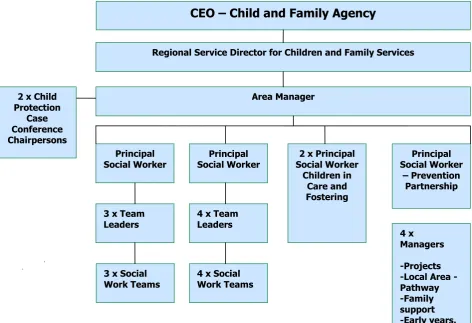
were two duty social work teams and a further assessment team, who were directly line managed by three team leaders who reported to the acting principal for d/intake. There were four teams of social workers who worked longer term child protection cases, who reported to four team leaders, and they at the time of the inspection to the area manager(due to maternity leave of principal social worker). A principal social worker had responsibility for prevention, partnership and family support, who in turn managed manager and staff in projects, local area pathways, family support and early year’s services. The area had two family resource centres and four neighbourhood youth projects.
The service had 1376 cases open to the service prior to the inspection. However, 712 of these cases were child protection cases 504 were welfare cases and the remainder were other cases such as cases relating to adults. The area had received 1628 referrals in the 12 months preceding the inspection and identified that 582 were closed and the remainder required an initial assessment. The area had 174 children on the Child Protection Notification System (CPNS) at the time of the inspection.
Page 9 of 46
Figure 1 below represents the organisational structure of the Child Protection and Welfare Service, Dublin North City Area
Regional Service Director for Children and Family Services
CEO – Child and Family Agency
Area Manager
3 x Team Leaders
Principal
Social Worker Social Worker 2 x Principal
Children in Care and Fostering
Principal Social Worker
– Prevention Partnership
4 x Managers
-Projects Local Area -Pathway -Family support -Early years. 3 x Social
Work Teams
Principal Social Worker
4 x Team Leaders
4 x Social Work Teams 2 x Child
[image:9.595.77.550.158.481.2]Page 10 of 46 3. Summary of Findings
The Child and Family Agency, Tusla has statutory responsibility to promote the welfare of children and protect those who are deemed to be at risk of harm. Such children require a proactive service which acts decisively to assess and meet their needs in order to promote their safety and welfare. As much as possible, children and families require a targeted service aimed at supporting families. However, there will always be some children who will need to be protected from the immediate risk of serious harm.
In this inspection the Authority found that out of the 27 standards assessed the area was compliant with two standards, they had a minor non-compliance with seven, and 17 moderate non-compliances. The area had no major non compliances with any of the standards. The findings are set out in section 4 of this report and the action plan is published separately.
For the most part, children received a child protection and welfare service which supported and protected them. There was currently a strong management team that was providing good leadership and children were supported by committed and
knowledgeable staff. However, there had been a period of time in 2013 when the management team and staff had struggled to manage the levels of risk within the service when the waiting lists of unassessed cases were high and were escalated to the service director and national director. Inspectors did find at the time of inspection that the service had significantly reduced these waiting lists over the previous four months.
The Authority found that in general, children were consulted about decisions that affected their lives and their welfare was promoted. Children and families understood the roles and responsibilities of social workers as well as other agencies and
professionals who were involved with them. There was good inter-agency work with both An Garda Síochána and other organisations.
The area was not always compliant with Children First (2011). Many of its requirements were being implemented in order to protect children. All concerns regarding children were screened effectively with the vulnerability and strengths of children and families informing the decisions of social workers. There was a system to ensure child protection conferences took place and comprehensive child protection plans were formulated and implemented. However, they were not always reviewed in a timely manner. The Child Protection Notification System (CPNS) was not available on a 24-hour basis. The area had a backlog of historical referrals where they completed notifications to An Garda Síochána regarding suspected child abuse but not all assessments in these cases were completed and outcomes communicated to An Garda Síochána.
A number of children were on waiting lists for the child protection service, although the waiting lists were well managed. Children experienced delays in their needs being assessed as both initial and further assessments were not always completed in a timely manner. Waiting lists were also in place for family support, family assessments,
Page 11 of 46
management team had identified a number of cases, in advance of the inspection, that had not been managed appropriately and plans had been put in place to address these cases.
The majority of children and families did not know how to access their information. There was a complaints process in place but it was not child friendly and child friendly information that was available was not widely distributed to children.
There were other deficits in the management of child protection and welfare concerns. Not all children who required a social worker had been allocated one. The service did not formally measure whether it was meeting its objectives and there was no
systematic analysis of complaints or learning to improve practice. Improvements were also required in information management. The management team did not have ready access to relevant information including serious incidents, number of referrals of organised or retrospective organisational or institutional abuse.
Page 12 of 46
4. Summary of judgements under each standard
Theme National Standards for the
Protection and Welfare of Children Compliant Non-compliant –
minor, moderate, major Theme 1:
Individualised Supports and Care
Standard 1:1
Children’s rights and diversity are
respected and promoted. Minor non-compliance
Standard 1:2
Children are listened to and their
concerns and complaints are responded to openly and effectively.
Minor non-compliance
Standard 1:3
Children are communicated with effectively and are provided with information in an accessible format.
Moderate non-compliance
Theme 2: Effective Services
Standard 2:4
Children and families have timely access to child protection and welfare services that support the family and protect the child.
Moderate non-compliance
Standard 2:7
Children’s protection plans and
interventions are reviewed in line with requirements in Children First.
Moderate non-compliance
Standard 2:8
Child protection and welfare
interventions achieve the best outcomes for the child.
Moderate non-compliance
Standard 2:9
Interagency and inter-professional cooperation supports and promotes the protection and welfare of children.
Minor non-compliance
Standard 2:10
Child protection and welfare case planning is managed and monitored to improve practice and outcomes for children.
Page 13 of 46 Theme National Standards for the
Protection and Welfare of Children Compliant Non-compliant –
minor, moderate, major Theme 3:
Safe Services
Standard 2:1
Children are protected and their welfare is promoted through the consistent
implementation of Children First. Moderate non-compliance Standard 2:2
All concerns in relation to children are screened and directed to the appropriate
service. Compliant
Standard 2:3
Timely and effective action is taken to
protect children. Moderate non-compliance
Standard 2:5
All reports of child protection concerns are assessed in line with Children First and best available evidence.
Moderate non-compliance
Standard 2:6
Children who are at risk of harm or neglect have child protection plans in place to protect and promote their welfare.
Moderate non-compliance
Standard 2:11
Serious incidents are notified and reviewed in a timely manner and all recommendations and actions are implemented to ensure that outcomes effectively inform practice at all levels.
Moderate non-compliance
Standard 2:12
The specific circumstances and needs of children subjected to organisational and/or institutional abuse and children who are deemed to be especially
vulnerable are identified and responded to. Moderate non-compliance Theme 5: Leadership, Governance and Management Standard 3:1
The service performs its functions in accordance with relevant legislation, regulations, national policies and
standards to protect children and promote their welfare.
Minor non-compliance
Standard 3:2
Children receive a child protection and welfare service, which has effective
leadership, governance, and management arrangements with clear lines of
Page 14 of 46 Theme National Standards for the
Protection and Welfare of Children Compliant Non-compliant –
minor, moderate, major accountability. Theme 5: Leadership, Governance and Management Standard 3:3
The service has a system to review and assess the effectiveness and safety of child protection and welfare service provision and delivery.
Moderate non-compliance
Standard 3:4
Child protection and welfare services provided on behalf of statutory service providers are monitored for compliance with legislation, regulations, national child protection and welfare policy and
standards. Moderate non-compliance Theme 6: Use of Resources Standard 4:1
Resources are effectively planned, deployed and managed to protect children and promote their welfare.
Moderate non-compliance
Theme 7:
Workforce Standard 5:1 Safe recruitment practices are in place to recruit staff with the required
competencies to protect children and promote their welfare.
Compliant
Standard 5:2
Staff have the required skills and experience to manage and deliver effective services to children.
Minor non-compliance
Standard 5:3
All staff are supported and receive supervision in their work to protect children and promote their welfare.
Minor non-compliance
Standard 5:4
Child protection and welfare training is provided to staff working in the service to improve outcomes for children.
Minor non-compliance
Theme 8: Use of
Information
Standard 6:1
All relevant information is used to plan and deliver effective child protection and welfare services.
Page 15 of 46 Theme National Standards for the
Protection and Welfare of Children Compliant Non-compliant –
minor, moderate, major Theme 8:
Use of
Information
Standard 6:2
The service has a robust and secure information system to record and manage child protection and welfare concerns.
Moderate non-compliance
Standard 6.3
Secure record-keeping and file-management systems are in place to manage child protection and welfare concerns.
Page 16 of 46 5. Findings and judgments
Section 8(1) (c) of the Health Act 2007
Compliance with Health Act 2007 and National Standards for the Protection and Welfare of Children for the Child and Family Services
Theme 1: Individualised Supports and Care
Services for children are centred on the individual child and his/her care and support needs. Child-centred services provide the right support at the right time to enable children to lead their lives in as fulfilling a way as possible. A child-centred approach to service provision is one where services are planned and delivered with the active involvement and participation of the children who use services.
National Standards for the Protection and Welfare of Children Reference:
Standard 1.1 Children’s rights and diversity Standard 1.2 Complaints management Standard 1.3 Effective communication
Inspection findings
The area provided a child-centred service that supported children’s participation and involvement in decisions in their care. The area had a complaints management system in place but it was not child friendly. There was written child friendly information for children accessing child protection and welfare services, but this was relatively new and had not been fully distributed. No public awareness campaign had been completed to provide information and knowledge about the service and further development was required in children and parents participation within the service.
Children were consulted with and listened to by staff. Inspectors observed a family welfare conference and also noted in the minutes of meetings that children were encouraged, where appropriate, to participate in meetings such as family welfare
conferences, child-in-care reviews and relevant parts of case conferences. Where it was not appropriate for children to attend meetings, children’s views were voiced by
professionals, and included in professional’s reports. Children’s views and participation in meetings, where appropriate, influenced decisions. Inspectors reviewed a case, where a child requested to have further contact with one parent, and the social work department worked with that child and the parent in supporting their wishes. The area manager told inspectors that he/she had assigned a member of staff to lead out on increasing child and parental participation in the service in 2014. Inspectors viewed the draft plan to set up a working group with key community services to develop better parent and child participation within the area.
child-Page 17 of 46
centred service. Inspectors found that individual initial assessments were completed on each child within a family. Initial assessment documents identified that social workers visited each child. Meetings with professionals and other agencies were found to be focused on the child and their changing needs. It was also noted in meeting minutes and by attendance at conferences/professional meetings that children’s needs were the primary focus of the service. Inspectors also found while reviewing files and speaking with children that social workers explained their role and what was happening to the child in an age-appropriate manner. Parents and children told inspectors that staff were respectful in their communication with them. Inspectors observed respectful
communication by staff members with parents during the course of the inspection. Parents told inspectors that they found that social workers communicated clearly with their children and themselves. Staff were observed by inspectors using interpreters during a case conference, and this was required so that the family (where English was not their first language) were able to understand and participate in the meeting. The service had good awareness around cultural diversity, which was reflected in their local practice guidance on cultural diversity. However, inspectors did not observe a loop system in place or access to Braille.
Some children had access to guardian ad litem services and some families accessed advocacy services. Inspectors found through case file review that some children in care had a guardian ad litem. In a small number of the cases reviewed, the area themselves had sought the appointment of a guardian ad litem. Guardian ad litems were involved in cases where there were court proceedings. In these cases, children had an independent advocate who was a voice for them and also commented on the plans that the local service put in place. In the sample of case files reviewed by inspectors, it was recorded on some files, that community organisations frequently supported families in meetings with staff. Inspectors also observed extended family members supporting families in meetings during the course of the inspection.
In some cases, family files were in place, where information about all the children in the family was within the one file. Inspectors reviewed some of these files and found that it was not always easy to identify the individual ongoing needs of some children. In a small number of cases, inspectors found that the main focus of the work was on one child, and the other children’s ongoing needs in the family weren’t as clearly outlined.
Page 18 of 46
children may not be clear on how their voice could be heard or who to talk to if they were unhappy or wanted to make a complaint, how to access their information or have a clear understanding of the service being provided.
There was a complaints process in place but it was not child friendly. While complaints were generally well managed, not all children and families knew how to make a
complaint. The area used a complaints process called “Your Service Your Say”, and inspectors found that some complainants also wrote directly to the area manager with their complaint. Children and parents spoken with as part of the inspection said they were unsure of how to make a complaint.
The area manager and principal social workers were the complaints officers. The area kept a log of complaints received about the service. Data provided as part of the inspection identified that 45 complaints had been received in the last 12 months and that 11 complaints were open at the time of the inspection. Inspectors reviewed the complaints log and found that in the previous 12 months there had been no complaints from children in the community who received child protection or welfare services. Five children in care had made a complaint about the service as well as some parents, foster carers and professionals in relation to their experience of the service and service
interventions. It was unclear from some of the complaint files reviewed and from the complaints log how the complaint had been investigated and whether the complainant was satisfied with the outcome of the complaint. An external agency representative told inspectors of making a complaint and not being satisfied with the outcome of the
complaint. They also referenced complaining to individual social workers or social work team leaders and not hearing back about their complaints. While another external agency representative met with the area manager after making a complaint and reported that he/she was satisfied with the information received from the area
manager. There was no evidence that trends from complaints were considered in order to drive improvement within the service.
The area had not been proactive in providing education/ information to the public on reporting child protection or welfare concerns. The provision of this education is important in raising public knowledge about children’s safety and ensuring that the general public know how to refer concerns in relation to children at risk in their community. The area manager and principal social worker for family support and
prevention acknowledged that this was the case and both highlighted that they planned “roadshows” during the next few months to raise awareness. Inspectors found that this was outlined as part of the area’s draft project plan for 2014 for the further
development and co-ordination of prevention and support services in Dublin North City.
Page 19 of 46
Standard Judgment
Standard 1.1 Children’s rights and diversity
are respected and promoted. Minor non-compliance
Standard 1.2 Children are listened to and their concerns and complaints are
responded to openly and effectively.
Minor non-compliance
Standard 1.3 Children are communicated with effectively and are provided with information in an accessible format.
Page 20 of 46 Theme 2: Effective Services
Effective services ensure that the proper support mechanisms are in place to enable children to lead a fulfilling life. Personal planning is central to supporting children to identify their goals, needs and preferences and what supports need to be put in place by the service to ensure that each child maximises his/her personal development.
National Standards for the Protection and Welfare of Children Reference: Standard 2.4
Children and families have timely access to child protection and welfare services that support the family and protect the child.
Standard 2.7
Child protection plans and interventions are reviewed in line with requirements in Children First.
Standard 2.8
Child protection and welfare interventions achieve the best outcomes for the child. Standard 2.9
Interagency and inter-professional co-operation supports and promotes the protection and welfare of children.
Standard 2.10
Child protection and welfare case planning is managed and monitored to improve practice and outcomes for children.
Inspection findings
Children at risk were prioritised for services but access to services was dependent on available resources and some children experienced delays. While the area had made improvements in the reduction of some waiting lists there continued to be waiting lists for initial assessments, case conferences and other services, for example the art psychotherapist. Review case conferences were not always held in a timely manner. There was a good standard of interagency cooperation and there was effective liaison with An Garda Síochána. Welfare needs of children and families were addressed by the provision of family support services and a broad range of other support services
provided by voluntary and community organisations. There were good arrangements in place with two voluntary agencies for some of the medium and lower threshold cases to be assessed.
There was good, equitable access to child protection and welfare services but not all children’s needs were assessed in a timely way. All referrals were screened within 24 hours and then signed off by a team leader. However, initial assessments were not completed within the timeframes laid down by Tusla. Data provided by the area indicated that 5.08% of initial assessments were completed within 20 days between January and September 2013. Staff and the management team identified that there had been a delay for some children and families in accessing services in 2013 due to
deficiencies in resources and this impacted on the current delivery of some aspects of the service such as initial assessments, case conferences and review case conferences.
Page 21 of 46
principal social worker. At the start of the inspection, the duty team leaders told
inspectors that there were a combined total of 106 cases and 21 adults on waiting lists for the duty team. Inspectors found that there was up to a six week waiting period before children and families received an appointment to meet a social worker. However, all cases were being worked by the duty social workers which meant that children and families were receiving some service but not by an allocated worker. This meant that children and families may have met with different workers leaving it difficult to build up a trusting relationship and having to tell their story on numerous occasions. Inspectors reviewed cases on the waiting list, and found that they were reviewed weekly by the team leaders and principal social worker, re-prioritised if further information had come to their attention and cases were reviewed accordingly. Inspectors also observed team leaders review and reprioritise cases more frequently if new information was received.
The area had good interagency working arrangements in place with two external agencies providing an assessment service to some children and families prioritised as low and medium risk. An inspector attended a ‘red team’ meeting where cases were discussed, and prioritised for allocation to these two agencies. This had the effect of children and families having access to assessments in a timelier manner, freeing social workers to focus on the higher prioritised cases. Some cases where initial assessments were completed by the two voluntary agencies were assessed as child protection concerns and appropriately referred back to the social work department, as social work intervention was required, due to the level of risk that was assessed. Inspectors found that these cases were reviewed by the duty team leader and re-prioritised to an
allocated social worker.
There were waiting lists in place for a number of other internal services. Inspectors found delays in accessing a number of services including some family support services, art psychotherapy, and specialist services such as psychology and alternative care placements. The data, provided by the area manager, identified that 270 children were referred to family support services in the last 12 months and had received an
intervention. Data also identified that 25 children were awaiting an intervention from community child care workers, four families were awaiting family support services and 19 families were awaiting the involvement of a family assessment service. The family support service had one art psychotherapist who worked with children in the
community and in care. Parents and foster carers told inspectors that this service was an excellent therapeutic service within the area and allowed children an opportunity to express themselves through art. Twenty one children were waiting to access this service.
There were delays in accessing external services for sexual abuse validation,
psychology, disability and adult mental health services. The input of other disciplines is essential in assessing children’s needs and ensuring that appropriate supports are in place for children. Data provided to the Authority identified that there were six children awaiting sexual abuse assessments with an external agency. Social workers told
Page 22 of 46 having on the children and their families.
Staff advocated on behalf of children, for both internal and external services. In the absence of sufficient resources within the service, the management team told
inspectors that they had to source private fostering placements in order to ensure that children who required care had a placement. Inspectors also observed that a shared care arrangement would be considered from time to time when a suitable placement was not available.
Early intervention services were available within the area and were generally utilised appropriately. Inspectors found through case file review and speaking with parents that some children and families received the appropriate level of intervention required from early intervention/ family support services either directly through referral to the service or following an initial assessment. Some children and families had accessed parenting programmes like “Strengthening Families” and a variety of programmes run by the resource centres in the area. Some of the parents that spoke with inspectors felt that there was a delay in them receiving support from the service. Of the seven closed cases reviewed, inspectors found in one closed case that the initial referral in relation to the children had not been addressed at the time. The case notes reflected that it was only when a second referral was made, a number of years later that the concerns were discussed with the family, the children were seen by a social worker and initial assessments and further assessments were completed. Subsequently, this case was closed following the recommendation of appropriate support mechanisms.
There was variation in the quality of family support plans. Inspectors reviewed a number of family support plans, some of which were of good quality detailing the actions to be taken, person responsible and the timeframes for review. Others were not as detailed and it was unclear what the required intervention should be, who was
responsible or when the action should be reviewed. Inspectors found that reviews of these plans did not take place consistently. This meant that some children and families may no longer have required the services they were accessing or it may no longer be an appropriate intervention to meet their needs.
Inspectors found in a small number of files that were sampled, that decision-making on cases were not clearly recorded. This meant that there may not have been clear
direction on the case.
Page 23 of 46
Strategy meetings, case conferences, family welfare conferences and some family support meetings were effective forums that helped to improve outcomes for children. Inspectors observed a number of these meetings and found that they were well
represented by professionals involved in the child’s care. However, inspectors found that not all minutes were recorded on file but the case conference plans were circulated as soon as possible after the review. Inspectors reviewed files, where the minutes of case conferences were outstanding for periods from November 2013 onwards but the plan was on file.
There was no consistent method of caseload management being applied in the area. Team leaders told inspectors at a focus group that they used a caseload management tool. However, no tool or policy was submitted to the Authority as part of the
documentation request and inspectors reviewed team leader and principal social worker supervision files and found that only one team leader was using the tool identified in the focus group. The remainder were using their professional experience and the prioritisation of cases to manage workloads while they awaited the finalisation of a national caseload management policy. Inspectors reviewed the caseloads of staff and found them, generally, to be of a manageable size and this view was supported by social workers who met with inspectors who said that their caseloads had become more reasonable. For example, one social worker outlined that he/she had 18 cases.
The area did not have a formal procedure in place for the identification and management of complex cases. There was some variation in the management of complex cases by staff. Inspectors found in reviewing some long-term complex cases that there had been historical delays in putting interventions in place. The area
manager told inspectors that she/he had commenced reviewing complex cases at the strategic management meeting over recent months. Inspectors reviewed minutes of these meetings which reflected that complex cases were discussed. These meetings ensured that there was regular oversight of these cases at senior management level. However, while cases were discussed, there was no overall formal procedure which outlined the process in which all complex cases were managed within the area.
Cases were not always closed in a timely manner. There were some delays in closing cases, as initial assessments were not completed in a timely manner or there were delays in team leaders signing off an assessment. Social workers told inspectors that due to time constraints they were often delayed in completing the administrative part of closing cases and so they remained open and on their caseload. Inspectors confirmed this as part of case file reviews. This meant that there could be a delay in new work being assigned to social workers.
There was generally a good multi-agency and inter-professional approach within the area. Inspectors found that in general staff liaised with other agencies and professionals during the assessment and planning process to ensure that all relevant information was available. Case records reviewed by inspectors showed that staff routinely sought consent from parents to contact other professionals or agencies to gather information as part of their assessment. The area had also recently established a child protection management forum meeting which members of An Garda Síochána and other
Page 24 of 46
observed that attendees at case conferences were well represented by the professionals and agencies involved with the child and family. However, the focus group with external agencies highlighted that while the majority were invited to meetings such as case conferences, some of the agencies had not been invited to conferences where they were working directly with families. Feedback to inspectors was varied in terms of the sharing of information, many agencies and professionals outlined that there was good sharing of information. However, other agencies felt that it was an area that required further improvement. Files reviewed generally showed evidence of good communication with other professionals. When a number of agencies and or professionals were
involved in a child’s case there was generally good coordination by the social work department to ensure that the focus was on the child. The area’s prioritisation scales were identified by school principals and external agencies as needing to be clearer.
There was good interagency working between the area and An Garda Síochána. There were a number of national protocols in place between the two agencies. Inspectors found that there were some delays in staff completing An Garda Síochána notifications in respect of recent referrals. For example, one An Garda Síochána notification was completed 22 days after a referral of physical abuse was received and a referral of suspected child sexual abuse was sent 48 days after the referral was received. Social Workers told inspectors that there had been delays in completing An Garda Síochána notifications in the past. There was good communication and planning between An Garda Síochána and the area, through strategy meetings, case conference’s and An Garda Síochána liaison meetings. Inspectors observed a strategy meeting, case conferences and a liaison meeting where An Garda Síochána was present. The use of joint An Garda Síochána/area action sheets were referred to in local An Garda Síochána liaison meetings and at management meetings. However, case files reviewed did not have a record of the joint action sheet as per Children First (2011).
Inspectors found historical deficits in the practices, management oversight and
recording systems, in relation to notifications of suspected abuse to An Garda Síochána prior to October 2013. The service had a backlog of cases where notifications of
suspected child abuse to An Garda Síochána had been completed on specific referrals. However, the management team were unaware whether the initial assessment had been completed on each of these referrals and/or whether the outcome of these assessments had been communicated to An Garda Síochána. The area manager had established a formal process in January 2014, and part of the remit of this forum was in reviewing all recent notifications and initial assessments (child protection management forum). He/she told inspectors that historical notifications would be included as part of this forum. Inspectors observed one of these meetings, and observed that notifications from July 2013 to present were on the agenda. The majority of the notifications from July to September 2013 notifications remained outstanding. However, notifications from October 2013 onwards were discussed. At this meeting, inspectors observed a
Page 25 of 46
could have been left at risk, as their remained a substantial list of referrals that required review.
Interagency children first training had taken place with An Garda Síochána in 2013 and was scheduled for 2014. However, there was no evidence of any other professionals being invited to attend the training. Multidisciplinary training ensures that professionals from both agencies understand their mutual responsibilities and roles, which is essential in working collaboratively together. Inspectors reviewed supervision records, which included training audit forms and found that there were staff, who were relatively new who had not attended child protection training. Therefore, there was a potential risk that not all staff would implement Children First (2011) consistently.
Standard Judgment
Standard 2.4 Children and families have timely access to child protection and welfare services that support the family and protect the child.
Moderate non-compliance
Standard 2.7 Child protection plans and interventions are reviewed in-line with requirements in Children First.
Moderate non-compliance
Standard 2.8 Child protection and welfare interventions achieve the best outcomes for the child.
Moderate non-compliance
Standard 2.9 Interagency and inter-professional co-operation supports and promotes the protection and welfare of children.
Minor non-compliance
Standard 2.10 Child protection and welfare case planning is managed and monitored to improve practice and outcomes for children.
Page 26 of 46 Theme 3: Safe Services
Services promote the safety of children through the assessment of risk, learning from adverse events and the implementation of policies and procedures designed to protect children. Safe services protect people from abuse and neglect and follow policy and procedure in reporting any concerns of abuse and/or neglect to the relevant authorities.
National Standards for the Protection and Welfare of Children Reference: Standard 2.1
Children are protected and their welfare is promoted through the consistent implementation of Children First.
Standard 2.2
All concerns in relation to children are screened and directed to the appropriate service. Standard 2.3
Timely and effective actions are taken to protect children Standard 2.5
All reports of child protection concerns are assessed in line with Children First and best available evidence.
Standard 2.6
Children who are at risk of harm or neglect have child protection plans in place to protect and promote their welfare.
Standard 2.11
Serious incidents are notified and reviewed in a timely manner and all recommendations and actions are implemented to ensure that outcomes effectively inform practice at all levels.
Standard 2.12
The specific circumstances and needs of children subjected to organisational and/or institutional abuse and children who are deemed to be especially vulnerable are identified and responded to.
Inspection findings
Page 27 of 46
Screening and preliminary enquiries were comprehensive and took place in a timely manner. The area had received 1628 referrals in the 12 months preceding the inspection and identified that 582 were closed and the remainder required an initial assessment. Of these, 261 were ongoing and 287 were awaiting the initial assessment to commence. The area did not include a figure in its pre-inspection data for the number of these referrals that had been referred to another agency for a service and had been closed.
Inspectors observed duty social workers responding to referrals and undertaking
preliminary enquires promptly. Where appropriate, social workers gave members of the public advice on other services within their community. There was an overall robust screening and prioritisation process of new referrals, using A framework for measuring, managing and reporting social work intake assessment and allocation activity (2012). Cases reviewed by inspectors were found to be appropriately classified as child protection or child welfare concerns. There were effective frameworks in place which were consistently applied to determine thresholds of harm, levels of risk and
prioritisation of cases. Cases were prioritised into Level 1 high, level 2 medium and level 3 low. Inspectors found through reviewing files and observing the duty team that there was consistency in relation to the prioritisation of cases. The prioritisation of cases was recorded on a standard template of priority levels, and there was oversight of this by the team leader and or the principal social worker. Some cases reviewed were also appropriately referred by staff to the local area pathway coordinator/family support services. In some of these cases, families were invited to a meeting and key internal and external services were put in place for the family.
Children who were identified to be at serious and immediate risk generally received timely and appropriate intervention. However, as some children were on waiting lists and remained unassessed, their needs were unknown. Inspectors attended an
emergency conference, where there were serious concerns for the welfare of a child, and due to the level of risk, a multidisciplinary case conference was held to put a child protection plan in place to safeguard the child. Two cases were reviewed by inspectors where pre-birth initial assessments were completed as there were protection and welfare concerns. However, one of the independent chair told inspectors of cases that he/she had escalated to the area manager over the previous three months where the safety plan could not be implemented due to lack of resources, for example a suitable placement. The management team reported that each of these cases had been
reviewed on an individual basis and appropriate alternative plans had been
implemented that safeguarded the children. Inspectors reviewed a sample of these cases and identified that there were effective alternative safety plans in place.
Inspectors also reviewed a sample of cases where An Garda Síochána had removed children where there was an immediate and serious risk to their safety (under Section 12 of the Child Care Act 1991). Inspectors sampled eight files that been subject to a section 12 and found that none of these children were previously known to the agency.
Page 28 of 46
workers completed these with a focus on the child’s needs. They included an interview with parents and external agencies were contacted in relation to the child, with parental consent. Generally, there was good analysis of the risks and protective factors for
children. The initial assessment concluded with recommendations around further interventions and or closure of the case. Inspectors reviewed a range of initial assessments, some of which were emergency situations and were completed within timeframes, but the majority of initial assessments reviewed by inspectors took from two months up to one year and seven months to be completed and signed off by the team leader. Inspectors found that some initial assessments were very detailed and were the equivalent of both an initial and further assessment. Other initial assessments had delays in the paperwork being completed, recorded and put on the information system. Completing initial assessments in a timely manner means that the appropriate services and or supports can be put in place for the child, and if a further assessment is recommended, then a more specialised assessment takes place which gives a more comprehensive picture of the child’s situation.
There were inconsistencies with the completion and quality of further assessments. The further assessments that were completed were of good quality. They outlined the
child’s needs, the risks and outlined the strengths and weakness of the family and made recommendations for interventions. However, the assessment framework was not
always recorded, despite the service using a number of specific assessment frameworks. Inspectors found that some cases which were assessed as requiring
further assessment had no further assessment on file or there were significant delays in the further assessment being completed. Inspectors reviewed a case that had not been actively worked for 12 months where a further assessment had been recommended following an initial assessment. The manager of this case was aware of the delay and confirmed that arrangements were in place to meet with the family later in the month. The level of risk to the child in this case was unknown for twelve months. Inspectors reviewed a further eight cases which recommended further assessment, and in three of these cases no further assessment was completed. The needs of these children were not fully assessed so that the appropriate supports could be put in place. In the
remainder of the files, there was evidence of the work being completed on the further assessments and case conferences had taken place, where required.
Decision-making was not always clearly recorded on case files. Inspectors found in a sample of cases reviewed that specific decision-making and direction was not always recorded such as specific interventions or safety plans, this could lead to cases drifting and children not receiving an effective service.
Page 29 of 46
place for both children and parents. In other cases that were reviewed by inspectors, the agency sought care orders on children who had been on supervision orders, as the children’s welfare was at ongoing and serious risk, despite input from the service.
The area had a Child Protection Notification System (CPNS) in place. However, it was not fully in-line with Children First (2011). The CPNS had been established in January 2013. There were 174 children listed on the CPNS, and 105 children had a child
protection plan and 69 children were closed to the CPNS. Active and inactive cases were listed on the CPNS. Staff told inspectors they could identify if cases were open or closed on the CPNS through a colour coding system on SWIS. All children on the CPNS had an allocated social worker. The area manager was the designated person for managing the CPNS. The independent chairs of case conferences had to complete a standard form after a case conference, to update or place a child’s name on the CPNS. The system was secure with the use of passwords. There was no record of any enquiries about whether a child was on the system or not and the system was not available on a 24-hour basis. This meant that key information may not be available to other professionals outside of office hours which could affect their decisions regarding risk. Access to a 24 hour CPNS was a national issue that has been previously raised with the Agency.
In addition, inspectors spoke with the independent chairs in relation to children-in-care who were at serious risk in the community and whether these cases should be listed on the CPNS. They were of the view that those issues would be managed through strategy meetings and child in care reviews. The CPNS as outlined in Children First (2011) was in place to have a record of all children who are at risk in the community. However, the Agency’s guidance document ‘Child Protection Conferences and the Child Protection Notification System – National Guidelines for Children and Family Services, Area
Managers, Conference Administrators, Social Work Managers and Practitioners (2014)’ outlines in its key principles that the safety needs of a child while in care should be addressed by means of the care planning process. It also refers to situations where there would be parallel processes for example, care planning and case conferences, but that these situations should co-exist for the minimum length of time. The area manger agreed that there may be occasions where children who are in care may require to be placed on the CPNS, but thought that it would be a rare occurrence. Inspectors did find that there were children in care listed on the CPNS.
The area had identified some concerns in relation to the impact of long-term harm and neglect on children, and had taken steps to review this. The area manager identified that neglect cases were an area of concern within the area, and since October 2013, the management team had reviewed these cases and were confident that there were appropriate plans in place. In some of these cases, earlier intervention such as
parenting or family supports, may have given more positive outcomes for children such as their medical conditions being assessed, by parents consistently bringing the children to medical appointments.
Page 30 of 46
The area did not submit data in relation to the numbers of serious incidents notified to the National Incident Management Team in the last 24 months. Some recommendations and learning’s from serious incidents and reports from the National Review Panel (NRP) into child deaths were implemented. Management meeting minutes reflected that the management team reviewed the recommendations and learning’s that were found from serious incidents and reports from the NRP. Staff reported and minutes of team
meetings and supervision records reflected that these learning’s were discussed at team meetings and as part of supervision. One example related to the awareness and
management of neglect. Inspectors found that the management team had undertaken a review of a number of neglect cases in the area, implemented required actions and provided training to staff over the course of the inspection. Inspectors found that the management team had carried out one local internal review in the last 12 months which was timely and comprehensive. The outcome of this specific review was that there were “no key concerns”. The NRP had also highlighted that where there was a lack of
necessary resources that significantly impacts on a child, that this should be highlighted to local management and brought to the attention of more senior management. The area were utilising the “need to know” process to highlight cases where there were high risks/ unmet needs and this went to the area manager, who escalated it to senior
management. While inspectors found as referenced above, that pre-birth case
conferences were convened where there were identified potential risks, inspectors did not find that there were any protocols in place for meeting the needs of vulnerable young mothers and their babies, as per recommendations from the NRP report of April 2011.
The area had not collected the number of referrals of retrospective disclosures or institutional or organisational abuse that they had received in the 24 months prior to inspection. However, the area had identified it had 160 cases open to the service, which was classified as other and some of these related to adults. Staff told inspectors that they were aware of how to manage referrals of retrospective abuse. However, no written procedure was provided to inspectors in relation to the overall management of retrospective/institutional/organisational referrals of abuse. The area had written
Page 31 of 46
Standard Judgment
Standard 2.1 Children are protected and their welfare is promoted through the consistent implementation of Children First.
Moderate non-compliance
Standard 2.2 All concerns in relation to children are screened and directed to the appropriate service.
Compliant
Standard 2.3 Timely and effective actions
are taken to protect children. Moderate non-compliance
Standard 2.5 All reports of child protection concerns are assessed in-line with Children First and best available evidence.
Moderate non-compliance
Standard 2.6 Children who are at risk of harm or neglect have child protection plans in place to protect and promote their welfare.
Moderate non-compliance
Standard 2.11 Serious incidents are notified and reviewed in a timely manner and all recommendations and actions are implemented to ensure that outcomes effectively inform practice at all levels.
Moderate non-compliance
Standard 2.12 The specific circumstances and needs of children subjected to
organisational and/or institutional abuse and children who are deemed to be especially vulnerable are identified and responded to.
Page 32 of 46
Theme 5: Leadership, Governance and Management
Effective governance in services for children is accomplished by directing and managing activities using good business practices, objectivity, accountability and integrity. In an effective governance structure, overall accountability for the delivery of services is clearly defined and there are clear lines of accountability at individual, team and service levels so that all people working in the service are aware of their responsibilities and who they are accountable to.
National Standards for the Protection and Welfare of Children Reference to;
Standard 3.1
The service performs its functions in accordance with relevant legislation, regulations, national policies and standards to protect children and promote their welfare.
Standard 3.2
Children receive a child protection and welfare service, which has effective leadership, governance and management arrangements with clear lines of accountability.
Standard 3.3
The service has a system to review and assess the effectiveness and safety of child protection and welfare service provision and delivery.
Standard 3.4
Child protection and welfare services provided on behalf of statutory service providers are monitored for compliance with legislation, regulations, national child protection and welfare policy and standards.
Inspection findings
The service had a statement of purpose which set out in general terms the basis in legislation, the statutory functions of the service, the services provided, the service objectives and the model of service delivery. However, this was a generic document produced by the Child and Family Agencywhich was signed and dated by the Chief Executive of the Agency but it did not contain a date for review. While the day-to-day operations of the service were in-line with the statement of purpose, the model of service delivery was not described in detail and the statement of purpose did not reflect the particular facts of the local service.
Page 33 of 46
The area had undergone significant change in the previous 12 months. In that time the area had moved from working as part of the Health Service Executive (HSE) to the Child and Family Agency and the geographical area had been restructured with Dublin 15 moving to the Dublin North service area. This restructuring included children,
families and staff being reassigned to Dublin North. Senior management within the area had also changed and staff told inspectors that they had experienced three different area managers in the previous nine months.
There was good leadership and effective management of the area. At the time of the inspection, the area manager was in post since October 2013. He/she had a good overview of the service and had clear goals in terms of service improvement for the area. An example of this proactive leadership and governance was the review and identification of neglect cases that had not been managed effectively. The area manager and his/her management team identified and acted upon these cases in an efficient and proactive way soon after he/she took up their post. He/she had also organised training in the area of neglect for staff to promote better practice and
management of these cases. Staff also told inspectors that the area manager provided strong leadership. Minutes of management meetings reflected that the area manager had sought the views of staff, through a survey, to identify and implement
improvements in the service since taking up his/her post.
There was a clearly defined management structure in place with clear lines of authority and accountability. The service director was responsible for the child and family services within the Dublin North East region. The area manager had responsibility for the
services within the area of Dublin North City and reported directly to the service director. Six principal social workers reported to the area manager. Two of these principals had responsibility for children in care and fostering, one for the duty and intake system, one for child protection (the area manager was covering this, due to maternity leave), one for family support and prevention, and one was an independent chair of case conferences. The area manager also managed the child care manager who was an independent chair of case conferences, an information officer and also a
business manager. The business manager line managed administration staff in the area and principal social workers line managed team leaders who line managed social
workers, family support workers and other staff such as community child care workers. All staff were aware of their roles and responsibilities. Staff who spoke with inspectors identified that they were held to account for their practice by their line managers as matters arose, also in supervision and by file audits. Inspectors also observed examples of staff being held to account for their work in supervision records.
Page 34 of 46
circulated to staff within the area. These outlined key developments and achievements within the region.
Meeting minutes identified that management and team meetings were held on a regular basis. These meetings had standing agenda items and were used effectively. Standing items on the strategic management meeting’s agenda were team structures, need to know notifications, child deaths and serious incidents, care plans and reviews, practice issues, complaints, allegations, case transfers, the child protection notification meeting, risk register, high risk cases and residential care. The area manager identified that senior management meetings were held on a two-weekly basis, one meeting focused on strategy and the other on operational issues. Inspectors observed meeting minutes that reflected agreed actions person responsible and timeframe for completion of task and that these actions were followed up at the next meeting. Minutes of team meetings reflected that these were used to give presentations on new policies/ presentations from outside agencies, to update staff on recent developments and key issues that arose within the area were discussed. Since the area manager took up his/her post team leaders attended a monthly management operational meeting. A child protection management forum had also commenced in January 2014. This meeting initially
reviewed case conference activity, new notifications of suspected child abuse, reviewed open notifications from the previous meeting and historical notifications and complex cases.
The area had no regional or local strategic or operational plans in place. As part of the data request the Authority requested any strategic, operational or service plans and the area returned the Health Service Executive National Operational Plan 2013 -
Implementing the National Service Plan 2013, Child and Family agency commissioning strategy (2013), Guidance re Prevention and Partnership and Family Support (2013), Investing in Families - Supporting Parents (2013), Family Support Meitheal A National Practice Model (2013). A principal social worker did provide a draft copy of a project plan in relation to the development and coordination of the development and utilisation of the local area pathways.
There were risk management frameworks in place within the area but not all of these systems were used consistently or effectively. The area utilised the HSE risk
management policies including the HSE policies on risk and incident escalation
procedure (2010), developing and populating a risk register- best practice (2009), and the Dublin North East Incident Management Process for Children and Family Services but they had not been implemented in full. The management team had completed a review of risks within the area in June 2013 and these risks had been placed on the risk register. However, they had not been risk rated and no actions had been identified to mitigate the risk. The inspectors reviewed the risk register and found that it was at a point in time and had not been updated since development. The risks that were