On the road to carbon reduction in a food supply network: A complex adaptive systems perspective
Abstract
Purpose: In acknowledging the reality of climate change, large firms have set internal and external (supplier oriented) targets to reduce their greenhouse gas (GHG) emissions. This study
explores the complex processes behind the evolution and diffusion of carbon reduction
strategies in supply networks.
Design/methodology/approach: The research uses complex adaptive systems (CAS) as a theoretical framework and presents a single case study of a focal buying firm and its supply
network in the food sector. A longitudinal and multilevel analysis is used to discuss the
dynamics between the focal firm, the supply network and external environment.
Findings: Rather than being a linear and controlled process of adoption-implementation-outcomes, the transition to reduce carbon in a supply network is much more dynamic, emerging
as a result of a number of factors at the individual, organizational, supply network and
environmental levels.
Research limitations/implications: The research considers the emergence of a carbon reduction strategy in the food sector, driven by a dominant buying firm. Future research should
seek to investigate the diffusion of environmental strategies more broadly and in other contexts.
Practical implications: Findings from the research reveal the limits of the control that a buying firm can exert over behaviours in its network and show the positive influence of consortia
initiatives on transitioning to sustainability in supply networks.
Originality: CAS is a fairly novel theoretical lens for researching environmental supply network dynamics. The paper offers fresh multilevel insights into the emergent and systemic
nature of the diffusion of environmental practices in supply networks.
Keywords: Sustainablesupplynetworks; climate change; carbon reduction; complex adaptive systems; consortium; case study
Paper type: Case study
1. Introduction
In the last four decades, sustainability has become a useful umbrella concept for thinking about
the relationship between the economic and environmental systems but its high level of
(Carter and Rogers, 2008, Matthews et al., 2016). A recent management paper has encouraged
scholars to start conducting research into the relationship between supply networks and specific
environmental problems in order to produce more fine-grained accounts of corporate
sustainability strategies (Whiteman et al., 2013).
This paper responds to this call by focusing on the issue of anthropogenic climate change as
it one of the most serious man-made environmental problems (IPCC, 2013). Climate change is
thought to be contributing towards phenomena such as water scarcity and accelerated rates of
species extinction (WWF, 2014). Consequently, there is broad agreement within the discourse
on sustainability that the sustainable economy will need to be a low-carbon economy (IPCC,
2007, OECD, 2010, UNEP, 2011, WRI, 1998), and carbon reduction is often seen as a proxy
for sustainability performance (Bai et al., 2012).
Climate change is a system-level challenge that cannot be resolved at the level of the firm.
Firms will need to pursue cooperative inter-organizational strategies in order to effectively
mitigate climate change (Pinkse and Kolk, 2010). In a scenario where competition takes place
between supply networks (Lamming et al., 2000, Bakker and Kamann, 2007), instead of
between isolated firms, a buying firm is deemed to be no more sustainable than its suppliers
(Caniëls et al., 2013, Krause et al., 2009, Lee et al., 2013). Buying firms are liable for emissions
not only within their own boundaries, but also across their extended supply networks
(Hartmann and Moeller, 2014). Efforts to transform processes and practices in order to
significantly reduce carbon emissions require the efforts of interconnected actors in supply
networks, including dominant buying firms and their suppliers (Lee and Klassen, 2008, Nair et
al., 2016, Lee, 2008), as well as non-traditional stakeholders such as NGOs (Gold et al., 2013,
Rodríguez et al., 2016). These connections are complex and one cannot assume that
environmental strategies and innovations will diffuse linearly and in a predictable manner (Nair
Yet most research on sustainable supply chain management (SSCM) and green SCM has
been rooted in assumptions of linearity and control, with a primary focus on the relationships
between dominant buyers and first-tier suppliers (Miemczyk et al., 2012, Carter and Easton,
2011). Research considering carbon reduction strategies within supply networks is no different.
It has particularly focused on issues related to carbon emissions and auditing (Lee and Cheong,
2011, Lee, 2012, Lee, 2011, McKinnon, 2010), to commercial and legal pressures for carbon
emissions reduction (Zhu et al., 2013, Hitchcock, 2012, Zhu and Geng, 2013) and to the
development of decision-support models (Koh et al., 2013, Hsu et al., 2013a, Hsu et al., 2013b).
Little empirical evidence and theoretical discussion of the unfolding of the transition to
low-carbon supply networks has been presented to date.
Hence there are opportunities to expand the scope of scholarship in this area from the
linearity of direct buyer-supplier relationships to multi-tier and multilateral studies (Walker et
al., 2014, Tachizawa and Wong, 2014) and to consider ways in which environmental strategies
proliferate and are shaped through the network. In attempting to address the identified
shortcomings of current research, we pose the following question, as the overarching aim of
our research: How does a carbon reduction strategy emerge in a supply network?
In this research, we embrace the view that carbon reduction in supply networks is non-linear
and emerges through a negotiation process between the actors in these networks. In addressing
the overarching question, we aim to shed light on this negotiation process and more specifically
explore the influence of the interactions between different agents within the supply network on
the implementation of a carbon reduction strategy, the main changes and events that shape the
process, and the challenges encountered in the process.
Our study frames a supply network as a ‘complex adaptive system’ (CAS), i.e. a dynamic
system that is difficult to predict and control (Choi et al., 2001, Carter et al., 2015b). While
al., 2001, Surana et al., 2005), studies specifically using CAS as a framework in the field of
SSCM remain scarce. A notable exception is the work of Nair and colleagues on environmental
innovation diffusion (Nair et al., 2016) that calls for more research around supply network
dynamics associated with positive changes such as environmental strategies. We subscribe to
their definition of diffusion as a process by which ideas propagate across supply networks and
amplification as the process within which a wide diversity of external organizations, besides
the buying firm’s suppliers, are involved in innovation or change processes more generally
(Nair et al., 2016).
We employ a multilevel analysis to map factors that play out in the evolution of a carbon
reduction strategy in a supply network. Through the lens of CAS, we discuss the processes at
play in moving towards more sustainable supply networks.
In order to capture the complexity of a supply network, we focus on a carbon reduction
strategy implemented in the supply network of a large buying firm in the food sector. The food
system is under increasing public scrutiny regarding carbon emissions (Maloni and Brown,
2006, van der Vorst et al., 2009). Food production presents a significant challenge regarding
energy consumption because it requires vast amounts of natural resources, such as water, land
and energy, making the sector a constant focus of climate change regulation in several countries
(Mena et al., 2014). Nevertheless, there is lack of research on large-scale carbon reduction
initiatives in food supply networks. Our study provides an in-depth account of the emergence
and diffusion of a carbon reduction initiative that has the goal of diffusing a farm-based tool
that can track carbon emissions and support the development of carbon reduction strategies
across a supply network.
The remainder of this paper is structured as follows. The next section presents a review of
the literature concerning food supply networks and carbon reduction strategies. The CAS
the research design. The fifth section presents the case study findings, which are then addressed
in section six. In the discussion, we formulate a number of propositions and articulate the
managerial implications of the research. Finally, the paper concludes with research limitations
and recommendations for future research.
2. Literature review
2.1Food supply network research
The steady growth of the food sector in the last few decades has broadened food distribution
from a local to a global scale (Rodrigue, 2012). Forecasts suggest that growth will continue
and that by 2050, the world will need to feed more than nine billion people, requiring nearly
70% more food than is consumed today (Denis et al., 2015). Despite the scale of production
within the food sector and concentration of firms within it (Beske et al., 2014), the upstream
processes of fresh food produce, such as agriculture and dairy production, remain characterised
by a dispersed base of smallholder farms, i.e. family-run businesses where control stays within
the family through generations (Ehrgott et al., 2011).
The complex and dispersed food industry faces many pertinent corporate social
responsibility issues (Pullman et al., 2009); is highly exposed to public criticism (Maloni and
Brown, 2006, van der Vorst et al., 2009); and faces significant risks especially with regards to
agricultural sustainability (Hamprecht et al., 2005). This has been demonstrated through a
number of high-profile scandals, including the horsemeat scandal in Europe and the case of
Norwegian salmon production. As a result, there is a growing concern about the social and
environmental issues related to food production (Vasileiou and Morris, 2006) and the role of
leading multinationals within food systems (Whipple et al., 2009).
The food system is embedded within distinctive social, economic and environmental
demonstrate good performance in this area has driven the proliferation of sustainability
standards (Tallontire, 2007, Henson and Humphrey, 2008). Several companies have begun
addressing these sustainability issues by developing or adopting existing standards and
certifications, participating in sustainability programs, and defining new modes of governance
for food production process (Henson and Humphrey, 2008). Yet the sharing of sustainability
performance gains and the bearing of the investment required is likely to be impacted by the
power imbalances characterising food supply networks (Pullman et al., 2009, Cox et al., 2007).
Traditionally, buyer-supplier relationships in food supply networks are predominantly
adversarial and focused on direct suppliers (Mena et al., 2013) and often firms have addressed
sustainability through a risk-perspective setting controls to track the risk of supplier misconduct
(Seuring and Müller, 2008). However, as sustainability pressures intensify, buying firms are
slowly moving toward a collaborative approach to suppliers and sub-suppliers (Grimm et al.,
2014). Supplier development programmes may include transfer of knowledge, resources and
the deployment of new organizational practices (Bai and Sarkis, 2010). Recent literature has
mapped the cases of Waitrose (Spence and Bourlakis, 2009), Nestlé (Alvarez et al., 2010), and
Danone (Gold et al., 2013) as evidence of a shift toward more collaborative approaches to
smallholder farms.
2.2Carbon reduction in food supply networks: between control and emergence
For many food firms, the carbon impact of their suppliers is several orders of magnitude greater
than that of their own operations (WRI and WBCSD, 2009), however only 10% of companies
actively measure their supply network’s carbon emissions (Accenture, 2009). Achieving
carbon reductions requires calculation of the impact of both direct and indirect emissions (Lee,
2012); engagement and commitment throughout the supply network (Koh et al., 2013); and a
Carbon emissions, one component of life-cycle analysis (LCA), has increasingly been
applied by large companies not just at individual ingredient or product level but beyond this to
assess brand product portfolios (Milà i Canals et al., 2010) and even across their entire supply
networks (Lee, 2011). This has been driven at least in part, by increased recognition of the need
to take responsibility for and include scope 3 greenhouse gas (GHG) emissions, those outside
the direct influence of the company, if they are to truly reduce the impacts associated with their
business practices (CarbonTrust, 2006). Pressures from governments and consumers who are
relying on large multi-national companies (MNCs) to reduce their full value chain GHG
emissions through regulatory (e.g. Carbon Reduction Commitment (CRC)) and voluntary
initiatives (e.g. certification of products; environmental product declarations (EPDs)), have
further exacerbated the need to address supply network emissions.
Previously however, agricultural emissions were omitted from greenhouse gas (GHG)
inventories (Russell, 2011) for a number of reasons including lack of scientific consensus for
accounting methodologies; large uncertainties in terms of the impact of carbon mitigation
strategies; and difficulties in gathering data over different spatial and temporal dimensions.
Over the last decade, a number of LCA-based carbon reporting tools have been developed in
the agricultural sector, particularly in the United Kingdom (UK) (Whittaker et al., 2013). These
tools vary in how they account for GHG emissions from the various activities involved in
agriculture. There is consensus however around the fact that such tools do provide a way to
“educate” farmers about sources of emissions and climate change generally, and can serve to
facilitate more transparent information sharing between the parties involved in agricultural
products chains (Whittaker et al., 2013).
The literature has produced an impressive body of knowledge on how focal firms work
towards driving down carbon emissions within their supply networks. These insights include
2012, Hua et al., 2011); the approaches and methodologies for carbon reduction (CarbonTrust,
2006); and supply network design and operational decision making (Benjaafar et al., 2013,
Chaabane et al., 2012, Cholette and Venkat, 2009, Jones, 2002), showing that collaboration
and communication both play key roles in effectuating carbon reduction strategies. Open
communication helps strengthening relationships across the supply network (Mena et al.,
2013). Through collaborative activities based on open communication, firms learn how to
assimilate information and transfer experiences across organizational boundaries, thus
characterising communication and collaboration as essential components to drive reduction in
carbon emissions across the supply network (Theißen et al., 2014).
Much of the SSCM literature stresses the potential for focal firms to control their supply
networks and shift them towards a more sustainable trajectory, as can be seen in the following
definition: ‘‘SSCM is the designing, organizing, coordinating and controlling of supply chains
to become truly sustainable’’ (Pagell and Shevchenko, 2014).
This emphasis on control makes sense as SSCM studies are often concerned with the
deliberate strategies of the buying firms within a supply network. However, this focus has
created a gap in the literature as we rarely consider the emergent aspects of SSCM strategies,
i.e. the interactions between buying firms and suppliers, which may be significantly different
from intended behaviour, e.g. through the resistance of some supply network agents (Touboulic
et al., 2014). This may be due to a tendency to over-emphasize the deliberate aspects of SSCM
strategies at the expense of their more emergent aspects. To explore the non-deliberate aspects
of a carbon focussed SSCM strategy, we adopt Mintzberg and Waters’ (1985) concept of
strategy in which strategy consists of both deliberate and emergent strategies.
Deliberate strategy is strategy that was intended and realized, whereas emergent strategy
consists of the responses to unanticipated events that were not intended and were not originally
construction of strategy to look at carbon reduction strategies within a supply network leads us
to question the linear view of the carbon reduction process in which the focal firm in a supply
network formulates the carbon reduction strategy and the suppliers simply implement it
unquestioningly and unproblematically. Instead, it opens up the possibility that the carbon
reduction strategy that is implemented will be different from the formulated strategy as the
focal firm and its suppliers negotiate its meaning, manage tensions between their interests and
respond to unanticipated events.
By ignoring the emergent aspects of SSCM strategies, the literature has tended to bracket
the question of how suppliers engage with, or indeed fail to engage with, the carbon reduction
strategies of their buyers. This leads to supplier engagement being assumed rather than being
a phenomenon to be investigated empirically. Given that supplier engagement is considered a
prerequisite for a successful carbon reduction strategy within a supply network (OECD, 2010),
this represents a significant gap within the literature.
3. Conceptual framework: sustainable supply networks as complex adaptive systems
In order to study the emergence of carbon reduction strategies, our study frames a supply
network as a CAS, that is ‘‘dynamic, complex, and difficult to predict and control’’ (Carter et
al., 2015b). Because of the complexity of supply networks, it is believed that it is a difficult,
resource intensive process to effect meaningful changes within them (Choi et al., 2001, Carter
et al., 2015b), such as transitioning them towards a more environmentally sustainable path. To
overcome these challenges there has been a rise in network-level collaborations (Bendell et al.,
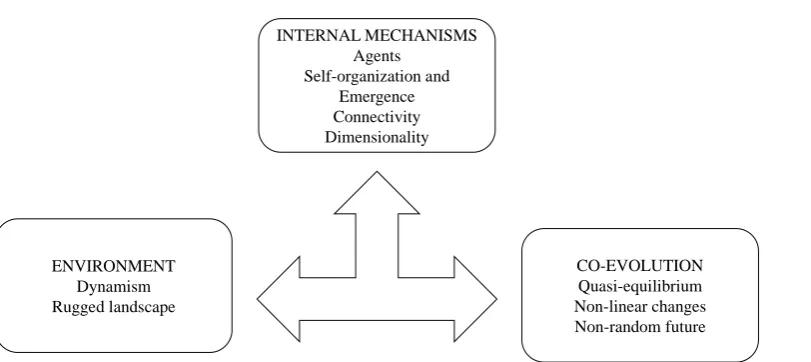
2010, Hamprecht et al., 2005, Fadeeva, 2005). Figure 1 presents the original CAS framework.
As can be seen from the above figure, the CAS framework has three dimensions: internal
mechanisms, environment and co-evolution. CAS posits that the behaviour of a supply network
is determined by the interaction of the agents within the system. Agents can be individuals or
organizations. The behaviour of agents is determined by their schema, i.e. their ‘‘norms, values,
beliefs, and assumptions’’ (Choi et al., 2001), and will determine how agents make sense of
environmental pressures external to the supply network and the behaviour of other agents
within the network, e.g. buyers trying to understand the behaviour of their suppliers. In order
to make supply networks more sustainable, agents will need to share a schema that attaches the
highest importance to sustainability. If sustainability is attached a secondary importance within
the schema of agents, the transition to sustainability will be more difficult. In such instances,
focal firms may attempt to change the schema of their suppliers, e.g. through supplier
development.
A CAS is self-organizing (Pathak et al., 2007) and the structure of a CAS is determined by
the interaction among agents. It cannot be assumed that one agent within a supply network is
able to determine its structure and control its evolution. The emergent structures of a supply
network will necessarily evolve in ways that have not been anticipated. Hence, unilateral
movements from the focal firm may be ineffective if they build resistance from other agents in
a CAS.
The complexity of a CAS is determined by its levels of connectivity and dimensionality
(Choi et al., 2001). Connectivity can be measured both quantitatively and qualitatively as the
number of connections that exist between agents within the network and the way in which they
are connected. Quantity and quality are not necessarily related as agents who are weakly tied
may have high quality connections, i.e. because they are unknown to each other the agents may
CAS will also influence its dimensionality, i.e. the degree to which agents can behave
autonomously. At low levels of connectivity, agents have high levels of autonomy and the CAS
will emerge in ways that are difficult, if not impossible, to predict or control. Higher levels of
connectivity may decrease the autonomy of agents, but this is not always desirable, e.g. in the
area of innovation, some degree of autonomy is necessary (Nair et al., 2016).
The external environment of a CAS is a major influence on its self-organization and
emergence. Analysis using the CAS lens needs to be sensitive to what is happening in the
environment of the CAS and how agents are responding to these environmental changes. To
understand the environment, the CAS framework provides two concepts: rugged landscapes
and dynamism (Choi et al., 2001). Rugged landscapes are environments that are difficult to
map and make sense of. This makes it difficult for the CAS to optimize its performance.
Making sense of the environment is further complicated by dynamism. The CAS framework
considers that a CAS and its environment will exist together in a process of co-evolution as the
CAS both responds to and causes changes within its environment. This means that a CAS will
exist in a state of quasi-equilibrium in which there is a constant tension between stability and
change. When change does occur it is likely to follow a non-linear pattern (Pathak et al., 2007),
which makes it more difficult to establish causality between action and results. This does not
mean however that the evolution of a CAS purely chaotic. Instead, CAS works with the concept
of a non-random future in which agents internal and external to a CAS are able to identify
patterns within the process of co-evolution.
The above process is characterised by a continuous tension between control and emergence.
One agent, for example the focal firm within the supply network, may attempt to exert control
over the system but this will depend on their ability to change the schema of other agents and
consequently the rules upon which the system is based (Choi et al., 2001). SSCM is the attempt
be constrained by the complexity of the supply network. Moreover, changes in a CAS tend to
be non-linear (Pathak et al., 2007), which makes it more difficult to establish causality between
action and results. Additionally, changes in a CAS may lead to changes in the wider
environment, which in turn may affect the CAS quasi-equilibrium (Nair et al., 2009). In brief,
the CAS lens explains the complexity of supply networks through a combination of internal
mechanisms, the environment and co-evolution (Pathak et al., 2007).
Sustainability represents a good example of this co-evolutionary process. As concerns about
the sustainability of the economic system have become widespread in society, the schemas of
agents within many supply networks have changed to become more environmentally and
socially responsible. Similarly, exemplars in the area of SSCM have influenced the behaviour
of other supply networks. Further, connectivity and dimensionality within supply networks has
changed as new agents have been brought in to help manage buyer-supplier relationships, such
as NGOs, and the autonomy of suppliers in relation to social and environmental concerns has
been reduced as the focal firms within supply networks have increased their monitoring of
suppliers in these areas. As supply networks negotiate these changes, they exist in a state of
quasi-equilibrium. While the changes effected may not always be as the agents within the
supply network intended, there is a discernible pattern within many supply networks of
adaptation to the agenda of sustainable development.
The CAS framework offers an alternative to an oversimplification of supply networks as
solely encompassing the portion of agents and processes that are visible to and controlled by
the focal firm (Carter et al., 2015b). Previous research has acknowledged the complexity of
supply networks, particularly regarding sustainability. Matos and Hall (2007) draw on two
constructs from the CAS literature, namely complexity and rugged landscape, to analyse the
implementation of a LCA tool at the supply network level. Nair et al. (2016) explore CAS to
builds on their work by exploring the CAS framework as lens to gain mid-range theoretical
insights on the implementation of carbon reduction strategies within a supply network.
4. Research Design
Our research approach is qualitative. There is a limited amount of research that has explored
the emergent aspects of SSCM strategies. We were not interested in providing large
quantitative data related to carbon reduction but rather in gaining in-depth insights into the
transformation process required to reduce carbon emissions within a supply network, which
provides us with the opportunity to engage in theory elaboration. An embedded case study was
therefore selected as a suitable methodology because it enabled detailed investigations of
organizations and organizational processes to be conducted whilst capturing the contextual
factors and social embeddedness of the phenomenon under study (Yin, 2003, Miles and
Huberman, 1994).
4.1Case selection
In case-study research there is a trade-off between using multiple cases to increase the breadth
of data and delving deeper in a single case to provide greater depth of analysis. In this study,
the researchers have favoured the latter option. This study therefore focuses on a single critical
case, and this choice is justified by criticality, uniqueness and opportunity to learn (Stake,
1995), as well as by the labour-intensive nature of a multilevel research (Mena et al., 2013).
First, the chosen case study is critical as it represents an exemplar in the industry of a
continuous supply-network level effort toward reduction in carbon emissions. Findings from a
leading initiative can be useful for benchmarking purposes (Barratt et al., 2011). Second, it is
unique because of its engagement in an industry-level consortium in the food sector oriented
analyse a phenomenon previously inaccessible to scientific investigation (Bryman, 2012), in
this case to stress existing understanding of SSCM practices.
Supply networks are difficult to capture in their totality and require a labour-intensive data
collection (Dubois, 2009). SCM research has increasingly chosen the single-case approach to
explore network-level or multi-level analysis, because this strategy facilitates a fuller
understanding of the dynamics and different dimensions of the observed phenomenon (Dubois,
2009). Recent examples include the study of a multi-stakeholder programme led by
multinational firm aiming to improve sustainability across the supply network (Alvarez et al.,
2010) and a multi-tier response to an extreme event, i.e. a disaster (Johnson et al., 2013). In
both cases, the boundaries of a network-level case offer fruitful room for contributing to SCM
theory.
When case analysis is set at the network-level (or multilevel), there is cross-analysis of
multiple sources (Lewis and Brown, 2012). Moreover, single-case research allows a
longitudinal account of the dynamics of collaborative efforts (Alvarez et al., 2010), supporting
theory elaboration. In theory-elaboration studies based on a single case, the sense of generality
results from the development of new constructs or new relationships currently not incorporated
in the general theory under study, which reconcile theory and the empirical context (Ketokivi
and Choi, 2014).
4.2Research context
Multinationals within the food sector are setting themselves ambitious carbon reduction targets
in order to make the transition towards low-carbon supply networks. This context allows the
analysis of carbon reduction strategies beyond a single firm to explore multilevel collaboration
(Carter et al., 2015a) and unveil the competing tensions at each level.
The choice of a single case study has allowed a multilevel analysis (Barratt et al., 2011,
firm/supply network level (both the buyer and farmers’ perspectives) and the level of
individuals (see Figure 2).
--- INSERT FIGURE 2 HERE ---
For the purposes of anonymity, the focal firm will be referred to as FoodDrinkCo (FDC)
and the consortium as Sustainable Farming Tool (SFT) throughout the paper. FDC is a
multinational firm employing over 250,000 globally and over 5,000 within the UK. The
company has been recognised and rewarded for its proactive sustainability engagement over
the last 6 years. It is ranked in the Dow Jones Sustainability Index, participates in the United
Nations Global Compact and is an active member of the Sustainable Agriculture Initiative
Platform. The company has set carbon reduction as a top priority. FDC has extended its
sustainability strategy to include its agricultural suppliers in Western and Eastern Europe with
a focus on radically reducing its upstream carbon emissions. This research focuses on FDC’s
UK supply network for one agricultural product, referred to as crop A hereafter.
4.3Data collection
We employ a combination of different methods (Eisenhardt and Graebner, 2007, Shah and
Corley, 2006), including collection of documents from the case company, participant
observations and semi-structured interviews with key stakeholders. One of the researchers was
involved in researching the focal company and its supply network over more than five years
and regularly attended meetings and other events. Such longitudinal approach allows gathering
rich insights. As Van de Ven and Johnson (2006) accurately note, traditional research designs
tend to only capture the information that people are willing to share through formal and shallow
interviews. They argue that research over an extended period of time will provide greater
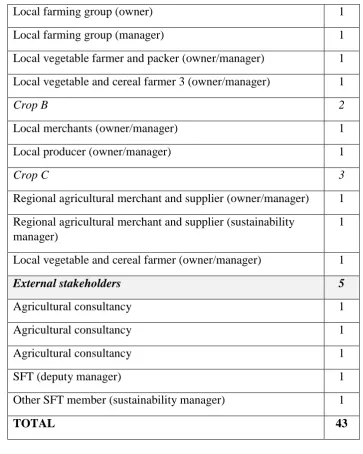
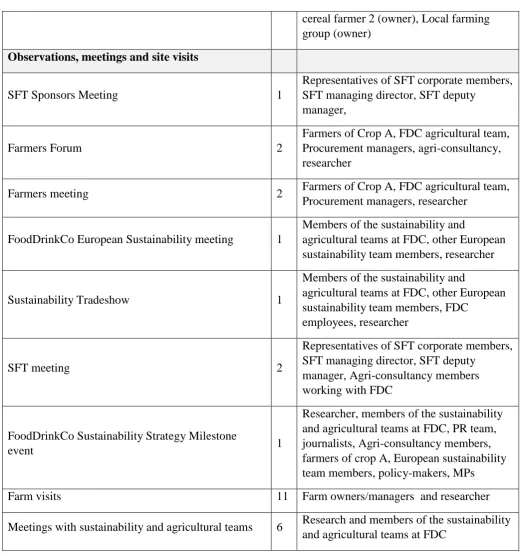
The primary sources of evidence are notes taken during observations and meetings,
interviews (43) and workshops (3) conducted with key informants. Details regarding key
informants and various primary and secondary data sources are provided in Tables 1, 2 and 3
below.
--- INSERT TABLE 1 HERE ---
--- INSERT TABLE 2 HERE ---
--- INSERT TABLE 3 HERE ---
Interviews lasted between 30 minutes and 2 hours and followed a semi-structured format,
exploring aspects of the relationships between the different parties (buyer, supplier, and
consultants, external parties) and experiences with FDC’s environmental agenda and approach
to carbon reduction. The workshops were organized in Year 3 and Year 4 and gathered
participants that had taken part in the interviews to provide a space to reflect on interview
findings and explore identified issues in more depth, especially around understandings of
sustainability and supply network relationships. Interviews and workshops participants were
selected based on their level of experience regarding the implementation of the carbon
measurement tool. They included purchasing, agriculture, and sustainability managers,
supplier informants that had implemented the tool as well as external informants from
supporting organizations that were involved alongside FDC (Tables 1 & 2).
We followed two criteria to guide the number of interviews presented in this study. On the
one hand, we aimed to gather a wide breadth of perspectives and include relevant stakeholders
in both the focal organizations and across the supply network. On the other hand, theoretical
gaining additional insights (Kaufmann and Denk, 2011). Informants’ confidentiality has been
protected thereby ensuring credibility and dependability.
4.4Data analysis
Our overall focus for conducting the analysis is FDC’s carbon reduction strategy. The data
analysis process was based on the principles of abductive reasoning whereby the researchers
engaged in a to-and-from between the empirical and the conceptual, in order to make sense of
the phenomena under study (Ketokivi and Choi, 2014). In an abductive approach, a theoretical
framework is used to inform the data analysis, unlike in inductive approaches, but the analysis
is not confined to testing aspects of the theoretical framework as with deductive approaches
(Dubois and Gadde, 2002). Instead, the analysis is a process of determining which aspects of
the theoretical framework are most salient to the empirical material being analysed (Dubois
and Gadde, 2002; Ketokivi and Choi, 2014). In this case, the CAS concept of ‘schema’ was
identified as being one of the most useful for understanding the dynamics of the case.
Abductive reasoning is consistent with our theory elaboration approach as it allows us to
elaborate those aspects of the theoretical framework that are most relevant to the investigation
and use the idiosyncrasies of the case being studied to elaborate upon those concepts (Fisher
and Aguinis, 2017, Ketokivi and Choi, 2014).
Data coding consisted of three main cycles (Saldaña, 2009). The first cycle was an initial
coding (Saldaña, 2009) in order to explore the data and construct initial codes and themes. The
researchers paid particular attention to the interactions between agents and how these
interactions have influenced the development of the strategy. This has included considering
interactions within the supply network but also in terms of involvement in the consortium. This
relates to the internal mechanisms, especially connectivity and dimensionality, and the external
environment aspects of the CAS framework. More specifically, we have looked at moments
inception phase, to an adaptation phase, and finally to quasi-equilibrium. We were interested
here in the co-evolution aspect of the CAS framework, and therefore considered the main
changes and events as well as the challenges encountered and how they were resolved, and the
impact of these on the development of the carbon reduction strategy. Our analysis was
multilevel in the sense that it sought to explore the various levels of analysis of the case study
as depicted in Figure 2. The different data sources presented in section 4.3 were complementary
in building a rich picture of the dynamics at various levels. Interviews were central to
understanding the micro individual level as well as the organizational and supply network
levels. Workshops and observations provided insights into organizational and supply network
levels. Specific meetings at the consortium level provided evidence of the environment level
and of the role of boundary spanning individuals. Secondary data was critical in providing
contextual information, mapping key events and exploring FDC’s schema. Within this initial
cycle, we first became aware of existing tensions within and between the levels.
In the second cycle, we conducted versus coding. In versus coding, concepts, processes and
phenomena are contrasted in binary terms; the resulting analysis often adopts the phrases ‘on
the one hand’ and ‘on the other hand’ to spotlight inherent dilemmas identified in the data
analysis (Saldaña, 2009). This coding method was useful to developing understanding of the
tensions within each level of analysis. Identified themes were attributed a level. It became
apparent that some themes were connecting different levels. For example, we identified
“conflict” and “conflict resolution” as key multilevel themes, with evidence at the micro and
organizational levels (the individuals and teams within FDC) and the network level (between
different agents of the network: FDC and farmers). We focused on teasing out how events at
the various levels contributed towards exacerbating or resolving conflict. We also explored the
that a supply network level event – the harvest crisis and its handling – had a strong influence
on improving the situation between FDC and the farmers.
As described in more details below, we related the initial codes and themes to the
pre-existing conceptual ideas from the CAS framework. The third coding cycle consisted of
elaborative coding, which is the process of analysing the coding (i.e. first and second cycles
methods) in order to develop theory further, which is hence an appropriate method for
qualitative studies that aim toward theory elaboration (Saldaña, 2009). This latter step offered
a nuanced perspective of how the multilevel tensions can be explained by the CAS framework,
supporting theory elaboration to encompass the idiosyncrasies of the case study. Beyond
ensuring consistency in data reporting (Miles and Huberman, 1994), the combined expertise of
the authors regarding SSCM and carbon measurement has ensured a critical analysis of the
findings.
Despite the fact that numerous phenomena in SCM involve more than one level of theory
and analysis, most SCM research still produces research at a single level (Carter et al., 2015a).
This paper offers advancements toward a multi-level perspective by adopting CAS as a
framework that serves as a lens with which to investigate multi-actor behaviour and
relationships (Mena et al., 2013). Second, it employs a multi-level analysis to understand levels
nested within levels (Carter et al., 2015a). Our study shows how the engagement of the FDC’s
sustainability team at the consortium-level granted them access to pre-competitive
collaboration. As a result, FDC was able to produce, with the help of a consultancy firm, the
needed change at the individual level, i.e. changing suppliers’ negative perception regarding
the tool to a more collaborative approach. Moreover, behavioural change at the individual level
produced changes at supply-network level, enabling data sharing, the development of a carbon
As a result of our analysis we have obtained a nuanced account on how a carbon reduction
strategy emerges, evolves and diffuses in a supply network. From a theory elaboration
perspective (Fisher and Aguinis, 2017), our multilevel abductive approach has contributed to
unpacking the constructs of CAS and the relationships between these constructs in the context
of advancing sustainability in a supply network.
4.5Research quality
Several mechanisms were used to ensure the overall quality and “trustworthiness” of the
research (Shah and Corley, 2006, Lincoln and Guba, 1985). At the research design stage,
particular attention was paid to the selection of participants and using previous literature to
conceptually ground the research problem under study. During the data collection, extensive
notes were taken and stored, interviews and meetings (when possible for the latter) were
digitally recorded and transcribed to ensure accuracy. Transcripts were sent back to participants
to ensure confirmability. Multiple informants and sources of information were used to ensure
credibility, as shown in Tables 1, 2 and 3. The long-term data collection process also ensures
the credibility of the research. At the data analysis stage, the experience of several researchers
was combined in order to address dependability and confirmability. The researchers who were
not as closely involved in the data collection were able to bring a fresh perspective on the data.
The researchers agreed on the approach to coding as explained in section 4.4. The analysis was
conducted iteratively and independently by the researchers. The researchers compared their
respective analysis and themes in order to reach agreement.
5. Case study analysis
In this section, we present the emergence of FDC’s carbon reduction strategy for its crop A
supply network from Year 1 to Year 5. The agents within FDC’s crop A supply network are
environmental consultancy, Agri-consultancy. The FDC Sustainability team is also an agent
within the SFT consortium. There were three phases to the process of transformation:
Inception, Adaptation, and Quasi-equilibrium. The process is represented in Figure 3 below.
The inception phase covers the first year of FDC’s five-year strategy, the adaptation phase
covers the second, third and beginning of fourth year and the quasi-equilibrium phase was
initiated at the end of the fourth year.
--- INSERT FIGURE 3 HERE ---
5.1Phase One: Inception (Year 1)
In Year 1, FDC set itself the ambitious target of reducing its carbon emissions by 50% between
Year 1 and Year 5. Moreover, FDC extended this target to its supply network, which accounted
for over 30% of its carbon footprint. In so doing, FDC has put farmers at the centre of its
sustainability agenda. FDC faced a number of challenges however. They had ambitious targets
that required farmers to double their carbon-efficiency, which would require a substantial
change in their operations. The strategy depended upon their cooperation but FDC did not have
the resources to facilitate this cooperation. Clearly, FDC needed to have a supplier engagement
approach that would allow it to deliver its carbon reduction strategy.
In order to realize its carbon reduction strategy, FDC joined the SFT consortium in Year 1
as one of the first partner firms. From the perspective of CAS, the consortium exists within the
environment of FDC’s crop A supply network. We will show the extent to which FDC shares
the schema of the consortium and how it has affected its behaviour.
The consortium was initially founded when a multinational, an NGO and a university
formed a partnership to drive emissions reductions on farms. The consortium was launched
corporate members, the consortium became a platform for pre-competitive collaboration. Their
philosophy was that ‘‘what gets measured gets managed’’ and they developed the SFT as a
farmer-friendly tool to help farmers measure their carbon footprints, identify carbon hotspots
and ultimately reduce their emissions through the development and implementation of carbon
reduction plans.
The SFT consortium is a way for organizations within food supply networks to share
learning on carbon reduction in a non-competitive environment. One of their basic principles
is that organizations would all benefit from the development of the SFT but would be able to
reap individual benefits when implementing it in their own supply networks. Members do not
share raw data. Instead, members share their learning in relation to using the tool through case
studies (specific crops) and sharing stories of implementation (mostly the challenges).
Although the consortium aimed to develop and roll-out a farm-friendly tool, the boundaries
of the consortium did not and do not extend to farmers. The schema of the consortium is very
much that of the large multinational companies (consortium members), who view
environmental sustainability in terms of measurable progress, scientific methodologies and
impact reduction. The schema is very much in line with the strategic (top management) agendas
of the multinationals - most of which have made pledges around impact reduction (FDC being
one of the most ambitious). Their schema also assumes that the data from farming operations
was already available or at least easily accessible through the farmers. Initially, the consortium
had not considered how their members would engage their farmers to take ownership of the
tool to support the members’ carbon reduction strategies. A cooperative schema underpins the
philosophy of the consortium. It is assumed that farmers will be willing to openly share the
data collected through the SFT with other participants. The success of the SFT depends upon
these assumptions about farmer behaviour being correct. In the case study, they were shown
dynamics at play in the supply network:
“So really with this (referring to the SFT) they (referring to large companies) have found a
new way of exploiting their farmers” (Only farmer participating in SFT meeting)
While membership of the consortium gave FDC legitimacy, it was unable to give them
actual guidance on how the tool could be used to support their carbon reduction strategy. The
success of FDC’s strategy would depend heavily upon their farmers taking ownership of the
SFT but FDC did not know how to engage their suppliers in the project initially. It took the
first round of data collection through the tool to realise that a strategy had to be developed to
engage farmers more effectively.
5.1.1 Lack of unified sustainability schema within FDC
During the case-study period, two teams were responsible for managing the carbon reduction
strategy with the farmers: FDC’s Sustainability and Buying teams. The Sustainability team was
responsible for all aspects related to agricultural sustainability, including the introduction of
new sustainability tools for suppliers. The Buying team was responsible for negotiating and
monitoring contracts with suppliers. Initially, there was a conflict between the schemas of the
two teams on how to implement FDC’s carbon reduction strategy within the supply network.
The Sustainability team had a more eco-centric orientation focused on reducing carbon
emissions. The Buying team had a more commercial perspective, treating the carbon reduction
strategy as an add-on to their role. They initially had a fairly instrumental orientation towards
the carbon reduction strategy and were only interested in those emissions reductions initiatives
that also delivered cost reductions (“we aren’t doing it because we want to save the planet”,
“as long as it makes business sense”). This was driven, at least in part, by the performance
measures by which the Buying team were evaluated. While the Buying team was required to
recommend inclusion of the environmental agenda in the famers’ contracts, this element was
in terms of their ability to deliver cost reductions. The commercial perspective of the Buying
team was also reflected through the farmers’ accounts of the Buying team’s approach:
“It has become much more an American ethos about goals and KPIs and price and
everything like that...” (Farmer, Year 1)
“Thinking this is 50 years or something we've been growing for you, and it's just gone,
just like that, because you are so pig headed and not understanding the economic
situation that you're putting us all in, not just us, but everybody.” (Farmer, Year 1)
Initially, the conflicting schema of the two teams undermined their ability to collaborate on
the carbon reduction strategy as they each assigned a different priority to the carbon reduction
strategy. This is evidence of the key role of the interaction between agents in the deployment
of the carbon reduction strategy. Further, the tensions between the teams were apparent to some
farmers, with negative effects upon their willingness to engage in FDC’s carbon reduction
strategy.
“The area of difficulty as with any supply chain is the commercial aspect. And certainly,
there are 2 parallel activities if you like. There is the work that FDC are doing on
sustainability and then there is also the commercial and procurement theme alongside
where there is a difficult relationship between the 2. And every year there are trading
discussions in terms of how much FDC will pay for return of crop As and what the farmers
expect to be paid. Now and again, for example in Year 1, those discussions can be quite
tense and quite difficult.” (Agri-consultancy team member, Year 2)
The relationship between the Sustainability and Buying teams was not entirely negative
however, as the participation of the Sustainability team in the SFT consortium suggested to
members of the Buying team that carbon reduction was a legitimate activity. The Sustainability
team members who attended the consortium meetings also had the opportunity to discuss the
facing the same challenges, notably around engaging commercial teams and suppliers. The
consortium served a motivational purpose in this regard.
FDC’s carbon reduction strategy was a means for them to reduce dimensionality within their
crop A supply network. It was intended that the SFT would become the means through which
farmers would take ownership of FDC’s carbon reduction strategy. The top-down schema of
the SFT consortium was incorporated into FDC’s carbon reduction strategy through the
Sustainability team, which was an agent in both the SFT consortium and FDC. The top down
approach took the form of making it mandatory for their farmers to collect data and develop
carbon reduction plans using the SFT. From the end of Year 1, this mandate was included in
the supply contracts for crop A farmers.
“And it is contractualized around those elements now. That is where we have got to go.
We have delivered a consistent message to them and now we are getting to the point where
we are contractualizing some of the requirements for ongoing carbon reduction and water
management.” (FDC Buying team member, Year 1)
5.1.2 Conflicting sustainability schemas between the FDC teams and farmers
The two FDC teams assumed that the farmers would either share their commitment to reducing
carbon emissions or that emissions could be reduced through fiat, i.e. through inclusion within
supply contracts. However, few farmers initially shared FDC’s commitment to carbon
reduction and the majority failed to see what they would gain from using the SFT. This
perceived ‘failure’ of the farmers to understand and commit to the strategy was a source of
continual frustration for the Sustainability team.
“I think that the farmers feel that there are lots of different things coming under the
sustainability umbrella and then there are the other things like the commercial contract
and also legislative programs.” (FDC Sustainability team member, Year 1)
FDC teams and the farmers as well as FDC’s initial failure to engage their farmers. The tensions
are explored in detail below.
The farmers felt they had a more holistic view of the relationship between agriculture and
the natural environment than FDC. The farmers talked about the farming tradition and the more
tacit way of knowing about how to deal with agriculture. To them, FDC’s focus on carbon
reductions and data collection seemed a reductionist approach to sustainability. They viewed
sustainability as a more holistic concept that included their role with nature and the community:
“We have a moral compass. As a farmer you can't run away from your farm, so your
reputation is paramount. You can't decamp and set up a new business in a different city, you
can't do that. You're living as part of the community.” (Farmer, Year 1)
In the most extreme cases, the clash between the sustainability schemas of FDC and its
farmers resulted in some farmers not being able to see the connection between carbon reduction
and sustainability:
“Carbon is very alien, carbon is just something that they know they have got to reduce and
then they know that FDC want to reduce it.” (FDC Buying team member, Year 1)
An important part of FDC’s sustainability schema was the urgency with which carbon
emissions needed to be reduced within their crop A supply network and the scale of the changes
required. As FDC were looking to reduce emissions by 50% within a five-year period, this
dictated that the pace of change needed be quick. Farmers would need to learn how to use the
SFT, set a baseline of current carbon emissions, and then develop and implement a plan for
carbon reduction within a five-year period. This conflicted with the farmers’ view of change,
which tended to be less radical. Arguably, this is in line with the nature of the farmers’
businesses. Most of the farmers are 3rd or 4th generation farmers and are often reluctant to
radically change their practices, especially if they do not understand the reasons for the change
“Our farmers in the UK are very conservative, they don’t want to change. They've inherited
a system from their fathers and their fathers’ fathers – their generation and the supplier's
generation, and benefited on their farm, not just with us, with huge subsidies.” (FDC Buying
team member, Year 1).
The above issues resulted in many farmers not being able to understand FDC’s emissions
reductions strategy and their role within it. Many farmers had difficulties capturing the data
that FDC needed. For example, it was unclear to many whether all of their emissions counted
or solely those related to the crops produced for FDC.
Cooperation is a core principle within the sustainability schema of the SFT consortium and
it is assumed that farmers will engage in the desired cooperative behaviour needed to drive
down emissions. By putting the SFT at the heart of FDC’s carbon reduction strategy, they
became dependent on the willingness of farmers to share data information with FDC and with
other farmers. The majority of farmers did not share the cooperative schema of the SFT
consortium and Sustainability team however. There was a shared feeling amongst farmers that
the data collected through the SFT would be used against them:
“What do they want to do with this data? Is it going to be used to negotiate harder?”
(Farmer, Year 1)
The farmers had two concerns about using the SFT to collect and share data. Many farmers
had doubts about how the information they shared would be used by the Buying team. For
example, some farmers were expecting FDC to rank all their suppliers according to how well
they performed on emissions and stimulate competition between them to increase or decrease
the price paid per ton of crop A supplied. As a result, there was considerable uncertainty when
the SFT was first rolled-out.
Many farmers saw the data related to the carbon emissions as proprietary information and
Consequently, they were reluctant to share it with other suppliers.
The factors presented above contributed to farmers’ lack of engagement in FDC’s carbon
reduction strategy and made them reluctant to take ownership of the SFT. Instead, farmers saw
the SFT as just “another form” to fill in, i.e. a non-value adding activity that would consume
valuable resources. Rather than engaging farmers around carbon reduction, FDC’s strategy had
instead led to many farmers perceiving that their relationship with FDC had become more
formal and bureaucratic. The result was that the data collected in the first year of FDC’s
initiative were not accurate. Because the farmers saw the SFT as a box ticking exercise and an
additional burden, many filled in the SFT with data that was not accurate simply to comply
with their contractual obligations. This undermined FDC’s attempt to establish an accurate
emissions’ baseline in the first year of their strategy.
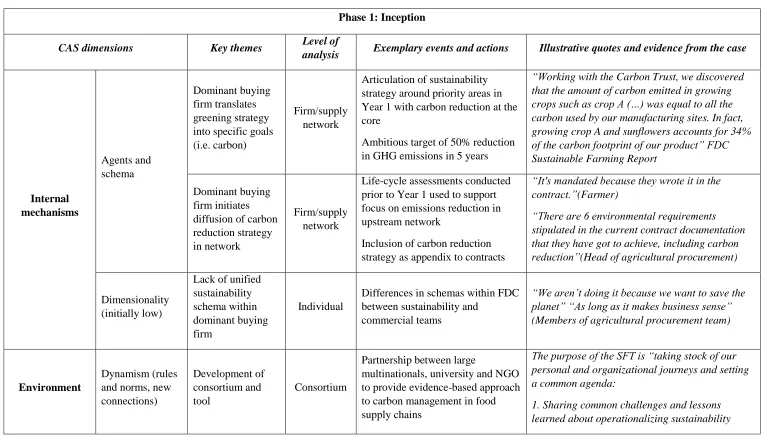
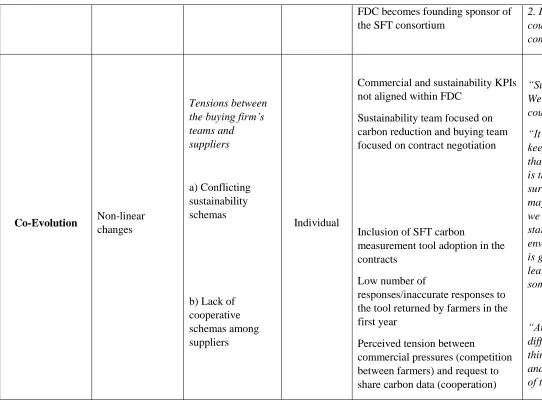
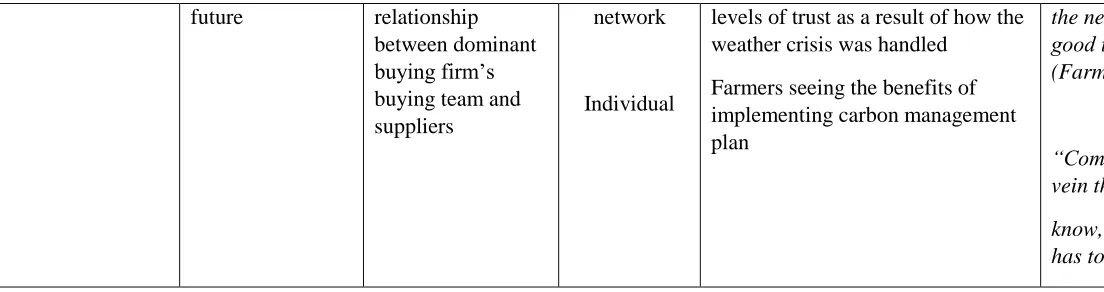
Findings from the inception phase are summarised in Table 4 below with illustrative quotes
and corresponding CAS constructs.
--- INSERT TABLE 4 HERE ---
5.2Phase Two: Adaptation (Years 2-4)
FDC had not anticipated that the farmers would respond so negatively to their strategy in
general and the SFT in particular and that it would put such a strain on farmers. There was a
perception among many farmers that FDC had managed the process of transformation poorly
and had attempted to manage the process through fiat rather than through engagement. The
irony of a farmer-friendly tool that the farmers had not been consulted on being imposed on
them by fiat was not lost on many of the farmers.
“The fundamental problem was the process, the way they went about it was totally wrong,
own work without engaging with people who understand it and do it and would ultimately
be investing in it, they just did their own thing, bought it and then looked around to see who
was going to use it. That's not a way of engaging.” (Farmer, Year 2)
5.2.1 Supplier engagement strategy
FDC’s challenge was to engage their suppliers on the issue of carbon reduction and to make
the SFT more farmer-friendly. In the second year of the case study, FDC changed their
approach. While the SFT remained at the centre of their strategy and its use by farmers was
still mandated in contracts, FDC launched a supplier development plan to engage and support
its farmers. Forums would be established to hear farmers’ concerns and to better explain FDC’s
strategy. Training would be provided to farmers on how to collect accurate data and develop
plans for reducing their emissions. These were organized as workshops given to groups of
farmers on their farms.
The Sustainability team did not have the resources to support the scale of the supplier
development that was required and turned to a third party, consultancy. Originally,
Agri-consultancy had been engaged by FDC to help refine measures for carbon reduction, but their
brief was expanded significantly in the second year in response to the challenges of
implementation. They became responsible for rolling out the tool more widely but also for
running a number of training sessions/workshops with the farmers.
“And, although something actually was completed and returned last year, they felt much
more comfortable having been given more training on it. You know making sure that people
fully understanding these tools. So that the data that they give is correct and therefore the
information that they are getting back is appropriate and helpful.” (Agri-consultancy team
member, Year 2)
There were a number of elements that contributed positively to making the suppliers more
engaged with the SFT and FDC’s strategy in general. Clearly the iterative approach to data
collection for the SFT was an important learning curve for the farmers who became more
acutely aware of the link between carbon measurement and the commercial viability of their
business. In this sense, the schemas of the farmers became progressively more aligned with
those of FDC. The role of Agri-consultancy was pivotal in supporting suppliers’ learning. This
is clear evidence of how the introduction of a new agent, and the relationships with existing
agents have influenced the development of the initiative.
There were also external pressures that contributed towards supplier learning. For example,
in Year 3 the farmers were facing an upcoming reform of the European Union’s Common
Agricultural Policy that put a strong emphasis on environmental sustainability. They were also
facing requirements to reduce carbon from other customers and could therefore use their
experience with FDC as a competitive advantage. This meant that the farmers became more
attuned to FDC’s sustainability agenda and to the importance of carbon reduction.
5.2.3 Greater connectivity between FDC Buying team and farmers
An initial barrier to farmers engaging with FDC’s carbon reduction strategy was their growing
distrust of the Buying team. Farmers perceived the team to be aggressive in its negotiations
and assumed that the data would be used by the Buying team to strengthen their negotiating
position relative to the farmers. The trust between farmers and FDC improved considerably in
the period of the case study however due to the response of the Buying team to a crisis that
affected the supply network in the fourth year of FDC’s carbon reduction strategy.
Heavy rain in the UK in Year 3 resulted in poor harvests for many farmers, including FDC’s
crop A farmers. The Buying team responded to the crisis by listening to the farmers’ concerns,
providing support in dealing with adverse weather conditions and the impact this had on crop
these positive feelings to FDC’s carbon reduction strategy and became more willing to engage
in data sharing and carbon reduction.
5.2.4 Greater connectivity between FDC teams
FDC is a ‘data hungry’ organization and as the SFT realized its potential to gather and process
data, the relationship between the Sustainability and Buying teams improved. The carbon
agenda gained legitimacy in the eyes of the Buying team. Thanks to the supplier engagement
activities and the results achieved through the SFT, the Buying team was able to see measurable
progress in terms of reaching the carbon reduction targets. They could discuss carbon
measurement in a more concrete manner as the data was coming in, and this was an important
learning point. The Buying team began absorbing a lot of information from the work conducted
on the ground by the Sustainability team.
Findings from the adaptation phase are summarised in Table 5 below with illustrative quotes
and corresponding CAS constructs.
--- INSERT TABLE 5 HERE ---
5.3Phase Three: Quasi-equilibrium (Years 4-5)
By the end of the case study, FDC’s crop A supply network had made the adaptations required,
reaching a new state of quasi-equilibrium. FDC’s strategy had raised awareness about carbon
reduction among its farmers, created an accurate baseline for suppliers’ emissions, and reduced
emissions by 50% within 5 years. Further, FDC was able to deepen its relationship with its
crop A farmers. Although many of them are considered heritage farmers, integrating
environmental concerns within the context of the commercial relationship has resulted in an
increase of shared information, communication and the development of a more collaborative
The consortium acted as a bridge for individuals from FDC between the macro concept of
sustainability and the micro reality of implementing practices on the ground. It stopped
individuals becoming too focused on the minutia and allowed them to keep seeing the bigger
picture. Discussions at the consortium were as much about “global learning” and the “journey
to sustainability” as they were about farm-level analysis.
FDC has made a number of contributions towards the consortium. One, its successes in
engaging its suppliers on the issue of carbon reduction has encouraged other corporations to
join the SFT consortium. Two, FDC has shared its experiences with the other members of the
consortium through meetings and the production of a case study. As a result, the consortium
has more resources to support the supplier engagement strategies of its members and more
effectively drive emissions reductions. FDC’s successful engagement in the consortium also
means that the head of the Sustainability team is regularly invited to speak at various industry
events on environmental sustainability and supplier engagement.
Findings from the quasi-equilibrium phase are summarised in Table 6 below with illustrative
quotes and corresponding CAS constructs.
--- INSERT TABLE 6 HERE ---
6. Discussion
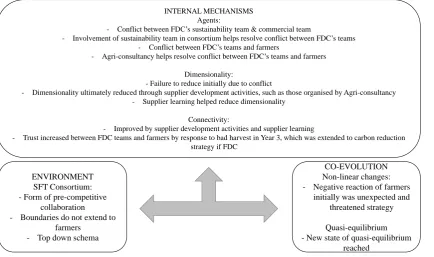
Figure 4 provides a synthesis of the match between CAS elements and the case study.
--- INSERT FIGURE 4 HERE ---
This study provides a theoretically grounded perspective of the complexity inherent to the
frameworks in the literature analyze and describe the process of implementing sustainability
in supply networks”. Through the lens of CAS, we provide a multilevel exploration of the
processes at play in moving towards more environmentally sustainable supply networks. We
have gained detailed longitudinal insights into both the agentic and environmental mechanisms
that affect the transition for carbon reduction and have provided evidence for the criticality of
contextual variables in making supply networks more environmentally sustainable. While the
majority of previous research has often assumed linear and controlled views of greening
strategies, this research on the other hand offers an emergent and somewhat ‘messier’
perspective to such strategies. This perspective enriches previous findings on the influence of
institutional pressures on emergent SSCM practices (Zhu and Sarkis, 2007) but is also in line
with the view that SSCM is fundamentally about change (Matthews et al., 2016).
We have used elements of CAS theory to make sense of the change process of making
supply networks more environmentally sustainable, offered relevant explanations for the
captured insights and have also elaborated on aspects of the CAS framework. This has enabled
to formulate a number of propositions.
The notion of dimensionality proposed in CAS was particularly useful to understand the
ways in which the focal firm as an agent member of the consortium was using the carbon
reduction tool as a way to control the behaviour of the supplier agents. When the tool was first
introduced a relative degree of freedom was given to the suppliers who had the prime
responsibility to fill in the data onto the tool. Due to a poor farmer response in the first year,
FDC’s approach evolved to include more supplier engagement through the involvement of the
consultants to support the implementation (delivering training sessions and sitting down with
the farmers to fill in the questionnaire), which was an attempt for them to maintain higher levels
of control over the transition process. Despite these control aspects, the carbon reduction