MITRE at SemEval-2016 Task 6: Transfer Learning for Stance Detection
Guido Zarrella and Amy Marsh
The MITRE Corporation 202 Burlington Road Bedford, MA 01730-1420, USA jzarrella,[email protected]
Abstract
We describe MITRE’s submission to the SemEval-2016 Task 6, Detecting Stance in Tweets. This effort achieved the top score in Task A on supervised stance detection, pro-ducing an average F1 score of 67.8 when as-sessing whether a tweet author was in favor or against a topic. We employed a recurrent neu-ral network initialized with features learned via distant supervision on two large unlabeled datasets. We trained embeddings of words and phrases with the word2vec skip-gram method, then used those features to learn sentence rep-resentations via a hashtag prediction auxiliary task. These sentence vectors were then fine-tuned for stance detection on several hundred labeled examples. The result was a high per-forming system that used transfer learning to maximize the value of the available training data.
1 Introduction
This paper describes a system for performing au-tomatic stance detection in social media messages. Our approach employs a recurrent neural network which was initialized from pre-trained features learned in successive attempts to encode world knowledge via weak external supervision.
Stance detection is the task of determining whether the author of a text is in favor or against a given topic, while rejecting texts in which neither inference is likely. This task is distinct from senti-ment analysis in that an in favor oragainst stance can be measured independently of an author’s emo-tional state. In stance detection we attempt to
mea-sure how an author’s opinion is expressed in sponta-neous, unstructured messages rather than the explicit prompts of formal opinion polls.
Declarations of stance are often couched in fig-urative language that can be difficult for machines to unravel. Consider the textsWe don’t inherit the earth from our parents we borrow it from our chil-dren and Last time I checked, Al Gore is a politi-cian, not a scientist. To the human observer mes-sages like these contain an interpretable stance rel-evant to the topic of climate change. But to under-stand rhetorical devices like sarcasm, irony, analogy, and metaphor, a reader often uses personal experi-ence to infer broader context. For machines, matters are additionally complicated by use of informal vo-cabulary, grammar, and spelling. Furthermore, train-ing data is often expensive or difficult to collect in bulk. These challenges motivated our efforts to seek transfer learning of broad world knowledge through feature pre-training using large unlabeled datasets.
2 Related Work
It is common for machine learning approaches to be-gin learning of any new task from scratch, for exam-ple by randomly initializing the parameters of a neu-ral network. This disregards any knowledge gained by similar algorithms when solving previous tasks. Transfer learning approaches, on the other hand, store the knowledge gained in one context and ply it to different, related problems. This type of ap-proach is particularly appealing when one lacks suf-ficient quantity of in-domain labeled training data, such as when there are only a few hundred known examples of a target.
One strategy for performing transfer learning is to train the parameters of a neural network on multiple tasks: first on an auxiliary task with plentiful data that allows the network to identify meaningful fea-tures present in the corpus, then a second time using actual task data to tune and exploit those features learned in the first pass.
Deep neural networks trained for image classifi-cation can be improved when initialized with fea-tures learned from distant tasks, for example Yosin-ski et al. (2014). In natural language processing domains, sentence representations learned on unla-beled data have been shown to be useful across a va-riety of classification and semantic similarity tasks (Kiros et al., 2015; Dai and Le, 2015; Hill et al., 2016). Weston et al. (2014) used a hashtag predic-tion task to learn sentence representapredic-tions that im-prove a downstream content-based recommendation system.
Previous work in stance detection is significant (Mohammad, 2016), often with a focus on analysis of congressional debates or online forums (Thomas et al., 2006; Somasundaran and Wiebe, 2009; Mu-rakami and Raymond, 2010; Walker et al., 2012) in which discourse and dialogue features offer clues for identifying oppositional speakers. Rajadesingan and Liu (2014) study stance detection in Twitter con-versations and use a retweet-based label propagation approach. This objective of this work differs in that we attempt to detect an author’s stance purely from analysis of the text of a single message.
3 Task and Evaluation
Detecting Stance in Tweets, Subtask A: Supervised Frameworks(Mohammad et al., 2016) was a shared task organized within SemEval-2016.
[image:2.612.327.529.68.254.2]The task organizers provided training data in the form of 2,814 tweets covering five topics, with 395 to 664 tweets per topic. The organizers used crowdsourcing to manually annotate these tweets for stance. Class balance varied between topics, with some topics showing significant skew (e.g. Cli-mate Change is a Real Concernwith 4% AGAINST and 54% FAVOR) while others were more balanced (e.g. Feminist Movementwith 49% AGAINST and 32% FAVOR). Approximately 74% of the provided tweets were judged to be either in favor or against,
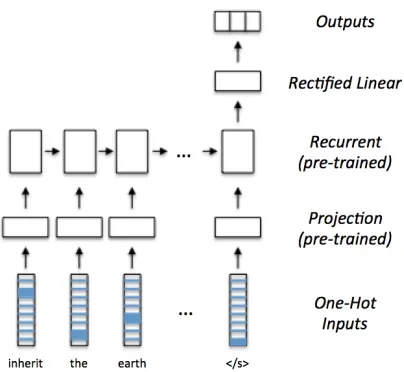
Figure 1:A recurrent neural network for stance detection.
while the remainder contained neither inference. An additional 1249 tweets with held-out labels were used as evaluation data. Systems were evaluated us-ing the macro-average of score(FAVOR) and F1-score(AGAINST) across all topics.
4 System Overview
We now describe an approach to stance detection that employs a recurrent neural network organized into four layers of weights (shown in Figure 1). In-put tokens are encoded in a one-hot fashion, such that each token is represented by a sparse binary vec-tor containing a single one-value at the index corre-sponding to the token’s position in the vocabulary. A sequence of these inputs are projected through a 256-dimensional embedding layer, which feeds into a recurrent layer containing 128 Long Short-Term Memory (LSTM) units. The terminal output of this recurrent layer is densely connected to a 128-dimensional layer of Rectified Linear units trained with 90% dropout (Srivastava et al., 2014). Finally, this layer is fully connected to a three dimensional softmax layer in which each unit represents one of the output classes:FAVOR,AGAINST, orNONE.
or phrases) in the text. All feature pre-training was done using weak supervision from larger unlabeled text datasets, with a goal of automatically learning useful representations of words and input sequences.
4.1 Pre-Training the Projection Layer
The weights for the projection layer of the network were initialized from 256-dimensional word em-beddings learned using the word2vec skip-gram (Mikolov et al., 2013a) algorithm. We sampled 218,179,858 tweets from Twitters public stream-ing API durstream-ing 2015, and used this unlabeled data as our training corpus. Retweets, duplicates, and non-English messages were not included in this sample. Text was lowercased and tokenized to mimic the style of the task data. We then applied
word2phrase(Mikolov et al., 2013b) twice con-secutively to identify phrases comprised of up to four words, for example making a single token of the phraseglobal climate change.
We then trained 256-dimensional skip-gram em-beddings for the 537,366 vocabulary items that ap-peared at least 100 times in our corpus, with a con-text window of 10 words and 15 negative samples per positive example. These hyperparameters were chosen in advance based on our prior experience in training embeddings for identifying word analogies and estimating semantic similarity of sentences. Out of vocabulary items were represented by the average of all in-vocabulary vectors.
Note that these projection layer weights were later tuned by backpropagation during training of the re-current networks. Thus these initializations served to provide the RNNs with initial feature represen-tations intended to capture the nuances of informal word usage observed in a large sample of text.
4.2 Pre-Training the Recurrent Layer
The second layer of our network was composed of 128 Long Short-Term Memory (LSTM) units (Hochreiter and Schmidhuber, 1997). This recur-rent layer received as input a sequence of up to 30 embeddings, folding each into its hidden state in turn. It was initialized with weights that were pre-trained using the distant supervision of a hashtag prediction auxiliary task. In this manner the network learned distributed sentence representations from a dataset containing a broad array of stance
declara-tions, rather than relying exclusively on the 2,814 explicitly labeled in-domain tweets.
We began by automatically identifying 197 hash-tags with relevance to the topics under consider-ation, for example #climatechange, #climatescam, and#gamergate. These hashtags were selected on the basis of a nearest-neighbor search of the word embedding space. We queried the vector space using the embeddings of the topic titles, and selected the unique hashtags with high (top-50) cosine similarity. These selections varied greatly in frequency and task specificity, including a number of tags which were related to multiple topics and others which appeared ambiguously related. Half of the 40 most frequent tags in this list were related to the 2016 United States presidential elections. The final list of 197 relevant hashtags was held constant across all experiments.
We extracted 298,973 tweets containing at least one of these 197 hashtags from the 2015 corpus of 218 million English tweets. Text was lowercased, tokenized, and phrase chunked according with the preprocessing choices made during the training of word embeddings. If a tweet contained more than one hashtag, the most frequent tag was used as the prediction target. Tweets were then stripped of all hashtags, including both the correct hashtag and any additional hashtags appearing in the tweet.
This corpus was divided into a training set and de-velopment set using a 90/10 split. Each word in the tweet was converted into a vector using the word em-beddings. The sequence of vector representations of the words in the tweet served as the input to a neural network with a 128-dimensional LSTM layer, fol-lowed by a dense softmax layer over the 197 possi-ble candidate hashtags.
We trained the neural network with gradient de-scent using AdaDelta and categorical cross entropy minimization. Both the word embeddings and the recurrent layer were tuned during this process. Training continued until the accuracy on the devel-opment set reached its maximum, which took seven epochs. The final model correctly predicted devel-opment set hashtags with 42.6% accuracy.
5 Experiments
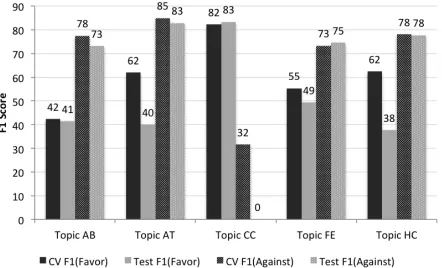
Figure 2:F1 scores for each topic and class on both cross-validation and test conditions.
we trained five distinct classifiers, one for each of the five topics under consideration in the evaluation. The embedding and recurrent layers of each classi-fier were initialized with the weights obtained from the ptraining process described above. The re-mainder of the weights were randomly initialized and the network was trained with stochastic gradient descent using a learning rate of 0.015 and momen-tum of 0.9. These networks were trained using a cat-egorical cross-entropy loss function, with costs for each example weighted according to the prevalence of the class in the training data. This placed higher weight on rare classes. The recurrent networks were implemented using theKerasframework (Chollet, 2015).
The training data for each topic was shuffled and split into five chunks for cross-validation. The train-ing process for a strain-ingle topic’s classifier therefore resulted in five distinct neural networks, each learn-ing from 80% of the trainlearn-ing data. These trainlearn-ing set sizes ranged from 316 to 532 tweets. Each net-work was trained for 50 epochs, with early stopping to select the model with the best validation loss. Pre-dictions from these five trained networks were used
to select a single class via majority vote at decode time.
Variants of this approach were considered as well. One variant used an identical framework with a re-current layer initialized instead from a RNN trained on 6.5 million tweets containing the top 10,000 most frequent hashtags (as opposed to 197 topic-relevant hashtags). We also omitted the RNN pre-training al-together and randomly initialized the recurrent layer. These variants were not found to improve perfor-mance.
6 Results
Our submission achieved an average F1 score of 67.8 on theFAVORandAGAINSTclasses of the held out test set, which contained tweets from all five top-ics. This was the top scoring system among the 19 entries submitted to the supervised stance detection shared task.
across topics and classes (Figure 2).
One consistent observation across all topics was that the majority class, whether it was FAVOR
orAGAINST, significantly outperformed the sponding minority class. There was positive corre-lation (R2 = 0.67) between the F1 score for a given
class and the raw number of training examples rep-resenting that class.
The weight pre-training and initialization regimes that we applied improved performance relative to the tested alternatives. Entirely omitting pre-training of the recurrent layer (while keeping the projection layer pre-training) resulted in a drop of average F1 from 71.1 to 70.0 in 5-fold cross-validation. Mean-while the RNN trained to select from among 10,000 popular hashtags led to an average F1 of 66.0, a rel-ative reduction of 7.2% compared to the submission initialized from the RNN trained on 197 highly rel-evant hashtags.
7 Conclusion
We described a state-of-the-art system for automat-ically determining the stance of an author based on the content of a single tweet. This approach was able to maximize the value of limited training data by transferring features from other systems trained on large, unlabeled datasets.
Our results demonstrated that hashtag prediction and skip-gram tasks can result in pre-trained features that are useful for stance detection. The selection of domain-relevant hashtags appears to be a crucial as-pect of this architecture, as experiments employing a larger collection of frequent hashtags resulted in sig-nificantly worse performance on the stance detection task.
Transfer learning does not completely elimi-nate the need for labeled in-domain training data. The most frequent stance classes uniformly outper-formed the minority classes by all metrics. It is likely that stances which are rare in this training set are also proportionally absent from the larger unlabeled auxiliary hashtag task. Future experi-ments could investigate other techniques for iden-tifying relevant hashtags, with a goal of maximizing the diversity of opinions represented in the auxiliary datasets.
Acknowledgments
This work was funded under the MITRE Innovation Program. Thanks to Spencer Marsh for his timely encouragement. Approved for Public Release; Dis-tribution Unlimited: Case Number 16-1159.
References
Franois Chollet. 2015. Keras. https://github. com/fchollet/keras.
Andrew M Dai and Quoc V Le. 2015. Semi-supervised sequence learning. InAdvances in Neural Information Processing Systems, pages 3061–3069.
Felix Hill, Kyunghyun Cho, and Anna Korhonen. 2016. Learning distributed representations of sentences from unlabelled data.arXiv preprint arXiv:1602.03483. Sepp Hochreiter and J¨urgen Schmidhuber. 1997. Long
short-term memory. Neural Computation, 9(8):1735– 1780, November.
Ryan Kiros, Yukun Zhu, Ruslan R Salakhutdinov, Richard Zemel, Raquel Urtasun, Antonio Torralba, and Sanja Fidler. 2015. Skip-thought vectors. In
Advances in Neural Information Processing Systems, pages 3276–3284.
Tomas Mikolov, Kai Chen, Greg Corrado, and Jeffrey Dean. 2013a. Efficient estimation of word representa-tions in vector space.ICLR Workshop.
Tomas Mikolov, Ilya Sutskever, Kai Chen, Greg S Cor-rado, and Jeff Dean. 2013b. Distributed representa-tions of words and phrases and their compositionality. InAdvances in neural information processing systems, pages 3111–3119.
Saif M. Mohammad, Svetlana Kiritchenko, Parinaz Sobhani, Xiaodan Zhu, and Colin Cherry. 2016. SemEval-2016 Task 6: Detecting stance in tweets. In
Proceedings of the International Workshop on Seman-tic Evaluation, SemEval ’16, San Diego, California, June.
Saif M. Mohammad. 2016. Sentiment analysis: Detect-ing valence, emotions, and other affectual states from text. In Herb Meiselman, editor, Emotion Measure-ment. Elsevier.
Akiko Murakami and Rudy Raymond. 2010. Support or oppose?: classifying positions in online debates from reply activities and opinion expressions. In Proceed-ings of the 23rd International Conference on Compu-tational Linguistics: Posters, pages 869–875. Associ-ation for ComputAssoci-ational Linguistics.
Ashwin Rajadesingan and Huan Liu. 2014. Identify-ing users with opposIdentify-ing opinions in twitter debates. In
Swapna Somasundaran and Janyce Wiebe. 2009. Rec-ognizing stances in online debates. InProceedings of the Joint Conference of the 47th Annual Meeting of the ACL and the 4th International Joint Conference on Natural Language Processing of the AFNLP: Volume 1-Volume 1, pages 226–234. Association for Compu-tational Linguistics.
Nitish Srivastava, Geoffrey Hinton, Alex Krizhevsky, Ilya Sutskever, and Ruslan Salakhutdinov. 2014. Dropout: A simple way to prevent neural networks from overfitting. The Journal of Machine Learning Research, 15(1):1929–1958.
Matt Thomas, Bo Pang, and Lillian Lee. 2006. Get out the vote: Determining support or opposition from con-gressional floor-debate transcripts. InProceedings of the 2006 conference on empirical methods in natural language processing, pages 327–335. Association for Computational Linguistics.
Marilyn A Walker, Pranav Anand, Robert Abbott, and Ricky Grant. 2012. Stance classification using dia-logic properties of persuasion. In Proceedings of the 2012 Conference of the North American Chapter of the Association for Computational Linguistics: Hu-man Language Technologies, pages 592–596. Associ-ation for ComputAssoci-ational Linguistics.
Jason Weston, Sumit Chopra, and Keith Adams. 2014. #tagspace: Semantic embeddings from hashtags. In
Proceedings of the 2014 Conference on Empirical Methods in Natural Language Processing, EMNLP 2014, October 25-29, 2014, Doha, Qatar, A meeting of SIGDAT, a Special Interest Group of the ACL, pages 1822–1827.