Detection of Fraudulent Behaviour in Water
Consumption using Machine Learning Algorithms
Vijeta M Dhuleholi1, Dr. Shreedhara K.S2
1, 2
Department of computer science and engineering, UBDTCE
Abstract: Data mining is a powerful tool widely used by organizations to enhance their businesses and gain a competitive advantage over their competitors. The data mining process helps in extracting and analysing various data patterns, information or trends from large databases. Various data mining techniques are available to conduct the data mining process. Data mining techniques are used in a variety of applications, one of which is t he detection and prevention of different types of frauds. Although there is existing research on data mining and vari ous data mining techniques that can be used to detect and identify different types of frauds, there is little research tha t synthesizes various facets of fraud that uses the data mining techniques. This research explores the use of two classification techniques (SVM and KNN) to detect suspicious fraud water customers. The SVM based approach uses customer load profile attributes to expose abnormal behaviour that is known to be correlated with non-technical loss activities. The data has been collected from the historical data of the company billing system. To deploy the model, a decision tool has been built using the generated model. The system will help the company to predict suspicious water customers to be inspected on site.
Keywords: Data Mining, KNN (K Nearest Neighbour), SVM (Support Vector Machine) and NTL (Non-technical losses).
I. INTRODUCTION
Water is an essential element for the uses of households, industry, and agriculture. Jordan, as several other countries in the world, suffers from water scarcity, which poses a threat that would affect all sectors that depend on the availability of water for the sustainability of activities for their development and prosperity [3].
The mentioned Irregularities known as non-technical losses (NTLs). NTLs originating from electricity theft and other customer malfeasances are a problem in the electricity supply industry. [4] NTL is a problem in water supply industry too because of the similarity between water and electricity distribution systems in depending on meter technology and load profiling concept.
NTLs include the following activities
1) Losses due to faulty meters and equipment.
2) Tampering with meters so that meters record low rates of consumption.
3) Stealing by bypassing the meter or otherwise making illegal connections.
4) Arranging false readings by bribing meter readers.
5) Arranging billing irregularities with the help of internal employees by means of such subterfuges as making out lower bills, adjusting the decimal point position on the bills, or just ignoring unpaid bills.
Fraud is a serious problem face information system that implemented in various domains. Credit card transactions as a financial system branch had a total loss of 800 million dollars of fraud in U.S.A. and 750 million dollars in U.K. in the year 2004 [1]. In the area of health care according to transparency international [2], the total expenditure exceeds the amount of 3 trillion euro worldwide. That size in the health care industry induces several actors in the field to make a profit by using illegal means, forbidden financial operation committing health care fraud.
A. Problem Statement
This water crisis situation has been aggravated by the rapid population growth and mismanagement. Efforts of the water suppliers to improve water and sanitation services are faced by managerial, technical and financial determinants and the limited amount of renewable freshwater resources.
B. Objective of the project
1) Well-known data mining techniques to build a suitable model to detect suspicious fraudulent customers.
2) Depending on their historical water metered consumptions.
3) Water supplying companies incur significant losses due to fraud operations in water consumption.
C. Existing System
Earlier research shows that various classification technique in the detection of suspected fraud customers and corrupted measurement meters. The available literature related to detecting the fraudulent activities of Non-Technical Loss in water consumption is limited in comparison to other sectors such as electricity consumption and financial issues. A research was conducted by Humid in the Arabic region related to suspicious water consumption activities. Humid used data mining techniques to discover fraudulent water consumption by customers in Gaza city. The historical data of water consumption was used as a training dataset to build the intelligent model. The author focused on using support vector machine SVM classifier to detect the fraudulent activities.
D. Disadvantages of Existing System
1) Very less knowledge of existing fraud behaviour leads to less accurate result.
2) Imbalanced dataset gives less reliable result.
3) Less reliable result needs more human involvement in verification phase.
E. Proposed system
In this project, we will apply the data mining classification techniques for the purpose of detecting customers’ with fraud behaviour in water consumption. We will use decision tree based classifiers to assemble the best classification models for detecting suspicious fraud customers. The models were built using the customer’s historical metered consumption data. The model is trained using the default classifiers parameters. Results inspection will be done using confusion matrix to get the accuracy of the classifiers model. The customers will be classified into frauds or non-frauds category. This model introduces an intelligent tool that can be used to detect fraud customers and reduce their profit losses. The suggested model helps saving time and effort of employees of by identifying billing errors and corrupted meters. With the use of the proposed model, the water utilities can increase cost recovery by reducing administrative Non-Technical Losses (NTL’s) and increasing the productivity of inspection staff by onsite inspections of suspicious fraud customers.
F. Advantages of Proposed System
1) Accurate result can increase cost recovery of water suppliers.
2) Higher Performance.
3) Able to get the better insights from the result.
4) Able to increase the productivity of inspection staff.
G. Challenges in Data Mining to detect Fraud:
1) There are millions of transactions each day. To extract large amount of data from a database requires highly efficient techniques.
2) The data or information is noisy.
3) Data labels are not immediately available. Frauds or intrusions usually aware after they have already happened.
4) It is hard to track user’s behaviours. All types of users (good users, business, and fraudsters) change their behaviours frequently [5] [6].
II. LITERATURESURVEY
A. Real Application On Nontechnical Losses Detection
The main objective of data mining techniques is the evaluation of data sets to discover relationships in information. These relationships may identify anomalous patterns or patterns of frauds. Fraud detection is a very important problem in telecommunication, financial and utility companies.
B. Artificial Neural Networks And Support Vector Machines For Water Demand Time Series Forecasting
work to be done. In the initial stages, modelling of water resource variables was done using the traditional statistical models. The modelling of water resource variables is a very active field of study and definitely there still is a lot of work to be done. In the initial stages, modelling of water resource variables was done using the traditional statistical models.
C. Machine Learning Algorithm For Efficient Power Theft Detection Using Smart Meter Data
Electricity Theft is one of the major problems of electric utilities. The dishonest electric power users produce financial loss to the utility companies. Machine learning algorithm is used for this purpose the trustworthiness of customer is verified and is selected for theft program. This analysis is carried out by tweaking the actual smart meter data to create fraudulent data.
D. An Approach To Detection Of Tampering In Water Meters
Meter tampering is nothing but fraudulent manipulation which explains a service that is not billed by a utility company.it is a lack of consumption for the utility company and a main problem because they represent an important loss of income. The algorithms were generated and program after data mining process from the database of the company. They detect three types of consumption patterns.
III.METHODOLOGY
The Module descriptions of the methodology are as follows:
A. Customer Data
The customers those who are willing to get water through agencies are registered with system. The only ways for user to consume water by customers are through this registration. Customer request for admin to get water and to generate bills.
B. Verify Feedback
Bills are generated after checking the limit by on field executives after check the limit. The quantity that they consumed must be equal to noted details by admin. The fraud details can be check through this process. The bills were uploaded after this and find the fraudulent among the customers.
C. Action Against Fraudulent
The fraud customers who illegally consumes more water than they used or may be requires can be found by admin and bills also verified by them. Fraud details are set to block by the user and let them not provide any more water to them again and the details handover to cops to punish them with legally.
D. Graph Analysis
The graphs are handy to understand the data and based on this analysis admin can find the fraud customers. The business gradually improves as per their understand of where exactly problem arises and to find the place improve and lack. This will gives the clear picture about the current and past picture from the dataset.
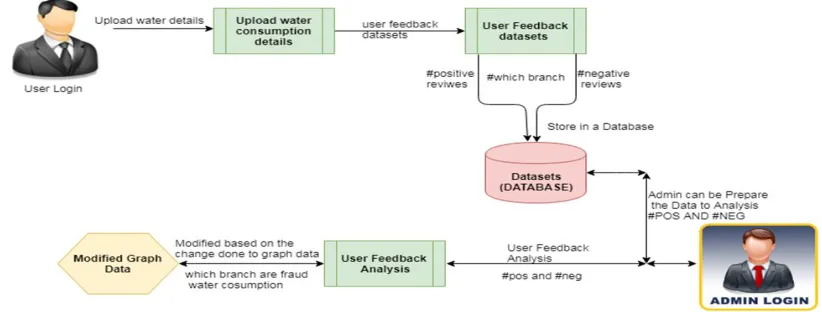
[image:3.612.106.517.541.697.2]The system architecture is shown below in Figure 1.
The customers those who are willing to get water through agencies are registered with system. Upload the water consumption details through this registration. On field executives checking the limit according to branch wise and collect the feedback from the customers through this process. Admin can prepare the data to analyse the positive and negative feedbacks. Based on their feedback Fraud details are set to block by the user and let them not provide any more water to them again. Admin can find the fraud customers where exactly problem arises. This will gives the clear picture about the current & past picture from the dataset.
E. Algorithm
In this work the experiments are performed on two important and well known classification algorithms K-Nearest Neighbor (KNN) &SVM are applied to the water customer’s dataset which is taken from the Executives. There accuracy is obtained by evaluating the datasets. Each algorithm has been run over the training dataset and their performance in terms of accuracy is evaluated along with the prediction done in the testing dataset. It is one of the world’s most popular and most used open source data mining solutions. It has a comfortable user interface, where in a process view analyses are configured. It uses a modular concept, where respective operators are used in the analysis process. These operators have input and output ports through which the operators can communicate with the other operators in order to receive input data or pass the data and generated models over to the following operator. In this way, the entire analysis process creates a data flow. K-Nearest Neighbor makes predictions based on the outcome of the K neighbors closest to that point. Therefore, to make predictions with KNN, we need to define a metric for measuring the distance between the query point and cases from the examples sample.
F. KNN Algorithm
IV.RESULTS
[image:5.612.56.556.99.441.2]The results of the system are shown below:
[image:5.612.139.523.472.704.2]Figure 2: User information page
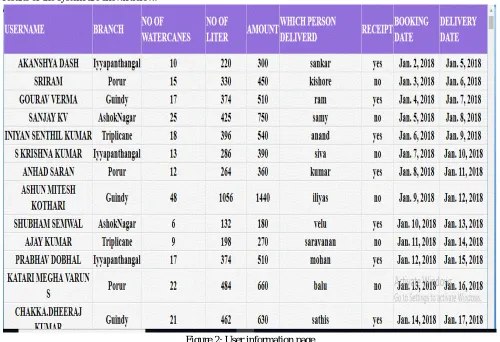
Figure 2 shows the user information page where user’s name, branch, no of water canes he used etc., is displayed.
Figure 3: User feedback page
[image:5.612.146.521.474.702.2]Figure 4: Positive Analysis Graph
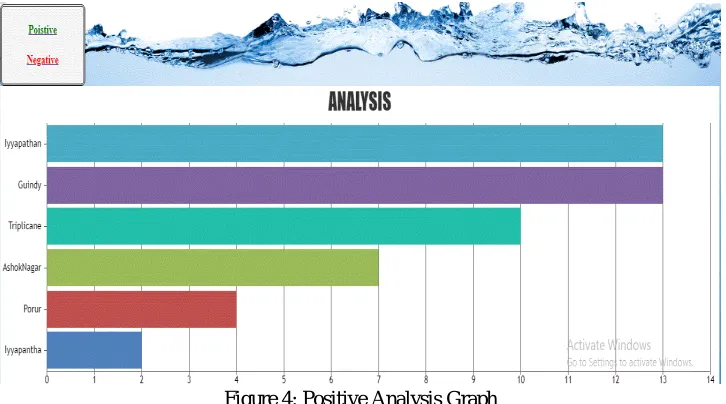
Figure 4 shows the positive analysis graph where it shows the analysis of positive feedbacks.
Figure 5: Negative Analysis Graph
Figure 5 shows the negative analysis graph where it shows the analysis of negative feedbacks.
V. CONCLUSION
In this research, we applied the data mining classification techniques for the purpose of detecting customers’ with fraud behaviour in water consumption. We used SVM and KNN classifiers to build classification models for detecting suspicious fraud customers. The models were built using the customers’ historical metered consumption data; the Cross Industry Standard Process for Data Mining (CRISP-DM). This phase took a considerable effort and time to pre-process and format the data to fit the SVM and KNN data mining classifiers.
VI.FUTUREWORK
REFERENCES
[1] AihuaShen, Rencheng Tong “Application of classification Models on credit card Fraud Detection”, 2007.
[2] Anastassios Tagaris “Implementation of Prescription Fraud Detection Software Using REDBMS Tools and ATC Coding”, 2009.
[3] N/A, “Jordan Water Sector Facts & Figures, Ministry of Water and irrigation of Jordan”. Technical Report. 2015.
[4] N/A, “Water Reallocation Policy, Ministry of Water and irrigation of Jordan”. Technical Report. 2016.
[5] C. Ramos, A. Souza , J. Papa and A. Falcao, “Fast non-technical losses identification through optimum-path forest”. In Proc. of the 15th Int. Conf. Intelligent
System Applications to Power Systems, 2009, pp.1-5.
[6] E. Kirkos, C. Spathis and Y. Manolopoulos, “Data mining techniques for the detection of fraudulent financial statements”, Expert Systems with Applications,
32(2007): 995–1003.
[7] Juan Ignacio, Carlos Leon “Real Application on Nontechnical losses detection”, The 2011 World Cogress in Computer Science, Computer Engineering, and
Applied Computing (WORLDCOMP 11), Volume: The 2011 International Conference on Data Mining.
[8] Ishmael S. Msiza, Fulufhelo V. Nelwamondo and Tshilidzi Marwala “Artificial Neural Networks and Support Vector Machines for Water Demand Time Series
Forecasting”, 2007.
[9] Jeyaranjani J and, Devaraj D “Machine Learning Algorithm for efficient power theft detection using smart meter data” International Journal of Engineering &
Technology, 7 (3.34) (2018) 900-904.
[10] “Monedero, Félix Biscarri, Juan I. Guerrero, Moisés Roldán, Carlos León “An Approach to Detection of Tamperingin Water Meters” Procedia Computer