The effects of affective responses to photographs on
behavioral intentions on charity websites
Facial expression and color scheme in images
Master Thesis
Author: Hanna Dinkelbach
Master of Science Communication Studies, Marketing
Department of Behavioral, Management and Social Sciences University of Twente, The Netherlands
Supervisors:
Dr. Mirjam Galetzka Dr. Anna Fenko
ABSTRACT
Charity organizations often display photographs of children on their websites along with an appeal to donate. It was aimed to detect which images are the best to increase the willingness of visitors to make online donations. This research focused on the emotional appeals by facial expressions and color schemes and their influence on behavioral intention. Thereby, this study investigated the mediating influence of affect and processing fluency as well as the moderation of involvement. An online questionnaire tested four image conditions (happy vs. sad facial expression in colored vs. grayscale) in a mock-up website of a fictitious charitable organization (n=169). The results showed that the facial expression in photographs led to more positive behavioral intentions of the participants than the sad facial condition. The effects were mediated by the affective response happy mood as well as processing fluency. Happy facial expressions resulted in stronger positive and negative affect than the sad
condition and led to a significantly higher processing fluency. Color scheme showed no main effects in the chosen setting. Therefore, no interaction effects between the independent
variables could be examined. Further, no moderation effect of involvement was found. On the basis of this study, it could be recommended to use a child with a happy facial expression on the website of a charity website for children in need to generate higher donations, extended interests in the organization, and increase the sharing intention. The outcomes on facial expression, affect, and processing fluency were discussed in relation to a fictitious case. The study contributed by challenging existing scientific research on emotional appeals by facial expression and enlarging the discussion of the congruency and processing of various design stimuli especially for the careful consideration of photographs.
Contents
1. Introduction ... 4
2. Theoretical background ... 6
2.1 Emotional appeals in images ... 6
2.1.1 Facial expression ... 7
2.1.2 Color scheme ... 8
2.1.3 Congruency effects and processing fluency ... 10
2.2 Affect and behavioral intention ... 12
2.3 Personal involvement ... 13
2.4 Conceptual research model ... 14
3. Methodology ... 15
3.1 Experimental design ... 15
3.2 Sampling: recruiting and demographics ... 16
3.3 Stimulus material: pretest and main study ... 16
3.4 Measurement scales... 17
3.4.1 Mediator: affect ... 18
3.4.1 Mediator: processing fluency ... 19
3.4.2 Dependent variable: behavioral intention ... 20
3.4.3 Moderator: involvement... 21
4. Results ... 21
4.1 Main effects ... 22
4.2 Mediation of affect ... 23
4.3 Mediation of processing fluency ... 25
4.4 Moderation of involvement ... 27
4.5 Insights by open questions ... 28
4.6 Hypothesis overview ... 29
5. Discussion ... 31
5.1 Future research ... 34
5.2 Conclusion ... 35
6. References ... 37
1. Introduction
The first seconds of perceiving a website determine the essential impression and attitude of the website visitor (Tuch, Presslaber, Stöcklin, Opwis, & Bargas-Avila, 2012). Especially for charity organizations, it is increasingly important to set the right appeals on their websites to generate online donations that they depend on to perform their work (Bendapudi, Singh, & Bendapudi, 1996; Pitts, Blose, & Mack, 2014). Nowadays, money donations can be performed online immediately and effortlessly (Fogg, 2009). Thereby, the design of the website is supposed to be essential to build a relationship because it provokes emotions and influences a person’s further behavior (Pitts et al., 2014; Tuch et al., 2012).
Often, the possibility to shape the first impression of a website visitor is underestimated (Tuch et al., 2012). The online environment provides challenges because persuasive atmospherics are limited to visual and auditory elements (Wu et al., 2008). These atmospheric stimuli that appeal to consumers’ emotions in an online environment are called webmospherics and intend to influence perception and decision making (Koo & Ju, 2010; Labrecque, Patrick, & Milne, 2013). Dailey (2004) defined webmospherics as the “conscious designing of web environments to create positive effects […] in users in order to increase favorable consumer responses” (p.796). The congruency effect of webmospherics can influence consumers’ decision making and effects people’s “emotional well-being, perceptions, attitudes, and behavior” (Wu et al., 2008, p.494). To conclude, a website designer can impact a consumer’s decision making process by choosing specific design stimuli (Wu, Cheng, & Yen, 2008).
emotional appeals and charitable organizations (Pitts et al., 2014). Research requires investigating the emotional perception of online stimuli to trigger a certain behavior (Burt & Strongman, 2005; Sargeant, 1999). For instance, Burt and Gibbons (2011) verified that the design of the donation button on a website regulates donation intention. Further, they remarked that photographs on charity websites have to be selected cautiously. Also Small and Verrochi (2009) asked to examine the impact of facial expressions in different contexts. Additionally, colors can influence and predict people’s behavior (Aslam, 2006). There is need for more research on color and its effects on behavior, especially for purchase intention and engagement in online advertisement (Elliot, Maier, Moller, Friedman, & Meinhardt, 2007; Labrecque et al., 2013).
What impact does the affective response to the positive vs. negative facial expression in colored vs. grayscale photographs have on individual’s behavioral intention on the website of a charitable organization?
2. Theoretical background
The following literature review provides an overview of research on the emotional appeal in images. Further, it investigates specifically the impact of facial expression and color schemes in photographs of charities on affect and the behavioral intention. Afterwards, studies that suggested affect as mediator are discussed as well as personal involvement and the processing fluency of the website as possible moderators. To conclude and visualize the theories, the developed hypotheses are presented in a conceptual research model.
2.1 Emotional appeals in images
Images of children expressing happy or sad emotions as well as different colors contain emotional appeals. The viewer experiences an effect of these triggers as an emotional response. It can determine the impression of an image and also of a website. Västfjäll, Slovic, Mayorga, and Peters (2014) defined this as a natural feeling about something being “good or bad” (p.2). Therefore, negative affect is defined as the experience of negative emotions and
positive of positive emotions (Bagozzi & Moore, 1994; Rolland & De Fruyt, 2003).
(Loewenstein & Lerner, 2003). Accordingly, charitable organizations often work with emotional appeals to drive helping behavior (Burt & Strongman, 2005; Pitts et al., 2014). Therefore, the efficiency of generating donations of a website increases with the degree of evoked affect, in fact, elements that evoke emotional reactions led to higher donations (Pitt et al., 2014).
The following section examines the emotional effects that are triggered by photographs; whether it is the facial expression that causes empathy or the colors that evoke feelings in the viewer.
2.1.1 Facial expression
In the context of charity, Burt and Strongman (2005) described the following paradox of the emotional reaction to negative and positive images:
A sad image of a child, through the vicarious experience of sadness, might suggest that the appropriate response would be to give; whereas an image of a happy child may not prompt such ready donating. Of course, this could be argued either way. Seeing a happy child on a charitable advertisement might well prompt greater potential donations as it allows the donor to see the results of donations. (p.572) Viewing facial expressions influences a person’s emotional state. The mentioned paradox raises the question to what extent the facial expression in a photograph influences a viewer’s affect. The study of Small and Verrochi (2009) on facial emotional expression in advertisements of charities stated that participants who perceived a sad facial expression felt sadder themselves. They explained that a person’s mood aligned with the perceived emotional state which resulted “in greater sympathy and prosocial behavior” (p.778).
(Burt & Strongman, 2005). A performed review of websites of charitable organizations which deal with child poverty, children rights, and humanity causes confirms this statement since these websites used images of children on their landing page to call for donations1. Children are particularly known for inducing compassion (Höijer, 2004). The study of Small and Verrochi (2009) gives a reason to assume that it does not matter which specific child is shown. Indeed, the facial expression itself has a high impact and pictures of children are supposed to evoke strong negative emotions (Burt & Strongman, 2005). The framing of a message influences the perception enormous and studies showed that negative framing is regarded as more influential and persuasive than positive framing (Chang & Lee, 2010; Pitts et al., 2014).
From the aforementioned studies, the displayed facial expression in a photograph is expected to impact affect. It can be suggested that sad images in a website induce negative emotional effects (Small & Verrochi, 2009). Displaying the picture of a child in a call for donations is expected to work as a frame, why sad facial expressions are expected to lead to a more positive behavioral intention. Based on the literature and to verify the study of Small and Verrochi (2009), it is hypothesized that:
H1a A sad facial expression leads to stronger negative affect than a happy facial expression. H1b: A sad facial expression leads to a more positive behavioral intention than a happy facial expression.
2.1.2 Color scheme
Another image element that is supposed to induce affect is the color scheme of a photograph because colors evoke associations, transfer meanings, and influence people’s mood (Kumarasamy, Devi Apayee, & Subramaniam, 2014). Many marketing studies state that the
colors of products influence the behavior of consumers with respect to their buying decisions (Aslam, 2006; Labrecque et al., 2013; Wu et al., 2008).
Color research separates chromatic colors and achromatic colors in their emotional effects2. According to the general model of color and psychological functioning by Elliot and Maier (2007), “color stimuli that carry a positive meaning produce approach responses, whereas those that carry a negative meaning, produce avoidance responses” (p.251). In general, achromatic colors lead to a more negative mood (Kumarasamy et al., 2014). For instance, dark colors, especially gray, are associated with negative emotions such as sadness and anger. On the contrary, light and chromatic colors are associated with strength and positive emotions such as happiness (Kaya & Epps, 2004).
A review of charity websites indicated a regular use of colored pictures and occasional grayscale photographs3. That raised the attention to investigate whether the color scheme, chromatic or achromatic, of a photograph, especially in an online environment, has a similar impact on emotions and behavioral intention as color triggers in the presented studies.
To sum up, colors have a psychological impact on emotions. Transferring the outcomes of described prior research regarding the affect of color schemes to an online setting, it is hypothesized that colored images have a higher impact on affect than grayscale images. Additionally, the positive approach (Elliot & Maier, 2007), in fact, a positive emotional reaction that results in a positive behavioral intention, is expected to be higher for colored images than grayscale images. Therefore, pictures that generate approach behavior
2 Color consists of the three dimensions hue, value, and chroma. Hue describes the pigment, value the lightness
and chroma the saturation of a color. Therefore, the three achromatic colors are white, black and gray which contain no hue or chroma (Kaya & Epps, 2004; Labrecque et al., 2013; Wu et al., 2008).
(colored ones) are supposed to increase behavioral intention positively. It is hypothesized that:
H2a: Colored images generate a more positive affect than grayscale images.
H2b: Colored images lead to a more positive approach behavior (i.e. behavioral intention) than grayscale images.
2.1.3 Congruency effects and processing fluency
A congruency effect describes the match of two stimuli in its outcome, for example of an image or a website (Rompay, de Vries, & van Veenrooij, 2010). The congruency of information determines the perception and response of the viewer depending on the strength of the match of the stimuli. Congruent elements enhance processing fluency which is the ease of perception and information processing (Reber, Schwarz, & Winkielman, 2004; Rompay et al., 2010). This imagery processing is determined by many different indicators. The vividness, clarity, quantity, ease and also the links in messages as in advertisements determine the fluency of processing (Ellen & Bone, 1991). Besides visual elements, the congruence of the meaning of different stimuli influences attitude formation positively (Rompay, de Vries, & Pruyn, 2009).
There is no research found on the interaction effect of facial expressions and color schemes on the affect of the perceiver and resulting behavioral intention. Nevertheless, the strength and motivational effect of the emotional response to a cue may depend on the situational context (Bradley, Codispoti, Cuthbert, & Lang, 2001, p.281).
Regarding aforementioned studies in the previous chapters, both facial expression and color schemes are supposed to impact a person’s emotions and behavioral intention.
it is suggested that the atmospheric cues of an image should be congruent to have a stronger effect. Sad facial expressions and grayscale images are supposed to generate negative emotions, whereas happy facial expressions and colors are expected to increase positive affect. Thus, regarding the interaction of the two independent variables, it is hypothesized that:
H3: Images with congruent emotional affect (i.e., sad facial expression/grayscale, happy facial expression/colored) lead to more positive behavioral intentions than pictures with incongruent emotional effects.
Further, the design elements of a website including the choice of images, colors as well as picture-text congruence should be in alignment with each other to lead to a more positive reaction of website visitors, as staying longer and approach behavior (Reber et al., 2004; Rompay et al., 2010). As an example, the framing of a message determines its effectiveness. The congruency of sad or happy pictures embedded in a sad or happy story is more effective (Chang & Lee, 2010).
2.2 Affect and behavioral intention
Intentions for helping behavior have a wide range from positive to negative emotions. Previous studies indicate different emotions as motivators for behavior, for instance, sympathy, pleasure, hope as well as fear, guilt, and pity (Bagozzi & Moore, 1994; Brennan & Binney, 2010; Fogg, 2009; Koo & Ju, 2010; Merchant, Ford, & Sargeant, 2010). Appeals to donate that evoke sadness, anger, fear, and guilt, enhance the empathy and increase someone’s intention to help (Merchant et al., 2010). Especially images that create guilt and
pity but also sympathy are the most effective to gain money donations (Eayrs & Ellis, 1990). These empathetic emotional reactions are often used for charitable advertisement to get donations (Merchant et al., 2010).
Many studies state that especially negative emotions generate donations (e.g. Brennan & Binney, 2010). In fact, negative framing is expected to have a stronger influence than a positive frame (Pitts et al., 2014). Negative mood increases the likability to donate (Burt & Strongman, 2005) and predicts the amount of received money (Burt & Strongman, 2005; Dickert et al., 2011). Additionally, it is investigated that negative emotions which are evoked by a sad facial expression lead to higher donations (Small & Verrochi, 2009).
Nevertheless, on the basis of the investigated studies, it is expected that affect will have an impact on the relationship of the image and behavioral intention in the setting of a website. It is hypothesized that negative emotions will have a stronger impact on the behavioral intention than positive emotions. It is hypothesized that:
H5: Affect mediates the effect of facial expression and color scheme on behavioral intention whereby negative affect influences behavioral intentions more positively than positive affect. 2.3 Personal involvement
One fundamental motivation that determines and drives people’s behavior is the personal involvement with the charity (Bae & Kang, 2008; Bennett, 2009). Personal involvement determines how much someone becomes persuaded by a stimulus because of its relevance for the own life (Bae & Kang, 2008). In case of this study, involvement is defined as the general attitude towards child poverty and the personal interest in charitable giving.
It is assumed that the influence of the image triggers and emotional appeals on donation intention depend on the strength of a person’s personal involvement because strong involvement with charity giving intensifies the perception of a website and its story (Martin, 1998). For instance, a study on the influence of entertaining videos on the intentions to sign a cornea donor card shows that emotional involvement towards the case increases sympathy and donation willingness (Bae & Kang, 2008).
Based on these approaches, it can be assumed that the general personal involvement moderates the strength of images on donation decision and that a person with a low interest in charity and donating are less easily persuaded than a person who is generally willing to help and personally affected. Therefore, it is hypothesized for involvement with child poverty and with charities in general that:
the choice of images (i.e. facial expression and color scheme) than for people with low involvement.
2.4 Conceptual research model
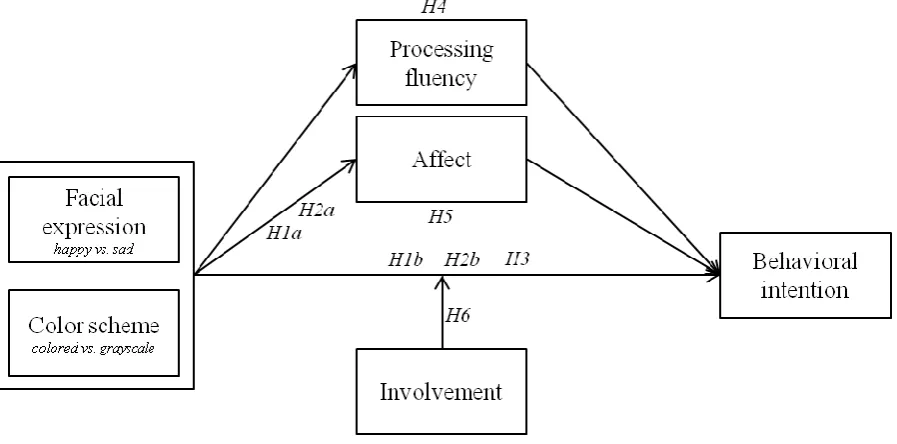
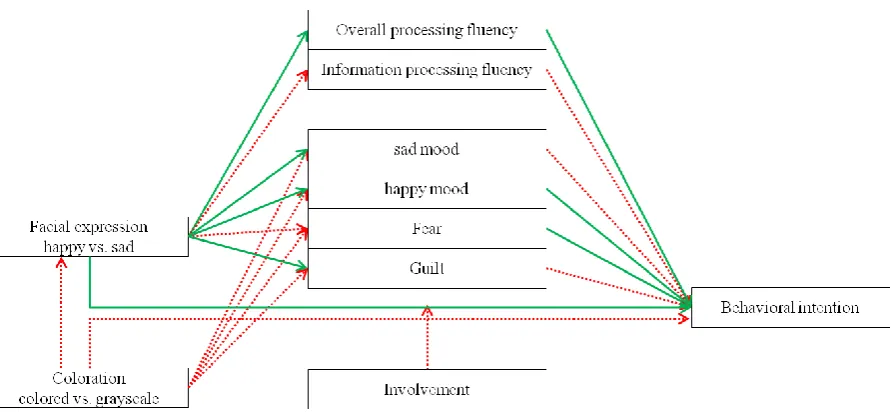
The conceptual research model (Figure 1) provides a concept to investigate the influence of emotions that are caused by the independent variables emotional content (positive vs. negative facial expressions) and color scheme (colored vs. grayscale) on the dependent variable behavioral intention. The impact is supposed to be mediated by affect and processing fluency and moderated by personal involvement.
[image:14.595.77.526.487.709.2]The model is based on the one of Sargeant (1999) for charitable giving. It stated that the input (e.g. images) led to a perceptual reaction (affect) and determined the outcome as for instance, the size of gifts (donations), which was moderated by the personal ability and likability (e.g. involvement). Another approach to donor’s decision making by Bendapudi et al. (1996) visualized the three steps perception, motivation, and behavior that were considered in the development of the following research model.
3. Methodology
3.1 Experimental design
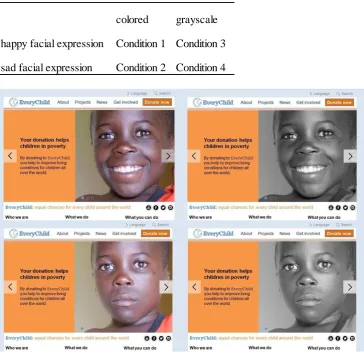
The study employs a two (image: happy vs. sad facial expression) x two (color stimuli: colored vs. grayscale) between-subject design, moderated by involvement. Participants were randomly assigned to one of the four conditions happy facial expression/colored, happy facial expression/grayscale, sad facial expression/colored, sad facial expression/grayscale (Table 1, Figure 2).
[image:15.595.75.440.327.679.2]Table 1
Figure 2. Overview experimental conditions.
Overview Conditions
3.2 Sampling: recruiting and demographics
The experiment was conducted via an online questionnaire designed with the software Qualtrics. The questionnaire was accessible from 23 July until 24 August 2017 through a link that was sent to respondents using the snowball sampling. Thereby, participants were recruited via E-Mail, social media platforms (Facebook, Xing, and LinkedIn), the SONA system of the University of Twente and the messenger app WhatsApp. The random sample was chosen due to the feasibility of the study and to reach a broad spectrum of people.
The study aimed to reach at least 160 people to guarantee a valid sample. In total, 169 people completed the questionnaire. The participants were equally divided among the four conditions regarding their age (F(3, 165)=1.73, p=.162) and gender (X2=4.03, p=.673).
In total, around 60% were women and 40% men. The average age was 27.3 years (range 16 to 66 years, SD=9.5). The participants were from Germany (54%), The Netherlands (17%), and from 29 other countries (29%). A detailed overview over all demographics can be found in Appendix D.
3.3 Stimulus material: pretest and main study
between showing a boy or a girl or by their cultural origin. Comparing associations with children of different cultural backgrounds was not an objective of this study.
First, participants had to select the child who showed the widest range between sad and happy facial expression for them. Additionally, they had to explain why they chose this child. Second, they were given the scenario that the picked child lived in poverty and they could help by donating a school bag. Participants had to explain to which of the children with which facial expression they would donate and why.
The pretest indicated that the chosen image (Appendix B) had the strongest affect on participants. Participants described the smiling facial expression of the boy as happy, natural, open, with smiling and twinkling eyes and as the most positive. The sad version of the same boy was described as shocked, sad, and with tears in the eyes.
In the main study, the pictures of the pretest were embedded in a website. The scenario design showed the landing page of the fictitious charity EveryChild. The screenshot of the landing page was designed with Microsoft PowerPoint in conformity with existing charity websites. Thereby, the factors represented actual donation website design appeals4. The four experimental conditions can be found in Appendix C.
The two pictures were modified in a way that the face had an equal size. Further, the close-up eliminated information of the background that indicated context as specific living conditions. By reducing additional associations the focus was on the facial expression. Additionally, both pictures were converted to grayscale for the color condition.
3.4 Measurement scales
The questionnaire started with a description of the charity EveryChild and subsequently showed the screenshot for 30 seconds. Several scales were used to measure the moderating
and mediating effects of the relation between the stimulus material and the participant’s behavioral intention.
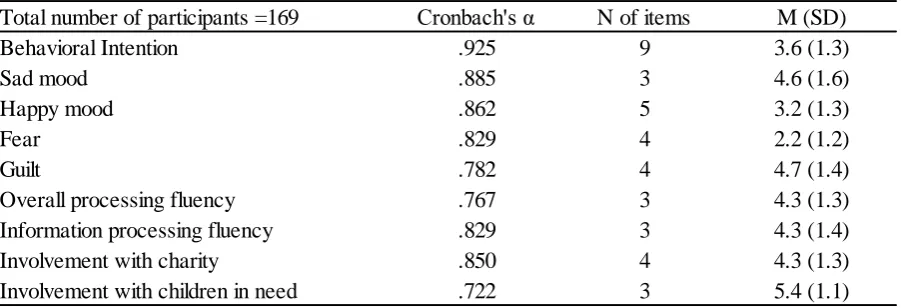
[image:18.595.76.527.327.481.2]In the following part, the measurement scales, their origin and the reliability of the constructs are presented. A factor analysis and the reliability measurement Cronbach’s alpha indicated that the intended constructs of the questionnaire measured nine reliable factors (values above 0.7), which were used for the further analysis (Table 2). The entire questionnaire can be found in Appendix E.
Table 2
3.4.1 Mediator: affect
Affect was supposed to be examined with one large emotional measurement scale. Respondents had to rate the strength of their affective response towards the photograph in a 7-point response format ranging from not at all to very much. They rated their feelings in 18 emotions as for instance depressed, miserable, hopeful, ashamed, and embarrassed. The specific emotions were chosen from existing emotional measurement scales by Cotte, Coulter, and Moore (2005), Holbrook and Batra (1987), Richins (1997), and Rolland and Fruyt (2003). In accordance with the outcomes of the interviews from the pretest the constructs guilt, fear, shame, negative mood, contentment, and joy were chosen. The emotions were randomized by Qualtrics to prevent the possible bias from the order that the
Overview constructs and reliability
Total number of participants =169 Cronbach's α N of items M (SD)
Behavioral Intention .925 9 3.6 (1.3)
Sad mood .885 3 4.6 (1.6)
Happy mood .862 5 3.2 (1.3)
Fear .829 4 2.2 (1.2)
Guilt .782 4 4.7 (1.4)
Overall processing fluency .767 3 4.3 (1.3)
Information processing fluency .829 3 4.3 (1.4)
Involvement with charity .850 4 4.3 (1.3)
Involvement with children in need .722 3 5.4 (1.1)
items were presented in. A factor analysis grouped the emotional statements in the four reliable factors sad mood (α=.89), happy mood (α=.86), fear (α=.83), and guilt (α=.78) to explain affect.
3.4.1 Mediator: processing fluency
To eliminate the possible bias of external design triggers of the website, additional scales were added to the questionnaire to check the processing fluency of the website. After receiving the screenshot, respondents were asked about their overall processing fluency of the website in general by four items (pleasant, like, fun, left me with a good feeling) in a 7-point response format from not at all to very much. This construct combined perception scales (Ellen & Bone, 1991; Bruner II et al., 2005) and was proven to be reliable with α=.767.
Later, the respondents received the same screenshot from the beginning with questions about their first impression of the whole website. These statements measured the
processing fluency of the displayed information and design on how the website was
processed, based on the scale of Ellen and Bone (1991). It was used to find out if there were additional factors in the website that mediated the effect of the image triggers on behavioral intention. The first construct was used to ask respondents about their agreement with the three items regarding forming an opinion about EveryChild on a 7-point scale, for instance, “I found it difficult to form an opinion about EveryChild”. The processing fluency construct had a high reliability (α=.829).
3.4.2 Dependent variable: behavioral intention
Subsequently, the dependent variable behavioral intention was investigated by several constructs. A factor analysis showed that the nine items of the constructs future donation
intention, sharing intention, and extended interest loaded in one construct (behavioral
intention), that was highly reliable (α=.93). A fourth question was used to assess the amount of money that participants would donate.
First of all, participants assessed their future donation intention to EveryChild by indicating how much they agreed with three items on a 7-point scale, for instance, “I am likely to donate to EveryChild in the near future”. The items were modified in accordance with measurement scales of purchase intention (Bruner II, Hensel, & James, 2005). Further, the validated scales of Bae and Kang (2008) for online donations, and donation intention by Merchant et al. (2010) and Ranganathan and Henley (2008) served as formulation basis.
Secondly, a construct measured the sharing intention with friends and within social media with three items on a 7-point scale, with phrases as “I would give this website a like on Social Media” and “I would tell my friends about this website.” A third construct measured
the extended interest of the person in the charitable organization EveryChild with three items
on a 7-point scale, as for instance, “I would like to get more information about EveryChild.” These two constructs were not prior validated but very similar to marketing scales regarding behavioral and purchase intentions (Bruner II et al., 2005).
A fourth question asked the respondents to estimate how much money they would be likely to spend to EveryChild as a one-time donation. This question aimed for an impression about how much money people would actually spend in the fictitious situation already having made the donation decision. Thereby, the bias of financial ability should be reduced.
300€, or more) which were in alignment with the proposed amount of money for a one-time donation in existing charitable websites.5
3.4.3 Moderator: involvement
Involvement was measured with the two constructs charity involvement and involvement with
child poverty, and two questions on actual giving behavior. First of all, a construct of five
statements investigated the personal involvement with charitable giving on a 7-point Likert scale, for instance, “In general, donating to a charitable organization means a lot to me. The five items were modified in relation with Bennett’s (2009) scale for personal involvement with charity giving and scales to measure someone’s attitude towards charitable organizations (Bruner II et al., 2005). The construct was highly reliable (α=.85).
Subsequently, a person’s attitude towards child poverty measured the involvement with the chosen case and general helping behavior on a 7-point Likert scale. The four items were modified in relation with a scale about the attitude towards helping others (Bruner II et al., 2005) and asked for instance, “Helping children in need is important to me”. Involvement with children in need was also reliable with α=.72.
The involvement questions were followed up by two open questions to give comments to enhance the website and donation reasons.
4. Results
The following chapter presents the results of the determined constructs. First, the main effects of facial expression and color scheme on behavioral intention were investigated. Secondly, the mediation effects of affect and processing fluency were analyzed. Thirdly, the moderating
effects of involvement were tested. Finally, the results of the open questions were presented. The collected data were analyzed using the IBM SPSS statistics program. An overview of all significant main and interaction effects can be found in Figure 5 and Table 3.
4.1 Main effects
A multivariate analysis of variance (ANOVA) was used to test if facial expression and the color scheme of the image had an effect on the dependent variable behavioral intention. The test showed that there was a significant main effect of the condition facial expression on behavioral intention, F(1,165)=9.09, p=.003. Color scheme showed no significant effect, F(1,165)=.00, p=.986. Facial expression and color scheme also had no interaction effect on behavioral intention (F(1,165)=.46, p=.500). An additional ANOVA showed that facial expression had a significant main effect on all three dependent constructs donation intention (F(1,165)=4.90, p=.028), sharing intention (F(1,165)=9.07, p=.003), and extended interest (F(1,165)=7.50, p=.007). Subsequently, the relationship of both independent variables on the dependent variable donation amount was investigated and showed no effect.
The comparison of the difference in the means with an independent sample t-test of the facial expression condition on donation intention showed a significant difference (p=.003). The happy facial expression led to higher donation intention (M=3.9, SD=1.2) than the sad facial expression (M=3.3, SD=1.4). To conclude, the difference between the conditions means are likely due to the manipulation.
4.2 Mediation of affect
In the next step, the mediation of affect is analyzed. Therefore, the four factors happy mood, sad mood, fear, and guilt that were determined by the factor analysis were considered separately.
An ANOVA showed that facial expression had a main effect on happy mood (F(1,165)=85.34, p<.000), sad mood (F(1,165)=39.77, p=.000) and guilt (F(1,165)=5.94, p=.020). However, there was no main effect found on fear. Additionally, color scheme had no main and no interaction effects. Consequently, it was not considered in the further analysis. Additional ANOVA’s detected the impact of affect on the dependent variable behavioral intention. Happy mood (F(1,167)=26.92, p<.000) and fear (F(1,167)=24.59, p<.000) showed both significant main effect on behavioral intention, whereas sad mood and guilt had no effects.
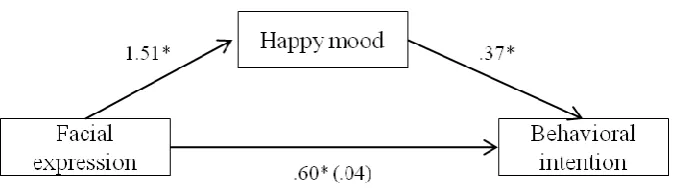
The mediation was analyzed by using the PROCESS function in SPSS, developed by Andrew F. Hayes. The direct effect of facial expression on behavioral intention, ignoring the moderator, was significant (β=0.60, t(167)=3.04, p=.003) and the regression of facial expression on happy mood was also significant (β=1.51, t(167)=9.28, p=<.000). The next step showed that the factor happy mood, controlling the facial expression on behavioral intention, was significant as well (β=0.37, t(166)=4.09, p=<.000). As the last step, controlling for the mediator happy mood, facial expression was not a significant predictor of behavioral intention (β=0.04, t(166)=.19, p=.847). A Sobel test was conducted and found full mediation in the model (z=3.72, p=<.000). To conclude, there was a significant indirect effect of facial expression on behavioral intention through happy mood (Figure 3).
p=<.000). Therefore, the construct sad mood had no mediating effect. This result was the same for the construct of guilt.
Figure 3. The regression coefficients for the relationship between facial expression and
behavioral intention are mediated by happy mood. The coefficient between facial expression and behavioral intention, controlling for happy mood, is in parentheses. *p<.05.
An independent sample t-test indicated that the comparison of the means showed a statistically significant difference for the happy and sad facial expression between the means of sad mood (p<.000), happy mood (p<.000), and guilt (p=.015). Since the mean for sad mood (M=5.3, SD=1.5 versus M=3.91, SD=1.3), happy mood (M=4.0, SD=1.1 versus M=2.5, SD=1.0), and guilt (M=5.0, SD=1.4 versus M=4.4., SD=1.3) was greater than for the happy facial condition than for the sad facial condition, it can be concluded that the participants in the happy facial conditions are experiencing those emotions stronger than participants from the sad facial condition. The test showed no significant difference for fear (p=.065).
[image:24.595.110.449.169.263.2]found to fully mediate the relation of facial expression and behavioral intention, as the only construct of affect.
4.3 Mediation of processing fluency
Processing fluency was investigated with two constructs. An ANOVA showed that facial expression and color scheme had no main effects on the first construct of information processing fluency, which is why this scale was left out for the further mediation analysis. Nevertheless, facial expression showed a main effect on the construct overall processing fluency of the website (F(1,168)=25.30, p<.000). Further, the construct showed also a main effect on behavioral intention (F(1,168)=29.34, p<.000)
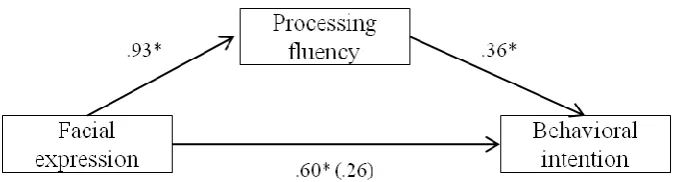
The mediation analysis with PROCESS showed that the regression of facial expression on overall processing fluency was significant (β=0.93, t(167)=5.06, p=<.000). In a next step, the factor overall processing fluency, controlling the facial expression on behavioral intention, was significant as well (β=0.36, t(166)=4.57, p=<.000). Finally, controlling for the mediator overall processing fluency, facial expression was not a significant predictor of behavioral intention (β=0.26, t(166)=1.32, p=.187). A Sobel test found full mediation in the model (z=3.36, p=<.000). It can be concluded, that there was a significant indirect effect of facial expression on behavioral intention through overall processing fluency (Figure 4).
Figure 4. The regression coefficients for the relationship between facial expression and
[image:25.595.109.449.590.681.2]An independent sample t-test showed significant differences in the means of overall processing fluency for the two facial expression conditions (p<.000). The overall processing fluency is significantly higher for participants who received the happy facial condition (M=4.7, SD=1.1 versus M=3.8, SD=1.2).
[image:26.595.79.526.335.541.2]To summarize, the ANOVA indicated a main effect of facial expression on overall processing fluency and further on behavioral intention. A mediation analysis indicated a mediation effect of overall processing fluency. Further, it can be stated that the happy facial expression leads to a significantly higher processing fluency.
Table 3
4.4 Moderation of involvement
To test the moderation effect of involvement on behavioral intention a hierarchical multiple regression analysis was conducted with both levels of involvement. First of all, to examine a possible moderation effect of involvement with charitable organizations, the variable was transferred into a dichotomous variable by a median split into high and low involvement. Further, an interaction term of facial expression and the moderating variable was added in a
Independent variable/mediator dependent variable/mediator F p
Facial expression 9.09 .003
Color scheme Behavioral intention .00 .986
Facial expression*color scheme .46 .500
Facial expression 1.19 .276
Color scheme Donation amount .41 .524
Facial expression*color scheme .03 .870
Facial expression 85.34 .000
Color scheme happy mood .03 .860
Facial expression*color scheme .93 .336
Facial expression 39.77 .000
Color scheme sad mood 1.87 .174
Facial expression*color scheme .74 .392
Facial expression 5.94 .020
Color scheme guilt .63 .429
Facial expression*color scheme .11 .739
Facial expression 3.37 .068
Color scheme fear .05 .825
Facial expression*color scheme .02 .884
Facial expression 25.30 .000
Color scheme overall processing fluency .15 .704
Facial expression*color scheme 1.31 .255
Facial expression .01 .908
Color scheme information processing fluency .39 .535
Facial expression*color scheme 1.41 .237
happy mood 26.92 .000
sad mood .75 .388
guilt 3,54 .062
fear 24.59 .000
Note. Numbers in bold are significat (p<.05).
multiple regression model. The output showed no significant effect including the interaction term facial expression and charity involvement (∆R2=.002, p=.568). The same process was used to search for a moderation effect of involvement with child poverty. This construct showed no significant effect as well (∆R2=.008, p=.210). In conclusion, the results suggested that charity involvement and involvement with child poverty did not moderate the relation of facial expression and behavioral intention.
In a second step, this test aimed to investigate a potential moderating effect on the relation of facial expression and affect. This relation was not considered so far in the research model but was investigated to check if there are any unexpected effects. A multiple regression analysis was run with affect as the dependent variable. However, charity involvement (∆R2=.003, p=.394) and involvement with child poverty (∆R2=.000, p=.803) had no influence on the effect of facial expression on affect.
Thirdly, a moderating analysis was tested for the groups of students and non-students to check if there were additional influences. The groups were equally distributed among gender (X2=2.42, p=.299) and age (F(1,167)=72.7, p<.000). The moderation analysis showed no moderating effects (∆R2=.008, p=.242).
4.5 Insights by open questions
Finally, the questionnaire included three open questions that were supposed to give additional indications about the donation intentions and feedback on the screenshot and experimental material.
reasons for why or why not displaying a child, showing specific projects, or using other colors. Several people stated that they were happy and perceived it as “refreshing” to see a smiling face and that they have enough of seeing suffering children in charity advertisements. The happy face was perceived as a message that your donations will change something. Further, sad faces were associated with “untrustworthy organizations”. Using children for charity advertisement, in general, was reviewed as “conventional”.
In the second question, about 60% of the participants gave reasons why they would or would not donate to EveryChild. The answers were categorized into “missing information”, “financial ability”, “trust about money”, “website quality”, “alternatives”, “good cause”, and “no interest in charity”. The main reasons that people would deny donations to EveryChild were missing information (17%) about the charitable organizations and the whole context of the call to donate. Further, the financial ability (9%) and the lack of trust (8%) regarding what actually happens with their money would withhold them from donating. The positive comments as to why people would be willing to donate included the intention to help, supporting charitable organizations, and doing something for a good cause.
Around 10% of the participants left final comments, questions, or concerns. The 17 answers covered, for instance, the concerns about the quality of the website and the lack of extra information about the organization as well.
4.6 Hypothesis overview
regarding the effect of color and hypothesis 3 about the interaction effect of facial expression and color were not confirmed as well.
Processing fluency was found to mediate the relation of facial expression on donation intention. Thereby, the happy facial expression leads to a significantly higher processing fluency. Hypothesis 4 was confirmed.
The affective response to facial expression in images on individual’s behavioral intention showed a mediating effect for happy mood. Perceiving a happy facial expression on an image influenced the affect of an observer and increased the behavioral intention. The factor analysis loaded the emotions in four constructs that were supposed to measure affect. The results showed, that the three constructs sad mood, fear, and guilt did not mediate the effect of facial expression on behavioral intention. Consequently, hypothesis 5 was rejected. Moreover, the study detected no moderation effects of involvement, so hypothesis 6 was not confirmed.
Table 4
Hypothesis Result
H1a A sad facial expression leads to stronger negative affect than a happy facial expression. rejected H1b A sad facial expression leads to a more positive behavior intention than a happy facial expression. rejected H2a Colored images generate a more positive affect than grayscale images. rejected H2b Colored images lead to a more positive approach behavior (i.e. behavioral intention) than grayscale
images.
rejected H3 Images with congruent emotional affect (i.e., sad facial expression/grayscale, happy facial
expression/colored) lead to more positive behavioral intentions than pictures with incongruent emotional effects.
rejected
H4 Processing fluency mediates the effect of facial expression and color scheme on behavioral intention whereby high processing fluency influences behavioral intentions more positively than low processing fluency.
confirmed
H5 Affect mediates the effect of facial expression and color scheme on behavioral intention whereby negative affect influences behavioral intentions more positively than positive affect.
partly confirmed H6 Involvement moderates the effect of image stimulus on behavioral intention. The behavioral intention
of people with high involvement is more likely to increase positively by the choice of images (i.e. facial expression and color scheme) than for people with low involvement.
rejected
5. Discussion
The objective of the study was to investigate how emotional appeals in images can be used to influence the behavioral intention of website visitors of a charitable organization. This chapter discusses the outcomes, the resulting limitations and points out implications and approaches for future research.
The study provided evidence that facial expressions were influencing the behavioral intention of visitors to charity websites. Surprisingly, the happy facial condition increased behavioral intention more than the sad facial condition (rejected H1a). Notably, it was found that happy mood mediated the effect of facial expression on donation intention (rejected H5). Interestingly, these findings challenge the outcomes of previous research. Burt and Strongman (2005) stated that pictures which evoke negative emotions appeared to produce more and greater potential donations than those that evoke positive emotions. Moreover, also Small and Verrochi (2009) investigated that a sad face was supposed to generate higher prosocial behavior and increase behavioral intention. Also, the results of Chang and Lee (2010) showed that negative framing of charitable information is more influential.
Besides facial expression, the research drew attention to the color scheme of the presented photograph which showed unexpectedly no effects in the study (H2a,b). The face of the boy had a very dominant position in the mock-up website. For this reason, the experimental condition color scheme might not have added value to the scenario. In conformity with the statement of Bradley et al. (2001) it can be assumed that the strength of an effect of color relates to the situational context as well and the congruency of expression and context (Chang & Lee, 2010; Small & Verrochi, 2009). Hence, even if people associated strong emotions or associations with colors in general (Kaya & Epps, 2004), that may not have resulted in the same effects as the color scheme of a photograph. For instance, the color of images in advertisements did not play a role in gaining visual attention compared to black-white images in the study of Kim (2010). As a result, it might have had less impact on behavioral intention in this study as well. Additionally, the colors and quality of the embedded website could have distracted the focus from the color scheme of the picture, as participants commented on the orange color of the website, which might have even influenced the behavioral intention (Elliot et al., 2007). To investigate the bias of additional influences by the quality and specific design of the screenshot, the processing fluency of the website was expected to mediate the effects. In fact, the results showed that the happy condition was perceived as easier to process (H4).
which lowered their experience. To conclude, the design of the mock-up may has limited the outcomes as the examination of the website design was limited to some example websites.
A further point to discuss is the contextual information of the website. Several participants indicated a distance to the shown case and remarked the lack of information about the organization, an actual case of the depicted child, concrete projects, and how their money would be spent. On the one hand, the use of a fictitious organization controlled biases as trust, previous experience, commitment, and relationships. On the other hand, these aspects do play a big role in a behavioral decision when donating money, as providing information is essential and supposed to build trust to increase behavioral intention (Burt & Gibbons, 2011; Pitts et al., 2014). It can be assumed, that due to the fictitious case, the lack of additional information and the distance to the case the perceived emotions were lowered, and therefore the negative emotions showed no mediation effect (H5).
Besides eliminating any background information in the pictures, the displayed child might have been a limitation. Some participants’ commented angrily about charity advertisement using stereotyped pictures of poor and suffering children which might have led to avoidance behavior. These comments relate highly to the broader discourse on displaying stereotyped children or scenes in a charitable advertisement (Höijer, 2004).
already desensitized to charity advertisement pictures (Höijer, 2004). Another aspect is the limitation of alternative options to money to donate, for instance, blood donations, as the participants pointed out their lack of financial resources.
Moreover, personal involvement was predicted to have an influence on the effect of image stimuli on behavioral intention because people who feel more involved with a cause and charitable giving, in general, might be more suggestible by image triggers. Nevertheless, no investigated form of involvement showed any moderating effect (H5). This might result from the missing context and the fictitious case. People have no recognition of the organization or child and they do not build their evaluation on experience and trust.
5.1 Future research
The discussion raises questions about new approaches that have to be tested in future research because this study challenges outcomes of previous research. First of all, the current study has theoretical implications in the research of images in charity advertising and adds value by assessing facial expressions specifically on a website. The findings of this study have a huge theoretical implication by questioning the studies that expect negative stimuli to increase behavioral intention, as Small and Verrochi (2009), Burt and Strongman (2005), and Chang and Lee (2010). The study supported theories that state that people avoid situations with negative emotional appeals (Cameron & Payne, 2011, Höijer, 2004; Västfjäll et al., 2014). This aspect should be investigated in more depth in further research as the desensitization seems to be an increasing societal phenomenon.
study with an existing organization and actual donations might result in more reliable outcomes than investigating intentional behavior (Burt & Strongman, 2005).
Also, the influence of facial expression and color scheme of a photograph should be the best to investigate with an example of an existing organization. Including more content or a more professional design with other conditions in color and text might have resulted in different insight. Furthermore, color schemes of photographs still require in-depth research as there is a lack of research on the emotional effect of colors of images (Elliot et al., 2007). Another approach to specifically investigate the color condition and its emotional effect on affect in the future besides a case study is to investigate pictures separately from a context. Additionally to color schemes, it will be interesting to have a stronger research focus on the congruency of specific website design elements as for instance the placement and size of a picture and the text (Reber et al., 2004; Rompay et al., 2010).
Further aspects to assess in future research are personal aspects of involvement and having children and their strength on the relation of facial expression on behavioral intentions by targeting the research more specifically. Additionally, the different opinions of participants about perceiving emotional messages with children in charity advertisement open extended research questions on the general debate about showing children in charity advertisement and emotional charity appeals. Thereby, the research always has to be balanced with ethics.
5.2 Conclusion
expression on the website of a charity website generating donations for children in need. Thereby, it does not matter if the shown image is presented in colors or grayscale.
6. References
Aslam, M. M. (2006). Are you selling the right colour? A cross‐cultural review of colour as a marketing cue. Journal of marketing communications, 12(1), 15-30.
Bae, H. S., & Kang, S. (2008). The Influence of viewing an entertainment–education program on cornea donation intention: a test of the theory of planned behavior. Health
Communication, 23(1), 87-95.
Bendapudi, N., Singh, S., & Bendapudi, V. (1996). Enhancing helping behavior: An integrative framework for promotion planning. Journal of Marketing, 60, 33-49.
Bennett, R. (2009). Impulsive donation decisions during online browsing of charity websites.
Journal of Consumer Behaviour, 8(2‐3), 116-134.
Bradley, M. M., Codispoti, M., Cuthbert, B. N., & Lang, P. J. (2001). Emotion and motivation I: defensive and appetitive reactions in picture processing. Emotion, 1(3), 276.
Brennan, L., & Binney, W. (2010). Fear, guilt, and shame appeals in social marketing.
Journal of business Research, 63(2), 140-146.
Bruner II, G.C., Hensel, P. J., James, K.E. (2005). Marketing Scales Handbook Volume IV: A
compilation of multi-item measures for consumer behavior & advertising. Thompson
South Western.
Burt, C. D., & Gibbons, S. (2011). The effects of donation button design on aid agency transactional trust. International Journal of Nonprofit and Voluntary Sector
Marketing, 16(2), 183-194.
Cameron, C. D., & Payne, B. K. (2011). Escaping affect: how motivated emotion regulation creates insensitivity to mass suffering. Journal of personality and social psychology, 100(1), 1.
Cotte, J., Coulter R.A., Moore M. (2005). Enhancing or disrupting guilt: The role of ad credibility and perceived manipulative intent. Journal of Business Research, 58, 361-368.
Dailey, L. (2004). Navigational web atmospherics: Explaining the influence of restrictive navigation cues. Journal of Business Research, 57(7), 795-803.
Dickert, S., Sagara, N., & Slovic, P. (2011). Affective motivations to help others: A two‐stage model of donation decisions. Journal of Behavioral Decision Making, 24(4), 361-376.
Eayrs, C. B., & Ellis, N. (1990). Charity advertising: for or against people with a mental handicap?. British Journal of Social Psychology, 29(4), 349-366.
Ellen, P. S., & Bone, P. F. (1991). Measuring communication-evoked imagery processing.
Advances in Consumer Research, 18, 806-812.
Elliot, A. J., & Maier, M. A. (2007). Color and psychological functioning. Current directions
in psychological science, 16(5), 250-254.
Elliot, A. J., Maier, M. A., Moller, A. C., Friedman, R., & Meinhardt, J. (2007). Color and psychological functioning: the effect of red on performance attainment. Journal of
experimental psychology: General, 136(1), 154.
Fogg, B. J. (2009). A behavior model for persuasive design. In Proceedings of the 4th
international Conference on Persuasive Technology, ACM.
Holbrook, M. B., & Batra, R. (1987). Assessing the role of emotions as mediators of consumer responses to advertising. Journal of consumer research, 14(3), 404-420. Kaya, N.; Epps, H. (2004). Relationship between color and emotion: A study of college
students. College Student Journal, 38(3), 396-405.
Kim, D. Y. (2010). The interactive effects of colors on visual attention and working memory: In case of images of tourist attractions. International CHRIE Conference-Refereed Track. University of Massachusetts, Amherst.
Koo, D. M., & Ju, S. H. (2010). The interactional effects of atmospherics and perceptual curiosity on emotions and online shopping intention. Computers in Human Behavior, 26(3), 377-388.
Kumarasamy, J., Devi Apayee, P., & Subramaniam, M. (2014). Emotion and Expression Responses Through Colour: A Literature Review.
Labrecque, L. I., Patrick, V. M., & Milne, G. R. (2013). The marketers’ prismatic palette: A review of color research and future directions. Psychology & Marketing, 30(2), 187-202.
Loewenstein, G., & Lerner, J. S. (2003). The role of affect in decision making. Handbook of
affective science, 619(642), 3.
Martin, C. L. (1998). Relationship marketing: a high-involvement product attribute approach.
Journal of product & brand management, 7(1), 6-26.
Merchant, A., Ford, J. B., & Sargeant, A. (2010). Charitable organizations' storytelling influence on donors' emotions and intentions. Journal of Business Research, 63(7), 754-762.
Pitts, R. E., Blose, J. E., & Mack, R. W. (2014). Exploring Donation Appeals in Top Not-For-Profit Websites. Mis review: An International Journal, 19(2), 15-38.
Ranganathan, S. K., & Henley, W. H. (2008). Determinants of charitable donation intentions: A structural equation model. International Journal of Nonprofit and Voluntary Sector
Marketing, 13(1), 1-11.
Reber, R., Schwarz, N., & Winkielman, P. (2004). Processing fluency and aesthetic pleasure: Is beauty in the perceiver's processing experience?. Personality and social psychology
review, 8(4), 364-382.
Richins, M.L. (1997). Measuring Emotions in the Consumption Experience. Journal of
Consumer Research. 24(2), 127-146.
Rolland, J., De Fruyt F. (2003). The Validity of FFM Personality Dimensions and Maladaptive Traits to Predict Negative Affects at Work: A Six Month Prospective Study in a Military Sample. European Journal of Personality, 17, 101-121.
Van Rompay, T. J., De Vries, P. W., & Van Venrooij, X. G. (2010). More than words: on the importance of picture–text congruence in the online environment. Journal of Interactive
Marketing, 24(1), 22-30.
Van Rompay, T. J., De Vries, P. W., & Pruyn, A. (2009). Imagery-Text Congruence in Online Commerce: a Processing Fluency Account. In A. L. McGill & S. Shavitt,
Advances in Consumer Research Volume 36 (pp. 541-542). Duluth, MN: Association
for Consumer Research.
Sargeant, A. (1999). Charitable giving: Towards a model of donor behaviour. Journal of
Marketing Management, 15(4), 215-238.
Tuch, A. N., Presslaber, E. E., Stöcklin, M., Opwis, K., & Bargas-Avila, J. A. (2012). The role of visual complexity and prototypicality regarding first impression of websites: Working towards understanding aesthetic judgments. International Journal of
Human-Computer Studies, 70(11), 794-811.
Västfjäll, D., Slovic, P., Mayorga, M., & Peters, E. (2014). Compassion fade: Affect and charity are greatest for a single child in need. PloS one, 9(6), e100115.
7. Appendices A. Website review
To design a website in alignment with current websites, a random screening of actual charity websites was conducted. The chosen charitable organizations are well-known. Therefore people are quite familiar with their design and are used to their style of advertisement. The goal of creating a mock-up which appearance conforms with existing charity websites was to increase believability that the presented charity was a real organization.
The review supported to create a name (EveryChild), a logo (globe), a menu bar (about, projects, news, get involved), a donation button (flashy), a color scheme of the website design (orange, light blue), sharing options (icons), and the amount of text (slogan, not much informative text on the first screen). The review was used to decide about the size and placement of the picture. Most websites place a single, big picture on their front page that is supported by a little slogan and a noticeable donation button. Further, the categories of the amount to make a onetime donation were chosen by comparing the prefilled options of the existing websites.
Examples of existing websites
Source: www.uno-fluechtlingshilfe.de (14.02.2017)
Source: www.tdh.de (14.02.2017)
Source: www.tdh.de (16.12.2017)
Source: www.unicef.de (05.11.2017)
Source: www.rodekruis.nl (11.11.2017)
Source: www.drk.de/ (14.02.2017)
Source: www.hrw.org (14.02.2017)
Source: www.savethechildren.net (17.12.2017)
B. Pretest
Charitable organizations were requested for photographs which show one single child looking directly into the camera. Eleven participants were recruited at the University of Twente for the pretest. They were asked to take part in a short interview that was guided by questions from the experimenter. They received printed versions of eight images showing four different children each with a sad and a smiling expression. First, participants had to select the child who showed the widest range between sad and happy facial expression for them. Additionally, they had to explain why they chose this child. Second, they were given the scenario that the picked child lived in poverty and they could help by donating a schoolbag. Participants had to explain to which facial expression they would donate and why.
Thanks to Kindernothilfe e.V., Düsseldorfer Landstraße 180, 47249 Duisburg for providing the image material, who is the copyright owner of the pictures (https://www.kindernothilfe.de/).
Chosen images from pretest
Analysis of interview answers of pretest
Participant Picture 1 Picture 2 Picture 3 Picture 4
#1 1 #2 1 #3 1 #4 1 #5 1 #6 1 #7 1 #8 1 #9 1 #10 1 #11 1
Sum 1 4 2 4
Question 1: Which facial expression shows the biggest difference between happy and sad to you?
Participant Happy Sad Why
#1 1 help it, make it happy
#2 1 it will use it, optimistic
#3 1
looks sad, want to see happy
#4 1 more enthusiastic to learn
#5 1 more sympathic
#6 1 enthusiasm
#7 1
see sad faces so often by charities. Likes a smiling one
#8 1
bcs of existing ads, more believable, kind makes the best of it
#9 1
want to see it laugh (but: smiling: more ambitions?!)
#10 1
sad faces are unworthy of a human being
#11 1 want to see it laugh
Sum 8 3
Participant Picture 1 + Picture 1 - Picture 2 + Picture 2 - Picture 3 + Picture 3 - Picture 4 + Picture 4
-#1
happy, twink le eyes
sad eyes, neutral
mouth not really sad
not really happy
#2 skeptical not sad eyes speak eyes speak happy angry
#3 sad smile really sad
#4
more cool
than sad hope tears in eyes
told like not to smile
still in pain/sad
#5 really happy distance shocked
not really happy
#6 not really sad
sadder than others #7 happy only one really sad #8 questioning eyes not laugh joyful
not sad but
not happy not laughing
#9 natural shock ed
mouth not natural #10 suspicious, closed smiling eyes, most positive, open fewest difference #11 not false smile serious, not sad
fear in eyes, saddest
Compared conclusion
Question 1 marked in red: Which facial expression shows the biggest difference between happy and sad to you?
This picture was chosen 4 times and is perceived as really sad, the sad as well the "positive" facial expression. Therefore, it does not fulfill the requirements as experimental material although it is picked often. This picture was only picked
once and did not caught much attention. The sad version is mentioned to induce different emotions but few sadness.
This picture was chosen as often as picture 4, but it gets the most comments to be happy as well as sad. It turns out to be the best stimuli to induce happy and sad emotions, wherefore it is picked for the main experiment of this study.
C. Experimental conditions Condition1 happy colored
Condition 3 happy grayscale
D. Table: demographics
Demographics
Overall Cond 1 Cond 2 Cond 3 Cond 4
N 169 45 40 42 42
Age1 27.3 (9.5) 25.7 (8.5) 28.7 (11.1) 25.6 (8.7) 29.2 (9.5) Gender
Male 67 (39.6) 16 (35.6) 17 (42.5) 16 (38.1) 18 (42.9) Female 101 (59.8) 29 (64.4.) 22 (55.0) 26 (61.9) 24 (57.1) Other 1 (.06) 0 (0.0) 1 (2.5) 0 (0.0) 0 (0.0) Country
Germany 92 (54.4) 22 (48.9) 23 (57.5) 22 (52.4) 25 (59.5) Netherlands 29 (17.2) 8 (17.8) 6 (15.0) 8 (19.0) 7 (16.7) Other 48 (28.4) 15 (33.3) 11 (27.5) 12 (28.6) 10 (23.8) Employment2
Student 111 (65.7) 30 24 32 25
employed for wages 50 (29.6) 11 15 10 14
voluntary working 5 (3.0) 1 2 2 5
other 13 (7.7) 6 2 1 4
Graduation level
High School 56 (33.1) 14 (31.1) 19 (47.5) 13 (31.0) 10 (23.8) Bachelor 67 (39.6) 22 (48.9) 15 (37.5) 17 (40.5) 13 (31.0) Master 36 (21.3) 5 (11.1) 4 (10.0) 10 (23.8) 17 (40.5)
PhD 6 (3.6) 4 (8.9) 2 (5.0) 0 (0.0) 0 (0.0)
Other 4 (2.4) 0 (0.0) 0 (0.0) 2 (4.8) 2 (4.8) Have children
Yes 14 (8.3) 3 (6.7) 5 (12.5) 2 (4.8) 4 (9.5) No 155 (91.7) 42 (93.3) 35 (87.5) 40 (95.2) 38 (90.5) Knowing someone who is personally effected by child proverty
Yes 51 (30.2) 16 (35.6) 9 (22.5) 15 (35.7) 11 (26.2) No 118 (69.8) 29 (64.4) 31 (77.5) 27 (64.3) 31 (73.8) Color blindness
Yes 5 (3.0) 3 (6.7) 0 (0.0) 1 (2.4) 1 (2.4)
E. Questionnaire
Q1_Welcome Dear participant, Welcome to the survey of my Master Thesis in
Communication Science at the University of Twente, the Netherlands. I would like to find out how you feel about the website design of charitable organizations. The context of this short survey of 7 minutes will be introduced on the next page, followed by a questionnaire. All data will be used anonymously. You agree of your own free will to participate in this research and you reserve the right to withdraw at any time without giving any reason. Thank you for your help! Hanna Dinkelbach
Q1Intro_Case The next page will show you a screenshot of the website of the charitable organization EveryChild.
About EveryChild
“Every child deserves equal chances. Since ten years we aim to make the world a place for children to grow. Our goal is to improve living conditions of children in need and create awareness. With our projects all over the world we provide boys and girls with food, health care and an opportunity to learn. Our mission is to enable equal chances and a brighter future for children.”
Click to start.
Con1_Text Please have a look at this screenshot for 30 seconds. You will be automatically forwarded to the next part.