The effect of sertindole on behavioural sensitisation
to methamphetamine in mice
L. Landa
1, K. Slais
2, A. Sulcova
21University of Veterinary and Pharmaceutical Sciences, Brno, Czech Republic
2Central European Institute of Technology, Masaryk University, Brno, Czech Republic
ABSTRACT: Similarly to various other addictive substances, methamphetamine (Met) produces, following repeated application, a strong increase in behavioural responses (particularly locomotor behaviour), a phenomenon termed behavioural sensitisation. In our previous studies we tested the effects of various psychotropic drugs on behavioural sensitisation to Met, particularly the effects of cannabinoid receptor ligands with different intrinsic activities and felbamate and memantine, antagonists of N-methyl-d-aspartate (NMDA) receptors. In the present study we investi-gated the influence of the antipsychotic drug sertindole (Srt) on sensitisation to the effects of Met on mouse locomo-tor behaviour in the Open field test. Male mice were randomly divided into 4 groups and were administered drugs seven times (from the 7th to 13th day of the experiment) as follows: (a) n
1, 2: Met at the doses of 2.5 mg/kg/day; (b) n3: Met + Srt at the doses of 2.5 mg/kg/day + 10.0 mg/kg/day; (c) n4: Srt at the dose of 10.0 mg/kg/day. Locomotion in the Open field test was measured (a) after administration of vehicle on the 1st day, (b) after the 1st dose of drugs given on the 7th day, and (c) on the 14th day after the “challenge doses” administered in the following way: n
1: Met; n2: Met+Srt, n3: Met; n4: Srt. We found the following significant behavioural changes: (1) a stimulatory influence of Met and development of sensitisation after repeated treatment (n1); (2) an inhibition of Met sensitisation in the case of a combined challenge dose of Met + Srt (n2); (3) a stimulatory effect of Met when animals were repeatedly pre-treated with Met + Srt (n3); (4) a significant inhibition of locomotion after the 1st dose of Srt, that persisted even after the last Srt dose (n4). Data concerning the involvement of sertindole in reward processes associated with drug addiction are not completely consistent and our results reflect this ambiguity to a certain extent. A combined chal-lenge dose of Met + Srt administered after repeated pre-treatment with Met inhibited the development of behavioural sensitisation; on the other hand a Met challenge dose alone administered after repeated pre-treatment with Met + Srt produced a significant increase in locomotion.
Keywords: behavioural sensitisation;methamphetamine; sertindole;mice
List of abbreviations
AM 251 = N-(piperidin-1-yl)-5-(4-iodophenyl)-1-(2,4-dichlorophenyl)-4-methyl-1H-pyrazole-3-carboxamide,
JWH 015 = 1 propyl-2-methyl-3-(1-naphthoyl)indole, Met = methamphetamine, NMDA = N-methyl-d-aspartate,
Srt = sertindole, V = vehicle
Supported by the European Regional Development Fund, Project CEITEC – Central European Institute of Technol-ogy, Masaryk University, Brno, Czech Republic (Grant No. CZ.1.05/1.1.00/02.0068).
It is well established that repeated administration of the psychostimulant drug methamphetamine re-sults in an increased behavioural response to this substance. This phenomenon is termed behavioural sensitisation and was described for the first time by Robinson and Berridge (1993). Behavioural sensiti-sation occurs not only for psychostimulants –
It has been suggested that behavioural sensitisa-tion is a consequence of drug-induced neuroadap-tive changes in a circuit which involves particularly dopaminergic, glutamatergic and GABAergic inter-connections between the ventral tegmental area, nu-cleus accumbens, prefrontal cortex and amygdala (Vanderschuren and Kalivas 2000; Nestler 2001). In our previous studies we investigated the possible ef-fects of various psychotropic drugs on behavioural sensitisation to methamphetamine (particularly cannabinoids and NMDA receptor antagonists). We tested the effects of the CB1 receptor agonist
meth-anandamide, CB1 receptor antagonist AM 251 and
CB2 receptor agonist JWH 015 (Landa et al. 2006a,b), and furthermore the effects of the glutametergic NMDA receptor antagonists felbamate (Landa et al. 2012a) and memantine (Landa et al. 2012b).
In the present set of experiments we investi-gated a possible interference of the antipsychotic drug sertindole with the sensitising phenomenon. Sertindol is a second-generation antipsychotic (neuroleptic) agent used in human medicine that was recently reintroduced into the market for the treatment of schizophrenia (Spina and Zoccali
2008). It acts as an antagonist of dopamine D2,
serotonin 5-HT2A, 5-HT2C, and α1-adrenergic
receptors (Muscatello et al. 2010). According to our knowledge, there are no reports on the use of sertindole in veterinary medicine; however, other drugs from the same group of antipsychotics (e.g., chlorpromazine) have been used for the treatment of aggressive behaviour in dogs (Blackshaw 1991).
It has been shown in experimental pharmacology that chronic administration of sertindole to rats in-activated dopamine neurons in the ventral tegmental area (Skarsfeldt 1992), which is a crucial structure for the development of behavioural sensitisation (Kalivas and Duffy 1993). Dopaminergic transmis-sion also plays a substantial role in the process of sensitisation. Suzuki and Misawa (1995) reported
that the dopamine D2 receptor antagonist sertindole
antagonised place preference in rats induced by mor-phine, cocaine and methamphetamine. Since these experiments with sertindole showed an unambigu-ous interference with dopaminergic neurotransmis-sion and with methamphetamine brain mechanisms in the model of place preference, we therefore fo-cused on possible effects of this substance on the development of behavioural sensitisation to the stimulatory effects of methamphetamine in mice, which is believed to play an important role in the processes of drug addiction.
MATERIAL AND METHODS
Animals
Male mice (strain ICR, TOP-VELAZ s.r.o., Prague, Czech Republic) with an initial weight of 18–21 g were used. Animals were randomly allocated into four treatment groups. In order to minimise pos-sible variability due to circadian rhythms the behav-ioural observations were always performed in the same period between 1:00 p.m. and 3:00 p.m. and the animals were maintained under a 12-h light/ dark cycle.
Apparatus
Locomotor activity was measured using an open-field equipped with Actitrack (Panlab, S.L., Spain). This device consists of two square-shaped frames that deliver beams of infrared rays into the space inside the square. A plastic box is placed in this square to act as an open-field arena (base 30 × 30 cm, height 20 cm), in which the animal can move freely. The apparatus software records locomotor activity of the animal by registering the beam inter-ruptions caused by movements of the body. Using this equipment we have determined the Distance Travelled (trajectory in cm per 3 min).
Drugs
Vehicle and all drugs were always given in a vol-ume adequate for drug solutions (10 ml/kg).
(+)Methamphetamine, (d-N,α-dimethylphenyl-
ethylamine;d-desoxyephedrine) (Sigma Chemical
Co.) was dissolved in saline.
Sertindole, (1-(2-{4-[5-chloro-1-(4-fluoro- phenyl)-1H-indol-3-yl]-1-piperidinyl}ethyl)-2-im-idazolidinone), (H. Lundbeck A/S) was ultrasoni-cally suspended in Tween 80 (one drop in 10 ml saline); vehicle treatment as a control in this case contained the corresponding amount of Tween 80.
Procedure
animals were treated daily as follows: (a) n1, 2 2.5 mg/ kg/day of Met; (b) n3 combination of Met + Srt at the doses of 2.5 mg/kg/day and 10.0 mg/kg/day, respectively; (c) n4 10.0 mg/kg/day of Srt. On Day 14 all animals were given challenge doses in the fol-lowing way: n1: Met at the dose of 2.5 mg/kg, n2: Met + Srt at the doses of 2.5 mg/kg and 10.0 mg/kg, respectively, n3: Met at the dose of 2.5 mg/kg, n4: Srt at the dose of 10.0 mg/kg. All doses of both Met and Srt were administered intraperitoneally. Changes in locomotion were measured for a period of 3 min in the open field on Days 1, 7 and 14 to assess the sensitising phenomenon.
The experimental protocol complies with the European Community guidelines for the use of experimental animals and was approved by the Animal Care Committee of the Masaryk University Brno, Czech Republic.
Data analysis
As the data was not normally distributed (accord-ing to the Kolmogorov-Smirnov test of normal-ity), non-parametric statistics were used: Wilcoxon matched-pairs signed-ranks test, two tailed (sta-tistical analysis package Statistica – StatSoft, Inc., Tulsa, USA).
RESULTS
The treatment administered to group n1 caused
a highly significant increase (P < 0.01) in
locomo-tion after the 1st application of methamphetamine
[image:3.595.68.284.352.574.2](Met) compared to the application of vehicle (V) (see Figure 1; V versus Met). The challenge dose of Met produced a further significant increase in
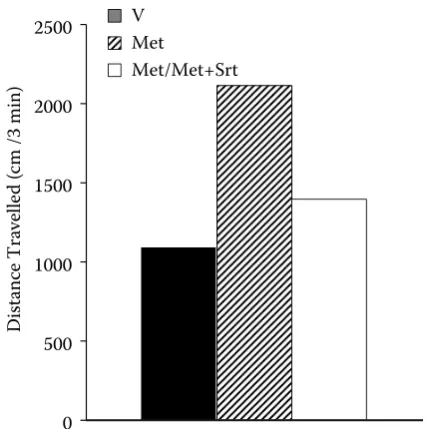
Figure 2. Effects of drug treatments in the group n2 on Distance Travelled (cm/3 min) in the mouse open field test shown as medians (interquartile ranges Q1 to Q3)
V = mice after the 1st dose of vehicle, (interquartile range Q1 to Q3 = 880.2–1375.5); Met = mice after the 1st dose of methamphetamine (2.5 mg/kg), (interquartile range Q1 to Q3 = 1540.0–2493.0); Met/Met + Srt = mice repeatedly pre-treated with methamphetamine after the challenge dose of methamphetamine + sertindole (2.5 mg/kg + 10.0 mg/kg), (interquartile range Q1 to Q3 = 743.0–2092.0)
Statistical significances are as follows: V : Met (P < 0.01), Met : Met/Met + Srt (P < 0.05), V : Met/Met + Srt (non-significant); the non-parametric Wilcoxon matched-pairs signed-ranks test, two tailed
Figure 1. Effects of drug treatments in the group n1 on Distance Travelled (cm/3 min) in the mouse open field test shown as medians (interquartile ranges Q1 to Q3)
V = mice after the 1st dose of vehicle, (interquartile range Q1 to Q3 = 798.6–1143.7); Met = mice after the 1st dose of methamphetamine (2.5 mg/kg), (interquartile range Q1 to Q3 = 1962.0–1603.0); Met/Met = mice repeatedly pre-treated with methamphetamine after the challenge dose of methamphetamine (2.5 mg/kg), (interquartile range Q1 to Q3 = 2392.0–3182.0)
Statistical significances are as follows: V : Met (P < 0.01), Met : Met/Met (P < 0.05), V : Met/Met (P < 0.01); the non-parametric Wilcoxon matched-pairs signed-ranks test, two tailed
0 500 1000 1500 2000 2500 3000 3500
D
ist
an
ce
T
ra
ve
lle
d
(c
m
/3
m
in)
V Met Met/Met
0 500 1000 1500 2000 2500
D
istan
ce
Tr
av
ell
ed
(c
m
/3
min
)
V Met
[image:3.595.311.525.360.575.2]Distance Travelled (P < 0.05) in animals pre-treated repeatedly with Met (see Figure 1; Met versus Met/ Met). A highly significant difference in locomotion was also found between mice after the administra-tion of V and animals that received the Met chal-lenge dose (see Figure 1; V versus Met/Met).
In group n2 the 1st administration of Met caused
a highly significant increase (P < 0.01) in Distance
Travelled compared to the application of V (see Figure 2; V versus Met). In contrast, the challenge dose of Met + Srt provoked a significant decrease
(P < 0.05) in locomotion in animals pre-treated
repeatedly with Met (see Figure 2; Met versus Met/ Met + Srt). No statistically significant increases
(P > 0.05) were found between animals after the
application of V compared to animals that were given the Met + Srt combination after repeated Met treatment (see Figure 2; V versus Met/Met + Srt).
In group n3 the 1st application of the Met + Srt
combination did not affect locomotor activity in
mice significantly (P > 0.05) (see Figure 3; V ver-sus Met + Srt), whereas the challenge dose of Met provoked a significant increase (P < 0.05) in lo-comotion in animals pre-treated repeatedly with Met + Srt (see Figure 3; Met + Srt versus Met + Srt/ Met). There was a significant increase (P < 0.05) in locomotion in animals pre-treated with the Met + Srt combination after the Met challenge dose when compared with the animals that were administered V (see Figure 3; V versus Met + Srt/Met).
Finally, in group n4 the 1st application of Srt
caused a highly significant decrease in locomotion when compared with animals that received vehicle (P < 0.01) (see Figure 4; V versus Srt). The challenge dose of Srt did not affect Distance Travelled sig-nificantly (P > 0.05) in animals pre-treated repeat-edly with Srt when compared with animals after the 1st Srt dose (see Figure 4; Srt versus Srt/Srt). A
[image:4.595.66.282.82.281.2]highly significant decrease (P < 0.01) in locomo-tion was found in mice after the administralocomo-tion of Figure 4. Effects of drug treatments in the group n4 on Distance Travelled (cm/3 min) in the mouse open field test shown as medians (interquartile ranges Q1 to Q3)
V = mice after the 1st dose of vehicle, (interquartile range Q1 to Q3 = 922.2–1202.2); Srt = mice after the 1st dose of sertindole (10.0 mg/kg), (interquartile range Q1 to Q3 = 309.5–700.0); Srt/Srt = mice repeatedly pre-treated with sertindole after the challenge dose of sertindole (10.0 mg/kg), (interquartile range Q1 to Q3 = 410.3–639.8)
Statistical significances are as follows: V : Srt (P < 0.01), Srt : Srt/Srt (non-significant), V : Srt/Srt (P < 0.01); the non-parametric Wilcoxon matched-pairs signed-ranks test, two tailed
Figure 3. Effects of drug treatments in the group n3 on Distance Travelled (cm/3 min) in the mouse open field test shown as medians (interquartile ranges Q1 to Q3)
V = mice after the 1st dose of vehicle, (interquartile range Q1 to Q3 = 795.7–1188.0); Met + Srt = mice after the 1st dose of combination methamphetamine + sertindole (2.5 mg/kg + 10.0 mg/kg), (interquartile range Q1 to Q3 = 735.2–1122.3); Met + Srt/Met = mice repeatedly pre-treated with the com-bination methamphetamine + sertindole after the challenge dose of methamphetamine (2.5 mg/kg), (interquartile range Q1 to Q3 = 1121.0–1869.0)
Statistical significances are as follows: V : Met + Srt (non-significant), Met + Srt : Met + Srt/Met (P < 0.05), V : Met + Srt/Met (P < 0.05); the non-parametric Wilcoxon matched-pairs signed-ranks test, two tailed
0 200 400 600 800 1000 1200 1400 1600
D
ist
an
ce
T
ra
ve
lle
d
(c
m
/3
m
in)
V Met+Srt Met+Srt/Met
0 200 400 600 800 1000 1200
D
ist
an
ce
T
ra
ve
lle
d
(c
m
/3
m
in)
[image:4.595.305.522.86.283.2]V compared to animals that were repeatedly pre-treated with Srt and were administered the Srt chal-lenge dose (see Figure 4; V versus Srt/Srt).
DISCUSSION
The results from the group of mice treated
repeat-edly with methamphetamineare entirely consistent
with results from our previous studies (Landa et al. 2006a,b; 2011; 2012a,b) and again confirm the development of sensitisation to the stimulatory ef-fects of methamphetamine on locomotor behaviour in this original dosage regimen used in mice. The 1st dose in the mice under the repeated treatment
with sertindole elicited a significant decrease in locomotion that persisted also after the last of the eight daily doses. This finding is in agreement with the results of Suzuki and Misawa (1995) who re-ported that sertindole given alone produced neither preference nor aversion for the drug-associated place. Therefore, they suggested that sertindole had no potential for abuse. A challenge dose of a methamphetamine + sertindole combination given to animals repeatedly pre-treated with metham-phetamine inhibited locomotion compared to the
1st methamphetamine dose, which is similar to
observations made in human subjects dependent
on methamphetamine, who were given another D2
receptor antagonist risperidone, which went on to produce a decrease in methamphetamine use (Meredith et al. 2007). On the other hand, the use of a further antipsychotic drug, olanzapine, in humans dependent on cocaine did not support the useful-ness of this substance for the treatment of cocaine dependence (Kampman et al. 2003).
Akdag et al. (2011) tested the effects of risperi-done (a substance that similarly to sertindole also belongs to the group of atypical antipsychotics with similar multiple mechanisms of action and with a high selectivity for mesolimbic pathways) on nicotine-induced locomotor sensitisation in rats. Risperidone affects serotonin 5-HT2A-C receptors, dopamine D2 receptors, α1- and α2-adrenergic
re-ceptors and also histamine H1 receptors (Akdag
et al. 2011). These authors focused on both devel-opment and expression of sensitisation and found that repeated administration of nicotine provoked in their experimental design a robust sensitisation. Furthermore, they described that pre-treatment with risperidone inhibited the expression but not the development of nicotine-induced locomotor
sensitisation in rats (Akdag et al. 2011). Thus, they concluded that risperidone blocked the continua-tion of nicotine-type addictive behaviour, whereas it was ineffective against the early adaptations in the development of nicotine addiction. Despite this, the antipsychotic drug risperidone may be of limited beneficial use in nicotine dependence treat-ment (Akdag et al. 2011). On the other hand, Meng et al. (1998) reported that a typical and an atypical antipsychotic drug, haloperidol and clozapine, re-spectively, blocked the development of behavioural sensitisation to amphetamine in rats. Our results showed an increase in animals that were repeatedly pre-treated with the methamphetamine + sertin-dole combination and challenged with a dose of methamphetamine, however this increase cannot be considered as development of sensitisation.
Prinssen et al. (2004) examined whether the ability of the dopamine D2 receptor antagonists eticlopride and raclopride (substances primarily used in basic pharmacological research) to decrease cocaine-in-duced locomotion varied between non-sensitised and sensitised mice if they were challenged with
cocaine. In this experiment the dopamine D2
re-ceptor antagonists eticlopride and raclopride were less efficient in inhibiting the locomotor effects of cocaine in sensitised mice compared to the non-sensitised animals. However, when the authors used the lowest doses to maximally increase loco-motion in each of the repeated treatment condi-tions (10 and 40 mg/kg) both dopamine D2 receptor antagonists inhibited the influence of cocaine on locomotor activity in non-sensitised and sensitised mice to a similar extent (Prinssen et al. 2004). Thus, these results indicate that the possible effects of dopamine receptor agonists are dose-dependent.
Data concerning the involvement of sertindole in reward processes associated with drug addic-tion are not completely consistent. Suzuki and
Misawa (1995) reported that the dopamine D2
receptor antagonist sertindole antagonised place preference in rats induced by morphine, cocaine and methamphetamine. On the other hand, Arnt (1992) tested the effect of various antipsychotic drugs (sertindole, clozapine, flupentixol, haloperi-dol) on the discriminative stimulus properties of amphetamine (i.e., dopamine stimulant) and LSD
(i.e. 5-HT2 receptor agonist) and found in rats that
sertindole antagonised the effects of LSD, whereas
those of d-amphetamine were unchanged. In
motor stimulation in rats and similarly, Artn (1995) described that sertindole inhibited hypermotility induced by two dose levels of amphetamine. These data indicate that there is not only variability in doses but also probable differences among sub-stances from the groups of antipsychotics in their ability to interfere with the action of various drugs of abuse. In addition, there are also further factors
contributing to diversity in the action of D2
recep-tor antagonists. For example, it has been shown that there was a difference between the effects of acute and chronic antipsychotic drug treatment on dopamine neurons. Whereas acute application increased dopamine neuron population activity, chronic administration (21 days) led to inactivation of dopamine neurons in the substantia nigra of rats (Grace et al. 1997).
Despite these controversies, it can be concluded that findings such as those reported by Suzuki and Misawa (1995) and also results from our study suggest that the use of sertindole holds therapeu-tic promise for the treatment of drug addiction, though further research is certainly required.
REfERENCES
Akdag E, Kayir H, Uzbay TI (2011): Effects of risperidone on development and expression of nicotine-induced locomotor sensitization in rats. Synapse 65, 708–714. Aracil-Fernandez A, Trigo JM, Garcia-Gutierrez MS,
Ortega-Alvaro A, Ternianov A, Navarro D, Robledo P, Berbel P, Maldonado R, Manzanares J (2012): De-creased cocaine motor sensitization and self-admin-istration in mice overexpressing cannabinoid CB2 receptors. Neuropsychopharmacology 37, 1749–1763. Arnt J (1992): Sertindole and several antipsychotic-drugs
differentially inhibit the discriminative stimulus ef-fects of amphetamine, LSD and ST-587 in rats. Behav-ioural Pharmacology 3, 11–18.
Arnt J (1995): Differential effects of classical and newer antipsychotics on the hypermotility induced by two dose levels of d-amphetamine. European Journal of Pharmacology 283, 55–62.
Bahi A, Dreyer JL (2012): Involvement of nucleus ac-cumbens dopamine D1 receptors in ethanol drinking, ethanol-induced conditioned place preference, and ethanol-induced psychomotor sensitization in mice. Psychopharmacology 222, 141–153.
Blackshaw JK (1991): An overview of types of aggressive behaviour in dogs and methods of treatment. Applied Animal Behaviour Science 30, 351–361.
Cadoni C, Valentini V, Di Chiara G (2008): Behavioral sensitization to Delta(9)-tetrahydrocannabinol and cross-sensitization with morphine: differential changes in accumbal shell and core dopamine transmission. Journal of Neurochemistry 106, 1586–1593.
Enman NM, Unterwald EM (2012): Inhibition of GSK3 attenuates amphetamine-induced hyperactivity and sensitization in the mouse. Behavioural Brain Research 231, 217–225.
Fukushiro DF, Josino FS, Saito LP, Costa JM, Zanlorenci LHF, Berro LF, Fernandes-Santos L, Morgado F, Mari-Kawamoto E, Frussa-Filho R (2012): Differential ef-fects of intermittent and continuous exposure to novel environmental stimuli on the development of amphet-amine-induced behavioral sensitization in mice: Im-plications for addiction. Drug and Alcohol Dependence 124, 135–141.
Grace AA, Bunney BS, Moore H, Todd CL (1997): Do-pamine-cell depolarization block as a model for the therapeutic actions of antipsychotic drugs. Trends in Neurosciences 20, 31–37.
Hofford RS, Schul DL, Wellman PJ, Eitan S (2012): Social influences on morphine sensitization in adolescent rats. Addiction Biology 17, 547–556.
Jackson DM, Johansson C, Lingren LM, Bengtsson A (1994): Dopamine-receptor antagonists block am-phetamine and phencyclidine-induced motor stimula-tion in rats. Pharmacology Biochemistry and Behavior 48, 465–471.
Kalivas PW, Duffy P (1993): Time course of extracellular dopamine and behavioral sensitization to cocaine. I. Dopamine axon terminals. Journal of Neuroscience 13, 276–284.
Kampman KM, Pettinati H, Lynch KG, Sparkman T, O’Brien CP (2003): A pilot trial of olanzapine for the treatment of cocaine dependence. Drug and Alcohol Dependence 70, 265–273.
Landa L, Slais K, Sulcova A (2006a): Involvement of can-nabinoid CB1 and CB2 receptor activity in the devel-opment of behavioural sensitization to methamphet- amine effects in mice. Neuroendocrinology Letters 27, 63–69.
Landa L, Slais K, Sulcova A (2006b): Impact of cannab-inoid receptor ligands on behavioural sensitization to antiaggressive methamphetamine effects in the model of mouse agonistic behaviour. Neuroendocrinology Letters 27, 703–710.
Landa L, Slais K, Sulcova A (2012a): The effect of fel-bamate on behavioural sensitisation to methamphet-amine in mice. Veterinarni Medicina 57, 364–370. Landa L, Slais K, Sulcova A (2012b): The effect of
me-mantine on behavioural sensitisation to methamphet-amine in mice. Veterinarni Medicina 57, 543–550. Lee B, Park J, Kwon S, Yeom M, Sur B, Shim I, Lee H,
Yoon SH, Jeong DM, Hahm DH (2012): Inhibitory ef-fect of sowthistle (Ixeris dentata) on development and expression of behavioral locomotor sensitization to nicotine in rats. Food Science and Biotechnology 21, 723–729.
Meng Z, Feldpaush DL, Merchant KM (1998): Clozapine and haloperidol block the induction of behavioral sen-sitization to amphetamine and associated genomic responses in rats. Molecular Brain Research 61, 39–50. Meredith CW, Jaffe C, Yanasak E, Cherrier M, Saxon AJ
(2007): An open-label pilot study of risperidone in the treatment of methamphetamine dependence. Journal of Psychoactive Drugs 39, 167–172.
Muscatello MRA, Bruno A, Pandolfo G, Mico U, Set-tineri S, Zoccali R (2010): Emerging treatments in the management of schizophrenia – focus on sertindole. Drug Design Development and Therapy 4, 187–201. Nestler EJ (2001): Molecular basis of long-term
plastic-ity underlying addiction. Nature Reviews Neurosci-ence 2, 119–128.
Niu HC, Zheng Y, Rizak JD, Fan YD, Huang W, Ma YY, Lei H (2012): The effects of lesion of the olfactory epithelium on morphine-induced sensitization and conditioned place preference in mice. Behavioural Brain Research 233, 71–78.
Prinssen EPM, Colpaert FC, Kleven MS, Koek W (2004): Ability of dopamine antagonists to inhibit the locomo-tor effects of cocaine in sensitized and non-sensitized C57BL/6 mice depends on the challenge dose. Psy-chopharmacology 172, 409–414.
Ramos AC, Andersen ML, Oliveira MGM, Soeiro AC, Galduroz JCF (2012): Biperiden (M-1 antagonist) im-pairs the expression of cocaine conditioned place pref-erence but potentiates the expression of cocaine-induced behavioral sensitization. Behavioural Brain Research 231, 213–216.
Robinson TE, Berridge KC (1993): The neural basis of drug craving: an incentive-sensitization theory of ad-diction. Brain Research Reviews 18, 247–291. Skarsfeldt T (1992): Electrophysiological profile of the
new atypical neuroleptic, sertindole, on midbrain do-pamine neurons in rats – acute and repeated treat-ment. Synapse 10, 25–33.
Spina E, Zoccali R (2008): Sertindole: pharmacological and clinical profile and role in the treatment of schiz-ophrenia. Expert Opinion on Drug Metabolism and Toxicology 4, 629–638.
Suzuki T, Misawa M (1995): Sertindole antagonizes morphine-induced, cocaine-induced, and metham-phetamine-induced place preference in the rat. Life Sciences 57, 1277–1284.
Vanderschuren LJMJ, Kalivas PW (2000): Alterations in dopaminergic and glutamatergic transmission in the induction and expression of behavioral sensitization: a critical review of preclinical studies. Psychopharma-cology 151, 99–120.
Received: 2012–10–04 Accepted after corrections: 2012–11–26
Corresponding Author:
Alexandra Sulcova, CEITEC – Central European Institute of Technology, Masaryk University, Kamenice 5/A19, 625 00 Brno, Czech Republic