Understanding walking and cycling
using a life course perspective
Heather Naomi Jones
Faculty of Environment and Technology
December 2013
A
THESIS SUBMITTED IN PARTIAL FULFILMENT
OF THE REQUIREMENTS OF THE
U
NIVERSITY OF THE
W
EST OF
E
NGLAND
,
B
RISTOL
,
2
A
BSTRACT
Understanding of how walking and cycling change over time has been restricted to looking at time series data that reveals aggregate change, and time-limited longitudinal studies of individual behaviour. This thesis presents a study of the change and
continuity in individual behaviour over the life course as well as inter-generational influence of, and inter-cohort similarities and differences in behavioural pathways. The behavioural trajectories of adults from two historically-separated birth cohorts, and parent-child dyads, were studied using biographical approach. Interpretive, visual biographies were produced that illustrated behavioural development through life events and transitions. Typologies were constructed to resolve common and distinct pathways in behavioural development.
Behaviour change often accompanied changes in residence, employment, family structure and mobility resources. Some distinctions in trajectories were apparent along the dimensions of gender and cohort. The life-long potential for behaviour change was demonstrated by some adaptive, restorative and negative changes that occurred in later life. There was empirical suggestion that earlier cycling experiences were
generative of, and influential on, later outcomes, and that some aspects of macro-level social and structural change had brought about cohort distinctions in the opportunity structure for walking and cycling over the life course.
3
ACKNOWLEDGEMENTS
This project was made possible by funding from the UK Economic and Social Research Council and Medical Research Council.
I wish to express my gratitude to the individuals at the heart of this thesis – my study participants for entrusting me with their life stories.
I am truly indebted to my supervisors, Kiron Chatterjee and Selena Gray, for the commitment, patience, expertise and motivation they brought to the project. To my fellow inhabitants of 4Q57 and 4Q58, thank you for your company and light relief. I am particularly grateful to friends and colleagues – Ben Clark, Carmel Conefrey and Emma Street –for being generous with their time and whose experience was invaluable in the production of this thesis.
My friends, near and far, and my family deserve my sincere thanks for their
understanding and support that has sustained me through my years as a PhD student. Most of all, I am incredibly grateful to my parents whose love, support, encouragement and reassurance simply made it possible for me to get to this far.
C
OPYRIGHT4
C
ONTENTS
1 INTRODUCTION ... 9
1.1 WHY STUDY WALKING AND CYCLING OVER THE LIFE COURSE? ... 9
1.1.1 Public health perspective ... 9
1.1.2 Transport perspective ... 14
1.2 CONTEMPORARY POSITION OF POLICY ... 19
1.3 LIFE COURSE PERSPECTIVE: PRINCIPLES AND CONCEPTS ... 21
1.3.1 Trajectories... 23
1.3.2 Transitions ... 23
1.3.3 Turning points ... 24
1.3.4 Human Agency ... 24
1.3.5 Linked lives ... 25
1.3.6 Location in historical time and space ... 26
1.3.7 Timing ... 26
1.4 OVERVIEW OF THE STUDY ... 27
1.5 STRUCTURE OF THE THESIS ... 28
2 LITERATURE REVIEW ... 32
2.1 CHAPTER INTRODUCTION ... 32
2.2 THEORETICAL APPROACHES IN HEALTH AND TRAVEL BEHAVIOUR RESEARCH... 33
2.2.3 Ecological models ... 35
2.2.5 Life course research ... 40
2.3 DEMOGRAPHIC, PHYSICAL, SOCIAL AND PSYCHOLOGICAL FACTORS ... 44
2.4 LONGITUDINAL STUDIES ... 66
2.5 MACRO-LEVEL STRUCTURAL AND SOCIAL CHANGES ... 79
2.6 LIMITATIONS OF KNOWLEDGE BASE ... 83
2.7 CHAPTER SUMMARY ... 86
3 RESEARCH DESIGN ... 87
3.1 CHAPTER INTRODUCTION ... 87
3.2 ONTOLOGICAL AND EPISTEMOLOGICAL POSITION OF THE RESEARCH ... 88
3.3 RESEARCH OBJECTIVES AND QUESTIONS ... 89
3.4 CONCEPTUAL FRAMEWORK ... 90
3.5 METHODOLOGICAL APPROACH ... 92
3.5.1 Biographical methods ... 95
3.5.2 Piloting the interview ... 96
3.5.3 Improving recall ... 99
3.5.4 Interview Protocol ... 103
3.6 CRITERIA FOR RESEARCH QUALITY ... 107
3.7 STUDY PARTICIPANTS ... 108
3.7.1 Recruitment ... 111
3.8 ETHICAL CONSIDERATIONS ... 112
3.8.1 Participant remuneration ... 113
5
3.8.3 Confidentiality and safety ... 114
4 DATA PROCESSING AND ANALYSIS ... 116
4.1 CHAPTER INTRODUCTION ... 116
4.2 DATA PROCESSING ... 117
4.3 INTERPRETIVE AND VISUAL BIOGRAPHIES ... 119
4.3.1 Sean Rawlings ... 119
4.3.2 Callum Rawlings ... 123
4.4 DATA ANALYSIS ... 125
4.4.1 Trajectory typologies ... 129
4.4.2 Dyads ... 131
4.5 SCRUTINY OF PROCESSING AND ANALYSIS ... 135
4.5.1 Reflexivity ... 136
4.6 CHAPTER SUMMARY ... 137
5 FINDINGS ... 138
5.1 CHAPTER INTRODUCTION ... 138
5.2 BACKGROUND OF PARTICIPANTS ... 138
5.3 EARLY IMPRESSIONS OF THE DATA... 142
5.4 WALKING AND CYCLING THROUGH THE LIFE COURSE ... 143
5.5 CYCLING TRAJECTORIES ... 158
5.6 WALKING TRAJECTORIES ... 164
5.7 DYADS ... 169
5.8 SUMMARY OF FINDINGS ... 170
6 KNOWLEDGE EXCHANGE WORKSHOP ... 176
6.1 CHAPTER INTRODUCTION ... 176
6.2 METHODOLOGY ... 176
6.2.1 Workshop recruitment ... 176
6.3 WORKSHOP STRUCTURE ... 178
6.4 FINDINGS ... 182
6.4.1 Macro-level changes ... 182
6.4.2 Implications for policy ... 184
6.5 CHAPTER SUMMARY ... 191
7 DISCUSSION ... 192
7.1 CHAPTER INTRODUCTION ... 192
7.2 RESEARCH SYNTHESIS: PRESENTING AN ENHANCED CONCEPTUAL FRAMEWORK ... 193
7.2.1 Mobility resources ... 197
7.2.2 Locational decisions: Residential and occupational changes... 205
7.2.3 Inter-personal roles and relations ... 209
7.2.4 Health ... 215
7.2.5 Summary: Macro and micro-contextual changes ... 216
7.2.6 Walking typology ... 217
7.2.7 Cycling typology ... 218
6
7.2.9 Long term processes and mechanisms of change ... 222
7.3 IMPLICATIONS FOR POLICY AND PRACTICE ... 227
7.3.1 Transition to adulthood... 228
7.3.2 Later working life- retirement transition ... 229
7.3.3 Restorative change and embodied intelligence ... 232
7.3.4 Macro-contextual changes ... 233
7.3.5 Knowledge translation ... 235
7.3.6 Section summary ... 235
7.4 CHAPTER SUMMARY ... 236
8 REFLECTIONS, FUTURE RESEARCH AND CONCLUDING SUMMARY ... 237
8.1 CHAPTER INTRODUCTION ... 237
8.2 REFLECTIONS ON THE RESEARCH PROCESS ... 237
8.2.1 Methodology ... 237
8.2.2 Analysis ... 242
8.2.3 Recruitment ... 244
8.2.4 Workshop ... 245
8.2.5 Section summary ... 247
8.3 FUTURE RESEARCH ... 248
8.4 CONCLUDING SUMMARY OF THE STUDY ... 251
7
L
IST OF
A
PPENDICES
Appendix A: Research Ethics……….……3
Appendix B: Interpretive and Visual Biographies……….10
Appendix C: Analysis……….….124
Appendix D: Workshop information and slides………137
L
IST OF
F
IGURES
Figure 1 Vehicle traffic on roads in Great Britain, 1949-2009 ... 14Figure 2 Other vehicle traffic on GB roads, 1949 - 2010... 15
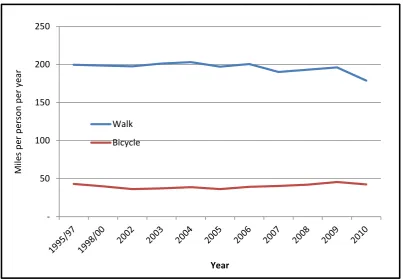
Figure 3 Average distance travelled by mode, GB 1995-2010 ... 16
Figure 4 average distance walked and cycled by age group, 2010 ... 16
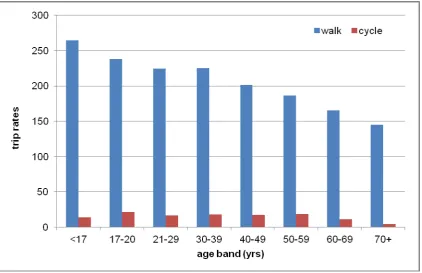
Figure 5 average number of trips walked and cycled by age group, 2010 ... 17
Figure 6 Ecological models of health behaviour and health promotion... 36
Figure 7 Conceptual model of individual travel behaviour ... 37
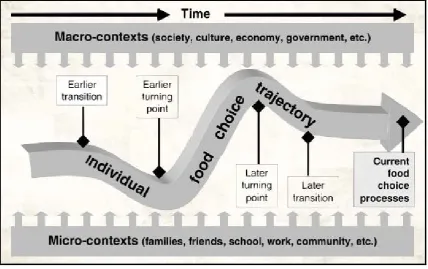
Figure 8 Conceptual framework of life course food trajectory ... 41
Figure 9 Life Stage and cycling ... 64
Figure 10 Schematic of research design process ... 87
Figure 11 Conceptual framework adapted from Sobal, 2006 ... 91
Figure 12 Life history calendar ... 101
Figure 13 Interview guide ... 105
Figure 14 Life history time line produced after first interview ... 106
Figure 15 Historical contexts of the participants ... 110
Figure 16 Schematic of data processing and analysis ... 116
Figure 17 Decision rules for drawing visual biographies ... 118
Figure 18 Sean Rawling's visual biography ... 122
8
Figure 20 prototype for walking typology ... 130
Figure 21 Familial relations of study participants ... 139
Figure 22 Cycling trajectory groupings ... 158
Figure 23 Matrix depicting current activity versus stability over the trajectory ... 165
Figure 24 Conceptual framework introducing sensitive period concept... 181
Figure 25 Framework extension illustrating inter-generational influence ... 181
Figure 26 Conceptual framework of walking or cycling trajectory ... 193
Figure 27 Framework extension to depict potential inter-generational influence ... 213
L
IST OF
T
ABLES
Table 1 Selection of studies examining variations in behaviour in relation to individual socio-demographic characteristics ... 46Table 2 Selection of studies examining variations in behaviour in relation to characteristics of the built environment ... 54
Table 3 Selection of studies examining variations in behaviour in relation to social factors ... 57
Table 4 Selection of studies examining variations in behaviour in relation to cognitive factors 60 Table 5 Researcher reflections on pilot interviews ... 98
Table 6 Summary of participants’ residential, family, employment statuses and travel modes at 17, 19, 22, 25 and 30 years of age. ... 127
Table 7 summarising observations on inter-generational influence on walking trajectories .. 133
Table 8 summarising observations on inter-generational influence on cycling trajectories .... 134
9
1 I
NTRODUCTION
Health and travel surveys from population samples indicate that large proportions of the UK population report levels of physical activity that are insufficient to benefit health and low proportions of travel that are performed by active modes. Such signals have led policy makers and practitioners to identify promotion of active travel and lifestyles as a policy objective. However, understanding of individual behavioural change and continuity is limited given that much data collected on travel or physical activity does not follow individuals over time. As a consequence we have limited understanding of how walking and cycling, as modes of transport and forms of physical activity, increase, diminish, persist, cease, are restored or adapted through the life course. Such
knowledge could inform efforts to support the promotion of walking and cycling as life-long practices.
This thesis presents research conducted in a UK context that sought to enhance
understanding of the development of walking and cycling over the individual life course. This introductory chapter proceeds with clarification of this research interest in a public health and transport context, with reference to the contemporary position of policy in both areas. The sections that follow set out the theoretical orientation and overview of the study and structure of the thesis.
1.1 Why study walking and cycling over the life course?
1.1.1 Public health perspective
10
effect of regular activity. Some links have been revealed between physical activity in earlier life stages and later positive health outcomes, for instance delayed cognitive decline (Middleton, 2010), preserved physical function and delayed physical
impairment (Pluijms, et al., 2007; von Bonsdorff and Rantanen, 2011) and reduced risk of Chronic Obstructive Pulmonary Disease (Hirayama et al. 2010). Improved health and functioning can reduce or delay an individual’s need for health and social care.
Despite unequivocal evidence of its preventative and therapeutic value, survey data indicates consistently that the majority of adults do not achieve recommended levels of physical activity1. Based on self-report data, the 2008 Health Survey for England (HSE) showed that only 39% of men and 29% of women reported this level of activity or higher (NHS Information Centre, 2009). HSE captures episodes of activity across four domains; domestic work, walking, sports and exercise and occupational activity. These are then summed to calculate an individual’s total level of activity. Accelerometry is an objective measure of physical activity and has been conducted with a smaller sub-sample in the HSE. This has suggested that the proportions that are sufficiently active were as low as 6% of men and 4% of women.
As a large, population-based sample the HSE is an important source of information on time spent in multiple domains of physical activity, however self-reported measures are subject to recall and assessment errors and the perceived pressure to give a socially desirable response. The criterion validity of the self-report physical activity instrument in HSE has yet to be established unequivocally (Orrella, 2007). Accelerometry gives a more accurate reflection of volume of activity and energy expenditure however it does not capture activities such as swimming or cycling.
11
HSE also reveals differences in physical activity participation by age group across the adult population. In 2008 the proportion of men meeting the physical activity guidelines consistently diminished across age groups, with a more substantial decrease between age groups bordering retirement age (Allender, Foster and Boxer, 2008). There was a more significant decline in the twenties age group when occupational activity was excluded. The proportion of sufficiently active women is lower but more consistent across adult age groups until the sixties when again the decline between age groups is a more significant.
Physical activity is bodily movement produced by skeletal muscle that involves energy expenditure. This qualifies both walking and cycling as physical activity behaviours. Walking and cycling are similar in the respect that both are performed for transportation
and leisure purposes. However, walking as a fundamental form of human movement is
incidental to many activities of daily living. This means in the course of a day an
individual will perform physical activity in numerous bouts of variable duration and
intensity. From HSE it is difficult to assess the contribution of total walking and cycling
to total physical activity. In 2008 HSE respondents reported, as a specific domain,
bouts of walking activity of a ‘fairly brisk’ intensity. Only bouts that lasted over ten
minutes were counted towards total levels of activity. Walking activity that was shorter,
or not judged by the respondent to be of sufficient intensity, was not reflected. Further it
has been recognised that self-report measures are likely to under-estimate routine or
incidental walking (NHS Information Centre, 2009). Cycling activity was reported within
the domain of sports participation and therefore cycling for transport is not captured.
Men and women walked on average 2.2 and 1.9 hours per week, respectively (NHS
Information Centre, 2009).
12
For women, across all age groups, domestic activities represented a large and relatively stable proportion of activity whereas the importance of such activities
increased with age amongst men. Occupational physical activity was a relatively more important source of activity across middle age categories in comparison to the
youngest and oldest adults. The importance of exercise and fitness and team sports decreased with age for both sexes. The contributions of non-team sports, outdoor and leisure pursuit activities were fairly stable but relatively small across age categories for men, and the least important contributors among women.
HSE permits analysis of population level changes in different physical activity domains over time. However due to differences in the way some questions have been asked between years the view on temporal trends is restricted to the period 1999-2004. Over this period Stamatakis et al. (2007) found a rise in levels of overall physical activity and walking and sports participation, while occupational activity and cycling as sport
declined. However the authors emphasised the need to be cautious of interpreting this as an insight into the longer term picture. Firstly, a five year time series may be too shorter a duration for a temporal trend to be evident. Secondly, the observed increases in non-occupational physical activity, which concur with trends detected in other
countries, are paradoxical to the contemporaneous rise in obesity prevalence. This lead them to speculate whether media attention to rising obesity has increased public awareness of physical activity recommendations with the effect of increasing the likelihood of a social desirable response to physical activity questions.
To reiterate then HSE can reveal a picture of physical activity levels in the population at a point in time, and change over time in average reported activity at a population level, albeit one that is affected by measurement issues. This does not illuminate change within an individual over time.
13
and physical factors. Allender, Hutchinson and Foster (2008) found some evidence that physical activity declines between some life stages or at some life events. Health research tends to frame individual development as processes of growth, maturation and ageing, or by life stage, gestation, childhood, adolescence, adulthood and later life. An alternative longitudinal framework is offered by the life course perspective. This is a common theoretical perspective in the study of human development over time that amalgamated in sociology and psychology and has more recently been applied in the study of health behaviours. Individual behaviour is conceptualised as a dynamic
process rather than a static risk category and is a framework oriented to explaining how earlier experiences shape later outcomes. As well as the fluidity of development the life course perspective emphasises the interaction of different life course domains, the interdependency of separate life courses and their situation within the historical context as important in understanding how the life course unfolds. A more detailed introduction to the life course perspective is given in section 1.3.
In summary there appears to be significant potential to improve the population health if individuals were more active over their life courses. Alongside significant gains in quality of life this could substantially reduce demand for health and social care which with an ageing population represents a significant challenge for the UK. As physical activity that can be achieved in the pursuit of travel and recreation there is potential to increase levels of activity through walking and cycling. The health benefits of active travel were demonstrated in a longitudinal study of Copenhagen residents where the mortality risk of people who cycled to work was 39% lower than those who did not over a fifteen year period (Anderson, et al., 2000). However to understand how the
population can be supported to increase, maintain, restore or adapt their walking and cycling through the life course requires long term, longitudinal study of these
14
1.1.2 Transport perspective
Routine transport data can reveal secular trends in population level walking and cycling. Road traffic count data shows a long term change in distance cycled and driven in motor vehicles on roads in Great Britain (Figure 1 and Figure 2). Between 1949 and 1973 the annual distance cycled declined from 14.7 billion miles to 2.4 billion miles from which point forwards it has fluctuated below 4.0 billion miles. In the last ten years there has been a gradual increase in distance cycled to 3.1 billion miles (DfT, 2010). Meanwhile the annual distance driven by cars and taxis has increased from 12.6 billion miles to 240.7 billion miles in 2011 (DfT, 2010). These changes took place in a period of fairly steady population growth.
0 50 100 150 200 250 300 350
1949 1954 1959 1964 1969 1974 1979 1984 1989 1994 1999 2004 2009
B
illio
n
v
e
h
ic
le
m
ile
s
All motor vehicle traffic
Cars and taxis
[image:14.595.118.522.323.640.2]Other motor vehicles
15 0 10 20 30 40 50 60 70 80
1949 1954 1959 1964 1969 1974 1979 1984 1989 1994 1999 2004 2009
B illio n v e h ic le m ile s Year
Other vehicle traffic excluding cars and taxis
Light vans Heavy goods vehicles
Buses & coaches Motorcycles
[image:15.595.119.525.62.363.2]Pedal cycles
Figure 2 Other vehicle traffic on GB roads, 1949 - 2010
Source: National Road Traffic Survey, DfT, 2010
The National Travel Survey (NTS) is an annual cross-sectional survey of personal travel in a population-based sample. It captures both walking and cycling activity undertaken for transport purposes. However until recently it has captured only journeys that begin and end in different places. It now includes walks that start and finish in the same place but not similar cycle rides. Despite the fact that NTS data relies on self-reported, unvalidated measures which require participants to recall trips and estimate trip distances, it is still considered the most comprehensive source of data on individual travel behaviour. The average annual distance cycled per person declined from 43 miles in 1995/7 to a low of 36 in 2005, returning to 43 in 2008/10 (Figure 3). Average distance walked has declined from 200 miles per person annually in 1995/97 to 190 miles in 2008/102 (Figure 3). Figure 4 shows that the average distance cycled and
16
walked by age group. This shows that distance cycled declined across adult age groups and walking increased into the forties before declining.
-50 100 150 200 250
M
iles
p
er
p
er
so
n
per
y
ea
r
Year
[image:16.595.116.520.113.392.2]Walk Bicycle
Figure 3 Average distance travelled by mode, GB 1995-2010
Figure 4 Average distance walked and cycled by age group, 2010
[image:16.595.118.525.433.699.2]17
Figure 5 shows that average number of trips walked declined across adult age groups. Cycling trips declined slightly between the youngest and oldest adult age band
[image:17.595.116.539.142.415.2]although the trip rate is largely stable through the middle age bands.
Figure 5 average number of trips walked and cycled by age group, 2010
Source: National Travel Survey 2010, DfT
18
The methodological challenges to studying individual travel behaviour over time in transport and planning fields are similar to those encountered in physical activity research. There is a predominance of cross-sectional analysis of personal, social and environmental correlates of behaviour which has translated into explanations of behaviour that privilege the influence of current circumstances and overlooks the influence of past experiences and settings. There is also an over-reliance on measures that require respondents to summate their total activities which can be subject to inaccurate recall and social desirability bias. Subsequently the theorisation of processes and mechanisms that relate present walking and cycling behaviour to cumulative past experience is lacking.
The dynamic nature of individual travel behaviour was recognised in 1982 (Clarke, Dix and Goodwin) while prior to this, in the 1970s, time geographers were studying the mobility of individuals in time and space (Hägerstrand, 1970). Clarke et al. (1982) distinguished short term micro-dynamics that captured travel choices over a twenty-four hour period, macro-dynamic modifiers which concerned behavioural response to transitions and trigger events over a period of a few years and macro-dynamic
processes which relate to ageing, life-cycle stages and cohort membership. This made
apparent the limitations of considering travel behaviour as a static entity and the methodological challenges of conducting longitudinal research.
Jones (2009) summarised general insights that a dynamic perspective brought to understanding travel behaviour. These included, succinctly, that travel behaviour has considerable variability over different timescales; that travel behaviour responses to changing conditions and attitude formation are not instantaneous but instead develop over time; and that travel behaviour may be conditioned by previous experiences.
Empirical work on individual travel behaviour dynamics has been engaged with
19
Goulias (2009) and Scheiner (2006) have articulated the need to understand the development of various aspects of travel demand over the life course and have advocated for further application of the life course perspective within travel behaviour research. For Scheiner (2006) explanation of travel behaviour will only be built upon understanding the inter-relation of long term biographical processes and short term
travel choices. The proposal of the mobilities biography framework (Lanzendorf, 2003),
which imported the life course concept of a trajectory, made an important theoretical
contribution that underpins a developing seam of research exploring travel behaviour
changes in the course of key biographical moments in employment and family domains
(Scheiner, 2006). These studies, which have examined travel mode choice, travel distances or car ownership in relation to particular life events, are detailed in the literature review in the next chapter. Such studies consider travel behaviour in either segments of the life course or life events in isolation, rather than as part of an unfolding life course. Whilst the concept of trajectory was a direct import from the life course perspective, these studies have not utilised the other principles and concepts of the perspective, as will be introduced in the following section.
To summarise there is some understanding of the patterns of physical activity and travel behaviour within the population and how average levels of activity are changing over time. However there is limited knowledge of how individual behaviour changes over time. Such understanding could inform efforts to support life-long engagement in walking and cycling with associated benefits to population and individual wellbeing.
The case for a life course perspective to advance understanding in this area is developed further through the literature review in chapter two.
1.2 Contemporary position of policy
20
the role of Government, together with business, communities and other organisations, to support the creation of environments where walking, cycling and other forms of physical activity were “accessible, safe and the norm”, and announced investment in cycling infrastructure and training. Contemporary transport policy (DfT, 2008) stated goals to improve health and quality of life through the promotion of active travel modes, with explicit recognition of the imperative to prevent obesity.
The change of administration in UK national government in 2010 brought some shift in emphasis but as yet no significant change of direction in policy. The Coalition
Government’s 2011 local transport White Paper retained commitments to increase the share of active modes for shorter journeys, but generally placed a stronger emphasis on transport measures that would support economic growth and local delivery. Funding commitments on school travel measures and cycle training were retained in the short term. Some cycling programmes were discontinued and new ones announced, for instance new funding for Bike-Rail integration. Promotion of active travel modes was made one of twelve criteria for funding local sustainable transport schemes. In 2010 a cross-government framework for health improvement was outlined that structured the approach around the stages of life and key transitions (DH, 2010). The contribution of physical activity and active travel to better health was recognised at most life stages.
The Coalition Government has espoused an approach to behaviour change that has been described as libertarian paternalistic (Rainford and Tinkler, 2011). This holds that since individual’s sometimes make decisions counter to their best interests it is
21
The benefits to society of increasing levels of walking and cycling and supporting people to be active throughout life were outlined in section 1.1.2. This reflects the fact that as a society we judge it to be in our collective interests to live in good health and preserve our environment. It serves these aims to understand how walking and cycling changes in the life course of individuals, with a view to developing interventions to support life-long engagement in walking and cycling. However this is a value-laden position and does not constitute an academic rationale for such a study. In terms of an academic contribution, a study that centres on the intra-individual processes of change and continuity over the life course will enable findings from the relative wealth of cross-sectional analyses, and the smaller collection of time-limited longitudinal studies, to be integrated into a better understanding of how these behaviours develop over time and how variations between individuals emerge.
1.3 Life course perspective: principles and concepts
The life course perspective is a theoretical perspective for the study of human lives that emphasises the importance of the wider social and historical influences, human agency and the bi-directional relationship between individuals and their settings (Fehring and Bessant, 2009). Pioneers of life course research Giele and Elder (1998, p19)
considered the perspective as significant in advancing the study of human lives from a concern with discrete developmental stages to a position where any point in the life course was “viewed dynamically as the consequence of past experience and future expectation as well as the integration of individual motivation with external constraint”. The hallmark of life course studies is a focus on long-ranging developmental
trajectories and an assumption that later biological, social and behavioural outcomes are the product of earlier experiences. The first articulation of life course research, Children of the Great Depression, was published in the 1970s (Elder, 1974). It used
22
1920s (Elder, 1974). Elder’s project importantly introduced principles of developmental psychology into sociological inquiry on human lives. The life course perspective has since been taken up in the fields of marketing, education, criminology, health and social gerontology. A fuller appreciation of the perspective and its potential for this research is perhaps gained from being acquainted with how it coalesced and diffused through fields of social research. Empirical foundations were laid between the World Wars in a sociological study of the lives of immigrant Polish farmers in America. This used life history and archive data and took a qualitative approach (Thomas and Znanieki, 1958). This established both the pattern of ordinary lives as a topic that merited research and the potential of biographical methods as a longitudinal approach to understanding lives. Not long after, Mannheim hypothesised that society was transformed through the succession of cohorts which implied (social) generations3 were historically-specific collective agents of change (Mannheim, 1928; 1952).
Through the 1940s and 1950s age differentiation as a structural category was primary theme in the sociological inquiry on human lives. In the 1960s the need to understand rapid social change and the implications of an ageing population drove the field and advanced longitudinal projects that were more recognizably the forerunner of life course research today. Data sources proliferated in the form of longitudinal panels and retrospective and prospective cohort studies (Mayer, 2009). Age-event matrices were developed as an instrument to collect retrospective life history data along with
techniques to analyse such data (Mayer, 1990). By the 1970s and the arrival of Elder’s landmark study, longitudinal data had become the ‘gold standard’ of quantitative social science. Around the same time the biographical research methods of Thomas and Znanieki were revived amidst of a more general return of qualitative approaches. Later
3 The term generation is used in different ways. The correct usage is in the
23
life course studies examined the distinct legacies of other historical changes on specific cohorts, for instance cohorts of American men conscripted to fight in Vietnam. From the 1980s the field has engaged with the increasing individualization of the modern life course and the impact of macro-level factors including welfare state, the economy, labour markets, population structure, historical events and changes on individual and collective life courses (Li et al., 2009).
Three concepts which are central to the life course perspective trajectories, transitions and turning points are now introduced in turn.
1.3.1 Trajectories
Long-ranging developmental trajectories chart the course of biological, behavioural, psychological or social states. Trajectories can be described on the basis of timing (when changes of state occur), sequencing (the order in which different states occur), duration (how long a particular state endures), spacing (the amount of time between experiences) and density (the number of experiences within a bounded time period (Li et al., 2009).
Segments of trajectories of health behaviours have been found to be characterised by inertia where behaviour is resistant to disruption. For instance, future physical activity behaviour has been found to be predicted by past behaviour directly, and by psycho-social factors indirectly. Behavioural inertia has been equated to habituation (Li et al. 2009; Wethington, 2005).
1.3.2 Transitions
24
example of an abrupt change could be entering the labour market whilst becoming a carer may be a gradual transition as a relative’s health gradually declines.
1.3.3 Turning points
Turning points impose a more marked and distinct inflection on a trajectory. Wheaton and Gotlib (1997) identify turning points as a point when the probability of future outcomes is altered. An individual may identify a turning point whilst reviewing their life as a point which clearly demarcates the trajectory as ‘before’ and ‘after’. Alternatively turning points can be identified by a researcher examining a trajectory. Turning points are not characteristic of all behavioural trajectories. For instance, food choice
trajectories have been found not to be characterised by radical modifications in
consumption but instead show more gradual inflections that are ascribed to life course transitions (Devine et al., 1998).
Leading scholars of the perspective purport that four core paradigmatic principles enshrine the primary analytic themes (Giele and Elder, 1998). These can also be understood as key sets of influences of the development process. These are human agency, linked lives, location in historical time and space and timing.
1.3.4 Human Agency
25
1.3.5 Linked lives
Inter-personal relations and social integration in family, school, workplace and community influence how an individual life course unfolds. Inter-generational
relationships within families, specifically parent-child relations, can be significant and longstanding forms of inter-personal relation. Parents transfer to their offspring various forms of resources which influence development. The most direct form of transfer is genetic inheritance whilst cognitive, social and psychological resources are transferred in the acquisition of behavioural and emotional styles and attitudes. Material, cultural and economic resources are also transferred. Socialisation has been proposed as a mechanism through which social norms regarding specific behaviour are transmitted via socialising agents (Haustein, 2009). In this way societal norms surrounding walking and cycling could be transmitted through interpersonal socialising agents, for instance parents socialise their offspring into walking and cycling behaviour that is consistent with social norms.
Inter-generational relationships also give rise to interdependencies which can entail opportunities and constraints for behaviour. A life event or transition in the life course of one member of a parent-child dyad can often have implications in the life course of the other. For instance, when a woman enters motherhood her mother simultaneously becomes a grandmother, or when the last child leaves home their parents become ‘empty-nesters’. There are some indications that parenthood restricts opportunities for physical activity. However, some opportunities for being active might arise from
26
1.3.6 Location in historical time and space
Pioneers of life course research note the framework has a dialectical perspective that relates social history and individual biography (Giele and Elder, 1998, p.293). This emphasises that the life course is embedded in, and shaped by, historical time and geography. Individuals alive at the same time will encounter the same historical events and conditions; however birth cohorts are united by an experience of those events at the same age. So for instance the rise in road traffic over the last half a century is a common historical change; however when a person was born will determine at what stage of motorization they were born and the level of motorization they have
encountered over their life course. Individuals in older cohorts may have encountered lower traffic flows and car access during their childhood and adolescence. This may have translated into an opportunity structure that was more conducive to mastering walking and cycling in early life than for cohorts who came later.
1.3.7 Timing
The determinants and impacts of a life event or transition may vary according to their timing in the life course. For instance older survivors of breast cancer were found to be less likely than younger survivors to report a positive impact of their illness on their levels of physical activity (Ganz et al. 2003). The experience of a transition at an
unusual time according to normative life course patterns may be more problematic than if the transition occurs as expected. For instance individuals who become parents before they can legally drive may be disadvantaged in this respect.
27
1.4 Overview of the study
This thesis presents a study which applied a life course perspective to understand the life course development of walking and cycling behaviour. A framework proposed for the life course study of food choice was adapted as a preliminary conceptual
framework. The four research objectives and their accompanying questions were;
Objective 1: to examine and explain change and stability in walking and cycling over the life course of individuals.
Questions: How are trajectories characterised by change and continuity over the life course? Under what circumstances do trajectories change or stay stable? What is the timing of changes in walking and cycling trajectories?
Objective 2: to examine the inter-generational influence of walking and cycling over the life course.
Questions: Is an individual’s walking and cycling over their life course influenced by events in the life course of their parent/child? If so what form does this take?
Objective 3: to explore and interpret similarities and differences in the life course development of walking and cycling between different birth cohorts.
Questions: Are the patterns of change and continuity and timing of changes consistent between cohorts or are life course patterns changing over time? What links may be made between these differences and macro-level social and structural changes?
Objective 4: to engage in a deliberative dialogue with policy makers and practioners on the findings and the implications of a life course perspective for policy and practice and to derive recommendations from this.
28
Retrospective, qualitative interviews using life history calendars were used to elicit accounts of walking and cycling over the life course. Interviews were conducted with participants from two, historically-separated ten-year birth cohorts; the older group living through their sixth and seventh decades, the younger in the third and fourth decades. This group simultaneously comprised parent-child dyads. The interview outputs were transformed into visual and interpretive biographies that represented the walking and cycling trajectories. These were then considered holistically to identify intra-individual change and continuity. The biographies of dyads were similarly
examined to identify inter-generational impact of life events. Emerging insights on the timing and circumstances of change and continuity from single cases were considered for their support in other cases. A typology was constructed separately for walking and cycling trajectories through a grouping process. Insights emerging from single dyads were similarly considered for applicability across dyads. A workshop was conducted with practitioners and academics working in this area to develop policy relevant
insights. The original conceptual framework was developed with the findings emerging from the biographies.
1.5 Structure of the thesis
This section summarises the eight chapters of this thesis. Supplementing this thesis is an appendix which presents supporting materials from the primary research, to which reference is made within the main body of the thesis.
Chapter two
29
introduced as an operationalization of the life course perspective to an analogous health behaviour that offered a transferable preliminary conceptual framework for the research. The review moved on to consider and integrate key findings of empirical studies of walking, cycling and physical activity, noting the strengths and limitations of different methodologies. The chapter closed with a summary of the key findings of the review and an outline of the established gaps in the knowledge base.
Chapter three
This chapter details the deliberations and decisions of research design. It begins with a
discussion of the philosophical position of the research, which is that walking and
cycling trajectories exist in independent reality and are therefore knowable indirectly
through observable experience. Research objectives and questions are outlined
pertaining to intra-individual change and stability, generational influence and
inter-cohort similarities and differences. These were developed in consideration of the
knowledge limitations and in light of the principles of the life course perspective. A
conceptual framework, adapted from life course studies of food choice, was introduced
that identifies and maps preliminary concepts and interactions for the study. The
justification for a qualitative, retrospective life history methodology was put forward
before detail of the development and piloting of life history interview method and life
history calendar. Credibility, confirmability and relevance were identified as evaluation
criteria compatible with the assumptions and objectives of the study, to establish the
trustworthiness and contribution of the research. A purposive approach to recruitment
was selected to put together a participant group of older and young adults, whose life
courses intersected with the historical context at different points, thus differentiating the
macro contextual conditions of their unfolding trajectories. Parent-child dyads were also
recruited within this group. The chapter closes with a discussion of the ethical
30
Chapter four
This chapter details the processing of the life history interviews and the analysis of the subsequent biographies. Analysis had three domains; intra-individual change, inter-generational influence and inter-cohort differences. It was a flexible, data-led exercise which proceeded from consideration of individual cases to the visual inspection of biographies in collectives of cohort and gender-cohort groups. Subsequent steps involved more focused consideration of the changes in mobility and other life domains that occurred during the transition to adulthood, and the development of trajectory typologies. The chapter closes with details of corroboration procedures and scrutiny of the analysis conducted by research supervisors and colleagues.
Chapter five
This chapter presents the findings from the analysis of thirty-three interpretive and
visual biographies. This includes empirical descriptive insights on intra-individual
trajectory developments through the life course and the impact of life events within
parent-child dyads. Trajectory typologies that were resolved into spectrums of
arrested-restorative-resilient for cycling, and diminished-arrested-restorative-resilient for walking, are
presented and explained. The chapter closes with a summary of the findings which
draws out the gender and cohort similarities and differences between the trajectories.
Chapter six
This chapter explains the development and conduct of a knowledge exchange
workshop held with policymakers and practitioners, and a summary account of the
discussions. A summary, interpretive account is presented of the discussions on the emerging insights from the biographies. These discussions served to inform finalisation of the findings and formulate implications for policy and practice. The panels’
31
used as input, together with the literature review, in resolving the influence of the changing macro context in individual trajectories and differences between the cohorts.
Chapter seven
This chapter presents an integrative discussion that draws together the findings from the biographies and workshop, and places them in the context of the current literature. The principal output was an enhanced conceptual framework for the life course
development of walking and cycling, that represents a synthesis of the research findings. The framework comprises macro and micro contextual influences and sensitive periods which pertain to the temporality of trajectory development. Inter-individual variation in trajectories was resolved through development of longitudinal typologies. Three perspectives on human development are presented as candidate theories to integrate with the life course framework, to elaborate longitudinal processes and mechanisms in trajectory development. Potential is found with the construct of embodied intelligence to theorise an apparent latent generative tendency within
restorative cycling trajectories. The chapter closes with a discussion of how the findings and the framework could inform policy and practice.
Chapter eight
This chapter presents reflections on the research process including a critical review of
the methodology, analysis, recruitment and workshop. Several directions for future
research are discussed. Finally a concluding summary outlines the theoretical,
32
2 L
ITERATURE REVIEW
2.1 Chapter introduction
This chapter presents the literature review that was undertaken to understand where a
life course study would contribute to current knowledge on walking and cycling
behaviour. There were two objectives for this review. Firstly, the review sought to gain
an overview of the broader field of walking and cycling research and understand what
the extant literature reveals about behavioural influences and development of
behaviour over time. Secondly, the review sought to understand the extent to which a
life course framework has been used in the study of walking and cycling and the
contribution to knowledge this has made.
Searches of bibliographic databases were conducted using combinations of the terms
‘walking, cycling, physical activity, active travel and life course perspective’. Mobility
biographies were identified as a concept applied in travel behaviour research that was
developed from the life course framework. Further searches were then conducted
using this term. Primary studies were followed up from review articles on the topic. The
literature review was revisited towards the end of the project and added to with relevant
studies that had been published in the intervening period. This also provided the
opportunity to focus the review in light of the findings that had emerged.
The literature covered originated broadly from the fields of public health, transport and
planning, incorporating studies from the disciplines of sociology, psychology,
anthropology and epidemiology.
The first section examines some of the theoretical perspectives from social psychology,
economics and ecology that have framed research in fields of health and travel
behaviour and details the limited extent to which life course theory has been
introduced. Section 2.3 moves on with a critical review of empirical cross-sectional
33
physical, social and individual factors. Section 2.4 considers longitudinal research that
has examined the development of walking, cycling, other aspects of mobility and
physical activity behaviour in relation to life events and over time, including a small
number of studies which have drawn on the life course perspective. A penultimate
section examines a limited selection of studies which have considered physical activity
and mobility behaviours in the context of macro-level structural and social changes.
Each section concludes with a précis of what is revealed and what is left unknown
about individual development of walking and cycling over time. These summaries
develop the case for a life course study of walking and cycling. The chapter closes with
an account that distils the potential for a life course study to address limitations of the
knowledge base.
2.2 Theoretical approaches in health and travel behaviour research
2.2.1
Economic choice theory
Economic theory of consumer choice has been a prominent theoretical approach in the
transportation field. Accordingly travel mode choice is considered a rational economic
choice made to maximize net utility, one that is based on preferences and the relative,
generalised costs of different mode options for a particular trip (McFadden, 1974; Ben
Akiva and Lerman, 1985). For instance, a choice to walk may reflect an individual’s
evaluation of walking as a comfortable, convenient and cheaper mode for a certain trip.
Working within this framework of utility maximisation, travel behaviour researchers
have made the assumption that the generalised costs of travel are at least partly
influenced by the physical environment. This has stimulated a wealth of studies
focused on the relationship between characteristics of the built environment and travel
behaviour. The dimensions of density, diversity (land use mix) and design and, more
recently, route characteristics have been advanced as a framework to conceptualise
the different aspects of the built environment that influence travel behaviour (Lee and
34
Whilst research based on the premise of utility maximisation has revealed a myriad of
associations between built environment characteristics and travel behaviour it has
proved less enlightening on what underpins these relationships and indeed other
relationships between travel choices and individual characteristics, cognitions or social
environment factors.
2.2.2
Social Psychology
Travel behaviour research has drawn on social psychology to theorise the behavioural
processes of travel demand. Theory of Planned Behaviour (TPB) is a common
theoretical input to travel behaviour and physical activity research. TPB proposes that behaviour is predicted by behavioural intention when resources and opportunities allow. Intention corresponds to a combination of perceived behavioural control (PBC) (the individual’s perception of how easy a specific behaviour is to perform and the extent to which it is under their control), attitude (global evaluation of the consequences of performing behaviour), and subjective norms (perceived social pressure to perform a behaviour) (Fischbein and Ajzen, 1975). The influence of external factors such as from the built or social environment is assumed to be wholly mediated through these
cognitive constructs, that is to say there is not considered to be an effect of the environment beyond that perceived by the subject.
35
questioned whether the proxy measure of frequency of past behaviour captures adequately the construct of habit (Bamberg, Azjen and Schmidt, 2003).
Earlier physical activity research in the health field focused on the psychology
surrounding the individual and their choice to be active. Such work was oriented to the
development of interventions to promote physical activity. A solely socio-psychological
perspective physical activity and other health behaviours came to be abandoned on the
basis of poor prediction of behaviour and the modest performance of interventions to
change behaviour (King et al., 2002) in preference for a broader ecological perspective.
2.2.3 Ecological models
An ecological perspective brought a person-context relational view on human
development and directed attention to multiple layers of behavioural influence, thus
accommodating insights from earlier study of psycho-social factors. Development is
theorised as the consequence of dynamic relations between an individual and their
complex, integrated and changing ecology. This ecology is conceived as nested levels
or micro, meso, exo, macro and chronosystems (Bronfenbrenner, 2005, pp xvii). In a
later elaboration titled the Person-Process-Context-Time (PPCT) model, time was promoted as a fundamental dimension to development (Bronfenbrenner, 2005). At the individual level a temporal dimension concerns both what happens in the course of a
specific activity or interaction, and the periodicity of these episodes in broader time
frame of the life course. At a macro-level there are factors that change over the time
frame of the individual life course and between cohorts. The later iteration further expounded developmental relations as complex, reciprocal interactions between the evolving individual and the persons, objects, and symbols of their proximal settings.
Translations of the original person-context ecological model for health
behaviour/outcomes, depicted multiple levels of influence extending from individual
36
source not found.) (McLeroy (1988) and Stokols (1992; 2003). Specific models
followed for physical activity (Sallis, Bauman and Pratt, 1998), active living (Sallis, et
al., 2006) and walking and cycling (Pikora, et al., 2003). For some, prediction and
understanding of physical activity behaviour will be improved with models that are
behaviour-specific and context-specific, for instance a model specifically of recreational
[image:36.595.114.522.216.432.2]walking (Giles-Corti, et al., 2005).
Figure 6 Ecological models of health behaviour and health promotion
Source: Mcleroy 1988 and Stokols 1992; 2003
A notable omission in these models is the chronosystem. Indeed the later PPCT model
has not featured in physical activity research. King et al. (2008) asserts that time is
recognised as fundamental dimension to understanding walking behaviour, but
acknowledged that it has been afforded little attention due to the logistical and
conceptual challenges of longitudinal methodologies.
37
model concerns progress towards behavioural change, and therefore implies a longitudinal dimension, time is not accommodated in a natural, ontogenetic sense of individual development. On the basis that both continuity and change is expected to characterise individual pathways of walking and cycling this is not considered to offer a suitable framework to theorise activity over a life time.
Van Acker et al. (2010) put forward a conceptual model of individual daily travel
behaviour that integrates intrinsic and extrinsic behavioural influences that have been
[image:37.595.120.536.282.575.2]visited previously within the field, and the relationships between them (Figure 7).
Figure 7 Conceptual model of individual travel behaviour
Source: Van Acker et al., 2010
At the centre, the model depicts a hierarchy of behavioural choices about lifestyle,
location and activity, operating on different timescales that combine to structure travel
behaviour. Daily travel behaviour is influenced in the short term by the spatio-temporal
38
locational decisions which influence the spatio-temporal distribution of activity and in
the longer term by an individual’s lifestyle. Lifestyle theory defines the concept of
lifestyle as an individual’s expressed preference for a way of living that concerns a long
term outlook on life and motivations, beliefs, interests and general attitudes. A
multiplicity of reciprocal relationships is proposed between the core behavioural
hierarchy and reasoned perceptions, attitudes and preferences, and unreasoned habits
and impulsiveness pertaining to travel, activity, location and lifestyle. Travel choices
take place within social and spatial environments that present opportunities and
constraints.
A temporal dimension is apparent in the acknowledgement that the components evolve
over time and decisions affecting daily travel behaviour operate at different temporal
scales. For instance relocation may be triggered following a reasoned evaluation that
available and potential opportunities do not meet current needs. Previous experiences
can inform later behaviours through feedback mechanisms.
The model neither elaborates on the opportunities and constraints within these spheres
nor on the nature of particular processes. There is however recognition that the influence of these spheres may be through both objective and perceived
characteristics. Further, whilst the model is oriented towards the longer term dynamics of individual travel behaviour, there is no consideration of the evolution of the hierarchy
and opportunity structure in the course of life course events and transitions.
The mobilities biography framework, through its inclusion of the conceptual tool of the
life course trajectory, is oriented to the examination of travel behaviour development at
a life course timescale and through biographical processes (Lanzendorf, 2003). The
formulation of the mobility biography emerged as a theoretical response to recognition
of life events and the progression of the life cycle as relevant individual developments
39 2.2.4
Social practice theory
Social practice theory offers a different perspective for the study of walking and cycling. It eschews conventional individualistic and rationalistic conceptualisations of behaviour, and, instead, attends to the social and collective organization of practices as broad cultural structures that shape an individual’s actions within the world. Practices are iteratively reshaped through successive moments of performance. Individuals are considered as carriers of practice that may be recruited to or defect from ‘careers’ of different practices over the life course.
Schwanen et al. (2012) critiqued the psychological construction of habit in travel behaviour and proposed an alternative construct that is consistent with human actions as social practice. Drawing on cultural sociology and geography travel behaviour habits were conceived as “… as propulsive and generative tendencies rather than as
behaviours” (Schwanen et al., 2012, p.526). These are open-ended and
non-deterministic phenomena which can endure as a latent force that, once contracted, can be re-activated at a later point in time. This, in their view, calls for a less hierarchical, more distributed perspective on the organisation of behaviour. Social groups hold collective habits which constitute customs or institutions; personal habits are contracted under the conditions set by prior customs. In this view, the challenge of affecting a systemic shift to less carbon intensive travel is not the widespread displacement of automaticity in the individual, but rather it concerns shifting collective customs and embodied dispositions and abilities to act in a particular way (Schwanen et al., 2012).
40
cycling and use of public transport early in life which may, as latent tendencies, be resurrected later in life. This demonstrates that social practice has engaged with the concept of life course careers or pathways in the field of travel behaviour research. It also offers embodied intelligence as a mechanism operating over the life course to influence travel behaviour (Schwanen et al., 2012).
2.2.5 Life course research
As discussed in chapter 1 the life course perspective has made an initial, limited impression on the theorisation of travel behaviour dynamics through Lanzendorf’s (2003) formulation of the mobility biography framework. This translated the concept of life course trajectory but overlooked the other principles of the perspective. Life course research is being carried out in the proximal field of migration research.
The life course perspective has been a relatively recent theoretical import to health research. As an alternative to established developmental perspectives that have been used to theorise the physiological, psychological and social processes of growth, maturation and ageing, it offers a framework that accommodates the complex and dynamic interactions of biological, behavioural or psycho-social pathways that lead to health outcomes. Within epidemiology it has been applied to study cumulative
advantage or disadvantage (differential exposure to risk factors and protective resources) as mechanisms operating in the production and inter-generational transmission of socioeconomic inequalities in health (Lynch and Davey, 2005).
The application of the life course perspective to the topic of physical activity has been
limited in policy (Foster et al, 2005) as in research. Li et al. (2009) petitioned for it to be
more widely adopted in the field, considering it to be an obvious extension to the
ecological model that, whilst retaining the individual-context component, would bring
41
2.2.5.1 Life course research on food choice
Given the limited demonstration of a life course approach in both fields, examples were sought of its application and findings in similar topics. This unearthed life course
[image:41.595.114.543.213.482.2]studies in food choice and nutrition research. Sobal (2006) developed, from in-depth interviews on food choice, a framework that conceptualises how a food choice trajectory is shaped through the life course (Figure 8).
Figure 8 Conceptual framework of life course food trajectory
Source: Sobal (2006)
42
• ideals learned though socialisation and acculturation
• personal characteristics including physiological, psychological and relational
factors
• the resources possessed for food choices, including tangible and intangible capital e.g. money, equipment, time, knowledge and emotional support
• social factors concerning roles and social units e.g. families, groups, networks
and organisations are an origin of opportunities and obligations for food choices
• contexts represent the environments within which the life course evolves
including social structure and policies, economic conditions, historical eras and changing physical environments.
A life course perspective has brought to light insights on how food choice evolves over time at both individual biographical and historical time scales. Some studies have looked at how the process of ageing and changes in health status influenced individual trajectories (Harrison et al., 2011; Delaney and McCarthy, 2009). Others have attended to the historical context and the multiple changes that have meant that the trajectories of individuals born at different times develop in vastly different cultures and systems for food choice. Such changes include social and economic changes, for instance
women’s increased participation in employment, changes in working schedules, developments in nutritional guidelines and food technologies (Devine, 2005).
43
standards of living and increased affluence to be relevant macro level changes over the life course. Early experiences and cultural norms around food consumption had a long-standing influence as individuals negotiated an increasingly sophisticated food system. Perceptions of modern, processed food as unhealthy were framed by early
experiences of home-produced food. However, increased availability and affordability normalised the consumption of foods that had been previously scarce and presented participants with new dietary challenges in later life.
2.2.6
Section summary
There are some common inputs to the theorisation of walking and cycling behaviour within physical activity and transport research. Both have taken from social psychology to speculate on the role of internal cognitions, and the ecological perspective to identify potential external influences. Economic choice has operated as a broad framework within travel behaviour research. Providing an alternative to rationalistic behavioural models, social practice theory considers individual actions as part of collective, social practices that are shaped by broad cultural structures.
A person-context relational view of the ecological perspective is the dominant
theoretical foundation to physical activity research, and some travel behaviour research
has incorporated the notion of an ecology of behavioural influence. Both social
psychology and ecological models ostensibly consider behaviour as a fixed entity and have advanced explanations of behaviour as the product of contemporaneous factors. Such views overlook the influence of past contextual factors on behavioural outcomes.
44
Through the accommodation of longer term time frames it was intended to reveal how earlier life experiences influence later outcomes.
2.3 Demographic, physical, social and psychological factors
This section gives an overview of empirical work that has considered individual, social and physical factors as determinants of behaviour.
2.3.1
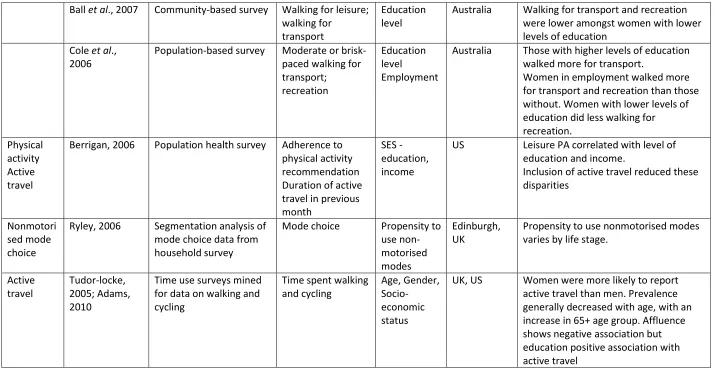
Demographic characteristics
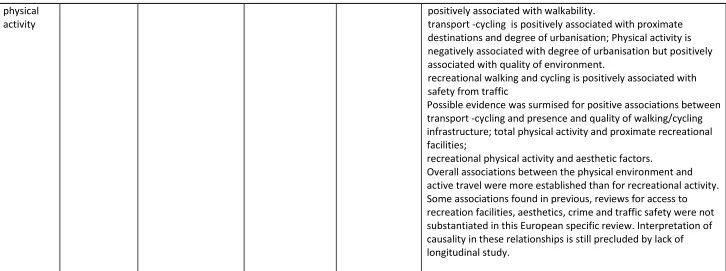
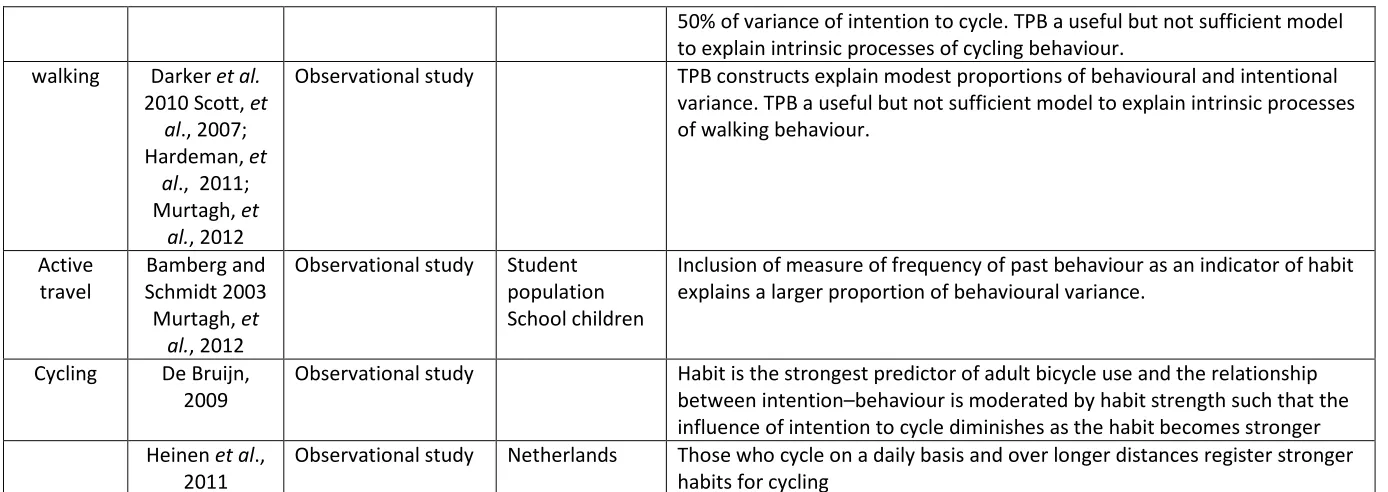
Behaviour Reference Research design Measure Variable Population Principal findings
Cycling Pucher and
Buehler, 2012 National travel surveys – annual cross-sectional surveys
Mode share of all
trips Gender UK, US More cycle trips are made by men than women across all age groups Gender split is more even in countries with a higher modal share
Age UK The mode share for declines across age groups
NTS0705 DfT,
2012 UK National Travel Survey Mode share of all trips and distance SES - income UK Correlation between income and trips and distance De Geus, 2008 Survey of working
population Cycling to work Education Belgium Cycling higher in those with higher levels of education Kemperman and
Timmermans, 2009
Cross-sectional
household questionnaire and travel diaries
Mode choice Education Netherlands Amongst older adults cycling was higher amongst those with higher levels of education
Kamphuis et al.,
2008 Population-based survey Recreational cycling Education Australia Recreational cycling higher amongst groups with higher levels of education Walking Pucher and
Buehler, 2012 National travel surveys – annual cross-sectional surveys
Mode share of all
trips Gender Age UK, US More walking trips are made by women than men U-shaped graph - mode share declines across the age groups with slight increase in oldest group. This is more pronounced in some northern European countries.
NTS0705 DfT,
2012 Mode share of all trips and distance Income UK Inverse correlation: trips and distance are highest in the lowest income quintile Giles-Corti and
Donovan, 2002 Walking as recommended; Any walking for transport; Any walking for recreation
Area level
46 Ball et al., 2007 Community-based survey Walking for leisure;
walking for transport
Education
level Australia Walking for transport and recreation were lower amongst women with lower levels of education
Cole et al.,
2006 Population-based survey Moderate or brisk-paced walking for transport;
recreation
Education level
Employment
Australia Those with higher levels of education walked more for transport.
Women in employment walked more for transport and recreation than those without. Women with lower levels of education did less walking for
recreation. Physical
activity Active travel
Berrigan, 2006 Population health survey Adherence to physical activity recommendation Duration of active travel in previous month
SES - education, income
US Leisure PA correlated with level of education and income.
Inclusion of active travel reduced these disparities
Nonmotori sed mode choice
Ryley, 2006 Segmentation analysis of mode choice data from household survey
Mode choice Propensity to use non-motorised modes
Edinburgh,
UK Propensity to use nonmotorised modes varies by life stage.
Active
travel Tudor-locke, 2005; Adams, 2010
Time use surveys mined for data on walking and cycling
Time spent walking
and cycling Age, Gender, Socio-economic status
[image:46.842.50.772