• No results found

1 CAN EPDS ITEMS PREDICT PRETERM BIRTH?

N/A
N/A
Protected

Academic year: 2020

Share "1 CAN EPDS ITEMS PREDICT PRETERM BIRTH?"

Copied!
23
0
0

Loading.... (view fulltext now)

Full text

(1)

Can Edinburgh Postnatal Depression Scale (EPDS) Items Predict Preterm Birth?

By Shelby Smith

Senior Honor’s Thesis School of Nursing

University of North Carolina at Chapel Hill

April 15, 2020

Approved:

Dr. Hudson Santos, Thesis Adviser (Name), Reader

(Name), Reader

(2)

Abstract

Introduction: Preterm birth (PTB) is a pressing health problem worldwide. Women who experience anxious or depressive symptoms during pregnancy are at increased risk for PTB.

Clinical research and healthcare providers frequently assess mood symptom severity as the sum- scores of symptoms represented using self-report scales. However, the sum-score method does not represent possible heterogenous symptoms and differential outcomes. In this study, we sought to assess which individual EPDS components are most strongly associated with PTB.

Methods: Retrospective cohort study of women at high risk for PTB who received prenatal care at a single tertiary care facility, delivered a singleton, non-anomalous fetus from 4/2014-7/2019, and completed ≥1 EPDS assessment at <24 weeks’ gestation. Logistic regression was used to test whether individual scores for each of the 10 EPDS items had differential association between gestational age at birth.

Results: 1,418 women were included; 250 (17.6%) delivered < 37 weeks’ gestation. Individual EPDS items and the total EPDS score were both higher among women who eventually delivered preterm. In logistic regression models, each additional point on the total EPDS score was

associated with a small (3%) increase in the odds of PTB while points on questions 2 (addressing anhedonia), 3 and 5 (both addressing anxiety) were associated with a 29%, 22%, and 21%

increased odds of PTB, respectively.

Conclusion: Responses to individual items of the EPDS in early pregnancy, specifically within

the anhedonia and anxiety domains, are associated with PTB. Future risk elucidation may

improved screening for targeted psychosocial interventions to reduce prematurity.

(3)
(4)

Introduction

Preterm birth (PTB), or delivery before a gestational age of 37 weeks, affects an estimated 9.8% of women in the United States overall, and has a multifactorial etiology that is not well understood (Purisch & Gyamfi-Bannerman, 2017). PTB is typically classified into two distinct clinical subtypes; spontaneous preterm birth (related to preterm cervical dilation or preterm prolonged rupture of membranes) or medically indicated PTB (because of maternal or infant distress or illness) (Stout, Busam, Macones, & Tuuli, 2014). Both types carry significant risks to both mother and infant, and are associated with increased healthcare utilization, major health complications, and chronic diseases that often persist to adulthood for surviving infants.

These risks are most significant for non-Hispanic Black mothers who experience higher rates of PTB (Dunkel Schetter & Glynn, 2011; Goldenberg, Culhane, Iams, & Romero, 2008; Manuck, 2017; Nutor, Slaughter-Acey, Giurgescu, & Misra, 2018).

Mood and anxiety symptoms within the antenatal period are a risk factor for PTB (Rose, Pana, & Premji, 2016; Venkatesh, Ferguson, Smith, Cantonwine, & McElrath, 2019). Estimates vary, but recent studies show that up to 15% of women are affected by perinatal mood and anxiety symptoms (Dennis, Falah-Hassani, & Shiri, 2017; Okagbue et al., 2019). However, this is likely an underestimation of the total number of affected pregnancies, and there is evidence to show that as few as one in three women who meet the criteria for major depression during pregnancy do not receive any kind of treatment (Flynn, Blow, & Marcus, 2006). Barriers to effective screening and treatment may include the overlap of common mood and anxiety

symptoms and normal pregnancy symptoms (changes in sleep, appetite, and libido) as well as the

ongoing safety and cultural considerations of maternal antidepressant usage during pregnancy

(5)

(Lee et al., 2007; Muzik & Hamilton, 2016; Walton et al., 2014). Perinatal depression is associated with a higher risk of unsafe health behaviors such as smoking, substance abuse, and disengagement from regular prenatal care, thus increasing the risk of adverse birth outcomes (Flynn, Davis, Marcus, Cunningham, & Blow, 2004; Grote et al., 2010; Halbreich, 2005; Ibanez et al., 2012). The effects of perinatal anxiety have been studied less often, but there is evidence to show that anxiety symptoms are very common during pregnancy, and perinatal anxiety is correlated with preterm birth, low birthweight, and increased pain medication during labor, as well as internalizing and externalizing problems such as childhood anxiety or attention

deficit/hyperactivity disorder for offspring (Gjerde et al., 2020; Glover & O’Connor, 2005;

Rodriguez & Bohlin, 2005).

The Edinburgh Postnatal Depression Scale (EPDS) is one of the most commonly used perinatal mood disorders screening tools, and is recommended by the US Preventive Task Force to be used universally for screening during pregnancy and in the postpartum period (O’Connor, Rossom, Henninger, Groom, & Burda, 2016). The EPDS is very frequently used in both

antenatal and postpartum care as a screening tool for mood symptoms, but the timing of the tool’s administration during practice is varied based on individual setting, representing a challenge for the implementation of consistent universal screening (Venkatesh et al., 2016;

Kubota et. al, 2018). Ten items on the EPDS ask women how often they have experienced

symptoms in the questions over the past seven days. Each item measures symptoms within a

specific mood domain, meaning that the scale intends to capture symptoms of depression,

anxiety, and anhedonia as the three validated factors of the tool(Coates, Ayers, & de Visser,

2017; Jomeen & Martin, 2005; Tuohy & McVey, 2008).

(6)

It is important to recognize that there is significant variation associated in perinatal mood and anxiety symptoms during pregnancy, the combination of which represents different clinical

“phenotypes” that affect maternal health. (Postpartum Depression: Action Towards & Treatment, 2015; Putnam et al., 2017). Additionally, these clinical phenotypes are distinct for mothers experiencing threatened or actual preterm birth, as their hospitalization or the further neonatal intensive care treatment of their baby contributes more stress which may manifest differently for different women (Holditch-Davis et al., 2015). The EPDS measures these symptoms, but there is a need for more research that observes the clinical significance of the variation, timing, and severity of mood changes during pregnancy. The majority of clinicians and clinical studies use only a “sum-scoring” method, in which all items are scored cumulatively, as a benchmark for a high-risk screening worthy of further evaluation or treatment (Teissedre & Chabrol, 2004).

Although not diagnostic, a score of 9 or higher typically indicates an increased risk of perinatal mood and anxiety disorder diagnosis (Benvenuti, Ferrara, Niccolai, Valoriani, & Cox, 1999).

The sum-score method allows for very distinction of what symptoms are being experienced and may be overgeneralizing the experiences of women with perinatal mood and anxiety symptoms.

Therefore, a number of researchers are attempting to demonstrate factor structure reliability for

the three factors (depression, anxiety, and anhedonia) measured by the EPDS (Kozinszky,

Töreki, Hompoth, Dudas, & Németh, 2017). It is still unknown whether scores on the individual

items of the EPDS can better identify which women are at highest risk for adverse perinatal

outcomes. In this study, we sought to evaluate which individual EPDS items are most strongly

associated with spontaneous PTB.

(7)

Methods

This study utilized a retrospective cohort derived using electronic medical record data from prenatal care clinics in a single tertiary care facility in North Carolina. The cohort included women at high risk for PTB who delivered a singleton, non-anomalous fetus from 4/2014-7/2019 and completed ≥1 EPDS assessment at <24 weeks’ gestation. Women were considered to be at high risk for PTB if they had a history of spontaneous preterm birth or pre-eclampsia in a prior pregnancy, underwent cervical cerclage placement for any indication, were diagnosed with a short mid-trimester cervical length (<25mm by endovaginal ultrasound), and/or had a diagnosis of chronic hypertension. Exclusion criteria were suspected major congenital anomaly or

aneuploidy, or women with an initial EPDS ≥ 24 weeks. This cut off was determined because it is the point of viability for fetuses, at which those born preterm have the potential to survive the neonatal period. The final study population included 1,418 women.

The measurement tool used in the analysis was the Edinburgh Postnatal Depression Scale (EPDS), which contains 10 questions measuring mood symptoms (anxiety, anhedonia, and depression). It is scored on a scale from 0-30, with a higher score representing elevated symptoms. The scale has been validated because of it’s level of accuracy and sensitivity, particularly in low resource prenatal care settings (Chorwe-Sungani & Chipps, 2017).

In this sample, participants were included in the preterm birth cohort if they experienced

a delivery at a gestational age of <37 weeks, while those in the full-term cohort delivered at a

gestational age of ≥37 weeks. Multiple covariates were examined in the study. These included

race (non-Hispanic Black, non-Hispanic White, Hispanic/Latino), body mass index (obese with

BMI ≥30 kg/m

2

or not obese with BMI <30 kg/m

2

), smoking status (self-reported smoking

(8)

during pregnancy or no smoking during pregnancy), history of at least one spontaneous preterm birth, sex of the fetus (male or female), history of pre-eclampsia in a prior pregnancy, or a diagnosis of chronic hypertension. These were chosen because of existing literature showing significant associations with preterm birth and each of these covariates (Bertagnolli, Luu, Lewandowski, Leeson, & Nuyt, 2016; Peelen et al., 2016; Phillips, King, Bernstein, Skelly, &

Higgins, 2017) .

Data Analysis

Data from the EPIC electronic medical records were compiled and verified by the NC

Translational and Clinical Science Institute. The EPDS sum-score and individual scores for each of the 10 EPDS items were analyzed according to the domain they represented: items 1 and 2 are representative of anhedonia; items 3, 4, 5 and 6 are representative of anxiety; and items 7, 8, 9 and 10 are representative of depressive symptoms. For women with multiple EPDS responses

<24 weeks’ gestation, the first EPDS response was considered. Data were analyzed in STATA using ANOVA and logistic regression. The independent variables in this model were the EPDS item scores, while the dependent variable was preterm birth status. Subjects were categorized into women who delivered preterm (<37 weeks) (n=250) and women delivering at full term ≥ 37 weeks (n=1,168). Statistical significance was defined at alpha < 0.05.

The final logistic regression model was analyzed using the area under the curve (AUC).

This measurement represents how well the score on the EPDS item predicts the outcome of

preterm birth, when compared with random chance (AUC=0.50). The covariates in the model

were chosen using a backwards stepwise logistic regression. The initial models included

maternal race, presence of obesity, smoking status, history of at least one spontaneous preterm

(9)

birth, sex of the fetus, history of pre-eclampsia in a prior pregnancy, or a diagnosis of chronic

hypertension. Factors with a p-value of <0.20 remained in the final model. These included

maternal race, presence of obesity, history of at least one spontaneous preterm birth, and fetal

sex.

(10)

Results Sample Characteristics

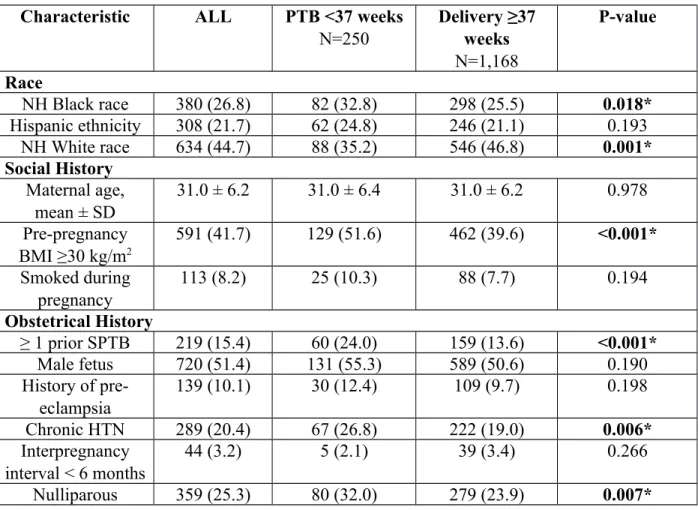
Table 1 demonstrates the overall demographic characteristics between the PTB and full term birth cohorts. Overall, the majority of women in the study were White (44.7%), in their early 30’s (median age of 31), and had moderate rates of chronic diseases including chronic hypertension (20.4%), obesity (41.7%), and a variety of other obstetric or social comorbidities.

The women in the preterm birth cohort were more likely to be non-Hispanic Black (32.8%), obese before pregnancy (51.6%), have a history of at least one spontaneous preterm birth (24.0%) or nulliparous (32.0%), and have a diagnosis of chronic hypertension (26.8%).

Approximately half (54%) of each cohort had no prior history of psychiatric illness, and there was no significant difference in the prevalence of depression (36.4%) or anxiety (14.8%) diagnoses between the PTB and full-term cohorts. However, there was a significant difference in prior diagnoses of bipolar disorder, whereas the PTB cohort had twice as many women (8.0%) with this diagnosis than the full term cohort (3.9%, p = 0.004).

Timing of the EPDS Assessment

The mean EPDS assessment was at 12.7 (± 4.7) weeks, which is just past the first trimester cutoff. Between the cohorts, the timing of the first EPDS assessment did not vary significantly, with a median administration at 12.3 (9.1, 16.1) weeks gestation for PTB and 11.3 (8.9, 15.6) weeks gestation for full term women.

EPDS Prediction of Preterm Birth Outcome

Logistic regression was used to evaluate whether EPDS items and the sum score demonstrate differential risk for PTB. Overall, EPDS scores were higher for women who

eventually delivered preterm at <37 weeks. The mean EPDS sum score for the entire cohort was

(11)

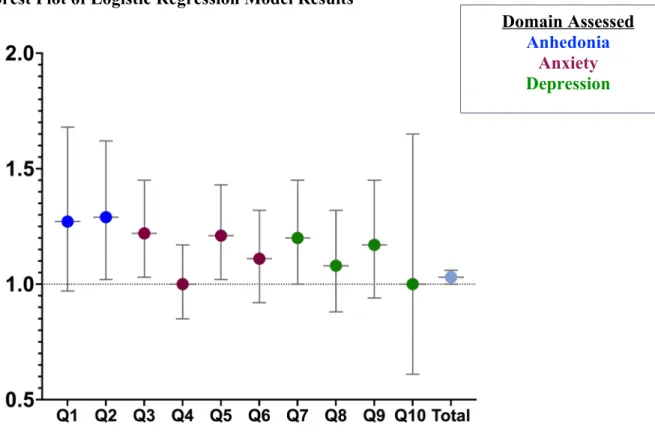
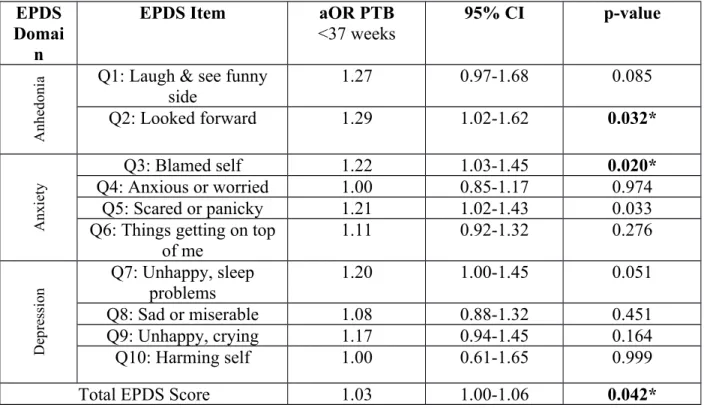
5.6 ± 5.1, with a mean sum score of 6.2 ± 5.5 and 5.5 ± 5.0 for the preterm birth and full term birth cohorts respectively. The EPDS sum score was associated with an adjusted odds ratio (aOR) of 1.03 for PTB, suggesting a small (3%) increase in the odds of PTB for each additional point on the sum score. Three individual EPDS items were also significantly associated with an increased risk for PTB, namely question 2 (addressing anhedonia), and questions 3 and 5 (both addressing anxiety) which were associated with an aOR of 1.29, 1.22, and 1.21 for PTB, respectively. This suggests that each additional point on questions 2 (anhedonia), 3 and 5 (anxiety) was associated with a 29%, 22%, and 21% increased odds of PTB, respectively.

Results for all of the EPDS components in the logistic regression model can be seen in a forest plot format (Figure 1) and in Table 2.

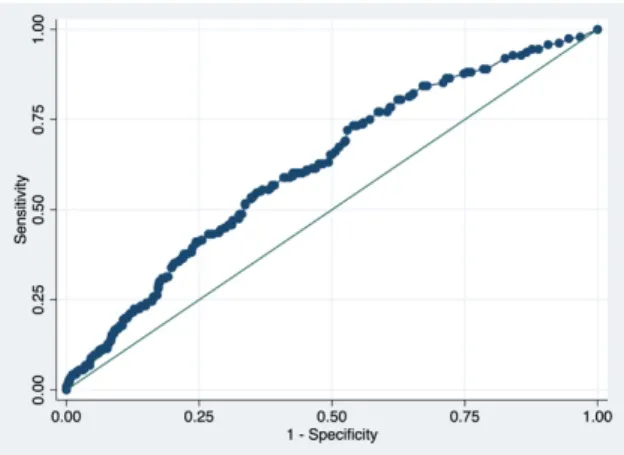
Overall, the logistic regression models in this study performed modestly (Figure 2). The

individual EPDS items (#2, #3 and #5) with significance in this model performed as accurately

as the total, sum-score EPDS in predicting PTB.

(12)

Discussion

In this study, we set out to examine whether individual items on the EPDS were capable of predicting spontaneous preterm birth in a group of high risk women. We found that three items related to anhedonia and anxiety were significantly associated with PTB, and that these individual items independently performed as well as the sum-score on the EPDS in predicting PTB.

Preterm birth is a pressing public health problem worldwide, and women who experience perinatal mood and anxiety symptoms are often at increased risk for PTB outcomes. Less known is the association between individual symptoms and PTB. Most studies focus on a sum score of symptom assessment, such as the EPDS. This sum score hinders the potential differential effects of individual symptoms in increasing risk for negative birth outcomes. Our population had a higher rate of PTB (17.8%) than the general population (9.8%). Logistic regression results demonstrated that examining individual EPDS items (vs. the sum score) in connection to PTB outcomes is appropriate. Perinatal mood and anxiety symptoms specific to anhedonia (1 item) and anxiety (2 items) were correlated with an increased risk for PTB, after controlling for other significant covariates such as race, obesity, prior PTB etc.

Existing studies show connections between perinatal anxiety and depression and preterm

birth, with variations in results about the significance of the timing and severity of symptoms

during pregnancy (Ncube, Enquobahrie, & Gavin, 2017; Rose et al., 2016; Staneva, Bogossian,

Pritchard, & Wittkowski, 2015; Venkatesh, Riley, Castro, Perlis, & Kaimal, 2016). Furthermore,

the majority of studies have distinguished the strongest association with spontaneous PTB, with

less evidence for a relationship with medically indicated PTB (Grote et al., 2010; Staneva et al.,

2015; Venkatesh et al., 2019). Many of these studies can be difficult to interpret because of the

(13)

wide variation in design and variables of interest; however, it is clear that women experiencing threatened PTB are a high risk group for perinatal mood and anxiety disorders due to periods of hospitalization, stress, and additional medical procedures that may increase the risk of adverse outcomes for mothers and infants (Hanko et al., 2019).

The EPDS is widely used as a common clinical tool for evaluation of perinatal mood symptoms with the recommendation of screening “early” in pregnancy, but there are significant limitations to this tool. However, there is no clinical benchmark for first administration. This study showed variability from 9-16 weeks for administration of the first EPDS, with mean of 12 weeks. It is unclear the degree to which an individual’s symptoms may change depending on the timing of administration. The EPDS is not commonly administered at each prenatal appointment unless the first screening is identified as “at risk” (Venkatesh et al., 2016). Furthermore, recent evidence shows that the EPDS may vary in reliability across racial or socioeconomic groups. For example, the interpretation of “things get on top of me” was linked to the anxiety factor in Hispanic women but to the depression factor in White and non-Hispanic Black women (Chiu et al., 2017; Shrestha, Pradhan, Tran, Gualano, & Fisher, 2016). Finally, the EPDS has not been definitively validated for use to measure anxiety (van der Zee-van den Berg, Boere-Boonekamp, Groothuis-Oudshoorn, & Reijneveld, 2019).

The combination of items on the EPDS measuring anxiety is often referred to as the

EPDS-3A, and some small studies have shown that this tool may reliably distinguish anxiety

from depression symptoms independently (Matthey, Fisher, & Rowe, 2013; Matthey, Valenti,

Souter, & Ross-Hamid, 2013; van der Zee-van den Berg, Boere-Boonekamp, Groothuis-

Oudshoorn, & Reijneveld, 2019). Notably, there are several other psychiatric measurement tools

that have been developed specifically for this purpose such as the Generalized Anxiety Disorder

(14)

(GAD) 7-item scale and the State-Trait Anxiety Inventory (STAI) (Evans, Spiby, & Morrell, 2015). There is a need for more large-scale, quantitative studies and systematic reviews that explore this topic to provide clarity on the continued use of the EPDS as the ideal screening tool for perinatal mood and anxiety symptoms.

Numerous hypotheses about the biobehavioral etiology of perinatal mood and anxiety symptoms currently exist. New research is focused on the development of prospective, molecular identifiers in genetics and neuroactive molecules that may indicate an increased risk for perinatal mood symptoms. Some of the most commonly cited hypotheses are about the connection between perinatal mood and anxiety symptoms and hormonal markers (cortisol, estradiol, progesterone), the nervous system and the gut microbiota (specifically in relation to serotonin), and epigenetic markers (Rackers, Thomas, Williamson, Posey, & Kimmel, 2018; Redpath, Rackers, & Kimmel, 2019; Sawyer, Zunszain, Dazzan, & Pariante, 2019). Of note to this study, one proposed mechanism to explain the anxiety-PTB connection is the modification of the hypothalamic pituitary axis to increase production of placental corticotropin-releasing hormone (Ramos et al., 2018; Zoubovsky et al., 2020). Future studies should incorporate biological data in addition to individual self-report measures of perinatal mood symptoms to further elucidate how these mechanisms may be intertwined.

An additional theory that may be relevant for future work is the network structure theory of perinatal depression, which explores perinatal mood and anxiety symptoms as a complex system, with various symptoms interacting together in connection with external factors (e.g., self-efficacy) and internal factors (e.g., hormone levels) to change the overall experience of the woman with perinatal mood and anxiety symptoms (Santos, Fried, Asafu-Adjei, & Ruiz, 2017).

This model may be used to explore more symptom-specific risk and protective factors in this

(15)

population, especially because the results of this study indicated significant connections between anxiety and anhedonia.

This study adds to a growing body of evidence that underscores the need for refining perinatal mood screenings to be more symptom-specific and focused in targeted groups. In women at high risk for preterm birth, it is possible that anxiety and anhedonia are more clinically significant than depression, and that clinicians should expand or target further screenings to inquire about these symptoms. Furthermore, there is a need for more studies to correlate biomarkers from blood, placental tissue, saliva etc. with perinatal mood symptoms and obstetrical outcomes to further elucidate hypotheses about these physiological mechanisms.

Finally, this study has implications for healthcare providers who have limited time and resources during patient appointments, because in this study, short, specific items performed as well as a longer, more time and labor intensive screening. It is worth exploring the possibility that perinatal mood screenings can be tailored to specific groups, and made shorter to improve their accuracy, prevent survey fatigue and allow more time for other prenatal education.

Strengths of this study included the large sample size, the availability of many

demographic characteristics through the data extraction methodology, and the universal usage of

the EPDS at the chosen facility for the study. However, since women in this cohort had a high

prior risk for PTB and all received prenatal care at a tertiary care center, the generalizability of

the results to other populations may be limited.

(16)

Conclusion

Previous literature describes in detail the use of the EPDS as a screening tool for perinatal mood disorders; however, this study explored the use of individual EPDS item scores in

relationship to PTB. Attention to individual items of the EPDS may provide a simple, accessible way for clinicians to understand patients’ symptoms of perinatal depression, anxiety, or

anhedonia that may provide individuals with the targeted psychiatric and obstetrical care they

need.

(17)

Table 1: Demographic characteristics

Characteristic ALL PTB <37 weeks N=250

Delivery ≥37 weeks N=1,168

P-value

Race

NH Black race 380 (26.8) 82 (32.8) 298 (25.5) 0.018*

Hispanic ethnicity 308 (21.7) 62 (24.8) 246 (21.1) 0.193

NH White race 634 (44.7) 88 (35.2) 546 (46.8) 0.001*

Social History Maternal age,

mean ± SD

31.0 ± 6.2 31.0 ± 6.4 31.0 ± 6.2 0.978

Pre-pregnancy BMI ≥30 kg/m

2

591 (41.7) 129 (51.6) 462 (39.6) <0.001*

Smoked during pregnancy

113 (8.2) 25 (10.3) 88 (7.7) 0.194

Obstetrical History

≥ 1 prior SPTB 219 (15.4) 60 (24.0) 159 (13.6) <0.001*

Male fetus 720 (51.4) 131 (55.3) 589 (50.6) 0.190

History of pre- eclampsia

139 (10.1) 30 (12.4) 109 (9.7) 0.198

Chronic HTN 289 (20.4) 67 (26.8) 222 (19.0) 0.006*

Interpregnancy interval < 6 months

44 (3.2) 5 (2.1) 39 (3.4) 0.266

Nulliparous 359 (25.3) 80 (32.0) 279 (23.9) 0.007*

(18)

Figure 1. Forest Plot of Logistic Regression Model Results

Note: Model adjusted for race, obesity, prior PTB, and fetal sex aOR are for each one point increase in the EPDS item score

Domain Assessed Anhedonia

Anxiety

Depression

(19)

Table 2. Adjusted Odds Ratios for Individual EPDS Items and Overall Sum-Scores

EPDS Domai

n

EPDS Item aOR PTB

<37 weeks

95% CI p-value

A nh ed on ia Q1: Laugh & see funny side

1.27 0.97-1.68 0.085

Q2: Looked forward 1.29 1.02-1.62 0.032*

A nx ie ty

Q3: Blamed self 1.22 1.03-1.45 0.020*

Q4: Anxious or worried 1.00 0.85-1.17 0.974

Q5: Scared or panicky 1.21 1.02-1.43 0.033

Q6: Things getting on top of me

1.11 0.92-1.32 0.276

D ep re ss io n Q7: Unhappy, sleep problems

1.20 1.00-1.45 0.051

Q8: Sad or miserable 1.08 0.88-1.32 0.451

Q9: Unhappy, crying 1.17 0.94-1.45 0.164

Q10: Harming self 1.00 0.61-1.65 0.999

Total EPDS Score 1.03 1.00-1.06 0.042*

(20)

Figure 2. AUC Models for Total and Individual Item Scores

Model with EPDS Item #3 AUC: 0.618 (95% CI 0.578-0.657) Model with Total EPDS Score

AUC: 0.620 (95% CI 0.581-0.658)

Model with EPDS Item #5 AUC: 0.619

(95% CI 0.580-0.657) Model with EPDS Item #2

AUC: 0.625

(95% CI 0.587-0.662)

(21)

ReferencesXAccortt, E. E., & Wong, M. S. (2017). It is time for routine screening for perinatal mood and anxiety disorders in obstetrics and gynecology settings. Obstetrical &

Gynecological Survey, 72(9), 553–568. https://doi.org/10.1097/OGX.0000000000000477 Bertagnolli, M., Luu, T. M., Lewandowski, A. J., Leeson, P., & Nuyt, A. M. (2016). Preterm

Birth and Hypertension: Is There a Link? Current Hypertension Reports, 18(4), 28.

https://doi.org/10.1007/s11906-016-0637-6

Byrnes, L. (2019). Perinatal mood and anxiety disorders: findings from focus groups of at risk women. Archives of Psychiatric Nursing, 33(6), 149–153.

https://doi.org/10.1016/j.apnu.2019.08.014

Chorwe-Sungani, G., & Chipps, J. (2017). A systematic review of screening instruments for depression for use in antenatal services in low resource settings. BMC Psychiatry, 17(1), 112. https://doi.org/10.1186/s12888-017-1273-7

Dennis, C.-L., Falah-Hassani, K., & Shiri, R. (2017). Prevalence of antenatal and postnatal anxiety: systematic review and meta-analysis. The British Journal of Psychiatry, 210(5), 315–323. https://doi.org/10.1192/bjp.bp.116.187179

Evans, K., Spiby, H., & Morrell, C. J. (2015). A psychometric systematic review of self-report instruments to identify anxiety in pregnancy. Journal of Advanced Nursing, 71(9), 1986–

2001. https://doi.org/10.1111/jan.12649

Flynn, H. A., Blow, F. C., & Marcus, S. M. (2006). Rates and predictors of depression treatment among pregnant women in hospital-affiliated obstetrics practices. General Hospital Psychiatry, 28(4), 289–295. https://doi.org/10.1016/j.genhosppsych.2006.04.002 Gjerde, L. C., Eilertsen, E. M., Eley, T. C., McAdams, T. A., Reichborn-Kjennerud, T.,

Røysamb, E., & Ystrom, E. (2020). Maternal Perinatal and Concurrent Anxiety and Mental Health Problems in Early Childhood: A Sibling-Comparison Study. Child Development, 91(2), 456–470. https://doi.org/10.1111/cdev.13192

Glover, V., & O’Connor, T. G. (2005). Antenatal programming of child behavior and neurodevelopment: Links with maternal stress and anxiety. Perinatal Programming.

Grote, N. K., Bridge, J. A., Gavin, A. R., Melville, J. L., Iyengar, S., & Katon, W. J. (2010). A

meta-analysis of depression during pregnancy and the risk of preterm birth, low birth

weight, and intrauterine growth restriction. Archives of General Psychiatry, 67(10),

1012–1024. https://doi.org/10.1001/archgenpsychiatry.2010.111

(22)

Hanko, C., Bittner, A., Junge-Hoffmeister, J., Mogwitz, S., Nitzsche, K., & Weidner, K. (2019).

Course of mental health and mother-infant bonding in hospitalized women with threatened preterm birth. Archives of Gynecology and Obstetrics.

https://doi.org/10.1007/s00404-019-05406-3

Holditch-Davis, D., Santos, H., Levy, J., White-Traut, R., O’Shea, T. M., Geraldo, V., & David, R. (2015). Patterns of psychological distress in mothers of preterm infants. Infant

Behavior & Development, 41, 154–163. https://doi.org/10.1016/j.infbeh.2015.10.004 Kozinszky, Z., Töreki, A., Hompoth, E. A., Dudas, R. B., & Németh, G. (2017). A more rational,

theory-driven approach to analysing the factor structure of the Edinburgh Postnatal Depression Scale. Psychiatry Research, 250, 234–243.

https://doi.org/10.1016/j.psychres.2017.01.059

Lee, A. M., Lam, S. K., Sze Mun Lau, S. M., Chong, C. S. Y., Chui, H. W., & Fong, D. Y. T.

(2007). Prevalence, course, and risk factors for antenatal anxiety and depression.

Obstetrics and Gynecology, 110(5), 1102–1112.

https://doi.org/10.1097/01.AOG.0000287065.59491.70

Muzik, M., & Hamilton, S. E. (2016). Use of Antidepressants During Pregnancy?: What to Consider when Weighing Treatment with Antidepressants Against Untreated Depression.

Maternal and Child Health Journal, 20(11), 2268–2279. https://doi.org/10.1007/s10995- 016-2038-5

Ncube, C. N., Enquobahrie, D. A., & Gavin, A. R. (2017). Racial differences in the association between maternal antenatal depression and preterm birth risk: A prospective cohort study.

Journal of Women’s Health, 26(12), 1312–1318. https://doi.org/10.1089/jwh.2016.6198 O’Connor, E., Rossom, R. C., Henninger, M., Groom, H. C., & Burda, B. U. (2016). Primary

care screening for and treatment of depression in pregnant and postpartum women:

evidence report and systematic review for the US preventive services task force. The Journal of the American Medical Association, 315(4), 388–406.

https://doi.org/10.1001/jama.2015.18948

Okagbue, H. I., Adamu, P. I., Bishop, S. A., Oguntunde, P. E., Opanuga, A. A., & Akhmetshin, E. M. (2019). Systematic Review of Prevalence of Antepartum Depression during the Trimesters of Pregnancy. Open Access Macedonian Journal of Medical Sciences, 7(9), 1555–1560. https://doi.org/10.3889/oamjms.2019.270

Peelen, M. J. C. S., Kazemier, B. M., Ravelli, A. C. J., De Groot, C. J. M., Van Der Post, J. A.

M., Mol, B. W. J., … Kok, M. (2016). Impact of fetal gender on the risk of preterm birth, a national cohort study. Acta Obstetricia et Gynecologica Scandinavica, 95(9), 1034–

1041. https://doi.org/10.1111/aogs.12929

(23)

Phillips, J. K., King, S. E., Bernstein, I. M., Skelly, J. M., & Higgins, S. T. (2017). Associations of Maternal Obesity and Smoking Status with Perinatal Outcomes. The Journal of Maternal-Fetal & Neonatal Medicine, 31(12), 1–17.

https://doi.org/10.1080/14767058.2017.1322950

Purisch, S. E., & Gyamfi-Bannerman, C. (2017). Epidemiology of preterm birth. Seminars in Perinatology, 41(7), 387–391. https://doi.org/10.1053/j.semperi.2017.07.009

Rackers, H. S., Thomas, S., Williamson, K., Posey, R., & Kimmel, M. C. (2018). Emerging literature in the Microbiota-Brain Axis and Perinatal Mood and Anxiety Disorders.

Psychoneuroendocrinology, 95, 86–96. https://doi.org/10.1016/j.psyneuen.2018.05.020 Ramos, I. F., Guardino, C. M., Mansolf, M., Glynn, L. M., Sandman, C. A., Hobel, C. J., &

Dunkel Schetter, C. (2018). Pregnancy anxiety predicts shorter gestation in Latina and non-Latina white women: The role of placental corticotrophin-releasing hormone.

Psychoneuroendocrinology, 99, 166–173. https://doi.org/10.1016/j.psyneuen.2018.09.008 Redpath, N., Rackers, H. S., & Kimmel, M. C. (2019). The relationship between perinatal mental

health and stress: a review of the microbiome. Current Psychiatry Reports, 21(3), 18.

https://doi.org/10.1007/s11920-019-0998-z

Rodriguez, A., & Bohlin, G. (2005). Are maternal smoking and stress during pregnancy related to ADHD symptoms in children? Journal of Child Psychology and Psychiatry, and Allied Disciplines, 46(3), 246–254. https://doi.org/10.1111/j.1469-7610.2004.00359.x Rose, M. S., Pana, G., & Premji, S. (2016). Prenatal Maternal Anxiety as a Risk Factor for

Preterm Birth and the Effects of Heterogeneity on This Relationship: A Systematic Review and Meta-Analysis. BioMed Research International, 2016, 8312158.

https://doi.org/10.1155/2016/8312158

Santos, H., Fried, E. I., Asafu-Adjei, J., & Ruiz, R. J. (2017). Network structure of perinatal depressive symptoms in latinas: relationship to stress and reproductive biomarkers.

Research in Nursing & Health, 40(3), 218–228. https://doi.org/10.1002/nur.21784 Sawyer, K. M., Zunszain, P. A., Dazzan, P., & Pariante, C. M. (2019). Intergenerational

transmission of depression: clinical observations and molecular mechanisms. Molecular Psychiatry, 24(8), 1157–1177. https://doi.org/10.1038/s41380-018-0265-4

Staneva, A., Bogossian, F., Pritchard, M., & Wittkowski, A. (2015). The effects of maternal depression, anxiety, and perceived stress during pregnancy on preterm birth: A

systematic review. Women and Birth : Journal of the Australian College of Midwives,

28(3), 179–193. https://doi.org/10.1016/j.wombi.2015.02.003

(24)

Stout, M. J., Busam, R., Macones, G. A., & Tuuli, M. G. (2014). Spontaneous and Indicated Preterm Birth Subtypes: Inter-observer Agreement and Accuracy of Classification.

American Journal of Obstetrics and Gynecology.

https://doi.org/10.1016/j.ajog.2014.05.023

van der Zee-van den Berg, A. I., Boere-Boonekamp, M. M., Groothuis-Oudshoorn, C. G. M., &

Reijneveld, S. A. (2019). The Edinburgh Postpartum Depression Scale: Stable structure but subscale of limited value to detect anxiety. Plos One, 14(9), e0221894.

https://doi.org/10.1371/journal.pone.0221894

Venkatesh, K. K., Ferguson, K. K., Smith, N. A., Cantonwine, D. E., & McElrath, T. F. (2019).

Association of Antenatal Depression with Clinical Subtypes of Preterm Birth. American Journal of Perinatology, 36(6), 567–573. https://doi.org/10.1055/s-0038-1675646

Venkatesh, K. K., Riley, L., Castro, V. M., Perlis, R. H., & Kaimal, A. J. (2016). Association of antenatal depression symptoms and antidepressant treatment with preterm birth.

Obstetrics and Gynecology, 127(5), 926–933.

https://doi.org/10.1097/AOG.0000000000001397

Walton, G. D., Ross, L. E., Stewart, D. E., Grigoriadis, S., Dennis, C.-L., & Vigod, S. (2014).

Decisional conflict among women considering antidepressant medication use in pregnancy. Archives of Women’s Mental Health, 17(6), 493–501.

https://doi.org/10.1007/s00737-014-0448-1

Zoubovsky, S. P., Hoseus, S., Tumukuntala, S., Schulkin, J. O., Williams, M. T., Vorhees, C. V.,

& Muglia, L. J. (2020). Chronic psychosocial stress during pregnancy affects maternal behavior and neuroendocrine function and modulates hypothalamic CRH and nuclear steroid receptor expression. Translational Psychiatry, 10(1), 6.

https://doi.org/10.1038/s41398-020-0704-2

Figure

Table 1: Demographic characteristics
Figure 1. Forest Plot of Logistic Regression Model Results
Table 2. Adjusted Odds Ratios for Individual EPDS Items and Overall Sum-Scores
Figure 2. AUC Models for Total and Individual Item Scores

References

Related documents