2019 International Conference on Artificial Intelligence and Computing Science (ICAICS 2019) ISBN: 978-1-60595-615-2
A Design of Integrated Quality Management System
B
ased on Artificial
Intelligence (AI) Technology
Jing-ping YANG, Wan-lei WANG
*and Shi-kuan ZHOU
Department of Electromechanical Engineering, Dalian Minzu University, Dalian, China *Corresponding author
Keywords: Artificial Intelligence (AI), Failure Mode & Effect Analysis(FMEA), Advanced Product Quality Planning(APQP), Measurement System Analysis(MSA), Statistical Process Control(SPC).
Abstract. This paper attempts to establish the relationship between quality management system and
AI technology, through analyzing the requirements of traditional quality management system of the new era, along with the perception and recognition, analysis and prediction, decision-making ability of AI technology. Based on a lean standardization process of the quality management, involved numbers of the quality tools improved by AI technology, a conceptual framework of integrated quality management information system based on AI are presented, function modules of this framework is discussed on how to implement in detail.
Introduction
In recent years, accompanied by a series of breakthroughs in Machine Learning & Deep Learning technologies particular in speech & computer vision, AI technology has made a luxuriant comeback after a period of so called ‘AI winter’. Billions of people are benefited in numerous fields such as health care, transportation, education, E-commerce, and home lives. But as for industries, the pace of AI application is much slower. In order for AI to give more advantages for industrial, 3 major parties —Government, Academia and Industry should all take a concerted efforts. Fortunately, China now is ready to embracing AI technology. The government is planning to pour hundreds of billions of yuan into the application of AI technology in coming years to support the intelligent transformation of traditional industries. The industries are also trying their best to get ready to fit for the new challenges and opportunities. Consider that AI is hard and expensive to implement in complex process applications such as industries due to lack of expertise. Academia is responsible for enabling and helping industries to accelerate the growth and applications in industries, especially helping to plan and build an easy-to-use AI application via transforming the traditional Management Information System(MIS) into an AI based MIS.
In this paper, taking an integrated quality management system for manufacturing industries as an example, we discussed a solution to build an AI based Integrated Quality Management Information Systems(IQMIS) to enforce the ability of a traditional MIS for industries.
AI and IQMIS
Feature of Traditional IQMIS
Quality management (QM) is an evergreen research theme in the contemporary world. In the era of industry 4.0, QM has been drawn a great attention due to the turbulent business environment with unprecedented customer expectations. IQMIS are designed and implemented widely in industries to improve the standardization and efficiency of quality management and control functions. The main target of this kind of systems is to identify the control limits of quality to deal with problems, such as inflexibility, high levels of customization, lengthy supply chains, and monitoring of suppliers, etc.[1].
A good design of IQMIS will also help enterprises to explore innovative business applications of quality by decision-making support and gain advantages in the fierce competing environment.
management system which needs an elaborate design and planning. Recently, numbers of papers have made meaningful contributions to the development of this kind of IQMIS across the world, which have created the right trends, cultures, and strategies for quality improvement in the era.
Most traditional IQMIS are usually embedded in CIMS, ERP or MES systems. QMIS under the environment of ERP combines the theory of total quality management (TQM), the ideas of ISO9000, and the advantages of information integration and multi-angle data analysis[2]. Yao, Li et al.[3]
presented a systematic approach to develop IQMIS based on a three-layer Enterprise Resource Planning(ERP)/Manufacturing Executive System(MES)/Process Control System(PCS) architecture for the Concrete-Mixing station enterprise. Other papers (e.g.[4]) also proposed agent based MES architecture for IQMIS support.
Functions of such IQMIS mainly include ‘Quality Plan’ which relates to the management responsibilities, and ‘Quality Control’ which involves a widely use of resources management, products realization, measurement, analysis and improvement with modules such as:
Quality standard management, (2) Quality inspection and control, (3) Quality statistic and analysis, and (4) Quality improvement.
The Transformation of a Traditional IQMIS
In the era of industry 4.0, new potential functions of IQMIS are being required such as: • Economic aspects in quality
According to ISO9000, Quality means ‘The degree to which a set of inherent characteristics fulfil of requirement.’ The definition is strictly right but not easy to understand. When speaking the language of money, it is totally different. The basic role that quality plays in the economic performance of companies needs to be further explored.
• Decision models in quality
Business decision models and continuous improving strategies related to contemporary quality management needs AI algorithms to enforce intelligence and adaptability. Emerging philosophies and business tactics that looks beyond total quality management and six sigma add complexity to IQMIS. AI based IQMIS will consider a large wide of technology integration, and play an important role of product innovation, design and gross root autonomy in quality management.
• Integration of business in quality
Integration of contemporary lean techniques in quality management as well as integration of outsourcing/offshoring quality challenges in logistics and supply chain operations are required in the forthcoming quality management systems.
• Technological aspects in quality
Role of technology, automation and integrated AI based IT/IS in quality management and its relationship with employee empowerment is needed in the new quality management system. For example, Neural Logic Networks (NLN) is a research to embed logic reasoning (being binary or fuzzy) to connection models having humans’ domain knowledge taken into consideration. The reasoning carried out on such network structures allows possible interpretation beyond binary logic[5]. It has been widely agreed that getting application value from machine learning isn’t about
fancier algorithms but about making it easier to use[6].
The Concept Framework of AI based IQMIS
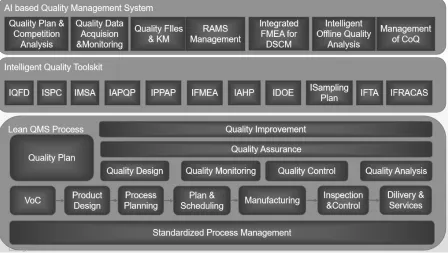
Figure 1. Concept framework of the AI based integrated quality management system.
The framework basically consists of three main parts:
(1)Lean QMS Process
Lean QMS[7]is a comprehensive methodology which combines the benefits of both ISO QMS
standards and Lean Management. The application of this methodology gives manufacturing or service companies more advantages of the ISO certification than only limits to the burden of creating too much documentation. The product forming processes are recognized and organized by the way that ISO certificated and suggested on how to execute processes by providing a specific path of execution. Lean tools (e.g. 5S, Gemba walk, Kaizen, etc.) combined with statistical methods[8] are
playing an increasingly important role in the field of quality management systems . By involving the principle of Lean management, redundant processes that not necessary in day-to-day management of the company are reduced, with a consequence of lower costs and reduced times.
The process covers the whole product lifetime, including:
1) VoC(Voice of Customer): Customers’ requirements to product are acquired by the marketing department, and needed to be transferred rightly and efficiently to the other process of the enterprise.
2) Product Design: According to the customers’ requirements, the R&D department makes or revises the design of the product to better meet all customers’ needs.
3) Process Planning: The Process and technology management department is responsible for the planning of the process which covers the selection of processes, equipment, tools, and the sequencing and parameters of operations required.
4) Plan & Scheduling: Plan and scheduling is an important activity for enterprises to make sure customers’ needs are met completely in time and on a lowest cost to gain profits. In order to do that, a good plan should make an optimized decision on how to make full use of enterprises’ resources, such as production abilities, materials, manpower, and even information.
6) Inspection & Control: Inspection and control is an auxiliary activity to uncover the nonconformity of products or processes to make sure that all products or services delivering to customers are in good conditions.
7) Delivery & Services: Delivery is the last activity that pass the products to customers, after that, continuous tracking and services should be offered to collect complains or other information from the customers.
(2)Intelligent Quality Toolkit
Basic tools of quality such as QFD, SPC, MSA, etc. are helpful in troubleshooting issues related to quality. In an intelligent enterprise environment, these tools can be reformed intelligently into a computer integrated toolkit including:
1) Intelligent QFD(IQFD): based on the methodology of traditional QFD that can translate the customer’s requirement into product specifications. Intelligent QFD using intelligence technology to help users to generate the relationship matrix.
2) Intelligent SPC(ISPC): intelligent methods are added to SPC by recognizing abnormal processes automatically.
3) Intelligent MSA(IMSA): intelligent methods are used to help analyzing the status of measurement.
4) Intelligent APQP(IAPQP): intelligent methods are involved in PDCA cycle to better do the advanced product quality planning.
5) Intelligent PPAP(IPPAP): intelligent methods are used to check whether the supplier has correctly understood all the requirements of the customer engineering design records and specifications, and whether its production process has the potential to meet the customer requirements according to the specified production schedule during the actual production process. 6) Intelligent FMEA(IFMEA): based on the intelligent methods, the flexibility and intelligence of failure modes and effects analysis (FMEA) approach would be strengthened.
7) Intelligent AHP(IAHP): AHP is a widely used evaluation method, with the support of intelligence methods, the index system would be established dynamically.
8) Intelligent DOE(IDOE): Design of experiment is a method to find the best solutions for designs, processes, etc. With the help of intelligent methods, the approach could have more autonomy.
9) Intelligent Sampling Plan(ISampling Plan): Sampling Plan often made in enterprises based on sampling standards which according to experiences. Supported by intelligent method, these experiences could be referenced dynamically.
10) Intelligent FTA(IFTA): Fault tree analysis(FTA) based on intelligent method would provide enterprise precise fault predicted probabilities to get better logic analysis.
11) Intelligent FRACAS(IFRACAS): Failure reporting, analysis, and corrective action system(FRACAS) is a used in enterprises to record failures, and make decisions on how to prevent or correct these failures. With the support of intelligent method, these decisions could be made by machines at the largest extend.
(3)AI based IQMIS
Based on the Lean QMS process, and series of intelligent quality management tools, the AI based IQMIS now can be defined as consisting of following modules:
1) Quality Plan & Competition Analysis: Based on the quality policies and objectives of the enterprise, collecting information from inside and outside of the company as input to the IQFD tool, the property quality plan would be the output of this module based on competition analysis and other man-made decisions.
2) Quality Data Acquisition & Monitoring: Perception ability is one part of the AI technology that enable the system to use input from sensors (such as cameras, microphones, wireless signals, and other tactile sensors) to deduce aspects of the world. By these means, quality data could be acquired on time, so that the online monitoring work could be done.
can be analyzed and processed a higher level of design, thereby assisting the entire process of product design and avoiding the disconnect between the initial design and manufacturing. By deep learning and other AI methods, the acquisition and application of quality knowledge would play a more important role to the company.
4) RAMS Management: RAMS is an acronym for Reliability, Availability, Maintainability, and Safety. RAMS is a useful approach to identify, analyze, evaluate, prevent, verify and correct defaults and hazards. With the help of AI methods, RAMS management would be more efficient and useful for enterprises.
5) Integrated FMEA for DSCM: By the support of AI methods and computer information system, an iterative process involving DFMEA and PFMEA for Dynamic Supply Chains is needed to implement for the flexible supply chain environment.
6) Intelligent Offline Quality Analysis: Besides online quality analysis, more comprehensive quality analysis should be implemented. These analyses are not necessary to be online, but need to involve many analysis technologies, especially AI methods would help a lot to these analyses. 7) Management of CoQ: Cost of quality is an economic framework for quality to reduce product deterioration and sampling cost. Through CoQ, quality is easier to understand by the words of money, hence it would be drawn more attention which would be helpful for improving quality continuously.
Summary
In this paper, based on the analysis of the feature and new requirement of traditional quality management information systems, a concept framework of the AI based IQMIS is presented. The framework consists of three main part, i. e. Lean QMS Process, Intelligent Quality Toolkit, and AI based IQMIS. This paper gives a try to strengthen the function of quality management system with AI technology.
Acknowledgement
This research was financially supported by the National Science Foundation and Liaoning Provincial Natural Science Foundation (20180550743).
References
[1] Angappa Gunasekaran. Nachiappan Subramanian. Wai Ting Eric Ngai. Quality management in the 21st century enterprises: Research pathway towards Industry 4.0. International Journal of Production Economics. Volume 207, January 2019, Pages 125-129.
[2] Yibing Li. Research and Implement of Quality Management System in ERP. PROLAMAT 2006: Knowledge Enterprise: Intelligent Strategies in Product Design, Manufacturing, and Management pp 570-575.
[3] Yao M., Li H., Hua Z. On Integrated System for Commercial Concrete Enterprise [C]// Control Conference. 2007.
[4] Cupek R., Erdogan H., Huczala L., Wozar U., Ziebinski A. Agent Based Quality Management in Lean Manufacturing. Computational Collective Intelligence. 9329(2015): pp 89-100.
[5] Liya Ding. Human Knowledge in Constructing AI Systems ⎯ Neural Logic Networks Approach towards an Explainable AI. Procedia Computer Science 126 (2018): 1561–1570.
[7] Pascal Bacoup, Cedric Michel, Georges Habchi, Magali Pralus. From a Quality Management System (QMS) to a Lean Quality Management System (LQMS). The TQM Journal, Vol. 30 No. 1, 2018, pp. 1-25.