
International Journal of Emerging Technology and Advanced Engineering
Website: www.ijetae.com (ISSN 2250-2459,ISO 9001:2008 Certified Journal, Volume 5, Issue 7, July 2015)
380
NoC Link Adaptive Error Control Methods on Three Layers in
Nanoscale Domain
Parag Parandkar
1, Sumant Katiyal
2, Bhagyashree Hardia
31
Research Scholar, 2Professor, School of Electronics, Devi Ahilya University, Indore, M. P., India
3M. Tech. Scholar, Lord Krishna College of Technology, Indore, M. P., India
Abstract—The proposed review presents an investigation of NoC links adaptive error control strategies on three layers in a nanoscale domain. Using these methods three important parameters viz. reliability, performance and energy efficiency are simultaneously improved. Several research contributions have been studied and explored regarding the three layer error control approach for reduction for power consumption. The survey includes combination of error control capabilities of network, datalink and physical layers to dynamically adjust error control configuration in variable noise conditions. End to end error control in network layer is employed in low noise condition, hop-to-hop error control mechanism in router is enhanced in high noise regions and hybrid error control is employed in physical layer. The error control capability between the three layers is switched dynamically at run time without interrupting normal operation. Initially for dual layer, dual layer co-operative error control protocol is exemplified. Then further extension of this architecture to include physical layer using hybrid method is discussed. It has been shown that using three layer ECC approach, quality of error detection and correction process has been significantly improved, which in turn helps to raise signal integrity and noise immunity.
Keywords— Network on chip, Error Control Coding, (ECC), energy efficiency, physical layer, data link layer, network layer.
I. INTRODUCTION
To alleviate the increasing complexities of on chip communication within System-on-chip, network on chip has been included [3-5] [6-7]. NoCs have provided a brand new approach to manage interconnect complexity [1], [8-11], in turn, making it simple, the integration of heterogeneous Intellectual property (IP) cores by making a distinction between computation and communication. NoCs are better scalable and accompanies more predictable electrical parameters than traditional bus based communication because of modular design and regular topologies. The most accepted topology ever adopted for NoC is mesh topology. NoC consists of three basic components: Routers, links and network interfaces.
Links makes it possible to establish efficient communication among routers; network interface transforms digital information in the form of bits from IP cores into packets to be transmitted to routers and vice versa; routers are used to pass the packet from the source to the destination address following particular routing algorithm. NoCs prove to be most efficient to handle integration of large number of IP cores within it, in the nanometer regime.
With the continuous scaling of technology from deep sub micron to nanometer, the NoCs are becoming more and more exposed to transient noise sources, such as, crosstalk, external radiation, and spurious voltage spikes. Reliability [12] acts a essential parameter in the scalable NoC architecture, as rise in the coupling noise tend to disrupt information transmission on the NoC links [12-13]. One of the ways to improve reliability is to use error control methods [2]. As NoC offers modularity and reusability, so the error control coding (ECC) methods could be used to correct transient errors in the NoC communication architecture [14-16]. Inclusion of error control in NoC may degrade the performance at the same time leads to increase in energy consumption and area overhead as well. Error control capabilities are also tested and modeled over wide range of noise conditions to get a complete evaluation
International Journal of Emerging Technology and Advanced Engineering
Website: www.ijetae.com (ISSN 2250-2459,ISO 9001:2008 Certified Journal, Volume 5, Issue 7, July 2015)
381
Another ECC projected as an alternative to hop-to-hop is end-to-end involving network layer. This makes use of the entire packet and neither checks for the error nor corrects it in between the hops and works on end-to-end basis for error detection and correction [15], [21], [22]. This technique is efficient only in low noise cases and when the link length is small [15]. But with the increasing noise and size of the NoC, network layer ECC including retransmission is not feasible on the account of latency and energy overhead [14]; besides that time-out mechanism [23] and forward error correction capability at the destination [24] may prove to be beneficial.
The datalink and network layer ECC are useful for different noise regions and link lengths. So to support wide range of operations and to decrease overheads, a framework was proposed by the author of [1]. This framework will adjust ECC strength across datalink and network layers to improve reliability and energy efficiency without having performance variation. Also performance based switch includes hybrid error control in physical layer as well.
II. EXISTING ERROR CONTROL METHODS IN NETWORK ON
CHIP
There are various ways to handle errors in NoC communication infrastructure. The most practical one is to propagate information redundancy. Now with the advent of constant technology scaling it is imperative that error probabilities raise dramatically. Errors in NoCs are categorized as: transient error and permanent errors. Transient error represents temporary malfunctioning of components while permanent errors relate to malfunctioning of components forever. A balanced fault tolerant approach suitably justify occurrence of multiple simultaneous transient and permanent errors. They are categorized as below:
[image:2.612.326.517.506.604.2]A. Hop-to-Hop error control
Fig. 1 : Hop-to-hop ECC in datalink layer
In NoC communication, each packet is composed of flits, also called as flow control units.
Each packet begins with a first flit, acting as packet header, choose routing path of a packet,. After this, using the crossbar, the packet is forwarded to the next router for further processing. Hop-to-hop ECC is carried out in datalink layer. In this, flits are encoded and decoded at each hop during the transmission from source to destination. Also, no codec is required at the network interface (NI). The total link width includes codeword and acknowledgement signal (in case of using error detection).
Review of some of the existing ECC for hop-to-hop are mentioned as under. In past, the most basic method suited for low noise conditions is Error detection with retransmission [25]. Forward error corrections techniques recover the wrong flit without wasting latency [26]. Code complexity and latency overhead are controlled by type-II hybrid automatic repeat request (ARQ) with Hamming product codes [27].
Hop-to-hop methods reduce error accumulation, as they work at each hop in the communication link. However, availability at each router makes router design more complex. In low noise conditions, this methods finds limited use, as needless encoding/decoding at each hop wastes energy. Therefore, adaptive error control methods have been investigated, to reduce this energy wastage. ECC of router was configured at design time based on the Quality of service (QoS) requirements, like single-error correction (SEC), single-error correction double-error detection (SECDED) and symbol-error correction codes [21]. The author in [19] used error detection capability to detect noise condition. Run time adaptation of error detection and correction was proposed by [20].
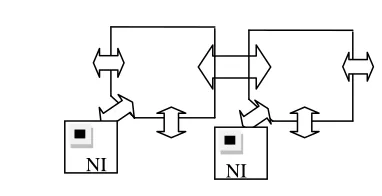
[image:2.612.49.260.560.669.2]B. End-to-end Error Control
Fig. 2 : End-to-end ECC in network layer
End-to-end ECC is taken care of by Network layer, which mostly accomplishes the work at NI and is not accountable for error detection or correction at each hop as shown in Fig. 2. Other point of distinction with hop-to-hop method is that it is performed on entire packet rather than on flits. An ACK packet is sent to the transmitting end, for enabling retransmission in case of error.
N
S E W
E
S W
N
NI NI
NI
NI
NI
International Journal of Emerging Technology and Advanced Engineering
Website: www.ijetae.com (ISSN 2250-2459,ISO 9001:2008 Certified Journal, Volume 5, Issue 7, July 2015)
382
It does not increase router complexity and link width between hops as implicated by its counterpart. Subsequently power requirements will also be smaller than hop-to-hop, provided route length and number of retransmissions are small [15]. There is equal likelihood that a longer path, which lags hops, may accumulate more errors. Hence, to maintain same reliability with its counterpart the end-to-end ECC requires increased error control strength. Therefore, it requires a large codec in NI. Waiting for ACKs also incur higher latencies. A simplistic end-to-end ECC with timeout retransmission has been proposed by [23] to decrease the latency caused by packet corruption. It corrects single errors and requests retransmission only in case of multiple errors detection.
III. RELATED WORK
A. Working of adaptive and co-oerative ECC at dual layer
For a wide range of variable noise conditions, the benefits of hop-to-hop ECC working at datalink layer and end-to-end ECC working at network layer are combined. This transition from single layer to dual layer improved energy efficiency and reliability at the same performance level.
The run time mode switching employs end-to-end ECC in low noise conditions and in case of increased noisy condition hop-to-hop ECC is turned on to increase error control strength. Exercising dual layer adaptive error control coding dramatically reduces power consumption of the system. The uninterrupted ECC mode switching is executed by using product codes. One of the utilized techniques in this regard is error-tag-shifting technique, which is used to record the hop-to-hop ECC detection outcomes and carry it forward to the destination, to assist in ECC mode switching as shown in Fig. 3.
ECC mode switching protocol operates as follows: The switching of mode depends on the exchange of information between datalink and network layers. In the first mode (Mode 1), end-to-end ECC at the network interface estimates the global noise condition by the help of count of errors detected by destination decoder. Depending on the count larger than the set threshold, mode switching protocol switches to datalink layer for hop-to-hop ECC.
[image:3.612.321.556.198.386.2]In the second mode (Mode 2), end-to-end ECC combines with hop-to-hop ECC, the NI this time calculates the global noise condition by its local error counter and in turn decides to make a switch or to remain on the same position.
Fig. 3 ECC acting on dual layer on cooperation basis [1]
To perform multilayer adaptive error control, the author in [2] has introduced hybrid error control for physical layer. Hybrid error control unit is added with dual layer ECC mode switching unit depicted by [1]. Triple layer adaptive error control is as shown in Fig. 4.
The architectural representation as shown in Fig. 4 could be used for overall system level interconnects such as NoC, inet-chip, and backplane interconnects. Addition of physical layer ECC capability has empowered dual layer adaptive error control by raising error correction capability over greater arena at the same time increasing signal integrity and noise immunity. The hybrid codec architecture as proposed by [2] consists of units like Syndrome generation, Error magnitude detection, Error location identification, and Error correction. This hybrid multilayer method uses byte error correcting code.
The interconnects that uses this strategy may load greater data with lower signal power and/or higher transmission rates. This method is also called as hybrid multilayer ECC [2].
ECC status of neighbor nodes
Datalink layer Hop to hop
ECC codec
Hop error History recorder Error History flit End to end
ECC codec
End error history recorder
Network Layer
No. of erroneous packets
ECC mode switching controller ECC
International Journal of Emerging Technology and Advanced Engineering
Website: www.ijetae.com (ISSN 2250-2459,ISO 9001:2008 Certified Journal, Volume 5, Issue 7, July 2015)
[image:4.612.65.302.131.390.2]
383
Fig. 4: ECC acting on multilayer on co-operation basis [2]
IV. CONCLUSION
This review work has investigated the benefits of three layer adaptive error control in NoC architecture to take care of reliability, energy and performance issues in a variable noise and different traffic scenarios. The survey started with the dual layer ECC framework configuration as described by [1] which involves the use of error control strategies in datalink and network layer to suit variable noise conditions. Later to increase the range of the ECC, third layer, that is, the physical layer has been introduced by [2]. Adoption of third layer for ECC facilitated greater management and simultaneous control over latency, throughput, energy and reliability. Latency reduction, reliability and energy reduction is done by Network layer end-to-end ECC. Datalink layer hop-to-hop ECC minimizes accumulation of error and error propagation. Hybrid mode used in physical layer is used to downsize error correction process time, byte error correction and packet error rate. Therefore three layered ECC tremendously improves quality of error detection and correction process, which in turn helps to raise signal integrity and noise immunity.
REFERENCES
[1] Qiaoyan Yu, Paul Ampadu, ― Dual layer adaptive error control for Network on chip links‖, IEEE Transactions on Very Large Scale Integration (VLSI) Systems, Vol. 20, No. 7, july 2012.
[2] M.Jeyabharathi, C.Sujatha, R.Ganesan, ―VLSI Implementation of multilayer adaptive error control for Network on chip links‖, International Journal of Advance Information science and technology (IJAIST), Vol. 12, No. 12, April 2013.
[3] W. J. Dally and B. Towles, ―Route packets, not wires: On-chip interconnection networks,‖ in Proc. DAC, 2001, pp. 684–689. [4] L. Benini and G. De Mcheli, ―Networks on chips: A new SoC
paradigm,‖Comput., vol. 35, no. 1, pp. 70–78, Jan. 2002.
[5] M. Sgroi, M. Sheets, A. Mihal, K. Keutzer, S.Malik, J. Rebaey, and A. Sangiovanni-Vincentelli, ―Addressing the system-on-a-chip interconnect woes through communication-based design,‖ in Proc. DAC, 2001, pp. 667–672.
[6] A. Banerjee, P. T. Wolkotte, R. D. Mullins, S. W. Moore, and G. J. M. Smit, ―An energy and performance exploration of network-on-chip architectures,‖ IEEE Trans. Very Large Scale Integr. (VLSI) Syst., vol. 17, no. 3, pp. 319–329, Mar. 2009.
[7] A. Agarwal, C. Iskander, and R. Shankar, ―Survey of network on chip (NoC) architectures & contributions,‖ J. Eng., Comput., Arch., vol. 3, no. 1, pp. 1–15, Jan. 2009.
[8] M.Jeyabharathi, C.Sujatha, R.Ganesan, ―VLSI Implementation of multilayer adaptive error control for Network on chip links‖, International Journal of Advance Information science and technology (IJAIST), Vol. 12, No. 12, April 2013.
[9] A. Agarwal, C. Iskander, and R.Shankar ―Survey of network on chip(NoC) architecture &contributions,‖J. Eng., Compu Architecture vol.3,no. 1,pp.1-15,jan.2009.
[10] Li, N. Vijaykrishnan, M. Kandemir, and M. J. Jrwin,―Adaptive error Protection for energy efficiency ,‖ in Proc. International conference on computer aided design,2003, pp. 27.
[11] D. Bertozzi, L. Benini, and G. De Micheli ―Error control schemes for on-chip communication links: the energy reliability tradeoff,‖ IEEETrans. Comput.-Aided Des.Integr.Circuits Syst., vol 24, no. 6, pp. 818–831, Jun. 2005.
[12] M. Sgroi, M. Sheets, A. Mihal, K. Keutzer, S.Malik,J. Rebaey, and A.Sangiovanni Vincentelli, ―Addressing the system-on-a-chip interconnect woes through communication-based design,‖ in Proc.Design automation Conference, 2001,ppcc 667–672.
[13] Q.Yu and P. Ampadu, ―Adaptive error control for nanometer scale NoC links,‖ IET Comput. Digit.Tech.vol. 3, no. 6, pp. 643– 659,Nov. 2007.
[14] D. Bertozzi, L. Benini, and G. De Micheli, ―Error control schemes for on-chip communication links: the energy-reliability tradeoff,‖ IEEE Trans. Comput.-Aided Des. Integr. Circuits Syst., vol. 24, no. 6, pp. 818–831, Jun. 2005.
[15] S. Murali, T. Theocharides, N. Vijaykrishnan, M. J. Irwin, L. Benini, and G. De Micheli, ―Analysis of error recovery schemes for networks on chips,‖ IEEE Design Test Comput., vol. 22, no. 5, pp. 434–442, Sep.-Oct. 2005.
[16] S. Sridhara and N. R. Shanbhag, ―Coding for system-on-chip networks: A unified framework,‖ IEEE Trans. Very Large Scale Integr. (VLSI) Syst., vol. 13, no. 6, pp. 655–667, Jun. 2005.
ECC status of neighbor nodes
Datalink layer Hop to hop
ECC codec
Hop error History recorder Error History flit End to end
ECC codec
End error history recorder
Network Layer
No. of erroneous packets
ECC mode switching controller ECC
Mode
Hybrid Codec
Hybrid Recorder
ECC status of neighbor nodes
International Journal of Emerging Technology and Advanced Engineering
Website: www.ijetae.com (ISSN 2250-2459,ISO 9001:2008 Certified Journal, Volume 5, Issue 7, July 2015)
384
[17] R. Harboe-Sørensen, E. J. Daly, C. I. Underwood, J. Ward, and L. Adams, ―The behaviour of measured SEU at low altitude during periods of high solar activity,‖ IEEE Trans. Nucl. Sci., vol. 37, no. 6, pp. 1938–1946, Dec. 1990.
[18] C. Poivey, G. Gee, K. A. Label, and J. L. Barth, ―In-flight observations of long-term single-event effect (SEE) performance on orbview-2 solid state recorders (SSR),‖ in Proc. IEEE Radiation Effects Data Workshop, 2003, pp. 102–107.
[19] L. Li, N. Vijaykrishnan, M. Kandemir, and M. J. Jrwin, ―Adaptive error protection for energy efficiency,‖ in Proc. ICCAD, 2003, pp. 2–7.
[20] Q.Yu and P. Ampadu, ―Adaptive error control for nanometer scale NoC links,‖ IET Comput. Digit. Tech., vol. 3, no. 6, pp. 643–659, Nov. 2009.
[21] D. Rossi, P. Angelini, and C. Metra, ―Configurable error control scheme for NoC signal integrity,‖ in Proc. IOLTS, 2007, pp. 43–48. [22] Y.-C. Lan, M. C. Chen, W.-D. Chen, S.-J. Chen, and Y.-H. Hu,
―Performance- energy tradeoffs in reliable NoCs,‖ in Proc. ISQED, 2009, pp. 141–146.
[23] M. Ali, M. Welzl, S. Hessler, and S. Hellebrand, ―An efficient fault tolerant mechanism to deal with permanent and transient failures in a network on chip,‖ Int. J. High Perform. Syst. Arch., vol. 1, no. 2, pp. 113–123, Jan. 2007.
[24] A. Sanusi and M. A. Bayoumi, ―Smart-flooding: A novel scheme for fault-tolerant NoCs,‖ in Proc. IEEE SoC Conf., 2009, pp. 259–262. [14] Y.-C. Lan, M. C. Chen, W.-D. Chen, S.-J. Chen, and Y.-H. Hu, ―Performance- energy tradeoffs in reliable NoCs,‖ in Proc. ISQED, 2009, pp. 141–146.
[25] H. Zimmer and A. Jantsch, ―A fault model notation and error-control scheme for switch-to-switch buses in a network-on-chip,‖ in Proc. CODES+ISSS, 2003, pp. 188–193
[26] T. Lehtonen, P. Lijieberg, and J. Plosila, ―Analysis of forward error correction methods for nanoscale networks-on-chip,‖ in Proc. Nano- Net., 2007, pp. 1–5.
![Fig. 3 ECC acting on dual layer on cooperation basis [1]](https://thumb-us.123doks.com/thumbv2/123dok_us/8698763.879003/3.612.321.556.198.386/fig-ecc-acting-on-dual-layer-cooperation-basis.webp)
![Fig. 4: ECC acting on multilayer on co-operation basis [2]](https://thumb-us.123doks.com/thumbv2/123dok_us/8698763.879003/4.612.65.302.131.390/fig-ecc-acting-multilayer-operation-basis.webp)
