A Generic Approach to
Modelling Individual Behaviours
in Crowd Simulation
Quanbin
Sun
PhD thesis
University of Salford
School of Built and Environment
TABEL OF CONTENTS
TABEL OF CONTENTS ... I
LIST OF FIGURES ... VI
LIST OF TABLES ... X
LIST OF FORMULAS ... XII
DECLARATION ... XV
ABBREVIATIONS... XVI
ABSTRACT ... XVII
CHAPTER 1 INTRODUCTION ... 1
1. 1 Research Context ... 1
1. 1. 1 Introduction to Crowd Modelling and Simulation ... 1
1. 1. 2 The Need for New Research ... 3
1. 1. 3 The Research Scope in this Study ... 4
1. 2 Aim and Objectives ... 5
1. 3 Research Methodologies ... 5
1. 3. 1 Literature Review ... 6
1. 3. 2 Software Prototyping ... 6
1. 4 Organisation of the Thesis ... 6
CHAPTER 2 LITERATURE REVIEW: CROWD MODELLING & SIMULATION ... 9
2. 1 Overview ... 9
2. 1. 1 What is a Crowd Model? ... 9
2. 1. 2 What is Crowd Simulation? ... 9
2. 1. 3 Purposes and Usages of Crowd Modelling and Simulations... 10
2. 1. 4 Benefits and Limitations of Crowd Simulations ... 11
2. 1. 5 The Terminology in this Study... 13
2. 2 Categorisation of Crowd Models ... 16
2. 2. 2 Crowd Modelling Approaches ... 17
2. 3 Macro Scope Crowd Models ... 19
2. 3. 1 Typical Macro Scope Crowd Models ... 19
2. 3. 2 Discussion ... 20
2. 4 Micro Scope Crowd Models ... 20
2. 4. 1 Force-based Models ... 21
2. 4. 2 Cellular Automata (CA) based Models ... 43
2. 4. 3 Agent-based Models (ABM) ... 53
2. 4. 4 Hybrid Models ... 59
2. 4. 5 Other Modelling Approaches ... 75
2. 5 Summary of Crowd Models ... 77
2. 6 Crowd Model Applications and Simulations ... 79
2. 6. 1 Emergency Evacuations ... 79
2. 6. 2 The lane formation of a bi-directional crowd flow ... 87
2. 7 Research Trends and New Requirements Identified from the Literatures ... 89
2. 7. 1 Heterogeneous Crowd ... 90
2. 7. 2 Individual Behaviours ... 92
2. 7. 3 Generic Crowd Modelling ... 93
2. 7. 4 Summary of the Research Needs ... 95
2. 8 Summary of the Chapter ... 95
CHAPTER 3 LITERATURE REVIEW: TECHNOLOGIES FOR CROWD SIMULATION ... 96
3. 1 Overview ... 96
3. 2 Crowd Simulation Software ... 98
3. 2. 1 Surveys on existing Crowd Simulation Software ... 98
3. 2. 2 Discussions on Crowd Simulation Software ... 103
3. 3 Crowd Simulation Packages ... 104
3. 3. 1 Reviews of Crowd Simulation Packages ... 104
3. 3. 2 Discussions on Simulation Packages ... 115
3. 4 Navigations in Crowd Simulation ... 117
3. 4. 1 Introduction ... 117
3. 4. 3 Navigation Methods ... 119
3. 5 Summary of the Chapter ... 121
CHAPTER 4 RESEARCH METHODOLOGIES ... 122
4. 1 Overview ... 122
4. 1. 1 Research Paradigm ... 122
4. 1. 2 Research Framework and Key Methods ... 123
4. 2 Literature Review ... 123
4. 2. 1 Introduction ... 123
4. 2. 2 Outcomes of Literature Review ... 124
4. 3 Software Prototyping ... 126
4. 3. 1 Introduction ... 126
4. 3. 2 Discussions on Similar Research Methods ... 127
4. 3. 3 Process of Prototyping ... 128
4. 3. 4 Using Examples to Demonstration and Validation ... 129
4. 3. 5 Introduction ... 129
4. 4 Summary of the Chapter ... 130
CHAPTER 5 CROWD MODEL DESIGN ... 131
5. 1 Overview of the Crowd Model ... 131
5. 1. 1 Research Scopes of this Crowd Model ... 131
5. 1. 2 Modelling Approaches ... 132
5. 1. 3 Crowd Model Structure ... 133
5. 2 Details of the Crowd Model ... 135
5. 2. 1 Types of Behaviour in this Crowd Model ... 136
5. 2. 2 Representation of Behaviour Effect ... 138
5. 2. 3 Agent Design ... 150
5. 2. 4 Behaviour Library ... 163
5. 3 How the Crowd Model Works ... 182
5. 3. 1 The Workflow of the Crowd Model ... 182
5. 3. 2 Example: Two Agent Walking Through a Corridor ... 184
CHAPTER 6 MODEL IMPLEMENTATION ... 193
6. 1 Introduction to Implementation ... 193
6. 1. 1 The Simulation Engine - XNA Framework 4.0 ... 193
6. 1. 2 Graphical Representation ... 198
6. 1. 3 Navigation ... 198
6. 2 Detailed Implementation of the Simulation System ... 199
6. 2. 1 Structure of the Simulation System ... 199
6. 2. 2 Implementation of the XNA Game Lifecycle ... 200
6. 2. 3 Implementation of the Agent Class ... 202
6. 2. 4 Implementation of the Behaviour Library ... 206
6. 2. 5 Implementation of the Environment Map ... 211
6. 2. 6 Implementations of Supporting Functions in the Simulation System .... 216
6. 3 Summary of the Chapter ... 218
CHAPTER 7 MODEL EVALUATIONS: MODEL APPLICATIONS ... 219
7. 1 Introduction to Model Evaluations ... 219
7. 1. 1 Purpose of the Demonstrations of Model Applications ... 219
7. 2 The Basics of the Simulations ... 219
7. 2. 1 Simulation Environment Settings ... 220
7. 2. 2 Agent’s Attributes ... 221
7. 2. 3 Computer Hardware and Software Environment ... 222
7. 3 The Applications of the Crowd Model ... 223
7. 3. 1 Simulation 1: A Group Walking through a Corridor ... 223
7. 3. 2 Simulation 2: Exiting from a Building ... 232
7. 3. 3 Simulation 3: Evacuation from a Shopping Mall ... 246
7. 4 Summary of the Chapter ... 258
CHAPTER 8 MODEL EVALUATIONS: MODEL VALIDATIONS ... 259
8. 1 Introduction ... 259
8. 1. 1 Summary of the Simulations in Model Validation ... 259
8. 2 Simulation 4: Lane Formation in a Bi-directional Crowd Flow ... 260
8. 2. 2 Simulation Configuration ... 260
8. 2. 3 Result and Analysis ... 264
8. 3 Simulation 5: Leadership and Consensus Decision Making (in Small Groups) ... 265
8. 3. 1 Background ... 265
8. 3. 2 The Original Experiment ... 265
8. 3. 3 Reproducing the Experiment through Simulation ... 270
8. 3. 4 Simulation Configuration ... 270
8. 3. 5 Simulation Results and Analysis ... 275
8. 4 Simulation 6: Leadership and Consensus Decision Making2 (in Large Groups) ... 284
8. 4. 1 The Original Experiment ... 284
8. 4. 2 Reproducing the Experiment through Simulation ... 287
8. 4. 3 Simulation Configuration ... 287
8. 4. 4 Simulation Results and Analysis ... 290
8. 4. 5 Further Simulations with Variations ... 293
8. 5 Summary of the Chapter ... 296
CHAPTER 9 CONCLUSION ... 298
9. 1 Summary of the Thesis ... 298
9. 2 Research Assessment ... 299
9. 3 Contribution to Knowledge ... 302
9. 4 Future Work ... 304
REFERENCE ... 306
APPENDIX.1 SIMULATION RESULTS ... 321
APPENDIX.2 CODES OF IMPLEMENTATION ... 322
APPENDIX.3 VIDEOS OF SOME SIMULAITONS ... 323
LIST OF FIGURES
FIGURE 1MODEL OF METHODOLOGIES ... ERROR!BOOKMARK NOT DEFINED.
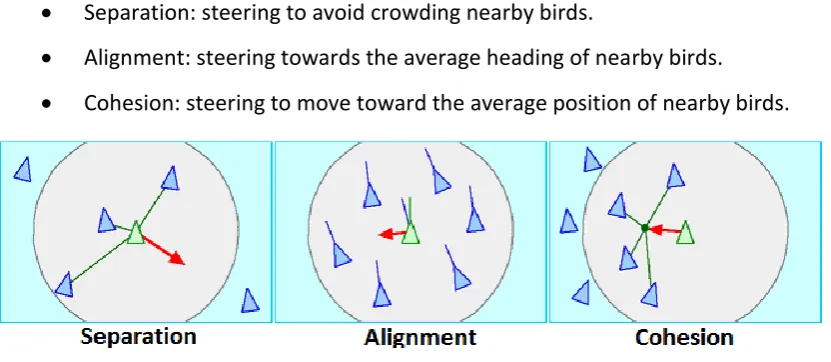
FIGURE 2STEERING BEHAVIOURS IN THE “BOIDS” MODEL (REYNOLDS 1987) ... 22
FIGURE 3BEHAVIOURS OF PEDESTRIANS (IMPATIENT AND PATIENT)(M.ZHENG ET AL.2002) ... 35
FIGURE 4A SNAPSHOT OF THE SIMULATION OF ZHENG ET AL.’S (2002) MODIFIED SOCIAL FORCE MODEL ... 35
FIGURE 5THE PIECEWISE LINEAR FUNCTION APPROXIMATION (HEÏGEAS ET AL.2003) ... 37
FIGURE 6CONGESTIONS DURING AN EVACUATION IN THE MPSO MODEL (CHENG ET AL.2008) ... 41
FIGURE 7POSSIBLE AND IMPOSSIBLE AN INDIVIDUAL’S POSITIONS IN A TWO CELLS’CA MODEL ... 42
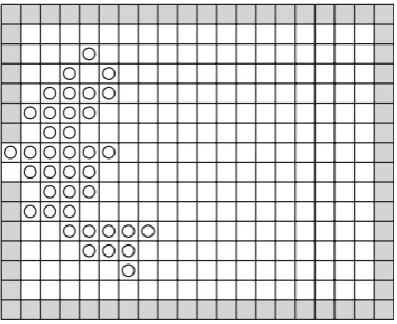
FIGURE 8EXAMPLES OF “STILL LIFES” PATTERNS IN THE GAME OF LIFE.IMAGES SOURCE:(WIKIPEDIA 2013). ... 45
FIGURE 9AN EXAMPLE OF THE “OSCILLATORS” PATTERN IN THE GAME OF LIFE.IMAGES SOURCE:(WIKIPEDIA 2013). .... 45
FIGURE 10 A PEDESTRIAN’S POSSIBLE MOVEMENTS AND THEIR PROBABILITIES IN THE BIONIC-INSPIRED CA MODEL (KIRCHNER &SCHADSCHNEIDER 2002). ... 47
FIGURE 11A PEDESTRIAN’S MOVEMENTS AND THE ASSOCIATED TRANSITION PAYOFFS MATRIX (YUE ET AL.2010) ... 49
FIGURE 12A SNAPSHOT OF THE SIMULATION OF A CA MODEL (FIGURE FROM THE STUDY OF VARAS ET AL.(2007)) ... 51
FIGURE 13THE BDI AGENT ARCHITECTURE IN ZOUMPOULAKI ET AL.’S STUDY (2010) ... 56
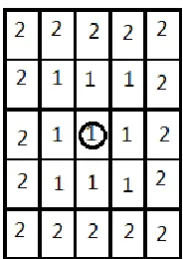
FIGURE 14ILLUSTRATION OF NEIGHBOURING CELLS IN DIJKSTRA ET AL.’S CA MODEL (2000) ... 61
FIGURE 15DEMONSTRATIONS OF THE “SEEK” AND “FLEE” STEERING BEHAVIOURS (REYNOLDS 1999) ... 65
FIGURE 16DEMONSTRATIONS OF THE “PURSUIT” AND “EVASION” STEERING BEHAVIOURS (REYNOLDS 1999) ... 65
FIGURE 17DEMONSTRATION OF THE “OFFSET PURSUIT” STEERING BEHAVIOUR (REYNOLDS 1999) ... 66
FIGURE 18DEMONSTRATION OF THE “ARRIVAL” STEERING BEHAVIOUR (REYNOLDS 1999) ... 66
FIGURE 19DEMONSTRATION OF THE “OBSTACLE AVOIDANCE” STEERING BEHAVIOUR (REYNOLDS 1999) ... 67
FIGURE 20DEMONSTRATION OF THE “WANDER” STEERING BEHAVIOUR (REYNOLDS 1999) ... 67
FIGURE 21DEMONSTRATIONS OF THE “PATH FOLLOWING” STEERING BEHAVIOUR (REYNOLDS 1999) ... 68
FIGURE 22DEMONSTRATIONS OF THE “WALL FOLLOWING” AND “CONTAINMENT” STEERING BEHAVIOURS (REYNOLDS 1999) ... 68
FIGURE 23DEMONSTRATION OF THE “FLOW FOLLOWING” STEERING BEHAVIOUR (REYNOLDS 1999) ... 68
FIGURE 24DEMONSTRATION OF THE “UNALIGNED COLLISION AVOIDANCE” STEERING BEHAVIOUR (REYNOLDS 1999) .... 69
FIGURE 25DEMONSTRATION OF THE “LEADER FOLLOWING” STEERING BEHAVIOUR (REYNOLDS 1999) ... 69
FIGURE 26REPRESENTATION OF THE ALTRUISM FORCE ON AGENT I (BRAUN ET AL.2003) ... 72
FIGURE 27THE GROUPING BEHAVIOURS OF FAMILIES DURING EVACUATION (BRAUN ET AL.2003)... 72
FIGURE 28OCCURRENCE OF REPULSION (WEIGUO SONG ET AL.2006) ... 74
FIGURE 29OCCURRENCE OF FRICTION (WEIGUO SONG ET AL.2006) ... 74
FIGURE 30COMPETITIVE BEHAVIOUR (XIAOSHAN PAN ET AL.2007) ... 80
FIGURE 31POTENTIAL CONGESTION AREAS HAVE BEEN HIGHLIGHTED THROUGH SIMULATION (XIAOSHAN PAN ET AL.2007) ... 81
FIGURE 33CROWD TRANSITS INTO AN ARCH-LIKE FORMATION WHEN CONGESTING AT AN EXIT ... 81
FIGURE 34THE CROWD ARE IMPERTURBABLE ENOUGH TO QUEUE IN THE CORRIDOR (XIAOSHAN PAN ET AL.2007) ... 82
FIGURE 35QUEUING BEHAVIOUR CAN HAPPEN WHEN THE INDIVIDUALS ARE NOT PUSHING EACH OTHER (CHENG ET AL. 2008) ... 82
FIGURE 36HERDING - ONE EXIT MORE USED THAN THE OTHER (XIAOSHAN PAN ET AL.2007) ... 83
FIGURE 37HERDING - ONE EXIT IS MORE USED THAN THE OTHER (CHENG ET AL.2008) ... 83
FIGURE 38HERDING - CROWDS TEND TO MOVE TO THE EXIT WITH MORE PEOPLE (DHELBING ET AL.2002) ... 83
FIGURE 39LEADERSHIP CAN CAUSE INDIVIDUALS TO STAY IN GROUPS (NURIA PELECHANO &NORMAN IBADLER 2006) . 84 FIGURE 40COMMUNICATION IN THE CROWD CAN INCREASE EVACUATION EFFICIENCY (NURIA PELECHANO &NORMAN I BADLER 2006) ... 85
FIGURE 41DEMONSTRATION OF THE “FASTER-IS-SLOWER” EFFECT (WEIGUO SONG ET AL.2006) ... 85
FIGURE 42A NARROW DOOR USUALLY HAS ONE-DIRECTION TRAFFIC (DIRK HELBING &PETER MOLNAR 1995) ... 86
FIGURE 43LANE FORMATION WILL BE FORMED SPONTANEOUSLY IN A BI-DIRECTIONAL CROWD FLOW (DIRK HELBING & PETER MOLNAR 1995) ... 87
FIGURE 44THE BI-DIRECTIONAL FLOW IN THE HIDAC MODEL (NPELECHANO ET AL.2007) ... 87
FIGURE 45LANE FORMATION IS DEPENDENT ON PEDESTRIANS’ MOVING PREFERENCES (YUSUKE TAJIMA ET AL.2002) .... 88
FIGURE 46SIMULATIONS OF BI-DIRECTIONAL CROWD FLOW (YUE ET AL.2010) ... 88
FIGURE 47BLOCKAGES CAUSED BY THE TEAM-MOVING BEHAVIOUR (Z.WANG ET AL.2012) ... 89
FIGURE 48THE INFLUENCE OF GROUPING BEHAVIOUR ON CROWD AVERAGE SPEED (BRAUN ET AL.2003) ... 93
FIGURE 49EVACUATION WITH/WITHOUT COMMUNICATION (NURIA PELECHANO &NORMAN IBADLER 2006) ... 93
FIGURE 50AUTOMATIC WAY-FINDING IN AI.IMPLANT 5.4 ... 105
FIGURE 51USER-DEFINED NAVIGATION MESHES IN AI.IMPLANT ... 106
FIGURE 52CROWD RENDERING IN QUEST 3D(V4.3) ... 108
FIGURE 53SIMULATION IN A MAZE-LIKE ENVIRONMENT ... 108
FIGURE 54SIMULATION IN A STREET ENVIRONMENT ... 108
FIGURE 55GRAPHICAL PROGRAMMING IN QUEST 3D(V4.3) ... 109
FIGURE 56SIMULATE CROWD MOVEMENT IN UDK ... 111
FIGURE 57ENVIRONMENT SETUP FOR A SIMULATION WITH UDK... 111
FIGURE 58SCRIPT TO GENERATE CROWD VIA KISMET IN UDK ... 112
FIGURE 59AN EMPTY XNA GAME ... 114
FIGURE 60A SIMPLE XNA GAME SHOWING AGENTS MOVE RANDOMLY ... 115
FIGURE 61A FLOOR PLAN OF A BUILDING AND ITS REPRESENTATION IN CPG(NURIA PELECHANO ET AL.2008)... 120
FIGURE 62THE POTENTIAL FIELDS OF A ROOM IN A CELLULAR AUTOMATA MODEL (VARAS ET AL.2007) ... 120
FIGURE 63NAVIGATION USING DIRECTIONAL VECTORS (REYNOLDS 1999) ... 121
FIGURE 64STRUCTURE OF THE CROWD MODEL IN THIS PHD STUDY ... 135
FIGURE 65AN EFFECT CHANGES AGENT’S POSITION FROM THE CURRENT POSITION TO THE NEXT POSITION ... 140
FIGURE 66BEHAVIOUR DIRECTION BASED ON ORIENTATION ... 147
FIGURE 68VECTOR OPERATION: ADDITION OF TWO VECTORS ... 149
FIGURE 69DEMONSTRATION OF AN AGENT’S GEOMETRY ATTRIBUTES... 153
FIGURE 70AGENT ACTION PROCESS ... 160
FIGURE 71ILLUSTRATION OF “SEEKING” BEHAVIOUR ... 165
FIGURE 72ILLUSTRATION OF “WALKING AWAY FROM” BEHAVIOUR ... 166
FIGURE 73ILLUSTRATION OF “FOLLOWING” BEHAVIOUR ... 170
FIGURE 74THE POSITION OF THE BEHAVIOUR TARGET IN “KEEPING A DISTANCE FROM A WALL” BEHAVIOUR ... 174
FIGURE 75ILLUSTRATION OF ‘AVOIDING COLLISION’ BEHAVIOUR ... 175
FIGURE 76ILLUSTRATION OF THE GROUP AND ITS BOUNDARY IN “WALKING TOWARDS THE GROUP” BEHAVIOUR... 177
FIGURE 77TWO AGENTS WALKING THROUGH A CORRIDOR ... 184
FIGURE 78ILLUSTRATIONS ON THE DIRECTIONS AND POSITIONS IN THE THESIS ... 185
FIGURE 79MR WHITE AND MR GREY WALKS IN A CORRIDOR ... 186
FIGURE 80WALKING TRAJECTORIES OF THE TWO ... 186
FIGURE 81ILLUSTRATION OF THE EFFECTS THAT AGENTS RECEIVED AT THE BEGINNING ... 188
FIGURE 82ILLUSTRATIONS ON POSSIBLE EFFECTS IN PHASE 2(THICK ARROWS REPRESENT THE OVERALL EFFECT) ... 190
FIGURE 83ILLUSTRATIONS ON POSSIBLE EFFECTS AFTER THE OVERTAKING PHASE (THICK ARROWS REPRESENT THE OVERALL EFFECT) ... 191
FIGURE 84ILLUSTRATIONS ON THE BEHAVIOURS LONG AFTER THE OVERTAKEN ... 192
FIGURE 85THE XNA GAME LIFECYCLE (MICROSOFT CORPORATION 2010B) ... 197
FIGURE 87 LAYOUT OF ONE BUILDING ... 198
FIGURE 88CORRESPONDENT CPG FOR THE BUILDING IN FIGURE 87 ... 199
FIGURE 89CLASSES IN THE SIMULATION SYSTEM ... 200
FIGURE 90SEGMENTATIONS OF A LONG CORRIDOR ... 216
FIGURE 91SPECIFICATION OF THE COMPUTER ... 223
FIGURE 92INITIAL CROWD POSITIONS OF THE SIMULATION - A GROUP WALKING THROUGH A CORRIDOR ... 228
FIGURE 93CROWD FORMATIONS NEAR THE END OF THE CORRIDOR ... 231
FIGURE 94SPEED OF AGENTS MAY BE AFFECTED IN GREY AREA ... 231
FIGURE 95EFFECTS OF CHANGING SPEED ... 232
FIGURE 96BUILDING PLAN OF THE MUSEUM ... 233
FIGURE 97NAVIGATION MAP FOR THE SIMULATION OF EXITING FROM A BUILDING ... 235
FIGURE 98STARTING POSITIONS OF THE CROWD - SIMULATION OF EXITING FROM A BUILDING ... 237
FIGURE 99EVACUATION TIME WITH VARIOUS SPEEDS (CORRIDOR =1.5M) ... 239
FIGURE 100EVACUATION TIME WITH VARIOUS SPEEDS (CORRIDOR =1.5M,2M, AND 2.5M) ... 240
FIGURE 101(A)GAP OBSERVED IN SIMULATION WITH ELDERLY PEOPLE (B) SIMULATION WITH NO ELDERLY PEOPLE ... 242
FIGURE 102DOOR POSITIONS IN ORIGINAL DESIGN (LEFT) OR AND IN ALTERNATIVE DESIGN (RIGHT) ... 243
FIGURE 103DIFFERENT BUILDING LAYOUT DESIGNS ... 243
FIGURE 104EVACUATION TIMES WITH ORIGINAL LAYOUT AND ALTERNATIVE LAYOUT ... 244
FIGURE 106BUILDING PLAN OF THE SHOPPING MALL ... 247
FIGURE 107MAP OF THE SHOPPING MALL ... 249
FIGURE 108CROWD’S INITIAL DISTRIBUTION IN THE NORMAL-LOADED CASE (SHOP NUMBERS SHOWED FROM 1 TO 24) 252 FIGURE 109CROWD’S INITIAL DISTRIBUTION IN THE FULL-LOADED CASE (CORRIDORS ARE DIVIDED INTO THREE ZONES:Z1, Z2,Z3) ... 253
FIGURE 110CONGESTION DURING THE EVACUATION.(LEFT)CASE B-364 PEOPLE;(RIGHT)CASE C-650 PEOPLE. .... 255
FIGURE 111EVACUATION TIMES AT DIFFERENT WALKING SPEEDS (3 SCENARIOS) ... 255
FIGURE 112SHOPPING MALL EVACUATION WITH ELDERLY PEOPLE:(A)CASE A;(B)CASE B ... 256
FIGURE 113POSITIONS OF THE ELDERLY PEOPLE DURING THE EVACUATION:(A)CASE;(B)CASE ... 257
FIGURE 114SIMULATION OF SOME AGENTS (IN BLUE) MAKE USE OF THE WEST EXIT ... 258
FIGURE 115SPONTANEOUS LANE FORMATION IN A BI-DIRECTIONAL CROWD FLOW (DIRK HELBING &PETER MOLNAR 1995) ... 260
FIGURE 116SPONTANEOUS LANE FORMATION OBSERVED BY USING THE STUDY’S CROWD MODEL ... 264
FIGURE 117LAYOUT OF THE EXPERIMENT VENUE: SMALL GROUP OF 10(J.R.G.DYER ET AL.2009) ... 267
FIGURE 118:ACCURACY OF THE AGENTS REACHING THE TARGET NUMBER ... 275
FIGURE 119:ARRIVAL TIME.PERIPHERY MEANS ANY NUMBER ON THE OUTER CIRCLE INCLUDING THE TARGET. ... 276
FIGURE 120HISTOGRAM OF ARRIVAL TIME (IN SECONDS)(Y-AXIS REPRESENTS THE FREQUENCY) ... 279
FIGURE 121DIFFERENCE IN DISTANCE FROM INFORMED AGENTS TO TARGET NUMBERS FOR SOME STARTING POSITIONS 280 FIGURE 122ACCURACY (Y-AXIS) OF REACHING THE TARGET NUMBER (X-AXIS) ... 280
FIGURE 123:ARRIVAL TIME TO PERIPHERY FOR EACH TARGET NUMBER ... 281
FIGURE 124ARRIVAL ACCURACY FOR EACH TARGET NUMBER (+1 DEVIATION) ... 282
FIGURE 125SIMULATION ON LEADERSHIP AND CONSENSUS DECISION MAKING: ARRIVAL TIME AT VARIOUS SPEEDS ... 283
FIGURE 126SIMULATION ON LEADERSHIP AND CONSENSUS DECISION MAKING: ARRIVAL ACCURACY AT VARIOUS SPEEDS 283 FIGURE 127EXPERIMENT ARENA – LEADERSHIP AND CONSENSUS DECISION MAKING (LARGE GROUP) ... 285
FIGURE 128INITIAL FORMATION OF THE AGENTS IN THE SIMULATION OF THE LARGE GROUP... 290
FIGURE 129SUCCESSFUL RATE OF REACHING THE TARGET WITH VARIOUS PERCENTAGES OF INFORMED AGENTS ... 291
FIGURE 130ARRIVAL TIME AND ACCURACY CHANGED WITH THE VARIOUS INFORMED NUMBERS OF PEOPLE ... 295
LIST OF TABLES
TABLE 1SIMULATION RESULTS OF THE MPSO MODEL AND COMPARISONS WITH THE SOCIAL FORCE MODEL (CHENG ET AL.
2008) ... 40
TABLE 2THE PARAMETERS OF REYNOLDS’SIMPLE VEHICLE MODEL (1999) ... 63
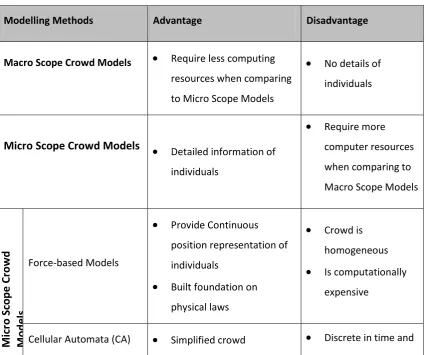
TABLE 3SUMMARY OF CROWD MODELS ... 77
TABLE 4A SUMMARY OF CROWD SIMULATION APPROACHES ... 96
TABLE 5FEATURES OF CROWD SIMULATION SOFTWARE (E.D.KULIGOWSKI &R.D.PEACOCK 2005) ... 98
TABLE 6COMPARISONS OF CROWD SIMULATION PACKAGES ... 116
TABLE 7WANDERING SETTINGS ... 169
TABLE 8INDIVIDUAL BEHAVIOURS AND THEIR CORRESPONDING BEHAVIOURS IN THE BEHAVIOUR LIBRARY ... 187
TABLE 9SETTINGS OF PERSONAL PARAMETERS FOR MR WHITE AND MR GREY ... 187
TABLE 10THE PUBLIC METHODS IN THE GAME CLASS IN XNA(MICROSOFT CORPORATION 2010A) ... 194
TABLE 11THE PROTECTED METHODS IN THE GAME CLASS IN XNA(MICROSOFT CORPORATION 2010A) ... 195
TABLE 12IMPLEMENTATION OF THE AGENT’S ATTRIBUTES ... 203
TABLE 13IMPLEMENTATION OF THE AGENT’S KNOWLEDGE ... 204
TABLE 14IMPLEMENTATION OF THE AGENT’S STATUS ... 204
TABLE 15SUPPORT FUNCTIONS (EXCLUDING LOG FUNCTION) IN THE SIMULATION SYSTEM ... 217
TABLE 16SUMMARY OF WALKING SPEED FROM VARIOUS STUDIES (THOMPSON &MARCHANT 1995) ... 221
TABLE 17FRUIN LEVEL OF SERVICE (FRUIN 1987) ... 222
TABLE 18BEHAVIOURS’ INTERPRETATIONS FOR WALKING THROUGH A CORRIDOR ... 225
TABLE 19AGENTS’ ATTRIBUTES IN THE SIMULATION – A GROUP WALKING THROUGH A CORRIDOR ... 227
TABLE 20RESULTS FOR AGENTS WITH FIXED DESIRED DISTANCE VALUES ... 230
TABLE 21RESULTS FOR AGENTS WITH RANGE DESIRED DISTANCE VALUES ... 230
TABLE 22AGENTS WITH DIFFERENT DESIRES TO ADJUST DISTANCE ... 230
TABLE 23THE AGENTS’ BEHAVIOUR IN THE SIMULATION OF EXITING FROM A BUILDING (MUSEUM) ... 235
TABLE 24AGENTS’ ATTRIBUTES IN THE SIMULATION - VISITORS EVACUATING FROM A MUSEUM ... 236
TABLE 25NUMBERS OF AGENTS IN EACH ROOM ... 237
TABLE 26DETAILED DISTRIBUTIONS OF THE AGENTS IN EACH ROOM. ... 238
TABLE 27COMPARISONS OF EVACUATION TIMES WITH DIFFERENT WIDTH OF CORRIDORS (1.5M,2M AND 2.5M) ... 240
TABLE 28EVACUATION TIME WITH ELDERLY PEOPLE IN ROOM 1 AND ROOM 7 ... 241
TABLE 29STATISTICS OF SIMULATING EXITING FROM A BUILDING WITH SPEED VARIATIONS ... 245
TABLE 30BEHAVIOUR CONFIGURATION FOR EVACUATION FROM A SHOPPING MALL ... 249
TABLE 31AGENTS’ ATTRIBUTES IN THE SIMULATION –EVACUATION FROM A SHOPPING MALL ... 251
TABLE 32DETAILED STARTING POSITIONS OF THE AGENTS IN THE NORMAL CASE ... 253
TABLE 33DETAILED STARTING POSITIONS OF THE AGENTS IN THE CORRIDORS IN THE FULL CASE... 254
TABLE 34AGENTS’ BEHAVIOURS WHILE WALKING BI-DIRECTIONALLY IN A CORRIDOR... 261
TABLE 36POSITIONS OF INFORMED INDIVIDUALS IN THE EXPERIMENT ON LEADERSHIP AND CONSENSUS DECISION MAKING IN SMALL GROUPS. ... 268
TABLE 37BEHAVIOUR CONFIGURATION FOR THE SIMULATION – LEADERSHIP AND CONSENSUS DECISION MAKING IN SMALL GROUPS ... 271
TABLE 38AGENTS’ ATTRIBUTES FOR SIMULATION –LEADERSHIP AND CONSENSUS DECISION MAKING IN SMALL GROUPS 274
TABLE 39BEHAVIOUR CONFIGURATION – LEADERSHIP AND CONSENSUS DECISION MAKING IN LARGE GROUPS ... 288
TABLE 40AGENTS’ ATTRIBUTES IN SIMULATION – LEADERSHIP AND CONSENSUS DECISION MAKING IN LARGE GROUPS ... 289
TABLE 41ARRIVAL TIME COMPARISON – LEADERSHIP AND CONSENSUS DECISION MAKING IN LARGE GROUPS ... 292
LIST OF FORMULAS
FORMULA 1SOCIAL FORCE MODEL (HELBING &MOLNAR 1995) ... 23 FORMULA 2DESIRED DIRECTION OF AN PEDESTRIAN WHEN HE/SHE MOVES TOWARDS A DESTINATION IN THE SOCIAL FORCE MODEL (HELBING &MOLNAR 1995) ... 24 FORMULA 3 EFFECT OF REACHING A DESTINATION IN THE SOCIAL FORCE MODEL (HELBING &MOLNAR 1995) ... 24
FORMULA 4REPULSIVE EFFECT FROM PEDESTRIAN Β TO PEDESTRIAN Α IN THE SOCIAL FORCE MODEL (HELBING &MOLNAR
1995) ... 25
FORMULA 5CALCULATION OF 𝑉𝛼𝛽𝑏 IN THE SOCIAL FORCE MODEL (HELBING &MOLNAR 1995) ... 25 FORMULA 6EQUATION TO CALCULATE B FOR REPULSIVE POTENTIAL FUNCTION IN THE SOCIAL FORCE MODEL (HELBING &
MOLNAR 1995) ... 25 FORMULA 7REPULSIVE EFFECT FROM AN ENVIRONMENTAL OBJECT TO PEDESTRIAN Α IN THE SOCIAL FORCE MODEL
(HELBING &MOLNAR 1995) ... 25 FORMULA 8CALCULATION OF 𝑈𝛼𝐵𝑟𝛼𝐵 IN THE SOCIAL FORCE MODEL (HELBING &MOLNAR 1995) ... 26 FORMULA 9ATTRACTIVE EFFECT FROM ANOTHER PEDESTRIAN OR ENVIRONMENTAL OBJECT IN THE SOCIAL FORCE MODEL
(HELBING &MOLNAR 1995) ... 26 FORMULA 10DIRECTION DEPENDENT WEIGHT TO ADJUST THE REPULSIVE OR ATTRACTIVE EFFECTS IN THE SOCIAL FORCE
MODEL (HELBING &MOLNAR 1995) ... 27 FORMULA 11CALCULATIONS OF REPULSIVE AND ATTRACTIVE EFFECTS THAT INFLUENCE A PEDESTRIAN’S PERCEPTION IN THE
SOCIAL FORCE MODEL (HELBING &MOLNAR 1995) ... 27 FORMULA 12A PEDESTRIAN’S ACTUAL VELOCITY CALCULATION IN THE SOCIAL FORCE MODEL (HELBING &MOLNAR 1995)
... 28
FORMULA 13FUNCTION G(X) TO CONSTRAIN THE PEDESTRIAN’S ACTUAL VELOCITY IN THE SOCIAL FORCE MODEL (HELBING
&MOLNAR 1995) ... 28 FORMULA 14A PEDESTRIAN’S VELOCITY CHANGE IN THE SOCIAL FORCE MODEL (HELBING ET AL.2000) ... 29 FORMULA 15SOCIAL FORCE EFFECT OF A PEDESTRIAN’S OWN DESIRE TO CHANGE VELOCITY IN THE SOCIAL FORCE MODEL
(HELBING ET AL.2000) ... 30 FORMULA 16REPULSIVE INTERACTION FORCE FROM A PEDESTRIAN IN THE SOCIAL FORCE MODEL (HELBING ET AL.2000)
... 31
FORMULA 17REPULSIVE INTERACTION FORCE FROM A WALL IN THE SOCIAL FORCE MODEL (HELBING ET AL.2000) ... 32 FORMULA 18 AMENITY OF A PEDESTRIAN GROUP (ZHENG ET AL.2002) ... 35 FORMULA 19A PIECEWISE LINEAR FUNCTION FOR THE INTERACTION FORCE BETWEEN TWO PARTICLES (HEÏGEAS ET AL.
2003) ... 37
FORMULA 20A PARTICLE’S VELOCITY CALCULATION IN MPSO MODEL (CHENG ET AL.2008) ... 39
FORMULA 21A PARTICLE’S UPDATED POSITION IN THE MPSO MODEL (CHENG ET AL.2008) ... 39 FORMULA 22IMPLEMENTATION OF Ω IN THE MODIFIED PARTICLE SWARM OPTIMIZATION MODEL (CHENG ET AL.2008)
FORMULA 23CALCULATION OF THE PROBABILITY OF THE PEDESTRIAN MOVING TO AN UNOCCUPIED CELL IN THE
BIONIC-INSPIRED CA MODEL (KIRCHNER &SCHADSCHNEIDER 2002) ... 48
FORMULA 24FORMULA TO CALCULATE THE TRANSITION PAYOFF IN YUE ET AL.’S CA MODEL (2010). ... 49
FORMULA 25FORMULA TO CALCULATE THE TRANSITION PAYOFF WITH A RIGHT-HAND WALKING PREFERENCE IN YUE ET AL.’S CA MODEL (2010) ... 49
FORMULA 26FORMULAS OF THE UPDATING AGENT’S POSITION BY APPLYING THE STEERING FORCE (REYNOLDS 1999) .... 64
FORMULA 27THE FORMULA OF THE AGENT’S DESIRED VELOCITY (BRAUN ET AL.2003) ... 71
FORMULA 28THE FORMULA TO CALCULATE THE ALTRUISM FORCE (BRAUN ET AL.2003) ... 72
FORMULA 29APPLYING BEHAVIOUR EFFECT ON AN AGENT’S POSITION ... 139
FORMULA 30POSITION CHANGE IN KINEMATICS ... 140
FORMULA 31DISPLACEMENT CALCULATION IN KINEMATICS ... 141
FORMULA 32CONVERSION BETWEEN SPEED AND THE BASE EFFECT OF BEHAVIOUR... 141
FORMULA 33DISPLACEMENT CALCULATION IN CLASSICAL MECHANICS ... 141
FORMULA 34 THE CALCULATION OF VELOCITY (AFTER TIME ∆T) ... 142
FORMULA 35RELATIONSHIP BETWEEN VT,V0, 𝑓, 𝑚, 𝑎𝑛𝑑 ∆𝑡 ... 142
FORMULA 36DISPLACEMENT CALCULATED THROUGH VELOCITIES ... 142
FORMULA 37AVERAGE VELOCITY DURING TIME ∆𝑡 ... 142
FORMULA 38DISPLACEMENT CALCULATION THROUGH AVERAGE VELOCITY AND TIME ... 142
FORMULA 39THE UNIFIED FORMULA FOR THE BEHAVIOUR EFFECT CALCULATION ... 144
FORMULA 40CALCULATION FOR EFFECT OF BASE SPEED ... 147
FORMULA 41BEHAVIOUR DIRECTION ALTERNATIVE CALCULATION ... 147
FORMULA 42CALCULATION OF THE VIRTUAL TARGET IN THE ALTERNATIVE BEHAVIOUR DIRECTION CALCULATION ... 148
FORMULA 43BEHAVIOUR DIRECTION DEFAULT CALCULATION ... 148
FORMULA 44ADDITION OF TWO EFFECTS ... 149
FORMULA 45COMBINATION OF TWO EFFECTS (IF BEHAVIOUR WEIGHTING FACTORS APPLY) ... 149
FORMULA 46FORMULA FOR “SEEKING” BEHAVIOUR EFFECT ... 166
FORMULA 47FORMULA FOR “WAKING AWAY FROM” BEHAVIOUR EFFECT ... 167
FORMULA 48DEFAULT FUNCTION TO DETERMINE Α AT EACH FRAME FOR “WANDERING” BEHAVIOUR ... 168
FORMULA 49FORMULA FOR “WANDERING” BEHAVIOUR EFFECT ... 168
FORMULA 50AN ALTERNATIVE FORMULA FOR “WANDERING” BEHAVIOUR EFFECT ... 169
FORMULA 51CALCULATION FOR THE VIRTUAL POSITION IN “FOLLOWING” BEHAVIOUR ... 171
FORMULA 52FORMULA FOR “FOLLOWING” BEHAVIOUR EFFECT ... 171
FORMULA 53DISTANCE FUNCTION FOR REPULSIVE EFFECT (AGENT) ... 173
FORMULA 54FORMULA FOR “KEEPING A DISTANCE FROM AN AGENT (REPULSIVE EFFECT) BEHAVIOUR EFFECT ... 173
FORMULA 55DISTANCE FUNCTION FOR REPULSIVE EFFECT (WALL) ... 175
FORMULA 56FORMULA FOR “KEEPING A DISTANCE FROM A WALL (REPULSIVE EFFECT) BEHAVIOUR EFFECT ... 175
FORMULA 57CALCULATION FOR THE BEHAVIOUR ANGLE IN “AVOIDING COLLISION” BEHAVIOUR ... 176
FORMULA 59CALCULATION FOR THE AVERAGE POSITION OF A GROUP ... 177
FORMULA 60FORMULA FOR “WALKING TOWARDS THE GROUP” BEHAVIOUR EFFECT ... 178
FORMULA 61REQUIREMENT OF 𝑃𝑡 IN “ALIGNING DIRECTION WITH THE GROUP” BEHAVIOUR... 178
FORMULA 62FORMULA FOR “ALIGNING DIRECTION WITH THE GROUP” BEHAVIOUR EFFECT ... 179
FORMULA 63AVERAGE ORIENTATION OF A GROUP (EXCLUDING THE AGENT ITSELF) ... 179
FORMULA 64AN ALTERNATIVE FORMULA FOR “ALIGNING DIRECTION WITH THE GROUP” BEHAVIOUR EFFECT ... 179
FORMULA 65CALCULATION FOR REPULSIVE EFFECT FROM NEARBY CROWD ... 180
DECLARATION
I hereby declare that the research study presented in this thesis was solely carried
out by me (i.e. Quanbin Sun). It has not been previously submitted to this or any
other institute for the award of a PhD degree or any other qualification.
Printed Name: QUANBIN SUN
Signature:
ABBREVIATIONS
1 AI Artificial Intelligence
2 CA Cellular Automata
3 CPG Cell and Portal Graph
4 FPS Frames Per Second
5 IDE Integrated Development Environment
6 NPC Non-player Character
7 SDK Software Development Kit
8 UDK Unreal Developer Kit
9 UE Unreal Engine
ABSTRACT
Crowd simulation has been widely used to simulate crowd dynamics and their
behaviours. However, majority of existing studies can only simulate a specific
scenario or behaviour. Although recent developments have attempted to integrate
different individual behaviours in order to achieve a more realistic simulation result,
it is still very complex and those crowd models often require significant
modifications.
This study is therefore aimed to develop a generic crowd model, which provides the
flexibility to configure and represent different scenarios, as well as the ability to
demonstrate individual differences on crowd behaviours. The theoretical principle of
the proposed crowd model is based on the combination of force-based modelling
and agent-based modelling. A unified core mathematical formula, which contains
seven key parameters, is developed to represent the generic behaviour effects. In
addition, a Behaviour Library is developed to present a set of basic behaviours by
using the unified formula and subsequently, more complex behaviours could be
formed by combining the basic behaviours. The proposed crowd model is
implemented in a simulation environment by using Microsoft XNA framework. A
number of well-known crowd behaviours are tested with the crowd model for
validation. The proposed crowd model is further validated by simulating real life
experiments and comparing its results.
This research study presents a novel approach to simulate crowd behaviour at
individual level by introducing a generic crowd model that can be configured into
specific scenarios. It introduces a theoretical concept, through which different
behaviour effects could be quantified by a unified mathematical formula. As a result,
crowd modelling and simulation of different scenarios can be significantly simplified.
For future work, the proposed crowd model can be tested under complex
environment in order to fine-tune its theoretical model and to expand the Behaviour
Chapter 1
INTRODUCTION
1. 1 Research Context
1. 1. 1 Introduction to Crowd Modelling and Simulation
Many studies (M. Liu & S. M. Lo 2011; Kobes, Helsloot, de Vries, et al. 2010; Drury et
al. 2009; Kobes, Helsloot, Vries, et al. 2010) on emergency events suggest that
crowded environments (e.g. shopping malls, football stadiums) can cause crowd
panic which can result in fatalities. However, studies using real-life experiments are
usually expensive, both in time and resources. As an alternative approach, with less
requirements for time and resources, crowd simulation is introduced to observe and
analyse the movements and the behaviours (relating to movement) of a large
number of people through the aid of computer programmes which can be
represented in the 2D or 3D environment. The simulation usually consists of a crowd
model and its implementation.
A crowd model can be categorised as a macro scope model or a micro scope model
based on the level at which it describes the crowd. As macro scope models do not
provide details of individuals, majority of the existing studies fall into category of the
micro scope model. In the past 20 years many crowd models (microscopic) and
simulations (Santos & Aguirre 2004; E. D. Kuligowski & R. D. Peacock 2005; X. Zheng
et al. 2009; Chu 2009; Ng et al. 2010) are developed to assist designers and the
emergency services to have a better understanding of crowd behaviour in
emergency events. Several typical crowd phenomena (e.g. clogging, pushing, and
“faster-is-slower” effect) are demonstrated by various models (X. Zheng et al. 2009;
Cheng et al. 2008; S.R. Musse & D Thalmann 1997; Ebihara et al. 1992). Generally,
the modelling approaches of these crowd models can be mainly divided into three
categories: force-based models, Cellular Automata (CA) models, and agent-based
The force-based models consider that individuals in a crowd are affected by some
forms of forces and their motions are determined by the total effects of those forces
which are calculated through mathematical methods. This concept was first
introduced in the ‘Boids’ programme (Reynolds 1987) in 1986 which simulates the
motion of a flock of birds. In the flock, each bird updates its position by applying a
steering force. In 1995, the Social Force model (Dirk Helbing & Peter Molnar 1995)
was proposed to describe the movements of pedestrians that are determined by the
forces which are generated from nearby crowd and physical objects. This model was
further developed (D. Helbing et al. 2000) to simulate panic situations by
interpreting social psychology issues, and was then tested by Parisi and Dorso (2007)
in a room exit scenario. Heigeas et al. (2003) also introduced a physically-based
particle system to model emergent crowd behaviours such as jamming. The
force-based models can provide precise position and orientation information on
individuals as they have continuous time and spatial representations of a crowd.
However, individual behaviours (e.g. following, communications, or interactions) are
often ignored in the force-based models as the processes of thinking and
decision-making are difficult to be interpreted by mathematical equations.
The Cellular Automata (CA) model was originally invented by Von Neumann (1966) in
order to create self-replicator machines in 1966. It was subsequently introduced into
crowd modelling by Wolfram (Wolfram 1983; Wolfram 1986; Wolfram 2002). In the
CA model, the fields (e.g. buildings, streets, etc.) are represented by a collection of
equal size cells. Each cell can only be occupied by one individual at one time and a
cell updates its state depending upon the states of adjacent cells. The CA modelling
approach are widely used in the simulations of evacuation processes (Kirchner &
Schadschneider 2002; Perez et al. 2002; D. Zhao et al. 2006) and in the studies of
crowd movement in a bi-directional counter flow (YF Yu & WG Song 2007; Z. Wang
et al. 2012; Yue et al. 2010; Jian et al. 2005). Although the CA model has the strength
of simplicity in its representation of field and crowd movement, because of its
fixed-size cells, it has some limitations. For example, the maximum crowd density is
limited by the total number of cells; flow rates through doors could be inaccurate
Pelechano & a Malkawi 2008); and an individual’s physical size has to be the same
size as the cell thus his/her movement is not continuous in terms of time and space.
Agent-based modelling is introduced to integrate the human decision making
process in crowd simulation (J. Dijkstra et al. 2000; Macal & North 2007; Stefania
Bandini et al. 2007; Luo et al. 2008; Bonabeau 2002). It is considered as an
appropriate approach because the agents are designed to be autonomous,
independent, interactive and intelligent. Agent-based models are usually combined
with CA modelling to represent the movements of agents (Hamagami & Hirata 2003;
Stefania Bandini et al. 2007). They can also be combined with force-based modelling
in order to take into account individual behaviours. For example, intelligent
autonomous agents can be implemented on top of steering behaviours (Reynolds
1999). Or agents can be used to simulate group behaviour alongside with the Social
Force model (Braun et al. 2003). It has been suggested (Nuria Pelechano & Norman I
Badler 2006) that an agent-based model can be created at the top level for
communication and navigation, while the Social Force model can be applied at the
bottom level to represent the crowd local motions.
1. 1. 2 The Need for New Research
In most of the existing studies, crowds are usually treated as homogeneous but some
research studies (Nuria Pelechano & Norman I Badler 2006; Braun et al. 2003;
Shendarkar et al. 2008) show that individual behaviours can affect crowd behaviours,
i.e. a heterogeneous crowd exhibit a different performance. Several
recommendations (Nuria Pelechano & a Malkawi 2008; X. Zheng et al. 2009) are
suggested to improve crowd modelling. For example, it is crucial to include physical
interactions between individuals in order to interpret crowd behaviours; further
research should consider combining different modelling approaches; and models
should increase crowd heterogeneity and demonstrate it through. Although these
requirements have been achieved to some extent in some studies (Dirk Helbing &
Peter Molnar 1995; D. Helbing et al. 2000; Nuria Pelechano & Norman I Badler 2006;
describe the relationships between behaviours and movement systematically and
enable crowd heterogeneity.
Furthermore, existing crowd models are usually designed for specific scenarios or for
certain crowd behaviours. These models use different methods or mechanisms to
represent individual and crowd behaviour. It is difficult for them to represent new
behaviours because to simulate new crowd behaviours may necessitate the
introduction of additional methods or rules which require further modifications to
existing models. There have been some partial attempts to address this issue. For
example, Pelechano et al. (2008) proposed a framework (HiDAC + MACES + CAROSA)
to offer a configurable crowd simulation environment but it focused mainly on
behaviour animations and on graphic representation. Moussaid et al. (2011)
introduced a solution that combined cognitive heuristic rules and contact forces to
simulate crowd dynamics but this solution did not consider individual differences.
There is still a challenge in building a model which can integrate different crowd
behaviours and interpret how such behaviours affect individuals’ movement under a
unified mechanism that has the flexibility to represent different scenarios.
To summarise, two research needs have been identified in order to simulate crowds
in a more realistic way:
A need to increase the heterogeneity in a crowd simulation and to model
individual behaviours;
A need to develop a generic behavioural model in order to represent complex
individual behaviours in different scenarios.
1. 1. 3 The Research Scope in this Study
This PhD study mainly focuses on the crowd behavioural modelling aspects of crowd
simulation. More specifically, the following topics are discussed in this thesis:
How to interpret and calculate the effects of different behaviours on
individuals’ movements.
How to represent heterogeneity in a crowd and their influences on crowd
How to design a crowd model that provides the flexibility in future expansion,
e.g. integrating high level artificial intelligence, improving graphical
representation, etc.
1. 2 Aim and Objectives
The aim of this research is to develop and implement a crowd model which provides
the flexibility to configure individual behaviours (i.e. increasing heterogeneity) and
the ability to represent the interactions between individuals in order to simulate and
analyse crowd movement. In order to achieve this aim, the following objectives need
to be accomplished:
Objective 1. To identify the key elements and research needs in crowd
modelling and simulation.
Objective 2. To review crowd modelling approaches, crowd models, simulation
applications, crowd behaviours, model design technologies, and simulation
software in the context of crowd simulation.
Objective 3. To define a unified method of representing individual behaviours
by taking into account crowd heterogeneity.
Objective 4. To design a crowd model that can represent human behaviours and
the complex effects of these behaviours on movements.
Objective 5. To implement a prototype simulation system for the proposed
crowd model.
Objective 6. To evaluate and validate the crowd model with a series of
simulations.
1. 3 Research Methodologies
Research methodology is an attempt to validate the rationale behind the selected
research design and provides a justification of why it is appropriate in solving the
selected research problem (Bell 2010). It is agreed that the effective use of suitable
research strategies in the right way at the right time is always essential for good
research (Robson 2002). Given that the purpose and nature of this PhD study is to
methods employed in this research study consist of a literature review, software
prototyping, and case studies.
1. 3. 1 Literature Review
A literature review provides a solid background and comprehensive knowledge on
the subject of crowd modelling and simulation which are essential for this research
study. The main purposes of conducting a literature review for this study are:
To review the studies on the subject of crowd simulation and to identify the
needs for developing new research.
To identify the existing approaches to, and the methods and technologies of,
crowd modelling and crowd simulation.
To provide simulation studies and experimental data of crowd behaviours for
crowd model validation.
1. 3. 2 Software Prototyping
In this research study, the design of the crowd model cannot be fully specified at the
beginning stage, as the specifications need to be developed during the testing of the
proposed model to meet the aim of the PhD study. However, the test and the
evaluation of a crowd model require the implementation of that model. Due to the
similar nature of crowd model design and simulation programme implementation,
the software prototyping research method is selected in this research study.
In order to demonstrate and validate the crowd model, examples of selected
scenario simulations are presented by using the final prototype.
1. 4 Organisation of the Thesis
This thesis consists of eight chapters, each of which is broken down into a number of
sections and subsections that present the research in detail. The content of each
chapter is summarised as follows:
Chapter 1 introduces the background and the aim and objectives of this PhD study. It
research study. At the end of this chapter, it outlines how the thesis is structured
and organised.
Chapter 2 describes the research methodology of the study. It introduces the
selection of the appropriate research methods and explains the rationale behind the
judgements as to which research methods are used. It also presents the research
procedure of the study and describes in detail the outcomes of each element in the
methodology.
Chapter 3 includes a comprehensive review of crowd modelling and simulation
within the scope of this research study. In the first section of this chapter, it
introduces different aspects of crowd simulation and its relationship to crowd
modelling, followed by detailed reviews on crowd modelling approaches, and typical
crowd models and their represented crowd behaviours. In the second section, it
mainly reviews the technologies that have been, or can be employed, in crowd
simulation.
Chapter 4 presents the detailed design of the crowd model. The contents of this
chapter include a theoretical view of the crowd model, the model structure, the
representation of the behaviours and the calculation of their effects, the design of
agents, the concept of a Behaviour Library, and the procedure for the simulation of
the crowd model.
Chapter 5 describes the implementation of the proposed model. It first introduces
the software environment and the technologies employed to implement the
simulation system. Then it presents the representation and implementation of
each element in the crowd model.
Chapter 6 demonstrates the applications of the proposed crowd model. Three
scenarios (i.e. walking through a corridor, exiting from a building, and evacuation
from a shopping mall) are selected to show the capabilities of the proposed crowd
model in representing crowd heterogeneity, interactions of individuals’ behaviours,
and environmental influences and constraints on crowd movement.
Chapter 7 provides the validation of the crowd model in this study. Three series of
formation in bi-directional crowd flow” phenomena. The latter two analyse the
studies of “consensus decision making” in small and large human groups in real-life,
and present these crowd behaviours in a simulation environment. The results of
these three simulations indicate that the proposed model can present consistent and
reliable crowd behaviours which are found in both simulation and real-life studies.
Furthermore, the latter two simulations also provide additional findings to the
original real-life experiments, which further demonstrate the application of the
proposed model.
Chapter 8 summarises the whole PhD research work. It firstly provides a summary of
the proposed crowd model and confirms the accomplishments of the objectives.
Then, it presents the contributions that this research study has made to the
Chapter 2
LITERATURE REVIEW: CROWD
MODELLING & SIMULATION
This literature review on crowd modelling and simulation briefly introduces different
aspects from within the relevant studies. It mainly focuses on the modelling
approaches when designing the crowd model and on the applications of current
crowd simulation studies. Discussions and analysis have been imbedded in the
review process. New research trends and requirements are presented at the end as
a summary.
2. 1 Overview
This section provides an overview of studies in crowd modelling and simulation. It
firstly briefly describes what crowd models and crowd simulations are. Then, it
introduces the purposes and applications of such studies, followed by the benefits
and the limitations of crowd modelling and simulations. Finally, the relevant
terminologies used in this thesis are listed.
2. 1. 1 What is a Crowd Model?
Although no formal definition can be found in the literature, it is possible to
summarise that a crowd model represents a system that describes crowds’
behaviours and their movements via some predefined mechanisms (e.g. a set of
formulas, a collection of rules, etc.).
2. 1. 2 What is Crowd Simulation?
Crowd simulation usually refers to the representation of crowds’ movements and
their behaviours via 2D or 3D computer graphics. A crowd simulation system usually
includes a crowd model that determines the behaviours and movements of a crowd,
a graphic engine that is used to represent the crowd, and a virtual environmental
2D/3D model.
Although most studies have focused on the designs (i.e. physically interactions,
studies which have studied graphic representation and simulation system hierarchy
(e.g. how to increase computer programme efficiency). In this thesis, the purpose of
crowd simulation is to represent the movement and behaviour of a crowd in a virtual
environment and the crowd model is considered as a more important part. In other
words, crowd simulation system serves as a tool or a method in order to
demonstrate the crowd model in the context of this PhD study.
2. 1. 3 Purposes and Usages of Crowd Modelling and
Simulations
2. 1. 3. 1 An Alternative Way in Crowd Behaviour Studies
The main purpose of using simulations (instead of real-life observations and
experiments) to study crowd behaviours is to save time and resources. Compared to
the traditional research approach (i.e. studying real people), computer simulation
offers an alternative way of carrying out studies with less requirements for time and
resources.
2. 1. 3. 2 Usages
Crowd modelling and simulations have been used in many fields but are used mainly
in the following three areas:
Simulations of Emergency Events
It has been reported that emergency events can cause crowd panic and result in
fatalities (M. Liu & S. M. Lo 2011; Kobes, Helsloot, de Vries, et al. 2010; Drury et al.
2009; Kobes, Helsloot, Vries, et al. 2010). However, due to the unexpected nature of
these events, data collection and post-analysis are usually difficult and limited. The
fire drills and other emergency grills can provide valuable in studying such events but
they require large resources and are unlikely to have large numbers of experiments.
Aiming to provide a more economic and efficient approach, crowd models and
simulations (Santos & Aguirre 2004; E. D. Kuligowski & R. D. Peacock 2005; X. Zheng
et al. 2009) were developed to assist designers and the emergency services to have a
Studies of Collective Behaviours
In crowd modelling and simulations, a collective behaviour refers to the crowd acting
in a way that has not been explicitly defined in the crowd model. For example, there
are many studies on the bi-directional counter-flow of walking pedestrians (Z. Wang
et al. 2012; W. Fang et al. 2003; Yue et al. 2010; Jian et al. 2005; Lam et al. 2003).
There are also studies on leadership or grouping behaviour (M. Zheng et al. 2002;
Braun et al. 2003; Nuria Pelechano & Norman I Badler 2006; X Pan et al. 2006).
Additionally, there are many studies on the pedestrian behaviour in the streets
(Moussaïd et al. 2009; S. Bandini et al. 2002; Stern & Richardson 2005; D’Ambrogio
et al. 2009; R. Lee & R. Hughes 2007). These studies modelled the behaviours or
crowd phenomena studied by social psychologists and tried to explain why and how
those behaviours happened.
Building Layout or User Behaviour Evaluations
Crowd simulations can be used to evaluate the effect of the layout design of
buildings on crowd behaviours (e.g. finding bottlenecks, testing exits’ usages or
whether the corridor/stair widths are sufficient) (Tang & X. Zhang 2008; S Lo et al.
2008; X. Zheng et al. 2009; J. Yuan et al. 2009). Crowd simulations can also be used
to study crowd behaviours and their effects in given buildings (e.g.) (M. Zheng et al.
2002; J. Dijkstra 2008; Hoes et al. 2009; W. Shen et al. 2012).
2. 1. 4 Benefits and Limitations of Crowd Simulations
2. 1. 4. 1 Benefits
Crowd simulations represent crowd behaviour via computer programmes, which
have many advantages over traditional real-life studies:
Requires Less Resources
Computer simulations do not require experimental venues or participants.
Everything happens in the virtual world and can be observed on the computer
screen. The costs of computer hardware are significantly less than the cost of
can be run on a modern computer that used for daily working). In addition, alongside
the rapid developments in computer technology, dedicate software programmers
become dispensable in the studies of crowd simulation as many crowd modelling
and simulation tools require only basic programing knowledge or even can be used
by
Consumes Less Time
Apart from the expensive resources that are required in traditional studies, such
studies also require time to complete the experiments that are required. For
example, a fire drill may take ten minutes until all the people have evacuated from
the building. A computer simulation can dramatically increase the speed of this type
of experiment (e.g. the computer can calculate the period of one minute in the real
world within one second). Additionally, real-life studies usually do not have large
number of repeated experiments (e.g. Dyer et al.’s findings on consensus decision
making (J. R. G. Dyer et al. 2009) were based on less than twenty). Computer
simulations can repeat a lot more times than most real-life studies. For example, in
this thesis, one evaluation simulation simulated Dyer et al.’s experiments (2009)
one thousand and six hundred times and was able to reveal new findings.
Easy to Collect Data
Because the simulations are computer programmes, all the data can be easily
captured for post-analysis. Furthermore, the simulations can be paused at any stage
of the simulation which increases the experience of during-simulation observations.
Flexibility on Configuration
The individuals’ personalities and abilities are totally controlled by the computer
programme which means that simulations can configure the compositions of the
crowd with various combinations while real-life studies may be restricted to the
2. 1. 4. 2 Limitation
Crowd simulation has one primary limitation: it is a virtual simulation of the real
world based on a theoretical crowd model. This means there is no way to guarantee
that the findings from the crowd simulation can be found in real life.
Although many crowd models have been carefully calibrated with real life data and
can provide accurate results in specific scenarios, it still remains doubtful when
applying them in other scenarios as the environment, the crowd, and the situations
have been changed.
2. 1. 5 The Terminology in this Study
In the literature, many terms have been used to describe crowd models and crowd
behaviours. However, some terms may have specific meanings in crowd modelling
studies and, alternatively, various terms in different crowd models could refer to the
same thing. It is necessary to define the terminology used in this research study to
provide clarification. Additionally, this terminology also includes some terms that are
rarely seen in any other subject other than crowd modelling.
2. 1. 5. 1 Crowd
Definition
The definition of the word “crowd” is “a large number of people gathered together in
a disorganized or unruly way” (Oxford Dictionaries 2013b), and this indicates the
three features of a crowd in crowd modelling: large number, together, and
disorganised. Although there is no strict criterion as to how many is a large number of people in the existing studies, most of the test simulations of crowd models have
fifty to one hundred and fifty people. “together” indicates that crowd modelling
should consider the interactions between crowd members and their influences on
each other. “disorganized” means that crowd movements and behaviours are
modelled under certain physical laws and social rules rather than by some
Synonyms
“pedestrians”, “particles”, “agents”, and ”group”.
2. 1. 5. 2 Individual
Definition
In crowd modelling, the term “individual” refers to a single entity within the whole
crowd which is the same as the definition of the word “individual”: “a single human
being as distinct from a group” (Oxford Dictionaries 2013e).
Synonyms
“pedestrian”, “particle”, “person”, and “agent”.
2. 1. 5. 3 Behaviour
Definition
The term “behaviour” has two meanings in the studies of crowd models. The first
one refers to the behaviour at group level which is about the performance of the
whole crowd (e.g. evacuation) or some emergent phenomenon in the crowd (e.g.
queuing at exits, automated lane formation in a bi-directional walking flow). The
second one refers to the behaviour at an individual level which is covered by the
definition of “the way in which one acts or conducts oneself, especially towards
others”(Oxford Dictionaries 2013a).
Synonyms
“crowd behaviour”, “collective behaviour”, “crowd phenomenon”, “crowd
dynamics”, and “individual behaviour”.
2. 1. 5. 4 Field
Definition
In this study, the term “field” is used to describe the places where the crowd is
Synonyms
“cells”, “venues”, “street”, “floor”, “corridors”, “buildings”, “spatial structure”, and
“environment”.
2. 1. 5. 5 Movement
Definition
In this study, the term “movement” refers to the position change of an individual
during the process of the simulation.
Synonyms
“motion”, “displacement”.
2. 1. 5. 6 Update
Definition
In this study, the term “update” refers to the repeating process of the
individuals/crowd in deciding their behaviour and performing relevant actions.
2. 1. 5. 7 Heterogeneous
Definition
The definition of “heterogeneous” is “diverse in character or content” (Oxford
Dictionaries 2013c). In crowd modelling, the term “heterogeneous” indicates that a
crowd is composed of different types of people. In other words, individuals in a
crowd can have different characteristics and may have different behaviours under
the same circumstances.
Derivative
2. 1. 5. 8 Homogeneous
Definition
The definition of “homogeneous” is “of the same kind” (Oxford Dictionaries 2013d). In
crowd modelling, the term “homogeneous” indicates a crowd that consists of the
same type of people. In other words, every individual in the crowd is exactly the
same. They have the same parameters and will execute identical behaviour under
the same situation.
Derivative
The noun of homogeneous is “homogeneity”.
2. 2 Categorisation of Crowd Models
2. 2. 1 Categorisation Criteria
Existing crowd models can be divided into many categories, by applying different
criteria. For example, crowd models can be categorised based on the following
criteria:
Based on field representation: course network crowd model, fine crowd
network model.
Based on the movement representation of individuals: continuous model
and discrete model.
Based on crowd composition: homogeneous model and heterogeneous
model.
Based on the number of people in the crowd: small sized crowd model,
medium sized crowd model and huge sized crowd model.
From the literature, the most popular categorising method for crowd models is to
divide them based on how they model individuals in the crowd - the crowd
modelling approaches. However, different studies appear to have different
section briefly introduces these approaches and presents the categorising method
for the crowd model in this research study.
2. 2. 2 Crowd Modelling Approaches
2. 2. 2. 1 In Existing Studies
Despite the relatively short history of crowd modelling, many crowd models (e.g. (D.
Helbing et al. 2000; Reynolds 1999; Santos & Aguirre 2004; X. Zheng et al. 2009;
Nuria Pelechano et al. 2008)) have been developed for crowd simulation. These
crowd models have been divided into many categories in existing reviews or studies.
For example:
Zheng et al. (X. Zheng et al. 2009) divided crowd evacuation models into seven
approaches:
Cellular automata models
Lattice gas models
Social Force models
Fluid-dynamic models
Agent-based models
Game theoretic models
Approaches based on experiments with animals
In Kuligowski and Peacock’s study (E. D. Kuligowski & R. D. Peacock 2005) of building
evacuation models, the modelling methods were categorised as:
Behavioural models
Movement models
Partial behaviour models
Pelechano and Malkawi (Nuria Pelechano & a Malkawi 2008) considered that
building evacuation models could be classified as:
Macroscopic models
Fluid-dynamic models
Regression models
Route choice models
Queuing models
Gas-kinetics models
Microscopic models
Social Forces (particle systems) models
Rule based models
Cellular automata models
In Santos and Aguirre’s review of emergency evacuation simulation models (Santos
& Aguirre 2004), these simulations models were divided into:
Flow based models
Cellular automata models
Agent-based models
Models that incorporated social dimensions
2. 2. 2. 2 In this Thesis
Based on the literature, it can be seen that there are no universal rules in the
classification of crowd models. In this thesis, the crowd models are divided into two
categories based on the scope of how they model individuals in a crowd: macro
scope crowd models and micro scope models. The macro scope crowd models
consider the whole crowd as one entity while the micro scope crowd models
consider each individual as a single entity in the crowd. Macroscopic models treat
the crowd as a whole and use flows to characterise crowd behaviour and movement
while Microscopic models consider movement and behaviour individually and the
crowd is formed through the interactions between individuals.
The modelling approaches in this research study are listed and reviewed as follows:
Macroscopic models
Fluid-dynamic models
Regression model
Queuing model
Microscopic models
Force-based models
Cellular Automata (CA) models
Agent-based models
Hybrid crowd models
2. 3 Macro Scope Crowd Models
The macro scope crowd models describe crowd movement at the macro level. They
consider the crowd as a whole entity (usually known as a flow) that moves through
the environment by following some global rules.
2. 3. 1 Typical Macro Scope Crowd Models
2. 3. 1. 1 Fluid-dynamic Models
The gas-kinetics model (Henderson 1971) can be viewed as the first fluid-dynamic
model. It used an analogy with fluid to describe how crowd density and velocity
change over time using partial differential equations. In 2000, Hughes (2000)
proposed modelling crowd motion based on the hypotheses of ‘‘thinking fluids’’.
Later, Helbing et al. (2002) stated the motion of pedestrians as medium and high
densities was analogous to the motion of fluids. Based on previous studies, Colombo
and Rosini (2005) presented a crowd model describing some typical features of
pedestrians such as possible over compressions in a crowd and the fall due to panic
in the outflow of people through a door. Because the crowds were treated as fluid
flowing in fields (e.g. in buildings), such models were known as the fluid-dynamic
models (or the flow-based models)
2. 3. 1. 2 Regression Model (Milazzo et al. 1998)
The regression model predicted the motions of pedestrian flow under certain
characteristics of the flow were decided by the environment (e.g. stairs, corridors,
etc.)
2. 3. 1. 3 Route Choice Model (Hoogendoorn 2003)
In the route choice model, the wayfinding of pedestrians was based on the concept
of utility. Utility refers to the feeling of comfort, travel time, etc. Pedestrians chose
destinations in order to maximize the utility of their trip.
2. 3. 1. 4 Queuing Model (LOVAS 1994)
The queuing model represented the environment (e.g. doors, rooms) by nodes and
employed the Markov Chain model to describe how pedestrians move from one
node of a network to another (based on transition probabilities and rules).
2. 3. 2 Discussion
Macro scope crowd models present the overall behaviour and movement of a crowd
in a given environment. They cannot present the interactions or the individual
behaviours within a crowd. Because the present trend of studies of crowd modelling
is to focus on the details of individuals, there are currently not many studies at the
macro scope level unless there is some special requirement (e.g. the study is not
concerned with individuals) or there is a limitation to computing resources. Zhou et
al. (2010) pointed out that a macro scope crowd model should be considered if the
number in a crowd is huge (e.g. thousands): “A model for the huge-sized crowd may
have to opt for this type of approach due to the computational cost involved. Executing thousands of virtual individuals demands tremendous computing resources, especially when each virtual individual is an intelligent and autonomous entity rather than a simple object“.
2. 4 Micro Scope Crowd Models
Micro scope crowd models consider a crowd at the micro level which means each
individual in the crowd has his/her presence. These models are concerned with the
behaviour and decisions of individual pedestrians and their interactions with other
In this thesis, these models are categorised based on how they explain the
relationships between the individuals. They are reviewed in the following categories:
Force-based models
Cellular Automata (CA) based models
Agent-based models
Hybrid models
2. 4. 1 Force-based Models
Force-based models are those models which interpret the motions of individuals in
the crowd as being determined by forces or force-format effects. This type of model
has a common feature: one or more mathematic formulas are used to calculate
such forces or force-format effects.
As there are no standards or guidelines on how to design the formulas to describe
individuals’ motions in the crowd, the physical laws or motions’ rules differ within
each study. This section presents some typical models using the force-based
modelling approach to demonstrate how these forces can be calculated in different
ways. The following models have been reviewed in this section:
The “Boids” model (Reynolds 1987)
The generalised Social Force model (Dirk Helbing & Peter Molnar 1995)
The Social Force model for panic situations (D. Helbing et al. 2000)
The modified Social Force model (integrated personalities) (M. Zheng et al.
2002)
The physically-based particle model (Heïgeas et al. 2003)
The modified particle swarm optimization-based model (Cheng et al. 2008)
2. 4. 1. 1 The “Boids” Model
Overview
In 1987, Reynolds published a computer programme (Reynolds 1987) to simulate the
motion of bird flocks which was known as “Boids”. This “boids” model introduced