The Potential Bioeffects of Extremely Low Frequency
Electromagnetic Fields on Melatonin Levels & Related
Oxidative Stress in Electric Utility Workers Exposed to
132 kV Substation
Ravindra Tiwari1, Suresh Chandra Bhargava2, Yog Raj Ahuja3
1University Grants Commission (UGC) Research Unit, Bhavan’s New Science College, Hyderabad, India; 2Department of Electrical
and Electronic Engineering, Sree Nidhi Institute of Science and Technology, Hyderabad, India; 3Genetics Unit, Vasavi Medical and
Research Centre, Hyderabad, India. Email: [email protected]
Received July 17th, 2013; revised August 19th, 2013; accepted October 17th, 2013
Copyright © 2013 Ravindra Tiwari etal. This is an open access article distributed under the Creative Commons Attribution License,
which permits unrestricted use, distribution, and reproduction in any medium, provided the original work is properly cited.
ABSTRACT
Electricity substations take electricity from power lines and transformer lines to transform it from high to low voltage and distribute to the consumers. These substations generate low frequency electromagnetic fields similar to those emit- ted from over head power lines and electrical appliances at home. The present study is focused on assessing the potential bioeffects of Extremely Low Frequency Electromagnetic Fields (ELF-EMFs) on melatonin level and oxidative stress biomarkers, in subjects occupationally exposed to 132 kV high voltage substation in Hyderabad, India. These subjects are involved in maintenance and installation of power line distribution at electricity transmission network. The ELF- EMFs exposed subjects (n = 142) included the electric utility workers, who were compared with age, and socioeco-nomic status matched controls (n = 151). The subjects were professionally categorized based on their job titles, with different exposure levels, as administrative workers (low exposure), maintenance workers (medium exposure) and live- line workers (high exposure). The plasma melatonin levels were significantly suppressed in the high exposed subjects
i.e., hotline workers (p < 0.05). The oxidant status levels of plasma Malondialdehyde (MDA) and Nitric Oxide (NO)
showed significantly increased levels in all the exposed subjects (p < 0.05). The activity levels of erythrocyte antioxida- tive enzyme when compared to control subjects were significantly reduced in the exposed subjects of all the categories (p < 0.05).
Keywords: Melatonin; Oxidative Stress; 132 kV; Live-Line Workers
1. Introduction
There is wide spread apprehension regarding the bioef- fects of Extremely Low Frequency Electromagnetic Fields (ELF-EMFs). The conclusions drawn from various studies are controversial issues with conflicting reports. The role of melatonin in pathophysiology of occupational exposure to ELF-EMFs is not well established [1-4]. However, altered patterns or suppression of melatonin have been reported to coincide with sleep disorders, jet- lag, depression, stress, reproductive activities and some cancers particularly breast cancers, melanoma, colon cancer, lung cancer and leukemia [5,6].
The ubiquitous excessive exposure of electromagnetic
fields (EMFs) is posing a health concern due to mela- tonin disruption [7]. The potential effects of EMFs on human health by ELF-EMFs emitted from power lines and domestic wiring remain to be investigated. Some reports believe the monitoring of health risks on human population exposed to ELF-EMFs as a high priority re- search need [8].
Based on the epidemiological association between resi- dential exposure to ELF-EMFs and childhood leukemia, the International Agency for Research on Cancer (IARC) classified ELF-EMFs as a “possible human carcinogen” [10]. Hence, to rule out the controversy in this study, the subjects exposed to EMFs from occupational environs of high voltage substations were investigated.
2. Materials and Methods
The male electric utility workers (n = 142) from high voltage substations operating at 132 kV were considered for the study. These subjects were involved in mainte- nance and installation of powerline distribution at elec- tricity transmission network in Hyderabad, India. They are professionally categorized as linemen, casual labor and hotliners (live-line workers). Detailed questionnaire for designation, duration of exposure in years, frequency of exposure in hours/day and vicinity from substation were noted. The healthy control population (n = 151) was chosen with age, gender and socioeconomic status to match with controls.
2.1. Proforma/Questionnaire
Age, gender, diet, smoking, exercise and recent infection were used as criteria for the selection of both exposed and control populations. Detailed questionnaire on work characteristics, psychological perceived stress and non- specific symptoms experienced by exposed populations were gathered by 94% of participants Questionnaire on subjective symptoms related to EMFs exposure included: Self-assessment of non-specific symptoms such as head- ache, dizziness, tinnitus, visual impairments and sleep disturbances.
2.2. Sample Collection
After taking informed consent, 5 ml of peripheral blood was collected in the morning between 9 AM to 10 AM from each of the 142 exposed subjects and 151 controls by venepuncture into a sterile disposable syringe. The whole blood was placed in ice to prevent exogenous damage and processed in the laboratory within an hour of collection to study the following parameters.
2.3. Lipid Peroxidation-Thiobarbituric Acid Reactive Species (TBARS) Assay
Malondialdehyde [MDA] is the stable end product of lipid peroxidation and an efficient parameter for lipid oxidative damage [11]. Formation of MDA was assessed by quantification of thiobarbituric acid reactive species (TBARS). The protein free plasma obtained after cen- trifugation was treated with thiobarbituric acid (0.33%)
in boiling water bath for 30 minutes to form an 1:2 ad- duct which is measured at 535 nm with spectrophotome- ter (Schimadzu UV-160A, Cat No:204-04550-01, Made in Japan). MDA standards were prepared by using 1,1,3,3- tetraethoxy propane. The concentration of MDA equiva- lents in nmol/ml in samples were interpolated from the standard curve.
2.4. Estimation of Serum Nitric Oxide
As NO is an unstable compound, it is rapidly converted to nitrates and nitrites in the body, hence their concentra- tion is parallel to NO levels. Total production of Nitric Oxide (NO) was determined by assaying for nitrite and nitrate. Nitrate and nitrite concentrations were then esti- mated by the Griess method [12]. In this method nitrate is first reduced to nitrite which is treated with sulfanila- mide and N1-napthyl-ethylene diamine. The coloured compound is formed after which its characteristic ab- sorption spectrum was determined on spectrophotometry. Theoptical densities of the samples were then obtained on a spectrophotometer (Schimadzu UV-160A, Cat No: 204-04550-01, Made in Japan) at 540nm.
2.5. Enzymatic Determination of Superoxide Dismutase
Superoxide Dismutase (SOD) activity was estimated [13]. One unit of SOD is that which causes a 50% inhibition of the rate of reduction of 2-(4-iodophenyl)-3-(4-nitro- phenol)-5-phenyltetrazolium chloride (INT) under the conditions of the assay. This assay was linear from 30% to 60% inhibition. The within-run CV for SOD of 1185 U/g haemoglobin in erythrocyte suspension was 4.1% (n = 5).
2.6. Enzymatic Determination of Glutathione Peroxidase
The activity of Glutathione Peroxidase (GpX) was deter- mined by the modified method [14]. 1 unit of glutathione peroxidase will form 1.0 µmol NADP+ from NADPH per min at pH 8.0 at 25˚C. Enzyme units were defined as the number of micromoles of NADPH oxidised per min- ute. Results were interpreted as International units per unit per gram of Hb (U/g Hb). The within-run CV for GpX of 7.4 U/g hemoglobin in erythrocyte suspension was 4.8% (n = 5).
2.7. Enzymatic Determination of Catalase
hydrogen peroxide formed due to metabolic reactions into water and oxygen. Hydrogen peroxide has absorb- ance at 240 nm and the decrease in optical density (OD) is an indicator of the decomposition of hydrogen perox- ide by catalase. The decomposition of the substrate (H2O2) was recorded spectrophotometrically (Schimadzu
UV340) at 240 nm for 60 s and 30 s time interval. Cata- lase activity was expressed as K/g hemoglobin.
2.8. Melatonin Assay (Direct Radio Immuno Assay)
Plasma Melatonin was quantitatively measured by Direct Radioimmuno Assay (RIA) [17]. The amount of 125I-
labelled antigen bound to the antibody is inversely pro- portional to the analyte concentration of the sample. Standard melatonin (1000 pg/l)- LDN GmbH & Co. KG, Nordhorn, Germany was used in this assay. When the system is in equilibrium, the antibody bound radioactiv- ity is precipitated with a second antibody in the presence of polyethylene glycol. The precipitate was counted in a gamma counter.
3. Statistical Analysis
Descriptive statistics were applied for calculating the distribution of various characteristics. The test samples were coded during processing and decoded at the time of statistical analysis. For statistical evaluation, observa- tions on each parameter for each group were pooled and mean ± SD (SE) was calculated. Student’s t-test (paired and unpaired comparisons), one way Analysis of Vari- ance (ANOVA) after log transformation were performed to evaluate various differences among the exposed group. The latest significant difference (LSD) procedure for multiple comparisons was applied when three or more groups were compared.
An unpaired students t-test and one way ANOVA were applied to determine the significance of various biochemical changes (levels of MDA, NO, Catalase, SOD, GpX) between different categories of exposed subjects and their respective controls. Uni- and multi- variate logistic regression for quantitative risk assess- ment of symptoms in relation to exposure level, after adjusting for confounders. Multiple regression analysis was done to study the effects of confounding factors. Statistical software SPSS 16 (South Asia Pvt. Ltd., Ban- galore, India) was used to carry out statistical analysis.
4. Results
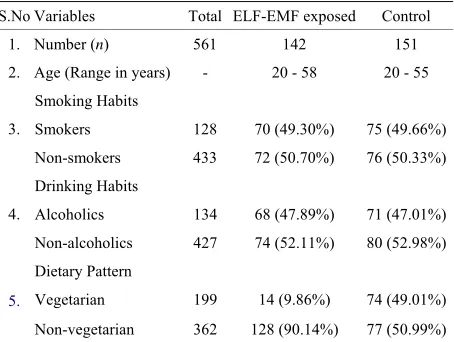
The demographic details of the occupationally exposed high voltage substation (132 kV) workers (ELF-EMFs exposed) and control group are shown in Table 1. As
[image:3.595.311.538.132.303.2]indicated, the age distributions of the entire population
Table 1. Demographic characteristics of the occupationally exposed high voltage substation (132 kV) exposed and con- trol.
S.No Variables Total ELF-EMF exposed Control
1. Number (n) 561 142 151
2. Age (Range in years) - 20 - 58 20 - 55
Smoking Habits
Smokers 128 70 (49.30%) 75 (49.66%)
3.
Non-smokers 433 72 (50.70%) 76 (50.33%)
Drinking Habits
Alcoholics 134 68 (47.89%) 71 (47.01%)
4.
Non-alcoholics 427 74 (52.11%) 80 (52.98%)
Dietary Pattern
Vegetarian 199 14 (9.86%) 74 (49.01%)
5.
Non-vegetarian 362 128 (90.14%) 77 (50.99%)
were similar and comparable between groups. The so- cioeconomic status and lifestyle factors were matched between exposed groups and control. Most of the sub- jects in the exposed group and control belonged to low and middle socioeconomic status.
4.1. Analysis by Exposure Characteristics
The sources of exposure include high voltage substation (132 kV). The electric utility workers are exposed for a mean (SD) duration of 9.27 (7.23) years. The workers are exposed to field intensities at an average of 9 h per day. The linemen, casual labor and hotliners (live-line workers), had variations in their exposure characteristics.
4.2. Results of Oxidant and Antioxidant Status
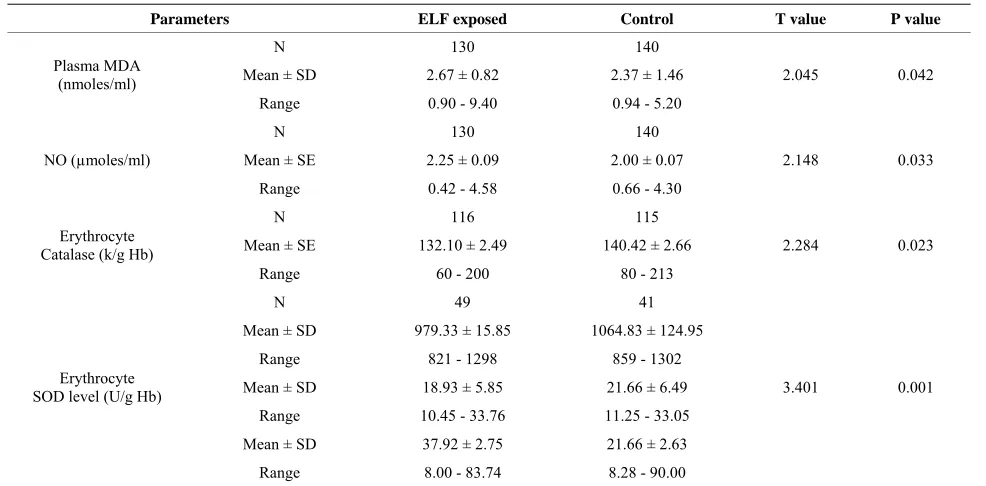
Table 2 shows the results of TBARS assay in the ELF-
EMFs exposed and control groups. The mean MDA con- centration (nmoles/ml) of the ELF-EMFs exposed sub- jects showed significant increase in MDA levels when compared with controls. The levels of serum nitric oxide, determined as nitrites or nitrates showed an increased level of serum NO in the exposed groups (p = 0.033). The anti-oxidative enzyme, erythrocyte catalase activity was estimated in controls and exposed. ELF-EMFs ex- posed group was found to have significant altered cata- lase levels when compared to controls (see Table 2).
The effect of duration of work in years in electric util- ity workers was significantly high in MDA, NO and catalase levels among the subgroups above 12 years of exposure (see Table 3). Frequency of daily exposure in
hours had no significant effect in oxidative stress pa- rameters among the sub-groups (see Table 4). The oxi-
Table 2. Results of TBARS assay in the ELF exposed compared with control group.
Parameters ELF exposed Control T value P value
N 130 140
Mean ± SD 2.67 ± 0.82 2.37 ± 1.46
Plasma MDA (nmoles/ml)
Range 0.90 - 9.40 0.94 - 5.20
2.045 0.042
N 130 140
Mean ± SE 2.25 ± 0.09 2.00 ± 0.07
NO (µmoles/ml)
Range 0.42 - 4.58 0.66 - 4.30
2.148 0.033
N 116 115
Mean ± SE 132.10 ± 2.49 140.42 ± 2.66
Erythrocyte Catalase (k/g Hb)
Range 60 - 200 80 - 213
2.284 0.023
N 49 41
Mean ± SD 979.33 ± 15.85 1064.83 ± 124.95
Range 821 - 1298 859 - 1302
Mean ± SD 18.93 ± 5.85 21.66 ± 6.49
Range 10.45 - 33.76 11.25 - 33.05
Mean ± SD 37.92 ± 2.75 21.66 ± 2.63
Erythrocyte SOD level (U/g Hb)
Range 8.00 - 83.74 8.28 - 90.00
[image:4.595.57.539.384.497.2]3.401 0.001
Table 3. Oxidative stress in relation to duration (years) of occupationally exposed electric utility workers.
Group based on Duration of Exposure (years) Group Comparison
Observation
A (1 - 4) B (5 - 12) C (13 - 28) F Value P Value A-B A-C B-C
N 38 41 51
MDA
Mean ± SE 2.77 ± 0.23 2.33 ± 0.18 2.87 ± 0.23 3.428 0.035 1.22
a 0.16 −1.05a
N 38 41 51
NO
Mean ± SE 2.21 ± 0.13 2.07 ± 0.17 2.43 ± 0.15 4.593 0.012 0.07 0.57
a 0.50a
N 29 37 50
Catalase
Mean ± SE 135.83 ± 3.94 133.46 ± 4.22 128.94 ± 4.30 4.686 0.011 0.84 −15.16
a −15.99a
aThe mean difference is significant at 0.05 level.
Table 4. Oxidative stress in relation to frequency of exposure (hours/day) to occupational ELF-EMFs of electric utility work-ers.
Group based on Frequency of Exposure (Hours/day) Group Comparison
Observation
A (1 - 3) B (3 - 6) C (6 - 9) F Value P Value A-B A-C B-C
N 55 41 34 MDA
Mean ± SE 2.70 ± 0.19 2.48 ± 0.22 2.86 ± 0.27 0.625 0.537 0.217 −159 −0.376
N 55 41 31 NO
Mean ± SE 2.26 ± 0.15 2.07 ± 0.13 1.06 ± 0.18 1.422 0.245 0.192 −0.206 −0.398
N 47 38 31 Catalase
Mean ± SE 130.21 ± 3.86 133.46 ± 4.22 130.06 ± 4.81 0.626 0.537 −5.89 0.150 6.041
high exposure group of hotliners had significantly dif- ferent oxidative stress parameter levels compared to other sub-groups (see Table 5). The maintenance work-
ers had comparatively a higher range of MDA levels when compared with the low exposed sub-group.
[image:4.595.57.539.549.666.2]Table 5. Oxidative stress in relation to exposure metric of occupationally exposed electric utility workers.
S.No Exposure metric Subjects (n) Observation Mean ± SE 95% CI for mean
75 MDA 1.61 ± 0.22 2.47 - 3.18
75 NO 2.45 ± 0.12 2.21 - 2.69
1 Low
62 Catalase 126.57 ± 3.09 120.38 - 132.75
44 MDA 2.67 ± 0.20b 2.26 - 3.07
43 NO 1.88 ± 0.13 1.61 - 2.15
2 Medium
44 Catalase 141.72 ± 4.12 133.41 - 150.03
11 MDA 2.82 ± 0.18b 1.12 - 2.10
11 NO 2.38 ± 1.13b 1.62 - 3.14
3 High
11 Catalase 125.73 ± 9.28b 105.04 - 146.42
[image:5.595.55.291.121.488.2]bSignificant at the 0.05 level.
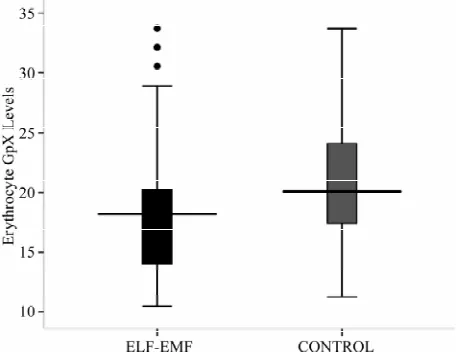
Figure 1. Box-plot showing Erythrocyte SOD (U/g Hb) con- centration.
Figure 2. Box-plot showing Erythrocyte SOD (U/g Hb) con- centration.
mean ± SD of SOD concentration in high exposed group (953.67 ± 49.85) was found to be significantly lesser from low exposed (1108.10 ± 78.50) and medium ex- posed (1115.30 ± 68.06). The mean difference of SOD concentration between the sub-groups of low and me- dium exposed was also significant. The regression analy- sis showed no relation of SOD concentration with expo- sure durations (R2 = 0.01, p = 0.529) and frequency of
exposure (R2 = 0.001, p = 0.884)(
Table 2, Figures 1 and 2).
As in Table 2 and Figure 2, a significantly low (p <
0.05) activity level of GpX in exposed group was noted when compared with control group. The mean ± SD GpX concentration of high exposed group was found to be significantly lesser from low exposed and medium ex- posed. The mean difference of GpX concentration be- tween the sub-groups of low and medium exposed was also significant. The regression analysis showed no rela- tion between GpX concentration with the exposure dura- tions (R2 = 0.002, p = 0.843) and frequency of exposure
(R2 = 0.026, p = 0.818).
Tables 6 and 7 indicate the results of ANOVA in sub
groups based on duration of exposure in years and hours per day respectively. It was observed that there is a significant increase (p = 0.05) proportionate to the duration of exposure both in years and hours.
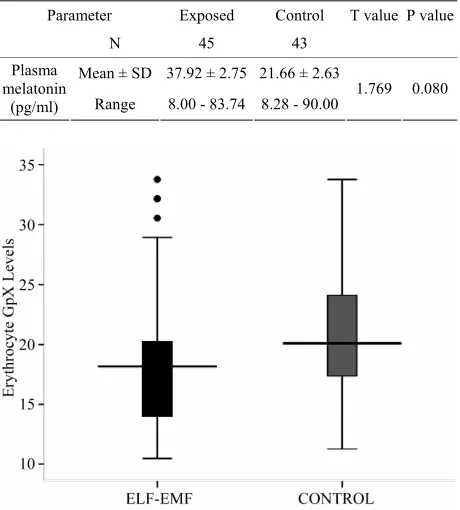
Table 8 outlines that the melatonin levels did not
differ markedly between the exposed and controls. The concentration of the high exposed (19.60 ± 9.65) was significantly lesser from those of low (36.27 ± 15.00) and medium exposed (31.94 ± 21.82) subjects. The mean values ranged between 8.0 to 90.74 pg/ml (Figures 3 and 4). The mean concentration of melatonin did not differ
significantly with differences in age group (see Figure 5).
[image:5.595.58.287.530.706.2]Table 6. Results of ANOVA in sub-groups based on duration of exposure.
Group based on Duration of Exposure (years) Group Comparison
A (1 - 4) B (4 - 12) C (12 - 30) F Value P Value A-B A-C B-C
N 15 10 16
M 41.86 ± 5.37 28.86 ± 3.18 24.25 ± 3.29 5.007 0.012 13.00 17.61
c 4.60
[image:6.595.58.542.216.280.2]N-Sample size, M-Mean ± SE, cSignificant at 0.05 level.
Table 7. Results of ANOVA in sub-groups based on duration of exposure.
Group based on Duration of Exposure (minutes/day) Group Comparison
A (60 - 180) B (180 - 240) C (240 - 600) F Value P Value A-B A-C B-C
N 21 9 13
M 38.22 ± 4.50 19.33 ± 7.92 28.0 ± 9.26 4.862 0.013 18.89
d 10.23 8.67
[image:6.595.308.538.291.482.2]N-Sample size, M-Mean ± SE, dSignificant at 0.05 level.
Table 8. Melatonin levels (pg/ml) in exposed and control subjects.
Parameter Exposed Control T value P value
N 45 43
Mean ± SD 37.92 ± 2.75 21.66 ± 2.63 Plasma
melatonin
(pg/ml) Range 8.00 - 83.74 8.28 - 90.00 1.769 0.080
Figure 2. Box-plot showing Erythrocyte SOD (U/g Hb) con- centration.
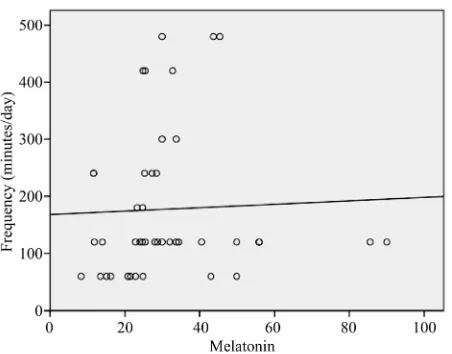
tion and frequency of exposure. Increasing duration of exposure was found to be significantly related to the suppression of melatonin (F = 3.490, p = 0.069). The re- gression analysis showed no relation between melatonin concentrations with frequency of exposure (see Figure 6).
5. Discussion
[image:6.595.58.288.329.584.2]The subjects exposed to specific non-ionizing radiations
Figure 3. Distribution of circulating melatonin concentra- tion (pg/ml) in substation workers.
[image:6.595.309.537.523.709.2]Figure 5. Linear trend of melatonin levels with increasing duration of exposure (years).
Figure 6. Linear trend of melatonin levels with increasing frequency of exposure (minutes/day).
were screened while care was taken to exclude subjects majorly exposed to other occupational/environmental agents such as chemicals and pollutants. The present study has shown the possible bioeffects of EMFs on sub- jects occupationally exposed to high voltage substation.
5.1. Bioeffects on Occupational Exposure to ELF-EMFs
The hypothesis that chronic exposure to residential and or occupational ELF-EMFs may cause adverse health hazards has led to a great deal of research. Epidemiol- ogical reports particularly on increased risk of childhood leukemia, breast cancer and neurological disorders had been a subject of National and International reviews [18]. There has been a steady increase in investigations exam- ining the genetic effects of EMF exposure in invitro ex-
perimental designs and invivo animal models. However,
very few epidemiological studies have directly evaluated the cause of such bioeffects. As studies on genotoxicity are highly relevant in evaluation of carcinogenicity, the present study is focused on such an issue in occupational settings of ELF-ELFs exposure. Moreover, in India hardly such studies are conducted to evaluate the oxida- tive stress effects of magnetic fields on high voltage sub- station workers. Nonetheless, it has been suggested that EMFs may induce cell specific activation processes, which in turn activate signal transduction pathways caus- ing excessive reactive oxygen species (ROS) formation/ cell cycle disturbances. These disturbances are supposed to have the potential to disrupt DNA integrity [19].
5.2. ELF Effect on Oxidant-Antioxidant Balance
The MDA levels in erythrocytes of ELF exposed subjects suggest a statistical significance in lipid peroxidation (LPO) activity. Owing to the great number of biological actions of free radicals, the LPO activity could have an important implication in the comprehension of the bio- logical stress response to ELF-EMFs. Oxidative DNA damage and LPO activity in exposure to ELF-ELFs was reported in certain invivo experimentations and animal
models. A time-dependent significant higher TBARS levels (p < 0.001) and induced DNA damage (p< 0.05)
in the exposure group as an effect of ELF magnetic fields (50 Hz, 0.97 mT) is observed [20].
Glutathione peroxidase (P < 0.001) and superoxide dismutase (P < 0.007) showed a decrease, while an in- crease in catalase (P < 0.005) was observed. Malondial- dehyde (P < 0.003) showed an increase. Erythrocyte MDA and glutathione (GSH) contents, can through some light on the role of melatonin as an antioxidant and its effect on oxidative stress [21].
The total nitrite concentration was statistically higher in the substation workers. In support to the findings of the study, statistically higher concentration of total nitrite in samples from volunteers exposed to magnetic field than in pre-magnetic field samples were reported [22]. Altered nitric oxide production in prolonged ELF-EMFs exposure at intensities of exposure limits, determined by International Commission on Non-Ionizing Radiation Protection (ICNIRP) for public and occupational expo- sure [23]. Few studies have reported the role and in- volvement of nitric oxide in magnetic field effects [24- 26]. Negative results on nitric oxide levels are shown in other studies [27]. It is also shown that nitric oxide syn- thase is supposed to be stimulated by the EMF exposure [28-30]. This compound can be involved in the stimula- tion of lipid peroxidation indirectly. This hypothesis could also explain the increased TBARS production in our exposed group.
[image:7.595.60.286.311.488.2]effects of ELF-EMFs. However, no significant changes in catalase levels could be noted. A diminution in the activity of SOD and GpX were proven by Zwirka- Korczala etal. [31]. The results indicated a relation be-
tween exposure to ELF-EMFs and oxidative stress. Some studies have shown increased oxidative-stress in human fibroblasts under ELF-EMFs exposure [32], mammalian cultured cells and human erythrocytes [33]. In support to our results, altered production of superoxide dismutase activities are noted in magnetic field exposure studies [25].
Furthermore, few studies have focused on the in- volvement of oxidative stress in the action mechanism of EMF exposure [34]. Exposition to electric fields (50 Hz) of Sprague-Dawley rats did not change the antioxidant activity and lipid peroxide level of unstressed animals but decreased the plasma peroxide level in stressed rats [35,36]. Recently, Zwirska-Korczala and colleagues [31] using preadipocytes, showed a diminution in the activity of superoxide dismutase after 24 h and 48 h of EMF ex- position (180 - 195 Hz). The early increase in the TBARS concentration observed in our study could be the result of the reduction in the activity of antioxidant en- zymes or/and the increase of free radical production.
Since free radicals are able to damage many bio- molecules, including DNA, enzymes, lipids and proteins, we can hypothesise that modulation in antioxidative en- zyme activities observed in our study can be related to overproduction of oxidants NO and MDA under ELF- EMFs exposure. However, the precise mechanisms in- volved in the effect on oxidative stress need further in- vestigations.
Nevertheless, the altered oxidant-antioxidant imbal- ance was highly pronounced in live-line workers. Oxida- tive damage was evident in this sub-group of electric utility workers by 1) increase in malondialdehyde (MDA) and nitric oxide (NO) levels, 2) decrease in superoxide dismutase (SOD) and glutathione peroxidase (GpX) ac- tivities and 3) suppressed melatonin levels.
5.3. ELF-EMFs Effect on Neuroendocrine Hormone and Stress Parameters
The effect of ELF-EMFs on occupational exposure over the production of pineal gland hormone, melatonin was evaluated. The mean melatonin concentration of the ex- posed was significantly different from those of healthy male individuals. The high exposed workers have sup- pressed melatonin levels against the low exposed and control group.
Very few studies are carried out on melatonin secre- tion in occupationally ELF-EMFs exposed subjects. Some authors observed an effect in electric workers in substations with 3-phase conductors, but not in substa-
tions with 1-phase [37]. Findings from studies on occu- pational ELF-EMFs exposure to influence melatonin secretion have also shown negative results [38-41]. A decrease in melatonin secretion was observed in sub- groups of the population exposed to high-power lines [42].
When the data was analysed by different exposure characteristics, differences were noted in sub-groups em- ployed as live-line workers. In support to our data, the consequence of duration and intensity dependent expo- sure effect of ELF-EMF on melatonin levels is reported [41]. Another occupational study showed reduced 6-OHMS in a group of female garment industry workers [32]. Similar trend in melatonin concentration was seen in the sub-group of workers exposed to different levels of ELF-EMFs. Some results [39] showed decrease in mela- tonin with increasing age.
We propose the role of melatonin as an antioxidant to explain the biological effects of EMFs. The rationale behind our study is that the increased free radical pro- duction in response to magnetic field exposure might result in suppressed circulating melatonin levels. The suppression of melatonin with extended free radical life- time may also enhance DNA damage [6,43]. Even in female workers exposed to magnetic fields, Nocturnal 6-hydroxy melatonin sulfate levels were suppressed [44]. This hypothesis could have an important implication for the possible health effects associated with exposure to ELF magnetic fields in the public and occupational en- vironments.
5.4. Relevance of Electromagnetic Field Exposure Indices
For the duration estimates, we systematically used the number of years of exposure, which are expected to pro- vide better estimates of the duration of long-term expo- sure. Furthermore, intensity is estimated separately from daily exposure or working hours per day. The results from our earlier report on cytogenetic assays suggested the induction of DNA damage probably due to genotoxic action of ELF-EMFs [6]. This genotoxic effect may also increase on co-exposure of occupational magnetic field densities with other environmental mutagen.
5.5. Magnetic Field Intensities in 132 kV Substation
The magnetic field measured in the present study repre- sents the prevailing field strength in high voltage (132 kV) substations at Hyderabad, India. The mean occupa- tional magnetic field exposure in the 132 kV substation was 3.5 µT (SD ± 2.01), while environmental non-oc- cupational exposure was 0.0015 µT (SD ± 0.001). The range of ELF-MF measured in the present study was consistent with the levels observed in other occupational studies [45]. The magnetic field intensities represent the prevailing exposure levels in high voltage (132 kV) sub- stations of Hyderabad, India.
6. Conclusions
The findings that ELF-EMFs may influence melatonin levels and oxidative stress have been an issue of debate for over two decades. In our study, the biological rele- vance of melatonin and related oxidative stress is well documented. The present study provides an insight to look into the possible bioeffects of electromagnetic ex- posure of ELF-EMFs in the occupational environments. The study can be applicable to consider melatonin and oxidative stress as biomarkers.
This investigation is also important for the safety measures to be taken by the personnel working in substa- tions. The proper evaluation of the EMFs in such envi- ronments allows mapping the levels around the electro- magnetic devices. It would help to choose tools with low emission of magnetic fields, to design accurately and correctly the working areas and to minimize the expo- sures. Thus, this study of bioeffects on humans exposed to the vast expanding electromagnetic pollution may be noteworthy from public health perspective.
7. Acknowledgements
The authors express heartfelt thanks to the University Grants Commission (UGC) for funding this Major Re- search project.
REFERENCES
[1] C. V. Bellieni, M. Tei, F. Iacoponi, M. L. Tataranno, S. Negro, F. Proietti, etal., “Is Newborn Melatonin Produc-
tion Influenced by Magnetic Fields Produced by Incuba- tors?” EarlyHumanDevelopment, Vol. 88, No. 8, 2012,
pp. 707-710.
http://dx.doi.org/10.1016/j.earlhumdev.2012.02.015 [2] R. J. Reiter, D. X. Tan, E. Sanchez-Barcelo, M. D. Me-
diavilla, E. Gitto and A. Ahmet Korkmaz, “Circadian Mechanisms in the Regulation of Melatonin Synthesis: Disruption with Light at Night and the Pathophysiological Consequences,” JournalofExperimentalandIntegrative
Medicine, Vol. 1, No. 1, 2011, pp. 13-22.
http://dx.doi.org/10.5455/jeim.101210.ir.001
[3] M. El-Helaly and E. Abu-Hashem, “Oxidative Stress, Melatonin Level, and Sleep Insufficiency among Elec- tronic Equipment Repairers,” IndianJournalofOccupa- tionalandEnvironmentalMedicine, Vol. 14, No. 3, 2010,
pp. 66-70. http://dx.doi.org/10.4103/0019-5278.75692 [4] E. R. Rios, E. T. Venâncio, N. F. Rocha, D. J. Woods, S.
Vasconcelos, D. Macedo, etal., “Melatonin: Pharmacol- ogical Aspects and Clinical Trends,” InternationalJour- nalofNeuroscience, Vol. 120, No. 9, 2010, pp. 583-590. http://dx.doi.org/10.3109/00207454.2010.492921
[5] V. Srinivasan, N. Mohamad Raffi, R. Karthikeyan and V. Kalaichelvi, “Therapeutic Actions of Melatonin in Cancer: Possible Mechanisms,” Integrative Cancer Therapies,
Vol. 7, No. 3, 2008, pp. 189-203.
http://dx.doi.org/10.1177/1534735408322846
[6] T. Ravindra, N. K. Lakshmi and Y. R. Ahuja, “Melatonin in Pathogenesis and Therapy of Cancer,” IndianJournal ofMedicalSciences, Vol. 60, No. 12, 2006, pp. 523-535.
[7] Vijayalaxmi and G. Obe, “Controversial Cytogenetic Ob- servations in Mammalian Somatic Cells Exposed to Ex- tremely Low Frequency Electromagnetic Radiation: A Review and Future Research Recommendations,” Bio- electromagnetics, Vol. 26, No. 5, 2005, pp. 412-430.
http://dx.doi.org/10.1002/bem.20111
[8] A. Ahlbom, J. Bridges, R. de Seze, J. L. Hillert, J. Juuti- lainen, M. O. Mattsson, etal., “Possible Effects of Elec-
tromagnetic Fields (EMF) on Human Health-Opinion of the Scientific Committee on Emerging and Newly Identi- fied Health Risks (SCENIHR),” Toxicology, Vol. 18, 2008, pp. 246-250.
[9] D. E. Blask, S. E. Hill, R. T. Dauchy, S. Xiang, L. Yuan, T. Duplessis, etal., “Circadian Regulation of Molecular, Dietary, and Metabolic Signaling Mechanisms of Human Breast Cancer Growth by the Nocturnal Melatonin Signal and the Consequences of Its Disruption by Light at Night,” JournalofPinealResearch, Vol. 51,No. 3, 2011, pp. 259-269.
http://dx.doi.org/10.1111/j.1600-079X.2011.00888.x [10] The International Agency for Research on Cancer (IARC)
“RF EMF Class 2B,” LancetOncology, Vol. 7, 2011, pp.
624-626.
[11] B. Halliwell and J. M. C. Gutteridge, “Free Radicals, Other Reactive Species, and Disease. Free Radicals in Biology and Medicine,” 3rdEdition, Oxford University Press, Ox- ford, 1999.
[12] D. J. Stuehr, S. S. Gross, I. Sakuma, R. Levi and C. F. Nathan, “Actived Murine Macrophages Secreted a Me- tabolite of Arginine with the Bioactivity of the Endothe- lium-Derived Relaxing Factor and the Chemical Reactiv- ity of Nitric Oxide,” Journal ofExperimentalMedicine,
Vol. 169, No. 3, 1989, pp. 1011-1023. http://dx.doi.org/10.1084/jem.169.3.1011
[13] J. M. McCord and I. Fridovich, “Superoxide Dismutase: An Enzymic Function for Erythrocuprein (Hemocuprein),”
JournalofBiologicalChemistry, Vol. 244, No. 22, 1969,
[14] Beutler, “Red Cell Metabolism, A Manual of Biochemi- cal Methods,” Grune & Stratton, Inc., New York, 1984, pp. 175-195.
[15] H. Luck, “Methods of Enzymatic Analysis,” 2nd Edition, Academic Press, New York, 1965.
[16] H. Aebi, “Catalase inVItro,” In: S. P. Colowick and N. O.
Kaplan, Eds., Method in Enzymology, Academic Press, New York, 1984, pp. 121-126.
[17] J. Arendt and M. Wilkingson, “Melatonin,” In: B. M. Jaffe and B. M. Behrman, Eds., MethodsofHormone Radio- immunoassay, Academic Press, New York, 1979, pp. 101-119.
[18] L. Hardell and C. Sage, “Biological Effects from Elec- tromagnetic Field Exposure and Public Exposure Stan- dards,” BiomedicineandPharmacotherapy, Vol. 62, No. 2, 2008, pp. 104-109.
http://dx.doi.org/10.1016/j.biopha.2007.12.004
[19] H. Lai and N. P. Singh, “Magnetic-Field-Induced DNA Strand Breaks in Brain Cells of the Rat,” Environmental HealthPerspectives, Vol. 112, 2004, pp. 687-694.
http://dx.doi.org/10.1289/ehp.6355
[20] B. Yokus, D. U. Cakir, M. Z. Akdag, C. Sert and N. Mete, “Oxidative DNA Damage in Rats Exposed to Extremely Low Frequency Electromagnetic Fields,” Free Radical Research, Vol. 39, No. 3, 2005, pp. 317-323.
http://dx.doi.org/10.1080/10715760500043603
[21] C. Shilpa and S. I. Rizvi, “Day and Night GSH and MDA Levels in Healthy Adults and Effects of Different Doses of Melatonin on These Parameters,” InternationalJour- nalofCellBiology, 2011, Article ID 404591.
http://dx.doi.org/10.1155/2011/404591
[22] O. Sirmatel, C. Sert, F. Sirmatel, S. Selek and B. Yokus, “Total Antioxidant Capacity, Total Oxidant Status and Oxidative Stress Index in the Men Exposed to 1.5 T Static Magnetic Field,” General Physiology and Biophysics,
Vol. 26, No. 2, 2007, pp. 86-90.
[23] M. Z. Akdag, M. H. Bilgin, S. Dasdag and C. Tumer, “Alteration of Nitric Oxide Production in Rats Exposed to a Prolonged, Extremely Low-Frequency Magnetic Field,”
ElectromagneticBiology and Medicine, Vol. 26, No. 2,
2007, pp. 99-106.
http://dx.doi.org/10.1080/15368370701357866
[24] P. D. Whissell and M. A. Persinger, “Developmental Ef- fects of Perinatal Exposure to Extremely Weak 7 Hz Mag- netic Fields and Nitric Oxide Modulaton in the Wistar Albino Rat,” International Journal of Development Neu- roscience, Vol. 25, No. 7, 2007, pp. 7433-7439.
http://dx.doi.org/10.1016/j.ijdevneu.2007.09.001
[25] A. Jelenkovic, B. Janac, V. Pesic, D. M. Jovanovic, I. Va- siljevic and Z. Prolic, “Effects of Extremely Low-Fre- quency Magnetic Field in the Brain of Rats,” BrainRe- searchBulletin, Vol. 68, No. 5, 2006, pp. 55-60.
http://dx.doi.org/10.1016/j.brainresbull.2005.09.011 [26] M. Reale, M. A. D.Lutiis, A. Patruno, L. Speranza, M.
Felaco, A. Grilli, etal., “Modulation of MCP-1 and iNOS
by 50-Hz Sinusoidal Electromagnetic Field,” NitricOxide, Vol. 15, No. 1, 2006, pp. 50-57.
http://dx.doi.org/10.1016/j.niox.2005.11.010
[27] V. F. Kirichuk, A. N. Ivanov, O. N. Antipova, A. P. Kre- nitskii, A. V. Maĭborodin, V. D. Tupikin, etal., “Electro-
magnetic Radiation of the Terahertz Range at the Nitric Oxide Frequency in Correction and Prophylaxis of Func- tional Activity Disorders in Thrombocytes of White Rats under Long-Term Stress,” Tsitologiia, Vol. 49, No. 6,
2007, pp. 484-490.
[28] S. S. Kim, H. J. Shin, D. W. Eom, J. R. Huh, Y. Woo, H. Kim, etal., “Enhanced Expression of Neuronal Nitric Ox-
ide Synthase and Phospolipase C-Gamma1 in Regenerat- ing Murine Neuronal Cells by Pulsed Electromagnetic Field,” Experimental & Molecular Medicine, Vol. 34,
2002, pp. 53-59.
http://dx.doi.org/10.1038/emm.2002.8
[29] R. L. Seaman, J. E. Parker, J. E. Kiel, S. P. Mathur, T. R. Grubbs and H. K. Prol, “Ultra Wide Brand Pulses In- crease Nitric Oxide Production by RAW 264.7 Macro- phages Incubated in Nitrate,” Bioelectromagnetics, Vol.
23, No. 1, 2002, pp. 83-87. http://dx.doi.org/10.1002/bem.100
[30] J. H. Jeong, C. Kum, H. J. Choi, E. S. Park and U. D. Sohn, “Extremely Low Frequency Magnetic Field In- duces Hyperlgesia in Mice Modulated by Nitric Oxide Synthesis,” LifeScience, Vol. 78, No. 13, 2006, pp. 1407-
1412. http://dx.doi.org/10.1016/j.lfs.2005.07.006
[31] K. Zwirska-Korczala, J. Jochem, M. Adamczyk-Sowa, P. Sowa, R. Polaniak, E. Birkner etal., “Effect of Extremely
Low Frequency Electromagnetic Fields on Cell Prolifera- tion, Antioxidative Enzyme Activities and Lipid Peroxi- dation in 3T3-L1 Preadipocytes–An in Vitro Study,” Ca- nadianJournalofPhysiologyandPharmacology, Vol. 56,
No. 6, 2005, pp. 101-108.
[32] F. Focke, D. Schuermann, N. Kuster and P. Schär, “DNA Fragmentation in Human Fibroblasts under Extremely Low Frequency Electromagnetic Field Exposure,” Mutation Research, Vol. 683, No. 1-2, 2010, pp. 74-83.
http://dx.doi.org/10.1016/j.mrfmmm.2009.10.012
[33] A. L. Di Carlo, N. C. White and T. A. Litovitz, “Mecha- nical and Electromagnetic Induction of Protection against Oxidative Stress,” Bioelectrochemistry, Vol. 53, No. 1,
2001, pp. 87-95.
http://dx.doi.org/10.1016/S0302-4598(00)00116-1 [34] G. J. Hook, D. R. Spitz, J. E. Sim, R. Higashikubo, J. D.
Baty, E. G. Moros, etal., “Evaluation of Parameters of
Oxidative Stress after in Vitro Exposure to FMCW and
CDMA Modulated Radio Frequency Radiation Fields,”
RadiationResearch, Vol. 162, No. 5, 2004, pp. 497-504.
http://dx.doi.org/10.1667/RR3251
[35] M. Simko, S. Droste, R. Kriehuber and D. G. Weiss, “Sti- mulation of Phagocytosis and Free Radical Production in Murine Macrophages by 50 Hz Electromagnetic Fields,”
EuropeanJournalofCellBiology, Vol. 80, No. 8, 2001,
pp. 562-566. http://dx.doi.org/10.1078/0171-9335-00187 [36] S. Harakawa, N. Inoue, T. Hori, K. Tochio, T. Kariya, K.
Takahashi, et al., “Effects of a 50 Hz Electric Field on
589-594. http://dx.doi.org/10.1002/bem.20137
[37] J. B. Burch, J. S. Reif, C. W. Noonan and M. G. Yost, “Melatonin Metabolite Levels in Workers Exposed to 60- Hz Magnetic Fields: Work in Substations and with 3- Phase Conductors,” Journal of Occupational and Envi- ronmentalMedicine, Vol. 42, No. 2, 2000, pp. 136-142.
http://dx.doi.org/10.1097/00043764-200002000-00006 [38] D. H. Pfluger and C. E. Minder, “Effects of Exposure to
16.7 Hz Magnetic Fields on Urinary 6-Hydroxymalatonin Sulfate Excretion of Swiss Railway Workers,” Journalof PinealResearch, Vol. 21, No. 2, 1996, pp. 91-100. http://dx.doi.org/10.1111/j.1600-079X.1996.tb00275.x [39] G. A. Bubenik and S. J. Konturek, “Melatonin and Aging:
Prospects for Human Treatment,” JournalofPhysiology andPharmacology, Vol. 62, No. 1, 2011, pp. 13-19.
[40] F. Gobba, G. Bravo, M. Scaringi and L. Roccatto, “No Association between Occupational Exposure to ELF Mag- netic Field and Urinary 6-Sulfatoximelatonin in Work- ers,” Bioelectromagnetics, Vol. 27, No. 8, 2006, pp. 667- 673. http://dx.doi.org/10.1002/bem.20254
[41] M. Crasson, V. Beckers, C. Pequeux, B. Claustrat and J. J. Legros, “Day Time 50 Hz Magnetic Field Exposure and Plasma Melatonin and Urinary 6-Sulfatoxy Melatonin Concentration Profiles in Humans,” Journal of Pineal
Research, Vol. 31, 2001, pp. 234-241.
http://dx.doi.org/10.1034/j.1600-079X.2001.310307.x [42] Y. Touitou, J. Lambrozo, F. Camus and H. Charbuy,
“Magnetic Fields and Melatonin: A Study of Workers Chronically Exposed to 50 Hz Magnetic Fields,” Ameri- canJournal ofPhysiology RegulatoryIntegrative Com-parativePhysiology, Vol. 284, No. 6, 2003, pp. R1529-
R1535.
[43] B. Floderus, T. Persson and C. Stenlund, “Magnetic-field exposures in the workplace, Reference distribution and exposures in occupational groups,” InternationalJournal ofOccupationalandEnvironmentalHealth, Vol. 2, No. 3,
1996, pp. 226-238.
[44] J. Juutilainen, R. G. Stevens, L. E. Anderson, N. H. Han- sen, M. Kilpeläinen, T. Kumlin, et al., “Noctural 6-Hy-
droxymelatonin Sulfate Excretion in Female Workers Ex- posed to Magnetic Fields,” Journal ofPinealResearch,
Vol. 28, No. 2, 2000, pp. 97-104.
http://dx.doi.org/10.1034/j.1600-079X.2001.280205.x [45] M. M. Methner and J. D. Bowman, “Hazard Surveillance
for Industrial Magnetic Fields, I Walkthrough Survey of Ambient Fields and Sources,” Annals of Occupational Hygiene, Vol. 44, No. 8, 2000, pp. 603-664.