Smart Braille Recognition System
Krishna S valsan1, S Josephine Stella2 1
MPhil Scholar, 2Assistant Professor, Department of Computer Science, CMS College, Coimbatore-49, Bharathiar University, Coimbatore-46
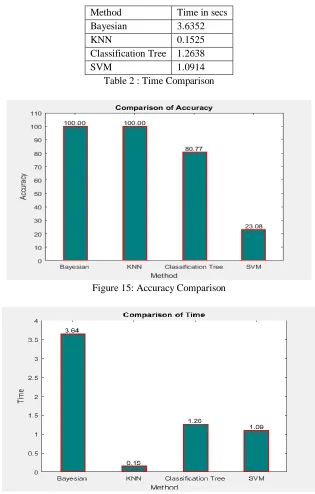
Abstract: Braille is a system that allows visually impaired people to write and read. It utilizes the finger touch on raised dots produced by specialized machine. In this paper we present automatic speech recognition (ASR) system which, is aimed at helping preschool children to learn Braille. In order to provide valuable support in decision making, a system combining Braille images and image mining becomes necessary. Such a system would encompass the following functions set of Braille images, image pre-processing, character segmentation, feature extraction, and character recognition. Gray scale conversion, binary conversion, and complement have been applied in the pre-processing stage which helps extracts Braille dots. Centroid features and Bayesian classifier succeeds effectively to classify Braille to English alphabets. The implemented algorithm achieved 100% results where as classifiers such as Classification Tree and SVM could achieve only 23.0769 and 80.7692 respectively.
Keywords: Automatic Speech Recognition, Centroid, Accuracy, Feature Extraction, Pre-processing
I. INTRODUCTION
Blind people are an integral part of all societies and they, as everyone else, can play an effective role in the development. Globally, an estimated 40 to 45 million people are blind and 135 million have low vision according to the World Health Organization (WHO) and this number grows every year. Therefore it was necessary to provide and support those people with systems and technologies to allow communication and interaction with each other and with people without vision problems. The major senses used by visual impaired people are the hearing and the touch feeling. These two senses become more advanced and sensitive than for non-blind people. The most famous communication system for blind people is the Braille system. Braille is a system of writing that uses patterns of raised dots to inscribe characters on paper and depends on the sense of the touch of the finger.
Figure 1: A 6-dot Braille cell with dot position numbered universally
Initially the Braille was developed by Charles Barbier for soldiers in the nineteenth century. Later Louis Braille modifies the Charles Barbier’s method and developed today’s Braille system which has become the pre-eminent tactile alphabet. Braille is a system that allows visually impaired people to read through touch using a series of raised dots on special papers which can only be read using the fingers. These dots are written using a specialized machine.
II. RELATEDWORKS
for us. We do not need pity, nor do we need to be reminded that we are vulnerable. We must be treated as equals, and communication is the way we can bring this about" Louis Braille, 1841. According to latest statistics of the World Health Organization (WHO) more than 285 million people are visually impaired and 7% of them are totally blind. Braille method appeared nearly two centuries, and due to changes in laws and regulations it became more prevalent in daily use and it is widely used in almost all countries as a teaching tool to address the special needs of blind students. Writing is a very effective means of transforming thoughts, ideas, facts, theories to people around the world. It is still a hard task to reach out to all people as some find it necessary to learn Braille for their day to day communication. As it is a necessary tool to reduce the gap between blind people and people around. Braille is a method consists of a number of cells each cell has two column consists of three salient points. Blind people can be read through touch by fingers, points in the first column of the cell is 1-2-3 from top to bottom numbers and points in the second column of the cell 4-5-6 from top to bottom as shown in Figure 4. It represents characters or word or number or punctuation mark or express character or musical special configuration of these letters. In order to prominent and can write in Braille through the Braille machine a machine similar to the normal printing machine can be used, or through the computer, which converts to a regular writing Braille.
Figure 2: Braille sheet
The writing (Braille) on the basis of six key points three on the left and three on the right as shown in Figure 1. Learning the language of braille takes long time for normal people, where good finger sensitivity is important and also to be able to memorize new information, have a good reason for using braille, and have the patience to master a new kind of language. Thus, many researchers came out to solve this issue and to develop a system to make Braille recognized by all people without advance knowledge.
A. Braille Character Recognition
Many steps are applied in image pre-processing technique such as Gray scale conversion, binary conversion, filtering, edge detection, image projection and morphological dilation. The extraction part is then to be pre-defined in the system to match Braille characters with the equally meaning English letter.
B. Grade 1 Braille
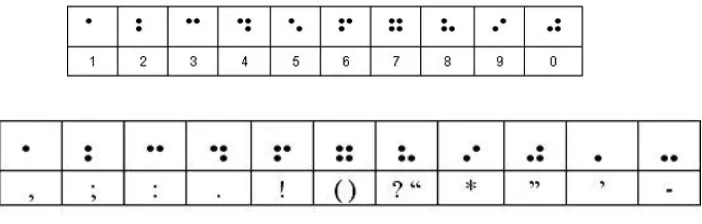
Figure 3: Grade 1 Braille
C. Grade 2 Braille
Since Braille books are so much larger than normal test books a contraction is used to reduce the length of some words. Grade 2 braille was introduced as a space-saving alternative to grade 1 Braille. In grade 2 Braille, a cell can represent a shortened form of a word. Many cell combinations have been created to represent common words, making this the most popular of the grades of Braille. There are part-word contractions, which often stand in for common suffixes or prefixes, and whole-word contractions, in which a single cell represents an entire commonly used word. Words may be abbreviated by using a single letter to represent the entire word, using a special symbol to precede either the first or last letter of the word while truncating the rest of the word, using a double-letter contraction such as "bb" or "cc", or removing most or all of the vowels in a word in order to shorten it. A complex system of styles, rules, and usage has been developed for this grade of Braille. Contractions such as brl for Braille, as well as one character codes for common words such as the, and, and which make it easier and faster for everyone to read a Braille book.
Figure 4: Grade 2 Braille
The dimensions of a point according to the Braille and tactile resolution of the fingertips of, people has been defined and specified for worldwide use. Horizontal and vertical distance between points in the letter, in addition to, the distances between the cells that represent a word after completion are specified by the Library of US Congress as shown in Figure 2. Dot height is approximately (0.5 mm). Horizontal and vertical spacing between dot centers within a Braille cell is approximately (2.5 mm). The blank space between dots on adjacent cells is approximately (3.75 mm) horizontally and (5.0 mm) vertically. The last of the grades of Braille, grade 3, is essentially a system of Braille shorthand. Because it has not been standardized, it is not used in publications. Instead, it is typically used by individuals for their own personal convenience. It contains over 300 word contractions and makes great use of vowel omission. In addition, the amount of spacing between words and paragraphs is decreased in order to shorten the length of the final document. It also sometimes substitutes combinations of punctuation symbols for words.
III. NEEDFORTHESTUDY
[image:4.612.113.502.360.515.2]people using device are they still depend on very primitive aids such as sighted people, canes, guide dogs or spoken directions in managing their daily lives and participating in social and health-critical activities. Hence, it become increasingly difficult for visually impaired to use Short message service as cannot interact with smart phone. As smart phones started to become more advanced, it required more and more effort to make smart phone accessible to visually impaired people. Optical Braille is used to digitize and reproduce texts that have been produced with non-computerized systems, such as with Braille recognizer. Digitizing Braille texts also helps reduce storage space, as Braille texts also helps reduce storage space, as Braille texts take up much more space than their natural language counter parts. Optical Braille recognition is also useful for people who cannot read Braille, but need to access the content of Braille documents. Matrix matching involves comparing an image to a stored glyph on a pixel-by-pixel basis, it is also known as “pattern matching”, “pattern recognition”, or “image correlation”. This relies on the input glyph being correctly isolated from the rest of the image.
A feature extraction decomposes glyphs into “features” like lines, closed loops, line direction, and line intersections. The extraction features reduces the dimensionality of the representation and makes the recognition process computationally efficient. These features are compared with an abstract vector-like representation of a character, which reduce to one or more glyph prototypes. Character Recognition includes image pre-processing, feature extraction, character recognition. Image processing is the use of computer algorithm to perform image processing on digital images. As a subcategory or field of digital signal processing, digital image processing has many advantages over analogy image processing. It allows a much wider range of algorithms to be applied to the input data and can avoid problems such as the build-up of noise and signal distortion during processing, since images are defined over two dimension digital images processing may be modelled in the form of multidimensional systems.
In machine learning, pattern recognition and in image processing, feature extraction starts from an initial set of measured data and builds derived values intended to be informative and non-redundant, facilitating the subsequent learning and generalization steps and in some cases leading the better human interpretations. Feature extraction is related to dimensionally reduction.
IV. METHODOLOGY
In this work, we produce a method for single sided Braille character recognition. The Braille recognition system composed of several operations such as Image Acquisition, Image Pre-processing, Noise Reduction, Image Enhancement, Segmentation, Feature Extraction, and Braille Cell Recognition. Below we explain each stage within our system.
A. Image Acquisition
We obtained images of single sided embossed Braille documents using a flat-bed scanner with horizontal and vertical resolution 100 dpi, bit depth 24, and the image store in JPEG format. Figure 10 illustrate sub-image of Braille sheets with colors pink, green and yellow. The main objective for our system is robustness, functionality, and ease of use. The scanner can be used with any other application without the need to carry out complex modifications, hence, reduction in the operating cost of our system.
Figure 5: (a) Pink Braille Sheet (b) Yellow Braille Sheet (c) Green Braille Sheet
B. Image Pre-processing
Inside a computer system, colored images are stored in 3-D arrays while gray level images are stored in D.arrays. Dealing with 2-D arrays is much easier and faster. Moreover in our system color information that results from digitizing the Braille documents have no meaningful usage and therefore color features are irrelevant. Therefore, we convert the image from the Red, Green, Blue (RGB) color image into gray level image so that any pixel value in the image falls within the range 0- 255.
We convert the RGB images into gray scale using the following standard color image conversion:
= 0.2989 + 0.5870 + 0.1140 (1)
[image:5.612.77.543.503.585.2]Figure 6: RGB Braille Image
Figure 7: Gray Scale Image
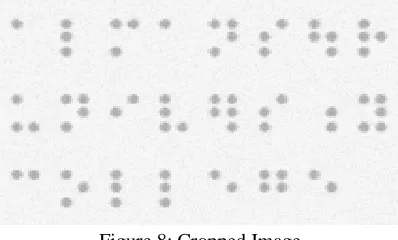
[image:6.612.206.405.399.519.2]The resulting image usually contain a darker frame around the borders that may disrupt subsequent processing steps, hence, we perform the standard image cropping as shown in Figure 8.
Figure 8: Cropped Image
C. Noise Reduction
[image:6.612.212.401.619.722.2]Image acquisition results in random noise that is reflected spatially all over the image. These noises generally manifest themselves as random fluctuation in gray-level values superimposed upon the "ideal" gray-level value, and it usually has a high spatial frequency. Therefore, a low-pass average filter is applied to the image to attenuate the high spatial frequency noise from the image while at the same time preserving the detailed edge information of the Braille dots. Figure 9 shows a sample image after noise reduction step.
D. Image enhancement
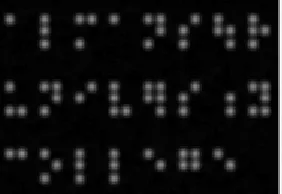
[image:7.612.221.393.149.260.2]The main goal of image enhancement is to highlight specific image features. The main image features in this paper are the dots and their relative location. Because of the uncontrolled scanning conditions where we collect our real data, image brightness vary and usually impact the quality of the dots and their discrimination. We adjust image intensity values to make these dots bold and easier to localize in subsequent steps. Figure 10 shows a sample image after contrast enhancement.
Figure 10: Adjusted Image
E. Image segmentation
[image:7.612.228.369.320.417.2]We perform image segmentation to separate the desired dots from the background. To obtain well-defined dots, we perform image compliment as shown in Figure 11.
Figure 11: Complemented Image
Then image dilation to dilate the dots as shown in Figure 12.
Figure 12: Image after dilation
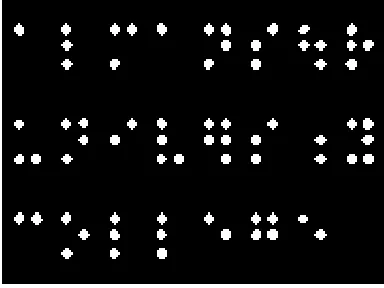
[image:7.612.237.376.456.561.2] [image:7.612.234.373.626.725.2]We perform image filling to make sure that the dots are bold, sharp, and clear for subsequent steps as shown in Figure 14.
Figure 14: Image after filling holes
V. IMPLEMENTATION
The algorithm is implemented using Matlab2014a. MATLAB® is a high-level technical computing language and interactive environment for algorithm development, data visualization, data analysis, and numerical computation. Using MATLAB, you can solve technical computing problems faster than with traditional programming languages, such as C, C++, and FORTRAN.
Matlab is a data analysis and visualization tool which has been designed with powerful support for matrices and matrix operations. Matlab has excellent graphics capabilities, and its own powerful programming language. One of the reasons that Matlab has become such an important tool is through the use of sets of Matlab programs designed to support a particular task. These sets of programs are called toolboxes, and the particular toolbox of interest to us is the image processing toolbox. Rather than give a description of all of Matlab's capabilities, we shall restrict ourselves to just those aspects concerned with handling of images. We shall introduce functions, commands and techniques as required. A Matlab function is a keyword which accepts various parameters, and produces some sort of output: for example a matrix, a string, a graph. Examples of such functions are sin, imread, imclose. There are many functions in Matlab, and as we shall see, it is very easy (and sometimes necessary) to write our own.
Matlab's standard data type is the matrix all data are considered to be matrices of some sort. Images, of course, are matrices whose elements are the grey values (or possibly the RGB values) of its pixels. Single values are considered by Matlab to be matrices, while a string is merely a matrix of characters; being the string's length. When you start up Matlab, you have a blank window called the Command Window in which you enter commands. Given the vast number of Matlab's functions, and the different parameters they can take, a command line style interface is in fact much more efficient than a complex sequence of pull-down menus. You can use MATLAB in a wide range of applications, including signal and image processing, communications, control design, test and measurement financial modeling and analysis. Add-on toolboxes (collections of special-purpose MATLAB functions) extend the MATLAB environment to solve particular classes of problems in these application areas. MATLAB provides a number of features for documenting and sharing your work. You can integrate your MATLAB code with other languages and applications, and distribute your MATLAB algorithms and applications.
VI. RESULT
When the input data to an algorithm is too large to be processed and it is suspected to be redundant, then it can be transformed into a reduced set of feature relation. Determining a subset of the initial features is called feature relation. The selected features are expected to contain the relevant information from the input data, so that the desired task can be performed by using this reduced representation instead of the complete initial data.
Method Accuracy
in %
Bayesian 100
KNN 100
Classification Tree 80.7692
SVM 23.0769
[image:8.612.226.389.626.723.2]Method Time in secs
Bayesian 3.6352
KNN 0.1525
Classification Tree 1.2638
[image:9.612.147.462.74.568.2]SVM 1.0914
Table 2 : Time Comparison
Figure 15: Accuracy Comparison
Figure 16: Time Comparison
VII. CONCLUSIONANDFUTUREWORKS
positively impacting the society by increasing the communication with this important and effective community from each society. In our system, we performed a set of sequentially designed engineering steps to produce a readable text out of the Braille document. It includes document digitization, image pre-processing, noise reduction, image enhancement, character segmentation, feature extraction and character recognition. Our system's recognition ability ranges between 94% and 99%. We strongly believe that our proposed system has a great potential for daily use to enhance communication with this important and effective population in each society.
REFERENCES
[1] AbdulMalik Al-Salman, Yosef AlOhali, Mohammed AlKanhal, and Abdullah AlRajih (2007), ''An Arabic Optical Braille Recognition System", Proceedings of the International Conference in Information and Communication Technology & Accessibility (ICTA’07), Tunisia, pp. 81-86.
[2] J. Dubos, M. Benjelloun (1988), "Image Processing Techniques to Perform An Autonomous System to Translate Relief Braille into Black-Ink, Called: Lectobraille", Proceedings of the International Conference on IEEE Engineering in Medicine & Biology Society, LA, USA, Vol. 4, pp. 1584-1585
[3] Zhenfei Tai, Samuel Cheng, and Pramode Verma (2008), "Braille Document Parameters Estimation for Optical Character Recognition", Lecture Notes in Computer Science, Vol. 5359, pp. 905- 914.
[4] Rawan Ismail Zaghloul and Tomader Jameel Bani-Ata (2011), "Braille Recognition System – With a Case Study Arabic Braille Documents", European Journal of Scientific Research, Vol. 62pp. 116-122.
[5] T. Yoshida, A. Ohya and S. Yuta (2000), "Braille Block Detection for Autonomous Mobile Robot Navigation", Proceedings of the IEEE/RSJ International Conference on Intelligent Robots and Systems, Vol. 1, pp. 633-638.
[6] Néstor Falcón, Carlos M. Travieso, Jesús B. Alonso, and Miguel A. Ferrer (2005), "Image Processing Techniques for Braille Writing Recognition", Lecture Notes in Computer Science, Vol. 3643, pp. 379-385.
[7] A. Antonacopoulos and D. Bridson (2004), "A Robust Braille Recognition System", Lecture Notes in Computer Science, Vol. 3163, pp. 533-545.
[8] Saad D. Al-Shamma, and Sami Fathi (2010), "Arabic Braille Recognition and Transcription into Text and Voice", Proceedings of Biomedical Engineering Conference (CIBEC), Cairo, Egypt, pp. 227-231.
[9] Jan Mennens, Luc Van Tichelen, Guido Francois, and Jan J. Engelen (1994), "optical recognition of Braille writing using standard equipment", IEEE Transactions on Neural Systems and Rehabilitation Engineering, Vol. 2, No. 4, pp. 207-212.
[10] Marwa Abdelmonem, M. El-Hoseiny, Asmaa Ali, Karim Emara, Habiba Abdel Hafez, and Asmaa Gamal (2009), "Dynamic Optical Braille Recognition (OBR) System", Proceedings of the International Conference on Image Processing, Computer Vision, & Pattern Recognition (IPCV), Las Vegas, Nevada, USA, pp. 779-786.
[11] Zainab Authman, and Zamen Jebr (2012), "Arabic Braille scripts recognition and translation using image processing techniques", Journal of College of Education, Vol. 2, pp. 18-26.
[12] J. Bhattacharya, and S. Majumder (2011), "Braille Character Recognition Using Generalized Feature Vector Approach", Proceedings of the International Conference on Information Processing (ICIP), Bangalore, India, Vol. 157, pp. 171-180.
[13] R.T. Ritchings, A. Antonacopoulos and D. Drakopoulos (1995), "Analysis of Scanned Braille Documents", In A. Dengel and S. Marinai (Eds.), Document Analysis Systems, pp. 413-421.
[14] P. Blenkhorn (1997), "A system for converting braille into print", IEEE Transactions on Rehabilitation Engineering, Vol. 3, No. 2, pp. 215-221.
[15] C. Ng, V. Ng, and Y. Lau (1999), "Regular Feature Extraction for Recognition of Braille", Proceedings of the International Conference on Computational Intelligence and Multimedia Applications, New Delhi, India, pp. 302-306.
[16] Lisa Wong, Waleed Abdulla, and Stephan Hussmann (2004), "A Software Algorithm Prototype for Optical Recognition of Embossed Braille", Proceedings of the International Conference on Pattern Recognition (ICPR), Cambridge, UK, Vol. 2, pp. 586-589.
[17] X. Hermida, A. Corbacho Rodriguez, and F. Martin Rodriguez (1996), "A Braille O.C.R. for Blind People", Proceedings of the International Conference on Signal Processing Applications & Technology (ICSPAT 96), Vol. 1,. Boston, USA.
[18] Y. Mihara, A. Sugimoto, E. Shibayama, and S., Takahashi (2005), "An Interactive Braille- Recognition System for the Visually Impaired Based on a Portable Camera", Proceedings of CHI Extended Abstracts on Human Factors in Computing Systems, pp. 1653-1656.
[19] Y. Oyama, T. Tajima, and H. Koga (1997), "Character Recognition of Mixed Convex-Concave Braille Points and Legibility of Deteriorated Braille Points", System and Computer in Japan, Vol. 28, No. 2, pp. 44-53.
[20] Iain Murray, and Andrew Pasquale (2006), "A Portable Device for the Translation of Braille to Literary Text", Proceedings of ACM Conference on Assistive Technologies (ASSETS), pp. 231-232.
[21] Minghu Jiang, Xiaoyan Zhu, Georges Gielen, Elliott Drábek, Ying Xia, Gang Tan, and Ta Bao (2002), "Braille to print translations for Chinese", Information and Software Technology, Vol. 44, No. 2, pp. 91-100.
[22] Vidyashankar, G. Hemantha Kumar, and P. Shivakumara (2004), "Rotation Invariant Histogram Features For Recognition Of Braille Symbols", Proceedings of the International Conference on Cognitive Systems (ICCS ‘04), New Delhi, India, pp. 32.