5
II
February 2017
www.ijraset.com Volume 5 Issue II, February 2017 IC Value: 45.98 ISSN: 2321-9653
International Journal for Research in Applied Science & Engineering
Technology (IJRASET)
©IJRASET: All Rights are Reserved
292
Mobile Computing Broadband Networks
K. Ramya1, G. Arunachalam2, M. Shanmugapriya3, P. Sathya4 1,2Assistant Professor, 3,4Student, Department of MCA, ECE
Gnanamani College of Technology & Engineering, Pachal, Namakkal.
Abstract: As more and more people enjoy the various brought by mobile computing, it is becoming a global trend in today’s world. at the same time, securing mobile computing has been paid increasing attention. During the last decade in the size of computing machinery, coupled with the increase in their computing power has lend to the development of the concept of mobile computing. It allows mobile users versatile communication with other people and expedient notification of important events, much more flexibility them with cellular phones. The many issues to be dealt with stem from three essential properties of mobile computing: communication, mobility and portability. Mobile Computing defines that a device which permits the flow of transmission of data from one computer to another by never been connected to the Physical link layers. Mobile voice communications which is in demands all over the world is having a great increment of the user subscribers to many networks protocols from last two to three years.
I. INTRODUCTION
Mobile computing is human–computer interaction by which a computer is expected to be transported during normal usage. The birth of “mobile computing” has signaled a new era in the field of computing and information systems. A technology that allows transmission of data, via a computer, without having to be connected to a fixed physical link. As wireless communication takes place mainly through the radio signals rather than wires, it is easier to intercept or eavesdrop on the communication channels. Therefore, it is important to provide security from all these threats. There are different kinds of issues within security like confidentiality, integrity, availability, legitimacy, and accountability that needs to be individually taken care off (2). A mobile device is a small computing device, typically small enough to be handheld (and hence also commonly known as a handheld computer or simply handheld) having a display screen with touch input and/or a miniature keyboard and weighing less than 2 pounds (0.91 kg)
I I . T Y P E S O F W I R E L E S S C O M P U T E R
A. Laptop computers
Laptop computers are personal computers that are easy to carry and use in various locations. Many laptops on the market are designed to offer you all the functionality of a desktop computer, which means you can run the same software and open the same types of files. The laptop has an all-in-one design with built-in touchpad, keyboard, monitor and speakers. Laptops also offer you the option of connecting to a larger monitor, regular mouse and other peripherals.
B. Tablet
Tablets are also designed to offer portability. However, they provide you with a computing experience different from laptops with the biggest difference being that tablets do not have a touchpad or keyboard. Instead, the touch screen offers a virtual keyboard you use to input text, while your finger replaces the mouse as a pointer. Tablets are bigger than a smart phone and smaller than a laptop. Like the smart phone, you can browse the Internet, carry out videoconferences, stay connected through email, read e-books, play games, watch movies, share photos and listen to music with the tablet.
Basic features of tablet computers include:Mobile OS: Tablets run on mobile operating systems different from their desktop counter parts. Examples include Windows I OS and Android.
Solid-state drives: Tablets use solid-state drives, which are faster and more durable than hard disk drives. Wi-Fi: Because tablets are optimized for Internet use, they have built-in Wi-Fi.
III. GENERAL ARCHITECTURE OF WIRELESS NETWORKS
architectures: ad-hoc networks and infrastructure networks. The Wide-Area Wireless Networks are special mobile radio networks that provide wide coverage for low bandwidth data services.
IV. CHALLENGES REGARDING WIRELESS NETWORK
Main cause of loss of packets in wired network is congestion because error rates are very low. In wireless network, congestion still remains a problem, but this situation is somewhat reversed. Wired and wireless network require different techniques to achieve reliability and flow control. TCP works is unsuitable for wireless network as it interprets errors as packet loss.
V. SECURITY ISSUES
Many authors have presented classifications of security issues in communication networks. There are five fundamental goals of security in information system.
Confidentiality Preventing unauthorized users from gaining access to critical information of any particular user. IntegrityEnsures unauthorized modification, destruction or creation of information cannot take place.
AvailabilityEnsuring authorized users getting the access they require.
5.1. wireless networks
VI. MOBILE COMPUTING FEATURE WORKS SUCCEED
A. Multi Networking Features
Increase in Productivity- Mobile devices can be used out in the field of various companies, therefore reducing the time and cost for clients and themselves.
www.ijraset.com Volume 5 Issue II, February 2017 IC Value: 45.98 ISSN: 2321-9653
International Journal for Research in Applied Science & Engineering
Technology (IJRASET)
©IJRASET: All Rights are Reserved
[image:4.612.137.475.93.257.2]294
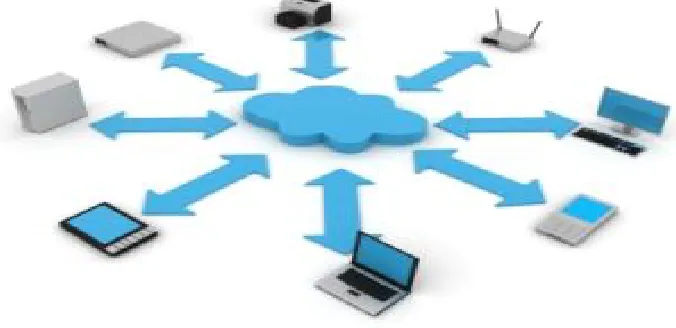
Fig 6.1 Multi Connection NetworkB. Improving Area
Quality of connectivity- as one of the disadvantages, mobile devices will need either Wi-Fi connectivity or mobile network connectivity such as GPRS, 3G and in some countries even 4G connectivity that is why this is a disadvantage because if you are not near any of these connections your access to the internet is very limited.
Security concerns Mobile VPNs are unsafe to connect to, and also syncing devices might also lead to security concerns. accessing Wi-Fi network can also be risky because WPA and WEP security can be bypassed easily.
\ Power Consumption- due to the use of batteries in these devices, these do not tend to last long, if in a situation where there is no source of power for charging then that will certainly be a let down.
VII. CONCLUSION
Mobile computing is an important, evolving technology. It enables mobile personnel to effectively communicate and interact with the fixed organizational information system while remaining unconstrained by Physical location. Mobile computing may be implemented using many combinations of hardware, software, and communications technologies. For security to effective, it must be deployed proportional to risk. WLANs present a security risk to organizations but providing security for WLANs is not an insurmountable challenge. There are security solutions available for WLANs to mitigate those most conceivable risks we think securing ad hoc networks is a great challenge that includes many opened problems of research, and receives more and more attention among ad hoc networks community. Then, under the assumption of a frequency selective time invariant channel, we determine the optimum combination of the modulation scheme, the detection scheme, the repetition coding parameter, the combining scheme, the packet length, and the number of RAKE fingers at the receiver to minimize energy consumption per information bit.
REFERENCES
[1] W. C. Y. Lee, “Mobile Cellular Telecommunications Systems” New York, McGraw Hill, 1989.
[2] K.Ramya and K.Pavithradevi “Effective Wireless Communication,” International Journal of Advanced Research, volume4(12),pp. 1559-1562 Dec 2016.
[3] 3.D. P. Agrawal and Q-A. Zeng, Introduction to Wireless and Mobile Systems, Brooks/Cole publisher, 2002.
[4] Dr.N.Muthumani,K.Pavithradevi”Image Compression using ASWDR & 3D-Sphit Algorithms yor Satellite Data”, International Journal of Scentific &
Engineering Research,Volume 6, Issue 10, October-2015.Pages:289-296.
[5] Y. C. Hu and D. B. Johnson and A. Perrig, “SEAD: Secure Efficient Distance Vector Routing in Mobile Wireless Ad-Hoc Networks,” Proceedings of the 4th
IEEE Workshop on Mobile Computing Systems and Applications (WMCSA '02), pp. 3-13, 2002.
[6] L.Gomathi,K.Ramya “Data Mining Analysis using query Formulation In Aggregation Recommendation”,Volume 2 Issue 1- October 2013.
[7] .C.Ganesh,B.Sathiyabama,T.Geetha”Fast Frequent Pattern Mining Using Vertical Data Format for Knowledge Discovery” International Journal of Emerging
Research in Management and Technology”,Vol 5,issue 5,2016
[8] V. Adve, V. Vi Lam, and B. Ensink. Language and Compiler Support for Adaptive Distributed Applications. Proc. of ACM SIGPLAN Workshop on
Optimization of Middleware and Distributed Systems (OM 2001), Snowbird, Utah, June 2001.
[9] Karthikeyan.R, Dr.Geetha.T ,Ramya.K ,Pavithradevi.K,” A Survey on Sensor Networks”, International journal for Research and Development in Technology,