SEAMLESS MOBILITY IN 4G HETEROGENEOUS
WIRELESS NETWORKS
1K. KOMALA
,
2Dr. P. INDUMATHI1
Professor, Dept. of ECE, Valliammai Engg. College, Chennai, India.
2 Associate Professor, Dept. of Electronics Engg., Anna University, Chennai, India.
E-mail: [email protected] , [email protected]
ABSTRACT
A Heterogeneous Network abbreviated as HetNet is a mix of macrocells, picocells,femtocells, remote radio heads and relays. A HetNet is a network consisting of various wireless access technologies and functionalities. The Next Generation mobility technique called the 4G deals with the multi-access heterogeneous wireless networks which provide seamless connectivity of multimedia services at a higher data rate to the end users. There are various research challenges like self organization, backhauling, handover and interference for the 4G The various handover mechanisms with respect to intradomain and interdomain are analyzed. An experimental testbed for the seamless mobility of heterogeneous wireless techniques such as mobility from IEEE 802.11 to IEEE 802.16e is considered. The performance results of a seamless handoff with minimum packet loss and delay proves the efficiency in the mobility of the HetNets using the Network Simulator (NS-2).
Keywords:HetNets; Mobility; Seamless Handover; 4G Technique; Wireless Networks.
1. INTRODUCTION
HetNet is a new technique to increase the performance of the cellular system. A HetNet is a network which is made up of infrastructure points of various wireless access technologies with different capabilities and operational functionalities. A Heterogeneous Network is a mix of femtocells ,picocells, macrocells, Remote Radio Heads and relays. As HetNet is a combination of large and small cells, the distance between the transmitter and receiver is reduced and hence the quality of the wireless data reception is enhanced. HetNet involves a paradigm shift from traditional centralized approaches to more autonomous approaches. HetNets are attractive solutions for expanding mobile network capacity and providing the best coverage. Modern topic introduced in LTE Advanced is Heterogeneous Networks.
HetNets are attractive solutions to meet the demand of the end users in parallel to other technologies. Different radio technologies (3G/LTE, LTE Advanced) are working together to provide the best coverage and capacity possible. Expanding the networks by increasing the number of Macrocells increases the capital
expenditure. Femtocells are indoor units (or) home base station with low transmitted power less than 23dBm. HetNets try to fix the weakness areas and increase the overall performance. LTE Advanced – based HetNets helps in improving spectral efficiency per unit area. Range expansion allows more user terminals to benefit directly from low – power base station. LTE (Long Term Evolution) is the leading OFDMA wireless mobile broadband technology. LTE was first published in March 2009, by 3GPP (Third Generation Partnership Project)– Release 8. LTE Advanced was later introduced as Release 10. To achieve performance improvements in LTE Advanced, 3GPP has been working on various aspects of LTE including higher MIMO (Multiple Antennas), Career Aggregation (multiple component carriers) and HetNets (pico, femto & relays). HetNets can be deployed to improve spectral efficiency per unit area.
2. CHALLENGES FOR HETNETS
2.1. SON : Self Organizing Network Challenge
The pico cells and femto cells are elements of the HetNets. Pico cells are low-power cell towers with the backhaul and features as that of the macro cells. They serve a few tons of users within a range of 300m or less than 300m. Their transmit power ranges from 23dBm to 30dBm.
The femto cells are known as home base stations. They are low-power access points deployed by the users. It serves a dozen of users in a home or office environment. The femto cell range is less than 50m and its transmit power is less than 23dBm.
The operation of the above mentioned pico cells and femto cells depends on the self – organizing features. The self-organizing capacity of HetNets is classified further as self-configuration, self-healing and self-optimization. The random and uneven nature of user arrivals enforces certain difficulties in order to deploy a completely self-organized HetNet.
2.2. Backhaul Network Challenge
The design of the backhaul network is a challenge because of the complex nature ofthe co-existing cells. The picocells require wireless network backhauling femto cells rely on broadband backhaul connections and hence solutions to all are a mixture of both wired and wireless backhaul technologies.
2.3. Handover Challenge
Handover plays a major role in the provision of a seamless connectivity. It is very much required when the users move in or out of a certain coverage area of a cell. Handovers are essentially needed during the process of load balancing i.e when the users are shifted from the more congested cells to the less congested cells.
2.4. Interference Challenge
The interference challenges of HetNets arise due to the cross-tier and intra-tier interference problems. The backhaul network supports cells with different bandwidths. A very strong interference issue may be developed in both uplink and downlink since the users are not properly handing over to the nearest cells. The continuous monitoring of the self-organizing networks is required in order to get rid of the interference problems
.
3. HETNETS IMPLEMENTATION
As there is a great usage of devices like smart phones, tablets, etc, there is an exponential increase in data traffic. There is also huge demand for the mobile broadband connectivity. One of the solutions for this is addition of small cells to the macro cells. This type of approach is included in pico cells or low power remote radio heads etc. This helps in the delivery of high per-user capacity and coverage with potential improvement in the performance of the macro network. Addition of low power nodes with the macro cell creates a two-layer cell structure known as a heterogeneous network (HetNet). The degree of integration achieved will determine the network performance. A HetNet helps in improving the overall capacity and in providing higher data rates to hot spots
.
4. MOBILITY MANAGEMENT
The users like to continue with their conversations in the mobile phones while travelling and also to download desired pictures, audio & video files, etc., As there is lot of expectations and demand by the users, there is a need for the overall Multi Radio Resource Management, Handover Management, etc.
Mobility management of HetNet consists of three steps namely, Monitoring and detecting radio resources, Decision of handover, Execution of handover.
4.1. Monitoring & Detecting Radio Resources
The performance of the active radio link is monitored by the radio resource management techniques. MRRM interacts with the link layer. It filters out the available accesses and produces the Detected Access Set (DAS). When DAS is produced, the decision – making for handover starts.
4.2. Decision of Handover
A handover decision arises due to addition of a new access to the DAS, changes in Radio Signal Strength or changes in the QoS requirements. MRRM calls upon the HOLM for the execution of the handover.
4.3. Execution of Handover
5. RELATED WORK
The various classifications of handoffs are thoroughly analyzed in [1]. Based on the network type, the handoff is classified as horizontal or vertical handoff. If the handoff process of a mobile terminal takes place between access points supporting the same network then the handoff is referred as horizontal handoff. It is also called as intra-domain handoff. If the handoff process takes place between different networks, then it is referred as vertical handoff. It is called as inter-domain handoff. There are two types of vertical handoffs. They are upward and downward vertical handoffs. An upward vertical handoff is roaming to an overlay with a larger cell size and a downward vertical handoff is roaming to an overlay with a smaller cell size.
The various technical challenges for HetNets are analyzed in [2]. The main focus of the research work is about the interference aspects of HetNets. The mobility management techniques in three distinct stages are explained in [3]. The focus is on the interaction between the functional entities involved in communication.
The various phases involved in the handoff process are clearly explained in [4]. The mobility management and handoff management issues of wireless networks and heterogeneous networks are analyzed in detail from [5] through [12].
An integrated location management is required for seamless roaming as well as for micro-mobility and macro-mobility management. Mobile IP was developed in order to support the mobility.
6. TESTBED DESCRIPTION
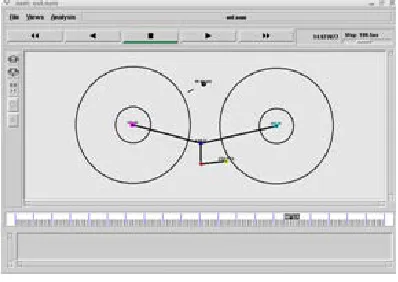
[image:3.612.321.544.78.240.2]The network topology as shown in Figure.1 is simulated using the Network Simulator (NS - 2). A mobile node M-Node which is located in between a wireless LAN network and a WiMAX network is shown below. An Automatic Neighbor Relations Handler (ANRH) is also shown in the Figure.1 which helps in the automatic discovery of new neighbor and best suited node for handoff. A server is also shown in the Figure.1.
Figure 1. Initial stage of simulation
[image:3.612.323.522.323.464.2]As the Mobile Node starts moving, ANRH identifies that the wireless LAN network is suitable for the transfer of data at a higher rate. Hence the data packets are sent to that network. This network scenario is shown in the Figure. 2.
Figure.2. M-Node data to Wireless LAN
[image:3.612.321.529.571.711.2]As the Mobile Node moves further, ANRH identifies that the M-Node should be handed off to the neighboring WiMAX network. The data packets are sent to the WiMAX network. This handoff situation from wireless LAN to WiMAX is shown in Figure.3.
7. SIMULATION RESULTS
The results obtained are shown in Figure.4 for throughput and delay.
Figure.4. Throghput and Delay
The throughput is high and uniform throughout the simulation period. All the transmitted packets are received without any loss of packets of data. There is a slight disturbance due to the existence of noise. The delay occurs exactly at 14 s i.e., the time during which the handoff occurs. But the delay has not affected the performance of the mobile node with respect to seamless handoff.
The handoff is fast and there is no packet drop. This is very evident from the results obtained.
8. CONCLUSION
The mobility management challenges of a heterogeneous network are analyzed in detail using Network Simulator (NS-2). A Wireless LAN Network and a WiMAX Network are considered for the various simulation scenarios. A Mobile Node is initially sending data to the Wireless LAN Network and then handsoff to the WiMAX network. The throughput and the delay are analyzed for the simulations performed. The results obtained are able to prove the efficiency of the mobility management of the node. There is no packet drop as seen in the results obtained and the delay is also minimum. This proves the efficiency of the mobility aspects considered. This work can be extended for more number of Mobile Nodes and also for more number of heterogeneous networks. The directions for the future research
may be the “Always Best Connected” concept of the HetNets which means that maintaining the connectivity with the best network available.
REFERENCES
[1] Nidal Nasser, University of Guelph, Ahmed Hasswa and Hossam Hassanein, Queen’s University, “ Handoffs in Fourth Generation
Heterogeneous Networks”,IEEE Communications Magazine, October 2006.
[2] David Lopez-Perez, Ismail Guvenc, Guillaume de la Roche, Marios Kountouris, Tony Q.S.Quek, Jie Zhang, “Enhanced Inter-Cell Interference Coordination Chellenges In Heterogeneous Networks”.
[3] Oliver Blume, Abigail Surtees, Ramon Aguero, Eranga Perera and Kostas Pentikousis, “A Generic Signaling Framework for Seamless Mobility in Heterogeneous Wireless Networks”.
[4] Ian.F.Akyilidz et al., “Mobility Management in Next Generation Wireless Systems”.Proc. IEEE, vol. 87, no. 8, Aug 1999, pp . 1347 – 84.
[5] Robert Hsieh, Zhe Guang Zhou, Aruna Seneviratne, “S-MIP: A Seamless Handoff Architecture for Mobile IP”, IEEE INFOCOM, Vol 3, Mar-Apr, 2003, pp.1774-1784 .
[6] Ian.F.Akyildiz, Jiang Xie, And Shantidev Mohanty, Georgia Institute Of Technology, “A Survey Of Mobility Management In Next-Generation All-IP-Baesd Wireless Systems”, IEE Wireless Communication, August 2004.
[7] Haoming Li, Javad Hajipour, Alireza Attar And Victor C.M.Leung, The University Of British Columbia, “Efficient HetNet Implementation Using Broadband Wireless Access With Fiber-Conneceted Massively Distributed Antennas Architecture”, IEE Wireless Communication, June 2011.
[8] Ashutosh Dutta, Subir Das, David Famolari, Telcordia Technologies, NJ Yoshihiro, Ohba, Kenchi Taniuchi, Toshikazu Kodama, Toshiba America Research Inc., NJ Henning Schulzrinne, Computer Science Department, Columbia University, NY. “Seamless Handover Across Hetrogeneous Networks – an IEEE 802.21 Centric Approach”.
Heterogeneous Wireless Networks, Unveiling the Challenges”.
[10] Jaydip Sen, TCS, India, “Mobility And Handoff Management In Wireless
Networks”.
[11] Ahmed Hasswa, Nidal Nasser, Hossam Hassanein, “Generic Vertical Handoff Decision Function for Heterogeneous
Wireless Networks”,International Conference, 2006.
[12] Matthias Fricke, Andrea Heckwolf, Ralf Herber, Ralf Nitsch, Silvia Schwartze, Stefan VoB and Stefan Wevering, “Requirements of 4G- Based Mobile Broadband on Future Transport Networks”,Journal of Telecommunications and Information Technology, 2012.