Counseling and Psychological Services
Dissertations Department of Counseling and Psychological Services
Summer 8-15-2010
The Interrelationships among Coping Resources, Gender Role
The Interrelationships among Coping Resources, Gender Role
Stree, Self-Efficacy, and Anxiety in University Women Enrolled in
Stree, Self-Efficacy, and Anxiety in University Women Enrolled in
Graduate Counseling Programs
Graduate Counseling Programs
Jessica B. Kordansky
Georgia State University
Follow this and additional works at: https://scholarworks.gsu.edu/cps_diss
Part of the Student Counseling and Personnel Services Commons
Recommended Citation Recommended Citation
Kordansky, Jessica B., "The Interrelationships among Coping Resources, Gender Role Stree, Self-Efficacy, and Anxiety in University Women Enrolled in Graduate Counseling Programs." Dissertation, Georgia State University, 2010.
https://scholarworks.gsu.edu/cps_diss/49
ACCEPTANCE
This dissertation, THE INTERRELATIONSHIPS AMONG COPING RESOURCES, GENDER ROLE STRESS, SELF-EFFICACY, AND ANXIETY IN UNIVERSITY WOMEN ENROLLED IN GRADUATE COUNSELING PROGRAMS, by JESSICA BARRETT KORDANSKY, was prepared under the direction of the candidate’s Dissertation Advisory Committee. It is accepted by the committee members in partial fulfillment of the requirements for the degree Doctor of Philosophy in the College of Education, Georgia State University.
The Dissertation Advisory Committee and the student’s Department Chair, as representatives of the faculty, certify that this dissertation has met all standards of excellence and scholarship as determined by the faculty. The Dean of the College of Education concurs.
_______________________ _______________________ Gregory L. Brack, Ph.D. Catherine J. Brack, Ph.D.
Committee Chair Committee Member
_______________________ _______________________ Kenneth B. Matheny, Ph.D. Roger O. Weed, Ph.D.
Committee Member Committee Member
_______________________ Date
_______________________ JoAnna F. White, Ed.D.
Chair, Department of Counseling & Psychological Services
_______________________ R.W. Kamphaus, Ph.D.
AUTHOR’S STATEMENT
By presenting this dissertation as a partial fulfillment of the requirements for the advanced degree from Georgia State University, I agree that the library of Georgia State University shall make it available for inspection and circulation in accordance with its regulations governing materials of this type. I agree that permission to quote, to copy from, or to publish this
dissertation may be granted by the Professor under whose direction it was written, by the College of Education’s director of graduate studies and research, or by me. Such quoting, copying, or publishing must be solely for scholarly purposes and will not involve potential financial gain. It is understood that any copying from or publication of this dissertation which involves potential financial gain will not be allowed without my written permission.
NOTICE TO BORROWERS
All dissertations deposited in the Georgia State University library must be used in accordance with the stipulations prescribed by the author in the preceding statement. The author of this dissertation is:
Jessica Kordansky 2009 Oak Park Circle
Atlanta GA, 30324
The director of this dissertation is:
Dr. Gregory Brack
Department of Counseling and Psychological Services College of Education
VITA
Jessica Barrett Kordansky
ADDRESS: 2009 Oak Park Circle Atlanta, GA 30324
EDUCATION:
Ph.D. 2010 Georgia State University Counseling Psychology Ed.S. 2005 Georgia State University
Professional Counseling M.S. 2004 Georgia State University
Professional Counseling B.S. 2002 University of Florida
Psychology
PROFESSIONAL EXPERIENCE: 2009 – 2010 Psychology Intern
Emory University Student Counseling Center, Atlanta, GA 2006- 2009 Case Manager
Ridgeview Institute, Atlanta, GA 2003-2005 Managing Editor
Journal of Individual Psychology, University of Texas Press, Atlanta, GA
PROFESSIONAL SOCIETIES AND ORGANIZATIONS: 2005 – Present American Psychological Association 2008 – Present Georgia Psychological Association
PRESENTATIONS AND PUBLICATIONS:
Durkee, D., Kordansky, J., Saleem, O. (2008, May). Ethics, power, and presence in clinical supervision. Presented at the Licensed Professional Counselor Association of Georgia Annual Conference, Stone Mountain, GA.
Odenat, L., Kordansky, J., & Heath-Gainer, W. (2008, March). Resilience and coping resources among asylum-seeking survivors of genocide and war. Poster presented at the
Gailis, A., Kordansky, J., Mahon, W., & Raybon, B. (2005, September). Sexual compulsivity and the internet. Presentation at the Society for the Advancement of Sexual Health, San Francisco, CA.
Kordansky, J. (2008). Cognitive Restructuring, Functional Beliefs, Social Ease, and Self- Efficacy Accounting for Variance in Anxiety for University Women. Unpublished manuscript, Counseling and Psychological Services Department, Georgia State University, Atlanta, GA.
Kordansky, J. (2009). Generalized Anxiety Disorder. Unpublished manuscriCounseling and Psychological Services Department, Georgia State University, Atlanta, GA.
Kordansky, J. (2008). Traumatic Brain Injury. Unpublished manuscript, Counseling and Psychological Services Department, Georgia State University, Atlanta, GA.
Kordansky, J. (2007) Effects of African American Female Role Model Influence on Black Female College Students' Self-Efficacy in Investigative Careers. Unpublished manuscript,
Counseling and Psychological Services Department, Georgia State University, Atlanta, GA.
Kordansky, J., Brown, S., Callaway, C., Davis, T., Fumelt, L., Keats, H., & Ogletree, S. (2005, February). Heterosexual allies: Rewards of LGBT advocacy. Panel discussion at the Day of Learning, Georgia State University, Atlanta, GA.
ABSTRACT
THE INTERRELATIONSHIPS AMONG COPING RESOURCES, GENDER ROLE STRESS, SELF-EFFICACY, AND ANXIETY IN UNIVERSITY WOMEN
ENROLLED IN GRADUATE COUNSELING PROGRAMS by
Jessica B. Kordansky
College-age women are affected by anxiety disorders at a significant rate. The data suggest that
enhancing a sense of control over the negative effects of life events has a greater positive effect
on women than men (Matheny, Ashby, & Cupp, 2005). While there is a literature base for stress
coping among undergraduate students (McCarthy, Fouladi, Juncker, & Matheny, 2006), little
data exists which explores the implications of stress coping among female graduate students in
counseling programs. Using a population of university women in graduate counseling programs,
this study explored the interrelationships between coping resources, gender role stress,
self-efficacy, and anxiety. Specifically, the effects of coping resources (using the Coping Resources
Inventory for Stress-Short Form, CRIS-SF; Matheny, Curlette, Aycock, Pugh, & Taylor, 2007),
gender role stress (using the Feminine Gender Role Stress Scale, FGRS; Guillespie &
Eishler,1992), self-efficacy (using the Generalized Self-Efficacy Scale, SES; Tipton &
Worthington, 1984), a form of emotional distress (using the State-Trait Anxiety Inventory
A-Trait version, STAI-A; Speilberger, 1983), and self-report measures of demographic data were
examined. Results indicate that all measures are significantly interrelated, with the exception of
FGRS. Furthermore, CRIS primary scale, Confidence, and FGRS scales, Physical
in the final regression. Research and clinical implications for these findings suggest a number of
THE INTERRELATIONSHIPS AMONG COPING RESOURCES, GENDER ROLE STRESS, SELF-EFFICACY, AND ANXIETY IN UNIVERSITY WOMEN
ENROLLED IN GRADUATE COUNSELING PROGRAMS by
Jessica B. Kordansky
A Dissertation
Presented in Partial Fulfillment of Requirements for the Degree of
Doctor of Philosophy in
Counseling Psychology in
the Department of Counseling and Psychological Services in
the College of Education Georgia State University
Copyright Jessica B. Kordansky
ii
ACKNOWLEDGMENTS
I would not be where I am today were it not for certain people who have inspired me, trusted me, had faith in me, encouraged me, and loved me. According to Talmudic teaching, we do not see things as they are but as we are. I have been shaped dramatically by those who have come into my life.
I will begin by thanking my committee for their dedication and care throughout this incredible process. Greg, my advisor-your trust, unwavering support, encouragement, humor, and more recent pep-talks have meant more to me than you can know these past 5 years! Ken- your faith in me, your unconditional care, your wealth of knowledge, and your presence has been grounding and inspiring. Roger, the editor of all editors- I am grateful for your attention to detail, your contributions, and your dedication to seeing me through my dissertation and this program. Cathy- you took me under your wing,
mentored me, and have been an incredible sense of female strength! I have a powerhouse of a committee and couldn’t have asked for a better group to work with on this project.
I am tremendously grateful for my loving family and friends who have truly been there for me. My doctoral cohort and fellow CPS friends- this journey has been so special because of the connections I have made with each of you. Lauren, Leanna, and the rest of the Emory staff- I am so grateful for your encouragement, trust, compassion, humor, unwavering support, and boosts of confidence during this dissertating year on internship! My Gemini Sis, Sarah- move back from Switzerland already! Huong, Giselle, Laura, Jane, Candice, Sabina, Becca, Talia, Amanda, Wendy, Kate, Christie, Joni, Dary, and Amy- please know just how much your support and love has meant to me! To my Uncle Allan, Aunt Sue, Uncle Bobby, Uncle Gary, Aunt Rita, Aunt Harriett, Aunt Marilyn, and all my cousins-thank you all for being there for me and for loving me this much!
Grandpa, aka, “Crenshaw, Rocky Five, Gregory Peck, and Mr. “11 years from 100”- you inspire me to enjoy life, live in the moment, and have fun doing it!
Marc, my personal tech editor- I am so grateful for you and feel so lucky to have you in my life! You have kept me grounded throughout this process and have given me strength in your words and in your hugs! You may not recognize Jess without “Wanda” around! Lu- I love you, since Borders! “Stu” is movin’ up! Tarah- your strength, your pep talks, your encouragement, and the way you just get me have meant so much. I love you so much. Pops- your “Dr. J” will finally get the “D” in the PhD! Thank you for always being there for me, cheering me on, and being the proud dad that you are! Besos to you and Consuelo! I love you so, so much. Mumsy, words cannot express how I feel for you. I have felt your love each day and your unwavering support to my bones. I love you and hope I am half as good a daughter to you as you are a mom to me.
iii
always gave me hope, and is still an unwavering force in my life. She is with me always and in all ways.
iv
TABLE OF CONTENTS
Page
List of Tables ... v
Abbreviations ... vi
Chapter 1 SUPERVISION OF FEMALE COUNSELORS IN TRAINING: DEVELOPING COPING RESOURCES AND SELF-EFFICACY TO ADDRESS GENDER ROLE STRESS AND ANXIETY ... 1
Graduate Women in Academic Departments ... 2
Gender Role Stress ... 4
Self-Efficacy ... 9
Coping Resources/Skills ... 10
Supervision and Training Implications ... 12
Supervision and Training: A Case Example ... 13
Summary ... 17
References ... 18
2 THE INTERRELATIONSHIPS AMONG COPING RESOURCES, GENDER ROLE STRESS, SELF-EFFICACY, AND ANXIETY IN UNIVERSITY WOMEN ENROLLED IN GRADUATE COUNSELING PROGRAMS ... 26
Method ... 33
Results ... 39
Discussion ... 44
Conclusion ... 56
v
LIST OF TABLES
Table Page
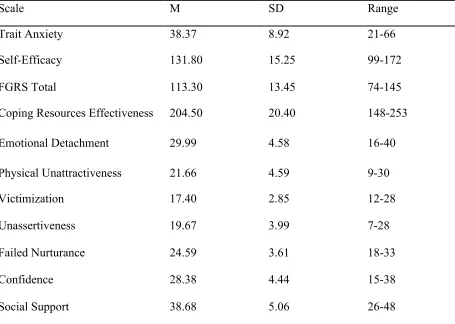
1 Descriptive Statistics of STAI, CRIS, SES, and FGRS ... 40
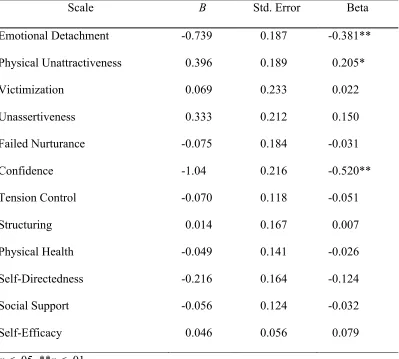
2 Correlations of STAI, CRIS, SES, and FGRS ... 43
vi
ABBREVIATIONS
CRE Coping Resource Effectiveness (CRIS scale)
CRIS-SF Coping Resource Inventory for Stress-Short Form
FGRS Feminine Gender Role Stress Scale
SES Generalized Self-Efficacy Scale
GSE Generalized Self-Efficacy
STAI-A State-Trait Anxiety Inventory
V Victimization (FGRS factor)
FN Failed Nurturance (FGRS factor)
ED Emotional Detachment (FGRS factor)
PU Physical Unattractiveness (FGRS factor)
U Unassertiveness (FGRS factor)
CON Confidence (CRIS primary scale)
SS Social Support (CRIS primary scale)
TC Tension Control (CRIS primary scale)
STR Structuring (CRIS primary scale)
1 CHAPTER 1
SUPERVISING FEMALE COUNSELORS IN TRAINING: HELPING THEM
DEVELOP COPING SKILLS AND SELF-EFFICACY TO ADDRESS
GENDER ROLE STRESS AND ANXIETY
Research has indicated that stress in graduate school leads to a variety of
symptoms including anxiety, insomnia, somatic symptoms, social dysfunctions, and
severe depression due to lack of preparedness (Cushway, 1992). Research also has
documented differences in the prevalence of mental health problems between men and
women (Hyun, Quinn, Madon, & Lustig, 2006). The prevalence of frequent mental
distress is higher for women than for men (CDC, 2004). In fact, women are twice as
likely to have anxiety that interferes with daily activities and to be diagnosed with
generalized anxiety disorder (GAD) (Anxiety Disorder Association of America [ADAA],
2008). Before 22 years of age, 75% of people with an anxiety disorder will experience
symptoms (NIMH, 2009). Panic disorder is often cited as a primary reason for women
dropping out of college (ADAA). Sax (2008) found that more than twice as many
college women (38%) as college men (17.3 percent) reported feeling overwhelmed by all
of their responsibilities.
Thus, stress and anxiety are more common in women than in men. According to
the Counsel of Graduate Schools, women now account for 74% of education graduate
numbers of women with anxiety and the greater number pursuing doctoral degrees in
counseling, this article will focus only on female counseling graduate students.
Graduate Women in Academic Departments
In spite of women’s advances in higher education during the past 30 years,
women still experience psychological disadvantages in educational pursuits when
compared to men (Rayle, Arredondo, & Robinson-Kurpius, 2005). For example, women
acknowledge lower educational self-efficacy, the belief that one can successfully
complete specific educational tasks (Bandura, 1977); have lower self-esteem; experience
higher academic stress; and often perceive less support for education (Rayle, Arredondo,
& Robinson-Kurpius). Although graduate students manage multiple roles and
responsibilities in addition to their academic commitments, there is sparse literature
related to graduate student life (Stratton, Mielke, Kirshenbaum, Goodrich, & McCrae,
2006). In a study examining graduate student mental health, 51.7% of women reported
having an emotional or stress related problem compared to 38.6% of men (Hyun, Quinn,
Madon, & Lustig, 2006). Female students, in particular, reported gender specific
concerns regarding success in an academic career (Johnson, 2007).
According to a series of studies by Mallinckrodt and his colleagues, women in
graduate school and in doctoral programs report significantly more stress and more
symptoms of stress, more role conflict and greater role strain, more negative life events,
higher levels of depression and anxiety, and significantly less support both in their
departments and in their families than men (Mallinckrodt, Leong, & Kralj, 1989;
Malinckrodt & Leong, 1992). Research has indicated that doctoral students often feel
connections outside the department (Lovitts, 2001) and lack of interaction with professors
(McLaughlin, 1985). Women in academic departments report greater isolation, higher
levels of stress, lower self confidence, more difficulty establishing relationships with
colleagues, and more conflict between their personal and professional lives, often making
sacrifices to have both career and family (Quinlan, 1999). Moreover, female graduate
students rate the student-faculty relationship significantly more essential to their
professional development than males (Gilbert, 1985).
A study of reentering female graduate students in counseling programs found
common, salient themes, such as the significance of mentoring and support, and the
impact of multiple roles, personal losses, and society’s view of women (Roeseler, 1997).
In order to assist with these issues, the author suggested several ways to help female
graduate students that are relevant to supervision and training, such as helping trainees to
develop time management techniques, balance multiple roles, develop support systems,
explore career options, and cope with gender issues. While juggling multiple roles can
lead to greater stress overall and other difficulties for female graduate students, it also
seems to result in greater satisfaction with graduate training and less stress from graduate
studies (Stern, 1988) which is consistent with previous findings that multiple roles are
important for a sense of life satisfaction and well being for many women (Mallinckrodt &
Leong, 1992). Because women’s self-concepts tend to be defined by interpersonal
relationships, college, graduate school, and early career transition may lead to more acute
loneliness (Liang et al., 2002).
Furthermore, internalized societal messages of self-reliance can exacerbate
connection, which may be limited in graduate school, for optimal coping. A
significant number of graduate student women who seek university counseling
services with presenting problems of generalized depression, anxiety, and stress
may be suffering from this role conflict strain (Mallinckrodt &Leong, 1992). In
order to better understand the impact of graduate school on women, it is important
to understand the roles of gender role stress, self-efficacy, and coping skills.
Gender Role Stress
In addition to general stress, women experience gender role stress. Gender role
stress is the cognitive appraisal of threats and challenges to stereotypical feminine gender
role coping behavior (Gillespie & Eisler, 1992). Gillespie and Eisler created a Feminine
Gender Role Stress (FGRS) measure that includes five factors: emotional detachment,
physical unattractiveness, victimization, unassertiveness, and failed nurturance.
Although this measure has not been used with female graduate students, the factors seem
to be relevant to female counselors in training.
Clearly, the role of a counselor is one of nurturance that tends to attract more
females (Wester & Trepal, 2008). The expectation to be good at nurturing may exist since
counseling trainees are entering a vocation of nurturing. Validating another person’s
experience is a vital part of developing mutuality in a relationship making nurturance an
important characteristic of a growth-fostering relationship (Jasser, 2008).Failed
nurturance is a factor on the FGRS scale and includes items that describe chronic
problems in significant others’ lives which are understood as perceived failure to fulfill
the culturally prescribed female role as helpmate and nurturer (Gillespie & Eisler, 1992).
stressed about providing appropriate nurturance to their clients. Moreover, nurturance is a
client expectation about counselor factor, where clients expect the counselor to be
nurturant, accepting, self-disclosing, and attractive (Tinsley et al., 1980).
Female clinicians in training may also experience stress related to emotional
detachment in therapeutic relationships and/or clinical supervision. The profession of
counseling values characteristically feminine gender role characteristics, such as strong
interpersonal skills and abovementioned nurturance. Failing to offer adequate emotional
support in interpersonal relationships may be a more prominent stressor for individuals
who strive to meet these feminine standards for nurturant behavior (Gillespie & Eisler,
1992). If the female trainee feels that she is failing to offer sufficient emotional support
in either her personal or professional life or both, this may contribute to greater stress and
anxiety than is manageable. Since forming connections is both a significant and difficult
developmental task (Hazler & Mellin, 2004), disconnecting and failing to experience
important connections, along with holding back wants and needs, may influence females
to act inauthentically in relationships (Jasser, 2008).
Relational-Cultural theorists (RCT) believe that identity development manifests
within the context of relationships (Miller, 1976). This model offers an alternative to
customary theories of psychological development by stressing a paradigm shift from the
relationship as a peripheral element to the relationship as a fundamental component of
developmental progress, emotional health, and interpersonal life (Schultheiss, 2003). A
primary assumption of RCT is that people develop through and toward relationships and
that is relationship take places within and is impacted by a cultural context (Jordan &
Women are socialized to value interpersonal relationships but they receive mixed
messages about how to interact in those relationships (Jasser, 2008). Jasser posits that in
an effort to safeguard relationships, women may unintentionally encourage
disconnection. Gilligan’s work (1982) discussed women’s development from a relational
perspective and led to the relational concept that women’s lives are directed by the
development of attachment of care, otherwise known as the “ethics of care.” Moreover,
personality characteristics relating to dimensions of “warmth and expressiveness” that
facilitate one’s ability to relate positively to others are considered especially appropriate
for females in our society (Gilligan). Since disconnection, if not attended to properly, can
promote negative mental health outcomes, being able to create growth-fostering
connections is central for women’s mental health and development (Jordan, 2001;
Tolman & Porche, 2000). The above mentioned may be part of what a female trainee
deals with upon establishing both personal and therapeutic relationships.
Research indicates that women are more likely to experience victimization in
graduate school in terms of discrimination and oppression. Female doctoral students
experience different kinds of discrimination, such as gender, race/ethnicity, sexual
orientation, and marital status (Lovitts, 2001). Academia remains a male dominated,
hierarchical environment (King & Cubic, 2005). The gender hierarchies that exist in
academia are a form of oppression (Ancis & Phillips, 1996). In spite of the dominance of
women in doctoral programs and the equal or greater involvement of women in lower
levels of academia, women continue to represent a significantly smaller percentage of
2004). One source points out that 44% of full-time female faculty hold tenure contrasted
to 68% of male full-time faculty (Kite, et al., 2001).
Particularly in departments in which women are a minority and most tenured
faculty are males, women may be disadvantaged by stereotypes and false attributions
about the aptitude and potential of women in the profession (Adler, 1976). The
socialization process is neither structured nor formal and women frequently feel isolated
and unsupported, because of the preponderance of male faculty and the patriarchal
culture that pervades most academic departments including psychology (Fouad & Carter,
1992; Kite et al., 2001). For example, some women struggle with issues of
self-presentation, socialization and acceptance (Leavitt, 2007). Leavitt adds that others have
to deal with the role strain and stress that is a product of the conflict between work and
family obligations. The literature proposes that women in academia continue to struggle
to adapt themselves to the demands and constraints required of them in order to achieve
success in research universities (Leavitt).
Other sexist events reported by female graduate students included exposure to
gender role stereotyping and prejudice, demeaning comments and behaviors, and sexual
objectification (Kaiser & Miller, 2004). The authors found that with a more optimistic
outlook on life assessed confronting sexism as more benign. College women who
anticipate a male gaze feel significantly greater body shame and social physique anxiety
(negative self-objectification) than when they anticipate a female gaze (Calogero, 2004).
Female doctoral students of color in a college of education reported experiencing
micro-aggressions and minimization of racial/cultural issues (Shah, 2007). This type of
in setting limits, something that is contradictory to the traditional female role and may
contribute to gender role stress. Although it is possible that women mentor other women
more easily than men, King and Cubic (2005) suggest that what is most important is
mentors’ awareness and consideration of key gender and cultural issues. They
recommend multiple mentors.
Female counselors in training not only face discrimination but have learned the
same biases, stereotypes, and expectations and bring them to their therapeutic work
(Kaplan, 1979; Mintz & O’Neil, 1990). Trainees, supervisors and faculty may have lower
expectations of outcomes for women of color, lesbians, and women with disabilities
(American Psychological Association [APA], 2008). Research has shown that some
therapists and trainees anticipate a more positive prognosis with male clients, continue
stereotyping women as expressive, and use a more instrumental behavioral approach with
men (Fowers, Applegate, Tredinnick, & Slusher, 1996; Klonoff et al., 2000; Rudman &
Glick, 2001; Seem & Johnson, 1998; Wade, 2001). Therapists may engage in subtle
forms of discrepant treatment of male and female clients (e.g., Friedlander, Wildman,
Heatherington, & Skowron, 1994; Werner-Wilson et al., 1997), and risk strengthening
views about gender, sexual orientation, culture, and family life that may be detrimental to
girls and women (APA, 2008). Given more females seek counseling and have more
positive psychological help-seeking attitudes (e.g., Leong & Zachar, 1999; Zalaquett &
McManus, 1996), many of the clients with whom they will work will be female. Many
clients have dealt with the same issues female trainees face such as “interpersonal
victimization and violence, unrealistic media images of girls and women, discrimination
disruptions, and work inequities” (APA, 2008, p. 2) and have many of the same biases as
the trainees.
Thus, trainees can attend to the influence of gender in counseling (Van Buren,
1992) and confront overt gender bias in therapy (Wester & Trepal, 2008). However, in
order to assist their clients and not foster traditional feminine roles, trainees must deal
with their own biases (Gilbert & Scher, 1999) and help themselves and their clients
develop new, more adaptive behaviors (Wester & Trepal) or at least expand their choices
(Collier, 1982).
Self-Efficacy
Research indicates that enhancing a sense of control over the negative effects of
life events has a greater positive effect on women than men (Matheny, Ashby, & Cupp,
2005). Self-efficacy can indirectly lessen negative affect or affect-related conditions such
as anxiety (Lightsey et al., 2006), support adaptive behavior, and assist to mediate
constructive behavior change (Bandura, 1993). Self-efficacy is influenced by data derived
from four primary sources: performance accomplishments, vicarious experiences, verbal
persuasion, and physiological states (Bandura, 1977). Lightsey et al. state that
generalized self-efficacy (GSE) may increase self esteem and motivation. Working to
increase self-efficacy in supervision and training may decrease effects of gender role
stress and anxiety.
Regardless of female students’ sex role attitudes, gender concentration of their
academic major, or race/ethnicity, women who perceive a greater degree of gender bias
in their undergraduate experiences also report lower agentic self-efficacy expectations
expectations, women may not initiate and maintain proactive educationally facilitative
behavior. Furthermore, Ancis & Phillips hypothesized that women exposed to a biased
undergraduate environment may see proactive behavior as exceeding their coping
abilities, and, as a result, avoid potentially valuable career-enhancing interactions and
opportunities. Much of the research on women and self-efficacy has focused on career
development and choice (Hackett & Benz, 1981). Hackett & Benz suggested that, due to
socialization experiences, men and women differ in their self-efficacy expectations and
thus, women may lack strong expectations of personal efficacy in many career related
behaviors. They suggest that the concept of self-efficacy expectations may be helpful in
explaining the underrepresentation of women in many male dominated career fields and
women’s underutilization of certain abilities and talents related to their career pursuits
(Whitson, 1993).
There is a significant relationship between counselor trainees, graduate school
training level and efficacy expectation in using basic counseling skills (Sipps, Sudden, &
Faiver, 1988). These authors note that counselor expectations are important to study as
they have been inversely linked with counselor anxiety level (Bandura, 1976; Bowman &
Roberts, 1979; Bowman, Roberts, & Giesen, 1978). According to the authors, self-
efficacy may be of use to counselor educators as a training variable-the assumption that,
by increasing trainees’ levels of self-efficacy, their future counseling skills may be
enhanced (Sharpley, 1993).
Coping Resources/Skills
Studies suggest that there are sex differences in coping resources and the
made for the enhancement of a broad range of coping resources as they are likely to
promote health and well-being in both men and women (Matheny & Cupp, 1983).
Coping resources have been described as the “constantly changing cognitive and
behavioral efforts to manage specific external and/or internal demands that are appraised
as taxing or exceeding the resources of that person” (Lazarus & Folkman, 1984, p. 14).
When stressful events occur, varied strategies are used to cope with either the stressor
itself or subsequent emotions in order to maintain an individual’s psychological
homeostasis (Lazarus & Folkman). In situations where it is impossible to lessen objective
demands, “emotion-focused” coping resources such as social support may be most
helpful (Lazarus & Folkman). Enhancing coping skills through training has been found to
decrease anxiety and increase self-efficacy which increases academic performance
(Smith, 1989). Coping skills such as relaxation, cognitive restructuring, and self
instruction may be transferrable to many anxiety provoking situations (Meichenbaum,
1985; Smith, 1980), including providing counseling, receiving feedback in supervision,
and varying forms of clinical evaluation.
Women have the potential to isolate and decrease social support and connection if
they withdraw because of stress, instead of a healthier coping style such as “tending and
befriending” (Taylor, et al., 2000). In contrast to men’s instinct to “fight or flight”
(Cannon, 1929), women cite the greatest stressor as loss of relationship (Pickhardt, 2004).
Furthermore, the role of technology in an academic setting can create a chasm for women
those who tend to “instinctively cope interdependently” (Berkman, Leo-Summers, &
Horwitz, 1992). While there is a literature base for stress coping among undergraduate
One study of education graduate students found that 64% of the students used fellow
students and 77% of students used family/friends to cope with the stress of graduate
school (Sampson, 2008). However, women have strengths and resources that assist them
in dealing with stressful issues (APA, 2008). Given the importance of social support and
tendency of women to withdraw when stressed, it is important that supervisors and
faculty provide a support network and help female graduate students in counseling
develop other coping skills to deal with stress and gender role stress.
Supervision and Training Implications
It is clear from the research that female graduate students experience more stress
and gender role stress than do male graduate students. With the percentage of females
rising in graduate counseling programs, it is important for supervisors and faculty to
consider the unique needs of female graduate students. Helping these women to cope
with the additional stresses they experience by enhancing their self-efficacy and their
coping skills can help them to be more successful in graduate school and in their future
careers.
Helping female trainees to develop coping skills to deal with sexism and racism is
an important part of supervision and training. There are several ways in which
supervisors and faculty can assist trainees to deal with sexism and racism. First,
education about gender promotes attitude change (Worell, Stilwell, Oakley, & Robinson,
1999), and gender sensitivity and diversity training improves therapists’ skills for
working with girls, women, and families (Dankoski, Penn, Carlson, & Hecker, 1998;
Woolley, 2000). Second, mentors can provide support and encouragement for developing
Another important role that supervisors can play is to help their trainees develop
the skills they need to deal with their own stereotypes of what it is to be a woman.
Supervisors can choose to confront supervisee’s biases and assist in expanding choices.
The success of this approach would, of course, depend on the trainee’s readiness and
desire to change and her self-awareness.
Supervision and Training: A Case Example
These abovementioned issues are typically associated with women’s participating
in personal counseling yet are clearly relevant to counselors in training as well.
Consistent with the premise of this article, the author has selected feminist perspectives
of empowerment (Worrell & Remer, 2003) and use of self in supervision (Wells, Trad, &
Alves, 2003) as methodologies to address these issues and extend this body of
knowledge. These selected theoretical constructs fit with the problems and modifications
needed with women in counseling training.
In order to illustrate how supervisors can assist supervisees to develop coping
skills and self-efficacy to address gender role stress and anxiety, the following case
example is provided. Stephanie is being supervised by Beth. Stephanie brought a case to
process in supervision regarding her client, Rachel, whom she is seeing for individual
therapy at the university counseling center. Stephanie is concerned about how she
handled her last session and is self-conscious about how she is conducting therapy with
this client in general. She noted that she has experienced challenges similar to those of
her client in her own personal and professional life and is wondering if it is affecting her
Stephanie reported that her client brought significant material and emotion to last
session. She stated that her client is experiencing compounding stressors from both her
personal life and graduate academic environment and described her symptoms of anxiety
as rapid heart-beat, restlessness, racing thoughts, inability to fall asleep and stay asleep,
and worry. Her client acknowledged feeling isolated from her peers and departmental
faculty and described her desire for connection and social support. Her client mentioned
feelings of isolation triggering feelings she had from a recent encounter with gender bias
and blatant sexual comments from a malecoworker at her former employment. Her client
is unsure how to handle these feelings and wonders if she should have just “let it go” and
not “made a stink” about it. Stephanie described feeling triggered and torn in session,
unsure as to how to proceed with her client. Stephanie presented as fairly anxious in
supervision as she detailed the case and the parallel experience where there was gender
bias, stereotypes, and demeaning comments.Using an interpersonal, use of self model of
supervision (Wells, Trad, & Alves, 2003), as well, Beth offered comfort and support to
Stephanie and encouraged her to explore these concerns in supervision. Beth attended to
Stephanie as she detailed the stress that her client had related to being a graduate student,
managing multiple roles, and feeling isolated and anxious. Beth pointed out the parallel
process between Stephanie’s experiences in her personal and professional life and those
of her client who was close to Stephanie in age. Beth disclosed that she remembered how
difficult it had been for her as a beginning therapist when her issues closely paralleled
those of her client and wondered how this parallel was impacting Stephanie.
Beth continued to normalize Stephanie’s concerns, suggesting that being a
compounding the issues she had discussed. For example, Stephanie may question her
ability to perform competently across a broad range of situations (i.e., provision of
counseling and receiving supervision), feel anxious about her new role, and experience
fears of not being nurturant to clients or fear of remaining emotionally detached from her
clients. This could pose concern for a beginning therapist who has learned in counseling
theories courses that it is the therapeutic relationship that, across all theories, is most
predictive of successful therapeutic outcome.
Moreover, Beth acknowledged that, due to the similarities between Stephanie and
her client, there were likely shared experiences, and she continued to encourage
Stephanie to acknowledge and process it during their supervisory experience. Throughout
the provision of supervision, Beth was mindful of the Stephanie’s possible gender bias,
self-statements and attitudes toward herself and her client.
Beth encouraged Stephanie to continue to be cognizant of when she felt triggered
in therapy as she did on that particular session with her client. Beth encouraged Stephanie
to acknowledge where she is and be genuine with her client about her similar experiences
and sentiments if a self-disclosure seemed therapeutically appropriate. These supervisory
interventions were employed with the hope that the supervisee could then transfer these
behaviors and skills when she again feels stuck or uncomfortable, such as with gender
inequity or demeaning comments, and perhaps better advocate for herself. From the
feminist perspective of empowerment, relating gender role stress, Worrell and Remer
(2003) offer an especially structured approach for carrying out a gender role analysis with
clients that can be transferrable to supervisees and includes two steps: identifying gender
the messages they received about how they should and should not act because they are
female. Next, they are suggested to mark each message that still influences their present
behavior and to select one of these messages to examine in depth. As noted above,
supervisors can assist in this process by being aware of gender role stress and anxiety and
the impact it has on coping and self-efficacy in their trainees.
Beth offered support, feedback, and mentoring to Stephanie. Beth normalized
anxiety regarding the provision of therapy and, intentionally, empowered and nurtured
her, helped her to advocate for herself, and helped her to develop advocacy and
assertiveness skills. Strategies such as these may contribute to increased self-efficacy,
personal control, and empowerment (Worrell & Remer, 2003) for supervisees. Attending
to women’s and gender issues by increasing their students’ awareness, knowledge, and
skill and by creating non-oppressive training environments (Szymanski, Carr, & Moffitt
(in press) can be highly beneficial in supervision as well. Beth served as clinical
supervisor, model, mentor, and advocate for Stephanie and her therapeutic work with her
client. During supervision, Beth described her personal and professional struggles with
self-efficacy, gender role stress, anxiety and coping, offering how she overcame myriad
obstacles. Beth educated Stephanie regarding the impact multiple oppressions might have
on psychosocial health (Worrell & Remer, 2003) and appropriately disclosed ways that
she herself has been affected. The interpersonal disclosure, as part of the use of self in
supervision approach, appeared to comfort Stephanie who had previously felt both
isolated and alone in this experience. Beth processed with Stephanie ways to work on
these challenges through supervision, personal therapy, and mentorship with female
continued to process therapeutic and supervisory dynamics and their impact on therapy
and supervision. Finally, having supervisors available who incorporate the four
theoretically and empirically derived elements of feminist supervision ( i.e., creating
collaborative relationships, attending to power differentials and dynamics, emphasizing
diversity and social context, and engaging in feminist advocacy and activism) into their
work is supported (Szymanski, 2003).
Summary
In summary, supervisors need to be aware of the unique concerns of female
counselors in training. It is important that supervisors recognize that female graduate
students experience more stress and anxiety, more stress symptoms, more role stress,
greater need for support and connection, and lower self efficacy in the academic
environment. With this knowledge, supervisors can assist their trainees to become aware
18 References
Adler, N.E. (1976). Women students. In J. Katz & R.T. Harnett (Eds.). Scholars in the making: The development of graduate and professional students (197-225). Cambridge, MA: Ballinger Publishing Company.
American Psychological Association, A Joint Task Force of APA Divisions 17 and 35. (2008). Guidelines for psychological practice with girls and women. Retrieved on February 17, 2009, from http://www.apa.org/about/division/girlsandwomen.pdf
Ancis, J. R., & Phillips, S. D. (1996). Academic gender bias and women’s behavioral agency self-efficacy. Journalof Counseling & Development, 75, 131-137.
Anxiety Disorder Association of America. (2008). Retrieved February 25, 2008, from http://www.adaa.org
APA Task Force on Women in Academe. (2000). Women in academe: Two steps forward, one step back. Retrieved on February 17, 2010, from
http://www.apa.org/pi/women/programs/academe/women-in-academe.aspx
Bandura, A. (1977). Self-efficacy: Toward a unifying theory of behavioral change. Psychological Review, 84, 191-215.
Bandura, A. (1993). Perceived self-efficacy in cognitive development and functioning. Educational Psychologist, 28, 117-148.
Berkman, L. F., Leo-Summers, L., & Horwitz, R. I. (1992). Emotional support after myocardial infarction: A prospective, population based study of the elderly. Annals of Internal Medicine, 117(12), 1003-1009.
Bowman, J. T., Roberts, G. T, & Giesen, J. M. (1978). Counselor trainee anxiety during the initial counselling interview. Journal of Counselling Psychology, 25, 137-43.
Bowman, J.T., & Roberts, G.T. (1979). Effects of Tape-Recording and Supervisory Evaluation on Counselor Trainee Anxiety Levels. Counselor Education and Supervision, 19, 20-26.
Calogero, R. (2004). A test of objectification theory: The effect of the male gaze on appearance concerns in college women. Psychology of Women Quarterly, 28, 16-21.
Centers for Disease Control. (2004). Retrieved on June 10, 2008, from http://www.cdc.gov/women/pubs/mntlhlth.htm.
Collier, H. V. (1982). Counseling Women: A guide for therapists. New York: Free Press.
Counsel of Graduate Schools. (2009). Taken from
http://www.gradschools.com/Article/popular-fields-of-study/90.html, February 13, 2009
Cushway, D. (1992) Stress in clinical psychology trainees. British Journal of Clinical Psychology, 31, 169-179
Dankoski, M. E., Penn, C. D., Carlson, T. D., & Hecker, L. L. (1998). What's in a name? A study of family therapists' use and acceptance of the feminist perspective. American Journal of Family Therapy, 26(2), 95-104.
Edwards, M. J. & Holden, R. R. (2001). Coping, meaning in life, & suicidal
manifestations: Examining gender differences. Journal of Clinical Psychology, 59(10), 1133-1150.
Fouad, N. A. & Carter, R. T. (1992). Gender and racial issues for new counseling psychologists in academia. The Counseling Psychologist, 20, 123-140.
Fowers, B. J., Applegate, B., Tredinnick, M., & Slusher, J. (1996). His and her
individualism? Sex bias and individualism in psychologists’ responses to case vignettes. Journal of Psychology, 130, 159-174.
Friedlander, M. L., Wildman, J., Heatherington, L., & Skowron, E. A. (1994). What we do and don’t know about the process of family therapy. Journal of Family Psychology, 8, 390-416.
Gilbert, L. (1985). Dimensions of same-gender student -faculty role-model relationships. Sex Roles, 12, 111-123.
Gilbert, L. A., & Scher, M. (1999). Gender and sex in counseling and psychotherapy. Needham Heights, MA: Allyn & Bacon.
Gillespie, B.L., & Eisler, R.M. (1992). Development of the feminine gender role stress scale: A cognitive-behavioral approach to measuring stress, coping, and appraisal for women. Behavior Modification, 16, 3, 426-438.
Gilligan, C. (1982). In a different voice: Psychological theory and women’s development. Cambridge, MA: Harvard University Press.
Halpern, D. (2004). President’s column: Obstacles to female full professorship: Another civil-rights issue. APA Monitor, 35, 5.
Hazler, R., & Mellin, E. (2004). The developmental origins and treatment needs of female adolescents with depression. Journal of Counseling & Development, 82, 18-25.
Hyun, J.K., Quinn, B.C., Madon, T., & Lustig, S. (2006). Graduate student mental health: Needs assessment and utilization of counseling services. Journal of College Student Development, 47(3), 247-266.
Jasser, J. L. (2008). Inauthentic self in relationship: The role of attitudes toward women and mother’s nurturance. Dissertation Abstracts International, Section B: The Sciences & Engineering, 1-125.
Johnson, W. B. (2007). On being a mentor: A guide for higher education faculty. New York: Psychology Press.
Jordan, J. V. (2001). A relational-cultural model: Healing through mutual empathy. Bulletin of the Menninger Clinic, 62, 92-1039.
Jordan, J. V., & Hartling, (2002). New developments in relational-cultural theory. In M. Ballou & L. S. Brown (Eds.), Rethinking Mental Health and Disorders: Feminist Perspectives (pp. 48-70). New York: Guilford Publications.
Jordan, J. V., Kaplan, A. G., Miller, J. B., Stiver, I. P., & Surrey, J.L. (1991). Women’s growth in connection: Writings from the stone center. New York: The Guilford Press.
Kaiser, C. R., & Miller, C. T. (2004). A stress and coping perspective on confronting sexism. Psychology of Women Quarterly, 28, 168-178.
Kaplan, A. G. (1979). Toward an analysis of sex-role related issues in the therapeutic process. Psychiatry, 43, 112-120.
King, C. A., & Cubic, B. (2005). Women psychologists within academic health systems: Mentorship and career advancement. Journal of Clinical Psychology in Medical Settings, 12(3), 271-280.
Kite, M. E., Russo, N. F., Brehm, S. S., Fouad, N.A., Iijima Hall, C. C., Hyde, J. S., & Keita, G. P. (2001). Women psychologists in academe: Mixed progress,
unwarranted complacency. American Psychologist, 56, 1080-1098.
Lazarus, R. S., & Folkman, S. (1984). Stress, appraisal, and coping. New York: McGraw-Hill.
Leavitt, C. (2007). Having it all? Mothers’ experiences as assistant professors in
counseling psychology academia. Dissertation Abstracts International, Section B: The Sciences & Engineering, 1-119.
Lennings, C. J. (1994). An evaluation of a generalized self-efficacy scale. Personality and Individual Differences, 16(5), 745-750.
Leong, F. T. L., & Zachar, P. (1999). Gender and opinions about mental illness as predictors of attitudes toward seeking professional psychological help. British Journal of Guidance and Counseling, 27(1), 123-132.
Liang, B., Tracy, A.J., Taylor, C.A., & Williams, L.M. (2002). Mentoring college-age women: A relational approach. American Journal of Community Psychology, 30, (2), 271-288.
Lightsey, O.R. (1997). Stress buffers and dysphoria: A prospective study. Journal of Cognitive Psychotherapy, 11, 263-377.
Lightsey, O. R., Burke, M., Ervin, A., Henderson, D., & Yee, C. (2006). Generalized self-efficacy, self-esteem, & negative affect. Canadian Journal of Behavioral Science, 38(1), 72-80.
Lovitts, B. E., (2001). Leaving the ivory tower: The causes and consequences of
departure from doctoral study. Lanham, MD: Rowman & Littlefield Publishers, Inc.
Mallinckrodt, B., Leong, F. T. L., & Kralj, M. M. (1989). Sex differences in graduate student life change stress and stress symptoms. Journal of College Student Development, 30, 332-338.
Mallinckrodt, B., & Leong, F. T. (1992). Social support in academic programs and family environments: Sex differences and role conflicts for graduate students. Journal of Counseling & Development, 70, 716-723.
Matheny, K. B. & Cupp, P. (1983). Control, desirability, and anticipation as moderating variables between life change and illness. Journal of Human Stress, 9, 14-23.
Matheny, K. B., Curlette, W.L., Aycock, D.W., Pugh, J.L., & Taylor, H.F. (2007). Coping Resources Inventory for Stress (CRIS-SF). Datamax, Atlanta, GA.
Matheny, K. B., Aycock, D. W., Curlette, W. L., & Junker, B. D. (1993). The Coping Resource Inventory for Stress: A measure of perceived resourcefulness. The Journal of Clinical Psychology, 49(6), 815-830.
Matheny, K. B., Ashby, J. S., & Cupp, P. (2005). Gender difference in stress, coping, and illness among college students. The Journal of Individual Psychology, 61, 365-379.
McCarthy, C. J., Fouladi, R.T., Juncker, B. D., & Matheny, K. B. (2006). Psychological resources as stress buffers: Their relationship to university students’ anxiety and depression. Journal of College Counseling, 9, 99-110.
McLaughlin, M. C. (1985). Graduate school and families: Issues for academic departments and university mental health professionals. Journal of College Student Personnel, 26(6), 488-491.
Meichenbaum, D. (1985). Stress inoculation training. New York: Pergamon Press.
Miller, J. B. (1976). Toward a new psychology of women (2nd ed.). Boston: Beacon Press.
Mintz, L. B, & O’Neil, J. M. (1990). Gender roles, sex, and the process of psychotherapy: Many questions and few answers. Journal of Counseling & Development, 68 (4), 381-387.
National Institute of Mental Health. (2009). The Numbers Count: Mental disorders in America. Retrieved on February 25, 2009, from http://www.nimh.nih.gov
Pickhardt, C. E. (2004). The Everything Parent’s Guide to Positive Discipline: Professional advice for raising a well-behaved child. Avon: Adams Media Corporation.
Quinlan, K. M. (1999). Enhancing mentoring and networking of junior academic women: What, why, and how? Journal of Higher Education Policy & Management, 21(1), 31-42.
Rayle, A. D., Arredondo, P., & Robinson Kurpius, S. E. (2005). Educational self-efficacy of college women: Implications for theory, research, and practice. Journal of Counseling & Development, 83, 361-366.
Roeseler, M.E. (1997). Transition issues, support systems, and other factors influencing re-entry graduate women in counseling programs. Dissertation Abstracts International Section A: Humanities and Social Sciences, 58 (6-A) pp. 2089.
Sampson, Andree’ A. (2008). A survey of Midwestern education graduatestudents' coping strategies and subsequent development of a Three Factor Stress Scale. Dissertation Abstracts International Section A: Humanities and Social Sciences, 68(11-A) pp. 4680.
Sax, L.J. ( 2008). The gender gap in college: Maximizing the developmental potential of women and men. San Francisco: John Wiley & Sons.
Schultheiss, D. E. P. (2003). A relational approach to career counseling: Theoretical integration and practical application. Journal of Counseling and Development, 81, 301-310.
Seem, S. R., & Johnson, E. (1998). Gender bias among counseling trainees: A study of case conceptualization. Counselor Education and Supervision, 37, 257-268.
Shah, P. (2007). Coping with perceived racial and ethnic discrimination in women of color in graduate education. Dissertation Abstracts International, 69(1), 739B.
Sharpley, C. F. (1993). An evaluation of the effectiveness of self-efficacy as a predictor of trainees’ counseling skills performance. British Journal of Guidance & Counseling, 21, 73-81.
Sipps, G.J., Sugden, G.J., & Faiver, C.M. (1988). Counselor training level and verbal response type: Their relationship to efficacy and outcome expectations. Journal of
Counseling Psychology, 35, 397–401.
Smith, R. E. (1980). Development of an integrated coping response through cognitive-affective stress management training. In I.G. Sarason & C.D. Speilberger (Eds.). Stress and anxiety (Vol 7, pp. 265-280). Washington, DC: Hemisphere.
Smith, R. E. (1989). Effects of coping skills training on generalized self-efficacy and locus of control. Journal of Personality and Social Psychology, 55(2), 228-233.
Stratton, J.S., Mielke, A., Kirshenbaum, S., Goodrich, A, & McCrae, C.(2006). Finding a balanced life: Factors that contribute to life satisfaction in graduate students. Journal of College & Character, 7(8), 1-10.
Stern, L.S. (1988). The experience of women combining multiple roles and graduate training in counseling psychology. Dissertation Abstracts International, Section B: The Sciences & Engineering, 58, 6829.
Szymanski, D. M. (2003) The Feminist Supervision Scale (FSS): A rational/theoretical approach. Psychology of Women Quarterly, 27, 221-232.
Taylor, S. E. (2006). Tend and Befriend: Biobehavioral bases of affiliation under stress. Current Directions in Psychological Science, 15(6), 273-277.
Taylor, S. E., Klein, L. C., Lewis, B. P., Gruenewald, T. L., Gurung, R. A. R., & Updegraff, J. A. (2000). Biobehavioral responses to stress in females: Tend-and-befriend, not fight-or-flight. Psychological Review, 107, 411–429.
Tinsley, H. E. A., Workman, K. R., & Kass, R. A. (1980). Factor analysis of the domain of client expectancies about counseling. Journal of Counseling Psychology, 27, 561-570.
Tolman, D. L., & Porche, M.V. (2000). The adolescent femininity ideology scale development and validation of a new measure for girls. Psychology of Women Quarterly, 24, 375-376.
Van Buren, J. (1992). Gender-fair counseling. Counseling & Human Development, 24, 1-12.
Wade, M. E. (2001). Women and salary negotiation: The costs of self-advocacy. Psychology of Women Quarterly, 25, 65-77.
Wells, M., Trad, A., & Alves, M. (2003). Training beginning supervisors working with new trauma therapists: A relational model of supervision. Journal of College Student Psychotherapy, 17(3), 19-39.
Werner-Wilson, R., Price, S., Zimmerman, T. S., & Murphy, M. (1997). Client gender as a process variable in marriage and family therapy: Are women clients interrupted more than men clients? Journal of Family Psychology, 11, 373-377.
Wester, K. & Trepal, H. (2008). Gender. In G. J. McAuliffe (Ed.), Culturally Alert Counseling: A Comprehensive Introduction. Thousand Oaks, CA: Sage. 429-465.
Whiston, S. C. (1993). Self-efficacy of women in traditional and nontraditional
occupations: Differences in working with people and things. Journal of Career Development, 19(3), 175-186.
Woolley, S. (2000). Gender biases and therapists’ conceptualizations of couple difficulties. American Journal of Family Therapy, 28, 181-192.
Worrell, J., & Remer, P. (2003) Feminist perspectives in therapy: Empowering diverse women (2nd ed.) Hoboken, NJ: Wiley.
26 CHAPTER 2
INTERRELATIONSHIPS AMONG COPING RESOURCES, GENDER ROLE
STRESS, SELF-EFFICACY AND ANXIETY IN UNIVERSITY WOMEN
ENROLLED IN GRADUATE COUNSELING PROGRAMS
Women now account for 74 % of education graduate students, and women earn
67 % of education doctoral degrees (Counsel of Graduate Students, 2009). Research has
indicated that stress in graduate school leads to a variety of symptoms including anxiety,
insomnia, somatic symptoms, social dysfunctions, and severe depression due to lack of
preparedness (Cushway, 1992). Women are twice as likely to have anxiety that interferes
with daily activities and to be diagnosed with generalized anxiety disorder (GAD)
(Anxiety Disorder Association of America [ADAA], 2008). In addition, Sax (2008)
found that more than twice as many college women (38%) as college men (17%) reported
feeling overwhelmed by all of their responsibilities. Thus, stress and anxiety are more
common in women than in men. Given the greater numbers of women with anxiety and
the greater number pursuing degrees in counseling (Wester & Trepal, 2008), it is
important to understand the interrelationships among coping resources, gender role stress,
self-efficacy and anxiety in university women enrolled in graduate counseling programs.
Women experience psychological disadvantages in educational pursuits when
compared to men (Rayle, Arredondo, & Robinson-Kurpius, 2005). For example, women
acknowledge lower educational self-efficacy (Bandura, 1977); have lower self-esteem;
Arredondo, & Robinson-Kurpius). Although graduate students manage multiple roles and
responsibilities in addition to their academic commitments, there is sparse literature
related to graduate students (Stratton, Mielke, Kirshenbaum, Goodrich, & McCrae,
2006). Fifty-one percent of graduate women reported having an emotional or stress
related problem compared to 38.6% of men (Hyun, Quinn, Madon, & Lustig, 2006).
Female students, in particular, reported gender specific concerns regarding success in an
academic career (Johnson, 2007). According to a series of studies by Mallinckrodt and
his colleagues, women in graduate school and in doctoral programs report significantly
more stress and more symptoms of stress, more role conflict and greater role strain, more
negative life events, higher levels of depression and anxiety, and significantly less
support both in their departments and in their families than men (Mallinckrodt, Leong, &
Kralj, 1989; Malinckrodt & Leong, 1992). Research has indicated that doctoral students
often feel isolated due to lack of cohesiveness among the students in their departments
and lack of connections outside the department (Lovitts, 2001) and lack of interaction
with professors (McLaughlin, 1985). Women in academic departments report greater
isolation, higher levels of stress, lower self confidence, more difficulty establishing
relationships with colleagues, and more conflict between their personal and professional
lives, often making sacrifices to have both career and family (Quinlan, 1999). Moreover,
female graduate students rate the student-faculty relationship significantly more essential
to their professional development than males (Gilbert, 1985).
Common, salient themes of re-entering female graduate students in counseling
programs were the significance of mentoring and support, and the impact of multiple
multiple roles can lead to greater stress overall and other difficulties for female graduate
students, it also seems to result in greater satisfaction with graduate training and less
stress from graduate studies (Stern, 1988) which is consistent with previous findings that
multiple roles are important for a sense of life satisfaction and well being for many
women (Mallinckrodt & Leong, 1992). College, graduate school, and early career
transitions may lead to more acute loneliness as women’s self-concepts tend to be defined
by interpersonal relationships (Liang et al., 2002).
Internalized societal messages of self-reliance can exacerbate diminished feelings
of self-efficacy as women often need social support and connection (Taylor, 2006), which
may be limited in education (Rayle, Arredondo, & Robinson-Kurpius, 2005), for optimal
coping (Taylor). A significant number of graduate student women who seek university
counseling services with presenting problems of generalized depression, anxiety, and
stress may be suffering from this role conflict strain (Mallinckrodt & Leong, 1992) and
lack of support. In order to better understand the impact of graduate school on women
pursuing counseling degrees, it is important to understand the roles of gender role stress,
self-efficacy, and coping skills.
Gender role stress is the cognitive appraisal of threats and challenges to
stereotypical feminine gender role coping behavior which can be measured using
Feminine Gender Role Stress (FGRS) that includes five factors: failed nurturance,
emotional detachment, physical unattractiveness, victimization, and unassertiveness
(Gillespie & Eisler, 1992). Failed nurturance is the perceived failure to fulfill the
culturally prescribed female role as helpmate and nurturer (Gillespie & Eisler). Clients
al., 1980). Moreover, the person-centered approach posits that three core conditions
provide a climate conducive to growth and therapeutic change that are necessary and
sufficient for therapeutic movement to occur, namely unconditional positive regard,
empathic understanding, and congruence (Rogers, 1957).Validating another person’s
experience is a vital part of developing mutuality in a relationship making nurturance an
important characteristic of a growth-fostering relationship, such as counseling (Jasser,
2008). Skovholt and Romestad (1992) found evidence that supports that counseling
identities are developed through a process of individuation, where in some circumstances,
individuation can be described as successful separation; however in their study the
individuation process was "saturated with relationships," relationships with clients, peers,
professional elders, family and friends (p. 509). If a female trainee feels that she is
failing to offer sufficient emotional support in either her personal or professional life or
both, this may contribute to greater stress and anxiety than is manageable. Jasser (2008)
posits that in an effort to safeguard relationships, women may unintentionally encourage
disconnection. Since disconnection, if not attended to properly, can promote negative
mental health outcomes, being able to create growth-fostering connections is central for
women’s mental health and development (Jordan, 2001; Tolman & Porche, 2000). Thus,
emotional connections between female counselors and their clients and female trainees
and their supervisors are important to promote mental health and growth in both the
therapeutic and supervisory relationship.
Another type of gender role stress that is common in academic departments is
victimization in the form of discrimination and oppression surrounding gender,
environment of academia (King & Cubic, 2005; Lovitts, 2001). In spite of the dominance
of women in doctoral programs and the equal or greater involvement of women in lower
levels of academia, women continue to represent a significantly smaller percentage of
tenured professors than men (APA Task Force on Women in Academe, 2000; Halpern,
2004). Forty-four percent of full-time female faculty hold tenure compared to 68% of
male full-time faculty (Kite, et al., 2001). Women may be disadvantaged by stereotypes
and false attributions about the aptitude and potential of women in the profession (Adler,
1976). Female graduate students are exposed to gender role stereotyping and prejudice,
demeaning comments and behaviors, and sexual objectification (Kaiser & Miller, 2004).
The socialization process in academics is not structured or formal and women frequently
feel isolated and unsupported (Fouad & Carter; Kite et al., 2001). Some academic women
struggle with issues of self-presentation, socialization and acceptance, while others deal
with the role strain and stress that is a product of the conflict between work and family
obligations (Leavitt, 2007). Thus, they continue to struggle to adapt themselves to the
demands and constraints required of them in order to achieve success in research
universities (Leavitt). This struggle among female professors in their departments is
likely to impact female graduate students in counseling in their own educational pursuits.
Female doctoral students of color in a college of education reported experiencing
micro-aggressions and minimization of racial/cultural issues (Shah, 2007). This type of
victimization might increase the need for females to be able to speak up and be assertive
in setting limits, something that is contradictory to the traditional female role and may
more easily than men, King and Cubic (2005) suggest that it is most important that
mentors are aware of and consider gender and cultural issues.
Research indicates that enhancing a sense of control over the negative effects of
life events has a greater positive effect on women than men (Matheny, Ashby, & Cupp,
2005). Self-efficacy can indirectly lessen negative affect or affect-related conditions such
as anxiety (Lightsey et al., 2006), support adaptive behavior, and assist to mediate
constructive behavior change (Bandura, 1993). Self-efficacy is influenced by data derived
from four primary sources: performance accomplishments, vicarious experiences, verbal
persuasion, and physiological states (Bandura, 1977). Lightsey et al. state that
generalized self-efficacy (GSE) may increase self esteem and motivation. Working to
increase self-efficacy in supervision and training may decrease effects of gender role
stress and anxiety. Regardless of female students’ sex role attitudes, gender
concentration of their academic major, or race/ethnicity, women who perceive a greater
degree of gender bias in their undergraduate experiences also report lower agentic
self-efficacy expectations (Ancis & Phillips, 1996). Thus, women may not initiate and
maintain proactive educationally facilitative behavior. Women exposed to a biased
undergraduate environment may see proactive behavior as exceeding their coping
abilities, and, as a result, avoid potentially valuable career-enhancing interactions and
opportunities. Due to socialization experiences, women may lack strong expectations of
personal efficacy in many career related behaviors which may explain the
underrepresentation of women in male dominated careers and women’s underutilization
of certain abilities and talents in their career pursuits (Hackett & Benz, 1981; Whitson,