© 2017, IRJET | Impact Factor value: 6.171 | ISO 9001:2008 Certified Journal | Page 1117
Query Recommendation by Using Collaborative Filtering Approach
Miss. Rupali Vasant Ubale
1, Prof. Vrushali Desale
21Student, 2Professor, Department of Computer Engineering, D. Y. Patil college of Engineering
---***--- Abstract- Query facets offer exciting as well as beneficial
knowledge about any query and hence it can be used to increase search performs in many ways. Thus in this paper, the issues about the finding of query facets are summaries. Query facets are different groups of words or else phrases which describe and abstract the content enclosed by a query. From the study, it is detected that the related feature of a query are typically arranged and also repeated in the top-k retrieved documents of the query in the form of document lists, and by mingling these lists the query facets can be mined out. In this paper an actual solution is projected which stated to as QDMiner, to automatically mine query facets by mining then grouping common lists from HTML tags, free text and duplicate sections within topmost search results. Moreover, the trouble in the duplication of the list is inspected and better query facets are found that can be mined by representing fine-grained interactions among lists and fining the duplicated lists. In addition, the collaborative filtering techniques are used for recommendation of top-k results of user interest. In this recommendation process, ICHM and UCHM techniques are used to forecast results according to user interest through matrix generation.
Index Terms - Query facet, Faceted search, Summarization, collaborative filtering.
I. INTRODUCTION
A. Query Facets
A query facet is a set of items like words or several phrases which define and review important characteristic of a query. One single query may have numerous facets that describe the information about the query from different viewpoints. The query“visit Mumbai” has a query facet about popular hotels in Mumbai (Marine Drive, hotel Taj, Gate way of India, . . .) and a facet on travel related areas (attractions, supermarket run, dining, . . .). Query facets offer interesting as well as beneficial knowledge about any query and hence it can be used to increase search practices in numerous ways. The users can simplify their exact intent by selecting facet things. Then search results might be limited to the documents that are important to the things. A user maybe will drill down to ladies‘ watches if he is watching for a gift for his wife. These numerous groups of query facets are in definite suitable for unclear or unclear queries, such as “apple”. We might display the products of Apple Inc. in any facet as well as numerous
types of the apple fruit in another facet. Another, query facets could deliver direct information or instant answers that users are looking for. Such as, for the query “bigg boss season 6”, all episode descriptions are shown in one facet and leading actors are displayed in another. In this condition, showing query facets might save browsing time. Third, query facets might be used to increase the variability of the ten blue links. We may re-rank search results to avoid showing the pages which are close to replicated data in query facets on the top. Moreover, query facets include structured data surrounded by the query, and therefore query facets can be used in new fields besides normal web searches, for example, semantic search or else entity search.
B. Collaborative Filtering
© 2017, IRJET | Impact Factor value: 6.171 | ISO 9001:2008 Certified Journal | Page 1118 Since the previous study, it is supposed that important
sections of data about a query are typically manageable in list formats and regularly used numerous times between top-k retrieved documents. Therefore frequent lists combining inside the top-k search results are planned to mine query facets as well as implement a method called as QDMiner. More exactly, QDMiner saves lists from HTML tags, and free text surrounded in the top-k search results, combines them into groups depends on the items they surround, then orders the clusters as well as items based on in what manner the lists and items appear in the top-k results. The scheme includes two representations, one is the Unique Website Model, and another is the Context Similarity Model, to order or rank query facets. Moreover, to recommend user interested result, a collaborative filtering technique is used. As for a collaborative recommendation, there are two ways to estimate the correspondence for group recommendation: item-based and user-based.
The following sections of the paper are organized as follows: Section II gives the significant literature survey. Section III addresses proposed system. Section IV presents the process in mathematical manner of the proposed system. Section V describes assumptions expected results. Section VI accomplishes the paper.
II. REVIEW OF LITERATURE
In the literature review, we are going to discuss topical methods over the collaborative filtering and query facet search.
In [1] L. Bing et al. suggest a graphical model to give score queries. The suggested model feats a latent topic space, which is automatically resulting from the log of query, to identify semantic dependence of terms in a query as well as dependency between topics. The graphical model correspondingly captures the context of term in the history query through skip-bigram in addition to n-gram language models.
W. Kong et al. [2] challenge the heterogeneous environment of the web suggests to use automatic query-dependent facet generation, which creates facets for a query as an alternative of the entire corpus. To integrate feedback of user on these query facets into document ordering, they investigate together Boolean filtering as well as soft ranking models.
I. Szpektor et al. [3] recommend a technique to extend the influence of query assistance methods as well as specific query recommendation to long-tail queries by thinking about rules among query patterns instead of individual query evolutions, as presently done in graph models of query-flow.
X. Xue and W. B. Croft [4] projected a framework that represents reformulation as a distribution of queries, where each query is a variant of the actual query. This methodology deliberates a query as a simple unit and may capture significant dependencies among words as well as phrases in the query. Preceding reformulation models are different cases of the projected framework by creating perticular assumptions.
L. Liet al. [5] projected the three-phase framework designed for personalized query recommendations. The primary phase is the training of queries and their significant search results returned by a search engine, which creates a historic queryURL bipartite group. The next phase is the finding of related queries by retrieving a query affinity graph from the bipartite graph, rather than directly working on the original bipartite graph using biclique-based methodology or graph clustering. The third phase is to rank or order the similar queries. For this phase they create a rank technique for ordering the related queries based on the merging distances of a hierarchical agglomerative clustering (HAC).
W. Kong [6] improves a supervised method built on a graphical model to identify and recognize query facets from the noisy candidates found. The graphical model studies in what manner possibly a candidate term is to be a facet term along with how probable two terms are to be gathered together in a query facet also captures the dependencies among the two factors. They suggest two procedures for approximate implication on the graphical model temporarily exact inference is inflexible.
Qing Li et al. [7] applied a clustering method to assimilate the contents of things into the framework of the item-based collaborative filtering. The group rating data that is achieved from the clustering outcome delivers a mode to present content data into a collaborative recommendation.
I Szpektor et al. [8] suggest a method to encompassthe reach of query support methods and in specific query recommendation to long-tail queries by reasoning nearby rules among query templates instead of individual query transitions, as presently done in graph models of query-flow.
© 2017, IRJET | Impact Factor value: 6.171 | ISO 9001:2008 Certified Journal | Page 1119 M. Diao et al. [10] apply the ideas of faceted search in
addition browsing to the SpokenWeb search issue. They use the ideas of facets to index the metadata related to the audio content. Authors deliver a mechanism to order the facets created on the search results. They develop a collaborative query interface that allows browsing of search outcomes over the top ranked facets.
K. Balog et al. [11] deliberate the task of entity search as well as study to which extent state-of-art information retrieval (IR) and semantic web (SW) skills are accomplished of answering data requirements that focus on entities. They similarly explore the possibility of merging IR with SW technologies to increase the end-to-end presentation on explicit entity search task.
M. Bron et al [12] examined the presentation of a model that individual uses co-occurrence statistics. Though it recognizes a set of related entities, it fails to order them efficiently. Two types of error arise: (1) entities of the incorrect type contaminate the ranking then (2) though some-how related to the basic entity, some extracted entities do not involve in the correct relation to it. To address error (1), they enhance type filtering based on group information accessible in Wikipedia. To precise for (2), they improve contextual data, characterized as language models resulting from documents in which source as well as destination entities co-occur. To finalize the pipeline, they find homepages of top-ranked entities by merging a language modeling method with heuristics established on Wikipedias outer links.
C. Li et al. [13] suggests Facetedpedia, a faceted recovery method for data discovery in addition exploration in Wikipedia. Assumed the group of Wikipedia articles subsequent from a keyword query, Facetedpedia creates a faceted interface for navigation of the result articles. Related with other faceted retrieval methods, Facetedpedia is completely automatic as well as dynamic in together facet generation as well as hierarchy construction, and the facets are created on the rich semantic documents from Wikipedia.
A. Herdagdelen et al. [14] offered method to query reformulation which associates syntactic as well as semantic data by means of generalized Levenshtein distance algorithms where the replacement process costs are grounded on probabilistic term rewrite functions. They examine unsupervised, compact and effectual models, as well as deliver empirical evidence of their efficiency. They additional discover a query reformulation generative model and supervised grouping approaches providing better performance at variable computational costs.
J. Huang and E. N. Efthimiadis [15] learning user’s reformulation approaches in the context of the AOL query
logs. They generate the taxonomy of query refinement approaches and construct a high precision rule-based classifier to identify separately type of reformulation. The efficiency of reformulations is dignified using user click activities.
S. Gholamrezazadeh et al. [16] offerings the taxonomy of summarization schemes and describes the most significant criteria for a summary that may be produced by a scheme. Moreover, dissimilar approaches of text summarization, besides key steps for summarization procedure are deliberated. Likewise, go over core criteria for calculating a text summarization.
H. Zhang et al. [17] studies the employment of topic models to construct semantic classes, taking as the basis data a collection of raw semantic classes (RASCs), which were mined by applying prescribed designs to web pages. The main necessity and challenge is to deal with multi-membership: An item could belong to numerous semantic classes, and need to determine many conceivable the dissimilar semantic classes the item belongs to. They treat RASCs by way of “documents”, items by way of “words” and the last semantic classes by way of “topics” to accept topic models.
O. Ben-Yitzhak [18] extends faceted search to support comfortable data detection responsibilities over more complex information models. Their primary extension
enhances flexible, dynamic business intelligence
combinations to the faceted presentation, allowing users to increase insight into their information that is far richer than impartial knowing the numbers of documents going to respectively facet. They understand this ability as a step toward bringing OLAP abilities, conventionally supported by databases completed relational information, to the domain of free-text queries over metadata-rich content. Their next extension displays how one can capably extend a faceted search engine to provision related facets additional complex data model in which the values related with a document through multiple facets are not independent.
© 2017, IRJET | Impact Factor value: 6.171 | ISO 9001:2008 Certified Journal | Page 1120
S. Riezler et al. [20] apply pairs of user queries as well as snippets of user clicked results to train a model of machine translation to associate the “lexical gap“ among query and document space. They show that the combination of a query-to-snippet translation model through a huge n-gram language model trained on queries accomplishes developed relative query extension related to a method based on term correlations.
III. PROPOSED SYSTEM
In QDMiner, for a query q, the top-k results are retrieved from a search engine then fetch complete documents to form a set R as input. After that, query facets are mined by four methods:
• Extraction of list and context: Lists and their context are
mined from every document in set R. “men’s watches,
kid’s watches, women’s watches, luxury watches,” is a sample list mined.
• List weighting: Completely extracted lists are weighted,
then therefore some insignificant or noisy lists infrequently occur on a page, for example the price list “290.99, 340.99, 490.99...”, that may be allocated by low weights.
• List clustering: Related lists are clustered composed to encompass a facet. Such as, different lists near watch gender categories are clustered since they share the similar items “men’s” as well as “women’s”.
• Facet and item ranking: Additional Facets as well as their
items are assessed and ranked. Such as, the facet on brands is well-ordered advanced than the facet on colors positioned on in what way frequent the facets occur and how suitable the related documents are. Inside the query facet on gender types, “men’s” then “women’s” are placed higher than “unisex” and ‘kids” built on how common the items seem, and their rank in the original lists.
This paper also proposes the technique that presents the contents of items into the item-based collaborative filtering to increase its prediction distinction and resolve the cold start difficulty. The technique is called as ICHM (Item-based Clustering Hybrid Method in which the item data and user ratings are combined to multiply the item-item resemblance. Clustering method not just can be applied to item-based collaborative recommenders but furthermore may be applied to user-based collaborative recommenders. The technique is called as UCHM (User-based Clustering Hybrid Method which is based on the characteristics of user profiles as well as clustering significance is preserved as items. Nevertheless, in
ICHM, clustering is based on the characteristics of items and clustering result is preserved as users.
A. Proposed Architecture Diagram
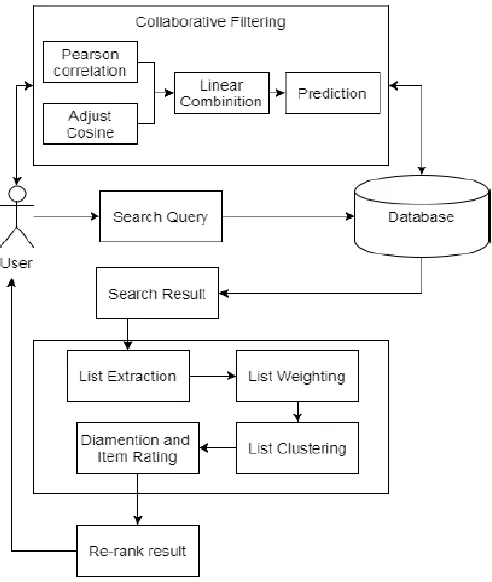
[image:4.612.328.574.181.472.2]Figure 1 shows the proposed approach for emotion recognition.
Fig. 1. Architecture of Proposed System
IV. PROPOSED SYSTEM PROCESSING
A. Preprocessing
Input:
D-set of documents D = d1,d2,...,dn and Ld-set of lists Ld = {l0}
extracted from the HTML content of d.
Process:
1) List Weighting
a) Compute document matching weight as:
SDCO = Pd∈R (smd .srd), where, smd .srd is the supporting
score by each result d,
, where,Nl,d is the number of items which
© 2017, IRJET | Impact Factor value: 6.171 | ISO 9001:2008 Certified Journal | Page 1121 , where rankd is the rank of document b)
Compute average invert document frequency (IDF) of items:
,
where, , Where Ne is the total
number of documents that contain item e in the
corpus and N is the total number of documents.
c) Evaluate the importance of a list l as:
Sl = SDOC.SIDF
2) List Clustering
Use the complete linkage distance to compute the distance between two clusters of lists l1, l2. dc(c1,c2) =
maxl1∈c1,l2∈c2dl(l1,l2) Where,
3) Item Ranking
a) Calculate the weight of an item e within a facet c
√
Where w(c,e,C) the weight contributed by a group
of lists G, and AvgRankc,e,G is the average rank of item e within all lists extracted from group G. Suppose L(c,e,G) is the set of all lists in c and G(G ⊆
c) that contain item e.
B. Collaboative Filtering
For collaborative clustering, the Pearson correlation based similarity and adjusted cosine similarity methods are used. Using the linear combination of these methods, user can get predicted results.
1) Pearson correlation-based Similarity
Where, sim(k,l) means the similarity between item k
and l, n means the total number of users, who rated on
both item k and l, R¯k,R¯l are the average ratings of item k and l , respectively; Ru,k , Ru,l mean the rating of user u on item k and l respectively.
2) Adjusted Cosine Similarity
3) Linear Combination sim(k,l) = sim(k,l)item
×(1−c)+sim(k,l)group ×c
Where, c Means the combination coefficient, sim(k,l)item Means that the similarity between item k and l,
sim(k,l)group Means that the similarity between item k
and l
4) Collaborative Prediction Prediction for an item is then
computed by
V. ANALYSIS AND RESULTS
A. Dataset
For calculation, product data is composed from web having different categories such as gender, brand, colours etc.
B. Results
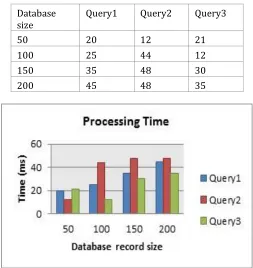
[image:5.612.317.570.416.684.2]To evaluate the performance, time require to search query on various database size is used. The expected results are evaluated according to time requires to process user query1, query2 and query 3 that extract output result. The table 1 show readings for processing time require for query processing.
TABLE I: TIME REQUIRE FOR SEARCH RESULT
Database
size Query1 Query2 Query3
50 20 12 21
100 25 44 12
150 35 48 30
200 45 48 35
© 2017, IRJET | Impact Factor value: 6.171 | ISO 9001:2008 Certified Journal | Page 1122 In item based collaborative method, which makes
[image:6.612.320.568.84.242.2] [image:6.612.318.566.128.450.2]prediction only based on item-based matrix as in table 2, it is impossible to make predictions on this item. ICHM matrix presentation of some of our products and users are shown in figure 3.
Fig. 3. ICHM Matrix Presentation
In user based collaborative method, which can makes prediction for users, based on group rating. UCHM matrix presentation of some of our products and users are shown in figure 4.
Fig. 4. UCHM Matrix Presentation
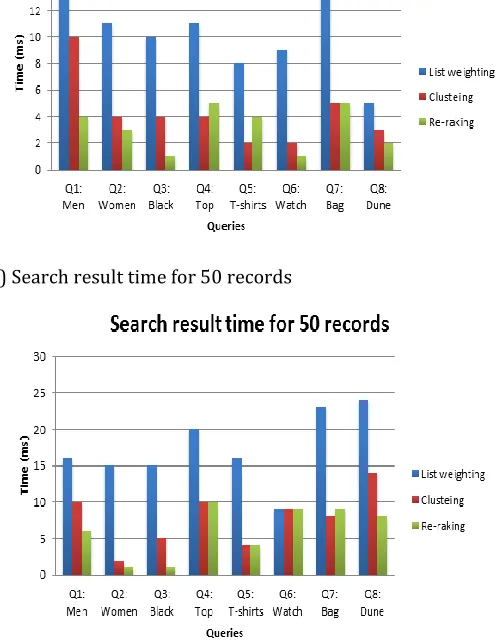
Search time for different records :
1) search result time for 25 records
2) Search result time for 50 records
VI. CONCLUSION
[image:6.612.48.299.153.330.2] [image:6.612.43.293.420.601.2]© 2017, IRJET | Impact Factor value: 6.171 | ISO 9001:2008 Certified Journal | Page 1123 accuracy of collaborative similarity. Using collaborative idea,
effectiveness of scheme get increase since of user intends documents is recommended to user. Therefore user search time becomes less for the same or similar data that require to user
ACKNOWLEDGMENT
The authors would like to thank the researchers as well as publishers for making their resources available and teachers for their guidance.
REFERENCES
[1] L. Bing, W. Lam, T.-L. Wong, and S. Jameel, Web query
reformulation via joint modeling of latent topic dependency and term context, ACM Trans. Inf. Syst., vol. 33, no. 2, pp. 6:16:38, eb. 2015.
[2] W. Kong and J. Allan, Extending faceted search to the
general web, in Proc.ACMInt. Conf. Inf. Knowl. Manage., 2014, pp. 839848.
[3] I. Szpektor, A. Gionis, and Y. Maarek, Improving
recommendation for long-tail queries via templates, in Proc. 20th Int. Conf. World Wide Web, 2011, pp. 4756.
[4] X. Xue and W. B. Croft, Modeling reformulation using
query distributions, ACM Trans. Inf. Syst., vol. 31, no. 2, pp. 6:16:34, May 2013.
[5] L. Li, L. Zhong, Z. Yang, and M. Kitsuregawa, Qubic: An
adaptive approach to query-based recommendation, J. Intell. Inf. Syst., vol. 40, no. 3, pp. 555587, Jun. 2013.
[6] W. Kong and J. Allan, Extracting query facets from search
results, in Proc. 36th Int. ACM SIGIR Conf. Res. Develop. Inf. Retrieval, 2013, pp. 93102.
[7] Qing Li and Byeong Man Kim, An Approach for Combining
Contentbased and Collaborative Filters, Korea Research Foundation Grant (KRF2002-041-D00459), 2002.
[8] I. Szpektor, A. Gionis, and Y. Maarek, Improving
recommendation for long-tail queries via templates, in Proc. 20th Int. Conf. World Wide Web, 2011, pp. 4756.
[9] J. Pound, S. Paparizos, and P. Tsaparas, Facet discovery for
structured web search: A query-log mining approach, in Proc. ACM SIGMOD Int. Conf. Manage. Data, 2011, pp. 169180.
[10]M. Diao, S. Mukherjea, N. Rajput, and K. Srivastava,,
Faceted search and browsing of audio content on spoken
web, in Proc. 19th ACM Int. Conf. Inf. Knowl. Manage., 2010, pp. 10291038.
[11]K. Balog, E. Meij, and M. de Rijke, Entity search: Building
bridges between two worlds, in Proc. 3rd Int. Semantic Search Workshop, 2010, pp. 9:19:5.
[12]M. Bron, K. Balog, and M. de Rijke, Ranking related
entities: Components and analyses, in Proc. ACM Int. Conf. Inf. Knowl. Manage., 2010, pp. 10791088.
[13] C. Li, N. Yan, S. B. Roy, L. Lisham, and G. Das,
Facetedpedia: Dynamic generation of query-dependent faceted interfaces for wikipedia, in Proc. 19th Int. Conf. World Wide Web, 2010, pp. 651660.
[14]A. Herdagdelen, M. Ciaramita, D. Mahler, M. Holmqvist, K.
Hall, S. Riezler, and E. Alfonseca, Generalized syntactic and semantic models of query reformulation, in Proc. 33rd Int. ACM SIGIR Conf. Res. Develop. Inf. retrieval, 2010, pp. 283290.
[15]J. Huang and E. N. Efthimiadis, Analyzing and evaluating
query reformulation strategies in web search logs, in Proc. 18th ACM Conf. Inf. Knowl. Manage., 2009, pp. 7786.
[16]S. Gholamrezazadeh, M. A. Salehi, and B. Gholamzadeh, A
comprehensive survey on text summarization systems, in Proc. 2nd Int. Conf. Comput. Sci. Appli., 2009, pp. 16.
[17]H. Zhang, M. Zhu, S. Shi, and J.-R. Wen, Employing topic
models for pattern-based semantic class discovery, in Proc. Joint Conf. 47th Annu. Meet. ACL 4th Int. Joint Conf. Natural Lang. Process. AFNLP, 2009, pp. 459467.
[18]O. Ben-Yitzhak, N. Golbandi, N. HarEl, R. Lempel, A.
Neumann,S. Ofek-Koifman, D. Sheinwald, E. Shekita, B. Sznajder, and S. Yogev, Beyond basic faceted search, in Proc. Int. Conf. Web Search Data Mining, 2008, pp. 3344.
[19]W. Dakka and P. G. Ipeirotis, Automatic extraction of
useful facet hierarchies from text databases, in Proc. IEEE 24th Int. Conf. Data Eng., 2008, pp. 466475.
[20]S. Riezler, Y. Liu, and A. Vasserman, Translating queries