Valentina Marchetti, … , David F. Friedlander, Martin
Friedlander
J Clin Invest.
2010;
120(9)
:3012-3021.
https://doi.org/10.1172/JCI42951
.
Dramatic advances in the field of stem cell research have raised the possibility of using
these cells to treat a variety of diseases. The eye is an excellent target organ for such
cell-based therapeutics due to its ready accessibility, the prevalence of vasculo- and
neurodegenerative diseases affecting vision, and the availability of animal models to
demonstrate proof of concept. In fact, stem cell therapies have already been applied to the
treatment of disease affecting the ocular surface, leading to preservation of vision. Diseases
in the back of the eye, such as macular degeneration, diabetic retinopathy, and inherited
retinal degenerations, present greater challenges, but rapidly emerging stem cell
technologies hold the promise of autologous grafts to stabilize vision loss through cellular
replacement or paracrine rescue effects.
Review
Find the latest version:
Review series
Stemming vision loss with stem cells
Valentina Marchetti,1 Tim U. Krohne,1 David F. Friedlander,2 and Martin Friedlander1
1Department of Cell Biology, The Scripps Research Institute, La Jolla, California, USA. 2School of Medicine, Vanderbilt University, Nashville, Tennessee, USA.
Dramatic advances in the field of stem cell research have raised the possibility of using these cells to treat a variety
of diseases. The eye is an excellent target organ for such cell-based therapeutics due to its ready accessibility, the
prevalence of vasculo- and neurodegenerative diseases affecting vision, and the availability of animal models to
demonstrate proof of concept. In fact, stem cell therapies have already been applied to the treatment of disease
affecting the ocular surface, leading to preservation of vision. Diseases in the back of the eye, such as macular
degeneration, diabetic retinopathy, and inherited retinal degenerations, present greater challenges, but rapidly
emerging stem cell technologies hold the promise of autologous grafts to stabilize vision loss through cellular
replacement or paracrine rescue effects.
Stem cell–based therapy represents a newly emerging therapeutic approach by which vascular and neuronal degenerative diseases may be treated. Since most of the diseases that lead to loss of vision do so as a result of abnormal vasculature and/or neuronal degeneration, the use of stem cells to stabilize or prevent visual loss may hold great promise. The eye is a highly vascular organ whose function is to gather light, focus it (through the cornea and lens) onto a thin, highly vascular neuronal tissue (the retina), transduce the light energy into electrical signals, transmit these signals via neurons to the visual cortex of the brain, and, finally, transform these electrical signals into an image or images that we perceive as “vision.” Abnormalities in any part of the visual pathway, phototransduction machinery, neuronal pathways, or the visual cortex can lead to loss of vision. Most commonly, these abnormalities result from problems with the vasculature (e.g., isch-emia or leakage) or the neurons themselves (e.g., genetic disease or degeneration secondary to hypoxia or toxicity), although ancillary structures of the eye that regulate intraocular fluid homeostasis (leading to glaucoma) or light transmission (leading to scarring of the front of the eye or cataract) can also be damaged sufficiently to lead to loss of vision. The potential clinical utility of stem cells could come from actual replacement of damaged cells with healthy ones generated from stem cells or through a paracrine effect of the stem cells that would help maintain a healthy tissue micro-environment or attract endogenous, circulating progenitor cells to help repair damaged cells in the eye. There has been enormous enthusiasm for exploring the potential utility of stem cells for a variety of diseases, including those of the eye, but much of this needs to be tempered by the reality of, first, needing to understand the underlying diseases and, second, finding the appropriate stem cell population and determining whether the potential benefit is outweighed by potential harm. In this article, we will discuss the ocular diseases potentially treatable with stem cell therapies, the various types of stem cells that may find therapeutic application, and the safety and production issues that need to be addressed before such therapies can be effectively used in the clinics.
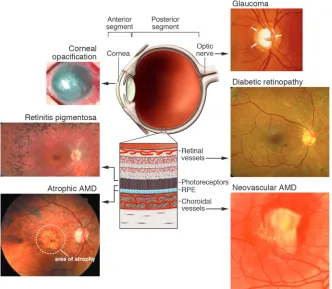
The eye is divided into two anatomic regions (Figure 1), the anterior segment (containing the conjunctiva, cornea, trabecular meshwork [TM], and iris) and the posterior segment (consisting of the lens, vitreous, retina, and choroid/choriocapillaris). General pathological principles apply to the tissues of both segments, but
inflammatory, infectious, and vascular diseases are more charac-teristic of diseases observed in the anterior segment while these three classes of disease plus degenerative/genetic problems are also observed in the posterior part. Certain parts of the eye (e.g., the ret- ina) are highly vascular and, thus, more commonly experience dis-eases associated with abnormal blood vessels and associated cells (e.g., diabetic retinopathy [DR] and hypertensive retinopathies).
Stem cells are unspecialized cells capable of self renewal through cell division, and, under certain physiological or experimental con-ditions, they can be induced to become tissue- or organ-specific cells with special functions (1). Stem cells can be derived and/or obtained from tissues of early embryos or adults and, under appro-priate conditions, will differentiate into more than one mature and functional cell type (2, 3). Stem cells have been identified in a variety of adult tissues as well as in cord and peripheral blood and adult BM. These cells represent a pool of progenitor cells that may serve to provide replacement cells critical to the maintenance of various tissue types. They could also be harnessed for the repair of damaged tissue following injury or stress. Stem cells that have the capacity to differentiate into any cell type are referred to as pluripotent; these are similar to cells obtained from the early divid- ing embryo (e.g., the epiblast tissue of the inner cell mass of a blas-tocyst or earlier morula stage embryos). Other types of stem cells may be more restrictive in their differentiation abilities, and a more restrictive destiny is characterized by a progenitor cell. Progenitor cells are a type of cell that has committed to a specific cell lineage, is capable of undergoing limited replication, and is not yet express-ing the characteristics associated with the mature cell type.
Adult stem cells may have wide utility in the treatment of many eye diseases, as discussed below. In the appropriate microenvironment of many different tissues, these cells will target to sites of injury (vascular as well as neuronal), differentiate into various cell types, and contrib-ute to the stabilization of degenerating tissue (4, 5). Newly emerging paradigms describing the existence of trophic “crosstalk” between local vascular networks and the tissues they supply and, thus, poten-tial applications of these cells include not only cell-based therapeutic delivery of various trophic and static substances, but also use as sta-bilizing elements in an otherwise unstable environment of the type observed in ischemic retinopathies, retinal degenerative diseases, glau-coma, and corneal injuries. Here, we review newly emerging concepts and technologies in stem cell biology that have potential application to the treatment of vascular and neurodegenerative diseases of the eye. If successful, these studies will lead to the development and application of novel cell-based therapies for these currently untreatable diseases.
Stem cell therapies for the treatment of anterior segment diseases
Stem cells for the treatment of limbal stem cell deficiency . The anterior seg- ment of the eye consists primarily of the cornea and iris; it is sepa-rated from the posterior segment of the eye by the lens. Glaucoma and cataract represent the most prevalent anterior segment eye diseases within the US. Diseases affecting the cornea, such as hypersensitivity reaction–mediated Stevens-Johnson syndrome, also represent a sig-nificant source of visual loss (6). While surgical treatment of cataracts has proven to be highly efficacious (7), successful treatment of corneal disease remains elusive. The current mainstay of corneal disease ther- apy, corneal transplantation, is often complicated by chronic rejec-tion of the transplanted tissue or structural abnormalities such as keratoconus — the cornea thins and assumes a conical shape, thereby distorting vision (8). Consequently, tissue replacement therapies con- cerned with anterior segment diseases have largely focused on utiliz-ing corneal stem cells as either an adjunct to corneal transplantation or as a means of generating an entirely new cornea ex vivo (9, 10).
The healthy cornea is an avascular, trans- parent structure characterized by an exter-nal layer of stratified squamous epithe-lium, an intermediate area of alternating orthogonal layers of collagen, and an inner monolayer of endothelium. Schermer and colleagues (11) were the first to describe an endogenous corneal stem cell population in the limbus, the transitional area where the cornea and the sclera (the white of the eye) meet. These stem cells serve as a labile pool of renewable cells for the most super- ficial corneal epithelium, with vertical turn- over ranging from 7–14 days in most mam-mals (12). When this process of cell renewal is altered by disease or physical/chemical trauma to the eye, such as that observed in infections, alkali burns, or severe trauma, the ability of the surface epithelium to transmit light and protect against envi-ronmental stresses becomes compromised. Equally as significant, depletion of the endogenous corneal stem cell population — as occurs in Stevens-Johnson syndrome and patients that have undergone multiple eye surgeries — can lead to conjunctival epi-thelial invasion into the cornea, resulting in functional blindness that cannot be treated with corneal transplantation (13).
[image:3.585.42.374.84.373.2]Several groups have demonstrated the utility of corneal stem cell–mediated epithe-lialization of the cornea in treating either diseases where the integrity of the epider-mal-dermal border is compromised (e.g., Stevens-Johnson syndrome and ocular pem-phigoid) or the surface of the eye has been chemically injured (10, 14). In each of these conditions, limbally located corneal stem cells are depleted (a condition known as limbal stem cell deficiency [LSCD]), result-ing in corneal scarring, opacification, and, ultimately, impaired vision. By transplant- ing donor limbal tissue enriched with corneal stem cells and allo-genic donor cornea when necessary, Tsubota and colleagues were able to significantly improve visual acuity. Given the highly invasive nature of this procedure and concerns about rejection of the donor tissue, other groups have focused on the use of autologous corneal stem cell therapies in the treatment of LSCD (15). In this process, small biopsies of limbal epithelium, including limbal stem cells, are taken from the patient’s healthy eye (if disease is unilateral) or the healthy eye of a living or cadaveric relative (for bilaterally affected patients) and expanded ex vivo on human amniotic membrane (HAM) or 3T3 fibroblasts treated with mitomycin C. This tech-nique has many advantages over limbal tissue transplantation in that it requires less donor tissue and, in the case of autologous tis-sue grafting, eliminates the need for systemic immune suppression (15). Most recently, autologous corneal limbal stem cells cultivated and expanded on fibrin were used to successfully restore vision in three-fourths of contralateral eyes of patients with corneal damage resulting largely from burn injuries (16).
Figure 1
review series
Another approach that circumvents the need for invasive proce-dures used to harvest limbal tissue involves the use of autologous epithelial cells from the buccal mucosal (the mucus membrane of the inside of the cheek) as a source of corneal replacement tis-sue (9, 17). In this process, a sheet of buccal mucosa is surgically excised from the patient and subsequently expanded ex vivo on either mitomycin C–treated 3T3 feeder cells or HAM (9, 17). Given the logistical challenges posed by the need for readily available HAM and possible immunological issues associated with the use of nonhuman feeder cells, others have developed a technique that uses commercially available fibrin sealants to produce carrier-free sheets on which to expand the mucosal tissue (18, 19). While attractive from an immunological perspective, the long-term via-bility and regenerative capacity of buccal sheets grown on these substrates has yet to be determined and, as such, larger longitudi-nal clinical studies are needed to determine the long-term benefit of these procedures.
Recently, work from several laboratories has challenged the pre-vailing notion that the limbus is the sole niche of corneal stem cells. Majo et al. demonstrated that stem cell populations in the pig eye are not limited to the limbus, but rather can be found throughout the ocular surface, including the cornea (20). Under appropriate culture conditions, these cell populations were shown to have the capacity to generate individual colonies of corneal and conjunctival cells in vitro (20).
While tissue replacement therapies utilizing corneal stem cells hold high therapeutic potential for diseases affecting the surface of the eye, many of the surgical techniques by which cultured tissue is delivered to the recipient eye have marginal success rates of re- epithelialization. Even when epithelialization does occur, improve- ments in visual acuity are often hampered by postsurgical com-plications such as graft rejection and ocular hypertension, which have been shown to occur in 46% and 37% of patients, respectively (9). While autologous sources of limbal tissue may reduce the like- lihood of transplant rejection, the use of undefined animal prod-ucts (such as fetal bovine serum) and feeder cells in the ex vivo expansion process represent potential immunogenic obstacles to successful tissue transplantation. While such concerns have been partially addressed by using autologous serum and feeder cell lay-ers of human origin (21), the relative efficiency of these techniques remains to be seen (21). Another consideration is the possible depletion of limbal corneal stem cells in the healthy donor eye, following successive rounds of cell harvesting (22). As discussed above, several investigators (9, 17) have demonstrated that buccal-derived epithelial sheets represent an alternative source of corneal epithelium if the individual’s limbal stem cell population has been depleted. Future research in the field of corneal replacement ther-apy must address these issues. Consequently, future work likely to lead to significant improvements within the field will focus on autologous progenitor cell sources, such as the buccal mucosa, cultivated in chemically defined culture conditions.
Glaucoma. Individuals suffering from glaucoma, whereby increased intraocular pressure leads to ganglion cell damage and ultimately vision loss, might also benefit from advances in stem cell biology. Several groups have begun to explore potential therapeutic applications of stem cells derived from the TM, which comprises the tissue through which intraocular fluid leaves the eye (23). It has long been known that a decrease in TM cellularity accompanies the onset of primary open angle glaucoma (POAG)
(24, 25). POAG is typically characterized by an increase in intra-ocular pressure that can lead to visual field loss and blindness as a result of ganglion cell death and optic nerve atrophy. While the precise etiology of POAG is still unknown, one possible mecha-nism is obstruction to outflow of intraocular fluid resulting from malfunction of the TM, including the Schlemm canal (26). The discovery of a putative stem cell–like population of TM cell pro-genitors (termed “insert cells” due to their proximity to the area where the TM inserts into the cornea) by Acott and others raised the prospect of expanding and ultimately implanting these cells into the TM of glaucomatous eyes (27–29). While several groups have successfully isolated putative TM progenitor cell popula-tions from free-floating neurospheres derived from human TM cells (30), phenotypic differences between these cells and mature TM cells do exist (31). Little progress has been made with regard to applying these cells clinically.
Another approach to using stem cells to replace defective cells involved in glaucoma would be to derive ganglion cells from vari-ous progenitors, since the primary cell type affected in glaucoma is the ganglion cell. While this has a certain appeal at the biological level, it may be difficult to “rewire” the nerve fiber layer contain-ing the ganglion cells once they have been irreparably damaged by the sustained increased intraocular pressures associated with glau-coma. Nevertheless, several groups have demonstrated that it may be possible to derive retinal ganglion cells from human-induced pluripotent (32, 33) and embryonic (34) stem cells.
Stem cells and therapy of retinal vascular diseases
The posterior segment of the eye consists of the ocular structures behind the lens, primarily the vitreous (the transparent, colorless gel found between the lens and the retina) and the retina (Figure 1). Some of the most common diseases that lead to vision loss in industrialized nations do so as a result of retinal vascular abnor-malities in the posterior segment of the eye. These diseases include DR and retinopathy of prematurity (ROP). Other, less common diseases of the retina such as macular telangiectasia (MacTel) and retinal angiomatous proliferation (RAP) involve focal vascu-lar abnormalities that may also be associated with neuronal (e.g., cone photoreceptor) loss. “Crosstalk” between local vascular net- works and the tissues they supply may help maintain physiologi-cal homeostasis and function in a variety of tissues including the retina (35–37). In fact, endothelial cells are known to provide tro-phic substances that greatly stimulate self renewal and directed differentiation of neural stem cells in the central nervous system (38) as well as hepatocytes during liver regeneration in response to injury (39). Given such interdependency of vascular endothelial cells and surrounding tissues, it may be possible to utilize pro-genitors of either vascular or neuronal cells to provide a paracrine rescue function in the face of severe stress such as hypoxia or genetically encoded cell-specific degenerations. Such progenitor cells may be more resistant to hypoxia and/or oxidative damage and exert a trophic rescue effect on local populations of vascular and neuronal cells. Such a therapeutic approach would obviate the need to employ destructive treatment modalities and would facili-tate repair of damaged and maintenance of normal retinal tissue.
Recent studies have employed small molecules, coinjected with the stem cells or administered to the cells prior to injection, to drive cells along specific differentiation pathways (44). These freshly differentiated cells could then serve as “replacement cells” for damaged local cells and/or exert paracrine functions by produc-ing cytokines, growth factors, and other trophic molecules (37). Two other advantages to generating these replacement cells locally from injected progenitor cells are that less ex vivo manipulation of the donor cell population is required and that there is greater likelihood that the appropriately differentiated cells would be gen-erated as a result of being in the appropriate microenvironment.
Adult BM–derived progenitors differentiate into endothelial progenitor cells and target activated astrocytes and provide vasculo- and neurotrophic rescue. Adult BM is a rich source of HSCs and hematopoietic progenitor cells (HPCs) (35, 36, 38). These undifferentiated cells are able to dif-ferentiate into various cell types including myeloid and endothelial cells. The lineage-negative (Lin–) population of BM cells, which was first identified and purified from mouse BM, cannot differentiate into blood cells, a property of Lin+ HSCs. Lin– HSCs are described as a heterogeneous population of progenitor cells that include cells able to differentiate into vascular endothelial cells and form blood vessels (endothelial progenitor cells [EPCs]) (45). The Lin– popula-tion from BM, as well as a population of progenitor cells derived from human cord blood, have, under specialized conditions, been observed to differentiate into cells expressing neuronal markers after transplantation into the subretinal space (46) or brain (47, 48) in mice, although others claim that this is actually a result of transdif- ferentiation rather than true stem cell differentiation (49, 50). Oth-ers have explored the potential utility of human cord blood–derived mesenchymal stem cells as a source of retinal neuronal cells, but did not observe differentiation of these cells into neuronal-like elements (51). Human BM–derived CD45–/glycophorin– cells will differenti-ate into photoreceptors in vitro after being cocultured with retinal pigmented epithelial cells (52).
EPCs are mobilized from the BM in response to a variety of signal-ing molecules (53, 54) and target sites of angiogenesis in ischemic peripheral vasculature (45), myocardium (55), and injured eyes (56). Interestingly, BM contains several populations of progenitor cells that can differentiate into a variety of other cell types (57, 58). It has been shown that HSCs contain a pool of progenitor cells that can directly differentiate into EPCs and other progenitor cells that,
through a paracrine effect, can promote stabilization of endothelial cells, although there is continuing controversy as to the precise identity of these cells and whether they facilitate vascular normaliza-tion or enhance pathological neovascularization under conditions of hypoxic stress (59–61). While there is a large, and still growing, literature on the potential therapeutic benefits of EPC treatments for ischemic diseases, the definition, identification, purification, and characterization of the EPC remains elusive as does the role for these cells in the maintenance of vascular homeostasis and disease (52–55). Without a standard set of in vitro and in vivo assays that associate specific cell phenotypic profiles with specific activities, the EPC remains poorly defined. After the first description of an adult endothelial precursor cell (45), multiple studies have charac- terized, phenotyped, and functionally analyzed endothelial precur-sors. Today the term EPC describes a heterogeneous group of cells including circulating and culture-differentiated cells that have the capacity to differentiate into endothelial cells. Protocols for obtain-ing these cells are as heterogenous as the cells themselves. There is evidence that EPCs can participate in early phases of vascular dam- age (59–61) and that this particular population of EPCs has mono-cyte-like features (62). Monocyte-derived EPCs adhere to lesion sites and differentiate into endothelial cells that facilitate vascular stabilization and repair. In the later phase of vascular repair, these cells may recruit, in a paracrine fashion, other EPC types and further facilitate vascular repair (63).
In 2004, Otani et al. demonstrated that BM-derived EPCs injected directly into the vitreous of neonatal mice stably incorporated into forming blood vessels, forming vascular mosaics of the injected EPCs and endogenous retinal vascular endothelial cells (64). The injected EPCs were observed to target to retinal astrocytes, which form a template over which the developing endogenous retinal vasculature develops and are dependent on R-cadherin–mediated adhesion for proper targeting (65) If the Lin– progenitor cells are injected in the vitreous of mice with retinal degeneration caused by a genetic mutation, they completely prevent the retinal vascu-lar degeneration observed in untreated animals and also rescue the neuronal retinal degeneration (Figure 2) (66). If these cells are engi- neered to express an angiostatic fragment of tryptophan tRNA syn-thetase (T2-trpRS) prior to intravitreal injection, they will potently inhibit neovascularization in neonatal mouse retinal angiogenesis (64, 67). The use of stem cells as cell-based delivery systems has the advantage over more traditional systemic drug administration in that such cell-based delivery permits the selective, potent delivery of drugs to the back of the eye in physiological doses.
[image:5.585.51.277.81.170.2]Adult BM–derived myeloid progenitor cells.Recent data support the concept that myeloid cells are involved in the regulation of angiogenesis and neovascularization, independent of the effects observed for EPCs (68). Myeloid progenitor cells have been reported to rescue and maintain the function of ischemia-dam- aged endothelial cells of the hind limb (69) and to prevent vascu- lar abnormalities in a mouse model of ischemic injury, oxygen-induced retinopathy (OIR) (68). In this model, a subpopulation of Lin– cells that express high levels of the hyaluronic acid receptor, CD44, enhances vascular repair following oxygen-induced vascu-lar obliteration and stabilizes hypoxia-driven neovascularization. The high level of expression of myeloid-specific markers, cellu-lar morphology, and the localization of the cells external to the lumen of the blood vessels define these cells as microglia. There is a growing interest in the role of microglia in maintaining vascular function and homeostasis during normal and stress-associated
Figure 2
BM-derived Lin– HSC injection rescues the degeneration of vascular
and neural cells in a mouse model of retinal degeneration (rd1/rd1). Retinal vasculature (green, stained for CD31) is well preserved in the Lin–-treated eye (A) and is degenerated except for small numbers of
review series
conditions in the retina where they provide a vasculoprotective function (70) and in the brain where BM-derived, vasculature-associated microglia cells have been observed in noninjured adult tissue (71). Activated microglia and microglial perivasculitis have been observed in association with human DR and may play a role in the development of vascular and neuronal changes observed in this disease (72), suggesting that manipulating vasculature-associ-ated microglia or their progenitors may be useful for the treatment of ischemic retinopathies of the retina and brain.
Cord blood as a source of progenitor cells. Human umbilical cord blood (UCB) is a well-described source of HSCs used for transplantation in the treatment of hematological and genetic diseases (73, 74). Since the first human transplantation in 1988, many studies have contributed to the extensive characterization of these progenitor cells. Compared with adult BM, cord blood contains a much higher concentration of HSC and these cells have a greater capacity to form hematopoietic colonies and differentiate into multiple blood cell lineages. Clinical observations suggest that patients transplanted with UCB-derived HSCs have a relatively low incidence of graft-ver-sus-host disease (GVHD), likely due to the lower immunogenicity of these cells as compared with those derived from adult BM (75).
EPCs derived from human UCB were observed to be a hetero-geneous population of cells expressing CD34 and CD11b. When UCB-derived EPCs were grown in culture, they upregulated expres-sion of endothelial markers such as Tie2 and Ang1 (76, 77). This differentiation potential suggests that stem cells circulating in cord blood may not only give rise to hematopoietic cells but may also have therapeutic application for the repair of vascular endothelium following injury and surgery. Thus, UCB-derived cells that can regu-late inflammation cascades and hypoxia-driven neovascularization may be useful for the treatment of diseases such as ROP and DR, in which an early phase of vaso-obliteration is followed by inflamma-tion-associated neovascularization (78). The fact that cord blood is much easier to obtain than BM from a newborn child, and that cord blood is a less immunocompetent source of cells than periph-eral blood and adult BM, makes the use of this stem cell source for the treatment of retinopathies such as ROP very appealing.
In recent years, the importance of circulating monocytes/ macrophages in neovascularization has been demonstrated for ischemic diseases of the myocardium (79, 80). Monocytes, which are derived from monoblasts (the HSC precursors in BM) circulate in the bloodstream before extravasating into tissues of the body and promoting angiogenesis related to inflammatory reactions (81). Monoblasts and their monocytic progeny are attracted to hypoxic areas and begin to differentiate to tissue macrophages, dendritic cells, and microglia.
Resident tissue macrophages have been known to exist as polarized populations, M1 and M2 subsets (82, 83). While M1 macrophages are proinflammatory and phagocytose pathogens, M2 macrophages modulate the inflammatory response and help with angiogenesis and tissue repair. Recent reports confirm that most monocytes from UCB become M2 polarized cells (84, 85), observations that could be explained by the immaturity of the immune and inflammation stimulatory functions of UCB. For these reasons, cord blood–derived myeloid progenitor cells/ monocytes and macrophage progeny may provide a promising therapeutic option for the treatment of ischemic ocular diseases such as DR or ROP. These progenitor cells may facilitate physi- ological revascularization through their ability to promote angio-genesis without associated inflammation.
Stem cell therapy of neurodegenerative retinal diseases
Age-related macular degeneration as a target for stem cell–based therapy. In contrast to vascular retinopathies that affect the retinal vasculature and only secondarily result in neuronal damage, most degenerative and hereditary retinopathies primarily target the functional com-plex of photoreceptors and supporting retinal pigment epithelium (RPE). Thus, the current development of stem cell–based therapies for these diseases mostly focuses on rescuing, supplementing, or replacing these two cell types in the affected retina. Age-related macular degeneration (AMD) is by far the most common of these retinopathies and, indeed, represents the most common blind-ing disease in general, accounting for about half the cases of legal blindness in all developed countries (86, 87). Moreover, this already high prevalence is projected to increase substantially in the coming decades as a consequence of demographic changes (88).
Despite significant progress in recent years, the multifactorial pathogenesis of AMD has not yet been fully elucidated. However, several lines of clinical and experimental evidence indicate that progressive dysfunction of the aging RPE initiates a pathogenetic cascade that eventually results in visual decline (89, 90). The single-layered RPE is located at the interface between photoreceptors and the underlying vascular layer of the eye, the choriocapillaris. It per-forms critical tasks vital for photoreceptor function and survival such as retinoid recycling and fluid transport (91). Thus, RPE cells and photoreceptors form a functional unit, and RPE cell degenera-tion inevitably results in secondary loss of photoreceptor cells.
The two blinding late-stage manifestations of AMD include atro-phic AMD, which is characterized by patchy atrophy of RPE in the central retina and degeneration of associated photoreceptors, and neovascular AMD, in which VEGF-mediated choroidal neovascu-larization (CNV) into the outer retina damages photoreceptors primarily by fluid leakage and chronic retinal edema formation. Despite extensive research efforts, treatments currently are not available for atrophic AMD and are highly limited for neovascular AMD. Recently introduced VEGF-blocking drugs provide for the first time a therapeutic option to stop disease progression in a sub- set of patients with neovascular AMD, but the effect is only tem-porary and requires repeated intraocular injections to maintain it (92, 93). Surgical removal of CNV membranes in neovascular AMD is feasible and has been shown to effectively stop neovascular growth; however, the procedure inevitably results in an RPE defect at the site of the CNV extraction that precludes visual recovery.
Utilizing embryonic stem cells for RPE replacement therapy. Several groups have evaluated embryonic stem cells (ESCs) for differ-entiation of RPE cells and tested their effects on visual function after transplantation into animal models of RPE-mediated reti-nal degeneration, such as the Royal College of Surgeons (RCS) rat (99–103). Untreated long-term cultures of human ESCs were observed to reproducibly generate cells that exhibited character-istic RPE morphology and expression of markers specific for RPE cells, such as RPE-specific protein 65 kDA (RPE65), cellular reti-naldehyde-binding protein (CRALBP), and bestrophin (99–103). Subretinal injection of human ESC–derived RPE cells into RCS rats resulted in cell survival and integration into the RPE as well as temporary rescue of retinal degeneration and visual decline (100, 101). However, spontaneous differentiation of ESCs is a lengthy and inefficient process. To advance this approach toward clinical applicability, different groups have successfully developed culture techniques that reduce the time and increase the yield of RPE dif- ferentiation, either by coculture with feeder cells that possess neu-rodifferentiating properties (104) or by treatment with substances such as activin A, Dkk1, and Lefty-A that mimic certain aspects of embryonic RPE development (105–107). Cells generated using these protocols have also demonstrated rescue effects in animal models of RPE degeneration (105).
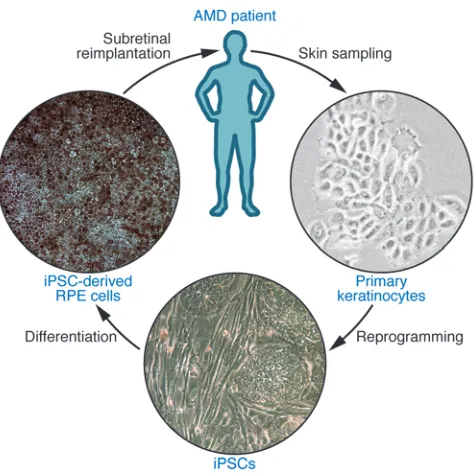
Generation of autologous RPE grafts from induced pluripotent stem cells. Studies using ESCs provide important insights regarding the feasibility of stem cell–derived RPE transplantation. For clini-cal application, however, induced pluripotent stem cells (iPSCs), derived from adult somatic cells by genetic reprogramming using either the four transcription factors Octamer 3/4 (Oct4), SRY box–containing gene 2 (Sox2), Krüppel-like factor 4 (Klf4), and cellular myelocytomatosis oncogene (c-Myc) (108), or Oct4, Sox2, Nanog, and Lin28 (109), may be preferable because they could be generated from the patient’s own somatic cells (Figure 3). While the subretinal space in the healthy eye is relatively immune privi-leged due to the blood-retinal barrier function of the RPE layer, disruption of this barrier with RPE cell loss in a disease such as AMD may abolish the immune privilege and result in rejection of
allogenic grafts such as ESC-derived RPE. Hence, transplantation of autologous, iPSC-based grafts could avoid not only the need for life-long immunosuppressive prevention of graft rejection but also the ethical and practical problems associated with large-scale clinical use of ESCs. Similar to ESCs, human iPSCs differentiate spontaneously into RPE cells (102, 110, 111), and differentiation efficiency can be enhanced by manipulation of developmental signaling pathways with compounds such as Dkk1 and Lefty-A (107, 112). Analogous to RPE cells in vivo, iPSC-derived cells in vitro form monolayers with intercellular tight junctions, exhibit RPE-characteristic morphology and pigmentation, express RPE-specific markers, and are capable of photoreceptor outer segment phagocytosis (Figure 3). Moreover, they maintain most of these morphological and functional properties following subretinal transplantation into RCS rats and provide temporary retinal res-cue and preservation of visual function (111).
[image:7.585.47.284.80.318.2]Safety concerns regarding the clinical application of iPSCs arise from the potential risk of malignant transformation that results from the oncogenic properties of the transcription fac- tors required by current reprogramming protocols, in particu-lar c-Myc, as well as the random genomic integration of these factors following retroviral transduction. Extensive research efforts are underway to establishing new reprogramming strat-egies that use nonintegrating gene delivery approaches (113) or that replace the introduction of exogenous reprogramming fac-tors by treatment with proteins (114) or small molecules (115). Meanwhile, iPSCs have also been successfully derived from human somatic cells that were reprogrammed using only three or two factors (Oct4/Sox2/Klf4 or Oct4/Klf4, respectively) (115, 116). Eventually, iPSCs entirely free of genomic and epigenetic alterations would be desirable to minimize the tumor risk after transplantation therapies. Finally, transplantation of ESC- or iPSC-derived RPE cells into the microenvironment of a diseased retina, as that seen in macular degeneration, may compromise the ability of these newly grafted cells to achieve a therapeutic effect due to rapid compromise of the transplanted cells second-ary to global dysfunction in the diseased tissue.
Figure 3
review series
Therapeutic photoreceptor cell regeneration using stem cells. AMD may be an ideal target for a stem cell–based therapeutic approach for a number of reasons. First, RPE cells can consistently be differenti-ated from stem cells. Second, AMD is not caused by monogenetic defects and only manifests late in life, meaning that autologous iPSC-derived RPE grafts would not be expected to be rapidly affect-ed by the disease. Third, RPE cell grafts can be readily delivered directly into the correct location under the retina. Finally, unlike neuronal grafts, the transplanted cells do not require synaptic inte-gration into the neuronal retinal network to become functional. In addition to AMD, however, hereditary retinopathies such as retinitis pigmentosa may also benefit from stem cell treatments. These diseases mostly result from monogenetic defects that direct-ly cause photoreceptor degeneration and would therefore require therapeutic cell replacement with functional photoreceptor cells. Compared with RPE cells, photoreceptor differentiation in vitro has proven to be considerably more complex, and while photo-receptor progenitors have been successfully derived from human ESCs as well as iPSCs (102, 106, 112), evidence for the generation of fully functionally photoreceptors is still lacking. The retina has been shown to contain a population of endogenous adult stem cells in the ciliary margin zone that can also be utilized for pho- toreceptor differentiation in vitro (117, 118), but the clinical util- ity of these stem cells, in particular for autologous transplanta-tion, seems limited by their poor accessibility and small number. Indeed, the origin and nature of these ciliary margin zone–derived cells has been called into question (119). In a promising alterative therapeutic approach, transplantation of human neural progeni- tor cells has been used to rescue, rather than replace, degenerat-ing photoreceptors in RCS rats (120). This effect was mediated by the release of neurotrophic factors and could be further enhanced when the cells were genetically modified to overexpress these fac-tors, a finding that raises the intriguing possibility that stem cells may be useful as vehicles for drug delivery to the retina.
Concluding remarks
Stem cell–based therapy represents a newly emerging therapeutic approach by which vascular and neuronal degenerative diseases may be treated. Intravitreal injection of endothelial and myeloid progenitor cells prevents vascular regression and protects neurons in mouse models of retinal degeneration (66). Injection of myeloid progenitors facilitates vascular repair in models of ischemic reti-nopathy by accelerating normal revascularization of the superficial and deep retinal vascular plexuses and decreasing intravitreal vascu-lar pathogenesis (68). These cell-based therapies have the potential to correct the underlying vascular abnormalities associated with ischemic retinopathies rather than simply treat the complications resulting from abnormal neovascularization. While we have gained some insight regarding the vasculo- and neurotrophic properties of these cells, the precise mechanism by which they facilitate vascular rescue in models of ischemic retinopathy remains unclear. These studies also raise many interesting questions surrounding the role of endogenous glial and inflammatory cells in retinal response to injuries such as hypoxia or oxidative stress. Clearly, microglia, astrocytes, and Mueller glia (a specialized giant glial cell unique to the retina that spans the entire retina and performs a myriad of functions, including the regulation of fluid transport and neuro- trophic activity) may be critical to maintenance of the normal vas-cular and neuronal microenvironment in the retina. In addition, they represent attractive therapeutic targets, both as cell-based
delivery devices (121) and as targets for modulation themselves. The major challenges in translating the application of endothelial and myeloid progenitor cells into the clinic remain better character- ization of the various populations of progenitor cells and engineer-ing a process for the purification, characterization, and infusion of these cells into patients. There are several centers of “stem cell tour- ism” that currently offer BM-derived progenitor cells for the treat-ment of several diseases, including those of the eye, but none offer procedures that are approved by recognized regulatory agencies nor are there any random, prospective, placebo-controlled study data to support these centers’ claims of therapeutic efficacy and safety (122). Without documented efficacy and safety data, it is difficult to evaluate what, if any, benefit would be obtained for vulnerable patients subjecting themselves to the treatments offered.
It is now possible to generate pluripotent stem cells from adult somatic tissues and, thus, provide autologous grafts of various tissue types to enhance or replace damaged cells in nearly every organ in the body including the eye. While the eye is a relatively immune-privileged site, this privilege is not absolute and is com-promised under many of the disease conditions that we would like to treat with stem cell therapies. Thus, the use of autologous grafts would be preferable to using stem cell–derived “replacement parts” from ESCs. Scale-up and treatment cost considerations may favor developing cell banks derived from ESCs, but if these grafts are ultimately rejected or induce inflammation, there will have been no gain. ES- or iPS-derived cells for replacing diseased neurons (e.g., photoreceptors, ganglion cells) may be technically feasible in the near future, but there will always be the problem of “rewir- ing” these neurons if placed into adult tissues with already estab-lished retinotectal projections that are notoriously difficult (if not impossible) to reestablish once there is retrograde degeneration of the type observed in chronic retinal generative disease (123).
Acknowledgments We would like to thank all the members of the Friedlander laboratory for their helpful comments on this manuscript and their contributions to the work cited from our laboratory. We also apologize to other investigators whose work may not have been referenced due to space constraints. We are very grateful for generous support of the work in our laboratory from the NIH (NEI R01 EY11254 and NEI R24 EY017540 to M. Fried-lander), the California Institute for Regenerative Medi-cine (TR1-01219 to M. Friedlander), the Lowy Institute for Biomedical Research (MacTel), and the V. Kann Rassmussen Foundation. T.U. Krohne is supported by the German Research Foundation (DFG; grant KR 2863/6-1). D.F. Friedlander was supported by a summer research fellowship from Vanderbilt University School of Medicine.
Address correspondence to: Martin Friedlander, The Scripps Research Institute, 10550 N. Torrey Pines Road, La Jolla, Califor-nia 92014, USA. Phone: 858.784.9138; Fax: 858.784.9135; E-mail: [email protected]. 1. Weissman IL. Translating stem and progenitor cell biology to the clinic: barriers and opportunities. Science. 2000;287(5457):1442–1446.
2. Zhou Q, Melton DA. Extreme makeover: con-verting one cell into another. Cell Stem Cell. 2008; 3(4):382–388.
3. Slack JM. Origin of stem cells in organogenesis. Sci-ence. 2008;322(5907):1498–1501.
4. Li L, Clevers H. Coexistence of quiescent and active adult stem cells in mammals. Science. 2010; 327(5965):542–545.
5. Moore KA, Lemischka IR. Stem cells and their niches. Science. 2006;311(5769):1880–1885. 6. National Eye Institute. Prevalence of Blindness
Data Tables. NIH Web site. http://www.nei.nih. gov/eyedata/pbd_tables.asp. Updated October 2008. Accessed July 19, 2010.
7. McKee M, Whatling JM, Wilson JL, Vallance-Owen A. Comparing outcomes of cataract surgery: chal-lenges and opportunities. J Public Health (Oxf). 2005;27(4):348–352.
8. Claesson M, Armitage WJ, Fagerholm P, Stenevi U. Visual outcome in corneal grafts: a preliminary analysis of the Swedish Corneal Transplant Regis-ter. Br J Ophthalmol. 2002;86(2):174–180.
9. Nishida K, et al. Corneal reconstruction with tis- sue-engineered cell sheets composed of autolo-gous oral mucosal epithelium. N Engl J Med. 2004;351(12):1187–1196.
10. Tsubota K, et al. Treatment of severe ocu-lar-surface disorders with corneal epithelial stem-cell transplantation. N Engl J Med. 1999; 340(22):1697–1703.
11. Schermer A, Galvin S, Sun TT. Differentiation- related expression of a major 64K corneal kera- tin in vivo and in culture suggests limbal loca-tion of corneal epithelial stem cells. J Cell Biol. 1986;103(1):49–62.
12. Haddad A. Renewal of the rabbit corneal epithe-lium as investigated by autoradiography after intravitreal injection of 3H-thymidine. Cornea. 2000;19(3):378–383.
13. Puangsricharern V, Tseng SC. Cytologic evidence of corneal diseases with limbal stem cell deficiency.
Ophthalmology. 1995;102(10):1476–1485.
14. Kenyon KR, Tseng SC. Limbal autograft transplan-tation for ocular surface disorders. Ophthalmology. 1989;96(5):709–722.
15. Kolli S, Ahmad S, Lako M, Figueiredo F. Suc- cessful clinical implementation of corneal epi- thelial stem cell therapy for treatment of unilat-eral limbal stem cell deficiency. Stem Cells. 2010; 28(3):597–610.
16. Rama P, Matuska S, Paganoni G, Spinelli A, De Luca M, Pellegrini G. Limbal stem-cell therapy and long-term corneal regeneration. N Engl J Med. 2010;363(2):147–155.
17. Nakamura T, et al. The successful culture and autologous transplantation of rabbit oral mucosal epithelial cells on amniotic membrane. Invest Oph-thalmol Vis Sci. 2003;44(1):106–116.
18. Higa K, et al. Proliferation and differentiation of transplantable rabbit epithelial sheets engineered with or without an amniotic membrane carrier.
Invest Ophthalmol Vis Sci. 2007;48(2):597–604. 19. Rama P, et al. Autologous fibrin-cultured limbal stem cells permanently restore the corneal surface of patients with total limbal stem cell deficiency. Transplantation. 2001;72(9):1478–1485. 20. Majo F, Rochat A, Nicolas M, Jaoude GA, Bar-randon Y. Oligopotent stem cells are distributed throughout the mammalian ocular surface. Nature. 2008;456(7219):250–254.
21. Nakamura T, et al. The use of autologous serum in the development of corneal and oral epithelial equiv-alents in patients with Stevens-Johnson syndrome.
Invest Ophthalmol Vis Sci. 2006;47(3):909–916.
22. Chen JJ, Tseng SC. Corneal epithelial wound heal-ing in partial limbal deficiency. Invest Ophthalmol Vis Sci. 1990;31(7):1301–1314.
23. Kelley MJ, Rose AY, Keller KE, Hessle H, Samples JR, Acott TS. Stem cells in the trabecular mesh-work: present and future promises. Exp Eye Res. 2009;88(4):747–751.
24. Alvarado J, Murphy C, Juster R. Trabecular mesh-work cellularity in primary open-angle glaucoma and nonglaucomatous normals. Ophthalmology. 1984;91(6):564–579.
25. Liton PB, Challa P, Stinnett S, Luna C, Epstein DL, Gonzalez P. Cellular senescence in the glau-comatous outflow pathway. Exp Gerontol. 2005; 40(8–9):745–748.
26. Moses RA. The effect of intraocular pressure on resistance to outflow. Surv Ophthalmol. 1977; 22(2):88–100.
27. Acott TS, Samples JR, Bradley JM, Bacon DR, Bylsma SS, Van Buskirk EM. Trabecular repop-ulation by anterior trabecular meshwork cells after laser trabeculoplasty. Am J Ophthalmol. 1989; 107(1):1–6.
28. Alexander RA, Grierson I. Morphological effects of argon laser trabeculoplasty upon the glau-comatous human meshwork. Eye (Lond). 1989; 3(pt 6):719–726.
29. Alexander RA, Grierson I, Church WH. The effect of argon laser trabeculoplasty upon the normal human trabecular meshwork. Graefes Arch Clin Exp Ophthalmol. 1989;227(1):72–77.
30. Gonzalez P, Epstein DL, Luna C, Liton PB. Char-acterization of free-floating spheres from human trabecular meshwork (HTM) cell culture in vitro.
Exp Eye Res. 2006;82(6):959–967.
31. Liton PB, Luna C, Challa P, Epstein DL, Gonzalez P. Genome-wide expression profile of human tra- becular meshwork cultured cells, nonglaucoma-tous and primary open angle glaucoma tissue. Mol Vis. 2006;12:774–790. 32. Chen, M., et al. Generation of retinal ganglion-like cells from reprogrammed mouse fibroblasts [pub-lished online ahead of print May 19, 2010]. Invest Ophthalmol Vis Sci. doi:10.1167/iovs.09-4504. 33. Parameswaran S, et al. Induced pluripotent
stem cells generate both retinal ganglion cells and photoreceptors: therapeutic implications in degenerative changes in glaucoma and age-related macular degeneration. Stem Cells. 2010; 28(4):695–703.
34. Jagatha B, et al. In vitro differentiation of reti-nal ganglion-like cells from embryonic stem cell derived neural progenitors. Biochem Biophys Res Commun. 2009;380(2):230–235.
35. Charwat S, et al. Role of adult bone marrow stem cells in the repair of ischemic myocardium: current state of the art. Exp Hematol. 2008;36(6):672–680. 36. Petursson SR, Chervenick PA. Comparative effects
of thrombopoietic-stimulatory factor and spleen cell-conditioned medium on megakaryocytopoi-esis in a short-term bone marrow liquid culture system. Exp Hematol. 1988;16(8):660–666.
37. Sengupta N, et al. Regulation of adult hemato-poietic stem cells fate for enhanced tissue-specific repair. Mol Ther. 2009;17(9):1594–1604. 38. Haspel RL, Miller KB. Hematopoietic stem cells:
source matters. Curr Stem Cell Res Ther. 2008; 3(4):229–236.
39. LeCouter J, et al. Angiogenesis-independent endothelial protection of liver: role of VEGFR-1.
Science. 2003;299(5608):890–893.
40. Blazejewska EA, et al. Corneal limbal microenvi-ronment can induce transdifferentiation of hair follicle stem cells into corneal epithelial-like cells.
Stem Cells. 2009;27(3):642–652.
41. MacLaren RE, et al. Retinal repair by transplan-tation of photoreceptor precursors. Nature. 2006;444(7116):203–207.
42. Kustermann S, Hildebrandt H, Bolz S, Dengler K, Kohler K. Genesis of rods in the zebrafish retina occurs in a microenvironment provided by polysi-alic acid-expressing Muller glia. J Comp Neurol. 2010;518(5):636–646.
43. Banin E, et al. Retinal incorporation and differentia- tion of neural precursors derived from human embry-onic stem cells. Stem Cells. 2006;24(2):246–257. 44. Li W, Ding S. Small molecules that modulate
embryonic stem cell fate and somatic cell repro-gramming. Trends Pharmacol Sci. 2010;31(1):36–45. 45. Asahara T, et al. Isolation of putative progeni-tor endothelial cells for angiogenesis. Science. 1997;275(5302):964–967.
46. Koike-Kiriyama N, et al. Human cord blood cells can differentiate into retinal nerve cells. Acta Neu-robiol Exp (Wars). 2007;67(4):359–365.
47. Mezey E, Chandross KJ, Harta G, Maki RA, McK-ercher SR. Turning blood into brain: cells bearing neuronal antigens generated in vivo from bone marrow. Science. 2000;290(5497):1779–1782. 48. Tropel P, et al. Functional neuronal differentiation
of bone marrow-derived mesenchymal stem cells.
Stem Cells. 2006;24(12):2868–2876.
49. Roybon L, et al. Failure of transdifferentiation of adult hematopoietic stem cells into neurons. Stem Cells. 2006;24(6):1594–1604.
50. Snykers S, De Kock J, Rogiers V, Vanhaecke T. In vitro differentiation of embryonic and adult stem cells into hepatocytes: state of the art. Stem Cells. 2009;27(3):577–605.
51. Hill AJ, et al. Human umbilical cord blood-derived mesenchymal stem cells do not differentiate into neural cell types or integrate into the retina after intravitreal grafting in neonatal rats. Stem Cells Dev. 2009;18(3):399–409.