Intelligent cities
Curwell, SR, Hamilton, A, MarshallPonting, AJ, Soubra, S, Vankeisbelck, R and
Duchon, J
Title Intelligent cities
Authors Curwell, SR, Hamilton, A, MarshallPonting, AJ, Soubra, S, Vankeisbelck, R and Duchon, J
Type Conference or Workshop Item
URL This version is available at: http://usir.salford.ac.uk/id/eprint/15796/
Published Date 2005
USIR is a digital collection of the research output of the University of Salford. Where copyright permits, full text material held in the repository is made freely available online and can be read, downloaded and copied for noncommercial private study or research purposes. Please check the manuscript for any further copyright restrictions.
Intelligent Cities
Steve CURWELL1, Andy HAMILTON2, Amanda MARSHALL-PONTING3, Souheil
SOUBRA4, Rémi VANKEISBELCK5 , Jerome DUCHON6
1
Research Centre for the Built and Human Environment (BUHU), University of Salford, the Crescent, Salford, M7 1NU, United Kingdom.
Tel: +44 (0)161 295 4622, Fax: + 44 (0)161 295 5011, Email: [email protected] 2
Tel: +44 (0)161 295 5366, Fax: + 44 (0)161 295 5011, Email: [email protected] 3
Tel: +44 (0) 161 295 7056, Email: [email protected] 4
CSTB, BP 209, 06 904, Sophia Antipolis., France
Tel: +33 (0)4 93 95 67 23, Fax: +33 (0)4 93 95 67 23, Email: [email protected] 5
CSTB, BP 209, 06 904, Sophia Antipolis., France
Tel: +33 (0)4 93 95 64 15, Fax: +33 (0)4 93 95 67 23, Email:remi.vankeisbelck @cstb.fr Address & contact details for Jerome
Abstract: This paper reports on the ongoing IntelCities (Intelligent Cities - IST no. 507860) integrated project, which commenced in January 2004 that seeks to integrate e-governance and e-urban planning. IntelCities is still at a formative stage and the paper seeks to explain the background, the research questions and preliminary design of prototyping studies to be carried out in the cities of Marseille, Siena, Helsinki, Rome, Leicester, Dresden, Berlin and Manchester. These prototypes are to be linked together to demonstrate an integrated open system city platform. The main business opportunities for IST companies and in terms of increased efficiency in e-urban planning are explored. The main outcomes are anticipated, which include a new public asset in terms of a city-wide intelligent information system.
1.
Introduction
Internet access is expanding rapidly, with penetration into households across the whole of the EU likely to exceed 50% in the near future. As over 70% of Europeans live in cities, visions of the knowledge society (KS) are largely framed in an urban context in the form of information and computer technology (ICT) enabled, intelligent communities. EU policy has explicitly cast cities in the role of engines for change for regional, national and European economic progress. Hence, from an EU policy perspective, the interaction between cities and ICTs is expected to act both as the key driver and as the primary location for the delivery of the knowledge economy and society.
In this context the main objective of INTELCITIES – developed from the Intelcity Roadmap project in FP5 [1] – is to create a new and innovative set of interoperable e-government services to meet the needs of both citizens and businesses. This will provide interactive citywide on-line applications and services for users that will make all aspects of what is “going-on” in the city available to all, which will support:
1. the everyday needs and requirements of citizens and business through 24 hour access to enhanced transactional city services;
2. more efficient city management and administration by integrating functions and services across city authorities, regional and national governmental agencies, utility and transport system providers and citizens/NGO networks;
2.
Objectives
The main objectives of the project address the broad requirements of an “integrated project” as a new form of EU research instrument include [4]:
1. RTD in terms of interoperability and advanced visualization for e-local Government and e-Planning services, including open system architecture, data mapping and integration, and indicators and benchmarks;
2. Prototyping and demonstrations in a number of EU cities in terms of e-Local Government Services, including enhanced Information Services, e-Transport Information and Mobility, e-Land Use and e-Regeneration, and issues of e-Inclusion and e-Participation;
3. Knowledge Management in terms of capturing good practice in the participating cities and development of e-Learning and capacity building modules for city officials, business and citizens;
4. Innovation and transformational changes in e-Local Governance for more effective exploitation and implementation in Cities and business opportunities for ICT companies particularly SMEs.
3.
Methodology
The new forms of electronic governance are at an experimental stage in which learning by doing in cities is the key, especially for developing and utilizing best practice. In the project, prototype system development will test interactive forms of electronic service delivery over different technology platforms, e.g. iDTV, PC based and mobile, in diverse socio-economic environments. The underlying objective is to ensure that all the applications and services can be made to work together in a seamless and interoperable manner. At the same time the project is addressing key human factors in order to ensure that these approaches maximize support for social inclusion so that all citizens, regardless of gender, age, ethnicity and disability, will be able to use the applications and services in ways which will increase their knowledge of, and involvement in, the city. Ultimately the aim is to ensure that people can use these to enhance their lives and to participate more fully in the information society and the knowledge economy.
The five main areas of activity structuring the project – technology development (city prototyping activities), ICT research, technological development and innovation; knowledge transfer and capacity building; governance and business development and innovation; and project management and communications – will be integrated to develop the Integrated Open System City Platform (IOSCP). Stakeholder participation plays a central role in the project and is the major factor that drives the research design. The consortium’s construction and structure reflect this and the cities will be considered as social learning laboratories in which iterative action research experiments will take place. Each will develop modules of the IOSCP through technology implementation and the re-engineering of administrative and planning processes that seek new e-solutions for advancing the relations between citizens, public administration and business.
appreciation of needs and outcomes with all stakeholders and identify feasible development paths from the current situation in cities towards the IOSCP prototype. Each of the cities hosting a study is at a different stage of development in terms of eGovernment administrative and planning systems.
[image:4.595.86.531.148.347.2]
Figure 1: Iterative social learning research process
The evaluation points, at six month intervals, address human factors in city and business process re-engineering as well as technological developments and integration problems identified from all the WPs. This evaluation is dependent upon the Benchmarking Model and associated indicators developed in WP8. Evaluation will include a review of development experience in order to identify and understand the development paths from each host city’s “legacy” system towards the IOSCP.
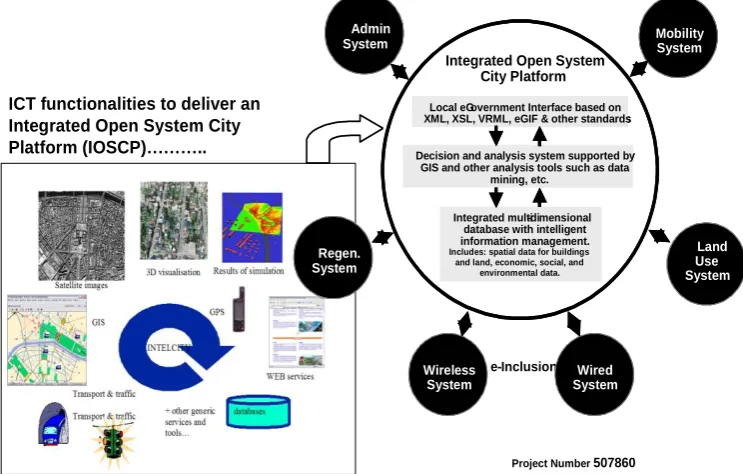
Figure 2: ICT functionalities to deliver an Integrated Open System City Platform (IOSCP)
City Prototypes
City Prototypes –– Iterative Social Iterative Social Learning Research Process
Learning Research Process
Cities RTD ICT
End user requirements
Concept and content development Piloting First test-bed e-P ar tic ipa tion pi lo tc onc ept s
New and tested ICT-based business concepts for SKS cities Improved
understanding and knowledge base for SKS cities ICT-assisted
management and development of sustainable knowledge society (SKS) cities
IC Technology maturity
Assessment
BENEFITS BENEFITS BENEFITS
IO S C P S P E C IF IC A T IO N & P R O TO TY P E S Benchmarking
New and tested ICT based business concepts for cities Improved
understanding & knowledge base for cities ICT assisted
management and development of KS in cities
City Visioning Test Bed
ICT functionalities to deliver an Integrated Open System City Platform (IOSCP)………..
e-Inclusion Local eGovernment Interface based on XML, XSL, VRML, eGIF & other standards
Decision and analysis system supported by GIS and other analysis tools such as data
mining, etc.
Integrated multi-dimensional database with intelligent information management.
Includes: spatial data for buildings and land, economic, social, and
environmental data. e-Mobility System e-Land Use System e-Admin System e-Regen. System
Integrated Open System City Platform Wired System Wireless System e-Inclusion Local eGovernment Interface based on XML, XSL, VRML, eGIF & other standards
Decision and analysis system supported by GIS and other analysis tools such as data
mining, etc.
Integrated multi-dimensional database with intelligent information management.
Includes: spatial data for buildings and land, economic, social, and
environmental data. e-Mobility System e-Land Use System e-Admin System e-Regen. System
Integrated Open System City Platform
Wired System Wireless
System
[image:4.595.101.473.480.717.2]4.
Technology Description
The IOSCP will link local e-Government interfaces based on XML, XSL, URML, eGIF and other standards with decision and analysis systems using GIS and other analysis tools such as data mining supported by an integrated multi-dimensional database with intelligent information management. In this interoperability questions form the main technical challenges.
The overall system architecture is based on state-of-the art technologies for multi-tier distributed architectures. Innovation lies in the way these various technologies are integrated and used to meet the end-users needs. The challenge also relates to the federation of different domains and fields of interest (represented by the "prototype applications" in Figure 2) and integrated in the IOSCP. The architecture proposed is based on multi-tier distributed business components architectures (e.g. Sun’s Enterprise Java Beans and
OMG’s CORBA Component Model) and takes into account Intelcities end-users
requirements namely:
Services distribution. IntelCities vertical services will be distributed over the network. End users will access the applications through a web browser, Wi-Fi enabled PDA, etc. Also, the services themselves could make use of distribution (e.g. parallel super computers).
Heterogeneous environments. Services will be developed using various languages and technologies, and that they will sometimes make use of platform-specific resources. Thus, the IntelCities integration framework need to support virtually any kind of application running on any kind of platform.
Transversal features. The vertical applications will make use of transversal features that should be provided by the framework. These features concern IT-specific, “low-level services” (e.g. support for transactions, security, etc.) as well as “domain-specific facilities” (GIS, nD modelling, etc.).
Deployment facilities. Applications will be “deployed into” the IntelCities framework to be made available to end-users. Some procedures and tools will be defined for the prototype applications designers to allow easy deployment of applications (Component Deployment Toolkit).
Scalability, Quality of Service. The IntelCities framework should improve the citizen’s quality of life. What if the system crashes or provides poor performance level? This issue is crucial, and has to be considered at the earliest stage in the project. The IntelCities system needs to provide quality of service and scalability features.
4.1 The “proxy container” approach
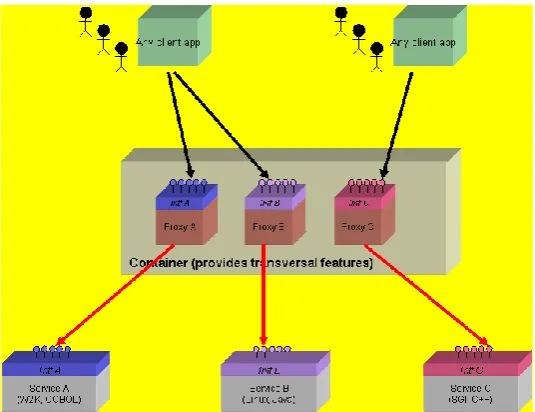
Figure 3: proxy container – the big picture
In figure 3, one can see, starting from the bottom:
The services developed in city prototypes (grey boxes). They are running on different platforms, and implemented using various programming languages. Nevertheless, they all have a common “property”: they expose their business methods through an interface. The implementation is encapsulated in a non-intrusive way under this interface, and no one needs to know what’s going on below. The three interfaces may of course be different since they address different business domains. What is common is that they are all expressed using a common standard interface definition language (e.g. IDL, WSDL, etc.) which allows the container to manipulate them.
The red arrows show invocations of the services by proxies in the container. At the moment, the only thing that has to be noticed is that these invocations should be done in some “private” and "secured" networks, enforcing that only the container can invoke them.
The yellow box in the middle represents the container. Its role is to manage the proxies for each service and allow their invocation by client applications. It also provides the proxies with transversal features.
The three boxes in the container represent proxies. Each service proxy exposes the service’s interface to the outside world (client applications). This allows the client to use the proxy as if it was the service itself, transparently. The proxy will handle the calls from clients and react in consequence. It could do security checks before the real method is invoked, start/end transactions, etc. The code for doing this is not in the service, but in the proxy, therefore this specific code is in no way intrusive in the code of the service itself. Last but not least, access policies to some of the transversal features could be done declaratively at deploy-time, “à la EJB!” The code of the proxy itself is not hand-written but is generated by container-provided tools (i.e. Component Deployment Toolkit).
5.
Developments
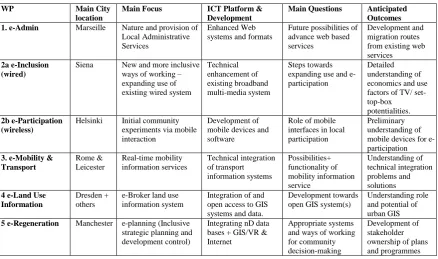
[image:7.595.84.523.157.416.2]As already explored in the methodology section above the project will carry out a number of prototyping studies as shown in Table 1. Due to limited space the development of one of these – No. 5 e-Regeneration (the Manchester case) is explored in more detail below.
Table 1: Nature of the prototyping studies in WPs 1-5.
WP Main City
location
Main Focus ICT Platform &
Development
Main Questions Anticipated
Outcomes
1. e-Admin Marseille Nature and provision of
Local Administrative Services
Enhanced Web systems and formats
Future possibilities of advance web based services
Development and migration routes from existing web services
2a e-Inclusion (wired)
Siena New and more inclusive ways of working – expanding use of existing wired system
Technical enhancement of existing broadband multi-media system
Steps towards expanding use and e-participation
Detailed understanding of economics and use factors of TV/ set-top-box potentialities.
2b e-Participation (wireless)
Helsinki Initial community experiments via mobile interaction
Development of mobile devices and software
Role of mobile interfaces in local participation
Preliminary understanding of mobile devices for e-participation
3. e-Mobility & Transport Rome & Leicester Real-time mobility information services Technical integration of transport information systems Possibilities+ functionality of mobility information service Understanding of technical integration problems and solutions
4 e-Land Use Information
Dresden + others
e-Broker land use information system
Integration of and open access to GIS systems and data.
Development towards open GIS system(s)
Understanding role and potential of urban GIS
5 e-Regeneration Manchester e-planning (Inclusive
strategic planning and development control)
Integrating nD data bases + GIS/VR & Internet
Appropriate systems and ways of working for community decision-making
Development of stakeholder ownership of plans and programmes
5.1 Manchester Prototype
From the perspective of Intelcities there are 2 significant factors in the Manchester experience. Firstly, Manchester has a long and strong tradition of support for the non-statutory sector and encourages community involvement. The means of undertaking community engagement and the success of these initiatives has varied but it is politically encouraged. Secondly there is an equally strong tradition of supporting the use of ICT in business and community development. This goes back over 13 years with the launch of the Manchester Host – the UK’s first ever public access integrated email, bulletin board and online database service in 1991, through the launch of the Electronic Village Halls in 1992, the Manchester Community Information Network in 1994 and the Manchester Digital Development Agency (MDDA) in 2003.
Development planning is both an analytical and visual process. Also there is a need for communication within the design team and between the design team and all other stakeholders. These requirements can be met by systems that closely link analytical modelling (based on GIS technology) and visual modelling (based on VR technology) accessible over the internet. In research work over the last 6 years at the University of Salford a system has been specifically designed to support public participation in urban planning via the internet by integrating VR and GIS technologies. The prototype study involves the deployment of this system in a regeneration area in East Manchester.
Figure 4: GIS and VR integrated and delivered over the Internet
Strategic planning systems for the City will be provided by Manchester University and will incorporate aspects considered important by the City. The model will be used to predict possible city futures. The city will work with CISCO to identify and evaluate technological and social solutions to support social and economic inclusion covering access in the home (via PC and iDTV) and in community locations.
Individuals and community groups will use the e-planning system to explore proposed redevelopment (e.g. a new school or some shops) in both 2D and 3D environments (3D is especially suitable for the lay person). They will be able to discuss issues about the plans with other residents, community leaders, and planners using email, chat, web discussion, etc. A feature will be the ability to leave messages in the 3D environment (e.g. controlled road crossing needed here for new school). These messages will be represented by icons in the 3D environment (and stored in the system database) to be read by all future visitors to the e-Planning system. Other systems have been developed that address some of the issues discussed in this paper but none provide the holistic view for all stakeholders in the same way as Intelcities. In this way the Manchester prototype study will examine the potentials and impacts of the system.
6.
Business Benefits and Challenges
In order to address the challenges referred to in this paper the project brings together 18 cities, led by Manchester and Siena, with 20 ICT companies including Nokia and CISCO and 36 research groups to pool advanced knowledge and experience of electronic government development, interoperability, virtual planning systems and citizen participation from across Europe. This critical mass of partners will enable the project to explore new forms of public private partnerships in the development and provision of the IOSCP as the basis for the intelligent city of the future.
Project Number 507860 2D GIS
3D GIS/VR Common Server
Interfaces
Messaging C2C, C2B, Notes
The integrated e-planning system(s) described above support complex multi-stakeholder problem-solving linking environmental science, city society, industry and
businesses. They harnesses nD modelling, visualisation and simulation and knowledge
management resources from cities and researchers across Europe and bring them to the
desktop or mobile interface of any planner, politician, architect, engineer, utility and
transport service provider and most importantly to each citizen. This provides important business opportunities for ICT companies, including the established players and SMEs, in terms of new interfaces and software as well as extending the market for current and close to market devices. Also, because of the complexity of the urban planning problem, development control is often characterised by protracted and adversarial decision-making processes that provide significant disincentives to inward investment, undermining business confidence and competitiveness. The e-planning processes and ICTs under development will re-engineer urban re/development planning in order to accelerate urban development control decision-making. In this way the social learning experiments underway will start to address the uncertainties over community reaction to proposals and how inward investment can be secured for more sustainable growth, urban regeneration and improved competitiveness of cities, and their constituent businessescomponents.
The exploration of user needs has highlighted that fact that use of e-Government portals is not the first place that citizen’s turn to solve urban problems or express their views on local planning issues. There is a need to define and populate the local “virtual space”. Thus the broader societal challenges of e-Participation and of “trust and confidence” and
individual rights are emerging as the most significant barriers. This means that the
knowledge management dimensions of the project through the creation of a “learning city” environment will have to supply a deeply supportive and very user-fiendly interfaces for e-skills learning and development.
7.
Conclusions
The IOSCP will enable a more intelligible and intelligent city, directly related to the major e-Government drivers aimed at supporting achievement of a Knowledge Society by 2010 [3]:
1. Delivery of a more streamlined city government, city management and urban regeneration processes, aimed at achieving more efficient use of city facilities and resources and improve the economic competitiveness of cities.
2. Improved experience and good practice over “virtual” interaction between business, developers, local administration and citizens – the ‘e-Agora’ [1], to promote social inclusion, extend citizenship and “ownership” of plans and proposals.
3. Promoting the concept a NEW form of public asset – not just as the basis for delivery of a wide range of integrated services but as a ‘one-stop’ intelligent metropolitan information infrastructure as the platform to secure institutional and government knowledge, that citizens value and are prepared to pay for (e.g. through pay on demand and/or through local taxes)
References
[1] www.scri.salford.ac.uk/intelcity/
[2] www.manchester.gov.uk/regen/statement
[3] Zobel, R., Director: Components, Sub-systems and applications, DG INFOSOC, European Commission at eGovenment Information Day, 7th February 03.