URBAN TRANSPORT NETWORKS AND OVERSEAS
VISITORS: ANALYSIS OF THE FACTORS AFFECTING
USAGE AND THE IMPLICATIONS FOR DESTINATION
MANAGEMENT
K.J. THOMPSON
USAGE AND THE IMPLICATIONS FOR DESTINATION
MANAGEMENT
Karen Julie THOMPSON
School of Leisure, Hospitality and Food Management
Research Institute for
the Built and Human
Environment
University of Salford, UK
TABLE OF CONTENTS
CHAPTER 1 INTRODUCTION AND BACKGROUND TO THE
STUDY
1
1.1 Introduction 1
1.2 Background 2
1.3 Statement of the Problem 3
1.4 Research Objectives 4
1.5 Justification for the Research 5
1.6 Research Paradigm and Framework 6
1.7 Definitions 8
1.8 Outline of the Thesis 11
CHAPTER 2 TRANSPORT IN THE URBAN TOURISM SYSTEM 13
2.1 Introduction 14
2.2 Defining Urban Tourism 14
2.3 The Development of Urban Tourism Research 17
2.4 The Characteristics of Urban Tourism 19
2.4.1 Demand Side Characteristics – The Urban Visitor Market 20
2.4.1.1 The Urban Leisure Visitor 22
2.4.1.2 The Urban Business Visitor 25
2.4.1.3 VFR Visitors at Urban Destinations 27
2.4.2 Urban Tourism Supply 28
2.4.2.1 The City as an Activity Place 30
2.4.2.2 The City as a Leisure Setting 31
2.4.2.3 Secondary Elements of the Urban Tourism Product 32
2.4.2.4 Conditional Elements of the Urban Tourism Product 40
2.5 The Study of Tourist Transport 42
2.6 Transport and Accessibility of the Urban Tourism Product 44
2.7 Transport, City Image and Destination Satisfaction 47
2.8 Tourist Transport Quality in the Urban Tourism Planning Process
49
2.8.1 Planning Tourist Transport for Competitive Advantage 52
2.8.2 Planning Sustainable Tourist Travel in Cities 55
2.9 The Attraction of Greater Manchester 57
2.10.1 Business and Conference 61
2.10.2 Sport 61
2.10.3 Gay and Lesbian 62
2.10.4 Popular Culture and the Youth Market 63
2.10.5 Education 63
2.10.6 VFR Tourists 64
2.10.7 Manchester as a Gateway to the Northwest Region 64
2.11 Conclusion 65
CHAPTER 3 FACTORS AFFECTING THE DECISION TO USE
PUBLIC TRANSPORT
67
3.1 Introduction 67
3.2 Modal Choice: The Decision to Use Public Transport 68
3.3 The Role of Service Quality in Modal Choice 80
3.4 Comparison of Methodologies for Attribute Based Measures of Service Quality and Customer Satisfaction
91
3.4.1 Alternative Approaches to Measuring Customer Satisfaction and Service Quality: Expectations and Performance
Measures in Tourism
94
3.4.2 Criticisms of the Confirmation/Disconfirmation Paradigm: The Case for the Performance-Only Measure
96
3.4.3 Further Support for the Performance-Only Model 98
3.4.4 Attribute Importance in the Measurement of Customer Satisfaction
100
3.4.5 Summary of Customer Satisfaction and Service Quality Methodologies from the Point of View of the Research
101
3.5 The Measurement of Customer Satisfaction and Service Quality in Public Transport
102
3.5.1 Operator Surveys 104
3.5.2 Customer Satisfaction Surveys 105
3.5.3 Customer Led Studies 111
3.6 Factors Affecting Overseas Visitors’ Satisfaction with Urban Public Transport
120
3.6.1 Personal Factors Relating to Overseas Visitors and the Potential Effect on Customer Satisfaction with Public Transport
121
3.6.2 External Factors Relating to Manchester as a Visitor Destination and the Potential Effect on Customer Satisfaction with Public Transport
3.7 Conclusions 130
CHAPTER 4 METHODOLOGY 133
4.1 Introduction 133
4.2 Purpose of Study Reviewed 133
4.3 The Research Paradigm 134
4.4 The Research Strategy 137
4.4.1 Research Methods in Tourism 138
4.4.2 Towards an Appropriate Method for Data Collection and Analysis
139
4.5 Operationalising the Research Strategy 140
4.5.1 The Semi-Structured Interviews 140
4.5.2 Approaches to Interviewing 141
4.5.3 The Interview Sample 142
4.5.4 The Interview Design 145
4.5.5 Analysis of the Interview Data 146
4.5.6 The Principal Survey 149
4.5.7 Strategy for the Questionnaire Survey: Time, Location and Method of Completion
150
4.5.8 Achieving a Representative Sample of Urban Visitors 159
4.5.8.1 The Value of Visitor Typologies in Sampling Manchester’s Overseas Visitors
161
4.5.8.2 Sample Obtained 163
4.5.8.3 Characteristics of the Sample 164
4.5.8.4 Representativeness of the Sample 170
4.5.8.5 Some Remarks on Sample Size 172
4.5.9 Questionnaire Design 175
4.5.9.1 Wording and Content of Questionnaire 179
4.5.10 Pilot Study 180
4.5.11 Reliability and Validity 181
4.6 The Data Analysis Process 190
CHAPTER 5 DATA ANALYSIS AND RESULTS 199
5.1 Introduction 192
5.2 Choosing Appropriate Statistical Techniques for Hypothesis Testing
193
5.2.2 Likert Scales as Interval Level Data 194
5.2.3 Independence, Homogeneity of Variance and Normal Distribution
196
5.2.4 Criteria for Normal Distribution 197
5.2.5 Distribution of the Importance Scale 198
5.2.6 Distribution of the Determinant Scale 201
5.2.7 Distribution of the Performance Scale 202
5.2.8 Distribution of the Overall Satisfaction Variables 204
5.2.9 Conclusions on Suitability of Data for Parametric Testing 205
5.3 Empirical Findings of the Research 207
5.3.1 Overseas Visitors Travel To and Around Greater Manchester 207
5.3.2 Personal Factors Affecting the Use of Public Transport – An Overseas Visitor Perspective
211
5.3.3 The Importance of the Attributes of Public Transport Quality to Overseas Visitors
217
5.3.4 The Performance of Greater Manchester’s Public Transport System – An Overseas Visitor Perspective
223
5.3.5 The Importance and Performance of Information 227
5.3.6 Importance-Performance Analysis 233
5.3.7 Overall Satisfaction Scales 237
5.3.8 Future Use of Public Transport in Manchester 238
5.3.9 Investigating Underlying Dimensions in the Importance, Performance and Determinant Scales
239
5.3.10 Outline of Factor Analysis Procedure 240
5.3.11 Criteria for Factor Analysis 240
5.3.12 Results of the Reliability Tests and Principal Components Analysis: Importance Scale
248
5.3.13 Results of the Reliability Tests and Principal Components Analysis: Determinant Scale
252
5.3.14 Results of the Reliability Tests and Principal Components Analysis: Performance Scale
256
5.3.15 Underlying Dimensions of Public Transport Performance – An Overseas Visitor Perspective
261
5.3.16 Summary of Principal Components Analysis 264
5.3.17 Multiple Regression Analysis 265
5.3.18 Results of Multiple Regression Analysis 269
CHAPTER 6 CONCLUDING REMARKS: IMPLICATIONS FOR DESTINATION MANAGEMENT AND DIRECTIONS FOR FUTURE RESEARCH
294
6.1 Introduction 294
6.2 Summary of the Main Findings 294
6.3 Shortcomings of the Research Design and Suggestions for Future Research
296
6.4 Generalisability of the Findings 301
6.5 Possible Applications of the Findings 303
APPENDIX 1 Guidelines for Semi-Structured Interviews Of Overseas Visitors to Greater Manchester
306
APPENDIX 2 Guidelines for Semi-Structured Interviews of UK Residents 307
APPENDIX 3 Sample Interview with Overseas Visitor to Greater Manchester
308
APPENDIX 4 Sample Interview with UK Resident 317
APPENDIX 5 Accommodation Providers Agreeing to Distribute Self-Complete Questionnaires to Overseas Visitors
323
APPENDIX 6 Occurrence of Attractions' Promotional Material in Hotels 324
APPENDIX 7 Questionnaire 325
APPENDIX 8 Location of Completion of Questionnaires 331
APPENDIX 9 Nationality of Respondents in Order of Magnitude 332
APPENDIX 10 Degree of Adherence to Assumptions of Multiple Regression of Individual Predictor and Outcome Variables
333
APPENDIX 11 Tests of Normality on Extracted Factors and Case Mean Variables
334
APPENDIX 12 Stein’s Formula for the Cross-Validation of R² Cited in Stevens (1992)
335
LIST OF REFERENCES
LIST OF TABLES
Table Title Page
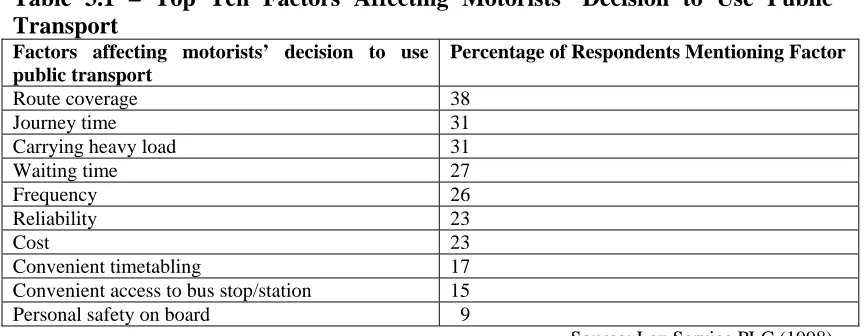
3.1 Ten Factors Affecting Motorists’ Decision to Use Public Transport 72
3.2 Top Ten Factors Which Would Need to Improve to Increase Bus Usage 72
3.3 Importance of Attributes Influencing Modal Choice 74
3.4 Factors Mentioned in More Than One Study of Public Transport Modal Choice
74
3.5 Features of Services Identified in the Service Management Literature Applied to Public Transport
83
3.6 Hard and Soft Elements of Service Quality 88
3.7 Service Quality Attributes Most Commonly Included in Customer Evaluation Surveys of European Public Transport Operators
110
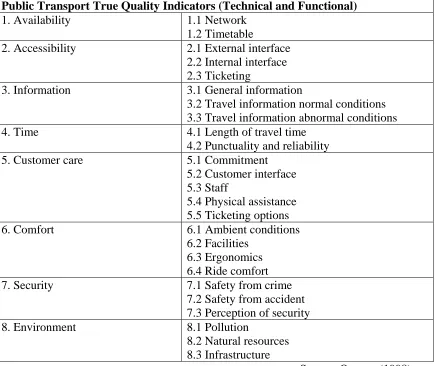
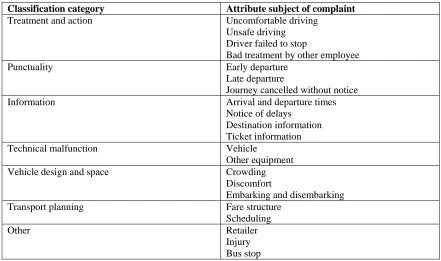
3.8 Categorisation of Incidents Obtained from Complaints 113
3.9 Journey Stages and Attributes of Public Transport Service 114
3.10 Information Required by Bus Passengers Before Making a Journey 124
4.1 Characteristics of the Interview Sample 144
4.2 Attractions Used as Survey Locations 158
4.3 Advantages and Disadvantages of Self-Complete Questionnaires 160
4.4 Age Structure of Sample 165
4.5 Top Ten Nationalities in Sample 166
4.6 Origin of Overseas Tourists to North West Tourist Board Region 2000 167
4.7 Breakdown of Occupation in Sample 168
4.8 Occupation by Age 169
4.9 Overseas Visitor Purpose of Trip North West Tourist Board Region 2000
170
4.10 Means of Selecting Questions for Survey 177
4.11 How Methods of Improving Reliability were Applied to Single Item Questions
183
4.12 Alpha Coefficients for Importance, Determinant and Performance Scales
184
4.13 Correlation Matrix Demonstrating Convergent and Discriminant Validity within the Importance Scale
186
4.14 Correlation Matrix Demonstrating Convergent and Discriminant Validity within the Performance Scale
187
4.15 Results of Reliability, Multiple Regression and Correlation Analyses 189
5.2 Distribution of Importance Scale Variables 199
5.3 Significance of Kurtosis and Skewness Values: Importance Scale 201
5.4 Tests of Normality: Determinant Scale 202
5.5 Distribution of Determinant Scale Variables 202
5.6 Distribution of Performance Scale Variables 203
5.7 Significance of Kurtosis and Skewness Values: Performance Scale 204
5.8 Distribution of Overall Satisfaction Scale Variables 205
5.9 Mode of Transport Used by Overseas Visitors to Greater Manchester During Stay
209
5.10 Mode of Travel Around the City Centre by Overseas Visitors to Greater Manchester During Stay
210
5.11 Overseas Visitors’ Ratings: Determinant Scale 212
5.12 Mean Ranks on Variable ‘Feel Personal Safety May be Threatened by Other Passengers’ by Age Group
215
5.13 Mean Ranks on Variable ‘Feel Personal Safety May be Threatened by Other Passengers’ by Socioeconomic Group
215
5.14 Mean Ranks on Variable ‘Like to Cycle in Foreign Cities’ by Purpose of Trip
216
5.15 Importance of Attributes of System Factors (Attributes of SQ and CS) 219
5.16 Kruskal Wallis Test Statistics ‘Importance of Speed’ and ‘Importance of Punctuality’ by Purpose of Trip
222
5.17 Mean Ranks on Variable ‘Importance of Speed’ and ‘Importance of Punctuality’ by Purpose of Trip
222
5.18 Performance of System Factors (Attributes of SQ and CS) 224
5.19 Mean Ranks on Variable ‘Public Transport in Greater Manchester is Expensive’ by Age
226
5.20 Public Transport Information Sources Used by Overseas Visitors to Greater Manchester During Stay
228
5.21 Items of Public Transport Information Required to Make Journey: Comparison of Overseas Visitors and Local Users
231
5.22 Overall Satisfaction with Public Transport Modes 237
5.23 Likelihood of Using Public Transport Modes on Future Visits 238
5.24 Item Total Summary Statistics: Importance Scale 249
5.25 Results of Unrotated Principal Components Analysis on Importance Scale
251
5.26 Item Total Summary Statistics: Determinant Scale 253
5.27 Results of Oblique Rotation of Principal Components Analysis on Determinant Scale
5.28 Item Total Summary Statistics: Performance Scale 257
5.29 Results of Oblique Rotation of Principal Components Analysis on Performance Scale
260
5.30 Component Correlation Matrix: Performance Factors 261
5.31 Matrix Outcome and Predictor Variables Hypothesis 1 273
5.32 Multiple Regression Analysis of Overall Satisfaction with Destination with Performance Factors as Predictor Variables
273
5.33 Multiple Regression Analysis of Overall Satisfaction with Public Transport with Performance Factors as Predictor Variables
280
5.34 Multiple Regression Analysis of Overall Satisfaction with Public Transport with Weighted Performance Factors as Predictor Variables
283
5.35 Multiple Regression Analysis of Mean Likelihood of Reusing all Public Transport Modes with Performance-Only Factors as Predictor Variables
285
5.36 Multiple Regression Analysis of Overall Satisfaction with Public Transport Modes with Determinant Factors as Predictor Variables
287
LIST OF FIGURES
Figure Title Page
2.1 Typology of Cities that Attract Tourism 15
2.2 The Inner City as a Leisure Product (Supply-side) 29
2.3 Typology of Urban Hotel Locations 35
3.1 Spectrum of Urban Public Transport Users 69
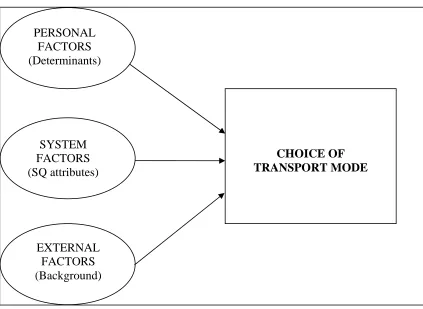
3.2 Classification of Factors Influencing Transport Modal Choice 77
3.3 Customer Defined Transport Needs 78
3.4 Model of Travel Logic 79
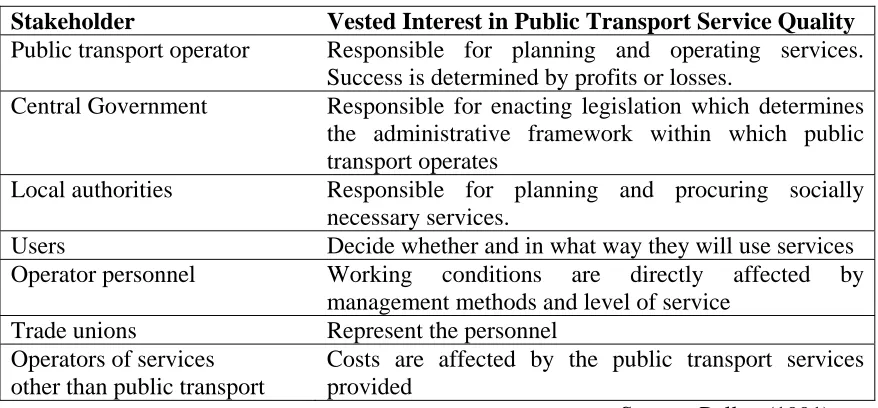
3.5 Stakeholders in the Public Transport Service 82
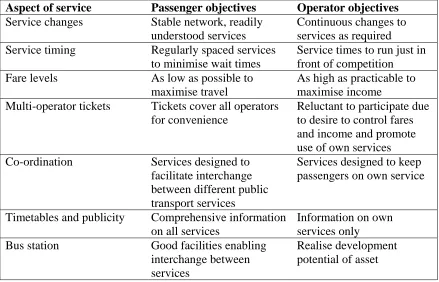
3.6 Conflicting Objectives of Bus Passengers and Operators with Regard to Aspects of the Service
84
3.7 Bus Quality Indicators Used by UK Department for Transport 106
3.8 The Public Transport Quality Matrix 109
3.9 Importance and Performance Ratings of Bus Service Descriptors in Northern England
115
3.10 Demand Side Bus Service Quality Attributes and their Supply Side Equivalents
116
3.11 Direct and Indirect Influences of Personal, System and External Factors on Choice of Mode of Transport
119
3.12 Factors Affecting the Use of Public Transport at Urban Visitor Destinations
132
4.1 Research Strategies in Tourism Research 138
4.2 Model of Deductive Reasoning 140
4.3 Public Transport Information Items Sought Through Content Analysis of Attractions Leaflets
156
4.4 Theoretically Predicted Relationship between Measures of Satisfaction and Future Behaviour if Nomological Validity is Present
189
5.1 Distribution of Variable ISECURE 200
5.2 Distribution of Variable PARKSAFE 204
5.3 Mode of Arrival in United Kingdom 208
5.4 Importance Performance Analysis of Attributes of Greater Manchester’s Public Transport System: An Overseas Visitor Perspective
236
5.5 Assumptions of Multiple Regression Analysis Relating to the Regression Variate
268
ACKNOWLEDGEMENTS
This research project was rescued from obscurity by the author’s supervisor and
colleague, Dr Peter Schofield and there can be little doubt that it would have remained
unfinished without his enthusiasm and support, for which the author is eternally
grateful. He deserves warmest thanks for the full range of efforts he has undertaken
to ensure the completion of the project, from practical assistance in organising the
data collection through to the provision of more fundamental advice on the theoretical
and conceptual nature of the research.
Grateful thanks are also due to Tessa Gurney for removing several major obstacles to
the completion of the research and for her constant interest in and support of the
project.
The author further wishes to thank the following colleagues for their advice and
assistance throughout the duration of the research:
Ian Cooper
Paul Fallon
Nicola Foster
Scott Frame
Christopher M. Law
Graham Scholefield
The major contribution of Central Manchester Tourist Information Centre to the
collection of the data is acknowledged.
Particular appreciation must go to J.A.K. for his apparently infinite patience and for
providing a peaceful and pleasurable home environment for the author to work in, but
also for his practical assistance at many stages of the project. Thanks are also due to
Dave Lacey for proofreading the final text.
The author would finally like to offer profuse apologies to her parents who have had
to exercise unreasonable amounts of patience and understanding in awaiting their
daughter’s final graduation ceremony (hopefully).
LIST OF ABBREVIATIONS
Abbreviation Full Text
CS Customer Satisfaction
ECT European Cities Tourism
ETC English Tourism Council
GMPTA Greater Manchester Passenger Transport Authority
GMPTE Greater Manchester Passenger Transport Executive
ICTs Informing and Communicating Technologies
IP Importance-Performance
KMO Kaiser-Meyer-Olkin
K-S Kolmogorov-Smirnov
NCI Non Critical Incident
PCA Principal Components Analysis
SQ Service Quality
S-W Shapiro-Wilk
TIC Tourist Information Centre
TDR Tourist Destination Region
UK United Kingdom
UN United Nations
VFR Visiting Friends and Relatives
WTO World Tourism Organisation
ABSTRACT
Whilst transport has repeatedly been identified as an integral component in the tourism
system, the relationship between urban public transport networks and visitor behaviour
at urban destinations remains largely unexplored. Furthermore, tourist transport is
rarely the subject of the same quality benchmarking techniques that are applied to other
elements of the tourism product.
The thesis reviews the use of service quality and customer satisfaction measures in
urban tourism and urban public transport, highlighting dimensions of urban public
transport quality which may be of particular relevance to overseas visitors at urban
destinations. The results of a survey of overseas visitors to Greater Manchester,
employing both quantitative and qualitative data collection techniques, are subsequently
presented, identifying factors affecting the use of public transport by overseas visitors to
Greater Manchester. Attributes of public transport service quality, revealed by the
research to be of importance in measuring overseas visitors’ satisfaction with urban
public transport performance in Greater Manchester, are reduced by means of principal
components analysis to reveal the underlying dimensions of overseas visitors’
satisfaction with Manchester’s public transport system. An ensuing regression analysis
reveals the relationships between the dimensions of public transport performance,
overall satisfaction with public transport and satisfaction with Manchester as a visitor
destination. Additionally, an importance-performance analysis is employed to uncover
the strengths and weaknesses of public transport service in Manchester from an overseas
CHAPTER 1
INTRODUCTION AND BACKGROUND TO THE STUDY
1.1 Introduction
1.2 Background
Incoming tourism is of enormous economic significance to the UK. As an important cultural, heritage and sporting centre and a major global economic force, the UK currently receives around 26 million visitors each year (BTA, 2002). Furthermore, both arrivals and departures are on an upward trajectory. Tourism is of major importance to the UK economy, both in terms of the amount of employment it creates and because of its impact on the Balance of Payments. In 2000, overseas visitors to the UK spent more than £12.5 billion, supporting the jobs of over 2 million people in tourism-related industries in the UK (DCMS, 2003). Visits to the top twenty urban destinations in the UK accounted for 19 million of the total 26 million visits by overseas visits to the UK in 2000 (BTA, 2002). These figures demonstrate that urban tourism is the principal form of tourism in the UK.
1.3 Statement of the Problem
Whilst a number of UK cities, such as London, Canterbury and York, benefit from the advantage of a historically interesting and attractive built environment and a close association with aspects of British heritage, other cities such as Manchester, Birmingham and Liverpool, whose heritage is industrial and/or related to popular culture, have had to work harder to attract visitors. Such cities have traditionally attracted business visitors from overseas and some visiting friends and relatives (VFR) tourists but have struggled to catch the attention of leisure visitors. However, the rewards of urban regeneration through tourism are potentially greater for these cities as they have been able to partially liberate themselves from their poor, industrial image. Nonetheless, such cities are often less able to compete in the increasingly competitive market of urban destinations. The absence of a conventional, heritage-based tourism product (typically an internationally important historic built environment) to attract the visitor renders the provision of excellence in other elements of the tourism product perhaps more important. Thus, if transport (among other aspects) can be shown to be a contributing factor to destination satisfaction, the provision of an integrated public transport network which is designed to cater for the visitor may be a means of increasing competitive advantage for urban destinations.
and arguably more amenable to modal switch. However, where visitors are to be encouraged to use public transport rather than private, the available public transport supply must be able to cater for visitor needs. The areas of the city to which visitors typically require access may not coincide with those which are best served by a public transport system designed for local users. Moreover, there may be barriers to public transport use experienced by overseas visitors which are different to those identified for local users. In particular, the specific information needs of overseas visitors with regard to public transport use remain uncharted. The identification of potential barriers to public transport use and of the specific information requirements of overseas visitors can assist in the design of a visitor friendly public transport system as part of a holistic destination management process.
1.4 Research Objectives
The specific objectives of the research were as follows:
• To identify the factors which affect visitors’ use of urban public transport at overseas destinations;
• To measure the importance of these factors to a sample of overseas visitors to Greater Manchester;
• To measure the performance of the Greater Manchester public transport network from an overseas visitor perspective;
• To identify the extent to which satisfaction with public transport in Greater Manchester affects destination satisfaction for overseas visitors;
• To identify the types and sources of public transport information that are required by overseas visitors to Greater Manchester and their level of usefulness.
of public transport, there has so far been a failure to address the attitudes of urban visitors to public transport provision. The thesis aimed to address precisely this issue.
At the same time, the role of transport in visitor satisfaction with destinations has been largely overlooked. Whilst a number of studies have identified accessibility as a factor in destination satisfaction and choice (e.g. Haywood and Muller, 1988; Avgoustis and Achana, 2002), there have been no detailed studies of the relationship between satisfaction with public transport and destination satisfaction. Moreover, the attributes of public transport which visitors use to measure satisfaction remain unexplored.
Thus, three main hypotheses of the study can be identified:
1. Overseas visitors measure satisfaction with urban public transport according
to different attributes and underlying dimensions than local users;
2. Overseas visitors have different public transport information needs to local
users;
3. Satisfaction with public transport is a contributing factor to destination
satisfaction.
1.5 Justification for the Research
In performing a more in-depth study of destination based transport than has previously been undertaken, the research will contribute to the creation of a framework for the study of overseas visitors’ travel behaviour at urban destinations. In addition to producing results specific to the destination in question, the validity of the measurement instrument will be examined in order to refine the methodology for future research.
Furthermore, the research attempts to combine aspects of previous research from different disciplines, namely tourism, marketing and transportation research. Attribute based measures of transport satisfaction used in studies of local users’ attitudes towards transport SQ are applied to overseas visitors and analysed using customer satisfaction (CS) techniques developed within the marketing and tourism fields. From a local perspective, by investigating areas of satisfaction and dissatisfaction with public transport from the standpoint of the overseas visitor, the research aims to determine measures which might assist in promoting modal switch to public transport at the destination in question. Such measures would not only increase satisfaction with public transport (and potentially with the destination) from a visitor perspective, but would potentially assist in the reduction of congestion and pollution. Moreover, some of these measures may hopefully be generalisable to other urban visitor destinations with similar concerns.
1.6 Research Paradigm and Framework
2001a). And it is not only within the area of urban tourism research that such a framework is perceived to be lacking; Stabler (1991) argues that research within the tourism field in general has been weakened due to the lack of established theoretical frameworks. A systems based approach to urban tourism research is arguably better placed to contribute to such a methodological framework, through improving understanding of connections and relationships within the system. Moreover, Foster (1999) argues that phenomena in tourism cannot be studied in isolation from the context in which they occur, thus advances towards systemic thinking are required to facilitate the development of tourism research.
Gaps in the literature and the fact that the research is exploratory supported an initial qualitative approach. The initial phase of primary data was therefore collected by means of semi-structured interviews eliciting information on the relationship between public transport and the urban tourist experience. Following analysis of the data obtained from these interviews a questionnaire survey was conducted, partially to assist in validating the conceptual framework established from the interview data, but also to permit more detailed analysis of the relationships between the variables involved. A series of statistical tests were employed in order to examine these relationships.
1.7 Definitions
However, McIntosh et al. (1995) argue that the fact that existing definitions in the
literature of tourism research have been aimed at fitting special situations and the particular needs of individual researchers has hampered the study of tourism as a discipline. Cooper et al. (1993) also charge the lack of agreement over definitions
employed within tourism policy, practice and research with being a hindrance to achieving rigour and focus in the field. Whilst this argument is acknowledged, it is nonetheless necessary to outline the parameters of the concepts dealt with in this project.
The primary research targets only overseas visitors to Greater Manchester. The WTO makes a distinction between international visitors and international tourists. As can be seen from the definitions below (adapted from the WTO, 1995) not all international visitors are considered to be tourists. Furthermore, the WTO does not include international day visitors in its classification of international tourists.
• International Visitor: Person visiting a country where they do not normally
reside for no longer than 12 months and without being remunerated from within the country they are visiting. This category includes refugees, embassy staff, members of armed forces etc.
• International Tourist: Temporary visitor to a country for more than 24
hours (one night spent in country). Motive for travel can be either leisure or business.
For the purposes of this study all international visitors to Greater Manchester were targeted irrespective of purpose of visit or minimum length of stay. However, the WTO guidelines on maximum length of stay and remuneration from within the country were adopted in order to exclude migrant workers or permanent residents from overseas. Thus, for the purpose of the research, the following definition of an
• Temporary visitor from overseas to the Greater Manchester region for a period of less than 12 months and who has not been remunerated from within the UK.
It is further necessary to provide a spatial definition of the Greater Manchester region. Whilst there are clear geographic and administrative boundaries to the Greater Manchester region, it is not realistic to delimit tourism activity according to these boundaries. Moreover, the research is concerned with the relationship between visitor behaviour and Greater Manchester’s public transport system. Whilst the vast majority of services operated under the auspices of Greater Manchester Passenger Transport Executive (GMPTE) are within the administrative boundary of the Greater Manchester region, there is some fuzziness around the boundaries of the region, particularly around the area of Manchester airport. In other words, whilst all public transport services within the administrative boundaries of Greater Manchester are operated under the auspices of GMPTE, not all GMPTE services operate within the Greater Manchester boundary. Thus, in order to introduce a definitive geographical boundary for the research, the administrative boundary of the Greater Manchester region has been adopted as an opportune zone within which to conduct the research.
The third term which requires definition is that of urban public transport. As stated
specific routes and thus arguably have more in common with the private car in terms of accessibility and convenience. Moreover, in Greater Manchester taxis are not regulated by GMPTE and are therefore removed from the destination transport management process which the research aims to inform. For the above reasons, taxis are excluded from the definition of urban public transport for the purpose of this research. The term urban public transport is used exclusively to cover the three
modes of public transport operated under the GMPTE administration; bus, tram and train. However, it is recognised that a study of visitor satisfaction with taxi provision in Greater Manchester could also produce results of value to transport management at the destination.
1.8 Outline of the Thesis
methodologies used to measure CS and SQ within the marketing and tourism disciplines.
CHAPTER 2
TRANSPORT IN THE URBAN TOURISM SYSTEM
2.1 Introduction
Chapter 1 outlined the rationale for the research and identified the following three principal hypotheses of the research:
• To investigate whether overseas visitors measure satisfaction with urban public transport according to different attributes and underlying dimensions than local users;
• To establish whether overseas visitors have different public transport information needs to local users;
• To ascertain whether satisfaction with public transport is a contributing factor to destination satisfaction.
2.2 Defining Urban Tourism
Law (2002:4) claims that ‘the term urban tourism simply denotes tourism in urban areas’. This definition coincides with Ashworth’s (1992) spatial categorisation of urban tourism and is perhaps the most logical definition. However, attempts at defining the phenomenon of urban tourism have tended to focus on the supply and demand side characteristics of urban tourism which differentiate it from other types of tourism, perhaps in an attempt to justify urban tourism as a separate field of study. Schofield (2001) considers that the characteristics cities have in common can help explain their role as major tourist destinations. This latter type of definition is arguably most useful, since the characteristics and facilitators of urban tourism are important factors in giving meaning to the term. These attributes will be discussed in more detail below.
Several classifications of tourist cities exist within the literature. Page (1995:17) presents the following typology of urban tourist destinations which he qualifies by stating that it is only a ‘partial view’:
• Capital cities;
• Metropolitan centres and walled historic cities;
• Large historic cities;
• Inner city areas;
• Revitalised waterfront areas;
• Industrial cities;
• Seaside resorts;
• Purpose built integrated tourist resorts;
• Tourist-entertainment complexes;
• Specialised tourist service centres;
• Cultural/art cities.
destination that Page (1995) uses to exemplify the classification. However, Law (2002) notes that there are problems with this typology, not least that the justification for the classification is not clear. By placing Manchester in the category of inner city area, there is a suggestion that tourism is restricted to the city centre which, given the attraction of the Quays and the Manchester United football ground at Old Trafford, is clearly not the case.
A further, supply side classification of tourist cities into four types was proposed by Law (1996) on the basis of the facilities and attractions tourist cities possess. This classification is presented as Figure 2.1.
Figure 2.1 - Typology of Cities that Attract Tourism
Capital cities: Examples are London and Paris. They have major administrative
and/or business roles which attract visitors. In addition they are home to national museums of world standing and historic monuments and buildings. Consequently they are important for both business and leisure tourism and attract visitors from a large geographical area.
Industrial cities: Examples are Baltimore and Manchester. These cities are the
product of industrial development and usually have significant commercial roles. Their size in terms of population has meant that many facilities attractive to tourists have also developed. However, their industrial character and image is a barrier for the evolution of their tourism industry, and business tourism remains most significant for hotel-staying visitors. Geographically their leisure visitors are drawn mainly from the region or state in which they are situated.
High-amenity cities: Examples are Munich and San Francisco. These cities have a
wide range of amenities such as natural scenery, attractions and entertainment, whilst at the same time possessing important business functions. They attract both business and leisure visitors, often from a wide area.
Major attractive cities: Examples are Florence and Miami. This category includes
cities which, whilst multi-functional, are also perceived to be tourist cities either of a resort or historic nature. These cities are mainly visited by leisure tourists who are often drawn from a distance.
Law recognises that such a classification of cities is troublesome due to the difficulties in defining boundaries for the significance of tourist functions. Nonetheless, the classification is more detailed than that constructed by Page (1995) and the category in which Manchester has been placed less contentious, although it is arguable whether large population and an important commercial role are specific to industrial cities.
A third typology describing three basic types of tourist city is presented by Fainstein and Judd (1999):
• Resort cities created expressly for visitor consumption;
• Tourist historic cities which are attractive to tourists because of their history and culture;
• Converted cities where tourist activity is restricted to certain areas of the city which have normally been adapted for that purpose.
In the case of the above typology, Manchester clearly falls into the final category since important leisure areas of the city, such as Castlefield, the Northern Quarter, the Gay Village and the Quays, are rejuvenated, former industrial areas of the city. In addition, Fainstein and Judd’s (1999) classification seems to extend beyond the city centre. A failing of the above classification, as highlighted by Law (2002), is the absence of any differentiation on the basis of size. Guidance is given on this matter by the European Cities Tourism (ECT) organisation, a collective of tourist boards from 80 European cities, which requires cities to have the following characteristics in order to qualify for membership of the organisation (ECT, 2003):
• More than 100,000 inhabitants;
• More than 3,000 hotel beds;
• Conference facilities;
• A significant monumental and historic heritage;
Whilst it is not clear whether the criteria above relate to the whole metropolitan area or just to the city centre, Manchester meets all of these standards and can thus be considered an urban tourist destination. However, it should be evident that a historic city of scarcely 100,000 inhabitants will have quite different destination management requirements to a primarily industrial city, such as Manchester, with a much larger population. It is equally noteworthy that the above criteria do not require members to have achieved a certain level of visitation. This may be due to the difficulties of obtaining such data; indeed one of the key undertakings of ECT is to standardise the collection of data throughout member cities (see Wöber 1997; Wagner, 2002).
2.3 The Development of Urban Tourism Research
Blank (1994:181) claims ‘every city has a tourism industry; this is the first and most
Despite the apparent importance of tourism in cities, it is only since the beginning of the 1990s that a coherent body of urban tourism research has emerged. Pearce (2001a) notes that much of the early work within the field was carried out by geographers and was rather piecemeal. A range of explanations have been put forward for the apparent neglect of urban tourism. The difficulty of isolating tourist activities from those of the local population has been highlighted as a deterrent to urban tourism research (Ashworth and Tunbridge, 1990; Ashworth, 1992). Shaw and Williams (1994) and Blank (1994) further attribute difficulties in describing urban tourism to the diversity of the phenomenon, pointing out that urban destinations are heterogeneous in size, location, function and age and that each urban destination possesses a unique set of facilities. Ashworth (1992) attributes the lack of focus in urban tourism to a double neglect, claiming that tourism researchers have
tended to focus on more traditional rural or coastal leisure tourism destinations, while those involved in urban studies have ignored the tourist function of cities. The difficulties involved in establishing the precise characteristics of urban tourism and the activities of urban tourists is also argued to have led to considerable underestimates of the economic, social and geographic importance of urban tourism (Blank and Petkovich, 1987). Moreover, Schofield (2001) contends that the variety of activities and experiences that the urban tourist undertakes may be underestimated due to the traditional focus on cultural and heritage attractions and retail activities.
holidays in cities has increased1. A variety of concerns have instigated this surge in interest in urban tourism research. Firstly, urban tourism is argued to fulfil a valuable role as a means of economic and physical regeneration, particularly in less traditional tourist cities with an industrial history (Shaw and Williams, 1994). Secondly, the rise in the number of tourists taking short breaks and, accordingly, the number of cities marketing themselves as short break destinations has created a greater need for effective destination management. On the one hand, large numbers of tourists in small historic cities necessitate a defensive sustainable tourism management strategy to protect the built and human environment at the destination. On the other hand, post-industrial cities which have made large investments in improving their tourist appeal require quality management strategies to ensure the delivery of a superior tourism product which will allow them to compete in a saturated market. In either case, the destination management process must be informed through pivotal research, and it is this which has driven the ‘explosion of publications on urban tourism’ during the 1990s (Law, 2002:7).
2.4 The Characteristics of Urban Tourism
It was argued above that urban tourism is most meaningfully defined in terms of its intrinsic supply and demand side characteristics. Ashworth (1992:3-4) poses the question ‘what is particularly urban about urban tourism?’. From a demand side perspective, it has been theorised that the urban visitor market is different in terms of its socio-demographic characteristics to other types of tourism (Page, 1995; Law 2002). Likewise, analyses of the supply side characteristics of urban tourism have
attempted to identify the elements of the urban tourism product which make the phenomenon unique (e.g. Jansen-Verbeke, 1988).
2.4.1 Demand Side Characteristics – The Urban Visitor Market
A variety of typologies have been constructed to explain the demand side of urban tourism, although it is acknowledged that the demand for urban tourism is poorly understood (Blank and Petkovitch, 1987). Page (1997) suggests a typology of the urban visitor according to motivation for visit which includes VFR visitors, business travellers, conference and exhibition visitors, educational tourists, cultural and heritage tourists, religious travellers (pilgrims), hallmark event visitors, leisure shoppers and day visitors. Urban destinations are known to attract a high number of VFR and business visitors due to high population density and the concentration of commercial activities in cities. However, whilst a city may differ from its hinterland in terms of visitor motivation, it may equally differ from other urban destinations with quite different supply side characteristics.
seeking as leisure tourists. These are the ‘intentional users’ referred to by Ashworth and Tunbridge (1990:120). Business, conference and exhibition visitors, on the other hand, have little, if any, influence on their choice of destination and thus may be classified as ‘incidental users’. VFR and educational tourists fall somewhere in between the two poles since travel motivation may be ambiguous. It is often unclear whether visiting friends and relatives provokes the main desire to visit the city. Likewise for educational visitors, the choice of destination may be as much to do with the attractiveness of a city as its educational facilities. However, it is acknowledged that the diverse nature of urban tourism and the range of facilities available to the tourist mean that the distinction between visitor motivations may be fuzzy (Blank and Petkovitch, 1980; Ashworth and Tunbridge, 1990).
Nonetheless, there appear to be attributes of urban tourism demand which allow it to be differentiated from other types of tourism. For example, urban tourism is characterised by short stays of one to three nights and attracts a high proportion of day visitors (Law, 2002). Mintel (2000) reports that major cities are the most popular short break destinations for UK travellers accounting for 29% of all short breaks in 2000. Urban tourism is also less seasonal than tourism at other destinations, often by design. The hosting of conferences, exhibitions and events is encouraged as a means of increasing visitor numbers outside of the peak visitation period. Furthermore it is generally accepted that urban tourists have different motivations for travel than tourists at other destinations and take part in a wider range of activities (Ashworth, 1989; Law, 1996).
research which is destination specific and that the significance of motivational factors differs according to the destination and its attractions. Nonetheless, he summarises the main motives for visiting urban areas as follows:
• Visiting friends and relatives;
• Business;
• Conference and exhibition;
• Education;
• Culture and heritage;
• Religious travellers;
• Hallmark events;
• Leisure shopping.
Law (1993) broadly divides tourists into two main types (business and leisure) on the basis of purpose of trip. Whilst it may be feasible to include VFR visitors in the leisure category, they will be dealt with separately for the purpose of this chapter, since their behaviour, expenditure patterns and motivation for travel contrast with those of non-VFR leisure tourists. Taking the above categories of leisure visitors, business visitors and VFR, it is possible to examine the attraction of cities for these different categories and their respective role in the rise of urban tourism. Level of economic impact for a destination city varies between the three different categories, despite the fact that the tourist activities of all three categories are interlinked.
2.4.1.1 The Urban Leisure Visitor
rise which has been further stimulated by the use of the internet to purchase travel products, in particular airline tickets (Mintel, 2002). Furthermore, there is anecdotal evidence that the introduction of the Euro in January 2002 has removed barriers to travel through reducing the expense of currency exchange and is of particular benefit to those who travel most. From a UK perspective, however, the introduction of the Euro is likely to pose a threat, rather than an opportunity to the number of incoming visitors from other EU countries.
Law (1996) suggests that an increase in leisure time and income is likely to lead to free time being used more actively for amusement and entertainment, rather than relaxation. The range of facilities and activities available in cities make urban conurbations a likely destination for such trips. In addition, improved access to the media and higher levels of education have raised the profile and popularity of cultural and heritage activities and events, often clustered in urban areas. For example, Foley (1996) found that visits to the British Museum in London increased by 123% between 1981 and 1996. Moreover, visits to the UK’s museums and galleries have risen dramatically since the removal of entrance charges in December 2001 (Gibbons, 2002). Cultural tourism is seen as a positive development for urban destinations as it is particularly suited to short-break city-based tourism and broadens the tourist season (Williams and Shaw, 1991). In addition, arts and culture are considered economically important for urban tourism as they bestow prestige, a positive image and publicity on cities (Whitt, 1988). An ageing population with a high degree of disposable income is likely to favour cultural tourism, whereas young people are attracted to the range of entertainment and events in cities (Masser et al.,
Indeed, the economic impact of leisure tourism in cities is thought to vary greatly between young tourists travelling on a budget, and ‘empty nesters’ with a greater amount of disposable income and for whom expensive restaurants and a trip to the theatre are an important part of the holiday package. Whitt (1988) considers arts and cultural tourists to be affluent and thus likely to be high spenders. The overall economic importance of cultural tourism to cities has been demonstrated by the example of the European City of Culture programme, by means of which cities such as Glasgow have marketed themselves as international cultural centres in a bid to attract tourists (Zeppel and Hall, 1992). Myerscough (1991) found that the £22 million expenditure costs of the city of Glasgow in its year as European City of Culture (1990) were more than offset by tourist expenditure of over £32 million. Nor does this amount take into consideration the long-term publicity benefits accrued. Since visitors to cities are attracted by the range of activities available and many cultural and heritage attractions charge an entrance fee, urban leisure visitor expenditure may be expected to be higher on average than, for example, expenditure in coastal resorts where fewer activities are undertaken which must be paid for. Ashworth (1995), however, accredits cultural tourism’s relatively high daily expenditure (compared with other forms of tourism) to the fact that it is predominantly hotel-based. In comparison with business tourists, leisure visitor spend tends to be less because accommodation providers offer discounted weekend packages for short break visitors (Law, 1993).
‘96 and the Commonwealth Games 2002 (Foley, 1991, Dobson et al., 1996).2 The
hosting of such events is normally viewed as a long term investment as it raises the profile of the city via media coverage. A more regular inflow of tourists has been the aim of cities such as Manchester and Liverpool who have sought to use football for tourism, through sports-weekend breaks (Law, 1992).
2.4.1.2The Urban Business Visitor
Law (1996) notes that business tourism is often regarded as a contradiction in terms and has, in the past, been overlooked by tourism research, although it represents a large segment of the urban tourism market. Whilst the ratio of leisure to business visitors a city attracts is determined by various factors relating not only to the attractions and facilities it offers, but also to its marketing strategies and the spatial, socio-economic and cultural attributes of the city, it is nonetheless possible to state that the main flows of business visitors are between large commercial centres, the majority of which are large and often capital cities. Indeed Law (2002:25) notes that ‘places lower down the urban hierarchy and with branch plant characteristics in their manufacturing and service economy will attract much smaller flows, far less than from the population size one might expect’.
However, business visitors are mainly attracted to urban areas by necessity rather than choice due to their role as commercial centres of regions or countries. Nonetheless business visitors create a demand for quality accommodation in cities and encourage the provision of more and better scheduled airline services to and
from cities, fostering an international character and playing a role in attracting leisure visitors (Cattan, 1995; Law, 1996). Conferences and exhibitions are necessarily held in cities due to the resources available there, including the advanced infrastructure and the availability of both accommodation and conference and exhibition facilities. The conference and exhibition business is a key part of urban tourism (Law, 1993). Since business visitors are less susceptible to destination marketing, city tourism marketing efforts focus heavily on conference and exhibition tourism, particularly since this type of visitor is typically high spending (Law, 1998). Whilst Bradley et al. (2002) found that the quality of meetings venues was more
important than city image in choosing the location of a conference, nonetheless two thirds of respondents in their study ranked city image as important or very important. Therefore, the same leisure and entertainment facilities which attract the leisure tourist may play a major role in choosing a conference site.
2.4.1.3 VFR Visitors at Urban Destinations
Law (2002) notes that VFR visitor flows are correlated with population size and that large urban destinations thus attract greater numbers of VFR tourists than any other type of destination. Indeed, travel to visit friends and relatives has been found to constitute the principal reason for travel to many US hinterland cities (Blank, 1996). However, it is likely that many of the attributes that motivate leisure tourists to visit urban destinations also apply to VFR visitors. Thus, there may be greater motivation to visit friends or relatives who reside at an attractive destination. Certainly the same factors that have eased travel opportunities for leisure visitors also apply to VFR visitors, so that their numbers have been augmented by, for example, cheaper and more regular flights between cities.
As intimated above, classifications of urban visitors by type of visit are by no means mutually exclusive; indeed a leisure tourist may choose to holiday at an urban destination precisely because the range of facilities enables him to participate in several types of tourism at the same location (Blank, 1994; Page, 1995; Law, 1996). Moreover, travel motivation cannot be considered homogenous among urban tourists. Purpose of travel differs greatly from one city to another (Blank, 1994). The decision to visit a particular city may well depend on the facilities that exist there. It should, however, be borne in mind that, particularly in the case of sports and cultural tourism, attractions may not be permanent and the prime motivator in visiting a city may be to attend a temporary event such as an exhibition or a sports match. Alternatively the heritage of a city may be the primary motivator in attracting tourists. European capitals such as Paris, London and Rome attract a large number of leisure visitors because of their historic interest, as well as attracting business visitors through their role as commercial centres. Furthermore, attractions are ‘rarely produced for, or used exclusively by, tourists’ but also serve local residents of the conurbation (Ashworth and Tunbridge, 1990:52). Often the range of facilities can exist only because the population of a city is large enough to support it (Law, 1996). As Ashworth (1989:39) sums up: ‘On the demand side, any one sort of facility is only one element in the tourism package consumed, and on the supply side the tourist is only one element in the market for the service’ (Ashworth, 1989:39).
2.4.2 Urban Tourism Supply
analyses of urban tourism. Jansen-Verbeke (1988) equates the inner city environment to a tourist product.
[image:44.595.109.515.242.631.2]“Before interrelationships can be analysed, the elements of the system need to be identified. The inner city environment is to be seen as ‘product’ offered to tourists” (Jansen-Verbeke, 188:66).
Figure 2.2 - The Inner City as a Leisure Product (Supply-side) Primary Elements
Activity Place Leisure Setting
Cultural facilities
(theatre, concert movies, galleries)
Entertainment facilities (casino, luna park, bingo) Events and festivities Exhibitions, craftworks
Physical setting
Historical pattern Monuments, buildings Art objects
Parks, green spaces Waterfronts, canals, harbour
Socio-cultural characteristics
Liveliness of the place Language, local customs, folklore
Way of life
Secondary Elements
Catering facilities
Shopping facilities Markets Conditional Elements Accessibility Parking facilities Touristic infrastructure Information bureau, signposts, guides
attraction of the urban leisure product as being both as an ‘activity place’ and a ‘leisure setting’.
2.4.2.1The City as an Activity Place
2.4.2.2The City as a Leisure Setting
The primary elements classified as belonging to the city as a leisure setting include those permanent physical and socio-cultural features of the city which act as tourist attractors. The importance of heritage as an urban tourism motivator is incontestable. Zeppel and Hall (1992:50) cite heritage as ‘the main strength of British tourism’. Ashworth and Tunbridge (1990) not only argue that the primary elements of the city as a leisure setting (the city’s historic resources) are the single most important attraction for tourists, but also claim that this makes tourist-historic cities the world’s most important tourism resorts.
‘The inherited built environment of historical architecture and urban morphology, associations with historical events and personalities and the accumulations of cultural artefacts and associations with artistic achievements and individuals are the raw materials from which the tourist-historic city is created’ (Ashworth and Tunbridge, 1990:59).
such as Portsmouth’s and Bristol attempt to market their maritime heritage (Bradbeer and Moon,1987).
Socio-cultural aspects of the city such as local customs and language can also be considered tourist resources (Jansen-Verbeke, 1988). Ashworth refers to this phenomenon as ‘place-specific tourism’. He describes the attraction of important tourist cities as being ‘the total sense of a place ... generated by the overall local culture of a Paris, London or Bangkok’ (1995:270). Thus this type of tourism exploits the uniqueness of a city rather than its range of attractions and facilities.
2.4.2.3Secondary Elements of the Urban Tourism Product
elements of tourism facilitate the urban tourism function, enhance the attractions and arguably assist in attracting tourists.
Accommodation
Figure 2.3 - Typology of Urban Hotel Locations
Ashworth and Tunbridge (1990) conclude on the basis of the above typology that, whereas recognisable clusters of hotels are identifiable, these concentrations are dispersed throughout the city. This observation is confirmed by Law (2002), who notes, for example that luxury hotels are found clustered around the most prestigious sites, whilst budget hotels are pushed to the outer edges of the city centre. Ashworth and Tunbridge (1990) contend that the spatial and functional relationships between accommodation and other urban tourism supply elements are likely to be different for each type of hotel cluster. Thus, city centre hotels have much greater associations with the functions of the city (tourist attractions, commercial activities) whereas peripheral hotel locations are less strongly associated with the other tourism elements of the city and therefore poor indicators of the tourist city (Ashworth and Tunbridge, 1990). Boniface and Fowler (1993) refer to a further role of hotels in the urban tourism function, contending that large hotels may be part of the urban heritage of a city, both functionally as a meeting place and architecturally. In such cases, the desire to stay in the hotel itself may be a prime motivator for some tourists to the city. At the same time, particularly for short break visitors, the decision between two or more potential urban destinations may be made on the basis of the most favourable hotel deal available.
Catering Facilities
tend to be clustered in certain areas of the city which Ashworth and Tunbridge (1990) refer to as ‘latin quarters’. Law (2002) asserts that customers are attracted to clusters of establishments due to the increased likelihood of their finding one to their liking. However, Jansen-Verbeke (1988) believes that the location of catering establishment is also dictated by a desire to interact with other urban facilities - primary elements such as tourist attractions as well as secondary elements such as shops. Shaw and Williams (1994) confirm this phenomenon, referring to research carried out in Paris by Bonnain-Moerdyk (1975) which has shown how restaurants have been forced to reposition due to geographical changes in commercial and entertainment areas.
Clusters of restaurants in the city centre attract shoppers and office workers as well as leisure patrons and tourists (Law, 2002). Thus, despite the defined spatial location of catering establishments, they cannot be considered reliable indicators of tourist activity in a city since their use by tourists is mainly secondary to their use by residents and workers. As a result, their distribution throughout the city is largely dictated by the distribution and economic activity of the resident population, rather than an indicator of areas of tourism activity (Ashworth and Tunbridge, 1990).
attractive, but also renders them less intimidating after dark. In this way, catering establishments are not only supporting the primary elements of the tourism functions, serving the basic needs of tourists, but also playing a role in attracting visitors to the city and creating a positive city image.
Retail Facilities
Although shopping is identified by Jansen-Verbeke (1988) as a secondary element of the urban tourism function, it is often listed by tourists as one of their most important activities (Kent et al., 1983). Indeed shopping plays a primary role in attracting
visitors to certain cities, particularly in South East Asia. Hong Kong, Singapore, Kuala Lumpur, Manila and Bangkok all market themselves as shopping centres (Boniface and Fowler, 1993). However, European cities such as London and Paris also attract tourists because of their quality retail facilities (Law, 2002).
All urban areas with a tourism industry benefit from tourist shopping expenditure. Law (1993) cites the examples of Bath, Chester and York, which have become retailing centres of much greater import than could be expected by the size of their resident population, due to the numbers of visitors they attract as historic cities. For many, shopping is an enjoyable leisure activity and one which becomes more pleasurable for the tourist who is attracted by the desire to find different goods in foreign places (Jansen-Verbeke, 1998).
attractiveness of the city centre as a shopping area. Page (1995) and Jansen-Verbeke (1988) both cite the establishing of pedestrian precincts and the improvement of access to the city centre as important measures in this process. Furthermore, Owen (1990) suggests that urban tourism may itself provide the stimulus for the improvement of inner city shopping areas. However, a more recent phenomenon in the UK has been the construction of ‘out of town’ shopping malls, after the American model, partially in response to traffic congestion problems in the inner city. Self contained retail villages, such as the Trafford Centre located in a suburb of Greater Manchester, have the potential to draw visitors away from the city centre. Indeed, the attraction of large retail centres is such that hotels may be located adjacent or nearby.
Spatial location does appear to play a role both in the popularity and the planning of tourist shopping. Jansen-Verbeke (1988) suggests that the appreciation of the historical setting of a retail area plays a role in the attractiveness of markets and other shopping areas in the city centre. Whilst admitting that the impact of the historical setting on the leisure experience of the shopping trip is difficult to prove, Jansen-Verbeke claims that the inner city shopping area benefits over suburban shopping centres from the additional attraction of its ‘characteristic setting and lively ambience.’ (Jansen-Verbeke, 1988:266). Meanwhile, Shaw and Williams (1994) argue that the retail environment of the inner city is developing a strong bias towards leisure activity, citing the example of Covent Garden in London.
particularly tourist based, retailing. However, with the exception of certain retail facilities, such as those at tourist attractions that cater almost exclusively for the tourist, it is not possible to apply the geographical distribution of retailing facilities to any mapping of tourist activity within the inner city. This is because any study of the distribution of tourist shopping facilities requires an artificial separation of the facility and its users from the context in which it is enjoyed (Ashworth, 1989).
2.4.2.4Conditional Elements of the Urban Tourism Product
A third category in Jansen-Verbeke’s (1988) classification identifies conditional elements such as parking facilities and information centres which support the urban tourism product. These elements of urban tourism relate mainly to accessibility within the destination and information provision for the visitor.
Tourist Information Centres and Travel Guides
requirements and to ascertain the best means of providing this information to the visitor (Connell and Reynolds, 1999).
It seems reasonable to suggest that the urban visitor may have greater information requirements than visitors to smaller resorts. To begin with, the sheer number of tourist attractions and facilities is greater in urban areas, so that there is more information to dispense. Furthermore, visitors to large urban areas require information to navigate around the destination which may not be necessary in a smaller resort. Thus, TICs play an important role in cities, not only in providing information for the visitor, but also in arranging guided tours and walks throughout the city (Jansen-Verbeke, 1988). Furthermore, the larger the destination, the more effective tourist signposting and way-marking needs to be. Jansen-Verbeke (1988) states that the contribution of tourist information facilities to the attraction of an urban visit is often underestimated. Moreover, Shackley (1998) claims that the lack of such facilities and the problems in finding major attractions due to the absence of maps or signposting has negatively affected the quality of the visitor experience in the cities of Damascus and Aleppo.
Transport as a Conditional Element of the Urban Tourism Product
destinations which cannot be entirely explored on foot, transport is an essential facilitator linking the other tourism elements of the destination. However, internal accessibility within urban destinations has been afforded surprising little attention within the urban tourism literature and is the principal focus of this thesis. It is therefore the purpose of the following section to review the importance of transport at urban destinations and to postulate on the contribution of urban transport to city image and destination satisfaction.
2.5 The Study of Tourist Transport
Transport’s pivotal role within the tourism system is widely acknowledged in the tourism literature by (inter alia) Hall (1999), Page (1999) and Seekings (2001).
Within Leiper’s (1990) tourism system it is possible to identify three geographical regions in which tourist transport is located; the Traveller Generating Region, the Transit Route and the Tourist Destination Region (TDR). Perhaps understandably, transport within the transit route, ‘the essential link between tourism origin and destination areas’ (Page, 1999:1), has been afforded more consideration than internal accessibility within the TDR. Studies by transport geographers have investigated the linkages and patterns of tourist flows between origin and destination (Boniface and Cooper, 1994; Pearce, 1995; Page, 1998; Page, 1999). Considerable focus has also been placed on the accessibility of destinations for tourists (e.g. Hall, 1991; Page and Sinclair, 1992; Cline et al., 1998) particularly as a factor of importance in destination
choice (Law, 2002). In the case of business and conference tourism, Bradley et al.
Studies which have examined tourist transport as the throughput element of the system, i.e. within a specific destination, have been less common. Hall (1999) has examined inequalities and user conflicts with regard to tourist use of transport at destinations. In addition, there has been some examination of the transport implications of tourism development (e.g. Heraty, 1989; Hall, 1993). Emphasis has also been placed on the use of sustainable means of transport (in particular cycling) for leisure purposes and the potential for reduction of car journeys (e.g. Forster, 1982; Lumsdon, 1996). However, such studies have tended to focus on rural or less developed areas and have taken a top down approach to planning recreational transport, rather than investigating the requirements of the visitor. Meanwhile, within the transport literature, studies of various aspects of urban transportation (e.g. Hovell et al., 1975; Hey and Sheldrake, 1997; Turton and Knowles, 1998; Richards,
2001) have failed to identify the issue of tourist use of urban public transport, preferring to focus on local users, in particular commuter traffic. Thus, there is a gap in the literature with regard to whether the factors affecting public transport use and satisfaction are identical for visitors and local residents alike.