IJPSR (2012), Vol. 3, Issue 06 (Research Article)
Received on 20 January, 2012; received in revised form 04 May, 2012; accepted 17 May, 2012
ISOLATION, SCREENING, CHARACTERIZATION AND DETERMINATION OF B-COMPLEX VITAMINS BY
LACTOBACILLUS STRAINS FROM DIFFERENT SOURCES OF MEAT
Abishek Manisagar
Department of Biotechnology, KSR College of Technology, Thiruchengode-637 215, Tamil Nadu, India
ABSTRACT
In this study, isolation, screening, characterization, antibiotic susceptibility tests, curing & Determination of B-complex vitamin production by potent probiotic Lactobacillus strains from different sources of meat was analysed. 250 grams of intestine parts of goat meat and beef each were transferred to MRS broth to screen the potent probiotic Lactobacillus strains. Initially 57 strains were isolated and confirmed by gram`s staining and catalase tests. After that, 51 strains selected for further biochemical tests to confirm all were Lactobacillus. Later, 41 strains were selected for antibiotic susceptibility tests by using three different classes of antibiotics viz., tetracycline, ampicilin, and streptomycin. Those strains which showed resistant to all three antibiotics used, further selected for curing of plasmid DNA and again antibiotic susceptibility tests was performed by the same antibiotics used before. Finally, only 5 strains were selected as potent probiotic Lactobacillus and unfortunately all strains from Beef intestine derived. Then, determination of B-Complex vitamin production of those selected 5 potent probiotic Lactobacillus by thin layer chromatographic method; Spectroflurophotometric method and RP-HPLC method were performed. From those methods confirmed as, all the five Lactobacillus strains were producing only riboflavin among the B-Complex vitamins, in trace amounts when compared to standard riboflavin and control (media without
Lactobacillus). Those five isolated potent probiotic strains of Lactobacillus
were named as B-01; B-06; B-12; B-21 & B-23. (The term B refers
Lactobacillus strains isolated from Beef intestine and numeric value refers particular strain).
INTRODUCTION: Probiotics have been defined as “live microbial food supplements which beneficially affect host by improving the intestinal microflora balance” or more broadly as “living microorganisms, which upon ingestion exert health benefits beyond inherent general nutrition”. There are, more recently, increasing experimental and clinical data to support the use of
These include inflammatory bowel disease, infectious and antibiotic related diarrheas, and post – resection disorders including pouchitis. Lactobacillus is commercially important bacterium with wide variety of applications, both in food industry and as a probiotic agent for the improvement of human health 1, 2. The long history of its use in food industry and its Keywords:
Lactic acid Bacteria, MRS-Broth,
Probiotic, Riboflavin vitamin, Spectroflourimetry,
RP-HPLC
Correspondence to Author:
Abishek Manisagar
Genetic modifications to Lactobacillus strains are normally targeted toward the improvement or augmentation of specific strain characteristics, such as the production of compounds antagonistic to common food pathogens 3-6. Attempts have also been made to transform Lactobacillus strains into delivery vehicles for biological compounds, particularly for the delivery of enzymes in to the gut of the host, thereby enhancing digestion 7.Under ideal conditions, these modified strains would benefit the host.
However, under natural conditions, the performance of the modified Lactobacillus strains is frequently affected by indigenous plasmid. Especially in cases in which the manipulations are plasmid mediated. Incompatibility between the indigenous plasmids and the introduced plasmids is one of the principle factors contributing to plasmid instability within a host 8. These plasmids may not only interfere with the stability of the recombinant plasmid, but also harbor undesirable traits, e.g., antibiotic resistance 8. Thus, before genetic modification studies can be considered with such a strain, it becomes necessary to eliminate such indigenous plasmids.
Here, the aim of this study is to investigate the B-complex vitamin production by Lactobacillus strains which are isolated from different sources of meat.
Meat is defined as the parts of livestock muscles that is skeletal or is found in the tongue, diaphragm, heart, oesophagus with or without the accompanying of overlaying fat and the portion of the bone, skin, sinew, nerves and blood tissue that normally accompany the muscle tissue and are not separated from it in the process of dressing 9. Here, the meat portion taken is the cutted pieces of goat intestine and beef intestine for analysis of B-complex vitamin production by
Lactobacillus strains.
MATERIALS AND METHODS:
Isolation of Lactic Acid Bacteria from Goat and Beef Intestine:
Steps involved:
1. Meat portion of goat intestine and beef intestine were taken separately and put in MRS broth for 5 minutes to isolate Lactobacillus.
2. Then transferred the Lactobacillus from broth to the petri plates having MRS agar media with the help of loop.
3. Allow for 24 hrs incubation to get clear colonies of Lactobacillus strains.
4. Then transfer the single colony of Lactobacillus
strains to the boiling tubes having MRS broth with help of tooth pick and kept in shaker for 24 hrs.
After 24 hrs, Lactobacillus strains were transferred to the petri plates having MRS agar media with help of loop to get individual strains of Lactobacillus 5.
Preliminary & Biochemical tests to confirm LAB:
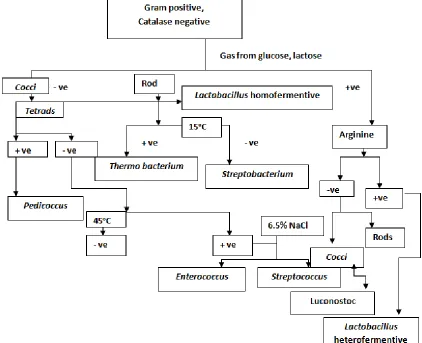
Preliminary studies like Gram’s staining and catalase test was performed to confirm isolated species were Lactobacillus. Later, Biochemical tests like Gas Production Test, Arginine Test, and Growth at 45oC, 15oC, and 10oC temperatures were performed to confirm exactly lactobacillus species 5.
Antibiotic susceptibility tests before and after curing:
Streptomycin, Ampicilin, Tetracycline were taken in the range of 10 mcg/disc, 10 mcg/disc, 30 mcg/disc respectively from HIMEDIA for antibiotic susceptibility test. Then MRS broth contained 41 strains were individually transferred to MRS Agar plates by spread plate technique & kept in incubator at 37oC for 24 hrs. Next day, Zone of inhibition for those antibiotics was measured according to the standard zone size interpretative chart given by HIMEDIA 9, 10, 28.
Determination of B-complex vitamin production by 5 isolated potent probiotic Lactobacillus strains:
By Thin Layer Chromatographic Method (separation of B-complex vitamins): Using TLC method, Separation of B-Complex vitamins production from 5 isolated Lactobacillus strains against standards from HIMEDIA such as Vitamin B-1; B-2; B-12 & Folic acid 22, 26, 29. The Stationary phase used was Silica gel coated glass plate and Mobile phase used was n-propanol-butanol, water and ammonia in the ratio of 7: 5: 1: 2. The Rf value (in cm) is calculated by using formula 16, 14:
Distance travelled by solute front Distance travelled by solvent front
By Spectroflurophotometry Method
(Quantitative Analysis of Riboflavin): This method involves the spectral analysis of riboflavin excitation wavelengths measured at 440 nm and emission wavelengths measured at
510 nm.Quantitative analysis of Riboflavin at wavelength of 440-510 nm was analyzed 20, 23.
By RP-HPLC method (qualitative analysis of riboflavin): The RP- HPLC system of Shimadzu was used consisted of RP column. A solvent System of 0.1% Ortho phosphoric acid, Acetonitrile, Water in the ratio of (0.1: 9: 91 v/v) were used. The sample flow rate of 0.1 ml / min was injected. From the chromatogram obtained, Retention time was observed for all the samples injected and compared with standard riboflavin 17, 25, 11
.
RESULTS AND DISCUSSION:
Preliminary & Biochemical tests to confirm LAB:
[image:3.612.95.517.381.724.2]Preliminary Tests such as Gram`s staining, Catalase tests and Biochemical tests like gas production tests, Arginine tests ,Growth at different temperatures 45oC, 15oC, 10oC were performed and confirmed as 41 strains (21 from Goat & 20 from Beef) were Lactobacillus according to the following flow chart 5;
Probiotic Characteristics: Antibiotic susceptibility tests before curing:
TABLE 1: ISOLATED STRAINS FROM GOAT INTESTINE:
Strains Streptomycin (10mcg/disc)
zone of inhibition in mm diameter
Ampicilin (10mcg/disc) Zone of inhibition in mm diameter
Tetracycline (30mcg/disc) Zone of inhibition in mm diameter
G-02 1 20 28
G-03 1 22 19
G-05 0 18 23
G-06 0 15 39
G-07 0 17 38
G-12 0 0 0
G-13 0 14 0
G-14 0 20 31
G-15 0 20 16
G-16 0 27 27
G-17 0 18 19
G-18 0 12 19
G-19 0 16 18
G-20 0 16 29
G-21 0 0 26
G-22 0 15 10
G-23 21 22 26
G-25 22 20 30
G-26 0 20 20
G-27 0 19 19
[image:4.612.38.579.425.674.2]G-28 0 18 22
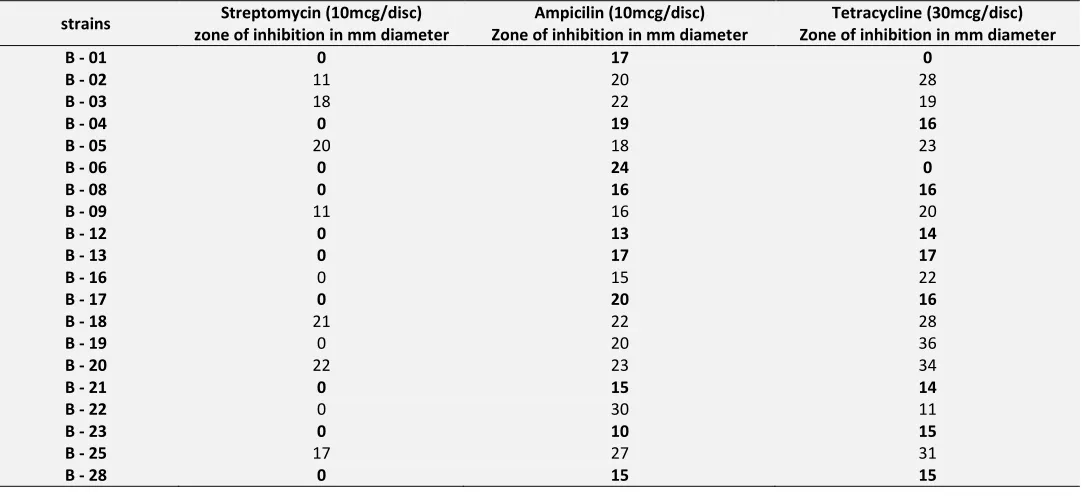
TABLE: 2 ISOLATED STRAINS FROM BEAF INTESTINE
strains Streptomycin (10mcg/disc)
zone of inhibition in mm diameter
Ampicilin (10mcg/disc) Zone of inhibition in mm diameter
Tetracycline (30mcg/disc) Zone of inhibition in mm diameter
B - 01 0 17 0
B - 02 11 20 28
B - 03 18 22 19
B - 04 0 19 16
B - 05 20 18 23
B - 06 0 24 0
B - 08 0 16 16
B - 09 11 16 20
B - 12 0 13 14
B - 13 0 17 17
B - 16 0 15 22
B - 17 0 20 16
B - 18 21 22 28
B - 19 0 20 36
B - 20 22 23 34
B - 21 0 15 14
B - 22 0 30 11
B - 23 0 10 15
B - 25 17 27 31
B - 28 0 15 15
TABLE -3 STANDARD ZONE OF INHIBITION INTERPRETATIVE CHART (FROM HIMEDIA)
Name of
antibiotics symbol Disc content
Resistant mm in diameter or less
Intermediate mm in diameter
Sensitive mm in diameter or more
Streptomycin S 10mcg/disc 0 0 0
Ampicilin A 10mcg/disc 28 0 29
[image:4.612.46.561.692.750.2] Antibiotic susceptibility tests after curing:
TABLE: 4 STRAINS ISOLATED FROM GOAT:
strains Streptomycin (10mcg/disc)
zone of inhibition in mm diameter
Ampicilin (10mcg/disc) Zone of inhibition in mm diameter
Tetracycline (30mcg/disc) Zone of inhibition in mm diameter
G-12 0 20 20
G-13 0 19 22
G-15 0 17 20
G-19 0 26 25
G-22 0 20 22
TABLE: 5 STRAINS ISOLATED FROM BEEF
Strains Streptomycin (10mcg/disc) zone of inhibition in mm diameter
Ampicilin (10mcg/disc) Zone of inhibition in mm diameter
Tetracycline (30mcg/disc) Zone of inhibition in mm diameter
B - 01 0 17 0
B - 04 0 29 26
B - 06 0 24 0
B - 08 0 16 29
B - 12 0 13 14
B - 13 0 17 27
B - 17 0 20 26
B - 21 0 15 14
B - 23 0 10 15
B - 28 0 15 25
According to the results obtained above, compared with standard zone size interpretative chart given by HIMEDIA (which published by CLSI , formerly NCCLS standards) explained in table 3. Antibiotic susceptibility tests after curing the Lactobacillus strains isolated from goat sample didn’t obey to standards whereas 5
Lactobacillus strains isolated from beef sample obeys standards (selected only resistant values for all the three antibiotics used) which were shown in grey colour background selected as potent probiotics. Finally, after above screening and characterization methods, only 5 strains of isolated lactobacillus were selected as potent probiotic shown below in table:6 and further determination of vitamin production by thin layer chromatographic methods, and Spectrofluro-photometric methods and HPLC method were done.
TABLE 6: POTENT PROBIOTIC OF 5 STRAINS OF ISOLATED LACTOBACILLUS
B - 01 B - 06 B - 12 B - 21 B - 23
Determination of B-Complex Vitamin Production by 5 Isolated Potent Probiotic Lactobacillus Strains:
By Thin layer chromatographic methods: The B-Complex vitamins were analyzed by thin layer chromatographic method which were produced by 5 isolated strains of Lactobacillus. Compared with Rf values of standards all the sample`s Rf values match with Riboflavin Rf value exactly, and also it vareies from control . So isolated 5 potent Lactobacillus strains producing only B-complex (Riboflavin) vitamins.
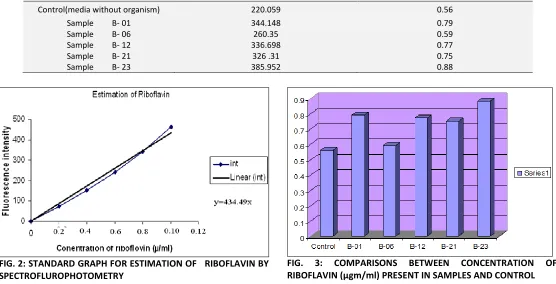
By Spectroflurophotometric Methods: TABLE 7: QUANTIFICATION OF RIBOFLAVIN VITAMIN BY SPECTROFLUROPHOTOMETRIC (@ 440 -510 nm)
Name Fluorescent intensity of emission data (FI) Concentration of riboflavin in (µ gm/ml) Standard
(Riboflavin) - 01 073 .14 0.2
Standard - 02 150 .78 0.4
Standard - 03 240 .12 0.6
Control(media without organism) 220.059 0.56
Sample B- 01 344.148 0.79
Sample B- 06 260.35 0.59
Sample B- 12 336.698 0.77
Sample B- 21 326 .31 0.75
Sample B- 23 385.952 0.88
FIG. 2: STANDARD GRAPH FOR ESTIMATION OF RIBOFLAVIN BY SPECTROFLUROPHOTOMETRY
From the standard graph for estimation of riboflavin obtained above (Fig. 2), the unknown concentration of riboflavin present in control and samples of B-1; B-6; B-12; B-21; B-23 were calculated as follows :
According to equation,
y = mx+c
But we need x, So, x = y/m (since, c = negligible); For control, y = 220.059; m= 434.49; then 220.059/434.49= 0.56 µgm/ml
Like wise, unknown concentration of riboflavin in samples as follows:
B- 01 = 0.79 B-06 = 0.59 B-12 = 0.77 B-21 = 0.75 B-23 = 0.88
Comparatively, all the 5 strains producing riboflavin is more than control. The average amounts of riboflavin produced by those strains were 0.20µg/ml more than control shown in Fig. 3.
FIG. 3: COMPARISONS BETWEEN CONCENTRATION OF RIBOFLAVIN (µgm/ml) PRESENT IN SAMPLES AND CONTROL
By RP- HPLC -Qualitative Analysis of Riboflavin:
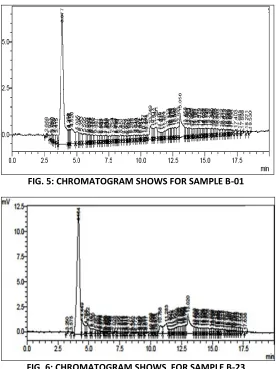
After the result obtained from spectroflurophotometry, further RP-HPLC (Shimadzu LC solution Analysis Report) method was performed to determine the riboflavin production by isolated Lactobacillus strains .Among the 5 isolated strains, only the 2 strains viz., B-01 & B-23 which showed comparatively high concentration of riboflavin production (shown in Fig. 3) were further taken for qualitative analysis of riboflavin by RP-HPLC method Fig. 4 Chromatogram shows for standard riboflavin (HIMEDIA) compared with sample B-1(Fig. 5) and B-23 (Fig. 6)
[image:6.612.28.584.44.328.2] [image:6.612.313.589.523.744.2]FIG. 5: CHROMATOGRAM SHOWS FOR SAMPLE B-01
FIG. 6: CHROMATOGRAM SHOWS FOR SAMPLE B-23
From the chromatogram obtained by RP-HPLC method, retention time of both standard and samples were same. This reveals riboflavin were producing by isolated strains of Lactobacillus. So, these strains were more beneficial to human.
CONCLUSION: Probiotics plays a vital role in giving the beneficial to human by its eminent activities like role of cholesterol reduction, in the treatment of irritable bowel syndrome, anti cancer activities , antibiotic associated diahorrea and many more.
So, from these experiments the potent probiotic strains from different sources of meat viz., B-01, B-06, B-12, B-21, B-23 were screened, isolated, characterized, antibiotic susceptibility tests before and after curing of plasmids reveals they were potent Probiotics. Determination of B-complex vitamins produced by these strains concluded, these strains having ability to produce only the vitamin riboflavin, which more important to human. The isolated Probiotics strain having the riboflavin production is
ACKNOWLEDGEMENT: I gratefully acknowledge my sincere thanks to SBST, VIT University (www.vit.ac.in), where I performed this eminent work.
REFERENCES:
1. Billman-Jacobe; Plasmid Profiling and Curing of Lactobacillus Strains Isolated from the Gastrointestinal Tract of Chicken ; Billman-Jacobe, Journal of microbiology , 1996.
2. GC O'Sullivan, P. Kelly, S. O'Halloran, C. Collins, JK Collins, C. Dunne and F. Shanahan ; Probiotics an emerging therapy; current pharmaceutical design, 2005, Vol : 11, No :1
3. 3. Badet C, Richard B, Debat MC, Flaujac PM, Dorignac G. 2004. Adaptation of salivary Lactobacillus strains to xylitol. Arch Oral Biol 49:161-4.
4. Bailey JS. Factors affecting microbial competitive exclusion in poultry.
Food Tech. 7-87:88.
5. Bengmark S. Ecological control of the gastrointestinal tract. The role of probiotic flora Gut. 42(1):2-7. 1998.
6. Berk JE, et al. Ecology of the gastrointestinal tract. Gastroenterology.
3:1635. 1985.
7. Brown JP. Role of gut bacterial flora in nutrition and health: A review of recent advances in bacteriological techniques, metabolism and factors affecting flora composition. CRC Reviews in Food Science and Nutrition. 8:229-336. 1977.
8. Leer, R. J., N. van Luijk, M. Posno, and P. H. Pouwels. 1992.Structural and functional analysis of two cryptic plasmids from Lactobacillus
pentosus MD353 and Lactobacillus plantarum ATCC 8014. Mol. Gen.
Genet. 234, 265-274.
9. Billy TJ (1996). What is meat? http/www.fsis.usda.gov /OPPDE /FSISDirective/FSISDir 7/60-2
10. Bergey’s Manual(BUCHANAN & GIBBONS, 1974).
11. Cebeci and Gurakan ; Resistance to Antimicrobial Agents in Lactobacilli Isolated from Caper Fermentations ; 2003
12. Charteris WP, et al. Antibiotic susceptibility of potentially probiotic
Bifidobacterium isolates for human gastrointestinal tract. Lett Appl
Microbiol. 26(5):333-7. 1998.
13. Tripathi K.D .,Medical pharmacology - 5 edition.
14. O’Sullivan,D.J. and T.R. Klaenhammer.1993.Rapid mini-prep isolation of high-quality plasmid DNA from Lactococcus and Lactobacillus spp. Appl. Environ. Microbiol. 59, 2730-2733.
15. Vescovo, M., L. Morelli, and V. Bottazzi. 1982. Drug resistance plasmids in Lactobacillus acidophilus and Lactobacillus reuteri. Appl. Environ. Microbiol. 43, 50-56.
16. Klaenhammer TR. Dairy Science. 65-7:1339. 1982.
17. Marshall, R. T., H. D. Goff and R. W. Hartel. (2003) , Dairy science and Technology, http://www.psigate.ac.uk
18. Shahani KM. Nutritional impact of Lactobacillic fermented foods. Paper No. 6798, Journal Series, Agricultural Experiment Station.
19. Gilland SE, et al.Journal of Food Protection. 40:820. 1977.
20. Fukushima, Y, et.al. Effect of probiotic formula on intestinal immunoglobulin A production in children. Int J Food Microbiol. 42(1-2):39-44. 1998.
21. Kien CL, et al. Dietary carbohydrate assimilation in the premature infant: Evidence for a nutritionally significant bacterial ecosystem in the colon. Amer J Clin Nutr.46-3: 456-459. 1987.
22. Kodamo R. Studies on lactic acid bacteria, II Lactolin, a new antibiotic substance produced by lactic acid bacteria. J Antibiot. 5:72. 1952 23. Cohen LA. Diet and Cancer. Scientific American. 2575:47. 1987. 24. Goldin BR, et al. The effect of oral administration of Lactobacillus and
antibiotics on the intestinal bacterial activity and chemical induction of large bowel tumors. Devel. Indust. Microbiol. 25:139. 1984.