Munich Personal RePEc Archive
Soft budget constraint and the parastatal
sector
Vahabi, Mehrdad
University of Paris 8
October 2011
Online at
https://mpra.ub.uni-muenchen.de/37926/
1
EAEPE, Annual Conference, 27-30 October 2011, Vienna, Austria
Soft budget constraint and the parastatal sector
Mehrdad Vahabi (University of Paris 8)
Abstract
This paper explores the relevance of soft budget constraints (SBC) to development studies by
examining the parastatal sector. The political ingredient of the SBC is discussed by focusing
on two examples: 1) religious and military foundations in Iran; and 2) Fannie Mae and
Freddie Mac. It presents two main findings. First, the SBC of the parastatal sector can be
understood as the political economy of a predator state or state’s rent-seeking activity.
Second, the state sector is more prone to the SBC compared with a decentralized competitive
market, but it might be subject to a harder budget constraint in comparison with the
parastatal sector.
2
Soft Budget Constraint and the Parastatal Sector
Mehrdad Vahabi (University of Paris 8)
1. Introduction
The soft budget constraint (SBC), initially conceptualised by Janos Kornai (1979, 1980, 1986,
1998a,b), describes the attitude of firms within a socialist economy where a paternalist state
never lets any firm go bankrupt and always bails out a loss-making firm. Kornai provided an
exogenous or Institutionalist theory of the SBC, according to which the cause of the softness
is not explained by the internal interests of the softening institution (namely the state),
because the state is assumed to be paternalist and not predatory1. Since Kornai’s pioneering
work, a vast body of formal literature has been published about the SBC, offering an
endogenous explanation of the phenomenon.
The term ‘endogenous explanation’ means an analysis of the SBC as an outcome of the
internal interests of the softening institution (the state or another organization playing the role
of Principal). From this perspective, the degree of budget constraint is a matter of strategic
behaviour of rational maximizing agents. Dewatripont and Maskin (1995) conducted
pioneering work in this field, arguing that the SBC syndrome pertains wherever a funding
source, for example, a bank or government, finds it impossible to keep an enterprise to its
fiscal budget, i.e., whenever the enterprise can exact ex post a bigger subsidy or loan than
1
3
would have been considered efficient ex ante. In this sense, the SBC problem extends well
beyond socialist economies, because the extent to which loss-making firms or projects are
terminated or refinanced is also very relevant in developed, emerging, or developing capitalist
economies (Maskin, 2006).
Eminent representatives of the two Institutionalist (exogenous) and formal (endogenous)
branches of the SBC literature advocate a unified theoretical framework (Kornai, Maskin and
Roland, 2003). The unified framework predicts the softening of budget constraints due to
asymmetrical information between the Centre (Principal) and Agent, and time inconsistency.
Time inconsistency of the Centre lies at the heart of the SBC syndrome: if the Centre were
able to commitcredibly not to subsidise the firm ex post, the firm would make more efficient
ex ante decisions. Accordingly, Kornai’s exogenous explanation of the SBC as a result of
state paternalism becomes a specific case of time inconsistency and a lack of credible
commitment.
The theoretical justification for the unified framework is open to discussion. Tensions
between the exogenous and endogenous explanations of the SBC notwithstanding (Vahabi,
2011b), the two branches share at least two commonalities. First, analysis of the SBC is
conducted within a dichotomous vision of the state versus private sector. Second, a pure
decentralized market economy is considered to be a benchmark of the hard budget constraint
(HBC) and efficiency. Consequently, nationalization tends to soften the budget constraint
whereas privatisation and decentralization tend to harden the budget constraint.
The practical implication of this result was extremely important for both the developing
countries experiencing the post-socialist transition and those embarking on macroeconomic
4
The SBC was particularly pressing in Romania, Russian Federation, China, Albania,
Azerbaijan, Tajikistan, Belarus, etc. (Kornai, 2001; Li, 2008). Five main groups of
instruments which led to the SBC in the post-socialist transition were: 1) fiscal subsidy; 2)
soft taxation; 3) soft bank credit (non-performing loans); 4) soft trade credit (the accumulation
of trade arrears between firms); 5) wage arrears. The Washington consensus held that the
‘Holy Trinity’ of liberalization, privatisation and stabilization would suffice to produce an
efficient market. The advocates of the SBC theory emphatically argued that the hardening of
the budget constraint should be given equal priority with these.
Many empirical studies demonstrate the existence and deleterious effect of the SBC syndrome
in the public sectors of non-socialist developing countries (Kornai, Maskin and Roland, 2003,
pp. 1129-1130). The relevance of the hardening of the budget constraint was also highlighted
theoretically for all the developing countries by many authors (Raiser, 1994; Anderson, 1995)
and decision makers in international institutions (World Bank 1997, 1999; EBRD 2000,
2001). A considerable degree of government intervention in many developing countries, the
particular importance of parastatals in industrial production, and the explicit goal of
improving the working of markets during structural adjustment made Kornai’s hypothesis a
useful background against which the success or failure of many economic reforms could be
studied.
Interestingly enough, the SBC was maintained in many developing countries which adopted
structural and adjustment reforms and introduced a privatisation policy. However, the
“privatisation” was nothing but the transfer of property rights to the parastatal sector which
often was controlled by the military or religious elites. One salient illustration is the Islamic
5
The ‘Adjustment Program’ and the ‘Stabilization Program’ were initially introduced as the
first and second quadrennial programs during the two periods of presidency of Ali Akbar
Hashemi Rafsanjani (1989-1997). The two programs contained a “privatisation” policy.
Accordingly, the fourth Majlis (1992-1996) of the Islamic Republic of Iran passed a law in
1994 authorizing the government to sell the state enterprises in different ways. The law
stipulates that Isargaran (sacrificers), namely those who devoted themselves to the war,
prisoners of war, and relatives and members of those who were killed in the war have the
priority to own privatised enterprises. In this way, the ‘privatisation’ trend consists in
transferring state enterprises to the religious Foundations (Bonyads) or to the parastatal sector
(Adeli, 2004, pp. 474-75). In the same vein, the July 2006 intervention of the Supreme
Leader, Seyyed Ali Khamenei, in favour of privatisation was preceded by the conclusion of
two important contracts with Bonyads and Sepah (the Revolutionary Guard) for the
construction of Lines 6 and 7 of Tehran’s subway that amounted to a total sum of two and a
half billion dollars. Finally, the Tehran Stock Exchange (TSE) is principally a market for the
parastatal sector. Jbili, Kramarenko, and Bailen (IMF, 2004, p. 44) noted “Most listed
companies [in TSE] are parastatal enterprises with a varying degree of direct and indirect
government ownership” (the phrase in brackets is added). The persistence of the explicit and
implicit SBC is one of the main features of the parastatal sector that has extended in the name
of privatisation.
This paper explores the SBC in the parastatal sector. The parastatal sector is a sort of
chameleon; it is neither ‘private’ nor ‘public’ and enjoys the advantages of both state and
private sectors. This explains why a dichotomous vision of market versus state is
inappropriate for analysis of the prevalent SBC in the parastatal sector. Clarifying the SBC in
6
Most SBC models postulate a benevolent (paternalist) state; only a minority assumes a
malevolent or predatory state. However, even this minority assumes an efficient predatory
state2 in which the Coase theorem (Coase, 1960) is applicable. But what about the parastatal
sector in a predatory state that systematically chooses inefficient policies? Extension of the
Coase theorem to politics precludes such a scenario (Vahabi, 2011a). However, religious and
military foundations (Bonyads) in Iran and Milbus (military business)3 in many
Middle-Eastern and African countries exemplify the SBC in the parastatal sector under inefficient
predatory regimes. Furthermore, even within a democratic regime, rent-seeking activity of
public authorities is not excluded. The Federal National Mortgage Association (FNMA or
“Fannie Mae”) and the Federal Home Loan Mortgage Corporation (FHLMC or “Freddie
Mac”) in the U.S. are emblematic examples of the SBC in the parastatal sector under a
democratic regime.
In this paper, I will examine the peculiar features of the SBC in the parastatal sector, focusing
on two examples: 1) religious and military foundations in Iran; and 2) Fannie Mae and
Freddie Mac. I will demonstrate that the SBC of the parastatal sector can be understood as
the political economy of a predator state or rent-seeking activity.
This result has important practical implications. Hardening of the budget constraint in the
parastatal sector requires nationalizing parastatal assets, transparency, and democratic control
2
Following Buchanan, it is difficult to reconcile ‘efficiency’ with predation. The efficiency criterion is inapplicable in cases of coercive power: “To the extent that potential traders are coerced, either by prohibitions on their ability to make enforceable contracts or by the imposition of non-compensated transfers, no conclusions about value-maximizing resource use can be drawn because the rules permit no test” (Buchanan, 1987, p. 158). Although in this paper I use the term ‘efficient’ (or ‘inefficient’) predatory states in reference to the existing literature, I do not adhere to the theory that underpins this distinction.
3
7
over this sector’s activity. In a symbiotic vision of the market and the state, nationalization
might be a source of HBC. This finding mitigates one of the major predictions of the standard
SBC literature, according to which nationalization usually works to soften the budget
constraint.
The remainder of this paper is organized into four main sections. Section 2 explores the
political aspects of the SBC and demonstrates that the assumption about the nature of the state
is fundamental in explaining the origins and persistence of the SBC. Section 3 is devoted to
soft budget constraints in the parastatal sector under an authoritarian regime, or under a
systematically inefficient predatory state. I will elucidate this point by analyzing religious and
military foundations under the Islamic Republic of Iran. Section 4 focuses on the SBC of the
parastatal sector under a democratic regime. It also discusses the sources of the SBC in
behemoths such as Fannie Mae and Freddie Mac in relation to the recent subprime crisis.
Section 5 identifies the SBCs in the parastatal sector as the political economy of predatory or
rent-seeking activity, and shows that hardening of the budget constraint might be achieved
through nationalization. Section 6 presents conclusions.
2. Political aspects of the SBC
At least two conceptually separable elements are involved in the essential SBC problem: one
is related to economic power relationships and the other is associated with political power
relationships. The first involves the exercise of economic power due to a monopoly position
in the market, or asymmetrical information between agents. The second refers to particular
formal authority relationships between superiors and subordinates in a vertical or hierarchical
8
Kornai, Maskin, and Roland (2003) highlighted the importance of adverse selection and moral
hazards in generating soft budget constraints in both socialist and capitalist economies.
However, asymmetrical information is not the only problem leading to the SBC. The second
problem is a political one at the heart of the SBC syndrome; it is related to the differences in
goals between the government and firms. Stigler’s theory of the market capture highlights the
effects of lobbying on economic performance (Stigler, 1971).
These two problems cannot be completely separated in reality, so in many models the SBC is
defined both in relation to the asymmetrical information structure and the asymmetrical
objective functions. Nevertheless, they can be conceptually separated. When considering the
asymmetrical objective function, the nature of the government becomes crucial.
In their analysis of the size of nations, Alesina and Spolaore (2003) distinguished between
three different types of government. The first is a benevolent government that maximizes a
collective utility function. Here, politicians are assumed to be ideal social planners who
maximize social welfare. The second is a democratic government, which can be described as
a government of free citizens who can vote for government policies and political borders. In
economic jargon, public policies are determined by the utility function of the median elector.
The third is a predatory government, or what the authors labelled ‘Leviathans’. Here,
“decisions are taken by rent-maximizing governments who care about their own welfare, and
that of their close associates, rather than the welfare of their citizens. Following a tradition
that goes back to Thomas Hobbes (1651), we will call such governments ‘Leviathans’” (p.
69). Because Leviathans do not follow the elective principle, they are exposed to insurrection
threats, a point that was particularly stressed by Acemoglu and Robinson (2000). They
interpreted the extension of voting rights to larger fractions of the population as a
9
Accordingly, predatory governments or Leviathans maximize their rent-seeking utility
function under the constraint of the non-insurrection condition.
The SBC literature excludes the democratic state but includes two other types: the benevolent
(paternalist) and the malevolent (predatory) states.
In the benevolent (paternalist) case, softness cannot be explained by the internal interests of
the government, so the softness explanation would be exogenous. Three types of models may
be grouped into this category: 1) the Kornai and Weibull (1983) model of the SBC as ex post
bailouts; 2) the externality models (Segal, 1998; Daveri and Panunzi, 1997; Wildasin, 1997);
and 3) the insider control model (Li, 1998).
All these models focused on ex post bailouts or ex post state intervention. However, an ex
ante state intervention may also lead to the SBC. If an economic unit obtains some subsidies,
tax reliefs, preferential loans, etc. before the start of the financial period, its budget constraint
is soft in a preliminary sense. Based on this observation, Szabó (1988) distinguished between
the preliminary (ex ante) and the incremental (ex post) softness of a budget constraint. The
exogenous explanation of the SBC focused on ‘incremental’ rather than ‘preliminary’
softness4.
Some studies of state subsidies have rejected the paradigm of benevolent government in
favour of a positive theory of government or a ‘malevolent’ (predatory) government
maximizing the interests of governors under the constraint of non-insurrection. The most
notable of these studies is Becker’s (1983) paper, which developed a theory of competition for
subsidies among self-interested pressure groups. These groups choose the level of
rent-seeking activity, which determine transfers through an exogenously given (‘black-boxed’)
4
10
political influence function (Vahabi, 2011a). This second assumption leads to an endogenous
explanation of the political aspect of the SBC syndrome. The Public Choice Theory develops
this endogenous explanation of the SBC.
The political aspect of the SBC is particularly relevant when softening of the budget
constraint becomes a matter of strategic behaviour of the rent-seeking Leviathans. In this case,
the ex ante SBC is as significant as the ex post SBC. Anderson (1995) noted the political
origins of soft budget constraints in the Middle East, arguing that because of the political
importance of non-market, concessional, or politically-motivated external financing in the
Middle East after the Second World War, regimes in this region came to participate in the
international system in much the same way that managers of state-owned enterprises operate
in socialist economies.
The importance of these political considerations regarding the relationship between states
notwithstanding, economists have tried to capture the political element of the SBC in the
particular relationship between the state and firms. Boycko, Shleifer, and Vishny (1995, 1996)
focused on this aspect of the SBC problem.
In their analyses of the relationship between politicians and managers, Shleifer and Vishny
(1993, 1994) and Boycko, Shleifer and Vishny (1996) illustrated the Coase theorem by
stressing the role of corruption in raising efficiency. When side-payments in the form of
bribes are allowed, managers and politicians choose the outcome that, from their joint
perspective, is the most efficient. Bribes divide the surplus between managers and politicians
according to the Nash or some other bargaining solution. In this sense, corruption can be
compared to reputation in providing a mechanism for contract enforcement. However, as
Shleifer (1994) argued, in transition economies the horizons of politicians are often too short
11
It should be noted that in this case, corruption is to some extent exempt from renegotiation.
Because corruption is illegal in most societies, both the giver and the receiver of a bribe risk
going to jail. This type of analysis of property rights as both control and cash flow rights has
largely contributed to the understanding of some informal institutions such as corruption; it
endogenises the political aspects of the SBC and tries to show that the inefficiency of public
firms is related to the agency problem with politicians rather than with managers. “We believe
that managerial discretion problems are usually minor relative to political discretion
problems. Privatisation works because it controls political discretion” (Boycko et al., 1996, p.
318).
Hence, the softness of the budget constraint is a strategic choice of politicians who maximize
a particular kind of ‘political function’, whereas managers as profit-maximizers are more
prone to maintain a HBC. It should be stressed that in this line of analysis, although the state
is assumed to be predatory, it is an efficient predatory state because the political Coase
theorem is applicable (Vahabi, 2011a).
A theory about an ‘efficient’ predatory state or a ‘Political Coase Theorem’ (PCT) has
important practical implications with regard to privatisation. In the early phases of market
reform during post-socialist transition, privatisation of state property had pride of place.
Borrowing from the Coase theorem, one major argument for the rapid privatisation in Russia
was that the achievement of initial property rights was less important than the establishment
of property rights and free exchange. Advocates of speedy privatisation, inspired by the Coase
theorem, were convinced that the inefficiencies and injustices in the initial stages of property
distribution would eventually be automatically corrected as long as the market for property
rights functioned properly. “The Coase theorem shows how efficiency can be restored, but
12
p. 27).” After a sequence of exchanges, property rights will be reallocated to the party who
offers the highest bid, i.e., the most efficient owner.
Rapaczynski summarized a similar line of argument about the rapid privatisation in all
post-Soviet economies (PSE): “Governments’ intent on fostering a market economy should thus
make sure to put an effective legal system in place, one in which property rights are
unambiguous, secure and freely alienable. Even if the state gets some of the initial
endowments wrong, it is often added, the Coase theorem instructs us that the parties, if free to
contract, will correct this by appropriate private agreements” (1996, p. 89). This prediction
has now been clearly proven false.
State failure and a lack of market infrastructure prevented the correction of flaws in the initial
distribution of property rights through Coaseian bargaining mechanisms. As a result,
inefficient forms of corporate governance have persisted far longer than predicted by the
Coase theorem.
13
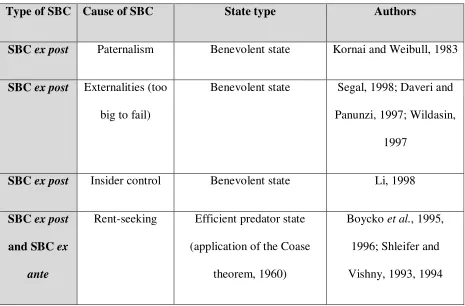
Table 1. Benevolent and Malevolent (predatory) states and the SBC.
Type of SBC Cause of SBC State type Authors
SBC ex post Paternalism Benevolent state Kornai and Weibull, 1983
SBC ex post Externalities (too
big to fail)
Benevolent state Segal, 1998; Daveri and
Panunzi, 1997; Wildasin,
1997
SBC ex post Insider control Benevolent state Li, 1998
SBC ex post
and SBC ex
ante
Rent-seeking Efficient predator state
(application of the Coase
theorem, 1960)
Boycko et al., 1995,
1996; Shleifer and
Vishny, 1993, 1994
My theoretical framework assumes a predatory state, as do the endogenous models of the
SBC. Nevertheless, I introduce two major modifications:
1) My framework assumes that predatory states and lobbying are inefficient, because the
Coase theorem (1960) is not applicable with regard to the relationships between the
state and the ‘parastatal’ sector (Vahabi, 2010a, 2011a).
2) My framework is based on a symbiosis of state and market, in which a parastatal
sector develops. This sector has a chameleon-like character (neither public nor private
but with the advantages of both state and private sectors). It has an indeterminate
status, with multiple Agents and Principals pursuing contradictory objectives.
The next section presents the peculiar features of the parastatal sector under an inefficient
14
3. Parastatal sector under an authoritarian regime
Since the 1980s, parastatal sectors have emerged in many Middle-Eastern and African
countries. A parastatal sector has a chameleon-like character and has a SBC under an
inefficient predatory state. Examples abound: religious and military foundations in Iran
(Vahabi, 2010b; Mohajer and Vahabi, 2011), health and agricultural sectors in Malawi
(Chirwa, 2002); the military sector or Milbus in Egypt, Pakistan, and Turkey (Siddiqa, 2007);
and many other sectors throughout the Middle East (Celasun, 2001) and Tanzania (Skoog,
2000 and Fischer, 2006).
Kuran (2001, 2003) explored the relationship between religious foundations and Waqf within
the Islamic system of public goods provision. Acemoglu and Robinson (2005), North (1995),
North, Wallis, and Weingast (2009) studied the importance of the military sector under
authoritarian or ‘natural states’. In the same vein, I identified the peculiar features of religious
and military foundations in the Middle East and particularly focused on the Iranian Bonyads
(Foundations) in post-revolutionary Iran, which involve the SBC (Vahabi, 2010b; Mohajer
and Vahabi 2011). I found that property rights in the parastatal sector are indeterminate; here,
‘indeterminate’ properties refer to booty from warfare and looting, or property confiscated
during a revolution. Although this kind of property can be transformed into ‘public,’
‘personal,’ ‘private,’ ‘combinatorial,’ or other types of ownership, their initial status remains
indeterminate. For ‘indeterminate’ properties, entitlement to property rights depends on the
discretionary power of the coercive authority. Appropriative allocation leads to indeterminate
property.
Bonyads are considered ‘para-governmental’ (Saeidi, 2004), or ‘parastatal foundations’
(Maloney, 2000). Many Bonyads exist; the most prominent are Bonyad-e Mostazafan va
15
(Martyrs’ Foundation)5. The BMJ was set up after the confiscation of the assets of the late
Shah and 53 industrialists exiled in the aftermath of revolution, in conformity with
Khomeyni’s injunction that referred to these assets as ‘spoils’ and specified that ‘they must be
kept and controlled separately from state properties’ (Saeidi, 2004, p. 484).
The size and scope of the BMJ is similar to that of a government (New York Times, Jan. 8,
1995). With holdings worth 12 billion U.S. dollars, the BMJ constitutes the largest non-state
sector in the Iranian economy, second in size only to the National Iranian Oil Company6
(Smith, 1997; Maloney, 2000). Due to complete opacity, no accurate information is available
about Bonyad’s activities, but an economic report published by the French Embassy estimated
that its various branches contribute 7–10% of the Iranian GDP (Ambassade de France,
Mission Economique, 20 June 2006).
The BMJ operates like a holding, with many enterprises extending into almost all sectors of
the economy: mining, housing, manufacturing, trade, shipping, transportation, airline,
tourism, agriculture, food industry and soft beverages, etc. Recently, it has been strengthening
its position in the energy (including hydrocarbon) and communication (as the second-largest
Iranian mobile operator, etc.) sectors. However, the institutional status of this giant holding
has chameleon-like characteristics. It can change at will, acting as a private economy when
buying privatised firms, but going ‘public’ to control such ‘strategic’ businesses as the
national shipping line, enshrined in the Iranian constitution as a publicly-owned agency.
5
This Foundation was established a month after the 1979 revolution to support the surviving relatives of the martyrs and disabled veterans of the revolution and later the families of the martyrs of the eight-year war with Iraq. For a more detailed report, see Encyclopedia Iranica, 1987, pp. 360-61; Maloney, 2000, pp. 151-2; Saeidi, 2004, pp. 488-490. For some recent official data regarding its activities as well as a similar Bonyad, the Imam Khomeyni Relief Aid Committee, see Sazman Modiryaat va Barnameh Rizi Keshvar Salnameh Amari Keshvar 1383 (The Annual Statistics of the Country) 2004, pp. 551-2, 565-571.
6
16
This chameleon-like position is the result of its indeterminate property structure: it is neither
private nor state-owned. In terms of legal status, the Foundations have been described as
public, non-governmental organizations. This classification is somewhat paradoxical, but it
does reflect their ‘indeterminate’ nature. With no governmental discretion over their expenses,
no shareholders, no public accounts, and no well-defined legal status, they have been
operating autonomously from the government. However, as professed ‘charitable’
organizations, they have been benefiting from tax exemptions (IMF Staff Country Report,
1998, p. 26), preferential bank credits, subsidies, and special ‘quasi-budgetary redistribution’
(Coville, 2002).
Despite the historical defence of the waqf7 (Islamic religious endowment) by the ulama, the
Foundations as ‘charitable’ organizations are not attached to any religious institution. Of
course, they are absolutely loyal to the supreme leader and to local religious leaders who act
as their representatives, but they are unconnected to the clerical Shiite hierarchy and the
traditional religious networks: “the Bonyad-e Mostazafan operates, for all intents and
purposes, outside the scope of both the traditional religious power structure and the
government” (Maloney, 2000, p. 157). The waqf continue to command vast amounts of
resources in the Islamic Republic; and the Bonyad-e Astan-e Qods, which manages the
endowments related to the shrine of Imam Reza at Mashhad, owns property all over the
country8. In contrast to the Shah’s regime, the Islamic Republic has guaranteed the
independence of waqf from the government; but the Foundations maintain their autonomy
from both the government and the traditional religious hierarchy.
7
For an analysis of Waqf as a credible commitment device to give property owners economic security in return for social services, see Kuran (2001).
8
17
What are these Foundations, and to whom do they belong? They own ‘confiscated’ properties
(‘spoils’ in Khomeini’s terminology) that could have been transformed into private or state
properties, but were not. Contrary to the dominant view, the state sector in post-revolutionary
Iran does not resemble the omnipresent state of the USSR. It would be easy to compare Iran
to post-Soviet Russia, where the dismantling of an entrenched system of power and the
concomitant rise of new political and financial magnates (powerful transitory
‘financial-industrial groups’) empowered an array of puissant clientelist networks, but unlike their
Russian counterparts, the Iranian Foundations have not transformed into private monopolies.
Their permanent position as an ‘indeterminate’ form of property is a result of the extension of
parallel institutions even into the Iranian economy under the Islamic Republic. “These
organizations represent the dual power structure in Iran which reinforces the financial
authority of religious leaders without accountability” (Saeidi, 2004, p. 479). They constitute
the authoritative resources of theocrat leaders: they favour and empower the parallel military
and paramilitary groups belonging to theocrats, and enrich the military and religious elites,
and thence reproduce the authority of the Supreme Leader and theocrats (Mohajer and
Vahabi, 2011). They enjoy an almost unconstrained capacity of intervention in the Iranian
economy and in political competition between different factions, and may be described as ‘a
state within a state’ (Scheuer, 1994).
In the presence of oil resource wealth, a weakened state, less foreign aid, and pressure for
economic liberalization, religious and military elites found it optimal to deinstitutionalize the
state and formal bureaucratic mechanisms in favour of a parallel “shadow state” under their
own control. Parastatal sector is the result of this deinstitutionalization of the state and its
18
The close relationship between the BMJ and the Iranian security apparatus and its institutional
authority was confirmed by the appointment of Mohsen Refiqdust, the former commander of
the Revolutionary Guard (Sepah), to lead the Foundation in 1989. Due to non-accountability
and total opacity with regard to its activities, widespread corruption in the BMJ and its diverse
branches involving Refiqdust’s brothers and many other directors led Refiqdust’s replacement
by former Defence Minister Mohammad Foruzandeh in July 1999 (see The Economist, Sep
25, 1993; The New York Times, Jan 8, 1995; Financial Times, Jul 17, 1997; Saeidi, 2004, pp.
495-98).
When Foruzandeh took up his post, he announced that 80% of its 350 companies were losing
money. However, the state bailed out all of these enterprises. This ex post SBC was
complementary to the ex ante SBC that had benefited the Bonyads. The colossal sum of the ex
ante SBC was mainly guaranteed through bank credits, preferential exchange rate for U.S.
dollars, and tax and custom tariffs exemptions.
During Refiqdust’s direction, the organizational connections between the Revolutionary
Guard and the BMJ developed substantial involvement in weapons procurement and
production. For example, “the Bonyad’s heavy presence in legitimate mining and chemicals
production allegedly camouflage IRGC [the Revolutionary Guard] chemical weaponry plants.
In addition, German intelligence sources contend that the MJF [Bonyad] has utilized a
network of sham enterprises to acquire inputs for the Revolutionary Guard’s defence industry
(...) In addition, the foundation apparently undertakes international endeavours that transgress
the traditional definition of trade - the MJF is commonly cited as a generous supporter and
active political patron of the Lebanese terrorist organization” (Maloney, 2000, pp. 159-160).
Close examination of the Foundations in Iran reveals that they promote ‘destructive creation’
19
Chapter VII) referred to the process of capitalist development as ‘creative destruction,’
meaning the destruction of old products, past processes of manufacturing, and archaic forms
of organization through the introduction of new products, ways of producing, and
organizational methods. Destructive creation is the opposite of ‘creative destruction,’ and
refers to the production of destructive means and the necessary infrastructure and skills
related to such means so that authoritative resources and relationships can be reproduced.
The main characteristics of the parastatal sector, which is permeated by the SBC, can be
summarized by five features:
1) Property rights are indeterminate, which allows the development of personal
ownership of the assets by predators, particularly the religious and military elites.
2) Parallel institutions, a fragmented political order, or a situation of a ‘state within state’
constitute the sine qua non political condition for the development of this sector.
3) The multiplicity of Agents and Principals results in opacity with regard to the identity
of decision-makers concerning the disposal of parastatal assets.
4) This sector is based on the inseparable character of politics and economics under an
authoritarian regime.
5) Enhancement of this sector is closely associated with the populist quasi-budgetary
policies of revenue redistribution that aim to attract support from marginal and
deprived layers of the population.
In summary, the parastatal sector is contradictory to the impersonal rights of all citizens. It is
20
institutions of a welfare state such as social security. The SBC of parastatal sector is the
outcome of the political economy of an inefficient predatory state.
4. Parastatal sector under a democratic regime
According to Kornai (1993), the SBC is closely related to the predominance of state property,
whereas private property has a natural affinity to HBC. Capitalism is considered to be the
counter example of the SBC.
In contrast to this vision, the American model of capitalism, with its enduring New Deal
institutions, is replete with examples of the SBC. The institutions in question are neither
purely private nor wholly public. They are, rather, hybrids, even chameleons: “private
economic activities supported, leveraged, guaranteed, and regulated by public power; public
institutions aided, abetted, and buttressed by private money. They are elements of an
American social welfare state but dressed up, in characteristically American fashion, in the
guise of a market system” (Galbraith, 2009, p. 104).
Galbraith estimated that these institutions in health care, higher education, housing, and social
security together compose nearly 40% of the total consumption of goods and services in the
United States. Taking into account the state’s intervention in the military, agricultural, and
other sectors, the government is responsible for more than half the state’s economic activity.
In other words, the market and the state are intertwined even in the so-called neo-liberal
model of capitalism. The main issue is how the prevalent SBC in these sectors is run and to
what extent the private sector is taking advantage of it.
For Galbraith, these sectors are run by a ‘Corporate Republic,’ which is a predator state.
Although this assessment is controversial, the parastatal sector or what is commonly called
21
crisis. Congleton (2009) particularly highlighted the roles played by the Federal National
Mortgage Association (FNMA or ‘Fannie Mae’) and the Federal Home Loan Mortgage
Corporation (FHLMC or ‘Freddie Mac’) in the financial crisis.
After initial periods of federal support, all of these government-sponsored enterprises (GSEs)
became more or less private entities. None had formal backing from the U.S. Government,
although they were partly managed through government appointees and subjected to different
forms of government oversight than other financial firms.
According to Congleton (2009, p. 291), “Most investors consequently believed that, if need
be, U.S. taxpayers would back up the GSEs after they were “privatised,” which proved to be
correct in September 2008. The implicit backing of taxpayers allowed the FHLB, Fannie Mae,
and Freddie Mac to borrow money at rates lower than other banks (about 0.4% less, according
to Congressional Budget Office estimates). The GSEs also faced somewhat different
regulatory constraints than ordinary investment banks. They were, for example, exempt from
most state taxes and regulations, which provided an implicit subsidy of approximately a
billion dollars. These implicit subsidies to housing were not on the federal government’s
balance sheets, nor were the risks associated with the implicit guarantees of the federal
government” (emphasis added).
These institutions largely benefited from huge amounts of implicit subsidies or what Kornai
dubbed the ex ante SBC before the crisis. According to Crippen (2001), the value of the
implicit subsidies between 1995 and 2000 varied from $6.8 to $15.6 billion. Fannie and
Freddie remained major players in the mortgage market even as they approached bankruptcy
22
Federal Housing Finance Agency reported that “as of June 2008, the combined debt and
(MBS) obligations of these GSEs totalled $6.6 trillion, exceeding the total publicly held debt
of the U.S. [government] by $1.3 trillion. The GSEs also purchased or guaranteed 84% of new
mortgages”9. They were also the beneficiaries of the ex post SBC.
Analysis of the origins of the ex ante and ex post SBC in this sector reveals the political
economy of the recent financial crisis. In fact, the SBC can be explained by a trilateral
consensus among regulators (politicians), interest groups, or lobbyists, particularly the senior
managers at Fannie and Freddie and median voters.
A) Regulators or politicians
Following the 1992 law regarding ‘affordable housing,’ the Department of Housing and
Urban Development (HUD) was placed in charge of the GSEs. HUD encouraged the
extension of loans to ‘underserved areas’ and for ‘low- and moderate-income housing.’
Accordingly, both Fannie Mae and Freddie Mac increased their loans and created a new
market in ‘sub-prime’ (e.g., sub-standard) mortgages and mortgage-backed securities. This
policy was implemented under both Presidents Clinton and George W. Bush for a simple
reason: they could subsidise housing without the need for additional congressional approval
or funds. Regulators or politicians could gain more votes from American citizens (median
electors) by allowing them to realize their dream of being a homeowner, without facing any
formal responsibility in front of the Senate or Congress regarding how loans were provided.
The ‘off-budget’ character of this parastatal channel of financing the housing was the source
23
of its softness. To put it another way, the parastatal sector could be used as an informal
institution to avoid the restrictions and regulations of formal institutions such as the Senate
and Congress.
B) Interest groups or lobbyists
The corporate governance of Fannie and Freddie reveals the inseparability of politics and
economics in the way they are run. The President of the United States selects about a third of
their boards of directors (5 of 17 for Fannie Mae and 5 of 18 for Freddie Mac); the rest are
elected by stockholders. Among the most prominent lobbyists are the GSEs themselves and
organizations representing commercial banks and realtor groups.
Until recently, the standing regulator of Fannie and Freddie, the Office of Federal Housing
Enterprise Oversight (OFHEO, a department of HUD) was significantly politicized and
deprived of sufficient ability to ensure efficient control. The politicized character of the
regulator contributed to the lack of transparency and non-controllability of senior directors of
Fannie and Freddie. According to a report published by the Washington Post, several
high-paid top officials of Fannie Mae, including its CEO, were ‘encouraged’ to resign as a
consequence of the OFHEO and the SEC investigations. The SEC and OFHEO subsequently
fined Fannie Mae $400 million in 2006 for manipulating its accounts from 1998–2002 to
enrich its senior management (Day, 2006).
24
Home ownership is the major form of wealth accumulation for American citizens or median
voters. Kennickell (2006, Table 11a) estimated that about two-thirds of the net wealth owned
by Americans in the lowest 95% of the wealth distribution was home equity. Before the
housing bubble burst in 2006-2007, the median voter (who is a home owner) was not
interested in knowing how the subprime market was eased by Fannie and Freddie and how
dangerous the consequences could be in case of a financial crisis. There was not much
concern about the lack of control and transparency of ‘off budget’ channels financing the
housing sector. This trilateral consensus was terminated with the burst of the housing bubble
and the subprime crisis.
5. SBC and political economy of rent-seeking activity
In the preceding sections, I discussed the SBC in the parastatal sector under both authoritarian
and democratic regimes. How do these cases diverge and what are their commonalities?
The two cases differed in three main ways.
First, the existence (or absence) of a state of law or a Weberian state that has monopoly over
violence is a crucial difference between the two cases. The parastatal sector (Foundations) in
Iran developed under Velayat-e-Faqih10 and not a Weberian state. Its very existence can be
understood as an authoritarian resource for the domination of Shiite clergy and their military
apparatus (Sepah or the Guardian of Revolution). The parastatal sector under a predatory state
10
25
is a ‘state in a state,’ run by elite groups who have access to coercive means. This sector is not
subject to any law, because the formal state cannot credibly commit itself to enforce the law
on violent enforcers.
Fannie and Freddie are institutions that developed under a state of law. A state of law does not
accept political privileges for elite groups that are not universal. Thus, the autonomy of
‘politics’ and ‘economics’ is acknowledged with regard to the universality or impersonality of
rights for every citizen (North, Wallis and Weingast, 2009). In fact, increased political
accountability, at least in the short run, may induce politicians to choose less transparent
instruments to maintain public support. The ‘off-budget’ practices under a democratic regime
reflect this type of implicit or concealed SBC. Desai and Olofsgard (2006, p. 385)
demonstrated that “democratic transitions can also expand the proportion of implicit subsidies
in the total”. Conversely, in an authoritarian or theocratic regime, the political privileges of
elite groups (particularly the clergy and army) are translated in terms of economic privileges
and explicit SBC.
The second distinction is related to the use of coercive means. The parastatal sector under a
predator state increases the extent of military penetration into society and economy.
Foundations (Bonyads) and Milbus develop profit-making through the privatisation of
security. The members of other elite groups in the country accommodate the military’s
interests for mutual benefit. This is a case of collective over-plundering, a concept that can be
explained better using Mancur Olson’s theoretical framework of stationary and roving bandits
(Olson, 2000). By engaging in collective over-plundering, the roving bandits impose negative
externalities on the society, resulting in a depletion of resources. This will reduce in fine the
26
Stationary bandits eschew this scenario by protecting society against roving bandits in return
for economic gains. The military and civil elites come to terms through negotiations for
mutual interests. However, this leads to an extension of military power in economic and social
spheres. Examples of this kind of coalition abound11. The parastatal sectors under democratic
regimes do not promote the extent of military sector in society and economy.
Third, parastatal sectors under authoritarian regimes include almost every type of activity,
regardless of size. Foundations are giant holdings that own small, medium, and large
enterprises in almost every branch of economy from the food industry to petroleum, cell
phones, and the automotive industry. In contrast with this vast and multi-sectoral penetration,
the parastatal sector under democratic regimes is justified in the case of large economies of
scale that are ‘too big to fail’ (Stern and Feldman, 2004; Mishkin, 2006).
This is not to claim that under democratic regimes, the SBC and its associated inefficiencies
derive from the indivisibilities or externalities (‘too big to fail’). Demsetz (2011) correctly
noted that the only source of inefficiency in the presence of indivisible goods and services is
the strategic behaviour of agents (free-riding). My point is that the parastatal sector under a
democratic regime has an economic rationale, notably large negative externalities in terms of
social impact. Under an authoritarian regime, the existence of this sector obeys a political
rationale.
These major divergences notwithstanding, the SBC in parastatal sectors under both
democratic and authoritarian regimes arises from at least three common sources.
First, parastatal sectors under both types of political regimes enjoy both forms of SBC,
namely ex ante and ex post SBC.
11
27
Second, parastatal assets have an indeterminate status and a chameleon-like position between
‘state’ and ‘private’ sectors. The inseparability of politics and economics provoke
asymmetrical objective functions between principals and agents. Political considerations often
override economic efficiency maximization. To put it differently, the political ingredient of
the SBC prevails.
Third, parastatal sectors promote parallel institutions, particularly formal and informal ones.
Even under a state of law, group interests and lobbies can develop a coalition of ‘private’
businesses and ‘public’ officials as described in Stigler’s capture theory (1971). The parastatal
sector blurs the frontiers between ‘private’ and ‘public’ to a greater extent. It provides fertile
soil for the emergence of informal institutions due to the multiplicity of agents and principals
with asymmetrical objective functions. When multiple principals are involved, it becomes
difficult to identify who decides what. The ‘off budget’ procedures in the cases of Fannie Mae
and Freddie Mac are good examples. The emergence of eminence grise is one result of
informal institutions. While formal procedures and legal rules require transparency and
accountability, informal rules and institutions encourage opacity and non-accountability. The
lack of controllability is also strengthened by the politicized character of regulatory bodies
that are in charge of GSEs.
In sum, the SBC in the parastatal sector reflects the political economy of an inefficient
predatory state or rent-seeking activity within a democratic regime. How then can the budget
constraint be hardened in this sector?
This issue requires analyzing the source of the softness. To date there is no consensus on
which factors are responsible for the prevalence of soft budgets. As noted earlier, the SBC
problem involves two aspects: economic and political. Exogenous and endogenous theories of
28
decentralization’. Because the prevalence of soft budgets is attributed to government
ownership, the HBC is related to a competitive decentralized private sector.
A second approach highlights the political aspect and considers the ‘policy burden’ (for
example, maintaining employment) to be the main source of SBC (Lin, Cai and Li, 1998;
Robinson and Torvik, 2006). The policy burden hypothesis predicts that privatisation will not
eliminate the SBC problem if legacies of pre-reform policies are maintained. For instance, if
enterprises are supposed to maintain full employment and provide other social security
requirements, then the SBC will not be overcome by privatisation (Li, 2008).
Because the main source of the SBC in the parastatal sector is political, privatisation is not a
solution for hardening the budget constraint in this sector. Analysis of the parastatal sector
under an authoritarian regime reveals that nationalization of this sector is a first step toward
defining property rights and clarifying the identities of Principal and Agent. This initial phase
of nationalization contributes to transparency and monitoring of the parastatal sector without
which no genuine privatisation can be carried out.
The state sector is more prone to the SBC compared with a decentralized competitive market,
but it might be subject to a harder budget constraint in comparison with the parastatal sector.
Two radical reforms are required to transform the parastatal sector under an authoritarian or a
theocratic regime:
1) Establishment of a state of law, separation of state and religion, and democratization
of political life so that a predatory state can be dismantled or controlled. It should be
emphasized that in regions like the Middle East in which religion and politics are not
separated, religious foundations have a strong economic basis. Secularism is not only
29
2) Nationalization of the parastatal sector so that property rights can be clearly defined.
The hardening of the budget constraint requires the nationalization of parastatal assets,
transparency, and democratic control over activity in this sector.
Following the subprime crisis, hardening of the budget constraint warranted the
nationalization of Fannie Mae and Freddie Mac. Although the presence of a state of law
controls a state’s predatory tendencies, the inseparability of politics and economics, the
indeterminate character of property rights, the dual (formal and informal) structure of
decision-making in the parastatal sector still lead to opacity and non-accountability. In the
presence of a politicized regulator, strong lobbies, ‘off budget’ practices of public authorities,
and a lack of appropriate bankruptcy procedures, nationalization of this sector has become the
only panacea. The implicit insurance of Fannie and Freddie through off-budget guarantees
without much oversight or review has already cost U.S. taxpayers more than one trillion
dollars.
I fully concur with Congleton (2009, p. 297 ) that: “the Congress needs to create a GSE
regulator with authority on a par with that of banking regulators, with a free hand to set
appropriate capital standards, and with a clear process sanctioned by the Congress for placing
a GSE in receivership.” This regulator should be depoliticized.
6. Conclusions
Development studies would gain a broad conceptual framework by acknowledging the
relevance of soft budget constraints to macroeconomic stabilization, structural adjustment,
30
may enable us to derive a set of conditions necessary for the sustainability and success of
fundamental economic reforms.
By critiquing the dichotomous vision of exogenous and endogenous theories of the SBC, I
explored the parastatal sector within an alternative theoretical framework based on a
symbiosis of market and state.
My analysis produced two main findings. First, the SBC of the parastatal sector can be
expressed as the political economy of a predator state or state’s rent-seeking activity. Second,
the dichotomy of SBC (related to state sector) versus private sector (associated with HBC)
should be blurred. The budget constraint might be hardened through nationalization under
31
References
Acemoglu D. and Robinson J. (2000) “Why did the west extend the franchise? Democracy, inequality, and
growth in historical perspective,” Quarterly Journal of Economics, vol. 115, pp. 1167-99.
Acemoglu D. and Robinson J. (2005) Economic Origins of Dictatorship and Democracy, Cambridge, Cambridge
University Press.
Adeli H. (1383/2004) “Mosahbeh ba Ahmadi Amooei,” in Ahmadi A. (ed.), Eghtesaad Siasi Jomhouri Eslami,
moshabeh ba Ezatollah Sahabi, Mohsen Norbakhsh, Hossein Adeli, Masoud Roghani Zanjani, Masoud Nili,
Mohammad Ali Najafi (The Political Economy of Islamic Republic, interviews with Ezatollah Sahabi, Mohsen
Norbakhsh, Hossein Adeli, Masoud Roghani Zanjani, Masoud Nili, Mohammad Ali Najafi), Teheran, Game Noo,
second edition.
Alesian A. and Spolaore E. (2003) The Size of Nations, Cambridge, Mass. And London, MIT Press.
Ambassade de France en Iran (2006) “Bonyad Mostazafan: La Fondation des déshérités en Iran,” 20th of June,
Fiche de Synthèse, Mission Economique.
Anderson L. (1995) “Peace and Democracy in the Middle East: The Constraints of Soft Budgets,” Journal of
International Affairs, vol. 49, no. 1, pp. 25-44.
Aoki M. (1995) “Controlling Insider Control: Issues of Corporate Governance in Transition Economies,” in
Aoki M. and H.K. Kim (eds.), Corporate Governance in Transitional Economies: Insider Control and the Role
of Banks, The World Bank, Washington D.C.
Bakhtiari, B. (2005) “Dilemmas of Reform and Democracy in the Islamic Republic of Iran,” in Robert Hefner
(ed.), Remaking Muslim Politics: Pluralism, Contestation, Democratization, Princeton, Princeton University
Press.
Becker G. (1983) “A Theory of Competition among Pressure Groups for Political Influence,” Quarterly Journal
of Economics, vol. 98, pp. 371-400.
32
Boycko M., A. Shleifer and Vishny R. (1996) “A Theory of Privatisation,” The Economic Journal, vol. 106, no.
435, pp. 309–319.
Buchanan, J. (1987) Economics: between predictive science and moral philosophy, College Station, TX Texas,
A & M University Press.
Celasun M. (ed.) (2001), State-Owned Enterprises in the Middle East and North Africa, Privatisation,
Performance and Reform, London and N.Y., Routledge.
Chirwa E. (2001) “Industry and firm effects of privatisation in Malawian oligopolistic manufacturing,” Working
paper No. WC/02/01, University of Malawi, February.
Coase R. (1960) “The Problem of Social Cost,” Journal of Law and Economics, Vol. 3, pp. 1–44.
Congleton R. (2009) “On the political economy of the financial crisis and bailout of 2008–2009” (Editorial
commentary), Public Choice, Vol. 140, pp. 287–317.
Coville T. (2002) L’Economie de l’Iran Islamique: Entre ordre et désordres, Paris, L’Harmattan.
Crippen, D. (2001a) Federal subsidies and the housing GSEs. Congressional Budget Office Report, Washington,
Available at: www.cbo.gov/ftpdocs/28xx/doc2841/GSEs.pdf.
Daveri F. and Panunzi F. (1997) “Decentralization, Mobility Costs and the Soft Budget Constraint,” in Battigali
P., A. Montesano, and F. Panunzi (eds.), Decisions, Games and markets, Boston, Dordrecht, Kluwer Academic
Publishers, pp. 209–38.
Day, K. (2006) “Study finds ‘extensive’ fraud at Fannie Mae,” Washington Post (May 24), A01.
Demsetz H. (2011) “The problem of social cost: what problem? A critique of the reasoning of A.C. Pigou and
R.H. Coase,” Review of Law and Economics, May, http://www.bepress.com/rle/vol7/iss1/art1,
DOI:10.2202/1555-5879.1502
Desai Raj M. and Olofsgard Anders (2006) “The political advantage of soft budget constraints,” European
33
Dewatripont, M., and Maskin E. (1995) “Credit and efficiency in centralized and decentralized economics,”
Review of Economic Studies, vol. 62, no. 4, pp. 541–555.
Drazen, A. (2000) Political Economy in Macroeconomics, Princeton, N.J., Princeton University Press.
EBRD (2000), Transition Report 1999, London, EBRD.
EBRD (2001), Transition Report 2000, London, EBRD.
Economist (1993) « For the Oppressed: Iran », vol. 328, September 25.
Encyclopedia Iranica (1987) “Bonyad-e Chahid,” Costa Mesa, Mazda, pp. 360–361.
Financial Times (1997) “State foundations dominate economy,” July 17, p. 4.
Fischer P. (2006) Rent-seeking, institutions and reforms in Africa: theory and empirical evidence for Tanzania,
New York, Springer.
Galbraith J. (2009) The predator state, how conservatives abandoned the free market and why liberals should
too, paperback edition, New York, Free Press.
Guriev S., Makarov I., and Maurel M. (2002) “Debt Overhang and Barter in Russia,” Journal of Comparative
Studies, Vol. 30, pp. 635–656.
International Monetary Fund (1998) Islamic Republic of Iran. Recent Economic Developments, IMF, Staff
Country Report n° 98/27, Washington D.C., April.
Jbili A., Kramarenko V. et Bailén J. (2004) “Islamic Republic of Iran-Selected Issues,” IMF, IMF Country
Report, n° 04/308.
Kennickell, A. (2006) Currents and undercurrents: changes in the distribution of wealth 1989–2004,
Washington, DC, Federal Reserve Board Report (August 2).
Kornai, J. (1979) “Resource-constrained versus demand-constrained systems,” Econometrica, vol. 47, no. 4, pp.
801–819.
34
Kornai, J., and Weibull J. (1983) “Paternalism, buyers’ and sellers’ market,” Mathematical Social Sciences , vol.
6, no. 2, pp. 153–69.
Kornai, J. (1986) “The soft budget constraint,” Kyklos, vol. 39, no. 1, pp. 3–30.
Kornai, J. (1992) The Socialist system. The political economy of Communism. Princeton and Oxford, Princeton
University Press and Oxford University Press.
Kornai, J. (1993) “Market socialism revisited.” In The Tanner Lectures on Human Values, pp. 3–41, Peterson
G.B., Salt Lake City, University of Utah Press.
Kornai, J. (1998a) “The place of the soft budget constraint in economic theory,” Journal of Comparative
Economics, vol. 26, pp. 11–17.
Kornai, J. (1998b) “Legal obligation, non-compliance and soft budget constraint”. In P. Newman, ed., New
Palgrave Dictionary of Economics and the Law, Vol. 2, New York, Macmillan, pp. 533–539.
Kornai, J. (1999) “An Interview with Janos Kornai”, Macroeconomic Dynamics, Vol. 3, pp. 427-450.
Kornai J. (2001) “Hardening the Budget Constraint: The Experience of Post-Socialist Economies,” European
Economic Review, Vol. 45, 1577–1599.
Kornai, J., E. Maskin E., and Roland G. (2003) “Understanding the soft budget constraint,” Journal of Economic
Literature, vol. 41, no. 4, pp. 1095–1136.
Kuran T. (2001) “The Provision of Public Goods under Islamic Law: Origins, Contributions, and Limitations of
the Waqf System,” Law and Society Review, vol. 35, n° 4, pp. 841–897.
Kuran T. (2003) “The Islamic Commercial Crisis: Institutional Roots of Economic Underdevelopment in the
Middle East,” Journal of Economic History, Vol. 36, No. 2, June, pp. 414–446.
Li D.D. (1998) Insider Control and the Soft Budget Constraint: A Simple Theory, Economics Letters, vol. 61, pp.
307–11.
Li L. (2008) “Employment burden, government ownership and soft budget constraints: Evidence from a Chinese
35
Lin J.Y., Cai F., and Li Z. (1998) “Competition, policy burdens, and state-owned enterprise reform,” American
Economic Review, vol. 89, No. 2, pp. 422–427.
Lukes S. (2005) Power, A Radical View, New York, Palgrave Macmillan, Second edition.
Magee, K.., and Quandt R. (1994) “The Kornai effect with partial bailouts and taxes,” Economic Planning, vol.
27, pp. 27–38.
Maloney S. (2000) “Agents or obstacles? Parastatal foundations and Challenges for Iranian development,” in
Alizadeh P. (ed.), The economy of Iran: The dilemma of an Islamic State, London, New York, I.B. Tauris
Publishers, pp. 145–176.
Maskin, E. (1996) “Theories of the soft budget constraint,” Japan and the World Economy, vol. 8, pp. 125–133.
Mawlawi A., Mostafawi M.T. and Sakurzada E. (1987) “Astan-e Qods-e Razawi,” Encyclopedia Iranica, Londres
et New York, pp. 826–837.
Mises, L. ([1920] 1935) “Economic calculation in the Socialist commonwealth.” In F. Hayek ed., Collectivist
Economic Planning, London, Routledge and Kegan Paul, pp. 87–130.
Mishkin F. (2006) “How Big a Problem Is Too Big to Fail? A Review of Gary Stern and Ron Feldman’s “Too
Big to Fail: The Hazards of Bank Bailouts,” Journal of Economic Literature, Vol. 44, No. 4, December, pp.
988–1004.
Mohajer N. andVahabi M. (2011) “Islamic Republic of Iran and Its Opposition,” Comparative Studies of South
Asia, Africa and the Middle East, Vol. 31, No. 1, pp. 110–119, DOI 10.1215/1089201x–2010–057.
New York Times (1995) “Iranian foundation head denies accusations of corruption,” January 8, p. 18.
North D. (1995) “The paradox of the West,” in Davis R.W. (ed.), The Origins of Modern Freedom in the West,
Staanford, CA, Stanford University Press, pp. 1–34.
North D., Wallis J., Weingast B. (2009) Violence and Social Orders, A Conceptual Framework for Interpreting
36
Olson M. (2000) Power and Prosperity, Outgrowing Communist and Capitalist Dictatorships, New York, Basic
Books.
Raiser M. (1994) “The No-Exit Economy: Soft Budget Constraints and the Fate of Economic Reforms in
Developing Countries,” World Development, vol. 22, no. 12, pp. 1851-67.
Rapaczynski, A. (1996) ‘The Roles of the State and the Market in Establishing Property Rights,” Journal of
Economic Perspectives, Vol. 10, No. 1, pp. 87–103.
Robinson J.A. and Torvik R., (2006) “A Political economy theory of the soft budget constraints,” NBER Working
Paper, vol. 12133, National Bureau of Economic Research.
Saeidi, A. (2004) “The Accountability of Para-governmental Organizations (Bonyads): The Case of Iranian
Foundations,” Iranian Studies, vol. 37, n° 3, pp. 479–498.
Sazman Modiryaat va Barnameh Rizi Keshvar, Markaze Amar Iran, Daftar Entesharat va Etelaa Resani
(1383/2004) Salnameh Amari Keshvar1383 (The annual statistics of the country, 2004), Tehran, Khojasteh.
Schaffer, M. (1998) “Do firms in transition economies have soft budget constraint? A reconsideration of
concepts and evidence,” Journal of Comparative Economics, vol. 26, pp. 80–103.
Scheuer, M. (1994) Focus, pp. 99–101.
Schumpeter, J. (1951) Capitalism, Socialism and Democracy, London, George Allen and Unwin Ltd.
Scott, C. (1990) “Soft budgets and hard rents: a note on Kornai and Gomulka,” Economics of Planning, vol. 23,
pp. 117–27.
Segal, I. (1998) “Monopoly and Soft Budget Constraint,” Rand Journal of Economics, vol. 29, no. 3, pp. 596–
609.
Shleifer, A. (1994) “Establishing Property Rights,” Proceedings of the World Bank Annual Conference on
Development Economics, pp. 93–117.
Shleifer, A. and Vishny R. (1993) “Corruption,” Quarterly Journal of Economics, vol. 108, pp. 599–618.
Shleifer, A. and Vishny R. (1994) “Politicians and Firms,” Quarterly Journal of Economics, vol. 109, pp. 995–