i
Personal experiences and processes in an
Acceptance and Commitment Therapy
group for stroke survivors: An
Interpretative Phenomenological
Analysis
Maya Starling
A thesis submitted in partial fulfilment of the requirements
of the University of East London for the degree of
Professional Doctorate in Counselling Psychology.
Student No: 0315277
ii
Acknowledgement
I would like to express my sincere appreciation to my supervisor, Dr Melanie Spragg and Dr Georgia Kougiali, for their expert knowledge, but above all else for their ongoing encouragement throughout the process of completing this project with all its ups and downs, tears and laughter. I would also like to convey my appreciation to all the individuals who agreed to participate in the research and shared their personal experiences with me.
My journey would not be possible without support from the most important people in my life. Thus, I would like to thank my husband, Rodolfo and my daughter, Amber for their patience and understanding over last few years. I am forever grateful to you !
I would like also thank my mum for being ‘on call’ childcare support, and for her encouragement in moments of doubt, and to my dearest friends, Saiqa and Jessica, for holding a place in their hearts for me despite my absence.
iii
Table of Contents
Contents
Acknowledgement ... ii Abstract ... vii
Chapter one: Introduction 1
1.1 Overview of the Chapter 1
1.2 Impact of Stroke 1
1.2.1 Psychological Impact Following Stroke 2
1.2.1.1 Depression and Anxiety 2
1.2.1.2 Psychological Difficulties 3
1.3 How Stroke Patients Can Be Supported 4
1.3.1 Pharmacological Treatment 4
1.3.2 Psychological Interventions Following Stroke 5
1.3.3 Psychological Intervention for Post-brain-injury Psychological Distress 6
1.4 Group Factors and Process 13
1.4.1 Applicability of Group Intervention for ABI/TBI Populations 16
1.4.2 Group Interventions for Stroke Survivors 21
1.5 ACT and Stroke Population 26
1.5.1 ACT Model 26
1.5.2 Applicability to Stroke 27
1.5.3 An ACT Group Intervention for Stroke Survivors 29
1.6 Relevance to Counselling Psychology 31
1.7 Conclusions and Situating the Present Study 33
1.8 Research Questions 35
Chapter two: Methodology 36
2.1Overview 36
2.2 Rationale for qualitative approach 36
2.3 Rationale for interpretative phenomenological analysis 38
2.4 Interpretative phenomenological analysis 41
2.5 Epistemological dilemmas 43
2.6. The research process 45
iv
2.6.1.1 Inclusion/exclusion criteria 47
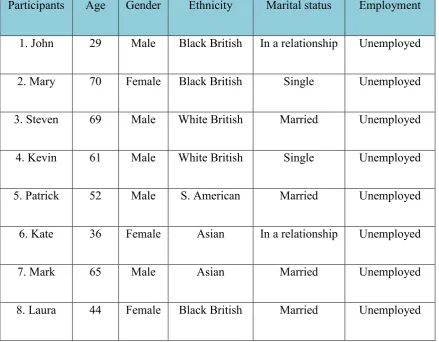
2.6.1.2 Participants’ details 48
2.6.2 Recruitment procedure 49
2.6.2.1 Recruitment challenges 50
2.6.3 Data collection 51
2.6.3.1 Interview procedure 51
2.6.3.2 Interview follow-up 52
2.6.3.3 Reflecting on interview questions and interviews 52
2.6.4 Materials used 54
2.6.5 Ethical considerations 55
2.7 Analytical procedure 56
2.7.1 Validity criteria 58
2.7.2 Reflexivity 60
2.7.2.1 Researcher’s background and interest in the topic investigated 62
2.7.2.2 Personal reflexivity 63
2.7.2.3 Reflections on the process of analysis 64
Chapter three: Analysis of data 67
3.1 Overview 67
3.2 Master Theme 1: “It Is Just So Difficult 69
3.2.1 Overview 69
3.2.2 Sub-theme 1: “What’s the Group Going to Be Like?”– Initial Apprehensions 69
3.2.3 Sub-theme 2: Handle with Care – Group Relationships 73
3.2.3 Sub-theme 3: “It Was A Short One” 76
3.3 Master Theme 2: Means to a Connection 79
3.3.1 Overview 79
3.3.2 Sub-theme 1: United by Stroke 79
3.3.3 Sub-theme 2: “As If There Is A Connection” 82
3.3.4 Sub-theme 3: Accepted Here Vs Judged Out There 86
3.4. Master Theme 3: Restoring Confidence and Hope 90
3.4.1 Overview 90
3.4.2 Sub-theme 1: “It Could Be Worse” 90
3.4.3 Sub-theme 2: “You Are Not Alone” 93
3.4.4 Sub-theme 3 : “Believe In Yourself” – Learning From Others 97
3.5 Theme 4: “Things Won’t Be the Same” – Moving Towards Acceptance 100
3.5.1 Overview 100
v
3.5.3 Sub-theme 2: “There Is A Life After Stroke” – Increased Acceptance of
Responsibility 103
3.5.4 Sub-theme 3: “This Is Me Now” – Emergence of Compassionate Self 105 3.5.5 Sub-theme 4: “I Can’t Get Usedto” – Ongoing Challenges 108
Chapter four: Discussion 113
4.1 Introduction to the Discussion 113
4.2 Overview of the Findings 113
4.3 Discussion of the Main Research Findings 114
4.4 Implication for Clinical Practice and Counselling Psychology 128
4.4.1 Implication for an ACT Group 128
4.4.2 Factors Affecting Groups 130
4.4.3 Time factor 132
4.5 Critical Overview of the Study 134
4.5.1 Strengths 134
4.5.2 Limitations 134
4.6 Conclusions and Recommendation for Future Research 135
4.7 Post-viva Reflexivity 139
4.7.1 Ethical Considerations 139
4.7.2 Analysis 140
4.7.3 Literature Review 141
References ... 143
Appendices 167
Appendix A – UEL Ethics Approval 167
Appendix B – NHS Ethics Approval 168
Appendix C – Information about the research 171
Appendix D - Consent to participate 176
Appendix E - A letter to a GP 178
Appendix F – Research passport 179
Appendix G – An examples of interview questions 180
Appendix H - Poster 182
Appendix I – The participants debrief and list of support services 184
Appendix J- An example of an initial coding of the data 185
Appendix L- Major Themes table with corresponding emergent themes plus samples of
extracts from the data: - Participant 2- Mary 193
Appendix M – An example of dairy entry 196
vi List of tables:
Table 1: Participants' Demographic Information 49
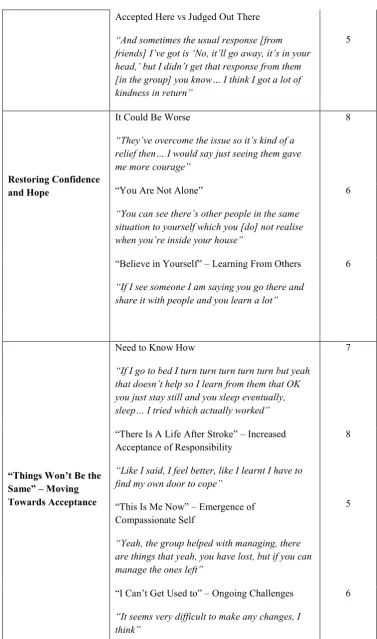
Table 2: Master themes and Subthemes 67
vii
Abstract
viii
and a suggestion for clinical practice is outlined, such as a need for homogeneous group structure, inclusion of significant others or time factors. The relevance to Counselling Psychology is outlined, followed by the strengths and limitations of the current study, and recommendations for further research.
1
Chapter one: Introduction
1.1Overview of the ChapterThe literature review provides insight into existing research and an overview of the literature that was used as a basis to form the rationale for this study. It begins with a description of the impact of stroke on quality of life, and of mental health issues resulting from that illness. This is followed by a brief description of available treatment for stroke population including pharmacological, CBT and third-wave therapies supported by existing outcome and qualitative research. A specific focus on group process and theory is described and referenced for the applicability for stroke survivors. Further literature focussing on the evaluation of group intervention for traumatic brain injury (TBI) and acquired brain injury (ABI) clients in stroke-related studies is highlighted. A brief synopsis of the ACT model and its applicability in stroke population is outlined and an evaluation of outcome study of ACT group intervention for stroke is presented. The last section concludes with the rationale for this study and highlights the relevance to Counselling Psychology (CP).
1.2 Impact of Stroke
2
Stroke is a serious and debilitating illness with significant implications for one’s day-to-day life. Stroke might have a devastating impact on one’s physical functioning. Depending on the obstruction in the brain, stroke might cause paralysis, memory problems and speech/language difficulties. Often, stroke can cause vision impairment and chronic pain or fatigue. Stroke-related disability can improve with time but frequently becomes a permanent effect, causing life-long physical limitations and challenges (Stroke Association, 2013). As the result, stroke survivors express concerns about social acceptance and personal identity (Barker, Reid, & Cott, 2004). Historically, stroke was only associated with older adults; however, recent research on stroke suggests that a number of young people, including children, are also at risk (Stroke Association, 2013). The World Health Organization has predicted that stroke will be one of the most commonly occurring health problems in the world by 2020, with 150,000 people already affected in the United Kingdom every year (WHO, 2011), and the social care cost and economic implication estimated to reach £8.9 billion a year in the UK (Saka, McGuire & Wolfe, 2009).
1.2.1 Psychological Impact Following Stroke
1.2.1.1 Depression and anxiety
3
mortality (Williams, Ghose, & Swindle, 2004) and reduced quality of life (Matsuzaki et al., 2015).
A recent systematic review shows that over 24% of stroke patients suffer from anxiety in the first few years, often relating to fear of having another stroke (Lincoln, Sutcliffe, & Unsworth, 2000). It has been suggested that the anxiety may be experienced not only immediately after a stroke but it may actually increase as the person’s post-stroke difficulties reach the chronic stage (Burton et al., 2011). Similarly to depressive symptoms, anxiety may be a source of further physical and psychological difficulties that negatively impact on one’s wellbeing and quality of life after stroke (Tang, Lau, Mok, Ungvari, & Wong, 2013). However, despite the significance of the emotional impact of stroke on one’s quality of life, the initial interventions still often prioritise physical recovery, treating psychological needs as secondary ( Pearce et al., 2015).
1.2.1.2 Psychological difficulties
4
Many stroke survivors report struggling to regulate their emotions, which can be caused by damage to the brain structure (Philippi, Mehta, Grabowski, Adolphs, & Rudrauf, 2009). Hence, post-stroke changes are also reported in relation to behavioural difficulties, such as verbal and physical aggression and feelings of frustration and anger (Baguley, Cooper, & Felmingham, 2006). Further research also shows levels of self-esteem and confidence decreasing in this population along with their sense of agency and an active coping style is often replaced by a withdrawn approach to life (Visser, Heijenbrok-Kal, Spijker, Ribbers, & Busschbach, 2013). Hence, Darlington and colleagues (2007) indicate that coping strategies are crucial in determining and rebuilding post-stroke quality of life.
Some studies also explored social issues related to post-stroke changes, such as higher levels of dependence on others, avoidance of pre-stroke activities or delays in defining new life directions, which all seem to be associated with elevated stress levels (Taylor, Poland, Harrison, & Stephenson, 2011). Furthermore, heightened or uncontrollable emotional reactions have been identified as factors that hinder adjustment to such a transformation, which is often reported as the most difficult process in the course of recovery (Hackett, Köhler, O’Brien, & Mead, 2014).
With the promising number of people surviving stroke today (NICE, 2013), those who survive are likely to face psychosocial challenges. Hence, there is an ongoing and increasing need to provide not only physical but also psychological interventions aiming to support this population of patients in the process of adaptation and life reclamation.
1.3 How Stroke Patients Can Be Supported
5
According to NICE guidelines (2013) pharmacological treatment is available to patients whose mood and anxiety level are assessed to require it, and appropriate medication may be prescribed, such SSRIs, SNRIs or tricyclic medication (Hackett, Anderson, House, & Xia, 2008).
However, adverse effects of antidepressants were noted in the literature, indicating conflicting evidence. For example, Narushima and Robinson (2002) reviewed available treatments for depression and anxiety in the post-stroke population, including pharmacological reviews. Their study indicates some medication such as Nortriptyline can be efficacious in treating depression after stroke, but simultaneously increases the risk of elevated depressive symptoms six months after ceasing medication. In addition, Juang and colleagues (2015) indicate that the use of antidepressants such as SSRIs may increase the risk of stroke reoccurrence, which may impact on how stroke survivors decide to approach mood management.
Furthermore, Hackett et al. (2008), in a systematic review of fourteen trials involving 1,515 participants, nine medications (fluoxetine, sertraline, trazodone, piracetam, maprotiline, mianserin, nortriptyline, indeloxazine, and methylphenidate) and psychological interventions (problem-solving and motivational interviewing) shows inadequate evidence supporting the use of antidepressants. On another hand, the study highlights the positive effect of psychological strategies. In conclusion, pharmacological interventions might be somewhat beneficial to the stroke population but must be used with caution and there is a need for further research into alternative psychological support.
6
The updated NICE guidelines on interventions for stroke survivors (2016) clearly stress the need for psychological input in the process of recovery from stroke. Furthermore, the guidelines imply that a multidisciplinary team approach with psychological support should be offered to all recovering stroke patients. Despite the recommendation, there are no specific suggestions as to what type of therapeutic approach may be most beneficial, although IAPT is recommended, suggesting a CBT-based approach may be frequently used as suggested by Stalder-Lüthy et al. (2013). Additionally, proposed guidelines imply that evidence-based interventions must be implemented, yet psychological interventions are more often based on general population research and less on stroke survivors specifically (Intercollegiate Stroke Working Party, 2016). Despite growing interest in stroke interventions in recent years, this area still lacks research and clinical guidance seems to be in its infancy (Kootker et al., 2014) with Lincoln et al. (2013) suggesting a lack of suitable psychological interventions available to the community.
Thus, it is not surprising that some studies reviewing stroke patients’ experience of provided care indicate un-met needs. For example, one study by Low and colleagues (2003) pointed to unsatisfactory levels of rehabilitation therapies stressing lack of post-acute stage therapeutic input. Lack of satisfaction was also voiced by the National Audit Office (2010) that reviewed stroke services, where over half of patients and carers rated psychological care as “poor” or “very poor”.
It appears then, that there is demand for psychological support and a growing role for psychologists in providing suitable interventions for this population in addition to an ongoing need for stroke-focused research.
1.3.3 Psychological Intervention for Post-brain-injury Psychological
7
In this section a brief summary of the literature of the main therapeutic interventions is presented. Most of the studies refer to either ABI or TBI rather than stroke specifically.
It seems that most of the interventions explored in existing research aim to test efficacy and effectiveness of particular models, and focus on the reduction of symptoms. These were mainly captured in quantitative studies. Perhaps, as NHS delivery is based on diagnostic criteria such as DSM-V or the ICD-10, the research has placed emphasis on deficits and searched for answers that can reduce post-stroke psychological distress that often manifests in depression or anxiety symptoms (Majumdar & Morris, 2018).
According to the systemic review by Stalder-Lüthy and colleagues (2013) where thirteen studies were reviewed, between CBT, counselling, and mindfulness, the CBT model was used most frequently to reduce depressive symptoms in ABI populations. Despite differences in the format of delivery of the intervention (e.g. group, individual, telephone) and length (5–10 sessions), there was medium effectiveness (0.68) relating to treatment of post-brain-injury depression. However, Kneebone’s (2013, 2015) case studies suggest for CBT to be more beneficial to this group of clients, it must be tailored to cognitive impairments by implementing external aids such as symbols or pictures and focusing on remaining abilities rather than regaining lost ones.
8
studies indicating improved coping mechanisms, and the efficacy of CBT was indicated in moving away from emotional coping responses towards problem-focused coping, which is associated with better adjustment (Bradbury et al., 2008). The systematic review indicated that the advantages of CBT also come from its structured format, which may be helpful for patients with cognitive deficits, and some studies implied that the flexibility of CBT in adjusting to memory impairments by repeating the material in sessions is beneficial. Also, through CBT techniques, patients report increased sense of control, which seems to be essential for recovery in this population (Stadler-Luthy et al., 2013). However, despite promising reports, the outcomes of studies point to flaws and issues that CBT seems to encounter. In the above studies, the reduced symptoms of depression or anxiety were not sustained after a long period of time (Thomas et al., 2012) with (at times) the stress levels remaining unchanged throughout (Bryant et al., 2003; Anson & Ponsford, 2006). Bryant’s study (2003) also reported inconclusive results in supporting the ABI population in community integration and social interactions. Furthermore, the experience of loss often reported after brain injury is associated with grief (Rochette, Tribble, Desrosiers, Braco, & Bourget, 2006); however, none of the outcome studies clearlyaddressed this emotional issue (Stadler-Luthy et al., 2013).
9
in self-blame and feeling that emotional struggles are ‘not normal’ (Couchman et al., 2014). This in turn might cause additional distress and facilitates the process of avoiding these problems. Thus, attempts to control unwanted experiences can be ineffective and even counterproductive (Forman, Herbert, Moitra, Yeomans, & Geller, 2007).
Furthermore, for stroke survivors with impaired executive function, perhaps CBT tools such as Cognitive Restructuring (CR) that aim to challenge negative thoughts and seek alternatives at the same time might be deemed too cognitively demanding and abstract (Kangas & McDonald, 2011; Blanchet, Paradis-Giroux, Pépin & McKerral, 2009). Stroke clients can also face difficulties setting goals within the CBT framework. Loss of identity and constant comparisons with the pre-stroke self may cause frustration and confusion in one’s reality (Dowswell et al., 2000; Ellis-Hill, Payne, & Ward, 2000; Pound, Gompertz, & Ebrahim, 1999). Thus, each time a stroke survivor faces a task that they used to be able to complete or one that is cognitively demanding, it may increase their level of psychological distress as a consequence (Kangas et al., 2011).
10
depressive mood linked to acceptance in itself, which came to the fore through explorative questioning of individual participants. Thus, it can be suggested that without a more exploratory approach, it is difficult to gain insight into the factors maintaining depression after stroke. This exploratory approach also facilitated new insight into individual stroke survivors’ experiences, namely highlighting how shame, low self-esteem or loss underlie depressive and anxiety symptoms (Seeto, et al., 2017).
Furthermore, it appears that CBT research has focused on deficit/loss after brain injury. Yet there is growing field of literature that emphases psychological growth as a vehicle for recovery (Linley & Joseph, 2004). That concept seems to focus more on rebuilding resilience, inner strength, when individuals can reflect on their life in a new context (Grace, Kinsella, Muldoon, & Fortune, 2015). Psychological growth after traumatic events such as stroke postulates that an individual can move beyond the baseline and become open to new possibilities and positive changes despite their difficulties (Grace et al., 2015).
Hence, other ways of supporting stroke survivors in their predicaments have been provided by a recent review of the suitability of third-wave therapies for psychological wellbeing following stroke by Smith (2017). The third-wave therapies such as Mindfulness, Compassion-Focused Therapy (CFT) and Acceptance and Commitment Therapy (ACT), despite their nuances and own focus, share a key concept acknowledging the importance of present-moment awareness, without a need to judge or challenge one’s struggles, but with a view to accepting them (Smith, 2017).
11
questioned the quality of measures used in the chosen studies, the qualitative data has indicated third-wave therapies to be a significant source of support to live more meaningful lives, move towards adjusting to post-stroke changes, manage overwhelming feelings through grounding techniques and remaining focused on what is possible now rather than comparing to past abilities (Merriman, Walker-Bircham, Easton, & Maddicks, 2015).
The other aspects of this critical overview focused on concepts such as compassion. In qualitative interviews, Ashworth et al. (2015) explored participants’ experiences of compassion-focused interventions in group and individual settings. He noted that participants reported being more kind to themselves and self-criticism or blame decreased as a result of the interventions. On the other hand, Shields and Onsworth (2013), based on their single case study using integrated CBT/CFT interventions, note that the participants were wary of self-compassion and caring for themselves as they associated it with being selfish. Hence, the above findings further highlight the dichotomy in individual experiences and the subsequent challenges in applying a psychological framework to the stroke population.
12
may not have been meaningful for the individuals and in effect may have not reflected their progress in different areas, thereby limiting the applicability of the findings.
Other mindfulness-based studies commented further on changes in quality of life (Marino et al., 2015; Moustgaard et al., 2007) resulting from this intervention. The researchers reported that the overall scores on quality of life increased from 60–80 on a 100-point scale in one study, and in 10 of out 13 subscales in another. However, those scores were not equally distributed, and with small sample sizes (N=1, N=23) and varied measures the results are unclear (Smith, 2017). Nevertheless, improving quality of life has been reported as an important aspect of post-stroke recovery, as it impacts on one’s ability to carry on living in a meaningful way (Mierlo et al., 2013). Since factors such as adaptation, sense of control and self-worth have been associated with reported health-related quality of life, they should be considered as important factors in the psychological interventions delivered for people with stroke.
In this review, Smith (2017) also indicated group process to be important. For example, Ashworth et al.’s (2015) qualitative data revealed participants found security in the group, enabling them to draw strength from each other, while affiliative group relationships facilitated change in developing a compassionate approach to oneself. The group also enabled people to share common difficulties that normalise the experiences of loss (Merriman et al., 2015) and attending the programme gave participants a sense of routine and purpose (Moustgaard et al., 2007). However, Smith (2017) notes that only three studies out of five comment on group processes and the quality of the reports are low; for instance, no clear analytical method was specified or the number of people expressing their view was not documented.
13
above studies point to the non-linear recovery process and a complexity of subjective experiences that cannot be measured by quantitative studies. A review by Redfern et al. (2006) including 67 studies evaluating psychological interventions for this population concludes that high quality evaluations of complex interventions are largely missing; hence it is problematic to draw confident conclusions about the benefits they can offer.
On the other hand, there are some commonalities in the above empirical research; that is, they target specific impairments (e.g. coping skills, social integration) which did not seem to fully respond to the myriad of post-stroke changes. Thus, to better address the complex cognitive and psychosocial needs following stroke, such as social isolation, or adjustment, the group-based interventions were found to enhance the rehabilitation process through the operation of non-specific therapeutic factors that serve as mediators for change across multiple experienced difficulties (Patterson et al., 2016). Still, the review of existing literature on group-based interventions following TBI indicates a lack of research exploring effectiveness of the group as medium per se,which is also in line with Smith’s (2017) review, where little attention was paid to the group process in the discussed stroke studies.
1.4 Group Factors and Process
Recognition of the personal context in which learning and applying coping skills takes place is reported as an important aspect in enhancing goal attainment (Ownsworth, Fleming, Shum, Kuipers, & Strong, 2008). The setting or environment in which psychological support takes place may influence participants’ experience of the treatment and facilitate or hinder the beneficial outcome.
14
studies shows no significant difference between those two forms of psychotherapy delivery (Baines, Joseph, & Jindal, 2004). Both individual and group therapies have been highly recommended as treatments for psychological problems within mental health settings (Wesson, 2013). However, group therapy has been advocated as a unique vehicle triggering therapeutic change, and it plays an important part of current National Institute for Health and Care Excellence (NICE) guidelines when supporting service users in their health-related predicaments (NICE, 2009). In addition, due to the increasing number of stroke survivors (Stroke Association, 2013), the need to deliver psychological support in group formats might be an appealing way to meet current NHS financial demands (Majumdar et al., 2018).
There are numerous concepts influencing psychotherapy groups that may enhance the significance of the group process in recovery for stroke patients. As Prochaska and DiClemente (1982) suggest, the process of change is independent of psychotherapy approaches, which points to the group factors/process as being beneficial in its own right in the journey of reclaiming life after stroke.
One of the theories applied in the group context is social comparison theory (Festinger, 1950), which suggests an individual can benefit from the process of multiple comparisons with others, enabling them to evaluate their situation in a new light. However, comparing oneself with others may have a negative effect as well. As stroke clients frequently report loss of confidence (Seeto et al., 2017), this process of comparison may hinder their recovery by negatively interpreting their circumstances and capacity to change. This highlights that group processes are complicated and perhaps intangible.
15
group. Further literature also suggests that collective identity achieved in the group increases positive evaluation of the therapy and it is correlated with self-esteem (Aviram & Rosenfeld, 2002). Moreover, being a member of the group might positively influence one’s wellbeing and facilitate the process of adjusting to life difficulties (Haslam et al., 2008). In stroke literature, positive social interaction is reported to be correlated with better wellbeing, positive growth and reduction of feelings of alienation (Clarke, 2003).
Conversely, the relationships in group settings can be challenging as it is understood according to different aspects, such as member–member, group–member, and member– leader (Kivlighan, 2011). The participants must learn to interact on these different levels, which can be demanding in comparison to individual treatments. Also, there is the risk of tensions occurring within the group, which may interfere with cohesion and impact the outcomes for individuals (Whitaker, 2003).
Additionally, group literature frequently refers to group factors/processes such as cohesiveness, vicarious learning, altruism or universality that are recognised as contributing to the therapeutic change (Schmalisch, Bratiotis, & Muroff, 2010;Yalom, 1995). Cohesiveness is often referred to as a bond between group members or an emotional connection (Corey & Corey, 1992 ). For the stroke population, due to reported feelings of loss of identity, creating a bond and belonging to the group might encourage establishing a sense of self again (Seeto et al., 2017). However, the process of creating attachment in the group seems to be complex and the definition of cohesion is still not agreed upon in the current literature (Kivlighan, 2011).
16
group therapy (Spragg & Cahill, 2015).As feelings of shame or blame are also reported by stroke survivors due to changes in their physical and emotional status, the above group process could be beneficial in addressing those difficulties as well. However, the recent literature seems to pose a dilemma, whether common experience might result from a homogenous group population, e.g. depression clients only, or if the same quality of universality and its impact on the experience of the group can be achieved in heterogeneous groups, e.g. those with multiple long-term health conditions (Biggerstaff & Thompson, 2008).
Another factor that may contribute to positive change is learning.The role of vicarious learning is strongly emphasized in Bandura’s theory of social learning (1977), which implies that the learning happens through observing others. In the group setting, learning is also facilitated by positive feedback that often encourages self-efficacy and confidence (Legg, Stott, Ellis, & Sellars, 2007). One of the predicaments reported in post-stroke life is loss of self-esteem and belief in one’s own capacity, hence learning in the group setting might increase confidence levels for this population.
In conclusion, offering a group intervention to stroke survivors might enable them to address some of the difficulties they face on a daily basis with support from and with others ‘in the same boat’.
1.4.1 Applicability of Group Intervention for ABI/TBI Populations
17
Ownsworth et al. (2000) conducted a RCT study, in which individual, group and combined-format therapy were compared in their efficacy in facilitating goal attainment and improving psychosocial functioning following ABI. The individual’s goals were based on occupational activities that were meaningful to participants. The results of the study suggest that individual therapy enabled participants to achieve their goals better; however, it was the group-based intervention that enabled them to build confidence in their behavioural competency, leading to improved psychological wellbeing and sustaining the outcome after 6 months compared to individual interventions. Both individual and group therapies seemed to have different goals, suggesting the results cannot be directly compared.
Additionally, it is also likely that in the group context the further input from peers and in-group interactions could have enhanced mutual learning and broadened strategies beyond personal ones, although that was not considered by the authors. It is notable that Visser’s (2013) RCT study, which described changes in the group as a “placebo effect”, also omitted the potential impact of group processes. The group effects might be more complex and its nuances harder to capture by quantitative measures, which make them under-reported in this type of research.
However, the increase of hopefulness in addition to confidence in group contexts is also reported in Vickery et al.’s (2006) study that explored effectiveness of psychotherapy interventions focusing on challenging negative views of self and moving towards other meaningful aspects of identity. The result of the study indicated a beneficial impact of group therapy on views of self, concluded from significant differences reported by participants.
18
or their quality of life. Additionally, without clear descriptions of utilised framework and control groups it is hard to conclude if the reported changes were due to specific treatment models or other factors, e.g. group process that may enhance a sense of confidence (Yalom & Leszcz, 2005). Therefore, the mechanisms supporting the above psychological gains remain uncertain.
Furthermore, the concept of self is also at the core of other studies by Aboulafia-Brakha and colleagues (2013) and Ownsworth and colleagues (2008). Researchers conducted quantitative studies evaluating the feasibility of CBT group programmes for ABI and TBI population in the context of self-awareness and emotional regulation (anger). The therapeutic framework focused on increasing emotional self-awareness, emotional regulatory skills such as relaxation, CR and prevention strategies. The conducted analysis enabled researchers to extrapolate the applicability of this model to increasing self-awareness and managing anger in this population based on medium difference in scores at pre- and post-treatment.
19
clinician throughout the research design may have influenced answers on the self- reported measures to more favourable ones. Thus, the measured change in the above study might be affected by numerous factors.
This issue of measuring change seems to be also present in Ownsworth et al.’s (2008) research that evaluated CBT-based intervention on shifts in self-awareness leading to change in psychosocial functioning. Analysis of the changes in participants was captured by a newly introduced self-awareness scale: the Self-regulation Skills Interview (SrSI) (Ownsworth, McFarland, & Yound, in press). The group results have indicated that self-awareness has not improved during the study.
The findings, however, can be explained by the newness of the scale which might not have been sensitive to multiple factors relating to changes in self-awareness. As a common assumption in quantitative design is that change is linear and gradual, the predicators of change tend to be measured once or twice, providing only snapshots of the change processes without further insight as to change (Hayes, Laurenceau, Feldman, Strass, & Cardaciotto, 2007). This is perhaps why there was a discrepancy between relatives reporting fewer emotional problems in participants’ behaviour as a result of the group, but this not being replicated by participants themselves. This type of design does not provide further information as to why and how the group processes affect the change and could be better explored through qualitative interviews.
20
talk with others prior to the start of the session. Social interaction is closely linked with developing a group relationship that is a vehicle for change (Kivlighan, 2011). Therefore, perhaps one explanation of the results was a lack of certain group factors that might have influenced the outcome. It seems that the group processes and the framework in which the group is delivered cannot be treated as separate entities and consideration of all possible dynamics contributing to and hindering outcomes for the stroke population may need to be regarded.
Another qualitative study by Couchman et al. (2013) explored experiences of ABI attendees and family members in multifamily group therapy based on solutions-focused and problem-solving therapy principles. Similarly to Vickery et al. (2006), the facilitators aimed to encourage broadening the definition of “deficient” self toward other values in life such as hobbies. The outcome of this thematic analysis largely concentrated on group processes such as social comparison that enabled individuals to normalise their experience and alleviate their sense of loneliness. The comparison with others supported them also to judge their own progress in the recovery. The feeling of being understood fostered connections and a sense of belonging. Participants also reported group interaction was a foundation for achieving integrity as an individual, within family and social settings (Couchman et al., 2013).
21
Unlike previously mentioned studies, participants stressed the usefulness of learning from others whose experiences mirrored their own. That aspect in particular highlights the importance of homogeneity in group settings, where attendees through shared experience rebuild their sense of self and deepen their understanding of stroke (Pearce et al., 2015). The limitation of the study was the lack of triangulation to enable the researcher to receive participants’ feedback about the findings. Still, it illustrates the unique experiences of the group members, pointing to dynamic group process that drove change and also furthered the argument for the value of qualitative methodology as an adjunct to quantitative design.
1.4.2 Group Interventions for Stroke Survivors
As mentioned in Smith’s (2017) study the existing research on stroke only has been growing in recent years, and it is still limited when comes to group interventions delivered for this population. This section will give an overview of existing literature dedicated to stroke survivors only, as identified by this researcher.
22
self-disclosure is frequently reported in group literature as an important factor in expressing emotions, revaluating them in context of a larger group and a contributing factor into building cohesiveness of the group (Corey et al, 1992).
The primary importance of self-disclosure was acknowledged in the report evaluating narrative therapy for stroke survivors (Chow, 2015). The researcher suggested that the topics discussed and talking about their predicaments increased their sense of clarity and acceptance (Kirkevold et al., 2014) but also allowed participants to externalise their problems. Consequently, that act invites participants to separate their identity from stroke, whereby they change how they connect with their illness (Chow, 2015).
On one hand, an important aspect of both studies is the development of the new narrative that facilitates change in their relationship to their illness. The meaning that an individual attributes to the illness may influence their psychological distress and impact on recovery (Krenz, Godel, Stagno, Stiefel, & Ludwig, 2014). The language used to label the illness (e.g. ‘intruder’) reflects the construction of a narrative tying together the illness and the self, and one which may disempower the individual (Shahar & Lerman, 2013). Thus, ability to change this view of the illness might stimulate positive upheaval in that relationship. For example, a study on cancer indicated that transforming the disease from “challenge” to “value” contributed to a lower level of depression and anxiety (Degner, Hack, O’Neil & Kristjanson, 2003). A similar outcome was reported by Mathias et al. (2014) where ACT intervention through use of metaphors supported participants in developing a new relationship with chronic pain and increased confidence.
23
adaptation and improve recovery in health condition (Morris & Morris, 2012) through discovering other perspectives and being encouraged by other members (Beesley et al., 2011; Yalom, 2005).
However, both studies have some limitations: for example, Chow’s study is a description of the model only and the finding has not been scientifically explored. Kierkevold’s (2012) study has a small sample size, specifically in a group intervention. The unknown number of sessions in both studies also makes it harder to draw conclusions regarding clinical applicability. Additionally, lack of a control group decreases access to possible meaningful information e.g. as the study was designed for patients who suffered stroke within 8 weeks, thus measures of quality of life or psychological distress may vary at that stage compared to later stages of living with stroke. Also, significant differences in participants’ age might have contributed to the overall experience of the group as the researchers reported younger attendees focused more on work-related issues in comparison to older adults. Saying that, a number of studies (Johansson, Bjuhr, & Ronnback, 2012; Visser et al., 2013) suggested efficacy of group-based interventions for stroke patients to be independent of age and stage of post-stroke living – which in itself suggests that further research is needed.
24
(2005) as a notion that enables one to disavow feelings of isolation or oddness and is a source of relief. This concept was also reported in cancer studies, where shared difficulties facilitate mutual understanding and normalise experiences (Sekse et al., 2013). Recognition of similarities also stimulates validation for the “invisible” pain (Mathias et al., 2014) or helps to reduce shame in individuals experiencing OCD (Spragg et al., 2014).
Overall, support for both mechanisms (the model and the group processes) is visible in the literature, however, how stroke patients make use of them is harder to discern from some quantitative studies. Some of the above mixed-method literature (e.g. Kirkevold et al., 2014; Merriman et al., 2015) due to qualitative analysis allow further insight into dynamic processes of change and benefits of interventions for stroke survivors, often driven by group factors. Thus, discussion of available qualitative research exploring lived experiences of group intervention in stroke population is outlined below.
Qualitative studies
25
Across all three studies, participants echoed the previously mentioned enjoyment of being part of the group and perceived their groups as warm and supportive environments (Legg et al., 2007). Social comparison, learning from each other and peer feedback were found to be crucial to restoring confidence (Morris et al., 2012). Additionally, shared themes also included the need for interaction with others who went through the same experience, as that provided a safe setting for participants, where their ‘handicaps’ were easily understood (Beesley et al., 2011). Those findings indicate further the significance that stroke survivors ascribe to being a member of a community who mirror the same experience.
Interestingly, this significance of group underlying dynamics is stressed in two of the presented studies (Morris et al., 2012; Legg et al., 2007). That is, both interventions were not driven by any therapeutic framework and relied solely on processes occurring between members. Still, the participants reported personal growth similar to feedback in other studies based on mindfulness groups (e.g. Meriman et al., 2015), CFT (e.g. Ashworth et al., 2014) or CBT (e.g. Ownsworth et al., 2008). This suggests that despite the body of literature promoting efficacy of particular interventions for brain-injured individuals (e.g. Bradbury et al., 2008; Kanags et al., 2011), the above findings provide further support that stroke survivors may experience improvement in their emotional and behavioural functioning resulting from group processes (Ownsworth et al., 2008).
26
qualitative studies do not aim for generalisation, transferability is an important aspect of this design (Willig, 2008).
1.5 ACT and Stroke Population
1.5.1 ACT Model
As mentioned earlier, Acceptance and Commitment Therapy, so-called “third-wave” therapy, has been attracting more interest in the recent decade. A brief description of the model is now outlined.
27
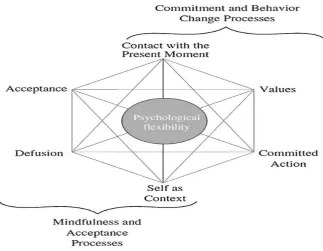
Figure 1. A model of psychological processes of ACT (Hayes et al., 2004).
There are six core processes in ACT that influence psychological flexibility: contact with the present moment, which refers to the here and now and allows a person to engage fully with what one does; acceptance, the process of being open to the experience without the need to fight it or avoid it; cognitive diffusion, referring to creating a distance from distressing thoughts – looking at them rather than from them; self as context, which gives the ability to observe oneself and be able to notice different roles that remain the same despite changes; values, which guide our behaviour and are motivations for further action; committed action, which is value-guided and goal-driven behaviour (Hayes et al., 2006).
1.5.2 Applicability to Stroke
28
relationships to psychological and contextual events, where post-stroke distress is conceptualised as a human experience and part of life (Hayes et al., 2006).
ACT, due to its counter-intuitive method of accepting, as opposed to challenging, the difficult experience, has a focus towards achieving a valued and fulfilling life (Clarke et al., 2014). This stance can be beneficial for stroke survivors who experience loss of direction in their life and wish to rearrange their lives despite unwanted changes (Rochette et al., 2006).
The loss of self and identity is frequently reported in stroke (Seeto et al., 2017). However ACT, through utilisation of mindfulness and cognitive defusion tools aims to decrease negative self-evaluation and redefine the concept of self by encouraging more flexible viewpoints through creating an awareness of the self, and by encouraging individuals to reconnect with personal values (Hayes, 2004).
29
Furthermore, this mode does not require cognitive capacity (which might be affected due to stroke), that has been shown to be challenging in CBT models of treatment (Kangas et al., 2011). Learning the techniques is assisted by role-plays, metaphors or mindfulness techniques. These strategies do not seem to require high executive functioning, reasoning or evaluation skills. Thus, it seems be user-friendly without need for stroke survivors to understand the underlying process of the model, as was pointed out in two recent reviews (Kangas et al., 2011; Soo, Tate, & Lane-Brown, 2011).
Additionally, ACT literature, albeit limited, it also reported as beneficial when delivered in group formats e.g. in fibromyalgia (Wicksell et al., 2013), psychosis (Bacon, Farhall, & Fossey, 2013), pain (Mathias et al., 2015), social phobia (Ossman, Wilson, Storaasli, & McNeill, 2006), treatment resistance (Clarke et al., 2014) or diabetes (Hadlandsmith, White, Nesin, & Greco, 2013). However, up to now, ACT-related research is also sparse when it comes to group therapy for brain injury and stroke specifically. Hence, it is yet little known how this model may facilitate or hinder progress in stroke populations. The researcher was able to locate only one quantitative ACT group study dedicated to stroke patients. An evaluation of this study is outlined in the following section.
1.5.3 An ACT Group Intervention for Stroke Survivors
30
ABI were excluded, focusing the outcome of the study on stroke survivors. The measures (PHQ-9, GAD-7, HR-QOL, hope scale, mental wellbeing) were collected by researchers pre- and post-group sessions at 2-month follow-ups. Their carers were invited to the course for support. The researchers indicated that their presence was not inhibiting the sessions as the programme was not interactive but only didactic using PowerPoint presentations (Majumdar et al., 2018). The size of the group varied from 6– 22 with 50% being carers.
The result reported by the researchers indicated significant change (54% of participants) in depression compared to TAU which was maintained at the follow-up measures. This result was replicated in measures of increasing hopefulness, but no changes were found in anxiety, mental wellbeing and quality of life. A number of possible factors might have contributed to the reported results. One is the didactic form of sessions. The above qualitative studies frequently reported social interaction (Tsaousides et al., 2014) and specifically sharing and talking about the experience as the most beneficial aspect of the group experience (Couchman, 2013; Kirkevold et al., 2012). Hence, being in a setting that inhibited that interaction perhaps also removed an important mechanism that facilitates emotional processing and increases the chance of positive change. Participants in Aboulafia-Brakha et al.’s (2013) study indeed suggested a need for more emotionally oriented discussions.
31
mental fatigue (Matsuzaki et al., 2015), there was the possibility they would have found it challenging to absorb or comprehend all the information delivered in a lecturing style. Consequently, that would affect the efficacy of the presented tools. Also, the small sample size and lack of comparison with other treatments indicates that the additional factor might have caused the positive changes on the depression and hopefulness scales.
The researchers suggested hopefulness was acquired in the study through skills such as directing values and committing action towards a more meaningful life (Majumdar et al., 2018). However, if this was the case one would expect the quality of life score to mirror those changes, as according to the definition of QOL, individual perceptions on their position is grounded in the context of their values (WHO, 2011). The other explanation proposed by the researchers is that better measures would have captured the change more effectively. However, the authors did not consider more holistic, bottom-up explanations that would involve seeking participants’ voices and perspectives on the changes emerging from their group. As the previously discussed literature suggested, qualitative inquiry into lived experiences can provide further insight and knowledge into how stroke survivors make sense of and utilise the ACT group factors in the process of change.
1.6 Relevance to Counselling Psychology
32
research shows that multiple processes and changes after stroke seem to require more holistic and integrative therapeutic understanding of clients’ experiences in therapy. The broadening understanding of human experience is at the core of CP practice, hence aligning the current study with CP principles (Douglas et al., 2016; Karademas, 2009).
The synthesis of literature on group treatment for those suffering stroke implies the process of recovery after stroke could be facilitated further by group processes, where sense of belonging, universality or social interaction were shown to be important vehicles for change (Patterson, Fleming, & Doig, 2017). As counselling psychologists engage not only in individual but also in group interventions, the outcome of the current study allows further insight into clients’ perspectives on experiences of being with others in ACT group interventions, therefore providing clinicians with supplementary information which could be considered in their practice.
The theoretical and methodological underpinning of the current study is in line with IPA, in which the process of analysis explores the subjective lived experiences of stroke patients (Smith et al., 2012). The subjective and reflexive aspects of IPA correspond with CP assumptions that stress the importance of understanding the individual meanings that clients attach to their experiences (Douglas et al., 2016; Borcki & Wearden, 2006). That cannot be achieved through pre- and post-testing hypotheses proposed by quantitative inquiry, but through allowing patients to tell their story in their own words (Smith, Flowers, & Larkin, 2012). This is in line with the current study, which aims to develop further idiosyncratic understanding of the phenomena, and aims to contribute to stroke-related clinical practice.
33
developing clients’ strengths and acknowledging the influence of wider context on emotional distress (Hayes, 2006; Douglas et al., 2016). The trans-diagnostic nature of ACT is not concerned with diagnosis and symptom reduction but focuses more on the universal process that underline these (outlined in Section 1.5). This is in line with CP’s view that questions the benefit of diagnostic criteria and instead celebrates individual experiences. Lastly, the core concept of acceptance and living a more fulfilling life encompassed in an ACT model has been long emphasised by humanistic and existential approaches, in which CP practice is grounded.
1.7 Conclusions and Situating the Present Study
The review found the majority of existing literature is still dedicated to general acquired or traumatic brain injury with scarce available data dedicated to stroke survivors only. Considering the variety of psychological difficulties (mood disorder, psychosocial difficulties, anger, loss in numerous life dimensions) experienced by this population, there is ongoing need to explore psychological support to improve their quality of life and the current study aims to add to the gap in the literature.
34
The mixed-method studies and the majority of qualitative studies did often focus on gathering participants’ feedback, with the feedback regarding the specific intervention rather than their experience of participation in the group per se, so the current study will aim to enquire into the group as a medium for stroke populations. Since the literature review also highlighted a complementary relationship between modality and group factors with no clear aspects contributing to the effectiveness of the group, this researcher will remain curious and open-minded as to how stroke patients experience ACT-based group therapy.
The qualitative literature adds additional volume by describing the complexity and nuance of human experience (Smith et al., 2012). It gives the researcher an opportunity to access the personal views of participants on their journey and enables her to elucidate further phenomena of the process of change, recovery and improving quality of life following stroke (Couchman et al., 2014). However, some of qualitative studies illustrate significant flaws in methodology, such as the limitations of the proposed theory in the grounded theory study by Beesley et al. (2011), or the absence of specific analysis methodology (Barton, 2002; Merriman et al., 2015). Thus, the current study would aim to address these issues by aligning to the validity criteria proposed by Yardley (2008).
35
facilitate or hinder positive change supported by the ACT model. Given the current lack of consistent evidence for treatment of psychological difficulties after stroke, with group process being shown to be a profound factor in achieving change (Ownsworth et al., 2008) it seems to be paramount to explore how this population can benefit from sharing experiences in group settings. Furthermore, the unclear findings from quantitative studies on ACT group programmes for stroke survivors sets a rationale for applying qualitative design by shifting emphasis to service users’ perspectives rather than specific interventions.
1.8 Research Questions
36
Chapter two: Methodology
2.1OverviewIn this chapter I discuss the rationale for my chosen methodology and employing the IPA method in order to answer my research question. Further, the process of recruiting the participants and designing the research question is outlined. The following sections also include consideration of the ethical procedures I followed.
In the present section, I have used the first person writing style where relevant with the aim of highlighting my own role as a co-constructor of the analysis together with the interviewees. According to the literature, using the first person is in keeping with the epistemological paradigm of the IPA and part of active reflexivity process (Webb, 1992).
2.2 Rationale for qualitative approach
How we seek out new knowledge governs the preferred process that aims to answer the research question. As Smith suggests, research should be designed to explore “humanly significant problems with method chosen” (Smith, 2001, p. 443). As this study’s objective is to explore individual experiences and meaning attached to participation in group therapy, I have employed a qualitative method that is consistent with the aim of this research.
37
recognises that an experience is not an objective entity and, therefore, in contrast to the quantitative method, it does not/cannot explain data through numerical values, and does not engage in statistical analysis (Goodyear, Claiborn, Lichtenberg, & Wampold, 2005; Smith, Flowers, & Larkin, 2012). Instead, qualitative approaches offer a variety of methods that enable the understanding of data by looking at a unique experience through a magnifying glass of detailed analysis. Hence, this approach offers a complementary form of investigation and can offer a novel insight into knowledge, including that which is related to health problems (Yardley, 2000).
38
Following a stroke, most people experience physical difficulties linked with the psychological challenge of adjustment and acceptance and significant loss of self (Kleiber, Reel, & Hutchinson, 2008). This suggests that the journey towards reconciliation and reclaiming life after a stroke is not only physical, but also depends highly on the opportunity to restore one’s identity, which is a complex phenomenon (Salter, Hellings, Foley, & Teasell, 2008). For that reason, I employed the qualitative method and intended to approach the current study in a more holistic way through the biopsychosocial model that is in line with Counselling Psychology.
2.3 Rationale for interpretative phenomenological analysis
As mentioned previously, there are a number of qualitative methods available to the researcher and, depending on the enquiry and aim, different frameworks should be used. I initially considered Grounded Theory method, which aims to produce new theories grounded in “observation of the reality” (Hayes, 2000, p. 184). This approach would still have allowed for being context-specific and for the data to be driven by the real world. However, this method utilises a deductive and hypothesis-driven approach, and the primary concern was to develop explanatory theory (Shinebourne, 2011). Nevertheless, the intention of this study was to explore individual experience and in-depth understanding of being in group therapy, rather than proposing a new theoretical explanation of this phenomenon. Thus, on that basis, this method was discarded as inappropriate for the current study.
39
found to contradict the goals of the current study, in which the main focus was on significant experience and sense-making of stroke patients who attend ACT group therapy.
Based on the above, I utilised Interpretative Phenomenological Analysis (IPA) (Smith et al., 2012). This approach is concerned with individuals’ perception of their embodied experience, and also embraces phenomenological and interpretative traditions. Contrary to discourse analysis, this methodology enabled me to take an insider point of view; that is, it allowed me to get close to participants’ experiences and engage with their meaning-making processes by using a double hermeneutic (a process of interpretation) (Biggerstaff et al., 2008; Smith, 2004). Taking into account that the aim here was to explore that experience on the deeper level, rather than verbal communication, this proved to be the ideal method of analysis for this project.
Furthermore, IPA is inductive in its nature, and allows spontaneous data to emerge during the analysis, which facilitates an exploration of personal accounts (Smith et al., 2012). Therefore, in contrast to Grounded Theory, IPA brings to the fore participants’ perceptions through capturing the relationship between themes that arise during analysis (Smith et al., 2012). Due to the above, I considered IPA to be more attuned with this research’s exploratory and experiential interest.
40
the area of research and personal beliefs towards health-related issues, and how those could influence the process of analysis. This factor was an additional reason for choosing IPA as a method for the current study.
The qualitative studies previously discussed in Chapter One suggested that it is an ideographic narrative about experience that brings about meaningful knowledge and enriches our practice (e.g. Townend, Tinson, Kwan, & Sharpe, 2010). Hence, following the phenomenology and appreciation for human beings’ individuality that IPA celebrates, this method of enquiry was suitable for the current study. In addition, the quantitative method is theory-driven and seeks to understand laws and causes, but this assumes that all human reactions are determined by these laws (e.g. physical symptomology of stroke) (Howitt, 2010). This approach defines the human in a mechanical way, which is in line with naïve realist paradigms. In contrast, as a critical realist (explained further in Section 2.5), I learnt to appreciate the influential role of the environment, and acknowledge that human behaviour is not rule-governed. Thus, in order to explore subjective experiences, IPA is influenced by Heidegger’s notion of “person in context” (Smith et al., 2012), offering a focus on semantic rather than lawful study, which makes this method align with the research question.
In addition, I think that IPA is congruent with the ethos of Counselling Psychology, which also assumes the individual experience to be fundamental, and that the primary concern is to uncover and enhance understanding of the uniqueness of the individual (Eatough & Smith, 2007).
41
counselling psychologists in their clinical work, the IPA process of interpretation makes it once again consistent with often-used clinical skills.
Overall, the qualitative method and IPA specifically, is well situated within Counselling Psychology traditions, and can offer a view of “what resides beneath” human experience (Haverkamp, Morrow & Ponterotto, 2005, p. 123). This made this method relevant to mystudy and congruent with the clinical ethos of counselling psychologists.
2.4 Interpretative phenomenological analysis
Interpretative Phenomenological Analysis (IPA) is a qualitative research method that explores how people make sense of their lived experiences. According to IPA philosophy, individuals tend to reflect on major changes in their lives and the IPA researcher aims to participate in the process of making sense of these reflections (Smith et al., 2012). Thus, IPA is concerned with individuals’ subjective accounts rather than the formulation of objective statements. Meaning and understanding of participants’ idiographic experience is not fully possible, hence IPA relies on the researcher’s own preconceptions, knowledge and views to make sense of those experiences through the process of interpretation (hermeneutics) (Brocki & Wearden, 2006).
42
engages in “phenomenological attitude”, by bracketing previous knowledge (epoche) in order to concentrate on a phenomenon. Still, bracketing does not mean previous experiences are absent or removed entirely; it means they are minimised to enhance new ways of thinking about the phenomena at hand (Smith et al., 2012).
Although phenomenology was instigated by Husserl, IPA draws on Heidegger’s existential philosophical understanding of human experience (1962), which perceives a person as a part of the wider world, embodied in social, cultural, and historical milieu (“the person in context”) and introduced the concept of inter-subjectivity (relatedness to the world) (Shinebourne, 2011).
Heidegger also questioned the possibility of gaining knowledge without interpretating one’s experience. Hence, within IPA, the researcher aims to produce analytic perceptions grounded within participants’ sense-making, although understood and analysed by the researcher (Biggerstaff & Thompson, 2008). This theory of interpretation (hermeneutics) instils the importance of an inquisitive although empathic position to interpretations, whereby the researcher attempts to make sense of the participants’ sense-making (double hermeneutics).
43
In summary, IPA adopts a philosophical position whereby, through interpretative methodology, it allows access to idiographic experience of one’s world. In order to attempt to encapsulate and explore participants’ perceptions of their experiences in a collaborative act of search for meaning, IPA emphasises the need for researcher self-reflection, which requires one to explicitly identify and put to the side one’s pre-conceptions and knowledge relevant to the phenomena at hand (Smith et al., 2012). It is paramount to highlight that acknowledging of prior knowledge does not guarantee the researcher a fully objective stance to the data (Larking et al., 2006).
2.5 Epistemological dilemmas
Through the course, I have learnt that my clinical work and research approach are interlinked and bound by a set of assumptions and beliefs that I have developed. The assumptions are related to how I rely on theoretical guidance, and how I learn about clients’ issues. The literature often highlights the importance of placing oneself as a psychologist within philosophical paradigms in order to guide the research process (Harper, 2011). Philosophical traditions refer to the nature of knowledge (epistemology), and to understanding what reality is (ontology). There is also the role of researcher and participant (rhetoric), and scientific rigour (methodology) (Hayes & Wood, 2011). It seems that different authors approach the explanation of the paradigms differently based on various dimensions. For example, Ponterotto (2005) adopted Guba and Lincoln’s 1994 framework and looked at paradigms through ontological, epistemological, and methodological lenses. He proposed four categories: positivism, post-positivism, constructivism-interpretivism, and critical-ideological.
44
material is perceived to reflect reality (realism-relativism), which is more in line with my understanding of epistemology. My early professional clinical experience was aligned more with realism ethos that asserts there is one version of reality and that truth is fixed. The knowledge produced under this assumption is meant to be objective, and therefore does not leave room for subjective accounts, which is the core interest of my research (Harper, 2011). My further clinical experience in health-related difficulties and my work with a group of psychologists allowed me to expand my view and I rejected my previous philosophy by engaging in a more open understanding of human experience, leading me to adopt a critical realist position.
Critical realism still acknowledges the existence of truth, but this truth is directly created by individuals and it consists of meanings (Hayes, 2000). According to Heidegger (1962), as a critical realist we cannot ignore that, as individuals, we live within a set of social, cultural, and language structures that make us part of “out-there” reality. This approach represents less radical versions of positivism and enables us to acknowledge the existence of context-specific reality, but also allows us to recognise the fact that individuals construct the meaning of their world by accessing their perceptions and thoughts (Ayers, 2010).
45
that experience cannot be just understood through language (Larkin et al., 2006) and therefore within this epistemology the emphasis is on the importance of collaborative relationships between researcher and participants in a journey of searching for meaning (Smith et al., 2012).
As a critical realist, in order to try to capture an individual’s understanding of the world, I must look at it through their lenses but remain also aware of my own ideas. That would be made possible by engaging in phenomenological frameworks of enquiry. Landridge (2007) advocates phenomenological methods as suitable for the study of lived experience, as it focuses on subjective experience and rejects subject–object dualism that imposes an exp