International Research Journal of Marketing and Economics
Vol. 4, Issue 1, January 2017 Impact Factor- 5.671 ISSN: (2349-0314)
© Associated Asia Research Foundation (AARF)
Website: www.aarf.asiaEmail : [email protected], [email protected]IMPACT OF LOCATION ON THE PERCEPTION OF RURAL PEOPLE
FOR OVERALL RURAL DEVELOPMENT UNDER MNREGA WITH
SPECIAL REFERENCE TO KHARGONE AND BARWANI DISTRICTS
OF MADHYA PRADESH
*Shradha Mishra
Research Scholar
**Dr. Suresh Patidar
Reader, IIPS, DAVV, Indore
ABSTRACT
India is predominantly an agrarian country. Nearly 80% of India’s population lives in villages.
Hence it becomes important that proportionate amount of attention and funds be spent for
betterment of the rural people. But inspite of their being in majority, they have been lagging
behind in the fields of education, civic amenities, medical facilities and economic well being. So
the Government of India realize the need of improvement of condition of rural people. Many
programmes and projects for their upliftment have been started. In order to overcome all these
problems especially rural unemployment, Government of India enacted The National Rural
Employment Guarantee Act (NREGA) on 25th August 2005. This act has been renamed as
Mahatma Gandhi National Rural Employment Guarantee Act (MNREGA) on 2nd October 2009.
The Act guarantees 100 days of employment in each financial year to rural adult members of the
family who are willing to do unskilled manual work at the statutory minimum wages. This largest
employment providing program in the world enjoys budget allocation of Rs. 38,500 crore in year
2016-17. It aims to achieve twin objective of rural development and employment. This research
Khargone and Barwani districts of Madhya Pradesh. This research is based on primary data
which is collected through a questionnaire and data analysis was done by using t test.
Keywords: Rural Development, Rural Employment, location, MNREGA, T test
Introduction
The people of India live mostly in rural areas or it is in the heart of villages that the nation lives.
But the rural mass faces various challenges like poverty, unemployment, illiteracy, lack of
infrastructure etc. After independence, the government launched a number of schemes for
economic and social well being of rural people. In 2005, the government of India passed
Mahatma Gandhi National Rural Employment Guarantee Act (MGNREGA) to eradicate poverty
and generate employment in villages. This scheme is demand driven and decentralized. It
generates employment by undertaking projects related to water conservation, drought proofing,
land development and rural connectivity. With time MNREGA has also appeared as an important
work opportunity for women who would have otherwise remained unemployed or
underemployed. Today this scheme not only contributes in income and livelihood security but
also work for gender and social empowerment, sustainable asset creation and increasing
agricultural productivity. For smooth functioning of the world‟s largest scheme in terms of
beneficiaries regular monitoring and updation is demanded. The current research is an attempt to
study and evaluate the impact of MNREGA on rural development of India. The study
investigates various aspects of development indicators viz. agri-economic development,
employment and empowerment, rural infrastructure, migration reduction and irrigation. These
indicators have been taken as basic parameters to study the impact on rural households.
Literature Review
Mahatma Gandhi National Rural Employment Guarantee Act is a social welfare programme
which encompasses the whole of rural India. It spends a huge budget as compared to any other
public welfare programme. Aiyer and Samji (2006) emphasized on strengthening of social audit
in order to improve the effectiveness of MNREGA. They also suggested community score card
in which citizens play the central role in monitoring the provision of public services.
Chakraborty (2007) observed that under utilization of the total available funds particularly in
poorer states is hindering the effectiveness of the scheme. According to his study, along with the
building at the village level, right to information to enable social audits effectively,
accountability of functionaries and an effective grievance redressal mechanism assume critical
importance.
Jacob (2008) observed that the MGNREGA programme has immense potential to improve the
gap between urban and rural India and lead to rural development in terms of basic infrastructure
like roads, in terms of agricultural productivity from irrigation works. It also provides a stable
income for workers; their income graph would be much smoother with the MGNREGA
bolstering their earnings in the 100 days between agricultural seasons. The efforts made by the
Villupuram district (of Tamil Nadu) authorities though efficient functioning of MGNREGA,
although there still might be some irregularities in the implementation should be used as a model
in other regions to help realize the potential of this Act.
Gaiha et al (2009) tried to construct an intuitive measure of the performance of the MGNREGA.
Their paper focused on whether excess demand responds to poverty and whether recent hikes in
MGNREGA wages were inflationary. Their analysis confirms responsiveness of excess demand
to poverty. They observed that apprehensions expressed about the inflationary potential of hikes
in MGNREGA wages were confirmed. The higher MGNREGA wages were likely to undermine
self-selection of the poor in the programme. They suggested in order to realise the poverty
reducing potential of this scheme, a policy imperative was to ensure a speedier matching of
demand and supply in districts that were highly poverty prone, as also to avoid the trade-offs
between poverty reduction and inflation.
Kareemulla et al (2010) evaluated the scheme in four states, viz., Rajasthan, Andhra Pradesh,
Karnataka and Maharashtra with a specific focus on desirability, quality and durability of assets
created and the programme‟s effects on the livelihood generation of beneficiaries. The study
found that a wide variety of works were taken up under the scheme in the study districts
including works on soil and water conservation structures and rural roads, which matched the
requirements of the people but the quality and maintenance of assets need more attention in the
coming years so that investment made would not go futile. They concluded that scheme was
achieving its primary objective of employment generation but the assets created were generally
Anderson et al (2013) suggest the role of Unique Identification (UID) in the functioning of
MGNREGA and how this new system can bring better efficiency in its functioning and they also
suggest to use control group methodology for testing the efficiency of UID system in improving
MGNREGA. The new UID system will enable payments to go through the banking system.
Bank accounts for MGNREGA workers will be linked to the unique biometric id. As a result, the
actual transfer of payments will immediately reach the hands of who it is intended for. This
should drastically reduce the inherent corruption in the current system and increase the amounts
and reliability of payments to the workers.
Khan (2015) in his paper highlighted the performance of MGNREGA while implementing the
world‟s largest employment generating programme in Dharwad district of Karnataka state. The
scheme helped in sustainable development of Dharwad district through infrastructure
development. Lot of focus has been for water and soil conservation, in that more emphasis was
given for Water conservation and water harvesting and Drought Proofing which are essential for
upliftment of the rural poor. Geetika (2015) in her research identified that India‟s MGNREGA is
the only Act which gives its rural people such a right and that too in the era of Liberalization,
Privatization and Globalization (LPG). It has a vital role to play because of its humane approach.
It serves as an effective safety net for the unemployed especially during famine and drought. It
has enabled them with sufficient purchasing power and they are able to at least to supports their
basic necessity i.e. food. The Act has confined the rural poor to their areas and stopped migration
to the cities. It is not only giving rural livelihoods but also involving them in other
agricultural work. This has helped in handling disguised workers. Employment in other
non-agricultural work will also improve the rural infrastructure i.e. rural asset building. It will
ultimately lead to sustainable development.
Objectives
1. To study the effect of location on overall perception of rural people towards MNREGA.
2. To study the effect of location on the perception of rural people towards agri-economic
development under MNREGA.
3. To study the effect of location on the perception of rural people towards employment and
empowerment under MNREGA.
4. To study the effect of location on the perception of rural people towards rural
5. To study the effect of location on the perception of rural people towards migration
reduction under MNREGA.
6. To study the effect of location on the perception of rural people towards irrigation under
MNREGA.
Hypotheses
Ho1 There will be no significant effect of location on overall perception of rural people towards
MNREGA.
Ho2 There will be no significant effect of location on the perception of rural people towards
agri-economic development under MNREGA.
Ho3 There will be no significant effect of location on the perception of rural people towards
employment and empowerment under MNREGA.
Ho4 There will be no significant effect of location on the perception of rural people towards
rural infrastructure under MNREGA.
Ho5 There will be no significant effect of location on the perception of rural people towards
migration reduction under MNREGA.
Ho6 There will be no significant effect of location on the perception of rural people towards
irrigation under MNREGA.
Methodology
In this study, the population consists of the rural people living in Khargone and Barwani districts
of Madhya Pradesh. A sample of total 400 respondents is taken for the study. 202 respondents
were taken from different villages of Khargone district and 198 respondents were taken from the
villages of Barwani district. The scale was designed on the basis of the literature review. A panel
of experts from administration, statistics, economics, human resource and researchers were also
consulted for the development of scale. It was based on Likert Scale. Against each statement, a
five point scale was given: Strongly Disagree, Disagree, Neutral, Agree and Strongly Agree. The
data was entered in SPSS 16.0 version (Statistical Package for Social Sciences) for analysis. T
Results and Findings
[image:6.612.97.513.128.373.2]a) Effect of location on the overall perception of rural people towards Rural Development
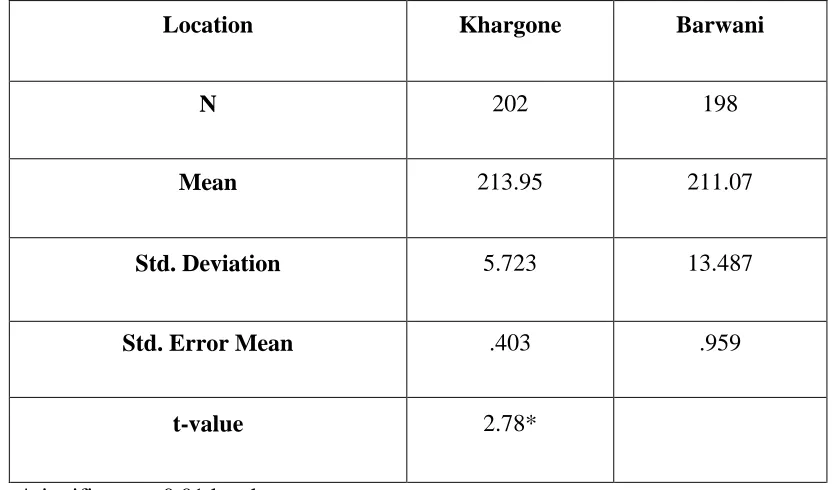
Table 1. Mean, SD, SE and t-value for Overall Perception towards Rural Development
Location Khargone Barwani
N 202 198
Mean 213.95 211.07
Std. Deviation 5.723 13.487
Std. Error Mean .403 .959
t-value 2.78*
*significant at 0.01 level
From the above table, it can be seen that the t-value of 2.78 is significant at 0.01 level with
degree of freedom equal to 398. It means that there is a significant difference between perception
of respondents belonging to Khargone and Barwani districts in terms of overall perception
towards MNREGA. In the light of this the null hypothesis namely, “there will be no significant
effect of location on overall perception of rural people towards MNREGA.” is rejected.
Further, the overall perception mean score of Khargone district is 213.95 which is
significantly higher than that of Barwani district (211.07). Hence, it may be concluded that
Khargone district had better overall perception than Barwani district towards MNREGA.
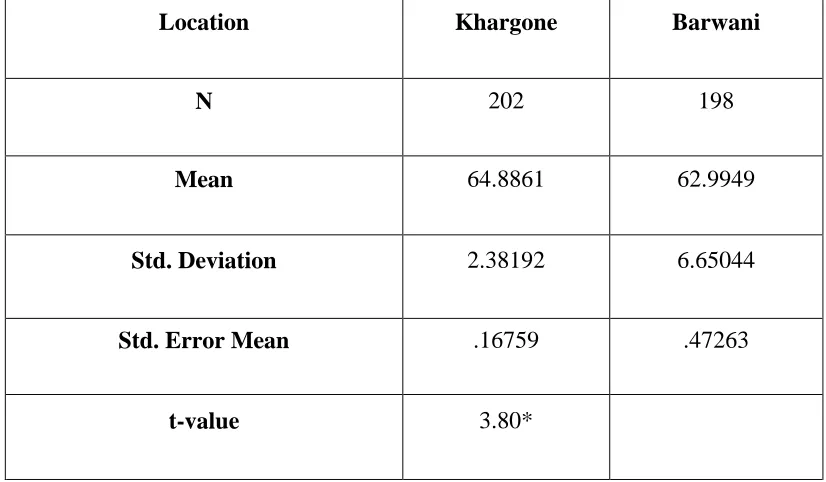
Table 2. Mean, SD, SE and t-value for Perception towards Agri-Economic Development
Location Khargone Barwani
N 202 198
Mean 64.8861 62.9949
Std. Deviation 2.38192 6.65044
Std. Error Mean .16759 .47263
t-value 3.80*
*significant at 0.01 level
From the above table, it can be seen that the t-value of 3.80 is significant at 0.01 level with
degree of freedom equal to 398. It means that there is a significant difference between perception
of respondents belonging to Khargone and Barwani districts in terms of agri–economic
development under MNREGA. In the light of this the null hypothesis namely, “there will be no
significant effect of location on the perception of rural people towards agri-economic
development under MNREGA” is rejected.
Further, the agri–economic development mean score of Khargone district is
64.8861 which is significantly higher than that of Barwani district (62.9949). Hence, it may be
concluded that respondents belonging to Khargone district had better perception towards agri–
c) Effect of location on the perception of rural people towards Employment and
[image:8.612.100.511.119.361.2]Empowerment
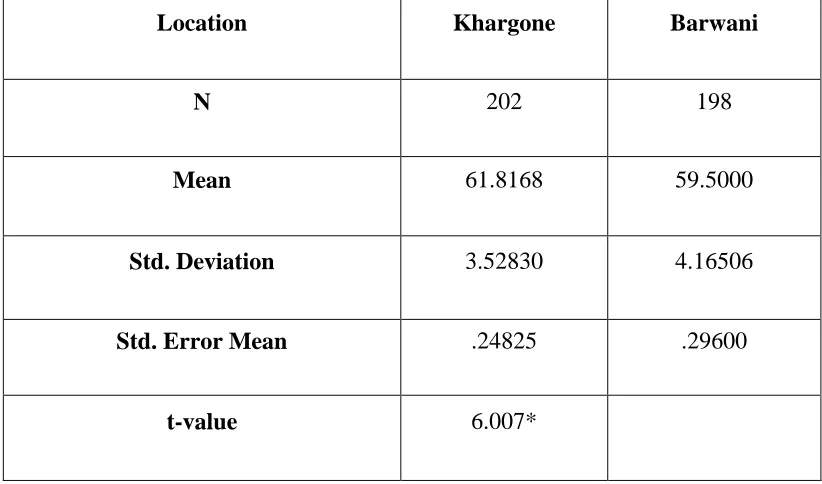
Table 3. Mean, SD, SE and t-value for Perception towards Employment and Empowerment
Location Khargone Barwani
N 202 198
Mean 61.8168 59.5000
Std. Deviation 3.52830 4.16506
Std. Error Mean .24825 .29600
t-value 6.007*
*significant at 0.01 level
From the above table, it can be seen that the t-value of 6.007 is significant at 0.01 level with
degree of freedom equal to 398. It means that there is a significant difference between perception
of respondents belonging to Khargone and Barwani districts in terms of employment and
empowerment under MNREGA. In the light of this the null hypothesis namely, “there will be no
significant effect of location on the perception of rural people towards employment and
empowerment under MNREGA” is rejected.
Further, the employment and empowerment mean score of Khargone district
is 61.8168 which is significantly higher than that of Barwani district (59.5000). Hence, it may be
concluded that respondents belonging to Khargone district had better perception towards
d) Effect of location on the perception of rural people towards Rural Infrastructure
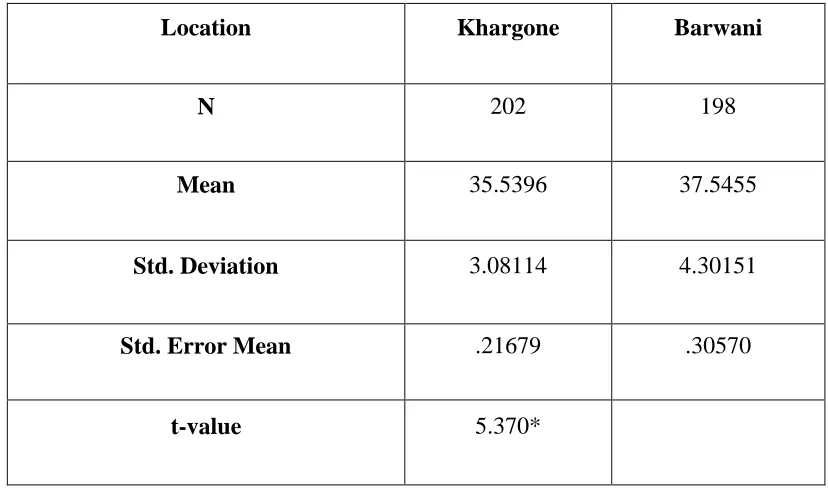
Table 4. Mean, SD, SE and t-value for Perception towards Rural Infrastructure
Location Khargone Barwani
N 202 198
Mean 35.5396 37.5455
Std. Deviation 3.08114 4.30151
Std. Error Mean .21679 .30570
t-value 5.370*
*significant at 0.01 level
From the above table, it can be seen that the t-value of 5.370 is significant at 0.01 level with
degree of freedom equal to 398. It means that there is a significant difference between perception
of respondents belonging to Khargone and Barwani districts in terms of rural infrastructure under
MNREGA. In the light of this the null hypothesis namely, “there will be no significant effect of location on the perception of rural people towards rural infrastructure under MNREGA” is
rejected.
Further, the rural infrastructure mean score of Khargone district is 35.5396 which is
significantly lower than that of Barwani district (37.5455). Hence, it may be concluded that
respondents belonging to Barwani district had better perception towards rural infrastructure than
e) Effect of location on the perception of rural people towards Migration Reduction
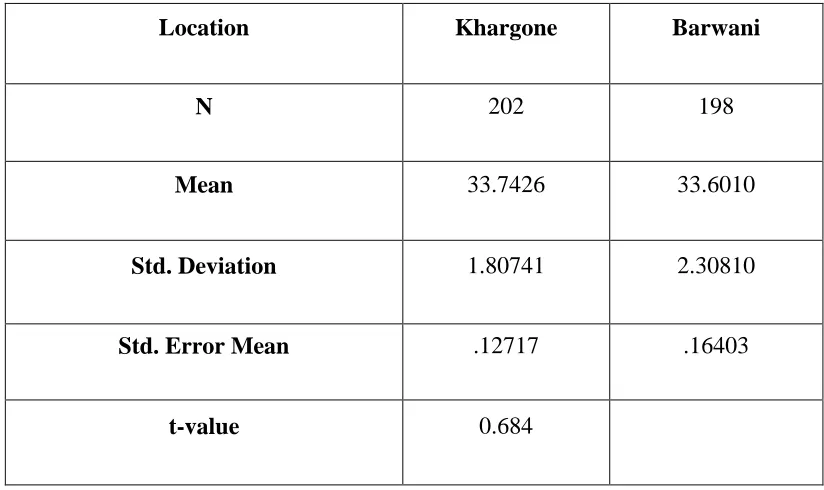
Table 5. Mean, SD, SE and t-value for Perception towards Migration Reduction
Location Khargone Barwani
N 202 198
Mean 33.7426 33.6010
Std. Deviation 1.80741 2.30810
Std. Error Mean .12717 .16403
t-value 0.684
The t value of 0.684 is not significant. It means that mean perception score of migration
reduction of respondents belonging to Khargone and Barwani districts do not differ significantly
from each other. In the light of this the null hypothesis namely, “there will be no significant
effect of location on the perception of rural people towards migration reduction under
MNREGA” is not rejected.
Hence, it may be concluded that respondents from both Khargone and Barwani districts
f) Effect of location on the perception of rural people towards Irrigation
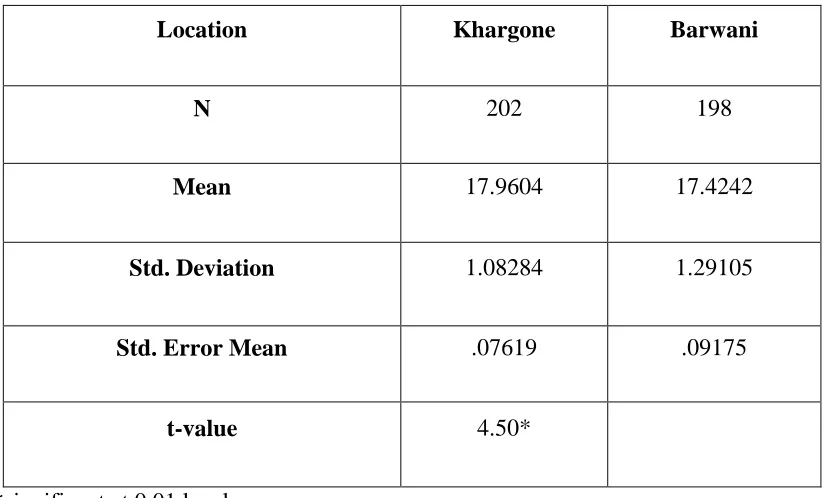
Table 6. Mean, SD, SE and t-value for Perception towards Irrigation
Location Khargone Barwani
N 202 198
Mean 17.9604 17.4242
Std. Deviation 1.08284 1.29105
Std. Error Mean .07619 .09175
t-value 4.50*
*significant at 0.01 level
From the above table, it can be seen that the t-value of 4.50 is significant at 0.01 level with
degree of freedom equal to 398. It means that there is a significant difference between perception
of respondents belonging to Khargone and Barwani districts in terms of irrigation under
MNREGA. In the light of this the null hypothesis namely, “there will be no significant effect of location on the perception of rural people towards irrigation under MNREGA” is rejected.
Further, the irrigation mean score of Khargone district is 17.9604 which is significantly
higher than that of Barwani district (17.4242). Hence, it may be concluded that respondents
belonging to Khargone district had better perception towards irrigation than respondents
belonging to Barwani district under MNREGA.
Conclusion
A difference in perception of rural people depending on their location is observed. The rural
people of Khargone district were found more enthusiastic and have strong perception towards
agri-economic development, employment and empowerment, irrigation and overall perception.
They actively participate in giving suggestions for the improvement of MNREGA works and
panchayat members, sarpanch worked efficiently in planning and implementation of MNREGA
works. The rural people of Barwani district were found comparatively less enthusiastic but were
more concerned about developing a better rural infrastructure in the villages. They opined that a
better rural infrastructure will bring more employment opportunities to the villages. Most of the
population living in these two districts belongs to schedule caste and schedule tribe. These rural
people were either illiterate or have primary education only. MNREGA not only provided
employment to this labor class population but also upgraded their social well being. A
satisfactory women participation in MNREGA works is also observed leaving a positive impact
on their socio-economic status. The rural people of both the districts see MNREGA as an
effective scheme to fight against poverty and unemployment. The unskilled and illiterate people
got employment and a fair compensation near their residence only resulting in reduced
migration. Also, it gave a regular pay to them.
References
1. Aiyar, Yamini and Salimah Samji (2006), “Improving the Effectiveness of National
Rural Employment Guarantee Act”, Economic and Political Weekly, January 28, pp.
320-326.
2. Anderson, Siwan, Ashok Kotwal, Ashwini Kulkarni and Bharat Ramaswami (2013),
“Measuring the Impacts of Linking NREGA Payments to UID”, Working Paper,
International Growth Centre, London School of Economics and Political Science,
London.
3. Chakraborty, Pinaki (2007), “Implementation of Employment Guarantee: A Preliminary
Appraisal”, Economic and Political Weekly, February 17, pp. 548-551.
4. Gaiha, Raghav, Vani S. Kulkarni, Manoj K. Pandey and Katsushi S. Imai (2009),
“National Rural Employment Guarantee Scheme, Poverty and Prices in Rural India”,
ASARC Working Paper 2009/03.
5. Geetika (2015), “Analysis of performance of Mahatma Gandhi National Rural
Employment Guarantee Act (MGNREGA) with reference to the state of Haryana”,
International Journal of Research in Commerce and Management. Vol. 6, No. 5,
6. Jacob, Naomi (2008), “The Impact of NREGA on Rural-Urban Migration: Field survey
of Villupuram District, Tamil Nadu”, CCS Working Paper No. 202, Summer Research
Internship Programme, Centre for Civil Society
7. Kareemulla, K., S. Kumar, K.S. Reddy, C.A. Rama Rao and B. Venketeswarlu (2010),
“Impact of NREGS on Rural Livelihoods and Agricultural Capital Formation”, Indian
Journal of Agricultural Economics, Vol. 65 No. 3, pp. 524-539.
8. Kumar, P., and I. Maruthi, (2013), „Impact of MGNREGA on Wage Rate, Food Security
and Rural Urban Migration: A Consolidated Report‟, Agriculture Development and Rural
Transformation Centre. Institute for Social and Economic Change, Bangalore.
9. M. Basheer Ahmed Khan (2015), Performance of MGNREGA in Dharwad District of
Karnataka State, Indian streams research journal Vol. 5, Issue 6.
10.http://nrega.nic.in/netnrega/writereaddata/circulars/mgnrega_sameeksha.pdf- accessed