Georgia State University
ScholarWorks @ Georgia State University
Public Health Theses School of Public Health
Fall 12-14-2016
Community Stigma and Discrimination Against
Persons Living With HIV/AIDS in Kenya
Catherine Muthoni
Follow this and additional works at:https://scholarworks.gsu.edu/iph_theses
This Thesis is brought to you for free and open access by the School of Public Health at ScholarWorks @ Georgia State University. It has been accepted for inclusion in Public Health Theses by an authorized administrator of ScholarWorks @ Georgia State University. For more information, please contact
Recommended Citation
Muthoni, Catherine, "Community Stigma and Discrimination Against Persons Living With HIV/AIDS in Kenya." Thesis, Georgia State University, 2016.
i
COMMUNITY STIGMA AND DISCRIMINATION AGAINST PERSONS LIVING WITH HIV/AIDS IN KENYA
BY
CATHERINE MUTHONI
B.S, KENNESAW STATE UNIVERSITY
A Thesis Submitted to the Graduate Faculty Of Georgia State University in Partial Fulfillment
Of the
Requirements for the Degree MASTER OF PUBLIC HEALTH
ii
TABLE OF CONTENTS
Acknowledgements………..………...ix
List of Tables………..……….x
Chapters I. Introduction 1.1Background………...1
1.2Purpose……..………...2
1.3Hypotheses………..………...3
II. Literature Review References………..12
III. Manuscript Introduction.………..16
Methods………..18
Results…...……….21
Discussion……….……….24
References………..27
Appendices Table 1. ………..29
Table 2. ………..31
iii
COMMUNITY STIGMA AND DISCRIMINATION AGAINST PERSONS LIVING WITH HIV/AIDS IN KENYA
BY
iv
Notice to Borrowers Page
All thesis deposited in the Georgia State University Library must be used in accordance with the stipulations prescribed by the author in the preceding statement.
The author of this thesis is:
Student’s Name: Catherine Muthoni Street Address: 611 La Perla Drive
City, State, and Zip Code: Sugar Hill, Georgia, 30518 The Chair of the committee for this thesis is:
Professor’s Name: Dr. Richard Rothenberg, MD, MPH Department: Department of Epidemiology and Biostatistics_ College: School of Public Health_
Georgia State University School of Public Health 140 Decatur St
Atlanta, Georgia 30303
Users of this thesis who are not regularly enrolled as students at Georgia State University are required to attest acceptance of the preceding stipulation by signing below. Libraries borrowing this thesis for use of their patrons are required to see that each user records here the information requested.
NAME OF USER ADDRESS DATE TYPE OF USE
v
Author’s Statement Page
In presenting this thesis as a partial fulfillment of the requirements for an advanced degree from Georgia State University, I agree that the Library of the University shall make it available for inspection and circulation with accordance with its regulations governing materials of this type. I agree that permission to quote from, copy from, or to publish this thesis may by granted by the author or, in his/her absence, by the professor under whose direction it was written, or in his/her absence, by the Associate Dean, School of Public Health. Such quoting, copying, or publishing must be solely for scholarly purposes and will not involve potential financial gain. It is understood that any copying from or publication of this dissertation which involves potential financial gain will not be allowed without permission of the author.
vi
CURRICULUM VITAE
Catherine Doris Muthoni
611 La Perla Dr., Sugar Hill, GA 30518
Phone: (678)860-7897; Email: [email protected]
OBJECTIVE
To obtain a position in a highly motivating and challenging environment that will utilize my, educational and professional background, strong organizational skills and provide the best opportunities for growth.
SUMMARY OF QUALIFICATIONS
Demonstrated ability to design and plan epidemiologic studies and investigations in epidemiology coursework.
Demonstrated knowledge of steps of an outbreak investigation.
Demonstrated ability to evaluate the design and function of a surveillance system.
Demonstrated ability to assess, synthesize and critically evaluate epidemiologic literature for strengths and weaknesses.
Demonstrated ability to prepare comprehensive reports of study results.
Demonstrated use of MS Office products (Excel, Access, Word, and PowerPoint) to build presentations and write reports.
Demonstrated use of SAS to perform statistical data analysis, summarize results and draw conclusions. Demonstrated ability to calculate measures of disease frequency and measures of disease association
using SAS, and providing interpretation of these measures.
Demonstrated ability to identify appropriate analytic strategies for various study designs. Demonstrated ability to work collaboratively on a team and independently as required guided by
commitment to high quality service, performance and accuracy. Demonstrated excellent oral and written communication skills.
Demonstrated ability to work in a fast paced challenging environment that requires team work and delivery of service.
Demonstrated exceptional organizational skills, dependable and detail-oriented. A consistent record of accomplishment and excellent performance.
EDUCATION
Georgia State University, Atlanta, GA Expected Graduation: December 2016
Master of Public Health Epidemiology concentration
Kennesaw State University, Kennesaw, GA December
2007
Bachelor of Science in Psychology
Honors
Dean’s List, Kennesaw State University. December
2007
Major Courses:
Master of Public Health
Epidemiology: Introduction to Epidemiology, Epidemiologic Methods I, Epidemiologic Methods II, Biostatistics with SAS training, Statistical Computing, Infectious Disease Epidemiology, Social and Behavioral Aspects in Public Health, Introduction to Health Care Systems, Environmental Health, Public Health Research Methods, Case Studies in Epidemiology, Health Disparities in Public Health.
vii
Coursework on Global Epidemiology of alcohol use and alcohol-related harm (including violence, injuries, and HIV) particularly in vulnerable populations.
Examined public health issues from a global perspective.
Examined structural drivers of alcohol use and alcohol-related harm including injuries, violence and HIV primarily among youth and young adults.
Collaboration with local Non- Governmental Organizational partners.
Collaborative Institutional Training Initiative (CITI Program)
Human Subjects Research Responsible Conduct of Research
WORK EXPERIENCE
Georgia Department of Public Health, Atlanta, GA July 2016-October 2016
NHBS (National HIV Behavioral Surveillance System) Interviewer-HET4
Screen potential study participants for eligibility, obtain informed consent and conduct HIV behavioral risk factor interviews.
Accurately document participant information for the eligibility screener, consent form, questionnaire and participant tracking form.
Comply with guidelines for maintaining data integrity and security, participant confidentiality and safety. Provide recruiter training in great detail at the end of the survey.
Assist with ongoing formative research.
Georgia Department of Public Health, Atlanta, GA January 2016-July 2016
Resource Development and Community Partnership Intern -TB Division
Responsible for the development of strategies for identifying, approaching and educating medical providers, other state programs, community partners, personal cares homes, pharmacies regarding the medical and mental health needs of TB patients.
Development of a resource database using excel and a resources manual for the use of the TB program and the nurses at the state and district level.
VOLUNTEER EXPERIENCE
Atlanta Harm Reduction Coalition, Inc.
Assisted in giving free HIV testing and community outreach in underserved communities. Must Ministries, Marietta, GA
Assisted in food pantry and kitchen, organized and distributed donations. Caribbean Lifetime Missions, Acworth, GA
Assisted in administrative duties and community outreach.
OFFICE SKILLS
High proficiency in Windows XP, Vista, Windows 7 and 8, Microsoft Office 2003, 2007 and 2010 High Proficiency in SAS.
Excellent organizational, communication skills and meticulous attention to detail. Strong analytical and writing skills.
ORGANIZATIONS
Georgia State University Public Health Student Association.
LANGUAGES
viii
Abstract
Introduction:
HIV/AIDS is a significant public health problem. An estimated 36.7 million people in the world are living with HIV/AIDS, and the largest burden of HIV/AIDS is in sub-Saharan Africa, where approximately 25.6 million people are living with HIV/AIDS, accounting for approximately 70% of the people infected with HIV/AIDS worldwide. The purpose of this study is to examine
associated factors among persons who exhibit stigma and discrimination against people living with HIV/AIDS in Kenya.
Methods:
Secondary data with a probability sample of 11,909 participants who took part in the 2008-2009 Kenya Demographic Health Survey were analyzed. Logistic regression models and ordinal logistic regression models were conducted to examine associated factors among persons who exhibit stigma and discrimination against people living with HIV/AIDS in Kenya. The factors examined included age, sex, education, wealth quintile, marital status, literacy, and knowledge of HIV/AIDS transmission. All analyses accounted for complex sampling design. All analyses were performed using SAS 9.4.
Results
Overall, the majority (74%) of respondents indicated that they were willing to buy vegetables from a vendor with HIV/AIDS, and the majority (96%) reported that they would be willing to care for family members with AIDS. Approximately 51.6% of persons with primary education (95%CI: 50.4-52.9) were willing to care for a family member with AIDS in the household compared to 5.4% persons with no education (95% CI: 0.2-4.9). Primary education was significantly associated with being willing to buy vegetables from a vendor with HIV/AIDS (OR: 3.5; 95% CI: 2.9-4.2) compared to no education. Persons in the “richest” wealth index (OR: 2.6; 95% CI: 1.9-3.4) were more likely to report that a female teacher with AIDS should be allowed to teach, compared to persons in the poorer wealth index. No association was detected between marital status and exhibiting stigma and discrimination. Persons with correct
perceptions of HIV exhibited lower levels of stigma and discrimination compared to persons with incorrect perceptions of HIV.
Conclusion:
These findings highlight the importance of educating individuals and communities on the risks of stigmatizing attitudes toward PLWHA. Education may promote acceptance and understanding, which may ultimately affect people’s attitudes, behaviors and opinions towards PLWHA.
Key Words: Stigma, discrimination, Persons Living with HIV/AIDS (PLWHA), HIV
ix
Acknowledgements
x List of Tables
Table 1: Demographics among persons exhibiting stigma and discrimination in Kenya
Table 2: Bivariate and multivariable associations of exhibiting stigma and discrimination among persons living in Kenya
1
CHAPTER I: Introduction
1.1 Background
HIV/AIDS is a significant public health problem. An estimated 36.7 million people in the world are living with HIV/AIDS, and the largest burden of HIV/AIDS is in sub-Saharan Africa, where approximately 25.6 million people are living with HIV/AIDS, accounting for
approximately 70% of the people infected with HIV/AIDS worldwide (World Health
Organization). Stigma and discrimination against people living with HIV/AIDS (PLWHA) may exacerbate adverse health outcomes, including reduced adherence to anti-retroviral medications (ARTs). Kingori et al. (2013) defines stigma as behavior that is generally associated with denial, embarrassment, or guilt, and is commonly directed towards PLWHA in the society. Parker and Aggleton (2003) theorize stigma as “a social process that operates at the intersection of culture, power, and difference.” Persons living with HIV/AIDS are faced with daily stigma and
discrimination in the society, particularly in developing countries. This is primarily due to misconceptions about the transmission of HIV/AIDS (Dahlui et al. 2015). PLWHA experience stigma and discrimination in various aspects of their lives that also affect their well-being.
2
1. What is the prevalence of stigma and discrimination towards people living with HIV/AIDS in Kenya?
2. What are the characteristics of persons who report stigma and discrimination towards people living with HIV/AIDS in Kenya?
These research questions will be answered using the Demographic Health Survey dataset 2008-2009 from Kenya.
1.2 Purpose of the study
3 1.3 Hypotheses
4
CHAPTER II: Literature Review
HIV/AIDS is a significant public health problem. HIV affects 36.7 million people globally, and sub-Saharan Africa is the most affected, where approximately 25.6 million people are living with HIV/AIDS, accounting for approximately 70% of the people infected with HIV/AIDS worldwide (World Health Organization). One of the barriers to treatment for HIV positive persons is the stigma and discrimination that may prevent HIV-positive persons from seeking HIV treatment and testing. Stigma and discrimination against people living with
HIV/AIDS (PLWHA) may exacerbate adverse health outcomes, including reduced adherence to anti-retroviral medications (ARTs). Kingori et al. (2013) defines stigma as behavior that is generally associated with denial, embarrassment, or guilt, and is commonly directed towards PLWHA in the society. Persons living with HIV/AIDS are faced with daily stigma and discrimination in the society, particularly in developing countries (Kingori et al., 2013).
5
discontinue contraception. Nelson and Williams (2014) go further to report that the HIV prevalence among persons 15-24 years is more than twice as great among females (3.3%) compared to males (1.4%). The authors suggest that this indicates sexual patterns where older men have sex with younger women and may be an indication of gender inequality, cultural gender roles, intimate partner violence and the consequences of having unprotected sex due to using hormonal contraceptives (Nelson and Williams, 2014).
A study conducted in Kenya found that women who were infected with HIV were viewed as promiscuous and immoral which further increases stigma and discrimination thus preventing them from seeking treatment or adhering to treatment (Kingori et al., 2012). There are different types of stigma associated with HIV/AIDS, specifically, internalized stigma, anticipated stigma, and enacted stigma. Internalized stigma occurs when a person internalizes feelings of humiliation or guilt due to their adverse societal discrimination because of their HIV/AIDS status.
Anticipated stigma is the undesirable response persons living with HIV/AIDS presume they will get from their family and community if they disclose their HIV/AIDS status (Mhode et al., 2016). Enacted stigma occurs when persons living with HIV/AIDS are intentionally discriminated against because of their status (Mhode et al., 2016).
A study conducted in rural western province in Kenya found that older women who were less educated, married to husbands with multiple wives, and who had observed their community discriminating against people with HIV were more likely to anticipate HIV stigma if they were ever diagnosed with HIV (Cuca et al., 2012). This also applied to pregnant women in
6
and tend to have more control over sexual practices in their relationships. Women who have less power, authority or influence in their communities are more likely to experience stigma due to their HIV/AIDS status and are less likely to seek treatment or disclose their status to anyone (Cuca et al., 2012). Women are also more susceptible to HIV infection, and are also more likely to experience stigma or be held responsible for its transmission (Lekas et al 2006).
As mentioned earlier, several adverse consequences are linked to stigma and
discrimination among people living with HIV/AIDS (PLWHA) (Kingori et al. 2012). Medication and treatment adherence, safe sex practices such as condom use, disclosure of HIV/AIDS status and general well-being are all affected by the stigma and discrimination experienced by
PLWHA. PLWHA are often afraid to disclose their status for fear of being discriminated against when seeking employment, health care services, intimate relationships, marriage or interacting in the society (Kingori et al. 2012). Another study found that PLWHA who experience stigma may delay treatment or have poor treatment adherence (Chan et al., 2015). HIV stigma and
discrimination against PLWHA is highly dependent on education in the society (Tsai, 2015).
7
This study utilized data from the 2013 Nigeria Demographic and Health Survey (DHS) (Dahlui et al., 2015). The total sample size consisted of 56,307 men and women living in Nigeria ages 15–49 (Demographic Health Survey, 2013).
The researchers performed a secondary data analysis of the Nigerian DHS (Dahlui et al., 2015). The study implemented gender specific questions on HIV/AIDS. The questionnaires also consisted of questions on stigma and discrimination towards PLWHA, acceptance on various issues pertaining to stigma and discrimination such as willingness to care for relatives, inclination to buy vegetables from an HIV-infected vendor, discrimination towards female infected teacher, perception on whether HIV positive people should be ashamed of themselves and perception on whether HIV infected people should be blamed for bringing the disease to the community. Socio-demographic data such as age, highest educational attainment, marital status and household monthly income was also collected. The researchers assessed demographic characteristics of participants, gender differences on HIV stigma and discrimination, and assessed factors associated with exhibiting HIV stigma and discrimination against PLWHA (Dahlui et al., 2015).
8
female teachers infected with HIV, but are not sick, should be allowed to continue teaching, willingness to care for a relative with AIDS and willingness to buy vegetables from a vendor with HIV” (Demographic Health Survey, 2013). Approximately 70% of the population was willing to care for relatives infected with HIV/AIDS (Dahlui et al., 2015). Approximately 50% of the population thought that PLWHA should be ashamed of themselves and should be blamed for bringing the disease to the community, and the level of agreement was slightly higher among the males compared to the females (about 60% vs 50%) (Dahlui et al., 2015).The researchers found that respondents who were younger, ages 11-30 years of age, (OR=1.2, 95% CI: 1.1-1.3) were more likely to report that people with HIV should be ashamed of themselves compared to older respondents of 31-50 years of age (Dahlui et al., 2015). Younger respondents were also more likely to report that people with HIV should be blamed for bringing disease to the community (OR=1.3, 95% CI: 1.3-1.4) (Dahlui et al., 2015). Males were more likely to report HIV stigma on both measures, including people with HIV should be ashamed of themselves (OR=1.8, 95% CI: 1.7-1.8) and people with HIV should be blamed for bringing disease in the community (OR=1.1, 95% CI: 1.7-1.8) (Dahlui et al., 2015). Respondents with lower educational status, including no formal education and primary education compared to secondary education and higher, were also more likely to report exhibiting stigma against PLWHA (Dahlui et al., 2015). Respondents with middle and low wealth status were also significantly associated with exhibiting HIV stigma compared to respondents who were classified in the rich wealth index (Dahlui et al., 2015).
9
should be allowed to teach, willing to care for relative with AIDS, and would buy vegetables from a vendor with HIV) (Dahlui et al., 2015). Moreover, respondents in the middle and rich wealth indexes were also more accepting of PLWHA and reporting lower levels of HIV discrimination (Dahlui et al., 2015). Higher levels of education (secondary and higher) were significantly associated with lower HIV discrimination compared to primary education (Dahlui et al., 2015). Higher literacy levels were associated with being more accepting of PLWHA who were selling vegetables, but this association was not detected for the measures regarding female teachers living with HIV and willing to care for relatives with AIDS (Dahlui et al., 2015). Respondents who were married were more accepting of female teachers living with HIV and purchasing vegetables from vendors with HIV, but this association was not significant for the measure about willing to care for relatives with AIDS (Dahlui et al., 2015).
Tsai (2015) conducted a secondary data analysis using a pooled dataset from the
Demographic health survey (DHS) of PLWHA in Cameroon, Ethiopia, Gabon, Kenya, Lesotho, Malawi, Rwanda, Swaziland, Tanzania, Uganda, Zambia, and Zimbabwe. Contrary to the Nigerian study (Dahlui et al., 2015), this study aimed to estimate the incidence of internalized stigma among persons with HIV who were aware of their HIV status as opposed to examining the entire country’s stigma and discrimination towards PLWHA. The researcher also sought to evaluate the differences in stigma by wealth. Internalized stigma was the primary outcome of interest in the study (Tsai, 2015).
Stigma and discrimination were evaluated using three questions similar to the Dahlui et al. (2015) Nigerian study. The questions were: “Would you buy fresh vegetables from a
10
in your own household?”; and “In your opinion, if a female teacher has the AIDS virus but is not sick, should she be allowed to continue teaching in the school? (Tsai, 2015).”
The data was analyzed using sensitivity analysis and regression models (Tsai, 2015). In the countries included in the pooled dataset, approximately 20% of PLWHA had responses consistent with internalized stigma (Tsai, 2015). The study found that there was an inverse association at the country level, between HIV associated stigma in the community and
internalized stigma experienced by PLWHA (Tsai, 2015). This association was not statistically significant. The study also found that internalized stigma among PLWHA was greater among those of a lower socio-economic status compared to those with a higher economic status (Tsai, 2015). PLWHA living in the poorest households were twice as more likely to report internalized stigma compared to persons living in the wealthiest households (Tsai, 2015). The author states that wealth and education may be protective factors against internalized stigma. Persons in the lowest wealth index have a lack of resources and inadequate education which consequently leads to worse health outcomes resulting from HIV stigma (Tsai, 2015).
PLWHA are more likely to isolate themselves from the community when faced with stigma and discrimination which consequently influences their quality of life. PLWHA
experience criticism and exclusion from friends, family and the community because of their HIV status (Dahlui et al., 2015). PLWHA are more likely to practice safe sex and be honest about their HIV status when they are surrounded by a community that shows empathy toward them (Dahlui et al., 2015). PLWHA face stigma and discrimination from the government, society, health care workers, employers, family members and colleagues (Dahlui et al., 2015). PLWHA experience isolation, low self-worth, individuality crises and disinterest in HIV/AIDS
11
seek treatment (Dahlui et al., 2015). Pregnant women infected with HIV are more likely to circumvent HIV/AIDS advising and testing (Dahlui et al., 2015). HIV/AIDS stigma increases the incidence of HIV/AIDS by preventing the provision of effective social and medical support because PLWHA are afraid of disclosing their status (Dahlui et al., 2015). PLWHA are
12
References
Chan, B. b., Tsai, A. C., & Siedner, M. J. (2015). HIV Treatment Scale-Up and HIV-Related Stigma in Sub-Saharan Africa: A Longitudinal Cross-Country Analysis. American Journal Of Public Health, 105(8), 1581-1587. doi:10.2105/AJPH.2015.302716
Cuca, Y. P., Onono, M., Bukusi, E., & Turan, J. M. (2012). Factors associated with pregnant women's anticipations and experiences of HIV-related stigma in rural Kenya. AIDS Care, 24(9), 1173-1180. doi:10.1080/09540121.2012.699669
Dahlui, M., Azahar, N., Bulgiba, A., Zaki, R., Oche, O. M., Adekunjo, F. O., & Chinna, K. (2015). HIV/AIDS Related Stigma and Discrimination against PLWHA in Nigerian
Population. PLoS ONE, 10(12), e0143749. http://doi.org/10.1371/journal.pone.0143749
Kenya National Bureau of Statistics (KNBS) and ICF Macro. 2010. Kenya Demographic
and Health Survey 2008-09. Calverton, Maryland: KNBS and ICF Macro.
Kingori, C., Reece, M., Obeng, S., Murray, M., Shacham, E., Dodge, B., & ... Ojakaa, D. (2012). Impact of Internalized Stigma on HIV Prevention Behaviors Among HIV-Infected Individuals Seeking HIV Care in Kenya. AIDS Patient Care & Stds, 26(12), 761-768. doi:10.1089/apc.2012.0258
Kingori, C., Reece, M., Obeng, S., Murray, M., Shacham, E., Dodge, B., & ... Ojakaa, D. (2013). Psychometric Evaluation of a Cross-Culturally Adapted Felt Stigma Questionnaire Among People Living with HIV in Kenya. AIDS Patient Care & Stds, 27(8), 481.
13
Lekas, H.-M., Siegel, K., & Schrimshaw, E. W. (2006). Continuities and discontinuities in the experiences of felt and enacted stigma among women with HIV/AIDS. Qualitative Health Research, 169, 1165–1190.
Mhode, M., & Nyamhanga, T. (2016). Experiences and Impact of Stigma and Discrimination among People on Antiretroviral Therapy in Dar es Salaam: A Qualitative Perspective. AIDS Research & Treatment, 1-11. doi:10.1155/2016/7925052
Tsai, A. C. (2015). Socioeconomic gradients in internalized stigma among 4,314 persons with HIV in sub-Saharan Africa. AIDS And Behavior, 19(2), 270-282. doi:10.1007/s10461-014-0993-7
Williams, L. D. (2014). Understanding the relationships among HIV/AIDS-related stigma, health service utilization, and HIV prevalence and incidence in Sub-Saharan Africa: a multi-level theoretical perspective. American Journal Of Community Psychology, 53(1-2), 146-158. doi: 10.1007/s10464-014-9628-4
World Health Organization. HIV/AIDS. Retrieved November 29, 2016, from
14
CHAPTER III: Manuscript
COMMUNITY STIGMA AND DISCRIMINATION AGAINST PERSONS LIVING WITH HIV/AIDS IN KENYA
Author:
Catherine Muthoni, MPH candidate
Affiliation: Georgia State University School of Public Health Address: 611 La Perla Drive
15
Abstract
Introduction:
HIV/AIDS is a significant public health problem. An estimated 36.7 million people in the world are living with HIV/AIDS, and the largest burden of HIV/AIDS is in sub-Saharan Africa, where approximately 25.6 million people are living with HIV/AIDS, accounting for approximately 70% of the people infected with HIV/AIDS worldwide. The purpose of this study is to examine
associated factors among persons who exhibit stigma and discrimination against people living with HIV/AIDS in Kenya.
Methods:
Secondary data with a probability sample of 11,909 participants who took part in the 2008-2009 Kenya Demographic Health Survey were analyzed. Logistic regression models and ordinal logistic regression models were conducted to examine associated factors among persons who exhibit stigma and discrimination against people living with HIV/AIDS in Kenya. The factors examined included age, sex, education, wealth quintile, marital status, literacy, and knowledge of HIV/AIDS transmission. All analyses accounted for complex sampling design. All analyses were performed using SAS 9.4.
Results
Overall, the majority (74%) of respondents indicated that they were willing to buy vegetables from a vendor with HIV/AIDS, and the majority (96%) reported that they would be willing to care for family members with AIDS. Approximately 51.6% of persons with primary education (95%CI: 50.4-52.9) were willing to care for a family member with AIDS in the household compared to 5.4% persons with no education (95% CI: 0.2-4.9). Primary education was significantly associated with being willing to buy vegetables from a vendor with HIV/AIDS (OR: 3.5; 95% CI: 2.9-4.2) compared to no education. Persons in the “richest” wealth index (OR: 2.6; 95% CI: 1.9-3.4) were more likely to report that a female teacher with AIDS should be allowed to teach, compared to persons in the poorer wealth index. No association was detected between marital status and exhibiting stigma and discrimination. Persons with correct
perceptions of HIV exhibited lower levels of stigma and discrimination compared to persons with incorrect perceptions of HIV.
Conclusion:
These findings highlight the importance of educating individuals and communities on the risks of stigmatizing attitudes toward PLWHA. Education may promote acceptance and understanding, which may ultimately affect people’s attitudes, behaviors and opinions towards PLWHA.
Key Words: Stigma, discrimination, Persons Living with HIV/AIDS (PLWHA), HIV
16 Introduction
HIV/AIDS is a significant public health problem. HIV affects 36.7 million people globally, and sub-Saharan Africa is the most affected, where approximately 25.6 million people are living with HIV/AIDS, accounting for approximately 70% of the people infected with HIV/AIDS worldwide (World Health Organization). One of the barriers to treatment for HIV positive persons is the stigma and discrimination that may prevent HIV-positive persons from seeking HIV treatment and testing (World Health Organization). Stigma and discrimination against people living with HIV/AIDS (PLWHA) may exacerbate adverse health outcomes, including reduced adherence to anti-retroviral medications (ARTs) (Kingori et al., 2013). Kingori et al. (2013) defines stigma as behavior that is generally associated with denial, embarrassment, or guilt, and is commonly directed towards PLWHA in the society. Persons living with HIV/AIDS are faced with daily stigma and discrimination in the society, particularly in developing countries (Kingori et al., 2013).
Stigma and discrimination against PLWHA may exacerbate adverse health outcomes, including reduced adherence to anti-retroviral medications (ARTs). Stigma and discrimination may also discourage safe sex practices such as condom use, disclosure of HIV/AIDS status and affect the PLWHA general well-being. When faced with stigma and discrimination, PLWHA experience loneliness, low self-worth, individuality crises and disinterest in HIV/AIDS prevention (Dahlui et al., 2015).
17
constantly faced with hostility, unemployment, access to excellent treatment and discrimination in health care settings (Dahlui et al., 2015).
A Nigerian study found that PLWHA were held responsible for introducing HIV/AIDS into the community (Dahlui et al., 2015). The study found that males and younger persons with less education and of a lower economic status were more likely to discriminate against PLWHA (Dahlui et al., 2015). The study also found that women and persons with a high education level and of a higher social economic status were more compassionate towards PLWHA (Dahlui et al., 2015). The authors suggest that this attitude is influenced by an advanced cognizance among those who are highly educated and of a higher social economic status of the diagnosis and treatment of PLWHA (Dahlui et al. 2015).
Tsai (2015) conducted a secondary data analysis using a pooled dataset from the Demographic health survey (DHS) of PLWHA Cameroon, Ethiopia, Gabon, Kenya, Lesotho, Malawi, Rwanda, Swaziland, Tanzania, Uganda, Zambia, and Zimbabwe. Contrary to the Nigerian study (Dahlui et al., 2015), this study aimed to estimate the incidence of internalized stigma among persons with HIV who were aware of their HIV status as opposed to examining the entire country’s stigma and discrimination towards PLWHA. The researcher also sought to evaluate the differences in stigma by wealth. Internalized stigma was the primary outcome of interest in the study (Tsai, 2015).
18
compared to persons living in the wealthiest households (Tsai, 2015). The author states that wealth and education may be protective factors against internalized stigma. Persons in the lowest wealth index have a lack of resources and inadequate education which consequently leads to worse health outcomes resulting from HIV stigma (Tsai, 2015).
Few studies have been done to examine people exhibiting stigma in Kenya, and no study to our knowledge has examined associated factors among persons who exhibit stigma and discrimination against people living with HIV/AIDS in Kenya using a nationally representative sample. The purpose of this study is to examine the prevalence and associated factors with exhibiting stigma and discrimination against PLWHA in Kenya using a nationally representative sample from the Demographic Health Survey (2008-2009).
Methods
Sample and Data Source
The Demographic and Health Surveys (DHS) are nationwide representative surveys that provide a wide range of data in various public health arenas such as population, well-being, and
sustenance. For this study, a secondary data analysis was conducted using the 2008-2009 Kenya Demographic and Health Survey (KDHS), a nationwide representative sample survey of 8,444 women ages 15 to 49 and 3,465 men ages 15 to 54 chosen from 400 sample clusters throughout Kenya. The total sample yielded 11,909 respondents (unweighted N).
Measures
Independent Variables
19
against PLWHA (Dahlui et. al, 2015; Tsai, 2015). Age was measured as a continuous variable. Gender was dichotomized into male and female. Wealth was measured using five categories. Education was measured as “no education,” “primary education,” and “secondary education or higher.” Knowledge of HIV/AIDS transmission was categorized into “Incorrect knowledge of HIV/AIDS transmission” or “Correct knowledge of HIV/AIDS transmission.” This variable was assessed using the following questions from the DHS dataset:
1. Can people reduce their chance of getting the AIDS virus by having just one uninfected sex partner who has no other sex partners?
2. Can people get the AIDS virus from mosquito bites?
3. Can people reduce their chance of getting the AIDS virus by using a condom every time they have sex?
4. Can people get the AIDS virus by sharing food with a person who has AIDS?
5. Can people get the AIDS virus because of witchcraft or other supernatural causes?
6. Is it possible for a healthy-looking person to have the AIDS virus?
If a respondent answered at least one question that corresponded to an incorrect perception of HIV/AIDS transmission, the respondent was categorized as “Incorrect knowledge of HIV/AIDS transmission.” If a respondent correctly answered all questions regarding knowledge of
HIV/AIDS transmission, the respondent was categorized as “Correct knowledge of HIV/AIDS transmission.”
Dependent Variables
Stigma and discrimination was assessed using four questions:
20
2. If a member of your family got infected with the AIDS virus, would you want it to remain a secret or not?
3. If a member of your family became sick with the virus that causes AIDS, would you be willing to care for her or him in your own household?
4. In your opinion, if a female teacher has the AIDS virus but is not sick, should she be allowed to continue teaching in the school?
Respondents could answer “Yes” or “No” to each of these questions. All four outcomes were assessed in four separate logistic regression models. The referent outcome category for each separate logistic regression model was the answer “No” to the question.
In addition, an outcome variable was created by calculating a composite score from the four measures. The referent group was categorized as exhibiting no stigma and discrimination on all four questions. Respondents were classified as exhibiting stigma if answered “No” to
questions, “Would you buy vegetables from vendor you knew had AIDS virus?”; “Willing to care for family member with AIDS in the household?”; and “Should female teacher with AIDS but not sick be allowed to teach?” Respondents were classified as exhibiting stigma if answered “Yes” to question, “Would you want the HIV status of family member to be a secret?”
Respondents were given 1 point for all questions answered exhibiting stigma, and the outcome was categorized into 0-4, with 4 exhibiting the highest level of stigma and 0 (referent group) exhibiting no stigma.
Statistical Analyses
21
exhibiting stigma and discrimination towards PLWHA. Ordinal logistic regressions were also conducted to assess associations of exhibiting stigma and discrimination towards PLWHA. All analyses accounted for complex sampling design.
Results
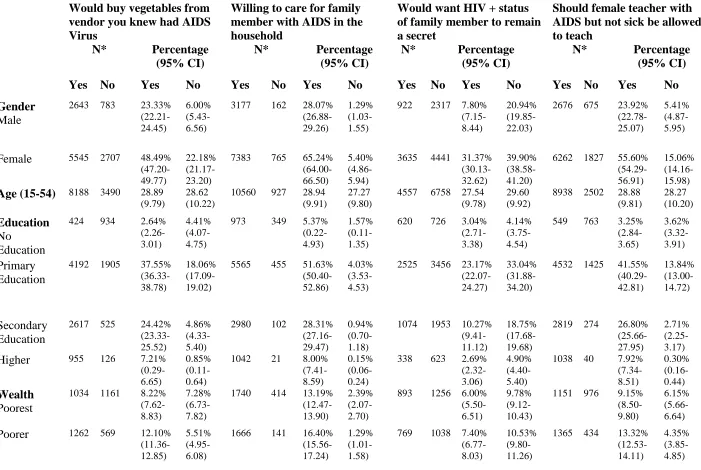
Demographic characteristics displayed in Table 1 indicate differences in levels of
exhibiting stigma and discrimination towards PLWHA in Kenya. Overall, the majority (74%) of respondents indicated that they were willing to buy vegetables from a vendor with HIV/AIDS, and the majority (96%) reported that they would be willing to care for family members with AIDS. Nearly half of respondents (45%) reported they would want to keep the HIV-positive status of a family member a secret. Additionally, the majority (82%) also reported that a female teacher with HIV/AIDS should be allowed to teach. Females had a higher percentage of
22
persons who were literate were willing to care for a family member with AIDS in the household compared to 9.9% (CI: 9.2-10.6) persons who were not literate.
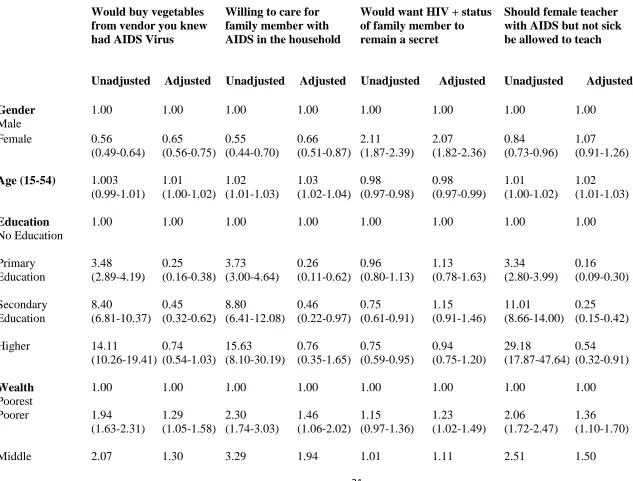
Results from the bivariate and multivariable associations of exhibiting stigma and discrimination towards PLWHA in Kenya are displayed in Table 2. In the first adjusted model, females reported a reduced odds of responding “Yes” to the question about being willing to buy vegetables from vendors with HIV (OR: 0.7; 95% CI: 0.6-0.8), indicating that females were more likely to report exhibiting stigma and discrimination compared to males. In addition, females were also more likely to report wanting to keep the HIV-positive status of a family member secret compared to males (OR: 2.1; 95% CI: 1.8-2.4) in the adjusted model, also
indicating that females were more likely to exhibit stigma and discrimination compared to males. In the bivariate analyses, higher levels of education were associated with not reporting stigma and discrimination. For example, primary education was significantly associated with being willing to buy vegetables from a vendor with HIV/AIDS (OR: 3.5; 95% CI: 2.9-4.2). When adjusting for other covariates in the adjusted models, higher education was associated with a reduced odds of being willing to buy vegetables from a vendor with HIV/AIDS (OR: 0.3; 95% CI: 0.2-0.4). However, higher education was associated with reduced odds of wanting to keep a family member’s HIV-positive status a secret in the unadjusted model; however, this association was not statistically significant in the adjusted model for this outcome. A one-year increase in age corresponded with a slightly increased odds of being willing to buy vegetables from a vendor with HIV/AIDS, willing to care for family member with HIV/AIDS, and agreeing that a female teacher with HIV/AIDS be allowed to teach.
23
1.1-1.7) thought that a female teacher with AIDS should be allowed to teach compared to persons in the “poorest” wealth index. Additionally, persons in the “richest” wealth index (OR: 2.6; 95% CI: 1.9-3.4) were more likely to report that a female teacher with AIDS should be allowed to teach, compared to persons in the poorest wealth index. No association was detected between marital status and exhibiting stigma and discrimination. Persons who were literate were more likely to not exhibit stigma and discrimination. For example, in the adjusted model, literacy was associated with being willing to buy vegetables from a vendor with HIV/AIDS (OR: 1.4; 95% CI: 1.1-1.8) compared to illiteracy. Having correct perceptions of HIV was significantly associated with reporting no stigma and discrimination compared to persons with incorrect perceptions of HIV. In the adjusted model, persons with correct perceptions of HIV were more likely to report being willing to care for a family member with AIDS (OR: 1.7; 95% CI: 1.4-2.2) compared to persons with incorrect perceptions of HIV.
The results from the ordinal logistic regression are presented in Table 3. In the
24
exerting the highest level of stigma (OR: 0.2; 95% CI: 0.1-0.5). Moreover, the "poorer" wealth index was not significantly associated with exerting any level of stigma compared to the poorest wealth index. Being married was not significantly associated with any level of exerting stigma. Individuals who were literate had reduced odds of exerting any level of stigma compared to individuals who were not literate. However, this association was statistically significant for all levels except for level 3 (OR: 0.4; 95% CI: 0.3-0.6). Persons with correct perceptions of HIV exhibited lower levels of stigma and discrimination compared to persons with incorrect perceptions of HIV.
Discussion
25
This study’s findings are mostly consistent with the reviewed literature, particularly the Nigerian study where they found that younger persons, persons with lower education, and persons with a lower economic status were more likely to discriminate against PLWHA (Dahlui et al., 2015). However, the Nigerian study found that women were more compassionate towards PLWHA (Dahlui et al., 2015). These results are slightly contradictory to this study’s results, which reported that females exerted more stigma and discrimination compared to males. Reasons for these differences could be attributed to cultural differences or other underlying differences. Future studies should also investigate gender norms in relation to exhibiting stigma and
discrimination against PLWHA in a community.
This study’s findings are also consistent with Tsai’s 2015 study. Tsai (2015) found that internalized stigma among PLWHA was greater among those of a lower socio-economic status compared to those with a higher economic status (Tsai, 2015). PLWHA living in the poorest households were twice as more likely to report internalized stigma compared to persons living in the wealthiest households (Tsai, 2015). The author hypothesized that wealth and education may be protective factors against internalized stigma.
Limitations
Several limitations exist in this study. The sample size of 11,909 may not accurately represent the views of persons at the national level despite the survey being nationally representative. The age cap of 49 years in women and 54 years in men may have excluded a large proportion of data from older persons. As with any study conducting secondary data analysis, reporting bias may have occurred during data collection. There is a high likelihood that response bias was present in the study given the nature of the type of questions asked and
26 Implications and Recommendations
Stigma and discrimination impedes HIV/AIDS treatment and prevention in the community and interventions are necessary to reduce their impact. Interventions from the individual level to the policy level are necessary for decreasing the rate of HIV and AIDS transmission. Education on the risks of stigmatizing attitudes toward PLWHA may promote acceptance and understanding and change people’s attitudes, behaviors and opinions. Inclusive, accommodating and educated social networks are essential in HIV/AIDS prevention efforts. Education on HIV/AIDS and acceptance of PLWHA is necessary in occupational settings to prevent discrimination and unfavorable work conditions. The Communities can advance their HIV/AIDS prevention efforts by improving access to medical and preventative care.
27
References
Chan, B. b., Tsai, A. C., & Siedner, M. J. (2015). HIV Treatment Scale-Up and HIV-Related Stigma in Sub-Saharan Africa: A Longitudinal Cross-Country Analysis. American Journal Of Public Health, 105(8), 1581-1587. doi:10.2105/AJPH.2015.302716
Cuca, Y. P., Onono, M., Bukusi, E., & Turan, J. M. (2012). Factors associated with pregnant women's anticipations and experiences of HIV-related stigma in rural Kenya. AIDS Care, 24(9), 1173-1180. doi:10.1080/09540121.2012.699669
Dahlui, M., Azahar, N., Bulgiba, A., Zaki, R., Oche, O. M., Adekunjo, F. O., & Chinna, K. (2015). HIV/AIDS Related Stigma and Discrimination against PLWHA in Nigerian
Population. PLoS ONE, 10(12), e0143749. http://doi.org/10.1371/journal.pone.0143749
Kenya National Bureau of Statistics (KNBS) and ICF Macro. 2010. Kenya Demographic
and Health Survey 2008-09. Calverton, Maryland: KNBS and ICF Macro.
Kingori, C., Reece, M., Obeng, S., Murray, M., Shacham, E., Dodge, B., & ... Ojakaa, D. (2012). Impact of Internalized Stigma on HIV Prevention Behaviors Among HIV-Infected Individuals Seeking HIV Care in Kenya. AIDS Patient Care & Stds, 26(12), 761-768. doi:10.1089/apc.2012.0258
Kingori, C., Reece, M., Obeng, S., Murray, M., Shacham, E., Dodge, B., & ... Ojakaa, D. (2013). Psychometric Evaluation of a Cross-Culturally Adapted Felt Stigma Questionnaire Among People Living with HIV in Kenya. AIDS Patient Care & Stds, 27(8), 481.
28
Lekas, H.-M., Siegel, K., & Schrimshaw, E. W. (2006). Continuities and discontinuities in the experiences of felt and enacted stigma among women with HIV/AIDS. Qualitative Health Research, 169, 1165–1190.
Mhode, M., & Nyamhanga, T. (2016). Experiences and Impact of Stigma and Discrimination among People on Antiretroviral Therapy in Dar es Salaam: A Qualitative Perspective. AIDS Research & Treatment, 1-11. doi:10.1155/2016/7925052
Tsai, A. C. (2015). Socioeconomic gradients in internalized stigma among 4,314 persons with HIV in sub-Saharan Africa. AIDS And Behavior, 19(2), 270-282. doi:10.1007/s10461-014-0993-7
Williams, L. D. (2014). Understanding the relationships among HIV/AIDS-related stigma, health service utilization, and HIV prevalence and incidence in Sub-Saharan Africa: a multi-level theoretical perspective. American Journal Of Community Psychology, 53(1-2), 146-158. doi: 10.1007/s10464-014-9628-4
World Health Organization. HIV/AIDS. Retrieved November 29, 2016, from
29
Table 1: Demographics among persons exhibiting stigma and discrimination in Kenya
Would buy vegetables from vendor you knew had AIDS Virus
Willing to care for family member with AIDS in the household
Would want HIV + status of family member to remain a secret
Should female teacher with AIDS but not sick be allowed to teach
N* Percentage
(95% CI)
N* Percentage
(95% CI)
N* Percentage
(95% CI)
N* Percentage
(95% CI)
Yes No Yes No Yes No Yes No Yes No Yes No Yes No Yes No
Gender
Male
2643 783 23.33% (22.21-24.45)
6.00% (5.43-6.56)
3177 162 28.07% (26.88-29.26)
1.29% (1.03-1.55)
922 2317 7.80% (7.15-8.44)
20.94% (19.85-22.03)
2676 675 23.92% (22.78-25.07)
5.41% (4.87-5.95)
Female 5545 2707 48.49% (47.20-49.77)
22.18% (21.17-23.20)
7383 765 65.24% (64.00-66.50)
5.40% (4.86-5.94)
3635 4441 31.37% (30.13-32.62)
39.90% (38.58-41.20)
6262 1827 55.60% (54.29-56.91)
15.06% (14.16-15.98)
Age (15-54) 8188 3490 28.89 (9.79)
28.62 (10.22)
10560 927 28.94 (9.91)
27.27 (9.80)
4557 6758 27.54 (9.78)
29.60 (9.92)
8938 2502 28.88 (9.81) 28.27 (10.20) Education No Education
424 934 2.64% (2.26-3.01)
4.41% (4.07-4.75)
973 349 5.37% (0.22-4.93)
1.57% (0.11-1.35)
620 726 3.04% (2.71-3.38)
4.14% (3.75-4.54)
549 763 3.25% (2.84-3.65) 3.62% (3.32-3.91) Primary Education
4192 1905 37.55% (36.33-38.78)
18.06% (17.09-19.02)
5565 455 51.63% (50.40-52.86)
4.03% (3.53-4.53)
2525 3456 23.17% (22.07-24.27)
33.04% (31.88-34.20)
4532 1425 41.55% (40.29-42.81) 13.84% (13.00-14.72) Secondary Education
2617 525 24.42% (23.33-25.52)
4.86% (4.33-5.40)
2980 102 28.31% (27.16-29.47)
0.94% (0.70-1.18)
1074 1953 10.27% (9.41-11.12)
18.75% (17.68-19.68)
2819 274 26.80% (25.66-27.95)
2.71% (2.25-3.17)
Higher 955 126 7.21% (0.29-6.65)
0.85% (0.11-0.64)
1042 21 8.00% (7.41-8.59)
0.15% (0.06-0.24)
338 623 2.69% (2.32-3.06)
4.90% (4.40-5.40)
1038 40 7.92% (7.34-8.51) 0.30% (0.16-0.44) Wealth Poorest
1034 1161 8.22% (7.62-8.83)
7.28% (6.73-7.82)
1740 414 13.19% (12.47-13.90)
2.39% (2.07-2.70)
893 1256 6.00% (5.50-6.51)
9.78% (9.12-10.43)
1151 976 9.15% (8.50-9.80)
6.15% (5.66-6.64)
Poorer 1262 569 12.10% (11.36-12.85)
5.51% (4.95-6.08)
1666 141 16.40% (15.56-17.24)
1.29% (1.01-1.58)
769 1038 7.40% (6.77-8.03)
10.53% (9.80-11.26)
1365 434 13.32% (12.53-14.11)
30
Middle 1443 586 13.27% (12.53-14.01)
5.68% (5.13-6.23)
1896 111 18.00% (17.15-18.84)
0.99% (0.77-1.21)
773 1220 7.36% (6.76-7.96)
11.84% (11.11-12.58)
1580 395 14.81% (14.03-15.58)
3.97% (3.48-4.46)
Richer 1765 535 16.02% (15.15-16.89)
5.04% (4.48-5.60)
2161 116 20.09% (19.14-21.03)
1.08% (0.78-1.37)
886 1363 8.24% (7.54-8.93)
12.92% (12.10-13.75)
1882 375 17.62% (16.72-18.53)
3.46% (2.95-3.97)
Richest 2684 639 22.20% (21.46-22.94)
4.67% (4.13-5.21)
3097 145 25.65% (24.96-26.34)
0.94% (0.72-1.16)
1236 1881 10.17% (9.33-11.00)
15.76% (14.87-16.66)
2960 322 24.62% (23.89-25.36) 2.55% (2.09-3.97) Marital Status Married
4269 2049 36.97% (35.70-38.23)
15.75% (14.89-16.61)
5687 544 49.00% (47.68-50.32)
3.79% (3.33-4.24)
2299 3820 19.18% (18.16-20.19)
33.59% (32.33-34.86)
4711 1450 41.39% (40.08-42.70)
10.96% (10.21-11.71)
Not Married 3919 1441 34.86% (33.60-36.10)
12.43% (11.60-13.27)
4873 383 44.31% (43.01-45.62)
2.90% (2.50-3.30)
2258 2938 19.99% (18.91-21.07)
27.24% (26.11-28.37)
4227 1052 38.13% (36.84-39.42) 9.52% (8.75-10.28) Literacy Literate
7428 2348 66.33% (65.18-67.47)
21.62% (50.59-22.66)
9089 531 83.43% (82.58-84.27)
4.64% (4.11-5.17)
3694 5730 33.81% (32.54-35.07)
53.83% (52.52-55.14)
8043 1558 73.19% (72.11-74.28)
14.94% (14.00-15.88)
Not Literate 734 1140 5.47% (4.91-6.03)
6.58% (6.08-7.08)
1443 396 9.87% (9.20-10.55)
2.06% (1.78-2.34)
852 1012 5.36% (4.83-5.89)
7.01% (6.45-7.57)
871 944 6.30% (5.70-6.90) 5.57% (5.11-6.02) Knowledge of HIV Correct
5580 1361 54.86% (53.56-56.15)
12.63% (11.77-13.50)
6487 326 64.60% (63.34-65.85)
2.79% (2.34-3.23)
2537 4139 25.17% (23.94-26.41)
41.66% (40.28-43.05)
5960 888 59.17% (57.87-60.47)
8.40% (7.69-9.11)
Incorrect 1948 1616 18.46% (17.43-19.50)
14.05% (13.15-14.95)
3083 447 29.24% (28.02-30.45)
3.38% (2.96-3.81)
1583 1931 13.90% (13.00-14.81)
19.26% (18.18-20.35)
2204 1287 21.28% (20.18-22.38)
11.14% (10.30-11.98)
Total 8188 3490 74.22 29.76 10560 927 95.76 7.49 4557 6758 45.06 63.23 8938 2502 81.98 21.93
31
Table 2: Bivariate and multivariable associations of exhibiting stigma and discrimination among persons living in Kenya
Would buy vegetables from vendor you knew had AIDS Virus
Willing to care for family member with AIDS in the household
Would want HIV + status of family member to remain a secret
Should female teacher with AIDS but not sick be allowed to teach
Unadjusted Adjusted Unadjusted Adjusted Unadjusted Adjusted Unadjusted Adjusted
Gender
Male
1.00 1.00 1.00 1.00 1.00 1.00 1.00 1.00 Female 0.56
(0.49-0.64) 0.65 (0.56-0.75) 0.55 (0.44-0.70) 0.66 (0.51-0.87) 2.11 (1.87-2.39) 2.07 (1.82-2.36) 0.84 (0.73-0.96) 1.07 (0.91-1.26)
Age (15-54) 1.003 (0.99-1.01) 1.01 (1.00-1.02) 1.02 (1.01-1.03) 1.03 (1.02-1.04) 0.98 (0.97-0.98) 0.98 (0.97-0.99) 1.01 (1.00-1.02) 1.02 (1.01-1.03) Education No Education
1.00 1.00 1.00 1.00 1.00 1.00 1.00 1.00
Primary Education 3.48 (2.89-4.19) 0.25 (0.16-0.38) 3.73 (3.00-4.64) 0.26 (0.11-0.62) 0.96 (0.80-1.13) 1.13 (0.78-1.63) 3.34 (2.80-3.99) 0.16 (0.09-0.30) Secondary Education 8.40 (6.81-10.37) 0.45 (0.32-0.62) 8.80 (6.41-12.08) 0.46 (0.22-0.97) 0.75 (0.61-0.91) 1.15 (0.91-1.46) 11.01 (8.66-14.00) 0.25 (0.15-0.42) Higher 14.11
(10.26-19.41) 0.74 (0.54-1.03) 15.63 (8.10-30.19) 0.76 (0.35-1.65) 0.75 (0.59-0.95) 0.94 (0.75-1.20) 29.18 (17.87-47.64) 0.54 (0.32-0.91) Wealth Poorest
1.00 1.00 1.00 1.00 1.00 1.00 1.00 1.00 Poorer 1.94
32
(1.75-2.44) (1.06-1.59) (2.48-4.36) (1.40-2.69) (0.86-1.19) (0.92-1.34) (2.09-3.01) (1.21-1.87) Richer 2.81
(2.36-3.36) 1.58 (1.27-1.95) 3.38 (2.45-4.67) 1.84 (1.25-2.71) 1.04 (0.88-1.23) 1.19 (0.98-1.44) 3.42 (2.80-4.19) 1.95 (1.54-2.48) Richest 4.20
(3.51-5.03) 1.85 (1.47-2.32) 4.93 (3.71-6.53) 2.40 (1.66-3.48) 1.05 (0.88-1.25) 1.22 (0.99-1.51) 6.49 (5.18-8.14) 2.59 (1.96-3.43) Marital Status Not Married
1.00 1.00 1.00 1.00 1.00 1.00 1.00 1.00 Married 0.84
(0.75-0.94) 0.89 (0.77-1.03) 0.85 (0.70-1.03) 0.86 (0.68-1.08) 0.78 (0.70-0.87) 0.87 (0.76-0.99) 0.94 (0.83-1.07) 0.96 (0.82-1.14) Literacy Not Literate
1.00 1.00 1.00 1.00 1.00 1.00 1.00 1.00 Literate 3.69
(3.18-4.28) 1.44 (1.14-1.82) 3.75 (3.07-4.58) 1.63 (1.09-2.42) 0.82 (0.71-0.95) 0.74 (0.58-0.94) 4.33 (3.72-5.04) 1.91 (1.48-2.46) Knowledge of HIV Incorrect
1.00 1.00 1.00 1.00 1.00 1.00 1.00 1.00
33
Table 3: Ordinal associations of exhibiting stigma and discrimination among persons living in Kenya
Unadjusted OR (95% CI)
Adjusted OR (95% CI)
4 3 2 1 4 3 2 1
Gender
Male
1.00 1.00 1.00 1.00 1.00 1.00 1.00 1.00 Female 4.15 (2.13-8.07) 3.18 (2.47-4.09) 2.07 (1.73-2.48) 1.68 (1.47-1.92) 3.02 (1.53-5.96) 2.84 (2.13-3.79) 1.83 (1.50-2.22) 1.61 (1.40-1.86)
Age (15-54) 0.96
(0.94-0.99) 0.98 (0.97-0.99) 0.98 (0.97-0.99) 0.99 (0.98-0.99) 0.95 (0.92-0.96) 0.96 (0.95-0.97) 0.98 (0.96-0.99) 0.99 (0.98-0.99) Education No Education
1.00 1.00 1.00 1.00 1.00 1.00 1.00 1.00 Primary Education 0.15
(0.09-0.25) 0.13 (0.10-0.18) 0.30 (0.22-0.40) 0.61 (0.45-0.83) 7.90 (1.58-39.59) 17.11 (5.24-55.93) 3.87 (2.11-7.08) 1.70 (1.05-2.75) Secondary Education 0.01
(0.00-0.04) 0.03 (0.02-0.05) 0.11 (0.08-0.15) 0.38 (0.28-0.53) 5.36 (1.35-21.21) 6.00 (2.04-17.63) 2.65 (1.71-4.11) 1.39 (1.09-1.78) Higher 0.01
(0.00-0.05) 0.01 (0.00-0.02) 0.06 (0.04-0.09) 0.37 (0.26-0.53) 1.20 (0.21-6.80) 2.26 (0.76-6.74) 1.46 (0.94-2.28) 0.96 (0.75-1.22) Wealth Poorest
1.00 1.00 1.00 1.00 1.00 1.00 1.00 1.00 Poorer 0.35 (0.18-0.67) 0.37 (0.28-0.50) 0.60 (0.47-0.78) 0.93 (0.75-1.16) 0.75 (0.37-1.54) 0.75 (0.53-1.05) 0.83 (0.62-1.10) 1.04 (0.82-1.26) Middle 0.17
(0.08-0.36) 0.30 (0.22-0.40) 0.48 (0.38-0.61) 0.74 (0.60-0.91) 0.43 (0.19-1.01) 0.64 (0.45-0.89) 0.74 (0.56-0.98) 0.88 (0.70-1.12) Richer 0.07
(0.03-0.17) 0.22 (0.16-0.30) 0.38 (0.30-0.50) 0.81 (0.66-1.00) 0.21 (0.08-0.54) 0.54 (0.38-0.78) 0.68 (0.49-0.88) 1.03 (0.81-1.31) Richest 0.06
(0.03-0.13) 0.12 (0.08-0.17) 0.24 (0.19-0.31) 0.69 (0.55-0.86) 0.21 (0.09-0.50) 0.37 (0.22-0.62) 0.55 (0.40-0.75) 0.95 (0.73-1.22) Marital Status Not Married
34 Literacy
Not Literate
1.00 1.00 1.00 1.00 1.00 1.00 1.00 1.00
Literate 0.09 (0.06-0.15)
0.12 (0.09-0.15)
0.24 (0.19-0.30)
0.50 (0.40-0.62)
0.24 (0.10-1.58)
0.40 (0.27-0.60)
0.49 (0.36-0.68)
0.62 (0.45-0.85)
Knowledge of HIV
Incorrect
1.00 1.00 1.00 1.00 1.00 1.00 1.00 1.00 Correct 0.11
(0.06-0.21) 0.18 (0.14-0.23)
0.28 (0.23-0.33)
0.70 (0.61-0.82)
0.21 (0.11-0.40)
0.30 (0.24-0.39)
0.36 (0.30-0.44)
0.80 (0.68-0.93)