0095-1137/08/$08.00⫹0 doi:10.1128/JCM.00078-08
Copyright © 2008, American Society for Microbiology. All Rights Reserved.
Comprehensive Study of Strains Previously Designated
Streptococcus bovis
Consecutively Isolated from Human Blood Cultures and
Emended Description of
Streptococcus gallolyticus
and
Streptococcus infantarius
subsp.
coli
䌤
Marcella Beck, Reinhard Frodl, and Guido Funke*
Department of Medical Microbiology and Hygiene, Ga¨rtner & Colleagues Laboratories, Ravensburg, Germany
Received 14 January 2008/Returned for modification 11 March 2008/Accepted 29 June 2008
Modern taxonomy has delineatedStreptococcus gallolyticussubsp.gallolyticus,S. gallolyticussubsp.
pasteur-ianus,Streptococcus infantariussubsp.coli, andS. infantariussubsp.infantariuswithin the heterogenous group
of previously designated clinicalStreptococcus bovisbacteria. In the present study, 58 consecutive blood culture isolates initially designatedS.boviswere further characterized by applying phenotypic and molecular genetic methods, and possible disease associations were investigated by studying the patients’ records. Published phenotypic characteristics of S. gallolyticus and S. infantarius were not unequivocal and did not allow an unambiguous phenotypic differentiation of the 58 clinical isolates. However, full-length 16S rRNA gene sequences clearly assigned the strains to S. gallolyticus subsp. gallolyticus (n ⴝ 29), S. gallolyticus subsp.
pasteurianus(nⴝ12), andS. infantariussubsp.coli(nⴝ17). Only 28% of the patients with available records
presented with endocarditis and 7% presented with colon carcinoma, whereas 37% of the patients had altered liver parenchyma and 28% had gall bladder disease as underlying diseases. Detailed antimicrobial suscepti-bility data on bothS. gallolyticussubspecies andS. infantariussubsp.coliare given for the first time. As a result of the extensive characterization of the largest number ofS. gallolyticus and S. infantarius human clinical isolates published so far, emended species descriptions are given. It is recommended that both clinical microbiologists and infectious disease specialists avoid the designationS.bovisfor trueS. gallolyticusandS.
infantariusstrains in the future in order to get a clearer picture of the possible disease associations of these
species.
Since the late 1970s, clinical microbiologists and infectious
dis-ease specialists have had the engram ofStreptococcus bovis
endo-carditis and the association ofS. bovisand colon carcinoma
when-ever this taxon was isolated from human blood cultures (8).
Traditionally,S. bovishad been divided into the three biotypes I
(mannitol fermentation positive), II/1 (mannitol negative and
-glucuronidase negative), and II/2 (mannitol negative and
-glu-curonidase positive) (3, 13). Since the mid-1980s, it was clear that
S.boviswas a conglomerate of several genomospecies (4). During the late 1990s and at the beginning of this decade, the group of
Bouvet, Grimont, and Schlegel demonstrated that the formerS.
bovisbiotype I belongs toStreptococcus gallolyticussubsp. gallo-lyticus(S. gallolyticus had been defined by Osawa et al. in 1995
[11]), that the former biotype II/1 is, in fact,Streptococcus
infan-tariussubsp.coli(intermittently designatedStreptococcus
lutetien-sisby Poyart et al. [12]), and that biotype II/2 isS. gallolyticus
subsp. pasteurianus (intermittently designated S. pasteurianus
[12]) (14, 15). However, the identity of previously designatedS.
bovisisolated from human blood cultures has, so far, not been systematically investigated in the light of modern taxonomy. Therefore, two large private clinical laboratories from southern
Germany decided to elucidate the identity of S. bovis human
blood culture strains consecutively isolated in their routine labo-ratories. The possible disease associations of taxonomically cor-rectly identified strains also should be investigated. As a result of a comprehensive study applying both phenotypic and molecular
genetic methods, emended species descriptions ofS. gallolyticus
andS. infantariussubsp.coliare given.
MATERIALS AND METHODS
Study subjects.Patients’ records were available in 46 of 58 (79%) of the cases studied and were received from the medical institutions in which the patients were hospitalized.
Strains.The type strainsS. gallolyticussubsp.gallolyticusCCUG 35224T
,S. gallolyticussubsp.pasteurianusCCUG 46150T,S. infantariussubsp.coliCCUG
47831T
, andS. infantariussubsp.infantariusCCUG 43820T
were received from the Culture Collection of the University of Go¨teborg (CCUG), Sweden. Strains with running numbers 1 to 34 and 55 to 58 (Table 1) were collected by Ga¨rtner & Colleagues Laboratories, Ravensburg, Germany, and strains with running numbers 35 to 54 came from Limbach Laboratories, Heidelberg, Germany. Only one strain per patient was included in the present study. All 58 clinical strains were recovered from BACTEC blood culture bottles (BD, Heidelberg, Ger-many), which had been incubated for less than 3 days. Subcultures were grown on Columbia base sheep blood agar plates (SBA) (BD) after incubation for 20 to 24 h at 35°C in a 5% CO2-enriched atmosphere. Strains were stored in skim milk
at⫺20°C until further use; the recovery of the strains was, again, on SBA.
Biochemical profiles and antigen detection.The commercial API 20 Strep and the Rapid ID 32 Strep identification systems (both from bioMe´rieux, Marcy l⬘Etoile, France) were used according to the manufacturer’s instructions, and reading was done by two independent researchers. Salt tolerance was examined in 6.5% NaCl nutrient broth (Heipha, Eppelheim, Germany) after incubating the tubes for 24 h at 35°C. The ability to grow (regardless of the esculin reaction) on bile esculin agar (BD) was tested by reading the plates after 48 h of incubation
* Corresponding author. Mailing address: Department of Medical Microbiology and Hygiene, Ga¨rtner & Colleagues Laboratories, Elisa-bethenstrasse 11, D-88212 Ravensburg, Germany. Phone: 49-751-502-230. Fax: 49-751-502-385. E-mail: [email protected].
䌤Published ahead of print on 9 July 2008.
2966
on May 16, 2020 by guest
http://jcm.asm.org/
at 35°C. For the detection of the Lancefield group D antigen, a commercial antiserum was used (Oxoid, Basingstoke, United Kingdom).
Antimicrobial susceptibility testing.For the determination of MICs, all clin-ical strains included in the present study were tested by a microdilution method (cation-adjusted Mueller-Hinton broth with lysed horse blood) according to the published CLSI standard (1).
[image:2.585.49.537.84.634.2]Molecular genetic investigations.The analysis of the complete 16S rRNA gene sequences was performed according to a published protocol with broad-range primers TPU-1 (AGAGTTTGATCMTGGCTCAG) and RTU-8 (AAGGAGG TGATCCAKCCRCA) (5). The following primers were used for cycle sequenc-ing: TPU-1, TPU-2 (CCARACTCCTACGGGAGGCA), TPU-3 (CAGCMGC CGCGGTAATWC), TPU-4 (GGATTAGATACCCTGGTAGTCC), TPU-5 (A
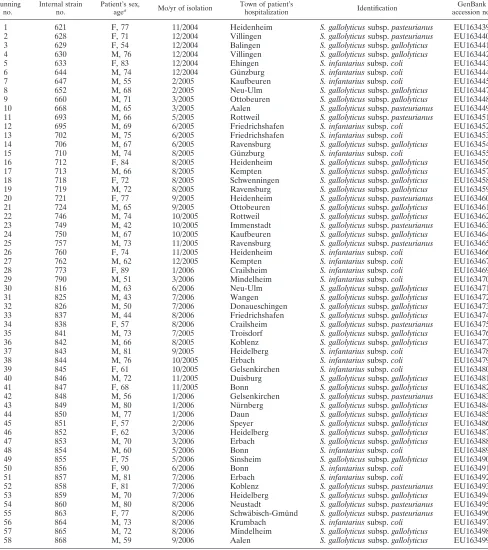
TABLE 1. Consecutive human blood culture isolates tentatively identified asS.bovisand included in the present study
Running no.
Internal strain no.
Patient’s sex,
agea Mo/yr of isolation
Town of patient’s
hospitalization Identification
GenBank accession no.
1 621 F, 77 11/2004 Heidenheim S. gallolyticussubsp.pasteurianus EU163439
2 628 F, 71 12/2004 Villingen S. gallolyticussubsp.pasteurianus EU163440
3 629 F, 54 12/2004 Balingen S. gallolyticussubsp.gallolyticus EU163441
4 630 M, 76 12/2004 Villingen S. gallolyticussubsp.gallolyticus EU163442
5 633 F, 83 12/2004 Ehingen S. infantariussubsp.coli EU163443
6 644 M, 74 12/2004 Gu¨nzburg S. infantariussubsp.coli EU163444
7 647 M, 55 2/2005 Kaufbeuren S. infantariussubsp.coli EU163445
8 652 M, 68 2/2005 Neu-Ulm S. gallolyticussubsp.gallolyticus EU163447
9 660 M, 71 3/2005 Ottobeuren S. gallolyticussubsp.gallolyticus EU163448
10 668 M, 65 3/2005 Aalen S. gallolyticussubsp.pasteurianus EU163449
11 693 M, 66 5/2005 Rottweil S. gallolyticussubsp.pasteurianus EU163451
12 695 M, 69 6/2005 Friedrichshafen S. infantariussubsp.coli EU163452
13 702 M, 75 6/2005 Friedrichshafen S. infantariussubsp.coli EU163453
14 706 M, 67 6/2005 Ravensburg S. gallolyticussubsp.gallolyticus EU163454
15 710 M, 74 8/2005 Gu¨nzburg S. infantariussubsp.coli EU163455
16 712 F, 84 8/2005 Heidenheim S. gallolyticussubsp.gallolyticus EU163456
17 713 M, 66 8/2005 Kempten S. gallolyticussubsp.gallolyticus EU163457
18 718 F, 72 8/2005 Schwenningen S. gallolyticussubsp.gallolyticus EU163458
19 719 M, 72 8/2005 Ravensburg S. gallolyticussubsp.gallolyticus EU163459
20 721 F, 77 9/2005 Heidenheim S. gallolyticussubsp.pasteurianus EU163460
21 724 M, 65 9/2005 Ottobeuren S. gallolyticussubsp.gallolyticus EU163461
22 746 M, 74 10/2005 Rottweil S. gallolyticussubsp.gallolyticus EU163462
23 749 M, 42 10/2005 Immenstadt S. gallolyticussubsp.pasteurianus EU163463
24 750 M, 67 10/2005 Kaufbeuren S. gallolyticussubsp.gallolyticus EU163464
25 757 M, 73 11/2005 Ravensburg S. gallolyticussubsp.pasteurianus EU163465
26 760 F, 74 11/2005 Heidenheim S. infantariussubsp.coli EU163466
27 762 M, 62 12/2005 Kempten S. infantariussubsp.coli EU163467
28 773 F, 89 1/2006 Crailsheim S. infantariussubsp.coli EU163469
29 790 M, 51 3/2006 Mindelheim S. infantariussubsp.coli EU163470
30 816 M, 63 6/2006 Neu-Ulm S. gallolyticussubsp.gallolyticus EU163471
31 825 M, 43 7/2006 Wangen S. gallolyticussubsp.gallolyticus EU163472
32 826 M, 50 7/2006 Donaueschingen S. gallolyticussubsp.gallolyticus EU163473
33 837 M, 44 8/2006 Friedrichshafen S. gallolyticussubsp.gallolyticus EU163474
34 838 F, 57 8/2006 Crailsheim S. gallolyticussubsp.pasteurianus EU163475
35 841 M, 73 7/2005 Troisdorf S. gallolyticussubsp.gallolyticus EU163476
36 842 M, 66 8/2005 Koblenz S. gallolyticussubsp.gallolyticus EU163477
37 843 M, 81 9/2005 Heidelberg S. infantariussubsp.coli EU163478
38 844 M, 76 10/2005 Erbach S. infantariussubsp.coli EU163479
39 845 F, 61 10/2005 Gelsenkirchen S. infantariussubsp.coli EU163480
40 846 M, 72 11/2005 Duisburg S. gallolyticussubsp.gallolyticus EU163481
41 847 F, 68 11/2005 Bonn S. gallolyticussubsp.gallolyticus EU163482
42 848 M, 56 1/2006 Gelsenkirchen S. gallolyticussubsp.pasteurianus EU163483
43 849 M, 80 1/2006 Nu¨rnberg S. gallolyticussubsp.gallolyticus EU163484
44 850 M, 77 1/2006 Daun S. gallolyticussubsp.gallolyticus EU163485
45 851 F, 57 2/2006 Speyer S. gallolyticussubsp.gallolyticus EU163486
46 852 F, 62 3/2006 Heidelberg S. gallolyticussubsp.gallolyticus EU163487
47 853 M, 70 3/2006 Erbach S. gallolyticussubsp.gallolyticus EU163488
48 854 M, 60 5/2006 Bonn S. infantariussubsp.coli EU163489
49 855 F, 75 5/2006 Sinsheim S. gallolyticussubsp.gallolyticus EU163490
50 856 F, 90 6/2006 Bonn S. infantariussubsp.coli EU163491
51 857 M, 81 7/2006 Erbach S. infantariussubsp.coli EU163492
52 858 F, 81 7/2006 Koblenz S. gallolyticussubsp.pasteurianus EU163493
53 859 M, 70 7/2006 Heidelberg S. gallolyticussubsp.gallolyticus EU163494
54 860 M, 80 8/2006 Neustadt S. gallolyticussubsp.pasteurianus EU163495
55 863 F, 77 8/2006 Schwa¨bisch-Gmu¨nd S. gallolyticussubsp.pasteurianus EU163496
56 864 M, 73 8/2006 Krumbach S. infantariussubsp.coli EU163497
57 865 M, 72 8/2006 Mindelheim S. gallolyticussubsp.gallolyticus EU163498
58 868 M, 59 9/2006 Aalen S. gallolyticussubsp.gallolyticus EU163499
aF, female; M, male.
on May 16, 2020 by guest
http://jcm.asm.org/
AACTYAAAKGAATTGACGG), TPU-6 (GGGCKACACACGTGCTACA AT), TPU-7 (GAATACGTTCCCGGGYCTTGT), RTU-2 (TGCCTCCCGTA GGAGTYTGG), RTU-3 (GWATTACCGCGGCKGCTG), RTU-4 (TACCAG GGTATCTAATCCTGTT), RTU-5 (CCGTCAATTCMTTTRAGTTT), RTU-6 (ATTGTAGCACGTGTGTMGCCC), RTU-7 (ACAAGRCCCGGGAACGTA TT), and RTU-8. The DNA strand was sequenced in both directions, and the full-length sequences were determined by aligning multiple overlapping DNA sequences with the Lasergene 5 package (DNASTAR Inc., Madison, WI).
Strains deposited.The following strains with unusual biochemical reactions have been deposited in the CCUG: strain 668S. gallolyticussubsp.pasteurianus
(-glucuronidase negative) as CCUG 55345, strain 749 S. gallolyticussubsp.
pasteurianus(-galactosidase negative) as CCUG 55346, strain 773S. infantarius
subsp.coli(␣-galactosidase negative) as CCUG 55347, strain 825S. gallolyticus
subsp.gallolyticus(-glucosidase negative) as CCUG 55348, strain 848S. gallo-lyticussubsp.pasteurianus(-mannosidase negative) as CCUG 55349, strain 858
S. gallolyticussubsp.pasteurianus(-galactosidase negative) as CCUG 55350, and strain 860S. gallolyticussubsp.pasteurianus(-mannosidase negative) as CCUG 55351.
Nucleotide sequence accession numbers.The GenBank accession numbers of the complete 16S rRNA gene sequences of all 58 clinical isolates included in the present study are given in Table 1. The 16S rRNA gene sequences of the type strains ofS. gallolyticussubsp.gallolyticus,S. gallolyticussubsp.pasteurianus, and
S. infantariussubsp.colihave been deposited in GenBank under accession numbers EU163500, EU163502, and EU163503.
RESULTS
During a period of 23 months, Ga¨rtner & Colleagues
Lab-oratories collected 38 S. bovis isolates (Table 1); Limbach
Laboratories collected 20 S. bovis strains during a 13-month
period. The 58 isolates came from 33 different hospitals in which the patients were treated and which were located mainly in the southwestern part of Germany. Table 1 also gives the biographical data of all 58 patients included in the present study. Forty (69%) of the 58 patients were male, and 18 (31%)
were female. The mean age of the male patients was 66.8⫾
10.3 years and was similar for all three bacterial taxa groups
detected; the mean age for the female patients was 72.7⫾10.7
years. Of all 228 blood culture bottles drawn from the 58
patients, 86% were positive forS.bovis. In 76% of the 58 cases,
all blood cultures received from an individual patient became
positive forS.bovis.
When applying 16S rRNA gene sequencing, 29 (50%) of all
S. bovisstrains finally were identified asS. gallolyticussubsp.
gallolyticus, 12 strains (21%) asS. gallolyticussubsp.
pasteuria-nus, and 17 strains (29%) asS. infantariussubsp.coli, whereas
not a single strain ofS. infantariussubsp.infantariuswas
de-tected.
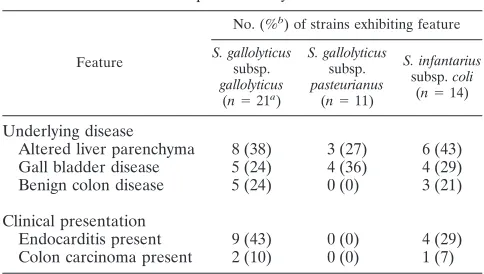
Table 2 outlines the most relevant clinical data of the pa-tients. Interestingly, nearly two-thirds of the patients had a hepatobiliary disorder as the underlying disease. The following comorbidities were detected in the 46 patients with available patients’ records: cardiovascular disease, 80%; diabetes melli-tus, 35%; other malignancies, 22%; kidney disease, 15%; and respiratory disease, 13%. Endocarditis was present in less than one-third of all patients, and colon carcinoma was detected in
less than 10% of all patients withS.bovisbacteremia. For 11 of
the 46 patients, stool was screened for occult blood, but only 2 of 11 patients were positive. For 15 of the 46 patients colonos-copy was performed, but only two cases of colon carcinoma were detected. Six (13%) of the 46 patients died during the
hospitalization in whichS.bovis bacteremia occurred, but in
only 2 of the 6 cases wasS.bovisbacteremia the single cause
leading to the patient’s death.
Whenever small-colony, catalase-negative, gram-positive cocci are isolated in pure culture from blood cultures, our routine laboratories presently apply the commercial API 20 Strep and the Rapid ID 32 Strep systems for identification. All 29S. gallolyticussubsp.gallolyticusstrains were identified asS.
bovisbiotype I by both identification systems. Eleven of the 12
S. gallolyticussubsp.pasteurianusstrains were identified asS.
bovisII/2 (one strains was identified asStreptococcus mutans) by the API 20 Strep system and all 12 strains by the Rapid ID
32 Strep system. All 17S. infantariussubsp.colistrains were
identified asS.bovisII/1 by the API 20 Strep system and 15 out
of 17 strains by the Rapid ID 32 Strep system (the two other
strains were identified asAerococcus viridansandLeuconostoc
spp., respectively).
Particular biochemical reactions (Table 3) ofS. gallolyticus
and S. infantarius subsp. coli are not always clear-cut, i.e., either 0 or 100% positive. As given in Table 3, reactions dif-fered in the two different identification systems used due to different substrates or pH conditions in the commercial
de-vices. Eight of the 29 (28%)S. gallolyticus subsp.gallolyticus
strains, 5 of the 12 (42%) S. gallolyticus subsp. pasteurianus
strains, and 2 of the 17 (12%)S. infantariussubsp.colistrains
grew in 6.5% NaCl. All 29 S. gallolyticus subsp. gallolyticus
strains grew on bile esculin agar, whereas 2 of the 12 (17%)S.
gallolyticussubsp.pasteurianusstrains and 11 of the 17 (65%)
S. infantariussubsp.coli strains were unable to grow on bile
esculin agar. Finally, 21 of the 29 (72%)S. gallolyticussubsp.
gallolyticusstrains reacted with Lancefield group D antiserum,
but only 1 of the 12 (8%)S. gallolyticus subsp. pasteurianus
strains and 10 of the 17 (59%)S. infantariussubsp.colistrains
expressed the Lancefield group D antigen.
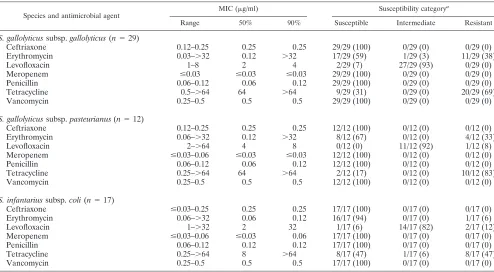
Table 4 shows the antimicrobial susceptibility patterns ofS.
gallolyticusandS. infantariussubsp.coli. All 58 clinical isolates
were susceptible to-lactams and vancomycin. Variable
sus-ceptibility to erythromycin was detected mainly inS.
gallolyti-cus, with MICs being either low (e.g., 0.06g/ml) or high (e.g.,
⬎32 g/ml). For nearly all 58 clinical isolates, levofloxacin
susceptibility fell into the intermediate susceptibility category. The majority of the isolates were resistant to tetracycline.
[image:3.585.300.542.85.222.2]There was a tendency ofS. infantariussubsp.coliisolates to be
TABLE 2. Main clinical data of patients included in the present study
Feature
No. (%b
) of strains exhibiting feature
S. gallolyticus
subsp.
gallolyticus
(n⫽21a)
S. gallolyticus
subsp.
pasteurianus
(n⫽11)
S. infantarius
subsp.coli
(n⫽14)
Underlying disease
Altered liver parenchyma 8 (38) 3 (27) 6 (43) Gall bladder disease 5 (24) 4 (36) 4 (29) Benign colon disease 5 (24) 0 (0) 3 (21)
Clinical presentation
Endocarditis present 9 (43) 0 (0) 4 (29) Colon carcinoma present 2 (10) 0 (0) 1 (7)
aNumber of patients for whom records were available.
bPercentage of patients positive for the given feature out of those for whom
records were available.
on May 16, 2020 by guest
http://jcm.asm.org/
more susceptible to antimicrobial agents than S. gallolyticus
strains.
For comparative 16S rRNA gene analysis, we first
se-quenced the four type strains ofS. gallolyticus(two subspecies)
andS. infantarius(two subspecies). All 58 clinical isolates were compared to those derived from four type strain sequences,
which have been deposited by us in GenBank as EU163500 (S.
gallolyticussubsp.gallolyticus), EU163502 (S. gallolyticussubsp.
pasteurianus), EU163503 (S. infantarius subsp. coli), and
EU163504 (S. infantarius subsp.infantarius). The 16S rRNA
gene sequences of the type strains available from the GenBank/EMBL database had been found to be unreliable,
with, e.g., S.gallolyticussubsp.gallolyticusT(X94337), showing
34-bp differences (including 12 N residues) from the true se-quence.
The 16S rRNA gene sequences of the strains belonging to a particular taxon were extremely highly conserved (Table 5).
Twenty-six of 29 S. gallolyticus subsp. gallolyticus strains
showed identical 16S rRNA gene sequences (1,453 bp), and only strain 837 had a single point mutation (T instead of C at position 970) as well as strains 847 and 849 at position 1106 (G
instead of C). Similar results were observed forS. gallolyticus
subsp. pasteurianus, with 11 of 12 strains showing identical
sequences (i.e., 100% homology for 1,197 bp), and only strain 757 had a single point mutation within the 16S rRNA gene (A
instead of G at position 1154). Regarding the 17S. infantarius
subsp.colistrains, only strain 644 showed a single point
mu-tation (T instead of C at position 980), whereas the other 16S.
infantariussubsp.colistrains exhibited absolutely identical
se-quences (1,321 bp). The 16S rRNA genes of S. infantarius
[image:4.585.43.284.89.367.2]subsp.colistrains were constantly different fromS. infantarius
TABLE 3. Biochemical reactions ofS. gallolyticussubsp.gallolyticus, S. gallolyticussubsp.pasteurianus, andS. infantariussubsp.coli
Biochemical reaction
Reactiona
for:
S. gallolyticus
subsp.
gallolyticus
(n⫽29)
S. gallolyticus
subsp.
pasteurianus
(n⫽12)
S. infantarius
subsp.coli
(n⫽17)
Esculin hydrolysis 100 100 41
Enzymatic activity
-Glucuronidase 0 92 0
0 92 0
␣-Galactosidase 7 92 100
3 83 94
-Galactosidase 3 83 0
10 83 0
-Mannosidase 14 83 0
Acid production
Starch 100 8 100
Glycogen 100 0 71
100 0 94
Inulin 55 0 0
Mannitol 93 0 0
93 8 0
Methyl--D -gluco-pyranoside
100 92 29
Raffinose 97 92 47
100 92 100
Trehalose 100 100 12
100 100 12
aValues are the percentages of strains positive for the indicated reaction. If
two percentages per reaction are given, the upper number represents the data derived from using the Rapid ID 32 Strep identification system and the lower number the data from using the API 20 STREP identification system.
TABLE 4. Antimicrobial susceptibility patterns ofS. gallolyticussubsp.gallolyticus,S. gallolyticussubsp.pasteurianus, andS. infantariussubsp.coli
Species and antimicrobial agent
MIC (g/ml) Susceptibility categorya
Range 50% 90% Susceptible Intermediate Resistant
S. gallolyticussubsp.gallolyticus(n⫽29)
Ceftriaxone 0.12–0.25 0.25 0.25 29/29 (100) 0/29 (0) 0/29 (0)
Erythromycin 0.03–⬎32 0.12 ⬎32 17/29 (59) 1/29 (3) 11/29 (38)
Levofloxacin 1–8 2 4 2/29 (7) 27/29 (93) 0/29 (0)
Meropenem ⱕ0.03 ⱕ0.03 ⱕ0.03 29/29 (100) 0/29 (0) 0/29 (0)
Penicillin 0.06–0.12 0.06 0.12 29/29 (100) 0/29 (0) 0/29 (0)
Tetracycline 0.5–⬎64 64 ⬎64 9/29 (31) 0/29 (0) 20/29 (69)
Vancomycin 0.25–0.5 0.5 0.5 29/29 (100) 0/29 (0) 0/29 (0)
S. gallolyticussubsp.pasteurianus(n⫽12)
Ceftriaxone 0.12–0.25 0.25 0.25 12/12 (100) 0/12 (0) 0/12 (0)
Erythromycin 0.06–⬎32 0.12 ⬎32 8/12 (67) 0/12 (0) 4/12 (33)
Levofloxacin 2–⬎64 4 8 0/12 (0) 11/12 (92) 1/12 (8)
Meropenem ⱕ0.03–0.06 ⱕ0.03 ⱕ0.03 12/12 (100) 0/12 (0) 0/12 (0)
Penicillin 0.06–0.12 0.06 0.12 12/12 (100) 0/12 (0) 0/12 (0)
Tetracycline 0.25–⬎64 64 ⬎64 2/12 (17) 0/12 (0) 10/12 (83)
Vancomycin 0.25–0.5 0.5 0.5 12/12 (100) 0/12 (0) 0/12 (0)
S. infantariussubsp.coli(n⫽17)
Ceftriaxone ⱕ0.03–0.25 0.25 0.25 17/17 (100) 0/17 (0) 0/17 (0)
Erythromycin 0.06–⬎32 0.06 0.12 16/17 (94) 0/17 (0) 1/17 (6)
Levofloxacin 1–⬎32 2 32 1/17 (6) 14/17 (82) 2/17 (12)
Meropenem ⱕ0.03–0.06 ⱕ0.03 0.06 17/17 (100) 0/17 (0) 0/17 (0)
Penicillin 0.06–0.12 0.12 0.12 17/17 (100) 0/17 (0) 0/17 (0)
Tetracycline 0.25–⬎64 8 ⬎64 8/17 (47) 1/17 (6) 8/17 (47)
Vancomycin 0.25–0.5 0.5 0.5 17/17 (100) 0/17 (0) 0/17 (0)
a
Values are the numbers of isolates belonging to a certain category; percentages are in parentheses.
on May 16, 2020 by guest
http://jcm.asm.org/
[image:4.585.45.539.444.716.2]subsp. infantarius at positions 34 (G instead of A), 54 (G instead of T), and 419 (C instead of T).
The separation of the two subspecies of S. gallolyticus by
means of 16S rRNA gene sequences is possible at four differ-ent nucleotide positions, namely 182, 238, 1106, and 1419
(Ta-ble 5), whereas bothS. gallolyticussubspecies andS. infantarius
subsp.colidiffer at 19 nucleotide positions (Table 5). In
addi-tion,S. gallolyticussubsp.gallolyticushas two other mismatches
withS. infantariussubsp.coli(positions 182 and 238), andS. gallolyticus subsp. pasteurianus has another individual
mis-match withS. infantariussubsp.coliat position 1419 (Table 5).
DISCUSSION
To the best of our knowledge, the present study is the largest
on consecutively isolatedS. bovis blood culture isolates that
applies appropriate nomenclature.
In our study, more male patients than females withS.bovis
blood culture isolates were seen, as already reported in other studies (range, 66 to 82%) (2, 6, 18). The mean age of the patients in our series was also similar to that of the other studies (range, 59 to 67 years) (2, 6, 18). In contrast to most
other studies onS.bovis blood culture isolates, we observed
significantly fewer cases of endocarditis (29%) and colon car-cinomas (7%) in all patients, whereas in the classic study by
Ruoff et al., 94% of all bacteremic patients withS.bovis
bio-type I had endocarditis and 71% had colon carcinoma (13). A
more recent study found thatS.bovisbacteremia in 62 of 64
cases was clinically significant andS. bovisbiotype I was
asso-ciated with endocarditis or colon carcinoma in 74 or 57% of all cases, respectively (2). In the present study, colonoscopy was performed on 15 of 46 patients only. It is therefore not unlikely that some colon carcinomas have been missed. The reason for the overall lower percentage of endocarditis and colon carci-noma in our series is unclear but may indicate, at least in some geographic regions and at certain periods of time, that the
association ofS.bovisbacteremia and endocarditis and/or
co-lon carcinoma is not as strong as previously thought. However,
the association of S. bovis blood culture isolates and colon
carcinoma in 7% of our present cases is still much higher than
that for any other microorganism except forClostridium
septi-cum, which is associated with colon carcinoma in one-third of
all cases with blood cultures positive for this particular bacte-rium (9).
Interestingly, we observed that more than 60% of our pa-tients had a hepatobiliary disorder as the underlying disease.
Corredoira et al. (2) reported that 50% of theirS.bovis
bac-teremia patients had liver or gall bladder disease, but this was
seen mainly inS.bovisbiotype II patients (i.e., eitherS.
gallo-lyticussubsp.pasteurianusorS. infantariussubsp.coli), whereas
we also found these underlying diseases in patients with S.
gallolyticussubsp.gallolyticus.
We did not detect a single strain of S. infantarius subsp.
infantariusin our series, whereas Schlegel et al. (15) reported on some clinical isolates. However, Schlegel et al. (15) also included a strain from dairy products and one from frozen vegetables, indicating that this subspecies also can be isolated from food products or, even more often, from these products than from bacteremia cases of humans.
The clinical microbiologist often is confronted with a
differ-ential diagnosis betweenS.bovisisolates and enterococci when
greyish, catalase-negative, gram-positive cocci are isolated
from blood cultures. In our experience,S.bovisusually exhibits
smaller colonies than enterococci. It is important that, in our
series, 15 of 58 (26%)S.bovisstrains grew in 6.5% NaCl broth,
which is in contrast to a statement in a reference text book (16), so that this characteristic does not allow an unambiguous differentiation between enterococci (consistently salt tolerant) andS. bovis. Interestingly, we observed that allS. gallolyticus
subsp. gallolyticus strains grew on bile esculin agar but that
someS. gallolyticussubsp.pasteurianusstrains and the majority ofS. infantariussubsp.colistrains were unable to grow on this medium, which is, again, in contrast to the information pro-vided in a major textbook (16). Schlegel et al. (14, 15) stated
that theirS.bovisisolates variably (e.g., 44% inS. infantarius
subsp.coli) expressed the Lancefield group D antigen, and in
our series 55% of all 58S.bovisstrains were positive for this
reaction. Of note is that significantly fewerS. gallolyticussubsp.
pasteurianus strains were expressing the Lancefield group D
antigen than S. gallolyticus subsp.gallolyticus strains.
There-fore, studies (2, 6) including only Lancefield group D
strepto-cocci isolated from blood cultures may have a bias towardS.
gallolyticussubsp.gallolyticusand underestimate the number of
S. gallolyticussubsp.pasteurianusstrains. In summary, the tra-ditional tests for enterococci (salt tolerance, growth on bile esculin agar, and expression of Lancefield group D antigen) do
[image:5.585.43.283.99.359.2]not allow a clear-cut distinction between enterococci andS.
TABLE 5. 16S rRNA gene data allowing a unanimous differentiation ofS. gallolyticussubsp.gallolyticus,S. gallolyticussubsp.pasteurianus,
andS. infantariussubsp.coli
Nucleotide position
Nucleotide (no. of strains in which the particular nucleotide is present/no. of all strains analyzed) in:
S. gallolyticussubsp.
gallolyticusa
S. gallolyticus
subsp.
pasteurianusb
S. infantariussubsp.
colic
36 C (28/28) C (11/11) A (15/15)
37 T (28/28) T (11/11) G (15/15)
52 G (29/29) G (11/11) A (16/16)
56 A (29/29) A (11/11) T (16/16)
58 A (29/29) A (11/11) G (16/16)
60 G (29/29) G (11/11) A (16/16)
148 T (29/29) T (11/11) C (16/16) 149 G (29/29) G (11/11) A (16/16) 156 A (29/29) A (11/11) C (16/16) 176 A (29/29) A (11/11) G (17/17) 177 T (29/29) T (11/11) A (17/17) 182 A (29/29) T (11/11) T (17/17) 186 A (29/29) A (11/11) T (17/17) 227 G (29/29) G (11/11) A (17/17) 237 C (29/29) C (11/11) T (17/17) 238 T (29/29) C (11/11) C (17/17) 618 A (29/29) A (12/12) G (17/17) 980 T (29/29) T (12/12) C (16/17), T (1/17) 991 A (29/29) A (12/12) G (17/17) 1106 C (27/29), G (2/29) T (12/12) A (17/17) 1229 A (29/29) A (12/12) G (17/17) 1419 T (29/29) A (12/12) T (17/17)
a
The determined 16S rRNA gene sequence of strain 660 did not include base pairs 36 and 37.
b
The determined 16S rRNA gene sequence of strain 621 did not include base pairs 36 to 238.
c
The determined 16S rRNA gene sequence of strain 843 did not include base pairs 36 to 156, and that of strain 864 did not include base pairs 36 and 37.
on May 16, 2020 by guest
http://jcm.asm.org/
bovisin every case, so that further biochemical testing, like that for the presence of pyrrolidonyl arylamidase (positive in
en-terococci but negative inS.bovis) and other reactions (Table 3)
by means of commercial identification systems is required.
In the initial species description ofS. infantariussubsp.coli
by Schlegel et al., the authors did not define a type strain but rather defined a reference strain (15). The authors designated
this particular strain CCUG 43822T (14), whereas CCUG
47831Twould have been the correct CCUG strain number (E.
Falsen, CCUG, personal communication). The use of the term reference strain instead of type strain for the species-defining
strain ofS. infantariussubsp.coli(15) has created some
con-fusion, since the later publication of Poyart et al. (12) exactly
described the same taxon using the species designationS.
lu-tetiensis. The Judicial Commission of the International Com-mittee on Systematic Bacteriology discussed the above issue at a recent meeting but did not come up with a final judgment (http://www.bacterio.cict.fr/s/streptococcus). Therefore, we
de-cided to use the designationS. infantariussubsp. colirather
than eitherS. lutetiensisorS. infantariussubsp.lutetiensisin the
present study. However, apart from this formal point, we found
that some features ofS. infantariussubsp.coliwere different
from the data given in references (14, 15): the authors stated
that 100% ofS. infantariussubsp.colistrains hydrolyze esculin,
whereas we only found 41% of the strains do so. Furthermore,
the authors describedS. infantariussubsp.colibeing unable to
produce acid from either starch or glycogen, whereas in our study the acidification of starch was constantly (i.e., 100%)
positive, and the majority ofS. infantarius subsp.colistrains
also produced acid from glycogen. Finally, Schlegel et al. (15) did not detect acid production from trehalose, whereas we found 2 of 17 strains to be positive for this reaction. These obviously differing characteristics, together with the largest
number of S. infantariussubsp.coli strains published so far,
allow us to give an emended species description forS.
infan-tariussubsp.coli(see below).
Trehalose fermentation was described as being variable for
S. gallolyticussubsp.gallolyticus (14), whereas we found that 100% of all strains were positive for this reaction. Acid
pro-duction from starch was reported as variable forS. gallolyticus
subsp.pasteurianus, whereas we found that only 1 of 12 strains
was positive for this reaction. Schlegel et al. (14) observed all
S. gallolyticussubsp.pasteurianusstrains to exhibit activities of
-glucuronidase,-galactosidase, and-mannosidase, whereas
we found some strains (which have been deposited in CCUG) not expressing these enzymes. Again, the partial differences between our data and the data of Schlegel et al. (14) allow an
emended species description ofS. gallolyticus(see below).
Susceptibility data onS. gallolyticussubsp.pasteurianusand
S. infantariussubsp.colihave not been reported in the litera-ture before. We did not observe any significant differences in the susceptibility pattern of the three taxa reported here; there
was only a tendency of S. infantarius subsp.coli to be more
susceptible to erythromycin and tetracycline thanS.
gallolyti-cus. Our susceptibility data are in agreement with older data
from Thornsberry et al. (17) that showS.bovisbeing uniformly
susceptible to -lactams. Thornsberry et al. did not detect
erythromycin resistance in theirS.bovisisolates from the 1970s
(17). Recent susceptibility data on S. gallolyticus, neither
di-vided into the two subspecies nor clearly differentiated fromS.
infantariussubsp.coli, showed the same high level of tetracy-cline resistance (i.e., 66%) as that of the isolates in our study (10).
The present study gives by far the most detailed molecular
genetic data onS. gallolyticus and S. infantarius subsp.coli.
Schlegel et al. did not include detailed data on the 16S rRNA
gene nucleotide positions of eitherS. gallolyticusorS.
infan-tarius in their publications (14, 15). The previously largest
series onS. bovis 16S rRNA gene sequences came from the
Mayo Clinic, comprising 13 isolates ofS. gallolyticus(7).
S. gallolyticus and S. infantarius subsp.colishare less than 99.0% 16S rRNA gene homology. With the data given in Table 5, probes or restriction fragment length polymorphism tests could be developed for species or subspecies identification because of the extremely low base pair variability within one species or subspecies.
Because the majority of clinical microbiologists use commer-cial devices for the identification of catalase-negative gram-positive cocci in their routine laboratory, it is recommended that the manufacturers of such devices rapidly improve the databases and implement the new taxonomy in their databases. The improved commercial products should not contain the
summarizing species designation S. bovis for human isolates
anymore, thereby enabling clinical microbiologists and infec-tious disease specialists to use the proper taxonomic species designations in order to get a clearer picture of possible
dis-ease associations of eitherS. gallolyticusorS. infantariussubsp.
coli.
Based on the results of the studies of Schlegel et al. (14, 15) and our data presented here, we provide emended descrip-tions, including the GenBank 16S rRNA gene sequence
acces-sion numbers of bothS. gallolyticus subspecies and S.
infan-tariussubsp.coli.
Emended description of Streptococcus gallolyticus subsp.
gallolyticusSchlegel et al. (2003), corr. Beck, Frodl, and Funke
2008. Streptococcus gallolyticussubsp. gallolyticus(gal.lo.ly’ticus.
N.L. n.gallatumgallate; N.L. adj.lyticusable to loosen; N.L. adj.
gallolyticusgallate digesting).
Strains hydrolyze methyl gallate (tannase activity), decarbox-ylate gallic acid to pyrogallol, and grow on bile esculin agar.
They produce acid from starch, glycogen, methyl--D
-glucopy-ranoside, and trehalose. Nearly all strains ferment mannitol and raffinose; most strains ferment inulin. Strains have been isolated from the feces of marsupials, such as koalas, kanga-roos, brushtails, and possums, as well as from various mam-mals, such as cows, horses, pigs, dogs, and guinea pigs; some strains have been isolated from the sheep rumen, and some were shown to be responsible for bovine mastitis. Human strains can be isolated from blood or feces. The type strain is
ACM 3611T (⫽ CCUG 35224T ⫽ CIP 105428T ⫽ JCM
10005T⫽LMG 16802T⫽HDP 98035T). The 16S rRNA gene
sequence of the type strain has been deposited in GenBank under accession number EU163500.
Emended description ofStreptococcus gallolyticussubsp.
pas-teurianusSchlegel et al. (2003), corr. Beck, Frodl, and Funke
2008. Streptococcus gallolyticussubsp. pasteurianus(pas.teurı´.
a.nus N.L. masc. adj.pasteurianusof Pasteur, referring to the
Pasteur Institute, where the type strain was characterized).
Strains produce-glucosidase. The majority of strains, but
not all, are positive for the activity of-glucuronidase,
on May 16, 2020 by guest
http://jcm.asm.org/
nosidase,␣-galactosidase, and-galactosidase. The acid
pro-duction from trehalose, raffinose, methyl--D-glucopyranoside,
melibiose, and melezitose is variable. Very few strains produce acid from starch or mannitol. The production of acid from glycogen and inulin is absent. Strains do not produce tannase, but some strains may yield gallate decarboxylase activity (11). Strains have been isolated from various human clinical sources.
The type strain is NEM 1202T (⫽ CIP 107122T). The 16S
rRNA gene sequence of the type strain has been deposited in GenBank under accession number EU163502.
Emended description ofStreptococcus infantariussubsp.coli
Schlegel et al. (2000), corr. Beck, Frodl, and Funke 2008.
Streptococcus infantariussubsp.coli(in.fan.ta’ri.us. L. adj. in-fantarius relating to infants, the source of the type strain; co’li.
Gr. n.colon, colon; gen. n.coli, of colon).
The cells are gram-positive cocci that occur in pairs or short chains and are nonmotile, nonsporulating, and catalase nega-tive. Colonies on blood agar are circular, 1 mm in diameter after 24 h incubation at 37°C, unpigmented, and
alpha-hemo-lytic. Growth is enhanced in a 5% CO2 atmosphere. Strains
show homogeneous growth in buffer dextrose and in brain-heart infusion broths. Growth also occurs in MRS broth, with-out gas production. No exopolysaccharide production on 5% sucrose medium is observed. Strains are positive for Voges-Proskauer, leucine aminopeptidase, and alanyl-phenylalanyl-proline arylamidase tests. Arginine dihydrolase, alkaline phos-phatase, and pyrrolidonyl-arylamidase tests are negative. Urea and hippurate are not hydrolyzed. Esculin hydrolysis is
vari-able. Nearly all strains are␣-galactosidase positive. They are
negative for N-acetyl--glucosaminidase, -galactosidase,
-glucuronidase, glycyl-tryptophan arylamidase, and
-manno-sidase. All strains produce acid from lactose, maltose, sucrose, and starch. They do not produce acid from arabinose, arabitol,
cyclodextrine, inulin,D-mannitol, melezitose, ribose, sorbitol,
andD-tagatose. Variable results occur with glycogen, trehalose,
melibiose, methyl-h-D-glucopyranoside, pullulan, andD
-raffin-ose. The type strain for this subspecies is HDP 90246T (⫽
CCUG 47831T⫽NCDO 964T). The 16S rRNA gene sequence
of the type strain has been deposited in GenBank under ac-cession number EU163503.
ACKNOWLEDGMENTS
This paper is part of the medical doctoral thesis of one of the authors (M.B.) at the medical faculty of the University of Ulm, Ger-many. We thank A. Turnwald-Maschler and A. Fahr, Limbach Labo-ratories, Heidelberg, Germany, for kindly providing strains with run-ning numbers 35 to 54 included in the present study.
REFERENCES
1.Clinical and Laboratory Standards Institute.2007. Performance standards for antimicrobial susceptibility testing; 17th informational supplement. Doc-ument M100-S17, CLSI, Wayne, PA.
2.Corredoira, J. C., M. P. Alonso, J. F. Garcı´a, E. Casariego, A. Coira, A. Rodriguez, J. Pita, C. Louzao, B. Pombo, M. J. Lo´pez, and J. Varela.2005. Clinical characteristics and significance ofStreptococcus salivarius bacter-emia andStreptococcus bovisbacteremia: a prospective 16-year study. Eur. J. Clin. Microbiol. Infect. Dis.24:250–255.
3.Facklam, R. R.1972. Recognition of group D streptococcal species of human origin by biochemical and physiological tests. Appl. Microbiol.23:1131–1139. 4.Farrow, J. A. E., J. Kruze, B. A. Phillips, A. J. Bramley, and M. D. Collins.
1984. Taxonomic studies onStreptococcus bovisandStreptococcus equinus: description ofStreptococcus alactolyticussp. nov. andStreptococcus saccha-rolyticussp. nov. Syst. Appl. Microbiol.5:467–482.
5.Funke, G., R. Frodl, and H. Sommer.2004. First comprehensively docu-mented case ofParacoccus yeeiinfection in a human. J. Clin. Microbiol.
42:3366–3368.
6.Giannitsioti, E., C. Chirouze, A. Bouvet, I. Be´guinot, F. Delahaye, J.-L. Mainardi, M. Celare, L. Mihaila-Amrouche, V. L. Moing, B. Hoen, et al.
2007. Characteristics and regional variations of group D streptococcal en-docarditis in France. Clin. Microbiol. Infect.13:770–776.
7.Herrero, I. A., M. S. Rouse, K. E. Piper, S. A. Alyaseen, J. M. Steckelberg, and R. Patel.2002. Reevaluation ofStreptococcus bovisendocarditis cases from 1975 to 1985 by 16S ribosomal DNA sequence analysis. J. Clin. Micro-biol.40:3848–3850.
8.Klein, R. S., R. A. Recco, M. T. Catalano, S. C. Edberg, J. I. Casey, and N. H. Steigbigel.1977. Association ofStreptococcus boviswith carcinoma of the colon. N. Engl. J. Med.297:800–802.
9.Kornbluth, A. A., J. B. Danzig, and L. H. Bernstein. 1989.Clostridium septicuminfection and associated malignancy. Report of 2 cases and review of the literature. Medicine (Baltimore)68:30–37.
10.Moet, G. J., M. J. Dowzicky, and R. N. Jones.2007. Tigecycline (GAR-936) activity againstStreptococcus gallolyticus(bovis) and viridans group strepto-cocci. Diagn. Microbiol. Infect. Dis.57:333–336.
11.Osawa, R., T. Fujisawa, and L. I. Sly.1995.Streptococcus gallolyticussp. nov.; gallate degrading organisms formerly assigned toStreptococcus bovis. Syst. Appl. Microbiol.18:74–78.
12.Poyart, C., G. Quesne, and P. Trieu-Cuot.2002. Taxonomic dissection of the
Streptococcus bovisgroup by analysis of manganese-dependent superoxide dismutase gene (sodA) sequences: reclassification of ‘Streptococcus infan-tariussubsp. coli’ asStreptococcus lutetiensissp. nov. and ofStreptococcus bovisbiotype II.2 asStreptococcus pasteurianussp. nov. Int. J. Syst. Evol. Microbiol.52:1247–1255.
13.Ruoff, K. L., S. I. Miller, C. V. Garner, M. J. Ferraro, and S. B. Calderwood.
1989. Bacteremia withStreptococcus bovisandStreptococcus salivarius: clin-ical correlates of more accurate identification of isolates. J. Clin. Microbiol.
27:305–308.
14.Schlegel, L., F. Grimont, E. Ageron, P. A. D. Grimont, and A. Bouvet.2003. Reappraisal of the taxonomy of theStreptococcus bovis/Streptococcus equinus
complex and related species: description ofStreptococcus gallolyticus subsp. gallolyticussubsp. nov.,S. gallolyticussubsp.macedonicussubsp. nov. andS. gallolyticussubsp.pasteurianussubsp. nov. Int. J. Syst. Evol. Micribiol.53:
631–645.
15.Schlegel, L., F. Grimont, M. D. Collins, B. Re´gnault, P. A. D. Grimont, and A. Bouvet.2000.Streptococcus infantariussp. nov.,Streptococcus infantarius
subsp.infantariussubsp. nov. andStreptococcus infantariussubsp.colisubsp. nov., isolated from humans and food. Int. J. Syst. Evol. Microbiol.50:1425– 1434.
16.Spellerberg, B., and C. Brandt.2007.Streptococcus, p. 412–429.InP. R. Murray, E. J. Baron, J. H. Jorgensen, M. L. Landry, and M. A. Pfaller (ed.), Manual of clinical microbiology, 9th ed. ASM Press, Washington, DC. 17.Thornsberry, C., C. N. Baker, and R. R. Facklam.1974. Antibiotic
suscep-tibility ofStreptococcus bovisand other group D streptococci causing endo-carditis. Antimicrob. Agents Chemother.5:228–233.
18.Tripodi, M.-F., R. Fortunato, R. Utili, M. Triassi, and R. Zarrilli.2005. Molecular epidemiology of Streptococcus boviscausing endocarditis and bacteraemia in Italian patients. Clin. Microbiol. Infect.11:814–819.