World Maritime University
The Maritime Commons: Digital Repository of the World
Maritime University
World Maritime University Dissertations Dissertations
2000
Ship recycling : analysis of the shipbreaking
countries in Asia
Rolando D. Legaspi
World Maritime University
Follow this and additional works at:http://commons.wmu.se/all_dissertations Part of theEconomics Commons
This Dissertation is brought to you courtesy of Maritime Commons. Open Access items may be downloaded for non-commercial, fair use academic purposes. No items may be hosted on another server or web site without express written permission from the World Maritime University. For more Recommended Citation
Legaspi, Rolando D., "Ship recycling : analysis of the shipbreaking countries in Asia" (2000).World Maritime University Dissertations.
384.
WORLD MARITIME UNIVERSITY
Malmö, SwedenSHIP RECYCLING:
ANALYSIS OF THE PROBLEMS IT REPRESENT
TO SHIPBREAKING COUNTRIES
IN ASIA
By
ROLANDO D. LEGASPI
PhilippinesA dissertation submitted to the World Maritime University in partial fulfilment of the requirements for the award of the degree of
MASTER OF SCIENCE
In
MARITIME SAFETY AND ENVIRONMENTAL PROTECTION (Engineering)
2000
DECLARATION
I certify that all the material in this dissertation that is not my own work has been identified, and that no material is included for which a degree has previously been conferred to me.
The contents of this dissertation reflect my own personal views, and are not necessarily endorsed by the university.
Signature: . . . .
Date: . . . .
Supervisor:
Mr. Tor WERGELAND
Associate Professor, Shipping and Port Management World Maritime University
Assessor:
Mr. Richard HODGSON
Associate Professor, Maritime Safety and Environmental Protection World Maritime University
Co-Assessor:
Mr. Arne BLIX Head of Section
ACKNOWLEDGEMENT
Foremost of which the author acknowledges the Almighty God, without him everything would not have been possible. This acknowledgement will not be complete without thanking those behind the author’s attendance to the seventeen-month post graduate course at the World Maritime University:
The Tokyo Foundation of Japan, for sponsoring the fellowship program at the World Maritime University;
To my supervisor, Professor Tor WERGELAND, for providing invaluable guidance and helpful suggestions throughout the preparation of the dissertation;
To my “mistah”, Leo LAROYA, for his encouragement and assistance;
Lastly, my deepest and heartfelt gratitude and appreciation to my wife, Suzanne and my children, Peeme and Rae-ann for bearing the sacrifices and suffering of my long absence. I thank them for their patience, love, and support through it all. Without this, I could never have completed my study. To the rest of my relatives, I also give my thanks for all they did to support me in my undertakings.
ABSTRACT
Title of Dissertation: SHIP RECYCLING:
Analysis of the Problems it Represent to Shipbreaking Countries in Asia
Degree: Master of Science
This dissertation is a study of the economic and environmental impact of the shipbreaking industry in the developing countries, especially in Asia. Ships reaching the end of their economic life unquestionably have substances onboard, which require proper handling, whether from a personnel protection or an environmental point of view. There is an obvious need to address the environmental, industrial as well as the commercial problem that the shipbreaking activity represents.
A study is made on the shipping industry in general and the several factors that influence the lifecycle of a ship. The environmental concern and safety issue that the industry watchers have claimed to be neglected by the shipbreaking countries in Asia was also presented. Relative to this, the concept of the developing countries’ shipbreaking practice has been studied.
A brief look on the Philippines shipbreaking activity is taken and analyzed as to its capability and how the government could improve it for the protection of the marine environment.
Conclusions are formulated in the final chapter, with a number of recommendations presented. It identifies the constraints that could affect the development of the industry and areas that have to be improved.
TABLE OF CONTENTS
Declaration ii
Acknowledgement iii
Abstract iv
Table of Contents vi
List of Tables x
List of Figures xii
List of Abbreviations xiii
Chapter 1 Introduction
1.1 Background 1
1.2 Aims and Objectives 3
1.3 Methodology 3
1.4 Scope and Limitation 4
Chapter 2 Shipbreaking as an Industry
2.1 Ship Demolition, Ship Scrapping, Shipbreaking, 5
or Ship Recycling
2.2 The ship 6
2.3 The Life Cycle of a Ship as Compared to Market Cycle 7
2.4 Factors that Influences the Economic Life of a Ship 10
2.4.1 Age 10
2.4.2 The Prevailing Market Condition 12
2.5 The Principal Players 13
2.5.1 The Shipowners 15
2.5.2 The Shipbroker (Intermediaries) 15
2.5.3 The Shipbreaker 17
2.6 The Leading Shipbreakers 17
2.7 Known Procedures and Practices in Breaking Up a Ship 20
2.8 The Scrap Material 21
Chapter 3 Economic Considerations
3.1 The Supply and Demand Issue 23
3.2 Recycled Materials 24
3.2.1 Ferrous Scrap 25
3.2.2 Non-Ferrous Scrap 26
3.3 The Workers 27
3.3.1 Salaries and Employment 28
3.3.2 Sources 30
3.4 The Shipbreaking Yard and its Neighboring Villages 31
Chapter 4 Environmental Considerations
4.1 The “Green” Issue 34
4.2 Shipbreaking Sites 36
4.2.1 Water Pollution 38
4.2.2 Air Pollution 41
4.3 Toxic Waste and Hazardous Substance 43
4.4 Management of Waste 45
Chapter 5 Organizations, Legal Regimes, and Proposals
5.1 Relevant International Organizations and Regimes 50
5.1.1 The United Nations Environment Program 51
and its Conventions
5.1.2 The International Labor Organization 53
and its Conventions
5.1.3 The International Maritime Organization 55
and its Convention
5.2 Actions and Proposals 58
Chapter 6 Case Study: Shipbreaking in the Philippines
6.1 General 63
6.2 The Closure of Shipbreaking Facility 64
6.3 Shipbreaking Capability 64
6.4 Status of Workers 67
6.5 Government Controls 68
Chapter 7 Conclusions and Recommendations
7.1 Conclusions 70
7.2 Recommendations 72
Appendices
Appendix 1 “Demolition Waste - A Generic Approximation” 76
LIST OF TABLES
Table 2.1 Summary Showing the Number, Tonnage and Average 11 Age of Vessels Sold for Scrapping1992-1998
Table 2.2 Movement of Ship Scrapping Centers 18 Over the Last 50 Years
Table 2.3 Ship Demolition by Location 1991-1998 19
Table 4.1 Environmental Hazardous Wastes Generated 35 During the Demolition of a VLCC
Table 4.2 Heavy Metals in Soil at Scrapping Site 37 and Background Levels
Table 4.3 TBT at the Workplace and in the Environment 39
Table 4.4 Heavy Metals and Arsenic Detected in Paints 42
Table 4.5 Hazardous Substance that Can Not be Exported 44 from OECD Countries to non-OECD Countries
Table 5.1 DWT and Number of Tankers That Were Built in 60 the Period 1973-78 Which Will Reach the 25-Year
Table 5.2 DWT and Number of Bulk Carriers That Were Built 60 in the Period 1973-78 Which Will Reach the 25-Year
Barrier in the Period 1998-2003
Table 6.1: Ships Broken Up in the Philippines (1995-1999) 66
LIST OF FIGURES
Figure 2.1 Scrapping Decision Process 9
LIST OF ABBREVIATIONS
BAN Basel Action Network
CFC Chlorofluorocarbons
CODEC Community Development Center
DENR Department of Environment and Natural Resources
DNV Det Norske Veritas
DOLE Department of Labor and Employment
DWT Dead Weight Tonnes
EEC Environmental Compliance Certificate
EIA Environmental Impact Assessment
EIS Environmental Impact Statement
ELAC Environmental Legal Action Center
EMB Environmental Management Bureau
ICS International Chamber of Shipping
ILO International Labor Organization
IMO International Maritime Organization
ISM International Safety Management
Intertanko International Association of Independent Tanker Owner
LDT Light Displacement Tonnage
OECD Organization for Economic Cooperation and Development
MARINA Maritime Industry Authority
MEPC Marine Environmental Protection Committee
MGDIC Moro Gulf Industrial and Development Company
PAH Polycyclic Aromatic Hydrocarbons
PCB Polychlorinated Biphenyl
RA Republic Act
TBTO Tributyl Tin Oxide
ULCC Ultra Large Crude Carrier
UNEP United Nations Environment Program
USEPA United States Environmental Protection Agency
VLCC Very Large Crude Carrier
CHAPTER 1
INTRODUCTION
1.1 BACKGROUND
The Ships represent a considerable value even after its economic life when the carrier is no longer economically viable to the shipowner. Ageing vessels, due for decommissioning, provide important raw materials in the form of scrap steel for steel mills. The structural steel of a ship is estimated to be as much as 90% of its weight. It is a great waste of resources if left to deteriorate and not be recovered.
The process of recovering steel, usable machinery, instruments, devices, and other dismantled parts, which is referred today as ship recycling, was limited to the
European region during the 19th century. However, as nations from this region
developed and industrialised with environmental consideration gaining momentum, the ship recycling activity has shifted to developing countries that are endeavouring to attain much needed growth of their industrial sector.
almost complete lack of facilities and where environmental concerns often are of secondary priority. Over some time, a growing concern has risen regarding the ship scrapping activity in developing countries and the consequences this might impose on the environment as well as on human health.
The shipping industry is facing a considerable volume of ships that are approaching the age of retirement as a result of the building boom during the early 1970s. It is
expected that new, stricter regulations for tankers that are entering 5th survey, the
introduction of the International Safety Management (ISM) Code and the implementation of new rules for aging bulkers, will provide a shortcut for the majority of these ships to the shores of the leading shipbreakers.
The leading shipbreaking countries today are India, Bangladesh, and Pakistan. Newspaper articles that have been published regarding ship scrapping activities in these countries have contributed immensely to the subsequent recognition of appropriate international forums to address the problem that the industry represents. Reports from Alang in India, both in the form of television programs as well as in the print media that are accompanied by pictures where the scrapping operations are shown to be carried out using basic tools and without basic protective gear such as hard hats and protective boots have convinced observers that the shipping industry is partly to be blamed, especially the shipowners.
be initiated to minimize the problems. The acceptance of this guidance and the proposals will then depend on the willingness of developing countries to consider the economic benefits that the ship scrapping industry could offer.
1.2 AIMS AND OBJECTIVES
This dissertation attempts to carry out a study the various aspects that influence the shipbreaking activity in developing countries. It aims to analyze the pressing issues on how the shipbreaking practice at present could be improved. Incorporated in this are the objectives of the study, as follows:
1 To provide an assessment on the environmental impact of the
shipbreaking activity.
2 To provide an assessment on the economic impact of the shipbreaking activity.
3 To collate relevant and pertinent regulations, recommendations, and
proposals of the shipbreaking activity.
4 To examine the shipbreaking practice in the Philippines.
5 To make recommendations based on the analysis.
1.3 METHODOLOGY
approached. Some of the views expressed in this study are solely the opinion and inference of the author, based on the analysis of the information gathered.
1.4 SCOPE AND LIMITATION
Since the shipbreaking is a very broad topic, some areas such as the management, investment, and financial aspects will not be touched upon in this dissertation. It will instead focus on the general and practical matters concerning shipbreaking practices, which have to be regulated by national legislation. An overview of the current international perspectives on shipbreaking practices in developing countries will also be provided as it relates to the environmental and safety aspects during the ship scrapping operation. The focus is on the safety aspect of the ship scrapping operation and how it can be further enhanced.
CHAPTER 2
SHIPBREAKING AS
AN INDUSTRY
2.1 Ship Demolition, Ship Scrapping, Shipbreaking, or Ship Recycling
When the industry was established during the 19th century, the disposal of old ships was simply referred as “ship demolition” or “ship scrapping” (Sinha, 1998). Both words mean that the ship has already reach the final stage of its economical life and that its value is considered to have been lost. The hull and main engines of the ship are then demolished and cut off as scrapped materials, which would then be used for other purposes.
As the industry evolved, several writers/publishers described such disposal of ships as “shipbreaking”. This has been the common word used until the problem that the industry represents to the less-regulated part of the world, the transport of hazardous materials and shipbreaking practices, was presented at the International Maritime Organization (IMO). This so-called industry was brought up as one of the items on the agenda of IMO’s Marine Environmental Protection Committee and was presented as Ship Recycling in its report (MEPC 44/16).
in this multinational issue have started to consider what contributions they could make. Not only are plans and guidance being developed but also the name of the industry is being refreshed. The word “ship recycling” is gaining popularity, according to Rolf Westfal-Larsen, shipowner and chairman of International Chamber of Shipping (ICS), ships are not scrapped but recycled – nothing goes to waste, everything has a further life (Varcoe, 1999).
The Basel Action Network pointed out that although the word “recycling” provides a positive meaning; in its true essence, it is just another word giving a superficial cover as to the danger of dumping hazardous waste present on board the ship during its final disposal (BAN, 1999).
The aspiration to control the dumping of hazardous waste is a sensitive issue and when members of the international environmental organizations set out to look into the safe practices of ship scrapping, other concern groups started to promote the industry with a new title, “ship recycling”. What the environmental group only wishes for is to control the transport of hazardous waste on board the ship and improve safe working practices at disposal sites. The ultimate purpose of why the industry was established remains the same; obsolete ships can be disposed of in a manner such that the interested party could recover part of his investment from the ship. Indeed, improvement is needed to correct the present practices, but what about the name, do we need to change it?
2.2 The Ship
has to determine. The majority of sea-going commercial vessels are propelled with diesel engines and the designs have shifted considerably from speed to economy. The increase in fuel cost contributes to the improvement of ship design giving emphasis on economical propulsion, fuel-efficient main engines, and better hull design. Modern merchant ships are built today according to stringent regulations.
There are several distinct types of ship and some have a dual role or a combined carrier fleet. The most important in the international shipping trade are tankers, combined carriers, bulk carriers, multi-deck tramps, container ships, refrigerated ships, and passenger liners.
For a ship to be competitive, although it is not mandatory, it has to be “classed” in order to have an adequate insurance coverage and the much needed trading certificates which has to be presented at her port of calls.
The earning potential of a ship, if it has to be employed in international trade, is based on its measured tonnage and cargo capacity. This information is used for categorising the ship throughout her trading life and serving as a reference in assessing the required dues and charges. When the vessel is ready for disposal, the particular tonnage figure, which is utilised by shipbrokers when negotiating for its sale is the Light Displacement Tonnage (LDT), simply known as the actual weight of the ship without cargo.
2.3 The Life Cycle of a Ship as Compared to the Market Cycle
considered that the demand for ships is derived from the demand for transport, and the shipowner has the option of what type of ship to utilize that could bear the biggest profit. There may be a large inventory of various types of ship today in the international shipping trade; but they still have the same thing in common, the need to be economically efficient, consistent with the safety, environment, and human considerations as required by the national and international regulations.
The business of owning, operating and manning a ship is as risky as it ever has been. The strategy of buying low and selling high is a philosophy well adopted in a highly volatile shipping market. The problem is choosing the right moment to make such decisions. In the shipping market there are sudden booms and equally sudden slumps, for a certain number of years. These alternating gains and losses are referred to as the market cycle (Stopford, 1988). The “boom and bust” cycle in the shipping market is directly related to the life cycle of a ship.
9
F
IG
. 2.1: SCRA
PP IN G DECISION P R OCESS
Source: Dre
w
ry
Shipping
Consultants (Ship Scrappin
g, 1996, p. 58)
AGE FR EI G H T M A R K ET TRADE PATTERNS De sig n (E ff ic ien cy ) R eg ulati ons Fut ur e Prospe ct s H isto rical Perfo rm ance Shippe r De m and O pera tion al Dev elopm ents P oli tical Facto rs Condit ion
Cost of Repair/
Maintenance
Does it conform
to IM O/N ational La w s? Cha ng es in Size /T yp e P refer ences Does i t m eet current shi p siz e/t yp e prefe renc e? How profitable have e arnin gs been i n re cent ye ar s? How ce rt ai n ar e pr of
its in the
2.4 Factors that Influence the Economic Life of a Ship
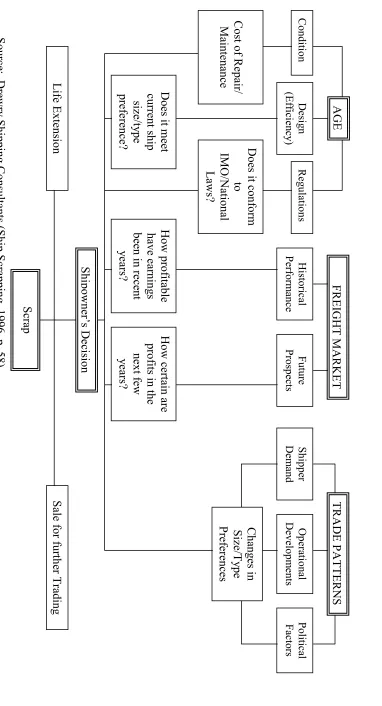
In the previous section the author has presented briefly some of the aspects that affect the life cycle of a ship as viewed in relation to the prevailing market condition. It can not be avoided to emphasize the significance of the known factors that influence the life cycle of a ship – obsolescence of the ship; it is not just a single factor that will serve as a primary basis but consolidation of all the factors. These same factors are related to each other and contribute directly to the number of ships that should be scrapped for a given period of time (See Fig. 2.1).
2.4.1 Age
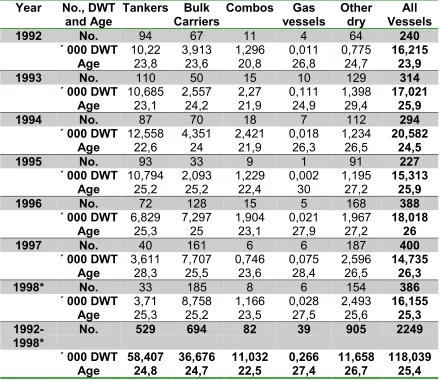
It is oftentimes perceived that the aging of a ship is a significant factor that influences the shipowner to sell his ship for scrapping. Apparently, this is not so as it is just one contributory factor. If age were to be used as the only category for ships to be scrapped many well-maintained vessels of traditional shipping companies would be lost. The suitability of the ship for further trading has to be carefully studied. The increasing size and sophistication has left the old, less desirable ships in the international shipping trade to look for a suitable trade area where competition is low. The speed and cargo handling capacity of a modern ship reduces the competitiveness of older ships; especially, if it is a specialized carrier designed for continuous service in a specific trade. The average age of various ships that were demolished during the period 1992-1998 ranges from 22.5 –26.7 years (See Table 2.1).
in order to comply with safety and environmental standards usually requires massive expenditure. This also demands higher insurance coverage, which the owner has to pay.
Table 2.1: SUMMARY SHOWING THE NUMBER, TONNAGE AND AVERAGE AGE OF VESSELS SOLD FOR SCRAPPING 1992-1998
Year No., DWT
and Age Tankers CarriersBulk Combos vesselsGas Otherdry VesselsAll
1992 No. 94 67 11 4 64 240
´ 000 DWT 10,22 3,913 1,296 0,011 0,775 16,215
Age 23,8 23,6 20,8 26,8 24,7 23,9
1993 No. 110 50 15 10 129 314
´ 000 DWT 10,685 2,557 2,27 0,111 1,398 17,021
Age 23,1 24,2 21,9 24,9 29,4 25,9
1994 No. 87 70 18 7 112 294
´ 000 DWT 12,558 4,351 2,421 0,018 1,234 20,582
Age 22,6 24 21,9 26,3 26,5 24,5
1995 No. 93 33 9 1 91 227
´ 000 DWT 10,794 2,093 1,229 0,002 1,195 15,313
Age 25,2 25,2 22,4 30 27,2 25,9
1996 No. 72 128 15 5 168 388
´ 000 DWT 6,829 7,297 1,904 0,021 1,967 18,018
Age 25,3 25 23,1 27,9 27,2 26
1997 No. 40 161 6 6 187 400
´ 000 DWT 3,611 7,707 0,746 0,075 2,596 14,735
Age 28,3 25,5 23,6 28,4 26,5 26,3
1998* No. 33 185 8 6 154 386
´ 000 DWT 3,71 8,758 1,166 0,028 2,493 16,155
Age 25,3 25,2 23,5 27,5 25,6 25,3
1992-1998*
No. 529 694 82 39 905 2249
´ 000 DWT 58,407 36,676 11,032 0,266 11,658 118,039
Age 24,8 24,7 22,5 27,4 26,7 25,4
2.4.2 The Prevailing Market Condition
For a shipowner, it is the question of how to maximize the profit. The shipping market is volatile and there is no shortage of potential buyers. The decision to sell is oftentimes harder than the opportunity to buy and creates a problem in the balance of supply and demand, considering that the ship is treated as commodity rather than as a transportation unit.
The operational competitiveness of a ship could be maintained as long as it is continuously employed and is earning enough profit to cover its operating expenses. The “reputation” of a ship also demands a good figure; its historical performance, earning potential, and how many owners the ship has been through would either strengthen the competitiveness of the ship or provide some doubts to a potential customer or buyer.
Utilization of unreliable ships would be remote, if there were an increase in the supply of available tonnage for a specific shipping sector. The increase in tonnage supply may not guarantee the employment of modern ships. When the freight markets are low, the employment of the ship is of major consideration, even newly constructed big ships would have a problem to fit into a specific shipping trade. The shipowner would then have to consider the choice of laying up the ship or selling it for scrap. This happened in the early 1980s when superbly specified ULCCs and VLCCs were sold for scrapping due to lack of employment (Drewry, 1999).
In the steel making industry, the demand for iron and steel scrap would, one way or another, affect the price of a ship for scrapping.
2.4.3 The New Regulations
Ships are, by and large, engaged in international trade and operate on the open seas. Having this international commitment, ships have to comply with international regulations. In formulating this regulation there are a lot of international bodies involved. The enforcement of regulations in shipping activities is interpreted by some as an obstacle (Ma, 1999). This, by nature generates additional costs on the part of the shipowner whenever new regulations are enforced.
In recent years, stricter regulations have been introduced requiring major renovation to existing ships in order to have appropriate certificates and for them tocompete in international shipping. The cost of maintaining the present class of the ship as set down by the classification society, and the cost of installing the necessary equipment in order to meet the national and international standards, will affect the projected revenue of the ship. The environmental safety requirement, which is of utmost importance, has contributed to the changes in the design of ships.
The introduction of new regulations would likely accelerate the scrapping of uneconomical ships. The Erika incident last December 1999 had lead to stricter port state control and early phasing out of single hull oil tankers.
2.5 The Principal Players
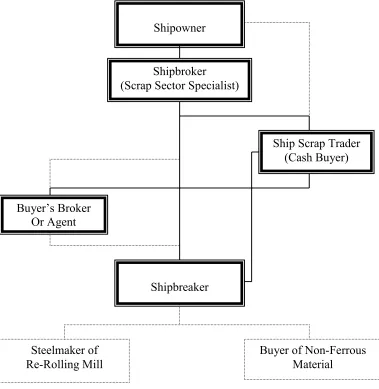
When the shipowner decides to sell the ship for scrapping, this involves other interested parties – the shipbrokers and the shipbreakers. These parties decide what fair price they could offer with the present condition of the ship and market status. The presence of shipbrokers to consummate the deal contributes largely to the efficiency of the market and may guarantee a perfect match with a smooth conclusion of the deal (See Fig. 2.2).
FIG. 2.2: PARTICIPANTS IN THE SCRAP PROCESS
Source: Drewry Shipping Consultants (Ship Scrapping, 1996, p. 19) Shipowner
Shipbroker (Scrap Sector Specialist)
Buyer’s Broker Or Agent
Ship Scrap Trader (Cash Buyer)
Shipbreaker
Steelmaker of Re-Rolling Mill
2.5.1 The Shipowner
It is but natural that the shipowner’s main interest is to maximise the earning capability of his ship; this covers even during the disposal of the ship. The shipowner has an option to deal directly with the shipbreaker or through a shipbroker, but often times the assistance of the shipbroker is preferred. The knowledge and experience of the shipbroker in the prevailing market condition is of great benefit to the shipowner.
Employing the services of the shipbroker does not mean that the shipowner is relieved of other responsibilities. In order to achieve the maximum amount of revenue and smooth completion of the transaction, it is significant that the shipowner should be able to provide to the shipbroker the much needed clearance, details about the ship, list of items that are included in the sales agreement, financial documentation, and arrangements regarding the ship’s crew.
2.5.2 The Shipbroker (Intermediaries)
In the shipping business, the shipowner is used to the practice of buying or selling ships being done through a recognised group of brokers or trading houses. It is normal that the owner will involve shipbrokers, or trading houses, or international traders specialising in ship scrapping. The shipbroker acts as a middleman in the sale. His knowledge on the current and expected market situation and the efficiency to search for potential buyers usually ensures a better deal.
The shipbroker chosen by the shipowner to work out the sell of his ship will then relay the details of an offer to individual brokers, trading houses, or purchasing groups. In return, any offers the shipbrokers receive for the ship will then be relayed back to the shipowner. The amount of time that will take the ship off from the negotiating table will depend on the prevailing market condition and volume of ships available.
For a good quality ship, fierce competition among buyers usually prevails, and within a matter of hours the ship being offered will be disposed of to a qualified buyer. On any sale that is successfully concluded, the shipbroker will be earning a commission in the magnitude of 1% - 2% of the total sale price (Drewry, (1996). On some occasions, an independent shipbroker usually puts up the capital fund to buy a vessel “as is”, “as is, where is”, in lay-up or after discharge of the last cargo. The said shipbrokers are only active in this scheme if there is a customer waiting, otherwise they have to take control of the ship until the required payment and delivery is formalized.
The period between when the deal has been made and the time of delivery is regarded by the shipbroker as the most difficult time. A sudden change in the market may lead to renegotiations and then the shipbreaker may raise some contentions regarding the condition of the ship when it reaches the shipbreaking site.
2.5.3 The Shipbreaker
Unlike the shipowner, who has a clear understanding of the shipping market, the shipbreaker has limited measures of determining the extent of the shipping industry. The shipbreaker usually buys the ship “as is” and relies on details that will be provided by the shipbroker regarding the ship. The Light Displacement Tonnage (LDT) of the ship would be a good basis for a reasonable cost estimate.
Knowing the owner, type, age, and place of construction will provide the shipbreaker with general information regarding the quality and thickness of the steel plate and estimated amount of non-ferrous metals on board. Although the scrap steel provides most of the value of the ship, the non-ferrous items represent a big percentage of revenue on the part of the shipbreaker. The scrap steel is generally heated and re-rolled into concrete reinforcing rods for the construction industry. The shipbreaker has to determine the balance between the prices of ship for scrapping and the revenue that can be obtained from scrap material.
If the transaction is successful, the shipbreaker has to open a letter of credit and secure the necessary documents for importation of the ship.
2.6 The Leading Shipbreakers
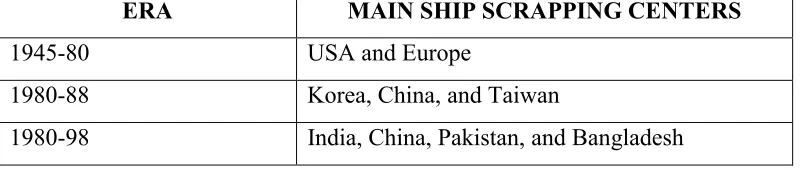
Table 2.2: THE MOVEMENT OF SHIP SCRAPPING CENTERS OVER THE LAST 50 YEARS
ERA MAIN SHIP SCRAPPING CENTERS
1945-80 USA and Europe
1980-88 Korea, China, and Taiwan
1980-98 India, China, Pakistan, and Bangladesh Source: DNV
The emergence of the three leading shipbreakers today, India, Bangladesh, and Pakistan, was due to the withdrawal of South Korea, Taiwan, and lately China. The decline of shipbreaking operations in China, as a result of the austerity program of the government, has also contributed to the emergence of these new leading shipbreakers. The numbers of ships that is being demolished in China has started to decline during the year of 1994 (See Table 2.3)
India is now the largest shipbreaking country in the world. The shipbreaking industry started in 1978 at Bombay and Calcutta and then later expanded to the following sites, Alang, Jamnagar, Beypore, Cochin, Visakhapatnam, Haldia, Madras, and New Mangalore (Drewry, 1983). In their first year of operation India’s shipbreaker had to rely on the supply of ships from Metal Scrap Trade Corporation (MSTC), a government organization who handle the purchase of foreign ships.
shelving seashore make shipbreaking possible with minimum requirements of construction. The ships are simply run ashore.
Table 2.3: SHIP DEMOLITION BY LOCATION 1991-1998
Nation/Year 1991 1992 1993 1994 1995 1996 1997 1998* Bangladesh 940 20% 2284 13% 2594 14 % 3947 19 % 4915 33 % 4231 26 % 2978 22 % 3163 21 % China 374 8% 8921 52% 9318 52% 3397 16 % 676 5 % 1331 8 % 164 1 % 979 7 % India 1079 23% 3140 18 % 2949 16% 5917 29 % 4868 33 % 7851 48 % 7577 55 % 7427 49 % Pakistan 1280 27% 1609 9% 1921 11 % 5301 26 % 3623 25 % 2043 13 % 1630 12 % 1962 13 %
Others 22 % 8 % 7 % 10 % 4 % 5 % 10 % 10 %
Total 4685 17228 17982 20714 14677 16313 13744 15021 Source: Drewry Shipping Consultants. *Jan-Sep 1998, Figures are in *1000 DWT, Does not include Navy vessels or vessels under 10 000 DWT
interest in large ships. Ship demolition in Pakistan is concentrated at Gadani beach outside Karachi.
Aside from the common methods of shipbreaking, these three leading shipbreaking countries employ several shipbreakers along their beaches. Within a shipbreaking site there might be a hundred plots being rented or leased from the government by several groups of shipbreakers. A plot or a pen has the capacity to handle one large and two small ships at any time.
2.7 Known Procedures and Practices in Breaking Up a Ship
Shipbreaking is an economically unsophisticated business compared to shipbuilding. Most of the world’s shipbreaking facilities use the manual method in cutting the ship up on a suitable beach with limited mechanised equipment. Given the extent of the activity, ships are slashed and burned as workers cut out metal with hand operated oxy-fuel gas cutters.
Although it is possible to increase productivity by using mechanised shipbreaking methods, these are capital intensive and require special investments, this is not easily justifiable among shipbreakers from developing countries considering that they are financially constrained. The process of non-mechanised shipbreaking falls into three stages. At the preparatory stage, the owner of the ship removes all equipment that is not included in the transaction together with potentially explosive materials. If the vessel is a tanker, it must be cleared of explosive gas; the shipowner must be able to secure a Gas-Free Certificate from a company recognised by the country where the ship has to be broken up.
Anchor chains are then attached to ensure that the ship is secure. Independent buyers of all items that are not fixed, or can be easily removed, board the ship and start unloading the selected items. Once this operation is complete, a scrapping plan will be drawn up.
In the last stage of the operation, the shipbreaker will determine, according to the structural aspect of the ship, on how the individual parts of the ship will be taken out. The ship has to be dismantled symmetrically making sure that it will not break apart or topple over. Before the steelwork commences, openings of approximately six-by-ten foot are cut along the hull but leaving the lower part intact such that when it is pressed outward, a horizontal platform is made. These openings will serve as ventilation and escape routes. With cutting torches, transportable parts are dropped overboard and drawn on land with the use of winches.
The ship is drawn gradually towards the beach during high tide while it is slowly broken down. The length of time to break up a ship depends largely on its size.
2.8 The Scrap Material
Non-ferrous metals like the ship’s propeller, aluminum structure, copper pipings, and electrical wirings are carefully separated and marketed locally. The common consumers of such material are domestic shipbuilders that are close to the shipbreaking yards. This includes the ship’s engine, diesel motors, pumps, winches, radar and other electronic equipment. Almost all the materials on board the ship are practically re-used. The furniture fixtures, tools and drums are also marketed.
CHAPTER 3
ECONOMIC CONSIDERATIONS
3.1 THE SUPPLY AND DEMAND ISSUE
As described in the previous Chapter, the manner of how ships are sold for scrapping is just like in any other sector of the shipping industry. The shipbroker plays a vital role in the shipping market. When there is a downward trend in the freight market, a reduction in the supply of tonnage follows soon after in order to balance the demand generated by international seaborne trade. The shipowners are put under pressure to scrap older or less productive vessels.
There might be a demand for ships for scrapping from shipbreakers, however, the prices that can be offered would be subject to a number of factors that are common in the shipping industry. The expected ship “residual value” that corresponds to the assessed investment when the ship was built, would not be meet with what is being offered in the ship scrapping market. Whatever may be the market price that is being, it can still be viewed as an essential factor in order to have a healthy shipping market.
on a month-to-month or day-to-day basis with no long-term contract to hold on to especially in the international market of the steelmaking industry.
The purchase of ships for scrapping is done without survey or inspection compared to ships which is intended to engage in international trade. The shipbreaker only bases his estimate on how many tonnes of ferrous scrap could be recovered and the quality of the steel plate of the ship’s hull from the information that the shipbroker provides. In this case, the shipbreaker can only appreciate the possibility of having a huge or marginal profit when the ship is already delivered to the shipbreaking yard.
The demand for ferrous scrap from the ship scrapping activity depends not only on the requirement of the construction industry, but also on the availability of ships for scrapping and the relative prices of ferrous scrap from a variety of other industrial sources.
3.2 RECYCLED MATERIALS
The common question raised by proponents of the ship scrapping activity is - What do you do with a ship when her economic life is over? Do you sink her? The shipbreakers naturally describe this as a great national waste. Ships are not to be hidden away and left to rust or deteriorate. Ships are being sold for scrapping not only because a certain percentage of the investment that the shipowner has put into the ship can still be recovered, but must of all for the resources that can be recovered from the ship which are of great help to the local market.
to procure brand new machinery. The material and equipment on board the ship is entirely re-used and finds its way to local markets to supplement the demand of consumers from economically depressed areas.
3.2.1 FERROUS SCRAP
In the steelmaking industry, the ferrous scrap recovered from a ship has to compete with all other types of ferrous waste, including old industrial plants, junked cars, and obsolete railway equipment. The ship scrap forms a very small part of the total market for ferrous scrap. There are three distinct sources of ferrous scrap that are available on the international market and are being used as melting charge in the iron and steel production, as re-rolled reinforcing bars, or as material in the electro-metallurgical processors depending on their quality.
Recirculating or Home or Revert Scrap; this is generated during the steelmaking process. The quality of scrap that may be produced during the normal casting operation may vary depending on the steel processing technology used.
Prompt and Process Scrap; this arises from industrial manufacturing activity of iron and steel products. It is most common in the automobile industry where surplus steel material arises during the manufacturing process.
Obsolete and Capital Scrap; this is the recovered ferrous scrap from railway equipment, machinery, old industrial plants, and ships (Drewry, 1996).
In most industrialized construction markets, using re-rolled scrap-derived material for reinforcement bars have been stopped, because it can not meet the required material standard. It is in developing countries that the re-rolled product is still acceptable for construction material and this could be one of the reasons why the shipbreaking industry in India, Bangladesh, Pakistan, and other developing countries is flourishing.
The recovered ferrous scrap from ship scrapping activity is sold domestically in developing countries as it can not meet the demand of scrap material for industrial construction. The need for rapid economic development and growth of the industrial sector calls for a regular supply of steel and the shipbreaking industry can provide it at a cheaper price.
3.2.2 NON-FERROUS SCRAP
Any equipment that can be reused is sold through secondhand dealers who establish their shops on the roads close to the shipbreaking yards. Buyers can find various items in varying states of repair such as chairs, desks, doors, china, life jackets, fire hoses, pumps, washing machines, refrigerators, and diesel engines. This accounts for approximately four percent of the shipbreaker’s income.
For a country that is still in the process of acquiring the technical know-how of certain machinery that is recovered from a ship for scrapping, this could easily be acquired at throwaway prices. It was pointed out by Nadkarni (1999) that most Indian industrialists do not have adequate knowledge of brand names like Daihatsu or Yanmar. Not only India, but also common in other developing countries is that the capability to manufacture medium speed-engines and is not yet obtainable locally.
3.3 THE WORKERS
It is often stated that the reasons why the shipbreaking industry has moved to developing countries and is not profitable to have it in industrialized countries is due to the high cost of labor and strict regulations regarding the handling of materials that are harmful to humans and the environment. The shipbreaking industry has become an important source of income for the leading shipbreakers in developing countries.
The profit might be minimal for some of the owners of shipbreaking yards when compared to other owners who started earlier in this type of business; but the number of jobs being generated by the industry is of no less importance. With their willingness to work hard, indulge in tough work for long hours, and their efforts to get the most out of vessels that their former owner has no more use for, several shipbreakers who have started out with limited capital in their pockets has grown rich.
from the eastern Indian states. In addition, the industry also provides indirect employment to more than one hundred thousand petty traders, scrap processors, transport and re-rolling industry workers, and oxygen plant employees (Nadkarni, 1999).
For Sikatunda alone, a community in Chittagong, Bangladesh, it was reported that more that thirty thousand people were employed in the shipbreaking industry. As much as ninety percent of the steel rolling mills in Bangladesh are dependent on the steel that can be recovered from the shipbreaking industry. The number of people involved is estimated to reach 100,000 (Ronning, 2000).
What attracted the attention of the shipping industry was how the different reports presented the process where ships are broken up manually by the worker with limited protective gear, and for some, nothing at all. If comparison has to be made, the shipbreaking operation in India, Bangladesh, and Pakistan is actually done by thousands of workers; whereas, the shipbreaking operation in South Korea and Taiwan is highly mechanized. The latter shipbreaking countries have invested a lot on infrastructure and do not employ hundreds of workers and find it expensive to recover steel from the shipbreaking activity at this stage of time. On the other hand, the three leading shipbreaking countries today find it profitable due to the abundance of workers and the labor is cheap. It is so cheap in the sense that they are in need of money – a worker’s end in order to survive.
3.3.1 SALARIES AND EMPLOYMENT
the shipbreaking operation is organized, each sub-contractor being responsible for a specific task, from cutting up of the ship to segregation and loading scrap materials on designated lorries for subsequent delivery to the shop of the buyer.
As one example, the RM yard in Bangladesh has nine sub-contractors and fifty permanent workers, as estimated by Ronning (2000), during his survey on the said shipbreaking yard, with around one thousand workers being employed.
The salaries that these workers received vary according to their employment status and the experience they have gained. For the permanent employee, an initial salary of two thousand taka a month is being offered, one hundred taka is equivalent to one USD and ninety six cents. The sub-contractors are paid by the shipbreaking yard owner at a rate of four hundred taka for every tonne of steel that is already cut loose. The salary of the contract workers, who actually do the work, is differentiated from five taka an hour for the lowest salary level to twelve taka per hour for the foreman who is responsible for a work team which may be composed of fifteen workers. The average salary for a working period of one month is reported to range from five hundred to one thousand five hundred taka.
3.3.2 SOURCES
The majority of shipbreaking industry workers is from other rural districts, who are forced by poverty to seek other employment. These workers are either farmers who work a larger farms or with a small piece of land to cultivate during the rainy season and no other job opportunity for them to live off in their districts. The only chance for paid work that is open to these farmers and does not require much skill is shipbreaking.
To a certain degree some of the shipscrappers are former mariners who were not able to continue sailing and their knowledge to determine working parts from scrap material and sell them at higher margins has contributed to the increase earnings of the shipbreaking yard.
In developing countries, the common problem is how to control the population and how to create job opportunities for the growing population. For the leading shipbreaking countries, it is of relief to a certain degree on the part of the administration that the industry is creating job and contributing to the country’s economy.
It is in this aspect that the environmentalist groups have continuously criticized the shipbreaking operation in developing countries, with the complete disregard of the safety of the workers.
3.4 THE SHIPBREAKING YARD AND ITS NEIGHBORING VILLAGES
The shipbreaking yards in Alang, India and Chittagong, Bangladesh are divided into several numbers of lots. A single shipbreaking yard may occupy a number of lots, which may give the owner an advantage compared to other shipbreakers in the locality. Having a longer shoreline at your disposal means a comparative advantage to handle bigger ships, but this requires a large amount of capital which investors from developing countries are short of.
According to the report of Ronning (2000), the beaches in Chittagong, which are owned by the authorities, are rented out to shipbreaking yards on a ninety nine year lease often stretch over several kilometers. With the growth of the shipbreaking industry, Bhatiary, a fishing village that was formerly located on the northern part of Sikatunda, was relocated in 1986 to a site in between two shipbreaking yards in the southern part of Sikatunda. The village people were left with only one hundred to two hundred meters of beach for the mooring area of their fishing boats and nets. For the whole district of Chittagong, it was stated that between sixty and seventy fishing villages were relocated.
steel that are cut off tumble on to the beach. There is reverberation on the ground producing big cracks in the floors and walls of nearby houses.
Within the Hindu community, the fishermen in Bangladesh are known as “jaladas” (“jala” means water and “das” means slave), who belong to the lowest level of the caste system. At the early age of ten to twelve, the boys are already engaged in fishing. What makes it worse is that the authorities neglect their right to educate and fishing is the only alternative means that they could have.
Although these fishermen are considered to be on the bottom level of their society, they provide the fish that has to be sold in return by the Muslim villagers in their community market and from the economic point of view this covers a broad economic aspect. Based on the report that Ronning (2000) has prepared, the villagers have encountered problems, where fisheries is their primary source of income, as a result of the growth in shipbreaking activities and the industrialisation in the region in general. The problems that the villagers have presented are that the fish has disappeared from the coastal area and their fish catch has thus considerably decreased.
The decrease in the fish catch means that these traditional fishermen have to fish farther from the beach, which requires motorized boats. The limited fish stock that has to be shared among these local fishermen, along with the intrusion of bigger fishing boat, means the daily earnings of these fishermen will deteriorate if left unattended by the authorities. The traditional social structure of which the country has to preserve would then be disrupted.
CHAPTER 4
ENVIRONMENTAL CONSIDERATIONS
4.1 THE “GREEN” ISSUE
In the shipping industry, the increase in demand of tonnage for the transport of commodities gradually leads to an expansion of shipbuilding activities. Ships that were built during the 1960s and 1970s were designed to accommodate the services they were intended for whereas the materials used were chosen exclusively without due regard to their ill effect but to benefit durability with their function as a component structure of the ship. There was no ban on hazardous substance then.
Table 4.1: ENVIRONMENTAL HAZARDOUS WASTES GENERATED DURING THE DEMOLITION OF A VLCC
SOURCES DESCRIPTION
Cathodic Protection More than 110 000 kg of anodes was fitted to the vessel originally. Both Al and Zn anodes were used. Approximately 65 000 kg (totally) is assumed to remain when vessel arrives for scrapping. The anodes contain In, Cd, and Pb in smaller amount.
Batteries Approximately 200 kg of batteries are identified. These contain Pb, Cd, Ni, and sulphuric acid. The number is assumed low and is probably only representing the amount required and additional back-up batteries. It is assumed that the real figure is closer to the double.
Coatings and Paints Originally more than 65 000 litre of paints was used. A large volume of this has been worn off due to the operation and maintenance. However, new paints have been added over the years. The amount remaining is therefore likely to exceed the original volume. The amount of paint residues on board is assumed to be limited. These products are likely to be taken care of and used locally. Paint and coatings can contain chemical compounds such as Cl, Zn, Cu, PCB, and Pb. In addition one should expect to find considerable quantities of TBT in the anti-fouling paint.
Fire-fighting Volumes of powder, CO2 and foam have been identified. Mobile fire-fighting devices are more likely re-used. Fixed systems will be scrapped causing the spread of the identified substances. These are not assumed to have local environmental effects.
Refrigerants Substances servicing the cooling plants contain chlorodiflourmethane (R22) and dichloroflourmethane (F12). A total volume of appr. 1000 litre is expected.
Thermal Insulation Asbestos was commonly used as thermal insulator at the ship when built and approximately 7000 kg has been identified. This is assumed to be a conservative estimate. The figure is checked with other smaller vessels and seem to be representative for vessels from 100 000 DWT and over.
Steel Structure Approximately 15% of the vessels DWT is steel. Paint and coatings cover most of the steel, and the recovery (recalculation) will cause gaseous discharge following the cutting processes. Released components might include dioxins and others.
Electrical Insulation A total of 50 000 m. of cabling is to be likely in the vessel. Cables are most likely burnt locally on the beach. Substances include Cu and PVC, combustion caused the discharge of dioxins and chloronated furans. Electrical components in light fittings include PCB and Hg.
Oil Residues Remaining oil have been categorised as “clean”, or as waste. The products in the first group to carry a market value and hence to be recoverable. The latter group represents contaminated oil-products or unrecoverable products. The main group is represented by residues from cargo tanks. This might contain in the region of 1500-2000 m3 of a mixture of oil, rust and sand/sediments.
Preparations prior to Scrapping
The vessel is normally required to sail to its scrapping destination. This requires that all systems in general must be in operational order. This eliminates the possibility to remove substances in system prior to demolition. Stores such as oil, chemicals and paint products can be removed. Further, tanks can be emptied, cleaned and ventilated prior to demolition.
The present shipbreaking operations, which are along the tidal zone of the ocean may lead to the contamination of sea water, air, and soil with toxic and hazardous substances from the ship. The danger to the environment and health of workers caused by the scrapping operation of ship bring about a degree of concern among the international shipowners and alliance of environmental and industry protesters. These concern groups demand that appropriate measures should be undertaken to improve ship scrappingstandard and this has to be done in a manner that is sensitive to human life, nature, and the environment.
4.2 SHIPBREAKING SITES
What is being practiced today by the leading shipbreakers is to run the ship at full speed towards the beach. The ships are broken up manually with the aid of hand held cutting torches. The steel scrap from the ships is drawn and stacked haphazardly on the beach. With the continuous cutting, pounding and hammering of scrap steel at a shipbreaking site prior to its delivery for processing, metal fragments and rust, particularly of iron, accumulate along the beach. This also includes various refuse and disposable materials that are discharged or spilled into the sea or the beach soil during the operation.
Ship steel may be composed of several compounds and the most common contaminants of soil within the ship breaking sites are nickel and lead compounds. The dismantling of metal parts at the beach contributes in part with the contamination of chromium contamination that comes from the paint.
background levels in order to be able to assess the concentration of contaminants found (See Table 4.2).
Table 4.2: HEAVY METALS IN SOIL AT SCRAPPING SITE AND BACKGROUND LEVELS
Sample No. 110 (Bombay)
No. 306 (Alang)
No. 317 (Velavadar)
Holy Soil
(Palitana Temple Area) mg/kg
dry matter
mg/kg dry matter
mg/kg dry matter
mg/kg dry matter
Chromium 776 77 -
-Iron 282 90 -
-Nickel 347 108 -
-Copper 888 112 58 34
Arsenic 163 35 2 2
Lead 806 <2 10 4
Zinc 2112 74 53 80
Source: (Kanthak et al, 1999); Steel and Toxic Waste for Asia, p.17
The ship will always contain materials and liquids that could not be marketed or handled during the scrapping process. These wastes are usually burned or find their way to the sea.
4.2.1 WATER POLLUTION
The introduction of harmful substances coming from an old ship can be detected as early as its arrival to the mooring area. One of the pioneering ideas conceived during the infancy age of the shipping industry was how to minimize the operating cost of a ship. The unwanted growth of algae, barnacles, and mussels on the hull of a ship create a frictional drag and raise fuel consumption. Since the beginning of the 1960s, anti-fouling paint was introduced in the shipping industry to kill off aquatic organism on the hull of a ship. Anti-fouling paints contain highly toxic substance such as tributyl tin oxide (TBTO) and tributyl tin chloride (TBTC). These substances determine the leaching rate or the release of TBT into the water.
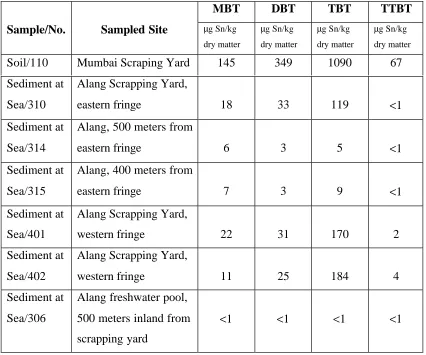
The presence of TBT in the water endangers all other marine animals, kills off oyster larvae, deforms shells, and harms the entire aquatic ecosystem. To avoid damage to marine organisms, the content of TBT in sediment must be within 0.005-0.5 µg/kg. Kanthak et al (1999) reported that if it has to be assessed based on the interim guidelines set by the Oslo-Paris Convention, for the protection of the marine environment in the North-east Atlantic, the content of TBT on sediment taken from Alang and Mumbai is way beyond the allowable amount (See Table 4.3).
VLCC/ULCC) can be cleaned prior its delivery, the oil waste generated during its last voyage would be of considerable quantity.
Table 4.3: TBT AT THE WORKPLACE AND IN THE ENVIRONMENT
MBT DBT TBT TTBT
Sample/No. Sampled Site µg Sn/kg dry matter
µg Sn/kg dry matter
µg Sn/kg dry matter
µg Sn/kg dry matter
Soil/110 Mumbai Scraping Yard 145 349 1090 67
Sediment at Sea/310
Alang Scrapping Yard,
eastern fringe 18 33 119 <1
Sediment at Sea/314
Alang, 500 meters from
eastern fringe 6 3 5 <1
Sediment at Sea/315
Alang, 400 meters from
eastern fringe 7 3 9 <1
Sediment at Sea/401
Alang Scrapping Yard,
western fringe 22 31 170 2
Sediment at Sea/402
Alang Scrapping Yard,
western fringe 11 25 184 4
Sediment at Sea/306
Alang freshwater pool, 500 meters inland from scrapping yard
<1 <1 <1 <1
Source: (Kanthak et al, 1999); Steel and Toxic Waste for Asia, p.18
stored in old drums at the shipbreaking yards in Chittagong, Bangldesh were seeping out. It is common knowledge that such types of waste would find their way gradually to the tidal zone leading to the sea.
With what happened in India due to a series of accidental explosions, the authorities, for a ship to be demolished, require a Gas-Free Certificate, and their shipbreakers have stopped accepting ships with sludge (Nadkarni, 1999). As a result of this stricter regulation, the Indian shipbreakers have lost some of their demolition market and several tanker shipowners are selling their ships to Bangladesh and Pakistan. This shows that the problem was not permanently solved but transferred to other shipbreaking countries.
Apart from fuel oil, the ship has to be loaded with “ballast water” to achieve the required stability of the ship when sailing safely to its destination. The “ballast water” would then be discharged within the waters off the shipbreaking site before the ship is run at full speed towards the beach. At any one time with the discharge of “ballast water” from the ship hundreds, possibly thousands of non-indigenous species are being introduced into marine environment. These non-indigenous species could be a combination of microscopic bacteria, viruses to molluscs and crustaceans, and even free swimming fish.
The sediment that is retained in the ships ballast tank is released or discharged within coastal maritime zones. A large number of potentially harmful aquatic organisms that form part of the sediment are trapped by stiffeners, ribs, and scantlings projecting inside the tanks and are only removed and released into the sea when the ship’s hull is broken up.
ascertain unlike oil pollution; and when these species have already established themselves it is of great difficulty to remove them from the ecosystem. Some of these non-indigenous species that have survived in the new environment have a direct impact on the existing ecological balance. The introduction of disease may also arise when local water is contaminated with large quantities of “ballast water” containing viruses, bacteria, and other harmful organisms. The potential harm that the “ballast water” represents is already recognised by the International Maritime Organization (IMO) and World Health Organisation (WHO).
4.2.2 AIR POLLUTION
When the work at the shipbreaking yard is in full swing, every now and then, parts of the ships fly through the air and land with a thump on the beach or in the water. These chunks of steel are cut with hand-held cutting torches and as long as the ship is standing much of the cutting is carried out. Paints applied to old ships can have components containing chlorine and when the metal is cut apart toxic vapors are released into the atmosphere and lead to the formation of dioxin (Kanthak et al, 1999).
Burning of unmarketable material is commonly practiced along the shipbreaking sites and this could be attributed to the inadequacy of the facility. In Alang, waste oil is burned on the shore “in order to prevent the sea from being polluted” (Kanthak et al, 1999). Everything that cannot be sold and will burn is thrown into the fire of used oil and these fires burn constantly with their deep black smoke plumes producing pollutants.
Table 4.4: HEAVY METALS AND ARSENIC DETECTED IN PAINTS
Sample No. 108 117 213 214 215
Date 2.10.98 2.10.98 2.10.98 2.10.98 2.10.98
Site(Ship) Bombay (Kapitan Kissa) Bombay (Murray Express) Alang (Columbus New Zealand) Alang (Columbus New Zealand) Alang (Columbus New Zealand) Material Paint green Paint 1 mm Paint above water line Paint above water line Paint above water line Findings mg/kg dry matter mg/kg dry matter mg/kg dry matter mg/kg dry matter mg/kg dry matter
Arsenic 0.2 5.5 0.88 0.42 0.84
Lead 21400 6380 34000 33300 51000
Cadmium 1.4 0.83 0.33 1.8 0.84
Copper 600 8.5 8.5 200 37000
Source: (Kanthak et al, 1999); Steel and Toxic Waste for Asia, p.15
have several interconnected benzene nuclie-polycyclic aromatic hydrocarbons, commonly known as PAH (Kanthak et al, 1999). PAHs are regarded as health hazards and are produced depending on the condition of a fire as influenced by the availability of oxygen, temperature, and the materials to be burnt.
The workers are permanently exposed toxic vapors emanating from multi-layered coatings when the metal is cut apart and other pollutants that may result during the burning of other ship materials. They have no opportunity to recover, considering that they also live in the immediate vicinity of the scrap yard.
4.3 TOXIC WASTE AND HAZARDOUS SUBSTANCES
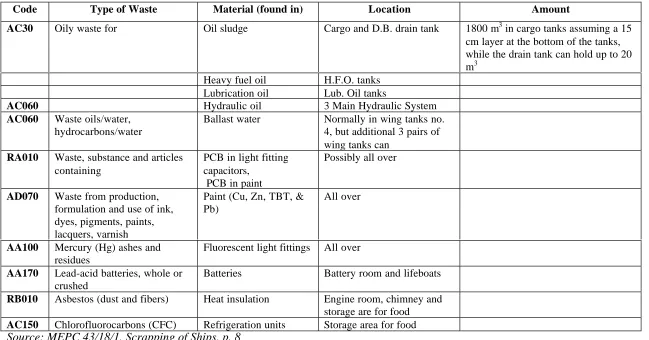
Table 4.5: HAZARDOUS SUBSTANCES THAT CAN NOT BE EXPORTED FROM OECD COUNTRIES TO NON-OECD COUNTRIES
Code Type of Waste Material (found in) Location Amount
AC30 Oily waste for Oil sludge Cargo and D.B. drain tank 1800 m3 in cargo tanks assuming a 15 cm layer at the bottom of the tanks, while the drain tank can hold up to 20 m3
Heavy fuel oil H.F.O. tanks Lubrication oil Lub. Oil tanks
AC060 Hydraulic oil 3 Main Hydraulic System
AC060 Waste oils/water,
hydrocarbons/water
Ballast water Normally in wing tanks no. 4, but additional 3 pairs of wing tanks can
RA010 Waste, substance and articles
containing
PCB in light fitting capacitors,
PCB in paint
Possibly all over
AD070 Waste from production,
formulation and use of ink, dyes, pigments, paints, lacquers, varnish
Paint (Cu, Zn, TBT, & Pb)
All over
AA100 Mercury (Hg) ashes and
residues
Fluorescent light fittings All over
AA170 Lead-acid batteries, whole or
crushed
Batteries Battery room and lifeboats
RB010 Asbestos (dust and fibers) Heat insulation Engine room, chimney and
storage are for food
The problem with hazardous substances is their final disposal even OECD countries which have a longer experience in dealing with toxic waste find it economical to dump in non-OECD countries if unchecked. The proper management of waste is expensive, and the threat of adverse health and ecological damage can not be eliminated. Ronning (2000) has pointed out that at this time even Norway has not established any system that could recycle all materials contained in a modern ship in a profitable manner.
The asbestos material taken from ships is a hazardous, carcinogenic working substance. The carcinogenic potential of asbestos depends upon the form and size of the fiber and if the diameter is less than one micrometer with a length of five micrometers or more its effect to the body is certain (Kanthak et al, 1999). The workers in the Alang shipbreaking yard are exposed daily to the hazards of this material and even contribute to the spread even to their household areas.
The removal of asbestos material from the ship is done without protective masks and uncovered hands, in everyday clothing, deposited in an uncontrolled area and sometimes sold in the shop. The manner of how this type of material should be handled is completely in violation of the rules, laws, and regulations that are being observed by authorities and workers alike from OECD countries.
4.4 MANAGEMENT OF WASTE
The cause of pollution at shipbreaking sites may be attributed to the absence of a dedicated reception or disposal facility for hazardous substances and unmarketable materials that could pose a danger to health and environment.
that the development of a waste management strategy is a powerful tool in establishing a coherent system of waste handling practice and the facilities to respond adequately to the following concerns:
§ Ship-generated waste should not be isolated from the land base waste handling practices;
§ An integrated approach to waste handling incorporating the entire life cycle of waste may save considerable future expenses;
§ Ship-generated wastes, as well as land generated wastes, may contain valuable materials, which could be reused; and
§ Waste minimization is an important factor so as to avoid unnecessary burdens that may arise with waste transport, treatment, and disposal facilities.
Waste generated during the scrapping of a ship may be peculiar compared to the normal operation of a ship, but to consider the measures to be undertaken related to the above cited arguments could be a good starting point on how to establish a medium term solution pending on the consideration of the international regime. It is better to do something than investigate and debate what actions to choose for too long. Temporary measures may be useful to a certain degree but if they have to be explored, because of the hazardous properties that waste represents, a suggested guideline was given by IMO (1995) to ensure that temporary measures can lead to improvements:
§ Temporary solutions as short as possible with a firm deadline;
§ Possible treatment or recovery of waste in the future should be considered (records of location where waste is disposed of should be maintained);
§ Future utilization of the site (for landfill) has to be considered; and
The present scenario on shipbreaking activity calls for implementation of a temporary solution. It may be short and limited in scope but it could silence the critics and provide the much needed confidence that the shipbreaking countries are expected to demonstrate. Initiating an early improvement in waste collection and disposal, although it may be a relatively modest effort at a limited cost, would lay the foundations of a more systematic waste management in the long term. More so, the associations of shipowners from OECD countries are already thinking of the means on how to contribute improvements in the shipbreaking activity in developing countries.
4.5 ENVIRONMENTAL IMPACT ASSESSMENT
Driven purely by economic incentives, the authorities where shipbreaking activity thrives are often blamed for not being responsible enough to meet their obligations to protect not only their citizens but also the environment. The primary reason why shipbreaking was relocated to developing countries was due to the absence of strict marine environmental regulations. Among the leading shipbreaking countries today it is apparent that their administrations have failed to consider the importance of the EIA in consideration of the much needed supply of industrial steel at moderate prices and it is a labor intensive industry, which is well suited to the economy of developing countries.