World Maritime University
The Maritime Commons: Digital Repository of the World
Maritime University
World Maritime University Dissertations
Dissertations
2001
An evaluation of integrated coastal and ocean
management as a means for sustainable
development : a case study : the environmental and
socio-economic impact of shrimp farming in
Bangladesh
Ali Yusuf Muhammad Sultan Noor
World Maritime UniversityFollow this and additional works at:
http://commons.wmu.se/all_dissertations
Part of the
Aquaculture and Fisheries Commons
This Dissertation is brought to you courtesy of Maritime Commons. Open Access items may be downloaded for non-commercial, fair use academic
Recommended Citation
Noor, Ali Yusuf Muhammad Sultan, "An evaluation of integrated coastal and ocean management as a means for sustainable
development : a case study : the environmental and socio-economic impact of shrimp farming in Bangladesh" (2001).World Maritime University Dissertations. 185.
WORLD MARITIME UNIVERSITY
Malmö, Sweden
An Evaluation of Integrated Coastal and Ocean
Management as a Means for Sustainable
Development
A Case Study: The Environmental and
Socio-Economic Impact of Shrimp Farming in
Bangladesh
By
Ali Yusuf Muhammad Sultan Noor
The People’s Republic of Bangladesh
A dissertation submitted to the World Maritime University in partial fulfillment of the requirements for the award of the degree of
MASTER OF SCIENCE
in
MARITIME AFFAIRS
(MARITIME ADMINISTRATION)
2001
DECLARATION
I certify that all the material in this dissertation that is not my own work has been
identified, and that no material is included for which a degree has previously been
conferred on me.
The contents of this dissertation reflect my own personal views, and are not
necessarily endorsed by the University.
……….(Signature)
………..(Date)
Supervised by: Dr. Moira L. McConnell,
Professor of Maritime Affairs
World Maritime University
Malmö, Sweden
Assessed by: Mr. J. R. F. Hodgson
Associate Professor
World Maritime University
Malmö, Sweden
Co- assessed
by : Dr. Gary Newkirk
Dalhousie University
DEDICATION
I dedicated this Dissertation to my brave 9-year-old son, Wazed Ibne
Noor who underwent a medical operation without his father’s presence,
because I was at the finishing stage of the writing and could not be
present. I also dedicated it to my wife who went through the painful
ACKNOWLEDGEMENTS
I would like to thank the Ministry of Shipping of the People’s Republic of Bangladesh
for nominating me for a scholarship at the World Maritime University and the
Ministry of Establishment for granting me study leave for 17 months to come to
Malmö.
It is with grateful appreciation that I acknowledge the support of the Sasakawa
World Maritime University Fellowship Program administered by the Ship & Ocean
Foundation of Japan in providing the necessary funds for my study at the World
Maritime University. I remain thankful to the Foundation.
I will remain grateful to my supervisor, Dr. Moira L. McConnell for her sagacious and
valuable propositions to make me intellectually prepared for writing the dissertation.
I will carry in my memory all the feeling of appreciation for her kind patience, her
peerless sense of responsibility and her relentless and consummate effort to see me
through the process of finishing it.
The library staff of the World Maritime University deserves appreciation for their
continued support and assistance. Particularly, my thanks go to Susan
Wangeci-Eklöw and Cecilia Denne.
My special thanks go to my loving wife, who went through the ordeal of temporary
separation for a long 17 months and patiently took care of our beautiful children at
ABSTRACT
The United Nations Convention on the Law of the Sea, 1982 affirmed in its Preamble that, “ the problems of ocean space are closely interrelated and need to be considered as a whole.” Nearly 20 years have passed since that declaration, but the need is still felt. There is an even more urgent need for effective management of the use of coastal and ocean resources in order to prevent degradation of the ocean and to protect and conserve the ocean resources and biodiversity. Effective and strategic institutional and domestic management is required for the sustainable development of the marine resources, to ensure that the needs of future generations are met while satisfying the requirement of the present. From the 1980s, Integrated Management of the coastal zone has been considered as a key management approach to achieve sustainable development.
The shrimp farming industry in Bangladesh is an important export-oriented economic activity that has a negative ecological impact on coastal zone resources. It has both positive and negative socio-economic impacts on the coastal society. The existing sectoral management approach of marine resources and ocean activities in Bangladesh is an impediment to the sustainable development of this industry and other resources affected by it. A comprehensive national policy framework and an integrated management mechanism are needed for the protection of Bangladesh’s coastal and marine environment and the resolution of social and economic conflicts existing in the shrimp farming and coastal area.
The Dissertation focuses on shrimp farming in Bangladesh as an example of a coastal use that can have a harmful effect on the environment and on other uses. It puts forward the idea that shrimp farming in Bangladesh developed rapidly as a result of external economic forces. There is a lack of capacity in the management of shrimp farming and as a result, shrimp farming and other coastal uses are managed in a fragmented manner that does not take into consideration the negative impacts and eventually gives birth to social conflicts. This Dissertation proposes the adoption of an Integrated Coastal and Ocean Management (ICOM) approach in order to respond to specific problems and to avoid future difficulties. It recommends the creation of an Integrated Coastal and Ocean Management Commission, Environmental Impact Assessment and the strategic zoning of coastal resource use areas etc.
TABLE OF CONTENTS
Declaration ii
Dedication iii
Acknowledgements iv
Abstract v
Table of Contents vi
List of Tables ix
List of Figures x
List of Abbreviations xi
Chapter 1. Introduction 1
Chapter 2. Integrated Coastal and Ocean Management 8
2.1 Background 8
2.1.1 Introduction 8
2.1.2 The Ocean Governance Regulatory Regime 9
2.1.3 Law of the Sea 9
2.1.3.1 “Freedom of the Seas” and Geneva Conferences 9
2.1.3.2 UNCLOS 1982 10
2.1.4 The Environmental Management Regime 11
2.1.4.1 Stockholm Declaration and Creation of UNEP 11 2.1.4.2 Bruntland Report on Sustainable Development 13 2.1.4.3 UNCED 1992 14
2.1.4.4 UNCED and Agenda 21 14
2.1.4.5The Convention on Biological Diversity, 1992 and Jakarta Mandate on Marine and Coastal Biodiversity, 1997 16
2.1.4.6The Commission for Sustainable Development 17 2.2 Integrated Coastal and Ocean Management 17 2.2.1 ICOM as a Concept 17
2.2.3 The ICOM Process 21
Chapter 3. Aquaculture and Shrimp Farming 23
3.1 Aquaculture 23
3.1.1 Definition 23
3.1.2 Socio-Economic and Cultural Basis of Aquaculture 24
3.1.3 Aquaculture as an Economic Sector 26
3.1.4 Costs and Benefits of Aquaculture 27
3.2 Shrimp Farming 28
3.2.1 Introduction 28
3.2.2 Shrimp Farming Methods in the Asian Region 29
Chapter 4. Shrimp Farming in Bangladesh: A Case Study 34
4.1 Introduction 34
4.2 Bangladesh: The Country 34
4.3 Shrimp Farming as an Industry in Bangladesh 37
4.4 Trade Reform Policies 38
4.5 Administrative and Legal Structure for Shrimp Farming 41
4.6 Description of Shrimp Farming in Bangladesh 43
4.6.1 Shrimp Farming Method 43
4.6.2 Diseases 45
4.6.3 Biodiversity Issues 47
4.6.4 Shrimp Processing and Marketing 48
4.7 Some Social Aspects of Shrimp Farming 49
4.8 Costs and Benefits of Shrimp Farming 50
4.9 Environmental and Other Impacts of Shrimp Farming 52
4.9.1 Marine Pollution 52
4.9.2 Impacts on Mangrove Forests 53
4.9.3 Intrusion of Saline Water 55
4.9.4 Pollution of Coastal Waters by Wastes and Effluents 56
Chapter 5. The Need for ICOM, Recommendations and Conclusion 60
5.1 The Need for ICOM 60
5.1.1 Planning and Coordination 60
5.1.2 ICOM as a Means for Minimizing Economic Conflicts 63 5.1.3 ICOM as a Means for Minimizing Social Conflicts 64
5.2 General Recommendations 66
5.2.1 Strengthening of the Legal and Institutional Framework 66
5.2.2 Environmental Impact Assessment 68
5.2.3 Coastal Area Zoning 69
5.2.4 “Polluter Pay” Principle and Protection of the Environment 69
5.3 Sector Specific Recommendations 70
5.3.1 Registration of Farming, Licensing and Regulation of
Shrimp Farming 70
5.3.2 Ban on Trawler Shrimp Catch 70
5.3.3 Construction of Hatcheries 71
5.4 Conclusions 71
LIST OF TABLES
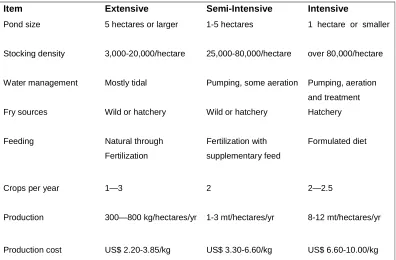
TABLE 1 Characteristic of Three Major Asian Shrimp Culture Systems 31
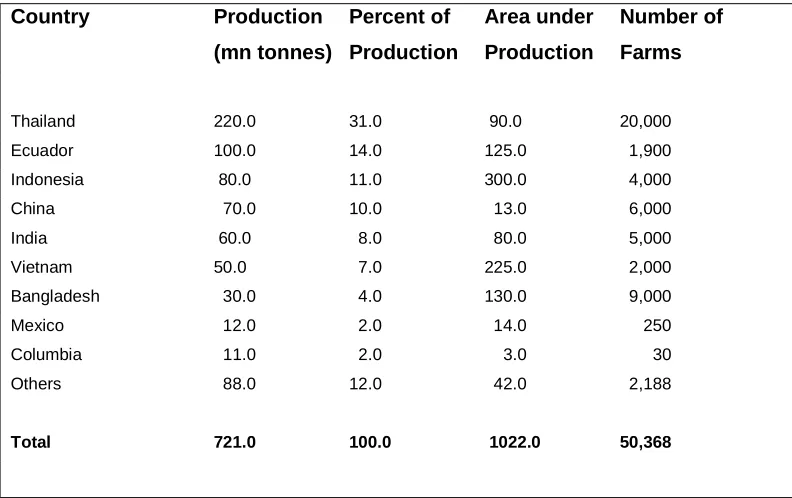
TABLE 2 Bangladesh in Global Commercial Shrimp Production, 1995 33
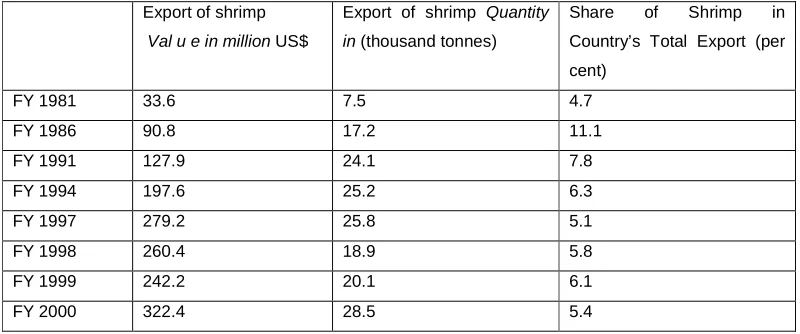
TABLE 3 Trends in Shrimp Exports from Bangladesh 40
LIST OF FIGURES
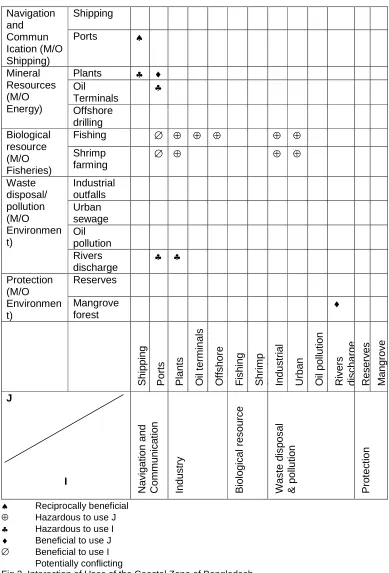
FIGURE 1. Map of Bangladesh Showing the Coastal Zone and Activities 35
LIST OF ABBREVIATIONS
ATDP Agro-Technology Development Project
BOD Biochemical Oxygen Demand
CBD Convention on Biological Diversity
COMB Centre of Marine Biotechnology
COP Conference of the Parties
CSD Commission on Sustainable Development
CZM Coastal Zone Management
CZMA Coastal Zone Management Act
EIA Environmental Impact Assessment
FAO Food and Agricultural Organization
GATT General Agreement on Trade and Tariffs
GOB Government of Bangladesh
HACCP Hazard Analysis Critical Control Point
IAM Integrated Area Management
ICAM Integrated Coastal Area Management
ICOM Integrated Coastal and Ocean Management
ICZM Integrated Coastal Zone Management
IMF International Monetary Fund
NICOMC National Integrated Coastal and Ocean Management Commission
NGO Non Governmental Organization
SAP Structural Adjustment Policy
SERC Smithsonian Environmental Research Centre
UNCLOS United Nations Convention on Law of the Sea (1982)
USAID United States Agency for International Development
UNEP United Nations Environment Programme
WCC World Coast Conference
Chapter 1
1. Introduction
It has almost become a practice that any discussion on coastal area management or
integrated management of coastal or ocean resources begins with a reference to the
“ interface between land and sea” or the area or place where the land surface and
the surface of the sea meet and interact (Scura et al., 1992; Laksmi & Rajagopalan,
2000). The area is important in that it is also the interface between the activities on
the land and the activities in or on the oceans. The other most important fact about
the area is that nature has filled it with all the resources humans need to survive.
The ocean is also a source of spiritual and aesthetic values. Romantic poets have
always considered the sea as a power that embodies the eternal beauty of the
universe and as a spiritual power that is inspiring and a food for the nourishment of
the soul. Beaches in the coastal areas provide recreational facilities for
holidaymakers and at the same time, these are tools for the tourism industry and
contributors to the local or national economy.
Ancient history tells us that, usually, business activities were centred on the ports or
harbours because of the easy and sometimes, only means of transport opportunity
by sea. With the rapid growth and expansion of modern trade and economic
activities, the shipping sector has become a major factor in the perspective of sea
borne trade. Today, the high-tech industries and large factories are mostly located
activities are also a major use since naval ships ply the coastal areas and the high
seas on a regular basis.
The blend of “freshwater and saltwater in coastal estuaries creates some of the
most productive and richest habitats on earth” (Cicin-Sain et al. 1998, p. 15). These
areas are often rich fishing grounds, which are valuable in the sense that they
provide protein, nutrition and food for people, and play a vital role in the economic
activities of a nation. According to the Food and Agricultural Organization (FAO),
aquaculture carried out in the coastal areas has become an important
food-producing sector and greatly contributes to people’s livelihoods, food security,
poverty alleviation, income generation, employment and trade (NACA/FAO, 2000).
In addition to resource exploitation in many coastal areas, the simple presence of
mangrove forests and coral reefs act as a natural barrier to protect human
communities from natural calamities like hurricanes, typhoons, and other ocean
related disasters. These are the uses and activities that represent some values and
are of great importance to humans (Cicin-Sain et al. 1998). All these uses and
activities have been carried out largely for the well being of human society.
Exploration and exploitation has occurred for generations, apparently with the idea
that nature’s bounty is unlimited. However, with scientific revelations the fact is now
well established that even though the land and the sea offers humans an opportunity
to enjoy the gifts of nature’s resources, it is an opportunity that requires proper use,
care and management. Otherwise, the opportunity will be lost.
The oceans are increasingly threatened by human activity, particularly in emerging
economies. There are many factors that are gradually degrading the ocean and its
valuable resources. Statistics show that about 60% of the world’s total population
live near the coastal areas and two-thirds of the world’s largest cities are located on
coasts (Vandermeulen, 1999; Laksmi & Rajagopalan, 2000). In the developing
countries these two facts have a serious adverse effect on the coastal environment,
human health and the economy of those countries. The coastal areas are affected
by the pollution generated by the human activities, and industrial operations like oil
exploration, ocean dumping, and minerals mining, and over exploitation of fish
wastes, the use of pesticides and chemicals in agricultural land and plants, all these
factors are causes of contamination of the waters of the estuaries, bays and coastal
areas. The shipping industry has been singled out as an important source of
pollution created both by fuel and engine oil and other polluting substance
discharges and the fact that the ballast waters carried by ships can contain harmful
pathogens and aquatic organisms. When discharged into a new ecosystem, they
can have some detrimental effects on marine species, human health and the
national economy (Lazaroff, 2000).
Nature and humans are part of the same ecosystem. For example, because of
increasing demands for food to sustain a growing population, every year large areas
of forest are cleared to provide new areas of fertile land. Trees are sources of
oxygen production, carbon dioxide conversion and carbon sequestration. By
eliminating these forests, emissions of greenhouse gases, which are detrimental to
human health and the environment, are increased (Dale et al. 2000). This can cause
climate change, which in turn can affect the sea level and marine species. A change
in sea level can have a dramatic and destructive impact on many States; particularly
island States that are situated close to sea level. Preservation of the ecosystem is,
therefore, essential for the existence of humans and the environment.
In 1982, the United Nations Convention on the Law of the Sea drew the attention of
the international community to, “ the problems of ocean space are closely
interrelated and need to be considered as a whole” (UNCLOS, 1982). Chapter 17 of
Agenda 21, adopted at the United Nations Conference on Environment and
Development (UNCED) held at Rio in 1992, invites us to think about the entire area
encompassing both the land and watersides through its call for "integrated
management and sustainable development of coastal and marine areas, including
Exclusive Economic Zones" (Agenda 21). It emphasizes the need for proper
management of marine fishery resources under national control and the importance
of the connection between land and sea, particularly regarding land-based sources
of marine pollution. It also highlights the need for economic development that can
meet the present and future generation’s needs. The management system prompted
by Agenda 21 covers management in all sectors. In 1993, the World Coast
appropriate process to anticipate and respond to long-term concerns and needs
while addressing present day challenges and opportunities. There is an urgent need
for coastal States to strengthen their capabilities for ICZM, working towards the
development of appropriate strategies and programmes. The Conference Report
suggested that ICZM involves the comprehensive assessment, setting of objectives,
planning and management of coastal systems and resources, taking into account
traditional, cultural and historical perspectives and conflicting interests and uses; it is
a continuous and evolutionary process for achieving sustainable development (WCC,
93).
The approach to managing the ocean and the interface has been fully developed
over the last 10 years in the wake of increased coastal and ocean use. The term
ICZM has been replaced by various other terms such as Integrated Area
Management (IAM), Integrated Coastal and Ocean Management (ICOM). Although
there are some differences in concepts, generally all terms refer to the same
approach of management. This Dissertation uses the term Integrated Coastal and
Ocean Management (ICOM). ICOM is concerned with the effective coordination of
activities and uses on the coastal land and ocean zones. Its focus is on conflict
prevention, planning, communication, and environmental impact assessment to
ensure future decision-making. ICOM has been defined as
" a continuous and dynamic process by which decisions are taken for the
sustainable use, development, and protection of coastal and marine areas and
resources. ICM acknowledges the interrelationships that exist among coastal and
ocean uses and the environments they potentially affect, and is designed to
overcome the fragmentation inherent in the sectoral management approach. ICM is
multi-purpose oriented, it analyses and addresses implications of development,
conflicting uses, and interrelationships between physical processes and human
activities, and it promotes linkages and harmonization among sectoral coastal and
ocean activities" (Cicin-Sain and Knecht, 1998, p.39).
This dissertation explains the utility of ICOM and presents the idea that it is a tool for
the effective management of coastal and ocean uses to ensure sustainable
Bangladesh. It suggests ICOM as a strategy for its potential economic development
and minimizing its negative environmental impact.
The shrimp farming industry in Bangladesh is a glaring example of problems arising
out of a lack of integrated management of a marine resource of the coastal zone.
The ecosystem in the coastal area of Bangladesh is ideal for shrimp farming. It has
been endowed with a rich soil, a good climatic condition, and its water and local
cultural tradition are exceptionally suitable for shrimp production (Huq et al, 2000).
At the same time, the coastal areas are vulnerable to the impacts of shrimp
aquaculture and other land-based and ship-source pollution. In the late 1980s and
early 1990s many developing countries entered into this economically profitable
industry and it has played a significant role in the economy and trade of the
countries. The emergence of shrimp farming in Bangladesh was triggered by a
combination of World Bank project investments, IMF financial disciplines requiring
countries in high debt to shift to export industries and the spread of trade
liberalization under the General Agreement on Trade and Tariffs (GATT) and some
corresponding domestic and economic reform policies of Bangladesh regarding
promotion of non-traditional export sector (World Bank, 1996). Although the export
revenue benefited the national economy to some degree and the society at large, it
also affected the same society and the environment in a serious way. It gave rise to
new environmental problems, social problems and financial inequity in the society.
These ecological and socio-economic impacts of shrimp farming are also concerns
of the fisheries experts, scientists and policy makers of the country. The
sustainability of the shrimp farming and other sectors is at stake because of the
result of those impacts and because of poor coastal use and management practices
(UNEP, 1999). Shrimp farming plays a vital role in the national economy of
Bangladesh since it is one of the major foreign currency earning export sectors.
Shrimp farming in the coastal zone has been chosen as a study of the potential
utility of ICOM in Bangladesh as a means to achieve sustainable development of
this and other coastal industries.
We know that a problem is a situation that is unsatisfactory and causes difficulties or
whether it is right or wrong, will happen. Here, in this discussion, the assumption is
that, if the right action is not taken to create a kind of balance between the economic
use of the natural resources and the management and conservation of the
resources, then ultimately, the existence of the resources and human society will be
endangered. To attain the sustainable development of a particular natural resource,
proper management of that resource along with integrated management of other
resources, is of vital importance. In the following discussion this assumption will be
supported by the example of ecological and socio-economic impacts of the
non-integrated management of shrimp farming.
The key objective of this dissertation was to carry out a case study for examination
of the environmental, and the socio-economic impacts of coastal zone resource use
that was developed under a fragmented management approach. The study was also
intended to provide an insight into the present management issues confronting
many developing countries.
This dissertation intends to achieve this objective by:
(a) tracing the historical and ecological development of the concept of Integrated
Ocean and Coastal Zone Management (ICOM) and its relevance to shrimp
farming
(b) analysing the emergence of shrimp farming in the international arena and
then in Bangladesh as an economic activity, its impact on environment and
society and the various conflicts arising out of this economic activity
(c) examining the need for an ICOM approach for the resolution of conflicts
arising out of shrimp aquaculture and for the sustainable development of
Bangladesh’s shrimp farming industry
(d) providing recommendations of resolving and preventing resource
management problems, such as those mentioned in this dissertation,
regarding ICOM and it’s utility as a means to achieve sustainable
development in coastal uses of Bangladesh.
There is a scarcity of basic information and scientific data in Bangladesh;
accordingly this research relies primarily on secondary data and information.
Various published sources (national and international) are reviewed to support the
conceptual issues and the theory. International, government and Non Governmental
Organization (NGO) sources are also used to gather information on trade and
environment related issues relating to shrimp farming.
In addition to this introductory chapter, the research is divided into another four
chapters. Chapter 2 will discuss the concept of ICOM and its relationship to
sustainable use of ocean and coastal resources such as shrimp. Chapter 3
examines aquaculture and shrimp farming as coastal economic activity in
Bangladesh and other countries. Chapter 4 examines the current regulatory
structure of Bangladesh with respect to environmental issues, the protection of
biodiversity, aquaculture and fisheries, shipping and other coastal activities. The
final Chapter is the concluding chapter. It recommends the adoption of an integrated
management approach to managing the coastal and ocean zones of Bangladesh
and proposes the creation of a high-level leading ICOM agency and a national
legislative framework for capacity building, public participation and environmental
impact assessment. It also provides some sector specific recommendations to help
Chapter 2
2. Integrated Coastal and Ocean Management
2.1 Background
2.1.1 Introduction
The previous chapter introduced the topic of the dissertation, the argument and the
research method. The present chapter will study the historical development of the
concept of Integrated Coastal and Ocean Management (ICOM). Before looking at
the applicability of ICOM in relation to shrimp aquaculture, it is necessary to discuss
the evolution of the concept. The evolution is a result of ideas stemming from two
previous sources, namely ecological management in the context of ocean uses, and
the ocean governance and regulatory system. While the ecological management
attempted to improve the conservation and management approaches towards the
development of the coastal resources using science and other sectoral management
tools, the international regulatory regime aimed at the resolution of conflicts
pertaining to the coastal territories and on the high seas through apportioning rights.
Time and again, it was felt by the international community that a coherent move
combining the management approach and the regulatory regime is needed for the
sustainable development of the resources. This resulted in a series of conferences
Declarations, and Conventions starting with the Stockholm Declaration on the
Human Environment in 1992 and the United Nations Conference on Law of the Sea
(UNCLOS III) in 1982; the latter developed a comprehensive regulatory framework,
the United Nations Convention on the Law of the Sea (UNCLOS), for ocean uses
and activities and established measures to resolve the conflicts related to
coastal State rights, responsibilities and protection of the marine environment.
Finally, a further combination of science and management and of governance of
ocean and other natural resource uses occurred in 1992 at the United Nations
Conference on Environment and Development (UNCED). The outcome is reflected
in Agenda 21 and the Rio Declaration on Environment and Development, which
pronounced the need for a holistic approach to managing human activities affecting
the environment and set out principles for this approach and a plan to implement the
principles. This approach is called Integrated Management for all human activities
affecting the environment. This dissertation will focus, specifically, on this approach
as described in chapter 17 of Agenda 21 and, in particular, on Integrated Coastal
and Ocean Management. This chapter will first look at the various international
documents and conferences that contributed to the development of the ICOM
concept. It will then examine the application of it in shrimp farming.
2.1.2 The Ocean Governance Regulatory Regime
As a result of technological as well as world population growth, the variety and
intensity of uses of the oceans have been rapidly increasing. The environmental and
economic impact of these activities is part of the ocean problems that have become
universal to a large extent. Ocean governance concept is based on a regulatory
approach setting out international norms, rights and conditions to be followed by all
the States involved in the ocean resource uses and ocean activities. The UNCLOS
is the most comprehensive agreement regulating ocean uses rights and
responsibilities. The following sections describe the development of the system.
2.1.3 Law of the Sea
2.1.3.1“Freedom of the Seas” and Geneva Conferences
Cicin-Sain & Knecht (1998) argue that the concept of the “ Freedom of the Seas”
which was founded by Hugo Groitus, a Dutch Jurist, in his formed treatise Mare
Liberum in 1609, dominated in the realm of ocean governance for more than four
hundred years until the end of the second world war. They further argue that the
States in 1945 when it declared its jurisdiction over the resources of the continental
shelf in response to important discoveries of oil and gas in the Gulf of Mexico.
Increased activity for exploration and exploitation of marine resources led to
environmental degradation, boundary disputes and user conflicts which, in turn, led
to convening of international discussion regarding ocean governance.
The move to more fully set out the rights and duties of nations regarding the use of
the ocean began with the 1958 Geneva Conference on the Law of the Sea
(UNCLOS I) convened by the United Nations. The conference successfully adopted
the following four Conventions that codified customary international law and tried to
develop or settle some issues: the Convention on the Territorial Sea and the
Contiguous Zone, the Convention on the High Seas; the Convention on the
Continental Shelf; and the Convention on Fishing and Conservation of the Living
Resources of the High Seas (Joyner, 2000). A second conference was held in 1960
to discuss the unsettled issues relating to the breadth of the territorial sea, as well as
the extent of offshore fishing limits. In the early 1970s, new problems emerged as
the consequence of some concerns regarding exploitation of the deep-sea bed,
continental shelf areas, and offshore fishery resources, as well as the right through
straits used for international navigation and archipelagic transit (Churchill and Lowe,
1999; Joyner, 2000). This resulted in the third United Nations Conference on the
Law of the Sea in 1982, which adopted the comprehensive Convention on the Law
of the Sea (UNCLOS) that developed from customary and conventional laws of the
sea as well as introducing new ideas and approaches. It marks a watershed in
international regime governing the ocean and the ocean resources.
2.1.3.2 UNCLOS 1982
One of the most significant features of UNCLOS is that it combines ocean
governance with international law on environment in its part XII. Joyner (2000) calls
it the core instrument of contemporary law, as it answers jurisdictional questions,
sets out the rights and duties of State parties and codifies the rules, norms, and
principles that govern the use of the ocean space. The Preamble of UNCLOS
addresses the issue of ocean governance and mentions that “...problems of ocean
UNCLOS introduced the world community to a new concept of ocean management
that aims at regulating all the aspects of ocean uses and responsibilities. The
widening of the seaward jurisdiction of the coastal States provides them an
extended opportunity to use the ocean resources, but at the same time, UNCLOS
imposes new responsibilities on these coastal States for management of sea
activities, protection of the environment and cooperation with the neighbouring
States.
UNCLOS lays down a comprehensive regime of law and order in the world's oceans
and seas establishing rules governing all uses of the oceans and their resources. It
embodies in one instrument traditional rules for the uses of the oceans and at the
same time introduces new legal concepts and regimes and addresses new concerns.
The Convention also provides the framework for the further development of specific
areas of the law of the sea such as exploitation of economic resources, transfer of
technology and regional implementation arrangements. It also establishes the
recognition of jurisdiction of the nations in the Exclusive Economic Zone, in the
Territorial Sea and the Continental Shelf, and in the Archipelagic waters for the
Archipelagic States. The Convention offers an extended foundation of jurisdiction
over resources and activities to coastal States up to 200 nm. It was a triumph for
them in the sense that it established their sovereign right to explore and exploit the
natural resources in their territory to help achieve a better economic condition. But
with this achievement came the greater responsibility to manage the resources and
to protect the environment. Despite the legal achievements of UNCLOS and the
need for increasing economic development, its impact on humans saw the growth of
population in the coastal zones and the corresponding level of environmental
degradation and destruction of resources. This generated a search for solutions to
manage these pressures at international, regional, national and local level. The main
2.1.4 The Environmental Management Regime
2.1.4.1 Stockholm Declaration and Creation of UNEP
It is important to note that, even before 1982 and in parallel to the UNCLOS
preparations, there were attempts to combine international law on environment with
international ocean governance. The 1972 Stockholm Declaration developed at the
United Nations Conference on Human Environment is a milestone in the process of
establishing international environmental law as a branch of international law. For the
first time humanity developed an international document where the right to a healthy
environment was proclaimed (Andrusevych, 2000). Principle 1 of the Declaration
reads as follows: “Man has the fundamental right to freedom, equality and adequate
conditions of life, in an environment of a quality that permits a life of dignity and
well-being, and he bears a solemn responsibility to protect and improve the environment
for present and future generations.” The Stockholm Declaration is not a convention
and therefore does not directly establish the right to a healthy environment, but it
provides initial support of the international community from the idea of a right to a
healthy environment.
The 1972 Stockholm Conference was a step forward in the direction of the growth of
the ocean management in that it paved the way for the formation of the United
Nations Environment Programme (UNEP) by the General Assembly Resolution
2997 (XXVII) of 15 December 1972 (UNEP, 1999). Today, the mission of UNEP is to
provide leadership and encourage partnership in caring for the environment by
inspiring, informing, and enabling nations and peoples to improve their quality of life
without compromising that of future generations. The Executive Director of UNEP,
Klaus Töpfer describes the objective of UNEP as “ a particular effort to nurture
partnerships with other UN bodies possessing complementary skills and delivery
capabilities and enhancing the participation of civil society - the private sector,
scientific community, non-governmental organizations, youth, women, and sports
organizations in the achievement of sustainable development” (UNEP, 2000).
Shortly after it was created, UNEP set up the Regional Seas Programme in 1974. It
The Regional Seas Programme is an action-oriented programme and focuses on
the causes of land based source of ocean environmental degradation and
addresses the issue of mitigation or elimination of the consequences. It has a
comprehensive, integrated, outcome oriented approach to fighting environmental
problems through the rational management of marine and coastal areas and
recognises the interdependence of coastal States in a region (UNEP, 1999). The
objective of establishing Regional Seas Programme reflects a “…. cross-sectoral
and problem-oriented management philosophy…in dealing with environment
degradation as a problem of reconciliation between development and the
environment in search of sustainable development” (Chircop, 1988). The
Programme at present includes thirteen regions involving more than 140 coastal
States and Territories (UNEP, 1999).
2.1.4.2 Bruntland Report on Sustainable Development
The momentum for sustainable development grew from the work of the World
Commission on Environment and Development (WCED) that was headed by Gro
Harlem Brundtland, the Prime Minister of Norway. From 1983-I987 the Commission
conducted public hearings throughout the world to review the concept of
sustainability (WCED, 1987). The Report on “ Our Common Future” published by
the WCED in 1987 gives the definition of sustainable development as the
“ development that meets the needs of the present without compromising the ability
of future generations to meet their own needs” (WCED, 1987). Two important ideas
come out of the term “Sustainable Development” that creates a list of needs. One is
the “needs of the present” that is satisfied with the supply of sufficient resources
available presently. The other idea is the needs of “future generations” are to be
considered and met by what is left by the present generations for the succeeding
generations, and also by the ability of the future generations to manage their own
resources. The linkage between generations is established by the fact that involves
a sustainable use of ocean resources by the previous generation and ultimately
spills over to the next generation. In this way the process continues everlastingly
meeting the needs of all generations. That is why the scholars have called the
development, integrated management of the resources is an indispensable method.
The Commission concluded in their report that our common future depends on
sustainable development. It emphasised the fact that there should be a balance
between economic development and environmental concerns. The report pointed
out that development is not just about higher profits and better standards of living for
a few people. It should aim at making life improved for everyone and this should not
involve destroying or irresponsibly using up our natural resources, nor should it
endanger the ecosystem that supports life on earth.
2.1.4.3 UNCED 1992
With an endeavour to attain international support for this new concept Sustainable
Development which came through a long process after the creation of UNEP twenty
years ago, the United Nations Conference on Environment and Development
(UNCED) was held in Rio de Janeiro in 1992. Several important documents were
signed at the summit, most notably the Rio Declaration, Convention on Biological
Diversity, the Framework Convention on Climate Change and the Agenda 21, a
programme of actions for sustainable development. The Conference recognised that
humans depended on the Earth to sustain life. It found linkages between human
activity and environmental issues, and expressed that global concerns required local
actions and recommended that people had to be involved in planning developments
for their own communities if such developments were to be sustainable. Two
significant Conventions namely the Framework Convention on Climate Change and
the Conventions on Biological Diversity reflect the ecosystem-integrated approach.
Several institutions were also introduced by the Conference, such as Commission
for Sustainable Development.
2.1.4.4 UNCED and Agenda 21
The Rio Declaration on Environment and Development, proclaimed at UNCED,
provides the basic principles of sustainable development. It is a set of twenty-seven
principles to guide national and international actions on environment, development
Conference. Some key principles are: a) Principle of interrelationship and integration,
b) Intra and intergenerational principle, c) Principle of the right to develop, d)
Environmental safeguard principle, e) Precautionary principle, f) “Polluter Pays”
principle g) Transparency principle h) Participatory principle (Rio Declaration, 1992).
These principles are important to ICOM because they require the States to manage
their resources applying an integrated decision-making model and to act in a
precautionary way to protect the environment even in condition of uncertainty (Rio
Declaration, 1992). The principle 13 of the Rio Declaration also urges the States to
adopt an integrated and coordinated approach to their development planning so as
to ensure that development is compatible with the need to protect and improve the
environment for the benefit of their population (Rio Declaration).
Chapter 17 of Agenda 21, adopted at the conference, urges the Coastal States to
commit themselves to integrated management and sustainable development of
coastal areas and the marine environment under their national jurisdiction. Agenda
21 addresses the pressing environment and development problems of today and
also aims at preparing the world for the challenges of future to attain the long-term
goals of sustainable development. The concept of ICOM is the central idea
regarding the management of coastal zones and ocean areas under national
jurisdiction in chapter 21 and it achieved global recognition at the UNCED
conference (Agenda 21). The concept was viewed as an integrated management of
all sector on an international, regional, national and local level and was adopted as
the solution for the problem of poor management of economic development and its
impact on the environment. Throughout the chapter 17 of agenda 21, the major
emphasis is laid upon not only on the rule of sustainable development of the ocean
and coastal resources, but also on the importance of precautionary approach in
such a process. The precautionary principle when applied aims to protect the
environment from long term and irreversible damage and justifies taking action
through for example, legislation and regulation, even when there is not conclusive
scientific proof of the impact. The principle recognises that by the time such proof
Chapter 17 of Agenda 21 entitled “ Protection of the oceans, all kinds of seas,
including enclosed and semi-enclosed seas, and coastal areas and protection,
rational use and development of their living resources” propose the following
programme areas:
(a) Integrated management and sustainable development of coastal areas,
including exclusive economic zones;
(b) Marine environnemental protection;
(c) Sustainable use and conservation of marine living resources of the high seas;
(d) Sustainable use and conservation of marine living resources under national
jurisdiction;
(e) Addressing critical uncertainties for the management of the marine
environment and climate change;
(f) Strengthening international, including regional, cooperation and coordination;
(g) Sustainable development of small islands (UNEP, 2000).
2.1.4.5 The Convention on Biological Diversity, 1992 and Jakarta
Mandate on Marine and Coastal Biodiversity, 1997
One of the key agreements adopted at UNCED was the Convention on Biological
Diversity (CBD) which also incorporates ICOM principles. The Convention
establishes three main goals: the conservation of biological diversity, the
sustainable use of its components, and the fair and equitable sharing of the benefits
from the use of resources. The ocean environment does not feature specifically in
the convention, but it plays an important role in protecting biodiversity and ensuring
that it is used for the benefit of all. CBD recognizes the “intrinsic value” of the natural
environment and marine species and emphasizes the need for sustainable
development for this very reason (CBD, 1992). So the notion of sustainable
development in terms of human utility moves to this new idea and acquired a fresh
dimension (Kiss & Shelton, 1991). The definition of sustainable development first
introduced in the Brundtland Report now includes maintenance of biological diversity
as an integral part of sustainable development. Once again, the need for the
precautionary principle has been emphasized in the preamble of the Convention
UNEP. In 1997, UNEP played another important role in the development of ICOM by
the adoption of the "Jakarta Mandate on Marine and Coastal Biological Diversity", a
protocol to the CBD (CBD, 2001). The Jakarta Mandate is a global consensus on
the importance of marine and coastal biological diversity and is a part of the
Ministerial Statement on the implementation of CBD, as adopted by the Conference
of the Parties (COP) at its second meeting held in Jakarta in November 1995. The
Jakarta Mandate requires the Parties to address the conservation and sustainable
use of marine and coastal biological diversity, and urges Parties to initiate
immediate action to implement the decisions adopted on this issue.
2.1.4.6 The Commission for Sustainable Development
The Commission on Sustainable Development (CSD) was also created as a result
of UNCED in December 1992 and it is a UN organization designed to ensure
effective follow-up of UNCED; to monitor and report on implementation of the
UNCED agreements at the local, national, regional and international levels. The
CSD is a functional commission of the UN Economic and Social Council (ECOSOC)
with 53 members. It was agreed that a five-year review of UNCED progress would
be made in 1997 by the United Nations General Assembly meeting in Special
Session Rio + 5. This Special Session adopted a comprehensive document entitled
Programme for the Further Implementation of Agenda 21 prepared by the CSD. It
also adopted the programme of work of the Commission for 1998-2002. The next
review will take place in late 2002 and it is titled as Rio+10 (UNEP, 1999).
2.2 Integrated Coastal and Ocean Management (ICOM)
2.2.1 ICOM as a Concept
At the domestic level the United States is believed to have started the ICOM
initiative in 1972 with the adoption of coastal zone management as a formal
government activity when it enacted the Coastal Zone Management Act (CZMA),
(Post & Lundin, 1996). It focussed on the key aspects of management which was
perceived as a social and political key issue in at that time. This was followed by a
featured the fragmentary coastal zone management approach (Post & Lundin, 1996).
They argue that action taken since the 1970s to improve the governance of coastal
areas, regional seas and marine resources, have very clearly demonstrated that
good results can be achieved and deterioration of conditions can be reserved at
local level. Integrated environmental management gave a new method of managing
the coastal resources.
Following the UNCED’s adoption of integrated management, the concept has
become the central paradigm for use of many agencies and the focus of numerous
international meetings and activities including (1) the continuing work of the
Intergovernmental Panel on Climate Change, especially its working group on
Coastal Zones and Small Islands, (2) the 1993 World Coast Conference, held in
Noordwijk, The Netherlands, (3) the U.N. Global Conference on the Sustainable
Development of Small Island Developing States, and (4) the 1995 Conference on
"Protection of the Marine Environment from Land-Based Activities" in Washington,
sponsored by the United Nations Environment Programme. All of these meetings
have concluded that ICOM is the appropriate approach with which to manage the
diverse problems of coastal areas, from the pressing problems of coastal pollution
and habitat degradation to the long-term implications of changing sea level (ICM
Basics, 2001).
As noted earlier, the concept of Integrated Coastal and Ocean Management was
developed in 1970s and gradually came into being in the international regime in
mid-1980s and early 1990s. The concept adopted different names at different stages.
The earlier version was called Integrated Coastal Zone management (ICZM), which
developed from earlier approach of sectoral planning and management programmes
of coastal zones. ICZM later developed into ICOM and during the adoption of
Jakarta Mandate in 1997 it was referred to as Integrated Area Management (IAM).
ICOM or ICZM or IAM differs from the earlier form of Coastal Zone Management
(CZM) in the sense that it attempts a more comprehensive approach taking account
of all of the sectoral activities that affect the coastal zone and its resources and
dealing with economic and social issues as well as environmental/ecological
by saying that traditional organizational approaches taken by the government and
scientific studies and analysis of oceans and coasts carried out by the scientists
tend to focus on “single disciplines and single sectors”.
Cicin-Sain et al. (2000) put forward examples by saying that the study of geology
addresses the problems of coastal erosion and long shore drift of sediments, while
physical oceanography determines the magnitude and direction of the ocean
currents and waves that affect the beach and its stability. They further develop the
idea mentioning that different disciplines operated independently, used separate
languages, and separate patterns of worldviews and incentive structures. Besides
the single sector management difficulties, many conflicts in the use of various
resources and management of them and improper or poor implementation of the
respective government policies led the lawmakers and scientists to replace the
traditional approach and to go for a better integrated management concept. What
inspired them is the thought that integrated management would serve the purpose of
conflict resolution and at the same time provide a platform on which the government
organizations and other institutions can operate together to achieve the objective of
sustainable development (Masaulu, 2000). It has also been seen as a multi-sectoral
process created to improve development planning and resource conservation
through integration and cooperation (Clark, 1998).
There is a wide range and variety in the definitions of ICOM provided by different
scholars, but the main spirit of each definition is the integrated and sustainable
management of natural resources. We may cite some examples here.
“Ideally, an ICM program should operate within a closely integrated, coherent
management framework within a defined geographical limit” (Chua, 1993, p. 2). The
World Coast Conference 1993 defines ICZM as “ the comprehensive assessment,
setting of objectives, planning and management of coastal systems and resources,
taking into account traditional, cultural and historical perspectives and conflicting
interests and uses; it is a continuous and evolutionary process for achieving
2.2.2 The Noordwijk Guidelines and Model Laws
The World Coast Conference (WCC) 1993, which was held from 1-5 November
1993 in the Netherlands, included delegates from more than 90 nations, 20
international organizations and 23 non-governmental organizations. WCC examined
actions to strengthen capabilities for sustainable development and integrated
coastal zone management (ICZM). WCC considered ICZM the most appropriate
means of addressing both current and long-term coastal management issues and
pointed out that the aim of ICZM is to balance conflicting goals for the use of coastal
resources in order to ensure the sustainable development of coastal zones. The
Conference urged the coastal States to take necessary actions to undertake in
preparing appropriate coastal zone management strategies (WCC, 1993). The
Guidelines produced for the WCC are known as the Noordwijk Guidelines for
Integrated Coastal Zone Management. They emphasized on institutional, policy,
legal and regulatory aspects of the integrated management. WCC viewed ICZM
as:"... a governmental process, and consists of the legal and institutional framework
necessary to ensure that development and management plans for coastal zones are
integrated with environmental and social goals and are made with the participation
of those affected. The purpose of ICZM is to maximize the benefits provided by the
coastal zone and to minimize the conflicts and harmful effects of activities upon
each other..." (WCC, 1993). The Guidelines provided a general framework of the
various stages of ICZM process that has to be followed by the nations adopting
ICZM process. The Guidelines are not legally binding to all nations, but they offered
a type of model for the structuring of ICZM process. Subsequently, a number of
different models were developed. More recent legislative initiatives reflect a move
towards integrated management approach. For example, the Oceans Act of Canada
promotes the integrated management of oceans and marine resources to foster
sustainable development of the resources, to conserve the ecosystem and to
maintain biodiversity. It promotes the wide application of precautionary approach
and encourages participation of various stockholders (Oceans Act, 1996). The
European Model Law on Sustainable Management of Coastal Zones and European
Code of Conduct for Coastal Zones is a masterly work that defines the concept of
development, establishes the main guidelines and makes proposals with regard to
the appropriate institutions, procedures and instruments for the implementation and
application of integrated management and planning. It was believed by the Council
of Europe that such model law could be a source of inspiration to States and be
used either to amend existing legislation or to pass new laws (Council of Europe,
2000).
2.2.3 The ICOM Process
Although differences exist regarding values, principles and goals in different
societies, there are some conventional stages and planning for ICOM process.
Usually, a triggering event such as an opportunity for economic development or a
negative environmental impact sets the ICOM process in motion. The process may
be initiated nationally, regionally or at the municipal or local level depending on
which level is going to be benefited or affected. Even it may be an international
problem which needs to be addressed globally on a cooperative basis. There needs
a strong political commitment, locally or nationally, a “leader”- and some resource to
commence the course of action. The various stages for ICOM preparation have
been described by Cicin-Sain and Knecht (1998) and Noordwijk Guidelines and the
following summarises these typical stages for implementation here briefly.
Initially, a preliminary concept paper containing a statement of a perceived problem,
or concern and developing the use of ICOM in other countries is produced for
internal discussion and reports in government. It is afterwards followed by a publicly
released Discussion Paper on the need for developing a process. The potential
stakeholders are identified and encouraged to join the discussion for consultation.
The outcome of the consultation is a preparation of recommendations, which will be
followed by review of the administrative capacity and creation of a coordination
mechanism. Financial considerations take place at this stage. The second stage is
the stage for designing and developing ICOM and it includes collection and analysis
of data on physical, social, economic, political and legislative systems. The guiding
principles for decision-making, the inventory of tools such as zoning are developed
ICOM plan is designed, the stakeholders are consulted and the government adopts
the plan in the form of budgets, personnel allocation and legislation authorizing
activities. The implementation of ICOM begins at the fourth stage by establishing a
coordinating agency, communicating the plan and identifying particular project to
refer to lead agency to develop as specific project and starting and maintaining the
project work. At this stage, an Environmental Impact Assessment or Social Impact
Assessment takes place to assess projects and development (WCC, 1993; Council
of Europe, 2000). This is usually followed up by of projects in the overall plan. A key
ingredient is the updating of data and to review in light of any new information or
other changes.
Integrated Coastal and Ocean Management is the integrated planning and
management of coastal resources and environments. The objective of ICOM is to
obtain co-ordinated management of the coastal zone as a whole in relation to local,
regional, national and international goals. ICOM is based on the physical,
environmental, socio-economic and political interconnections. It is an active process,
which can unite government and community, science and management, and sector
and public interests in developing and implementing an integrated approach. The
various guidelines and models give a formative shape to that approach so that the
objective of ICOM can be achieved in a comprehensive and successful manner.
Since this dissertation is examining the role of ICOM in the sustainable development
of shrimp aquaculture and in ensuring better coastal resource management in
Bangladesh, it is useful to briefly outline the relationship between ICOM and shrimp
farming as an economic development use. Before proceeding to the case study, the
next chapter looks at aquaculture and shrimp farming in general and the ICOM
Chapter 3
3. Aquaculture and Shrimp Farming
3.1 Aquaculture
3.1.1 Definition
The UN Food and Agricultural Organization (FAO) conference on Aquaculture
Development in the Third Millennium held in February 2000 in Bangkok produced
The Bangkok Declaration and a Strategy for Aquaculture Development Beyond
2000. The documents recognized the fact that aquaculture is “the fastest growing
food producing sector and is an increasingly important contributor to national
economic development, the global food supply and food security” (NACA/FAO, 2000,
p. 4). FAO is devoting a great deal of attention to this sector with a view to ensuring
that there is a sustainable development of aquaculture. FAO (1997) defines
aquaculture as the farming of aquatic organisms including fish, molluscas,
crustaceans and aquatic plants. Matthew Landau (1992) defined aquaculture as the
large-scale husbandry or rearing of aquatic organisms for commercial purposes.
There are different versions of the definition of aquaculture. Some authors have
restricted the definition to fish farming or fish husbandry only and others have used
the term to include all aquatic species and plant culture. The modern meaning of
aquaculture tends to encompass all forms of fish farming and farming of other
organisms like oyster mussels or seaweed. Depending on the species, the culture
may be done in upland, lowland, inland, coastal or estuarine water containing fresh
water, or brackish or salt water, which may be cold-water or warm-water (Pillary,
1990). Aquaculture can take many forms. This chapter will focus on shrimp farming
of research and study to improve the quality and quantity of production of species
and does in a sustainable way.
3.1.2 Socio-Economic and Cultural Basis of Aquaculture
Aquaculture is believed to date back to 2500 BC. An Egyptian bas-relief, which was
seen on the tomb of Aktihetep, illustrates the image of tilapia fish removed from the
pond by a man. In China, fish farming is believed to have started when the Classic
of Fish Culture had been written around 500 BC by a Chinese politician named Fan
Lei who later turned to be a fish culturist (Pillary, 1990; Landau, 1992). History of
fish farming tells us that the practice of the culture of fish existed in different part of
the world in different times. In China, the culture of carp fish which later spread to
Japan, and Korea were very popular during the Tang Dynasty, 1400 to 1100 years
ago. The Romans are believed to have inherited the practice of carp fish culture
from the Egyptians and the French used to construct saltpans during the
mid-eighteenth century to culture some species such as eels and mullets. The European
countries adopted and established the methods of finfish culture by the 1850s.
America, Russia and Canada started their experimental fish farming in 1853 1856
and 1857 respectively (Landau, 1992).
The other countries having a history of fish farming are Czechoslovakia, Polynesia,
Hawaii, the Netherlands, and Great Britain. It gradually became a practice in Central
and South America, Asia and other continents. Shrimp and other shellfish and
Oyster farming began as an aquaculture during the late nineteenth and early
twentieth centuries. In particular, shrimps were cultured to fill the gap caused by
over-exploitation of natural fish stocks. In the last four decades, the study and
research regarding aquaculture have developed a lot.
Gradually, fishing has become an integral part of the day-to-day life of the humans
with respect to both food and trade. The rapid growth of human population in the
twentieth century, especially after the Second World War, has created an immense
demand for sources of food and nutrition. This demand has generated an increase
advent of modern technology, the fishing activity increased at a speedy rate.
Developed countries increased the number of their fishing vessels, introduced
effective and efficient methods of fishing and vied with each other for greater
engagement in the activity. At the same time, modern scientific methods were being
used for the processing of fish catches, and developments in the transport sector
helped increase the scope of market range. This level of fishing has ultimately
resulted in the depletion of certain fish stocks. Scientists and fisheries experts
became aware of the fact that unless alternative measures were taken to increase
fish production and to manage this particular ocean resource in a sustainable way,
humans would encounter a severe setback in connection with shortage of food.
Aquaculture was seen as a means of addressing these concerns. Aquaculture is
important in the sense that it not only aims at increasing the production but also
manages the production in a sustainable way to maintain a balance between
production and consumption.
There were several other factors that also accelerated interest in aquaculture. Due
to the rapid growth of national population every country desired to be self-sufficient
in food production. The trade liberalization policy of the General Agreement on
Trade and Tariff (GATT), now under the World Trade Organization (WTO), and the
lending disciplines of the International Monetary Fund (IMF) influenced the member
countries to increase domestic production in order to engage in export oriented
aquaculture production (World Bank, 1996). The increase in the national reserve of
foreign exchange through export industries is an important issue for all nations and
particularly, for developing economies. Priorities like rural employment, employment
of women and income generation and provision for nutrition for people also
influenced many governments to adopt a policy to encourage more aquaculture
3.1.3 Aquaculture as an Economic Sector
Some environmental and socio-economic impacts have brought a significant change
in the condition of fisheries resources, and as a result, there is instability in the
supply and demand of fish. However, fish remains increasingly a major source of
food and nutrition, job and income in many countries. According to FAO statistics
published in 2000 world fish catches and aquaculture production declined from a
figure of 122 million tonnes in 1997 to 117 million tonnes in 1998 (FAO, 2000).
Scientists say this was the effect of an abnormal weather pattern known as El Nino.
The production rate rose again in 1999 to an estimated 125 tonnes (FAO, 2000).
FAO fisheries experts argue that the increase in the production in fish had been
possible due to aquaculture, as fishing on the sea did not bring any change in the
total amount of fish catch (FAO, 2000).
According to FAO, about 36 million people were engaged in fishing and aquaculture
production sectors in 1998, about 15 million full-time, 13 million part-time and 8
million occasional workers. Fisheries experts have discovered that employment rate
in inland and marine aquaculture has been increasing and it has been estimated
about 25% of the total. Preliminary 1999 data shows that there is a 4% rise in the
value of the international fishery trade amounting to US$53.4 billion in comparison to
the previous year’s amount estimated at about to US$51.3 billion (FAO, 2000). The
FAO data indicates that the world marine capture fisheries are declining due to
overfishing, depletion and marine pollution. Since marine resources are not infinite,
and need to be appropriately managed for sustainable development, aquaculture is
important because it is an alternative to natural production and supplements in the
preservation process. The shortage in the marine capture fishery can be dealt with
3.1.4 Costs and Benefits of Aquaculture
The 2000 Bangkok Declaration on Aquaculture Development recognizes that there
has been noteworthy increase in commercial aquaculture; both in developed and
developing countries that has made significant contribution to provision of food,
foreign exchange earning and trade (NACA/FAO, 2000). FAO report on the State of
World Fisheries points out that the development of aquaculture in the Asian region
has been done in the form of a rural activity integrated into existing farming systems
(FAO, 2000). Rural people thus have the opportunity to get involved in the
aquaculture without having access to extra land and infrastructure. Aquaculture in
the rural areas, therefore, can make important contribution to the alleviation of rural
poverty, increase in domestic production and income and generation small-scale
employment. This is really good news for the rural people in the developing
countries who are suffering from abject poverty, malnutrition and unemployment. For
example, in Bangladesh, where most farmers are relatively poor, there is vast
potential for the poorest members of society to become new participants among
aquaculture farmers (FAO, 2000). Women play a significant role in this regard.
Since shrimp farming is not a tough labour-intensive activity, women are engaged in
the hatchery and rearing ponds along with their male counterparts. It improves the
economic status of women.
As noted at the end of chapter 2, unregulated and unplanned aquaculture
sometimes lead to environmental degradation, decrease in production, a poor return
on investment and humans and other health hazards (FAO, 1997). There are other
problems such as access to modern technology and availability of financial
resources for the rural poor people. These shortcomings can be overcome in the
developing countries by adopting sustainable policies for effective aquaculture that
take into account the local situation. The FAO Report on the State of World
Fisheries appropriately mentions that the future development of aquaculture will
depend on improvements in new and adaptive research and management (FAO,
2000). The Bangkok Declaration and the Strategy for Aquaculture Development
Beyond 2000 provides a framework for such cooperation, which is particularly