JIEM, 2015 – 8(3): 804-822 – Online ISSN: 2013-0953 – Print ISSN: 2013-8423 http://dx.doi.org/10.3926/jiem.1380
The Decision Optimization of Product Development by Considering
the Customer Demand Saturation
Xing Qing-song
1, Pan Cheng
1, Liang Xue-dong
21
School of Management, Chongqing Jiaotong University (China)
2
Busniss School of Sichuan University (China)
[email protected], [email protected], [email protected]
Received: January 2015
Accepted: May 2015
Abstract:
Purpose:
The purpose of this paper is to analyze the impacts of over meeting customer
demands on the product development process, which is on the basis of the quantitative model
of customer demands, development cost and time. Then propose the corresponding product
development optimization decision.
Design/methodology/approach:
First of all, investigate to obtain the customer demand
information, and then quantify customer demands weights by using variation coefficient
method. Secondly, analyses the relationship between customer demands and product
development time and cost based on the quality function deployment and establish
corresponding mathematical model. On this basis, put forward the concept of customer
demand saturation and optimization decision method of product development, and then apply
it in the notebook development process of a company. Finally, when customer demand is
saturated, it also needs to prove the consistency of strengthening satisfies customer demands
and high attention degree customer demands, and the stability of customer demand saturation
under different parameters.
And also there is basically consistent between the sequence of meeting customer demands and
customer demands survey results.
Originality/value:
The paper proposes a model of customer demand saturation. It proves the
correctness and effectiveness on the product development decision method.
Keywords:
customer demand, development cost, development time, customer demand saturation
1. Introduction
In recent years, with the increasingly fierce market competition, enterprises pay more attention to the needs of customers in the product development process, and look forward to enhancing market flexibility and product competitiveness by strengthening meet the customers’ individual demands, which have high attention.
built linear and nonlinear relationships between customer demands and necessary resource requirements for production by using linear regression and neural networks, then forecasted the manufacturing the resources needed to customer demands; Combined with quality function deployment method, Yan, Zhao, Wang and Nie (2011) presents a method for mapping customer requirements, so as to get the product module configuration scheme set under the customer demands; Scholz-Reiter and Kück (2013) proposed control scheme for Nonlinear Dynamics method to improve the accuracy of demand forecasts, which solved the problem of highly unstable about intermittent customer demands; Tan (2013) designed a questionnaire for electric features to capture customer demands, through fuzzy logic processing, he got the explicit ones; some people assumed that fully meet customer demands in order to improve customer satisfaction, they redefined the rough numbers to effectively analyze customer needs and fully express customers’ perceptions (Zhao, Zhang, He & Tan, 2011); Zhu, Yanu and Gao (2012) revised the customers demand important by the concept of DEMATEL and entropy, with a view to display diverse customer demands objective and reasonable in the research and development; people like Ertian, Huanhuan, Daqiang and Yulian (2013) proposed a customer segmentation method based on fuzzy clustering and trigonometric functions, through the trigonometric function model design, this method can realize the conversion of customer demands for design knowledge; Dan, Yao, Ding and Zhang (2010) presented a product configuration method based on ontology mapping method for the product development process of fuzzy customer requirements to product configuration issues, and finally realized the multiple match between customer demand characteristics parameters and the instances characteristic parameters; On inventory management, Dutta and Chakraborty (2010) described the uncertainty in customer demand using knowledge and information, they presented a policy to address the single-period product inventory problem under uncertainty of customer demands, which called “two projects one-way alternatives”; From the perspective of cloud computing, with analyzing cloud computing platform architecture and characteristics of mass customization in customer service, Guo and Wu (2011) proposed customer demand-response model of mass customization based on cloud computing, which solved problems effectively of addressing customer demand information in the mass customization.
between the degree of customer demand satisfaction and the product development cost and time.
Based on these above, this paper is organized as follows. Firstly, through the concrete research, obtain the customer demand information, and quantize customer demands weights by using the method of variation coefficient; Then, with the use of quality function deployment, analyze the relationship between customer demands and product development time and cost, and establish the mathematical model; On this basis, construct conception of customer demand saturation, and put forward the optimal decision methods based on genetic algorithm under considering customer demand saturation; Finally, present satisfactory scheme to meet customer demand under the ideal product development time and cost. This paper will provide the decision for the enterprise to weigh the customer demand, product development time and cost in product development.
2. Concept Construction on Customer Demand Saturation
2.1. Determine the Weight of Customer Demands
In order to determine the differences between each customer demands and overall one, it is necessary to get weight analysis of the customer demands, to show the customer demand for the meeting space. When determine the weight of demand, the common methods which include methods of subjective (AHP and Delphi) and objective (fuzzy clustering, rough set and entropy), the subjective weighting methods have certain subjectivities, which influences decision accuracy and reliability (Tadic, Gumus, Arsovski, Aleksic, & Stefanovic, 2013; Tian, Zhang, Wang & Wang, 2004). Fuzzy clustering and rough set methods use the raw data to calculate weight, while avoiding the subjective, but weakness in calculating weights, namely in handling information. Although there is no systematic information on the loss, but unable to determine system weight of each property, and typically, the use of fuzzy distribution of weights usually need to provide a priori standard; Rough set method does not need to provide prior information, and also provides a tool to determine weight, but it uses range partitioning method for data processing, with neglecting more system information (Huang, Wu & Zong, 2004; Chen & Xu, 2013).
determine the weight of customer demands in the product development process. The following is the specific calculation steps.
Step 1. Collect customer demands, and calculate the variation coefficient. Assume that the number of customer demands is n, after statistical analysis, draw the average and the standard deviation of each customer demand, and according to the obtained data derived before, the variant variables (Vi(i = 1, 2, 3, … n)) of each customer demand is calculated as follows:
(1)
Step 2. Calculate the weight of each customer demand. Use the variation coefficient method to get the sum ( ) of the coefficient of variation of customer demand. And based on the variation coefficient method formula, calculate weights of each customer demand (cdi(Customer Demands)), weighting formula is as follows:
(2)
According to two steps above the demands of weight matrix is as follows:
CD(Customer Demands) = (cd1, cd2, cd3, …, cdi, …, cdn)T
Step 3. Define customer demands meet program. According to customer needs weight matrix which is obtained, we define a demands active matrix, which is the customer demands meeting program (). The matrix can represent the satisfied situation of demands, so that can show each customer demand realized or not:
= (1, 2, 3, …, i, …, n)T
Note, if each 1 was 0, it meant there is no demand. It doesn't make sense and this program
2.2. Relationship Between Customer Demands and Product Development Time and Costs
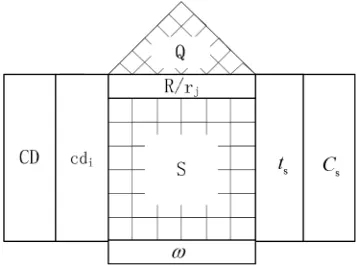
Because that Quality function deployment (QFD) can turn customer demands, technical characteristics and correlation of each part into graphic showing, its intuitive and simple characteristics can help demonstrate decision problems (Vinodh & Kumar-Chintha, 2011; Wu, Pan & Shao, 2013). As shown in Figure 1, the QFD matrix is defined like this: in the matrix, CD
indicates the type of customer demands, cdi indicates the weight to all customer demands for each one. Based on these customer demands, define R for the technical properties of design and production. The corresponding, define rj for project category of each technical characteristic, define Q for correlation degree of technical characteristics, and define S for the relationship degree between customer demand i and technical characteristic j (Hariri, Leman & Yusof, 2013). The Parameters ts and Cs represent the time and cost of the program s.
Figure 1. Relationship between customer demands and product development time and costs
For every customer demand requires at least one technical, so assume technical characteristics number was m, the technical characteristics R = (r1, r2, r3, …, rj, …, rm). Relating to the type of
the technical characteristics, the technical characteristics of each weight should also be considered, therefore, it is necessary to define the technical characteristics weight matrix as
= (1, 2, 3, …, j, …, m). In addition, there is a correlation constraint in technical
(3)
(4)
According to the definitions above, for customer demands meeting programs s, each customer
demand is satisfied by costs and technical characteristics, it shows a positive correlation between development cost and technical characteristics, and also the technical characteristics weight and demands. Therefore, set technical characteristics weight matrix as cost elements for customer demands, and set the relationship of demands (i) and technical characteristics as development costs expenditure levels, then, build a development cost model for customer demand meeting program s.
(5)
In addition, for a demand meeting program s, due to the demands associate with the
technical characteristics, the development time relate to the relationship intensity in technical characteristics. In other words, there is a positive correlation between development time and technical characteristics autocorrelation level, since the between the degrees. So, set the technical characteristics autocorrelation level as development time expenditure levels, and the development time of customer demand meeting program are as follows:
(6)
2.3. Customer Demand Saturation
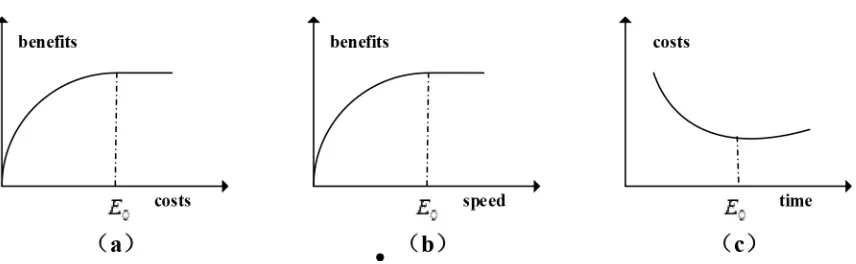
In the course of product development, focusing on demands can improve the adaptability and competitiveness of enterprises. However, excessive meet customer demand will increase development costs and time. Therefore, a balance between demands and development costs and time must be made to control the situation. For development costs, development speed and the benefit of meeting demands, Hou (1998) analyzes the three elements of the issue. He defined the problem as "The balanced in new product development features value and the benefit." The three elements of the development process are as follows.
Figure 2. Three elements and their relationship
As shown in Figure 2(a), with the increase of investment, benefits and costs are positively correlated, due to the limited social technologies over a period time, when reached E0 point,
benefits increase slowed. It also happened in development speed and the benefits, which is showed in Figure 2(b). In Figure 2(c), it can be find, in a certain range, development costs decreased with time increasing, and it just goes to show impact on proficiency in the job product development. In point E0, minimal development cost got. Meanwhile, elements of
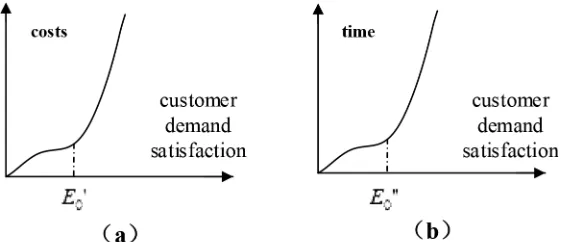
Figure 3. Relationship in customer demand satisfaction, development time and costs
As shown in Figure 3(a), before reaching the point E0', with the increase of customer demand
satisfaction, development costs rose slowly, when over point E0', costs are rising rapidly. As
shown in Figure 3(b), development time also has the same trends, when over point E0", the
time is rising rapidly. That is, to meet customer demands, it will lead to development costs and time rising. Therefore, it is necessary to find a balance between the three elements.
Based on the preceding analysis, we got the product development costs ( )
and development time ( ), through value engineering theory, make total value of the program s as sum of demands weights. The defined customer demand
satisfaction is as :
(7)
In considering product development on the basis of cost, time, and customer satisfaction, define customer demand saturation as CDS(Customer Demand Saturation). And in the program s, the saturation is cdss.
(8)
After that, linking Formula (5), (6), (8):
3. Decision Optimization Under Considering Customer Demand Saturation
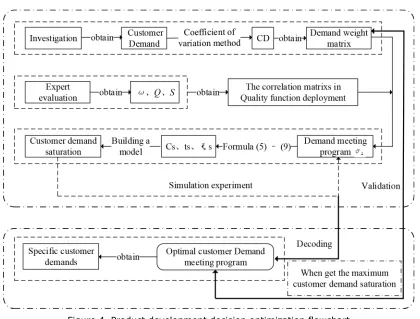
As shown in Figure 4, decision optimization is as follow:
Step 1. Capture customer demand weights. Have a research on product demands, capture relevant data of customer demands, and then, evaluate the demands of weight (cdi) and weight matrix (CD) by using variation coefficient method.
Step 2. Calculate ,Q & S in the quality function deployment matrix. Based on the Likert
five-level rating scale and expert assessments, obtain technical characteristics matrix , technical characteristics autocorrelation matrix Q and the matrix S.
Step 3. Calculate customer demand saturation. According to the steps above, the customer demands of weight (cdi), technical characteristics autocorrelation matrix Q, matrix S and can be obtained. With using Formula (5)-(9), we can get the customer demand saturation of demand meeting program .
Step 4. Simulation, propose product development program. First, based on the genetic algorithm, generate initial population of demand meeting program , through operations such as selection, copy, crossover, and mutation, Calculate the minimum value of and maximum value of CDS in every generation; then, for the best individual in each generation, calculate the value ts and Cs by using quality function deployment; finally, in the simulation process, when the variation of the value (, CDS, ts & Cs) is mild, extract the ultimate best individual and decoded to customer demands on program .
Figure 4. Product development decision optimization flowchart
4. Application Case
In Chongqing Yonghui science and Technology Park, the H Company engages in developing notebook products. In order to ensure the adaptability of the product, Pacific Computers Website and BBS of ZOL digital online are commissioned to initiate discussion of the demand characteristics for new PCs. According to forum feedback, merge customer demands based on the principle of similar demands, extreme demand excluding, the result is shown below:
Number Demand Detail Number Demand Detail
1 D1 Ultra-thin 9 D9 Dual-camera
2 D2 Metal materials 10 D10 Advanced microphone 3 D3 well-cooled 11 D11 Advanced Audio decoder 4 D4 Engineering Plastics 12 D12 Retina screen 5 D5 Much electricity 13 D13 Genuine operating system 6 D6 A space streamlined 14 D14 Various colors 7 D7 Modular design 15 D15 High performance portable 8 D8 High camera pixels 16 D16 Design advance
According to the data in Chongqing municipal industrial and commercial Bureau, as of 2012, in the Chongqing region, electronics store number is more than 1100, where dense in Nanan, Yuzhong, Jiangbei. Shapin and Jiulon district. In the 5 boroughs above, there are more than 240 PC shops, 117 large-scale digital cities and more than 10 senior computer shops. For instance, in Cyber city, there are more than 90 Lenovo computer stores, 20 HP computer stores and 10 Acer stores. It registered an average of 6,000 passengers per day.
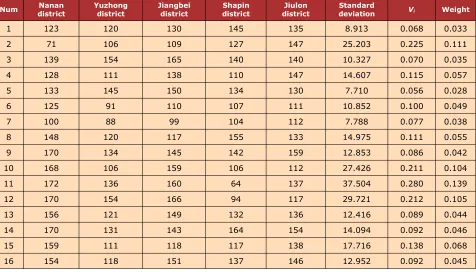
After Network investigation, H Company grants questionnaires in big PC stores on the above 5 districts of Chongqing City, each district is distributed 200. The quantity of questionnaire amounts is 1000 copies, 873 recalled, and the recovery ratio is 87.3%. In the experiments: (1) The calculated result according to the Formula (1)-(2) is as follow:
Num districtNanan Yuzhongdistrict Jiangbeidistrict Shapindistrict districtJiulon deviationStandard Vi Weight
1 123 120 130 145 135 8.913 0.068 0.033
2 71 106 109 127 147 25.203 0.225 0.111
3 139 154 165 140 140 10.327 0.070 0.035
4 128 111 138 110 147 14.607 0.115 0.057
5 133 145 150 134 130 7.710 0.056 0.028
6 125 91 110 107 111 10.852 0.100 0.049
7 100 88 99 104 112 7.788 0.077 0.038
8 148 120 117 155 133 14.975 0.111 0.055
9 170 134 145 142 159 12.853 0.086 0.042
10 168 106 159 106 112 27.426 0.211 0.104
11 172 136 160 64 137 37.504 0.280 0.139
12 170 154 166 94 117 29.721 0.212 0.105
13 156 121 149 132 136 12.416 0.089 0.044
14 170 131 143 164 154 14.094 0.092 0.046
15 159 111 118 117 138 17.716 0.138 0.068
16 154 118 151 137 146 12.952 0.092 0.045
Table 2. Questionnaire data and calculation results
Number Technical characteristics Ri Detail
1 R1 appearance
2 R2 functions
3 R3 reliability
4 R4 package
5 6 7
R5 R6 R7
environmental protection machinable maintenance
Table 3. Technical characteristics
(3) Through Likert five-level rating scale, obtain scores of technical characteristics, and the results are normalized as follows:
= [R1, R2, R3, R4, R5, R6, R7] = [5, 2, 4, 2, 1, 5, 2] After normalized:
= [0.238, 0.095, 0.190, 0.095, 0.048, 0.238, 0.095] Matrix Q and S:
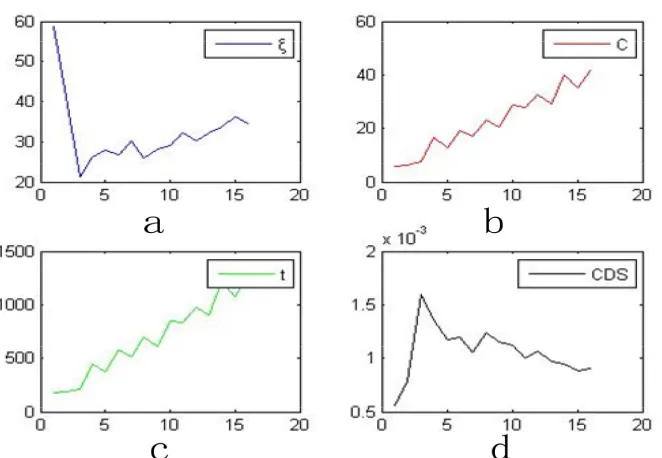
Figure 5. Parameter simulation results
Figure 6. Relationship between quantity and parameters
The analyses Figure 5 and Figure 6 show that:
(1) As shown in Figure 5(a, b, c and d), before saturated, the value (, CDS, ts & Cs) is undulation. With the numerical saturated, curve converged.
Increase or decrease the meeting demands, according to the obtained relevant formulas, parameters changing as follows.
Demand number C t CDS
1 5.898 173 59.780 0.0006
2 6.423 194 41.012 0.0008
3 7.561 215 21.360 0.0016
4 16.549 447 26.221 0.0014
5 12.602 370 28.042 0.0012
6 19.119 576 26.812 0.0012
… … … … …
Table 4. Variable changing according to demand meeting number
Based the Figure 6 and Table 4, when the quantity is less than 3, the demand meeting program cannot be reasonably catered for customers. And when the quantity is more than 3, the increased customer satisfaction cannot offset the product development cost and time increasing. After decoding the meeting program when curve converged, the result is as follow:
= [0 1 0 0 0 0 0 0 0 1 1 0 0 0 0 0]
The three customer demands are Metal materials, Advanced Audio decoder and Retina screen. In order to validate the robustness of the model, we change the parameter values of N, pc and
pm. After the simulation, decoding the obtained chromosome and the results are as follows.
Number Invariant parameter Changing parameter Program
1 N, pc pm = 0.02 = [0000000001110000] N, pc pm = 0.15 = [0100000001100000]
2 N, pm pc = 0.70 = [0100000000100010] N, pm pc = 0.85 = [0100000001000010]
3 pc, pm N = 150 = [0100000001100000] pc, pm N = 300 = [0100000001100000]
Table 5. Simulation results of change the parameter values
parameter N an d pm are invariant. And the demands meeting program is Metal materials, Advanced microphone and Advanced Audio decoder, while N=150 or N=300, parameter pc and
pm are invariant.
On the analysis above, the top 3 ranked demands are Metal materials, Advanced Audio decoder and Retina screen. But the results of simulation are not fully consistent with that, this may be caused by the defects of genetic algorithms and the methods of weighting, and in the subsequent study, we will optimize the stability of the algorithm.
5. Conclusions
In order to obtain the best demand meeting program with maximize customer satisfaction and considering product development cost and time, based on quality function deployment and genetic annealing algorithm, we get the preferable result. The main contributions are as follows.
(1) Put a customer demand weight calculation method based on variation coefficient, so that enterprises can draw attention to the high degree customer demands.
(2) With using quality function deployment model, customer demand saturation is constructed. Quantify development costs, development time and the degree of satisfaction of customer requirements and make the calculation of the balance of the three possible.
(3) Use genetic algorithm to simulate the model, and also discussed the robustness of the model.
The established model can guide the enterprises to fully meet customer demands with concerning about development costs and time rising, it also can assist corporate production decisions. In the simulation process, there are some sequence deviations of demands ranking, but the model still has some constructive significance. In addition, according to the unsatisfactory simulation results above, we will modified algorithm and make research on customer demands again in the next work, aim to ensure that the simulation data model can be robustness and accuracy.
Acknowledgement
References
Ceng, Y. (2012). A prediction method of regional logistics demand based on the coefficient of variation. Statistics and Decision, 21, 95-97.
Chen, N., & Xu, X. (2013). Information-fusion method for urban traffic flow based on evidence theory combining with fuzzy rough set. Journal of Theoretical & Applied Information Technology, 49(2), 560-566.
Crostack, H.-A., Hackenbroich, I., Refflinghaus, R., & Winter, D. (2007). Investigations Into More Exact Weightings of Customer Demands in QFD. Asian Journal on Quality, 8(3), 71-80.
http://dx.doi.org/10.1108/15982688200700026
Dan, B., Yao, L., Ding, Y-G., & Zhang, X-M. (2010). Product configuration oriented to fuzzy customer requirement based on ontology mapping. Computer Integrated Manufacturing Systems, 16(2), 225-232.
Dean, P.R., Xue, D., & Tu, Y.L. (2009). Prediction of manufacturing resource requirements from customer demands in mass-customisation production. International Journal of Production Research, 47(5), 1245-1268. http://dx.doi.org/10.1080/00207540701557197
Dutta, P., & Chakraborty, D. (2010). Incorporating one-way substitution policy into the newsboy problem with imprecise customer demand. European Journal of Operational Research, 200(1), 99-110. http://dx.doi.org/10.1016/j.ejor.2008.12.011
Ertian, H., Huanhuan, L., & Daqiang, C., & Yulian, F. (2013). A Method for Customer Demands Groups Segmentation in Product Design Based on Fuzzy Clustering and Trigonometric Functions. Intelligent System Design and Engineering Applications (ISDEA), 95-98.
http://dx.doi.org/10.1109/isdea.2012.30
Felice, F. de, & Petrillo, A. (2010). A multiple choice decision analysis: an integrated QFD–AHP model for the assessment of customer needs. International Journal of Engineering, Science and Technology, 2(9), 25-38.
Gayon, J.P., Benjaafar, S., & Vericourt, F. (2009). Using Imperfect Advance Demand Information In Production-inventory Systems With Multiple Customer Classes. Manufacturing & Service Operations Management, 11(1), 128-143. http://dx.doi.org/10.1287/msom.1070.0201
Guo, Y., & Wu, Q-L. (2011). The model on customer requirements responding based on cloud computing in mass customization and the selection and distribution of its nodes. Systems Engineering-Theory & Practice, 31(2), 1-6.
Gupta, A. Maranas, C.D., & McDonald, C.M. (2000). Mid-term supply chain planning under demand uncertainty: customer demand satisfaction and inventory management. Computers and Chemical Engineering, 24(12), 2613-2621. http://dx.doi.org/10.1016/S0098-1354(00)00617-7
Hariri, A., Leman, A.M., & Yusof, M.Z.M. (2013). Determination of important parameters and technical characteristic for welding fumes index development by using qfd approach. Applied Mechanics and Materials, 315(4), 744-748. http://dx.doi.org/10.4028/www.scientific.net/AMM.315.744
Hou, R-Y. (1998). Equilibrium problem in the process of new product development. R&D Management, 5(5), 5-9.
Huang, D-X., Wu, Z-Y., & Zong, Y-Z. (2004). An Impersonal Multi-Attribute Weight Allocation Method Based on Attribute Importance. Systems Engineering-Theory Methodology Application, 13(3), 203-207.
Ievtushenko, O., & Hodge, G.L. (2012). Review of Cost Estimation Techniques and Their Strategic Importance in the New Product Development Process of Textile Products. Research Journal of Textile & Apparel, 16(1), 103-124.
Jing, Y-G., Dan, B., Zhang, X-M., & Guo, G. (2011). MC semi-structured customer demand information presentation and processing methods. Journal of Management Sciences in China, 14(1), 78-85.
Lu, J-Y., Tan, J-R., Feng, Y-X. (2011). Weight prediction for technical characteristics in QFD based on LS-SVM. Journal of Machina Design, 28(7), 1-7.
Miguel, P.A.C. (2005). Evidence of QFD best practices for product development: a multiple case study. International Journal of Quality and Reliability Management, 1(1), 72-83.
Ren, B., Qiu, L., Zhang, S., Tan, J., & Cheng, J. (2013). Configurable product design considering the transition of multi-hierarchical models. Chinese Journal of Mechanical Engineering, 26(2), 217-224. http://dx.doi.org/10.3901/CJME.2013.02.217
Scholz-Reiter, B., & Kück, M. (2013). Potentials of Nonlinear Dynamics Methods to Predict Customer Demands in Production Networks. Robust Manufacturing Control, 33-45.
Tadic, D., Gumus, A.T., Arsovski, S., Aleksic, A., & Stefanovic, M. (2013). An evaluation of quality goals by using fuzzy AHP and fuzzy TOPSIS methodology. Journal of Intelligent and Fuzzy Systems, 25(3), 547-556.
Tan, J. (2013). Customer Demands Data Acquire Algorithm Research. Applied Mechanics and Materials, 268, 1758-1761.
Tian, J., Zhang, P-Z., Wang, K-L., & Wang, Y-L. (2004). The Integrating Model of Expert's Opinion Based on Delphi Method. Systems Engineering-Theory & Practice, 24(1), 57-62. Vinodh, S., & Kumar-Chintha, S. (2011). Application of fuzzy QFD for enabling leanness in a
manufacturing organization. International Journal of Production Research, 49(6), 1627-1644.
http://dx.doi.org/10.1080/00207540903568729
Wu, C.T., Pan, T.S., & Shao, M.H. (2013). An Extensive QFD and Evaluation Procedure for Innovative Design. Mathematical Problems in Engineering, 10, 1-7.
http://dx.doi.org/10.1155/2013/935984
Yan, P., Zhao, L-P., Wang, G-Q., & Nie, Q-F. (2011). Product modular configuration oriented to customer requirements analysis. Computer Integrated Manufacturing Systems 16(11), 2341-2345.
Zhai, L. (2000). Quality function deployment technique and its application. Journal of Industrial Engineering and Engineering Management, 14(1), 52-60.
Zhao, W-Y., Zhang, H-G., He, Z., & Tan R-H. (2011). Rough number-customer requirements analytical method. Computer Integrated Manufacturing Systems, 17(11), 2493-2501.
Zhu, C-Y., Yang, M-S., & Gao, X. (2012). Modifying the Importance Ratings of Customer Requirements Based on DEMATEL and Entropy. Industrial Engineering and Management, 3, 97-101.
Journal of Industrial Engineering and Management, 2015 (www.jiem.org)
Article's contents are provided on a Attribution-Non Commercial 3.0 Creative commons license. Readers are allowed to copy, distribute and communicate article's contents, provided the author's and Journal of Industrial Engineering and Management's names are included.