Journal of Applied Linguistics and Language Research Volume 3, Issue 5, 2016, pp. 92-106
Available online at www.jallr.com ISSN: 2376-760X
* Correspondence: Sousan Sattar Boroujeni, Email: [email protected] © 2016 Journal of Applied Linguistics and Language Research
The
Role of Linguistic Knowledge in Determining Personal
Identity of Language Learners in an L2 Context
Sousan Sattar Boroujeni *
Department of English Language Teaching, Najafabad Branch, Islamic Azad University, Najafabad, Iran
Reza Biria
Department of Foreign Languages, Islamic Azad University, Isfahan (Khorasgan) Branch, Isfahan, Iran
Sara Mansouri
Department of English Language Teaching, Najafabad Branch, Islamic Azad University, Najafabad, Iran
Abstract
In the past decades, there has been an increasing interest in studying experiences of the “self” in different contexts so that identity has become a concept receiving considerable attention in recent research studies. Accordingly, the present study sought to explore the extent to which language knowledge might shape personal identity. It also aimed to investigate whether academic year had any impact on Iranian EFL (English as a Foreign Language) students’ identity development. To this end, from the population of male and female freshman and senior students studying TEFL (Teaching of English as a Foreign Language) at Najafabad Islamic Azad University, eighty students were randomly selected to fill out a questionnaire. Subsequently a number of participants attended a focus group interview. The items in the questionnaire addressed the different aspects of identity to see how they applied to the students. Participants were interviewed to provide them the opportunity to express their opinions in their own terms and so to have access to more deliberate and detailed information. The most obvious finding to emerge from this study is that as students complete more years at university their identities change and improve. The unpredicted outcome was that gender seemed to play no significant role in the construction of identity and its subcomponents except that male students proved to be more reluctant in taking up new identities projected by the educational setting they were located in. The results presented in this study suggest both educators and policy makers to develop policies which could improve students’ identity so that they can identify themselves as better citizens, and more efficient and respectful members of the educational system and the society.
INTRODUCTION
“The self is not something that exists first and then enters into relationship with others, but it is, so to speak, an eddy in the social current and so still a part of that current.” (Mead 1974, p. 182)
Identity implies a set of attitudes and beliefs as well as ones’ perception of self. It represents the different ways people see and believe themselves in relation to others. It refers to the way people want to be understood, how they perceive their “selfs” today in relation to their past and future (Ige, 2007; Pavlenko, 2001; Sterling, 2000).According to Geyer (2008) “face” is the “speaker’s interactional social image”. She has also stated how a person as an interlocutor beseeches multiple faces and is attributed or attributes different social and logistic identities. Collective identity refers to the shared sense of belonging to a group as is defined in Wikipedia, the free encyclopedia. An individual is not one ‘self’, but in every particular situation one has a different self. Language and identity can mutually shape each other so that one’s identity is under the influence of the language he speaks and conversely one’s language choices may reflect his identity type. Language is either social or individual; similarly identity is both social and personal. The way we understand ourselves in relation to others signifies our social identity comprising the way we want others understand or view us, as well as how we view our past and future.
A person’s social practice reflects his identity. Language learning is definitely a social process as there should be continuous interaction between the interlocutors and they need to get involved in the process and in doing activities both culturally and historically (Norton & Toohey, 2011). What is meant by social identity is part of one’s personal self-concept or his perceived membership in a certain community (Hogg & Vaughan, 2002). Hogg & Vaughan (2002) stated that because one individual person assumes various roles as a member in different social groups, except for the “level of self”, he has multiple “social identities”. Accordingly, it can be claimed that one’s definition of the “us” is associated with his/her membership role in a group while personal identity is related to the one’s self-knowledge derived from the inimitable features and qualities of that individual. Based on the different status one has in various groups, the stability of those differences, the rightfulness and integrity of such status and the capability of moving from one to another group, such a theory of social identity can predict the individuals’ specified intergroup behaviors.
that such variables have significant impact on the learners’ success in language learning. It is interesting to note that identity as one of these variables can greatly influence the process of language achievement. The point is that language affects and shapes individuals’ identities while conversely identity also affects the process of language learning and achievement. As Toohey, Day & Manyak, (2007) have stated, the acquisition of knowledge will not be possible unless the language learner participates in group activates. In doing so, the language learner tries to grow similarity and identification with the members of the group with whom he is interacting. Identity is gradually shaped through interaction and participation in social activities.
A careful study of the literature reveals that many studies address factors influencing learning a language; however, to the best of author’s knowledge, individual characteristics of people who communicate have not been sufficiently taken into account. Literature reviews have indicated that the impact of ESL on learners’ identity has been studied in native language contexts. Yet, in a non-native context, particularly in situations and cultures where English is neither native language, nor it is taught by the native speakers there are few research studies carried out on the impact of EFL on learners’ personal characteristics. So it seems necessary to do deep research on the impact of EFL on university students’ identity in Iran.
THEORETICAL BASIS
In the book “Identity and Difference” authored by Woodward (1997), some theories of identity have been introduced. Two major ideas of Woodward’s book form the theoretical framework of the present study. One is identity and difference and the other one is identity and representation. According to Woodward the marking of difference helps the construction of identity. For Woodward social difference is established through a system which divides people into opposing groups, for example us and them, or self and other. She also claims that identities are formed in relation to other identities. She indicates that the best and the most known form of marking difference is when we compare ourselves with the others. Language and consequently culture as an inseparable aspect of it have been considered as the most influential factors. Identity theory is also concerned with representation. According to Woodward (1997) representation can be considered as kind of cultural process that plays significant role in the establishment of both individual and collective identity. She claims that social context and social practice have great impact on the formation of the individual’s identity and as the social contexts are constantly changing, the individuals’ identities are also subject to constant change. This change as Woodward contents can be detected through and is influenced by such symbolic systems as language. She states that social practices are marked and necessary to be learned and comprehended. In this sense, language as a symbolic system and a way of social practice has remarkable impact on the creation of identity.
experienced community can influence the development of their identities. The researcher is also interested in finding out if there is a possibility for improving the language learners’ identities as a result of completing more years at university and learning language. One important point is that although identity can be projected into individuals by social context or the members of the same social community, there is no guarantee that individuals will accept and take up such an identity. That is, as these individual characteristics influence the learners’ success in learning the language, the contrary case is equally important, that leaning a language can also play significant role in altering one’s individual characteristics including his personal and social identity. In this relation, the present study has addressed the following questions:
1-Does learning another language have any impact on the way EFL learners construct their L2 identity?
2- How do EFL learners’ perceptions of their L2 identity evolve, considering different aspects of their identities, during their language learning experiences?
3- Does completing more years at university have any impact on the development of EFL learners’ identities?
LITERATURE REVIEW
There are many research studies focusing on identity construction and the relationship between language and identity (Wang, 2010, Geyer, 2008, Flowerdew, 2012). Canagarajah (1999) states that learning a second language in relation to the learners’ identity construction is recently of great interest to many researchers. It is believed that like the large number of influential factors in language learning and acquisition including social, cultural and linguistic factors, psychological factors have also an important role in the learners’ degree of success in learning and using a language. According to Norton (2000) language is a tool used by the language learners to form their conversations and maintain successful communication while they express who they are and how they view the world and their relationship with it. Identity is a changing construct. We are not the person we used to be ten years ago, last year or even last week. We are all subject to constant change. In addition, identity is multiple, that is, we have different identities in different contexts. We have an identity as a man or a woman, as a father or a mother, as a husband or a wife, and as a student or a teacher. Burgess and Ivanic (2010) believe that identities are transitory in educational contexts.
For most students, identities in education are transitory, mediating identities; hence, the practices in which they engage while attending courses may be for extrinsic purposes, not part of the identities to which they aspire for the rest of their lives. Students may be in an ambivalent relation with this identity: partially desiring and partially resisting being constructed as ‘some- one in education’. In the immediate present, however, this is an aspect of their identity that they cannot ignore. (p. 240)
to use that language to express and define themselves (Clyne, 1994; Sterling, 2000; Cheng, 2003). It is believed that a person’s world-view is determined and shaped by the language he or she employs (Gumperz, 1982; Miller, 1997). Peirce (1995) revealed that people need to go a long way to make sure that others see and receive them as they expect. Identity has always been a controversial topic (Eggins & Slade, 1997; Norrick, 1994; Norton, 1997; Pavlenko & Lantolf, 2000; Tannen, 1993; Troemel-Ploetz, as cited in Schwartz, 2005). Norton (1997) says:
Every time language learners speak, they are not only exchanging information with their interlocutors, they are also constantly organizing and reorganizing a sense of who they are and how they relate to the social world. They are, in other words, engaged in identity construction and negotiation. (p. 410)
As Shohamy (2006) has stated, languages only reflect limited aspects of identity. That is, considering accuracy and accent, language just represents one aspect of identity. There are some other variables as religion, gender, and culture that may directly or indirectly influence a person’s identity. However, as individuals move into a new place or context, they have to cope with the new norms that are different from those of their own. To maintain successful communication and be able to interact, individuals are supposed to learn the new values in this new context in order to be integrated in the new setting and be distinguished by the members of the new community as new members (Wenger, 1998; Eckert and McConnell-Ginet, 1992; Mills, 2002).
also says that there is intimate relationship between language and the formation and expression of identity.
Flowerdew (2012) stated that the situational and historical context in which an individual or a group of individuals are located have significant role in determining or constructing of their identity, on the other hand, space and time can influence the construction of the identity. It is also emphasized by Blommaert (2005) who says when people move from place to place, they show minor changes in their identities. As Wodak et al. (1999) stated place has a significant role in the creation of national identity, that is, how people in a particular country are identified. Every individual has multiple social identities and that in every social context one thinks, feels, or acts differently (Turner et al. 1987). It is not the case that one constructs his identity by himself, but a large part of which is constructed by other members of the community, by the way others understand us. This is also referred to as projecting identity to others as stated by Kress (1989).
METHODOLOGY
Research design
The formation of identity is a very complex process occurring at both micro and macro levels. The present study has an interdisciplinary theoretical framework. It is based on a methodological approach that describes the EFL learners’ identity construction, resulting in a research design that is mainly qualitative in nature, having an ethnographic style in which the individuals’ perception of their own identities has been studied from a social identity theory perspective. Data analysis involved an interpretative approach. Data collected from students’ responses to questionnaires and the follow-up focus interviews were triangulated in an approach to the phenomenon under investigation.
Participants
First from the population of male and female freshman, junior, and senior students studying TEFL at Najafabad Islamic Azad University, Iran, eighty students were randomly selected to participate the study. Subsequently a number of participants (24, in two groups of 12) attended a focus group interview. The participants’ ages ranged from nineteen to twenty-four. For the ethics of research, the participants were informed that their responses would be noted down as part of some research study. However, the data were made anonymous both for those who responded to the questionnaire and those who were interviewed.
Material and procedures
and year at university). Such a closed-item questionnaire was used for greater uniformity of measurement and consequently greater reliability. The validity of the questionnaire was checked by the experts’ opinion. The main objective was to collect data on the participants understanding on their own identities and the way they think these aspects of identity may apply to them. Second, twenty-four male and female freshman, and senior students were again randomly selected and interviewed in small focus groups of twelve in each group.
The focus group interview method was chosen mainly to have an opinion about what factors they believed had the stronger impact on the construction of their identities. The meetings were scheduled to be held at students’ convenient time outside their class schedule. Interviews were conducted in English in the interviewer’s office and each interview lasted for about ten minutes. However, it was tried to maintain an informal and positive atmosphere so that the interviewees could feel comfortable and speak freely. As the participants were interviewed their voices were recorded. The interviewer took notes, and then summarized and documented the responses immediately after each interview. The interviews comprised three kinds of questions, some main questions based on the items indicated in the questionnaire, questions for clarification and in some cases follow-up questions were also asked. These three types of questions were used to a different extent in the semi-structured interviews to give the interviewer freedom to ask further questions for the sake of more clarity.
The participants’ responses on the questionnaire sheets were then carefully studied and interpreted. The 45 items in the questionnaire were divided into five subgroups namely PI (Personal Identity Oriented items), SI (Social Identity Oriented items), CI (Collective Identity Oriented items), RI (Relational Identity Oriented items), and AI (Academic Identity Oriented items). The results were compared with the notes collected for each participant to gather information and locate the answers to the research questions.
RESULTS
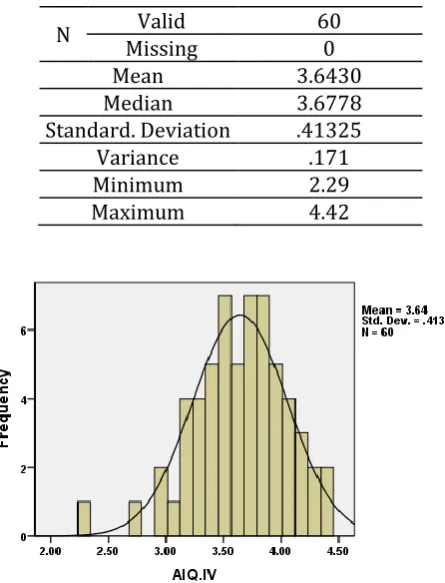
Table 1. Descriptive Statistics for the Identity Score
N Valid 60
Missing 0
Mean 3.6430
Median 3.6778
Standard. Deviation .41325
Variance .171
Minimum 2.29
Maximum 4.42
Figure 1. Frequency of the mean scores earned by the participants on the IQ questionnaire
The scores earned on the identity test for each student in both groups, that is freshman and senior students were compared. Scores on the different aspects of identity were also calculated for the participants. The average of the identity scores for freshman and senior students, both male and female, were compared using Kolmogorov-Smirnov test to check if the distribution of scores for each subcomponent of the identity test is normal. In normal distributions the Independent-Samples T Test was used, otherwise, Mann-Whitney U was employed. The mean and Standard Deviation of the Identity Score for Each Sex is represented in the following table:
Table 2. Mean and Standard Deviation of the Identity Score for Each Sex
SD ±Mean
Sex
0.360 ±3.66
male
0.397 ±3.68
female
Figure 2. Identity score of male and female participants
The mean and Standard Deviation of the Identity Score for the freshman and senior students is represented in the following table:
Table 3. Mean and Standard Deviation of the Identity Score for the freshman and senior students
SD ±Mean
Student
0.399 ±3.51
freshman
0.278 ±3.82
junior
The mean score for identity for freshman and senior students has a significant difference (considering the P-value in T-test, that is 0.001< 0.05).
Figure 3. Identity score of freshman and senior participants
The mean score earned on each of the subcomponents of the identity test and its standard deviation has been represented in the following tables once for the male and female participants and once for the freshman and senior students.
Table 4. The Mean and Standard Deviation of PI for Each Sex
SD ±Mean
Sex
0.419 ±4.00
male
0.444 ±4.05
female
Table 5. The Mean and Standard Deviation of PI for freshman and senior students
SD ±Mean
Student
0.448 ±3.95
freshman
0.467 ±4.06
junior 0
1 2 3 4
male female
M
e
an
0 1 2 3 4
Freshman Junior
M
e
PI does not have any significant difference either among the two sexes (P-value= 0.05< 0.63) or for freshman and senior students (P-value= 0.05< 0.36).
Table 6. The Mean and Standard Deviation of SI for Each Sex
SD ±Mean
Sex
0.508 ±3.40
male
0.483 ±3.53
female
Table 7. The Mean and Standard Deviation of SI for freshman and senior students
SD ±Mean
Student
0.467 ±3.25
freshman
0.429 ±3.69
junior
SI does not have any significant difference among the two sexes (P-value= 0.05< 0.32), while it is significantly different for the freshman and senior students (P-value= 0.05 > 0.001). The average of SI is higher for the senior students.
Table 8. The Mean and Standard Deviation of CI for Each Sex
SD ±Mean
Sex
0.567 ±3.30
male
0.599 ±3.16
female
Table 9. The Mean and Standard Deviation of CI for freshman and senior students
SD ±Mean
Student
0.587 ±3.01
freshman
0.504 ±3.43
junior
CI does not have any significant difference among the two sexes (P-value= 0.05< 0.32), while it is significantly different for the freshman and senior students (P-value= 0.05 > 0.004). The average of CI is higher for the senior students.
Table 10. The Mean and Standard Deviation of RI for Each Sex
SD ±Mean
Sex
0.495 ±3.99
male
0.510 ±3.86
female
Table 11. The Mean and Standard Deviation of RI for freshman and senior students
SD ±Mean
Student
0.544 ±3.80
freshman
0.436 ±4.04
junior
Table 12. The Mean and Standard Deviation of AI for Each Sex
SD ±Mean
Sex
0.565 ±3.43
male
0.656 ±3.75
female
Table 13. The Mean and Standard Deviation of AI for freshman and senior students
SD ±Mean
Student
0.707 ±3.41
freshman
0.480 ±3.78
junior
AI is significantly different both among the two sexes (P-value= 0.03< 0.05) and for male and female participants (P-value= 0.02< 0.05). The average of AI is higher for the female participants and the senior students. The simultaneous study of the effect of both sex and years completed at university was done using the Two-Way ANOVA Test. The results revealed that simultaneous study of the effect of both sex and years completed at university had no significant impact on the average of the identity scores earned by the participants. The following bar graphs and line graphs represent the results. The average of the identity scores was significantly higher for the senior students.
Figure 4. Identity score for male and female, senior and freshman students
Figure 5. Identity score for male and female, senior and freshman students 3.4
3.5 3.6 3.7 3.8 3.9
Freshman Junior
male
Level
Est
im
at
ed
Ma
rgi
na
l
Mea
ns
o
f
A
IQ
.I
V
0 1 2 3 4 5
Freshman Junior
male
M
e
an
AI
Q.
According to the results earned from interviewing the participants, EFL students especially those in their last year at university claimed that being constantly involved and challenging new social and cultural variables in educational context had great impact both on their cognitive and social abilities. They also asserted that the positive influx was mainly regarding the insight they got through learning a new language with all its complexities. They added that becoming broad minded, more tolerant and open- minded, interested in logical discussions, and more understanding were some of the consequences. They said an attempt to understand a language, and analyze its structure to discover or figure out the underlying concepts and socio-cultural functions gave them an insight and improved their analytical or critical power that consequently affected their identity in a positive way. They also mentioned that the negative impact might be alienation with their own culture and that most probably they could be affected by the foreign culture and identity and get the insight.
DISCUSSION
CONCLUSION
Language knowledge and university study seem to underpin the way individuals construct multiple aspects of their identity. Such settings provide opportunities for the language learner to enhance a new identity as it is believed to be a potential ability. Students are considered to actively participate in the construction of their identity at school. This can be kind of professional identity they form for their future job status by committing to their goals and chances. They begin to compare and differentiate themselves from other groups. They identify their perception of self, and then begin to organize and evaluate it in a systematic way. Social psychology is also greatly influenced by “Social Identity Theory”. The theory has been studied and practiced in language use, social contexts, and many other fields and settings. There is an interwoven undeniable relationship between language and identity so that each one has a mutual impact on the other. As identity can have direct and indirect impacts on the individuals’ success in different settings, the present study suggests policy makers to developing policies and practices to foster the development of human potentials and improve students’ identities by creating higher education environments.
REFERENCES
Block, D. (2007). The rise of identity in SLA research. The Modern Language Journal, 91, (1), pages 863–876.
Blommaert, J. (2005). Discourses: A critical introduction. Cambridge. Cambridge: University Press.
Burgess, A., & Ivanic, R. (2010). 'Writing and being written: issues of identity across timescales.' Written Communication 27, (2) 228-255.
Canagarajah, A. S. (1999). Resisting linguistic imperialism in English teaching. USA: Oxford University Press.
Cheek, J. M., & Briggs, S. R. (2013). Aspects of identity questionnaire (AIQ-IV). Measurement. Instrument Database for the Social Science. Retrieved from www.midss.ie
Cheng, SJA. (2003). Rethinking the globalization of domestic service foreign domestics, state control, and the politics of identity in Taiwan. Gender & Society, 17(2), 166-186.
Clyne, M. (1994). Inter–cultural communication at work: Discourse structures across cultures. Cambridge: Cambridge University Press.
Eggins, S., & Slade, D. (1997). Analyzing causal conversation. London: Cassell. (republished, 2005, London: Equinox publishers).
Eckert, P., & McConnell-Ginet, S. (1992). Think practically and look locally: Language and gender as community-based practice. Annual review of anthropology, JSTOR
Flowerdew, L. (2012). Corpora and language education. Basingstoke: Palgrave Macmillan.
Grosjean, F. (1982). Life with two languages: An introduction to bilingualism. Cambridge, Mass: Harvard University Press.
Gumperz, J. (1982). Language and social identity. Cambridge: Cambridge University Press.
Hogg, M. A., & Vaughan, G. M. (2002). Social psychology (3rd ed.) London: Prentice Hall. Ige, B. O. (2007). Impoliteness in Context: Impoliteness, gender and construction of
identities at a South African University. (Unpublished Ph.D Dissertation). University of KwaZulu-Natal Durban, South Africa.
Ige, B., & Kadt, E. (2002). Gendering politeness: Zulu-speaker identities at the University of Natal, Durban. South African Linguistics and Applied Language Studies, 20 (3), 147-161.
Kress, G. (1989).”History and language: towards a social account of linguistic change”, Journal of Pragmatics, 13 (3), 445-66.
Mead, G. H. (1974). Mind self and society (C.W. Morris. Ed.), Chicago, IL: University of Chicago Press. (Original work published 1934)
Miller, J. (1997). Second language acquisition and social identity. Queensland Journal of
Educational Research, 13(2), 84, from
http://education.curtin.edu.au/iier/qjer/qjer13/miller2.html
Mills, A. J. (2002). `Studying the gendering of organizational culture over time: Concerns, issues and strategies'. Gender, Work & Organization, 9, (3), 286-307.
Norris, S. (2007). The micropolitics of personal national and ethnicity identity. Discourse Society. 18 (5), 653-674.
Norrick, N.R. (1994). Conversational joking: Humor in everyday talk. Bloomington, IN: Indiana University Press.
Norton, B. (1997). Language, identity, and the ownership of English. TESOL Quarterly, 31 (3), 409-429.
Norton, B. (2000). Identity and language learning: Gender, ethnicity and educational change. Harlow, England: Longman/Pearson Education Limited.
Norton, B., & Toohey, K. (2011). Identity, language learning, and social change. Language Teaching, 44(4), 412–446.
Pavlenko, A., & Lantolf, J.P. (2000). Second language learning as participation and the (re)construction of selves. In J. P. Lantolf (Ed.), Sociocultural theory and second language learning (pp.155-178). New York: Oxford University Press.
Pavlenko, A. (2001) "In the world of the tradition I was unimagined": negotiation of identities in cross-cultural autobiographies. International Journal of Bilingualism, 5, (3), 317-344.
Peirce, B. N. (1995). Social identity, investment, and language learning. TESOL Quarterly, 29 (1), 9-31.
Ruiz-Vazques, L. J. (2000). Teacher training through literature: Building teacher awareness on the process of shift in identity on ESL learners. (Master's Thesis). West Virginia University, USA.
Schwartz, S. J. (2005). A new identity for identity research: Recommendations for expanding and refocusing the identity literature. Journal of Adolescent Research, 20, 293-308.
Shohamy, E. G. (2006). Language policy: Hidden agendas and new approaches. London: Routledge.
Sterling, P. (2000). Identity in language: An exploration into the social implications of linguistic variation. AGROA Journal. Retrieved 20 September 2007 from http://www.tamu.edu.chr/agora/winter2000/sterling.pdf
Tajfel, H., Billig, M. G., Bundy, R. P., & Flament, C. (1971). Social categorization and intergroup behaviour. European Journal of Social Psychology, 1(2), 149–178. Tajfel, H., & Turner, J. C. (1979). An integrative theory of intergroup conflict. In W.G.
Austin and S. Worchel (Eds), “The social identity of intergroup relations.” Monterey, California: Brooks-Cole.
Tajfel, H., & Turner, J. C. (1986). The social identity theory of inter-group behavior. In S. Worchel and L. W. Austin (eds.), Psychology of intergroup relations. Chigago: Nelson-Hall.
Tannen, D. (1993). Gender and conversational interaction. New York. Oxford. Oxford University Press.
Toohey, K., Day, E., & Manyak, P. (2007). ESL learners in the early school years. International handbook of English language teaching. In J. Cummins & C. Davison (Ed.), International handbook of English language teaching (pp.625-630). New York: Springer.
Turner, J. C., Hogg, M. A., Oakes, P. J., Reicher, S. D., & Wetherell, M. S. (1987). Rediscovering the social group: A self-categorization theory. Oxford, England: Blackwell.
Wang, W. (2010). Review of Douglas Biber and Susan Conrad's "Register, genre and style". Discourse Studies, 12(5), 683-685.
Warschauer, M. (2001). Language, identity, and the Internet. Race in cyberspace, 151-170.
Wenger, E. (1998). Communities of practice: Learning, meaning and identity. Cambridge: Cambridge University Press.
Wodak, Cillia, R., Reisigl, M., & Liebhartet. K. (1999). The discursive construction of national identity. Discourse and Society 10(2), 149-173.