
Post-Foundational Discourse Analysis:
A Suggestion for a Research Program
Tomas Marttila
Abstract: Post-foundational discourse analysis, also labeled as Essex School in Discourse Analysis, has been observed to suffer from a considerable methodological deficit that limits its applicability in empirical research. The principal aim of this article is to overcome this
methodological deficit by constructing the research program of the post-foundational discourse analysis that facilitates its operationalization in empirical research. In accordance with Imre LAKATOS (1970) and David HOWARTH (2004a), a research program is referred to an internally consistent and openly scrutinizable system of theoretical, methodological and phenomenal concepts that opens up the possibility to distinguish between the "negative" and the "positive" heuristics of empirical research. The first three sections develop the positive heuristics of the post-foundational discourse analysis by elucidating its theoretical foundations, methodological position and phenomenal framework. The concluding fourth section draws on the presented positive heuristics to outline the analytical stages and strategies of the post-foundational discourse analysis and discusses suitable methods for sampling and interpreting empirical data.
Table of Contents
1. Introduction
2. Theoretical Foundations
2.1 Relational epistemology of discourse 2.2 Discursive sedimentation
3. Methodological Position 3.1 Second-order hermeneutics 3.2 Methodological holism 4. Phenomenal Framework
4.1 Discursive relations 4.2 Discursive identities 4.3 Discursive regimes
5. Analytical and Methodical Instructions 5.1 Analytical stages and strategies
5.2 Methods for the generation and interpretation of data 5.2.1 Generating data
5.2.2 Interpreting data 6. Summary and Outlook Acknowledgments References Author Citation
Key words: David Howarth;
1. Introduction
Social sciences have been the scene for a discursive turn that has given rise to various analytical approaches to discourse analysis such as "critical discourse analysis" (CDA) (e.g. WODAK & MEYER, 2009), discourse analysis after
structuralism (e.g. ANGERMÜLLER, 2007), "Foucaultian discourse analysis" (e.g. DIAZ-BONE, 2006, 2007, 2010), "sociology of knowledge approach to discourse analysis" (e.g. KELLER, 2011a, 2011b) and governmentality studies (e.g.
MARTTILA, 2013a). In contrast to these very distinctive and well-elaborated approaches to empirical discourse analysis, the so-called "post-foundational discourse analysis" (PDA)1—more commonly labeled as "Essex School in
Discourse Analysis" (PURVIS & HUNT, 1993, pp.473f.)—has been attested a considerable "methodological deficit" (HOWARTH, 2006, p.23). As a result of this methodological deficit, there is hardly any information available about the
analytical instructions and methodical guidelines of the PDA (cf. KELLER, 2011a, p.164). The aim of this account is to develop general methodical guidelines that can solve the PDA's methodological deficit. [1]
Methodological questions can hardly be reduced to issues related only to
gathering and interpreting empirical data. Instead, as GLYNOS and HOWARTH (2007, p.6) underline, methodological questions touch inevitably on "the
ontological and epistemological dimensions of any social inquiry." HOWARTH (2006, p.23) argues, therefore, that we are but left with the option to solve the PDA's methodological deficit by constructing its entire "research program." In accordance with LAKATOS (1968, 1970), a research program's characteristic grammar of concepts consists of a "hard core" of theoretical, methodological and phenomenal concepts (LAKATOS, 1970, p.135), which together "tell[s] us what paths of research to avoid (negative heuristic), and ... what paths to pursue (positive heuristic)" (1968, pp.167f.). In other words, the "grammar of concepts" that is characteristic of PDA's research program constitutes a heuristic framework that capacitates us "to elucidate a particular phenomenon in a specific way" (HOWARTH, 2004a, p.245). This account departs from the notion of the research program as an internally coherent "grammar" of theoretical, methodological, phenomenal and analytical concepts (ibid.). PDA's research program is developed by means of the elaboration of its "theoretical foundation," which embraces general propositions about the structural organization of social life (Section 2), "methodological premises" conceived to both facilitate and constrain empirical discourse analysis (Section 3), and a "phenomenal framework" of phenomenal features in whose form the world's assumed structural organization becomes accessible for empirical observations (Section 4). Drawing on this tripartite grammar of theoretical, methodological and phenomenal concepts, the
1 "Essex School in Discourse Analysis" refers to the distinctive set of theoretical ideas elaborated in the pioneering works of Ernesto LACLAU and Chantal MOUFFE (e.g., 2001 [1985]) and their subsequent adaption in the works of Jason GLYNOS (2001), David HOWARTH (2000), Oliver MARCHART (2007), Martin NONHOFF (2006), Yannis STAVRAKAKIS (2007) and Jacob TORFING (1999). The concept of post-foundational discourse analysis has been used by CEDERSTRÖM and SPICER (2014), MARCHART (2007) and MARTTILA and GENGNAGEL (2015). The more commonly used label of "post-structural discourse analysis" appears
aim of the concluding part (Section 5) is to solve the PDA's methodological deficit by explicating the general methodical guidelines for empirical research, shedding light on the analytical stages (Section 5.1), and identifying suitable methods for generation and interpretation of empirical data (Section 5.2). [2]
2. Theoretical Foundations
2.1 Relational epistemology of discourse
The PDA's theoretical foundations derive from SAUSSURE's (1959 [1916]) structuralist theory of language and its subsequent revision in the works of DERRIDA (e.g. 1981a [1972], 1981b [1967]). I follow the example of MARTTILA (2015/Forthcoming) and use the concept of "post-foundational discourse
analysis" (PDA) instead of the more commonly used concept of "post-structural discourse analysis" to underline the fact that PDA does not abandon the
"relational epistemology" of meaning that characterized SAUSSURE's structuralist theory of language. In general terms of speaking, the notion of relational epistemology of meaning implies that meaning is supposed to be the contingent outcome of the relations between elements conveying meanings. Whereas the essentialist epistemology of meaning presupposes partly the presence of a "one-to-one relation" between words and their referential objects and partly that objects' meanings reflect their objective phenomenal properties (LACLAU & MOUFFE, 1990, p.109), SAUSSURE (1959 [1916], p.120) argued that language does not consist of "positive," but rather of differential terms, whose meanings become determined by their mutual relations. This relational epistemology of meaning implies that "the identity [i.e. signified] of a sign ... is constituted on the basis of defining and asserting itself in terms of what it is not— that is, on the basis of difference" (BOWMAN, 2007, p.12). Relational
epistemology of meaning implies that meaning conveying entities—i.e. signs— must be conceived of as connecting two mutually distinctive levels of the signifier
—the phonetic or graphic structure of the sign—and the signified—that is the concept expressed by the sign (SAUSSURE, 1959 [1916], pp.9, 113f., 120). [3]
SAUSSURE underlined that the mutual relations of signifiers, and hence their signifieds, reflected the socio-historical requirements that pertained to practices of language-use (i.e. articulation). For SAUSSURE, the contextually contingent nature of practices of articulation was proven by the fact that different languages used different signifiers (e.g. pferd, cavallo, häst) to express the same concept of "horse" (cf. LACLAU & MOUFFE, 2001 [1985], p.106). This implies that the signifier horse is not confined to one and the same signified, but may, in the context of agriculture, refer to a distinctive species of animals and, in the context of a nightclub, to the intoxicant heroin. Notwithstanding, SAUSSURE assumes that the practice of articulation—i.e. parole—is restricted by the "preconceived possibilities" of the system of language—i.e. langue (JAKOBSON, 1990, p.118). In other words, the range of socially accepted practices of articulation is
adherence to collectively shared rules would "permit individuals to exercise the faculty of language" (JAKOBSON, 1990, p.88). [4]
However, it was above all DERRIDA, whose works on deconstruction redressed the contradictions and shortcomings in SAUSSURE's structuralist theory of language, and which later on built the theoretical fundament of the PDA (e.g. LACLAU & MOUFFE, 2001 [1985], pp.111f.). DERRIDA's critique of SAUSSURE addressed the very status of social rules. For DERRIDA (1981b [1967],
pp.278ff.), a consistently relational epistemology of meaning had to imply that practices of articulation regulating social rules could be but the results of
antedating practices of articulation. This meant also that social rules persist only as long as they are maintained by consecutive social practices. DERRIDA's deconstruction of the objective status of social rules revealed the absence of any kind of objective regulation of social practices of articulation. As such, there does not exist any socially objective "absolute anchoring," which in an objective and self-evidential manner could regulate practices of articulation (1977, p.12).
DERRIDA's insight that social practices were not regulated by objective rules, but by contingent rules—i.e. by rules that originated from preceding practices of articulation—implied that there could not exist any objective and socially
uncontestable distinctions between valid and invalid meanings. Hence, practices of articulation were likely to involve in continuous modification and replacement of already prevailing structures of meaning (DERRIDA, 1981a [1972], p.29, 1981b [1967], p.280). After all, the absence of objective rules—i.e. "transcendental signified"—could only mean that the range of valid practices of articulation was extended ad infinitum (DERRIDA, 1981b [1967], p.112). [5]
In PDA the concept of discourse refers to any differential arrangement of discursive elements—i.e. signifiers—in which these elements receive their distinctive meanings—i.e. signifieds. However, PDA makes use of the concept of discourse also to describe the structural logic, which in the absence of any objective rules, regulates the range of socially valid and acceptable practices of articulation (LACLAU, 1990, p.91). More precisely, discourse refers to a spatio-temporally distinctive structural arrangement of signifiers that functions as a "totalizing horizon" of intelligibility (LACLAU & MOUFFE, 2001 [1985], p.144). A discourse represents a presupposedly natural and self-evident way of "fixing of the relation between signifier and signified" and, by doing so, defines objects' (i.e. signifiers') social meaningfulness (LACLAU, 1993, p.435). The discourse specific horizon of intelligibility regulates social production of meaning partly by means defining the presupposedly self-evidential meanings of objects and partly by means of distinguishing the sets of articulations that social subjects must adhere to in order to confirm to the discourse specific conceptions of the truth.
Discourses regulate the range of meaningful practices of articulation in both regards and subjugate articulations conducting subjects to "repeat" the already prevailing meanings that inform us about objects' very being and meaningfulness (LACLAU & MOUFFE, 2001 [1985], p.108). [6]
2001 [1985], p.113). The concept of moment refers to a signifier with a distinctive and persisting position within a differential chain of signifiers. Due to their
temporally persistent positions in such a chain of signifiers, moments become associated with distinctive meanings (i.e. signifieds) that continue from one practice of articulation to another. In contrast to a moment, an element refers to a signifier that falls short of any definite and persisting position within a chain of signifiers. As such, an element has the status of a fluctuating signifier, whose meaning varies from one articulation to another (cf. GLASZE, 2007, §18). The difference between moments and elements indicates that the "temporal" stability of the meaning associated with a signifier equals the "structural" stability of the chain of signifiers. Even more importantly, the assumed relation of homology between the stability of meaning and the stability of the structural order of discourse underlines that social subjects' adherence to the same discourse is manifested by the mutual coherence of their practices of articulation (LACLAU, 1990, p.207; see further in Section 4). [7]
The absence of any objective foundations of discourse means that discourses can only originate from practices of articulation installing them (cf. MARCHART, 2007, p.14). Discourses become installed by "hegemonic agents" that partake in "construction, defense, and naturalization of new frontiers" of discourse
(GLYNOS & HOWARTH, 2007, p.141). Hegemonic agents give rise to
hegemonic—i.e. presupposedly self-evident—discourses, which social subjects must adhere to in their practices of articulation (ÅKERSTRØM ANDERSEN, 2003, p.56). In more precise terms, the construction of hegemonic discourses consists of both "counter-hegemonic acts" (here: "radical acts"), which contest an already prevailing discourse (p.115), and "hegemonic acts," which install an unprecedented discourse or extend an already prevailing discourse to apply to new social contexts, issues, themes, etc. (ibid.). A discourse has attained a hegemonic status when its distinctive conception of the world has developed into an inter-subjectively shared and socially largely taken-for-granted horizon of intelligibility. The social acceptance of a discourse is supported by the phantasm of objective necessity: that it was "always already there in the first place"
(TORFING, 1999, p.167). In other words, a discourse becomes more self-evident and temporally durable the more it is based on "the illusion that it [i.e. discourse] was already there, i.e. that it was not placed there by us" (ŽIŽEK, 1995, p.95). [8]
The relational epistemology of meaning does not only constitute the very possibility to conceive of social life as being structured in the form of discourse, but also identifying the general characteristics of discourses. The absence of any objective foundation of discourse means that discourses are necessarily defined
ex negativo; that is by means of distinguishing them "from what they are not" (DYRBERG, 1997, p.119). This means that a discourse comes into existence as the result of the distinction drawn between itself and the "general field of
"through their mutual differences in the discourse ... [t]he condition of possibility of mutual differences ... is that the elements are identical or equivalent in respect to belonging to the discourse and existing within the boundaries of the discourse" (ÅKERSTRØM ANDERSEN, 2003, p.54). However, discursive limits are anything but self-evident. LACLAU and MOUFFE (2001 [1985], pp.105f.) argue that a discourse can be distinguished from other discourses only if there is some "point of reference" that symbolizes the identity of a discourse and, by doing so, makes it possible to conceive of the logic of commonality that binds signifiers together. In PDA, so-called "nodal points"—also described as "empty signifiers"—constitute the "points of reference" that symbolize the identity of a discourse, making it possible to distinguish a discourse from other discourses, and conceive of the logic of commonality that attaches signifiers to relations of mutual differences (ŽIŽEK, 1989, p.95). TORFING (1999, p.225f.) describes how the concept of "welfare state" acts as a nodal point that makes it possible to symbolize the common identity of various "political strategies, institutional forms and power networks ..." and makes them distinguishable from other discourses. [9]
2.2 Discursive sedimentation
PDA does not reduce discourses to linguistic phenomena and regard them as resulting from written and spoken practices of articulation. LACLAU (1980, p.87) argues that discourse does not "refer to 'text' narrowly defined, but to the
ensemble of the phenomena in and through which the social production of meaning takes place." The relational epistemology of meaning implies that discourses cannot be based upon any objective necessities. Instead, the
conceived self-evidentiality of a discourse results from the process of discursive "sedimentation." There are two different types of discursive sedimentation. The first type consists of "forgetting" the contingent origins of a discourse (GLYNOS & HOWARTH, 2007, p.116). A partial decoupling of a discourse and its historical origins—that is hegemonic acts that installed and motivated its very presence— conceals the lacking objective necessity of a discourse and, at the same time, links it with the image of naturalness (LACLAU, 1990, p.35). In contrast, the so-called "reactivation" denotes the rediscovery of "the 'constitutive' activity" that gives rise to a discourse (GLYNOS & HOWARTH, 2007, p.116). The recovery of the historical origins increases social subjects' capacity to reflect upon the lacking objectivity of the socially presupposed objective necessity of a discourse
The second type of sedimentation—"discursive materialization"—has been given little attention in recent contributions to the PDA. This is rather surprising because discursive materialization is of crucial relevance for the temporal stability of a discourse. When a discourse becomes a socially taken-for-granted horizon of intelligibility, it is conceived to give objective meaning to and to motivate non-linguistic objects such as artifacts, pragmatic practices and institutions (TORFING, 1999, p.35). In other words, sedimentation qua discursive materialization transfers a discourse specific horizon of intelligibility into a corresponding "discursive materiality." Objects motivated and generated by means of discursive materialization achieve the status of mere "objective presence" (LACLAU, 1990, p.34). LACLAU's notion of "objective presence" implies that social subjects conduct routinely particular practices of articulation, identify themselves with particular subject roles and accept the social and symbolic authority of institutions without having to reflect upon their social meaningfulness. In other words, as HOWARTH (2000, p. 9) argues, discursive materialization consists of a partial decoupling of "historically specific systems of meaning" and "concrete systems of social relations and practices." The crucial point about discursive materialization is that the emergent discursive materiality restricts the range of socially meaningful practices of articulation and regulates social subjects' "enunciative possibilities" (STÄHELI, 2001, p.208; my translation). According to HOWARTH (2005, p.343) we can operationalize "enunciative
possibilities" by conceiving of practice of articulation as consisting of two phenomenal dimensions of énoncé and énonciation. Whereas énoncé refers to the practice of articulation as an activity of speaking, writing and acting,
énonciation refers to the sedimented "conditions and roles that must be satisfied" if a particular practice of articulation is "to qualify as meaningful" (ibid.).
Unfortunately, recent contributions to PDA do not clarify further what such
practices of articulation regulating contextual "conditions" consist of and how they can be made empirically visible. In contrast to the recently burgeoning literature on "new materialism" (LEMKE, 2015) and its deliberate attempts to conceptualize the contextual premises of social agency, PDA has remained without further operationalization of the discursive materiality. Basically, the question is what kinds of discursively constructed social structures can be assumed to regulate social subjects' practices of articulation and hence give stability to discourses. [11]
Obviously, and as the literature on "new materialism" also indicates, there is not just one way of thinking and conceptualizing the composition of the discursive materiality (LEMKE, 2015). One possible way of thinking about discursive
materiality is to see discourses as giving rise to particular sets of "institutions" and "subject roles" that regulate social subjects' practices of articulation by making them accept and stick to discourse-specific conceptions of the world. For
ÅKERSTRØM ANDERSEN subject roles refer to relatively elaborate and mutually distinctive social positions, which social subjects must possess in order to "speak and act meaningfully in a specific way" (2003, p.24). Also GLASZE (2007, §38) argues that subject roles are "institutionally stabilized positions ... which are related to specific conditions of access, and which connect specific possibilities, taboos and expectations with language-use" (my translation). GLASZE's
discourses compel social subjects "to engage in acts of identification" with discourse specific subjects roles (GLYNOS & HOWARTH, 2007, p.129).
Therefore, subject roles are not freely accessible, but linked with particular criteria of access, which together with these criteria maintaining and enforcing bodies— i.e. institutions—determine "who is granted access and what is expressible" by a given subject in a given situation (STÄHELI, 2001, p.208; my translation). The access to subject roles can be a matter of more or less formalized processes of selection and require the possession of certain qualifications such as academic degrees or specific social skills (TORFING, 1999, p.70). Subject roles are also connected with rules relating to their subjective self-appropriation. Such rules of self-appropriation mean that a social subject is expected "to ... behave in a certain way, to pursue particular goals, and to have distinctive affections" in his/her capacity as holder of a subject role (BOURDIEU, 2005, p.19; my translation). [12]
The concept of institution constitutes something of a "black box" in discourse analysis in general (cf. CLEGG, COURPASSON & PHILLIPS, 2006) and the PDA in more particular (cf. BOUCHER, 2008, pp.97ff.; CARPENTIER & SPINOY, 2008, p.15). In the absence of any sufficient previous conceptualization of institutions, I am keen to argue (in an admittedly pragmatic manner) that
institutions can be related to all kinds of social bodies with the socially accepted authority to sustain and implement the validity of particular discourses, regulate social access to subject roles, and sanction and control social subjects'
adherence to presupposedly natural courses of both linguistic and pragmatic actions. Institutions originate from hegemonic and counter-hegemonic acts, which either motivate the installment of particular institutions or overdetermine the meaningfulness of already prevailing institutions and redefine their appropriate functions and purposes. Institutions implement and sustain discourse-specific "unevenness of the social ..." (LACLAU, 1996, p.43), because they support particular conceptions of the world, sanction and punish observed deviations from these conceptions, and regulate social subjects' access to socially influential and valuable subject roles. This means that institutions are of crucial relevance for the implementation and maintenance of discursively defined and motivated
3. Methodological Position
Section 2 manifested that, while practices of articulation are structured by sedimented and materialized discourses, they are at the same time the very origin of any discourse. This reciprocal relation of social practice (of articulation) and structure (discourse) is akin to the methodological position of the
neostructural "second-order hermeneutics" (FRANK, 1984, pp.279ff.; my
translation). I would like to argue that second-order hermeneutics constitutes the first methodological premise of the PDA (see Section 3.1). Basically, second-order hermeneutics implies that the research is focused on the supra-subjective —existing beyond social subjects' conscious conceptions of reality—and social structures recurring from one context to another (see Section 3.1). However, it is hardly possible to define and describe social structures without some kind of a priori conception of their general characteristics. While the theoretical foundations of the PDA render visibility to both the origins and general characteristics of discourses, they also introduce an epistemic bias into empirical research. After all, we are unlikely to be capable of carrying out PDA without accepting the epistemic horizon of it. In order to analyze social reality in consistence with the theoretical foundations of the PDA, conceptions of discourse and discursive materiality characteristic of PDA must not only inform us "about the nature of the reality being studied ...", but also instruct us about "the ways by which one can study that reality" (ALASUUTARI, 1996, p.373). As BOURDIEU's (2008 [2002]) and DIAZ-BONE's (2006, 2010) works on a "reflexive methodology" manifest, the consistence between a priori assumed theoretical foundations and practical research can be best ensured by making "holistic" use of theory in empirical research. I therefore suggest that "methodological holism" should constitute the second methodological premise of the PDA (see Section 3.2). [14]
3.1 Second-order hermeneutics
Second-order hermeneutics is a methodological stance to empirical research that was above all influenced by HEIDEGGER's (e.g. 2008 [1923]) critique of the phenomenological methodological position of Edmund HUSSERL. The crucial issue about the distinction between HEIDEGGERian post-phenomenological methodology and the HUSSERLian phenomenological methodology is that they motivate two distinctive logics of social inquiry: first- and second-order
hermeneutics (ALVESSON & SKÖLDBERG, 2000, pp.52ff.). [15]
The phenomenological methodological position is centered around the
assumption of a unilinear relationship between the meanings that social subjects assign to objects and their overall social meaningfulness. Social subjects are not only assumed to be fully aware of the meanings related to objects, but their self-conscious conceptions constitute the very "'condition of possibility' of [their] significance, meaning and reference" (FRANK, 1984, p.282; my translation). The other way round, the meaning of an object cannot but be the result of the
status of "transcendental subjects" because they are not passive beholders of prevailing meanings attached to or contained in things, but originators whose conscious experiences and intentions give rise to collectively shared conceptions of the world (CROWELL, 1990, p.511). It is not the prevailing bodies of
knowledge—such as cultural, ideological and religious edifices—but subjects' "transcendental experience" that constitutes the origin of any social
meaningfulness (p.512). The presence of the absolute and "pure subjectivity" (ibid.) postulated by HUSSERL gave no reason to distinguish between the "objective"—supra-subjective and subjectively inaccessible—and the
"subjective"—subjectively conceivable and reflexible—meaningfulness of the world (cf. DIAZ-BONE, 2010, p.188). As a result, it is of little value to try to disclose some kind of objective, or factical level of the social world that could explain why social subjects ascribe specific meanings to certain objects. When studying the social meaningfulness of a social order, we can only take recourse to the intersubjectively shared and subjectively reflexible structures of meaning (ALVESSON & SKÖLDBERG, 2000, p.87). In the absence of any clear distinction between the objective and subjective foundations of socially meaningful objects, a phenomenological methodological position cannot but motivate analysis of "the meanings that the originators of texts and acts—authors and agents—associate with" particular objects (p.52). The absence of any objective and supra-subjective constitution of the world means that we have little reason to pay attention to anything other than "the contents of human consciousness" (GUMBRECHT, 2004, p.60). The principal analytical challenge associated with the
phenomenological methodological position is to render visibility to social subjects' experiences of the world by means of feeling and putting "oneself into the
situation of the acting (writing, speaking) person" (ALVESSON & SKÖLDBERG, 2000, p.54). [16]
Post-phenomenological methodology is based upon the assumptions about "the ontological groundlessness of transcendental subjectivity" (GADAMER, 1975, p.227) and the presence of context-specific and subjectively inaccessible "limits of cognition" (p.231). These assumptions open up the possibility to assume that social subjects perceive their objects of observation within context-specific epistemic horizons, which, in their turn, remain beyond the scope of their conscious self-conceptions (MARTTILA, 2010, p.98). As such, the relationship connecting the knowing subject—the knower—with the subjectively perceived object—the known—cannot be based upon the "transcendental" cognitive
faculties of the subject. GADAMER (1975, p.232) argues that "neither the knower nor the known are present-at-hand" because both the cognitive faculties of the subjects as well as the meanings they have cognized derive from a
supra-subjective and socio-historically distinctive "mode of being." In other words, social subjects are, without their own knowing, "thrown into" some kind of
socio-historically distinctive mode of being (HEIDEGGER, 2008 [1923], p.67). It is this ontological status of the subject as one "being-thrown-into-the-world" (ibid.) that opens up the epistemological possibility to start analyzing what such
and the subjective—throwing themselves into the discursively constituted beingness of the world accomplished by social subjects—which is characteristic of post-phenomenological methodology, constitutes the first methodological premise of the PDA. This distinction between the objective—i.e. "discursive"— constitution of the social meaningfulness of objects, and the subjective—i.e. "articulatory"—self-appropriation of the discursively defined meanings of objects —opens up the methodological condition of possibility to start searching for context-specific forms and processes of the world's discursive structuration (p.58). [17]
Discourses and processes of discursive structuration can be referred to an objective level of reality because they constitute the "deeper structure of factical life that underlies [any] ... intentional correlation between us and the world" (KISIEL, 2010, p.21). However, it is worth noticing that such a factical level is not separated from social subjects' "subjective" self-conceptions, but constitutes instead their "objective" conditions of possibility. The distinction between the ontological "beingness of the world" and the subjectively perceivable "being of the world," which is characteristic of post-phenomenological methodology, motivates empirical research aiming at rendering visibility to subjectively unperceived discourses and discursive materialities. At the same time, a reciprocal relation between discourses and practices of articulation and general structural
characteristics of discourse as it is described by the PDA opens up the possibility to achieve an "epistemological break" with social subjects' self-conceptions of the world (FOUCAULT, 2009 [1969], p.206). Epistemological break implies that we abandon social subjects' self-conscious common sense conceptions of the world in order to interpret these conceptions as contingent outcomes of their conditions of conventions, norms, ideologies, social structures, discourses, and the like that constitute possibility and are largely unconscious to social subjects (MARTTILA, 2010, p.105). In other words, epistemological break cannot be achieved
independently of theoretically derived conceptions of the "objective" structures that regulate social subjects' faculties to make meaningful conceptions of the world. The inevitable epistemological consequence of the epistemological break is that neither empirical social research in general, nor PDA in more particular, can help falling prey to an epistemically biased conception of the world. After all, the condition of possibility to conduct PDA depends on our acceptance of its key assumptions of the general forms and processes involved in the world's
discursive constitution. The question arises as to how we as researchers should deal with our own epistemic bias when carrying out empirical research. [18]
3.2 Methodological holism
LAW (2004, p.102) argues, the epistemically biased character of scientific observation makes it meaningless to distinguish between theoretically founded second-order interpretations of social subjects' self-interpretations and social subjects' conscious first-order self-interpretations. For LAW, the scientific
knowledge about "[w]hat there is and how it is divided up should not be assumed beforehand. Instead, it arises in the course of interactions between different actors" (ibid.). However, postmodern critique of second-order hermeneutics disregards that the observed lacking objectivity of scientific practice is itself based upon an equally biased conception of the (relativist) nature of knowledge. In other words, the refusal of the second-order interpretation of social subjects' first-order interpretations cannot get rid of the epistemic bias as such. Therefore, the abandonment of any a priori theoretical conceptualization of the world, as it has been suggested by LAW (2004), does not constitute any viable means to deal with the epistemic bias of scientific practice. [19]
GLYNOS and HOWARTH (2008, p.15), LACLAU (2004, p.323) and MARTTILA (2013a, pp.83ff.) make the case for a reflexive methodological position that underlines the necessity to not try to abandon, but rather explicate the epistemic bias involved in empirical research. The holistic use of theory in empirical
research opens up the possibility to choose, define and interpret empirical objects "in terms of the distinctions brought about by [our] ontology" (LACLAU, 2004, p.323). Holistic use of theory necessitates mutual consistence between the empirical "facts"—i.e. the observations of the empirical being of the analyzed objects—to reflect their a priori assumed "factual propositions" about objects' ontological beingness (LAKATOS, 1999, p.97). Following NADEL's (1962, p.1) suggestion, the consistence between the theoretical frameworks and empirical observations is ensured by the operationalization of theoretical propositions into corresponding analytical concepts and categories. Such a heuristic use of theory ensues when our theoretical framework is operationalized into an empirically applicable "body of propositions," which makes it easier for us "to map out the problem area and thus prepare the ground for its empirical investigation by appropriate methods" (ibid.). Following the lead of MARTTILA (2013b, §22), such a theoretically derived and analytically usable body of propositions can be defined to consist of "theoretical codes." [20]
I consider it expedient to define theoretical codes by contrasting them to empirical codes. Empirical codes are developed ad hoc during the empirical analysis and mirror empirically observed phenomenal characteristics of objects (cf. KELLE, 2005, §49f.). In contrast, theoretical codes are derived from the theoretical framework that serves the function of an "interpretive frame[s] from which [we] ... view realities" (CHARMAZ, 2006, p.128). Moreover, while the analytical validity of empirical codes is determined by their correspondence with the observed
empirical properties of objects, the analytical usefulness of theoretical codes depends both on their consistency with the a priori assumed phenomenal properties of the objects and on the possibility to relate them to concrete empirical phenomena. Even though theoretical codes are only available
"abstract statements and complex empirical evidence" (RAPPERT, 2007, p.695). Although middle-range concepts reflect our ontological and theoretical
commitments, they must still be "specific enough so as to allow for the
observation of their correspondence with the empirical features of the studied phenomena" (MARTTILA, 2013b, §10). In other words, middle-range concepts provide an excellent means to translate our theoretical frameworks into a set of theoretical codes that allow us to think about and interpret empirical data in consistence with the PDA's theoretical framework. The following section aims to operationalize the theoretical framework of the PDA into a theoretically consistent and analytical applicable heuristic framework of theoretical codes. [21]
4. Phenomenal Framework
As a reminder, discourse refers to a structural arrangement of discursive elements that originates from practices of articulation, and which, in its turn, constrains social subjects' potential practices of articulation. GLYNOS and HOWARTH (2007, p.140) point out that social subjects' adherence to the same discourse is manifested by the mutual coherence of their practices of articulation. GLYNOS and HOWARTH (ibid.) suggest that the mutual coherence of practices of articulation is manifested by "patterns" of discursive elements. They argue further that mutually coherent "patterns of discursive articulation" (ibid.) become empirically visible in form of recurrent patterns of discursive "relations"—which connect discursive elements with each other—and "identities"—which discursive elements have in connecting discursive relations. There are two good reasons to argue that concepts of discursive relations and identities can constitute the above (in Section 3.2) described theoretically consistent and analytically applicable categories of "theoretical codes." Firstly, the concepts of discursive relations and identities support the realization of the holistic use of theory in empirical research because they can be derived from the PDA's theoretical framework. Hence, discursive relations and identities serve for the methodological holism's essential idea of "theory-driven construction of phenomena" (DIAZ-BONE, 2007, §35; my translation). Secondly, discursive relations and identities constitute empirically applicable middle-range concepts. The following two sections (4.1 & 4.2) will elaborate discursive "relations" and "identities" in greater detail. [22]
We must bear in mind that the relative regularity of articulations is the contingent outcome of discursively defined "enunciative possibilities" sedimented by means of discursive materialization. In accordance with the earlier elaboration of the concept of discursive materiality (Section 2.2), the mutual coherence of
articulations bears witness to the influence exerted by sedimented subject roles and institutions. In other words, we cannot settle for the analysis of the meaning contents of practices of articulation, but interpret discourses observed in social subjects' articulations against the background of the subject roles, which social subjects adapt in their practices of articulation, and institutions, which restrict the social access to subject roles. In order to take into account the material
argue in Section 4.3 that discourse analysts must render visibility to discursively motivated discursive materialities sustaining discursive stability. [23]
4.1 Discursive relations
In their recent works, MARTTILA (2013a) and NONHOFF (2006, 2007) have argued that discursive elements can be connected by means of four different kinds of discursive relations: contrariety, representation, difference and
equivalence. The initial discussion (Section 2.1) indicated that a discourse exists as a relatively coherent and temporally stable structure only when it is separated from other concomitant discourses. LACLAU and MOUFFE (2001 [1985], p.143) argue that a discourse exists as a distinctive structural arrangement of discursive elements only insofar as it can be "cut out as a totality with regard to something else beyond them." In other words, the "relation of contrariety"—the distinction between the interior realm of discursive elements and its exterior, the disregarded and excluded discourses—constitutes the very condition of possibility of any spatially distinctive and temporally durable discourse. Recent contributions to the PDA have equated the relation of contrariety with the "relation of antagonism" that consists of a distinction between two (or more) mutually opposed elements, such as just/unjust, friend/enemy, democratic/totalitarian, etc. (e.g. GLYNOS & HOWARTH, 2007, p.106). A sample of discursive elements can be conceived of as belonging together only if they are installed into a relation of equivalence with regard "to the other, to the antagonistic adversary," which opposes their identity (ŽIŽEK, 1990, p.253). The distinction of a discourse (A) from what opposes it (non-A) opens up the possibility to constitute discursive limits that separate a discourse from what "it is not" (LACLAU & MOUFFE, 2001 [1985], p.143). MARTTILA (2013a, p.44f.) and STÄHELI (2004, p.235) have questioned the necessity to reduce the relation of contrariety to a relation of antagonism. If we follow LUHMANN (1997, pp.45ff.), discursive boundaries could be likewise well established by way of distinction between "marked" and "non-marked" discursive elements. In other words, practices of articulation sustain a prevailing discourse by reproducing constitutive distinctions of "actual"—i.e. cognizable—and
"potential"—i.e. non-cognizable—discursive elements. The distinction between the actual and the potential arrangements of discursive elements does not separate two marked realms of discursive elements, but consists of a distinction made between subjectively perceived and non-perceived realms of discursive elements. I therefore argue that the distinction between the marked and unmarked discursive elements consists of a "relation of dissociation." [24]
Besides the relations of antagonism and dissociation, the relation of contrariety may also appear in form of the "relation of incommensurability" (MARTTILA, 2013a, pp.60ff., 2015, Ch.6.2). Basically, relation of incommensurability means that the commensurability of discursive elements is negated with regard to a discursive element, which represents the overall principle of their
background of which A and B can be conceived of as being mutually
incommensurable. It would be possible, for instance, to establish the limits of the welfare state discourse by separating welfare-related issues from non-welfare-related issues. While mass-employment (A) is considered to be of crucial relevance for social welfare (C), gender inequality (B) is deemed as a social problem of little relevance for social welfare. Hence, mass-unemployment and gender inequality are separated by means of their mutual incommensurability with regard to the nodal point of social welfare. To sum up, relation of antagonism, relation of dissociation and relation of incommensurability constitute the discursive relations that make it possible to distinguish a discourse from other discourses. [25]
While the different types of relations of contrariety make it possible to draw a distinction between a discourse and the totality of other discourses, the "relation of representation" makes it possible to symbolize the common identity of the elements that belong to the same discourse. In other words, the "relation of representation" makes it possible to symbolize the logic of commonality that binds discursive elements into a discourse (DYRBERG, 1997, p.125). "Relation of representation" is exerted by the so called nodal points, which represent the common identity of discursive elements and make it possible to conceive of them as "a single unity" (TORFING, 1999, p.98). More precisely, a nodal point (C) constitutes a generic concept that manifests different discursive elements (A, B, C, D) to be mutually equivalent. For instance, the nodal point of social welfare (C) can be used to represent the logic of commensurability that connects discursive elements of mass-unemployment, social security, public schools and state pension insurance and makes it possible to grasp their shared commonality. This example shows that the relation of representation does not only connect mutually distinctive discursive elements, but also consists of a distinctive kind of a relation between the "representative"—the nodal point—and the "represented"—the sample of discursive elements whose common identity is symbolized by the nodal point. While a nodal point acts as a representative that symbolizes and
"embodies" the presupposedly intrinsic essence of the "represented" discursive elements, the represented discursive elements substantiate the nodal point representing their common identity (LACLAU, 1996, p.97). [26]
elements are always "equivalent in one respect and different in another"
(JAKOBSON, 1990, p.119). Therefore, discursive elements become connected both by means of their mutual distinctiveness sustaining a relation of difference and a relation of equivalence that partly supersedes such distinctiveness. [27]
Distinction between different types of relations of contrariety is of crucial
relevance for the empirical discourse analysis because it allows us to distinguish between different general structural organizations of discourse. As argued before, discursive boundaries can be based upon different types of relations of
contrariety. A popular discourse is characterized by the relation of antagonism that separates a discourse and its antagonistic other. In popular discourse, discursive elements "are [not] equivalent ... insofar as they share a positive property ... but, crucially, insofar as they have a common enemy" (GLYNOS & HOWARTH, 2007, p.144). This means that a discourse exists in form of a popular discourse when its limits are constructed by means of representations of "common negation or threat" (ibid.). Elements belonging to a popular discourse are not exclusively but primarily connected by means of the relation of
equivalence because they are mutually equivalent with regard to their opposition to the antagonistic other. In contrast to the popular discourse, the limits of a pluralist discourse are constituted without any explicit representation of the antagonistic other (MARTTILA, 2013a, pp.72ff.). The absence of an antagonistic other means that the elements of a pluralist discourse are not subdued to
elements of a chain of equivalence, within which they tend to lose their distinctive meanings. Hence, elements belonging to a pluralist discourse are primarily
connected by means of the relation of difference because they possess mutually distinctive meanings. Notwithstanding, elements of a pluralist discourse are still mutually equivalent in their relation to their common identity representing nodal points. It is obvious that popular and pluralist discourses do not refer to two absolutely contrary discursive logics, but refer to two ideal types of discourse. [28]
MARTTILA (p.69) argues that while the Thatcherite political discourse constitutes the archetype of the popular discourse, the Blairite political discourse is a case in point of a pluralist discourse. The following Table 1 provides an overview of the outlined discursive relations and describes their general phenomenal features.
Discursive relations Phenomenal characteristics
Contrariety Distinction between a discourse and the totality of other discourses.
Antagonism The identity of the discursive element A (e.g. social security) is opposed by the discursive element B (e.g. free trade).
Discursive relations Phenomenal characteristics
Incommensurability Discursive elements A (e.g. social security) and B (e.g. free trade) are mutually incommensurable with regard to C (e.g. welfare state), which represents their logic of
incommensurability.
Representation C (the representative) (e.g. social market economy)
symbolizes the point of commonality shared by the discursive elements of A (e.g. social security) and B (e.g. free trade) (the represented).
Difference Discursive elements A (e.g. social security) and B (e.g. free trade) are mutually distinctive and combinable elements, whose logic of commonality is represented by C (e.g. social market economy).
Table 1: Discursive relations [29]
4.2 Discursive identities
The observation of mutually coherent practices of articulation is not only facilitated by the identification of discursive relations, but also by the conceptualization of the identities that practices of articulation attribute to discursive elements (GLYNOS & HOWARTH, 2007, p.140). Phenomenal
conceptualization of discursive elements is a heuristic means to identify relatively regular patterns of social practice, highlight their similarities and differences, and detect their diachronic changes. Following SILVERMAN (1997, pp.72ff.),
phenomenal conceptualization of discursive elements opens up the possibility to detect both the paradigmatic coherence of practices of articulation—i.e. their attribution of the same identity to the same element—and their syntagmatic coherence—i.e. the regular reoccurrence of particular discursive elements with their distinctive identities. However, to detect paradigmatically and
syntagmatically coherent practices of articulation, we need to ponder first of all upon the epistemological possibilities and constraints related to the empirical conceptualization of the identities of discursive elements. [30]
The initially (in Section 2.1) discussed relational epistemology of meaning underlined that discursive elements cannot possess any inherent identities—i.e.
signifieds (GLASZE, 2007, §30). Instead, the identities possessed by discursive elements vary in accordance with their actualized relations to other elements. Relational epistemology of meaning indicates that the identities of discursive elements vary in accordance with the "part[s] that [they are] playing in the
expect a stone to be observed as an "aesthetic" object by an artist, be depicted on canvas, etc. We may describe the stone in terms of a "projectile" when it is conveyed through the air, aimed at hitting an object, etc. [31]
The methodological position of second-order hermeneutics makes it inevitable to achieve an epistemological break with social subjects' self-conceptions of the meanings of discursive elements. Consider, for instance, the statement "boys throw stones" (HALLIDAY, 1985, p.31). An analysis based on the methodological position of first-order hermeneutics would describe the meanings that social subjects associate with these elements (i.e. boys/throw/stones). In other words, the analytical focus would be directed at social subjects' conscious
self-conceptions. The relational epistemology of meaning and the methodological position of second-order hermeneutics make it necessary to achieve an epistemological break with social subjects' conscious self-conceptions and
interpret the identities of "boys," "throw" and "stones" in accordance with the parts that they play in the context of their appearance. HALLIDAY (p.27) underlines that such relational conceptualization of identities cannot but consist of intentional labeling and "putting names on things." In terms of VAN LEEUWEN (2005, p.4), the identity of a discursive element can be conceptualized by looking at its
context-specific "semiotic potential"—i.e. "the kinds of meanings it affords" due to its actualized relations to other elements. Conceptualization of semiotic potential is about "studying how that resource [i.e. element] has been, is, and can be used for purposes of communication" (p.5). Reflecting the relational epistemology of meaning, the "meaning potentials" must be disclosed with regard to the roles that different discursive elements play in their relations to other elements. Let us return to the statement "boys throw stones." A conceptualization of discursive identities that is consistent with the relational epistemology of meaning would imply that the discursive element "boys" can be conceived of as possessing the "meaning potential" of a "subject" because its co-occurrence with "throw" and "stones" indicates that it performs a particular social practice: throwing stones. The discursive element of "throw" can be understood as playing the role of an "action" because it refers to a social practice performed by a "subject." "Stones" can be related to the role of a "resource" because its presence constitutes the (physical) condition of possibility of the performed "activity." [32]
conceptualized in accordance with phenomenal categories that we "find suitable for the dataunder scrutiny." In other words, phenomenal categories
conceptualizing discursive identities must be developed pragmatically or emerge "ad hoc during 'open coding'" (§12; cf. CHARMAZ, 2006, p.128). However, empirical coding of discursive elements must take into consideration the nodal points and discursive limits that are essential for the very constitution of
discourse. In order to take into account that discourses are constituted by means of binary distinctions separating a discourse from other discourses, the applied phenomenal categories must be divided into positively and negatively charged identities. As regards the phenomenal categories of discursive identities, nodal points—embodying the idealized states of social being—and antagonistic others —symbolizing the threat to the ideal state of social being—constitute the first
phenomenal category of ethical "values." As outlined above, the very presence and temporal stability of discourses depends on their capacity to install social subjects in discourse-specific subject roles. It is therefore reasonable to argue that "subjectivity" should constitute the second phenomenal category of
discursive elements. Reflecting the binary division of discourse into positively and negatively charged elements, subject roles can be divided into "protagonists" conceived of as facilitating the attainment or sustainment of ethical values and "opponents," who endanger and impede the attainment of ethical values
(MARTTILA, 2013a, pp.67ff.). Moreover, both categories of subject roles can be differentiated further with regard to "helpers" that are believed to support their respective aspirations and courses of action. It is also expedient to follow the example of GREIMAS (e.g. 1990 [1976], p.126f.) and distinguish between the subject roles of "destinators," which refer to the supposed instigators of ideas and courses of action, and "receivers" on whose behalf social subjects partake in particular activities (TITSCHER, WODAK, MEYER & VETTER, 1998, p.168). [33]
Phenomenal categories Phenomenal characteristics
Values
Ethical ideals Paramount values and ideals embodied by nodal points.
Antagonistic others Opponents and threats that endanger the attainment or sustainment of the ethical ideals.
Subjectivity
Protagonist Champions and protectors of the paramount ethical ideals.
Opponents Subjects that endanger or obstruct the attainment of the ideal social order.
Helpers Subjects designated a supportive role vis-à-vis the attainment and maintenance of the ethical values.
Destinators The assumed originator or instigator of a course of action.
Receivers The individual or collective subject on behalf of whom social subjects conduct actions and interactions.
Activity
Actions Activities associated with subject roles and institutions.
Interactions Interactions and processes that interlink the activities undertaken by social subjects and institutions.
Objects Objects social subjects and institutions act upon and which they manipulate during their actions.
Resources Resources that support social subjects and institutions to accomplish their actions.
Strategies Strategies and means that social subjects and institutions utilize for the sake of achieving certain effects and outcomes.
Table 2: Discursive identities [34]
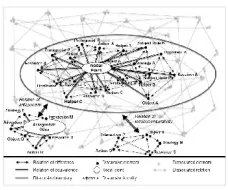
Figure 1: Structural topology of discourse. Please click here for an increased version of Figure 1. [35]
4.3 Discursive regimes
The earlier explication of the mutually constitutive relation of discourses and discursive materialities (Section 2.2) underlined that social subjects' sticking to a discourse is supported by subject roles and institutions, which restrict social subjects' enunciative possibilities and, by doing so, stabilize discourses. Following DEAN (1999, p.27), we can conceptualize this kind of system of reciprocal
relations between discourse and discursive materiality in terms of a "discursive regime" (cf. GLYNOS & HOWARTH, 2007, pp.104ff.). Discursive regimes come into being as subsequent outcomes of counter-hegemonic acts that contested preceding regimes, and hegemonic acts that installed the present regime thus motivating discourse (see Figure 2). Hence, discursive regimes are altered by restructuring the discourses that motivate their very being. Bearing in mind the reciprocal relationship between discourse and practices of articulation, a discourse regime is maintained only as long as social subjects' practices of articulation sustain the discourse that constitutes the very rationality and meaningfulness of a discursive regime. GLYNOS and HOWARTH (2008, p.11) argue therefore that a discursive regime cannot prevail independent from the presence of corresponding "regime[s] of practice." In the following passages I will explicate how the reciprocal relations between social subjects' practices (of articulation), discourse, subject roles and institutions form spatially distinctive and temporally stable discursive regimes, and also elucidate how these reciprocal relations can be made accessible for empirical observations. [36]
society-wide activities like "creativity," "innovation" and "will to change" (ibid.). In other words, we can detect subject roles by identifying discursive elements that symbolize the subject roles that different discourses assign to social subjects. [37]
However, discourses do not only name subject roles, but also define them by associating them with corresponding "actions, responsibilities, rights and duties, and equip [their holders] ... with capital, interests, intentions, goals and
preferences" (TEUBNER, 2006, p.519). This means that discourses subjectivate social subjects by defining their subject roles and linguistic and non-linguistic practices associated with them. Following KELLER (2011a, p.256) subject roles become empirically visible in the form of linguistic and non-linguistic "discourse generated modelpractices" (my translation). Just like the mutual coherence of practices of articulation bears witness to them belonging to the same discourse, the mutual coherence of pragmatic actions serves as an indication of social subjects' belonging to the same subject roles. In other words, subject roles become empirically observable in the form of the relative homogeneity of pragmatic actions. Social subjects' adherence to a subject role is, at the same time, a source of continuous validation and sustainment of the discourse that defined this subject role. As the earlier elaboration of the process of
sedimentation indicated, it is reasonable to assume that widely sedimented subject roles become subjectively performed without social subjects being fully aware of the underlying discursive origins and motivations of their subject roles. [38]
Similar to the relationship between discourses and subject roles, the relationship between discourses and institutions is likewise mediated by social subjects' practices. Generally speaking, institutions are rationalized by discourses "that bring them into being ... maintain them, and that may, at times lead them to disappear" (PHILLIPS, 2003, p.221). This means that the rationality of institutions and the meaningfulness of their specific sets of purposes, functions and
operations derive from distinctive "discursive field[s] of representation ..." (KELLER, 2011a, p.141; my translation). Discourses do not only rationalize the presence of institutions, but also make the reality "amenable" for particular institutional interventions into the world (ROSE & MILLER, 1992, p.179). On their part, institutions validate discourses by retaining their function as the epistemic foundation for institutional operations. Moreover, institutions materialize
discourses by giving them material effects. Such institutional materialization of discourse may, amongst other things, mean that institutions implement
inclinations and likely future conducts (MARTTILA, 2013a, p.18). In other words, subject roles do not only constitute a link between social subjects' practices and institutions, but even more importantly a crucial source of corroboration of institutional operations. [39]
The reciprocal relationship between subject roles and institutions can be operationalized further by assuming it as consisting of an interplay of different types of "technologies of power" (LEMKE, 2007, p.50). Technologies of power embrace various kinds of means and strategies that subjugate social subjects "to effect by their own means or with help of others a certain number of operations on their own bodies and souls, thoughts, conduct, and way of being"
(FOUCAULT, 1988, p.18). Moreover, technologies of power can be distinguished from institutionally exerted "technologies of the other," which subjectivize social subjects to particular subject roles and model practices linked with these, as well as "technologies of the self" such as chastity or life-long learning, which social subjects adapt and appropriate in order to concur with their subject roles (ibid.; cf. LEMKE 2007, pp.50ff.). Technologies of the other embrace all kinds of
"programs, calculations, techniques, apparatuses, documents, and procedures" with "which authorities seek to embody and give effect to [their] ... ambitions" (ROSE & MILLER, 1992, p.175). Amongst other things, technologies of the other restrict social subjects' enunciative and pragmatic possibilities by regulating access to subject roles, enforcing social subjects' adherence to discourse-specific conceptions of the world and assessing their compliance with model practices. The notion of the technologies of the self refers to means and strategies that social subjects adapt in order to bring themselves into line with discursively motivated and institutionally enforced subject roles. In other words, technologies of the self refer to ways of subjective "self-appropriation" of their designated subject roles (ÅKESTRØM ANDERSEN, 2003, p.24). [40]
To conclude, discursive regimes consist of spatially distinctive and temporally relatively durable systems of reciprocal relations between discourses, subject roles and institutions. Even though discursive regimes are installed and maintained by means of discourses motivating their very presence, discursive regimes cannot be reduced to systems of meaning. The process of sedimentation in general and the materialization of discourse effectuated with subject roles and institutions in more particular, effectuate discourses in the form of material effects and increase their structural impact upon social life. The following Figure 2
provides a schematic overview of the elaborated phenomenal characteristics of discursive regimes.
5. Analytical and Methodical Instructions
The aim of this concluding section is to make use of the above introduced framework of theoretical, methodological and phenomenal concepts to explicate the general guidelines for the conduct of empirical discourse analysis. While the
first part (Section 5.1) is devoted to explaining the PDA's analytical stages, the
second part (Section 5.2) elucidates the general criteria for the methods for generation and interpretation of empirical data. [42]
5.1 Analytical stages and strategies
The above (in Section 3.1) described general epistemic bias of cognitions means that researchers can never encounter "brute facts ... only theoretically informed and culturally shaped descriptions of a discursively constructed reality"
(TORFING, 2005, p.27). Hence, our objects of research are not "ready to be identified and mapped": they must be elaborately conceptualized and constructed (JØRGENSEN & PHILLIPS, 2002, p.144). All this being considered it is
reasonable to suggest that the first stage of empirical discourse analysis consists of conscious co-construction of the research object. The methodological premise of methodological holism underlines the necessity to start empirical discourse analysis with the "theory-driven" co-construction of the research object. BOURDIEU (2008 [2002], p.92) argues that we are the more capable of
observing the world in accordance with our consciously chosen epistemic horizon "the more completely [we] ... have objectivated [our] ... (social; academic, etc.) position[s] and interests." Theory-driven co-construction of research objects can be conceived of as consisting of two steps. Firstly, the lacking objective
foundation of meaning identified by the PDA's theoretical framework underlines "the contingent formation of social phenomena" (TORFING, 2005, p.22). The a priori known discursively contingent constitution of socially meaningful objects opens up the possibility to deconstruct the research object's socially accepted implicitness and understand its presupposedly self-evidential social
meaningfulness as originating from discursive attempts to define and fix its meaning (ÅKERSTRØM ANDERSEN, 2003, pp.57ff.). Secondly, deconstruction of socially sedimented common sense conceptions of the world opens up the possibility to think about the general phenomenal characteristics of discourses that constitute the conditions of possibility of any socially meaningful objects. The PDA's theoretical framework allows us to conceive of the general phenomenal characteristics of discourses involved in the creation of any socially meaningful object and think about research questions, analytical strategies, and research designs, which make it possible to lend visibility to the discourse that constitutes the condition of possibility of our research object. [43]
Theory-driven co-construction of the research object paves the way for the
a "diachronic" (i.e. genealogical) focus (cf. ÅKERSTRØM ANDERSEN, 2003, pp.20ff.). While the synchronic analysis focuses on the structural organization and material prerequisites of a relatively stable discourse, diachronic analysis is aimed at studying historical processes of sedimentation and reactivation, which together determine the formation and transformation of discourses. However, diachronic analysis cannot be dissociated with synchronic analysis.
ÅKERSTRØM ANDERSEN (p.20) and FOUCAULT (1977, p.151) point out that we can identify and conceptualize the extent and direction of discursive change only if we know the general structural characteristics of the contested and displaced social structure. In other words, diachronic analysis necessitates analytical comparison of the points of disjunction that distinguish the contested and contesting discourses. After all, only the empirically manifested structural differences between different diachronically distinctive discourses may serve as empirical indications of anything similar to a discursive change. [44]
The first step of the discourse analysis begins with the compilation of the "corpus of data" embracing those practices of articulation, which our contextual
background knowledge classified as essential for the constitution and
sustainment of our research object's social meaningfulness.2 The relevance and
analytical sufficiency of the initially compiled corpus of data is proven
subsequently by the observed empirical coherence of the practices of articulation. To avoid our analysis confirming merely conventional wisdoms, the compiled data must remain open for continuous revision in the light of newly emerging empirical findings. Amongst other things, our research can relativize the extent of assumed mutual coherence of practices of articulation and give reason to extend the corpus of data to embrace initially disregarded subjects. The second step of synchronic analysis consists of the contents-related analysis of the compiled data and aims at reconstructing the discourse the included social subjects adhered to and generated in their practices of articulation. The discursive relations and discursive identities constitute theoretical codes that allow us to investigate the extent of paradigmatic and syntagmatic coherence of articulations. Reflecting the general phenomenal characteristics of discourse, our empirical analysis must identify nodal points that constituted the overarching identity of the discourse under scrutiny and observe the logics and locations of discursive limits that separate our discourse from other discourses. While nodal points can be
detected by means of "identify[ing] key words constantly referred to and used as supreme justification" of a particular relational arrangement of discursive
elements (CEDERSTRÖM & SPICER, 2014, p.195), discursive limits become visible in the form of articulations made to explain and justify the reasons for the separation of the discursive elements linked by nodal points from other discursive elements (cf. GLASZE, 2007, §47-50). Having reconstructed the structural order of discourse, the aim of the third step is to identify the material prerequisites of the observed discourse. Reflecting the earlier described phenomenal
characteristics of discursive materiality (see Sections 2.2 & 4.3), the analytical focus is set on the sedimented subject roles and institutions, which regulate social subjects' enunciative possibilities. Subject roles and institutions can be
![Table 1: Discursive relations [29]](https://thumb-us.123doks.com/thumbv2/123dok_us/353669.2032281/17.595.145.542.103.315/table-discursive-relations.webp)
![Figure 2: Discursive regime. Please click here for an increased version of Figure 2. [41]](https://thumb-us.123doks.com/thumbv2/123dok_us/353669.2032281/23.595.288.403.672.738/figure-discursive-regime-click-increased-version-figure.webp)
