This is an open access journal, and articles are distributed under the terms of the Creative Commons Attribution-Non Commercial-ShareAlike 4.0 License, which allows others to remix, tweak, and build upon the work non-commercially, as long as appropriate credit is given and the new creations are licensed under the identical terms.
© 2019 Journal of Advanced Pharmacy Education & Research | Published by SPER Publication
36
Response of inflammatory markers to circuit weight training in
Diabetic patients
Mohamed Ahmed Gad Allah
1*, Heba Ahmed Abdeen
2, Azza A Abdelhady
3, Mohamed Hosam
Maghraby
4, Mohamed Ahmed Elbdewy
51Assistant Lecturer of Physical Therapy for cardiovascular/respiratory disorders and geriatrics. Faculty of Physical Therapy, Deraya University, Egypt. 2 Assistant professor
of Physical Therapy for cardiovascular/respiratory disorders and geriatrics. Faculty of Physical Therapy, Cairo University, Giza, Egypt. 3 Professor of Physical Therapy for
cardiovascular/respiratory disorders and geriatrics. Faculty of Physical Therapy, Cairo University, Giza, Egypt. 4 professor of internal medicine faculty of medicine ,Assist
university, Egypt. 5 Lecturer of Physical Therapy for cardiovascular/respiratory disorders and geriatrics. Faculty of Physical Therapy, Horus University, Egypt.
Correspondence: Mohamed Ahmed Gad Allah. Assistant Lecturer of Physical Therapy for cardiovascular/respiratory disorders and geriatrics. Faculty of Physical Therapy, Deraya University, Egypt.
ABSTRACT
Background: The aim of this study was to investigate the response of inflammatory markers as a cardiovascular risk factor to circuit weight training in diabetic patients. Subjects and Methods: forty male diabetic patients were included as the sample of this study. They were randomly divided into thirty patients as the study group, and ten patients as the control group, Their ages ranged from (45-55 years) with the mean age of (50.17±3.5), the mean weight of (72.07±8.32 kg) and the mean height of (170.53±7.9 cm); and ten patients as the control group had the age range of (45-55 years) with the mean age of (49±3.2 years), their mean weight was (75.27± 5.87 kg), and their mean height was (170±5.72 cm). Results: The results of this study showed that interleukin 6 and tumor necrosis factor alpha levels were significantly decreased comparing pre and post treatments in each group. Conclusion: Circuit weight training had a significant effect on the inflammatory markers in diabetic patients.
Keywords:diabetes mellitus, interleukin 6, tumor necrosis factor alpha, circuit weight training.
Introduction
Egypt is the eighth country of the international diabetic federation, in Middle East and North Africa (IDF MENA) region.415 million people have diabetes in the world, and more than 35.4 million patients are in the MENA Region; by 2040, and this will rise to 72.1 million. There were over 7.8 million cases of diabetes in Egypt in 2015 so it has been a very
serious problem [1]. Polyneuropathy, nephropathy,
retinopathy, skin problems, foot problems and delayed wound healing are the most common complications of diabetes
mellitus in elderly patients [2]. Increased serum interleukin 6
(IL-6) and tumor necrosis factor alpha (TNFα) levels have been
associated with an increased risk of cardiovascular disease, and cardiovascular autonomic dysfunction has been associated with high mortality in type 2 diabetic patients. They usually affect both micro-vascular and macro-vascular diseases. Insulin sensitivity in humans with immunological disease can be improved by the Inhibition of IL-6 signaling regarding that the increased IL-6 levels in type 2 diabetic subjects might causally
influence the pathogenesis of insulin resistance [3].
The major function of TNF is regulating the immune cells. TNF, which is an endogenous pyrogen, can lead to fever, apoptotic cell death, cachexia, inflammation and prevent tumorigenesis and viral replication and react to sepsis through IL1 & IL6 producing cells [4].
Dysregulation of TNF production has been found in various human diseases such as Alzheimer's disease, cancer, major depression, psoriasis and inflammatory bowel disease (IBD). Although it has been controversial, various examinations on depression and IBD have recently investigated TNF levels. On the liver, stimulating the acute phase response would increase C-reactive protein and a number of other mediators. It would also result in insulin resistance by improving
serine-Access this article online
Website: www.japer.in E-ISSN: 2249-3379
How to cite this article: Mohamed Ahmed Gad Allah, Heba Ahmed Abdeen, Azza A Abdelhady, Mohamed Hosam Maghraby, Mohamed Ahmed Elbdewy. Response of inflammatory markers to circuit weight training in Diabetic patients. J Adv Pharm Edu Res 2019;9(2):36-40.
phosphorylation of insulin receptor substrate-1 (IRS-1), which reduces insulin signaling [5].
Circuit weight training is any form of exercise that forces your skeletal muscles (not the involuntary muscles of your heart, lungs, etc) to contract. An external resistance (such as heavy weights) is applied to make the contractions, and those contractions extend the muscular mass, strength, endurance and tone. Anything can be used as external resistance. You can use Dumbbells, barbells, kettlebells, resistance bands, your body weight, bottles of water, bricks, etc can be used; as long as the weight makes muscular contractions, it can be counted as resistance exercise [6].
Patients and Methods
Forty male diabetic patients (>10 year from onset) participated in the current study. They were diagnosed and referred by an internal medicine specialist. The diagnosis was confirmed by two hours postprandial blood glucose test. The
patients’ age ranged from 45-55 years. The patients were
selected from Outpatients’ Clinic, internal medicine Department, Faculty of Medicine, Assiut University. The patients were randomly divided into two groups:
The study group (A) included thirty patients who participated in this study and they were treated by circuit weight training in addition to their medical treatment, and the control group (B) contained ten patients who received medical treatment only. The period of physical treatment was three sessions per week, during twelve weeks.
Inclusion criteria for the participation of this study were as follows:
(1) The selected subjects were clinically diagnosed to have diabetes mellitus type two by physicians. (2) All patients had moderate hyperglycemia which was tested by fasting plasma glucose and a two hour plasma glucose ≥ 200 mg/dl (11.1mmol/l) during an oral glucose tolerance test (OGTT). (3) The disease has been started for more than 10 years. (4) All patients took an oral hypoglycemic drug.
Exclusion criteria were as follows: (1) hepatic patients, (2) cancer patients, (3) Renal failure patients, (4) Orthopedic problems or fractures of extremities, (5) Neurological problems e.g. hemiplegia, Parkinsonism, epilepsy, (6) Severely hypertensive patients.
An informed consent document was signed by all the subjects before participating in the study.
Physical therapy program:
The patients were randomly assigned into two groups. The patients in study group (A) were engaged in (Circuit weight training program) for one hour, three sessions per week for twelve weeks
The exercise program was determined in accordance with the
American College of Sport Medicine (ACSM) guidelines [7].
Sufficient warm-up and cool down (about 5–10 minutes) in
the form of stretching major muscle groups, flexibility movements, active movements of limbs, breathing exercises,
and walking at low intensity (50% of maximum heart rate) were performed before and after CWT. Additionally, the participants in CWT group were given enough time to get familiar with the resistance training machines by doing one set of each exercise on various weight machines, which was
repeated 8–10 times.
The participants in the study group were encouraged by having sweet eatable or drinkable things during training to compensate for probable hypoglycemic episodes. They were also advised not to eat heavy meals at least 2 hours before training.
The circuit weight training exercises programs were
performed 30–38 minutes. In order to minimize the risk of
musculoskeletal injuries, the subjects of the study group carefully carried out supervised training techniques after the proper warm-up. The intensity of the program was increased gradually. The intensity progress for CWT group first started in a stepwise manner, and there was a gradual increase by 2.5% of 1RM every 2 weeks. During the 1st month, there was
a moderate resistance in which 60%–65% of 1RM was applied,
and after that, the intensity was raised to 70%–75% 1RM in
the 2nd month, and finally, during the last month, the intensity
was raised to 75%–80% 1RM. The training program started
with one to two sets of ten repetitions of eight different exercises for back, abdomen, upper and lower body during the 1st month, and then the repetition was increased to three sets of the eight repetitions of eight different exercises for back, abdomen, upper and lower body during the 2nd month, and finally, reaching three sets of ten repetitions of eight different exercises for back, abdomen, upper and lower body during the 3rd month. In a recovery period between each two successive sets, the participants performed a 30-second walking on
treadmill at moderate intensity with 60%–65% of the
maximum heart rate. Then, the following exercises were done: back extension exercise, abdominal curl exercise, seated row, leg curl, leg extension, leg press, latissimus pulldown, and standing calf raise.
While the patients in the control group just received their medical treatment.
Analysis of results:
The purpose of the study was to determine the response of inflammatory markers as a cardiovascular risk factor to circuit weight training in diabetic patients. The dependent variables of the study were serum interleukin 6 and tumor necrosis factor alpha. They were measured pre-treatment and twelve weeks post treatment. The independent variable of the study was circuit weight training. Two groups were studied, namely, the study group and the control group. The circuit weight-training program was delivered only to the study group while the conservative treatment (hypoglycemic agent) was delivered to both groups.
Serum tumor necrosis factor alpha.
I. Characteristics of patients:
Forty male patients participated in the study. The patients were diagnosed as having type 2 diabetes mellitus. The patients were divided randomly into two groups, thirty patients as the
study group: forty male diabetic patients were included as the
sample of this study. They were randomly divided into thirty patients as the study group, and ten patients as the control group, Their ages ranged from (45-55 years) with the mean age of (50.17±3.5), the mean weight of (72.07±8.32 kg) and the mean height of (170.53±7.9 cm); and ten patients as the control group had the age range of (45-55 years) with the mean age of (49±3.2 years), their mean weight was (75.27± 5.87 kg), and their mean height was (170±5.72 cm) As shown in table (1), there were no significant differences between both groups concerning age, weight, and height.
Table 1: physical characteristics of patients in both groups
Variables
Study Group
Control Group Comparison Significance Mean ± S.D Mean ± S.D t-value p-value
Age (Years) 50.17±3.5 49.6±3.2 0.4517 0.6541 N.S
Weight (Kg.) 72.07±8.32 75.27±5.87 1.217 0.2338 N.S Height (Cm.) 170.53±7.9 170±5.72 0.2118 0.8338 N.S N.S: Not significant, S.D: Standard deviation, P: Probability value, t: t test
Table 2. Serum interleukin 6 in both study and control groups
Items
Serum interleukin 6
Study group Control group
Pre- treatment
post- treatment
Pre-treatment
post- treatment Mean ±S.D 80.97±25.52 28.55±12.15 83±27.74 40.6±16.47
Mean difference 52.42 42.4
Improvement % -64.74% -51.08%
T-value 20.297 10.18
P-value less than 0.0001 less than 0.0001
Significance S S
S.D: Standard deviation, P: Probability value, t: t test, S: Significant
Regarding serum interleukin 6 results, paired t test revealed that there was statistical significant difference between pre-treatment and post-pre-treatment data in both groups when P value was less than 0.0001 (Table. 2).
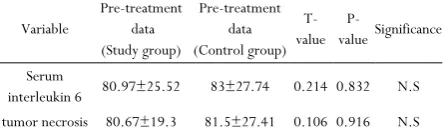
Table 3. Serum interleukin 6 and tumor necrosis factor alpha in both groups before the treatment
Variable
Pre-treatment data (Study group)
Pre-treatment data (Control group)
T- value
P-
value Significance
Serum
interleukin 6 80.97±25.52 83±27.74 0.214 0.832 N.S tumor necrosis 80.67±19.3 81.5±27.41 0.106 0.916 N.S
factor alpha
S.D: Standard deviation, p: Probability value, t: t test, N.S: Non significant
Regarding the pre-treatment data, unpaired t test revealed that there was no significant difference between the groups regarding serum interleukin 6 and tumor necrosis factor alpha where p value was equal to 0.832 and 0.916; respectively (Table 3).
Table 4. Unpaired t test for post-treatment data
Variable
Post-treatment data
(Study group)
Post-treatment data (Control group)
T- value
P-
value Significance
Serum
interleukin 6 28.55±12.15 40.6±16.47 2.48 0.0177 S Tumor necrosis
factor alpha results
25.57±9.91 36±16.21 2.44 0.0194 S
S.D: Standard deviation, p: Probability value, t: t test, N.S: Non significant
Regarding post treatment data, unpaired t-test revealed that there was a statistically significant difference between groups regarding serum interleukin 6 and tumor necrosis factor alpha where p value was equal to 0.0177 and 0.0174; respectively (Table 4).
Regarding tumor necrosis factor alpha, the paired t-test revealed that there was a statistical difference between pre- treatment and post treatment data in both groups where p value was 0.0001.
Table 5. Tumor necrosis factor alpha in both groups
Items Tumor necrosis factor alpha
Study group Control group
Pre- treatment
post- treatment
Pre-treatment
post-treatment Mean ±S.D 80.67±19.3 25.57±9.91 81.5±27.41 36±16.21
Mean difference 55.1 45.5
Improvement % -68.3% -55.83%
T-value 26.129 11.318
P-value less than 0.0001 less than 0.0001
Significance S S
S.D: Standard deviation, p: Probability value, t: t test, N.S: Non significant
Regarding tumor necrosis factor alpha results, the paired t test revealed that there was a statistically significant difference between pre-treatment and post-treatment data in both groups when P value was less than 0.0001 (Table 5)
Summary of results:
The analysis of data revealed the following findings:
There was a significant difference in serum interleukin 6 after circuit-weight training program in diabetic patients.
There was a significant difference in tumor necrosis factor alpha after circuit-weight training program in diabetic patients.
Diabetes mellitus is a chronic illness in elderly that requires continuing medical care, patient self-management, and education to prevent acute complications. Diabetes care is complex especially in elderly that requires many issues; beyond glycemic control a large body of evidence exists that supports a range of interventions to improve diabetes outcomes [2].
Endothelial dysfunction and plasma markers of inflammation were remarkably intensified in type 2 diabetics. Various pro-inflammatory cytokines, acute-phase proteins, and cell adhesion molecules, like C-reactive protein (CRP),
interleukines (IL), and tumor necrosis factor alpha (TNF-α),
seem to cause the low-grade systemic inflammation found in these subjects. Lifestyle changes are needed to stop
atherosclerosis and cardiovascular events [8].
In this study, it was found that both the medical treatment and the CWT exercises improved interleukin 6 and tumor necrosis factor alpha in diabetic patients after 12 weeks. However, the circuit training exercises proved to be superior to medical treatment only.
Miller et al (2017) approved the results of this study and declared that physical exercises would reduce the markers of inflammation by decreasing adipocytokine production and cytokine release from skeletal muscles, endothelial cells, and
immune system and also enhancing the antioxidant status [9]. In
type 2 diabetics, circuit weight training had different impacts on cytokine levels, and the variations in the modalities of exercise (type, duration, and intensity) and particularly in the examined population could lead to different results. Recent research indicated that combined exercise had bigger anti-inflammatory impacts which result in a deepest decrease in
CRP, IL-6, IL-1β, TNF-α, leptin, and resistin and a higher
increase in anti-inflammatory cytokines like IL-4, IL-10, and adiponectin.
The results of this study also came in accordance withBenito et
al (2016) who found differences between inflammatory markers (interleukin 6 and tumor necrosis factor alpha) pre
and post treatment program [10]. These differences may have
been caused by the participation of muscles acting as stabilizers during free-weight exercises. The CWT protocol exercises) produced the highest energy expenditure with the lowest. When special factors are controlled, concurrent training had a synergistic impact on cardiovascular and strength measures; CE protocol, which made the highest EE with the lower RPE, has been proven useful in interventions in participants who selected to exercise at lower intensities. In fact, a recent study has indicated the beneficial impacts of the inclusion of resistance exercises into an aerobic training program in overweight adults.
Kolahdouzi et al 2018 also approved the results of this study and stated that circuit weight training or circuit resistance training is a exercise modality which is time-efficient and can be done to strengthen the skeletal muscle and cardiovascular
fitness [11]. The most important findings were that the CRT
improves cardiometaboilc risk factors (lipid profile and some
adipocytes related to cardiovascular disease), and glucose homeostasis, and relieves acute inflammation (e.g. SAA) in obese male patients.
The levels of IL-6 were up-regulated and TNF-α were
suppressed, and consequently the CRP levels were regulated through exercise training; therefore, the acute phase inflammatory proteins were reduced.
The results of this study was also proved by Weigert et al 2010 who showed that the resistance training also increased the lean
body mass by increasing protein synthesis [12]. It has been
shown that TNF-α reduced protein synthesis in skeletal muscle
and increased protein catabolism by reducing the translation initiation process. Hence, it may improve the protein synthesis caused by resistance training which suppressed the inflammatory responses, and remarkably decreased the CRP levels.
Comprehending the capacity of resistance training in decreasing the systemic markers of chronic inflammation can be difficult because of the existing vague and contradictory evidence.
References
1. Hotamisligil GS (2006): Inflammation and metabolic
disorders, Nature. 444 (7121):860–867. doi:
10.1038/nature05485.
2. American Diabetes Association (2008): Diagnosis and
Classification of Diabetes Mellitus (position statement): Diabetes Care; 30:S40-S52.
3. Gulati M, SHAW LJ,Thisted R A, Black HR,Bairey
CN,Arnsdorf,MF(2010): Heart rate response to exercise stress testing in asymptomatic women:the ST.James woman take heart project. Circulation. , 122 (2):130-137.
4. Santos MJ, Fonseca JE (2009) Metabolic syndrome,
inflammation and atherosclerosis–the role of
adipokines in health and in systemic inflammatory
rheumatic disease. Acta Reumatol Port 34 (4):590–
598.
5. Dowlati Y, Herrmann N, Swardfager W, Liu H, Sham
L, Reim EK, Lanctôt KL (2010): "A meta-analysis of cytokines in major depression". Biol Psychiatry. 67
(5): 446–457. doi:10.1016/j.biopsych.2009.09.033.
PMID 20015486.
6. Petersen EW, Carey AL, Sacchetti M, Steinberg GR,
Macaulay SL, Febbraio MA, Pedersen BK (2005): Acute IL-6 treatment increases fatty acid turnover in elderly humans in vivo and in tissue culture in vitro.
Am J Physiol Endocrinol Metab. 288 (1):155–162.
7. Nicklas BJ, Ambrosius W, Messier SP, Miller GD,
Penninx BWJH, Loeser RF, Palla S, Bleecker E, Pahor M (2004) Diet-induced weight loss, exercise, and chronic inflammation in older, obese adults: a randomized controlled clinical trial. Am J Clin Nutr 79
8. Melo, Luciana Costa, Dativo-Medeiros, Jaime, Calos Eduardo Menezes-Silva and Luiza A. Rabelo:Physical exercises on inflammatory markers in type 2 diabetes patients. Oxidative medicine and cellular longevity, volume 2017, articleID 8523728, 10 pages.
9. Miller EG, Sethi P, Nowson CA, Dunstan DW, Daly
RM-Eur. Effects of progressive resistance training and weight loss versus weight loss alone on inflammatory and endothelial biomarkers in older adults with type 2 diabetes.J.Appl.physiol.-August 1,2017,117 (8),1669-1678: 13.
10. Pedro J. Benito, María Alvarez-Sánchez, Víctor Díaz,
Esther Morencos, Ana B. Peinado, 1 Rocio Cupeiro,1
Nicola Maffulli, and PRONAF Study
Group…Cardiovascular Fitness and Energy
Expenditure Response during a Combined Aerobic and
Circuit Weight Training Protocol (2016); 11(11): e0164349.Published online 2016 Nov 10. doi: 10.1371/journal.pone.0164349
11. Sarkawt Kolahdouzia, Mohammad Baghadamb, Farhad
Ahmadi Kani-Golzara, Ayoub Saeidia, Georges Jabbourc, Amani Ayadib, Maysa De Sousad, Amira Zouitae, Abderraouf Ben Abderrahmanef, Hassane Zouhalg: Progressive circuit resistance training improves inflammatory biomarkers and insulin
resistance in obese
menhttps://doi.org/10.1016/j.physbeh.2018.11.03.
12. Weigert J., Neumeier M., Wanninger J., Filarsky M.,