Biolinguistics 3.1: 002–060, 2009 ISSN 1450–3417 http://www.biolinguistics.eu
Sergio Balari & Guillermo Lorenzo
This article argues that the Chomsky Hierarchy can be reinterpreted as a developmental morphospace constraining the evolution of a discrete and finite series of computational phenotypes. In doing so, the theory of Morphological Evolution as stated by Pere Alberch, a pioneering figure of Evo–Devo thinking, is adhered to.
Keywords: cognition; computational complexity; evolutionary develop-mental biology; faculty of language; morphological evolution
1. Introduction
This article offers an internalist explanatory model for the evolutionary origins of the computational system of the human faculty of language (FL), inspired by ideas worked out during the last decades in the field of Evolutionary Developmental Biology (Evo–Devo). In particular, we adopt the framework of ‘morphological evolution’ elaborated by Pere Alberch (1954–1998) in a series of papers published in the eighties and nineties of the last century (namely, Alberch 1980, 1989, 1991).
Evo–Devo aims to explain the origins and evolution of natural designs (phylogeny) by means of hereditary perturbations affecting the developmental plans of organisms (ontogeny); see in particular Hall (1999, 2002), Hall & Olson (2003a), Robert (2004), Carroll (2005), García–Azkonobieta (2005), and Laubichler & Maienschein (2007). Against this background, the essence of Alberch’s proposal can be summarized by the following statements. A plan for the
We are particularly grateful to Jordi Alberch for putting us on the right track to find some of his late brother’s works and to Laura Nuño de la Rosa for making them available to us. Thanks again to Laura for her detailed reading and comments on an earlier version of this article. We ourselves are responsible for any remaining errors. This work was carried out through the project Biolingüística: Fundamento Genético, Desarrollo y Evolución del Lenguaje
opment of an organism consists of a set of morphogenetic parameters (not just genetic factors). Interactions among these parameters are complex and they relate non-linearly with phenotypic outcomes. This means that a parameter can be continuously changing without any significant consequence. However, once a certain critical value is reached, a minor change of the same parameter can be enough to introduce some radical phenotypic manifestation. These minor but far reaching perturbations on development can eventually attain evolutionary significance. Thus, evolutionary novelties can emerge without introducing new developmental factors or changing the nature of interactions. Finally, a system of morphogenetic parameters sets the limits of the forms attainable from such a developmental plan. As a consequence, the direction that development can take from a certain phenotypic state is strongly constrained by the geometry of the parametric space so defined
.
The idea that evolution is strongly constrained by the very same factors that strongly constrain the development of individuals is common ground for every Evo–Devo oriented approach. Conversely, this idea is not congenial with the more classical stances of neo-Darwinian selectionism. According to the adherents of Modern Evolutionary Synthesis (MES), natural selection acts on the diversity randomly introduced into populations by point genetic mutations, totally unrestricted in scope (see the classical formulations of Morgan et al. 1915, Dobzhansky 1937, Mayr 1942, Huxley 1942, and Simpson 1944; see also Mayr & Provine 1980 for a general overview). Consequently, natural selection is believed to be the only creative force capable of organizing an otherwise amorphous material. Evo–Devoists, in contrast, attribute part of this creative capacity to constraints acting upon development and that limit the scope of attainable designs: They redefine natural selection as a mechanism filtering out those designs which fit environmental and populational conditions more efficiently (see Goodwin 1994: 143 or Wagensberg 2004: 125, as well as Alberch 1980: 664, Oster & Alberch 1982: 455, Alberch 1989: 46–48, and Alberch 1991: 16).
In this article we contend that the Evo–Devo theses thus far advanced can be readily extended to the evolutionary study of the nervous system and cognition (see Griffiths & Stotz 2000, Amundson 2006, Finlay 2007, and Griffiths 2007, for some programmatic attempts in this direction). Our interest will be focused on the case of language, seen as a particular aspect of human cognition and, more specifically, on the computational system in charge of generating internal linguistic expressions (Chomsky 1986). This system is thought to contain some unique features in the context of animal cognition, hence its special interest (Hauser et al. 2002).
the adoption of this computational regime by FL can be seen as an evolutionary outcome strictly channeled by the organic conditions settled by the parameters at hand. We present this idea as an alternative view to that held by contemporary evolutionary psychology, whose practitioners defend the view that the mind is a collection of purpose-specific modules, each one an adaptively meticulous answer to environmental (or external) conditions (see Pinker 1997, Plotkin 1997, or Buss 2007, as well as the application of Pinker & Bloom 1990 and Jackendoff 2002 to the evolution of FL). The internalist proposal put forward in this article is based on the idea that the internal organization of the mind is in itself a constrai-ning system that biases evolution in favor of certain forms of cognition and limits the power of the environment in the shaping of the organic design of minds.1
This is not to say that environmental and populational factors can be completely put aside by internalist-oriented theories. Actually, no evolutionary theory that ignores the external factors acting as selective criteria for the diversity independently brought into being will be complete. In this sense, we advance a proposal according to which the originally maladaptive character of this feature of the human cognitive phenotype would, in an apparently paradoxical way, have played a crucial role in its fixation as a species feature.
The article is organized as follows. Section 2 is devoted to presenting the basic tenets of Evo–Devo as well as Alberch’s model of morphological evolution. Section 3 introduces an extension of this model to cognition and applies it to the evolutionary origins of the computational system of FL. We conclude with some reflections concerning the application of our ideas to explaining the origins of FL in a broader sense.
2. Evolving through Development
A somehow unexpected episode in the history of biology was the recent divorce between the study of individual development (the classical subject matter of Embryology) and that of evolution at the species level (in charge of Population Genetics for the most part of the twentieth century). This fact was directly related to the fixing by the MES of the concept of evolution as a series of changes in the patterns of allelic distribution among the members of the same population (see Amundson 2007: Part I and West–Eberhard 2003: chap. 1). The idea has been used to justify the exclusion of the path leading from the variants of genes to the adult features from evolutionary explanations. The underlying argument can be summed up as follows. If the only thing that matters in natural selection is having of those versions of features capable of increasing the reproductive rates of organisms, then evolution can safely be thought of as a continuous redistributive process of the alleles that correlate with those features within the gene pool of a population. As a consequence, (i) natural selection (i.e. the external factors challenging the organism’s endurance and, above all, its reproductive
1 On the contrast between externalist and internalist approaches, as well as on the history of
success) can be conceptualized as a mechanism acting upon point mutations randomly introduced on certain genomic positions, and (ii) natural selection can be credited as a creative force working on an unrestricted source of diversity. According to Amundson’s analysis, this argument is the agency ultimately responsible for having converted the processes that transform genes into features (or, more generally, the genotype into a phenotype) within MES-oriented biological thinking into a ‘black box’ (see Amundson 2007: 157 — especially his Figure 6 — and Reid 2007: chap. 1; see also Gould 1977 and Bonner 1982).
2.1. Evolutionary Developmental Biology (Evo–Devo): Common Background and Alternative Views
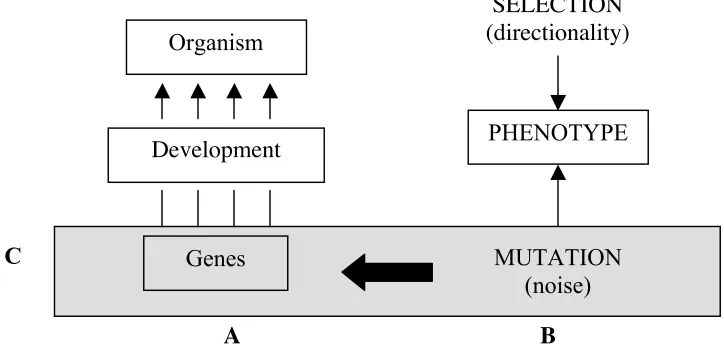
In our opinion, Amundson’s statement is not completely accurate, because MES’s vision of the evolutionary process does not only rely on ignoring the complexities of individual development and declaring it inert for any evolutionary concern. Underlying this vision there is also a model of organic development based on a very simple and linear conception of the phenotypic expression of genes, schema-tically represented in Figure 1 [A]. Such a conception is a necessary condition for upholding a view on organic evolution such as that represented in Figure 1 [B]:
C
A B
Figure 1: Modern Evolutionary Synthesis.
[A. Development. — The role of genes is central in the evolutionary process; they correlate with the phenotype in a simple and linear fashion. B. Evolution. — Natural selection acts creatively, imposing order on random point mutations, a noisy and unrestricted source of diversity. C. As a consequence, development (A) lacks any causal role in the evolutionary process (B).]
There are many factors that lead us to the conclusion that the omission of development from evolutionary matters cannot be sustained as straightforwardly as the argument seems to indicate. Some of these reasons are even coherent with other basic tenets of MES. For example, it should be clear to everyone that the simple fact of being capable of reaching the adult state is as important as being an adult optimally fitted to overcoming all kinds of environmental aggression. This
Organism
Development
PHENOTYPE
SELECTION
(directionality)
Genes
MUTATION
(noise)
deemed targets of natural selection. As Gilbert (2003: 3) aptly puts it: “Every animal has to function as it builds itself”. Consequently, a developmental path that makes the organism more robust from the start or allows an earlier emergence of certain key features, among other possibilities, is probably to be selected instead of other paths. The organism will obviously flourish and proliferate within the population. With a move like this, development can be added ‘without tears’ to the agenda of MES oriented approaches.2 One only needs to conceptualize a developmental path as a specific phenotypic manifes-tation that, according to the Mendelian–Morganian idealization, correlates with certain genomic positions in a simple and linear fashion. Actually, this is the theoretical direction taken by a particular Evo–Devo trend, which relies on the assumption that evolution is mainly due to point mutations affecting genomic positions in charge of the regulation of the genetic activity during development. This view, accessibly introduced in Carroll (2005), can safely be judged a con-structive enlargement of the strictly genocentric model of the MES.
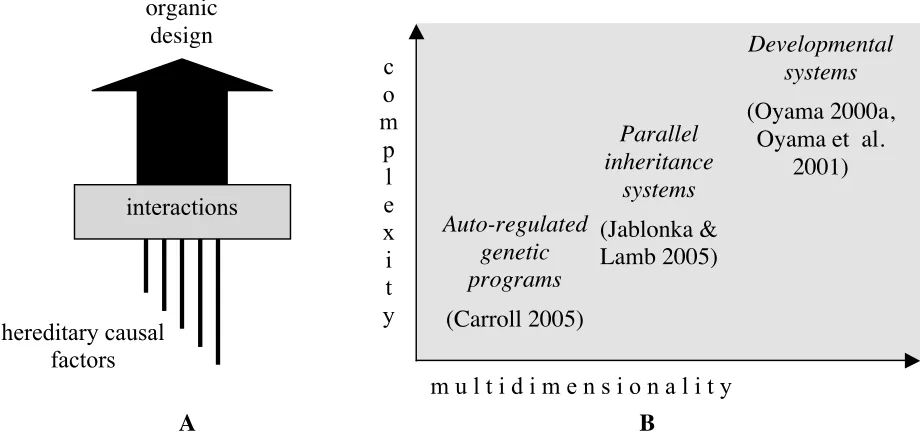
However, this model is explicitly rejected by a number of Evo–Devo practitioners who share the belief that (i) genes are not the only causal agents in development, and that (ii) they are not the only developmental material capable of being transmitted from one generation to the next (see Figure 2 [A] below). These assumptions introduce a new and extended notion of heredity into evolutionary theory and they open an important conceptual breakdown with more orthodox forms of neo-Darwinism (see Jablonka & Lamb 2005 as a case in point). Underlying this theoretical move is the following line of reasoning:
(A) Genes are part of complex developmental processes in which other non– genetic factors are also causally involved (such as cellular products, mecha-nisms of cellular communication, intermediate phenotypic states, environ-mental factors, behavioral practices, and so on);
(B) to the extent that (i) all these factors exhibit some degree of individual vari-ation, (ii) the variation is persistent throughout generations, and (iii) it can have repercussions on the unequal reproductive rates attained by the indi-viduals so differentiated, it is possible to conclude that they all have a role in evolution not different from that customarily credited to genes;3
(C) hence, the Mendelian–Morganian idealization (establishing that the only evolutionary relevant correlation is that between genetic factors and pheno-typic features) is untenable.
2 Waddington’s (1957) concept of ‘canalization’ can be seen as a pioneering formulation of
this stance. Waddington contended that developmental paths become stabilized and strengthened by continuous exposure to the rigors of natural selection. As a consequence, certain biases or constrictions on development could be explained as a direct consequence of standard Darwinian selection (for some comments on this matter, see Maynard Smith et al.
1985: 270).
3 In Hall & Olson’s (2003b: xiv) words: “Phenotypes and the processes that produce them are
This is a non-trivial achievement of modern evolutionary thinking. However, it has not given place to a monolithic theoretical frame, but to a cluster of different and somehow confronted perspectives (Figure 2 [B]).4 The main theo-retical parameters underlying the diversity of approaches in this research field have to do with the number and levels of factors involved in developmental processes, the role and relative significance of each one, the nature of the inter-actions they sustain and the way they correlate with the phenotypic outcomes (see Robert et al. 2001 and especially Robert 2004). As a consequence, Evo–Devo houses theoretical stances as varied as those that maintain intact the “genetic program” metaphor (as Carroll 2005), those that extend the metaphor beyond the genetic factor and introduce the idea of a multidimensional “developmental pro-gram” (see Keller 2000 and Moore 2001), or even those that abandon the quasi-algorithmic image of development of the “program” meta-phor and endorse instead a concept of “developmental system” with complex interactions among factors of very different sorts that relate non-linearly with the successive pheno-typic stages (see Griffiths & Gray 1994, Oyama 2000a, and Oyama et al. 2001).
A B
Figure 2: Evolutionary Developmental Biology (Evo–Devo)
[A. Organic designs are the outcome of complex developmental processes involving different types of factors, all relevant from an evolutionary point of view. B. The diversity of the factors (multidimensionality) and the complexity of their interactions (complexity) are the main theoretical parameters underlying the plurality of Evo–Devo thinking.]
The following contentions, even if there is not complete consensus about them, are unquestionably at the core of Evo–Devo thinking:
4 As Hall & Olson (2003b: xv) put it: “No unified theory of Evo–Devo exists”.
interactions
hereditary causal
factors
organic
design
m u l t i d i m e n s i o n a l i t y
Auto-regulated
genetic
programs
(Carroll 2005)
Parallel
inheritance
systems
(Jablonka &
Lamb 2005)
Developmental
systems
(Oyama 2000a,
Oyama et al.
2001)
c
o
m
attaining its adult steady state are preformed in genotypes;
(B) every particular stage in development is the result of complex interactions among multiple factors,5 including the phenotypic state previously attained;
(C) genes are not the only developmental agents with a causal role in the evolutionary process; and
(D) the role of genes in development and evolution is not in a higher rank with respect to all the remaining factors.
Within this framework, the rigidity of the MES image on the evolutionary process, based on the centrality of genes and the omnipotence of natural selection in the shaping of organisms, is being left behind by Evo–Devo practitioners. In its place, a much more worked out image of development is currently allowing an understanding of ways in which the evolutionary process can be biased in favor of certain formal solutions even at the cost of losses in terms of fitness. In this regard, the following contentions are also highly representative of present-day Evo–Devo thinking:
(A) Certain developmental pathways are extremely conservative, in the sense that they are manifested, with minor modifications, across very distant taxa. The use of those very similar pathways in very different develop-mental contexts, resulting in a high degree of phenotypic variation, is a significant feature of evolution;6
(B) the above-mentioned modifications of the developmental pathways can be classified using a limited (and in itself constraining) inventory of descrip-tive categories: Displacements of onset and offset points, modifications of the rates of growth, alterations of the terminal state, changes in the plan of execution, and so on (see, among other sources, Gould 1977: Part II, Parker 2000, and Alba 2002);
(C) both the persistence of developmental pathways and the restrictive character of their possible routes of change must be seen as forces counter-acting the pressures of the environment. As such, they must be acknow-ledged with a creative character similar (if not superior) to that of natural selection.
5 Johnston & Edwards (2002) is an especially significant model, based on fourteen different
kinds of factors and almost thirty paths of interaction.
6 This is a very old idea, probably due to Aristotle. It is also one of the defining notions of
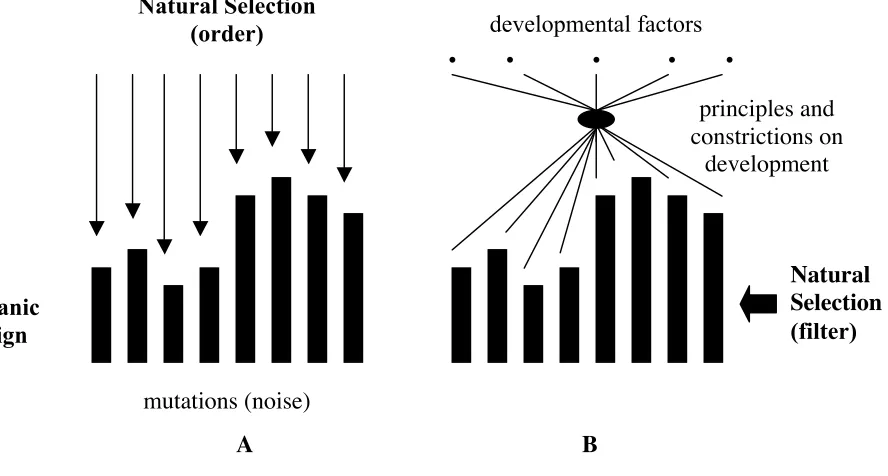
These statements do not entail that natural selection is completely neglected by Evo–Devoists, who have just opened a discussion concerning the extent of creati-vity of the Darwinian mechanism relative to that of the constrictions imposed by development. Actually, the different Evo–Devo approaches introduced so far maintain divergent positions on this issue, ranging from classical “genic select-ionism” (Carroll 2005) to a radical redefinition of selection, understood as a filter rather than as a creative mechanism (see Goodwin 1994 and Kauffman 1995).
A B
Fig. 3: Two views on Natural Selection.
[A. Creative selection. — The unrestricted variation introduced by random point muta-tions into populamuta-tions is selected in favor of the variants of those individuals showing more resistance to environmental aggression and higher reproductive rates. B. Stabilizing selection. — Organic designs resulting from principles and constraints on development are filtered attending to their resistance to environmental aggression and their reproduc-tive success relareproduc-tive to other designs also present in the population.]
2.2. Pere Alberch’s Concept of ‘Morphological Evolution’: Principles and Applications
The proposals of Pere Alberch concerning the phylogeny of organic designs (or ‘morphological evolution’) are entirely sympathetic with the core Evo–Devo contention: The evolution of the formal patterns of organisms is due to pertur-bations on the parameters underlying their ontogeny. We start this section by presenting his ideas on individual development, strongly connected, in our opinion, with those of the most innovative of contemporary Evo–Devoists.
As a starting point, Alberch rejects the idea that development could be explained as a simple or direct mapping of the genotype onto the phenotype. He
mutations (noise)
Natural Selection
(order)
Natural
Selection
(filter)
• • • • •
developmental factors
organic
design
principles and
constrictions on
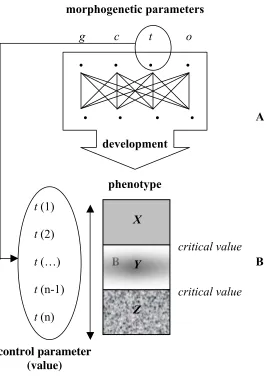
underlie the growth of organisms and that those factors correlate non-linearly with the resultant morphologies. This amounts to saying that minor pertur-bations affecting any of the ‘morphogenetic parameters’ (genetic or non-genetic) can introduce wide-ranging consequences on development and, eventually, re-address the evolutionary course of a whole lineage of organisms. Thus, develop-mental paths show, according to Alberch, the properties of “complex dynamic systems” (see Kelso 1995, as well as the synthesis in Thelen & Smith 1994: chap. 3), which are summarized in the following points:
(A) A ‘dynamic system of development’ is composed of a high number of factors (‘morphogenetic parameters’) of very different characters (genetic, cytological, tissular, and so on);
(B) there is parity in their causal capacities and, thus, none of the factors acts as a ‘central control parameter’;
(C) they establish complex interactions and, consequently, no factor correlates directly and exclusively with any particular aspect of the resulting phenotype;
(D) the values of parameters can be subject to continuous perturbations without any significant consequence on the phenotype; however, once certain ‘critical values’ are attained, small perturbations can be enough to trigger a ‘qualitatively new’ morphology; and
(E) as a consequence of the diversity of causal agents, the complexity of their interactions and the non-linear character of their relation with the outcomes, identical results can be attained by means of perturbations of the values of different parameters of the systems.
A
B B
Fig. 4: Dynamism and complexity of organic development
[A. A system of development is characterized by the diversity and causal equality of the compounding morphogenetic parameters, the complexity of their interactions and the emergent character of the resulting morphologies. B. Once certain critical values have been attained, small perturbations on any of the parameters of the system (parameter t, in the figure) can result in discontinuous variety (i.e. different and qualitatively new designs: X, Y, Z).]
This set of assumptions situates Alberch’s ideas not far from current Developmental Systems Theory (DST; see, among other sources, Griffiths & Gray 1994, Griffiths & Knight 1998, Oyama 2000a, Oyama et al. 2001, and Griffiths & Gray 2005), except for two non-negligible details. Alberch, in a strictly internalist vein, does not acknowledge the role that DST concedes to environmental factors, whereas the idea that opposing ‘organism vs. environment’, ‘nature vs. culture’ or ‘internal vs. external’ is completely artefactual is at the core of DST thinking (see, particularly, Oyama 2000b). Alberch’s framework, on the contrary, takes only morphogenetic parameters of an internal sort into account (rates of kinetic activity of cellular diffusion, viscoelastic properties of the cellular matrix, mitotic rates, and so on; see, for example, Oster et al. 1988). Furthermore, Alberch points out in certain passages (e.g., Alberch 1991: 15) that morphogenetic parameters are
t
(1)
t
(2)
t
(…)
t
(n-1)
t
(n)
critical value
critical value
phenotype
control parameter
(value)
• • • •
• • • •
development
morphogenetic parameters
g c t o
X
Y
centric stance. DST, in contrast, abolishes any version of the thesis of the cen-trality of genes.7
Another important component of Alberch’s framework is the relevance of the concept of ‘heterochrony’ as the chief mechanism underlying morphological changes and evolutionary innovations. A ‘heterochrony’ is basically an alteration of the chronogram and/or the rate of growth for unit of time along the process of development leading to some significant impact on its final product,8 something to which Alberch was very attentive throughout his career (for a very illustrative piece, see Alberch & Alberch 1981). Section 3 of our article is devoted to presen-ting an application of Alberch’s ideas on heterochronies to the special case (not considered by him) of the evolution of the nervous system and cognition.9
Another very distinctive aspect of Alberch’s model is the idea that systems of interactions underlying developmental processes are rather stable and that changes in these processes are mostly due to modifications in the values of one or another of the morphogenetic parameters of the system (Alberch 1989: 44). Thus, neither changes in the system of interactions nor in the nature of interactors themselves seems to be needed in order to explain certain major achievements in the course of natural evolution.10 In the study of complex dynamic systems, the concept of ‘control parameter’ refers to the systemic component whose pertur-bations correlate with the emergence of new morphologies (a new pattern in the surface of a chemical solution, a new embryological state, a new form of beha-vior, and so on; see Thelen & Smith: 63–64). A control parameter is not, however, a central agent in causing phenotypic variation, in that the effects of its pertur-bations do not immediately reflect on morphological outputs, but on the other morphogenetic parameters instead (Kelso 1995: 7; see also Thelen & Smith: 112).11
7 There exists a connection between these two aspects of Alberch’s thinking: The genetic
determination of morphogenetic parameters presents itself as the only possible reason for excluding environmental factors from systems of development.
8 ‘Heterochrony’ is a concept that originated with Ernst Haeckel (1834–1919), who used it as
the conceptual basis of his Biogenetic Law (i.e. the initial stages of embryonic development represent the adult states of ancestral organisms). For Haeckel, the only possible heterochro-nic formula was the acceleration of the appearance of early stages so as to give place to the introduction of further stages. The idea that heterochronies can also consist of decelerations is due to Gavin de Beer (1899–1972). See Gould (1977: Part I) for a historical view, and Gould (1977: Part II) and Alberch et al. (1979) for systematic and formal descriptions of heterochro-nies.
9 Alberch introduced some clarifications of the concept of ‘heterochrony’ in papers such as
Alberch (1985) and Alberch & Blanco (1996), his intention being to liberate the concept from its strong dependency on the idea of ‘time’ and to connect it more directly to the internal dynamics of development (see Etxeberria & Nuño de la Rosa, in press).
10 Alberch (1991: 17–18) speculates with the idea that this ‘evolutionary mode’ could be an
out-come of natural macro-evolution, naturally selected by its advantageous combination of robustness and flexibility: A system of development so defined is very resistant to external aggressions, but it also allows the exploration of new designs, eventually needed in relative-ly or radicalrelative-ly unstable environments.
11 In Thelen & Smith’s (1994: 112) words, a control parameter “constrain[s] the interacting
Within this model, development (even the development of novel forms) is always a function of the system as a whole. The idea of ‘control parameter’ basi-cally introduces the possibility of signaling a single parameter of the system as the starting point of the chain reaction leading to new morphologies.
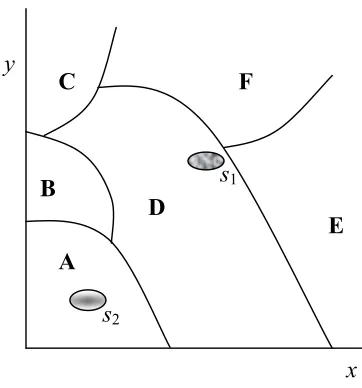
For our own purposes, however, the most relevant aspect of Alberch’s proposals is the contention that developmental systems foreshadow the scope of their attainable phenotypes, as well as the trajectories leading from a certain phe-notypic state to another. It is the concept of ‘parametric space’ that in Alberch’s framework is in charge of theoretically representing the finite and discrete set of the possible outcomes of any developmental system (Alberch 1989, 1991).12 The main properties of parametric spaces are summed up in the following para-graphs (see Figure 5 below as a point of reference):
(A) A parametric space is a finite set of discrete phenotypes. The discontinuous character of phenotypic variation is captured in Figure 5 by the separate spaces named with capital letters;
(B) each phenotype has a characteristic probability of coming into being, repre-sented in Figure 5 by the extension that it occupies ([D] is thus the most probable phenotype, while [B] is the most improbable one);
(C) moreover, each phenotype is also characterized by the relative probability of transforming itself into one or another of the neighboring phenotypes. In Figure 5 this aspect is represented by the extension of the line separating different phenotypes ([A] has a strong probability of turning into [D], a low probability of turning into [B], and no probability at all of turning into any of the remaining phenotypes).
pattern. It simply leads the system through the variety of possible patterns or states”. 12 The notion ‘parameter space’ is related to a certain point to Waddington’s (1957) concept of
Figure 5: Parametric space
[The figure represents a parametric space ideally defined by means of two morphogenetic parameters (x and y). The space delimits a finite number of discontinuous phenotypes (A, B, …, F). Perturbations of the values of the parameters can transform a phenotype into another. Each phenotype has a characteristic probability of coming into existence (in the figure, the space of the relevant phenotype) and a certain propensity of transforming it-self into another phenotype (in the figure, the extension of the lines limiting phenotypes). (Based on Alberch 1989: 51 and Alberch 1991: 16.)]
Moreover, species are represented in Figure 5 by means of the oval items (‘s1’ and ‘s2’). From a populational point of view, the model incorporates the fol-lowing contentions:
(A) Every species falls within one or another phenotype (‘s1’ belongs to pheno-type [D], whereas ‘s2’ fits in phenopheno-type [A]);
(B) the morphological stability of a species is a function of both (i) the proba-bility of its phenotype (‘s1’ is, in principle, a more stable population than ‘s2’) and (ii) its proximity to a point of bifurcation to other phenotypes (‘s1’ is thus a rather unstable population within its phenotype, given its vicinity with the bifurcation leading to [E] and [F]);
(C) the proximity to a point of bifurcation as well as the relative propensity of its own phenotype to transform into one or another phenotype puts a cer-tain population at the edge of undergoing a radical morphological reorga-nization (‘s1’, for instance, has a high propensity of acquiring the properties of phenotype [E]).
‘Bifurcation’, a point within a parametric space in which a minimal perturbation is capable of bringing about qualitatively new morphologies, is thus another key concept in Alberch’s framework (Oster & Alberch 1982). In Figure 5, for example, species s1 can easily shift to phenotype [E], attending to its proximity to the
A
B
C
D
E
F
x
y
s
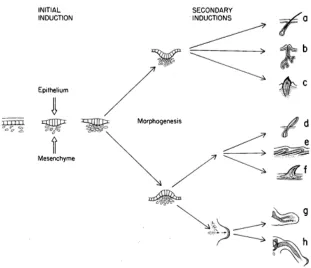
1bifurcation between [F] and [E] from its original phenotype [D], as well as to the higher propensity of phenotype [D] for transforming into [E]. Using the jargon of dynamic systems theory, we can say that population s2 occupies a ‘well of attraction’ in the situation depicted in Figure 5, whose depth guarantees a high degree of stability to its phenotype (of type [A]). On the contrary, population s1 is at the edge of its well of attraction (i.e. of a ‘phase shift’) due to its continuous exposure to a certain kind of perturbing factor, a situation that makes it highly susceptible to entering into a different well of attraction. Figure 6 is thus an alternative way of symbolizing the situation previously presented in Figure 5. Figure 7 summarizes a particular application of this model to the study of an entire family of organic structures.
Figure 6: Wells of attraction and phase shifts
[Some morphologies are located in a region of the parametric space that guarantees them a high degree of stability in spite of the perturbations of the morphogenetic parameters. They occupy a ‘well of attraction’, as it is the case of population s2 within phenotype A.
On the contrary, some other morphologies are in positions that render them highly unstable and exposed to radical changes with a minor perturbation of a single parameter. This is the case of population s1, at the edge of undergoing a ‘phase shift’ within
pheno-type D to phenotype E (based on Thelen & Smith 1994: 64).]
A
D
E
Control parameter
(perturbations)
Figure 7: Morphogenesis of dermal organs
[The skin is made of structures (hair, salivary glands, teeth, feathers, scales, limbs and carapaces, among others) that are discontinuous from species to species, in the sense that no structure can be said to be a transition form between any other two structures. How-ever, they all originate in equivalent inductive processes having to do with the thickness of the epithelium and the concentration of the mesenchymal tissue. Depending on the elasticity and the strength obtained in each case, the epithelium can (i) invaginate, giving place to hair, glands and teeth, or (ii) evaginate, giving place to feathers, scales or carapa-ces. Thus, each structure is only accessible through perturbations acting upon a particular phenotypic stage in the course of development (see Odell et al. 1981 and Oster & Alberch 1982; the figure is from Alberch 1989: 47).]
From an evolutionary point of view, an important corollary of this model is that the geometry of parametric spaces, representing forces of an internal sort acting upon individual development, works as a very strong constraining force, capable of counteracting that of natural selection. As explicitly stated by Alberch, although this stance does not discredit the role of natural selection as a filter in the evolution of organic designs, it nevertheless strongly decreases the creative character that this mechanism has to the adherents of MES-oriented frameworks (Alberch 1980: 664, Oster & Alberch 1982: 455, Alberch 1989, 46–48, Alberch 1991: 16; see also Goodwin 1994: 143 and Wagensberg 2004: 125).
orga-nisms, its influence on the biology of the twentieth century was truncated because of the accusations of Platonism by MES-inspired historiographers (see Amundson’s 2007: Part I analysis of this episode of the history of modern bio-logy). It is our opinion that Alberch’s ideas serve as a clear demonstration that the belief in organic types fits perfectly well with a materialistic world view, as far as the different types result from natural constrictions and cannot be said to be ideal or abstract ideas that are alien to a physical order of things (Amundson 2001, Love 2003).
In connection with this, Alberch emphasized the evolutionary interest of the study of developmental monsters (or teratologies), recovering a tradition also embraced by Transcendental Morphologists (see Figure 8 below); see especially Alberch (1991).13 In Alberch’s opinion, teratologies are demonstrative of the strength of development against the pressures of natural selection, in that they are, by definition, maladaptive. However, a teratology can be the basis of organic novelties with a potentially evolutionary import.14 Furthermore, the range of pos-sible teratologies seems to be very strictly constrained (for example, duplication, but not triplication, of structures is common in abnormal development). This fact points to the existence of strong constraining forces on development not directly coming from natural selection (see Figure 9 below).
13 See Geoffroy Saint–Hilaire (1822) and Geoffroy Saint–Hilaire (1832-1837).
14 Alberch (1989: 28) points out that the evolutionary potential of teratologies can be rather
limited. Anyhow, he observes that it would be an error to discard them as a possible source of raw material for the evolutionary process. In his own words (Alberch 1980: 656):
The argument that most developmental anomalies are harmful, commonly used to ‘discredit’ the relevance of these ‘mutations’ to evolution, is fallacious. Most genetic mutations were once thought to be deleterious (presently it is recognized the most of them appear to be selectively neutral, but that does not affect my argument), however nobody doubts that they provide the raw material for evolutionary change.
Figure 8: The logic of monsters (I)
[“After having studied anomalies in their special conditions and established the laws and general relations underlying all particular facts, I will demonstrate the way in which these laws and relations are but corollaries of even more general laws of organization; […] the way in which […] many principles established on very weak evidence find in anomalies a complete demonstration. And the way in which teratology, among its many concerns, covers every single condition of the organization of life” (Geoffroy Saint– Hilaire 1832–1837, vol. I: xi; our translation — SB & GL).]
Figure 9: The logic of monsters (II)
Anyway, Alberch did not contend that natural selection was to be deprived of any creative role in evolution. Actually, he noted that natural selection biases evolution just by filtering out those designs unable to withstand populational and environmental pressures, thus having the effect of directing the process towards the morphologies accessible from the selected designs. Therefore, natural selection is continuously determining the probability of the presence of certain organic designs at future stages of evolution, an unequivocal creative intervention on the evolutionary process (Alberch 1989: 46 and Maynard Smith et al. 1985: 270).
3. The Evolution of Grammar through the Development of the Mind
“If the ideas that make up Evo–Devo have been so productive in opening up new lines of investigation into morphological evolution, they may be equally productive for psychological evolution”. These words by Paul Griffiths (2007: 196) are particularly well suited to mark the transition of our work, so far devoted to an exposition of the theoretical underpinnings of Evolutionary Developmental Biology in the field in which it has become a mature scientific discipline — that is, in the field of the evolution of the formal patterns followed by organisms, to the study of a specific aspect of the evolution of human cognition.
Griffiths reminds us that, inasmuch as cognition is just another dimension of the organic world, there is no principled reason for not extending the core theses of Evo–Devo to this domain. Indeed, to the extent that we eschew any hint of ‘mind/body’ dualism, the fact is that there exists a perfectly natural path to extend and apply these ideas to the field of the evolution of mind. Taking then what in any case appears to be the most logical assumption, if what we call ‘mind’ — or ‘cognition’, as, for the purposes of this article both terms can be taken as synonymous — is nothing else than what “the brain does”, to use a well-known expression by Searle (1985), it is obvious that the study of the morpho-logical evolution of the brain is a first step towards the evolutionary study of mental functions. It is also clear therefore that the evolutionary study of the brain qua organic structure and, specifically, the evolutionary study of its formal diver-sity among the species endowed with complex nervous systems presents itself as a natural field of application for Evo–Devo.
It goes without saying, however, that the evolution of brain morphology is just a part of a broader Evo–Devo agenda, aiming at the investigation of the evolution of mental functions. In this sense, it may be useful to distinguish three different levels of analysis, all involved in the study of such functions, and briefly to consider in these preliminary remarks their positions within the kind of evolu-tionary explanations specifically devoted to the phenomena of development. The three levels are: (i) brain anatomy, (ii) brain function, and (iii) observable beha-vior.
Parker et al. (2000), Falk & Gibson (2001), and Minugh–Purvis & McNamara (2001), for example, just to restrict ourselves to the evolution of the primate brain. As for the second level (brain function), this is where most problems tradi-tionally associated with the study of mind are concentrated. In this work we will assume, as already pointed out, that when talking about the mind we are talking about the functions related to brain activity. Therefore, this level adds up a new level of analysis whose phenomenology goes way beyond the mere facts of brain morphology. Nevertheless, the fact that, at this level, most theoretical approaches tackle the study of brain function abstracting away from its physical realization does not mean that it is really abstract and with irreducible properties to its material base.15 Thus, we share point of view of Noam Chomsky, who in his works has argued that framing an explanation on a strictly physicalist language or using an abstract vocabulary to talk about these matters is just a mere question of perspective, and that decisions must be made simply on the basis of practical issues, such as the accessibility to observation of the considered domain or the significance of directly observable data (see, for example, Chomsky 1980). Also, from the Chomskyan point of view, similar considerations dictate that in the study of higher cognitive functions in humans there often prevails a computa-tional and more abstract approach. Whatever the most convenient or just possible approach that one may take, the truth is that the exploration of the putative modifications in brain function regarding such aspects as the timing of the onset and stabilization of brain development, its maturation rhythms, the alteration of intermediate states or of the terminal state, and so on appear to us as topics which fit perfectly well within the Evo–Devo agenda.
Finally, we come to the study of observable behavior, which for a long time was the alibi of twentieth-century behaviorist psychology to attain the kind of scientific respectability imposed by the dominant positivist ideology in the philo-sophy of science. Curiously enough, Amundson (2006) suggests that transition of theoretical psychology towards a more cognitivist approach is, historically, comparable to the deliverance of Evo–Devo from the narrow-minded perspective imposed by the MES. In both cases, so Amundson argues, we observe a transition from an approach focused on environmental conditioning factors to a perspective where the search for internal constraints prevails. As Amundson himself suggests, such a situation may well be interpreted in the sense that both Evo– Devo and cognitive psychology are the products of the same zeitgeist, which should favor the convergence of both scientific approaches, along the lines of what we sketch in the previous paragraph.
All these considerations notwithstanding, we believe that the study of behavior must not be eschewed in order to favor only the study of internalist issues. As a matter of fact, the kinds of explanations based on the interaction among multiple domains which are generally favored within Evo–Devo make us believe (i) that in the application of this discipline to the realm of cognition none of the three aforementioned levels must be privileged over the others, and (ii)
15 But see the introduction to Fodor (1975) for an alternative point of view, and Churchland
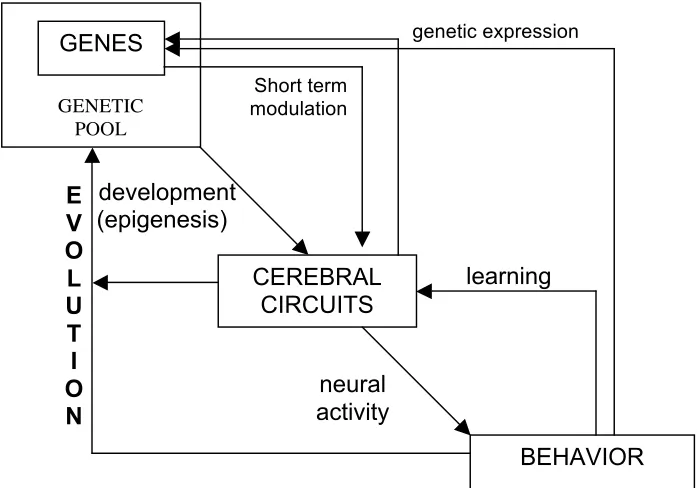
that such an application may foster the formulation of complex interactions in different directions among these levels, such that these very same interactions may be seen as the locus of alterations in development with a potentially evolu-tionary significance (Figure 10). Indeed, the fact that specific environmentally induced alterations in the behavior of an organism during its development may be the basis of further modifications of the anatomic, physiologic and, eventually, genetic determining factors capable of inducing a new behavioral pattern is a non-problematic idea in the context of Evo–Devo and one that has contributed to vindicate certain models of change — such as ‘organic selection’ or ‘genetic assimilation’, which apparently stand in direct contradiction with the dominant genocentric logic of the MES, by letting in the Lamarckian ghost of the inheri-tance of acquired characters.16
Figure 10: Evolution and behavior
[Interactive model with multiple levels of development and activity in higher organisms (based on Plotkin & Odling–Smee 1981; see also Johnston & Edwards 2002 for a still more complex model in terms of levels and interaction loops, and in terms of the specified morphogenetic parameters). In this model, the intergenerational recurrence of alterations within a specific behavioral pattern may have evolutionary repercussions, either through a novel redistribution of the dominant alleles in the genetic pool of the population (‘genetic assimilation’) or through the selection of new mutations that occurred in it (‘organic selection’).]
16 For a synthesis of these ideas and models, see Gottlieb (2003: 14–23). The original references
for each of them are Baldwin (1896), Morgan (1896), Osborn (1897), and Waddington (1953), respectively. Longa (2006) is an interesting clarification of the ideas of these authors, often wrongly identified in certain recent applications of the so called ‘Baldwin Effect’ to the evolution of language. Jablonka & Lamb (1995) is a recent vindication of the ‘Lamarckian dimension’ in evolutionary biology.
GENES
GENETIC POOL
CEREBRAL
CIRCUITS
BEHAVIOR
development
(epigenesis)
neural
activity
genetic expression
Short term modulation
learning
The application of the Evo–Devo assumptions to the particular case of a species’ psychological endowment in essence implies trying to find out what alterations in the development of the mind/brain of the organism might be capable of intro-ducing into the population to which the organisms in question belong a heritable variety, eventually capable of making them fitter with respect to the rest of the population. In the light of the ideas exposed in Section 2 of this article, if we are to find any illuminating answers, this task involves taking into account the fol-lowing four key points:
(A) Identify the morphogenetic parameters which make up the developmental system of a particular feature of the mind/brain;
(B) identify the control parameter or parameters whose perturbation acts as a trigger for change;
(C) specify the constraints imposed by the developmental system itself, defin-ing parametrical spaces of possibilities; and
(D) elucidate the populational and environmental conditions capable of filter-ing the distribution of phenotypes within the population and favorfilter-ing the resulting solution of the process of change in question.
That said, we will devote the following paragraphs to briefly discussing a number of important contributions connected to the issue of the study of the evo-lution of human cognition in any of its dimensions (i.e. structure, function, and behavior). As we already hinted in section 2, all share the assumption that one form or another of ‘heterochrony’ is the basic mechanism able, just as in the case of morphology,17 to explain the evolution of the human nervous system and cognition, which would thus be a product of some alteration in timing and/or intensity of development of closely related species (Table 1).
17 As stated by Gould (1977: 4):
Heterochrony
. Evolution through changes in developmental timing and
intensity. Types:
1. Paedomorphosis (underdevelopment or terminal truncation).
Subtypes:
1.a. Reduced rate of development (neoteny);
1.b. Earlier offset (progenesis); and
1.c. Delayed onset (postdisplacement).
2. Peramorphosis (overdevelopment or terminal extension). Subtypes:
2.a. Increased rate of development (acceleration);
2.b. Delayed offset (hypermorphosis); and
2.c. Earlier onset (predisplacement).
Table 1: Heterochrony: Definition and types
[Based on McKinney (2000) and Parker & McKinney (1999); other sources: Gould (1977), McKinney & McNamara (1991), and Alba (2002).]
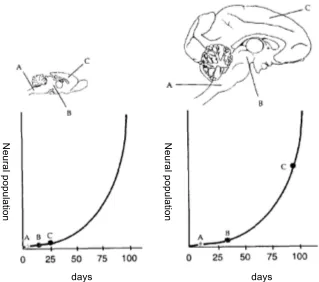
Figure 11: Extension of cytogenesis and exponential growth of brain structures
[The temporal extension of this ‘summit’ of asymmetric cellular divisions causes an exponential increment in the population of resulting neurons. The charts above show how such displacement is generalized in the cytogenesis of different brain structures in primates (right) compared to the homologous structures in rodents (left). They show moreover that a greater displacement in the formation of the cortex (C) results in an increased neural population for this structure, much larger than that for other structures, such as the spinal chord (A) or the basal anterior brain (B); this increment has an exponential character. (Taken from Kaskan & Finlay 2001: 20.)]
Rakic & Kornack (2000), for their part, offer some interesting quantifi-cations. They point out that the phase of asymmetric cell division yielding to neural cells (that is, the phase to which peak Kaskan & Finlay refer to) starts in monkeys some four weeks later than in mice, which entails an extension of the period of symmetric cell division, where the majority of neural precursors are produced. According to the data presented by these authors, as a result of this displacement on the onset of a characteristic phase of embryonic development, the population of neurons in monkeys doubles that of mice. Moreover, as Rakic & Kornack (2001: 45–46) point out, in the case of humans the onset of asymmetric cell division is displaced only a few days later than that of monkeys, but, given the exponential effect of such displacement on the production of neural precur-sors, the population of neurons in humans is estimated to be between some eight or sixteen times larger than that of monkeys. In the light of these data, the authors conclude that the mutation of some regulatory gene (or a collection thereof) may have been responsible for the reorganization of the neo-cortex and of the cognitive and behavioral novelties associated with it (Rakic & Kornack
days days
N
e
u
ra
l p
o
p
u
la
tio
n
N
e
u
ra
l p
o
p
u
la
tio
2001: 46).18
It must be taken into account, however, that this is not the only known dif-ference in the developmental pattern of the human brain as compared to that of monkeys. Parker & McKinney (1999) and McKinney (2000), for example, contend that (i) fetal growth of the human brain is 25 days longer than that of monkeys, (ii) myelinization of the neo-cortex (and, especially that of the frontal cortex) is extended in humans until the age of 12, whereas in rhesus monkeys it lasts only 3.5 years, or (iii) dendritic growth is extended in humans until the age of 20, well beyond that of any other of its close kindred species. All these cases have to do with factors affecting the neural interconnectivity rate and their combined effect must no doubt have some far reaching consequences, as explicitly argued for by Parker & McKinney (1999) in their comprehensive comparative study of cogni-tive development in monkeys, apes and humans.
It is also relevant to point out, however, that the alterations of develop-mental phases with direct repercussions on the proliferation of neural precursors or on the interconnection of the resulting neural populations cannot bring about a totally unconstrained type of growth or of brain reorganization. Metabolic and energetic limitations aside — which are in any case an important factor in limi-ting brain capacity — Hofman (2001) reasons that certain aspects of the Bauplan
followed by the primate brain impose limiting constraints on its evolutionary potential. He points out, for example, that the exponential character of the incre-ment of the cortical mass with respect to cerebral mass as a whole is not observed in other brain structures (all playing a relevant role in regulating cortical connec-tivity, such as the cerebellum, the basal ganglia, etc.), where growth follows a linear pattern. As a consequence of that, the more the brain grows, the more dis-proportionate is the relation between cortical mass and these structures, which will eventually be inadequate for processing the same kind of complex information the cortex would be able to process (Hofman 2001: 115–119). Besides, Hofman contends that there are limitations on axon length which may cancel out the effects of an increased cortical mass, for the simple and practical reason that it could not be supplied with the appropriate wiring to ensure the connection bet-ween areas distant from each other in the cortex. Hofman points out that this may be the underlying cause for the compartmentalization of the cortex into specialized areas or modules within which highly interconnected neurons are concentrated.19 A disproportionate growth of the brain would, in any case, bring the issue back to the level of inter-modular wiring which is necessary to support the characteristic flexibility of human-like cognition (Hofman 2001: 119–124).
Findings such as these provide additional support to the idea that alter-ations in brain development may be at the basis of the evolution of human cognition, and that factors such as the significance of genetic regulation as a
18 In this connection, we find promising some recent findings pointing at genes which regulate
certain phases of brain growth (see Dorus et al. 2004). In connection with some of them, like
Microcephalin, relatively recent mutations specific to modern humans have also been identi-fied (see Evans et al. 2004 and Evans et al. 2005); for a comprehensive overview of the genes implied in brain development and growth, see Benítez Burraco (2009: chap. 3).
19 See Griffiths (2007) for a defense of the concept of ‘modularity’ in the application of Evo–
possible phenotypic spaces constitute a serious hypothesis and are of major importance in this research. Unfortunately, they are rather uninformative at the time of concocting an explanation at the level of the resulting mental functions and their reflection on specific behavioral patterns. This point is not only relevant for the definition of parametric spaces of brain functionality, but also because, as we already pointed out, the identification of some specific population within one space or another may in turn have repercussions on the evolution of the morpho-genetic parameters delimiting these spaces.
In this connection, and deserving of special attention, there already exists an important line of research focusing on the study of mental function as a result of alterations in developmental systems which adopts a comparative perspective similar to that of the works cited above.20 Thus, for example, Langer (2000) compares physical and logico-mathematical intelligence in humans, chimpanzees and monkeys, whence he derives a series of conclusions about the onset and culmination of the development of such cognitive abilities in these species and, additionally, about the relative intensity of its progress in each case. The most fundamental conclusion derived from this comparison is that, evolutionarily speaking, there appears to have occurred an early onset and an acceleration in the development of these cognitive dimensions (particularly pronounced in the case of logico-mathematical intelligence), as well as a synchronization of the processes involved, favoring a mutual inter-penetrability with clear reper-cussions on how the surrounding world is conceived and explained. Langer specifically points out that the emergence of physical intelligence takes place early in all cases, but logico-mathematical intelligence in monkeys appears only after maturation of the former has been completed; this happens only a bit earlier in chimpanzees, while in humans both processes are entirely synchronized. Langer moreover contends that certain particularly complex aspects of human cognition, such as the ability to perform specific mental operations in an inte-grated and simultaneous way (e.g., deal with two sets of objects, compare them and redistribute their elements to make them identical) are an effect of this pattern of premature, accelerated and synchronized development of the afore-mentioned abilities. Lastly, Langer observes that the development of these abilities in humans goes well beyond that of the species taken as a point of com-parison, which takes him to speak about a model of cognitive evolution through “overdevelopment” or “terminal extension” (Langer 2000: 229). As he himself emphasizes, this conclusion is particularly interesting, since it is consistent with the hypothesis of a parallel process of overdevelopment at the level of brain structure, with an equal involvement of different aspects of brain anatomy (ex-tended growth of glial cells, axon myelinization, synaptogenesis, and dendritic growth in the cortex) (Langer 2000: 227). As a whole, this is clearly an important step in the establishment of bridges between the neural and the mental levels.21
The next section of this article may be seen as an attempt to put forth some
20 See also the work by Parker & McKinney (1999) cited above, as a key reference in this
direction.
concrete proposals within this same line of thought regarding human cognition as an effect of the evolutionary history of its developmental pattern. We try to bridge the gap as much as possible between the physical and functional levels of analysis. We will be concerned with a particular aspect of the human mind, namely the computational system associated with the FL. We will more con-cretely explore the kinds of morphogenetic perturbations that may be the cause of its origin; also, and from a representational and abstract perspective, we will suggest a localization for such a system within a parametric space of possibilities, and the network of bifurcations leading to the position that it occupies today. Finally, we will also suggest some ideas about the environmental and popu-lational conditions that may have made this system possible, while filtering out other alternatives within the same parametric space.
3.2. A Model of the Evolution of the Nervous System and Cognition: Para-metric Space and Computational Phenotypes
As was mentioned at the end of the preceding section, there are not very many proposals where an explicit connection is established between the development of new neural structures and novel cognitive abilities. In this section, we will try to tackle this problem by sketching a proposal built on the principles of Evo– Devo, where we apply Alberch’s notion of parametric space to different possible phenotypes of the nervous system and where we associate each possible pheno-type with specific computational properties.
where special attention must be paid to epigenetic mechanisms, since, although the anatomical structures in specific brain areas in individuals belonging to a particular species are very similar and therefore their development must obey some specific genetic constraints, it is also true that an extremely high degree of variation is observed at the levels of neuronal morphology and neural patterning, especially at the level of axonal and dendritic branching. It goes without saying that such a degree of variation can only be the result of epigenetic factors acting during development on what Edelman calls the “primary repertoire” with a genetic basis (but also variable). As the process moves forward, new elements of variation are introduced, particularly at the synaptic level, in the form of changes in the biochemical structure and the appearance of an increasing number of dif-ferent neurotransmitters. It is obvious, then, that a process of this kind possesses enormous potential for the introduction of morphological novelties, and even more so if we factor in the possibility that it be affected by some kind of hetero-chrony altering developmental timing and rate of growth.22
A developmental system of this kind, with a high creative potential, is not, however, totally unconstrained. Remember, in this respect, Hofman’s (2001) con-siderations about the structural and connectivity restrictions that constrain the space of possible phenotypes for the nervous system of an organism, and which are, moreover, the kinds of constraints over form alluded to by several scholars since the beginning of the nineteenth century as the basic ingredient to explain the phenomenon of form.23 In accordance with this stance, we understand that it is perfectly licit to assume that the developmental system of the nervous system defines a finite set of possible phenotypes, in such a way that a specific organism might have access to any of them, should the necessary perturbations to remodel it or relocate it in a new position occur. In addition, and coming back to our dis-cussion concerning the different levels of analysis in the study of cognition, we propose to extend such distinctions to the realm of parametric spaces, such that, in parallel to the morphological parametric space, another parametric space would exist with what we may call a collection of ‘cognitive phenotypes’, where to every phenotype in the space of forms there corresponds a unique cognitive phenotype.24
Even though an exhaustive and detailed characterization of all the defining properties of a specific morphological phenotype is impossible, at least we have
22 See Edelman (1987: chap. 6) for a concrete proposal along these lines.
23 The most significant — and radical — representative of this line of thought is, without
doubt, D’Arcy Thompson (1860–1948), who presented his ideas in his monumental On Growth and Form (D’Arcy Thompson 1917). It is possible, however, to identify similar ideas in the thought of earlier authors, such as Richard Owen (see Owen 1848: 102–106) and, in particular, William Bateson (1861–1926) (see Bateson 1894). Webster & Goodwin (1996) is perhaps the most comprehensive an detailed exposition of the theoretical and empirical underpinnings of contemporary ‘Generative Biology’; see also Goodwin (1994).
24 Note that it is not strictly necessary that the number of morphological phenotypes be equal
at our disposal a powerful theoretical tool that makes it possible to identify its main features at the computational level, and to elaborate concrete proposals about what structures and neural organizations could be associated with these properties. In concrete terms, we will assume that the parametric space of cogni-tive phenotypes contains a minimum of four phenotypes, in direct correspon-dence with the four levels of computational complexity of the Chomsky Hierarchy (Figure 12). We speak of a minimum of four phenotypes, because we will for the moment stick to the original version of the Hierarchy (Chomsky 1959). We are perfectly aware, however, that at a later date new levels were added to it. For example, Chomsky himself argued soon after for the necessity of distinguishing between strict context-sensitive systems and systems capable of generating any recursive system (Chomsky 1963); Aho (1968) described indexed systems within the complexity space originally reserved to type 1 systems (see also Hopcroft & Ullman 1979: chap. 14), whereas Aravind Joshi and collaborators (see Joshi 1985, Joshi et al. 1991, and Vijay–Shanker & Weir 1994) added new com-partments to this space with the extended context-free systems or, alternatively, mild context-sensitive systems. What follows, however, does not particularly hinge on the exact number of phenotypes (although we will come back to these new developments) and, for ease of exposition, we will stick to a parametric space with four phenotypes, without forgetting that human language would be somewhere within the ‘lower’ area of type 1 systems.
Figure 12: The Chomsky Hierarchy (Chomsky 1959)
[The Chomsky Hierarchy defines a scale of systems with an increasing generative power, and capable of generating different types of recursive sets whose elements show increasing levels of complexity (type 3 to type 1), and, eventually, any type of recursively enumerable set (type 0).]
In Figure 13 we sketch our proposed parametric space of cognitive — or, better perhaps, computational — phenotypes. In the figure, we label the pheno-types as FC3, FC2, FC1, and FC0 in correspondence with the four levels of the
Type 0
Type 1
Type 2
Type 3
Unrestricted systems
Context-sensitive systems
Context-free systems