Volume 2, Issue 1, January 2013
Page 278
ABSTRACT
This paper presents a novel approach to implement Computational (CI) techniques like Fuzzy Logic, Adoptive Neuro-Fuzzy Inference System (ANFIS) and Neural Network for diagnosis of cancer using TMS320C6713 (Texas Instruments) DSP (Digital Signal Processor). The simulator has been developed using MATLAB and Neurosolution, while implementation has been done using code composer studio for TMS320C6713 DSP. Performance is compared by considering the metrics like accuracy of diagnosis and mean square error. The simulation and implementation result show that this CI approach can be effectively used for cancer detection to help oncologist to enhance the survival rates significantly.
Keywords: Computational Intelligent, Neuro-Fuzzy, Neural Network, DSP, TMS320C6713.
1. INTRODUCTION
Computational intelligent system focus on systems that use knowledge based techniques to support human decision-making, learning and action. Such systems are capable of cooperating with human user and so the quality of support given and the manner of its presentation are important issue.[1,2]
A major class of problem in medical science involves the diagnosis of disease, based upon various tests performed upon the patient. When several tests are involved, the ultimate diagnosis may be difficult to obtain, even for a medical expert. This has given rise, over the past few decades, to computerized diagnostic tools [3], intended to aid the physician in making sense out of the confusion of data.
Cancer is a group of diseases in which cells in the body grow, change, and multiply out of control. Usually, cancer is named after the body part in which it originated; thus, breast cancer refers to the erratic growth and proliferation of cells that originate in the breast tissue. A group of rapidly dividing cells may form a lump or mass of extra tissue. These masses are called tumors. Tumors can either be cancerous (malignant) or non-cancerous (benign). Malignant tumors penetrate and destroy healthy body tissues. A group of cells within a tumor may also break away and spread to other parts of the body. Cells that spread from one region of the body into another are called metastases.
The term breast cancer refers to a malignant tumor that has developed from cells in the breast. The American Cancer Society estimates that each year over 178,000 American women and 2,000 American men will be diagnosed with breast cancer. Breast cancer is the leading cause of death among women between 40 and 55 years of age and is the second overall cause of death among women (exceeded only by lung cancer). Fortunately, the mortality rate from breast cancer has decreased in recent years with an increased emphasis on early detection and more effective treatments.[4]
Leukemia is a type of cancer that affects the white blood cells. In leukemia, white blood cells become abnormal, and divide and grow in an uncontrolled way. They stay in the bone marrow and keep reproducing in an uncontrolled way. These abnormal white blood cells fill up the bone marrow and prevent it from making healthy white blood cells. This means the body is less able to fight off infections. The abnormal white blood cells also prevent bone marrow from making enough red blood cells and platelets. A lack of red blood cells leads to less oxygen being delivered to the organs and tissues of your body. This is called anemia, and it can make you feel tired and breathless. A lack of platelets can lead to problems with the blood-clotting system, and results in bleeding and bruising much more easily than usual.[5] Soft Computing is dedicated to system solutions based on soft computing techniques. It provides rapid dissemination of important results in soft computing technologies, a fusion of research in evolutionary algorithms and genetic programming, neural science and neural net systems, fuzzy set theory and fuzzy systems, and chaos theory and chaotic systems. Soft computing encourages the integration of soft computing techniques and tools into both everyday and advanced applications. [6]
ANN and AI approaches have been used earlier in the computerized diagnostic system for cancer [5][7-14]. After experiments with ANN and ANFIS they achieved a classification accuracies ranging from 50% to 90%. The work in
Implementation of Computational Intelligent
Techniques for Diagnosis of Cancer Using Digital
Signal Processor
Devesh D. Nawgaje1, Dr. Rajendra D. Kanphade2
1
Astt. Professor, EXTC Dept., Shri Sant Gajanan Maharaj College of Engineering Shegaon Maharastra, India 444203
2
Volume 2, Issue 1, January 2013
Page 279
this paper is aimed to find not only a better accuracy and usage of ANN and ANFIS approach in diagnosis of cancer but also its implementation on TMS320C6713 DSP.
2. METHODOLOGY AND TECHNIQUES
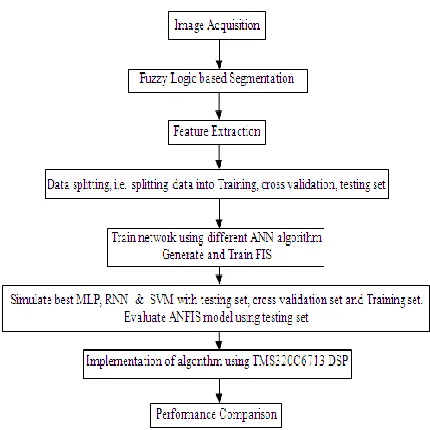
Figure 1 shows the overall block diagram of the methodology used. Basically three following techniques are used in this work for Breast cancer and White Blood Cell Cancer.
Fuzzy Logic for image segmentation Artificial Neural Network.
Adaptive Neuro-Fuzzy Inference System
Figure 1 Block Diagram of overall methodology
2.1 Fuzzy Logic Based Segmentation
Introduced in 1965 by Zadeh [15], fuzzy set theory aims to model the vagueness and ambiguity in particular “hard” decision made in mathematics and computing. A number of fuzzy techniques have been designed for image segmentation: fuzzy clustering, fuzzy rule-based, fuzzy geometry, fuzzy thresholding and fuzzy integral based segmentation. Fuzzy rule based segmentation techniques allow expert knowledge to be incorporated into classification rules [16]. Rules in the form of linguistic variable can be used to classify image data, which eliminates numerical biases and inconsistencies. In general, rule-based techniques are less computationally expensive than fuzzy c-means based techniques.
2.2 Artificial Neural Network
ANNs are massively distributed parallel processing systems made up of highly interconnected neural computing elements that have the ability to learn and thereby acquire knowledge and make it available for use [17]. Neural networks are applicable in virtually every situation in which a relationship between the predictor variables (independents, inputs) and predicted variables (dependents, outputs) exists, even when that relationship is very complex and not easy to articulate in the usual terms of “correlations” or “differences between groups”[18,19]. In this paper three ANNs algorithms (Multi Layer Perceptron, Recurrent Neural Network and Support Vector Machine) are used.
2.3Neuro Fuzzy System
Neuro Fuzzy (NF) computing is a popular framework for solving complex problems and is an integrated system combining the concept of FIS (Fuzzy Inference System) and ANNs. ANFIS is a fuzzy inference system implemented in the framework of adaptive networks, and hence has the advantages of both FIS and NNs.[6]
3. SIMULATION MODELS
All the four networks were evaluated on the same data set. The data set consist of 125 clinical cases. All cases are first segmented based on fuzzy logic and after feature extraction database was generated. Out of 125 clinical cases 90 cases are used for training the network, 20 cases are used for cross validation and 15 cases are used for testing. Each case has to be categorized into either of the two categories: Benign or malignant.
3.1Fuzzy Logic Based Segmentation
Volume 2, Issue 1, January 2013
Page 280
sets are created to represent each variable’s intensities; these sets are associated to the linguistic variables “dark”, edge and “light”. The adopted membership functions for the fuzzy sets associated to the input are trapezoidal and to the output are triangular, as shown in figures 2 & 3
Figure 2 Membership functions of the fuzzy set associated to the input
Figure 3 Membership functions of the fuzzy sets associated to the output
The functions adopted to implement the “and” and “or” operations are the minimum and maximum functions, respectively. The Mamdani method is chosen as the defuzzification procedure, which means that the fuzzy sets obtained by applying each inference rule to the input data are joined through the add function; the output of the system is then computed using weighted average method of the resulting membership function. The values of the three membership functions of the output are designed to separate the values of the blacks, whites and edges of the image.
3.2Architecture of Network Used 3.2.1 Multilayer Perceptron
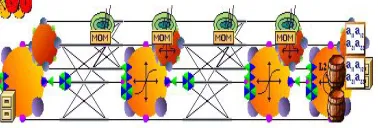
The architecture of Multilayer perceptron is shown in figure 4. MLP consist of units arranged in layers with only forward connections to units in subsequent layers. The connections have weights associated with them. Each signal traveling along the link is multiplied by the connection weight.
Figure 4: Architecture of multilayer perceptron
3.2.2 Recurrent neural networks
The architecture of Recurrent Network is shown in figure 5. RNN contain feedback connections. A recurrent network has, in opposition to the feedforward networks, neurons that transports a signal back through the network.
Figure 5 Architecture of Recurrent Network
3.2.3 Support Vector Machine
Volume 2, Issue 1, January 2013
Page 281
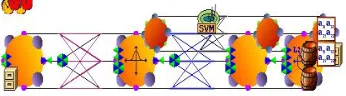
the same side, while maximizing the distance of either class from the hyper plane. Finding the optimal hyper-plane implies solving a constrained optimization problem using quadratic programming. The optimization criterion is the width of the margin between the classes.
Figure 6 Architecture of SVM
3.2.4 ANFIS Structure
Figure 7 shows the structure of ANFIS. The first and fourth layers in the ANFIS are learning rules, used to tune the model adaptive layers. The first layer contains premise parameters which characterize the shape of the input membership functions. These parameters are associated with the IF part of the rule. The fourth layer also has consequent parameters, which are associated with the THEN part of the rule. Suitable learning rules are used to tune the model parameters. A hybrid learning algorithm used in ANFIS combines the gradient descent and the least squares method for an effective search for the optimal parameters. In this procedure, an ANFIS system can learn from the existing data with correct output and possibly predict a result with new input set by tuning its internal node values
Figure 7 ANFIS structure
3.3 Implementation using TMS320C6713 DSP
The C6713 device is based on the high-performance, advanced very-long-instruction-word (VLIW) architecture developed by Texas Instruments. The TMS320C62x is a 16-bit fixed point processor and the ‘67x is a floating point processor, with 32-bit integer support. The C6713 DSK is a low-cost standalone development platform that enables users to evaluate and develop applications for the TI C67xx DSP family. The DSK also serves as a hardware reference design for the TMS320C6713 DSP [20].
In our work we have develop a program of fuzzy segmentation using c-code. After writing the code, the next step is to compile the code to machine language. The Build command will compile all the files that are included in this project and make an executable file for the DSP. Finally, to run the program, load the executable file (.out) that the compiler generated into the DSP and run the file loaded into DSP. The generated output of DSP is then open in image processing tool box for feature extraction. Figure 8 shows Compiler results at the bottom of the window
Volume 2, Issue 1, January 2013
Page 282
4. RESULTS AND PERFORMANCE COMPARISON
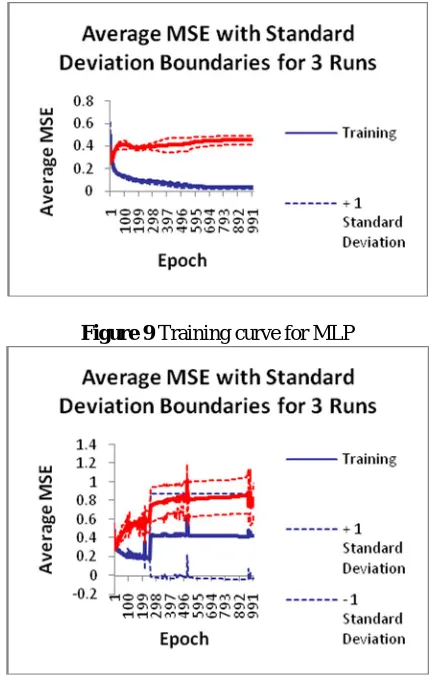
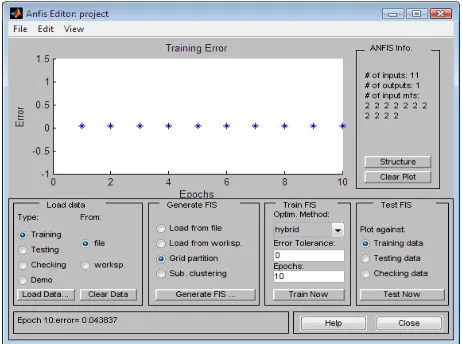
Figure 9,10,11 & 12 shows the curve for training of neural network and ANFIS with average MSE verses epoch. It can be observed from the graph that the error goes on decreasing as the no of epochs go on increasing. For MLP and RNN I/P PEs = 11, O/P PEs = 2, No. of Hidden Layers = 1, Momentum = 0.7, Function in Hidden layers and Output layers = Tanhaxon
Figure 9 Training curve for MLP
Figure 10 Training curve for RNN
Volume 2, Issue 1, January 2013
Page 283
Figure 12 Training curve for ANFIS
Table 1 shows the comparison of the best results for three networks and ANFIS and depicts parameters like MSE, % of accuracy
TABLE I: COMPARISON OF THE BEST RESULTS
Network MSE % of Accuracy
MLP 0.0471 97.55
RNN 0.2935 90.86
SVM 0.0264 96.72
ANFIS 0.0614 95.70
5. CONCLUSION
In this paper, we have presented a system for detection and classification of micro calcification in digital mammograms & Leukemic cell. Fuzzy logic is used for segmentation of image using TMS320C6713 DSP. The algorithm for the parameters used for differentiating the malignant and benign cancer were developed and run on Matlab for the medical images obtained from the radiologist after segmentation. These data were transferred to the file and the 11 parameters were introduced to Neural-Network as the input to train them. Outputs have been shown to make to understand the accuracy of the algorithm and which helps us to detect the cancer. After the training, an unknown image was taken and tested for malignant or benign. After working on the different Neural-Network, we find multilayer perceptron has achieved a top result of accuracy 97.55%.
REFERENCES
[1] G. Schaefer, A. Hassanien, J. Jiang, Book on “Computational Intelligence in Medical Imaging: Techniques and Applications”, by Chapman and Hall/CRC press (March 24, 2009).
[2] I.S. Torsun, Book on “Foundation of intelligent knowledge based system”, Academic press; 1 edition (August 28, 1995).
[3] Antal, P., Meszaros, T. 2001, in proceedings of fourteenth IEEE Symposium on computer based Medical Systems, July 26-27, Bethesda, MD, 177-182.
[4] http://www.imaginis.com/general-information-on-breast-cancer
[5] Devesh D. Nawgaje, Dr. R.D. Kanphade, Dr. N.B. Chopade, S. B. Patil, “White Blood Cell Cancer Detection Using Fuzzy Logic”, CIT Journal of research, Vol 1, No 1, May 2010, pp 174-182.
[6] J.-S.R. Jang, C.-T.Sun, E. Mizutani, “Neuro-Fuzzy and Soft Computing”, Prentice-Hall, U.S.A 1996.
[7] Keyvanfard, F.; Shoorehdeli, M.A.; Teshnehlab, M.; “Feature selection and classification of breast MRI lesions based on Multi classifier”, IEEE, Artificial Intelligence and Signal Processing (AISP), 2011 , Page(s): 54 – 58. [8] Dheeba, J.; Tamil Selvi, S.; “Screening mammogram images for abnormalities using radial basis Function Neural
Network”, IEEE, Communication Control and Computing Technologies (ICCCCT), 2010, Page(s): 554 – 559. [9] Ashraf, M.; Kim Le; Xu Huang; “Information gain and adaptive neuro-fuzzy inference system for breast cancer
diagnoses”, IEEE, Computer Sciences and Convergence Information Technology (ICCIT), 2010, Page(s): 911 – 915.
Volume 2, Issue 1, January 2013
Page 284
[11]K.Woods, C. Doss, K. Bowyer, J. Solka, C. Priebe, andW. Kegelmeyer, “Comparative evaluation of pattern recognition techniques for detection of microcalcifications in mammography,” Int. J. Pattern Recog. Artif. Intell., vol. 7, no. 6, pp. 1417–1436, 1994.
[12]R. Nishikawa, M. Giger, K. Doi, C. Vyborny, and R. Schmidt, “Computer- aided detection and diagnosis of masses and clustered microcalcifications from digital mammograms,” in State of the Art of Digital Mammographic Image Analysis. Singapore: World Scientific, 1994, vol. 7, pp. 82–102.
[13]H. Yoshida, R. Nishikawa, K. Muto, K. Doi, and M. Tsuda, “Application of the wavelet transform to automated detection of clustered microcalcifications in digital mammograms,” Tokyo Inst. Polytech., Tokyo, Japan, Academic Rep., vol. 16, 1994.
[14]H. Yoshida, R. Nishikawa, G. Maryellen, and K. Doi, “Computer-aided diagnosis in mammography: Detection of clustered microcalcifications based on multiscale edge representation,” in Computer Assisted Radiology. Amsterdam, The Netherlands: Elsevier, 1996.
[15]L.A. Zadeh, “A fuzzy-Algorithmic approach to the Definition of complex or Imprecise Concepts”. International Journal Man-Machine Studies, 8: 249-291, 1976.
[16]L. Zhongkang, C. Zheru, “Ranking Segmentation Paths Using Fuzzified Decision Rules”. In E.E. Kerr and M. Nachtegael, Fuzzy Techniques in Image Processing, 287-30. Springer, 2000.
[17]Basheer, I.A., and Hajmeer, M.: “Artificial neural networks: fundamentals, computing, design, and applications”, J. Microbiol. Methods 43 (2000) 3-31.
[18]Haykin, S.: “Neural networks – comprehensive foundation” (Prentice Hall, New Jersey, USA, 2 edition, 1999). [19]Freeman, J.A., and Skapura, D.M.: “Neural Network” (Addison-Wesley, 1999).