Iranian Chemical Society
Anal. Bioanal. Chem. Res., Vol. 1, No. 1, 50-61, June 2014.
Chemical Modification of Activated Carbon and Its Application for Solid Phase
Extraction of Copper(II) and Iron(III) Ions
M. Ghaedi
a,*, M. Montazerozohori
a, H. Saidi
band M. Rajabi
caChemistry Department, Yasouj University, Yasouj Iran 75914-353
b
Gachsaran Azad University, Gachsaran Branch, Gachsaran, Iran
c
Department of Chemistry, Semnan University, Semnan 35195-363, Iran
(Received 10 July 2013, Accepted 5 September 2013)
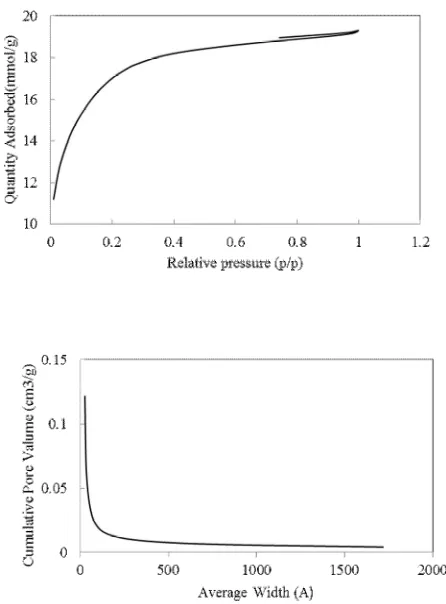
Powder activated carbon surface (AC) was modified and altered procedure thorough a facile and easy chemical reaction to appearance of 2-((3-silylpropylimino)-1-methyl) phenol (AC-(SPIMP)). Subsequently, this novel sorbent efficiently applied for the extraction and preconcentration of some metal ions from real samples. Preliminary the influences of variables such as pH, amounts of reagents and porous AC, eluting solution conditions (type and concentrations), sample volume and influence of interference of many ions on the analytes recoveries was studied and optimized. The proposed sorbent has high surface area (>1317.1346 m2 g-1) and small pore size (<37.750 A). The acceptable relative standard deviations (n = 10, <4.5%) and detection limit based on 3Sb/m (n = 10) was 1.2-2.6 ng ml-1 and their preconcentration factor was 100 with large adsorption capacity (45.3 mg g-1). The proposed method was successfully applied for the extraction and determination of analytes in different samples.
Keywords: Chemical modification, Activated carbon, Solid phase extraction, Pore size distribution, BET analysis
INTRODUCTION
The monitoring of trace metals level with double role (vital and toxic nature) is a important task. In this regard concern to analytical chemists and research focus on the environmental and pollution studies [1-5]. One of the difficult task of analytical chemistry is the main limitations encountered for the quantification of metal ions by flame atomic absorption spectrometry (FAAS) at trace levels in complicated matrices [6-14]. This purpose, simply achieved by combination of preliminary separation and/or enrichment stages before detection that permit accurate, reliable and sensitive results even at analyte too low concentration [15-29]. Appropriate selection of supports and their subsequent modification by physical or chemical pathways is a great demand. These modifications by different shape, functional group and structure significantly influence the ability and tendency of modified support toward separation and/or concentration of target compounds. Versatile separation
*Corresponding author. E-mail: [email protected]
procedures are recommended for selective and efficient
concentration and/or separation of analytes from
complicated sample matrices. Amongst, solid phase extraction (SPE) come to the forefront compared to other separation/enrichment methods because of their unique associated advantages [30-33]. Sorption and chelate extraction is frequently applicable techniques for metal ions recoveries from low-concentration solutions.
One of the most general and traditionally know support is activated carbon that has highly porous structure with various functional group. This reagent is for binding different targets by hydrogen bonding, π-donating-accepting and hydrogen bonding and at some pH via electrostatic interaction. The analytes adsorption on such sorbent strongly affected by the amount of aromatic rings and π-π bonds. Generally, functionalization and/or activation can substantially improve the hydrophilic character of the AC and modify its pore volume and specific surface area [34-37].
Ghaedi et al./Anal. Bioanal. Chem. Res.,Vol. 1, No. 1, 50-61, June 2014.
possible the adsorption of different compounds on AC, The adsorption process severely control their adsorption by parameters such as pH [38].
Usage of AC chemically functionalized by various organic compounds good mechanical and thermal stability has lower abbility, to swell and shrink [39]. Selective binding fashion of sorbent depend to factors such as size and funtional and reactive group of of the modifier (hard-soft and/or acid-base concept). Presence of huge number of reactive sites on it surface make possible easy modification therough different mechanism. Impergeation of various chelating agent on AC change the possible mechanism of metal ions retardation through surface complex formation between the metal ions and the acidic non-selective surface functional groups. The other sites fashionably imbedded on the AC surface greatly altered the surface area (adsorption capacity) and pore properties of the AC and finally decrease the adsorption equilibrium time.
The adsorption properties of AC depend to its surface chemical nature, its surface area and porosity and acidic surface functional groups. Modification of the surface chemistry of activated carbons is an attractive route toward novel applications of these materials as adsorbent for heavy metal removal. The presence of acidic functional groups on AC enhances their hard metal ions sorptive capacities, while has low tendency for the adsorption of soft metal ions. The AC surface modifications lead to the change in the surface reactivity, chemical, physical and structural properties. Activated carbons (AC) are widely used as adsorbents because of their high specific surface areas, well-developed
porosities, and tunable surface oxygen-containing
complexes.
In the present work, a new simple SPE based on chemical functionalization of porous AC was developed and the influence of effective variables for extraction, preconcentration and determination of Cu2+ and Fe3+ ions in real samples has been optimized. After elution by suitable stripping agent, the concentration of analytes in the eluent was determined by AAS to calculate the desorption yield.
EXPERIMENTAL
Instruments
These understudy metal ions content determination were carried out using Shimadzu 680 AA atomic absorption
spectrometer with a hallow cathode lamp and deuterium background corrector according to respective wavelengths (resonance line) using an air-acetylene flame. pH of the solution was maintained by using 0.1 M HCl and 0.1 M NaOH solutions using a pH/Ion meter model 692 Metrohm.
Reagents
Acids and bases (with the highest purity available from Merck, Darmstadt, Germany) solution was prepared in doubly distilled deionized water. Nitrate salts of cadmium, mercury, copper, magnesium, calcium, strontium, barium, silver, sodium and potassium (all from Merck) were of the highest purity available and used without any further purification. Commercial activated carbon (AC) with the highest purity available are purchased from Merck (Darmstadt, Germany) was used as received without any purification.
Preparation of 2-((3-Silylpropylimino)-1-methyl) phenol Bonded to Porous Activated Carbon (AC- (SPIMP))
In preliminary stage, ACs powder was purified and activated with 10% (v/v) hydrochloric acid solution for 24 h to remove adsorbed impurities and metal ions. Then, it was filtered, washed with distilled deionized water and dried at 80 °C for 5 h. Functionalization of AC was carried out as follow: 1 g of purified AC was suspended in 250 ml of 32.5% (v/v) nitric acid solution under stirring for 36 h at room temperature. Subsequently the mixture was filtered and thoroughly rinsed with distilled deionized water to neutral and dried at 80 °C for 2 h. The Schiff base modified AC was prepared based on following procedure. AC-supported silyl-aminopropyl was synthesized by refluxing 1 g of functionalized AC with 1.8 ml of trimethoxysilyl-propylamine (TMSPA) in dichloromethane (20 ml) for 24 h and the solid was filtered and dried at room temperature. Then 0.9 ml of 2-hydroxyacetophenone (2-HAP) was added to a suspension of AC-supported silyl-aminopropyl in methanol (20 ml). Then the reaction mixture was refluxed for 24 h and then filtered, washed with distilled water and dried at room temperature to obtain a greenish black
precipitate as a chemically modified
Column Preparation
A short glass column with an inner diameter of 0.5 cm and a length of 50 cm, equipped with porous frits was filled up to a height of about 1 cm with a suspension of 1 g of (AC-(SPIMP)) and subsequently preconditioned by the blank solution prior to each use and after using the column was rinsed with water and stored for the next experiment.
Preconcentration Procedure
The procedure was examined by using model test solutions. The pH of 250 ml of sample solution containing 0.01-0.5 μg ml-1 of all analytes was adjusted in the range of 2.0-8.0 by addition of NaOH and/or HCl solution. The solutions were passed through the column containing 1 g present sorbent at flow rate of 4 ml min-1. The retention and uptake of under study metal ions took place following complication with modifier chemically impregnated on the AC surface. The adsorbed ions were then eluted with 6 ml of 4.0 Mnitric acid (1 ml min-1) and their content in the eluent were determined by flame atomic absorption spectrometer.
Analysis of the Real Samples
All real samples (banana, tomato and strawberry) were purchased from Yasouj, Iran. A 40 g of all real samples was heated in silica crucible for 3 h on a hot plate and the overcooked material was transferred to furnace for overnight heating at 650 °C. The residue was cooled, treated with 10.0 ml concentrated nitric acid and 3 ml 30% H2O2
again kept in furnace for 2 h at the same temperature so that no organic compound traces are left. The final residue was treated with 3 ml concentrated hydrochloric acid and 2-4 ml 70% (w/w) perchloric acid and evaporated to fumes, so that all the metals change to respective ions. The solid residue was dissolved in water, filtered and by keeping the pH at 4.0 made up to 250 ml by addition of KOH and phosphate buffer. The dissolved solution was suitably diluted and metal concentrations were determined by FAAS after application to preconcentration procedure given above.
RESULTS AND DISCUSSION
Characterization of Adsorbent (AC-(SPIMP))
Low temperature N2 adsorption isotherms (Fig. 1) show the type I BET isotherm in the IUPAC classification [41].
AC OH OH OH
+ Si
MeO
MeO
MeO NH2 AC OO
O
Si NH2
Reflux, 24h
MeOH
CH2Cl2
24 Reflux +
C=O OH
AC O O O
Si N
(Black Powder)
Greenish black (AC-(SPIMP))HO
H3C
CH3
Fig. 1. Schematic diagram for the synthesis of the proposed
sorbent(AC-(SPIMP)).
Fig. 2. BET plot of adsorbent and its pore size distribution.
Ghaedi et al./Anal. Bioanal. Chem. Res.,Vol. 1, No. 1, 50-61, June 2014.
hand, immobilization of high amount of modifier on its surface is possible that increase the number of reactive atom and surface volume to area ratio.
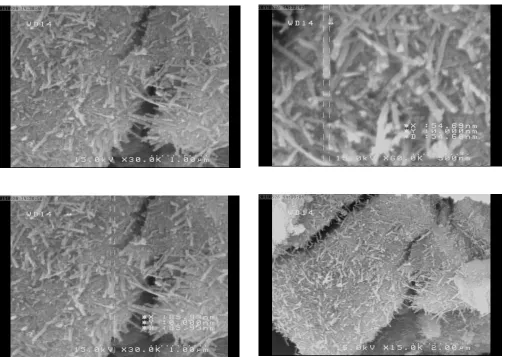
The SEM investigation of porous AC before and after chemical modification show its homogenous sites with nanometers scale lower than 100 nm (Figs. 3, 4). IR spectra of AC, surface supported aminopropylsilylate and AC-(SPIMP)) are shown in Fig. 5A-B. IR spectrum of AC shows some important characteristic vibrational frequencies at 3400-2500(bw), 1627(w), 1155(s), 673(s), 592(s) that may be assigned to hydroxyl, carbonyl, olefinic groups (Fig. 5-A). After loading of trimethoxysilylpropylamine on AC surface, some additional characteristic absorption bands at 2929(w), 3200-3350(weak fine structure), 1563(m), 1405(w), 1300(w), 1121(s), 1031(s), 678(s), and 594(w) are
appeared in IR spectrum of AC-supported aminopropyl-silylate that can be related to bending of NH-stretching,
NH-bending, NH2-scissoring, CH2-bending and CH2
rocking of compound (Fig. 5-B).
Finally 2-hydroxyacetophenone (2-HAP) is bounded to surface supported aminopropylsilylate via an iminic bound to obtain a chemically modified AC with 2-((3-silylpropylimino)-1-methyl) phenol (AC-(SPIMP)) as extractor. IR spectrum well exhibits some characteristic peaks at 3422(m), 2924(w), 2857(w), 1588(s), 1400-1550(m), 1124(s), 1045(s), 856(w) 780(s) and 753 cm-1 assigning to O-H phenolic, CH-aliphatic, CH-iminic, C=N, C=C stretching and out of plain bending of phenolic OH and aromatic hydrogens (Fig. 5C) respectively. This work is focus on the examination of to feasibility of uptake and
Table 1. Surface Properties and Pore Size Distribution of proposed Adsorbent
Surface are (m² g-1)
Single point surface area at p/p = 0.211926089 1317.1346
BET surface Area 1332.2981
Langmuir Surface Area 1827.0887
t-Plot Micropore Area 630.9017
t-Plot External Surface Area 701.3964
BJH Adsorption cumulative surface area of pores between 17.000 A and 3000.000 A width
128.449
BJH Desorption cumulative surface area of pores between 17.000 A and 3000.000 A width
146.9493
Pore volume (cm³ g-)
Single point adsorption total pore volume of pores less than 1191.414 Å width at p/p° = 0.983478638
0.664918
t-Plot micropore volume 0.278830
BJH Adsorption cumulative volume of pores between 17.000 Å and 3000.000 Å width
0.121225
BJH Desorption cumulative volume of pores between 17.000 Å and 3000.000 Å width
0.126545
Pore size (Å)1
Adsorption average pore width (4V/A by BET) 19.9630
BJH Adsorption average pore width (4V/A) 37.750
Fig. 3. SEM surface properties of Porous Activated carbon before imobilization.
recovery of analytes on chemically bonded ACs for obtaining maximum signal for evaluation of these ion contents. The effective parameters viz. pH of sample, amount of solid phase, type and concentration of eluting agent and flow rate was optimized according to traditional one at a time optimization method.
Effect of pH on Sorption
Schiff base linkage especially when it is near the groups with potential of hydrogen bonding is relatively stable in mild acidic or basic media. Usage of Schiff base linkage for surface modification or immobilization of catalyst or enzyme (in heterogeneous enzymatic catalysis reaction) is
Fig. 4. SEM surface properties of Porous Activated carbon
after imobilization.
Ghaedi et al./Anal. Bioanal. Chem. Res.,Vol. 1, No. 1, 50-61, June 2014.
Fig. 5. FT-IR spectra of CNT (A), surface supported
aminopropylsilylate (B), modified CNT with 2- ((3-silylpropylimino)1-methyl) phenol (AC- (SPIMP))(C).
Fig 6. Effect of pH on metal ions recoveries.
was obtained at pH 5. It seems that chelate formation via
four dentate of hydroxyl and/or nitrogen atom favorable the complication and accumulation of metal ions from solution to the sorbent surface.
The slight decrease of the uptake in the acidic media may be attributed to the protonation of the lone pair of nitrogen and oxygen that hinder the complex formation. On the other view, at low pH, due to protonation of residual AC functional groups, sorbent get positive charge and hinder from transfer of metal ions from bulk to the sorbent surface (high repulsive forces). At higher pH ( pH 5), the metal ions predominantly present as M(OH)+ and/or insoluble precipitate of M(OH)n. For accumulation of such substance
high resistance such as dislodge of hydroxide or water molecule from metal ions atmosphere must occur and due to requirement to high energy generally is hard problem. Therefore, the low sorption/recovery of understudy metal ions occurs. This results strongly supported by considering “point of zero charge” pH (PZC). The oxidation of activated carbon with nitric acid leads to the surface fictionalizations with more oxygen-containing groups such as hydroxyl, carboxylic acid and carboxyl. The pHPZC of the proposed
AC-SPIMP sorbent was determined to be around 4.12 ± 0.15. Therefore, probably at optimum pH (pH = 4), the net charge of sorbent is neutral and prominent mechanism for trapping the metal ions is their chemical reaction by sorbent loaded on AC. This fashion is more selective and repeatable. At high pH, sorption via electrostatic force (low selectivity) competes with chemical reaction.
Effect of Ratio of 2-HAP to TMSPA and Amount of (AC-(SPIMP))on Metal Ion Recovery
The main advantage of this research is replacement of traditional non-selective functional group of AC with new Schiff base chelating agent through a chemical pathway to simultaneously increase the selectivity and usability of proposed sorbent. This chemical modification has great influence on the criterions such as hydrophobicity (sorbent and chalets) and subsequent equilibrium constant and tendency and feasibility of metal ions transfer from bulk to the sorbent surface. In this work, (AC- (SPIMP)) with high similarity to traditional Schiff base receptors seems to be an efficient material for complexation and enrichment of metal ions such as Fe3+ and Cu2+ ions.
sorbent that significantly controls the behavior of sorption systems. Preliminary experiments by conducting a set of similar experiments with chemical modification of AC show recoveries lower than 50% for all understudy metal ions.
Significant enhance in the recoveries following
modification show requirement of surface modification to simultaneously enhance the recoveries and probably the re-usability of sorbent.
The role of ratio of sorbent material and amount of solid phase prepared at optimum ratio was investigated on the recoveries of understudy metal ions and respective results are shown in Fig. 7. It was seen that using 1 g of solid phase composed of present material (1:2 mass ratio) lead to more adsorption site and maximum recoveries was achieved. Probably at lower mass ratio due to the presence of residual functional group concern to AC or not fully chemical coupling TMSPA with HB, the sorbent surface is heterogeneous and the sorption not occur on identical sites and may their elution was occur with deficiency that lead to decrease in recoveries (Table 2 and Fig.7). Results of Fig. 6 show that by increase in the solid phase amount till 1 g a significant enhances in recoveries was achieved. At higher amount of solid phase probably eluting solution is insufficient for efficient elution of this metal ion. With a lower amount, the extent of complexation and retention of metal ions on the loaded solid phase is low and hence the recovery was decreased.
Effect of Eluents Type and Volume
Various selection of eluent is possible by combination of
approaches such as using organic solvent, acidic solution or their simultaneous application to desorbs retained analytes [42-45]. Among them using acidic solution lead to efficient and repeatable elution of retained metal ions without destruction of solid phase that was used in this research. Desorption of retained metal ions was carried out in the presence of various concentration, type and volume of eluent recommended by Table 3. Presented results clearly show that using 6 ml of 4.0 M of nitric acid is best eluent
for elution of analytes to make possible high
preconcentration factor and their simultaneous
determination.
Finally, 6 ml of 4 M HNO3 was taken as the eluent for
desorption of metal chelates from (AC- (SPIMP)) and was used for the optimization of the other parameters.
Flow Rates of Sample and Eluent Solutions
The sample and eluent flow rate not only control the analysis time, but also significantly affect the analyte deposition on the sorbent surface. The sample loading rate has distinguished role in retardation of metal ions via
sorbent while the flow of eluent solutions affects their recoveries and subsequently duration of complete analysis. Therefore, the effect of flow rate was examined under the optimum conditions (pH, eluent, amount of support and modifier, etc.) using 250 ml of sample solution containing 50 μg of understudy metal ions as model solution. For both variables, the flow rate was adjusted in the range of 1.0-4.0 ml min-1. It was found that the analytes loading due to chelation was practically not changed up to 2 ml min-1 flow 0
20 40 60 80 100 120
0 0.2 0.4 0.6 0.8 1 1.2 1.4
R
ec
o
v
er
y
(
%
)
Amount of solid phase (g) Cu Fe
Ghaedi et al./Anal. Bioanal. Chem. Res.,Vol. 1, No. 1, 50-61, June 2014.
Table 2. Effect of Ratio of 2-HBA to TMSPA on Metal
Ion Recovery
Recovery (%) Ratio of 2-HAP to TMSPA
Cu Fe
1.6/2.6 62 65
1.4/2.4 60 57
1.1/2.2 64 69
1.0/2.0 81 84
0.9/1.8 98 98
0.7/1.4 63 61
Table 3. Effect of Type and Concentration of Eluting
Agent on Recovery of Analytes
Recovery (%) Condition of eluent
Cu Fe
6 ml of HCl (4.0 M) 75 ± 2 79 ± 1
6 ml of H2SO4 (4.0 M) 49 ± 3 65 ± 2
6 ml of CH3COOH (4.0 M) 39 ± 3 45 ± 2
6 ml of H3PO4 (4.0 M) 56 ± 3 35 ± 3
6 ml of HNO3 (2.0 M) 64 ± 2 82 ± 3
6 ml of HNO3 (4.0 M) 98 ± 1 98 ± 1
6 ml of HNO3 (5.0 M) 77 ± 2 90 ± 1
6 ml of HNO3 (6.0 M) 96 ± 1 93 ± 3
2 ml of HNO3 (4.0 M) 61 ± 1 57 ± 2
4 ml of HNO3 (4.0 M) 80 ± 3 83 ± 2
8 ml of HNO3 (4.0 M) 96 ± 1 98 ± 1
rate, and the recoveries of decreased significant when the flow rates over 1 ml min-1. Thus, these values were selected in further steps to optimize other variables.
Sample Volume and Enrichment Factor
To obtain reliable and reproducible analytical results and high concentration factor, it is very important to get satisfactory recoveries for retained analytes from large volume sample solutions as [46-52]. The effect of sample volume on the loading of the metal ions by dissolving a fixed value of analytes (50 µg) in diverse volume (250-1500
ml) was examined and it was seen that the metal ions, quantitatively was sorped-desorped until 750 ml that known as break through volume. At higher volume probably due to possible saturation of sorbent surface or repulsive force between the adsorbed metal ions and respective ions in bulk solution a significant decrease in the removal percentage was observed. The preconcentration factor for simultaneous loading of analytes (the ratio of the maximum sample volume for analyte (750 ml) to the lowest final eluent volume (6.0 ml)) was observed to be 125. The adsorption capacity shows the applicability of sorbent for metal ions removal from large sample volume and/or high saline content. The sorption capacity was calculated based on Langmuir model as acceptable model based on the homogenous adsorption as monolayer without interaction expressed in the following linear form [53]:
Ce/qe = 1/kLqm + Ce/qm (2)
where qmax represents the maximum sorption capacity and
obtained from slope of achieved line by plotting Ce/qe
against Ce over series of concentrations (50-300 μg ml-1) at
appropriate pH. The qmax is 45.3 mg g-1 that is very higher
than commercial AC value (1.46 mg g-1).
Effect of Interfering Ions
As it is known, due to presence of strong wavelength selector and high selectivity hallow cathode lamp and correction of background, FAAS based determination has high selectivity and accuracy. The expected interference may be attributed to concomitant anions and/or cations through their possible binding with chelating agents and/or metal ions. The possible interference of other metal ions and few anions on the recoveries of Cu2+ and Fe3+ ions was investigated by conduction similar SPE experiments in the presence and absence of interference and the results are summarized in Table 4. The judgment about the possible interference considered was relative error of less than 5%.
Concentration leads to such deviation level in
preconcentration and/or determination stage (up to 5%) known as tolerance limit. It could be seen that some ions at 1000 fold mass ratio has not significant influence on
analytes recoveries. Thus, the interference-free
concentration of matrices constituent permit very low
minimal influence on the sorption-recoveries and
determination of analytes.
Analytical Features
One of most important properties of each method is applicability for trace metal ions determination which is limit by its detection limit. At optimum values of all
variables, the method was subjected to various
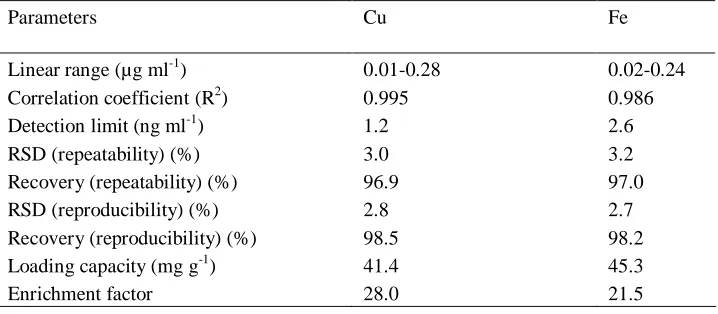
concentrations of analytes and also blank solutions. According the traditional definition of IUPAC, the characteristics performances of the method are presented in Table 5. The limit of detection (LOD) and empirical limit of quantification (LOQ) based on the three and ten times of the
standard deviation of the blank (n = 10) was found to be 1.3-2.6 and 8-15 µg ml-1. The method benefit from advantages such as wide linear range, low detection limit, high recoveries (>94%) and acceptable RSD% (<3.5%).
Accuracy and Applications
The usage of proposed method for evaluation of target ions in complicated matrices was tested by its subjection with real samples including banana, pineapple, tomato and radish. The accuracy and repeatability was tested by three replicate using standard addition method and respective results is shown in Tables 6 and 7. The recoveries more than 95% and RSD lower than 3.5% show the capability of the novel method for simple and easy, low cost determination
Table 4. Effects of the Matrix Ions on the Recoveries of the Examined Metal Ions (N = 3)
Ion Added As Tolerance Limit
(mg l-1)
Na+ NaCl
K+ KCl
Cl- NaCl
1000
CH3COO- CH3COO Na 650
Mg2+ MgCl2 600
HCO3- NaHCO3 800
Sr2+, Cd2+, Ba2+, Ca2+, Mn2+
Zn2+, Ni2+, Co2+,Pb2+, Ag+, Al3+, Hg2+
Nitrate salt 250
Table 5. Specification of Presented Method at Optimum Conditions for each Element
Parameters Cu Fe
Linear range (µg ml-1) 0.01-0.28 0.02-0.24
Correlation coefficient (R2) 0.995 0.986
Detection limit (ng ml-1) 1.2 2.6
RSD (repeatability) (%) 3.0 3.2
Recovery (repeatability) (%) 96.9 97.0
RSD (reproducibility) (%) 2.8 2.7
Recovery (reproducibility) (%) 98.5 98.2
Loading capacity (mg g-1) 41.4 45.3
Ghaedi et al./Anal. Bioanal. Chem. Res.,Vol. 1, No. 1, 50-61, June 2014.
of analytes. The recovery of spiked samples is satisfactory reasonable and was confirmed using standard addition method
CONCLUSIONS
This work focuses on the synthesis and characterizations of novel low cost sorbent. The sorbent was characterized using SEM, BET and FT-IR as powerful identification techniques. Due to presence of high surface area (1317.1346 m2 g-1) and nanometer scale and pore size (average pore size of <37.750 A) and scale around 80 nm, has high ability to enrich metal ions via various pathway such as chemical binding with Schiff base like chelating agent and trapping into the interior core of sorbent.
The method was simple, easy and also rapidly applied for environmental samples including fruit samples with high enrichment factor (21.5-28) and low LOD (in the range of 1.2-2.6 ng ml-1) and acceptable RSD (<4.5%) in real samples.
REFERENCES
[1] M. Tuzen, Microchem. J. 74 (2003) 105.
[2] M. Ghaedi, F. Ahmadi, M. Soylak, J. Hazard. Mater.
147 (2007) 226.
[3] E.M. Soliman, M.B. Saleh, S.A. Ahmed, Anal. Chim.
Acta 523 (2004) 133.
[4] J. Posta, A. Alimonti, F. Petruci, S. Caroli, Anal. Chim. Acta 325 (1996) 185.
Table 6. Recovery of Analytes from Spiked Samples by Using Proposed Method (N = 3)
Ion Added (µg g-1) Found (µg g-1) RSD (%) Recovery (%)
Tomato
Fe 0
10 9.81 19.25 3.9 3.3 - 94.4
Cu 0
10 7.06 17.25 4.1 3.5 - 101.9 Radish
Fe 0.0
10 12.3 22.6 3.8 3.2 - 103.0
Cu 0.0
10 8.9 18.7 4.2 2.9 - 98.0
Table 7. Levels of Analyte Ions in Real Samples (N = 3)
Pineapple Banana
Ion Added
value
Found value
RSD (%) Recovery (%) Found RSD Recovery
Fe 0
10 33.4 43.7 3.8 3.2 - 104.0 25.3 35.7 3.8 3.3 - 104.0
Cu 0
[5] I. Javed, I. Jan, F. Muhammad, Zia-ur-Rahman, M.Z. Khan, B. Aslam, J.I. Sultan, Bull. Environ. Contam. Toxicol. 82 (2009) 616.
[6] Y. Wong, D. Sin, Y. Yip, L. Valiente, A. Toervenyi,
J. Wang, G. Labarraque, P. Gupta, D. Soni, Surmadi, E. Hwang, C. Yafa, O. Cankur, E. Uysal, G. Turk, R. Huertas, Accredit. Qual. Assur. 14 (2009) 151.
[7] M.N. Sahmoune, K. Louhab, A. Boukhiar, Int. J.
Environ. Res. 3 (2009) 229.
[8] A.M. El-Menshawy, A.A. El-Asmy, Indian J. Sci.
Techn. 2 (2009) 78.
[9] A.Szymczycha-Madeja, W. Mulak, J. Hazard. Mater.
164 (2009) 776.
[10] O. Minareci, M. Ozturk, E. Minareci, Fresen.
Environ. Bull. 18 (2009) 270.
[11] M.T. Mansouri, O. Cauli, Environ. Toxicol. Phar. 27
(2009) 307.
[12] P.K. Ouzouni, D. Petridis, W.-D. Koller, K.A.
Riganakos, Food Chem. 115 (2009) 1575.
[13] M.K. Jamali, T.G. Kazi, M.B. Arain, H.I. Afridi, N. Jalbani, G.A. Kandharo, A.Q. Shah, J.A. Baig, J. Hazard. Mater. 163 (2008) 1157.
[14] E.L. Silva, P.S. Roldan, M.F. Gine, J. Hazard. Mater.
171 (2009) 1133.
[15] M. Tuzen, M. Soylak, J. Hazard. Mater. 129 (2006) 266.
[16] M. Ghaedi, M.R. Fathi, F. Marahel, F. Ahmadi,
Fresenius Environ. Bull. 14 (2005) 1158.
[17] H.Deveci, G. Ahmetli, M. Ersoz, R. Kurbanli, J. Appl. Polym. Sci. 112 (2009) 1192.
[18] M. Ghaedi, F. Ahmadi, M. Soylak, Ann. Chim. 97 (2007) 277.
[19] J. Zhang, B.J. Gao, J.H. Lu, Acta Phys.-Chim. Sin. 25 (2009) 532.
[20] E. Zolfonoun, A. Rouhollahi, A. Semnani, Int. J. Environ. An. Ch. 88 (2008) 327.
[21] M. Soylak, L. Elci, M. Doğan, Talanta 42(1995) 1513.
[22] A. Moghimi, R. Ghiasi, A. Abedin, S. Ghammamy,
African J. Pure Appl. Chem. 3 (2009) 51.
[23] C. Quintelas, Z. Rocha, B. Silva, B. Fonseca, H. Figueiredo, T. Tavares, Chem. Eng. J. 149 (2009) 319.
[24] M. Ghaedi, Chem. Anal. 51 (2006) 593.
[25] H. Niskavaara, E. Kontas, Anal. Chim. Acta 231
(1990) 273.
[26] K. Hiratani, T. Takahashi, H. Sugihara, K. Kasuga, K. Fujiwara, T. Hayashita, R.A. Bartsch, Anal. Chem. 69 (1997) 3002.
[27] K.Z. Hossain, T. Honjo, Fresen. J. Anal. Chem.
361(1998) 451.
[28] A.L.D. Comitre, B.F. Reis, Talanta 65 (2005) 846.
[29] M. Ghaedi, B. Karami, S. Ehsani, F. Marahel, M. Soylak, J. Hazard. Mater. 172 (2009) 802.
[30] M. Ghaedi, A. Shokrollahi, A.H. Kianfar, A.S.
Mirsadeghi, A. Pourfarokhi, M. Soylak, J. Hazard. Mater. 154 (2008) 128.
[31] M. Shamsipur, F. Raoufi, H. Sharghi, Talanta 52 (2000) 637.
[32] G. Xiang, Y. Huang, Y. Luo, Microchim. Acta 165 (2009) 237.
[33] M. Soylak, L. Elçi, M. Doğan, J. Trace Microprobe Tech. 17 (1999) 149.
[34] D. Lin, Xing, Environ. Sci. Technol. 42 (2008) 7254.
[35] W. Chen, L. Duan, D.Q. Zhu, Environ. Sci. Technol.
41 (2007) 8295.
[36] K. Yang, B.S. Xing, Chem. Rev. 110 (2010) 5989.
[37] G.D. Sheng, D.D. Shao, X.M. Ren, X.Q. Wang, J.X.
Li, Y.X. Chen, X.K. Wang, J. Hazard. Mater. 178 (2010) 505.
[38] A. Toth, A. Torocsik, E. Tombacz, K. Laszlo, J. Colloid Interface Sci. 387 (2012) 244.
[39] Z. Jiang, Y. Liu, X. Sun, F. Tian, F. Sun, C. Liang, W. You, C. Han, C. Li, Langmuir 19 (2003) 731.
[40] M. Ghaedi, M. Montazerozohori, M. Nejati Biyareh,
K. Mortazavi, M. Soylak, Intern. J. Environ. Anal. Chem. 93 (2013) 528.
[41] F. Rouquerol, J. Rouquerol, K. Sing, Adsorption by Powders and Porous Solids, Academic Press, 1999, p. 204.
[42] X. Tian, S. Zhou, Z. Zhang, X. He, M. Yu, D. Lin, Environ. Sci. Technol. 44(2010) 8144.
[43] R. Li, X. Chang, Z. Li, Z. Zang, Z. Hu, D. Li, Z. Tu,
Microchim. Acta 172 (2011) 269.
[44] S.Z. Mohammadi, D. Afzali, D. Pourtalebi, Cent.
Eur. J. Chem. 8 (2010) 662.
Ghaedi et al./Anal. Bioanal. Chem. Res.,Vol. 1, No. 1, 50-61, June 2014.
[46] M. Soylak, M. Doğan, Anal. Lett. 29 (1996) 635.
[47] S. Saracoglu, M. Soylak, L. Elçi, Trace Elem.
Electrolyt. 18 (2001) 129.
[48] H. Ciftci, Current Anal. Chem. 6 (2010) 154.
[49] S. Sonmez, U. Divrikli, L. Elci, Talanta 82 (2010) 939.
[50] A.S. Saljooghi, S.J. Fatemi, D. Afzali, Bull. Chem. Soc. Ethiop. 24 (2010) 127.
[51] J.A. Silva, J.S.R. Júnior, L.A. Coimbra, Minim, Cent.
Eur. J. Chem. 8 (2010) 258.
[52] D. Afzali, S.Z. Mohammadi, Environ. Chem. Lett. 9
(2011) 115.
[53] M. Ghaedi, M. Nejati Biyareh, S. Nasiri Kokhdan, S.