Volume 6
2018 - 2019
James Madison
Undergraduate Research Journal
J
James Madison UndergraduateMUR
J
Research helps students learn how to
ask new questions and solve complex problems.
We believe that these skill sets are valuable
in every field and instill in students
a sense of excitement about learning
and the development of new knowledge.
- Jonathan Alger, President of James Madison University
Table of Contents
Letter from the Editors and Editorial Board Members
Volume 6 Faculty Reviewers and Acknowledgments
Masks: A New Face for the Theatre
Alexi Michael Siegal - Theatre Education
The Effects of Ocular Dominance on Visual Processing in College Students
William Alexander Holland - Biology
The Roles of Race and Gender in Contagious Yawning
Daroon Jalil - Psychology
Using Residential Location to Assess the Environmental Value-Action
Gap of Students at James Madison University
Emma Martin - Geographic Science
Lobbying the Regulatory State:
An Examination of Regulation and Revolving Door Lobbying
Charles Lowrance III - Political Science
An Alternative Visual Narrative:
LaToya Ruby Frazier’s The Notion of Family
Madison Schultz - Media Arts & Design, Social Justice and Photographic Media
El VPH y el cáncer cervical en el Perú:
diferencias de accesibilidad entre las mujeres de las zonas rurales y urbanas
HPV and Cervical Cancer in Peru:
The Differences in Accessibility for Rural and Urban Women
Jemma Stratton - Social Work, Medical Spanish (minor)
Jungle Gyms of Justice:
Understanding the Urban Park Accessibility Problem
Victoria Holmes - Geographic Science
4
5
6
18
28
38
51
61
67
Letter from the Editors
Meet the board
Managing EditorMatt Cappo
Editing
Ashley Cox
Tess Myracle Brooke Long Brenna Murray
Erin Paulson Jazmine Otey
Logan Roddy Hannah Sandler
Jemma Stratton
Head of Marketing & Design
Dana Webb
Marketing & Design
Paige Franklin Isabel Kerr
Ashley Lindquist Abigail Mumma
Clara Peirce
Advisors
Kevin Jefferson Kurt Schick Dear Reader,
Welcome to Volume 6 of the James Madison Undergraduate Research Journal! This publication represents the concerted
effort of authors, reviewers, editors, and supporters from disciplines and offices across campus. We would like to thank them and our readers for continuing to support undergraduate research and scholarship here at JMU with such passion and dedication.
For this volume, our multidisciplinary team of 16 Editorial Board members worked with eight authors and 42 faculty reviewers to produce a publication that we can proudly say displays the breadth of JMU’s undergraduate research efforts to our readers in more than 160 countries.
Throughout this volume, we wanted to work with more students from majors we had never represented before. In addition to pieces from Biology, Psychology, Media Arts & Design, and Political Science, we for the first time offer articles from Art History, Geographic Science, and Theatre. The volume also features a first article from Foreign Languages, Literatures, and Cultures. Author Jemma Stratton composed her piece in Spanish and then translated it
into English for JMURJ (we’ve published her article in both languages).
Our Volume 6 outreach initiative started with a website redesign and grew to include a Breeze article, class presentations, and a presence at the year-end JMU Honors Symposium. We also collaborated in piloting a new version of Writing, Rhetoric and Technical Communication’s Publication Management course. The joint effort bore immediate fruit, as two Fall 2018 Publication Management students equipped with a semester of publication theory and practice joined
the JMURJ Editorial Board in Spring 2019.
Thanks for reading and we hope you enjoy this and future volumes.
All the best,
The JMURJ Editorial Board
Additional Volume 6 Design
Volume 6 Faculty Reviewers
Acknowledgments
Dr. Neel Amin, HistoryDr. Chris Arndt, History Dr. Kevin Borg, History
Dr. Dennis Blanton, Sociology and Anthropology Dr. Zachary Bortolot, Integrated Science and Technology Dr. Jennifer Byrne, Political Science
Prof. Daisy Breneman, Justice Studies Dr. Kerry Crawford, Political Science Dr. Erica Collazo, Health Sciences Dr. Jessica Davidson, History
Prof. Corinne J. Diop, Art, Design and Art History Dr. Laureen Donovan, Nursing
Dr. David Ehrenpreis, Art, Design and Art History Dr. Raymond Enke, Biology
Dr. Jody Fagan, Libraries & Educational Technologies Dr. Kathleen Ferraiolo, Political Science
Dr. Timothy Fitzgerald, History
Dr. Dolores Flamiano, Media Arts and Design Dr. Richard Gaughran, English
Dr. William Grant, Economics Dr. Dayna Henry, Health Sciences
Dr. Bridget Houlahan, Nursing Dr. Alan Kirk, Philosophy and Religion Dr. Lars Kristiansen, Communication Studies Dr. Talé Mitchell, Media Arts and Design
Dr. Carole Nash, Integrated Science and Technology Dr. Adebayo Ogundipe, Engineering
Dr. Ji Hyung Park, Political Science
Dr. Jennifer Ramirez, Art, Design and Art History
Dr. Tomás Regalado-López, Foreign Language, Literatures, and Cultures Dr. John Scherpereel, Political Science
Dr. Kyle Seifert, Biology
Dr. Maureen Shanahan, Art, Design and Art History Dr. Sue Spivey, Justice Studies
Dr. Bradley Striebig, Engineering
Dr. Wayne S. Teel, Integrated Science and Technology Dr. William Van Norman, History
Dr. Henry Way, Integrated Science and Technology Dr. Xuebin Wei, Integrated Science and Technology Dr. Maria Wessel, Health Sciences
Dr. Xiaohui You, Health Services Administration Dr. Kayla Yurco, Geography
ABSTRACT
This study seeks to reimagine and reinvigorate modern theatre’s relationship with mask work through text-based historical research and practice-text-based artistic research. It focuses on three ancient mask traditions: pre- and early Hellenistic Greek theatre, Japanese Noh theatre, and Nigerian Egungun masquerades. Research on these mask traditions and recent masked productions informed the development and staging of a masked performance of Charles Mee’s Life is a Dream. The production featured sections for each of the ancient masking styles and a final section that explored masks in a contemporary theatrical style. As a whole, this creative project pulls masks out of their historical context to discuss their relevance for contemporary theatre artists and to demonstrate how ancient traditions can inspire new work.
MASKS
Early man donned the first mask at least 50,000 years ago, and since then masks have held special reverence for human beings (Eldredge 3). In very old, very distinct theatre traditions, as well as in timeless religious rituals, masks have transformed humans from their mere existence into something beyond it. This mysterious transformation was the reason why masks have been an indispensable tool for the theatre. The process of covering up one’s face, the center of one’s identity, unleashes untold potential for expressing the human experience. American playwright Eugene O’Neill described masks as being “more subtly, imaginatively, suggestively dramatic than any actor’s face can ever be” (qtd. in Johnson 22), and world-renowned director Peter Brook has gone so far as to say “what is called mask [in the West] should be called an anti-mask. The traditional mask is an actual portrait, a soul portrait… an outer casing that is a complete and sensitive reflection of the inner life” (qtd. in Johnson 26). Masks uncovered the inner secrets of humans while also covering up the external expression of the literal face. Although many actors, directors, and playwrights have acknowledged their power, masks’ presence in theatre today has dwindled greatly. Whether it is due to specialized training, fear, or a lack of resources, masked theatre is a rare form. Masks have been lost to the history books, relics of another time. The goal of my project was to reinvigorate and reimagine the modern theatre artist’s relationship to mask work.
My journey began with research into
Greek theatre, Japanese Noh theatre, and
Yoruba Egungun masquerades.
My journey began with research into Greek theatre, Japanese Noh theatre, and Yoruba Egungun masquerades. I focused on the history of each form, the physical design and functionality of their masks, and the acting styles and conventions of each masking tradition. Next, I examined how contemporary theatrical productions use masks to gain insights from their experiences. I then looked for a text capable of playing to the strengths of each mask tradition and a cast of actors willing to experiment. Finally, I set to work on creating a structure for rehearsals and building the masks themselves. In the pages to come, I discuss my process and share what I discovered through my exploration into mask work.
Literature Review
Greek Theatre
Greek theatre was the beginning of the European theatrical canon. Most research on Greek theatre today refers to fifth
century BCE theatrical practices (Patterson and Donohue 11). A large majority of the surviving evidence consists of clay vases, such as the Pronomos vase, which enables scholars to know that performers wore masks (Johnson 20). Greek theatre most likely arose from sacred rituals held in honor of Dionysus, the god of wine, fertility, and the theatre (Berberović 31). Some scholars cite the scale of the Athenian theatre as the reason for the masks, since an audience of up to 15,000 would mean that viewers could be almost 100 meters away from the stage. Masks might have carried expression out to the distant spectators better than the human face could (Wiles, Greek Theatre 109), and they may also have worked as a megaphone for the voice, since they covered the whole head like a helmet (Wiles, Greek Theatre 151). Other scholars note that Greek theatre used only three male actors to play all the roles, suggesting that they needed masks in order to switch between characters (Patterson and Donohue 26-27). The most compelling reason for the masks is that they served as a dramatic device for portraying tragedy. For translator Tony Harrison, the “mask keeps its eyes wide open when the axe blade falls, when the babies burn” (qtd. in Wiles, Greek Theatre 149). The horrific events of Greek tragedies became palatable with the mask. The mask created a world in which the performers could speak about the unspeakable without falling into hysterics, and, in turn, the audience could sympathize with the plight of the characters without falling into empathy. The mask afforded a degree of separation between the audience and the atrocities occurring onstage.
They were almost expressionless and made of linen with a stiffening agent of plaster or animal glue (Wiles, Mask 15). These masks were not built to be durable since performers would probably wear them for only one performance before placing them in Dionysus’ temple (Vervain and Wiles 255).
Taking into account the challenges inherent in the Greek theatre, such as the masks and the distance from the audience, it is no surprise that the Greek style of acting differs from most approaches today. Acting was formal and presentational, focusing on the shape of the body and how it could express emotion in an outward manner. The actors were concerned with how they could “amplify the external expression of emotion rather than draw the audience’s attention toward the inner experience of a character” (Mathews 18). The Greeks were only interested in the audience’s understanding of the emotions of the characters as they pertained to the plot, rather than the psychology of individual characters themselves (Vervain, “Performing Ancient Drama in Mask: The Case of Greek Tragedy” 165). The masks helped to define this style by reminding the audience “that the characters are elemental, not psychological beings” (Nightingale). Another facet of Greek theatre that enhanced this acting style was that “[t]here were no side walls to reflect sound, and a frontal delivery was therefore essential” (Wiles,
Greek Theatre 109). For the audience to hear what they were saying, actors had to face directly out, so that each monologue might have seemed like a sort of public speech.
Acting was formal and presentational,
focusing on the shape of the body and
how it could express emotion in an
outward manner.
Sharp body movements and vocal clarity were integral parts of Greek theatrical style. Again, the masks and the distance of the audience fed into a need for “simple, clear and bold” movements, and actors relied heavily “upon the patterns which [silhouetted] bodies made on the ground” (Wiles, Greek Theatre 110). The situation made it essential that “[t]he human figure becomes more indeed like a piece of sculpture, in which each line and curve complements the dominant emotion” (Walton 57). Using their entire bodies to create specific shapes, actors could communicate what their characters were feeling to the whole audience. Not only did gestures have to be easily seen by all spectators, but actors also had to be heard. Greek actors went through intensive vocal training. The plays called for the use of stichomythia, defined by classicist Oliver Taplin as “radically non-naturalistic,” fast-moving,“single-line dialogue interchange” between speakers (236-37). Actors spoke in specific rhythmic
patterns that were mirrored in music, and they needed to learn correct rhythms of speech as well as how to create a resonating sound while wearing a mask. One Greek orator, Demosthenes, is said to have “trained his voice by speaking with stones in his mouth or while running up-hill” (Wiles, Greek Theatre 151). Intensive breathing exercises such as these were a common training practice for actors.
Noh Theatre
Noh theatre is often compared to Greek theatre because both use choruses, masks, and music in performances. However, major differences are also present between these two art forms.
Noh theatre had just started in the fourteenth century but became more popular by the end of the fifteenth century as both a public performance and an official ceremony (Hoaas 82). The protagonist is known as the shite, and “the events have usually happened in the distant past—indeed, in a former lifetime of the shite” (Mathews 16). The shite has died before the play starts and is suffering in the afterlife; the end of the play is often simply a “promise of deliverance from the tortures he is suffering” (Keene 9). The text of Noh plays is minimal, as in a Japanese haiku poem, where a “complete observation about life is concentrated,” and “much is expressed by what is left out as well as by what is put in” (Devlin 59). Although long moments of silence occur onstage, characters can suggest a lot even when they do not speak.
As with the Greeks, the Japanese word for mask, onote, is also the word for face (Johnson 25). However, while the Greek masks were made with feeble material and used only once, Noh masks are made of wood and used for multiple plays. Even though Noh mask design is relatively “neutral and without any individualizing features” (Tamba 43), this does not mean that they are not highly expressive. Rather, “the power of the nō mask overall lies in its suggestiveness, hinting at the inner world of the character behind it” (Mathews 13). This suggestiveness comes from the specific
details of their carving, and how the light hitting the surface of each mask changes the way it looks. By raising the mask upwards, it appears happy, and by lowering the mask, it appears sad (Johnson 26). While there are three basic mask classifications—“the old person, the woman, and the warrior”—there is variety within the classifications, and variety in the roles that different masks are chosen for (Keene 63). Still, an actor might wear the woman mask when performing a character of a young girl in one play and then use it again to be a mother in another. The female masks especially have very blank expressions (Keene 62). Another likeness to Greek theatre is that Noh masks are paired with wigs that cover the actors’ heads (Keene 65). The acting style of Noh theatre is the complete opposite of Greek theatre because it is about the internal experience of the characters as a whole rather than their internal experience only as it pertains to the plot. The movement is slow and subtle, where “the body is bound, restricted by inaction and the actor still must project the character’s feelings” (Shirō 202). Actors must keep their movement steady because quick movements are thought to be ugly. Often, “long intervals pass virtually without motion onstage, to be succeeded by brief and violent action” (Keene 10). This subtlety does not deter the audience from experiencing a highly emotional piece of theatre. Rather, the restricted body movements communicate the vast inner life of the characters because “inner turmoil is occurring” in those “who appear to be still” (Shirō 204). The body is restricted because it feels emotion so strongly. The Japanese believe that “formal movement does not prevent the expression of emotion in Noh, but becomes an aid to its controlled release” (Johnson 24). The tension provided by the prolonged expression of emotion creates an impactful experience for viewers.
Egungun Masquerades
In examining mask traditions, it was important to return to the roots of masks by examining a religious ritual. Ritual is at the center of every masked tradition, even as religion has fallen to the wayside in modern performance. Egungun masquerades are performed by the Yoruba, who “live on the west coast of Africa in Nigeria” and are one of the continent’s “largest cultural groups” (Mullen 9). I chose the Egungun masquerades because, while their masks are extremely different from the Greek and Japanese traditions, the basic structure of the performances is actually very similar. Unfortunately, there is little scholarly research on this sacred religious ritual.
The Yoruba do not believe that death is the end of life; instead, people move into a spiritual world called Orun and watch over the living (Mullen 21). The masquerades that occur during annual festivals are a way for the living to
honor their ancestors, so “in exchange for being ritually remembered, the living-dead can watch over the family and can be contacted for advice and guidance” (Strong). Performers born into the traditional Yoruba masquerade cult talk about “the spirit of the dead literally inhabiting their bodies when masked” and give advice to the living through storytelling, song, and dance (Bell, “Mask Makers in Nigeria” 42). There is a strong sense of community during the festivals, as the masquerade “supports community life, expresses local values, and contributes to its people’s worldview” (Cole 37). It is a time for the community to come together to reflect on their previous year.
The masks that the Egungun wear are essential for embodying their ancestors. They may be made of wood or cloth (Strong), and cloth covers the entire body, with the performers wearing gloves and leggings to ensure that no part of the skin is seen (Bell, “Mask Makers in Nigeria” 43). One reason for the full-body coverage of the Egungun masks is that the Yoruba believe that their ancestral spirits are fully covered in Orun, and therefore their physical appearance on earth should be the same (Strong). A second reason is that the masks create an otherworldly effect. John Pemberton III, a scholar of Yoruba art and rituals, observes that “because they are without the structures that shape human experience, the representation of [the ancestors’] reality—of their presence among the living—is swathed and enshrouded in layer upon layer of cloths, bird plumage, bones of animals, the skin of a snake” (43). These costumes are “in no sense portraits, but rather generic symbols of the unnamed incarnate dead” (Cole 35). They gesture at who the ancestors were, instead of trying to recreate their physical appearance.
new person they are embodying. They are even expected to disguise their voices, so no trace of themselves could be found to ruin the illusion (Strong). The vocal quality of performance is of high importance because the specific sound quality of each word is essential. Education Specialist Nicole Mullen explains that “Yoruba is a tonal language. Words must be pronounced in the appropriate tone (pitch) in order to understand speech in its correct meaning” (26). The music of the Yoruba is inspired by these tonal patterns as well (Mullen 26). This is important because Egungun masquerades include singing, music, and dance (Cole 36).
Project Design
Modern Productions of Greek, Noh, and
Egungun
Masks
My initial goal in researching contemporary masked productions was to understand how they use masks so that I could borrow from their practices. However, I found there are not many contemporary examples of mask work and even less explanation as to how theatre companies structure their mask rehearsals. Instead, I gained an understanding of different philosophies about how to use masks that I could apply to my own process.
For Greek theatre, I turned to Peter Hall and his production of Aeschylus’ trilogy, The Oresteia, because it was performed in the Greek amphitheatre at Epidaurus as well as in the National Theatre in London and because both performances were filmed. Contemporary critics have offered mixed views of productions that endorse the classical masked traditions of Greek theatre. Arts critic Michael Billington explained in his review of Hall’s 2002 Bacchai that he was “impressed rather than moved” because it seemed as if “Hall’s production sacrifices raw power to formal purity.” Similarly, reviewer Charles Spencer noted that “Hall remains wedded (perhaps that should be welded) to the convention of the mask in Greek tragedy. . . . But the masks hold the audience at a distance, turning a story as
urgently topical as a newspaper headline into remote ritual.” These concerns perhaps explain Chris Vervain’s reference to Hall’s 1981 The Oresteia in recounting his own approach to staging The Bacchae in 2010. Vervain acknowledged “that a consideration of the ancient theatre, or rather what we understand of it, can inform our practice today” but had “no intention of reconstructing ancient performance practices” (“The Masked Chorus”). For Vervain, it was more important to lean into the principles of mask work to emphasize “the physical aspects of performance” as well as the text (“The Masked Chorus”).
Adjusting ancient forms for modern
audiences allows for a greater cultural
exchange as opposed to creating
alienation.
When looking for examples of contemporary Noh theatre, I discovered a San Francisco-based theatre company called Theatre of Yugen dedicated to creating theatrical experiences inspired by Japanese theatrical styles. Like Vervain, Theatre of Yugen believes in “the evolution of live performance” and that “artistic hybridity. . . stimulates intercultural understanding” (“Our History”). In other words, adjusting ancient forms for modern audiences allows for a greater cultural exchange as opposed to creating alienation. One of Theatre of Yugen’s Noh-inspired productions was called Emmett Till, A River, based on the story of a young African American boy killed in a hate crime. According to reviewer Ken Bullock, by “concentrating on the stillness of the stage, the voices of actors and chorus, the sounds of musical instruments, the company recreates the poetic echo chamber of a Noh play.” For Bullock, the form bolsters the story and vice versa, creating an experience that both communicates a tragic story and introduces the audience to the Noh form.
When it came to Egungun masquerades, I was curious to see how much the ritual had changed over time and whether there were instances of Yoruba performers practicing their craft outside of the religious ceremony. Professor of Costume Design Deborah Bell has written several times about a man named Ojetunji Ojeyemi, who performed at the 2005 International Mask Conference at Southern Illinois University Carbondale (Bell, Mask Makers 20). While this was only one instance I could find of the Egungun in such a setting, I did find an article that discussed the changes occurring in modern Yoruba society in relation to the masquerades. A large change has been that religious items used to decorate the mask costume have been replaced in favor of more aesthetically pleasing design elements (Aremu et al. 285). It is unclear whether
this progression away from the tradition has been seen as positive or negative. Ultimately, I decided that the most important element of Egungun masquerades is to maintain the community it fosters in my mask work, and therefore, I could avoid the religious aspect.
My Production
The first challenge I faced in creating a masked performance was choosing a text that would work for all three mask traditions. I chose the work of playwright Charles Mee because he encourages people to “pillage” the structure and content of his poetic plays in order to build “your own, entirely new piece” (Mee). Essentially, I could freely modify or adjust Mee’s texts to fit my mask work. Furthermore, Mee borrows the content for his plays from other writers, so “his plays are collage-like blends of theatrical styles and genres encompassing tragedy, romance, and farce, and incorporating music, dance, and video” (“Getting to Know Mee”). Reading through Mee’s catalogue, I discovered that the blend of styles in combination with song and dance in Mee’s 1996 Life is a Dream was perfect for my project. I was able to separate the text out into four sections that played to the strengths of each of the mask traditions. The Greek section spoke of horrific tragedies with some verse. The Noh section contained more reflective stories, where the actors could luxuriate in the subtlety of the words and movement. The Egungun section was filled with cautionary tales that could be told in a very active, dance-like manner. The last section, where I truly experimented with how masks could function using contemporary theatrical acting conventions, was simply a list of words we could experiment with as we saw fit.
I originally planned on only using one actress for the performance. I thought this would be ideal because then I could work intensively on each mask form, and rehearsals could be collaboration between the two of us. My research made clear that I needed more performers to establish a sense of community and to create masked theatre’s “collective gaze of the chorus,” which “directs the audience and tells them where to look” (Vervain and Wiles 262). The power of a group of masks to focus attention for the audience was too much of a dramatic convention to ignore. I also wanted to play with music underscoring text, which inherently required more people.
I was adamant that all three of my performers should be women, as women were banned in all three mask traditions that I studied. In the past, some Yoruba have gone so far as to put women to death for touching the Egungun, since women were thought to have “secret and destructive power which expresses itself in witchcraft” (Bell, “Mask Makers in Nigeria” 42). The ban against female performers seemed
to stem from cultural bias rather than an actual inability for the women to perform, so I did not feel I was going against the masks by casting women. Moreover, Life is a Dream deals largely with the experience of women. The performance quickly became about the experience of women as the world’s empathizers.
Learning how to move with a mask is
difficult, but it is even more challenging
while simultaneously learning how to
speak poetic texts in rhythm.
My rehearsal process was a month-long intensive. The first week was dedicated to bookwork and text analysis, the second to playing with the masks themselves, the third to solidifying and memorizing the text, and the fourth to combining text and mask work to create the piece itself. I decided to split up the text and mask work in the initial phase of rehearsals because of Peter Hall’s advice. In her preview of Hall’s 1996 The Oedipus Plays, Georgina Brown summarizes Hall’s views: “You can’t, however, short-circuit the time needed for the mask to grow up [and] therefore mask work and text work have to be done independently until a point is reached when the actors know the form and the rhythm.” Learning how to move with a mask is difficult, but it is even more challenging while simultaneously learning how to speak poetic texts in rhythm. I found it necessary to divide the work until the actresses were comfortable enough with both skills. Determining how to teach my actresses to use masks presented another challenge, as I have never been formally trained in mask work. To formulate exercises I felt would build the skills necessary for each mask tradition, I pulled from a combination of sources (namely Sears Eldredge’s Mask Improvisation for Actor Training and Performance), the training style of the Neutral Mask formalized by Jacques Lecoq, and my experiences with neutral masks during a play I directed in fall 2016.
During Greek rehearsals, I focused on how to act with outward expression, move as a cohesive choral body, sculpt the body in space, and speak in specific rhythmic patterns. The women spoke these parts in unison as a chorus. During Noh rehearsals, my object was to explore how to move with economy and stillness while still maintaining an active inner life. We played with the overlap of voices in this section as well as a more measured pace. For Egungun masquerades rehearsals, I emphasized the use of fabric in movement and in song and dance. Each woman would tell a story and the other two would sing. With the modern section rehearsals, I allowed my actresses to experiment with more pedestrian movements and to discover how the mask could influence those as well. The last week was probably the most exciting because it was when we combined both text and movement and worked on creating the framing for the final product. To that point, the actresses had worked in isolation, which meant that they could not interact as they were exploring in masks. During the final week, they were able to work off one another, and I encouraged them to experiment and play with how the masks and text interacted, as well as to discover how they might interact and inform one another. Their work improved exponentially, and—because I was building our performance masks alongside rehearsals—we were able to adjust the masks each day based on what was working best with our temporary rehearsal masks.
I was excited but also terrified about creating my own masks for the piece. Since masks were at the heart of the whole project, I felt it important that my masks be very specific to our performance. However, I had no idea how to make them and have limited visual art experience. I found a material called plaster cloth, similar to the linen and glue method of the Greeks, which allowed us to mold the masks to the shape of the actresses’ faces. Keeping in mind that Greek and Noh masks always had wig pieces attached to them and that fabric was an essential part of Egungun masquerades, I decided that each mask would have a fabric veil attached to its forehead, so it could serve multiple functions. We also determined in rehearsal that leaving the mouth open and cutting out the chin would allow for the
best sound quality and ease of speaking for the performers.
Another challenge came in deciding what to paint on the masks, and I enlisted my friend Melissa Carter. In our first attempt, I wanted to experiment with color and texture. Each woman in my cast had made a collage of images that she felt represented her character, which we used to inspire our mask designs. We soon discovered that these masks were too busy visually, and we were losing the facial structure of the mask itself. In our second attempt, I decided to lean into the simple subtlety of Greek and Noh masks. We painted the masks with a light grey background and then dry-brushed them with pink, red, white, and copper paint in order to enhance their features. We still wanted the masks to have a bit of individuality, so we emphasized the colors differently on each mask. The women wore simple leotards and tights so they could move without restriction, and we painted their bodies with grey streaks to tie their lower halves into the masks.
The ritual of putting on a mask is
extremely tender and transformative and
is one of the most magical moments of
mask work.
The performance itself was held in James Madison University’s Wayland Hall performance space on March 19, 2017. I gave an introductory speech on the scope and purpose of the project, and then my actresses took the stage to perform Life is a Dream. They entered carrying their masks, briefly studied them, and then put them on in front of the audience. The ritual of putting on a mask is extremely tender and transformative and is one of the most magical moments of mask work. There is a sense that you are discovering the world for the first time as a completely different being when you begin to look around in the mask. I was privy to this discovery multiple times in rehearsal, and I wanted the audience to see the transformation. I also wanted to give the audience a chance to slowly enter the world of mask work with us and get adjusted to the masked face. Then the Noh-inspired section began, followed by Greek, then Egungun, and then finally the more modern approach. After the performance, I led a talkback with the audience to get feedback and to start a discussion about the role of masks in modern theatre.
Response and
Reflections
specific questions I asked my audience and performers.
Audience Response
1. What moved you, what struck you, what moments do you remember?
2. How did the mask work illuminate the text? When was it moving? When was it distracting?
3. What elements did you see of contemporary theatre in this performance? What elements could you see being used in contemporary theatre?
The audience was most excited by the transformation of the performers’ bodies. The first few minutes of the performance were the most difficult for the audience members because they were still adjusting to the masks. However, the masks soon melted into the performers’ bodies and were no longer distracting. The audience had a similar reaction to the fabric veils. Once the audience saw the performers interact with the veils a few times, the veils became an extension of their bodies. Furthermore, the audience was moved by the sense of unity between the three performers. The audience felt that the three performers worked together so well that they appeared to become one character, so it seemed like they would have been able to switch places at any time and still continue the story. Indeed, my audience noted that the performers’ were clearly in tune with one another’s bodies, and they spoke and moved as if they were one body. Building an ensemble is an important part of theatre today, and my audience noted that the masks appeared to be critical in bonding the performers, so that they were able to react honestly to one another. Respondents also said that the performers’ physicality was highly detailed. They used every inch of their bodies to communicate throughout the entire performance. Another observation was that the mask work seemed to awaken the performers’ sensibilities; they appeared more physically live and present even after they took off their masks.
Performer Response
1. How did this experience compare to other roles you have prepared for?
2. How did your relationship to the text change while working with the mask?
3. How did the mask impact your connection to one another as performers?
4. How did the mask awaken your body as a communication tool? What was the experience like not being able to rely on your face as a communication tool?
5. Which exercises did you find most helpful?
6. Which exercises were you confused by? Which exercises needed additional instructional support to them? 7. Did you feel like you had a strong understanding of the
purpose of the project as a whole?
The performers found that their bodies reacted strongly to the masks. They felt a need to push beyond the masks that covered their faces, to bring all expression and meaning into their delivery of words and body movement. This forced them to find more meaning and connection to the text itself and unlocked their bodies to move in new ways that could teach them more about the text and themselves. Moreover, the masks separated the performers from their characters. They reported that having their faces covered detached them from the situation, making it easier to step into someone else’s shoes. Put differently, their masks took them away from who they were as humans or who they “should be,” freeing them to explore whatever they felt. My performers endorsed masks as an amazing rehearsal tool, a bridge between exploration and performance of a text. Working together was clearly their favorite part of the process. Getting to see another person in a mask created a world where any movement was acceptable, which allowed them to physically open up. Equally importantly, they said that the masks joined them together to almost create one body, one woman, telling a story. It became less about the individual and more about the story and how they could use each other to convey it.
mask helped them learn and what was confusing. From then on, I was able to adjust our rehearsal plans.
In performance, the Noh-inspired section felt truly unsuccessful, as we could not achieve the necessary clarity of movement and tension in the body. When each movement is so small and slow, it must be perfectly defined; if it is not, the meaning becomes muddled. I think that we did not have the time to train and practice moving economically while also keeping tension in the body. Despite our inability to master Noh’s subtle techniques on a tight schedule, I believe Noh mask work can be as successful as the other two forms for a contemporary audience.
_
This moment and its one simple gesture
encapsulates the reason I love masks
and believe in their power.
During the Greek, Egungun, and contemporary sections, the women were completely transformed. They developed a strong relationship with one another, their bodies, and the text, and therefore communicated a breathtaking story. My favorite moment of the performance was when the women said their last three lines: “The sunlight you see in water as you pour it from a pitcher into a bowl. / The earth itself. / Dirt.” They pulled their veils up and over their masks and let them cascade down in front of them. The fabric was long enough that it covered a large portion of their bodies. This moment and its one simple gesture encapsulates the reason why I love masks and believe in their power. It is the moment when the performance stops being about the masks themselves and becomes about the whole body being able to express something in complete unity. The body itself becomes a mask, capable of revealing so much expression if individuality and ego gets put aside.
Conclusions
I began this project hoping to answer two questions. First, what is the role of masks in theatre today? Second, how can
a director use ancient mask traditions to inspire new work? I discovered three major benefits to using mask work, along with a general guideline for directors.
1. Masks help to build strong ensembles by removing the ego of the individual performer.
2. Masks unlock the full expressive range of the human body.
3. Masks allow the performers and the audience to experience a more universal expression of humanity onstage.
4. Contemporary masked theatre should not attempt to replicate past masking traditions but rather should allow the form and the masks to evolve along with the humans who use them.
The human body is capable of unbelievable expression. Masks facilitate this expression by removing the ego of performers, helping them to both become present in their bodies and to transform into a completely different type of being. Moving forward, it is important for theatre artists to continue bringing masks out of antiquity. However, adhering too strictly to the ways artists used masks in the past would be a detriment to modern theatre and to masks themselves. Masks are an unbelievably powerful tool for contemporary theatrical practice and contemporary theatre artists. They strip us down to the raw expression of the human body. In this state, we can communicate truths not just specific to the performer or character but to the human experience itself.
Author’s Note
Alexi Siegel graduated magna cum laude in 2017 with a degree in Theatre Education. She has since returned to her home in Chicago, Illinois, to work at Steppenwolf Theatre Company in their Apprenticeship program as a Scenic Carpenter. She hopes to learn as much as she can about professional theatre before returning to the classroom to pass that knowledge on to her students. Ms. Siegel believes that theatre is the greatest tool for teaching empathy, and that empathy is the greatest tool in the world.
“Masks: A New Face for the Theatre” builds on a Creative Honors Capstone project that Ms. Siegel presented to the faculty of James Madison University’s School of Theatre and Dance in May 2017. Ms. Siegel is grateful to Dr. Ingrid De Sanctis for her brilliant and loving guidance throughout the process and to Professors Ben Lambert and Zachary Dorsey for their support as readers. Melissa Carter—friend, photographer, painter of masks—also deserves thanks.
A photo gallery of images taken during rehearsals, mask building, and the performance is available at https://www.flickr.com/gp/149465887@N08/B38536.
A video of the performance is available at
https://youtu.be/zomQ47m9e5o.
Photo credit: Alexi Siegel
Works Cited
Aremu, P. S. O., et al. “Egungun Tradition in Trado-Modern Society in South-Western Nigeria.” Mediterranean
Journal of Social Sciences, vol. 3, no. 1, Jan. 2012, pp. 283-88.
doi:10.5901/mjss.2012.03.01.283.
Bell, Deborah. Mask Makers and Their Craft: An Illustrated Worldwide Study. McFarland, 2010.
---. “Mask Makers in Nigeria Inspired by Yoruba Traditions.”
Theatre Design and Technology, vol. 44, no. 1, 2008, pp. 41-52. EBSCOhost, search.ebscohost.com.
Berberović, Nadja. “Ritual, Myth and Tragedy: Origins of Theatre in Dionysian Rites.” Epiphany: Journal of Transdisciplinary Studies, vol. 8, no.1, July 2015, pp. 31-38. EBSCOhost, search.ebscohost.com.
Billington, Michael. “Bacchai.” Review of Bacchai, directed by Peter Hall. Guardian, 17 May 2002, www.theguardian.
com/stage/2002/may/18/theatre.artsfeatures.
Bullock, Ken. “Theater Review: Emmett Till, A River—Theatre
of Yugen at NOHspace—This Weekend Only.” Review of
Emmett Till, A River, by Kevin Simmonds and Judy Halebsky and directed by Jubilith Moore. Berkeley Daily Planet, 15
Nov. 2013, berkeleydailyplanet.com/issue/2013-11-15/ article/41630.
Brown, Georgina. “Behind the Ironic Mask.” Independent, 13 Aug. 1996, www.independent.co.uk/artsentertainment/ behind-the-ironic-mask-1309654.html.
Cole, Herbert M. Invention and Tradition: The Art of Southeastern Nigeria. Edited by Dierk Dierking, Prestel Verlag, 2012.
Devlin, Diana. Mask and Scene: An Introduction to a World View of Theatre. Scarecrow Press, 1989.
Eldredge, Sears A. Mask Improvisation for Actor Training and
Performance: The Compelling Image. Northwestern UP, 1996.
“Getting to Know Mee.” Signature Edition: The SignatureTheatre
Company Newsletter, Signature Theatre, 31 Aug. 2007,
web.archive.org/web/20070831135311/http://www. signaturetheatre.org:80/0708/iphigenia_2.htm
Hoaas, Solrun. “Noh Masks: The Legacy of Possession.”
The Drama Review, vol. 26, no. 4, 1982, pp. 82-86. doi:10.2307/1145522.
Noh Drama.” Modern Drama, vol. 35, no. 1, 1992, pp. 20-34. Project MUSE, doi:10.1353/mdr.1992.0016.
Keene, Donald. Nō and Bunraku: Two Forms of Japanese Theatre. Columbia University Press, Jan 1991.
Mathews, Gary. “The Masks of Nō and Tragedy: Their Expressivity and Theatrical and Social Functions.”
Didaskalia, vol. 12, no. 3, 2015, pp. 12-28. EBSCOhost, search. ebscohost.com.
Mee, Charles. “About the (re)making project.” Charles Mee: the (re)making project, www.charlesmee.org./about.shtml.
Mullen, Nicole. Yoruba Art and Culture. Edited by Liberty Marie Winn and Ira Jacknis. Phoebe A. Hearst Museum of Anthropology, 2004, ecourse.uoi.gr/pluginfile.php/97687/ mod_resource/content/1/TR_YorubaArtAndCulture.pdf.
Nightingale, Benedict. “Peter Hall Stages a London
Oresteia.” Review of The Oresteia, directed by Peter Hall. New York Times, 20 Dec. 1981, www.nytimes.com/1981/12/20/ theater/peter-hall-stages-a-london-oresteia.html.
“Our History.” Theatre of Yugen, www.theatreofyugen.org/ history/.
Patterson, Jim A., and Tim Donohue. A Concise History of Theatre, Pearson, 2014.
Pemberton, John, III. “Egungun Masquerades of the Igbomina Yoruba.” African Arts, vol. 11, no. 4, 1978, pp. 41-47
+ 99-100. JSTOR, www.jstor.org/stable/3335412.
Shirō, Nomura. “Teaching the Paradox of Nō.” Interview and translation by James R. Brandon. Nō and Kyogen in the Contemporary World, edited by James R. Brandon, U
of Hawai’i P, 1997, pp. 202-209. JSTOR, www.jstor.org/ stable/j.ctt6wqvh0.16.
Spencer, Charles. “Greek Drama Brilliantly Staged—But One Thing Is Missing.” Review of Bacchai, directed by Peter Hall. Telegraph, 21 May 2002, www.telegraph.co.uk/culture/
theatre/dance/3577855/Greek-drama-brilliantly-staged-but-one-thing-is-missing.html.
Strong, Laura. “Egungun: The Masked Ancestors of the Yoruba.” Mythic Arts, 28 Feb. 2015, reposted at hibe-online. com/repostegungun-the-masked-ancestors-of-the-yoruba/.
Tamba, Akira. “The Use of Masks in the Nō Theatre.” The World of Music, vol. 22, no. 1, 1980, pp. 39-52. JSTOR, www. jstor.org/stable/43560651.
Taplin, Oliver. “The Harrison Version: ‘So long ago that it’s become a song?’” Agamemnon in Performance, 458 BC to AD 2004, edited by Fiona Macintosh, Pantelis Michelakis, Edith Hall, and Oliver Taplin, Oxford UP, 2004, pp. 235-251.
Vervain, Chris. “The Masked Chorus in Action—Staging Euripides’ Bacchae.” Didaskalia, vol. 8, no. 13, 23 Jan. 2011, pp. 85-97. www.didaskalia.net/issues/8/13/.
---. “Performing Ancient Drama in Mask: The Case of Greek New Comedy.” New Theatre Quarterly, vol. 20, no. 3, 2004, pp. 245-264. EBSCOhost, doi:10/1017/S0266464X04000144.
---. “Performing Ancient Drama in Mask: The Case of Greek Tragedy.” New Theatre Quarterly vol. 28, no. 2, 2012, pp. 163-181. EBSCOhost, doi:10.1017/S0266464X12000255.
Vervain, Chris, and David Wiles. “The Masks of Greek Tragedy as Point of Departure for Modern Performance.” New Theatre Quarterly, vol. 17, no. 3, 2001, pp. 254-272. EBSCOhost, doi:10.1017/S0266464X00014767.
Walton, J. Michael. The Greek Sense of Theatre: Tragedy Reviewed. Methuen, 1984.
Wiles, David. Greek Theatre Performance: An Introduction. Cambridge UP., 2000.
---. Mask and Performance in Greek Tragedy: From Ancient Festival to Modern Experimentation. Cambridge UP, 2011.
Works Consulted
Abiodun, Rowland, et al., editors. The Yoruba Artist: New Theoretical Perspectives on African Arts. Smithsonian Institution P, 1994.
“An Introduction to Greek Theatre.” Youtube, uploaded by National Theatre Discover, 13 Jan. 2013, www.youtube. com/watch?v=aSRLK7SogvE.
Arrighi, Gillian. The Neutral Mask: Its Origins and Its Applications to the Creative Processes of the Actor. VDM Verlag Dr. Müller, 2010.
“Bacchai (2002): Masks and Movement.” Youtube, uploaded by National Theatre Discover, 2 Aug. 2013, www.youtube. com/watch?v=jToXlJQZC_g&t=52s.
Berns, Marla, et al., editors. Central Nigeria Unmasked: Arts of the Benue River Valley. Fowler Museum at UCLA, 2011.
Bullock, Ken. “Theatre of Yugen’s Remarkable Mystical Abyss.” Review. The Berkeley Daily Planet, 28 Sept. 2012, www. berkeleydailyplanet.com/issue/2012-09-28/article/40265.
“’Dark Center of the Universe’ - from The Shipment.” Youtube, 9 Feb. 2011, www.youtube.com/watch?v=7YirmiG-Z1Y.
“Five Minutes With: Sir Peter Hall.” Youtube, uploaded by BBC, 10 Nov. 2013, www.youtube.com/watch?v=V1Fmrg-0PbCM.
Greer, David. “The Lists of a Lady-in-Waiting: A Portrait of the Author of The Pillow Book.” Kyoto Journal, 5 Aug. 2011, www.kyotojournal.org/the-journal/culture-arts/the-lists-of-a-lady-in-waiting/.
Gunsaulus, Helen C. “Nō Costume and Masks.” Bulletin of the Art Institute of Chicago (1907-1951), vol. 30, no. 6, 1936, pp. 80-82, JSTOR, doi:10.2307/4120465.
Hall, Peter, director, “Aeschylus’ Oresteia.” By Aeschylus, ad-aptation by Tony Harrison, performed by David Bamber, Sean Barker, and Jim Carter, Channel 4 Television and the National Theatre of Great Britain, 9 Oct. 1983, the National Theatre, London, www.youtube.com/watch?v=qS-RB_b2YcN4.
Houlberg, Marilyn Hammersley. “Notes on Egungun Masquerades among the Oyo Yoruba.” African Arts, vol. 11, no. 3, 1978, pp. 56-61 + 99, JSTOR, doi:10.2307/3335410.
“How to Make a Plaster Mask.” WikiHow, www.wikihow. com/Make-a-Plaster-Mask.
Lecoq, Jacques, et al. The Moving Body: Teaching Creative Theatre. Translated by David Bradby, Methuen, 2000.
Mee, Charles. “Shaped, in Bits, Drips and Quips.” Los Angeles Times, 24 Oct. 2004, www.latimes.com/cl-ca-mee24oct24-story.html.
Montgomery, Sarah E., and Audrey C. Rule. “Integrating the Arts: Pre-Service Elementary Teachers Make African Masks of Six Cultures.” Social Studies Research & Practice, vol. 6, no. 1, 2011, pp. 89-109. EBSCOhost, search.ebscohost. com.
“The Oresteia (1981): Music and Language.” Youtube, uploaded by National Theatre Discover, 1 Aug. 2013, www.youtube. com/watch?v=Y2N0EkAXJEg.
“The Oresteia (1981): The Use of Masks.” Youtube, uploaded by National Theatre Discover, 1 Aug. 2013, www.youtube.com/ watch?v=xR1eN3JJuak.
“The Oresteia (1999): Design Concepts.” Youtube, uploaded by National Theatre Discover, 1 Aug. 2013, www.youtube.com/ watch?v=0yvWd0LsnLQ.
Varakis, Angeliki. “Body and Mask in Aristophanic Performance.” Bulletin of the Institute of Classical Studies, vol. 53, no. 1, 2010, pp. 17-38. EBSCOhost, search.ebscohost.com.
Vovolis, Thanos. “Acoustic Masks and Dimensions of Sound in Ancient Greek Theater.” Classica: Revista Brasileira De Estudos Clássicos, vol. 25, no. 1-2, 2012, pp. 149-174, EBSCOhost, search.ebscohost.com.
ABSTRACT
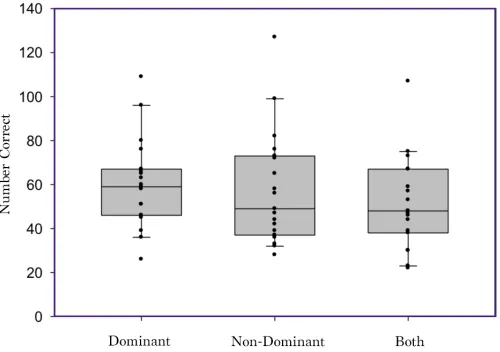
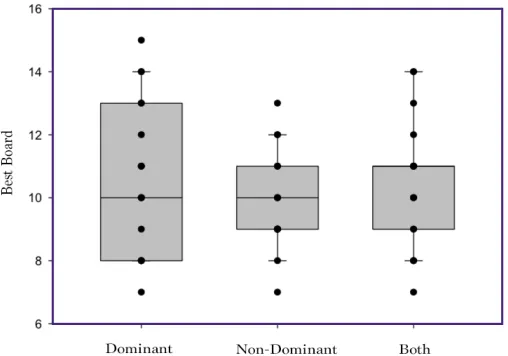
The role of ocular dominance in processing visual memory and analytic tasks is unknown. Research has variably showed both significant effects and no effect of ocular dominance on visual perception, motor control, and sports performance. The goal of this study was to determine if there is a relationship between ocular dominance and visual processing under a variety of computer gaming tasks. This was accomplished by first determining subjects’ ocular dominance through the Miles test, and then examining the subjects’ visual performance on four different Lumosity games under three conditions: left eye, right eye, and both eyes. Results suggest a relationship between ocular dominance and score in the simplest game used, named Raindrops, but did not identify a relationship between ocular dominance and accuracy. The study did not suggest a relationship within any of the other games that measure a variety of different abilities. It is possible a relationship between ocular dominance and score in the game Raindrops may have been due to the simplicity of the task. A small sample size (n = 20) may have also contributed to the inability to detect significant effects. Future studies incorporating larger sample sizes might focus on ocular dominance as it relates to simple arithmetic tasks.
THE EFFECTS OF OCULAR DOMINANCE
ON VISUAL PROCESSING IN
Throughout history, it has been appreciated that a person may be more adept with one hand than the other. Most people have either a dominant right or left hand; few are equally adept with both hands (Llaurens, Raymond, & Faurie, 2009). More recently, it has become clear that humans also preferentially use one eye over the other, known as ocular dominance (Miles, 1929). It is unclear, however, whether the dominant eye processes or perceives visual information better than the other eye. The goal of this study was to determine if there was any relationship between ocular dominance and visual processing under a variety of computer gaming tasks.
Visual System
Ocular dominance arises from the anatomical and physiological organization of the visual system. The eye consists of the pupil, iris, cornea, sclera, and retina. The pupil is a small black-looking aperture in the center of the eye which admits light. The iris is a circular pigmented muscle that regulates how much light is transmitted through the pupil by controlling the pupil’s size; the iris also gives the eye its color. The cornea is the outside layer of the eye covering the iris and pupil, and its purpose is to work with the lens to generate a sharp image at the retinal photoreceptor layer on the inner surface of the eye. The sclera is the supportive wall of the eye. Regarding the neural elements, the retina is the inner lining of the eye where neurons and photoreceptors (structures sensitive to light) are located. The retina consists of three layers: the outermost containing rod and cone photoreceptors, which, respectively, allow for monochromatic and color vision. The middle layer contains bipolar cells which process and convey signals from the photoreceptors to the ganglion cells in the innermost layer. The ganglion cells, in turn, project through the optic tract to the lateral geniculate nucleus (LGN) in the thalamus (Nelson, 2007).
The LGN, located in the dorsal thalamus of the brain, consists of two lobes: the right LGN and the left LGN. Each half of the LGN is made up of six layers; half of these layers receive input from the nasal medial retinas, and the other half receive input from the temporal lateral retinas. Neurons in the LGN transmit sensory information to the primary visual cortex (Bear, Connors, & Paradiso, 2016).
The primary visual cortex, also known as the striate cortex, is located in the occipital lobe of the brain. The primary visual cortex is the primary synaptic target of the LGN. The primary visual cortex is also made up of six layers, and Layer 4 is divided into three parts. Layer 4C is different from the other layers of the primary visual cortex in that it receives synaptic input from only the contralateral eye. The other layers of the primary visual cortex receive input from both eyes (Bear et al., 2016). The secondary visual
cortex, also known as the pre-striate cortex, processes visual information from the primary visual cortex. The secondary cortex differs from the primary cortex in that more complex features of the visual scene are recognized, perhaps also leading to visual memories. The secondary visual cortex also sends input back to the primary visual cortex (Gazzaniga, Ivry, & Mangun, 2002). The associative cortex includes most of the cerebral cortex and is responsible for the complex processing that underlies the integration of multi-sensory information, the control of movement, and conscious behavior. The parietal association cortex in particular is responsible for responding to complex stimuli in the internal and external environment, and the frontal associative cortex may be important for planning behavior in response to stimuli (Purves et al., 2001).
Ocular dominance must arise from the separate processing of information from each eye. Therefore, it is relevant that information from the left and right eye remains at least partially separate up through the primary visual cortex. In particular, there are ocular dominance columns in the primary cortex that may mediate monocular processing, such as depth perception and possibly ocular dominance (Barrett, 2016; Miller, Keller, & Stryker, 1989).
Ocular Dominance
Ocular dominance is defined as the preference of one eye over the other for sight or the favoring of one eye when there is conflicting information being presented to both eyes (Coren & Kaplan, 1973). The term ocular dominance was first coined in 1593 by Porta, who suggested that if people are right-handed and right-footed, then they are necessarily right-eyed. Much more recently, researchers have established that there is not a direct relationship between the dominant eye and the body’s limbs (Coren & Kaplan, 1973).
Coren and Kaplan (1973) used 13 different methods to test for ocular dominance, including pointing, alignment, the hole test, the Ascher test, and the Miles ABC test. The authors argued that ocular dominance is a complex phenomenon consisting of three different types of ocular dominance: sighting, sensory, and acuity dominance. In contrast, Barrett (2016) was skeptical that the phenomenon of ocular dominance could be clinically demonstrated, pointing out the lack of agreement between the various tests of ocular dominance. For example, there were inconsistencies in test results for the same individual, which further complicated findings.
Heilman (2002) found that right-eye dominance is more common than left-eye dominance in terms of demographics, and Porac and Coren (1976) showed that right-eye dominant individuals make up between 65% and 70% of the population. There is evidence that ocular dominance may have a genetic basis. Using a mathematical model, Annett (1999) suggested that genetically-linked asymmetry in humans may account for right-sidedness above the 50% that would be expected by chance. Similarly, Annett’s results indicate a positive correlation between handedness and eye preference.
It is generally believed that binocular (two-eyed) vision is superior to monocular (one-eyed) vision, even when subjects use their dominant eye. Subjects may perform better at tasks involving tracking moving objects with binocular vision as opposed to monocular vision (Madan, 1980). It is also known that fatigue under binocular and dominant monocular eye viewing conditions is less pronounced than in non-dominant monocular viewing conditions, and that subjects may perform better at tasks involving tracking moving objects with binocular vision as opposed to monocular vision (Madan, 1980). However, while past research suggests performance in the dominant eye will surpass the non-dominant eye when ocular dominance is pronounced, it is still not totally understood how ocular dominance relates to visual processing because performance varies, depending on the task at hand.
Ocular Dominance & Visual Motor
Performance
Color vision may vary between dominant and non-dominant eyes. Gundogan, Koçtekin, and Altintaș (2016) found that color perception error scores were lower in dominant eyes versus non-dominant eyes for red/green discrimination. However, eye dominance had no effect on blue/yellow discrimination. Thus, when the subjects used their dominant eye, they perceived the red/green color better than with their non-dominant eye. Ocular dominance displayed no effect on perception of blue/yellow colors (Gundogan, Koçtekin, & Altintaș, 2016).
The phenomenon of saccades is critically important for visual orientation and balance. Saccades are rapid eye movements that change a point of fixation quickly and abruptly (Purves et al., 2001). Tagu, Doré-Mazars, Lemoine-Lardennois, and Vergilino-Perez (2016) report that in binocular tasks, subjects with more pronounced ocular dominance showed greater amplitude of saccades toward a target. Furthermore, performance was better for saccade target locations contralateral to the dominant eye (Tagu, Doré-Mazars, Lemoine-Lardennois, & Vergilino-Perez, 2016).
Lateral eye movements, which are a reaction to distracting stimuli, also vary with ocular dominance. In Borod,
Vingiano, and Cytryn’s (1988) research on lateral eye movements and emotion, they found that non-emotional tasks yielded right-lateral eye movements in right-eye dominant subjects, while the same non-emotional tasks yielded left-lateral eye movements in left-eye dominant individuals. For emotional tasks, no statistically significant difference was found between the two ocular dominance groups.
In humans, the dominant eye not only processes more information than the non-dominant eye, but it may also inhibit perception of items from the non-dominant eye (Madan, 1980; Shneor & Hochstein, 2006).
Hand-eye coordination relies on both ocular dominance and visual processing. Because hand-eye coordination is an important determinant of sports performance, much of the literature on ocular dominance in sports is related to testing hand-eye coordination (Laby & Kirschen, 2011).
Ocular dominance can affect performance in sports. Steinberg, Frehlich, and Tennant (1995) compared the golfing success of two groups: cross dextral golfers (right-handed with left-eye dominance) and pure dextral golfers (both right-eye dominant and right-handed). The study concluded that pure dextral golfers have a statistically significant advantage over cross dextral golfers in putting accuracy.
There is also evidence that ocular dominance may play a critical role in reaction time. Chaumillon, Blouin, and Guillaume (2014) showed that the time required for cross and pure dextral subjects to press a button in response to a lateralized visual stimulus was faster for pure dextral subjects than their cross dextral counterparts.
Development
Research has shown that in mammals, ocular dominance develops early in life (Sanes & Jessell, 2013). Ocular dominance cannot be inhibited or changed after a specific critical period early in a mammal’s development. In mice, cats, and monkeys, closure of an eye during the critical period for ocular dominance markedly shifts the preference of binocular neurons to inputs from the the other eye. Closure before or after the time of this normal critical period, however, fails to alter the preference of the neurons. Furthermore, performance in ocular dominance cannot be changed in adults by monocular occlusion (Sanes & Jessell, 2013). It is also known that subjects will tend to perform better at visual tasks with binocular vision even after monocular occlusion has been introduced for a period of up to five days (Sheedy, Bailey, Buri, & Bass, 1986).
Specific Aim
Given the lack of research on the effects eye dominance has on visual memory and simple analytic processing, the primary objective of this study was to determine if ocular dominance influences performance on different computer gaming tasks that draw on different aspects of visual memory and analytic processing. This goal was achieved by comparing performance in four Lumosity games which relied on visual memory and analytic processing for three visual conditions: dominant eye, non-dominant eye, and binocular vision.
Methodology
Approvals
Institutional Review Board (IRB) approval was received on November 3, 2016. Permission was obtained from Lumos Labs, Inc. on November 4, 2016, to use specific games featured on the website www.lumosity.com. Participants were required to sign an IRB-approved consent form.
Participants
Undergraduate participants (n = 20) were recruited from Spring 2017 STEM classes, a Spring 2017 Math Club meeting, and/or through personal invitation. The time of day students participated in the experiment varied due to school conflicts. Participants ranged from 18 to 26 years of age.
Determining Ocular Dominance
To determine subjects’ ocular dominance, the Miles Test for Ocular Dominance (Miles, 1929) was used. The Miles Test asks subjects to form an aperture with their hands and then to focus their attention on an object, in this case either a red or green target on a whiteboard 2.5 meters away. The object subjects focused on was not as relevant as their distance away from the object. Subjects were then asked to close one
eye at a time to report the eye in which the object shifted. Subjects who reported a shift in their left eye were classified as right-eye dominant, and subjects who reported a shift in their right eye were classified as left-eye dominant. Subjects who reported no shift in either eye were classified as having no eye dominance.
Measuring Mental Processing Ability
All tests of visual mental processing ability used the Lumosity program. After eye dominance was recorded, the participants played four different Lumosity games that test different abilities within mental processing. The four games are titled as follows: Raindrops, Disillusion, Chalkboard Challenge, and Memory Matrix. All subjects participated in the games in this order. Before testing in a specific game began, all subjects were asked to participate in a practice session of the game in which they were being examined to acquaint them with the rules and play of the game. Practice sessions were similar to the actual tests, but the subjects had both eyes open. Practice sessions lasted as long as the scored sessions. No data was recorded during these practice session. The practice session for Memory Matrix was designed to determine at what level the subject should start the game. An eye patch was used to examine visual mental processing ability in a specific eye during the recorded testing. All subjects were asked to play each of the four games with their right eye covered, their left eye covered, and with both eyes open. The sequence in which eyes were covered was randomized for each game.
Raindrops
The first game the subjects were asked to play was Raindrops, which focuses on basic arithmetic ability (Figure 1). The objective of this game is to complete basic arithmetic questions inside of raindrops before they drop to the bottom of the screen. Subjects had a sufficient amount of time to play this game, until the “raindrops” reached the bottom of the screen three times. However, the experimenter requested the subjects to stop playing if they exceeded the time limit Figure 1. A representation of what subjects were expected to accomplish in the game Raindrops. Specific scores such as accuracy or total problems solved are