Non-speci
fi
c mechanisms in orthodox
and CAM management of low back
pain (MOCAM): theoretical
framework and protocol for
a prospective cohort study
Katherine Bradbury,1Miznah Al-Abbadey,1Dawn Carnes,2Borislav D Dimitrov,3 Susan Eardley,3Carol Fawkes,2Jo Foster,1Maddy Greville-Harris,1
J Matthew Harvey,1Janine Leach,4George Lewith,3Hugh MacPherson,5 Lisa Roberts,6Laura Parry,1Lucy Yardley,1Felicity L Bishop1
To cite:Bradbury K, Al-Abbadey M, Carnes D, et al. Non-specific
mechanisms in orthodox and CAM management of low back pain (MOCAM): theoretical framework and protocol for a prospective
cohort study.BMJ Open
2016;6:e012209.
doi:10.1136/bmjopen-2016-012209
▸ Prepublication history for
this paper is available online. To view these files please visit the journal online (http://dx.doi.org/10.1136/ bmjopen-2016-012209).
Received 8 April 2016 Accepted 13 April 2016
For numbered affiliations see end of article.
Correspondence to Dr Felicity L Bishop; [email protected]. uk
ABSTRACT
Introduction:Components other than the active ingredients of treatment can have substantial effects on pain and disability. Such‘non-specific’components include: the therapeutic relationship, the healthcare environment, incidental treatment characteristics, patients’beliefs and practitioners’beliefs. This study aims to: identify the most powerful non-specific treatment components for low back pain (LBP), compare their effects on patient outcomes across orthodox ( physiotherapy) and complementary (osteopathy, acupuncture) therapies, test which theoretically derived mechanistic pathways explain the effects of non-specific components and identify similarities and differences between the therapies on patient–practitioner interactions.
Methods and analysis:This research comprises a prospective questionnaire-based cohort study with a nested mixed-methods study. A minimum of 144 practitioners will be recruited from public and private sector settings (48 physiotherapists, 48 osteopaths and 48 acupuncturists). Practitioners are asked to recruit 10–30 patients each, by handing out invitation packs to adult patients presenting with a new episode of LBP. The planned multilevel analysis requires a final sample size of 690 patients to detect correlations between predictors, hypothesised mediators and the primary outcome (self-reported back-related disability on the Roland-Morris Disability Questionnaire). Practitioners and patients complete questionnaires measuring non-specific treatment components, mediators and outcomes at: baseline (time 1: after the first consultation for a new episode of LBP), during treatment (time 2: 2 weeks post-baseline) and short-term outcome (time 3: 3 months post-baseline). A randomly selected subsample of participants in the questionnaire study will be invited to take part in a nested mixed-methods study of patient–practitioner interactions. In the nested study, 63 consultations (21/therapy) will be audio-recorded and analysed quantitatively and qualitatively,
to identify communication practices associated with patient outcomes.
Ethics and dissemination:The protocol is approved by the host institution’s ethics committee and the NHS Health Research Authority Research Ethics Committee. Results will be disseminated via peer-reviewed journal articles, conferences and a stakeholder workshop.
INTRODUCTION
Components other than the active ingredi-ents of treatment can have substantial effects on pain and disability. For example, placebo controls in osteoarthritis trials produce a
Strengths and limitations of this study
▪ This study compares multiple non-specific com-ponents of treatment to identify those most strongly associated with patient health outcomes.
▪ Including multiple therapies enables new com-parisons of non-specific components of treat-ment across different therapies.
▪ The nested mixed-methods study will generate new insight into patient–practitioner communica-tion in low back pain and how it differs by thera-peutic modality.
▪ Practitioners and patients are recruited from diverse settings across the UK, enhancing gener-alisability of the findings.
▪ The observational design not only means that non-specific treatment components are being studied as they occur in everyday clinical practice (high ecological/external validity) but also means that causal relationships between variables will not be demonstrated. on September 22, 2020 by guest. Protected by copyright.
moderate effect size (0.5) on pain compared to a small effect size (0.03) of no-treatment controls.1Such compo-nents have been termed ‘non-specific’2 and comprise the broad constellation of psychological, social and environmental factors that act alongside and can interact with the ‘specific’ ingredients of treatment. This paper presents a protocol for a mixed-methods cohort study to investigate and compare non-specific components in physiotherapy, osteopathy and acupuncture for patients with low back pain (LBP). The purpose is to identify the most powerful non-specific components in a naturalistic setting and provide a deeper understanding of the path-ways through which non-specific components generate positive patient outcomes. This is an essential prerequis-ite for designing interventions to augment non-specific components and thus enable existing therapies to deliver maximal patient benefit.
Five domains of non-specific components have been proposed: patient–practitioner interaction and relation-ship, healthcare environment, incidental characteristics of treatment, patients’ beliefs and practitioners’ beliefs.3 Evidence suggests that components from each of these domains might mediate or enhance patient outcomes in musculoskeletal and other conditions, as follows. Positive and empathetic patient–practitioner relationships and a strong patient–practitioner alliance are associated with improved patient outcomes.3–6 Different healthcare set-tings foster different patient and practitioner beha-viours7–10 and influence the magnitude of placebo effects.11 12 For example, in hospitals, good organisa-tional environments (eg, collegiate working relation-ships) enhance patient satisfaction13 and the physical– sensory environment (eg, music) can reduce patient anxiety, but evidence is limited and more studies are needed in other settings.14 15 Incidental characteristics of treatment such as the number and/or size of pills, colour and cost of medications influence outcomes, but equivalent characteristics in non-pharmacological inter-ventions are not well understood.16–18 Patients can experience better treatment outcomes when they have higher expectations of their treatment, believe it to be more credible and adhere to instructions to take medi-cations, therapies, exercises or indeed placebos.19–23 Musculoskeletal practitioners differ in their beliefs about pain24 and these beliefs affect clinical practice25 although individual differences in effect between practi-tioners have not been well modelled and are difficult to investigate.26–28
Complementary and alternative medicine (CAM) prac-tices and practitioners might be particularly skilled at augmenting the context of treatment and thus enhan-cing patient outcomes.29 In particular, patient– practi-tioner interactions and relationships may be particularly well developed and effective in CAM. For example, the consultation process (alone, but in the context of a placebo or sham treatment) is effective in acupuncture for irritable bowel syndrome30 and homeopathy for rheumatoid arthritis.31 CAM therapies might also
enhance patient outcomes through other so-called non-specific domains. The ritualistic performances involved in different CAM treatments, such as the paraphernalia around needling in acupuncture, may also contribute to their effects.32 Patients’and practitioners’belief in their chosen CAM therapy and their broader motivations also appear important.24 33–36 For example, the effects of acupuncture are partially mediated by psychological factors implicated in the maintenance of musculoskel-etal pain, including self-efficacy for coping and fear avoidance beliefs.37
Some aspects of patient–practitioner interactions are integral and specific to particular CAM therapies as they operate via theoretically defined, therapy-specific mechanisms: Examples from acupuncture include trad-itional diagnostic techniques, talk about tradtrad-itional acu-puncture models for understanding pain and the associated, theoretically driven, lifestyle advice that acu-puncturists offer.38–42 Qualitative studies illustrate how homeopaths and acupuncturists communicate empathet-ically within consultations to empower and support patients to cope with illness and thus encourage positive, theoretically driven, lifestyle changes.43–45 Thus non-specific components of CAM (such as supportive patient–practitioner relationships) may influence patient outcomes at least in part by augmenting the specific effects of theoretically driven treatment components.
The healthcare environment probably contributes to the strong non-specific components attributed to CAM. Much CAM research has been conducted in private sector (or clinical trial) settings, which may be inher-ently better able to augment non-specific treatment components than public sector settings. For example, qualitative evidence suggests that private settings facili-tate clinical autonomy, support longer consultation times and shorter waiting lists, engender more con-sumerist and/or collaborative relationships, and provide more attractive and convenient physical environments compared to public sector settings.8 9 However, health-care sector might not have a uniform influence on clin-ical practice across therapies. For example, osteopaths (but not physiotherapists) working in the National Health Service (NHS) retained some positive non-specific components more characteristic of the private sector, such as mutualistic and supportive therapeutic relationships and longer consultation times.10Thus NHS environments might create larger differences between CAM and orthodox therapies than do exist in private sector environments. While the UK-BEAM study found no effect of the healthcare sector on exercise and manipulation outcomes,46the clinical trial setting might have dominated the organisational context and con-cealed any effects of sector.7
Overall the evidence suggests that non-specific compo-nents can enhance patient outcomes and CAMs may be potent at optimising non-specific components. However, most studies have focused on one or two components, meaning that we do not understand their relative
on September 22, 2020 by guest. Protected by copyright.
importance or how they interact with each other. Most studies have focused on a single therapy, which makes it difficult to be confident that the effects are indeed due to non-specific components shared across therapies rather than being intimately entwined with a particular therapy’s theoretical framework.38 There is also a need for more theoretical work explaining how non-specific components elicit positive effects.47 48 This study there-fore aims to examine non-specific components from multiple domains across multiple treatments, within the context of an overarching theoretical framework, which was derived from the literature.
Theoretical framework
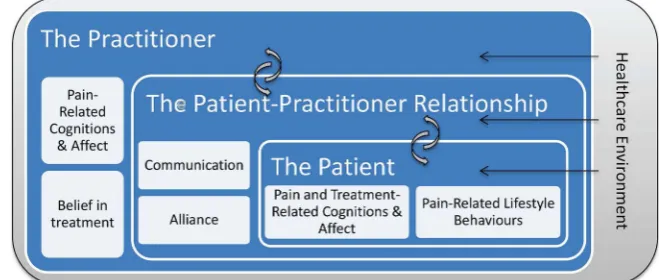
Figure 1 presents the theoretical framework for this study. The patient is at the centre of this model: non-specific components lead to reductions in self-reported pain and disability through their impact on the patients’ pain cognitions/emotions and behaviours. In particular, we hypothesise that non-specific treatment components affect patient outcomes by (1) triggering changes in patients’ cognitive and affective states involved in the maintenance of pain, such as fear avoidance beliefs and/or (2) affecting patients’ self-efficacy for coping with their pain, and/or (3) influencing patients’ health behaviours such as physical activity, diet and coping. These mechanisms may themselves be common across therapies (eg, a direct effect of positive expectations on reported pain outcomes) or may operate via an inter-action between non-specific and specific components of treatment (eg, positive expectations lead to patients having a better understanding of the treatment-specific explanations, which then leads to increased uptake of theoretically driven lifestyle advice).
The next layer in the model is the patient–practitioner relationship, two key components of which are commu-nication style and therapeutic alliance. We hypothesise that positive patient–practitioner relationships engender supportive self-care communication and shared goals, which then trigger adaptive changes such as increased self-efficacy for coping and uptake of lifestyle advice. This process has been illustrated qualitatively in acu-puncture.44 For example, when a practitioner communi-cates in a patient-centred empathetic way, a patient will
feel respected and understood and will experience a supportive bond with their therapist. The patient will be more likely to believe the practitioner’s claims that their pain is manageable and to share ownership of the treat-ment plan, resulting in improved pain beliefs, increased self-efficacy for coping with pain and uptake of lifestyle advice. The interactions between the therapeutic rela-tionship and patients’ beliefs are probably bidirectional: evidence from psychotherapy suggests that the effect of patients’ expectations on outcomes is partially mediated by the therapeutic relationship.49 50 In other words, patients who expect therapy to be successful are more open to developing positive patient–practitioner rela-tionships which go on to augment therapy outcomes.
The patient–practitioner relationship is itself partially determined by the individual practitioner, the next layer in the model. Practitioners’ beliefs about the nature of back pain have been shown to influence their clinical decision-making.24 25 We hypothesise that practitioners’ beliefs about back pain also influence their communica-tion style. For example, practicommunica-tioners who have a more biomedical model of back pain are probably less likely to engage in psychosocial talk and hence may be less likely to influence patients’ pain-related affect and cognitions.
Finally, the outer layer of the model comprises the healthcare environment in which the practitioner and patient interact. Environmental factors are hypothesised to affect patients’outcomes via their impact on the prac-titioner’s behaviour, the therapeutic relationship and the patients themselves. For example, organisational con-straints in the NHS encourage managed care, can dis-courage some practitioners from taking holistic treatment orientations and can foster paternalistic thera-peutic relationships, thus reducing patients’ sense of control.8 9 51
Setting
This project uses LBP as a model for studying non-specific treatment components and processes because: LBP is highly prevalent,52there is no gold-standard treat-ment and existing treattreat-ments provide only modest relief,53 54 meaning an exploration of non-specific com-ponents offers an opportunity to enhance existing
Figure 1 Multilevel framework of non-specific treatment
components.
on September 22, 2020 by guest. Protected by copyright.
treatments. Furthermore, pain theories (eg, fear avoid-ance model55) provide an excellent biopsychosocial framework to inform an understanding of how non-specific components trigger effects. Finally, orthodox and CAM approaches are popular in patients with LBP and are recommended in clinical guidelines,56–60 enab-ling comparisons between orthodox and CAM therapies. We have chosen to focus on physiotherapy (orthodox), osteopathy (CAM) and traditional acupuncture (CAM) as these are commonly used by patients with painful conditions60–62 and are recommended in clinical guide-lines for the management of LBP.56 They have distinct theoretical and explanatory frameworks but all involve some hands-on treatment, a series of treatments over time allowing for the development of a patient– practi-tioner relationship and an element of patient education regarding self-management.
Aims
The aims are to:
1. Identify the most powerful non-specific treatment components (ie, those that have the largest effect on patient outcomes).
2. Compare the magnitude of non-specific effects across orthodox ( physiotherapy) and CAM (osteopathy, acu-puncture) therapies.
3. Test whether theoretically derived mechanistic path-ways explain the effects of non-specific components.
4. Identify similarities and differences in patient– practi-tioner interactions across the three therapies.
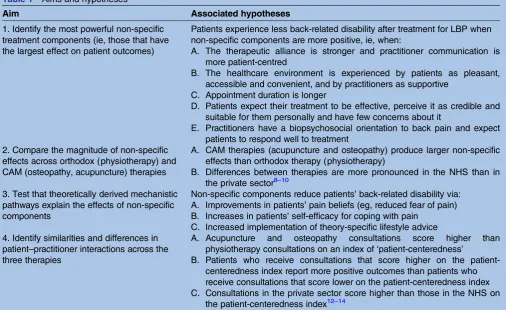
The associated hypotheses are presented intable 1.
METHODS AND ANALYSIS
This research comprises a prospective questionnaire-based cohort study with a nested mixed-methods study. The questionnaire-based study addresses aims 1–3. The nested mixed-methods study addresses aim 4. The questionnaire-based study collects self-report data from a large number of patients and practitioners and tests the effects of non-specific components from all five domains. The nested mixed-methods study conducts qualitative and quantitative analyses of a small sample of audio-recorded patient–practitioner interactions, to complement the self-report methods and broader focus of the questionnaire-based study.
Prospective questionnaire-based cohort study
Design
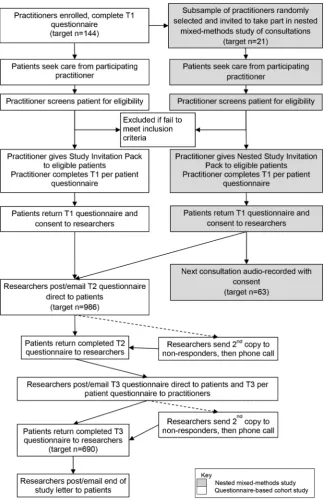
Practitioners and patients complete questionnaires at three time points: baseline (T1: after the first consult-ation for a new episode of LBP), during treatment (T2: 2 weeks post-baseline) and short-term outcome (T3: 3 months post-baseline) (figure 2). Non-specific factors are measured once with time points chosen to reduce ceiling effects, capture data accurately and spread the questionnaire burden. Outcomes, prognostic indicators
Table 1 Aims and hypotheses
Aim Associated hypotheses
1. Identify the most powerful non-specific treatment components (ie, those that have the largest effect on patient outcomes)
Patients experience less back-related disability after treatment for LBP when non-specific components are more positive, ie, when:
A. The therapeutic alliance is stronger and practitioner communication is more patient-centred
B. The healthcare environment is experienced by patients as pleasant, accessible and convenient, and by practitioners as supportive
C. Appointment duration is longer
D. Patients expect their treatment to be effective, perceive it as credible and suitable for them personally and have few concerns about it
E. Practitioners have a biopsychosocial orientation to back pain and expect patients to respond well to treatment
2. Compare the magnitude of non-specific effects across orthodox (physiotherapy) and CAM (osteopathy, acupuncture) therapies
A. CAM therapies (acupuncture and osteopathy) produce larger non-specific effects than orthodox therapy (physiotherapy)
B. Differences between therapies are more pronounced in the NHS than in the private sector8–10
3. Test that theoretically derived mechanistic pathways explain the effects of non-specific components
Non-specific components reduce patients’back-related disability via: A. Improvements in patients’pain beliefs (eg, reduced fear of pain) B. Increases in patients’self-efficacy for coping with pain
C. Increased implementation of theory-specific lifestyle advice 4. Identify similarities and differences in
patient–practitioner interactions across the three therapies
A. Acupuncture and osteopathy consultations score higher than physiotherapy consultations on an index of‘patient-centeredness’
B. Patients who receive consultations that score higher on the patient-centeredness index report more positive outcomes than patients who receive consultations that score lower on the patient-centeredness index C. Consultations in the private sector score higher than those in the NHS on
the patient-centeredness index12–14 CAM, complementary and alternative medicine; NHS, National Health Service.
on September 22, 2020 by guest. Protected by copyright.
and potential mediators are measured at T1, T2 and T3, to permit tests of whether scores on non-specific factors are associated with changes over time in prognostic indi-cators or mediators. Participants can choose to complete hard copies (mailed, returned via Freepost) or elec-tronic copies (emailed, completed online). Online and paper versions of our primary outcome are equivalent, can be used interchangeably and patients value having this choice.63
Participants
To participate, practitioners must treat at least one patient with LBP on average per week and have at least 3 years relatively current experience in musculoskeletal
work. Osteopaths and physiotherapists must be regis-tered with the General Osteopathic Council and Chartered Society of Physiotherapy, respectively. Acupuncturists must be eligible to register with the British Acupuncture Council (BAcC) (ie, a 3-year qualifi -cation or equivalent in traditional acupuncture). Physiotherapists who use acupuncture clinically can par-ticipate (as physiotherapists) as this is becoming common clinical practice.
To participate, patients must be at least 18 years old, seeking treatment from a participating practitioner at their first consultation for a new episode of LBP and score at least 4 on the Roland-Morris Disability Questionnaire (RMDQ).64 Patients will be ineligible if
Figure 2 Study flow chart.
on September 22, 2020 by guest. Protected by copyright.
they: are unable to complete questionnaires in English or Welsh, have serious underlying pathology (infl amma-tory arthritis, malignancy) or have practitioner-identified conditions that would prevent the sought treatment being applied. Arguably, LBP as managed in primary care should be conceptualised as typically having a chronic–episodic timeline with recurrent acuteflare-ups against a backdrop of temporary remission or less bothersome symptoms.65 66Broad inclusion criteria thus best reflect the clinical situation and will ensure that our cohort is representative of patients with LBP treated by physiotherapists, osteopaths and acupuncturists.
Sample size
Data from our earlier longitudinal questionnaire-based study of acupuncture for LBP were used as the basis for these sample size calculations.37 The planned multilevel analysis requires a final sample size of 690 patients to detect correlations between predictors, hypothesised mediators and the primary outcome, the RMDQ,64 with Pearson’s R=0.2 (and correspondingβ regression coeffi -cients of 0.235) with 95% power and p<0.0005 (two tailed). This sample size has been adjusted for clustering of patients within practitioners using a factor of 1+(k −1)×ICC, where k=8 (number of patients per practi-tioner) and ICC=0.01 (ICC based on UK Beam67 68). The final sample size will also be sufficient to detect,
within each therapy subgroup, correlations between the predictors and the primary outcome of Pearson’s R=0.2, at p<0.04 with a minimum of 81% power. This sample size should also allow us to test for interactions and pos-sible therapy-specific effects.
If the data are not normally distributed and transfor-mations do not achieve a normal distribution, we will still have sufficient power to detect bivariate correlations (eg, Spearman’s ρ=0.2) between the predictors and the primary outcome in the whole sample ( power=95%, p<0.002) and in each therapy subgroup ( power=80%, p<0.05).
If all practitioners recruit 8 patients, then 86 practi-tioners are needed; however, some attrition is likely. To allow for 40% attrition of practitioners, 144 practitioners will be recruited (48 per therapy). To allow for 30% attrition of patients, 986 patients will be recruited. Practitioners are asked to recruit 10–30 consecutive eli-gible adult patients, allowing someflexibility and enhan-cing recruitment to at least the minimum level.
Measures
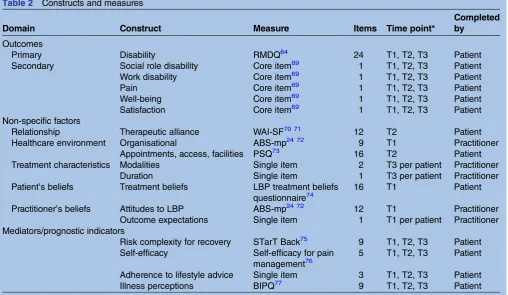
Table 2summarises the chosen constructs and measures.
Outcomes
The primary outcome is self-reported back-related dis-ability, measured using the 24-item RMDQ.64 Secondary
Table 2 Constructs and measures
Domain Construct Measure Items Time point*
Completed by
Outcomes
Primary Disability RMDQ64 24 T1, T2, T3 Patient
Secondary Social role disability Core item69 1 T1, T2, T3 Patient
Work disability Core item69 1 T1, T2, T3 Patient
Pain Core item69 1 T1, T2, T3 Patient
Well-being Core item69 1 T1, T2, T3 Patient
Satisfaction Core item69 1 T1, T2, T3 Patient
Non-specific factors
Relationship Therapeutic alliance WAI-SF70 71 12 T2 Patient
Healthcare environment Organisational ABS-mp24 72 9 T1 Practitioner
Appointments, access, facilities PSQ73 16 T2 Patient
Treatment characteristics Modalities Single item 2 T3 per patient Practitioner
Duration Single item 1 T3 per patient Practitioner
Patient’s beliefs Treatment beliefs LBP treatment beliefs questionnaire74
16 T1 Patient
Practitioner’s beliefs Attitudes to LBP ABS-mp24 72 12 T1 Practitioner Outcome expectations Single item 1 T1 per patient Practitioner Mediators/prognostic indicators
Risk complexity for recovery STarT Back75 9 T1, T2, T3 Patient Self-efficacy Self-efficacy for pain
management76
5 T1, T2, T3 Patient
Adherence to lifestyle advice Single item 3 T1, T2, T3 Patient
Illness perceptions BIPQ77 9 T1, T2, T3 Patient
*T1=baseline (after first treatment for new episode of LBP); T2=during treatment (2 weeks post-baseline); T3=short-term outcome (3 months post-baseline).
ABS-mp, Attitudes to Back Pain Scale—Musculoskeletal Practitioners; BIPQ, Brief Illness Perceptions Questionnaire; LBP, low back pain; PSQ, Patient Satisfaction Questionnaire; RMDQ, Roland-Morris Disability Questionnaire; WAI-SF, Working Alliance Inventory—Short Form.
on September 22, 2020 by guest. Protected by copyright.
outcomes ( pain intensity, well-being, work and social role disability, satisfaction with care) are measured using recommended core single items.69
Patient–practitioner relationship
The patient–practitioner relationship is operationalised as the therapeutic alliance; this construct is grounded in theory on how patient–practitioner interactions can elicit psychological/behavioural changes,78 consistently predicts patient outcomes in psychotherapy5 and offers a good fit with CAM. For example, the three dimen-sions of therapeutic alliance capture egalitarian part-nerships, patient participation and individualised care (as collaboration), perceived interpersonal connection and liking (as affective bond) and new holistic insights into illness and treatment (as concordant goals). These aspects of the patient–practitioner relationship have been shown to be important to CAM patients.8 27 79–83
Therapeutic alliance is assessed using the client version of the Working Alliance Inventory—Short Form (WAI-SF), which assesses all three dimensions of working alliance with acceptable psychometric proper-ties.5 70 71 The patient-rated WAI-SF may have ceiling effects if used after one treatment but tends to remain stable after the second treatment;5 it is therefore admi-nistered at T2.78 84
Healthcare environment
The healthcare environment is operationalised as the organisational environment and the sensory–physical environment. Practitioners’ perceptions of the organisa-tional environment are measured using two single items to assess the caseload and waiting list and two subscales from the psychometrically sound Attitudes to Back Pain Scale—Musculoskeletal Practitioners (ABS-mp): putting limits on sessions and perceived connections within the healthcare system.24 72
Patients’ perceptions of the organisational and sensory–physical environment are assessed using three subscales of the Patient Satisfaction Questionnaire designed to assess patient perceptions of the quality of primary healthcare in the UK.73 The access subscale measures perceptions of interactions with reception staff; the appointment subscale measures the perceived availability of convenient appointments; the facility sub-scale measures perceptions of the physical environment of the clinic and waiting room.
Characteristics of treatment
To assess the general characteristics of treatment, practi-tioners record for each patient: the treatment given ( physiotherapy, osteopathy, acupuncture), individual modalities used (eg, manipulation, mobilisation, need-ling), the number of appointments attended and their average duration. Patients report how many treatments they have received.
Patients’beliefs
This domain is operationalised as patients’ treatment beliefs, measured using the brief LBP Treatment Beliefs Questionnaire that assesses four dimensions of treatment beliefs: perceived/anticipated effectiveness, credibility, concerns and individualised fit.74 It was explicitly designed for use in mixed cohorts of patients with LBP undergoing diverse treatments. This question-naire is completed at T1 as patients’ expectations regarding effectiveness should be measured early in treatment.22
Practitioners’beliefs
This domain is operationalised as practitioners’outcome expectations and beliefs about LBP. A single-item numerical rating scale measures practitioners’ outcome expectations for each patient. Four subscales from the ABS-mp measure: willingness to engage with psycho-logical issues, confidence and concern over clinical lim-itations, reactivation of work and activity and belief in an underlying structural cause of pain.24 72
Prognostic indicators and mediators
The STarT Back screening tool with good predictive val-idity is used to assess mood, fear, worry and catastrophis-ing.75 85 86 The reliable and valid Brief Illness Perceptions Questionnaire (BIPQ) is used to measure eight dimensions of illness perceptions in relation to LBP.77Self-efficacy for coping with LBP is assessed using the five-item Chronic Pain Self-Efficacy for Pain Management subscale.76 There is no gold-standard measure of adherence,87 and practitioners’ recommen-dations are likely to be highly personalised to individual patients. Adherence is therefore conceptualised in rela-tion to three broad domains of lifestyle changes (thera-peutic exercises, diet and physical activity) and measured using a single item worded to reduce social desirability bias.88 Practitioners also report whether they gave theoretically derived lifestyle advice to each patient.
Clinical and demographic covariates
Patient-level covariates are as follows: leg pain and shoul-der/neck pain bothersomeness (measured using STarT Back75), duration of LBP, age, gender, work status, compensation status, comorbidities, co-treatments and socioeconomic status (indicated by postcode). Practitioner-level covariates are as follows: time since qualifying and experience in musculoskeletal care.
Procedure
Figure 2 presents the studyflow chart, summarising the
flow of participants through the study. Physiotherapists, osteopaths and acupuncturists working in the NHS and the private sector throughout the UK are recruited by advertisements (eg, online and in newsletters) and per-sonal invitations, with support from the Clinical
Research Network, the Chartered Society of
Physiotherapy, the General Osteopathic Council and the
on September 22, 2020 by guest. Protected by copyright.
BAcC. Practitioners who express an interest in taking part are sent information and consent forms and offered the opportunity to discuss the study with the researchers before providing written informed consent and completing their T1 questionnaires (see table 2). When potentially eligible patients present for treatment, at their first consultation, practitioners hand them a study invitation pack containing an invitation letter, information sheet, consent form and T1 questionnaire. On inviting an eligible patient into the study, practi-tioners complete the T1 per patient questionnaire with respect to that patient. All completed consent forms and questionnaires are returned directly to the researchers via prepaid envelopes. The researchers email or mail (participant’s choice) the T2 and T3 questionnaires to participants who again return them directly to the researchers. If participants do not respond to T2 and/or T3 questionnaires, the questionnaires are resent and par-ticipants are contacted by telephone. If no contact is forthcoming at T3, participants are invited to complete the primary outcome measure by telephone.
The following strategies are used to enhance recruit-ment and retention rates: monthly update emails to practitioners, small gifts (eg, tea bag/pen) and monet-ary incentives (£5 voucher) for patients, personalised questionnaires, ink-signed cover letters, coloured ink, stamped return envelopes, first class post and follow-up strategy for non-responders.89–91
Analysis plan
Data obtained from paper questionnaires will be input-ted and data entry checked for accuracy (using double entry for 10% of data). All data will be imported into SPSS for preliminary data analysis, which will include checking measurement properties and distributions of questionnaire scores ( performing transformations if necessary to achieve normal distributions), examining and dealing with missing data (eg, by multiple imput-ation) and ensuring the data meet the assumptions of the main analysis (eg, linear relationships between pre-dictors and outcomes). The main analysis will be per-formed by multilevel methods (eg, Restricted Maximum Likelihood; REML) using appropriate statistical software (eg, MLWin) to construct a multilevel regression model taking into account the clustering of individual patients
within practitioners (two-level model: level
1=patients and level 2=practitioners). As a secondary aim, the self-reported patient outcomes can be modelled as time-varying repeated measures, while the non-specific factors remain time-invariant predictors (three-level model: (three-level 1=time, (three-level 2=patients and (three-level 3=practitioners). We will test for main effects of the pre-dictors (hypothesis 1), interaction effects (hypothesis 2) and mediation effects (hypothesis 3). Multilevel model-ling provides an ideal framework for examining such a complex data set and testing our hypotheses, which involve main effects as well as complex interactions between the variables.
Nested mixed-methods study of consultations
Design
This nested study explores whether CAM and orthodox therapists use different verbal communication styles and the extent to which these are more or less effective. A mixed-methods design combines qualitative and quanti-tative analyses of audio-recorded consultations from a random sample of participants in the questionnaire-based study using each therapy. We have selected audio-recording as the least intrusive and most cost-effective method of observing a consultation, but acknowledge that this method is limited to capturing verbal communi-cation only. The analysis will test specific hypotheses (see table 1), and identify similarities and differences between acupuncture, osteopathy and physiotherapy consultations on (1) the frequency of different types of communication and (2) the thematic content of the consultations.
Participants
Using random number tables, we will invite a random sample of practitioners from the questionnaire-based study to take part. Given qualitative evidence suggesting that consultations in the private sector might be more patient-centred than those in the NHS,8–10we will stratify for the healthcare sector.
Sample size
We will audio-record 21 consultations from each therapy: seven therapists per therapy will record a single consultation from each of three patients. This should ensure that particularly unusual cases do not dominate and is sufficient to detect a large difference between the therapies with 80% power andα=0.05. (We could locate no previous studies comparing observed CAM and orthodox consultations to inform a more precise power calculation).
Procedure
Using random number tables, a random selection of practitioners from the questionnaire-based study will be sent information about this nested study and invited to take part (additional informed consent is taken specif-ically for this nested study). Consecutive eligible patients who consult practitioners in this nested study will be given study invitation packs including all stand-ard documents for the questionnaire-based study and an additional information sheet and consent form regarding this nested study, requesting written informed consent to audio-record a consultation. On receiving patient consent, the researchers notify the practitioner who audio-records the next consult-ation using a digital audio-recorder. Patients and practitioners then continue in the Prospective Questionnaire-Based Cohort Study as described above (see Figure 2).
on September 22, 2020 by guest. Protected by copyright.
Analysis plan
Audio-recordings will be coded with the widely used Roter Interactional Analysis System (RIAS),92 which has previously been used for back pain consultations.93 94 The RIAS can be applied directly to video or audio-recordings of consultations and requires the coder to rate each expressed meaning with a single code. Codes are mutually exclusive and comprehensive and incorpor-ate task-focused and socioemotional elements of patient–practitioner interactions. We will generate fre-quency counts for different categories and subcategories of utterances (eg, emotional talk, empathy and concern).95 We will combine frequency counts and cal-culate a ratio of patient-centred to doctor-centred talk,96 to produce a patient-centred index for each consult-ation. A proportion of RIAS coding will be done inde-pendently by two coders to check reliability.
A 3×2 analysis of variance (ANOVA) will test for the effects of therapy (osteopathy, physiotherapy, acupunc-ture) and healthcare sector (NHS, private) on patient-centredness. Regression analyses will test whether patient-centred communication predicts patient out-comes (derived from the questionnaire-based study). Inductive qualitative analysis will explore the thematic content of talk97 and take a more holistic view of the consultations, thus addressing some of the limitations of relying solely on quantitative interactional analysis systems98–100and helping capture any unique features of CAM consultations.
ETHICS AND DISSEMINATION Ethics and governance
The study is conducted in accordance with the British Psychological Society Code of Human Research Ethics, the Helsinki Declaration, the Research Governance Framework for Health and Social Care, the Data Protection Act 1998 and International Conference for Harmonisation of Good Clinical Practice (ICH GCP) guidelines. Site-specific approvals are obtained for all NHS sites as required. The study sponsor is the University of Southampton.
Potential benefits of taking part include the chance to reflect on thoughts about treating LBP ( practitioners) and the chance to reflect on thoughts about LBP, treat-ment and health in general ( patients). The main
disad-vantage is the time required to complete the
questionnaires. The content of the questionnaires is unlikely to be distressing.
Practitioners from across the UK and their patients are invited to take part on a voluntary basis. Recruitment material makes no therapeutic promises and there is no coercion. Potential participants receive written informa-tion that describes the study in detail including: purpose, study procedures, potential risks and benefits to the participant, funding and review arrangements, confidentiality, dissemination plans, what to do if there is a problem and contact details for further information.
They have the opportunity to discuss the study and provide full written informed consent before being enrolled. They have the right to withdraw from the study at any time without giving a reason and without penalty.
All data are collected and retained in accordance with the Data Protection Act 1998. Electronic data are stored on University of Southampton secure research filestore. Digital audio-recordings of consultations are password-protected and stored securely electronically for the dur-ation of the research; personal details are removed during transcription. Direct quotes from the audio-recordings will be anonymised before being published (with consent—participants are asked for consent to
being quoted verbatim in published reports).
Anonymised data will be stored securely for a period of 10 years from study publication, in line with the host institution’s guidance. Audio-recordings and personal details necessary to administer the research will be destroyed on study publication.
Small non-monetary (eg, tea bag/pen) and monetary incentives (worth £5) are used in this study. They are non-contingent on response and are presented as small gifts of thanks to participants. The small absolute value of these incentives is very unlikely to exert pressure on potential participants to take part.
Patient public involvement
Three patient volunteers with experience of musculo-skeletal pain and/or at least one of the treatments under study provided feedback in the early stages of developing this project. We have recruited one patient volunteer to contribute to the study on an ongoing basis. Their remit is to comment on study design and implementation issues in order to ensure that our project is sensitive to patients’ concerns and priorities; in particular, to comment on all materials to be given to patients in the studies; to assist in interpreting qualitative themes and quantitative results; to advise on and poten-tially contribute to dissemination activities.
Dissemination
Results will be disseminated at conferences and in peer-reviewed journals. Regardless of the results, the ques-tionnaire study and the nested mixed-methods study will be published. We will also disseminatefindings to all par-ticipants, to relevant professional bodies and patient organisations and to the general public. We will provide personalised feedback to the practitioners in the nested study of the consultations based on the RIAS analysis of their communication. We will hold a stakeholder work-shop to discuss the implications of our findings for patients, practice and policy.
DISCUSSION
This research is examining the role of non-specific treatment components in orthodox and CAM manage-ment of LBP. In doing so, we will come to better
on September 22, 2020 by guest. Protected by copyright.
understand the nature and effects of non-specific com-ponents. This is a vital next step to enable research on non-specific treatment components to contribute to enhancing treatment to help people remain active and pain-free. Our research will identify the most effective non-specific treatment components in LBP and model how they produce positive patient outcomes; this will help practitioners, policymakers and researchers to optimise non-specific components across diverse therapies, thus enhancing treatments and maximising patient benefit. Depending on the results, we hope to be able to suggest how non-specific components of orthodox treatments will be enhanced by learning from CAM.
Author affiliations
1Department of Psychology, University of Southampton, Southampton, UK
2Blizard Institute, Queen Mary University of London, London, UK
3Primary Care and Population Sciences, University of Southampton,
Southampton, UK
4Clinical Research Centre for Health Professions, University of Brighton,
Brighton, UK
5Health Sciences, University of York, New York, UK
6Health Sciences, University of Southampton, Southampton, UK
Twitter Follow Laura Parry at @lparry24
Contributors FLB led the study conception and design and drafted the
manuscript. KB, BDD, JL, GL, HM, LR, LY and FLB conceptualised the study and drafted the protocol and the associated grant application. KB, MA-A, DC, BDD, SE, CF, JF, MG-H, JMH, JL, GL, HM, LR, LP, LY and FLB revised the protocol for important intellectual content. KB, MA-A, DC, BDD, SE, CF, JF, MG-H, JMH, JL, GL, HM, LR, LP, LY and FLB revised the manuscript critically for important intellectual content and gave final approval of the version to be published.
Funding This work was supported by Arthritis Research UK Special Strategic
Award grant number 20552.
Competing interests None declared.
Ethics approval Ethical approval has been granted by the University of
Southampton (reference number 19323) and the NHS Health Research
Authority East Midlands—Derby Research Ethics Committee (reference
number 14/EM/1113).
Provenance and peer review Not commissioned; peer reviewed for ethical
and funding approval prior to submission.
Open Access This is an Open Access article distributed in accordance with
the terms of the Creative Commons Attribution (CC BY 4.0) license, which permits others to distribute, remix, adapt and build upon this work, for commercial use, provided the original work is properly cited. See: http:// creativecommons.org/licenses/by/4.0/
REFERENCES
1. Zhang W, Robertson J, Jones AC,et al. The placebo effect and its determinants in osteoarthritis: meta-analysis of randomised controlled trials.Ann Rheum Dis2008;67:1716–23. 2. Grünbaum A. The placebo concept.Behav Res Ther
1981;19:157–67.
3. Di Blasi Z, Harkness E, Ernst E,et al. Influence of context effects on health outcomes: a systematic review.Lancet2001;357:757–62. 4. Roter DL. Which facets of communication have strong effects on
outcome—a meta analysis. In: Stewart MA, Roter DL, eds. Communicating with medical patients. Newbury Park, CA: Sage Publications, 1989:183–96.
5. Martin DJ, Garske JP, Davis MK. Relation of the therapeutic alliance with outcome and other variables: a meta-analytic review. J Consult Clin Psychol2000;68:438–50.
6. Hall AM, Ferreira PH, Maher CG,et al. The influence of the therapist-patient relationship on treatment outcome in physical rehabilitation: a systematic review.Phys Ther2010;90:1099–110. 7. Barlow F, Scott C, Coghlan B,et al. How the psychosocial context
of clinical trials differs from usual care: a qualitative study of acupuncture patients.BMC Med Res Methodol2011;11:79. 8. Bishop FL, Barlow F, Coghlan B,et al. Patients as healthcare
consumers in the public and private sectors: a qualitative study of acupuncture in the UK.BMC Health Serv Res2011;11:129. http:// www.biomedcentral.com/1472-6963/11/129.
9. Bishop FL, Amos N, Yu H,et al. Health-care sector and complementary medicine: practitioners’experiences of delivering acupuncture in the public and private sectors.Prim Health Care Res Dev2012;13:269–78.
10. Bradbury KJ, Bishop FL, Yardley L,et al. Patients’appraisals of public and private healthcare: a qualitative study of physiotherapy and osteopathy.J Health Psychol2013;18:1307–18.
11. Vase L, Riley JL, Price DD. A comparison of placebo effects in clinical analgesic trials versus studies of placebo analgesia.Pain 2002;99:443–52.
12. Pollo A, Amanzio M, Arslanian A,et al. Response expectancies in placebo analgesia and their clinical relevance.Pain2001;93:77–84. 13. Aiken LH, Sermeus W, Van den Heede K,et al. Patient safety,
satisfaction, and quality of hospital care: cross sectional surveys of nurses and patients in 12 countries in Europe and the United States.BMJ2012;344:e1717.
14. Drahota A, Ward D, Mackenzie H,et al. Sensory environment on health-related outcomes of hospital patients.Cochrane Database Syst Rev2012;3:CD005315.
15. Dijkstra K, Pieterse M, Pruyn A. Physical environmental stimuli that turn healthcare facilities into healing environments through psychologically mediated effects: systematic review.J Adv Nurs 2006;56:166–81.
16. Waber RL, Shiv B, Carmon Z,et al. Commercial features of placebo and therapeutic efficacy.JAMA2008;299:1016–17. 17. Branthwaite A, Cooper P. Analgesic effects of branding in treatment
of headaches.Br Med J (Clin Res Ed)1981;282:1576–8. 18. Moerman D.Meaning, medicine and the‘placebo effect’.
Cambridge: Cambridge University Press, 2006.
19. Simpson SH, Eurich DT, Majumdar SR,et al. A meta-analysis of the association between adherence to drug therapy and mortality. BMJ2006;333:15.
20. DiMatteo MR, Giordani PJ, Lepper HS,et al. Patient adherence and medical treatment outcomes: a meta-analysis.Med Care 2002;40:794–811.
21. Devilly GJ, Borkovec TD. Psychometric properties of the credibility/ expectancy questionnaire.J Behav Ther Exp Psychiatry
2000;31:73–86.
22. Crow R, Gage H, Hampson S,et al. The role of expectancies in the placebo effect and their use in the delivery of health care: a systematic review.Health Technol Assess1999;3:1–96. 23. Underwood MR, Morton V, Farrin A,et al. Do baseline
characteristics predict response to treatment for low back pain? Secondary analysis of the UK BEAM dataset [ISRCTN32683578]. Rheumatology (Oxford)2007;46:1297–302.
24. Pincus T, Foster NE, Vogel S,et al. Attitudes to back pain amongst musculoskeletal practitioners: a comparison of professional groups and practice settings using the ABS-mp.Man Ther
2007;12:167–75.
25. Bishop A, Foster NE, Thomas E,et al. How does the self-reported clinical management of patients with low back pain relate to the attitudes and beliefs of health care practitioners? A survey of UK general practitioners and physiotherapists.Pain2008;135:187–95. 26. Adelson JL, Owen J. Bringing the psychotherapist back: basic
concepts for reading articles examining therapist effects using multilevel modeling.Psychotherapy (Chic)2012;49:152–62. 27. White P, Bishop FL, Prescott P,et al. Practice, practitioner or
placebo? A multifactorial, mixed methods randomized controlled trial of acupuncture.Pain2012;153:455–62.
28. Wampold BE, Brown GS. Estimating variability in outcomes attributable to therapists: a naturalistic study of outcomes in managed care.J Consult Clin Psychol2005;73:914–23. 29. Kaptchuk TJ. The placebo effect in alternative medicine: can the
performance of a healing ritual have clinical significance? Ann Intern Med2002;136:817–25.
30. Kaptchuk TJ, Kelley JM, Conboy LA,et al. Components of placebo effect: randomised controlled trial in patients with irritable bowel syndrome.BMJ2008;336:999–1003.
31. Brien S, Lachance L, Prescott P,et al. Homeopathy has clinical benefits in rheumatoid arthritis patients that are attributable to the consultation process but not the homeopathic remedy:
on September 22, 2020 by guest. Protected by copyright.
a randomized controlled clinical trial.Rheumatology (Oxford) 2011;50:1070–82.
32. Kaptchuk TJ, Stason WB, Davis RB,et al. Sham device v inert pill: randomised controlled trial of two placebo treatments.BMJ 2006;332:391–4.
33. Kalauokalani D, Cherkin DC, Sherman KJ,et al. Lessons from a trial of acupuncture and massage for low back pain: patient expectations and treatment effects.Spine (Phila Pa 1976) 2001;26:1418–24.
34. Hyland ME, Whalley B, Geraghty AWA. Dispositional predictors of placebo responding: a motivational interpretation of flower essence and gratitude therapy.J Psychosom Res2007;62:331–40. 35. Witt CM, Martins F, Willich SN,et al. Can I help you? Physicians’
expectations as predictor for treatment outcome.Eur J Pain 2012;16:1455–66.
36. Colagiuri B, Smith CA. A systematic review of the effect of expectancy on treatment responses to acupuncture.Evid Based Complement Alternat Med2012;2012:857804.
37. Bishop FL, Yardley L, Prescott P,et al. Psychological covariates of longitudinal changes in back-related disability in patients
undergoing acupuncture.Clin J Pain2015;31:254–64. 38. Paterson C, Dieppe P. Characteristic and incidental ( placebo)
effects in complex interventions such as acupuncture.BMJ 2005;330:1202–5.
39. Langevin HM, Wayne PM, Macpherson H,et al. Paradoxes in acupuncture research: strategies for moving forward.Evid Based Complement Alternat Med2011;2011:180805.
40. Hopton AK, Curnoe S, Kanaan M,et al. Acupuncture in practice: mapping the providers, the patients and the settings in a national cross-sectional survey.BMJ Open2012;2:e000456.
41. MacPherson H, Thomas K. Self-help advice as a process integral to traditional acupuncture care: implications for trial design. Complement Ther Med2008;16:101–6.
42. MacPherson H, Thorpe L, Thomas K. Beyond needling— therapeutic processes in acupuncture care: a qualitative study nested within a low-back pain trial.J Altern Complement Med 2006;12:873–80.
43. Brien SB, Leydon GM, Lewith G. Homeopathy enables rheumatoid arthritis patients to cope with their chronic ill health: a qualitative study of patient’s perceptions of the homeopathic consultation. Patient Educ Couns2012;89:507–16.
44. Evans M, Paterson C, Wye L,et al. Lifestyle and self-care advice within traditional acupuncture consultations: a qualitative observational study nested in a co-operative inquiry.J Altern Complement Med2011;17:519–29.
45. Paterson C, Evans M, Bertschinger R,et al. Communication about self-care in traditional acupuncture consultations: the
co-construction of individualised support and advice.Patient Educ Couns2012;89:467–75.
46. UK BEAM Trial Team. United Kingdom back pain exercise and manipulation (UK BEAM) randomised trial: effectiveness of physical treatments for back pain in primary care.BMJ2004;329:1377. 47. Neumann M, Bensing J, Mercer S,et al. Analyzing the“nature”and
“specific effectiveness”of clinical empathy: a theoretical overview and contribution towards a theory-based research agenda.Patient Educ Couns2009;74:339–46.
48. Street RL Jr, Makoul G, Arora NK,et al. How does communication heal? Pathways linking clinician-patient communication to health outcomes.Patient Educ Couns2009;74:295–301.
49. Joyce AS, Ogrodniczuk JS, Piper WE,et al. The alliance as mediator of expectancy effects in short-term individual therapy. J Consult Clin Psychol2003;71:672–9.
50. Meyer B, Pilkonis PA, Krupnick JL,et al. Treatment expectancies, patient alliance, and outcome: further analyses from The National Institute of Mental Health Treatment of Depression Collaborative Research Program.J Consult Clin Psychol2002;70:1051–5. 51. Paterson C, Britten N. The patient’s experience of holistic care:
insights from acupuncture research.Chronic Illn2008;4:264–77. 52. Hoy D, Bain C, Williams G,et al. A systematic review of the
global prevalence of low back pain.Arthritis Rheum2012;64: 2028–37.
53. Turk DC, Wilson HD, Cahana A. Treatment of chronic non-cancer pain.Lancet2011;377:2226–35.
54. Balagué F, Mannion AF, Pellisé F,et al. Non-specific low back pain.Lancet2012;379:482–91.
55. Vlaeyen JWS, Linton SJ. Fear-avoidance and its consequences in chronic musculoskeletal pain: a state of the art.Pain
2000;85:317–32.
56. Savigny P, Watson P, Underwood M,et al, Guideline Development Group. Early management of persistent non-specific low back pain: summary of NICE guidance.BMJ2009;338:b1805.
57. Chou R, Qaseem A, Snow V,et al, Clinical Efficacy Assessment Subcommittee of the American College of Physicians; American College of Physicians; American Pain Society Low Back Pain Guidelines Panel. Diagnosis and treatment of low back pain: a joint clinical practice guideline from the American College of Physicians and the American Pain Society.Ann Intern Med2007;147:478–91. 58. Airaksinen O, Brox JI, Cedraschi C,et al, COST B13 Working
Group on Guidelines for Chronic Low Back Pain. Chapter 4 European guidelines for the management of chronic nonspecific low back pain.Eur Spine J2006;15(Suppl 2):S192–300. 59. van Tulder M, Becker A, Bekkering T,et al. Chapter 3 European
guidelines for the management of acute nonspecific low back pain in primary care.Eur Spine J2006;15(Suppl 2):S169–91. 60. Breivik H, Collett B, Ventafridda V,et al. Survey of chronic pain in
Europe: prevalence, impact on daily life, and treatment.Eur J Pain 2006;10:287–333.
61. Rao JK, Mihaliak K, Kroenke K,et al. Use of complementary therapies for arthritis among patients of rheumatologists.Ann Intern Med1999;131:409–16.
62. Callahan LF, Wiley-Exley EK, Mielenz TJ,et al. Use of complementary and alternative medicine among patients with arthritis.Prev Chronic Dis2009;6:A44.
63. Bishop FL, Lewis G, Harris S,et al. A within-subjects trial to test the equivalence of online and paper outcome measures: the Roland Morris Disability Questionnaire.BMC Musculoskelet Disord 2010;11:113.
64. Roland M, Morris R. A study of the natural history of back pain. Part I: development of a reliable and sensitive measure of disability in low-back pain.Spine (Phila Pa 1976)1983;8:141–4.
65. Croft PR, Macfarlane GJ, Papageorgiou AC,et al. Outcome of low back pain in general practice: a prospective study.BMJ
1998;316:1356.
66. Hestbaek L, Leboeuf-Yde C, Engberg M,et al. The course of low back pain in a general population. Results from a 5-year prospective study.J Manipulative Physiol Ther2003;26:213–19. 67. Farrin A, Russell I, Torgerson D,et al. Differential recruitment in a
cluster randomized trial in primary care: the experience of the UK back pain, exercise, active management and manipulation (UK BEAM) feasibility study.Clin Trials2005;2:119–24.
68. Brealey S, Burton K, Coulton S,et al, UK Back pain Exercise And Manipulation (UK BEAM) Trial Team. UK Back pain Exercise And Manipulation (UK BEAM) trial—national randomised trial of physical treatments for back pain in primary care: objectives, design and interventions [ISRCTN32683578].BMC Health Serv Res 2003;3:16.
69. Deyo RA, Battie M, Beurskens AJ,et al. Outcome measures for low back pain research: a proposal for standardized use.Spine (Phila Pa 1976)1998;23:2003–13.
70. Busseri MA, Tyler JD. Interchangeability of the working alliance inventory and working alliance inventory, short form.Psychol Assess2003;15:193–7.
71. Tracey TJ, Kokotovic AM. Factor structure of the Working Alliance Inventory.Psychol Assess1989;1:207–10.
72. Pincus T, Vogel S, Santos R,et al. The Attitudes to Back Pain Scale in Musculoskeletal Practitioners (ABS-mp): the development and testing of a new questionnaire.Clin J Pain2006;22:378–86. 73. Grogan S, Conner M, Norman P,et al. Validation of a questionnaire
measuring patient satisfaction with general practitioner services. Qual Health Care2000;9:210–15.
74. Dima A, Lewith GT, Little P,et al. Patients’treatment beliefs in low back pain: development and validation of a questionnaire in primary care.Pain2015;156:1489–500.
75. Hill JC, Dunn KM, Lewis M,et al. A primary care back pain screening tool: identifying patient subgroups for initial treatment. Arthritis Care Res2008;59:632–41.
76. Anderson KO, Dowds BN, Pelletz RE,et al. Development and initial validation of a scale to measure self-efficacy beliefs in patients with chronic pain.Pain1995;63:77–83.
77. Broadbent E, Petrie KJ, Main J,et al. The Brief Illness Perception Questionnaire.J Psychosom Res2006;60:631–7.
78. Horvath AO, Greenberg LS. Development and validation of the Working Alliance Inventory.J Couns Psychol1989;36:223–33. 79. Rugg S, Paterson C, Britten N,et al. Traditional acupuncture for
people with medically unexplained symptoms: a longitudinal qualitative study of patients’experiences.Br J Gen Pract2011;61: e306–15.
80. Kaptchuk TJ, Shaw J, Kerr CE,et al.“Maybe I made up the whole thing”: placebos and patients’experiences in a randomized controlled trial.Cult Med Psychiatry2009;33:382–411. 81. Paterson C, Britten N. Acupuncture as a complex intervention:
a holistic model.J Altern Complement Med2004;10:791–801.
on September 22, 2020 by guest. Protected by copyright.
82. Cassidy CM. Chinese medicine users in the United States. Part II: preferred aspects of care.J Altern Complement Med
1998;4:189–202.
83. Gould A, MacPherson H. Patient perspectives on outcomes after treatment with acupuncture.J Altern Complement Med
2001;7:261–8.
84. Bradbury KJ.How do patients’and practitioners’perceptions of physiotherapy and osteopathy for lower back pain vary between NHS and private settings?University of Southampton, 2013. 85. Wideman TH, Hill JC, Main CJ,et al. Comparing the
responsiveness of a brief, multidimensional risk screening tool for back pain to its unidimensional reference standards: the whole is greater than the sum of its parts.Pain2012;153:2182–91. 86. Hill JC, Whitehurst DG, Lewis M,et al. Comparison of stratified
primary care management for low back pain with current best practice (STarT Back): a randomised controlled trial.Lancet 2011;378:1560–71.
87. Vitolins MZ, Rand CS, Rapp SR,et al. Measuring adherence to behavioral and medical interventions.Control Clin Trials2000;21 (5 Suppl):188S–94S.
88. Bishop FL, Yardley L, Lewith GT. Treatment appraisals and beliefs predict adherence to complementary therapies: a prospective study using a dynamic extended self-regulation model.Br J Health Psychol2008;13:701–18.
89. Edwards P, Cooper R, Roberts I,et al. Meta-analysis of randomised trials of monetary incentives and response to mailed questionnaires.J Epidemiol Community Health2005;59:987–99. 90. Church AH. Estimating the effect of incentives on mail survey
response rates: a meta-analysis.Public Opin Q1993;57:62–79.
91. Edwards P, Roberts I, Clarke M,et al. Increasing response rates to postal questionnaires: systematic reviewBMJ2002;324:1183–93. 92. Roter D, Larson S. The Roter interaction analysis system (RIAS):
utility and flexibility for analysis of medical interactions.Patient Educ Couns2002;46:243–51.
93. Shaw WS, Pransky G, Roter DL,et al. The effects of
patient-provider communication on 3-month recovery from acute low back pain.J Am Board Fam Med2011;24:16–25.
94. Shaw WS, Pransky G, Winters T,et al. Does the presence of psychosocial“yellow flags”alter patient-provider communication for work-related, acute low back pain?J Occup Environ Med 2009;51:1032–40.
95. Roter DL, Larson S. The relationship between residents’and attending physicians’communication during primary care visits: an illustrative use of the Roter Interaction Analysis System.Health Commun2001;13:33–48.
96. Mead N, Bower P. Measuring patient-centredness: a comparison of three observation-based instruments.Patient Educ Couns 2000;39:71–80.
97. Braun V, Clarke V. Using thematic analysis in psychology.Qual Res Psychol2006;3:77–101.
98. Roter DL, Frankel R. Quantitative and qualitative approaches to the evaluation of the medical dialogue.Soc Sci Med1992;34:1097–103. 99. Epstein RM, Franks P, Fiscella K,et al. Measuring patient-centered
communication in patient-physician consultations: theoretical and practical issues.Soc Sci Med2005;61:1516–28.
100. Connor M, Fletcher I, Salmon P. The analysis of verbal interaction sequences in dyadic clinical communication: a review of methods. Patient Educ Couns2009;75:169–77.
on September 22, 2020 by guest. Protected by copyright.