Iranian journal of educational Sociology
(Interdisciplinary Journal of Education)Available online at: http://www.iase-idje.ir/
Volume 1, Number 3, June 2017
The comparison of theory of Mind, IQ and attention of normal and hypothyroidism
students
Shiva Alipour Katigarie1, Hassan Heidari2*, Hossein Davoudi3, Reza Darabi4
1.Ph.D. Student of educational psychology, Khomein branch, Islamic Azad University, Khomein. Iran. 2.Associate professor of counseling,Khomein branch, Islamic Azad University,Khomein.Iran
3.Assistant professor of counseling,Khomein branch, Islamic Azad University,Khomein.Iran
4.Ph.D. Student of educational psychology, Khomein branch, Islamic Azad University, Khomein. Iran.
Article history:
Received date: 28 September, 2016 Review date: 7 October 2016 Accepted date:25 November 2016 Printed on line: 15 July 2017
Abstract
Purpose: The aim of this study was to compare theory of Mind, IQ and attention of normal and hypothyroidism students. Materials & Methods: The research method was causal – comparative. The statistical society of it includes students studying in first-grade section of Saveh city that among them, 346 people were selected using random cluster sampling. In the first stage, 30 students were diagnosed with hypothyroidism by clinical examination and measurement of urinary iodine and 30 people were selected as healthful group (witness). In the second stage, the revised Wechsler Intelligence Scale for Children and the color-word Stroop test was performed to measure IQ, theory of mind and attention in both hypothyroidism and normal groups. Multivariate variance analysis, the mean and standard deviation were used to test the hypothesis. Findings: The results showed that there was a significant difference between theory of mind, the amount of IQ and attention of normal students with hypothyroidism students. The mean verbal and nonverbal and overall IQ of healthy group compared to hypothyroidism group was respectively 21.5 and 25 and 25.5 more .also, the theory of mind and attention in hypothyroidism group was reduced compared to normal group. Theory of mind, attention and IQ of hypothyroidism students was lower than normal students. Conclusion: in addition to intelligence, theory of mind and attention of hypothyroidism students was different from normal students. Keywords:
hypothyroidism, IQ, attention, first-grade students
Please cite this article as: Alipour,Sh2; Heidari, H; Davoudi, H; Darabi, R. (2017). The comparison of theory of Mind, IQ and attention of normal and hypothyroidism students. Iranian journal of educational sociology, 1(3), 48-55.
*
Corresponding Author: Email [email protected]
1. Introduction
The thyroid gland is one of the largest endocrine glands and secretes two significant hormone means thyroxin and triiodothyronine. Both these hormones have considerable effect on the rate of body metabolism. complete absence of thyroid secretion cause t reduce the basal metabolic rate by 40 to 50 percent below normal extent and high secretion of thyroid can cause to increase the basal metabolic rate by 60 to 100 percent higher normal extent(Shadan et al , 2007).
Iodine deficiency is one of the main causes of common cognitive disorders and is associated with the development of the countries, also, iodine deficiency causes to defect neuro-cognitive development and poor and moderate shortage of iodine can cause mental and neurological deficits (Zimmerman, 2007). On other hand, in childhood Goiter or thyroid deficiency will leads to feelings of energy decline and damage to school activities and to fall behind physical growth. children who were involved with this disease(thyroid dysfunction) for a long time , encounter With a mental disability which it has been associated with poor school activities (Rico ,2002). in an analysis that it was took place by Babai (1393) and Rezai (1394) on research related to iodine deficiency and thyroid disorders in the world, it is clear that iodine deficiency leads to reduced IQ and reduce the capabilities of the students' learning in school (Seif, 2002).
2. Research Background
In the lontzen study (2009) mild iodine deficiency, influences briefly on IQ (lontzen, 2009). in another study which was conducted by Raymann, Slate, Walter and Tyler (2008), it has been found that iodine deficiency in pregnant women can lead to cognitive disorders and reduced IQ in the children (Rayman, 2008). In the study of Kmpyrs (2007), results showed that IQ in patients with hypothyroidism decreases and in patients with severe iodine deficiency can result in severe motor disabilities (Kmpyrs, 2007). The researchers found that iodine deficiency even in areas where have iodine, can be due to use causing foods of iodine deficiency in the diet and this can increase the risk of low IQ (Pineda, et al., 2008)). The study results of Zmyrman (2007) showed that iodine deficiency is a global problem of public health that it has infected a number of young children and pregnant women this leads to serious problems in the reducing IQ (Zyrmn, 2007). In a conducted study by Benoist et al. (2004) results showed that iodine deficiency causes mental retardation and a decrease in brain activity between the ages of 9 to 10 year. Iodine deficiency also led to reduce IQ and learning abilities of students in the school era (Saif al, 2002). Research in the area of theory of student’s mind started nearly three decades ago and significant researches have been done in this area.
Many researchers have tried to define the structure (theory of mind) and each of them defined this term in such a way. the definitions , can found common points , in all these definitions ,the imputation of mental states to oneself and others is emphasized, also , exponents reported that this information was used to predict and interpret behavior (Heidari, 1392). Wellman believes in regarding the importance of the theory of mind that theory of mind needed to understand the social environment and the need for involvement of competitive social behaviors and use of intelligence. According to findings of Leslie (1994), children absolutely not get into a theory of mental representations. Instead, this acquisition is possible through neurological maturation in triple sequence and area special mechanisms. According to the theory viewpoint, the concept of mental states was abstract and invisible and theoretical beings that they have been accepted in explaining and predicting visible human behavior as principles (Sanman, 2002).
One of another disorders of iodine deficiency is a major decline in attention and when the disorder begins, different brain mechanisms intended to correct it (Rivette, 2001). with the development of the
child, his concerns also expands and exceeds the focus and attention to basic needs based on autonomy in limited time and place and includes different issues at different times and places . Well, we know, we live in a world that is full of different stimuli; but at any point in time, we pay attention only to a limited number of different stimuli that surround us. On the one hand, at any time, we are influenced by a series of experiences and out past learning and on the other hand stimuli that surround us, each has specific characteristics. We can define the attention as state that it is made in the person based on the specific nature of the object or phenomenon, especially in terms of individual characteristics (Saif al, 2002). The researches of Nori(1393), Safarvand(1394) were conducted associated with the effect of thyroid activity on attention . In this paper, in addition attention, IQ has also been studied. Plyzka, Grynhyl, Krysmvn (2000) understood the reducing attention issue / hyperactivity as a major issue in the public mental health sector and know metabolic disorders such as hypothyroidism as one of the reasons for the decrease attention (Pylyska, 2000).
In studies, EJones (2009) showed that Classification of drivers extends for are for common drivers that they usually arrange with different ways and vents causing the interconnection of attention from different directions during interactions between different groups is investigated. These events can include hormonal disorders such as thyroid hormone deficiency as well (Jones, 2009)). In China Chow study (2009), the results showed that children with congenital hypothyroidism at the age of 12-11 years than other their peers caused to anxiety, decrease attention and loss of brain function (Chow, 2009). Melse-Boonstra and Jaiswale (2009) showed that mild to moderate iodine deficiency in children beginning school age, could be caused to decrease attention, delayed neurodevelopment and brain development (Melse , 2010).the results of Rotoheport showed that attention decreases in patients with hypothyroidism in adulthood ((Rivette, 2001).
according to passage and taking into account the fact that memory power , IQ, perception power of the child, physiological conditions (physical and individual characteristics of children) and environmental conditions (light and heat , chill ...) are determinants of academic performance and students achievement (Saif, 2010), this question is made that does Hypothyroidism "hypo-thyroidism" influences on IQ, theory of mind and students' attention.
3. Methodology
The methodology of this study was from causal – comparative studies and the statistical society included students studying in first-grade section of Saveh city that according to statistics received from the Department of Education, the number of them was 4700 people. since the study was causal-comparative and finding people who have hypothyroidism and willing to cooperate, were low, so, they were selected among people who were willing to cooperate in the desired area. The number of students in the experimental and the control group that each of the 30 people who were selected by random cluster sampling. 30 students were diagnosed with hypothyroidism in the first stage, with students' self-reported and then by clinical examination and assessment of urinary iodine and 30 people were selected as healthy group (control). Control and experimental groups have been under relevant tests. The control group were selected from students who were not classified as hypothyroidism in the screening tests, but were matched with experimental group in terms of grade.
The research process was such that 10 elementary schools were selected randomly cluster after obtaining permission from the Department of Education of Saveh city to corporate educational units (elementary schools of Saveh city) and also get a list of schools to perform the study among the aforementioned list. Then with verbal referral to the schools, needed coordination was conducted for clinical examination, doing urinary iodine test in students who declare themselves have hypothyroidism and implementation of the revised Wechsler test of children and Stroop test. After clinical examination by a physician, 179 people as suspected cases of hypothyroidism were tested for urinary iodine and 30
people were identified as those who iodine in their urine was less than 9.9 micrograms per deciliter. According to the conditions of people with hypothyroidism, the other 30 students were selected as control group. The first, the Wechsler Intelligence test and tests of theory of mind of Astpmn and color-word test of Stroop was conducted. In all cases, this arrangement was observed.
The data collection time was during a month from early October to early November. On average, each the Revised Wechsler Intelligence test for 50 minutes and Stroop color-word test for 10 minutes and inventory theory of mind of Astpmn were performed on the subjects. , members of studied both groups with number of 60 people were evaluated by 10 primary test and scores of each individual in the form of verbal and nonverbal intelligence scores were obtained. Then, according to standard table, the overall IQ scores were determined. the subjects were justified about the Stroop test and theory of mind of Astpmn after doing the revised Wechsler Intelligence test for Children, of course in conditions that each of the participants were feeling tired during performing the revised Wechsler Intelligence test and refused from continuing tests after a short break and doing Stroop test, again doing Wechsler test was continued. Stroop color-word test was used in order to evaluate students' attention amount. This test was built the first time in 1935 by Ridley Stroop to measure selective attention and cognitive flexibility. Stroop color-word test reliability has been reported 0.91 through retest (16).
The reliability of the questionnaire in this study, was calculated 0.88 with Cronbach's alpha method. The revised Wechsler Intelligence test (R-WISC) was used in the present study to measure the IQ. Wechsler Intelligence test for Children (whiskey) in 1949 is provided by the Wechsler in order to measure the intelligence of children. The reliability of the questionnaire in this study with Cronbach's alpha was calculated 0.83. Theory mind inventory of Astpmn was used to measure the subjects' theory of mind in this study, this questionnaire was designed to measure children's theory of mind and provide information on the range of social perception, sensitivity and vision of children as well as the degree to which he is able to accept the feelings and thoughts of others. the main form is consists of 78 questions and 3 subtest are as follows, Qumran et al in 85 year , the validity and reliability of this test studied in students of Shiraz city and have reported Its reliability coefficient by 72 and its and concurrent validity by 0.89 and content validity by 0.96 . The reliability of the questionnaire in this study, was calculated 0.87 with Cronbach's alpha method. The mean, standard deviation and multivariate analysis of variance (MANOVA) was used to test the hypotheses after data collection of the study.
4. Findings
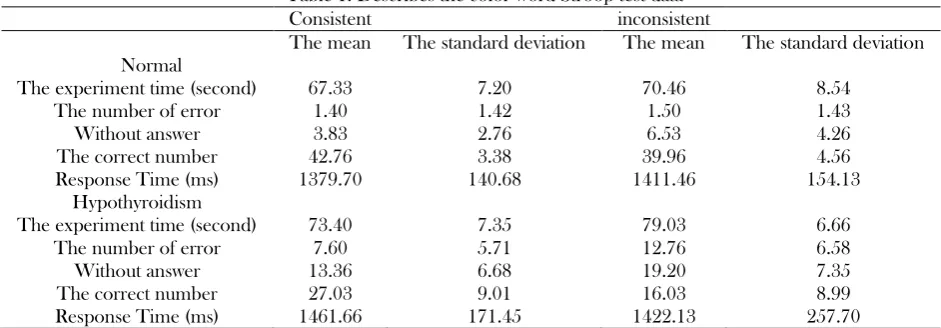
Table 1. Describes the color-word Stroop test data
Consistent inconsistent
The mean The standard deviation The mean The standard deviation Normal
The experiment time (second) 67.33 7.20 70.46 8.54
The number of error 1.40 1.42 1.50 1.43
Without answer 3.83 2.76 6.53 4.26
The correct number 42.76 3.38 39.96 4.56
Response Time (ms) 1379.70 140.68 1411.46 154.13
Hypothyroidism
The experiment time (second) 73.40 7.35 79.03 6.66
The number of error 7.60 5.71 12.76 6.58
Without answer 13.36 6.68 19.20 7.35
The correct number 27.03 9.01 16.03 8.99
Response Time (ms) 1461.66 171.45 1422.13 257.70
Table 1. A. the following findings are obtained in reviewing the consistent test results between normal and hypothyroidism group: the average of test time in the normal group was 6.06 seconds less than hypothyroidism group and standard deviation in the normal group is less than hypothyroidism group . The average number of errors of the hypothyroidism group was 6.2 more than the normal group and
standard deviation of the hypothyroidism group was more than the normal group. The average unanswered number in the hypothyroidism group is approximately 3.5 times the normal group and standard deviation of the hypothyroidism was more than the normal group. In contrast, the average number of correct answers of the normal group is approximately 1.6 times the hypothyroidism group and standard deviation of it is approximately a third of the hypothyroidism group . Average reaction time in the normal group was 81.96 ms less than the hypothyroidism group , but standard deviation of the hypothyroidism group is more than the normal group. Average inconsistent test time in the normal group was 8.56 seconds less than the hypothyroidism group while standard deviation of it is more than the hypothyroidism group. The average number of errors in the hypothyroidism group is 8.51 times the normal group and standard deviation of it is 4.78 times the normal group. In the normal group, unanswered average was 6.53 while it is 19.2 in the hypothyroidism group. Also, standard deviation of the hypothyroidism group is more than the normal group. The average number of correct answers in the normal group, was 2.49 times the hypothyroidism group, but standard deviation of it is less than the hypothyroidism group. Average reaction time in the normal group, is 1411.46 ms while reaction time in the hypothyroidism group is 1422.13 and also, standard deviation of the hypothyroidism group is more than the normal group.
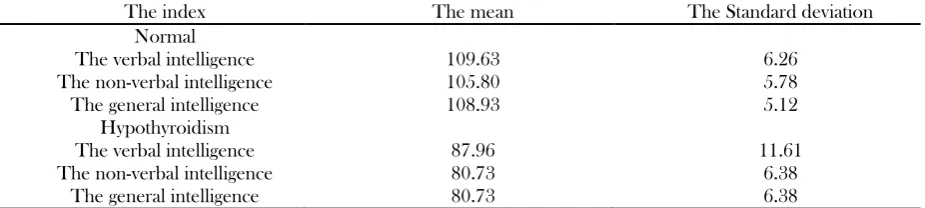
Table 2. Mean and standard deviation of Wechsler Intelligence scale and children revised form.
The index The mean The Standard deviation
Normal
The verbal intelligence 109.63 6.26
The non-verbal intelligence 105.80 5.78
The general intelligence 108.93 5.12
Hypothyroidism
The verbal intelligence 87.96 11.61
The non-verbal intelligence 80.73 6.38
The general intelligence 80.73 6.38
The table 2. The mean verbal IQ in the normal group, is 21.66 score more than the hypothyroidism group while, this difference about the average nonverbal intelligence is 25.06. Also, the average general intelligence in the normal group is 25.53 scores more than the hypothyroidism group. It should be noted that standard deviation in all cases, in the normal group in comparing with the hypothyroidism group is less.
Table 3. Mean and standard deviation of theory inventory of Astpmn mind.
The index The mean The Standard deviation
The normal student 16.41 2.82
Students with hypothyroidism 8.9 3.31
Table 3. Average theory of mind in the normal group is 7.51 score more than the hypothyroidism group. It should be noted that the standard deviation of mind theory in the normal group is lower in comparing with the hypothyroidism group. The results of multivariate tests showed that the difference between the normal group and the hypothyroidism group, in the dependent variables was significant (p<0.05, F (3, 56) = 62.749, Wilks' lambda =0.229).
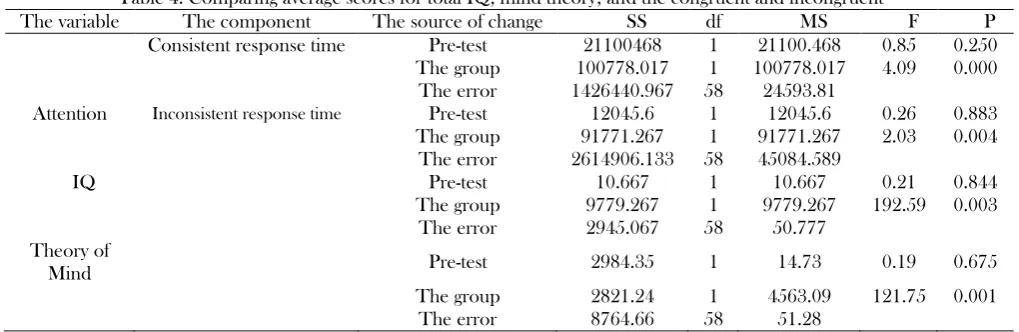
Table 4. Comparing average scores for total IQ, mind theory, and the congruent and incongruent
The variable The component The source of change SS df MS F P
Consistent response time Pre-test 21100468 1 21100.468 0.85 0.250 The group 100778.017 1 100778.017 4.09 0.000
The error 1426440.967 58 24593.81
Attention Inconsistent response time Pre-test 12045.6 1 12045.6 0.26 0.883 The group 91771.267 1 91771.267 2.03 0.004
The error 2614906.133 58 45084.589
IQ Pre-test 10.667 1 10.667 0.21 0.844
The group 9779.267 1 9779.267 192.59 0.003 The error 2945.067 58 50.777
Theory of
Mind Pre-test 2984.35 1 14.73 0.19 0.675
The group 2821.24 1 4563.09 121.75 0.001 The error 8764.66 58 51.28
The results in Table 4: there is a significant difference in terms of overall IQ between the two groups (p<0.001, F (1, 58) =192.59). The average total IQ in children of normal group (M=108.9) is 25.53 score more than the hypothyroidism group (M=83.4). The results also show that there is a significant difference in terms of theory of mind between the two groups (p<0.001, F (1, 58) =121.75). results of one-variable tests showed that there is a significant difference between the two groups in terms of congruent and incongruent reaction time, respectively(p<0.05, F=4.09) and (p<0.05,F=4.09). Average compatible test time in the normal group is 6.07 seconds less than the hypothyroidism group.
5. Discussion
The aim of this research is comparing IQ, the mind theory, and attention of normal and hypothyroidism students. The results showed that hypothyroidism has a significant effect on the different types of IQ. So that the average verbal IQ in the normal group was 21.5 score more than hypothyroidism group and also non-verbal IQ shows 25 score increasing in the normal group into hypothyroidism group. In general, the difference of 25 scores was observed between the overall IQ of the normal group and hypothyroidism group. The results of MAN OVA analysis showed that the overall IQ of Hypothyroidism people and the normal people is different. The results of this study with the results of (Zyrmn, 2007, Rayman, 2007, lontzen, 2009, and Pineda, 2008) is consonant. In the explaining results, it can be said that, hypothyroidism is most likely caused by an autoimmune disorder against the thyroid gland but this safety rather than stimulate it destroys it. The thyroid gland makes thyroiditis in the most patients, which means inflammation of the thyroid. It causes progressive deteriorate, resulting in decreasing or absent secretion of thyroid hormone (Shadan, 2007)) and IQ (lontzen, 2009).
But it should be noted that there are several types of hypothyroidism, often is associated with enlargement of the thyroid gland (thyroid goiter). Thyroid hormones accelerate strongly consumption amount of food to generate energy in the body cells, thus, the growth rate of people is increased too much. The mental actions were induced and activity of large section of endocrine glands is increased. In humans, the effect of thyroid hormones on growth, is appeared mainly in growing children. In children with hypothyroidism, the growth rate is greatly is decreased (Shadan, 2007) and IQ of such children is reduced and they likely fail at schools (Saif, 2002).
The other findings showed that the theory amount of mind in both groups, shows the effect of hypothyroidism on theory of consistent mind. The results of MAN OVA analysis showed that theory of mind of hypothyroidism people with normal people is different. The results of this study are consistent with researches findings. Other findings of this study showed that the amount of attention in both groups shows the effect of hypothyroidism on the amount of consistent reaction time. The results
of MAN OVA analysis showed that congruent and incongruent reaction of hypothyroidism people with normal people is different. The results of this study with the results of (Roth, 2001, Pineda, 2008, Saif, 2002, Chu, 2002, Meles, 2010) is consonant. With the development of the child, his concerns also expand andexceeds the focus and attention to basic needs based on autonomy in limited time and place and includes different issues at different times and places. Well, we know, we live in a world that is full of different stimuli; but at any point in time, we pay attention only to a limited number of different stimuli that surround us. On the one hand, at any time, we are influenced by a series of experiences and out past learning and on the other hand stimuli that surround us, each has specific characteristics. We can define the attention as state that it is made in the person based on the specific nature of the object or phenomenon, especially in terms of individual characteristics (Saif al, 2002).
At the end of early childhood and school age, attention is more careful. Of course, to achieve planned attention, yet more time should be traversed so that when the preschooler is asked to judge about the pictures after details, they cannot be checked properly and completely. Thyroid hormone increases the overall the speed of performing brain acts and the lack of this hormone reduces these actions. The hyperthyroidism person may be incredibly nervous with psychopathic tendencies, such as the collection of anxiety, serve concern or Paranoia. Also, the lack of thyroid hormones causes to be super slow and sluggish muscles and after a contraction slowly return to a resting state (Loraberk, 2007).
One study limitations of the Stroop color-word test because at the beginning of the school year students are familiar with only letters and haven’t inferential power and precise understanding of words, incongruent reaction test is justified very hard. Next restrictions of this study causal - comparative; so, scientific statements cannot be entirely issued such empirical studies. Also in this study variables such as short-term memory capacity and environment food can affect the attention and increasing IQ that they didn’t controlled. Sample limited to elementary students and the impossibility matched in terms of emotional, social, economic and family circumstances, is another limitation of this study that the results should be generalized with caution to different sections and other cities. It is suggested that the usefulness of this research in other higher education sectors to be evaluated.
References
Benoist BD, Andersso NM, Egli I, Takkouche B, Allen H. Iodine status worldwide WHO Global Data base on Iodine Deficiency. Department of Nutrition for Health and Development World Health Organization Geneva. 2004.
Chao MC, Yang P, Hsu HY, Jong YJ. Follow-up Study of Behavioral Development and Parenting Stress Profiles in Children with Congenital Hypothyroidism. Kaohsiung J Med Sci 2009, 25 (11): 588-595.
Egeland, J., Sundberg, H., Andreassen, T.H., & Stensli, O. (2006). Reliability and validity of freedom from distractibility and processing speed factors in the Norwegian WISC-III-version. Nordic Psychology, 58, 136-149.
Epstein, J.N., Conners, C.K., Hervey, A.S., Tonev, S.T., Arnold, L.E., Abikoff, H.B., et al. (2006). Assessing medication effects in the MTA study using neuropsychological outcomes. Journal of Child Psychology and Psychiatry, 47, 446-456. Fagerlund, B., Pagsberg, A.K., & Hemmingsen, R.P. (2006). Cognitive deficits and levels of IQ in adolescent onset
schizophrenia and other psychotic disorders. Schizophrenia Research, 85, 30-39.
Fan, J., McCandliss, B.D., Sommer, T., Raz, A., & Posner, M.I. (2002). Testing the efficiency and independence of attentional networks. Journal of Cognitive Neuroscience, 14, 340-347
Fan, J., Raz, A., & Posner, M. (2003). Attentional mechanisms. In J. M. Amonoff & R. B. Daroff (Eds.), Encyclopedia of neurological sciences (pp. 292-299). Amsterdam, the
Frazier, T.W., Demaree, H.A., & Youngstrom, E.A. (2004). Meta-analysis of intellectual and neuropsychological test performance in attention-deficit/hyperactivity disorder. Neuropsychology, 18, 543-555
Jones EA. (2009) Establishing response and stimulus classes for initiating joint attention in children with autism. Research in Autism Spectrum Disorders; 1 (3): 375-389.
Kempers MJ, Liesbeth V, Ria WG, Nijhuis-van S, Caren I, Martha A (2009). Neonatal Screening for Congenital Hypothyroidism in The Netherlands: Cognitive and Motor Outcome at 10 Years of age. J Clin Endocrinal Metab 2007; 92(3): 919-24.
Luorai B. (2004) Developmental Psychology. Translation: Mohammadiy. Tehran: Arasbaran.) Persian(
Mashhadi A. (2010) Investigation Administrative actions and effect of the therapy) Pharmacotherapy ،Education executive actions and the combination of these two inter venations(The increase in administrative actions and Reduce clinical signs Children with attention deficit is order/hyper activity action. Thesis: Tarbiat Modares University.)Persian(. Melse-Boonstra A, Jaiswal N. (2010) Iodine deficiency in pregnancy, infancy and childhood and its consequences for brain
development. Best Pract Res Clin Endocrinal Metab, 24 (1): 29-38. Netherlands: Academic Press
Pineda-LucateroA ,Avila-Jime´nez L, Ramos-Hernandez RI, Magos C, Martinez H. Iodine deficiency and its association with intelligence quotient in schoolchildren from Colima, Mexico. Public Health Nutr 2008; 11(7): 690-698.
Pliszka SR, Greenhill Lawrence LM, Crimson L. (2000). The Texas Children's Medication Algorithm Project: Report of the Texas Consensus Conference Panel on Medication Treatment of Childhood Attention-Deficit/Hyperactivity Disorder. Journal of the American Academy of Child & Adolescent Psychiatry; 1(3): 412-418.
Rayman M, Sleeth M, Walter A, Taylor A. (2008) Iodine deficiency in UK women of child-bearing age . Br J Nutr; 112(10):1715-1723.
Riccio CA, Reynolds CR, Lowe P, Moor JJ. (2002) the continuous performance test: a window on the neural substrates for attention? Arch Clin Neuropsychology ; 17(3): 235-72.
Rovet JF, Hepworth S. (2001) Attention problems in adolescents with congenital hypothyroidism: a multi componential analysis. J Int Neuropsychology Soc 2001; 7(6):734-44.
Saif Naragi M; Naderi E. (2002) feeling and conception in point of Psychology. Tehran: Badr. 2002.(Persian(
Shadan F, Sedig A. Medicine Physiology. Tehran: Chehr. 2007.) (Persian(
Zimmermann M. Key Barriers to Global Iodine Deficiency Disorder Control: Human Nutrition Laboratory. Swiss Federal Institute of Technology Zürich (ETHZ) January. 2007.