
glossary.pdf
141
0
0
Full text
(2) ! s n o i t i d e p eX National Geographic Expeditions! are referenced within the chapters at point of use, to support or extend chapter content.. Table of Contents Mapping Mount Everest. 864. referenced in Chapters 2 and 20. The Remaking of a River. 870. referenced in Chapters 9 and 27. Really Cool Caves. 874. referenced in Chapter 8. Plunging Into History. 880. referenced in Chapter 16. One Hot Topic. 886. referenced in Chapter 18. Dinosaurs Take Wing. 892. referenced in Chapters 21 and 24. Streams of Hope. 898. referenced in Chapters 25 and 26. NASA’s Eye in the Sky. 902. referenced in Chapters 28, 29, 30, and 31 863.
(3) 864.
(4) Taking Cartography to New Heights. ! s n o i t i d e p eX. Mapping Mount Everest No one could accuse. ● ABOVE: The earliest maps of Mount Everest, compiled in 1921, relied on the work of British surveyors Henry Morshead (right) and Oliver Wheeler. “They were the giants on whose shoulders we stood,” said Bradford Washburn, who remapped Everest more recently. ● LEFT: The highest point on Earth, Everest proved to be a tough subject for remapping. In 1984 a jet plane with sophisticated photographic equipment provided the basis for more accurate depictions than the cartographers of the 1920s were able to achieve.. Bradford Washburn of rushing into his plan to map Mount Everest. Before embarking on such an enormous undertaking, the climber-cartographer thought things over for a while. For 48 years, in fact. What got Washburn thinking was a conversation at National Geographic Society headquarters in Washington, D.C. It was January 1936, and Washburn was working on a report about an expedition he’d led to the Yukon. At the National Geographic Society he ran into an old friend and hero, Captain Albert W. Stevens, who was an aviator and photographer.. NOT-SO-CASUAL CONVERSATION Stevens was writing about his trip aboard the Explorer II, a hot-air balloon that had reached the record height of 22 080 meters (72 395 feet). The flight had given Stevens an idea: Why not fly over Everest? Aerial photographs would be an invaluable tool for mapping Earth’s tallest peak. “It’s a terrific project,” he exulted. Washburn never forgot those words. They took on new force in 1980, when he retired after decades as director of Boston’s Museum of Science. “As I looked around to see what a 70-year-old cartographer with a keen interest in mountains could do,” wrote Washburn, “I remembered that long-ago conversation with Steve.” The project still sounded terrific. 865.
(5) ● LEFT: In a process that took two years, stereophotographs of Mount Everest and its environs were converted into a conventional contour map, which showed the dramatic lay of the land in remarkable detail.. POLITICS AND PLANNING Washburn began with a goal: To map 777 square kilometers (300 square miles) of the world’s most rugged mountain wilderness. The vision was simple; bringing it to life would not be. In fact, it took several years. First, Washburn had to chart a political landscape because Mount Everest straddles the China-Nepal border. Nepal approved the project after China’s consent. “We visited China,” wrote Washburn, “and when we returned we carried with us a treasure that no one had ever brought out of China before—permission to map Everest from the air.” Next, Washburn needed money. Half of the flight costs came from his former employer, Boston’s Museum of Science. National Geographic provided the rest. Finally the team had to schedule the flight carefully. “To make an accurate map,” explained Washburn, “we needed not only cloudless weather but also a mountainscape that was free of loose snow.” December looked like the best time for the expedition. The gales that hit Everest late each fall would sweep the peak clean, and the skies should be clear all winter. In 1984, after almost half a century, Bradford Washburn was ready to map Mount Everest. 866. ● ABOVE: A portrait of Mount Everest from directly above is one of 160 images obtained in the jet’s overflight. The mountain is discernable as a huge pyramid (center left) flanked by glaciers..
(6) TO THE BRINK AND BACK He wasn’t ready for what happened next. The Washburns had barely arrived in Nepal for the longawaited aerial expedition when Barbara Washburn’s temperature began soaring. Her doctors could find no cause, and the fever raged on. Washburn took his wife to Bangkok, Thailand, for specialized medical labs. Thai doctors delivered grim news. Barbara Washburn was dying of cancer and needed to return home immediately. Frantic, Bradford Washburn recruited Barry Bishop to lead the team. Bishop, an Everest veteran, was vice chairman of National Geographic’s Committee for Research and Exploration. Expert pilot Werner Altherr, who worked for Swissair Photo + Surveys of Zurich, agreed to oversee the aerial photography. The expedition would go on—without the Washburns. They were back in Boston, where doctors gladly lifted Barbara Washburn’s death sentence. She did not have cancer; she had a rare blood disease. They had caught it just in time.. ! s n o i t i d e p eX. ● ABOVE: Leader of the project to create a new map of Mount Everest, Bradford Washburn, at left, examines the map (see detail at left) with surveying experts in Berne, Switzerland. ● LEFT: An artist uses an airbrush to create the stark relief on the most accurate and detailed aerial survey of Mount Everest ever accomplished.. SANTA WITH A SWISS ACCENT Barbara Washburn was home from the hospital in time for Christmas. The Washburn’s holiday began with a phone call. Werner Altherr was calling from Switzerland. “I’ve just arrived at Zurich,” he said, “In my briefcase are 160 gorgeous negatives of Everest. This news and my love are a Christmas present to you both from the team in Kathmandu!”. 867.
(7) T LINE. States United. F LIG H. SPACE SHUTTLE COLUMBIA 1983. Infrared Image. ● BELOW: The view of Everest from 12 300 kilometers (40 000 feet) aboard a Learjet was “utterly hazeless, like the surface of the moon,” said aerial photographer Kurt Keller.. Infrared Image. LEARJET 1984 Mt. Everest 8,848 m 29,028 ft. GRE. AT T R. IGO NOM ETR ICA L SU. RVEY O. ● LEFT: Mapping of Mount Everest in the 1980s was preceded by surveys almost 150 years older. British surveyors in the 1840s took sightings of Himalayan peaks from six stations in northern India (bottom of diagram). In 1852, the position and elevation of the peak were determined. It took until 1954, however, to establish the height of Everest at 8848 meters (29 028 feet). The new map in the 1980s made use of this information, plus photos from the Learjet and stereophotographs taken from space by equipment on the space shuttle Columbia in 1983. Subsequent investigations, in the late 1990s, established Everest’s peak two meters (7 feet) higher, at 8850 meters (29 035 feet). F. The flight had gone perfectly, he reported. Aboard a Learjet, the team spent three and a half hours photographing Everest and its Himalayan neighbors. Three hours later, the images were already developed. “It all seemed so very fast,” mused Washburn, “so very easy at the end of so many years of dreaming, hoping, planning.” 868. This text is based on “Mount Everest, Surveying the Third Pole,” in the November 1988 issue of NATIONAL GEOGRAPHIC. Use resources to read about a 1999 expedition that sought to measure Mount Everest..
(8) FAST FLIGHT, PAINSTAKING PROCESSING The next stage of the project was not fast. Valuable though they were, the aerial images were just a starting point for cartographers. The photographs had to be studied carefully and compared with a variety of other resources, including a computer database of old British, Chinese, and Austrian maps of the region. NASA provided infrared images taken when the space shuttle Columbia orbited 250 kilometers (156 miles) above Everest in December 1983. The crystal-clear shots helped Washburn and his team confirm the location of key points. “These are as important to the map,” stressed Washburn, “as a high-quality steel framework is to a big building.” Once the team was satisfied with the data, mapmakers in Switzerland went to work. Portraying the convoluted terrain took thousands of patient hours. Some days a cartographer might complete only a single square inch. Meanwhile, National Geographic researchers worked with experts in Nepal and China to ensure the accuracy of each place-name. The final product—blue, gray, and beautiful—accompanied the November 1988 issue of NATIONAL GEOGRAPHIC. It was, indeed, a triumph.. ! s n o i t i d e p eX. ● LEFT: Space shuttle photographs were useful in evaluating the accuracy of earlier maps of the Himalaya. Because clouds obscured part of the range in this 1984 image made from Challenger as it passed over Everest, the mapping team relied on photographs from the 1983 Columbia flight.. Expeditions Activity Despite the accuracy of hightech equipment for surveying mountain systems and measuring the height of peaks, the figures that scientists have obtained are subject to change even today. Discuss factors that might lead to new measurements and more accurate images of Everest. What are the possibilities for geological changes that would actually alter Everest’s vital statistics?. 869.
(9) 870.
(10) ! s n o i t i d e p eX. Grand Managed Canyon. The. Remaking of a River Lake Powell. “You’re not going. to write about this, are you?” boatman Martin Litton joked Glen Canyon Dam to writer Mike Long. The two men, along with several other passengers from a dory called Grand Canyon the Sequoia, were drying off Lake National Park Mead after capsizing in the Colorado River, the mighty stream that Colorado River carved the Grand Canyon. Long had come to the Colorado Colorado to study the effects River of Glen Canyon Dam, built in Hoover Dam 1963 to provide a reservoir for the thirsty Southwest and to generate hydroelectric power. As part of his fieldwork for NATIONAL ● ABOVE: The Colorado River, GEOGRAPHIC, he embarked on a 451-kilometer (280-mile) ride downwhich used to rage with spring stream. The trip started well. Long saw incredible scenery and gathfloods, is restricted now by Glen Canyon Dam. Today the river rises ered tales about river life. and falls according to the demand Then came Crystal Rapids—“the centerpiece,” wrote Long, “of one of for electric power. the most intimidating half miles of white water in North America.” To make matters worse, an oar escaped from Litton’s left hand, and the ● LEFT: Water rocketed from passengers aboard Sequoia found themselves heading straight into a outlet tubes at the base of Glen two-story-high wave. “I see wavelets frothing on the curling crest,” Long Canyon Dam for seven days in the spring of 1996. The artificial wrote, “and instantly we are flipped like frying eggs, sunny-side down, flood was designed to gather into the green, wet womb of the Colorado.” No one suffered more than sediment from the riverbed to scrapes or bruised pride, but Long’s baptism made one thing clear— rebuild downstream beaches rivers may be dammed, but not necessarily tamed. long eroded by the dam’s fluctuating outflows. 871.
(11) WATER WARS Not that people haven’t tried to tame rivers. Americans at the start of the twentieth century largely saw nature as an obstacle to overcome. Minor details such as a desert climate were no reason not to settle in Arizona, Nevada, or southern California. American ingenuity would get water there somehow. “Somehow” turned out to be more complicated than anyone expected, especially for states along the Colorado River. The very question of who owned the water sparked controversy, and the Colorado, according to a Denver Post columnist, “earned the reputation as the most legislated, litigated, and debated river in the world.” In 1922, seven western states signed the Colorado River Compact, which determined each state’s share of the water. Two decades later, the U.S. guaranteed a portion of the flow to Mexico. Enforcing all these agreements meant wresting control of the river from Mother Nature.. ● ABOVE: On the Colorado River, boaters travel an ecosystem transformed upriver by Glen Canyon Dam. Now available to the masses, Rainbow Bridge is only a half-mile stroll after a comfortable two-hour boat ride from Wahweap Marina on Lake Powell. In predam days, before Lake Powell existed, a mere handful of visitors trudged here. Today more than 300 000 people make the trip each year.. DAMS, DAMS, EVERYWHERE! With scores of reservoirs and diversion dams, hundreds of miles of aqueducts and tunnels, dozens of pumping stations, thousands of miles of canals, and more than 30 hydroelectric plants, the Colorado River basin contains one of the world’s most controlled river systems. Among the jewels in this technological crown is Glen Canyon Dam, authorized by the U.S. Congress in 1956. Located near Page, Arizona, 872. This text is based on “Grand Managed Canyon” in the July 1997 issue of NATIONAL GEOGRAPHIC..
(12) the dam is 92 meters (300 feet) thick at its base. It stands 217 meters (710 feet) high, creating an upstream reservoir known as Lake Powell. The dam’s influence also extends downstream, for nearly 483 kilometers (300 miles). Decades ago, the Colorado raged fierce and wild seasonally through the Grand Canyon. Now it runs year-round like water in a pipe, controlled not by nature but by human need.. ! s n o i t i d e p eX. NEW, IMPROVED NATURE? “The predam Colorado, muddy and fierce,” wrote Long, “rose and fell with the seasons. Carrying millions of tons of sediment, its floods scoured streamside vegetation while depositing enormous sandbars at the river’s edge. A mud-caked cadre of river runners mucked it up in the world-class rapids during the few months of the strong flow, which ebbed to a chilled trickle in winter.” That all changed once the dam was built. Seasonal shifts gave way to a steady flow of clear, cool water. Depending on the amount pumped through Glen Canyon’s hydroelectric plants, the river level rises and falls daily, sometimes by about 4 meters (13 feet). The Colorado now carries much more debris, which alters the dynamics of the river and creates new rapids—including the white water that soaked Mike Long.. WHOSE ECOSYSTEM IS IT, ANYWAY? “One ecosystem was destroyed and replaced by another,” said Ron Arnberger, superintendent of Grand Canyon National Park. Willow and tamarisk plants now crowd the Colorado’s banks. The foliage sustains insects and migratory birds. Yet other birds—cliff swallows and endangered Bell’s vireos, for instance—have declined. Three fish species have vanished. A fourth, the humpback chub, is endangered. Experts disagree on what’s best for the Colorado River ecosystem, and the human thirst for water and electricity further complicates the issue. According to former Secretary of the Interior Bruce Babbitt, “The more we look into our relation to the land, the more likely we will reaffirm natural visions. But final decisions will be made by the American people.”. ● ABOVE: A Bewick’s wren brings its brood a meal of insect larva in a tamarisk tree. ● LOWER LEFT: Tamarisks stand on the shoreline at Eminence Break. Brought to the United States from the Middle East nearly 200 years ago, they now crowd many western waterways. Here they offer food and shelter to birds.. Expeditions Activity Draining Lake Powell and abandoning the Glen Canyon Dam is a subject of much debate. Develop arguments both for and against this possibility. A good place to start might be the Web sites of the Glen Canyon Institute and of the Friends of Lake Powell. You can also search the Environmental News Network for recent developments: Click on their link at earthgeu.com. 873.
(13) 874.
(14) ! s n o i t i d e p eX. Ice Cavers. Really Cool Caves Some of the toughest spelunkers— people who explore caves—don’t see a single rock on their slow, dangerous, exhilarating journeys. That’s because these cavers, a relatively new breed, navigate caves of ice. Icy labyrinths twist and turn within the glaciers that cover 10 percent of the planet’s land surface. The determined adventurers who brave those frigid mazes find them at least as challenging and diverse as the more familiar caves of rock that lie underground. ● ABOVE: Specially designed screws for securing one’s steps in ice enable Stefan Geissler to reach this point, some 15 meters (50 feet) above the floor of an ice cave in southern Germany. ● LEFT: An ice shaft more than 91 meters (300 feet) deep surrounds rappelling adventurers in the Greenland ice sheet. A new breed of explorer is discovering that cave systems in glaciers can be just as challenging as caves underground.. BIRTH OF A GLACIER Glaciers, huge masses of ice that inch over Earth’s surface, form when snow piles up faster than it can melt. Each new snowfall compresses the layers beneath until what were once snowflakes fuse into solid ice. As the ice forms, growing thicker and thicker and heavier and heavier, it begins to creep downward, driven by the force of gravity. As soon as a mass of ice starts moving, it becomes a glacier. Glaciers come in two varieties. Alpine glaciers, which form on mountainsides, resemble frozen rivers. Continental glaciers, also called ice sheets, have a wide mound in the center and spread out in all directions, like pancake batter on a griddle. Ice sheets blanket most of Greenland and Antarctica.. 875.
(15) GLACIERS ON THE GO There’s a reason people complain when something moves at a “glacial pace.” Driven by gravity, glaciers generally creep ever so slowly over the landscape, some advancing by only a few centimeters a day. Alpine glaciers drift downhill, slicing their way through valleys. Continental glaciers spread outward slowly from the center. The layers of a glacier move at different rates. The bottom trudges, slowed by friction with soil and rocks. Icy layers in the middle move more swiftly, and the brittle crust at the top moves fastest of all—fast, that is, for a glacier. Those varying speeds of movement create enormous pressures within glaciers. As the ice flows toward the margin of the glacier, it may encounter obstacles that cause the ice to slow down. The ice may also speed up if the slope of the glacier becomes steeper. The resulting stresses within the glaciers may cause the surface to fracture into deep cracks known as crevasses or produce shifting spaces that form glacial caves deep within.. CHAMELEON CAVES “They are the chameleons of caves,” says German photographerspelunker Carsten Peter of the glacial caves he has explored in Europe 876. ● ABOVE: In search of the perfect ice cave, a team of Italian cavers carefully crosses Moreno Glacier, on Lake Argentino, in the Andes mountains of Argentina. They have to watch for hidden, deep crevasses and for ice that may thinly cover a cave. ● RIGHT: Rising heat from geothermal springs melts an Iceland glacier from the inside out, creating a huge hollow in the ice. Layers of ice, marked by bands of volcanic ash, form a monstrous “eye” that casts its frozen stare on caver Arne Kaiser..
(16) and Greenland. “They change all the time.” Summer warmth often melts some of the ice and snow atop a glacier, creating torrents that both form and erase caves. Slithering through tiny fractures, meltwater can drip down into caves, where frigid temperatures turn the water back into ice. The result: enormous icicles that dangle like bizarre crystal chandeliers. They are an ice cave’s version of stalactites. In addition, geothermal springs within Earth give off heat that melts glaciers from the inside out. The melting makes and endlessly remakes large bowl-like chambers within the ice. Iceland is particularly noted for its geothermal and volcanic activity. Each fall, as the deluge of meltwater recedes, cavers return to Greenland and other glacier sites to explore the latest batch of creations. It’s an opportunity traditional spelunkers can only dream about. “As often as I return,” says Carsten Peter, “I have never entered the same glacial cave twice.”. ! s n o i t i d e p eX. BLEAK BEAUTY During their short lives, glacial caves can be hauntingly gorgeous. Depending on how thick the ice is, refracted sunlight may reach deep into a cave, causing walls to glow deep blue, or slick cave walls may gleam like mirrors. Caves near a glacier’s surface may even have “skylights”—thin, clear sheets of ice that offer glimpses of Sun and clouds.. ● ABOVE: With his helmet light casting a warm glow, Daniel Jehle uses ice axes to climb huge ice stalactites in a cave in Germany. The stalactites formed when meltwater from the surface dripped through tiny fractures and into the cave, where cold air froze it into huge icicles.. 877.
(17) INTO AN ICY WORLD Glacial caves lure spelunkers willing to face discomfort and danger in order to enjoy the fragile beauty. To do so, ice cavers use some of the same tools that traditional cavers employ: ropes, lamps, helmets, and more. Ice cavers also bring tools specially designed for their frozen world. These include screws that dig deep into icy walls, boots with long spikes that keep spelunkers from slipping, and ice axes. In 1995, an Italian expedition took a new approach to exploring glacial caves in Argentina. They suited up like scuba divers and plunged into a flooded maze. With the water barely a degree above freezing, the spelunkers could not stay under for more than a few minutes. Twice, divers found that the air valves on their breathing devices had frozen. Despite these obstacles, the expedition located one of the longest glacial caves yet recorded—1037 meters (3400 feet). The team also faced a challenge that might surprise traditional 878. ● ABOVE: Tracing the path of a stream over ice was a difficult chore, so the Italian cavers in Argentina used fluorescent dye to mark the water, making following its path much easier. ● RIGHT: Some ice caves form extremely close to the surface of a glacier, as this one did in southern Argentina. Only a fragile skin of ice covered the tubular cave— until it broke.. This text is based on “Into the Heart of Glaciers” in the February 1996 issue of NATIONAL GEOGRAPHIC..
(18) spelunkers—distinguishing the water from the walls. “The ice is blue, the water is blue,” explained diver Antonio De Vivo. “It is very difficult to tell the difference between the ice and the water.” Their creative solution? Add fluorescent yellow dye to the water. A season later, of course, that notable cave might have melted away, but the turmoil beneath the surface of Earth’s glaciers always promises replacements—brief, blue, and beautiful.. ! s n o i t i d e p eX. ● ABOVE: Swimming in a flooded ice cave presents its own peculiar difficulty—distinguishing the blue water from the blue ice. Diver Matteo Diana gets help in finding the icy wall with a flashlight.. Expeditions Activity The article describes perils that glacial spelunkers face due to the nature of the ice and water. What advantages might there be to caving in glaciers? Research typical spelunking and compare the dangers that explorers of rock caves face with the dangers faced by those who probe into glaciers.. 879.
(19) 880.
(20) Finding the Titanic. ! s n o i t i d e p eX. Plunging Into History “God himself could not sink this. ● ABOVE: A proud and allegedly unsinkable R.M.S. Titanic departs her berth in Southampton, England, in April 1912, on her fateful maiden voyage to the North Atlantic. ● LEFT: The ghostly hulk of the Titanic lies in her grave more than two miles deep, her bow festooned by decades of rust and sediment.. ship,” boasted a crewman aboard the R.M.S. Titanic. Famous last words. Many aboard the sumptuous liner—the largest and most expensive ship of her era—shared the sailor’s optimism. As the ship left England on her maiden voyage, she seemed the very emblem of technological triumph. Probably most people in America know the unhappy ending. The Titanic hit an iceberg at 11:40 P.M. on April 14, 1912. She sank about two hours later, killing 1522 people. (The ship’s lifeboats saved 705 others.) The “unsinkable” ship didn’t survive a single Atlantic crossing. Yet by sinking, the Titanic achieved gruesome immortality. When scientists found the shipwreck in 1985, they earned attention seldom given to marine exploration.. DEADLY DECISION Fred Fleet was on lookout duty the night the Titanic sank. From his perch in the crow’s nest, he spotted an iceberg directly in the ship’s path, only a quarter of a mile away. He phoned the bridge with a terse, terrifying warning: “Iceberg right ahead!” The officer-in-charge tried to reverse engines while turning hard to starboard (to the right)—a combination that proved fatal. Because the ship was in reverse, the change in steering actually moved her to port 881.
(21) (to the left), and the Titanic’s starboard side hit the iceberg. Six out of 16 watertight compartments flooded, pulling the bow (front) into frigid water. Ironically, the Titanic might have survived a crash head-on. Two or three watertight compartments might have flooded, but that wouldn’t have been enough to sink the ship.. OUT OF SIGHT, MUCH IN MIND Shivering in icy terror, survivors watched the Titanic disappear shortly after 2 A.M. on April 15. “I saw that ship sink,” recalled Eva Hart. “I saw all the horror of its sinking. And I heard, even more dreadful, the cries of drowning people.” Eventually, the screams gave way to utter silence: No one remaining in the -2ºC (28ºF) North Atlantic waters was left alive. Hart and 704 others were the last people to see the Titanic for 73 years. Various expeditions searched for the wreck, but they were defeated by the unpredictable North Atlantic weather, the enormous depth to which the ship sank, and conflicting accounts of her final hours. Meanwhile, books and movies—notably, A Night to Remember, by Walter Lord—helped keep the story alive. The Titanic Historical Society gathered memorabilia, documents, and survivors’ stories. In addition, a Titanic memorial by the Potomac River was included with the many monuments of Washington, D.C.. HIGH TECH ON THE HIGH SEAS On June 28, 1985, a French-American expedition set out to search for the Titanic with the most advanced tools available: side-scan sonar, sonic beacons, submersible video cameras, computers, and much more. Led by Robert D. Ballard and Jean-Louis Michel, the team examined a 386-square-kilometer (150-square-mile) target zone about 644 kilometers (400 miles) south of Newfoundland. Like gardeners mowing a lawn, the expedition’s ships patiently went back and forth, surveying strips of the seafloor. 882. ● ABOVE: A storage area for Titanic lifeboats (top) serves as a landing platform for the manned submersible Alvin, resting on the deck at the far right. This scene was photographed by the remotely operated robot Jason Jr., which is taking a closer look at the same spot (below), peering into a first-class cabin..
(22) Their perseverance paid off at 1:05 A.M. on September 1, 1985. Video cameras aboard the Argo, a submersible research vessel, focused on one of the Titanic’s enormous boilers. It lay some 4000 meters (13 000 feet) beneath the surface. Over the next four days, the expedition shot more than 20 000 pictures of the well-preserved wreck. Marine organisms had devoured much of the woodwork—and any human remains—but the bulk of the ship looked achingly familiar.. ! s n o i t i d e p eX. FACE-TO-FACE WITH THE SHIP On a second expedition, in 1986, Ballard and two colleagues became the first people to actually visit the wreck. Scrunched up in the research submersible Alvin, they had a mishap-filled descent to the bottom. Sonar died, salt water seeped into the sub’s batteries, alarms wailed. The navigator, back at the surface in a support ship, was having difficulty directing them. Hollywood could have scripted the next scene. Just as the pilot was ready to abort the mission, Ballard spotted “an endless slab of black steel rising out of the bottom.” Titanic! Ballard truly was the first. ● ABOVE: The research vessel Knorr, from the Woods Hole Oceanographic Institution in Woods Hole, Massachusetts, floats more than two miles above Titanic. Serving as a support ship for the submersible search vessel Argo, Knorr is specially equipped to allow it to maneuver sideways as well as forward and backward. ● LEFT: Robert Ballard and other members of the joint French-American search team monitor video screens during a descent by Argo.. 883.
(23) 9. High-tech Explorer Plumbs New Depths. 14 10. 5 5. ALVIN 1 Still camera with strobe 2 Manipulator arm with lights and still and video cameras 3 Cable winch and reel 4 Scanning sonar 5 Hatch 6 Titanium sphere 7 Viewing port 8 Jettisonable iron ballast 9 Acoustic telephone 10 Hoisting bitt 11 Tanks for air and variable seawater ballast 12 Batteries 13 Pressure housings for electric controls 14 Thrusters 15 Emergency tether cutter 16 Down-looking, low-light-level, black-and-white TV camera 17 Forwardlooking, low-light-level, black-and-white TV camera. 11. 14 4. 6. 13. 12. 1 17 11 2. 7. 15. 8. 3 16. PAINTING BY WILLIAM H. BOND, NATIONAL GEOGRAPHIC ARTIST. person to see the wreck— a moment he’d spent a lifetime dreaming about and working for. Ballard and his team made 11 more dives. They also dispatched a “swimming eyeball”—a robotic submersible called Jason Jr.—to explore parts of the wreck too small or too dangerous for humans. Such robots, Ballard has argued, represent an essential advance for marine exploration.. SURPRISES ON THE SEAFLOOR Many Titanic experts had believed the doomed ship went down in one piece. But the wreckage suggests a different story. The bow (front) and stern (rear) lie some 400 meters (1200 feet) apart. Ballard theorized that the ship tore apart at the surface. The bow descended first. The stern plunged afterwards and may have rotated en route. “In short,” said Ballard, “the bow landed, the stern crashed.” 884. ● ABOVE: The three-person submersible Alvin carries a tethered robot named Jason Jr. in a so-called garage at the front of the vehicle. Alvin can park and let Jason Jr. explore areas that are too isolated or dangerous for the manned vehicle to enter. ● LEFT: Above the wreck site, divers stand atop the submersible Alvin to secure safety lines that hold Jason Jr.‘s garage as the vehicles are lifted out of the water to the deck of the support ship. Both vehicles are operated by the Woods Hole Oceanographic Institution in Woods Hole, Mass.. This text is based on four NATIONAL GEOGRAPHIC articles: “How We Found Titanic” (December 1985), “A Long Last look at Titanic” (December 1986),” “Epilogue for Titanic” (October 1987), and “Titanic: Tragedy in Three Dimensions” (August 1998)..
(24) Even more surprising was the starboard bow. Titanic accounts had always assumed that the iceberg slashed open the hull, but the expedition found no such wound. Either the fatal gash was lower on the bow, an area that lay buried in mud, or it never existed. Ballard noted, “Titanic’s massive steel plates probably would have been been bent or forced apart rather than ripped open by ice.”. ! s n o i t i d e p eX. TRAGEDY FOR SALE Ballard hoped that only “gentle exploration” would befall the wreck he found: “It would be wrong to attempt recovery of any of the remains.” Not all agreed, and an American entrepreneur secured salvage rights to the ship. Titanic buffs can now see artifacts on exhibit or even buy pieces of coal meant to power the ship. Late in the 1990s, the Titanic inspired a Broadway musical and a Hollywood movie—the first film to gross a billion dollars. The unsinkable ship that sank still sails on in millions of imaginations.. ● ABOVE: A grenadier fish eyes Alvin’s mechanical arm as it pauses above a china cup on the seafloor. The cup still bears the emblem of the White Star Line, a white star on a red flag. ● LEFT: A brass-and-crystal light fixture dangles, decorated by a feathery sea pen. Handsome features abounded in areas such as the skylighted grand staircase (lower) connecting first-class decks.. Expeditions Activity Robert Ballard has discovered the hulks of other famous ships from the 20th century, as well as ancient vessels lost at sea. Which other ships has he discovered? Were the techniques used to find these more recently found vessels similar to the techniques used to find Titanic? Research Robert Ballard—like him, you’ll start to discover some amazing information.. 885.
(25) 886.
(26) Mount Pinatubo’s Eruption. ! s n o i t i d e p eX. One Hot Topic Someone was screaming.. ● ABOVE: Much of the damage inflicted by Mount Pinatubo’s eruption in the Philippines in June 1991 was not immediate. The weight of accumulated ash on roofs, particularly after it mixed with torrential rains, eventually brought down thousands of sheds and homes. ● LEFT: At full blast, Mount Pinatubo lies completely hidden by turbulent clouds of superheated ash that surge from the volcano.. Yowls of terror woke NATIONAL GEOGRAPHIC’s Noel Grove, who was on the Philippine island of Luzon researching an article about volcanoes. He’d borrowed a bed in a small, crowded boardinghouse about 19 kilometers (12 miles) from Mount Pinatubo. The creaking structure didn’t inspire confidence. “I worry about the house,” said the owner. “It isn’t solid.” Seismic waves, rolling through the Earth, struck that night, jolting the house and its edgy inhabitants. Then came those screams, and the veteran writer noticed he was shaking. So was his bed. So was his room. Only then did Grove realize who was yelling—he was.. A DAY OF GEOLOGIC DRAMA Noel Grove, and anyone else near Pinatubo in June 1991, had good reason to be nervous. In the first hours of June 15, the 1760-meter (5770-foot) volcano roared awake after a six-century sleep. Pinatubo belched clouds of gas and ash known as pyroclastic flows. Their temperature: 816ºC (1500ºF). Streams of ash and sulfur dioxide rocketed 40 kilometers (25 miles) into the stratosphere. Another blast at dawn blew away the side of the mountain. So much ash and pumice choked the air that the sky grew black by 887.
(27) Pinatubo: Ready to erupt Eve of eruption 1991 LAVA DOME. OLD CALDERA WALL. afternoon, and chunks of volcanic rock fell like dirty hail. Meanwhile, new pyroclastic flows swept down Pinatubo’s remaining slopes, filling canyons and ravaging farmland. Some flows reached as far as 18 kilometers (11 miles) from the volcano. Evening brought new trauma—earthquakes. Pinatubo’s eruption had created an underground cavern that finally caved in on itself, creating tremors. The remorseless assaults of June 15 now came from below as well as above. It was, said a woman in Manila, “like the end of the world.”. JUST ADD WATER July 1991 brought new suffering, as typhoons struck Luzon, where huge amounts of ash covered the landscape. Pinatubo had ejected enough ash to cover Washington, D.C., 15 stories high. Water and ash blended into a cement-like slurry that soon charged over the terrain in streams called lahars. They snapped power-line poles like twigs and moved cars like cardboard stage props. Lahars also wrecked bridges and waterworks, and obliterated fields and villages. In fact, the deadly torrents destroyed twice as many homes as did the original eruption. 888. Pinatubo sits in the center of a five-kilometer-wide (three-mile) caldera, a depression from an earlier eruption that had made the volcano collapse in upon itself (tilted blocks at left). A new cone formed— a dome of thick clumps of dacite rock overlain by layers of ash–flow deposits. Geothermal vents on the north side of the mountain gave the only clue that the volcano was still active. On April 2, 1991, steam and ash erupted from the site. Monitoring instruments were quickly installed.. ● ABOVE: Quiet for 600 years, Mount Pinatubo was an innocentlooking peak in central Luzon. Then, in April 1991, vigorous steam eruptions, swarms of shallow earthquakes, increased sulfur dioxide emissions, and rapid growth of a lava dome heralded a powerful eruption. Scientists from the Philippine Institute of Volcanology and Seismology, later joined by a team from the U.S. Geological Survey, monitored the vents and called for evacuation of nearby villages. A series of minor explosions began on June 12.. This text is based on the article “Crucibles of Creation: Volcanoes,” in the December 1992 NATIONAL GEOGRAPHIC..
(28) Making matters even worse, lahars reappeared each year during the rainy season. The recurring floods of sludge defeated efforts to rebuild around Pinatubo and left more than a million people homeless. “In terms of magnitude, Mount Pinatubo is unprecedented,” said volcanologist Kelvin Rodolfo. “No lahar flows of this magnitude and duration have ever been recorded [before],” he said.. PINATUBO’S PRICE TAG Nine hundred people perished during the eruption. Five hundred others died of disease or exposure in the rudimentary camps that sheltered some 200 000 evacuees. Volcanic fallout destroyed 42 000 homes, and lahars washed away 110 000 more. Ash laid waste to 40 500 hectares (100 000 acres) of farmland, and that was just one aspect of the devastation that left 650 000 Filipinos with no way to make a living. Damages were estimated conservatively at $440 million. Rebuilding would cost billions.. ! s n o i t i d e p eX ● BELOW: A small dam built to restrain lahars, which are floods of rain-soaked volcanic ash, was undercut by the lahars that followed Pinatubo’s eruption. They scoured out a channel under the dam 18 meters (60 feet) deep.. THE SCIENCE OF SURVIVAL Stunned, homeless, and jobless, the 200 000 people evacuated from the area around Pinatubo before the eruption probably did not feel all that lucky. Yet only a generation earlier, the volcano might have killed. ● LEFT: Masked against the choking gloom of volcanic ash, jobless young men seek assistance—a few of the 650 000 Filipinos who were left without a source of income.. 889.
(29) them. The difference resulted from scientists’ increasing ability to detect volcanic activity early and predict its severity. The first signs that Pinatubo’s long nap was ending came on April 2, 1991, when villagers spotted plumes of steam rising from vents in the mountainside. Filipino scientists raced to the scene, and colleagues came from the United States to pitch in. The volcanologists deployed seismometers to measure movements beneath Pinatubo and tiltmeters to detect any swelling in the mountainsides. “There are no magic new machines,” seismologist Paul Okubo told Grove, “only steady improvement in using what we have.” Airborne instruments monitored gases escaping from the volcano. By May, sulfur dioxide levels had increased tenfold—a warning that new and active magma was rising toward the surface. The scientists also conducted field studies and examined aerial photographs for geological evidence of the extent of previous eruptions. The team found volcanic debris 16 kilometers (10 miles) from the mountain, a sign that Pinatubo had a seriously violent past. The next blast was likely to be dramatic and deadly. By June 11, Pinatubo was beginning to emit ash, and the mountain’s lava dome had doubled in size. Explosion was imminent. Based on the scientists’ findings, Filipino authorities evacuated everyone within 24 kilometers (15 miles) of the volcano. When villagers balked at leaving home, the savvy officials didn’t waste time on lengthy arguments. Instead they showed a video of pyroclastic flows and lahars. Viewers packed quickly.. EARTH NEVER SLEEPS Mount Pinatubo’s 1991 eruption was extraordinary—perhaps the mightiest of the entire twentieth century. Yet it was also oddly ordinary, part of Earth’s long history of violent change. The planet, after all, is home to some 550 known active volcanoes, and a dozen or two are erupting at any given moment. For humans in harm’s way, such eruptions amount to unspeakable tragedy. Yet for Earth itself, represent an essential, vibrant cycle. 890. ● BELOW: Steaming vents called fumaroles were still active eight months after Pinatubo’s violent eruption. Rainwater had collected into a lake in the base of the massive crater.. Expeditions Activity A great many people live close to volcanoes that could erupt in their lifetime. What kinds of precautions should they take? Break up into groups. Each group should act as if it is responsible for emergency planning for a community near a volcano. Consider specific plans for detecting an eruption and for organizing a mass evacuation. Compare plans among the groups..
(30) 1 PYROCLASTIC FLOW. PYROCLASTIC FLOW. 2. 3. 4. 5. Pinatubo’s insides What caused the eruption? Scientists believe that an earthquake in July 1990 allowed floating rock from the upper mantle to squeeze into the magma chamber, which was filled with red-hot, melted stone material. That injection energized the shimmering reservoir and created a fluid, gas–charged magma called andesite. This magma soon rose toward the surface, building a new dome on the northeast slope that corked the system. Pressure in the magma chamber built up rapidly. Probing its way to the surface, the magma finally found a clear conduit, or path. Gas exploded from the lava, and the volcano blasted skyward, destroying the newest dome.. How volcanoes become killers. MAGMA CHAMBER. Majestic cones can turn into lethal monsters. Towering columns of ash collapse (1), raining hot rock and burying whatever lies below, as at Mount Vesuvius, in Italy. Unexpected landslides, like the one at Mount St. Helens in 1980 (2), unleash devastating lateral blasts. Lava domes cave in (3), releasing burning pyroclastic flows, as at Uzen, in Kazakhstan. Lahars, rivers of water– soaked ash (4), smother towns and fields, as they did at Mount Pinatubo and Nevado del Ruiz, in Colombia. A cone can build so steeply that it can’t support itself and collapses in huge landslides (5) that send debris miles downslope—a process discovered in Hawaii. Flowing lava rarely kills, but it can cause widespread property loss..
(31) 892.
(32) Fossils With Feathers. ! s n o i t i d e p eX. Dinosaurs Take Wing Ji Qiang gasped aloud as he opened the green. ● ABOVE: A Sinosauropteryx model peers down with arms extended, ready to pounce on a lizard or small mammal. If its body covering first evolved to preserve heat rather than for display, it would suggest that Sinosauropteryx was warmblooded. Scientists have long debated the question of dinosaur metabolism. ● LEFT: Sealed at death more than 120 million years ago, the eye of a juvenile Sinosauropteryx glints with black carbon that crystalized during fossilization. If growths on the head and neck were primitive plumage, they may have served to trap body heat or as courtship display. Sinosauropteryx has been classified as a theropod, a meat-eating dinosaur.. silk box. As director of the National Geological Museum in Beijing, China, Ji was used to seeing fossils. But this one, sent to Ji in 1996 by a dealer in the far northeastern province of Liaoning, was extraordinary. The more than 120-million-year-old remains belonged to a creature about the size of a chicken (see model at left). The large skull held needle-sharp teeth, and the bony tail was nearly twice as long as the rest of the body. The creature had short, stout forelimbs. Ji and his fellow scientists named the new creature Sinosauropteryx prima, which means “first Chinese dragon feather.” They classified it as a theropod, or carnivorous dinosaur. (Sinosauropteryx’s gut actually held remains from its last meal, a small mammal.) “The fossil looked a lot like a small meat-eating dinosaur,” Ji told National Geographic, “except for one thing.”. “ONE THING” THAT STIRRED SCIENTISTS The “one thing” was a thin, dark ridge along Sinosauropteryx’s back. Looking closer, Ji realized the ridge consisted of tiny fibers— thousands of them (see photograph, opposite). They appeared to be the incredibly well-preserved remains of protofeathers, precursors of the feathers that cover modern-day birds. The find reheated a smoldering debate about the relationship between birds and dinosaurs. Most experts today believe that birds evolved from dinosaurs, a view first espoused by naturalist Thomas Henry Huxley in the 1860s. Hux893.
(33) ley’s critics argued, however, that both birds and dinosaurs descended from a common ancestor, and their theory held for decades. Huxley’s hypothesis found a new champion in the 1970s— paleontologist John Ostrom. Ostrom painstakingly compared newly excavated dinosaur fossils to the remains of the earliest known bird, Archaeopteryx, and was overwhelmed by the similarities. “Dinosaurs did not become extinct,” he proclaimed; they became birds. But scientists still needed a missing link. Sinosauropteryx—a dinosaur that seemed to have feathers—came closer than any other fossil Ji had seen.. MORE FOSSILS, MORE FEATHERS Soon after Sinosauropteryx was discovered, Liaoning Province yielded two more feathered dinosaurs. The region is a paleontologist’s dream, thanks to volcanic ash that smothered the landscape more than 120 million years ago. The fallout killed myriad plants and animals, then preserved them beautifully. No place on Earth has provided more information on the origin of birds. Another Liaoning discovery—Protarchaeopteryx robusta—looked like a larger, more primitive version of Archaeopteryx, the first known bird. Scientists who have examined Protarchaeopteryx’s feathers doubt that the creature could fly. (Archaeopteryx, in contrast, was probably able to fly somewhat.) 894. ● Posed in courtship display, a model of Caudipteryx zoui depicts a creature nearly a meter (3 feet) long that stunned paleontologists when reconstructed from its fossil—a dinosaur with feathers! It is more than 120 million years old. Months before Caudipteryx was found, farmer Li Yin Fang (top, second from right) found the feathered dinosaur Sinosauropteryx prima (previous page)..
(34) Studying Protarchaeopteryx specimens, Ji and Canadian paleontologist Phillip Currie were startled by inconsistencies. “Were we looking at males and females?” Currie wrote. “Was Protarchaeopteryx a creature with much variation?” The two scientists watched eagerly as technician Kevin Aulenback used a microscope and dental tools to scrape excess stone from the fossil. Slowly it became clear that the three men were looking at an entirely new creature. They named it Caudipteryx zoui (Caudipteryx means “tail feather”) for the plumes that the dinosaur probably fanned out when it wooed mates or intimidated enemies (see model at left). A speedy runner, Caudipteryx did not fly. Caudipteryx did, however, share a striking trait with modern birds—a gizzard full of small stones. Such pebbles, called gastroliths, ground food for the dinosaur, which had only a few teeth. Birds today use gastroliths for the same purpose. “Caudipteryx and Protarchaeopteryx,” wrote Currie, “make the dividing line between dinosaurs and birds even less distinct and strengthen the theory that birds evolved from small, carnivorous, ground-dwelling dinosaurs.”. EARLY BIRDS Hundreds of Liaoning fossils have given scientists an extraordinary look at yet another early bird—Confuciusornis sanctus (“sacred Confucius bird”). The species differed from the feathered dinosaurs in a crucial way— it could fly. “Confuciusornis is the earliest bird we know of that could fly for any distance,” said fossil specialist Hou Lianhai, who named the creature. “It had wings nearly as primitive as those of Archaeopteryx, but it had other, more modern features—lighter bones and a shorter tail.”. ! s n o i t i d e p eX. ● ABOVE: Earliest known bird, 150-million-year-old Archaeopteryx was the first fossil evidence linking birds and dinosaurs. ● LEFT: The first fossils of the crow-sized Archaeopteryx came to light in 1861 in the same Bavarian limestone that yielded this single flight feather.. 895.
(35) Evolution of a Wing. alula. Sinosauropteryx. Velociraptor. Unenlagia. Archaeopteryx. Eoalulavis. Typical theropod dinosaur arm. Flexible wrist. Flapping ability. Flight feathers. First alula. Corvus (Crow) Modern wing. 3. 4 2. 8 5 6. 7. 1 BIRDS. DINOSAURS. The Path to Birds 1 Sinosauropteryx. 4 Caudipteryx. 6 Archaeopteryx. Covered with filaments that may have evolved for insulation or display, Sinosauropteryx was a ground-dwelling runner with short arms and threefingered hands.. Straddling the realms of dinosaurs and birds, Caudipteryx is but one in a series of sensational fossil finds in China. A speedy runner, it was covered with primitive feathers that lacked the aerodynamic quality necessary for flight.. The feathers of this bird’s celebrated fossils are asymmetrical, with the leading edge narrower and more streamlined than the trailing edge. This enabled the wings to slice through the air, permitting at least rudimentary flight.. 5 Protarchaeopteryx. 7 Eoalulavis. Another discovery in China, Protarchaeopteryx resembles Archaeopteryx in many ways but is more primitive. The symmetrical feathers on its arms and tail appear longer than those of Caudipteryx, but it probably could not have achieved true powered flight.. Found in Spain, this bird exhibits the earliest known alula, a tuft of feathers attached to the thumb. By altering airflow, the alula permits good maneuverability and control at low flying speeds, crucial for takeoffs and landings.. 2 Velociraptor This predatory theropod, whose fossils were found in Mongolia, was endowed with a wrist bone that permitted the animal’s grasping hands to swivel, helping it capture prey. A flexible wrist is required for powered flight.. 3 Unenlagia. 896. Found in Patagonia, this flightless, 2.5-meter-long (8-foot) creature could move its arms up and down much as a person on a surfboard moves the arms for balance. A precursor to flapping, this action is critical to the flight stroke.. 8 Corvus At the peak of forelimb evolution, the crow and other modern avian species, with their shortened tailbones and expansive wing surfaces, represent the full flowering of the ability to fly..
(36) Unlike Archaeopteryx, which had teeth, Confuciusornis had a toothless beak similar to those of modern birds. The discovery indicated that beaks appeared 70 million years earlier than previously believed. Like birds themselves, scientists’ knowledge was evolving.. CONSENSUS AND A TOUGH QUESTION By 2000, science had largely circled back to supporting Thomas Huxley’s contention that birds were the descendants of dinosaurs. “The anatomical similarities are overwhelming,” said Mark Norell of the American Museum of Natural History, in New York City. Birds and dinosaurs, he pointed out, share more than a hundred features— including wishbones. Yet critics point out that Archaeopteryx is 30 million years older than the feathered dinosaurs from Liaoning. A true missing link, the critics stress, should predate the first bird. Until it appears, they’re tracing birds back to a pre-dinosaur reptile. Even advocates of the dinosaur–bird link concede the need for more, and older, fossils. “We don’t have the evidence to support any kind of direct lineal descent,” said Ostrom. “We’re in the business of connecting dots scattered in time and space.”. This text is based on the article “Dinosaurs Take Wing” in the July 1998 NATIONAL GEOGRAPHIC.. ! s n o i t i d e p eX ● FAR LEFT: Just as humans are mammals, birds belong in the clan of dinosaurs in the view of most paleontologists. The idea that the defining traits of birds first arose in dinosaurs dates from the early arguments of evolutionary theory. This family tree is not a chronological progression, but an illustration of how the traits of the modern wing evolved in different creatures in different places at different times. Feathers that evolved to keep a ground-dweller warm, for example, might give it the ability to glide and better catch prey, leading to more feather development. ● LEFT: Hopes for another big discovery draw scientists to the dig at Sihetun, in China, where layers of rock entomb birds, dinosaurs, plant life, and multitudes of fish. Dating from more than 120 million years ago, the lake bed formation is 31 meters (100 feet) thick and covers 52 square kilometers (20 square miles).. Expeditions Activity Have you ever stopped to ponder the features that make birds so different from ground-dwelling animals? Think about weight, shape, skeleton structure, and feather design. Now list specific traits, such as webbed feet or bald heads, that various birds have developed that allow them to exercise specific behaviors.. 897.
(37) 898.
(38) ! s n o i t i d e p eX. River Restoration. Streams of Hope One day the river ran red. Then green. Then white, or. ● ABOVE: Knee-high with muck, a Boys Club member totes trash pulled from a New Hampshire section of the Nashua River. ● LEFT: Rank and lifeless by the 1960s (inset), the Nashua River in Massachusetts was a toxic stew of sewage, running red with dye from paper mills. Today it’s a haven for anglers and canoeists and a model for communities striving to clean the waters they have fouled.. orange, or maybe even blue. Sound like sci-fi or Dr. Seuss? Alas, no. It’s an actual part of American environmental history. In the 1960s the Nashua River, which flows quietly for 90 kilometers (56 miles) in Massachusetts and New Hampshire, was one of the most polluted streams in the entire United States. Mills along the Nashua produced lumber, shoes, paper, and textiles. For more than a century these industries dumped their waste into the water. Dyes in the wastewater turned the river into such a chameleon that locals used to take bets on what color it would be the next day. People could laugh—darkly—about the changing colors. But there was nothing funny about river fumes that blackened paint on nearby buildings, or about kids being rushed to the doctor for tetanus shots when they got too near the water. It was mortifying that environmental authorities classified the Nashua as unfit for sewage disposal. Perhaps the river was red because it was dying of embarrassment. It was certainly dying of something.. ONE HERO, MANY HANDS Marion Stoddart didn’t plan on letting the Nashua die quietly. When she explored the watershed in the 1960s, she was appalled. “The highest form of life in the North Nashua was sludge worms,” she said. She began a campaign to bring the river back to life. Stoddart knew that she’d need help—lots of it. She reached out to everyone, including labor leaders and businesspeople. “Marion Stoddart didn’t go out there as a lone person in the wilderness,” said Geographic reporter Erla Zwingle. “She did it by making key allies.” 899.
(39) “What we were working to do,” said Stoddart, “was to get everyone on every level working together.” Toward that end, she learned how to present her case in economic as well as environmental terms. Stoddart knew the value of gestures. She presented bottles of polluted river water—emblems of the cost of inaction—to key officials. “Marion Stoddart qualifies as a hero,” said Zwingle, “but the Nashua shows that heroes don’t accomplish things on their own. Everything worked because everybody worked.”. POSSIBLE DREAM So what did this hero and her helpers actually do? Stoddart began by setting an “impossible” goal—making the Nashua safe for swimming. When she presented this demand at a water-pollution hearing, almost everyone was flabbergasted. “Come on, be realistic,” they responded. But Stoddart stood her ground. The people who live near and depend on the Nashua then set about doing the impossible. Mill owners began treating their waste, and citizens pitched in to monitor water quality. With help from the 900. ● ABOVE: On the leaf-flecked Nashua River, student oarsmen are too young to recall the days when capsized boaters raced to a clinic for tetanus shots because the water was so polluted. Although parts of the Nashua River have been successfully cleaned up, much remains to be done in the watershed to improve water quality.. This text is based on the article “Restoration: New Ideas, New Understanding, New Hope” in NATIONAL GEOGRAPHIC’s special issue on water, published in November 1993..
(40) federal government, officials built and upgraded water-treatment plants. There are now eight along the river. Builders, conservationists, and zoning authorities collaborated on creating a “greenway” along half the Nashua and two of its major tributaries. Development is limited in the greenway, which lessens the amount of pollution entering the river. Today you can swim in the Nashua River, and you can bet that its water will be clear again tomorrow.. ! s n o i t i d e p eX. ONE DOWN, THOUSANDS TO GO Magnificent as the Nashua’s rebirth is, it’s just one small stream in a nation with two dozen major watersheds. Making all of them healthy requires a daunting, complex interplay of science, economics, and politics. And it can mean serious costs. Farmers and developers, for instance, may balk at setting fields and houses farther from a stream bank to lessen runoff. Engineers are not often eager to change bridge and highway designs so that a river can meander naturally. Even ecominded towns gasp at the price tag for separating storm drains from sewer lines. These are but a few examples of the challenges in repairing rivers. “I’m optimistic about what we can do,” said river advocate John Cairns, Jr. “I’m pessimistic about what we will do.” Another water expert, pondering the need for cross-border cooperation, asked at a conference, “How do you get people to give up power in order to survive?”. ● ABOVE: When Marion Stoddard explored the Nashua Basin in the 1960s, almost no form of life survived in the river’s polluted waters. Outraged, she has spent 30 years getting industries to treat waste, citizens to monitor water quality, and builders to limit riverbank development. Today the activist canoes the waters she helped revive.. TAKING WATER TO HEART. Expeditions Activity. Perhaps the seed of an answer lies in Marion Stoddart’s defiant proposal—a place to swim. When her neighbors looked at the Nashua and imagined themselves immersed in red (or green or white or orange) water, the river suddenly wasn’t so distant. They were polluting part of their own lives. Cleaning up the Nashua didn’t magically get cheaper or easier, of course, but a clearer connection to the river may have helped people take hard steps on its behalf. Many river advocates stress the importance of such connections, of seeing streams as more than just water. “Water is a living thing,” said Gwichin Indian Chief Clarence Alexander. “We treat it like it’s got a soul of its own.”. If you had to clean up a river, what measures would you take? What activities would you try to stop in order to reduce pollution? What kinds of plants or animals could you introduce to help clean the river? How would protecting or restoring wetlands affect your project? Investigate these issues and report on the cleanup of a specific river, such as the Cuyahoga, in Ohio.. 901.
(41) 902.
(42) ! s n o i t i d e p eX. Hubble Space Telescope. NASA’s Eye in the Sky Hermann Oberth was frustrated.. ● ABOVE: Clouds of gas and dust pour out from the exploding star Eta Carinae at 2.4 million kilometers (1.5 million miles) per hour. Still burning five million times brighter than our Sun, Eta Carinae illuminates the clouds from the inside, like frosted Christmas bulbs. ● LEFT: The Etched Hourglass Nebula is a shell of gas expanding from a dying star.. The German scientist yearned to explore space, but even the best telescopes available to him—to anyone—were hampered by Earth’s atmosphere. The gases that make the planet habitable also distort our views of the heavens. Oberth’s frustration sparked a bold idea: Why not design a telescope that could orbit the planet? It could offer an unparalleled view of the universe. But would it ever exist? Oberth conceived his orbiting telescope in 1923. Air travel was still new; space travel was still science fiction. As the saying goes, he was ahead of his time—by decades. NASA launched two small space telescopes in the 1960s and 1970s, but neither came close to being the marvel that Oberth and others yearned for.. ASTRONOMY’S DREAM MACHINE Five, four, three, two, one—blastoff! In April 1990, four months after Hermann Oberth’s death, the shuttle Discovery set the Hubble Space Telescope (HST) into orbit 595 kilometers (370 miles) above Earth’s surface. Named for American astronomer Edwin Hubble, the telescope would finally offer scientists the undistorted images for which they had waited so long. Hubble promised to be, as headlines and hype put it, a “window on the universe.” The new telescope could create images that were ten times sharper than anything seen from Earth-based observatories. That’s 903.
(43) comparable to distinguishing the headA lights on a car that is 4800 kilometers (3000 miles) away. Hubble’s sharp instruments are sensitive to incredibly faint light; the telescope detects objects that would have to be 50 times brighter before they showed up on a ground-based telescope. Being above the atmosphere, moreover, Hubble can observe ultraviolet wavelengths that do not reach the ground.. A C. INFORMATION ODYSSEY In a day, Hubble transmits enough data to fill an encyclopedia. The process begins when instruments aboard the telescope create digital images of what Hubble has “seen.” B Hubble transmits the images to the Tracking and Data Relay Satellites that orbit Earth. The communications F satellites route the data stream to NASA’s Goddard Space Flight Center in Greenbelt, Maryland. Goddard serves as Edwin Hubble mission control for Hubble. Whenever the telescope is directed to point toward a new target or alter the way it gathers data, the command comes from Greenbelt. Goddard dispatches Hubble data, by telephone links, to the Space Telescope Science Institute in Baltimore, Maryland.. D. G. “EYE DOCTORS” IN ORBIT In 1990 Hubble was aloft, and the mechanisms for getting data to scientists were in place. But Hubble hype turned to horror after the telescope began transmitting images. Where were the crystal-clear shots everyone had expected? Taxpayers roared, and NASA officials cringed. Hubble’s blurry pictures looked as if someone had stretched fine gauze over the lens of a camera. 904. E ● DIAGRAM (ABOVE): Hubble’s “front door” is the Aperture (A), a long tube that collects light particles called photons. The hinged cover closes when the light is too bright. Once inside, photons bounce from the Primary Mirror (B) to the Secondary Mirror (C) to a Spectrograph (D) and a Spectrometer (E) that collect data. The probe’s Solar Panels (F) collect the minimal energy— only about 150 watts—needed to operate the telescope. The solar panels move constantly to stay aligned with the Sun. Hubble’s Fine Guidance Sensors (G) aim the satellite with ten times the accuracy of groundbased telescopes..
(44) ! s n o i t i d e p eX ● TOP LEFT: Astronauts from the Space Shuttle Discovery make repairs to the Hubble Space Telescope. During their week in space in December 1999, the shuttle crew overhauled the telescope for another decade of observation and discovery. Another servicing mission will take place early in the new century. ● BOTTOM LEFT: The miracle of star birth unfolds in the Eagle Nebula. Deep inside pillars of dense, cool gas and dust—the tallest one here measures three light-years in height—molecular hydrogen and dust condense into lumps that contract and ignite under their own gravity to become stars..
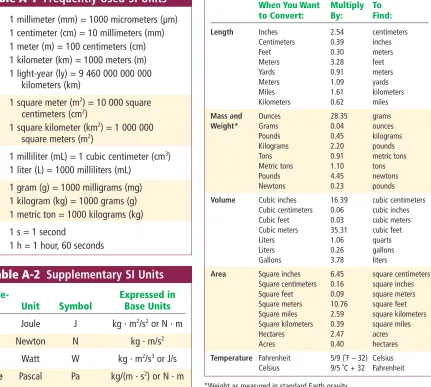
(45) Mars. Uranus. Pluto. Neptune. NASA quickly diagnosed the problem: The primary mirror was slightly defective. As a result, Hubble’s images weren’t focused properly. The eye in the sky needed glasses. Responding to a 911 call from space takes time. The shuttle Endeavour reached the telescope in December 1993. Replacing the primary mirror was impossible, so the astronauts installed supplementary mirrors that compensated for the flaw. At last the telescope could see clearly.. KEEPING THE TELESCOPE IN SHAPE Hubble’s creators had expected occasional repairs and upgrades, so they made sure astronauts could get to the telescope’s key systems. The telescope’s parts were made to be removed and replaced easily. Thus, the shuttle crew can repair the Hubble Space Telescope in orbit, rather than haul it back to Earth. 906. ● ABOVE AND RIGHT: Even the solar system unveiled secrets to Hubble’s powerful eye. No one had clearly seen Pluto’s face before, and no telescope had captured such a sharp picture of Mars. Hubble also provided new looks at clouds on Jupiter and Saturn and at the charcoal black rings of Uranus.. This text is based on “Time Exposures” in the April 1997 issue of NATIONAL GEOGRAPHIC..
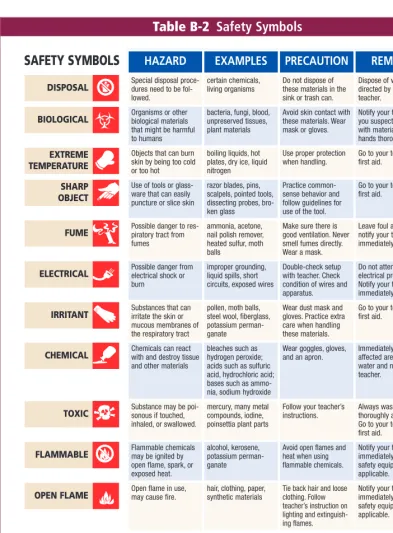
(46) ! s n o i t i d e p eX Saturn. Where Hubble Has Looked North galactic pole. M I L K Y. W A Y Galactic Equator. Galactic Equator Large Magellanic Cloud Small Magellanic Cloud South galactic pole. In 1997 the shuttle Discovery made the second house call to Hubble. In addition to routine maintenance, the astronauts replaced the telescope’s scientific instruments with newer, more powerful devices. They also lifted Hubble about 15 kilometers (9 miles) higher above the planet’s surface. Discovery visited Hubble again in 1999. This third servicing mission replaced the gyroscopes that aim the telescope at targets and installed a new computer that works 20 times faster than its predecessor. NASA originally planned to retire Hubble in 2005, but the telescope’s incredible output—120 000 images of 10 000 objects during the first decade of operation—inspired NASA to think again. The agency announced in 1997 that Hubble would keep its powerful eyes open until 2010. Despite its problems, the Hubble Space Telescope has lived up to—even surpassed—Hermann Oberth’s dream.. Space will never look the same again.. Symbols (in blue) indicate Hubble observations since its launch in 1990.. Expeditions Activity Do you want to know more about Hubble Space Telescope? Consult the April 1997 NATIONAL GEOGRAPHIC article, “Time Exposures”—or explore science.glencoe.com to compare and contrast photos taken by Hubble with earlier images from satellites and space probes.. 907.
(47) Contents Appendix. A. International System of Units . . . . . . . . . . . . . . . . . 909. Appendix. B. Safety in the Laboratory. . . . . . . . . . . . . . . . . . . . . 910. Appendix. C. Physiographic Map of Earth . . . . . . . . . . . . . . . . . . 912. Appendix. D. Topographic Map Symbols . . . . . . . . . . . . . . . . . . . 914. Appendix. E. Weather Map Symbols . . . . . . . . . . . . . . . . . . . . . . 915. Appendix. F. Relative Humidity . . . . . . . . . . . . . . . . . . . . . . . . . 916. Appendix. G. Periodic Table of the Elements . . . . . . . . . . . . . . . . 917. Appendix. H. Minerals . . . . . . . . . . . . . . . . . . . . . . . . . . . . . . . . 918. Appendix. I. Rocks . . . . . . . . . . . . . . . . . . . . . . . . . . . . . . . . . . 920. Appendix. J. Solar System Charts . . . . . . . . . . . . . . . . 921. Appendix. K. Star Charts . . . . . . . . . . . . . . . . . . . 922 50°. 40° 30°. 150° 130° 110°. 90°. 70°. 50° 30°. 20°. 10. 0. 10. 20°. 908 APPENDIX.
(48) International System of Units The International System of Units (SI) is accepted as the standard for measurement throughout most of the world. Three base units in SI are the meter, the kilogram, and the second. Frequently used SI units are listed below. Temperature measurements in SI are often made in degrees Celsius. A Celsius degree (˚C) is a supplementary unit derived from the base unit Kelvin. The Celsius scale has 100 equal graduations between the freezing temperature. (0˚C) and the boiling temperature (100˚C) of water. The following relationship exists between the Celsius and Kelvin temperature scales: K = ˚C + 273 Several other supplementary SI units are listed in Table A-2. If you want to convert measurements in SI/Metric units to English units, use Table A-3. Table A-3 SI/Metric-to-English Conversions. Table A-1 Frequently Used SI Units Length. 1 millimeter (mm) = 1000 micrometers (µm) 1 centimeter (cm) = 10 millimeters (mm) 1 meter (m) = 100 centimeters (cm) 1 kilometer (km) = 1000 meters (m) 1 light-year (ly) = 9 460 000 000 000 kilometers (km) 1 square meter (m2) = 10 000 square centimeters (cm2) 1 square kilometer (km2) = 1 000 000 square meters (m2). Area. Volume. 1 milliliter (mL) = 1 cubic centimeter (cm3) 1 liter (L) = 1000 milliliters (mL). Mass. 1 gram (g) = 1000 milligrams (mg) 1 kilogram (kg) = 1000 grams (g) 1 metric ton = 1000 kilograms (kg). Time. When You Want to Convert:. Multiply To By: Find:. Length. Inches Centimeters Feet Meters Yards Meters Miles Kilometers. 2.54 0.39 0.30 3.28 0.91 1.09 1.61 0.62. centimeters inches meters feet meters yards kilometers miles. Mass and Weight*. Ounces Grams Pounds Kilograms Tons Metric tons Pounds Newtons. 28.35 0.04 0.45 2.20 0.91 1.10 4.45 0.23. grams ounces kilograms pounds metric tons tons newtons pounds. Volume. Cubic inches Cubic centimeters Cubic feet Cubic meters Liters Liters Gallons. 16.39 0.06 0.03 35.31 1.06 0.26 3.78. cubic centimeters cubic inches cubic meters cubic feet quarts gallons liters. Area. Square inches Square centimeters Square feet Square meters Square miles Square kilometers Hectares Acres. 6.45 0.16 0.09 10.76 2.59 0.39 2.47 0.40. square centimeters square inches square meters square feet square kilometers square miles acres hectares. 1 s = 1 second 1 h = 1 hour, 60 seconds. Table A-2 Supplementary SI Units Measurement. Unit. Symbol. Expressed in Base Units. Energy. Joule. J. kg · m2/s2 or N · m. Force. Newton. N. kg · m/s2. Power. Watt. W. kg · m2/s3 or J/s. Pressure. Pascal. Pa. kg/(m · s2) or N · m. Temperature Fahrenheit Celsius. 5/9 (˚F – 32) Celsius 9/5 ˚C + 32 Fahrenheit. *Weight as measured in standard Earth gravity. APPENDIX A. 909.
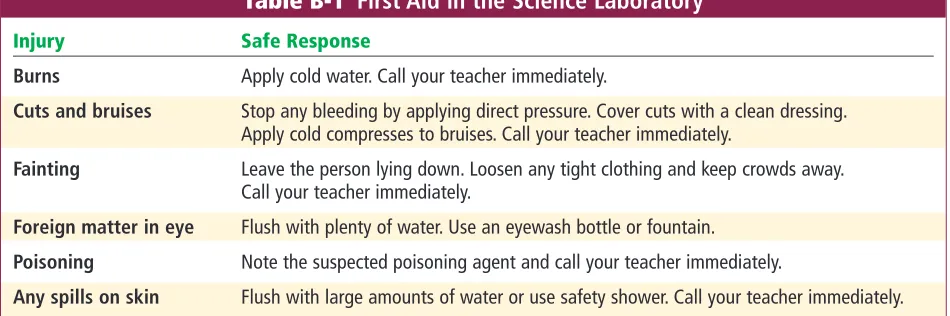
(49) Safety in the Laboratory The Earth Science laboratory is a safe place to work if you are aware of important safety rules and if you are careful. You must be responsible for your own safety and for the safety of others. The safety rules given here will protect you and others from harm in the laboratory. While carrying out procedures in any of the activities or GeoLabs, take note of the safety symbols and caution statements. The safety symbols are listed and explained in Table B-2. SAFETY RULES. 6. If you spill any chemical, wash it off immediately with 7.. 8. 9.. 10.. 1. Always obtain your teacher’s permission to begin an 2.. 3.. 4. 5.. investigation. Study the procedure outline in the text. If you have questions, ask your teacher. Make sure that you understand all safety symbols shown on the page. Use the safety equipment provided for you. Safety goggles and an apron should be worn during all investigations that involve the use of chemicals. When heating test tubes, always slant them away from yourself and others. Never eat or drink in the lab, and never use lab glassware as food or drink containers. Never inhale chemicals. Do not taste any substances or draw any material into a test tube with your mouth.. water. Report the spill immediately to your teacher. Know the location and proper use of the fire extinguisher, eye wash, safety shower, fire blanket, first-aid kit, and fire alarm. Keep materials away from flames. Tie back hair and loose clothing when you are working with flames. If a fire should break out in the lab, or if your clothing should catch fire, smother it with the fire blanket or a coat, get under a safety shower, or use the fire department’s recommendation for putting out a fire on your clothing: Stop, Drop, and Roll. NEVER RUN. Report any accident or injury, no matter how small, to your teacher.. CLEAN-UP PROCEDURES 1. Turn off the water and gas. Disconnect electrical 2. 3.. 4. 5.. devices. Return all materials to their proper places. Dispose of chemicals and other materials as directed by your teacher. Place broken glass and solid substances in the proper containers. Never discard materials in the sink. Clean your work area. Wash your hands thoroughly after working in the laboratory.. Table B-1 First Aid in the Science Laboratory Injury. Safe Response. Burns. Apply cold water. Call your teacher immediately.. Cuts and bruises. Stop any bleeding by applying direct pressure. Cover cuts with a clean dressing. Apply cold compresses to bruises. Call your teacher immediately.. Fainting. Leave the person lying down. Loosen any tight clothing and keep crowds away. Call your teacher immediately.. Foreign matter in eye. Flush with plenty of water. Use an eyewash bottle or fountain.. Poisoning. Note the suspected poisoning agent and call your teacher immediately.. Any spills on skin. Flush with large amounts of water or use safety shower. Call your teacher immediately.. 910 APPENDIX B.
Figure
+3
Outline
Related documents