New Features of User’s Behavior to Distributed Denial of
Service Attacks Detection in Application Layer
https://doi.org/10.3991/ijoe.v14i12.9439
Silvia Bravo (*)
Technical University of Cotopaxi, Latacunga, Ecuador
silvia. [email protected]
David Mauricio
National University of San Marcos, Lima, Peru
Abstract—Distributed Denial of Service (DDoS) attacks are a threat to the security of red. In recent years, these attacks have been directed especially to-wards the application layer. This phenomenon is mainly due to the large number of existing tools for the generation of this type of attack. The highest detection rate achieved by a method in the application capacity is 98.5%. Therefore, the problem of detecting DDoS attacks persists. In this work an alternative of detec-tion based on the dynamism of the web user is proposed. To do this, evaluate the user's characteristics, mouse functions and right click. For the evaluation, a data set of 11055 requests was used, from which the characteristics were extracted and entered into a classification algorithm. To that end, it can be applied once in Java for the classification of real users and DDoS attacks. The results showed that the evaluated characteristics achieved an efficiency of 100%. Therefore, it is concluded that these characteristics show the dynamism of the user and can be used in a detection method of DDoS attacks.
Keywords—DDoS, user’s behavior, application layer, attack detection
1
Introduction
The detection of DDoS attacks is one of the biggest problems facing the security architecture of the network. Therefore, it has become an important factor of study in the field of computer security. A DDoS attack occurs when an attacker coordinates their attacks using several machines, called zombies, towards a specific target or server. The aim of the attacker is to make massive requests to the victim machine to saturate it and that it stops serving the requests of real users.
detection rate obtained is 98.5% [50], of which the dataset used is not available, how-ever for the tests, service requests were simulated and used Sslsqueeze and Slowloris for the generation of attacks.
The detection mechanisms, for the most part, focus their efforts on the network layer. However, currently the largest number of attacks have been directed to the application layer, because they are easy to execute because of the large amount of existing software [50], [58], and more difficult to detect because they are illegitimate requests that they camouflage themselves as requests from real users. So the present work focuses on the detection of attacks in the application layer.
All methods of detection of attacks in the application layer are based on characteris-tics, their efficiency depends on them. However, no detection method contemplates the user's interaction with the system, which is a feature that can differentiate between a human and a robot [55]. In this work we identify new features based on the interaction of the user with the system, specifically its interaction with the mouse (mouse move-ment and right click), and verify its influence on the detection of DDoS attacks.
This work is organized as follows. In section 2, a literature review of the character-istics for the detection of DDoS attacks at the application layer level is made. Section 3 presents the characteristics of user behavior for the detection of attacks, presents the methods used to capture the characteristics and proposes a classification algorithm to identify a real user and a robot, in section 4 the numerical experiments, in section 5 the results and discussions are shown and, finally, the conclusions are presented.
2
Literature review of features
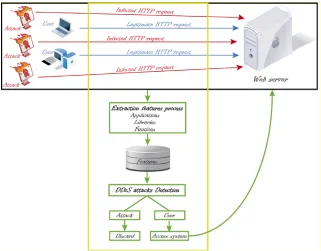
The DDoS attacks in the application layer are characterized by the massive sending of requests, causing limitations in the access to the web services of legitimate users. Figure 1 shows, the transactionality of the system, we observe the requests made by the user or attacker to the web server. In the process of detecting this type of attacks, it is necessary to extract the characteristics of the requests sent to the server. For this, algo-rithms or procedures are used that filter information on characteristics such as distance measurements [59], [60] provided by the request flows [61]. Once the characteristics are obtained, algorithms or classification criteria are used to detect attacks. Machine learning algorithms are commonly used in the classification of real users and DDoS attacks [62]. There are also classification criteria based on Soft computing techniques and its hydrological approach [1]. Finally, when a DDoS attack is detected, these will be discarded from the set of requests, while the requests of the real users enter the web server to obtain a response.
Table 1 shows the characteristics of the data flow of each client, the characteristics of IP packets in a time interval and the behavior patterns of each user. They are ex-tracted at intervals of time when a client connects to a domain [51]. These characteris-tics are of the statistical type and record the client's access to system resources and the frequency with which each client requests a resource in the domain.
process in efficiency and processing time [1]. Therefore, in recent years, the efforts in the detection of DDoS attacks have focused on the search for features that contribute to the detection of attacks in the application layer. Table 1 shows 30 characteristics that are used in the detection of attacks.
The highest detection rate obtained to date is 98.5% and has been achieved using software generated in Python using the Intrusion Detection System (IDS) technique [50]. However, the resources available to attackers are evolving day by day. Therefore, despite the fact that attack detection mechanisms reach high rates, the problem persists.
Fig. 1. Execution and detection of DDoS attack in the application layer
Table 1. Features of application layer
Feature Description Reference
Access pattern Access pattern is constantly repeated, develop a frequent path
detec-tor which involves checking the requests of the complete flow. [53] Average length of
query strings of client Average of consultations made by clients. [56] Click number of web
objects The deviation from the entropy of the training data set fitting to the hidden semi-Markov model can be considered as the abnormality of
the observed data set. [55]
Client legitimacy The legitimacy of a user sending an enormous number of requests is checked against the known client clusters. [57] Duration of the
Entropy of request type
(GET/POST/OTHER) The fractions of request types per connection (GET, POST,or OTHER). [56] Entropy of the requests Entropy to measure the amount of disorder in the flow of the packets
or request in the form of an HTTP GET request at multiple time
slots. [58]
Flow similarity Flow similarity is considered as a key parameter for discriminating
between legitimate and illegitimate flows and a few works [57] Fraction of connections
for domain that accepts any version of English
Connection (e.g., en-us) in Accept-Language.
[56]
Fraction of connections of client that request the most frequent re-source path
A client accesses and also count how often each client requests the
currently most common path on the domain. [56]
Access pattern Access pattern is constantly repeated, develop a frequent path
detec-tor which involves checking the requests of the complete flow. [53] Average length of
query strings of client Average of consultations made by clients. [56] HTTP GET request
count The operation of HTTP starts with a client by sending a request to the server in the form of a request method. [58] IP address Source IP addresses, we are able to classify them into different
traf-fic. [54]
Maximal, minimal and
average packet size Average of these packet numbers and the mutual information of the fast Fourier Transform. [50] Maximal, minimal and
average size of TCP window
Number of packets received at the current time horizon and at the
previous one. [50]
Maximal, minimal and average time to live (TTL)
Account time intervals between subsequent packets of the same
flow. [50]
Number of bytes sent in
1 second Packets in bytes sent from the client to the server and from the server to the client. [50] Number of different
re-source paths of client It includes the number of different resource paths that client has ac-cessed. [56] Number of packets sent
in 1 second Packets sent from the client to the server and from the server to the client. [50] Number of request Requests for the currently open windows and whether the number of
requests for an open window. [53]
Number of users Set of real users accessing a server. [53]
Percentage of en-crypted packets with different properties
Since the traffic may be encrypted it is not always possible to define
what web page these clients request. [50]
Percentage of packets with different TCP flags
As it was mentioned in the previous section, in this study, we
con-centrate on the traffic transferred over TCP. [50]
Session's requests Requests for the currently open windows and whether the number of
requests for an open window. [52]
Sum of incoming pay-load of all clients of do-main
If requests from attacking IP addresses were to be processed,
in-spected, and filtered based on the individual payload. [56]
Sum of outgoing
Sum of response times
of all clients of domain Properties of all clients that interact with the domain in the time in-terval [56] Sum of response times
of client Average durations until the first FIN packet is received and until the connection is closed, as well as the response time. [56] Users browsing process We see average and total length of such browsing sequences. [51] Variance of the entropy Variance of the entropy value, since the value of the variance
pro-vides the variations in the entropy value. [58] Web page requested In the case of an application level DDoS attack, the attack packets
are in the form of web page requests. [57]
3
Feature of user behavior
3.1 Proposed features
The dynamism of the user is the user's interaction with the system and through it it is possible to know the behavior of a user and its difference with others [63]. The au-thentication of a user by means of his behavior has been a task studied from the point of view of information security [64]. Therefore, in order to avoid access by unauthor-ized users, several investigations [63]-[68] have focused their efforts on a process called biometric behavior. Within this process are: the use of keystrokes, mouse dynamics and the interaction with the graphical user interface (GUI) [64] for the identification of us-ers.
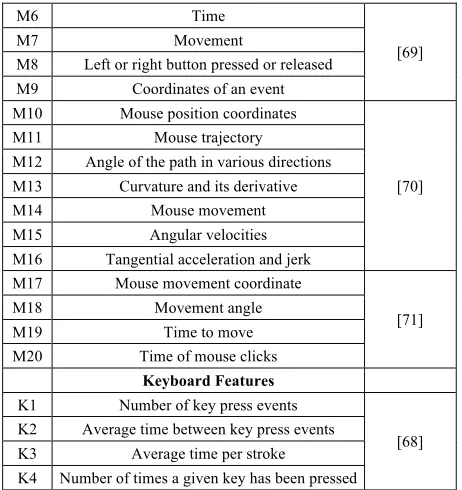
Table 2 shows 24 characteristics that allow detecting the dynamism of the user and differentiating it from another. These characteristics are divided into two groups, these groups arise from the interaction of the mouse or keyboard and the user. In this paper, two characteristics are evaluated (mouse movement and right click), because in the data set used for the evaluation, these characteristics are present.
Mouse movement and right click allow to unequivocally identify a real user of a robot. In the case of mouse movement, a real user moves this peripheral to navigate through the web environment [69]. While right click is a special event that allows ac-cess to drop-down sub-menus, although it is not an event used regularly, it also identi-fies the dynamics of the user and the environment [68]. On the other hand, the robots are generated by specialized software to make the largest number of requests to a sys-tem [1], without the use of any peripheral.
It is worth mentioning that the characteristics presented in Table 2, despite being used in the biometric process to identify a user of another, these have not been proven in the differentiation of real users and robots.
Table 2. Features of the mouse and keyboard
ID Mouse Features Reference
M1 Single-click
[68]
M2 Double-click
M3 Movement offset
M6 Time
[69]
M7 Movement
M8 Left or right button pressed or released M9 Coordinates of an event M10 Mouse position coordinates
[70]
M11 Mouse trajectory
M12 Angle of the path in various directions M13 Curvature and its derivative
M14 Mouse movement
M15 Angular velocities
M16 Tangential acceleration and jerk M17 Mouse movement coordinate
[71]
M18 Movement angle
M19 Time to move
M20 Time of mouse clicks
Keyboard Features
K1 Number of key press events
[68] K2 Average time between key press events
K3 Average time per stroke
K4 Number of times a given key has been pressed
3.2 Features capture
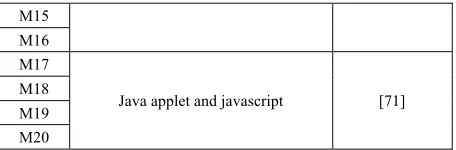
Table 3 describes the characteristics of the mouse that can be captured and the tech-niques used for such purposes. These features can be captured using software developed in programming languages that incorporate libraries or special functions for this [68]-[71].
Table 3. Extraction Features of the mouse
ID Extraction Method Reference
M1
Windows application
(written in C#) [68]
M2 M3 M4 M5 M6
Java (kSquared.de library) [69] M7
M8 M9 M10
NA [70]
M15 M16 M17
Java applet and javascript [71] M18
M19 M20
3.3 Classification algorithm
Figure 2 shows the classification algorithm that allows the identification of DDoS attacks by means of mouse features. The proposed characteristics allow to know if there is an attack or not, the process consists in verifying if the service request includes at least one of the proposed features, which is considered a human user otherwise it is considered a robot. The algorithm calculates the accuracy rate of DDoS attacks by ver-ifying the number of attacks found by the algorithm between the numbers of actual attacks in the dataset.
Fig. 2. Classification algorithm of real users and robots
4
Numerical experiments
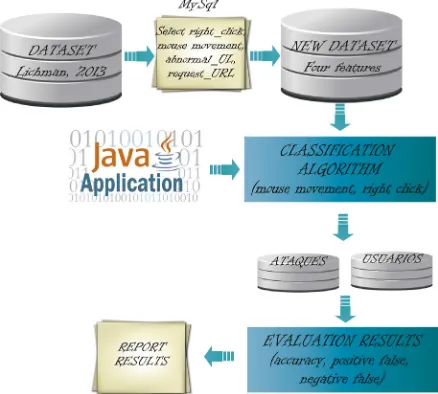
4.1 Detection criteria
of computer attacks, these being: mouse movement and right click. Finally, results re-ports are generated, in which the total number of DDoS attacks and actual users found is shown, as well as the total time spent executing the entire process.
Fig. 3. Validation environment architecture
4.2 Dataset
The dataset used in this work for the validation process of the classification algo-rithm was created by Lichman [72]. It contains 11055, of which 9096 are real users and the rest are DDoS attacks. This data set was selected because it reports the characteris-tics of the mouse to be evaluated. In addition, this data set contains 31 attributes from which four were extracted to perform the validation (right click, mouse movement, ab-normal URL and request URL). It should be noted that, through the URL request fea-ture, it is known whether a request was made to the system or not. On the other hand, the abnormal URL allows identifying the requests that are computer attacks.
4.3 Feature extraction
Fig. 4. Algorithm used for the extraction of features
4.4 Results
The algorithm used to implement the classification criteria was created in Java ver-sion 1.8.0 using NetBeans IDE 8.2. The tests were developed on a machine whose pro-cessor is Intel (R) Core (TM) i7 CPU 2.60 GHz, 8 GB RAM, with Windows 10 oper-ating system. Table 4 shows the attack detection rate obtained using the two character-istics of the mouse, this being 100%, both for the number of real users and for the number of DDoS attacks. This result shows that with the use of software designed for the detection of attacks and the use of the two characteristics of the user's dynamism, the highest precision rate is reached. It is worth mentioning that the time used by the application to perform the classification was 50 milliseconds. It should be mentioned that in this work it is difficult to identify false positives and negatives, because a dataset with exact data is used, where the interaction of the real user in the requests made is observed. Therefore, when a request is made, this is done through interaction with the mouse, otherwise it is a DDoS attack. However, it can be said that with the use of more features and means of data entry, there could be cases of false positives and negatives. These percentages show the importance of these characteristics for the detection of this type of computer attack.
Table 4. Detection efficiency of DDoS attacks
Users Real data Detection criteria Compliance
Rate (%) Execution time (mls)
Real user 9096 9096 100
90
DDoS attacks 1959 1959 100
4.5 Discussion
proposed in other works aimed at detecting DDOS attacks. It is worth mentioning that there are other characteristics of the dynamism of the user that can be considered for the identification of real users and robots (keyboard). However, with the use of more features and means of data entry, cases of false positives and negatives would appear. It should also be noted that with the advance in attack detection mechanisms, attackers find new alternatives to circumvent the mechanisms that are being proposed. Therefore, in the future attackers could falsify the variables that measure the characteristics of user behavior, simulating the input data and identifying a robot as a real user.
5
Conclusion
The review of the state of the art on the variables used in the detection of DDoS attacks at the application layer level shows that 30 variables have been used in the mechanisms published in the last 10 years. In this work we have introduced 24 new features based on the behavior of the web user. They are extracted from the transac-tionality of the user with the system in real time, therefore, they are computationally economic characteristics due to their easy obtaining. The numerical tests were per-formed using a dataset of 11055 requests between real users and attacks. The dataset used in the tests contains two of the 24 variables proposed in this paper for the detection of attacks in the application layer. The evaluation of the two variables (mouse move-ment and right click), using software designed in Java, managed to achieve 100% effi-ciency in the differentiation of real user and robot. Therefore, the right click and mouse movement variables are identified as characteristics of the user's dynamism. Therefore, these variables can be considered for their implementation in DDoS attack detection mechanisms.
6
Acknowledgment
The first author acknowledges the contributions, made by Professor Angel H. Moreno and the Technical University of Cotopaxi for the assigned doctoral scholarship.
7
References
[1]Kumar, P. A. R., & Selvakumar, S. (2011). Distributed denial of service attack detec-tion using an ensemble of neural classifier. Computer Communications, 34(11), 1328-1341.
https://doi.org/10.1016/j.comcom.2011.01.012
[2]Beak, C., Chaudhry, J. A., Lee, K., Park, S., & Kim, M. (2007). A novel packet market-ing method in DDoS attack detection. American Journal of Applied Sciences, 4(10), 741-745.
https://doi.org/10.3844/ajassp.2007.741.745
[3]Chen, Y., Das, S., Dhar, P., El-Saddik, A., & Nayak, A. (2008). Detecting and Prevent-ing IP-spoofed Distributed DoS Attacks. IJ Network Security, 7(1), 69-80.
[5]Anurekha, R., Duraiswamy, K., Viswanathan, A., Arunachalam, V. P., Kumar, K. G., Rajiv-kannan, A. (2012). Dynamic approach to defend against distributed denial of service attacks using an adaptive spin lock rate control mechanism. Journal of Com-puter Science, 8(5), 632-636. https://doi.org/10.3844/jcssp.2012.632.636
[6]Chen, S. W., Wu, J. X., Ye, X. L., & Guo, T. (2013). Distributed denial of service at-tacks detection method based on conditional random fields. Journal of Networks, 8(4), 858.
https://doi.org/10.4304/jnw.8.4.858-865
[7]Sachdeva, M., & Kumar, K. (2014). A traffic cluster entropy based approach to distin-guish DDoS attacks from flash event using DETER testbed. ISRN Communications and Network-ing, 2014. https://doi.org/10.1155/2014/259831
[8]Yau, D. K., Lui, J., Liang, F., & Yam, Y. (2005). Defending against distributed denial-of-service attacks with max-min fair server-centric router throttles. IEEE/ACM Trans-actions on Networking (TON), 13(1), 29-42. https://doi.org/10.1109/TNET.2004.842221
[9]Yaar, A., Perrig, A., & Song, D. (2005). FIT: Fast internet traceback. In INFOCOM 2005. 24th Annual Joint Conference of the IEEE Computer and Communications So-cieties. Pro-ceedings IEEE (Vol. 2, pp. 1395-1406). https://doi.org/10.1109/INFCOM.2005.1498364
[10]Xiang, Y., Li, K., & Zhou, W. (2011). Low-rate DDoS attacks detection and traceback by using new information metrics. IEEE transactions on information forensics and security, 6(2), 426-437. https://doi.org/10.1109/TIFS.2011.2107320
[11]Zhenwei, Y. (2011). Intrusion detection: a machine learning approach (Vol. 3). World Sci-entific.
[12]Ma, X., & Chen, Y. (2014). DDoS detection method based on chaos analysis of net-work traffic entropy. IEEE Communications Letters, 18(1), 114-117. https://doi.org/10.1109/LCO MM.2013.112613.132275
[13]Chen, Y., & Hwang, K. (2006). Collaborative detection and filtering of shrew DDoS attacks using spectral analysis. Journal of Parallel and Distributed Computing, 66(9), 1137-1151.
https://doi.org/10.1016/j.jpdc.2006.04.007
[14]Spyridopoulos, T., Karanikas, G., Tryfonas, T., & Oikonomou, G. (2013). A game theo-retic defence framework against DoS/DDoS cyber attacks. Computers & Security, 38, 39-50.
https://doi.org/10.1016/j.cose.2013.03.014
[15]Seo, D., Lee, H., & Perrig, A. (2013). APFS: adaptive probabilistic filter scheduling against distributed denial-of-service attacks. Computers & Security, 39, 366-385.
https://doi.org/10.1016/j.cose.2013.09.002
[16]Kumar, P. A. R., & Selvakumar, S. (2013). Detection of distributed denial of service at-tacks using an ensemble of adaptive and hybrid neuro-fuzzy systems. Computer Communications, 36(3), 303-319. https://doi.org/10.1016/j.comcom.2012.09.010
[17]Kang, H. S., & Kim, S. R. (2014). sShield: small DDoS defense system using RIP-based traffic deflection in autonomous system. The Journal of Supercomputing, 67(3), 820-836.
https://doi.org/10.1007/s11227-013-1031-7
[18]Xiao, P., Qu, W., Qi, H., & Li, Z. (2015). Detecting DDoS attacks against data center with correlation analysis. Computer Communications, 67, 66-74. https://doi.org/10.1016/j.com com.2015.06.012
[19]Meenakshi, S., & Srivatsa, S. K. (2007). A distributed framework with less false posi-tive ratio against distributed denial of service attack. Information Technology Journal, 6(8), 1139-1145. https://doi.org/10.3923/itj.2007.1139.1145
[21]Udhayan, J., & Babu, M. R. (2013). Deteriorating distributed denial of service attack by recovering zombies using penalty scheme. Journal of Computer Science, 9(11), 1618.
https://doi.org/10.3844/jcssp.2013.1618.1625
[22]Al-Duwairi, B., Al-Qudah, Z., & Govindarasu, M. (2013). A novel scheme for mitigat-ing botnet-based DDoS attacks. Journal of Networks, 8(2), 297. https://doi.org/10.4304/ jnw.8.2.297-306
[23]Wang, Y., & Sun, R. (2014). An IP-traceback-based packet filtering scheme for elimi-nating DDoS attacks. Journal of Networks, 9(4), 874. https://doi.org/10.4304/jnw.9.4.874-881
[24]Chen, S., & Song, Q. (2005). Perimeter-based defense against high bandwidth DDoS at-tacks. IEEE Transactions on Parallel & Distributed Systems, (6), 526-537.
https://doi.org/10.1109/TPDS.2005.74
[25]Kim, Y., Lau, W. C., Chuah, M. C., & Chao, H. J. (2006). PacketScore: a statistics-based packet filtering scheme against distributed denial-of-service attacks. IEEE transactions on dependable and secure computing, 3(2), 141-155. https://doi.org/10.1109/TDSC.2006.25
[26]Chen, Y., Hwang, K., & Ku, W. S. (2007). Collaborative detection of DDoS attacks over multiple network domains. IEEE Transactions on Parallel & Distributed Sys-tems, (12), 1649-1662. https://doi.org/10.1109/TPDS.2007.1111
[27]Chen, R., Park, J. M., & Marchany, R. (2007). A divide-and-conquer strategy for thwarting distributed denial-of-service attacks. IEEE Transactions on Parallel and Distributed Sys-tems, 18(5), 577-588. https://doi.org/10.1109/TPDS.2007.1014
[28]Wang, H., Jin, C., & Shin, K. G. (2007). Defense against spoofed IP traffic using hop-count filtering. IEEE/ACM Transactions on Networking (ToN), 15(1), 40-53.
https://doi.org/10.1109/TNET.2006.890133
[29]Chonka, A., Singh, J., & Zhou, W. (2009). Chaos theory based detection against net-work mimicking DDoS attacks. IEEE Communication Letters, 13(9), 717-719.
https://doi.org/10.1109/LCOMM.2009.090615
[30]François, J., Aib, I., & Boutaba, R. (2012). FireCol: a collaborative protection network for the detection of flooding DDoS attacks. IEEE/ACM Transactions on Networking (TON), 20(6), 1828-1841. https://doi.org/10.1109/TNET.2012.2194508
[31]Chen, Y., Ma, X., & Wu, X. (2013). DDoS detection algorithm based on preprocessing net-work traffic predicted method and chaos theory. IEEE Communications Letters, 17(5), 1052-1054. https://doi.org/10.1109/LCOMM.2013.031913.130066
[32]Wu, X., & Chen, Y. (2013). Validation of chaos hypothesis in NADA and improved DDoS detection algorithm. IEEE Communications Letters, 17(12), 2396-2399.
https://doi.org/10.1109/LCOMM.2013.102913.130932
[33]Luo, H., Lin, Y., Zhang, H., & Zukerman, M. (2013). Preventing DDoS attacks by iden-tifier/locator separation. IEEE network, 27(6), 60-65. https://doi.org/10.1109/MNET. 2013.6678928
[34]Luo, J., Yang, X., Wang, J., Xu, J., Sun, J., & Long, K. (2014). On a Mathematical Mod-el for Low-Rate Shrew DDoS. IEEE Trans. Information Forensics and Security, 9(7), 1069-1083. https://doi.org/10.1109/TIFS.2014.2321034
[35]Mirkovic, J., & Reiher, P. (2005). D-WARD: a source-end defense against flooding denial-of-service attacks. IEEE transactions on Dependable and Secure Computing, 2(3), 216-232.
https://doi.org/10.1109/TDSC.2005.35
[36]Lee, F. Y., & Shieh, S. (2005). Defending against spoofed DDoS attacks with path fin-ger-print. Computers & Security, 24(7), 571-586. https://doi.org/10.1016/j.cose.2005.03.005
[37]Al-Duwairi, B., & Manimaran, G. (2006). Distributed packet pairing for reflector based DDoS attack mitigation. Computer communications, 29(12), 2269-2280.
[38]Lee, K., Kim, J., Kwon, K. H., Han, Y., & Kim, S. (2008). DDoS attack detection meth-od using cluster analysis. Expert systems with applications, 34(3), 1659-1665.
https://doi.org/10.1016/j.eswa.2007.01.040
[39]Lu, W. Z., Gu, W. X., & Yu, S. Z. (2009). One-way queuing delay measurement and its application on detecting DDoS attack. Journal of Network and Computer Applica-tions, 32(2), 367-376. https://doi.org/10.1016/j.jnca.2008.02.018
[40]Doron, E., & Wool, A. (2011). Wda: A web farm distributed denial of service attack atten-uator. Computer Networks, 55(5), 1037-1051. https://doi.org/10.1016/j.com-net.2010.05.001
[41]Zhang, C., Cai, Z., Chen, W., Luo, X., & Yin, J. (2012). Flow level detection and filter-ing of low-rate DDoS. Computer Networks, 56(15), 3417-3431. https://doi.org/10.1016/j.com-net.2012.07.003
[42]Wang, F., Wang, H., Wang, X., & Su, J. (2012). A new multistage approach to detect subtle DDoS attacks. Mathematical and Computer Modelling, 55(1-2), 198-213.
https://doi.org/10.1016/j.mcm.2011.02.025
[43]Rahmani, H., Sahli, N., & Kamoun, F. (2012). DDoS flooding attack detection scheme based on F-divergence. Computer Communications, 35(11), 1380-1391.
https://doi.org/10.1016/j.comcom.2012.04.002
[44]Lee, S. M., Kim, D. S., Lee, J. H., & Park, J. S. (2012). Detection of DDoS attacks using optimized traffic matrix. Computers & Mathematics with Applications, 63(2), 501-510.
https://doi.org/10.1016/j.camwa.2011.08.020
[45]Varalakshmi, P., & Selvi, S. T. (2013). Thwarting DDoS attacks in grid using infor-mation divergence. Future Generation Computer Systems, 29(1), 429-441.
https://doi.org/10.1016/j.future.2011.10.012
[46]Li, L., & Lee, G. (2005). DDoS attack detection and wavelets. Telecommunication Systems, 28(3-4), 435-451. https://doi.org/10.1007/s11235-004-5581-0
[47]Kulkarni, A., & Bush, S. (2006). Detecting distributed denial-of-service attacks using kol-mogorov complexity metrics. Journal of Network and Systems Management, 14(1), 69-80.
https://doi.org/10.1007/s10922-005-9016-3
[48]Xiao, B., Chen, W., & He, Y. (2006). A novel approach to detecting DDoS attacks at an early stage. The Journal of Supercomputing, 36(3), 235-248. https://doi.org/10.1007/ s11227-006-8295-0
[49]Kang, S. H., Park, K. Y., Yoo, S. G., & Kim, J. (2013). DDoS avoidance strategy for service availability. Cluster computing, 16(2), 241-248. https://doi.org/10.1007/s10586-011-0185-4
[50]Zolotukhin, M., Kokkonen, T., Hämäläinen, T., & Siltanen, J. (2016). On Application Layer DDoS Attack Detection in High-Speed Encrypted Networks.
[51]Dick, U., & Scheffer, T. (2016). Learning to control a structured-prediction decoder for de-tection of HTTP-layer DDoS attackers. Machine Learning, 104(2-3), 385-410.
https://doi.org/10.1007/s10994-016-5581-9
[52]Xie, Y., & Yu, S. Z. (2009). Monitoring the application-layer DDoS attacks for popu-lar websites. IEEE/ACM Transactions on Networking (TON), 17(1), 15-25.
https://doi.org/10.1109/TNET.2008.925628
[53]Ranjan, S., Swaminathan, R., Uysal, M., Nucci, A., & Knightly, E. (2009). DDoS-shield: DDoS-resilient scheduling to counter application layer attacks. IEEE/ACM Transactions on networking, 17(1), 26-39. https://doi.org/10.1109/TNET.2008.926503
[55]Zhou, W., Jia, W., Wen, S., Xiang, Y., & Zhou, W. (2014). Detection and defense of ap-plication-layer DDoS attacks in backbone web traffic. Future Generation Computer Sys-tems, 38, 36-46. https://doi.org/10.1016/j.future.2013.08.002
[56]Huang, C., Wang, J., Wu, G., & Chen, J. (2014). Mining Web User Behaviors to Detect Application Layer DDoS Attacks. JSW, 9(4), 985-990. https://doi.org/10.4304/jsw.9.4.985-990
[57]Saravanan, R., Shanmuganathan, S., & Palanichamy, Y. (2016). Behavior-based detec-tion of application layer distributed denial of service attacks during flash events. Turkish Journal of Electrical Engineering & Computer Sciences, 24(2), 510-523.
https://doi.org/10.3906/elk-1308-188
[58]Johnson Singh, K., Thongam, K., & De, T. (2016). Entropy-Based Application Layer DDoS Attack Detection Using Artificial Neural Networks. Entropy, 18(10), 350.
https://doi.org/10.3390/e18100350
[59]Gavrilis, D., & Dermatas, E. (2005). Real-time detection of distributed denial-of-service at-tacks using RBF networks and statistical features. Computer Networks, 48(2), 235-245.
https://doi.org/10.1016/j.comnet.2004.08.014
[60]Nguyen, H. V., & Choi, Y. (2008). Proactive detection of DDoS attacks using k-NN classi-fier in an Anti-DDoS Framework. International Journal of Computer System Science and Engineering, 247-252.
[61]Wang, D., Chang, G., Feng, X., & Guo, R. (2008). Research on the detection of distrib-uted denial of service attacks based on the characteristics of IP flow. In IFIP Interna-tional Con-ference on Network and Parallel Computing (pp. 86-93). Springer, Berlin, Heidelberg.
https://doi.org/10.1007/978-3-540-88140-7_8
[62]Xiang, Y., & Zhou, W. (2005). Mark-aided distributed filtering by using neural net-work for DDoS defense. In GLOBECOM'05: IEEE Global Telecommunications Con-ference, 28 No-vember-2 December 2005 St. Louis, Missouri, USA, discovery past and future (pp. 1701-1705). IEEE Globecom.
[63]Ghezzi, C., Pezzè, M., Sama, M., & Tamburrelli, G. (2014). Mining behavior models from user-intensive web applications. In Proceedings of the 36th International Con-ference on Software Engineering (pp. 277-287). ACM. https://doi.org/10.1145/2568225.2568234
[64]Stevanovic, D., & Vlajic, N. (2014). Application-layer DDoS in dynamic Web-domains: Building defenses against next-generation attack behavior. In Communica-tions and Net-work Security (CNS), 2014 IEEE Conference on (pp. 490-491). https://doi.org/10.1109/ CNS.2014.6997519
[65]R. J. Urban. (2015). Detection of exit behavior of an Internet user. U.S. Patent Appli-cation No 14/829,409.
[66]Abramson, M., & Aha, D. W. (2013). User Authentication from Web Browsing Behav-ior. In FLAIRS conference (pp. 268-273).
[67]Kim, Y., & Kim, I. (2014). Involvers' Behavior-based Modeling in Cyber Targeted At-tack. Proceedings of SECURWARE.
[68]Shen, C., Cai, Z., Guan, X., Du, Y., & Maxion, R. A. (2013). User authentication through mouse dynamics. IEEE Transactions on Information Forensics and Security, 8(1), 16-30.
https://doi.org/10.1109/TIFS.2012.2223677
[70]Graepel, T., Candela, J. Q., Borchert, T., & Herbrich, R. (2010). Web-scale bayesian click-through rate prediction for sponsored search advertising in microsoft's bing search engine. Omnipress.
[71]Gamboa, H., & Fred, A. L. (2003). An Identity Authentication System Based On Hu-man Computer Interaction Behaviour. In PRIS (pp. 46-55).
[72]M. Lichman. (2013). UCI Machine Learning Repository [http://archive.ics.uci.edu/ml]. Ir-vine, CA: University of California, School of Infor-mation and Computer Science.
8
Authors
Silvia Bravo was born in Latacunga, Ecuador. She graduated from the Technical University of Cotopaxi in 2007, where she received the title of “Computer Science”. She is currently pursuit a Ph.D. from National University of San Marcos within the Doctoral Program of “Computer and System”. She is currently working as a professor and researcher at the Faculty of Engineering Science, in the Technical University of Cotopaxi. Her research activity is mainly focused on the software development and informatics security.
David Mauricio was born in Lima, Peru. He graduate from the National San Marcos University in 1987, wherehe received the title of “Computer Science”. He obtained the title of “Master in Mathematics Applied” from the Federal University of Rio de Janeiro, Brazil, in 1991. In 1994, he obtained the title of “Doctor in Systems Engineering” from the Federal University of Rio de Janeiro. He is currently working as a professor at the Faculty of Systems Engineering, in the National Mayor de San Marcos University and scientific consultant in National Council for Science and Technology (CONCYTEC). His research activity is mainly focused on the Combinatorial optimization, Designs and analysis of algorithms, Heuristics search, Metaheuristics, Mathematical programming, Expert systems, Data mining, Artificial intelligence.