Research Article
© 2018 John Michael V. Faller. This is an open access article licensed under the Creative Commons Attribution-NonCommercial-NoDerivs License (http://creativecommons.org/licenses/by-nc-nd/3.0/).
Quality Assurance Implementation, Management Practices, and
Staff Performance in the Technical Colleges of the
Sultanate of Oman: Inputs for a Quality Intervention Program
John Michael V. Faller
Coordinator, College Research and Consultancy, Ibra College of Technology Doi: 10.2478/ajis-2018-0046
Abstract
The research endeavored to analyze the impact of quality assurance on management practices and staff performance in the Technical Colleges of the Sultanate of Oman. The use of a quantitative research approach and a correlational research design was deemed necessary in order to address the research objectives. The respondents of the study comprised of the different faculty, staff, and administrators from various technical colleges. It was revealed that there was a very satisfactory level of quality assurance implementation in terms of general standards in higher education (m=3.87) and in the implementation of the standards of good practice in higher education (m=3.97). There was a satisfactory level of quality assurance implementation of the standards of the National Qualifications Framework (m=3.49) and the implementation of the standards in approval and accreditation process (m=3.42). In terms of the management practices profile, an overall very satisfactory level was recorded in the said colleges. This is indicated by the overall mean score level of 3.82. An overall very satisfactory level of staff performance was obtained in the said colleges. This is indicated by the overall mean score level of 3.71. All of the null hypotheses were rejected in favour of the research hypotheses, which means that there was significant relationship between all the quality assurance implementation and staff performance, quality assurance implementation and management practices, and staff performance and management practices. Implications for management and future research are provided.
Keywords: Implementation, quality assurance, management practices, staff performance, quality intervention program
1. Introduction
Over the past few decades, there has been a significant increase in the use of quality management among educational institutions (Ardi, Hidayanto, and Zagloel, 2012). Educational institutions have deployed a plethora of strategies which includes quality assurance, team, total quality management, Six Sigma, and others. Quality programs have been profoundly used in higher education across the globe as quality management issues continue to grapple educational institutions. The past decades have been marked by a substantial interest in quality assurance in various academic institutions. However, despite debates on quality throughout the world, quality concept in its application to higher education has yielded inconclusive results (Asif, 2015).
minimal research on how quality assurance (QA) impacted management practices and staff performance of Oman-based educational institutions.
This research analyzes the impact of quality assurance on management practices and work performance of the staff of the Colleges of Technology in the Sultanate of Oman. It tried to find out the answer to the research question through determining the extent of correlation among the different focal variables such as the extent of quality assurance implementation, management practices, and staff performance in selected technical colleges of the sultanate. In more specific premise, the study addressed the following research question: how has quality assurance impacted management practices and work performance of the staff in the technical colleges in the Sultanate of Oman?
Primarily, this study aimed to contribute theoretically and empirically to the continuous improvement of organizational performance of the different technical colleges in the Sultanate of Oman. Foremost, through this study, several theoretical assumptions on the nature and correlation between quality assurance, management practices, and staff performance could be verified and tested. In other words, the variables that were specified in the study would operationalize certain theoretical assumptions of the said constructs, which could contribute to the verification on the applicability of certain theories and framework. Second, the study also aimed to empirically contribute to the continuous improvement of organizational performance. This was operationalized through the analysis of the aforesaid organization’s current conditions in terms of its quality assurance practices as well as the performance of its staff and the management practices as one of the measures of organizational performance.
Based on the literatures reviewed, several empirical works have confirmed the impact of quality assurance practices on both the management practices and staff performance. Harvey (2006) affirmed the positive impact of quality assurance on the management practices of an organization, while Sunder (2016) used perception-based techniques of the staff to assess the impact of quality assurance on the positive changes in their institutions. Nonetheless, the two studies did not go beyond the correlation of the three variables that are specified in this study which include the correlation between quality assurance and management practices, between quality assurance and staff performance, and between management practices and staff performance.
The research of Sadikoglu and Bulger (2014) tackled the impact of total quality management, which is related to quality assurance, but it only focused on employee involvement, awareness and commitment of the employees, inappropriate firm structure, and lack of the resources. In other words, it did not explore the three focal variables that are identified in this research. In the same manner, Kagaari et al (2010) conducted a research that only focused on the relationship between performance management practices, employee attitudes and managed performance. Although, Zehir et al (2012) investigated whether TQM activities affect quality and/or innovative performance, their research did not consider the moderating variable that is specified in this study. Al-Qahtani, Alshehri and Abdulaziz (2015) and Jaafreh (2013) only analyzed the impact of Total Quality management (TQM) practices and strategies on organizational performance.
Harvey (2006) and Shams (2017) conducted an empirical study that tackled the relationship between quality assurance implementation practices and the management practices in an organization. But their studies involved organizations that are not related to the field of education. It was the researches of Belawati and Zuhairi (2007), Fuentes et al (2000), Ryan (2015), Garwe (2012), Woodhouse and Stella (2011), and Tsevy (2015) which utilized respondents who belong to an educational context or organization.
It is evident that aforementioned empirical studies mostly confirmed the correlation between quality assurance and the staff performance. However, most of the studies have used non-educational research locale such as in the research conducted by Sadikoglu and Bulger (2014), Zehir et al (2012), Al-Qahtani et al (2015), Jaafreh (2013), Dedy et al (2015), Joiner (2007), Stephen et al (2017), Zahari and Zakuan (2016), and Mukonyo (2014). Only the research of Mashagba (2014) had utilized an educational research context particularly the university setting.
Brenan (2014), and Ngima and Kyongo (2013). Nonetheless, an ex-post facto or causal comparative design was used in the study of Okon and Ison (2016) in order to determine the correlation between management practices and the level of staff performance. It was Stephen (2014) and Kagaari et al (2010) who used employee-respondents in an educational organization while the other researchers opted for employee-respondents in non-educational sectors.
Thus, the present research addresses the research gaps of the previous empirical works that were not addressed so far. In more specific terms, the present study addressed these gaps by using a contextualized methodology and by exploring variable combinations such as the relationship between quality assurance and management practices, between quality assurance and staff performance, and between management practices and staff performance.
Through the aforementioned discussion of the different research gaps observed in the previous studies and the critical review of related literature, the current study was able to formulate specific hypotheses, which are as follows:
1. The link between the literature and the hypothesis on the relationship between quality assurance implementation and the level of staff performance
2. The link between the literature and the hypothesis on the relationship between quality assurance implementation and the management practices
3. The link between the literature and the hypothesis on the relationship between management practices and the level of staff performance
2. Theoretical/Conceptual Framework
A number of theories and frameworks serve as this study’s anchor. The Integrated Approach in Organizational Development proposed by the Office of State Personnel of North Carolina (2016) emphasized the inclusion of three vital strategies in order to bring about effective organizational modification and improvement such as behavioural strategy, structural strategy, and technical strategy. The Six-Box Model of Weisbord (1978) for organizational development emphasized that organizational elements interact with each other in the process of continuous quality improvement. The Systems Theory is another relevant underpinning in this research. According to Beer and Huse (1972), the Systems Theory acknowledges the significance of inputs, processes, or throughputs. Inputs could comprise the needs and expectations in the institution such as the need to enhance the quality of education and management practices in the Technical Colleges of Oman.
3. Design and Methods
In this study, quantitative research methodology was applied. It made use of two data collection methodologies such as the primary and secondary data. Primary data were obtained using first-hand sources such as eliciting the responses from the selected respondents (Dimou & Kameas, 2016). Secondary data were obtained from both conceptual and empirical literatures, which served as supporting discourse to the results that were obtained from the actual data collection process. The use of correlational research design was imperative.
There are three main phases in this research process: the preliminary phase, the formal research data gathering phase, and the post data gathering phase. The preliminary phase comprised the literature review, selection of research tools and methodological framework, and the construction and validation of research instruments. The formal data collection phase followed after the preliminary phase was completed. The final phase or the post data gathering phase involved the coding of the individual responses of the respondents with the use of SPSS, which is a statistical software. Statistical coding was imperative since the research adapted a quantitative research approach with a descriptive-correlational research design.
primary elements of higher education in the Sultanate of Oman.
The ideal sample size is usually computed through the Slovin formula. At the onset of the research, this formula for computing the sample size was proposed with the margin of error of 10% while a confidence level of 80% for both the technical staff and faculty respondents. Moreover, a margin of error of 30% and confidence level of 80% was set for administrator-respondents. Hence, total of 233 faculty members, 144 technical staff, and 28 administrators were deemed necessary as respondents of the study.
Three sets of instruments were used in order to measure the variables of the study. The first set is the Quality Assurance Implementation Questionnaire, which aims to measure the level of observance of the organization to the standards of quality assurance based on its handbook. The second set is the Management Practices Questionnaire. This research instrument aims to measure the different management practices that are applied in the organization. It also adapts a rating scale format and is measured quantitatively. The final set is the Staff Performance Questionnaire. This is also a quantitative-oriented research tool that aims to measure the level of staff performance based on an individual’s designation in the organization.
In general, descriptive statistics was used in summarising the data on the quality assurance implementation, management practices, and the level of staff performance. Moreover, the Pearson Product Moment Correlation was used in testing the three null hypotheses of the study. The following research hypotheses were tested under .05 level of significance.
H1: There is a significant relationship between the College quality assurance implementation and the level of staff performance.
H2: There is a significant relationship between College quality assurance implementation and the extent of management practices.
H3: There is a significant relationship between management practice and staff performance. The following are the formula for the aforesaid statistical tools:
Weighted Mean:
where;
X = weighted mean h = weight
f = frequency
Pearson Product Moment Correlation (Pearson r):
where;
r = coefficient of correlation N = number of cases X = dependent variables Y = independent variables
4. Results and Discussions
4.1 Quality Assurance Implementation Profile
Table 1. Extent of Quality Assurance Implementation of the Technical Colleges in Oman: Implementing the General Standards in Higher Education
Indicators Mean Score Level Interpretation
1. The quality assurance system has a clear definition on the general
classification of institutions. 3.50 Satisfactory
2. There is a clear description on the level and range of programs as
Indicators Mean Score Level Interpretation 3. Conditions on the accreditation of programs in the institution are well
articulated. 3.88 Very Satisfactory
4. The institution’s scale of activity is clarified in the quality assurance
system. 4.10 Very Satisfactory
5. The quality assurance system looks into the changes in the level or
range of programs. 4.09 Very Satisfactory
Total 3.87 Very Satisfactory
Qualitative Interpretation Legend: 1.0 – 1.5 = Poor; 1.6 – 2.5 = Fair; 2.6 – 3.5 = Satisfactory; 3.6 – 4.5 – Very Satisfactory; 4.6 – 5.0 = Excellent
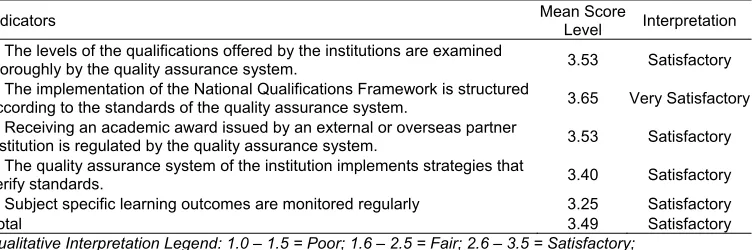
Table 2. Extent of Quality Assurance Implementation in the Technical Colleges of Oman: Implementing the Standards of the National Qualifications Framework
Indicators Mean Score Level Interpretation
1. The levels of the qualifications offered by the institutions are examined
thoroughly by the quality assurance system. 3.53 Satisfactory
2. The implementation of the National Qualifications Framework is structured
according to the standards of the quality assurance system. 3.65 Very Satisfactory 3. Receiving an academic award issued by an external or overseas partner
institution is regulated by the quality assurance system. 3.53 Satisfactory 4. The quality assurance system of the institution implements strategies that
verify standards. 3.40 Satisfactory
5. Subject specific learning outcomes are monitored regularly 3.25 Satisfactory
Total 3.49 Satisfactory
Qualitative Interpretation Legend: 1.0 – 1.5 = Poor; 1.6 – 2.5 = Fair; 2.6 – 3.5 = Satisfactory; 3.6 – 4.5 – Very Satisfactory; 4.6 – 5.0 = Excellent
Table 3. Extent of Quality Assurance Implementation in the Technical Colleges of Oman: Implementing Standards in Approval and Accreditation Process
Indicators Mean Score Level Interpretation
1. The quality assurance system has well-defined process in the approval
and accreditation of programs. 3.60 Very Satisfactory
2. Approval processes are implemented according to the standards set. 3.35 Satisfactory 3. Self-evaluation and audits are carried out according to the defined
standards. 3.27 Satisfactory
4. Accreditation processes follow the timings set by the organizations and
the quality assurance body. 3.38 Satisfactory
5. There exist certain mechanisms for self-study on the quality standards
implemented by the institution. 3.48 Satisfactory
Total 3.42 Satisfactory
Qualitative Interpretation Legend: 1.0 – 1.5 = Poor; 1.6 – 2.5 = Fair; 2.6 – 3.5 = Satisfactory; 3.6 – 4.5 – Very Satisfactory; 4.6 – 5.0 = Excellent
Table 4. Extent of Quality Assurance Implementation in the Technical Colleges of Oman: Implementing Standards of Good Practice in Higher Education
Indicators Mean Score Level Interpretation
1. The quality assurance system ensures the accountability of the different
divisions in the institution. 4.04 Very Satisfactory
2. Teaching and learning processes are regulated by the quality assurance
through different audit procedures. 3.99 Very Satisfactory
system.
4. The financial planning and human resource management of the institution
are regularly evaluated by the quality assurance system. 4.02 Very Satisfactory 5. Research in higher education and good community relationships are
encouraged by the quality assurance of the institution. 3.88 Very Satisfactory
Total 3.97 Very Satisfactory
Qualitative Interpretation Legend: 1.0 – 1.5 = Poor; 1.6 – 2.5 = Fair; 2.6 – 3.5 = Satisfactory; 3.6 – 4.5 – Very Satisfactory; 4.6 – 5.0 = Excellent
4.2 Management Practices in the Technical Colleges of Oman
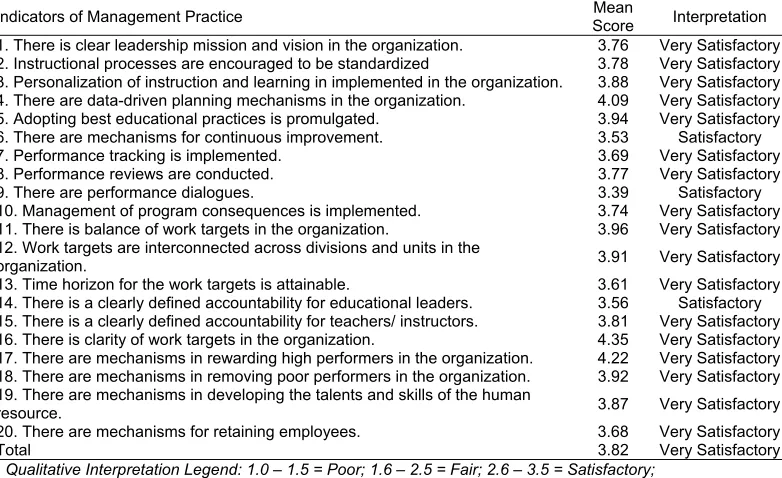
Table 5. Management Practices in the Technical Colleges of Oman
Indicators of Management Practice Mean Score Interpretation
1. There is clear leadership mission and vision in the organization. 3.76 Very Satisfactory 2. Instructional processes are encouraged to be standardized 3.78 Very Satisfactory 3. Personalization of instruction and learning in implemented in the organization. 3.88 Very Satisfactory 4. There are data-driven planning mechanisms in the organization. 4.09 Very Satisfactory 5. Adopting best educational practices is promulgated. 3.94 Very Satisfactory
6. There are mechanisms for continuous improvement. 3.53 Satisfactory
7. Performance tracking is implemented. 3.69 Very Satisfactory
8. Performance reviews are conducted. 3.77 Very Satisfactory
9. There are performance dialogues. 3.39 Satisfactory
10. Management of program consequences is implemented. 3.74 Very Satisfactory 11. There is balance of work targets in the organization. 3.96 Very Satisfactory 12. Work targets are interconnected across divisions and units in the
organization. 3.91 Very Satisfactory
13. Time horizon for the work targets is attainable. 3.61 Very Satisfactory 14. There is a clearly defined accountability for educational leaders. 3.56 Satisfactory 15. There is a clearly defined accountability for teachers/ instructors. 3.81 Very Satisfactory 16. There is clarity of work targets in the organization. 4.35 Very Satisfactory 17. There are mechanisms in rewarding high performers in the organization. 4.22 Very Satisfactory 18. There are mechanisms in removing poor performers in the organization. 3.92 Very Satisfactory 19. There are mechanisms in developing the talents and skills of the human
resource. 3.87 Very Satisfactory
20. There are mechanisms for retaining employees. 3.68 Very Satisfactory
Total 3.82 Very Satisfactory
Qualitative Interpretation Legend: 1.0 – 1.5 = Poor; 1.6 – 2.5 = Fair; 2.6 – 3.5 = Satisfactory; 3.6 – 4.5 – Very Satisfactory; 4.6 – 5.0 = Excellent
4.3 Staff Performance in the Technical Colleges of Oman
Table 6. Staff Performance in the Technical Colleges of Oman
Indicators of Management Practice Mean Score Interpretation
1. Arrives for work on time 3.47 Satisfactory
2. Arrives for meetings on time 3.76 Very Satisfactory
3. Meets work deadlines 3.84 Very Satisfactory
4. Identifies problems 3.98 Very Satisfactory
5. Proposes solutions to problems 3.80 Very Satisfactory
6. Takes appropriate actions on problems as necessary. 3.46 Satisfactory
7. Sets appropriate priorities for tasks. 3.53 Satisfactory
8. Uses time effectively. 3.63 Very Satisfactory
9. Consults with supervisors and co-workers as necessary. 3.44 Satisfactory
10. Works without supervision as necessary. 3.56 Satisfactory
11. Demonstrates effective leadership skills as appropriate. 3.59 Satisfactory
12. Demonstrates initiative as appropriate. 3.49 Satisfactory
Indicators of Management Practice Mean Score Interpretation 14. Deals effectively and professionally with employees in other areas. 3.57 Satisfactory 15. Responds appropriately to feedback on job performance. 3.59 Satisfactory 16. Demonstrates appropriate knowledge of the best work
17. practices and policies relevant to the position. 4.10 Very Satisfactory 18. Demonstrates appropriate interactions with target clientele. 4.00 Very Satisfactory 19. Demonstrates appropriate interactions with the public. 3.98 Very Satisfactory 20. Deals appropriately with confidential information. 3.90 Very Satisfactory
21. Manages information and data effectively. 4.03 Very Satisfactory
Total 3.71 Very Satisfactory
Qualitative Interpretation Legend: 1.0 – 1.5 = Poor; 1.6 – 2.5 = Fair; 2.6 – 3.5 = Satisfactory; 3.6 – 4.5 – Very Satisfactory; 4.6 – 5.0 = Excellent
4.4 Acceptance/Rejection of Research Hypothesis
Table 7. Correlation between the Extent of Quality Assurance Implementation and the Level of Staff Performance
Variables Coefficient P-Value Interpretation
Implementing the General Standards in Higher
Education and Level of Staff Performance .571 .000 Highly Significant Implementing the Standards of the National
Qualifications Framework and Level of Staff
Performance .514 .000 Highly Significant
Implementing Standards in Approval and Accreditation Process and Level of Staff
Performance .700 .000 Highly Significant
Implementing Standards of Good Practice in Higher
Education and Level of Staff Performance .620 .000 Highly Significant Overall Extent of Quality Assurance
Implementation and Level of Staff Performance .952 .000 Highly Significant
Level of Significance = .05
Table 8. Acceptance/Rejection of Research Hypothesis 1
Hypothesis # Statement of Hypothesis Decision
H1 There is a significant relationship between the College quality assurance implementation and the level of staff performance. Accept
H01 There is no significant relationship between the College quality assurance implementation and the level of staff performance. Reject
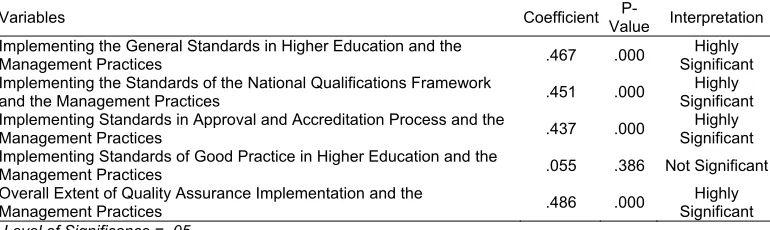
Table 9. Correlation between the Extent of Quality Assurance Implementation and the Level of Management Practices
Variables Coefficient Value P- Interpretation
Implementing the General Standards in Higher Education and the
Management Practices .467 .000 Significant Highly
Implementing the Standards of the National Qualifications Framework
and the Management Practices .451 .000
Highly Significant Implementing Standards in Approval and Accreditation Process and the
Management Practices .437 .000
Highly Significant Implementing Standards of Good Practice in Higher Education and the
Management Practices .055 .386 Not Significant
Overall Extent of Quality Assurance Implementation and the
Management Practices .486 .000
Highly Significant
Table 10. Acceptance/Rejection of Research Hypothesis 2
Hypothesis
# Statement of Hypothesis Decision
H2 There is a significant relationship between College quality assurance implementation and the extent of management practices. Accept
H02 There is no significant relationship between College quality assurance implementation and the extent of management practices. Reject
Table 11. Correlation between the Level of Management Practices and the Level of Staff Performance
Variables Coefficient P-Value Interpretation
Level of Staff Performance and the Management Practices .446 .000 Highly Significant
Level of Significance = .05
Table 12. Acceptance/Rejection of Research Hypothesis 3
Hypothesis # Statement of Hypothesis Decision
H3 There is a significant relationship between management practice and staff performance. Accept
H03 There is no significant relationship between management practice and staff performance. Reject
Table 13. Summary of Hypotheses Testing Decisions
Hypothesis # Statement of Hypothesis Decision
H1 There is a significant relationship between the College quality assurance implementation and the level of staff performance. Accept
H01 There is no significant relationship between the College quality assurance implementation and the level of staff performance. Reject
H2 There is a significant relationship between College quality assurance implementation and the extent of management practices. Accept
H02 There is no significant relationship between College quality assurance implementation and the extent of management practices. Reject
H3 There is a significant relationship between management practice and staff performance. Accept
H03 There is no significant relationship between management practice and staff performance. Reject
In terms of the profile of quality assurance implementation of the Technical Colleges of Oman, it was indicated that there was very satisfactory overall level in terms of the general standards in higher education, which is indicated by the overall mean score level of 3.87. The strongest aspect in the quality assurance implementation of the general standards in higher education of the colleges was seen in the process of clarifying the institution’s scale of activity or operations, while the weakest aspect was seen in the process of having a clear definition on the general classification of institutions.
There was an overall satisfactory level of quality assurance implementation of the standards of the National Qualifications Framework (NQF), which is indicated by the overall mean score level of 3.49. The strongest aspect in the quality assurance implementation of the standards of the National Qualifications Framework (NQF) was seen in the process of adapting a structured manner of NQF implementation based on the standards of the QA system, while the weakest aspect was seen in the process of monitoring the subject-specific learning outcomes.
well-defined process in the approval and accreditation of programs, while the weakest aspect was seen in the process of carrying out self-evaluation and audits according to the defined standards. This was indicated by the mean score level of 3.37, which is categorized to be a satisfactory level of quality assurance implementation.
Similarly, there was a very satisfactory overall level of quality assurance implementation of the standards of good practice in higher education in these colleges, which is indicated by the overall mean score level of 3.97. The strongest aspect in this category of quality assurance implementation was seen in the aspect of ensuring the accountability of the different divisions in the institution. This is indicated by the highest mean score level of 4.04. The weakest aspect in this category of quality assurance implementation was seen in the process of encouraging research in higher education and good community relationships. This is indicated by the lowest mean score level of 3.88.
In terms of the management practices profile, an overall very satisfactory level was recorded in the said colleges. This is indicated by the overall mean score level of 3.82. The strongest aspect in the management practices of the Technical Colleges was seen in the process of adapting mechanisms for the clarity of work targets in the organization. This is indicated by the highest mean score level of 4.35. Conducting performance dialogues was seen to be the weakest aspect in the management practices of the Technical Colleges in Oman. This is indicated by the mean score level of 3.39, which is categorized to be a satisfactory level of management practices.
An overall very satisfactory level of staff performance was obtained in the said colleges. This is indicated by the overall mean score level of 3.71. Demonstrating appropriate knowledge of the best work practices and policies relevant to the position was seen to be the strongest aspect in the staff performance in these colleges. This is indicated by the highest mean score level of 4.10. The weakest aspect in the performance of the staff in the aforesaid colleges was reflected in the area of consulting with supervisors and co-workers as necessary. This is indicated by the lowest mean score level of 3.44, which is categorized as a satisfactory level of staff performance.
All of the null hypotheses were rejected in favour of the research hypotheses. The decision was based on the p-values of the computed test statistics reflected in the previous sections. To be specific, the results revealed that there is a highly significant relationship between the overall quality assurance implementation and the level of staff performance, which is indicated by the Pearson Product Moment Correlation Coefficient of .952 with a p-value of .000 that is lower than .05 level of significance. It also affirmed that there is a highly significant relationship between the overall quality assurance implementation and the level of management practice, which is indicated by the Pearson Product Moment Correlation Coefficient of .486 with a p-value of .000 that is lower than .05 level of significance. It was also evident that there is a highly significant correlation between the level of management practices and the level of staff performance in the said colleges, which is indicated by the coefficient value of .446 and a p-value of .000, which is lower than .05 level of significance.
4.5 Validation of the Research Framework and the Findings of the Study
One of the assumptions is the correlation between the extent of quality assurance implementation and the level of staff performance. In this assumption, which was the basis in the formulation of first hypothesis, the independent variable is the extent of quality assurance implementation in the Technical Colleges of Oman while the dependent variable is the level of staff performance. Based on the results of the study, this assumption inherent in the research framework was affirmed. For example, it was confirmed that there was a correlation between the two which was indicated by a p-value that is lower than .05 level of significance. Such affirmation is supported by the principles of the Integrated Approach in Organizational Development (Office of State Personnel of North Carolina, 2016), which views that improvements and enhanced performance in an organization are influenced by several factors such as the coordinated behavioural, structural, and technical strategies that are applied. In relation to the results, it can be stated that the level of staff performance is a result of these coordinated behavioural, structural, and technical strategies that are intrinsic in the implementation of quality assurance system. As can be noted, there is a generally very satisfactory level of quality assurance in these colleges.
study is the correlation between the quality assurance implementation and the extent of positive management practices. Based on the results of the correlation profile and the hypothesis testing section, the relationship between the two was indicated by their p-value that is lower than .05 level of significance, resulting to the rejection of the null hypothesis. This is also supported by the principles of the Integrated Approach in Organizational Development (Office of State Personnel of North Carolina, 2016) as seen in the aforementioned paragraphs. In other words, because the extent of quality assurance implementation of the said colleges is very satisfactory, the implementation of positive management practices was inherent as well. Using the Six-Box Model of Weisbord (1978) for organizational development, such results are supported theoretically. Based on the said model, organizational elements interact with each other in the process of continuous quality improvement. This implies that once there is an effective implementation of quality assurance, which is an example of organizational element, then the positive management practices of the organizational leaders would also be guaranteed.
The third assumption of the research framework is the correlation between the management practices and the level of staff performance. This assumption was affirmed based on the results of hypothesis testing and the computation of the p-values of the same. In relation to this, it is evident that the Systems Theory of Beer and Huse (1972) strong support in terms of the nature of such correlation. The Systems Theory acknowledges the significance of inputs, processes or throughputs. This basically means that the very satisfactory management practices of the Technical Colleges are the inputs and throughputs that led to the very satisfactory level of staff performance.
5. Conclusions and Recommendations
This study is grounded on the research question: How has quality assurance impacted management practices and work performance of the staff in the technical colleges in the Sultanate of Oman? Based on the arguments and the discourse reflected in the previous chapters, it is evident that this research question has been addressed. Foremost, the research was able to formulate a research framework that includes the major variables of the research question; namely, quality assurance implementation, level of staff performance, and management practices. This was also operationalized by constructing a relevant research framework supported by the empirical and theoretical literatures that led to the development of the three research hypothesis.
Based on the result of the study, the aforesaid research question was thoroughly addressed. This is reflected in the affirmation of the three research hypotheses. For example, the first research hypothesis on the relationship between quality assurance of the Technical Colleges and the level of staff performance was accepted. Its acceptance proves the verity of the influence of the independent variable (quality assurance implementation) on the dependent variable which is the level of staff performance.
To further explore the research question on how quality assurance impacted the management practices and work performance of the staff in the technical colleges in the Sultanate of Oman, one has to look into the direct positive correlation of the focal variables. In other words, the quality assurance implementation of the Technical Colleges of Oman has a positive influence on the management practices and the level of staff performance in the organization. Thus, it is important to aver that because of the very satisfactory manner of implementation of the quality assurance system in the said colleges, it has impacted the positive quality of management practices and the very satisfactory level of staff performance.
From the aforementioned results, it can be concluded that there are areas within the Technical Colleges that need improvement. This includes the weak areas in various variable categories such as adapting a clear definition on the general classification of institutions, monitoring the subject-specific learning outcomes, carrying out self-evaluation and audits according to the defined standards, encouraging research in higher education and good community relationships, conducting performance dialogues, and consulting with supervisors and co-workers as necessary.
understanding the different divisions of the organization on the relative importance and nature of quality assurance system, and realigning the current constructs of the quality assurance system based on the needs of the organization and the national frameworks.
Increasing the level of staff performance would be intrinsic once the quality assurance implementation and management practices are reinforced and promulgated effectively based on the approved standards of practice. Its implementation, however, need to be monitored and evaluated regularly in order to provide an evidence-based inputs for continuous improvement.
Future research on the quality assurance implementation, level of management practices, and level of staff performance in higher education may utilize various research approaches and research designs. This includes the utilization of mixed-method approaches or the combination of quantitative and qualitative approaches in data collection and treatment. Conducting meta-analysis of previous studies with the same set of variables would also prove significant since it could provide a substantial empirical baseline for research design formulation.
Finally, in order to address the limitations of the quantitative approach, it is recommended that future research may opt for a mixed-method approach in addressing research question that deal with the same line of inquiry. This means that the combination of both quantitative and qualitative research approaches could be implemented in prospective researches that aim to explore the focal variables on the extent of quality assurance implementation, management practices, and the level of staff performance. Focus Group Discussion (FGD) could be part of the qualitative means of data collection. This technique could highly support and further explore the numerical ratings made by the respondents with the use of rating scales and other similar research instruments.
References
Al-Qahtani, N., Alshehri, S., and Abdul-Aziz, A. (2015) The impact of Total Quality Management on organizational performance. [Online] Available from: http://www. iiste.org/Journals/index.php/EJBM/article/view/27529 [Accessed 20 October 2017].
Ardi, R., Hidayanto, A., Zagloel, Y., (2012) Investigating relationships among quality dimensions in higher education. Quality Assurance in Education, 20 (4), 408-428.
Asif, M. (2015) Determining improvement needs in higher education benchmarking. Benchmarking: An International Journal, 22 (1), 56-74.
Asrar-ul-Haqak, M. and Kuchinke, K. (2016) Impact of leadership styles on employees’ attitude towards their leader and performance: Empirical evidence from Pakistani banks. Future Business Journal, 2(1), 54-64. Beer, M. and Huse, E. (1972). A systems approach to organization development. Journal of Applied Behavioral
Science, 8(1): 79–101.
Belawati, T. and Zuhairi, A. (2007) The practice of a quality assurance system in open and distance learning: A case study at Universitas Terbuka Indonesia (The Indonesia Open University). [Online] Available from: http://www.i rrodl.org/index.php/irrodl /article/ view/340/774 [Accessed 20 October 2017].
Brenan, D. (2014) Does the style of management affect the way staff members carry out their work? [Online] Available from: http://research.shu.ac.uk/aces/enq uiry/in dex.ph p/enq uir y/article/view/46 [Accessed 20 October 2017].
Dedy, A., Zakuan, N., Omain, S., Rahim, K., Ariff, M., Sulaiman, Z., and Saman, M. (2015) An analysis of the impact of Total Quality Management on employee performance with mediating role of process innovation. [Online] Available from: http://iopscie nce.iop.org/ar ticle/10.1088/1757-899X/131/1/012017 [Accessed 20 October 2017].
Fuentes, C., Benavent, F., Moreno, M., Cruz, T., and Del Val, M. (2000) Analysis of the implementation of ISO 9000 quality assurance systems. Work Study, 49(6), 229-241.
Garwe, E. (2012) Quality assurance in higher education in Zimbabwe. [Online] Available from: http://www.aabri.com/manuscripts/131745.pdf [Accessed 20 October 2017].
Harvey, L. (2006) Impact of quality assurance: Overview of a discussion between representatives of external quality assurance agencies. [online] Available from: http://www-tandfonline-com.liverpool.idm.oclc.org/doi/pdf/10.1080/ 13538320601 051 0 10 [Accessed 20 October 2017].
Jaafreh, A. and Al-Abedallat, A. (2013) The effect of quality management practices on organizational performance in Jordan: An empirical study. International Journal of Financial Research, 4(1), 93-109. Joiner, T. (2007) Total quality management and performance: The role of organization support and co‐worker
support. International Journal of Quality & Reliability Management, 24 (6), 617-627.
Khadim, A. (2017) Relationship between SHRM and organizational performance among Iraqi oil companies.
Journal of Global Economics, 5(1), 1-12.
Mashagba, I. (2014) The impact of Total Quality Management (TQM) on the efficiency of academic performance - empirical study - The Higher Education Sector –The University of Jordan. International Journal of Scientific and Technology Research, 1(4), 358-364.
Mansor, A., Wai, C., Mohamed, A., and Shah, I. (2012) The relationship between management style and employees’ well-being: A case of non-managerial staffs. Procedia - Social and Behavioral Sciences, 40 (2012), 521 – 529.
Mukonyo, M. (2014) Effects of total quality management implementation in performance of microfinance institutions in Kenya. [Online] Available from: http://ir-library. ku.ac.ke/handle/123456789/10085?show=full [Accessed 20 October 2017].
Ngima, W. & Kyongo, J. (2013) Contribution of motivational management to employee performance.
International Journal of Humanities and Social Science, 3(14), 219-239.
Office of State Personnel of North Carolina. (2016). Approaches to organizational development. [online] Available at: < https://oshr.nc.gov/> (Accessed 12 February 2018).
Okon, F. and Ison, E. (2016) Management styles and employees’ performance in small scale business enterprises in Akwa Ibom State, Nigeria. International Journal of Small Business and Entrepreneurship Research, 4(1), 51-61.
Posner, B. (2012) Investigating the reliability and validity of the leadership practices inventory. Adm. Sci. 6 (17), 1-23.
Ryan, T. (2015) Quality assurance in higher education: A review of literature. Higher Learning Research Communications, 5(4), 2157-6254.
Sadikoglu, E. and Bulger, H. (2014) The effects of Total Quality Management practices on performance and the reasons of and the barriers to TQM practices in Turkey. Advances in Decision Sciences, DOI: http://dx.doi.org/ 10.1155/2014/537605.
Sendogdua, A., Kocabacakb, A., and Guven, S. (2013) The relationship between human resource management practices and organizational commitment: A field study. Procedia - Social and Behavioral Sciences, 99 (6), 818-827.
Shams, S. (2017) Transnational education and total quality management: a stakeholder-centered model. Journal of Management Development, 36 (3), 376-389.
Stephen, D. (2014) Effects of management styles on employees’ performance: A case study of Norwegian People’s Aids. [Online] Available from: http://www. academia.edu/11510 540 /Effect_of_Management Styles_on_Employees Performance [Accessed 20 October 2017].
Stephen, I., Paul, S., Olubusayo, F., William, A., and Ifeanyi, O. (2017) Total Quality Management (TQM) and
performance of telecommunication firms. [Online] Available
from:https://www.researchgate.net/profile/Adebanji_Ayeni/publiccation/318507721_Total_Quality_manage ment_and_Performance_of_Telecommunication_Firms/links/596e664b0f7e9bd5f75f6c15/Total-Quality-management-and-Performance-of-Telecommunication-Firms.pdf [Accessed 20 October 2017].
Sunder, V., (2016) Constructs of quality in higher education services. International Journal of Productivity and Performance Management, 65 (8), 1091-1111.
Tsevy, L. (2015) Quality assurance in private higher education: The case of Ghana. [Online] Available from: https://pqdtop en.proqu est.com /doc/171 9259608.htm l?FMT=ABS [Accessed 20 October 2017]. Vahedi, R. & Asadi, A. (2013) Relationship between management styles and performance of the managers and
staff of tax administration office of Tehran. European Online Journal of Natural and Social Sciences, 2(3), 2975-2983.
Weisbord, M. (1978). Organizational diagnosis, six places to look for trouble with or without a theory. The Journal of Group and Organizational Management, 1(4), 430-447.
Woodhouse, D. and Stella, A. (2011). Regulation and Quality assurance of higher education institutions in Australia. [Online] Available from: http://ieee xplore.ieee.org/ document/6221146/?reload=true [Accessed 20 October 2017].
Ying, A. (2012) The impact of performance management system on employee performance: Analysis with WERS 2004. [Online] Available from: http://essay.utwente.nl/62260/ 1/Daisy-master_thesis.pdf [Accessed 20 October 2017].
Zahari, M. and Zakuan, N. (2016) The effects of Total Quality Management (TQM) on the employee performance in Malaysian manufacturing industry. [Online] Available from: http://www.worldresearchlibrary.org/up_proc/pdf/513-14793 82 97701-06.pdf [Accessed 20 October 2017]. Zehir, C., Ertosun, O., Zehir, S., and Müceldilli, B. (2012) Total Quality Management practices’ effects on quality