Multi-level Selection and the Major Transitions in Evolution
ABSTRACT
A number of recent biologists have used multi-level selection theory to help explain the major transitions in evolution. I argue that in doing so, they have shifted from a ‘synchronic’ to a ‘diachronic’ formulation of the levels of selection question. The implications of this shift in perspective are explored, in relation to an ambiguity in the meaning of multi-level selection. Though the ambiguity is well-known, it has never before been discussed in the context of the major transitions.
1. Introduction
The debate in evolutionary biology over ‘levels of selection’, long of interest to philosophers of science, has undergone a subtle transformation in recent years. The transformation co-incides, more or less, with the increasing prominence of ‘multi-level selection theory’ in the evolutionary literature. The basic idea of this theory – that natural selection may operate simultaneously at more than one level of the biological hierarchy – is not in itself new; indeed it can be traced back to Darwin himself, and forms the basis for the traditional levels of selection discussions of the 1960s and 70s. What is new is the use to which multi-level selection is currently being put. Increasingly, biologists interested in explaining what Maynard-Smith and
Szathmary call the ‘major transitions in evolution’ have made use of ideas from multi-level selection theory (Buss 1988, Michod 1997, 1999, Maynard Smith and
Szathmary 1995, Michod and Roze 1999, 2001, 2003, Frank 1998). The work of these authors extends the traditional levels of selection question in an important new way.
corporate body? And how could such an arrangement, once first evolved, be evolutionarily stable?
This is where multi-level selection theory enters the picture. As Buss, Michod and Maynard Smith and Szathmary all stress, to understand the major transitions we need to know why lower-level selection did not disrupt the formation of the higher-level unit. In the transition to multi-cellularity, for example, we need to know why selection between competing cell lineages did not disrupt the integrity of the emerging multi-cellular organism. One possibility is that selection acted on the higher-level units themselves, leading them to evolve adaptations that minimise conflict and increase co-operation among their constituent parts. Thus in the case of multi-cellularity, Buss and Michod argue that early sequestration of the germ-line may be one such
adaptation, for it reduces the probability that mutant cells, arising during ontogeny, will find their way into the next generation. Another idea is that passing the life-cycle through a single-celled stage, as occurs in most animal and plant species, is an
adaptation for minimizing within-organism conflict, for it increases the relatedness, hence decreases the competition, between the cells within an organism. These particular examples have both been contested, but the general idea that the major transitions involve an interaction between selection at different levels is very widely accepted.
2. Synchronic versus Diachronic Formulations of the Levels Question
The problem with formulations of this type, as Griesemer (2000) insightfully notes, is that it takes the existence of the biological hierarchy for granted, as if hierarchical organisation were simply an exogenously given fact about the organic world. But of course the biological hierarchy is itself the product of evolution – entities further up the hierarchy, such as multi-cellular organisms, have obviously not been there since the beginning of life on earth. The same is true of cells and chromosomes. So ideally, we would like an evolutionary theory which explains how the biological hierarchy came into existence, rather than treating it as a given. From this perspective, the levels of selection question is not simply about identifying the hierarchical level(s) at which selection now acts, which is how it was traditionally conceived, but about identifying the mechanisms which led the hierarchy to evolve in the first place.
This new ‘diachronic’ perspective gives the levels of selection question a renewed sense of urgency. Some biologists were inclined to dismiss the traditional debate as a storm in a teacup – arguing that in practice, selection on individual organisms is the only important selective force in evolution, whatever about other theoretical
possibilities. But as Michod (1999) stresses, multi-cellular organisms did not come from no-where, and a complete evolutionary theory must surely try to explain how they evolved, rather than simply taking their existence for granted. So levels of selection other than that of the individual organism must have existed in the past, whether or not they still operate today. From this expanded point of view, the argument that individual selection is “all that matters in practice” is clearly unsustainable.
The contrast I have drawn between the modern ‘diachronic’ view of the levels of selection question and the traditional ‘synchronic’ view should not be overdone. Even in the earlier discussions, it was recognised that entities at different levels of
hierarchical organisation form a temporal sequence, i.e. lower-level entities generally evolved before higher-level ones. But the relevance of multi-level selection to the major transitions was not widely appreciated until Buss’s seminal book The Evolution of Individuality (1987). Consider for example Richard Dawkins’ (1982) brief
into cell-like compartments, because their biochemical effects might have
complemented each other (p.252). This is a plausible idea, but what Dawkins fails to realise is that it in effect invokes group selection. From the selective point of view, replicating molecules combining themselves into compartments is strictly analogous to individual organisms combining themselves into colonies or groups. But Dawkins is an implacable opponent of group selection, insisting on the impotence of selection for group advantage as an evolutionary mechanism! Clearly, Dawkins has failed to realise that trying to explain the major transitions involves us in levels of selection issues closely analogous to those involved in the traditional debate over group selection.
Another respect in which the traditional discussions sit uneasily with the new diachronic perspective concerns the very concepts used to understand selection at multiple levels. Consider for example the famous ‘replicator/interactor’
conceptualisation of natural selection, popularised by Dawkins and Hull, and widely used in the early levels of selection debates. Replicators are defined as entities which “pass on their structure intact” and are characterised by their “longevity” and
“copying fidelity”; interactors are entities which “interact as cohesive wholes with their environment” in a way that causes replication to be differential. This account of natural selection proved valuable for certain purposes, but it is not well-suited to studying the major transitions, for a simple reason. The longevity and copying fidelity of replicators (such as genes) and the cohesiveness of interactors (such as organisms) are highly evolved properties, themselves the product of many rounds of cumulative selection (Griesemer 2000). The very first replicators must have had extremely poor copying fidelity (Maynard Smith and Szathmary (1995)), and the earliest multi-cellular organisms must have been highly non-cohesive entities, owing to the
competition between their constituent cell-lineages (Buss 1988, Michod 1999). If we wish to understand how copying fidelity and cohesiveness evolved in the first place, we clearly cannot build these notions into the very concepts used to describe
evolution by natural selection.
selection now act?”). If this is correct, it raises an overarching question. What becomes of the issues traditionally discussed under the ‘levels of selection’ rubric, when we move from a synchronic to a diachronic perspective? In what follows, I examine one such issue: the well-known ambiguity in the concept of multi-level selection discussed by Arnold and Fristrup (1982), Sober (1984), Damuth and Heisler (1988), Okasha (2001) and others. I shall argue that this issue looks substantially different when considered in relation to the major transitions.
3. The Two Types of Multi-level Selection
The basic principle of natural selection is extremely simple: if variant entities in a population experience differential reproductive success, and if the variation is heritable, then the composition of the population will change over time. Somewhat surprisingly, given the simplicity of this basic principle, the concept of multi-level selection contains a crucial ambiguity. The ambiguity has usually been discussed in relation to individual and group selection, but it generalizes to any multi-level scenario. Damuth and Heisler (1988) offer a particularly clear discussion of the two meanings of multi-level selection, so I follow their treatment here.
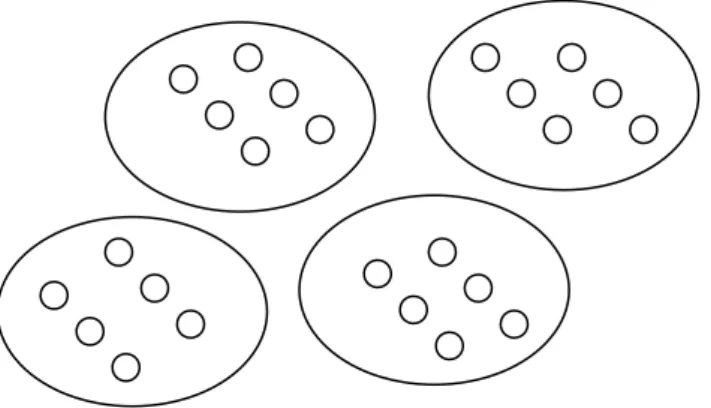
Figure 1: Particles nested within Collectives
From the formal point of view, the difference between MLS1 and MLS2 concerns the relation between the fitnesses at the two levels. In both MLS1 and MLS2, particle fitness has the same meaning: a particle’s fitness is the expected number of offspring particles it leaves. Not so with collective fitness. In MLS1, a collective’s fitness is defined as the average fitness of the particles within the collective. So the fittest collectives, in this sense, are those which contribute the most particles to the next generation (per capita). In MLS2, a collective’s fitness is defined differently, as the expected number of offspring collectives contributed to the next generation. So the fittest collectives, in this sense, are those that contribute the most offspring collectives to the next generation, irrespective of how many particles those offspring collectives contain. In short, in MLS1 we are interested in counting particles while in MLS2 we are interested in counting collectives; thus the meaning of ‘collective fitness’ is quite different in each.
and speciating (i.e. reproducing). Damuth and Heisler argue that a failure to
distinguish clearly between MLS1 and MLS2 plagued many traditional discussions of the levels of selection; see Okasha (2001) for extended discussion of this point.
There is in fact a general reason why the distinction between MLS1 and MLS2 has not always been heeded. For in many circumstances the existence of one type of multi-level selection will imply the other. The collective which contributes the most particles to the next generation, and so is fittest by the MLS1 criterion, will often contribute the most collectives to the next generation, and hence be fittest by the MLS2 criterion too. (This will always be so if the number of particles per collective is constant.) So ordering the collectives by their MLS1 fitness and by their MLS2 fitness will often give the same result. However, this does not undermine the importance of the distinction, for two reasons. Firstly, there is no necessity that either type of multi-level selection will imply the other – it depends on contingent biological facts. Secondly, even in cases where MLS1 and MLS2 do go hand-in-hand, the absolute fitness of a collective in the MLS1 sense is different from its absolute fitness in the MLS2 sense, for these quantities are measured in different units (number of offspring particles and number of offspring collectives, respectively). So while the relative fitnesses of collectives in MLS1 and MLS2 may be identical – relative fitness being a dimensionless quantity – the conceptual difference between the two types of multi-level selection remains. For the absolute fitnesses will never be identical, and absolute fitness is the conceptually prior notion.
One final point of difference between the two types of multi-level selection is this. In MLS2 it is essential that the collectives themselves form parent-offspring lineages. In MLS1 on the other hand, only the lower-level particles need form parent-offspring lineages. This follows from the different meaning of collective fitness in each
The MLS1/MLS2 distinction was formulated with a synchronic version of the levels of selection question in mind. But what becomes of the distinction from a diachronic perspective? If we wish to use multi-level selection theory to explain the major transitions in evolution, as many biologists believe we should, is MLS1 or MLS2 better suited to the job?
A natural first response is to say that MLS2 is the type of multi-level selection
relevant to the major transitions. For MLS1 can only explain particle-level adaptations (or the change in frequency of particle-level traits), not collective-level adaptations. And in a major transition, we are interested in understanding how new collectives, e.g. multi-cellular organisms, came into existence, from an ancestral state in which they did not exist. On the standard view, this required the collectives to evolve adaptations for reducing conflict between their constituent particles (e.g. germ line sequestration). These adaptations are properties of the collectives themselves, not the particles. So we are interested in the collectives in their own right, not simply as environments of the particles. Hence collective-level selection must mean selection between collectives based on differential production of offspring collectives, not offspring particles.
If this is right, it suggests that MLS1 and MLS2 may both be relevant to the major transitions, each at a different stage. An examination of the biological literature confirms this argument.
4. The Major Transitions and the MLS1/MLS2 distinction
Michod (1999), Szathmary and Demeter (1987) and Maynard Smith and Szathmary (1995) have all discussed one of the very earliest transitions – from independent replicators to networks of replicators encapsulated in a proto-cell. The first stage in this transition, these authors argue, was the evolution of RNA molecules that code for replicase. This is an altruistic trait, for by coding for replicase an RNA molecule reduces its own replication speed but increases that of other RNA molecules. So selfish RNAs that do not code for replicase should spread faster. How then can replicase coding evolve? This is clearly analogous to the problem of how altruistic behaviour can evolve among animals. Michod (1999) suggests that Wilson’s (1975) ‘trait group’ model may provide the key; Maynard Smith and Szathmary (1995) explore a similar idea. If RNA molecules on a surface become clustered together into groups, then groups containing lots of replicase coding molecules may out-reproduce groups containing fewer, even though within each group, selfish non-replicase coding molecules have an advantage. In this way, group selection may lead the replicase-coding RNA molecules to evolve.
There are two crucial points to note here. Firstly, the ‘groups’ of RNA molecules, which initially consist of independent molecules interacting with each other, are the precursors of the compartmentalised proto-cells which eventually evolve. Secondly, the type of group selection involved is MLS1: group fitness is defined as average individual fitness. Groups containing lots of altruists ‘out-reproduce’ other groups in that they contribute more individuals to the next generation. So what the trait group model explains is the spread of an individual trait – altruism – in the overall
MLS1 can only explain facts about the frequency of particle traits, not collective traits, the earliest stages of a major transition are precisely characterized by the spread of a particle trait – cooperation. For groups of cooperating particles represent the first stage in the transition to a new collective.
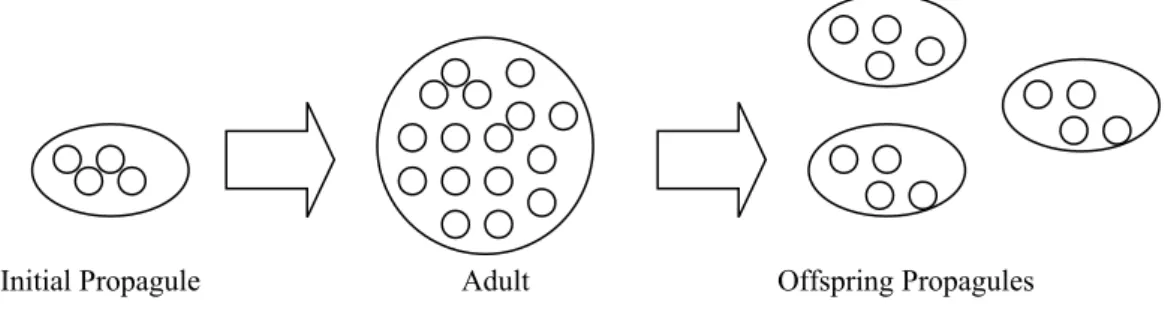
Michod’s more recent work on the evolution of cellularity illustrates how multi-level selection of the MLS2 variety is also relevant to the major transitions (Michod 1997, 1999). This work is based around a simple multi-level model with the following life-cycle. A multi-cellular organism (or proto-organism) begins life as a propagule containing N cells, all of which come from the same parent. (If N =1, then the life-cycle starts from a single-celled stage; if N > 1 then reproduction is vegetative). The propagule develops and grows by cell division, reaches adulthood, and then gives rise to new propagules of its own (see Figure 2). There are two levels of selection in this model: between cells within organisms (owing to different cell-types dividing at different rates) and between organisms (owing to different organism-types producing different number of propagules). The overall evolutionary dynamics of the system depends on the balance between the two selective forces. This is an MLS2 model, for the following reason: organism fitness and cell fitness are defined in different units, and across different time scales. A cell’s fitness is defined as its rate of division within the organism’s life-span, while an organism’s fitness is defined as its rate of
propagule production. Hence an organism’s fitness is not equal to the mean fitness of the cells within it, although these two quantities may on some occasions be
proportional to each other. This is the defining mark of an MLS2 theory.
Initial Propagule Adult Offspring Propagules
Michod and Nedelcu (2003) make some interesting remarks about the relation between the fitnesses at the two levels, in this model. They argue that during a major transition, the fitness of the higher-level unit must be ‘decoupled’ from the fitness of
the lower-level units of which it is composed:
“
group fitness, is, initially, taken to be the average of the lower-level individual fitnesses; but as the evolutionary transition proceeds, group fitness becomes decoupled from the fitness of its lower-levelcomponents.” (p.66). This remark bears directly on the MLS1/MLS2 distinction. For in effect, Michod and Nedelcu are saying that in the early stages of a transition, collective fitness is defined in the MLS1 way, but as the transition proceeds,
collective fitness becomes ‘decoupled’ from particle fitness and defined in the MLS2 way.
What exactly do Michod and Nedelcu mean by ‘decoupling’ collective fitness from particle fitness? This is actually less simple than appears at first sight. For they do not just mean defining collective fitness in the MLS2 rather than the MLS1 way, though this is part of it. ‘Decoupling’ means not just that collective fitness not be defined as average particle fitness, but also that collective fitness not be proportional to average particle fitness. Michod and Roze’s (1999) discussion of the multi-cellularity model illustrates this point. As noted above, in this model organism fitness is defined as expected number of offspring propagules, not as average cell fitness, so qualifies as MLS2. However, Michod and Roze note that in the early stages of multi-cellularity, all differences in organism fitness may stem solely from differences in adult size - since bigger adults can leave more propagules. Moreoever, differences in adult size will themselves stem from differences in cellular composition - since fast-dividing cells make bigger adults. So in these early stages, an organism’s fitness will be strictly proportional to the average fitness of the cells in the propagule from which the
organism came. An organism whose constituent cells are very fit, i.e. divide very fast, will grow to a bigger size, hence leave more offspring propagules. So differences in organism fitness are determined by differences in average cell fitness. Proper
‘decoupling’ only occurs, Michod and Roze argue, when organismic fitness ceases to be dependent (or at least solely dependent) on adult size, hence ceases to be
What this suggests is that the relation between particle fitness and collective fitness itself undergoes a transformation, during the major transitions. The very earliest stages of a major transition are characterized by interactions among the lower-level particles. Cooperative particles must spread at the expense of selfish ones, which requires that cooperative particles must be clustered together in groups. Multi-level selection of the MLS1 sort is applicable here. As the major transition proceeds, collective fitness must be ‘decoupled’ from particle fitness. This itself occurs in two stages. Firstly, collective fitness must be defined in the MLS2 way, i.e. we must start to count the collectives themselves, not just their constituent particles. This requires that the collectives be sufficiently discrete to form identifiable ancestor-descendent lineages. Secondly, collective fitness must become independent of particle fitness, in that the fitness of a collective must cease to be proportional to the mean fitness of the lower-level particles. (For otherwise differences in collective fitness are mere side-effects of differences in particle fitness.) Once this final stage is completed, then full decoupling of collective fitness from particle fitness has been achieved, and MLS2 occurs autonomously of MLS1. This three stage process is shown below.
Relation between Collective Fitness and Particle Fitness During the Major Transitions
Stage 1: collective fitness defined as average particle fitness (co-operation spreads among particles)
Stage 2: collective fitness not defined as average particle fitness, but still proportional to average particle fitness
(collectives start to emerge as entities in their own right)
Stage 3: collective fitness neither defined as nor proportional to average particle fitness
(collectives have fully emerged; fitnesses are decoupled)
Gould (1986) argued that many alleged cases of species selection in fact involved only ‘species sorting’. The latter occurs when species experience differential rates of extinction as a result of differences in the fitnesses of their component organisms. In such cases all the selection is at the organismic level, according to Vrba: the
differences in species fitness are mere side-effects, or epiphenomena, of lower-level processes. In species sorting as characterized by Vrba, the relation between the higher and lower-level fitnesses is exactly as in Stage 2 above: species fitness is not defined as mean organismic fitness, but it is proportional to it. If Vrba is right that species sorting involves only lower-level selection, parity of argument would suggest that the same applies to Stage 2 of a major transition. Interestingly, Michod and Roze (1999) toy with precisely this suggestion in relation to the evolution of multi-cellularity model. But whether Vrba is right is a further question that cannot be resolved here.
5. Conclusion
If the foregoing arguments are correct, then both types of multi-level selection are relevant to the major transitions. MLS1 is relevant to the early transitional stages, where co-operation spreads among the particles. This is essential if the collectives are to achieve the degree of cohesion necessary for collective fitness in the MLS2 sense to be a meaningful notion. The key point is that the relation between lower and higher-level fitnesses itself undergoes a change, during a major transition.
References
Arnold, A.J. and Fristrup, K. (1982) ‘The theory of evolution by natural selection: a hierarchical expansion’, Palebiology 8, 113-129.
Buss, L. (1988) The Evolution of Individuality, Princeton: Princeton University Press. Damuth, J. and Heisler, I.L. (1988) ‘Alternative formulations of multi-level selection’, Biology and Philosophy, 3, 407-430.
Dawkins, R. (1982) The Extended Phenotype, Oxford: Oxford University Press. Frank, S. (1999) Foundations of Social Evolution, Princeton: Princeton University Press.
Griesemer, J. (2000) ‘The Units of Evolutionary Transition’, Selection, 1, 1-3, 67-80, http://www.akkrt.hu
Maynard Smith, J. and Szathmary, E. (1995) The Major Transitions in Evolution, Oxford: Oxford University Press.
Michod, R. (1997) ‘Cooperation and conflict in the evolution of individuality I. Multilevel selection of the organism’, American Naturalist 149, 4, 607-45. Michod, R. (1999) Darwinian Dynamics, Princeton; Princeton University Press. Michod, R. and Nedelcu, A. (2003) ‘On the reorganization of fitness during
evolutionary transitions in individuality’, Integrative and Comparative Biology, 43, 64-73.
Michod, R. and Roze, D. (1999) ‘Cooperation and conflict in the evolution of
individuality III. Transitions in the unit of fitness’, in C. Nehaniv (ed.) Computational Morphogenesis, Hierarchical Complexity, and Digital Evolution, Lectures on
Mathematics in the Life Sciences, 26, American Mathematical Society.
Okasha, S. (2001) ‘Why won’t the group selection controversy go away?’, British Journal for the Philosophy of Science, 52, 25-50.
Roze, D. and Michod, R. (2001) ‘Mutation, multilevel selection, and the evolution of propagule size during the origin of multicellularity’, American Naturalist, 158, 6, 638-54.
Sober, E. (1984) The Nature of Selection, Chicago: University of Chicago Press. Sober, E. and Wilson, D.S. (1998) Unto Others, Cambridge MA: Harvard University Press.
Vrba, E. (1984) ‘What is species selection?’, Systematic Zoology 33, 318-328.
Vrba, E. and Gould, S.J. (1986) ‘The hierarchical expansion of sorting and selection’, Paleobiology 12, 217-228.