USABILITY THEMES IN HIGH AND LOW CONTEXT CULTURES:
A COMPARATIVE STUDY
Rukshan Alexander
i © 2019 Rukshan Alexander
ii
DECLARATION
I declare that this thesis is my own account of my research and contains as its main content work which has not previously been submitted for a degree at any tertiary education institution.
………..
iii
ABSTRACT
Cultural diversity makes it difficult for website developers to depend on their own instinctive knowledge or personal experiences to design usable websites between cultures, yet studies on cross-cultural website usability are limited. The overall aim of this research is to advance cross-cultural HCI by providing an effective solution in terms of minimising cost and time for website cultural adaptation to improve user experience. This aim has been addressed with contributions in the areas of identifying prominent web design elements that encapsulate the significant characteristics of a culturally specific website, the development of a novel Cross-cultural Web Usability Model to offer both: cross-cultural web design guidelines and a usability measuring instrument, and subsequent empirical evaluation of the developed model that helps to attract culturally diverse users and improve their overall usability, specifically,
increasing work efficiency and user satisfaction.
The first contribution examines the Australian, Chinese, and Saudi Arabian web pages for the presence of design attributes including layout, navigation, links, multimedia, visual representation, colour, and text. Significant differences were found in each of the listed design attributes, suggesting that different interfaces are needed for successful communication with different cultural groups.
The second contribution incorporates design elements, cultural factors, and HCI factors that describe the style of information processing and the user’s interaction characteristics, to create cross-cultural web design guidelines. These guidelines provide culturally specific functionality, look, and feel to enhance clear and effective communication between cultures. A usability measuring instrument is proposed, to measure usability attributes, which in turn may influence the overall satisfaction of a web page. By offering these cross-cultural web design guidelines and the usability measuring instrument, a novel Cross-cultural Web Usability Model was introduced. This model simplifies the creation of cross-cultural websites, while enabling developers to evaluate page usability for different cultures.
iv Chinese cultures were chosen to minimise the cost involved in the usability tests. Cross-cultural websites were designed, and the efficacy of cross-cultural websites was evaluated. Behavioural data including: effectiveness (task success rate), efficiency (average time on task), and errors (average number of clicks for a task) was acquired. Attitudinal data such as perceived navigability, aesthetics, and satisfaction was also obtained based on a real-world study which required users to complete tasks on a web page. The results confirmed that the model can anticipate the culturally specific user preferences, and that there were statistically significant differences. Users who interacted with the culturally specific website had greater levels of user performance and perception than users who used the non-adapted version.
v
ACKNOWLEDGEMENTS
Thank is due Almighty God for his grace and kindness and for his great favours and blessings that I could have reached not this state without.
A sincere gratitude and acknowledgement to my supervisors, including David Murray, Nik Thompson, and Michael Dixon, and the Graduate Research Degree Advisory Committee Chair Tanya McGill, for the continuous help, care, and support during my journey to the PhD degree and throughout the research phases. Their assistance and guidance have indeed helped me always of the research.
I would like also to express my deep gratitude to my parents, wife, and my children, for their endless support and encouragement.
vi
TABLE OF CONTENTS
ABSTRACT ... iii
ACKNOWLEDGEMENTS ... v
TABLE OF CONTENTS ... vi
LIST OF FIGURES ... xi
LIST OF TABLES ... xiii
LIST OF ABBREVIATIONS ... xv
PUBLICATIONS ARISING FROM THIS RESEARCH ... xvi
SUMMARY OF THE CONTRIBUTIONS OF THIS THESIS ... xvii
Chapter 1. Introduction ... 1
1.1 Background ... 1
1.2 Importance of the research ... 6
1.3 Research aims ... 9
1.4 Methodology ... 11
1.5 Delimitation of scope and key assumptions ... 12
1.6 Structure of the thesis ... 13
Chapter 2. Literature review: cross-cultural human-computer interaction and user experience design ... 15
2.1 Introduction ... 15
2.2 Usability and Internationalisation ... 15
2.3 Socio-cultural differences in values and communication styles ... 17
2.4 Interpreting culture to use in HCI ... 21
2.4.1 Definitions of culture ... 21
2.4.2 Meta-model of culture ... 22
2.4.3 Iceberg as well as objective and subjective culture ... 22
2.5 Cultural models and factors... 24
2.5.1 Hofstede’s cultural model ... 24
2.5.2 Hall’s cultural model ... 26
2.5.3 Other cultural models ... 28
2.6 Human-computer interaction factors... 28
vii
Chapter 3. Literature review: culture-centred web design to enhance usability ... 31
3.1 Introduction ... 31
3.2 Cultural usability ... 31
3.3 Culture-centred design process ... 32
3.4 Web cultural preferences ... 33
3.5 Uses of web design attributes ... 36
3.5.1 Layout ... 36
3.5.2 Navigation ... 39
3.5.3 Links ... 46
3.5.4 Multimedia ... 47
3.5.5 Visual representation ... 48
3.5.6 Colour ... 48
3.5.7 Text ... 49
3.6 Cross-cultural Web Usability Model ... 51
3.7 Empirical evaluation of the model ... 52
3.8 Summary ... 53
Chapter 4. Evaluation of website design attributes ... 55
4.1 Introduction ... 55
4.2 Background ... 55
4.3 Justification of the study ... 56
4.4 Web design attributes to access clear and effective communication ... 58
4.4.1 Layout ... 58
4.4.2 Navigation ... 59
4.4.3 Links ... 60
4.4.4 Multimedia ... 61
4.4.5 Visual representation ... 62
4.4.6 Colour ... 63
4.4.7 Text ... 63
4.5 Website audit study ... 65
4.5.1 Development of measurement instrument ... 66
viii
4.5.3 Selection of websites... 69
4.5.4 Automated website audit study ... 71
4.5.5 Manual website audit study ... 73
4.6 Results... 74
4.7 Discussion ... 88
4.8 Conclusion ... 96
Chapter 5. Creating a new Cross-cultural Web Usability Model ... 98
5.1 Introduction ... 98
5.2 Background ... 98
5.3 Related work ... 99
5.4 Cross-cultural website usability model ... 100
5.5 Development of new cross-cultural website usability model ... 101
5.5.1 Evaluation of the usage of design elements between cultures ... 101
5.5.2 Identify prominent design elements ... 102
5.5.3 Organising cultural factors ... 104
5.5.4 Organising HCI factors ... 104
5.5.5 Developing cross-cultural Web design guidelines... 105
5.6 Development of a usability measuring instrument ... 122
5.6.1 Selection of Usability Attributes ... 123
5.7 Designing Culturally Specific Websites in HCI ... 126
5.8 Discussion ... 128
5.9 Conclusion ... 128
Chapter 6. Empirical evaluation of the Cross-cultural Web Usability Model ... 130
6.1 Introduction ... 130
6.2 Background ... 130
6.3 Justification of the study ... 131
6.4 Study questions and hypotheses ... 132
6.5 Methodology ... 137
6.5.1 Selection of the testing websites ... 138
6.5.2 Translation ... 138
ix
6.5.4 Task-based user testing ... 140
6.5.5 Questionnaire based user testing ... 142
6.5.6 Participants ... 144
6.5.7 Participant recruiting process ... 145
Chapter 7. Results and data analysis of the cross-cultural web usability test ... 146
7.1 Overview ... 146
7.2 Data preparation and analysis ... 146
7.3 Results and analysis ... 147
7.3.1 Performance attributes ... 149
7.3.2 Perception attributes ... 169
7.4 Discussion ... 174
7.5 Limitations ... 180
7.6 Conclusion ... 181
Chapter 8. Conclusion ... 182
8.1 Introduction ... 182
8.2 Evaluation of the use of website design elements ... 183
8.3 A Cross-cultural Web Usability Model ... 184
8.4 Empirical evaluation of the developed model ... 185
8.5 Future research... 186
8.6 Implications ... 189
APPENDICES ... 191
Appendix A. Questionnaire for the Evaluation of Website Design Attributes ... 191
Appendix B. Ethics Approval for the Empirical Evaluation of the Cross-cultural Web Usability Model ... 196
Appendix C. Survey Invitation Email to Participants, Sent by Cint ... 197
Appendix D. Information Letter and Participant Consent for the Empirical Evaluation of the Cross-cultural Web Usability Model ... 198
Appendix E. Screen Shots of the Training Website for the Empirical Evaluation of the Cross-cultural Web Usability Model ... 201
Appendix F. Screen Shots of the Cross-Cultural Websites for the Empirical Evaluation of the Cross-cultural Web Usability Model ... 203
xi
LIST OF FIGURES
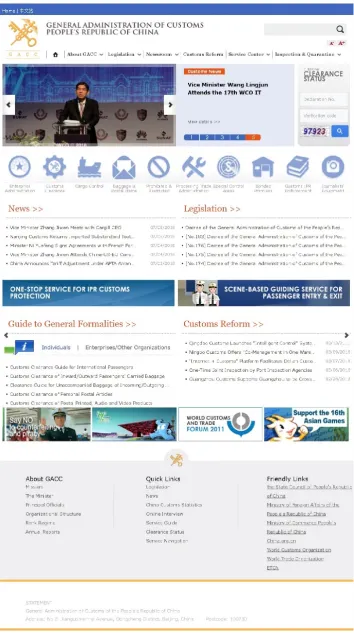
Figure 1-1: English language version of the General Administration of Customs of the People's
Republic of China (GACPRC, 2018) ... 4
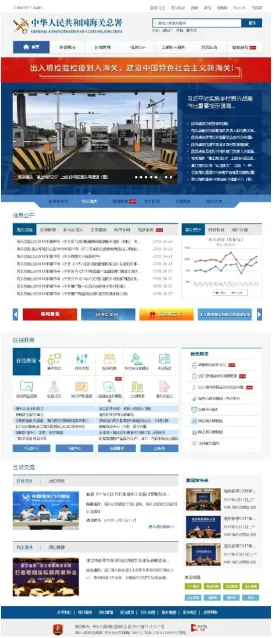
Figure 1-2: Mandarin language version of the General Administration of Customs of the People's Republic of China (GACPRC, 2018) ... 5
Figure 3-1: Navigation components in the homepage of the Department of Finance - Western Australia (2018) ... 40
Figure 3-2: Navigation components in the About Us page of the Department of Finance - Western Australia (2018) ... 41
Figure 4-1: Over-all use of colour pattern between cultures ... 87
Figure 4-2: Fat Footer to display information hierarchically (APVMA, 2018) ... 95
Figure 5-1: Research model for website usability ... 124
Figure 7-1: Average task completion rate in Australian website design, between cultures .... 151
Figure 7-2: Average task completion rate in Chinese website design, between cultures ... 151
Figure 7-3: Task results for Australian participants in Australian website design ... 153
Figure 7-4: Task results for Chinese participants in Australian website design ... 153
Figure 7-5: Task results for Australian participants in Chinese website design ... 154
Figure 7-6: Tasks results overview for Chinese participants in Chinese website design ... 154
Figure 7-7: Heatmap of Task 1 for Australians in Australian website design ... 158
Figure 7-8: Heatmap of Task 1 for Chinese in Australian website design... 159
Figure 7-9: Task 1 successes page views in Australian website design between cultures ... 162
Figure 7-10: Task 2 successes page views in Australian website design between cultures ... 162
Figure 7-11: Task 3 successes page views in Australian website design between cultures ... 162
Figure 7-12: Task 4 successes page views in Australian website design between cultures ... 162
Figure 7-13: Task 1 successes page views in Chinese website design between cultures ... 163
Figure 7-14: Task 2 successes page views in Chinese website design between cultures ... 163
Figure 7-15: Task 3 successes page views in Chinese website design between cultures ... 163
Figure 7-16: Task 4 successes page views in Chinese website design between cultures ... 163
Figure 7-17: Task 1 successes time spent in Australian website between cultures ... 166
Figure 7-18: Task 2 successes time spent in Australian website design between cultures ... 166
Figure 7-19: Task 3 successes time spent in Australian website design between cultures ... 167
Figure 7-20: Task 4 successes time spent in Australian website design between cultures ... 167
Figure 7-21: Task 1 successes time spent in Chinese website design between cultures ... 167
xii
Figure 7-23: Task 3 successes time spent in Chinese website design between cultures ... 168
Figure 7-24: Task 4 successes time spent in Chinese website design between cultures ... 168
Figure 7-25: Perceived navigability for Australian participants ... 171
Figure 7-26: Perceived navigability for Chinese participants... 171
Figure 7-27: Classic aesthetics for Australian participants ... 172
Figure 7-28: Classic aesthetics for Chinese participants ... 172
Figure 7-29: Expressive aesthetics for Australian participants ... 172
Figure 7-30: Expressive aesthetics for Chinese participants ... 172
Figure 7-31: Satisfaction for Australian participants ... 173
xiii
LIST OF TABLES
Table 2-1: Cultural distance between countries. ... 26
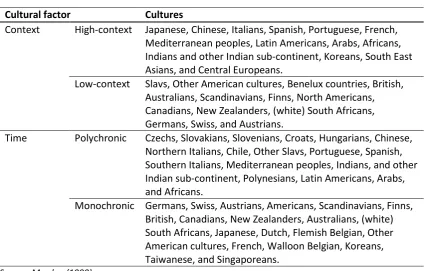
Table 2-2: Positioning of cultures, for context and time ... 28
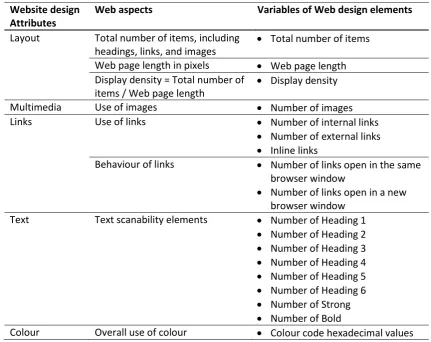
Table 4-1: Design elements checklist for manual cultural audit studies ... 66
Table 4-2: Design elements checklist for automated cultural audit studies ... 68
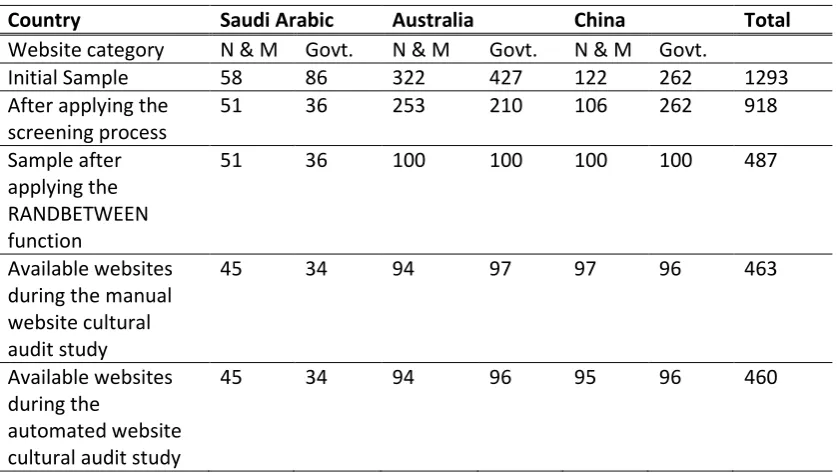
Table 4-3: Sampling process ... 72
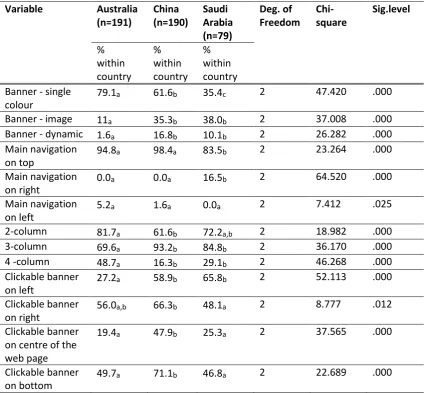
Table 4-4: Chi-Square comparisons of categorical design elements for Layout ... 76
Table 4-5: Pairwise comparison of numerical design elements for Layout ... 76
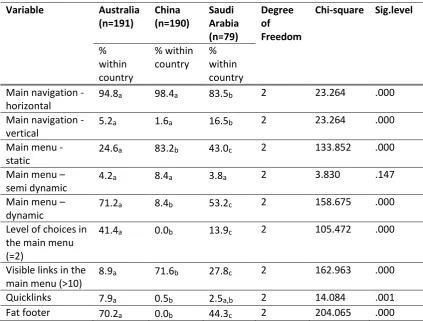
Table 4-6: Chi-Square comparisons of categorical design elements for Navigation ... 79
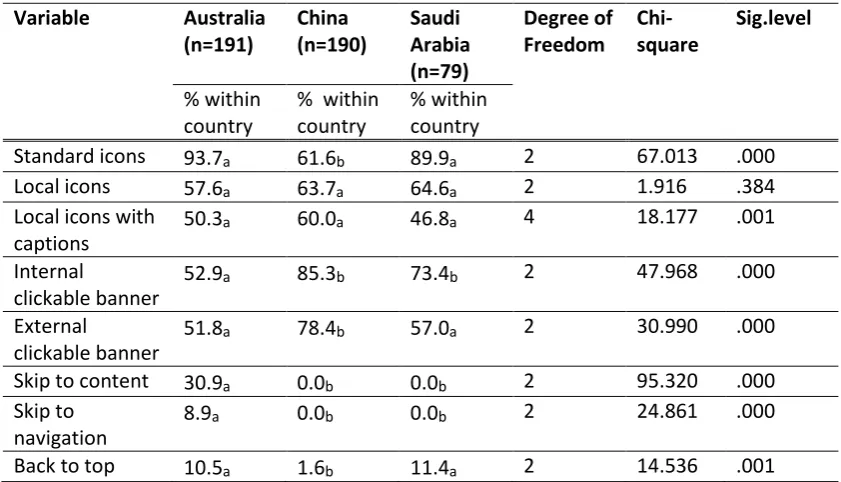
Table 4-7: Chi-Square comparisons of categorical design elements for Links... 81
Table 4-8: Pairwise comparison of numerical design elements for Links ... 81
Table 4-9: Chi-Square comparisons of categorical design elements for Multimedia ... 83
Table 4-10: Pairwise comparison of numerical design elements for Multimedia ... 83
Table 4-11: Chi-Square comparisons of categorical design elements for Visual representation 85 Table 4-12: The use of 17 unique colours between cultures ... 86
Table 4-13: Pairwise comparison of numerical design elements for Text ... 88
Table 5-1: Prominent design elements ... 102
Table 5-2: Layout cross-cultural website design guidelines ... 107
Table 5-3: Navigation cross-cultural website design guidelines ... 109
Table 5-4: Navigation cross-cultural website design guidelines ... 110
Table 5-5: Navigation cross-cultural website design guidelines ... 111
Table 5-6: Links cross-cultural website design guidelines ... 112
Table 5-7: Links cross-cultural website design guidelines ... 113
Table 5-8: Links cross-cultural website design guidelines ... 114
Table 5-9: Multimedia cross-cultural website design guidelines ... 116
Table 5-10: Visual representation cross-cultural website design guidelines ... 118
Table 5-11: Colour cross-cultural website design guidelines ... 119
Table 5-12: Text cross-cultural website design guidelines ... 121
Table 5-13: Level of Culture and HCI for Web Design ... 122
Table 5-14: Web features for culturally specific website design ... 122
Table 6-1: Information seeking tasks involved in this study ... 141
Table 6-2: Items of the questionnaire ... 143
Table 7-1: Data screening process to filter useful completes ... 147
xiv
Table 7-3: Number of task success for user test ... 152
Table 7-4: Chi-square comparisons for success-on-tasks ... 156
Table 7-5: Number of clicks between cultures and website design ... 161
Table 7-6: Descriptive table for page-view-on-task-success ... 161
Table 7-7: Mann-Whitney U test table for page-view-on-task-success ... 164
Table 7-8: Descriptive information for time-on-task-success ... 166
Table 7-9: Mann-Whitney U test table for time spent to success tasks ... 168
Table 7-10: Descriptive information for user perception attributes ... 170
Table 7-11: Mann-Whitney U test table for perception attributes ... 171
xv
LIST OF ABBREVIATIONS
APVMA Australian Pesticides and Veterinary Medicines Authority AU-AUWeb Australian participants in Australian website design AU-CNWeb Australian participants in Chinese website design CA Classic aesthetics
CN-AUWeb Chinese participants in Australian website design CN-CNWeb Chinese participants in Chinese website design EA Expressive aesthetics
fMRI Functional Magnetic Resonance Imaging
GACPRC General Administration of Customs of the People's Republic of China HCI Human - Computer Interaction
IMC Instructional Manipulation Check PA Perceived Aesthetics
PN Perceived Navigability
SA Satisfaction
SPSS Statistical Package for Social Sciences USA United State of America
xvi
PUBLICATIONS ARISING FROM THIS RESEARCH
Journal Papers
J1: Alexander, R., Thompson, N., & Murray, D. (2016). Towards cultural translation of websites: a large-scale study of Australian, Chinese, and Saudi Arabian design preferences. Behaviour & Information Technology, 36(4), 351–363.
Conference Papers
C1: Alexander, R., Thompson, N., & Murray, D. (2017). Cross-Cultural Web Usability Model. Paper presented at the 18th International Conference on Web Information Systems Engineering (WISE 2017), Puschino, Moscow Region, Russia.
xvii
SUMMARY OF THE CONTRIBUTIONS OF THIS THESIS
Chapter Contributions Paper No.
Chapter 1: Introduction Chapter 2 and 3: Literature Review
A literature survey on previous work in applying cultural factors and HCI factors in website design, to create a culturally
sensitive world wide web are discussed. This addresses the gap with a novel cross-cultural web usability model to enhance usability as well as user experience.
The findings of this study contribute to consider new cultural adaptation in website design, which should consider broad cultural preferences for layout, navigation, links, multimedia, visual representation, colours, and text. It also highlights how a cross-cultural web usability model can be created to design suitable web pages for different cultures. This is to enhance the clear and effective communication between user and web pages, based on the completion of tasks on web pages. This improvement will help to increase the usability of web pages between cultures.
J1, C1, C2
Chapter 4: Evaluation of website design attributes
Cultures carry cultural preferences that can be used to enable effective communication between user and web pages. The evaluation of Australian, Chinese, and Saudi Arabian website designs investigates broad design attributes including layout, navigation, links,
xviii multimedia, visual representation, colour,
and text. Prominent design elements or cultural markers that are highly prevalent within a particular cultural group are
identified. These prominent design elements can be used to encapsulate the significant characteristics of a culturally specific website. The creation of these websites may improve website design in the era of globalisation.
Chapter 5: Creating a new cross-cultural web usability model
This chapter creates a novel cross-cultural website usability model that offers a set of cross-cultural web design guidelines and a usability measuring instrument. The previously identified prominent design elements are used to map with existing cultural as well as Human-Computer Interaction (HCI) values (factors) to create the model. A culturally-centred design methodology was used to fit the theoretical and practical aspects of website design. Compared to early versions, this model offers detailed cross-cultural web design guidelines and several usability attributes that are suitable to measure the look, feel, and functionality aspects of website design. The model simplifies the creation of cross-cultural websites, while enabling developers to evaluate web page usability for different cultures.
xix Chapter 6: Empirical
evaluation of the cross-cultural web usability model Chapter 7: Results and data analysis of the cross-cultural web usability test
Evaluating usability attributes allows improve elements in the design. This study provides the platform and technical capabilities on how a user test can be conducted to collect behavioural and attitudinal data to evaluate the cross-cultural web usability between cultures.
The numerical, graphical, and statistical data provides trust and statistically significant evidence to support the hypotheses that cultural as well as HCI factors, and website designs interact to affect user performance and perception.
The findings reveal the importance of
considering cultural factors and HCI factors to improve user performance and perception in cross-cultural websites that carry different information presentation and interaction styles.
Chapter 8: Conclusion
xx usability and user experience. The results
verify the cultural effects on user
performance and perception. The model can be used to enhance the competitiveness of websites in the global economy.
Findings from this research can also be used for future research to test the model for its reliability and validity, particularly in countries other than Australian, China, or Saudi Arabia Similarly, future research on website cultural adaptation can also benefit from this research.
The findings of this research contribute to optimise and enhance web usability as well as user experience that result in website use. It was found that the differences in the cultural preferences and needs of the users and hence the cultural differences in HCI on all levels of website cultural adaptation including look, feel, and functionality. The findings further establish a connection between web design preferences, culture, and usability, in HCI, and suggests that culturally adapted web pages change the way people think and behave, imposing their own information processing style on users. A new cross-cultural web usability model is created to offer both: a set of cross-cultural design guidelines and a usability instrument. The web design elements, cultural
factors, and HCI factors that describe the style of information processing and the user’s interaction characteristics with web pages are combined to offer richer and more comprehensive cross-cultural web design guidelines. And the usability measuring instrument consists of a variety of usability attributes suitable to measure the level of look, feel, and functionality aspects of website design.
The findings in this research also offer empirical evidence to show that the user performance and perception are enhanced with a culturally adapted version.
1
Chapter 1. Introduction
1.1 Background
Web-based applications are used to enable people around the world to be educated, conduct business, receive information, and communicate. With the integrated nature of website domains, people increasingly use websites as a source to exchange
information, share knowledge, retrieve information, and utilise services (Kralisch et al., 2005; Nawaz, 2013). Thus, the Web has become an essential part of daily life for many people today.
As people are different, an identical website design for all cannot facilitate the demand of human diversity (Al-Badi, 2009). Users from different cultures have different
psychological and social associations (Clemmensen, 2006; Collazos & Gil, 2011), which lead them to understand, believe, think and respond in different ways (Mushtaha & Troyer, 2009). When browsing web pages, users should be able to use their natural way of interaction rather than having to learn new ways of working (Thompson & McGill, 2012). The differences in cultural mentalities and environments lead to
different requirements towards interfaces across different cultural groups (Fraternali & Tisi, 2008), and this will inevitably influence the interaction between interfaces and users (Rau et al., 2008). Therefore, designing websites that are usable, understandable and acceptable by users from different cultural background is important (Mushtaha & Troyer, 2012).
2 cultures (Hsieh, 2015). Website designers must be aware of both local and
international users to understand the cross-cultural issues (Kamihira et al., 2011; Nordhoff et al., 2018). It is critical for designers to understand various cultures and design websites that accommodate multicultural components (Hsieh et al., 2009; Reinecke & Gajos, 2014; Smith et al., 2004).
The challenges from both website users and web developers motivates the need to investigate cross-cultural issues in human–computer interaction (HCI) (Heimgärtner, 2017; Mushtaha & Troyer, 2016). Until recently, culture in HCI was considered a matter of website cultural adaptation, that localized web pages for specific target countries (Bernstein & Reinecke, 2013; Nordhoff et al., 2018).
Current website cultural adaptation has been unsuccessful (Hsieh et al., 2009; Mushtaha & Troyer, 2016; Nordhoff et al., 2018). The early cultural adaption for localization started in the 1980s with software companies that started to adapt software to different markets. This cultural adaption only focused on translation of language, and date and time or adaption of some graphical design elements (Duncker et al., 2013; Reinecke & Bernstein, 2011). HCI researchers suggest that cultural
adaptation should go deeper to consider the cultural differences of user’s culture for adjusting visual design, images, layout, symbols, navigation, and the utilisation of colours (Collazos & Gil, 2011; Cyr & Trevor‐Smith, 2004; Mohammadi et al., 2012). This deep cultural adaption ensuresthat website are functionally, visually, and culturally acceptable for users of a particular cultural background (Mushtaha, 2012).
3 and features soft colours and deeply structured content (Nordhoff et al., 2018;
Reinecke & Bernstein, 2011). The Mandarin language version is designed based on East Asian values; this is a transformational, visual-heavy, brightly coloured website that is less structured (Bernstein & Reinecke, 2013). People from East Asian culture, such as China, have been shown in studies to efficiently filter dense information (Nisbett, 2003). The preferred design of a web page is strongly influenced by cultural values (Reinecke & Bernstein, 2011). This reinforces the argument that the look, feel, and aesthetics of web pages are important and differ between cultures.
At present, companies and organisations adapt websites with their own cultural
adaptation process (Mushtaha, 2012; Reinecke, 2010). To identify cross-cultural design requirements for the target market, they may conduct on-site international user research (Walsh et al., 2010). They study people and cultures with wide-ranging focus group testing of their websites and consequently customized each website to appeal to its user group in each target culture (Würtz, 2005). This on-site research can be challenging without extensive knowledge of local cultures and product time frames can limit the feasibility of field research (Putnam et al., 2009; Walsh et al., 2010).
Therefore, the present cultural adaptation development cycle is extremely time-consuming, making it prohibitively expensive (Mushtaha, 2012; Reinecke, 2010), and impossible to encompasses all countries. In this sense, it has not yet succeeded in making the Web into a usable environment for everyone by supporting users with different cultural backgrounds (Rau et al., 2008).
4 Figure 1-1: English language version of the General Administration of Customs of the
6
1.2 Importance of the research
For user interface designers, the issue of globalisation directly relates to the principle of “Design for All” (Stephanidis et al., 1998). Globalisation is the process of making a product or service available for worldwide production and consumption, it comprises two different stages (Karreman et al., 2016; Sears & Jacko, 2007) including
internationalisation and localisation. Internationalisation refers to the separation of data and resources that need to be localised from the primary functionality of a system. And localisation refers to the adaptation of the data and resources for a new target market. Website localization on the cultural level, often called website cultural adaptation (Smolina, 2015), adjusts design elements for aesthetic appeal, colours, logic, functionality, and communication patterns in culturally appropriate way (Mushtaha & Troyer, 2012).
Website cultural adaptation is worthwhile (Ganguly et al., 2010; Robins & Holmes, 2008) and improves user satisfaction and work efficiency (Fraternali & Tisi, 2008; Hsieh, 2015; Reinecke & Bernstein, 2011). The growing interest in cross-cultural usability arises from the findings in human-computer interaction that demonstrate the importance of considering culture in websites (Heimgärtner et al., 2017; Nordhoff et al., 2018). Research asserts that users from different countries have varying design preferences (Broeder & Scherp, 2018; Cyr & Trevor‐Smith, 2004; Reinecke & Gajos, 2014), which has been recognized as an influential moderator of user behaviour and perception (Fraternali & Tisi, 2008; Hsieh, 2014). This may maximize the impact of the website, minimise frustration and increase acceptance (Chakraborty, 2009).
7 A basic problem in integrating cultural values into web pages is determining how theory-based cultural knowledge can be applied by website designers with different cultural preferences to the users culture. The field of cross-cultural web usability benefits from drawing on diverse fields of cultural preferences, perceptual, values, cognitive, and affective (Rau et al., 2008), but consequently is an area often not fully exploited by website designers, or even many researchers, due to the extensive knowledge of local cultures required.
Website design can benefit greatly from cross-cultural usability research, in HCI. Research has demonstrated that user’s information processing and interaction style are optimised in cross-cultural web pages (Heimgärtner, 2017). Providing web pages with the ability to accommodate cultural values into web pages should enhance user performance and perception, and have a positive impact on the user experience of website use (Bernstein & Reinecke, 2013). Furthermore, cultural consideration can help to adjust several design elements of the user interface to enhance usability for a specific user group (Sears & Jacko, 2007). Interest in cultural adaptation is not limited to the website design research community. Different fields such as educational
courseware development (Goldfarb & Kondratova, 2004), e-learning (Kamentz, 2006), navigation system (Heimgärtner, 2005), and web-based to-do-list application (Reinecke et al., 2011) discuss the relevance of cultural adaptation. Whilst most cultural
adaptation systems are in the proof of concept stage (Nordhoff et al., 2018), the advice given to website designers is to use the progress and developments in the
cross-cultural web usability field and that those with large Internet users should see immediate benefits. Cross-cultural usability or cultural usability is the integration of cultural aspects into interaction (Cyr & Trevor‐Smith, 2004), which allows interfaces to relate to the user’s culturally specific attributes and values (Kooijmans & Rauterberg, 2007; Steve et al., 2013).
8 2001), however a more advanced model is needed to consider broad website design attributes (Mushtaha & Troyer, 2016) that is to consider look, feel, and functionality aspects of website design and many cultural values that focus on users’ requirements and needs. The usability measuring instrument should organise usability attributes suitable to measure look, feel, and functionality aspects of web pages. Then the model will assist the integration of a culturally specific look, feel, and functionality of web pages, and measure the efficacy of web pages (Fraternali & Tisi, 2008). This approach supports the design process of website design that finally should lead to highly usable web pages with excellent user experience (Fraternali & Tisi, 2008; Karreman et al., 2016; Rau et al., 2008).
Despite the growing interest, research on culture in human-computer interaction and web design, is still limited (Karreman et al., 2016). The majority of the literature focuses on comparative studies that emphasise cultural differences rather than informing design decisions (Clemmensen & Roese, 2010; Nordhoff et al., 2018). When designers decide to adapt their websites, they still need to find out what design elements to change. Resources like marketing reports, for example, SimilarWeb LTD (2018), online magazines (Rozwens, 2014), handbooks (Lawrence & Tavakol, 2007) and blogs (Bock, 2017) can provide an overview of competitors and information about country-specific design preferences, but these resources do not include concrete design guidelines (Nordhoff et al., 2018). The same holds for literature that has reported on design differences between countries, for example de Castro Salgado et al. (2013), which, for the most part, only provides fuzzy design guidelines derived from comparisons between few countries (Nordhoff et al., 2018). A more contextual
approach to cross-cultural human-computer interaction research should offer a model that contains a set of detailed cross-cultural web design guidelines and a usability measuring instrument. This can be particularly beneficial for the globalisation of web pages, which usually involves the adaptation of an existing web page from a Western design (Karreman et al., 2010; Sears & Jacko, 2007).
9 culturally-competent website design can facilitate companies to lower the cost of entry to an international market, increase sales, meet global demands, and establish a trustworthy and professional image online (Cui et al., 2015; Szymanski & Hise, 2000). Companies may also gain financially benefit (Simões-Marques & Nunes, 2012): one related with website users’ productivity for less training time, because website users, aware of their culturally specific website design that offer simple information retrieval (Juric et al., 2003), for a faster task completion to find a product in web pages; and the other with product sells, in which products are easier to sell and market themselves, when users had positive experiences with web pages (Nunes, 2006).
1.3 Research aims
The research described in this thesis intends to advance the field of cross-cultural human-computer interaction. This was done by creating a new cross-cultural web usability model that contains a set of cross-cultural web design guidelines and a usability measuring instrument. Cultural preferences on the web and the proposed model were all evaluated empirically.
To adapt web pages manually (adaptation) or automatically (adaptability) to the cultural needs of the user, the first step is to investigate what must be adapted (Heimgärtner, 2007a; Nordhoff et al., 2018). This is to find out the differences in the cultural needs and preferences of the users and hence the cultural differences in HCI on all levels of website cultural adaptation including look, feel, and functionality. Web design attributes are aspects such as Layout, Navigation, Links, Multimedia, Visual Representation, Colour, and Text. Identifying broad cultural preferences in website design is still one of the largest gaps in cross-cultural HCI design (Nordhoff et al., 2018), which is bridged by investigating the usage of web design attributes for different cultures. Therefore, this project sought to explore the suitability of several web design attributes including layout, navigation, links, multimedia, visual representation, colour, and text, which can be use to provide culturally specific look, feel, and functionality (Mushtaha & Troyer, 2016). The first aim was to:
10 Secondly, a new cross-cultural web usability model is developed to simplify the
creation of cross-cultural websites and to measure the level of cross-cultural web usability. Prior work uses existing anthropological cultural factors as cross-cultural web design guidelines, strategies, frameworks, and models. Prior work has suggested that there are insufficiently detailed (Ishak et al., 2015), usually based only on theoretical research (Smith et al., 2004), which lack the usability tests to support their claims (Hsieh et al., 2009). This gap is bridged by combining web design elements, cultural factors, and HCI factors that describe the style of information processing and the user’s interaction characteristics with web pages (Heimgärtner, 2017), to offer richer and more comprehensive cross-cultural web design guidelines. The usability measuring instrument consists of a variety of usability attributes suitable to measure the level of look, feel, and functionality aspects of website design. This is a step toward making websites that are usable to all. Therefore, the second aim of the project was to address this limitation with a model for cross-cultural web usability development:
Aim 2: Establish a mapping between prominent design elements identified in Aim1, existing cultural factors, and HCI factors to create a new cross-cultural web usability model.
Cross-cultural web usability study is a viable test-bed to validate the cross-cultural web usability model developed for the above aim 2. Prior work highlighted the connection between web design preferences, culture, and usability, and suggests that culturally adapted web pages change the way people think and behave, imposing their own information processing style on users (Heimgärtner, 2017; Rau et al., 2008). Theoretical evidence from Smith and Chang (2003) and Straub et al. (2002), and empirical evidence from Fraternali and Tisi (2008), Reinecke and Bernstein (2011), and Hsieh (2015) suggest that culturally adapted websites improve the work efficiency and satisfaction of those they were intended for. However, empirical studies on web cultural adaptation that consider broad design attributes is conducted less frequently. Empirically determinant relationship for the cultural factors influence on website usability is an essential implication for the HCI community for the short and long-term success of websites. Therefore, the third aim of the project was to address this
11
Aim 3: Evaluate the developed cross-cultural web usability model empirically.
1.4 Methodology
In order to achieve these aims, the first empirical study, Study 1, focussed on examining the usage of design attributes between Australian, Chinese, and Saudi Arabian cultures. Three languages have been chosen. English is used by Australians, Simplified Chinese is used by Chinese, and Modern Standard Arabic is used by Saudi Arabians. The categories of websites surveyed were ‘government’ and ‘news and media’. They were selected to maximise the visibility of cultural preferences and minimise corporate branding. Automated and manual techniques were used to investigate broad design attributes including layout, navigation, links, multimedia, visual representation, colour, and text. The large scale investigation of websites provided significant differences in each of the listed design attributes, suggesting that different interfaces may be needed for successful communication with different cultural groups.
A new cultural web usability model was then developed to offer a set of cross-cultural web design guidelines and a usability measuring instrument. This work extends previous work by mapping the usage of web attributes with theories of culture to create website design guidelines and a usability measuring instrument. The
development of this model includes: identification of prominent web design elements, organisation of existing anthropological cultural factors, organisation of HCI factors, development of cross-cultural web design guidelines, and development of the usability measuring instrument. This model was then simplified to enable the creation of cross-cultural websites, while evaluating web page usability for different cultures.
The final empirical part of the research consisted of a final study; a user test to validate the above developed model. The developed cross-cultural web design guidelines were used to create Australian and Chinese websites, and the usability measuring
information-12 seeking tasks were assigned to users to carry out on websites, followed by an online questionnaire. A web-based remote usability market research tool, (Loop11, 2018b), was used to record participants interaction with testing websites. From the
behavioural and attitudinal data, user performance and perception were measured. The validated model will be used to provide different user interfaces for different cultural groups.
1.5 Delimitation of scope and key assumptions
The scope of this research is limited to the identification of web cultural preferences, the development of a new cross-cultural web usability model, and the evaluation of the developed model. This aimed to bring the benefits of cross-cultural web usability to the wider audience of website developers and end users. The cultural preferences were identified to provide proof as well as benefits of cultural consideration in website design as a means of cross-cultural human-computer interaction. The research
contained in this thesis does not attempt to evaluate website design preferences from companies with a global reach which may either be more homogenized or more localised for different countries. This research suggests that web designers should localise their websites (Nordhoff et al., 2018), and provides guidance about the specific design elements they should adapt to local preferences.
The development of a new cross-cultural web usability model may come from differences in the values, attitudes, communications, social practices, and cognitive styles of users (Kayan et al., 2006; Nisbett, 2003; Plocher et al., 2012). These cross-cultural design concerns also exacerbate issues that already pose challenges in single-culture design. While differences exist in single single-culture design between subgroups of users, and between designers and (subgroups of) users, such differences become more profound in cross-cultural design (Nawaz, 2013).
13 during the validation stages of this research. This testing showed how users from different cultures, such as Australia and China, interact with web pages in a variety of ways. This research explored whether and in what ways cultural factors as well as HCI factors can be used to provide culturally specific information processing and
interaction style of users, to make web pages more locally relevant and competitive.
1.6 Structure of the thesis
This thesis is presented in eight chapters. Chapter 1 provides a brief introduction to the field of cross-cultural web usability, the importance of website cultural adaptation that consider culturally specific look, feel, and aesthetics of web pages, and its relevance in the human-computer interaction research domain. The overall research aims and methods are also introduced here.
Chapters 2 and 3 review the relevant literature on the two areas pertinent to this research. Chapter 2 presents existing theories and approaches to culture that encompass a broad set of theoretical concepts from sociocultural differences, cognitive psychology approaches, and anthropological cultural factors. The section further explains HCI factors that describe the style of information processing and the user’s interaction characteristics with web pages, usability, and user experiences. This section also provides a critical reflection on these concepts and opens up the
discussion of the conceptual challenges surrounding the concept of culture.
In Chapter 3 the topic of cross-cultural web usability, is discussed, including the means by which web design cultural preferences may be used to combine with cultural factors, and HCI factors to create a new cross-cultural web usability model. The chapter also provides a review of other cross-cultural web usability model that have been developed, and the empirical evaluation of the existing models.
14 Chapter 5 considers the creation of a new cross-cultural web usability model, for aim 2. The issues associated with the current approach that adapts cultural values into website design are discussed, and a solution is proposed in the form of a component-based model that contains a set of cross-cultural web design guidelines and a usability measuring instrument. The solution, known as the Cross-cultural Web Usability Model, is discussed in detail including the mapping that combine web design elements,
cultural factors, and HCI factors to create cross-cultural web design guidelines and a usability measuring instrument.
Chapter 6 discusses the study that was conducted to empirically evaluate the efficacy of the Cross-cultural Web Usability Model described in Chapter 5. It describes the research methodology. Chapter 7 presents the results of each hypothesis.
The final chapter, Chapter 8, considers how the three research aims of the thesis have been met. These are linked together within the context of the cross-cultural web usability, in the human-computer interaction domain. The results of the two empirical studies, contributions of the study, a description of limitations of the study, and exciting possible directions of future work are also highlighted and related to the implications of the research.
15
Chapter 2. Literature review: cross-cultural human-computer
interaction and user experience design
2.1 Introduction
Human society has been described as a global village, prompting calls for the integration of culture into website design as long as ten years ago (Patricia, 2008). Designers now increasingly face a diverse audience, and they need to design for different cultures with different needs (Nordhoff et al., 2018). Therefore, it is
important for web designers to understand the cultural differences as well as values and know how these will affect the users. This chapter reviews research into the theories that underpin the field of cross-cultural human-computer interaction and user experience design in general. Five main areas are considered including: international usability, socio-cultural difference in values and communication style, interpreting culture to use in HCI, anthropological cultural models and factors, and HCI factors that describe how the information processing or interactional style between users and web pages can differ between cultures. The concepts described in this chapter form the theoretical basis upon which much of the research, presented later, is built.
2.2 Usability and Internationalisation
Usability is an umbrella term with origins in psychology, human factors, and
ergonomics (Laura, 2006) and is an important theme in the field of human-computer interaction (HCI) (Y. Lee & Kozar, 2012; Shneiderman & Plaisant, 2004). In the early days of computing, usability was largely unconsidered (Kamppuri, 2011) as computers were developed and used by a limited group of computer experts for specific
16 dimension of quality of a user's experience when interacting with a product or system such as a website, software application or computing device.
Usability has been bounded in multiple definitions (Korvald et al., 2014) and an ISO standard. ISO 9241-11 was published, to provide “guidance on usability”, which
defines usability, under three central usability factors (Hussain et al., 2017), in terms of effectiveness, efficiency, and satisfaction in a particular context of use (ISO, 1998). Most research assumes that usability is understood similarly by users in different cultures, implying that the notion of usability and their interrelations are constant across cultures (Frandsen-Thorlacius et al., 2009). However, Bourges-Waldegg and Scrivener (1998), Winschiers and Fendler (2007), and George et al. (2010) pointed out that the cultural difficulties in understanding a website have a natural flow on effect on the usability. Frandsen-Thorlacius et al. (2009) found that the notion of usability is not constant across cultures. They found a basic difference in how the users
understood and prioritised different aspects of usability between users from East Asia and Denmark. For example, users from East Asia were more concerned with visual appearance, satisfaction, and fun than the Danish users. The Danish users nominated effectiveness, efficiency, and lack of frustration as more important factors in the
interface. These findings are corelated with Winschiers et al.’s (2007) study, who found that Namibian user groups have a significantly different understanding of usability from the commonly assumed one. Researchers now emphasise the importance of more specific aspects of usability and argue that usability is an outcome of interaction rather than a property of a product, and this is now widely accepted (Bevan et al., 2015). Some research focuses on various aspects of usability in the web environment (Palmer, 2002; Shneiderman & Plaisant, 2004).
17 may frustrate culturally diverse users. For example, one culture’s preferred design elements, including, links opening in a new window, multimedia objects, and bright colours, may frustrate users from other cultural background (Fraternali & Tisi, 2008; Nordhoff et al., 2018). Therefore, adequate web usability is important to improve user experiences, website acceptability, reliability, and user satisfaction. Increasing
globalization and technological development has led companies and web designers to consider the need for designing usable web pages. These web pages allow the user to experience an interaction that is closely related to the core aspects of user’s culture (Rauterberg, 2006).
International usability refers to localising user interfaces for specific target countries to enhance user experience (Mushtaha, 2012; Reinecke, 2012). Websites have to serve different types of users from countries other than the one in which they were designed (Del Galdo & Nielsen, 1996). Since website users are wide spread over several
countries with different national cultures (Aladwani, 2013), to achieve international usability, increasing internationalisation leads to consider users cultures more than ever before in the ICT industry (Nawaz, 2013; Nordhoff et al., 2018; Yaaqoubi & Reinecke, 2018).
A wider point of view on users culture in interaction design is more frequently taken in what could be called cross-cultural human-computer interaction or cross-cultural HCI (Kamppuri, 2011). From a cross-cultural HCI point of view, the challenge is how to design websites that can be used by different website users from different cultural backgrounds to ensure international usability. Prior research on cross-cultural usability in HCI focus the theories of cultural differences, existing anthropologists’ cultural models, and HCI factors to design culturally usable web pages (Heimgärtner, 2018; Jano et al., 2015). The next section discusses the cultural differences in values and communication styles, followed by cultural models, and HCI factors.
2.3 Socio-cultural differences in values and communication styles
18 Socio-cultural differences were systematically analysed by several cross-cultural
studies to discover the most effective communication strategies for targeting users from different countries. Most of the socio-cultural differences have been analysed during the interface communication on a national level between countries (Cui et al., 2015; Leidner & Kayworth, 2006). Prior research found significant differences in cognitive style, thinking, behavioural patterns, ways to categorise objects, visual information processing, and values (Asimionoaei, 2009; Son & Park, 2012). These are discussed in the following sections.
Cognitive psychology is the study of the processes underlying mental events. The cognitive psychology approach examines how people perceive, remember, think, speak, and solve problems (Feist & Rosenberg, 2010). Research in cognitive psychology has indicated that people have differences in their cognitive processing styles during problem solving and decision making activities (Nawaz, 2013). The investigation of cognitive and cultural differences has focused on cognitive style and thinking pattern (Rau et al., 2004). Chiu (1972) reported that the Westerners cognitive style is
inferential-categorical, frequently termed as functional. Westerners are context-independent (Nisbett & Miyamoto, 2005) and use functions or inferences to investigate components and general features within its context. However, the
cognitive style of East Asians are relational-contextual commonly termed as thematic (Choong & Salvendy, 1999). East Asians favour to classify on the basis of
interdependence and relationship within wholes (Marcus, 2003a), and emphasize contexts (Rau et al., 2004).
Thinking pattern differences between cultures have been reported by Choong and Salvendy (1999) and Nisbett (2003). They identified significant differences in thinking processes between East Asians and Westerners. East Asians are thematic while
Westerners are functional. Results indicate that, for East Asian users, advantages were associated in terms of time and error rate. Their mental models favoured with
19 Similar results were found for Western users who used their mental models which favoured an abstract representation of knowledge and with functional interface structure. Westerners prefer an easy navigation process within a deep web structure due to their tendency to mentally represent objects in a categorical way and
preference of exerting personal control. For Westerners, the decision-making process associated the navigation on a deep website produced a feeling of applying control over their actions. They will be comfortable with, or even enjoy, the process because it satisfies their pursuit of personal control (Cui et al., 2015), as exercising personal control can enhance the perceived ease of use (Venkatesh, 2000). Since effective functioning of users with interfaces depends on attention to context (Nisbett & Masuda, 2003), a web page should accommodate proper knowledge representation, and website structure for effective task performance and affecting user perception (Cui et al., 2015).
Cognitive styles of holistic Easterners and analytic Westerners are reflected in many behaviours, in which Easterners and Westerners categorise objects. Westerners make more use of rule-based categorization and taxonomy, to mentally process and
20 Cognitive style differences are also found in visual information processing. Boduroglu et al.’s (2009) work on cultural differences in allocation of attention in visual
information processing, and Chua et al.’s (2005) work on cross-cultural analysis of eye-movement pattern differences in scene perception reported that Western user
perceptions tend to focus on the salient foreground object sooner while Asians attend more to the background context. East Asians may be more likely to construct
relationships between focal objects and background elements or context (Colzato et al., 2010). Typically, Westerners are faster to detect changes in the centre of the interface. However, East Asians are faster to detect changes in the background of the interface. This findings correlated with a neural study conducted by Gutchess et al. (2006), using the Functional Magnetic Resonance Imaging (fMRI) technique for measuring brain activity (Devlin, 2007), showing that the Westerners focus on individual objects more than those from Asia who regularly concentrate on object correlations.
Prior research suggest that that analytic and holistic cognitive styles are closely associated with characteristics of socio-cultural environments (Miyamoto, 2013; Nisbett, 2003; Varnum et al., 2010). In particular, in socio-cultural environments, characteristic of users from North America or Western Europe, are considered to be fundamentally independent from social relationships, whereas in socio-cultural environments, characteristic of East Asia, individuals are considered to be inherently connected to and embedded in social relationships (Markus & Kitayama, 1991; Triandis, 1989). It has been theorized that, in the former, independent socio-cultural environments, individuals tend to focus on their own goals and their target objects without being too much influenced by surrounding others’ demands or contexts, which leads to an analytic cognitive style (Miyamoto, 2013). In contrast, in the latter,
interdependent socio-cultural environments, it is theorized that individuals need to attend to relationships and to contexts, which leads to a holistic cognitive style (Miyamoto, 2013).
21 performance with websites (Collazos & Gil, 2011; De Angeli et al., 2004). This implies the need for localisation of web design (Clemmensen, 2011), which aims to ensure that products are easy to use and that they provide good user experiences across cultural boundaries (Walsh et al., 2010). To do this, HCI research tends to consider theories in anthropology to wider social-cultural differences (Huang & Deng, 2008), and also to interpret culture for the website cultural adoption.
2.4 Interpreting culture to use in HCI
Cultural knowledge is an important prerequisite to understand how culture relates to human-computer interaction and to identify the variables relevant to the cultural aspects of usability. To better understand the concept of culture, and how it is related to human-computer interaction, definitions of culture and meta-models of culture are reviewed in the following section.
2.4.1 Definitions of culture
There is no specific definition of culture even though many definitions of culture exist (Ciborowski, 1979; Ford & Kotzé, 2005; Hoft, 1996). However, researchers and website designers generally agree on the following:
• Culture is formed by historical experiences, traditions, customs, and surroundings.
• Culture is the mixing of human behaviour which contains attitudes, norms, values, beliefs, and actions.
• Culture affects the way people view the world, think, interact, behave, and how they respond.
• Culture influences the groups of people who have a similar way of thinking.
• Culture influences the groups of people from similar cultural surroundings to utilize a similar pattern of communication.
22 research, culture is defined as “the wrapping of human behaviour which contains attitudes, norms, values, and beliefs that influences groups of people to think, interact, behave, and respond in a similar way”.
2.4.2 Meta-model of culture
To understand cultural determinants and how to incorporate them in the user
interface requires a deep understanding of cultural models and its factors. This is dealt with by the meta-model of culture, which offers a more detailed vision of culture (Mushtaha, 2012). This gives the opportunity to define different layers of culture for the high-level understanding of the dominant attitudes and principals of the
philosophies surrounding the concept of culture (Dhar & Yammiyavar, 2012). Thus, the meta-model of culture is the root for the development of diverse cultural models (Ford et al., 2005; Mushtaha, 2012).
Hoft (1996) identified and organised four meta-models of culture including; (1) onion, (2) pyramid, (3) iceberg, and (4) objective and subjective. These meta-models give an over view of the various construct that has been identified and associated with culture (Dhar & Yammiyavar, 2012). Onion model considers the culture composed of several layers from core to the periphery as values, ritual, heroes, and symbols (Hofstede et al., 2010). The core values of a culture shape the cognitive processes of its members, which then determine their beliefs and behaviours (Li et al., 2009). Pyramid model describes culture-dependent features of human behaviour using layered structure, in which personality as the top level, culture as the middle level, and human nature as the bottom level (Hofstede et al., 2010). Since the onion and the pyramid meta-models influence of culture on website usability (Daniel et al., 2011; Mushtaha, 2012;
Punchoojit & Chintakovid, 2012), is limited. For this research, two meta-models of culture including the iceberg and the objective and subjective cultural meta-models were adopted, as they are the most widely used meta-models of culture in the cross-cultural HCI research domain (Heimgärtner, 2017).
2.4.3 Iceberg as well as objective and subjective culture
23 culture as above the “water surface” in the iceberg meta-model of culture
(Heimgärtner, 2017). Its elements are tangible, easy to examine feature of culture such as language, format of number as well as date and time, signs, symbols, colours, and metaphors (Lamoreaux, 2012; Punchoojit & Chintakovid, 2012; Rehman, 2018). They can be recognized very easily because they are directly accessible and less determined by cultural context (Heimgärtner, 2017).
Subjective culture has been defined as the psychological features of a culture (Hoft, 1996), including assumptions, perceptions, cognition, thinking patterns, and values (Rau et al., 2004). Its elements are defined as intangible, in which 90% of cultural elements, below the water surface, are invisible and unconscious. The intangible cultural elements affect website design for structuring menus, information complexity, positioning of design elements, information presentation, and interaction design, which have strong correlations to the cultural context (Heimgärtner, 2017). This is the role of subjective culture during the communication between user and web pages. In early research, the objective culture has been treated as more real and concrete because of its tangible aspects (Ford et al., 2005; Rehman, 2018). However, Ford et al. (2005), Reinecke and Bernstein (2011), and Lachner et al. (2015) argued that subjective culture too is real and concrete. The nonverbal communication and values that are part of the subjective culture are associated with user experience characteristics and also contribute toward usability attitudes, while objective culture may influence the use of a product (Steve et al., 2013). Therefore, conducting research under the subjective cultural approach, to design usable websites for users from different cultural backgrounds is important (Punchoojit & Chintakovid, 2012).
24
2.5 Cultural models and factors
Various cultural models have been developed and proposed by anthropologists to provide a detailed view of culture. These cultural models have been developed as systematic theories aimed at capturing humanity and characteristics of human
experience from social and cultural perspective (Fraternali & Tisi, 2008). Each cultural model establishes its own set of cultural factors, which are used to organise cultural data, measure, compare, evaluate, and classify groups of people.
Understanding a single cultural model is not sufficient for effective communication between user and web pages (Zahedi et al., 2001). The research described in this thesis uses Hofstede et al. (2010) and E. T. Hall and Hall (1990) cultural models. These models are focused on human values (Lachner et al., 2015; Zakour, 2009) and are widely used as well as widely cited in the HCI domain (Mushtaha, 2012; Yaaqoubi & Reinecke, 2018). Also, Hofstede et al. (2010) and E. T. Hall and Hall (1990) cultural models sought to measure a number of cultural variables or factors that are relevant and useful to design usable web pages between cultures (Fitzgerald, 2004; Yaaqoubi & Reinecke, 2018). Therefore, Hofstede et al. (2010) and E. T. Hall and Hall (1990) cultural models are reviewed in detail.
2.5.1 Hofstede’s cultural model
Hofstede et al.’s (2010) cultural model was built from large-scale quantitative comparison among national cultures, by collecting survey data from employees of a multinational business organization, IBM, in 72 countries and in 20 languages. The cultural model determined that patterns of similarities and differences among national cultures. They identified that there is a dominant set of cultural attributes for each country, and that different cultures vary along the following cultural factors:
25 • Individualism vs. collectivism: The degree to which individuals are integrated
into cohesive groups versus being expected to look after themselves. • Uncertainty avoidance: A society’s tolerance for risk and ambiguity versus
desire for predictability.
• Long-term vs. short-term orientation: How much society values long-standing as opposed to short-term traditions and values.
Hofstede et al.'s (2010) work provides new impulses in cross-cultural research where culture was increasingly approached from a quantitative point of view (Kralisch, 2005). To make the concept of culture largely quantifiable, each cultural factor was expressed through a numerical cultural index score that was normalized to values of 0 to 100. This helps to compare cultural distance between countries and provide the necessary basis for conducting quantitative empirical research within the field of cultural
research. Hofstede et al.'s (2010) cultural distance between cultures is shown below in Table 2-1, which compares Australian, Chinese, Saudi Arabian, and US cultures. Since the US is conventionally considered to be a ”reference frame” of Western culture (Hong & Schweitzer, 1996), the US is used to compare the cultural distance between chosen cultures.
26 Table 2-1: Cultural distance between countries.
Source: The Hofstede centre (2017)
There is some criticism of Hofstede et al.’s (2010) cultural model for taking culture as static and monolithic state (Nawaz, 2013). The most common concerns in the use of Hofstede et al.’s (2010) cultural model are described at a national level as a unit of analysis, whereas most of the research studies apply it to an individual case or to a local group (Straub, 1994). To support the national culture as a unit of analysis, Minkov and Hofstede (2012) argued, with empirical evidence, that the nation as a unit of analysis is true even of countries like Malaysia and Indonesia, or Mexico and
Guatemala, despite their shared official languages, religions, ethnic groups, historical experiences, and various traditions. Even the regions of neighbouring African nations, such as Ghana, Burkina Faso, and Mali, do not intermix much when they are clustered on the basis of cultural values (Minkov & Hofstede, 2012).
Despite the criticism towards Hofstede et al.’s (2010) cultural paradigm over the years, the cultural index scores were employed in a myriad of cross-cultural studies, making Hofstede one of the most cited authors of this century (Kralisch, 2005). The cultural index scores also provided value in the research domain in HCI, marketing, business, communication, interface design, and information system (Kralisch, 2005; Nawaz, 2013), and numerous cross-cultural studies (Xiang, 2008), which are still very relevant today (Rodrigue, 2007; Yaaqoubi & Reinecke, 2018).
2.5.2 Hall’s cultural model
The anthropologist Edward T. Hall (1914 - 2009) wrote several books about cross-cultural communication to show how members of different cultures interact and how they often fail to understand one another. Rather than equating culture to nationality, based on qualitative interviews and field studies, E. T. Hall and Hall’s (1990) cultural model positioned some cultures by dividing culture into two key factors: context and time.
Culture factor China Saudi Arabia Australia US
Power Distance (PDI) 80 95 36 40
Individualism/Collectivism (IDV) 20 25 90 91
Uncertainty Avoidance (UAI) 30 80 51 46
27 • High-context vs. low-context: The continuum of high- to low-context culture
refers to the degree to which communication is implicit and thus requiring an understanding of the context. High-context groups would typically share long-standing associations and thus may communicate more implicitly and rely on shared verbal and non-verbal cues for effective communication. Low-context cultures on the other hand rely less on the contextual cues, instead utilizing more explicit written and spoken communication which rely more heavily on the literal meaning of the words used.
• Monochronic vs. polychronic time perception: This relates to whether time is organised with a single task focus (monochronic) or multi-tasking (polychronic). The monochronic users like to schedule and complete one thing at a time. They value a certain orderliness and sense of there being an appropriate time and place for everything. They do not value interruptions. They like to concentrate on the job at hand and take time commitments very seriously. In polychronic cultures, users have the ability to attend multiple events simultaneously. They like to do multiple things at the same time. They also tend to manage
interruptions well with a willingness to change plans often and easily. People are their main concern (particularly those closely related to them or their function) and they have a tendency to build lifetime relationships.
E. T. Hall and Hall’s (1990) cultural model does not rank different countries, but a positioning of some cultures, as in Table 2-2, was made by dividing culture into high vs. low-context and polychronic vs. monochronic classifications (Gong, 2009). According to the positioning of cultures, Chinese and Saudi Arabia are High-context as well as
Polychronic cultures, while Australian and US are Low-context as well as Monochronic cultures.