impulsivity in adolescents
Hossein Zare1, Faezeh Khaleghi Delavar1, Maryam Zare1, Zeinab
Shayeghian2
Abstract
Aggression and impulsivity are major challenges posed to adolescents and their families. Many medicinal and behavioral interventions have been conducted to control impulsivity and aggression. Mindfulness is a cognitive-behavioral intervention that can be effective in controlling these behaviors. The present study thus aims to assess the effect of mindfulness in reducing aggression and impulsivity in adolescents by using the pretest-posttest approach and control group. The statistical population consisted of the entire population of 15-17 year-old female high school students, 168 of whom were selected through the multi-stage sampling method to undergo a screening process, which ultimately resulted in the selection of 50 students who were then divided into a trial and control group. Data were collected using the barratt impulsivity scale and the aggression questionnaire. The mindfulness program (8 sessions a week) was based on stress reduction and the cognitive-behavioral therapy model. Before conducting the main study, validity of the mindfulness program was ensured through running a preliminary study on a sample of 20 adolescents. Once the intervention ended, the levels of impulsivity and aggression were assessed and recorded in both groups. The analysis of covariance was used to analyze the data. The results confirmed the effect of mindfulness therapy in reducing aggression and impulsivity in adolescents.
Keywords: Adolescents,Aggression, Impulsivity, Mindfulness Journal of Research & Health
Social Development & Health Promotion Research Center
Vol. 6, No. 1, Mar & Apr 2016 Pages: 113-121 Original Article
1. Department of Psychology, School of Psychology, University of Tehran Payam Noor, Tehran, Iran
2. Department of Psychology, School of Psychology, University of Tarbiat Modarres, Tehran, Iran
Correspondence to: Faezeh Khaleghi Delavar, School of Psychology, University of Tehran Payam Noor, Tehran, Iran Email: [email protected]
Received: 6 Nov 2014 Accepted: 21 May 2015
How to cite this article: Zare H, Khaleghi Delavar F, Zare M, Shayeghian Z. The efficacy
of mindfulness in reducing aggression and impulsivity in adolescents. J Research & Health2016; 6(1): 113-121.
Introduction
Although mankind is well able to perform planned behaviors, he can also behave impulsively. Impulsivity occurs when an individual faces the dichotomy of long-term goals and obstacles against achieving them. Acting impulsively is a way to achieve immediate satisfaction, although not long-term [1]. Impulsivity is a multifactorial concept encompassing the dimensions of attention,
reflection [6-8]. As a multifactorial construct, impulsivity might be acted out during several stages of data-processing, including, perceptual analyses, representation of the goal and reaction [8- 10]. Impulsivity is identified as: A) Cognitive impulsivity, involving rapid cognitive decision-making; B) Motor Impulsivity, involving action without thought; and C) Non-planning, as "instantaneous orientation" or "lack of foresight" [11].
Impulsivity is a feature of adolescence. Adolescents are capable of reflecting on dangerous decisions, but often take these decisions without thinking. Their decisions can therefore end in danger, aggression and even drug abuse [12,14]. Aggression can somehow be categorized under impulsive behaviors as well. Traditionally, aggression is defined as a physical act involving all kinds of harmful behaviors, such as social aggression, in which another person is noticeably injured. The difference between violence and aggression is that violence is placed at a lower level and is somewhat difficult to anticipate [15]. Aggressive behaviors are typically treated with psychiatric medications, behavioral interventions, or a combination of the two techniques; however, they remain problematic for both the patient and the therapist even after the resumption of the treatment [16]. In adolescents, aggression is controlled and managed through psychological and behavioral interventions, such as the dependency covenant and anger management training [17]. Nevertheless, these interventions do not result in long-term changes in these individuals, and once in similar situations, these adolescents resume their past behaviors [18]. Mindfulness training is a therapy option that helps the individual focus on and remain alert to conditions conducive to maladaptive behaviors [17]. Mindfulness refers to a form of meditation that emphasizes presence in and awareness of the present moment [19]. Clinical interventions based on training mindfulness skills form part of the psychological interventions that have a reducing effect on various problems, such as, stress, anxiety, recurrence of depression, psychosis and eating
disorders [20]. Mindfulness, in particular mindfulness based on stress reduction, is a structured group program that uses awareness to reduce physical, psychosomatic and psychological distress. This non-religious program is established on the grounds of increasing awareness about experiences of every moment and understanding mental processes. This perspective leads to a deeper awareness and understanding, further reduced negative emotions and increased coping skills. Over the past two decades, an increasing number of studies have examined this claim [21]. For instance, results of certain studies showed that mindfulness plays a role in controlling behavioral problems such as drug and alcohol abuse [22], is related to mental health indicators [23], improves peace during sleep, reduces reactivity, increases self-awareness, self-care and effective interpersonal relationships [24], and, through regulating emotions and reducing negative emotions, promotes the mental health [25] and positively affects self-acceptance in adolescents [26].
Impulsivity and aggression were thus far discussed as adolescent harms. Appropriate interventions are essential as a way for reducing the inner explosions and pressures of the adolescent mind, in other words, their impulsivity and aggression during this particular age. Mindfulness was also determined to be an intervention that reduces mental stress and pressure and contributes to the increasing of the quality of life. This type of intervention has attracted the research interests of many and encouraged multiple studies. Yet, few studies have been conducted on its effectiveness on aggression and impulsivity [20], especially during childhood and adolescence [27]. The present study thus aims to investigate the effect of mindfulness interventions in reducing aggression and impulsivity in adolescents.
Method
method that uses the pretest-posttest approach and also a negative control group to investigate the effect of mindfulness in reducing adolescent aggression and impulsivity. The statistical population consisted of all 15 to 17 year-old female high school students in Tehran, 2011-2012. Given the experimental design of the study, the intervention was performed on 50 participants (25 in the trial and 25 in the negative control groups). Participants were selected according to the following strategy: 1) Necessary permissions were obtained from the local Administration of Education in Tehran, and the municipal area 12 was selected from among all the education municipalities of Tehran, and a high school was randomly selected from among all the girls-only high schools in this area.
2) Two classes were randomly selected from each grade (first to third grades). The questionnaires were then completed by the students of these classes (168 students in total), and those with a standard deviation above the mean for the aggression and impulsivity indicator were separated for further study. 3) For the next stage, 50 students from among the screened students were randomly divided into the trial and the negative control groups (with 25 students in each). Study inclusion criteria consisted of having no severe psychiatric diseases and not being under any other interventions before or during the mindfulness intervention. Before beginning the therapy, informed consent was obtained from all participants.
4) Following the mindfulness intervention, the groups' impulsivity and aggression levels were assessed and recorded. The analysis of covariance and SPSS-19 software were used to compare the mean scores of the groups in the pretest and the posttest.
Data were collected using Barratt Impulsivity Scale (BIS) and the Aggression Questionnaire (AGQ).
The BIS: The 30-item Barrett Impulsivity Scale assesses 3 the factors of cognitive impulsivity (11 items), motor impulsivity (11 items) and non-planning (8 items). The items are scored
based on a 4-point Likert scale (never/ rarely=1, occasionally=2, often=3 and nearly always/always=4). The total impulsivity score ranges from 30 to 120 [28]. Several studies have confirmed the validity and reliability of this scale [29]. The Persian version of the scale was validated by Ekhtiari et al [30], who reported the Cronbach's Alpha for the entire scale to be 0.845 for an addict population and 0.831 for a healthy population.
The AGQ: The 30-item AGQ questionnaire measures the 3 factors of anger and fury (14 items), assault and insult (8 items) and obstinacy and malice (8 items), and was designed by Zahedifar, Najarian & Shokerkon (1997) in the Islamic Azad University of Ahwaz. Items are scored based on a 4-point Likert scale (never=0, rarely=1, occasionally=2 and always=3). The total score for the questionnaire ranges from 0 to 90. The retest scores obtained in the test-posttest stage for all participants (N=91), the female participants (N=48) and the male participants (N=38) were 0.7, 0.64, and 0.79, respectively. In addition, the Cronbach's Alpha (the internal consistency) was 0.874 for all participants, 0.86 for the female participants and 0.89 for the male participants [31].
The particular mindfulness program used in the present study was based on stress reduction [32] and cognitive-behavioral therapy [33]. The educational program consisted of 8 two-hour weekly sessions, and the mindfulness package was adapted to the characteristics of adolescents. Every session began with an exercise, continued with discussion about the exercise and ended with homework. Contents of the sessions were as follows:
they had done with the action of eating a raisin, only now with brushing their teeth or doing the dishes.
Session 2: Participants were encouraged to perform the body scan meditation and to then discuss this experience and the experience of doing their homework. Next, barriers to performing the exercise (such as restlessness and wandering of the mind) and mindfulness solutions for this problem (being non-judgmental and letting go of distracting thoughts) were discussed. Then, the difference between thoughts and feelings was discussed with the theme that events do not directly create any particular excitement in us; rather, our thoughts and perceptions of those events are what cause our excitements. Participants were then asked to perform a sitting meditation. The next week's homework was also assigned, including, mindfulness of a pleasant event, performing the sitting and the body scan meditation and mindfulness as part of a new routine activity.
Session 3: This session began with a seeing and hearing exercise, in which participants were asked to look and listen in a non-judgmental way for 2 minutes. This exercise was performed with sitting meditation, breathing exercise and extra attention to the bodily senses. After discussion about the homework, a 3-minute breathing space exercise was performed. This meditation has 3 stages, that is, attention to the exercise during its performance, attention to breathing and attention to the body. Afterwards, a mindfulness body move exercise was performed. Homework for the next week included, sitting meditation, body scan or a mindfulness body move, a 3-minute breathing space exercise, mindfulness as a new routine activity and mindfulness of an unpleasant event. Session 4: This session began with the sitting meditation together with an attention to breathing, the body sounds and thoughts (which is also referred to as sitting meditation with four focuses), followed by a discussion about stress responses and the person's reaction to difficult situations, attitudes and alternative behaviors. At the end of the session, mindfulness
walking was practiced. Homework for the next week included, sitting meditation, body scan or a mindfulness body move and a 3-minute breathing space exercise (of an unpleasant event).
Session 5: At the beginning, participants were asked to perform the sitting meditation. The second series of mindfulness body moves were then presented and performed. Homework for the next week included, the sitting meditation, a 3-minute breathing space exercise of an unpleasant event and mindfulness as a new routine activity.
Session 6: This session began with a 3-minute breathing space exercise. Groups of two were formed to discuss the homework. An exercise called "mood, thought, separate perspectives" was presented denoting that the content of thoughts are mostly unreal. 4 meditation exercises were then presented consecutively for an hour. Homework for the next week included, a combination of meditations according to personal preference, plus a 3-minute breathing space of an unpleasant event and mindfulness as a new routine activity.
Session 7: This session began with the four focuses meditation and awareness of everything about which the mind gains consciousness. This sessions revolved around the question, “what is the best way to take care of myself?”. The next exercise dealt with what participants identified as pleasant or unpleasant events of their lives, and also with ways of planning more pleasant events in life. The 3-minute breathing space exercise was then performed. Homework included, a combination of meditations according to personal preference, a 3-minute breathing space of an unpleasant event and mindfulness as a new routine activity
feel that their expectations have been met? Do they feel they have managed to develop their personality? Do they feel their coping skills have increased? And do they like to continue their meditation exercises?”
Results
Prior to conducting the main study, a preliminary study was conducted on 20 adolescents with a mean age of 15.95 years and a standard deviation of 0.21. A significant difference was observed between the pretest and the posttest scores for impulsivity and aggression (p<0.001). Post-intervention, the mean score for impulsivity reduced from 88 in the pretest to 68 in the posttest, and the mean
score for aggression reduced from 61 in the pretest to 45 in the posttest, indicating the effect of the intervention in the preliminary study. The main study was performed once the intervention validity was ascertained. Participant ranged in age from 15 to 17 years. The mean age and standard deviation was 15.87 (0.74) in the intervention group and 15.8 (0.82) in the negative control group, denoting the lack of a significant age difference between the two groups. Matrix 1 shows the correlation between the studied variables before and after the intervention. Matrix 2 shows the mean and standard deviation of experimental and control group in studied variables in pretest and posttest. Table 1 Correlation between variables in pretest and posttest
4 3
2 1
Variables
1 Impulsivity-Pretest
1 0.94
Aggression-Pretest
1 0.60
0.60 Impulsivity- Posttest
1 0.94
0.61 0.57
Aggression- Posttest
Table 2 Mean and standard deviation of experimental and control group in studied variables
SD Mean
Frequency Group
Variable
Posttest Pretest
Posttest Pretest
6.8 7.9
67 86.32
25 Experimental Impulsivity
8 8.5
86.60 87.04
25 Control
4.9 8.1
41.40 58.12
25 Experimental Aggression
8.3 8.2
59.40 59.52
25 Control
No significant difference was observed in either behaviors between the two groups in their pretest stage (t=0.06 and p=0.55 for aggression and t=0.31 and p=0.76 for impulsivity); however, in the posttest, both impulsivity and aggression scores had significantly reduced in the trial group.
To use the analysis of covariance, the study hypotheses were first examined, including, the normality hypothesis, the homogeneity of regression slope hypothesis and the equal variance of the variables hypothesis. For examining the normality of the data, the Kolmogorov-Smirnov test was used, which was not significant for the levels' distribution (p=0.15), thus confirming the normal distribution of the data. Levene's
test was used to ensure the homogeneity of the variances, which did not reject the equality of error variables hypothesis as it showed a significance level greater than 0.05 (0.782), (F=0.064, df=2 and 47, p=0.72). Assessment of the homogeneity of regression coefficients showed no interaction between the groups and the pretest (p=0.2 and 2.155) and also showed the data to support the homogeneity of regression slope. Given the hypotheses testing, the single-factor analysis of covariance can be used.
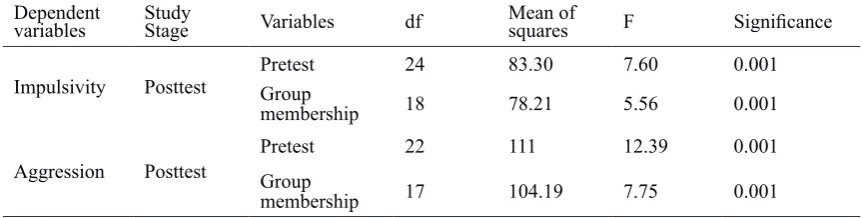
Table 3 The results of the analysis of covariance for examining the difference between the two groups in their posttest scores given their pretests scores
Dependent
variables StudyStage Variables df Mean ofsquares F Significance
Impulsivity Posttest GroupPretest 24 83.30 7.60 0.001
membership 18 78.21 5.56 0.001
Aggression Posttest GroupPretest 22 111 12.39 0.001
membership 17 104.19 7.75 0.001
Comparison of results showed that, by eliminating the effect of the negative control variables and based on the F coefficient, a significant difference is observed between the modified mean scores of impulsivity and aggression in participating adolescents by group membership (intervention and negative control groups) in the posttest stage (p<0.001). Mindfulness therapy has therefore affected the posttest levels of impulsivity and aggression in the intervention group, and the difference in the mean scores is not due to the two groups' pretest differences. The level of this effect was 52% on impulsivity and 50% on aggression. The statistical power was close to 1 and the level of significance close to zero, indicating the adequacy of the sample size.
Discussion
The present study aimed to assess the effect of mindfulness therapy in reducing impulsivity and aggression in adolescents. Results obtained revealed the effectiveness of mindfulness therapy on impulsivity and aggression in adolescents of the intervention group in the posttest, and also showed that the difference in the mean posttest impulsivity and aggression scores by group membership (the intervention and the negative control groups) cannot be attributed to any differences between the two groups in the pretest or else to the effect of the pretest. This result is in line with previous findings [9,16,35,36,38] indicating the effectiveness of mindfulness in reducing anger, aggression and impulsivity. Wright, Day & Howells in 2009 showed anger to be an emotion responding well to mindfulness-based interventions [34]. Some other studies also showed mindfulness
or an extended attention to the present time to be associated with low levels of hostility and aggressive behaviors [35-37] and to also reduce aggressive behaviors [16,36,38,39] and to remain at a reasonable level for years after the intervention [16,17,39]. Although the present study has not examined reduced levels of anger due to the effect of mindfulness interventions, it did show a relationship between mindfulness and lower levels of hostility and aggression, and is therefore in line with some other studies [16, 34-39].
For clarification purposes, it can be asserted that increased attention to and awareness of thoughts, emotions and desires form part of the positive aspects of mindfulness [40]. With initiating a stage-by-stage awareness of the moment in a non-judgmental way, mindfulness increases the patient's awareness, self-regulation and self-supervision of his behaviors [39]. Mindfulness can thus reduce motor impulsivity and acting without forethought in impulsive adolescents, which is in line with results of the present study.
even affect mental rumination. Since mental rumination and focus on the past can aggravate anger and aggression, mindfulness can oppose mental rumination and ultimately reduce anger and aggression [32].
Teaching parents mindfulness techniques often reforms their children's behavioral patterns. The mothers' mindfulness reduces the children's aggression and increases her own enjoyment of her parenting skills. Studies have shown that, after teaching the philosophy and principles of mindfulness, parents treat their children's behavioral problems with greater awareness, and are able to both reduce their aggressive behaviors and increase their social skills. Reports also showed that greater practice in mindfulness increases the satisfaction of parents with their own parenting skills, improves the parent-child relationships and positively affects the sibling relationships too [18]. Mindfulness is therefore an effective intervention that can be performed both on the parents and the children and adolescents.
The present study faced certain limitations, which should be taken account of in the drawing of conclusions and their generalization. This study was conducted on 15 to 17 year-old adolescent girls studying at Tehran's high schools during the academic year 2011-2012. Extending its results to other age groups and to male populations should therefore be pursued with care. Future studies are recommended to investigate the effect of mindfulness in reducing impulsivity and aggression in male adolescents, in different age groups and in wider populations.
Conclusion
The ultimate conclusion that can be drawn from this study is that mindfulness is effective in reducing aggression and impulsivity in adolescents. A mindfulness approach has advantages such as, being group-based, requiring few sessions (short therapy period) and having lower therapy costs. Mindfulness is therefore a skill that can promote physical and mental health if incorporated into interventional programs and is also associated with inhibitory responses in adolescents [37].
Acknowledgments
We thank all officials and students of school involved in practical and scientific affairs that assisted us in this study.
Contribution
Study design: FKH, HZ
Data collection and analysis: FKH, MZ, ZSH Manuscript preparation: FKH, MZ
Conflict of Interest
"The authors declare that they have no competing interests. "
References
1- Hofmann W, Friese M, Strack F. Impulse and self-control from a dual-systems perspective. Perspect Psychol Sci2009, 4(2): 162-76.
2- Dickman SJ. Impulsivity and information processing. In: Mc Cown W, Shure M, Johnson J, eds. The impulsive client, theory, research and treatment. Washington, DC: American psychological association; 1993.
3- Evenden J. Impulsivity: a discussion of clinical and
experimental findings. J Psychopharmacol1999; 13: 180-92.
4- Kagan J. Reflection impulsivity: the generality and
dynamics of conceptual tempo. J Abnorm Psychol1966; 71: 17-24.
5- Kagan J. Reflection impulsivity and reading ability in
primary grade children. Child Develop1965; 36: 609-28. 6- Daruna JH, Barnes PA. A neurodevelopmental view of impulsivity. In: Mc Cown WG, Johnson JL, Schur MB, eds. The impulsive client: theory, research and treatment. Washington, DC: American psychological association; 1993.
7- Dickman SJ. Functional and dysfunctional impulsivity: Personality and cognitive correlates. J Pers Soc Psychol1990; 58: 95–102.
8- Evenden JL. Varieties of impulsivity. Psychopharmacology1999; 146: 348–61.
9- Aron A, Mashek D, Mc Laughlin-Volpe T, Wright SC, Lewandowski, Aron EN. Including close others in the cognitive structure of the self. In Baldwin M, ed. Interpersonal cognition. New York: Guilford; 2004. PP: 206-32.
11- Safari N.Comparison of perkinson impulsivity control to self-control learning on reduction of impulsivity in Tehran adolescents. [dissertation].M. (Psy): Allame Tabatabaie University 2008; PP: 44-167.
12- Steinberg L. Risk taking in adolescence: new perspectives from brain and behavioral science. Curr Dir Psychol Sci2007; 16: 55-9.
13- Goldstein RZ, Volkow ND. Drug addiction and its underlying neurobiological basis: neuroimaging evidence for the involvement of the frontal cortex. Am J Psychiatry2002; 159: 1642-52.
14- Garavan H, Stout JC. Neurocognitive insights into substance abuse. Tr Cogn Sci2005; 9: 195-201.
15- Reebye P, Moretti M. Perspectives on childhood and adolescent aggression. Can Child Adolesc Psychiatr Rev2005; 14(1): 2.
16- Singh NN, Wahler RG, Adkins AD, Myers RE. Soles of the feet: a mindfulness-based self-control intervention for aggression by an individual with mild mental retardation and mental illness. Res Dev Disabil2003; 24(3): 158–69. 17- Singh NN, Lancioni GE, Winton ASW, et al. Individuals with mental illness can control their aggressive behavior through mindfulness training. Behavior
Modification2007; 31(3): 313-28.
18- Singh NN, Lancioni GE, Singh Joy SD, et al. Adolescents with conduct disorder can be mindful of their aggressive behavior. J Emot Behav Disord2007; 15(1): 56-63.
19- Ludwig DS, Kabat-Zinn J. Mindfulness in medicine. JAMA2008; 300(11): 1350-2.
20- Wright S, Day A, Howells K. Mindfulness and the treatment of anger problems. Aggress Violent Behav2009; 14(5): 396–401.
21- Grossman P, Niemann L, Schmidt S, Walach H.
Mindfulness-based stress reduction and health benefits: a
meta-analysis. J Psychosom Res2004; 57(1): 35–43. 22- Wupperman P, Marlatt GA, Cunningham A, et al.
Mindfulness and modification therapy for behavioral
dysregulation: results from a pilot study targeting alcohol use and aggression in women. J Clin Psychol2012; 68(1): 50–66.
23- Ciarrochi J, Kashdan TB, Leeson P, Heaven P, Carlie Jordan C. (2011). On being aware and accepting: a one-year longitudinal study into adolescent well-being. J Adolesc2011; 34(4): 695–703.
24- Wall RB. Tai Chi and mindfulness-based stress reduction in a Boston public middle school. J Pediatr Health Care2005; 19 (4): 230–7.
25- Broderick PC, Metz S. Learning to BREATHE: a pilot trial of a mindfulness curriculum for adolescents. Adv Sch
Ment Health Promot2009; 2(1): 35-46.
26- Schonert-Reichl KA. Stewart Lawlor M. (2010). The effects of a mindfulness-based education program on pre-and early adolescents’ well-being and social and emotional competence. Mindfulness2010; 1(3): 137-51. 27- Thompson M, Gauntlett-Gilbert J. Mindfulness with children and adolescents: effective clinical application. Clin Child Psychol Psychiatry2008, 13(3): 395-407. 28- Baghaie Lake M, Khalatbary J. The effect of anger management learning on anger & impulsivity self-regularity and control of school students mothers in Rasht city. Journal of Nursing & Midwifery2010; 63. 29- Nejati V, Maleki Gh. The relation of impulsivity and consideration to problem solving function. Zaheden Med Sci Research2010; 14(1): 76-81.
30- Ekhtiari H, Rezvanfard M, Mokri A. Impulsivity and its different assessment tools: a review of view points and conducted researches. Iranian Journal of Psychiatry Clinical Psychology2008; 14(4): 247-57. 31- Saatchi M, Kamkari K, Asgarian M. Psychological tests. ; Tehran: Virayesh Pub; 2010.
32- Kabat-Zinn J. Full catastrophe living: using the wisdom of your body and mind to face stress, pain, and illness New York: Delacorte; 1990.
33- Segal ZV, Williams JMG, Teasdale JD. Mindfulness-based cognitive therapy for depression: a new approach to preventing relapse New York: Guilford press; 2002. 34- Wright S, Day A, Howells K. Mindfulness and the treatment of anger problems. Aggress Violent Behav2009, 14(5): 396–401.
35- Heppner WL, Kernis MH, Lakey CE, et al. Mindfulness as a means of reducing aggressive behavior: dispositional and situational evidence. Aggressive Behavior2008; 34(5): 486–96.
36- Kelley TM, Lambert EG. Mindfulness as a potential means of attenuating anger and aggression for prospective criminal justice professionals. Mindfulness2012; 3: 261-74
37- Oberle E, Schonert-Reichl KA, Stewart Lawlor M, Thomson KC. Mindfulness and inhibitory control in early adolescence. J Early Adolesc2011; 30.
38- Singh NN, Lancioni GE, Singh ADA, Winton ASW, Singh ANA, Singh J. Adolescents with asperger syndrome can use a mindfulness-based strategy to control their aggressive behavior. Res Autism Spectr Disord2011; 5(3): 1103–9.