*Corresponding author: Vimal Kumar ISSN: 0976-3031
Research Article
APPLICATION OF DATING TECHNIQUES IN ARCHAEOLOGICAL SCIENCES: AN OVERVIEW
Vimal Kumar*
ASAC, Science Branch, Archaeological Survey of India, 29 New Cantt Road, Dehradun,
Uttarakhand, India-248001
DOI: http://dx.doi.org/10.24327/ijrsr.2018.0901.1457
ARTICLE INFO ABSTRACT
Archaeological dating has under gone rapid development through the advance scientific methodology in the field of Archaeological science research. Fifty one studies of advance dating methods have been reported. The present study intend to report about the dating techniques with the application in Archaeological studies such as dating of pottery, ceramics, quartz, glass, zircon, human bones and metal. This paper also emphasis the recent requirements of archaeological scientist for the dating of archaeological samples and will benefit to the new researcher of Archaeological Sciences.
INTRODUCTION
Archaeologists are the world’s greatest jigsaw puzzlers piecing together tiny fragments to create a coherent picture of the past (Simon, 2007). Dating is the process of attributing to an object or event a date in the past, allowing such object or event to be located in a previously established chronology. This usually requires what is commonly known as a "dating method". (https://en.wikipedia.org/wiki/Chronological_dating). Many Buildings of historical interest were developed in various construction stages over the centuries. In carrying out restoration on them as well as in studying the evaluation of the site, it is often necessary to determine the chronology of the different periods of construction and thus, some restoration teams include historians as well as architects. (Vendrell Saz, 1996). In recent years many research papers have discussed and demonstrated, the importance of combining appropriate scientific methodologies to provide experimental data which can supports Archaeologist hypothesis regarding both the age and province of artifacts and the technologies with trade routes used in their manufacture and distribution (Bordet, 1929; Troja,1996). Perhaps the best-known analytical method in archaeology is radiocarbon dating. It has been used for the past 50 years to date the samples based on the decay of the naturally occurring radioactive isotope of carbon (14C).The isotope is constantly formed in the atmosphere by cosmic radiation, and is incorporated into plants and ultimately every living tissue.
When an organism dies and stops taking up 14C, the extent of its radioactive decay with a half-life of 5730 years can be used to determine the time at which it died (Simon, 2007).This paper reports the basics of some dating techniques with its advance applications in the field of Archaeological Sciences.
Dating techniques
Dating techniques are classified into two categories these are relative dating and absolute dating. Relative dating methods can determine the impossibility of a particular event happening before or after another event of which the absolute date is well known. Relative dating refers to non-chronometric methodologies that produce seriation based on stylistic comparison and stratigraphic assumptions. On the other hand, absolute dating methods are based on scientific techniques that yield a chronometric age for a phenomenon in direct or indirect physical relation to the archaeological objects or materials (same age, older, or younger). Dating of some binders in pictographs or the alterations of surfaces by petroglyphs are examples of direct ages related to rock art production. However, it is controversial to consider these dates as “absolute” as they merely reflect experimental propositions, which often lack independent verification (Bednarik 2007; Pettitt, 2007; https://en.wikipedia.org/wiki/Chronological_ dating). We are going to further discussion on the relative and absolute dating.
International Journal of
Recent Scientific
Research
International Journal of Recent Scientific Research
Vol. 9, Issue, 1(H), pp. 23382-23391, January, 2018
Copyright © Vimal Kumar, 2018, this is an open-access article distributed under the terms of the Creative Commons Attribution License, which permits unrestricted use, distribution and reproduction in any medium, provided the original work is properly cited.
DOI: 10.24327/IJRSR
CODEN: IJRSFP (USA)
Article History:
Received 05th October, 2017
Received in revised form 08th November, 2017
Accepted 10th December, 2017 Published online 28st January, 2018
Key Words:
Relative Dating
This type of dating technique is the science of determining the relative order of ancient times actions. Archaeologists and geologists used relative dating to determine ages of materials. Though relative dating can only determine the sequential order in which a series of events occurred, not when they occurred, it remains a useful technique. Relative dating by biostratigraphy is the preferred method in paleontology and is, in some respects, more accurate (Stanley, 1999). Relative dating places assemblages of artifacts in time, in relation to artifact types similar in form and function by the Archaeological scientist (Griggs, 1988). Relative dating is also used to determine the order of events on solar system objects other than Earth; for decades, planetary scientists have used it to decipher the development of bodies in the solar System, particularly in the vast majority of cases for which we have no surface samples (Hartmann, 1999). The law of superposition and seriation are the basic terms of relative dating.
Stratigraphy (The Law of Superposition)
Stratigraphy can be described as a "layer cake" type arrangement of deposits called strata, with the older layer beneath the latest. This technique helps the archaeologist to arrange the site in a vertical temporal sequence, which may then be compared to sites of similar age or type. Stratigraphic sequences in the field, however, are sometimes unreliable. Suppose the inhabitants of a previous site dug a large hole. The top of the heap of excavated dirt would date the oldest. Perhaps a burrowing animal tunneled down through a site, causing artifacts buried above to fall to lower levels. Natural processes like frost heaving, erosion, and the down-slope movement of soils in colder climates (solifluction) can alter the original context in which the artifacts were deposited.
Seriation
Seriation dating technique dates a site based on the relative frequency of types of artifacts whose dates of use or manufacture are known. The basic assumption underlying seriation is that the popularity of culturally produced items (such as clay pipes or obelisk gravestone markers) varies through time, with a frequency pattern that has been called the "battleship curve." An item is introduced, it grows in popularity, then its use begins to wane as it is replaced by another form. Certain types of artifacts have been identified as particularly useful temporal markers, for example, gravestones, projectile points, lamps, pottery sherds. Before being able to interpret materials found at a site, an archaeologist faces the task of sorting the artifacts into manageable units for analysis (Griggs, 1988).
Absolute dating
Any method of measuring the age of an event or object in years on the basis of the concept of isotopes and half life is known as Absolute dating. In archaeology, absolute dating is usually based on the physical, chemical, and life properties of the materials of artifacts, buildings, or other items that have been modified by humans and by historical associations with materials with known dates (coins and written history). Techniques include tree rings in timbers, radiocarbon dating of wood or bones, and trapped charge dating methods such as thermo luminescence dating of glazed ceramics. Coins found in
excavations may have their production date written on them, or there may be written records describing the coin and when it was used, allowing the site to be associated with a particular calendar year (Kelly, 2012). In the absolute dating, scientists use the relative amounts of stable (daughter) and unstable (parent) isotopes in an object to determine the age of the object which are described in the table 1. Absolute dating technique is further classified into several methods such as radiometric techniques, luminescence dating, dendochronology, amino acid dating but Now a days scientific disciplines have provided the variety of the dating methods which are relevant to the archaeological sciences. These are:
Physical Dating Techniques
Radio Carbon Dating
The term “radiocarbon” is commonly used to denote 14C, an isotope of carbon which is radioactive with a half-life of about 5730 years. The radiocarbon method is based on the rate of decay of the radioactive or unstable carbon isotope 14 (14C), which is formed in the upper atmosphere through the effect of cosmic ray neutrons upon nitrogen-14. The reaction is: 14N + n => 14C + p (Where n is a neutron and p is a proton) (Beta analytic, 2017). It can be applied for dating materials of biogenic origin, such as wood, charcoal, bones, grains, paper, parchment, textile, etc. Due to very low natural 14C concentration the radiocarbon dating method requires special techniques for chemical preparation of samples and measurement of 14C. Particular care has to be taken for sample collection and/or storage as well as during sample pretreatment and chemical preparation (Bronić, 2015).14C atoms, thus produced, combine with oxygen to from carbon-di-oxide
(14CO2). This 14CO2 and ordinary carbon-di-oxide (12CO2) are
distributed in nature through the carbon cycle. The plant fix carbon-dioxide by photosynthesizing their food. As plants are consumed by animals and humans alike, they are labeled by 14
C. Through molecular exchange across the air sea interface, 14
C reachs oceans and then on to the marine biosphere. Through
this carbon-carbon cycle, 14C is dispersed in nature and all the
living matter is labeled with it (Agarwall 1974). Any remains
of organic origin such as hair, bone, antler, tooth, charcoal, wood and seeds can be dated using carbon dating. A sample should be yield 5 gram of the pure carbon. Some threshold limit of the weight of the samples to be required for the analysis; Charcaoal: 15gms; Bone: 350 grams; Wood: 20
grams; Shell: 20 grams; Antler: 200 grams. There are two basic
Luminescence Dating
The method uses an optically and thermally sensitive light or luminescence signal in minerals such as quartz and feldspar. During exposure to light or heat the luminescence signal within the grains is erased (optically bleached or thermally annealed) until it is completely removed (zeroed). Once the grains are sealed from daylight and remain at normal environmental temperatures, the luminescence signal accumulates again, being induced by naturally occurring radioactivity. For dating, the amount of absorbed energy per mass of mineral [1 J kg-1 = 1 Gy (Gray)] due to natural radiation exposure since zeroing known as the palaeodose, is determined by comparing the natural luminescence signal of a sample with that induced by artificial irradiation. Several laboratory techniques have been developed to accomplish the necessary stimulation and recording of the weak but measurable luminescence emitted from minerals. The time elapsed since the last daylight exposure or heating is calculated by dividing the palaeodose by the dose rate, the latter representing the amount of energy deposited per mass of mineral due to radiation exposure acting on the sample over a certain time (Gy a-1). This relation is represented by the following simple equation: Luminescence age (a) = Palaeodose (Gy) /Dose rate (Gy a-1) (1). Luminescence dating has been applied to a wide range of topics within quaternary research such as landscape evolution, palaeoclimate, geohazards and (geo)-archaeology, and has undergone several important methodological refinements since its early days. Luminescence dating comprises a range of dif-ferent but related phenomena. The fact that a strict nomenclature is not always adhered to and that some techniques are not often used may cause some confusion to the non-specialist. Recent reviews of luminescence dating in archaeology can be found in Roberts, 1997 and Wagner, 1998.
One of the first publications suggesting the use of thermoluminescence (TL) as a research tool was by Daniels et al, 1953 and a few years later TL was used to date ceramics (Grögler et al, 1958; Aitken et al, 1964, 1968). An important benchmark was the application of TL to the dating sediments (Wintle et al, 1979, 1980; Wintle, 1980). Another breakthrough came with the introduction of optical stimulation by both visible (Huntley et al, 1985) and infrared light (Hütt et al, 1988). More recent advances concern the development of measurement procedures. Of these, notable developments are the use of a single aliquot (Duller, 1991; Murray et al, 2000), as well as single grain dating techniques (Murray et al, 1997; Duller et al, 2000), new analytical tools such as linearly modulated luminescence (Bulur, 1996), radiofluorescence (Krbetschek et al, 2000; Erfurt et al, 2003) and spatially-resolved luminescence (Greilich et al, 2002; Greilich et al, 2006). The most-widely used terminology and the techniques used in luminescence dating are described in Table 2.
Thermoluminescence (TL)
The term thermo luminescence (TL) describes the light emitted by a mineral, other than incandescence or black body radiation, when heated. The light originates from captured electrons being freed due to heat stimulation and subsequent recombination. Thus, it is also (and more correctly) referred to as thermally-stimulated luminescence (TSL) although this term is not often used. The basic processes leading to a latent luminescence signal: A valence electron is excited by ionizing radiation, and has sufficient energy to reach the conduction band, leaving a hole in the valence band. Most of the excited electrons dissipate their energy by recombining immediately with a hole in the valence band; the transition is sometimes accompanied by photon emission.
Table 1 Radioactive element commonly used for absolute age determinations with parent and daughter isotopes. (Gupta, 2011)
SN Parent isotope Production
mechanism Daughter isotopes
Half-Life (Million years)
1 7-Berylium (7Be) Cosmogenic 7-Lithium (7Li) 53 days
2 210-Lead (210Pb) Uranium decay 210-Bismuth (210Bi) 22.3 years
3 226-Radium (226Ra) Uranium decay 222-Radon (222Rn), 4He 1,622 years
4 14-Carbon (14C) Cosmogenic, Bomb 14-Nitrogen (14 N) 5,730 years
5 231-Protactinium (231 Pa) Uranium Decay 227-Thorium (227Th), 4He 0.033
6 234-Uranium (234U) Uranium Decay 230-Thorium (230Th), 4He 0.25
7 36-Chlorine (36Cl) Cosmogenic, Bomb 36-Argon (36Ar) 0.31
8 26-Aluminum (26Al) Cosmogenic, Stellar 26-Magnesium (26 Mg) 0.73
9 230-Thorium (230Th) Uranium Decay 226-Radium (226Ra), 4He 0.75
10 60-Iron (60Fe) Stellar 60-Nickel (60Ni) 1.5
11 10-Berylium (10Be) Cosmogenic, Stellar 10-Boron (10B) 1.6
12 53-Manganese (53Mn) Cosmogenic, Stellar 53-Chromium (53Cr) 3.7
13 107-Paladium (107Pd) Stellar 107-Silver (107Ag) 6.5
14 182-Hafnium (182Hf) Stellar 182-Tungsten (182 W) 9
15 129-Iodine (129I) Stellar, Cosmogenic 129-Xenon (129Xe) 15.7
16 244-Plutonium (244Pu) Stellar Various fission products 80
17 146-Samarium (146Sm) Stellar 142- Neodymium (142Nd) 103
18 235-Uranium (235U) Stellar 207-Lead (207Pb), 4He 704
19 40-Potassium (40 K) Stellar 40-Argon (40Ar) ;
40-Calcium (40Ca) 1,270
20 238-Uranium (238U) Stellar 206-Lead (206Pb), 4He 4,469
21 232-Thorium (232Th) Stellar 208-Lead (208Pb), 4He 14,010
22 176-Lutetium (176Lu) Stellar 176-Hafnium (176Hf) 35,700
23 187-Rhenium (187Re) Stellar 187-Osmium (187Os) 41,600
24 87-Rubidium (87Rb) Stellar 87-Strontium (87Sr) 48,800
25 147-Samarium (147Sm) Stellar 143-Neodymium(143Nd), 4He 106,000
Prompt transition of a few excited electrons into localised energy states below the band edge resulting in electron trapping; light is potentially emitted during these processes. A hole in the valence band may be filled by electrons from localised levels above the valence band edge; hence the hole transfers from the valence band to the localised level. The application ranges from lower Paleolithic to Neolithic archaeological sites, with a major focus on the middle Paleolithic, which is often beyond the range of the 14C-dating method. The application of TL dating on heated flint is mainly limited by the detection limits of the equipment for very young samples, the saturation of the signal measured for very old samples, and, of course, the presence of sufficiently burnt flint. It is thus, in principle, possible to date fire use over the entire human evolution. The first measurement of TL empties the electron traps after which a second heated measurement is undertaken to record the unwanted light signal due to black body radiation or incandescence. This starts to grow around 400°C when using blue-violet detection filters, and the sum of this is subtracted from the first signal. The different TL peaks of the glow curve represent different trap populations, with electrons from “shallow” traps recombining at lower stimula-tion temperatures than those from “deep” traps at higher temperatures, and a comparison of naturally and artificially induced TL reveals information about the stability of different signal components. This characteristic is utilised to identify the appropriate thermal pre-treatment for reliable measurement, and to investigate the extent to which a sample was zeroed by the natural heating/bleaching process. TL was the only method used in retrospective dosimetry and luminescence dating until the mid-1980s, and was originally developed for the dating of ceramics (Aitken, 1964), although it was also used later to date volcanic rocks (Hwang, 1970; May, 1979; Raynal et al, 1982), heated artefacts and sediments (Huxtable et al, 1978) as well as aeolian deposits (Wintle, 1979, 1980, 1981; Singhvi et al, 1982, Godfrey-Smith et al, 1988). A modification of the classical TL approach is the isothermal TL (ITL) method, in which TL is recorded while the sample is held at a constant or isothermal temperature (Jain et al, 2005; Huot et al, 2006).
The advantage of this method is that a specific trap population is emptied while deeper traps are not stimulated. In contrast to TL it is thus possible to focus on a trap population with certain physical properties. A first test study indicated that the potential of the method lies in the prospect of increasing the age range towards older samples (Jain et al, 2005; Choi et al, 2006a), although, while some tests on quartz showed quite promising results, other test studies identified several problems and age overestimates in comparison to optical dating (Buylaert et al, 2006). Nevertheless, ITL appears to be an interesting approach with some potential, especially for older sedimentary samples and heated objects.
Optical Stimulation (OS)
The most important breakthrough in recent years in luminescence dating has been the use of optical stimulation (optical dating). This area of luminescence dating mainly comprises stimulation by visible light as introduced by Huntley et al, 1985, and by infrared (IR) as first described by Hütt et al, 1988, may be collectively referred to as photoluminescence or photon-stimulated luminescence (PSL). The advantage of any optical method is that only the light-sensitive part of the luminescence signal is stimulated, which for sedimentary deposits considerably minimizes the problem of incomplete bleaching of the luminescence signal prior to deposition. Furthermore, more reliable and precise methods for determining the palaeodose have been developed since the mid-1990s and have revolutionized luminescence dating. These methods will be described below. Regardless of what kind of photon-stimulation is used, optical filters are placed between the sample and the light-sensitive surface of the photomultiplier tube to minimize crosstalk between light from the stimulation source and light emitted from the sample. When optical excitation begins the latent luminescence in the mineral will start to decay, resulting in a so-called decay curve recorded by the photomultiplier. Further classification of the OS dating described in the table No 2.
Table 2 List of various types of luminescence dating with basic applications
SN Luminescence Dating Methods Application References
1 Thermo-luminescence (TL) Dating heated materials Aitken et al, 1964
2 Isothermal Thermo-luminescence (ITL) Experimental (quartz) Jain et al, 2005
3 Optically Stimulated luminescence (OSL) Dating sediments (quartz) Huntley et al, 1985
4 Infrared stimulated luminescence (IRSL) Dating sediments (feldspar) Hütt et al, 1988
5 Infrared radiofluorescence (IR-RF) Dating sediments (feldspar) Trautmann et al, 1999a
6 Linearly modulated OSL (LM-OSL) Analytical tool (quartz) Bulur, 1996
7 Spatially-resolved luminescence (HR-OSL) Dating rock surfaces Greilich et al, 2002
8 Thermally transferred OSL Experimental (quartz) Wang et al, 2006a
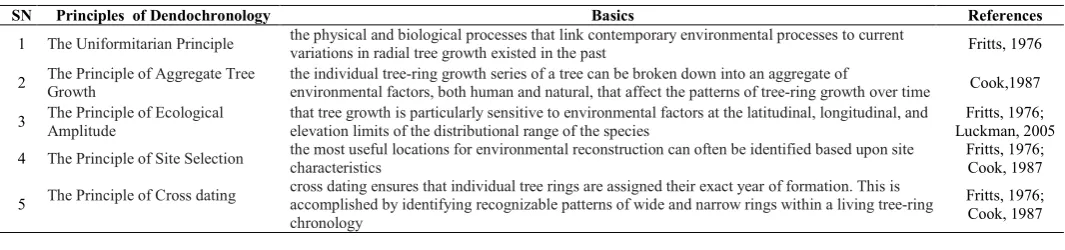
Table 3 List of various principles of Dendochronology with basics
SN Principles of Dendochronology Basics References
1 The Uniformitarian Principle the physical and biological processes that link contemporary environmental processes to current
variations in radial tree growth existed in the past Fritts, 1976
2 The Principle of Aggregate Tree
Growth
the individual tree-ring growth series of a tree can be broken down into an aggregate of
environmental factors, both human and natural, that affect the patterns of tree-ring growth over time Cook,1987
3 The Principle of Ecological
Amplitude
that tree growth is particularly sensitive to environmental factors at the latitudinal, longitudinal, and elevation limits of the distributional range of the species
Fritts, 1976; Luckman, 2005
4 The Principle of Site Selection the most useful locations for environmental reconstruction can often be identified based upon site
characteristics
Fritts, 1976; Cook, 1987
5 The Principle of Cross dating
cross dating ensures that individual tree rings are assigned their exact year of formation. This is accomplished by identifying recognizable patterns of wide and narrow rings within a living tree-ring chronology
Archaeomagnetic Method
This method depends upon the properties of clay to acquire thermoremanent magnetism. The clays containing magnetic oxides of iron, when heated beyond the curie point, lose their magnetism. Between the Curie point and the blocking temperature these baked clays (terracotta, pottery) acquire the direction and the proportionate intensity of the ambient magnetic field. Thus they become permanent records of the earths magnetic field. This record can then be read later. If we have a plot of the change in earth’s magnetic field with respect to time we can compare the thermoremannet magnetism of un dated old potsherds with the curve based on the past changes and thus date them. Thelleir has done work in this field in France and others elsewhere. Athawale carried out this type of work at the tata Institute of Fundamental research, Bombay. Samples from about 30 Indian Archaeological sites dating from c. 300 to 4000 BP were measured. The results show that over the past 4000 years the average field was not much different from the the present- in fact it was lower only by about15%. But the results of Thellier indicate an increase in the field intensity in the past with peak of 1.6 times the present value for 2000 BP samples. Bucha on the other hand reports maximum intensity (1.6 times) around 100 BC and minimum at c. 4000 BC (0.6 times). The Japanese results show sharp increase for 2000 year old basalt samples, and an equally sharp decline to present value for the 3000 year old sample. Thus, at the moment, due to this divergence in results they cannot use this method for dating on a word wide scale (Agrawal,1974).
Botanical Methods Dedochronology
Dendochronology het deals with the dating and study of the annual growth layer or tree rings in woody trees and shrubs. In temperate climate, these layers of wood (tree rings) attains seasonal cell structures (early wood and late wood) that signify one annual growth ring. As early as the fifteenth century, Leonardo da Vinci noted that the annual nature of tree rings, widths and recognizing a relationship between tree ring widths and precipitation (Stallings, 1937).(Studhalter, 1955, 1956). Douglass had developed a 500-year cross dated pine chronology and established a positive correlation between ring
width and precipitation of the preceding winter (Douglass,
1914). Archeological tree-ring sequence provided precise dates of construction for numerous previously undated pueblo sites, bringing the science of Dendrochronology to age as a dating
tool (Dean, 1997). The various principles are applicable for the
Dendochronology have been described in table no.3.
Application of Dendochronology
Tree-ring dating typically begins with the measurement of tree-ring widths or a density parameter, followed by the development of a master tree-ring chronology. The primary objective in developing tree-ring chronologies is to develop stationary time series that are directly comparable and
appropriate for statistical analysis (Fritts, 1976). Chronology
development follows a three-step procedure: (1) Cross dating: is used to check for measurement errors and false or missing rings. Although skeleton plots of tree-ring series are useful for visually identifying dating or measurement problems (Stokes, 1968), the application of quality checking software programs
provides a statistical measure of quality control (Holmes,
1983). (2) Standardization: Although ring-width increments are
assumed to change in response to climate variability, they also vary in size with tree age, stem height above the ground surface, in response to site specific characteristics, and
productivity (Fritts, 1976). For the purpose of climate
reconstruction, it is essential to determine if the changes in ring width are associated with aging or disturbance factors, and to then remove these influences from the chronology. This correction is known as standardization, and the transformed
values are referred to as ring-width indices (Fritts, 1976). Each
set of tree-ring measurements requires a different
standardization, depending on the statistical and morphological
properties of the ring-width series (Cook et al, 1990). (3)
Master chronology development: The transformed time-series are combined into a single dimensionless ring-width index, or site chronology, that reflects the extrinsic (environmental)
constraints on growth (Cook, 1986). Cross dating provides the
means to assign an absolute date to each ring in a tree-ring series of unknown age by matching the undated ring-width patterns to those of a known dated series. If the entire ring sequence is present in the outermost perimeter of the undated sample (early wood and latewood tissue), it is assumed that the sample was killed sometime between the end of one year’s growth period and the beginning of another. Precise dating is possible when a sample has bark, as this infers that the last year
of growth is present (Baillie, 1982).
Palynology
Palynology is the "study of dust" or "particles that are strewn". A classic palynologist analyses particulate samples collected from the air, from water, or from deposits including sediments of any age. The condition and identification of those particles, organic and inorganic, give the palynologist clues to the life, environment, and energetic conditions that produced them(https://en.wikipedia.org/wiki/Palynology). They are characteristic of each species and are very resistant to decay, even hydrofluoric acid does not attack them. Pollen analysis can help the Archaeologist in three ways: 1. For dating purposes, 2. For reconstruction of ecology, and 3. To see the role of man in it.
In some part of the world the pattern of change has been established in the pollen grains over a long periods of the past, so that even isolated analysis may be fitted in the sequence. Though in India for the pro historic periods their dating value is limited, yet the ecological importance is great. (Agrawal, 1974).
Recent Trends of Dating Techniques in Archaeological Sciences
Table 3 Description of various dating studies of Archaeological samples with Archaeological sites
SN Type of Samples Archaeological Site Type of Dating / instruments used References
1 Prehistoric Pottery Sherds Milena (cattanissetta, Sicilly) Thermo luminescence Troja, 1996
2. Arcaheological sediments (Loessic
colluvial sediments ) Neolothic Bruchsal Aue (south west Germany) Infrared stimulated luminesecene (IRSL) Lang, 1996
3. Lime mortars
Sant Quizre de pedret north catalonia (Romanesque Monastry) and Santa Maria de repoll (Catalonia
Romanesque)
Chemical data with dendogram using
XRD pattern and ICPMS Vederell sez, 1996
4. Galena England wales, Scotland and Ireland Modern lead Isotopes measurement
using mas spectrometry Rohl,1996
5. Terracotta Jemaa Head Nile Valley, Nok Culture , Nigeria Thermo luminescence Fagg, 1970
6. Pottery Nine Chineses “Six Dinasties Thermo luminescence Fleming, 1970
7. Besalt Lava McMurdo (Antartica), Montsenatt, St Vincent Thermally Stimulated Current (TSC)
technique Hwang, 1970
8. Tree North Wales, North west England Dendochronology Hughes, 1981
9. Human Skull and Skeleton Galley Hill, Kent Radiometric assay (
238 U)and absolute (14
C) dating
Demetsopullos, 1983
10. Bone collagen Not mentioned Carbon Isotopes Measurements Chisholm, 1983
11.
Fresh water bivalve (Unio willcocksi Bullen Newton and Etheria elliptica
Lamark)
Predynastic Gerzean (Nagada II), Hierakonpolis,
Egypt Radio Carbon Bureigh, 1983
12. Travertines Under- and Overlying
the Hominid-beraing marl Vertesszollos, Hungary Uraniaum Series Schwarcz, 1984
13. Oak Boards and Planks, Panels ,
Sapwood England Dendochronology Baillie, 1984
14.
Meta carpals of Sheep (Ovis aries), Goat (Capra hircus) and Nubian
ibex(Capra ibex nubiana)
Various Locality of Israel Radiograph with X-rays source. Smith,1984
15. Bone Collagen Freshly Killed Animals, California , USA Carbon and Nitrogen Isotopes Ratio DeNiro, 1985
16. Bone Samples From Oxford Radio Carbon Gillespie, 1984
17. Schist Honestones Kaupang(Norway), Aggersborg (Denmark), Hedeby
(West Germany) and Wolin (Poland) Potassium-argon Mitchell, 1984
18 Mink and Rabbit Bone Collagen Tehuacan Valley of Maxico Stable carbon and Nitrogen Isotopes ratio DeNiro, 1983
19. Palaeolithic Artifacts Cave of La chaise-de- Vouthon (Charente), France U-Series Dating Blackwell, 1983
20. Pontic Amphora Copenhagen Thermoluminiscent Fleming, 1970
21. Pottery (Quartz) Not Mentioned Thermoluminicent Fleming, 1970
22. Ores West Mediterranean Lead Isotope Stos-Gale, 1995
23. Pottery Lezoux in central France Rehydration
and rehydroxylation (RHX) processes Le Goff, 2014
24. Medieval Ceramic fragments Syrian rehydroxylation (RHX) dating Le Goff, 2015
25. fired-clay
artifacts Not Mentioned rehydroxylation dating Le Goff, 2015
26. Volcanic eruptions Mount Etna, italy 226Ra-230Th radiochronology Tanguy, 2007
27. Ceramic Dankrike,Vaer, Ellum, Uldal, Denmark Thermoluminicent Mejdahl, 1969
28. Pottery Twenty Seven Archaeological Sites Thermoluminicent Dosimetry Aitken, 1969
29. Prehistoric Glass New England area, French Fission track Brill, 1964
30. Pottery Not mentioned Thermoluminicent Fremlin, 1964
31. Masonry Pompey, Otia, Rome Statiscal analysis (Teichography) Schwarz,1964
32. Ancient Ceramics Knosso Crete Stratum III, Stratum II, Strata v-VII,
Syria, Cyprus, France Thermolumenence Tite, 1966
33. Crystalline extracts from pottery Syria, France, Mexico, Roman Thermolumenecence Fleming, 1966
34. Ancient Pottery(fine grains) Cyprus, Lezoux Thermoluminescence Zimmerman, 1967
35. Artifacts, copper, Iron and its Ores Anatolia, Turkey, USA Lead Isotopes Saryre, 1992
36. Layer 10 of calcite Mausoleum cave Greece Uranium Series Latham, 1992
37. Stalagmitic Calcite Caunedel Arago, Tautavel, Southern France and
Pontnewydd cave, Northern wales Thermoluminescence and Uranium series Debenham, 1994
38. Basalt Impliments Mount carmel Late Epipalaeolithic sites K/Ar Dating Weinstein-Evron, 1995
39. Beeswax figure Prihistoric rock art of Northern Austrelia Radiocarbon Nelson, 1995
40. Estuarine mollusk shells Pasific coast of southwestern mexico Oxygen and carbon Isotopes Kennett, 1995
41. Zircon grains of fired materials Method development Auto- regeneratve thermoluminescence Templer, 1993
42. Fossil bones Alpine Caves Uranium series Wild, 1993
43. Prehistoric metal Artifacts Data interpretation of old analysis Lead Isotope Budd, 1993
44. Crucible fragments Taurus mountains at Goltepe in South central Turkey Thermo-luminescence Vandiver, 1993
45. Glass (Lithium disilicate samples) Limitation of method (standardization of methods) Thermo-luminescence Muller, 1993
46. Stone axe Stonehenge Environs Laser microprobe Argon 39-Argon Kelley, 1994
47. White Marble Classical quarrying areas in Greece, Italy and Turkey Cathadoluminescence Barbin, 1992
48. Bone collagen medieval hospital of
St. Giles, Brough, Yorkshire δ
13C and δ15N isotope Bownesa, 2018
49. Dog bones 39 archaeological sites between Denmark and
Switzerland
stable carbon (δ13C) and nitrogen (δ15N)
isotope analyses Ewersena, 2018
50. Teeth Roman and Byzantine Hierapolis strontium isotope Wonga, 2018
Rehydroxylation dating method were used by Le-Goff et al, 2014; 2015, for dating of ceramics and fired clay artifacts. Metals and Gallena samples were dated using Lead Isotopes techniques which were described by Saryre, 1992; Budd, 1993; and Rohl, 1996. The study concluded that there are no any standardized dating method for archaeological metal and its objects. Archaeological scientist are required more standardized techniques for evaluating the dates of metal and its artifacts and also requires such method which will apply directly on the site or museum objects for calculation of manufacturing dates.
Acknowledgements
I am grateful to the Director (Science), Archaeological Survey of India, Dehradun for providing the opportunity and support for this study.
References
1. Aitken, M. J. (1989): Luminescence dating: a guide for non-specialists. Archaeometry, 31:147-159.
2. Aitken, M. J., Tite, M.S., Reid, J. (1964): Thermo luminescence dating of ancient ceramics. Nature, 202: 1032-1033.
3. Aitken M. J. (1969): Thermo luminescent dosiometry of environmental radiation of Archaeological site. Archaeometry, 11: 109-114.
4. Agrawal, D.P. and Kusumgar, S. (1974): Prehistoric chronology and radio carbon dating in India, Munshiram Manohar Lal Publisher Pvt. Ltd. Chapter- 2:5-29. 5. Baillie, M. G. L. (1982): Tree-Ring Dating and
Archaeology. Croom Helm, London.
6. Baillie, M.G.L. (1984): Some thoughts on Art Historical Dendochronology. J of Archl. Sci.,11: 371-393.
7. Barbin, V., Ramseyer, K., Decrouez, D., Burns, S. J., Chamay, J. and Maier, J.L. (1992): Cathodoluminesence of White Marbles An Overview. Archaeometry, 34(2): 175-183.
8. Beta Analytic, Introduction to Radiocarbon Determination by the Accelerator Mass Spectrometry Method Beta Analytic Limited London Bioscience Innovation Centre 2 Royal College Street London
NW10NH United Kingdom.
https://www.radiocarbon.com/PDF/AMS-Methodology.pdf, retrieved on dated 27/12/2017. 9. Bednarik, R.G. (2007): The dating of rock art, in Rock
art science. The scientific study of palaeoart, New Delhi, Ayran Books: 115–52.
10. Blackwell, B., Scwarcz, H. P. and Debenath., A.(1983): Absolute dating of Hominids and Palaelithic Artifacts of the cave of La Chaise- de- Vouthon (Charente, France). J of Archaeol. Sci.,10:493-513.
11. Bordet, P. (1992): Letude de laceramique au laboratorie, Documents et Travaux IGAL, 16:5-12.
12. Bownesa, J., Clarke, L., Buckberrya J. (2018): The importance of animal baselines: Using isotope analysis to compare diet in a British medieval hospital and lay population. J of Archaeol. Sci.: Reports, 17: 103–110. 13. Brill, R. H. (1964): Application of fission track dating to
historic and prehistoric glass. Archaeometry,7:51-57. 14. Bronić, I. K., Horvatinčić, N., Barešić, J., and Sironić A.
(2015): Radiocarbon dating of artworks croartscia
symposium, Technological innovations: Art & Science. Ruđer Bošković Institute, Zagreb.
15. Brönnimanna, D., Knipperb, C., Pichlera, S. L., Röderc, B., Rissanenc, H., Stoppa, B., Rosnere, M., Blank, M., Warnbergg, O., Alta, K. W., Lassaud, G., and Rentzela. P.( 2018): The lay of land: Strontium isotope variability in the dietary catchment of the Late Iron Age proto-urban settlement of Basel-Gasfabrik, Switzerland. J of Archaeol. Sci. Reports, 17: 279–292. 16. Burleigh, R. (1983): Two radiocarbon dates for fresh
water shells from Hierakonpolis: Archaeological and Geological Interpretations. J. of Archaeol. Sci., 10: 361-367.
17. Bulur, E.(1996): An alternative technique for optically stimulated luminescence. Radiat. Meas., 26: 701–709. 18. Buylaert, J.P., Murray, A.S., Huot, S., Vriend, M.G.A.,
Vandenberghe, D., De Corte, F.,Van Den Haute, P. (2006): A comparison of quartz OSL and isothermal TL measurements on Chinese loess. Radiat. Protect. Dosi., 119: 474-478.
19. Budd, P., Gale, D., Pollard, A. M., Thomas, R.G. and Williams, P.A.(1993): Evaluating Lead Isotopes Data Further Observations. Archaeometry, 35(2):241-263. 20. Cook, E. R., and Holmes, R. L. (1986): Users Manual
for Program ARSTAN. In Tree-Ring Chronologies of Western North America: California, Eastern Oregon and Northern Great Basin (R. L. Holmes, R. K. Adams and H. C. Fritts, Eds.), pp. 50-65. Laboratory of Tree-Ring Research, University of Arizona, Tucson AZ.
21. Cook, E. and Kairiukstis, L. (1990): Methods of Dendrochronology, 1st edn. Kluwer Academic.
22. Cook, E. R. (1987): The decomposition of tree-ring series for environmental series. Tree-Ring Bull., 47: 37– 59.
23. Choi, J.H., Murray, A.S., Cheong, C.S., Hong, D.G. and Chang, H.W. (2006a): Estimation of equivalent dose using quartz isothermal TL and the SAR procedure. Quarter. Geochronol., 1: 101-108.
24. Chisholm, B. S., Nelson, D.E., Hobson, K.A., Schwarcz, H. P., and Knyf, M. (1983): Carbon Isotopes measurement techniques for Bone Collagen: Notes for the Archaeologist. J. of Archaeol. Sci. 10: 355-360. 25. Duller, G.A.T. (1991): Equivalent dose determination
using single aliquots. Nucl. Tracks and Radiat. Meas., 18: 371-378.
26. Duller, G.A.T., Bøtter-Jensen, L., and Murray, A.S. (2000): Optical dating of single sand-sized grains of quartz: sources of variability. Radiat. Meas., 32: 453-457.
27. Dean, J. S. (1997): Dendrochronology. In Chronometric Dating in Archaeology (R. E. Aitken and M. J. Taylor, Eds.), 2:31–64.
28. Douglass, A. E. (1914): A method for estimating rainfall by the growth of trees. In The Climatic factor as illustrated in Arid America, Publication 192 (E. Huntington, Ed.), Carnegie Institute of Washington, Washington, DC. pp. 101–121.
30. Debenham, N.C. and Aitken, M.J. (1994): Thermo luminescence Dating of Stalagmitic Calcite, Archaeometry, 26 (2), 155-170.
31. Demetsopullos, I. C., Burleigh R. and Oakley. K. P. (1983): Relative and absolute dating of the Human skull and Skeleton from Galley Hill, Kent. J of Archaeol Sci.10:129-134.
32. DeNiro, M. J., Schoeninger, M. J. (1983): Stable carbon and Nitrogen Isotope ratios of bone collagen: Variations within Populations Raised on Monotonus Diets. J of Archaeol. Sci.,10:199-203.
33. DeNiro, M. J., Schoeninger, M. J. and Hastorf, C. A. (1985): Effect of Heating on the stable carbon and Nitrogen Isotope Ratios of Bone Collagen. J. of Archaeol. Sci.,12:1-7.
34. Erfurt, G., Krbetschek, M.R., Bortolot, V.J. and Preusser, F. (2003): A fully automated multi-spectral radio-luminescence reading system for geochronology and dosimetry. Nucl. Instr. Meth. in Phy. Res., 207 (B): 487-499.
35. Ewersena, J., Zieglerc, S., Rammingera, B., Schmölckee, U. (2018). Stable isotopic ratios from Mesolithic and Neolithic canids as an indicator of human economic and ritual activity. J. of Archaeol Sci.: Reports, 17:346-357.
36. Fagg B. E. B. and Fleming, S. J.(1970). Thermo luminescent dating of a terracotta of the nok culture, Nigeria. Archaeometry, 12(1):53-55.
37. Fleming, S.J., Moss H.M., and Joseph A.(1970). Thermo luminescence Authencity testing of some Six Dynasties figures. Archaeometry, 12(1):57-65.
38. Fleming, S.J. (1970): Thermoluminescent Authenticity Testing of A Pontic Amphora, Archaeometry, 12(2): 129-131.
39. Fleming, S. J. (1970): Thermolumenicent Dating Refinement of The quartz inclusion method, Archaeometry. 12(2): 133-145.
40. Fleming, S. J. (1966): Study of thermolumnicent of crystalline extract from pottery. Arcaheometry, 9: 170-173.
41. Fremlin, J.H. and Srinath, S (1964): Thermoluminesent dating examples of non uniformity of Luminiscemce. Arcaheometry,7:58-62.
42. Fritts, H. C. (1976): Tree Rings and Climate. Academic Press, New York.
43. Gillespie, R., Hedges, R. E. M. and Wand, J.O. (1984): Radiocarbon Dating of Bone Accelerator Mass Spectrometry. J. of Archaeol. Sci.,11:165-170.
44. Godfrey-Smith, D.I., Huntley, D.J. and Chen, W.H. (1988): Optical dating studies of quartz and feldspar sediment extracts. Quatern. Sci. Rev., 7: 373-380. 45. Greilich, S., Glasmacher, U.A. and Wagner, G.A.
(2002): Spatially resolved detection of luminescence: a unique tool for Archaeochronometry. Naturwissenschaften, 89: 371-375.
46. Greilich, S. and Wagner, G.A. (2006): Development of a spatially resolved dating technique using HROSL. Radiat. Meas., 41: 738 - 743.
47. Griggs, C. (1988): Relative Dating in Arcaheology, Formerly of George Washington University, first
appeared in Anthro. Notes vol. 10, no. 3, Illustration © by Robert L. Humphrey estate, 1-3.
48. Gupta, H. K. (ed.), (2011): Encyclopedia of Solid Earth Geophysics, Volume 1, DOI 10.1007/978-90-481-8702-7.
49. Hartmann, W. K. (1999): Moons & Planets (4th edition). Belmont: Wadsworth Publishing Company. p. 258. ISBN 0-534-54630-7.
50. Holmes, R. L. (1983): Computer-assisted quality control in tree ring dating and measurement. Tree-Ring Bull., 43: 69–75.
51. Hughes, M. K, Milson, S.J. and Leggett. P. A. (1981): Sapwood Estimates in the Interpitation of Tree ring Dates. J. of Archaeol. Sci. 8:381-390.
52. Huot, S., Buylaert, J.P. and Murray, A.S. (2006): Isothermal thermo luminescence signals from quartz. Radiat. Meas., 41: 796- 802.
53. Huntley, D.J., Godfrey-Smith, D.I. and Thewalt, M.L.W. (1985): Optical dating of sediments. Nature. 313: 105-107.
54. Hütt, G., Jaek, I. and Tchonka, J. (1988): Optical dating-K-feldspars optical-response stimulation stimulation spectra. Quatern. Sci. Rev. 7: 381-385.
55. Huxtable, J., Aitken, M.J. and Bonhommet, N. (1978): Thermo luminescence dating of sediment baked by lava flows of Chaine des Puy. Nature, 275: 207-209
56. Hwang, F.S.W. (1970): Thermo luminescence dating applied to volcanic lava. Nature, 227: 940-941.
57. Hwang, F.S.W. and Fremlin, J.H. (1970). A new dating technique using thermally stimulated current. Archaeometry, 12(1):67-71.
58. Jain, M., Bøtter-Jensen, L., Murray, A.S., Denby, P.M., Tsukamoto, S. and Gibling, M.R. (2005): Revisiting TL: dose measurement beyond the OSL range using SAR. Ancient TL, 23: 9-24.
59. Kelly, R. L., Thomas, D. H. (2012): Archaeology: Down to Earth (Fifth edition. ed.). ISBN 9781133608646. 60. Kelley, S., Williams-Thorpe, O. and Thorpe, R.S.(1994):
Laser Argon Dating and Geological Provencing of a Stonehenge Environs. Archaeometry, 36(2):209-216. 61. Kennett, D. and Voorhies, B. (1995): Middle Holcene
Peridicities in Rai fall Inferred from Oxygen and carbon Isotopic fluctuation in Prehistoric Tropical Estuarine Mollusc Shells. Archaeometry, 37(1): 157-170.
62. Krbetschek, M. R., Trautmann, T., Dietrich, A. and Stolz, W. (2000). Radioluminescence dating of sediments: methodological aspects. Radiat. Meas., 32: 493-498.
63. Lang, A. and Wanger, G.A. (1996): Infrared Stimulated Luminescence Dating of Arcaheosediments. Arcaheometry, 38(1):129-141.
64. Latham, A.G. and Schwarcz H.P. (1992): The petralona Hominid site Uranium Series re analysis of “Layer 10” calcite and associated Palaeomagnetic Analyses. Archaeometry, 34 (1): 135 -140.
66. Le Goff, M. and Gallet, Y. (2015): Evidence for complexities in the RHX dating method Archaeometry, 57(5):897-910.
67. Le Goff, M. and Gallet, Y. (2015): Experimental Variability in Kinetics of Moisture Expansion and Mass Gain in Ceramics, J. Am. Ceram. Soc., 98 (2): 398-401. 68. Le Goff, M. and Gallet, Y. (2014): Evaluation of the
rehydroxylation dating method: Insights from a new measurement device, Quaternary Geochronology, 20: 89-98.
69. May, R.J. (1979): Thermoluminescence dating of Hawaiian basalt. Geolog. Surv. Profes. Paper, 1095: 47 S.
70. Mejdahl, V. (1969): Thermo luminescence Dating of Ancient Danish Ceramic, Archaeometry, 11:99-104. 71. Mitchell, J.G. Askvik, H. and Resi. H.G. (1984):
Poatssium argon Ages Schist Hone stones from the Viking Age site at Kaupang (Norway), Aggersborg (Denmark), Hedeby (West Germany) and Wolin (Poland) and their Archaeological Implications. J. of Archaeol. Sci., 11:171-176.
72. Muller, P. and Schvoerer, M. (1993): Factors Affecting the viability of Thermo luminescence dating of Glass. Archaeometry, 35(2): 299-304.
73. Murray, A.S. and Roberts, R.G. (1997): Determining the burial time of single grains of quartz using optically stimulated luminescence. Ear. Planet. Sci. Lett., 152: 163-180.
74. Murray, A.S. and Wintle, A.G. (2000): Luminescence dating of quartz using an improved single-aliquot regenerative-dose protocol. Radiat. Meas., 33: 57-73. 75. Nelson, D.E., Chaloupka, G., Chippindale, C., Alderson,
M.S. and Southon, J.R. (1995): Radio Carbon Dates for Beeswax Figures in the Prehistoric Rock Art of Northern Australia, Archaeometry, 37(1):151-156.
76. Pettitt, P.B. and Pike. A.W.G. (2007): Dating European Palaeolithic cave art: progress, prospects, problems. J. of Archaeol. Meth. Theo.,14(1): 27–47.
77. Raynal, J.P., Daugas, J.P., Paquereau, M.M., Miallier, D., Fain, J. and Sanzelle, S. (1982): 1st dating of the basaltic maar of Clermont-Ferand, Puy-de- Dome, France. Comptes rendus de l’Academie des Sciences Serie II, 295: 1011-1014.
78. Roberts, R.G. (1997): Luminescence dating in archaeology: From origins to optical. Radiat. Meas., 27: 819–892.
79. Rohl, B. M. (1996): Lead Isotope Data from the Isotrace Laboratory Oxford: Archaeometry Data Base 2, Gallna From Britain and Ireland. Archaeometry, 38(1): 165-180.
80. Saryre, E.V., Yener, K.A., Joel, E.C., and Barnes, I.L. (1992): Statistical Evaluation of The Presentily Accumlated lead Isotope Data From Anatoloia and surrounding Regions. Archaeometry. 34(1):73-105. 81. Schwarz G.T. (1964): dating of Roman masonary by
statistical analysis (teichnography). Arcaheometry, 7: 63-66.
82. Schwarcz, H. P. and Latham, A.G. (1984): Uranium series Age Determination of Travertines from the site of
Vertesszollos, Hungary. J. of Archaeol. Sci. 11: 327-336.
83. Singhvi, A.K., Sharma, Y.P. and Agrawal, D. P. (1982): Thermo-Luminescence dating of sand dunes in Rajasthan, India. Nature, 295: 313-315.
84. Simon H. (2007): Analytical chemistry is revolutionizing archaeological study - as well as igniting some controversy Solving an ancient puzzle, 26 October, web page retrieved on 25 November 2017.
85. Smith, P. and Horwitz, L. K. (1984): Radiographic Evidence for Changing Pattern of Animal Exploitation in the southern Levant., J. of Archaeol. Sci., 11: 467-475.
86. Stallings, J. (1937): Some early papers on tree rings. Tree-Ring Bull., 3:27–28.
87. Stanley, S. M. (1999): Earth System History. New York: W.H. Freeman and Company. pp. 167–169. ISBN 0-7167-2882-6.
88. Stokes, M. A. and Smiley, T. L. (1968): An Introduction to Tree-Ring Dating, p. 73. University of Chicago Press, Chicago, IL.
89. Stos-Gale, Z., Gale, N.H., Houghton, J. and Speakman, R. (1995): Lead Isotope Data from The Isotarce Laboratory, Oxford: Archaeometry Data Base 1 Ores From The Western Mediterranean. Archaeometry, 37(2):407-415.
90. Studhalter, R. A. (1955): Tree growth: I. Some historical chapters. Botan. Rev., 21: 1-72.
91. Studhalter, R. A. (1956): Early history of crossdating. Tree-Ring Bull., 21: 1-4.
92. Tanguy, J. C., Condomines, M., Le Goff, M., Chillemi, V., La Delfa, S. and Patanè G. (2007): Mount Etna eruptions of the last 2,750 years: revised chronology and location through archeomagnetic and 226Ra-230Th dating, Bull Volcanol., 1- 29.
93. Tite, M.S. (1966): Thermoluminicent dating of Ancient Ceramics: A Reassessment, Archaeometry, 9:155-169. 94. Trautmann, T., Krbetschek, M.R., Dietrich, A. and
Stolz, W. (1999a): Radioluminescence dating: a new tool for Quaternary geology and archaeology. Naturwissenschaften, 86: 441-444.
95. Troja, S.O., Cro, A., Gueli, A., Rosa, V.L.A., Mazzoleni, P., Pezzino, A. and Romeo, M. (1996): Characterization and Thermo luminescence dating of Prehistoric pottery shreds from Millennia. Archaeometry, 38(1): 113-128.
96. Templer, R. H. (1993): Auto–regenerative Thermo luminescence Dating Using Zircon Inclusions. Archaeometry, 35(1):117-136.
97. Vandier, P.B., Kaylor, R., Feathers, J., Gottfried, M., Yener, K. A., Hornyak, W.F. and Franklin, A. (1993): Thermo luminescence dating of crucible fragment from an early tin processing site in Turkey. Archaeometry, 35(2): 295-298.
98. Vendrell Saz, M., Alarcon, S., Molera, J. and Garcia-Valles, M. (1996): Dating ancient lime mortars by geo chemical and mineralogical Analysis. Archaeom., 38(1):143-149.
100.Wang, X.L., Wintle, A.G. and Lu, Y.C. (2006a): Thermally transferred luminescence in fine-grained quartz from Chinese loess: Basic observations. Radiat. Meas., 41: 649-658.
101.Weinstein- Evron, M., Lang, B., Ilani, S., Steinitz, G. and Kaufman, D. (1995): K/Ar Dating as a means of Sourcing Levantine Epipalaeolithic Basalt Implements. Archaeometry, 37(1): 37-40.
102.Wild, E. and Steffan, I. (1993): Uranium Series Dating of fossil bones from Alpine caves. Archaeometry, 35 (1):137-146.
103.Wintle, A.G. (1980): Thermo-Luminescence dating – A review of recent application to non-pottery materials. Archaeometry, 22: 113-122.
104.Wintle, A.G. and Huntley, D. J. (1979): Thermolu-minescence dating of a deep-sea sediment core. Nature, 279: 710-712.
105.Wintle, A.G. and Huntley, D.J. (1980): Thermolumi-nescence dating of ocean sediments. Cana. J. of Ear. Sci., 17: 348-360.
106.Wintle, A.G. 1981. Thermo-Luminescence dating of Late Devensian loesses in southern England. Nature, 289: 479-480.
107.Wonga, M., Brandt, J. R., Ahrens S., Jaouen, K., Bjørnstad G., Nauman, E., Wenn, C. C., Kiesewetter, H., Laforest, C., Hagelberg, L., Vienna, C. and Richards, M. (2018): Pursuing pilgrims: Isotopic investigations of Roman and Byzantine mobility at Hierapolis, Turkey. J of Archaeol Sci.: Reports, 17: 520-528.
108.Zimmerman D. W. (1967): thermo luminescent from the fine grains from Ancient Pottery. Archaeometry, 10:26-28.
*******
How to cite this article: